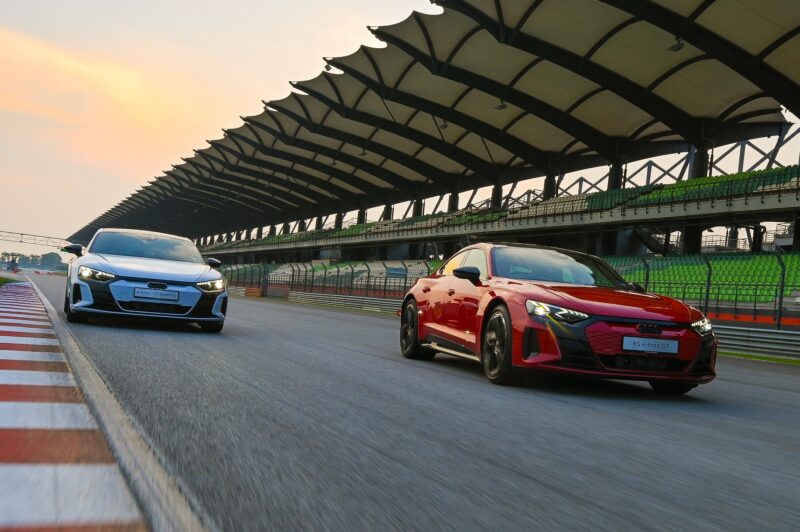
Effective January 1, 2025, Audi Malaysia has announced a new retail price list for its range of internal combustion engine (ICE) vehicles and electric vehicles (EVs).
The new pricing structure also includes the Audi Assurance Package, which now offers a five-year maintenance service (up from three years in the previous package), along with a five-year warranty (with a mileage limit of 150,000 km) and five years of roadside assistance.
The following is the new pricing for the 2025 model year vehicles involved:
Audi Q3 Sportback S line 2.0 TFSI quattro – RM358,990
Audi Q5 Sportback S line 2.0 TFSI quattro – RM388,490
Audi e-tron GT quattro with Dynamic Package – RM412,890
Audi SQ8 Sportback e-tron quattro – RM511,990
Audi RS e-tron GT – RM515,290
Audi A7 Sportback S line 3.0 TFSI quattro – RM740,390
Audi A8 S line 3.0 TFSI quattro – RM1,103,790
Audi RS6 Avant Performance 4.0 TFSI quattro – RM1,338,690
For a limited time, from January 1 to February 28, 2025, there are eight vehicle models offered at special prices (excluding AAP), as follows:
Audi A3 S line 2.0 TFSI – RM279,990
Audi Q8 e-tron advanced 50 quattro – RM339,990
Audi Q8 Sportback e-tron advanced 50 quattro – RM349,990
Audi Q8 e-tron S line 55 quattro – RM373,990
Audi Q8 Sportback e-tron S line 55 quattro – RM382,990
Audi A5 Sportback S line 2.0 TFSI quattro – RM419,990
Audi RS3 Sedan 2.5 TFSI quattro – RM499,990
Audi RS Q8 4.0 TFSI quattro – RM1,400,000
For more information regarding the price list, special offers, and the Audi Assurance Package, please visit www.audi.com.my or visit your nearest Audi Centre.
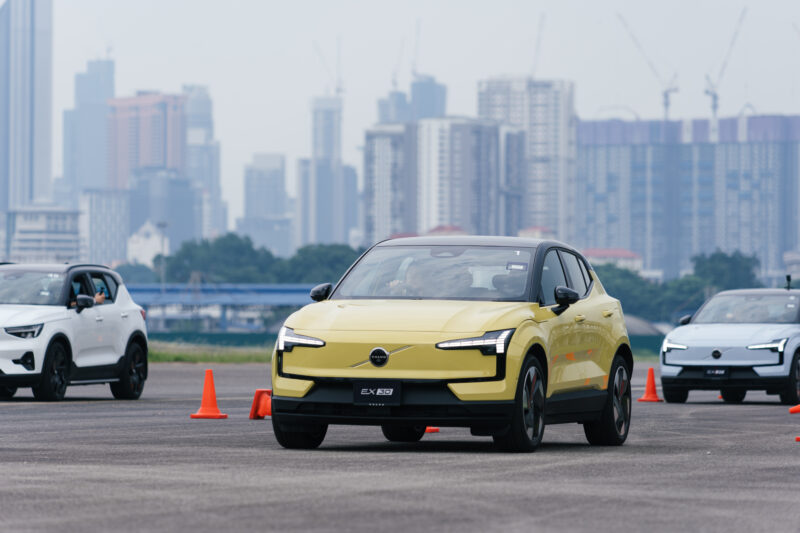
Volvo Car Malaysia has officially opened bookings for the locally assembled (CKD) electric SUV model, the Volvo EX30.
For the 2025 model year, the Volvo EX30 is available in two variants: Ultra (RM208,888) and Ultra Twin Performance (RM228,888). It comes in three color options: Cloud Blue, Vapour Grey, and Crystal White.
The first unit deliveries are expected in the second week of January 2025.
In terms of specifications, the Volvo EX30 Ultra is powered by a single electric motor producing 272 PS and 343 Nm of torque, with an acceleration from 0 to 100 km/h in just 5.3 seconds.
In contrast, the Volvo EX30 Ultra Twin Performance features a dual electric motor setup delivering 428 PS and 543 Nm of torque, achieving 0 to 100 km/h in a swift 3.6 seconds.
Both variants are equipped with a 69 kWh NMC battery pack, offering a driving range of 450 km for the Ultra Twin Performance version and up to 476 km for the Ultra version.
The vehicle supports fast DC charging at 175 kW, allowing the battery pack to be charged from 10 to 80 percent in just 28 minutes.
Each Volvo EX30 comes with a five-year/unlimited mileage vehicle warranty, alongside an 8-year/160,000 km high-voltage battery warranty.
Volvo Car Malaysia also provides the Volvo Service Package (VSP), which covers essential services such as cabin air filter replacement, brake fluid inspections, windshield wiper replacement, and software updates for up to five years or 100,000 km. This package also includes components like brake pads and discs to ensure peace of mind for owners.
Customers will also be protected by a 24-hour roadside assistance program for five years, guaranteeing towing services to the nearest authorized Volvo service center.
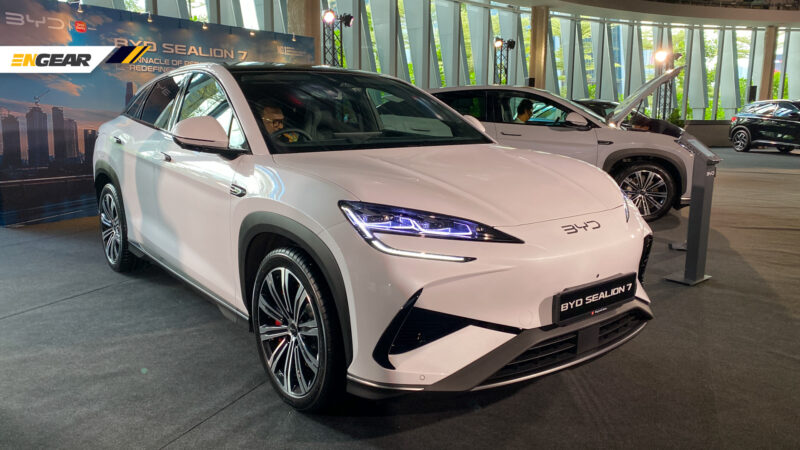
BYD concluded 2024 on a high note, achieving a remarkable milestone by selling over 4 million vehicles within a single year for the first time.
According to the company, a total of 514,809 new energy vehicles (NEVs) were sold in December alone, bringing the total sales for 2024 to 4,272,145 units—a 41.3% increase compared to the 3 million units recorded in 2023.
Of this total, 1,764,992 units were passenger battery electric vehicles (BEVs), 2,485,378 units were plug-in hybrid electric vehicles (PHEVs), while the remaining 21,775 units were commercial vehicles.
Compared to the performance in 2023, BEV sales for 2024 increased by 12% from 1.6 million units, while PHEV sales rose by a whopping 72.8% from 1.4 million units. BEVs accounted for 41.5% of BYD’s total sales last year, while PHEVs made up 58.5%.
BYD’s export market also experienced encouraging growth, with 57,154 units sold in December, marking a 58% increase compared to the same month last year. This brought the total number of vehicles exported for 2024 to 417,204 units, a 71.9% rise compared to 2023.
In addition to manufacturing vehicles, BYD is also the second-largest battery supplier in China. Among its notable clients are big names such as Tesla, Toyota, and Nio.
Overall, the company installed 23.5 GWh of battery capacity in December (32% higher than in 2023) or a total of 194.7 GWh throughout 2024 (an increase of 29% compared to 2023). This includes batteries installed in electric vehicles (EVs) and stationary energy storage units.
At least one person has been killed and seven others injured after a Tesla Cybertruck exploded outside the Trump International Hotel in Las Vegas, Nevada.
According to reports, the explosion occurred shortly after the electric pickup truck was parked in front of the hotel lobby on Wednesday morning.
Police stated that the incident resulted in the death of one person who was inside the truck, while seven others sustained injuries.
So far, the cause of the explosion remains unknown, and police are still investigating whether it originated from the truck itself or from external factors.
🚨New footage of the Tesla Cybertruck exploding in front of the Trump hotel
However, there are reports stating that the Cybertruck was carrying fireworks at the time of the explosion. The reports say that investigators are working to determine the motive and whether the driver intended to set off the blast.
Following the incident, all guests staying at the Trump International Hotel have been evacuated to Resorts World Las Vegas.
Meanwhile, in a post on X, Tesla CEO Elon Musk said, “The whole Tesla senior team is investigating this matter right now. Will post more information as soon as we learn anything. We’ve never seen anything like this.”
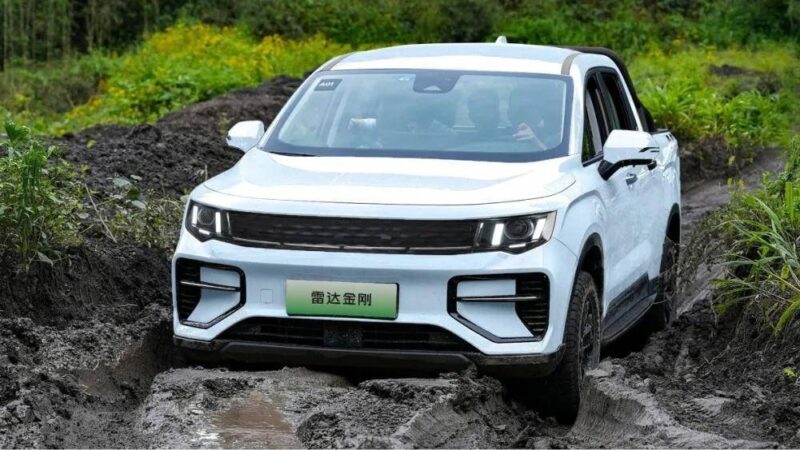
Radar Auto, another brand under the Geely umbrella, has launched an electric pickup truck known as the King Kong in China.
Replacing the previous model, the RD6, the Radar King Kong is offered with a single electric motor driving the rear axle and a dual electric motor configuration for four-wheel drive (4WD).
The single motor version delivers 245 PS and 309 Nm, enabling it to accelerate from 0 to 100 km/h in 8.1 seconds. It is available with LFP battery capacities of 42 kWh, 55 kWh, 73 kWh, and 86 kWh, with a CLTC range from 310 km to 605 km.
Meanwhile, the dual electric motor version packs 381 PS and 485 Nm, achieving a 0 to 100 km/h acceleration in 5.7 seconds. There are three battery pack options: 55 kWh, 73 kWh, and 86 kWh, providing ranges between 330 km and 520 km.
In addition to its various electric motor configurations and battery pack options, the King Kong demonstrates versatility by offering both standard and long wheelbase versions.
The standard wheelbase version measures 5,260 mm in length, 1,900 mm in width, and 1,865 mm in height, with a wheelbase of 3,120 mm. The long wheelbase version, on the other hand, measures 5,500 mm in length and has a wheelbase of 3,310 mm.
In terms of design, the King Kong appears quite similar to the RD6, while still retaining the exterior and interior styling inspired by the Geely Haoyue, which is the sibling of the Proton X90.
In China, the King Kong is available in seven trim levels: four for the single motor version and three for the 4WD version.
The single motor version is priced between 99,800 and 149,800 yuan (approximately RM60,982 to RM91,525), while the 4WD version ranges from 119,800 to 159,800 yuan (around RM73,196 to RM97,635).
In comparison, the price of the previous RD6 started from 136,800 to 209,800 yuan (approximately RM83,590 to RM128,196).
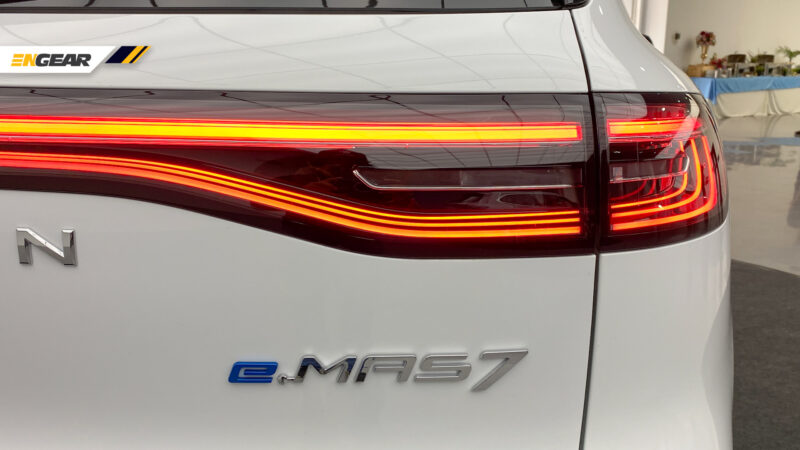
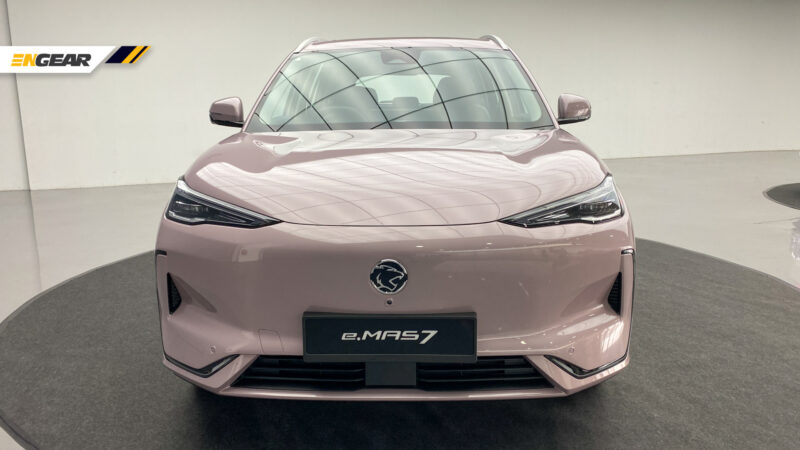
Pro-Net has announced that the Proton e.MAS 7 electric vehicle has received over 2,500 orders since reservations for the electric segment C SUV opened at the end of October.
According to Zhang Qiang, the CEO of Pro-Net, “The enthusiasm shown by Malaysians for the Proton e.MAS 7 reflects their readiness to embrace sustainable mobility.”
“With a combination of innovative features and exceptional value, the Proton e.MAS 7 is designed to be the ideal choice for those looking to transition to electric vehicles.”
The Proton e.MAS 7 is available in two main variants: the Prime, which features a 49.52 kWh battery offering a driving range of 345 km, and the Premium variant with a 60.22 kWh battery pack that provides a driving range of up to 410 km.
Specially for the first 3,000 customers, Proton offers a rebate of RM4,000, along with a special package that includes:
Power Home: 7 kW home charger (valued at RM1,500)
Power Plus: V2L adapter (valued at RM500)
Power Online: 5-year internet data package (valued at RM1,800)
Power Thru: Unlimited vehicle warranty for 6 years, and a warranty of 8 years or 160,000 km for the battery and high-voltage components.
Power Financing: Interest rate of 1.98% from Proton Commerce (up to RM3,000)
Power Exchange: Exclusive rebate of RM1,200 for the exchange program for current Proton owners.
Malaysians living around Shah Alam who are interested in viewing the Proton e.MAS 7 can visit the Proton e.MAS showroom located at the Ideal Convention Centre (IDCC) in Shah Alam.
Operated by SG Cars Sdn Bhd, it is the first distribution center for Proton’s new energy vehicle (NEV) brand.
It is reported that 37 dealers have been appointed nationwide, with 30 expected to be fully operational by the end of this year.
This expansion effort has been bolstered by a knowledge-sharing R&D visit to the Geely Research Institute in Hangzhou, China, attended recently by more than 40 principal dealers and executives.
During the visit, participants were introduced to Geely’s latest technology and gained valuable insights into premium EV maintenance, staff training, sales strategies, and operational excellence.
Pro-Net is also seeking partners interested in joining the expanding Proton e.MAS dealer network.
The launch of Proton’s first electric SUV, the e.MAS 7, took place last week.
Despite being teased for a long time on social media, the e.MAS 7 remains a hot topic of discussion among netizens even now.
Opinions are varied, with some expressing positive thoughts while others share negative feedback.
For those contemplating whether to choose the more affordable Prime variant or the more fully-featured Premium variant, we are here to help.
With a price difference of approximately RM14,000, here are five key differences between the Proton e.MAS 7 Prime and e.MAS 7 Premium:
1. Battery Capacity
Both variants are equipped with an electric motor producing 215 hp and 320 Nm of torque, allowing for a 0-100 km/h acceleration in about 6.9 seconds.
However, the e.MAS 7 Prime is fitted with a short-blade Aegis LFP (Lithium Iron Phosphate) battery pack with a capacity of 49.52 kWh for a driving range of 345 km, while the e.MAS 7 Premium comes with a 60.22 kWh battery pack, providing a range of 410 km.
2. Charging Capability
For the smaller battery, the e.MAS 7 supports DC fast charging up to 80 kW, while the e.MAS 7 Premium can achieve a DC charging capacity of up to 100 kW.
Unfortunately, there appears to be no significant difference in charging times, with both variants recording approximately 20 minutes for DC charging from 30% to 80%.
3. Exterior
The e.MAS 7 Prime variant features 18-inch wheels wrapped in 225/55 R18 Giti tires.
In contrast, the e.MAS 7 Premium variant comes equipped with more aggressive 19-inch wheels, fitted with 235/50 R19 Goodyear tires.
Additionally, the e.MAS 7 Premium variant includes several extra features such as a panoramic glass roof, powered tailgate, and an Active Grill Shutter system.
4. Cabin Features
The standard features included in the Proton e.MAS 7 are quite extensive.
However, for the Premium model, it includes specific features such as a driver’s seat memory function, adjustable front passenger seat (four-way), front seat ventilation, ambient lighting supporting up to 256 colors, a head-up display, and a sound system with 16 speakers.
5. Safety Features
Typically, the lower variant may be lacking in comprehensive safety equipment compared to the premium variant.
However, for the e.MAS 7, both variants are equipped with a comprehensive safety suite that includes advanced driver-assistance systems (ADAS) Level 2, featuring important functions such as Autonomous Emergency Braking (AEB), Forward Collision Warning (FCW), Rear Cross Traffic Alert (RCTA), Lane Departure Warning (LDW), and Adaptive Cruise Control (ACC).
Moreover, the e.MAS 7 is also equipped with a 360-degree surround camera system.
The only minor difference is that the e.MAS 7 Prime variant does not come with front parking sensors.
Sime Motors is continuously expanding the BYD brand network in the country as part of its efforts to meet the growing demand for electric vehicles (EVs).
According to the company, BYD currently operates 21 service centres nationwide, focusing on customer accessibility spanning key regions such as Penang, Klang Valley, Johor Bahru, East Coast, Sarawak and Sabah.
17 out of the 21 BYD service centres in Peninsular Malaysia and East Malaysia feature body and paint (B&P) centres that offer body repair services using state-of-the-art equipment. Trained technicians ensure every repair meets original manufacturer standards.
Customers’ vehicles are serviced by a team of BYD certified high-voltage (HV) technicians, who undergo ongoing multi-level training programmes to ensure 100% certification.
In addition to specialised tools for EV maintenance, all BYD service centres provide premium lounge areas and workspaces for customers to relax or work while waiting for their vehicles to be serviced.
BYD also operates a digitally managed centralised Parts Distribution Centre (PDC) that ensures timely and sufficient parts delivery to service centres and dealers nationwide. With optimised inventory and streamlined distribution systems, BYD guarantees minimal downtime for vehicle repairs.
Moreover, every new vehicle undergoes rigorous quality assurance checks at the pre-delivery inspection (PDI) centre to ensure it is in top condition before being handed over to the customer.
The PDI facility is equipped with a three-level mechanical parking system, optimising space efficiency while securely accommodating vehicles during the inspection and preparation process.
Each BYD vehicle comes with a six-year/150,000 km warranty for the vehicle, an eight-year/160,000 km warranty for the battery (with the battery to be replaced if its health falls below 70%), and an eight-year/150,000 km warranty for the drive unit.
For any queries or feedback, customers can contact the BYD Customer Care Line at 1300-38-1888, available Monday to Friday, from 8 am to 5 pm. A 24/7 roadside assistance service is also provided throughout Malaysia.
Additionally, BYD offers service packages available in three-, six- and eight-year options, along with Standard and Plus options, to accommodate both customer’s high and low usage patterns. These packages can be purchased separately or bundled with car loans for added convenience.
When it comes to EV, options available in the Malaysian market are rather exciting if you have a budget between RM150,000 and RM200,000. For those willing to stretch their budget further—specifically between RM200,000 and RM250,000—the available candidates are significantly more impressive, particularly on the performance front.
Well, two out of the five models we’ve listed here include ‘Performance’ in their names and one is a Brabus, underscoring that acceleration is a key focus in this price range.
So, without further ado, let’s delve into these models. You might just find one that you like.
Volvo EX30 Ultra Twin Performance (RM228,888)
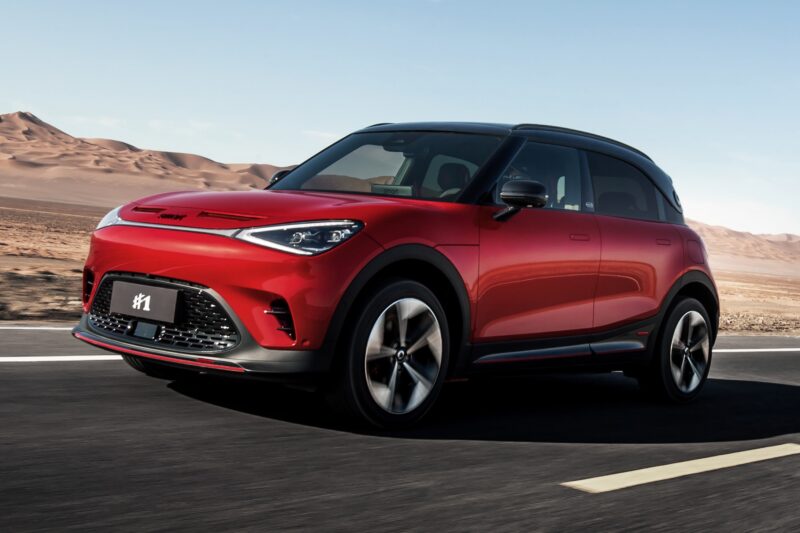
If you can live without physical buttons, the Volvo EX30, a sibling to the smart #1 and Zeekr X, is worth considering. Despite its compact size, it has a robust and sturdy appearance, perfectly matching the performance level offered by the Ultra Twin Performance variant.
As suggested by its name, this particular variant comes with a pair of electric motors producing a total power output of 428 PS and 543 Nm, allowing it to accelerate from 0 to 100 km/h in a mere 3.6 seconds. It utilizes the same NMC 69 kWh battery found in the other EX30 variants, offering a driving range of 450 km—only 26 km shorter than the Ultra variant.
Tesla Model 3 Performance AWD (RM243,700)
With a price tag of RM243,700, fans of Elon Musk can cement their loyalty to the Tesla CEO by acquiring the Model 3 Performance AWD. Its price is only slightly higher than the Long Range AWD variant (RM218,000), yet it comes with plenty of added benefits.
It goes without saying that its main trump card is its performance; this variant boasts 460 PS and 723 Nm. I could be wrong but with an acceleration time of 0-100 km/h in just 3.1 seconds and a top speed of 261 km/h, this is likely the fastest new car you can purchase at this price point. The driving range is also commendable at 529 km.
Tesla Model Y Long Range AWD (RM246,000)
For those who prefer an SUV over a sedan, the Model Y Long Range AWD is an excellent choice. Though priced at RM42,000 less than the Performance AWD variant, the performance of this compact crossover should not be underestimated.
Two electric motors (one on each axle) come together to deliver a total power output of 444 hp and 559 Nm. Although it’s not as quick as its sedan counterpart, many drivers will find that a 0-100 km/h time of 5.0 seconds is quite adequate. Equipped with a 78.1 kWh battery, it offers a range of 533 km on a full charge.
smart #1 Brabus (RM249,000)
Is a 0-100 km/h time of 3.9 seconds fast enough for you? If the answer is a yes, the smart #1 Brabus will undoubtedly catch your attention. As the flagship variant in the #1 lineup, it doesn’t compromise drastically on range—it can travel up to 400 km, just 40 km shorter than the Premium variant.
In addition to its face-melting acceleration, it stands out on the road thanks to with the Brabus styling elements and striking red accents. To top it off, its suspension has also been retuned accordingly to provide a more agile handling performance in corners.
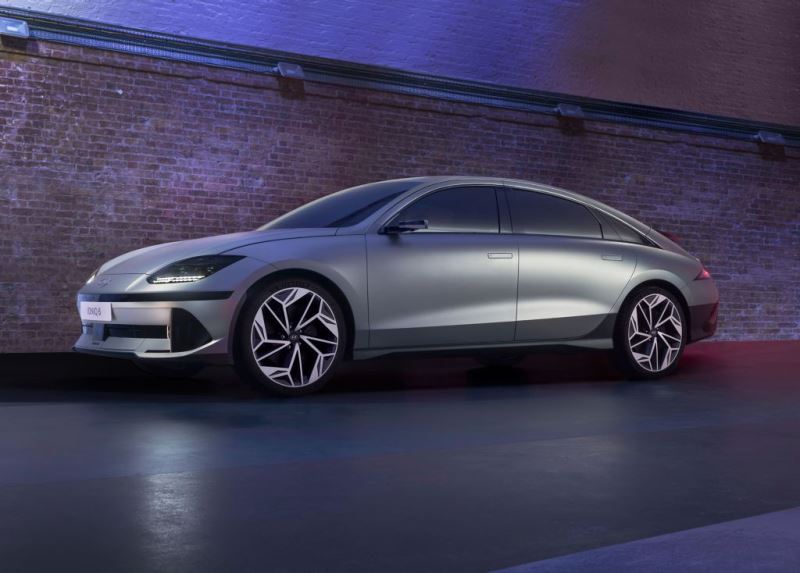
Hyundai Ioniq 6 Lite RWD & Plus RWD (RM219,888 & RM249,888)
Launched in September last year, the Ioniq 6 Lite RWD and Plus RWD present a more affordable alternative to the Max RWD and AWD variants.
Both variants are equipped with a rear-axle electric motor that produces 151 PS and 350 Nm, enabling them to accelerate from 0 to 100 km/h in 8.8 seconds and reach a maximum speed of 185 km/h—on par with the Max variants. The driving range, while shorter than that of the Max RWD (614 km) and AWD (519 km), is perfectly adequate at 429 km. On top of that, you’re getting an EV with a distinctive design that sets it apart from the crowd.
MAN Truck & Bus is setting another milestone in the electrification of freight transport with the handover of the first MAN eTruck to the Duvenbeck Group,
The Ultra Low Liner eTGX semitrailer tractor, specially developed for the loading volume requirements of automotive logistics, is set to make Volkswagen plant logistics particularly climate-friendly in the future.
In accordance with the letter of intent (LOI) signed by both parties, Duvenbeck intends to put up to 120 units of the MAN eTGX into service by 2026.
Duvenbeck will deploy the MAN eTruck in various areas of the Rhine-Ruhr and BeNeLux freight forwarding region as part of VW’s plant logistics.
“With the Ultra Low Liner eTruck, MAN has developed a solution that is perfectly tailored to the requirements of the automotive industry. No other series produced electric semitrailer tractor can pull trailers with an interior height of three meters. This makes it the ideal choice for transports with high volume requirements,” explains Friedrich Baumann, Chief Sales & Customer Solutions Officer at MAN Truck & Bus.
“We are delighted to have two strong partners at our side, Duvenbeck and Volkswagen, to bring this innovation to the road.”
The Ultra Low Liner eTruck MAN eTGX features a semitrailer height of just 950 mm, a very short wheelbase of 3.75 meters and a battery that offers a range of around 500 km.
This makes it perfect for use in automotive logistics, where maximum load volume up to three meters in interior height is more important than high load weights.
Thanks to its modular battery concept with a choice of four, five or six battery packs and power levels of 449 and 544 hp, it can be optimally adapted to any transport task.
In addition to the standard CCS charging technology (up to 375 kW), it can also be ordered with the new MCS standard with up to one megawatt charging power, which enables even faster intermediate charging during the driver’s break from driving.
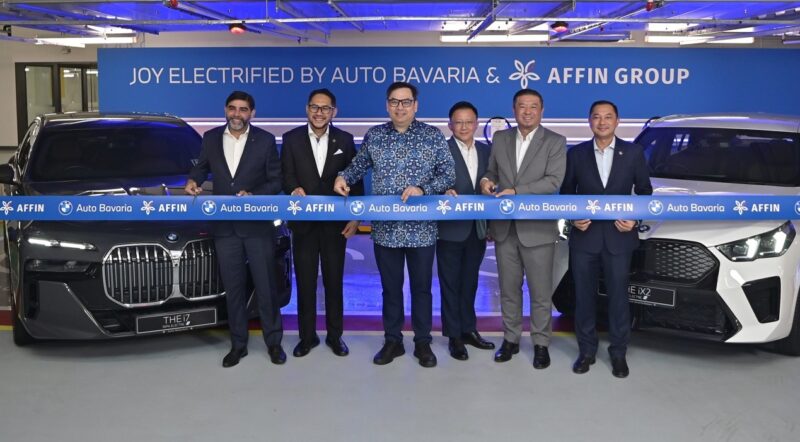
Auto Bavaria has announced a strategic collaboration with Affin Group to enhance electric vehicle (EV) charging infrastructure in the country.
This partnership aligns with both organisations’ environmental, social and governance (ESG) goals aimed at fostering more responsible mobility solutions.
Through this collaboration, Auto Bavaria, the authorised dealer for BMW, is set to accelerate the availability and accessibility of EV charging facilities across the region.
The company’s efforts began with the installation of seven AC charging units and one DC charging unit at the EV charging station at Menara Affin in Tun Razak Exchange, which serves as Malaysia’s International Financial Centre.
Vi Thim Juan, Managing Director of Auto Bavaria, stated, “This partnership with Affin underscores our dedication to enhancing EV infrastructure development and supporting Malaysia’s shift towards a low-carbon economy.
“Together, we are empowering drivers to make responsible mobility choices and contribute to a lower carbon footprint in their automotive ownership needs.”
Datuk Wan Razly Abdullah, President & Chief Executive Officer of Affin Bank Berhad, added, “Our collaboration reaffirms Affin’s unwavering commitment to our ESG agenda, creating a positive impact for the future while providing a seamless and convenient customer experience.
“This initiative aligns with the ‘Unrivalled Customer Service’ and ‘Responsible Banking with Impact’ pillars of our AX28 Strategic Plan,” he said.
Wan Razly further stated that customers can explore Affin’s range of EV offers, including tailored financing options designed to simplify the purchase journey and enhance affordability.
The just-launched Proton eMAS 7 will be entering the Singaporean market through VinCar Group as the EV’s the official distributor.
In a Facebook post, VinCar Pte Ltd confirmed that the e.MAS 7 will be launched in the republic in early 2025. The company also stated that it will open a flagship showroom located at Leng Kee Automotive Belt.
For its home market, the eMAS 7 is offered in two variants, namely Prime and Premium. Both are powered by a “12-in-1” electric motor at the front axle, producing 218 PS (160 kW) and 320 Nm of torque, enabling it to accelerate from 0 to 100 km/h in 6.9 seconds and reach a top speed of 175 km/h.
The main difference between the Prime and Premium variants lies in their battery capacity. The Prime variant comes with a 49.52 kWh battery, promising a driving range of 345 km on a full charge, while the Premium variant can travel up to 410 km thanks to its 60.22 kWh battery.
The eMAS 7 is equipped with Geely’s new Aegis short blade LFP battery, which is said to offer higher energy density, improved safety, and longer lifespan.
The battery supports DC fast charging with up to 80 kW for the Prime variant and 100 kW for the Premium variant, with both requiring 20 minutes to charge from 30% to 80%.
Prices start at RM109,800 for the Prime variant and RM123,800 for the Premium variant. However, in conjunction with the launch, Proton is offering a rebate of RM4,000 to the first 3,000 customers.
After several rounds of previews including test drives, Proton through its Pro-Net division has officially launched the first electric SUV, the e.MAS 7, for the local market.
Here are seven key facts you should know:
1. Dimensions
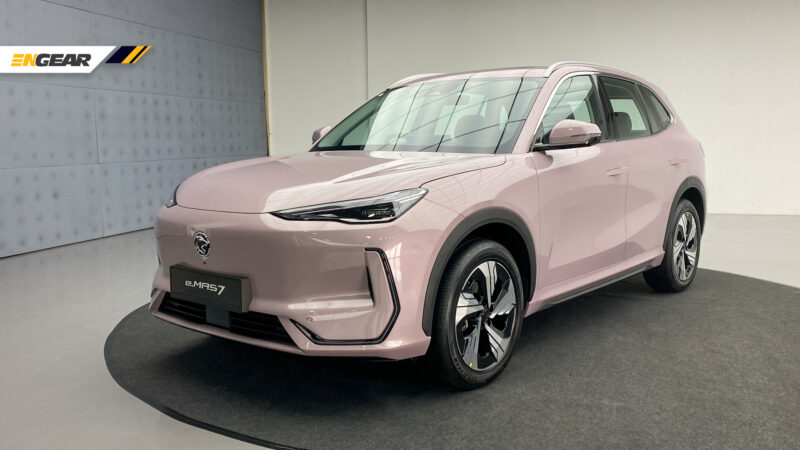
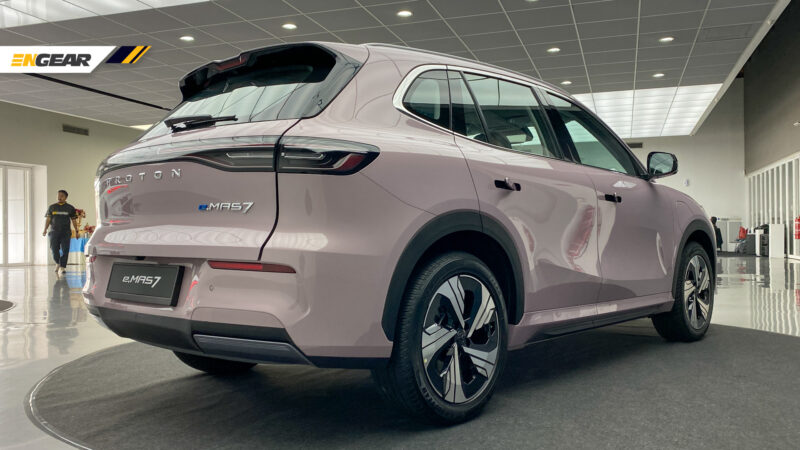
The Proton e.MAS 7 is an electric SUV in the C-segment, measuring 4,615 mm in length, 1,901 mm in width, 1,670 mm in height, and with a wheelbase of 2,750 mm.
Its turning radius is a compact 5.4 meters.
Standard features include a MacPherson strut setup at the front, complemented by a multilink configuration at the rear.
2. Power
The e.MAS 7 is powered by a single electric motor delivering 215 hp and 320 Nm of torque.
It can accelerate from 0 to 100 km/h in just 6.9 seconds, reaching a top speed of 175 km/h.
3. Two Battery Pack Options
For the local market, the Proton e.MAS 7 is available in two variants: Prime and Premium.
The Prime variant comes equipped with an LFP battery pack of 49.52 kWh, allowing a range of 345 km on a full charge (WLTP data), while the Premium variant features a 60.22 kWh battery pack with a range of 410 km.
This short blade Aegis battery supports AC charging at 11 kW and DC fast charging at 100 kW (80 kW for the smaller capacity battery), enabling the battery to be charged from 30% to 80% in just 20 minutes.
4. Exterior Features
Proton has made few changes to differentiate the e.MAS 7 from its donor model, the Geely Galaxy E5.
Standard exterior features of this electric SUV include LED headlights and taillights, 18-inch alloy wheels with 225/55 R18 tires, roof rails, and adjustable side mirrors with a heating function.
The Premium variant adds features such as a panoramic glass roof, powered tailgate, and Active Grille Shutter functionality.
5. Cabin Space
Similar to the exterior, the interior equipment closely resembles that of the Geely model.
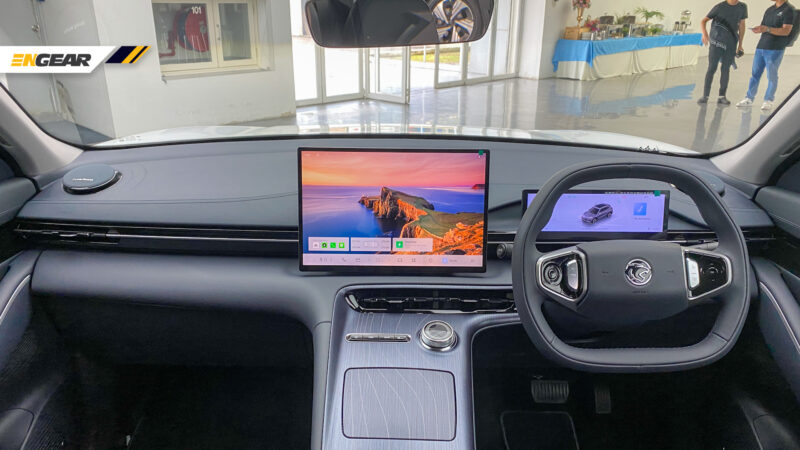
Inside, you will find features such as a 10.2-inch digital cluster display, a central 15.4-inch screen without Apple CarPlay or Android Auto support, a Flyme OS system, and a head-up display.
Additionally, the e.MAS 7 offers a six-way adjustable driver’s seat (four-way for the front passenger), ventilation functions, leatherette upholstery, ambient lighting with 256 color options, and several USB charging ports.
In the rear, the e.MAS 7 provides cargo space of 461 liters, which expands to 1,877 liters with the second-row seats folded down.
There is also 14 liters of storage space under the seats and a 10.8-liter center console drawer.
6. ADAS
For the first time, Proton offers Level 2 Advanced Driver Assistance Systems (ADAS) as standard across all e.MAS 7 variants.
This includes essential features such as an Automatic Emergency Braking (AEB) system, Forward Collision Warning (FCW), Lane Departure Warning (LDW), Lane Keeping Assist (LKA), Rear Cross Traffic Alert (RCTA), Lane Change Assist (LCA), and Adaptive Cruise Control (ACC).
Additionally, the e.MAS 7 comes equipped with six airbags, an auto hold function, front and rear radar, and a 360-degree camera system.
7. Pricing
The retail prices for the Proton e.MAS 7 are as follows:
e.MAS 7 Prime – RM109,800
e.MAS 7 Premium – RM123,800
For the first 3,000 customers, Proton is offering a rebate promotion worth RM4,000, bringing the starting price down to RM105,800 for the Prime variant, and up to RM119,800 for the Premium variant.
Here are the packages that buyers of the Proton e.MAS 7 will receive:
A 7kW home charging unit (valued at RM1,500)
V2L adapter (valued at RM500)
Financing package with interest rates starting as low as 1.98% (valued at RM3,000)
Unlimited internet data package for five years (valued at RM1,800)
RM1,200 rebate for existing Proton owners
Vehicle warranty of six years with no mileage limit, and a warranty for the high-voltage battery components of up to eight years or 160,000 km.
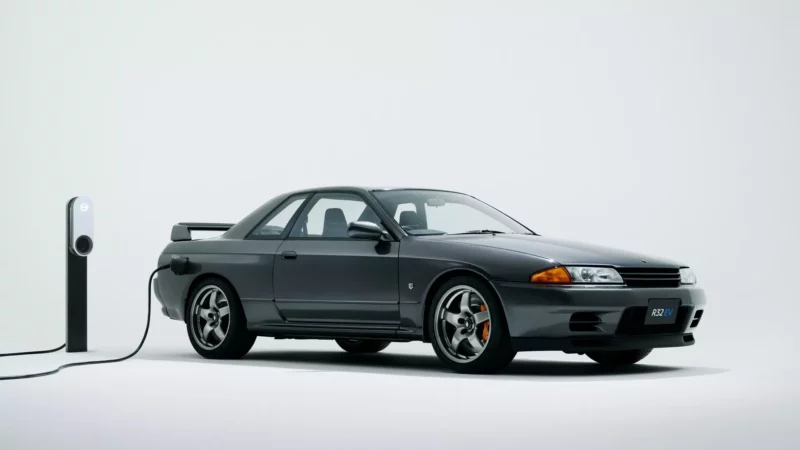
With just a few weeks left until the Tokyo Auto Salon 2025 opens its doors, Nissan is set to unveil something special.
It isn’t a new generation GT-R; rather, it is a Nissan Skyline GT-R R32 without the iconic RB26DETT inline-six engine.
More precisely, it is an R32 EV!
This project actually began back in March 2023, when the legendary RB26 engine – highly regarded among JDM enthusiasts – was retired to make way for a full-time electric power unit.
At this time, Nissan has not yet disclosed details about the modifications made to this iconic model.
In terms of outward appearance, it is quite difficult to detect any changes, except for the removal of the fog lights and the absence of exhaust pipes at the rear.
What do you think about Nissan’s R32 GT-R EV project?
The New Car Assessment Program for Southeast Asian Countries (ASEAN NCAP) has announced that the Neta V has received a zero-star rating in an assessment conducted at the MIROS Provisional CRASE Crash Centre (PC3).
According to ASEAN NCAP, the Neta V is the first electric vehicle (EV) to be tested at the facility, as well as the first model to receive a zero-star rating under the ASEAN NCAP 2021-2025 protocol.
Launched in Malaysia in October last year, the EV scored a total of 28.55 points, comprising 7.89 points for Adult Occupant Protection (AOP), 13.51 points for Child Occupant Protection (COP), 7.14 points for Safety Assistance (SA), and 0 points for Motorcyclist Safety (MS).
The Neta V, which is also marketed in Brunei, Indonesia, and Thailand, comes equipped with two airbags, a seatbelt reminder system for the driver, an anti-lock braking system (ABS), and electronic stability control (ESC) as standard.
In the front offset collision test for the AOP category, the Neta V received no points as the driver received poor protection on the head, neck, chest, and right leg.
In the side impact test, it scored only 6.31 out of 8.00 points, as the crash test dummy received marginal protection for the chest. The absence of Head Protection Technology (HPT) resulted in a score of zero for this assessment.
In the dynamic assessment for the COP category, the Neta V performed well in both frontal offset and side impact tests. However, it received low marks for the installation of Child Restraint System (CRS). Although it is equipped with Isofix and a top tether, more than half of the CRS recommended by ASEAN NCAP were found to be difficult to install.
The electric hatchback also lacks features such as Autonomous Emergency Braking (AEB), Forward Collision Warning (FCW), Lane Keep Assist (LKA), and Lane Departure Warning (LDW).
Making things worse, all evaluated technologies under the MS category, including Blind Spot Technology (BST), Auto High Beam (AHB), and Pedestrian Protection (PP), are also absent.
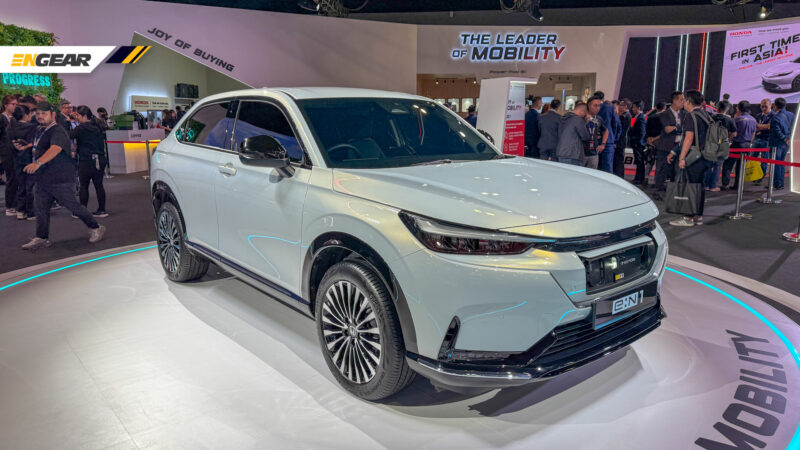
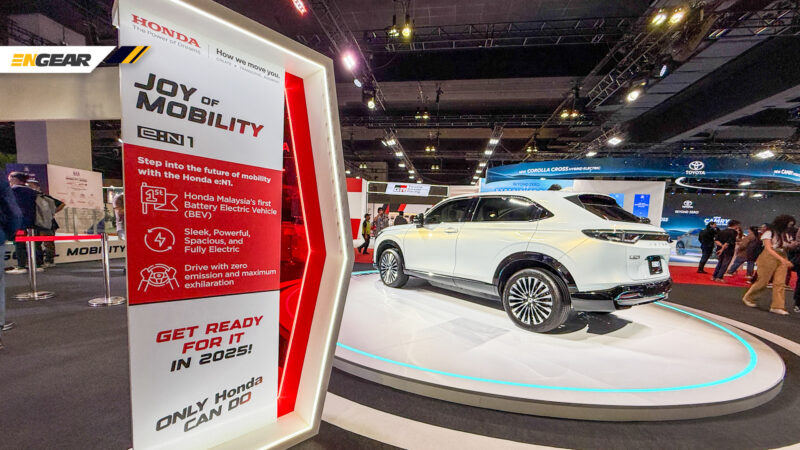
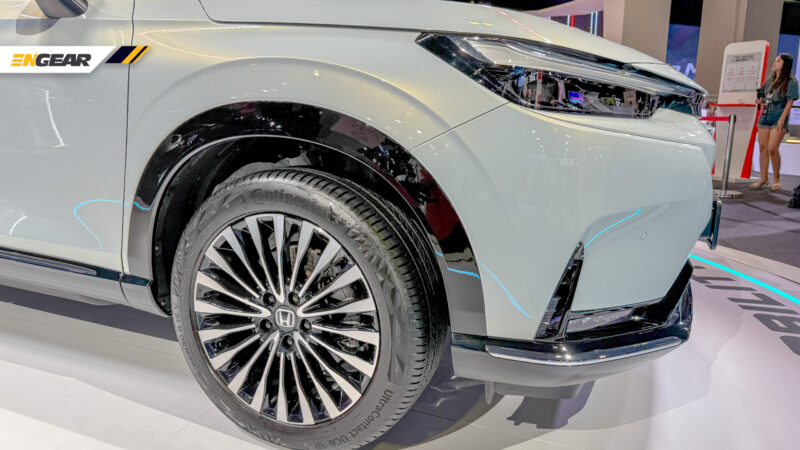
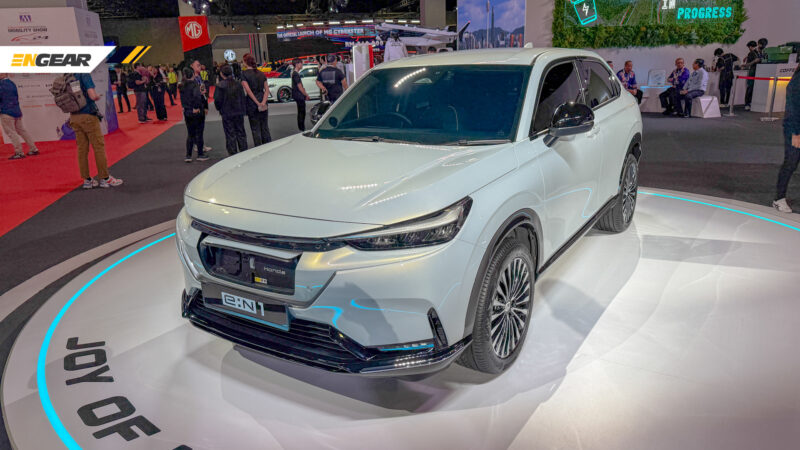
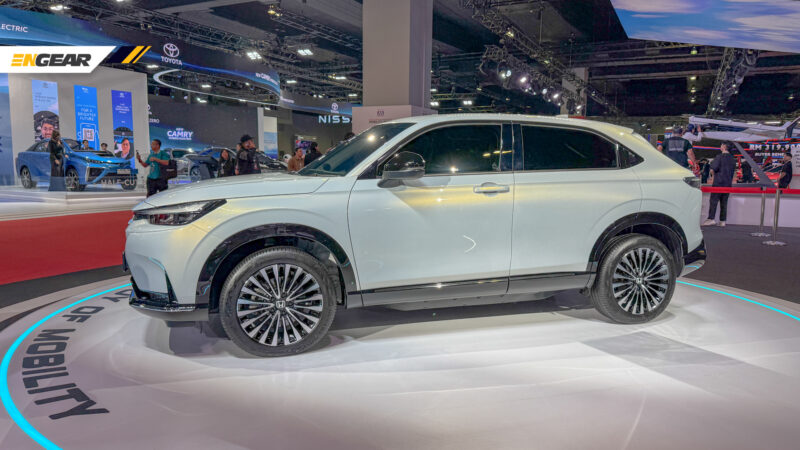
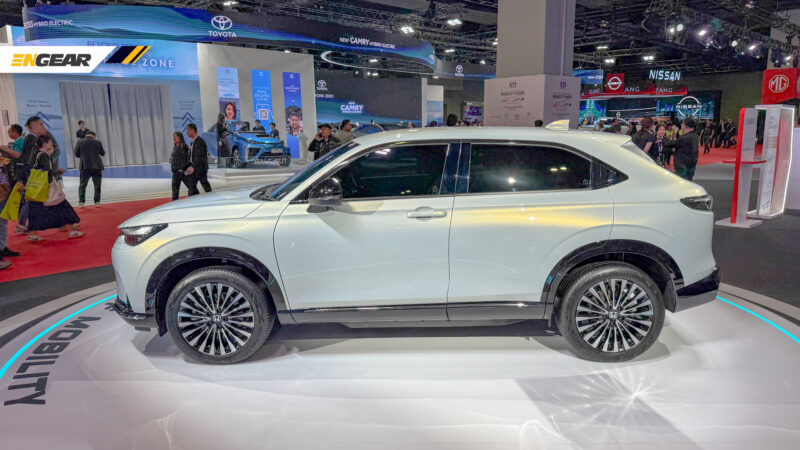
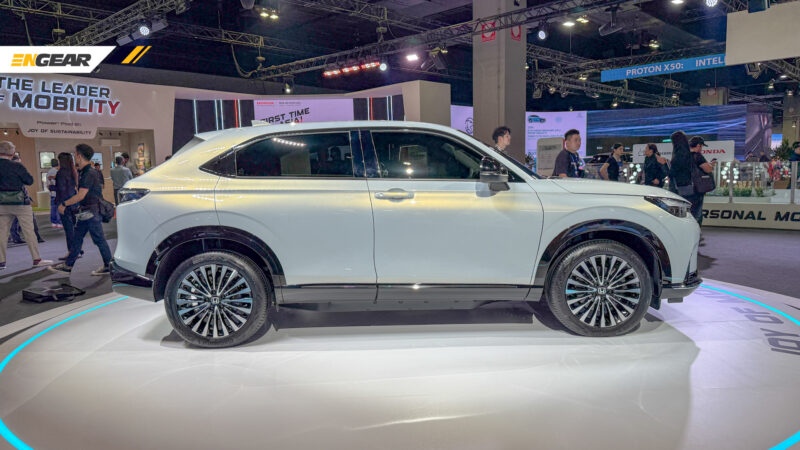
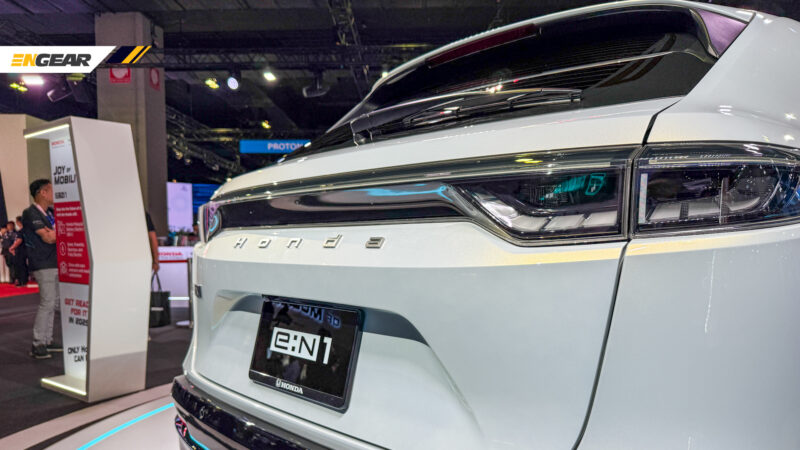
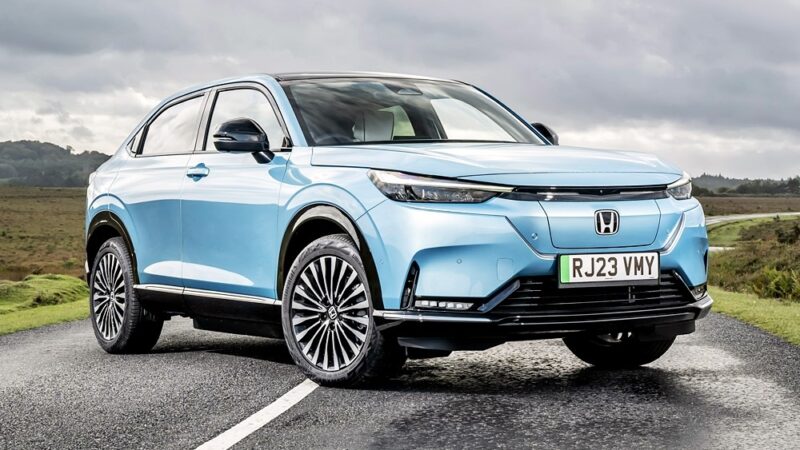
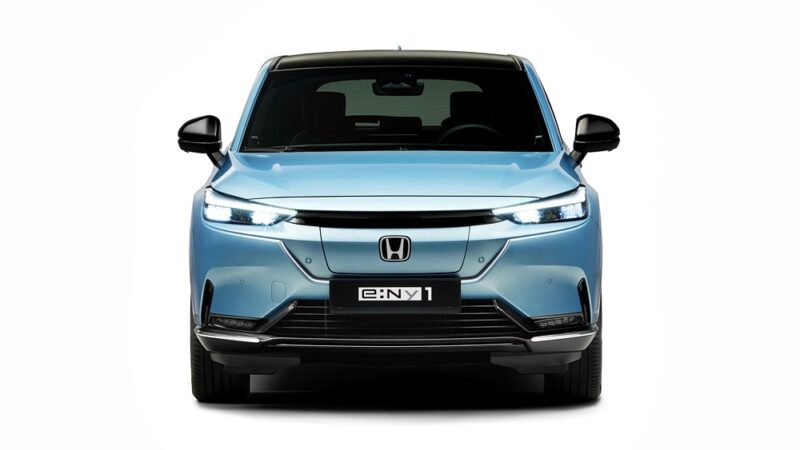
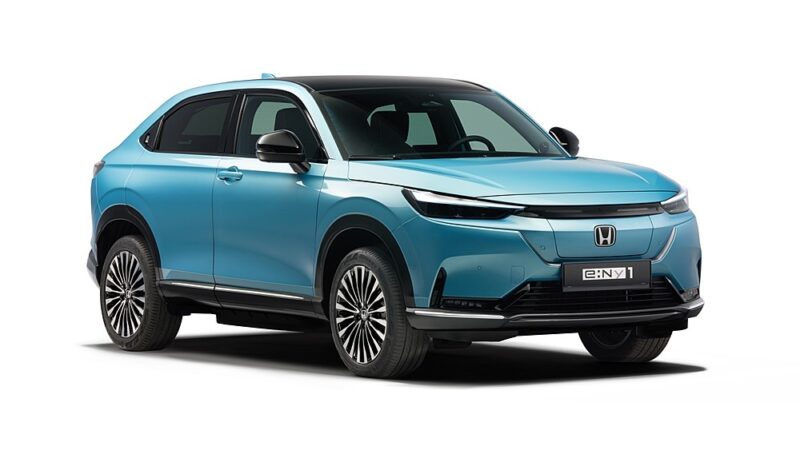
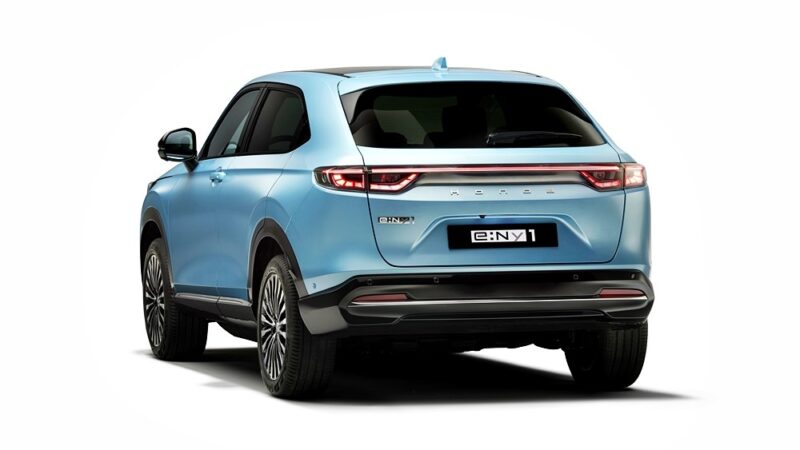
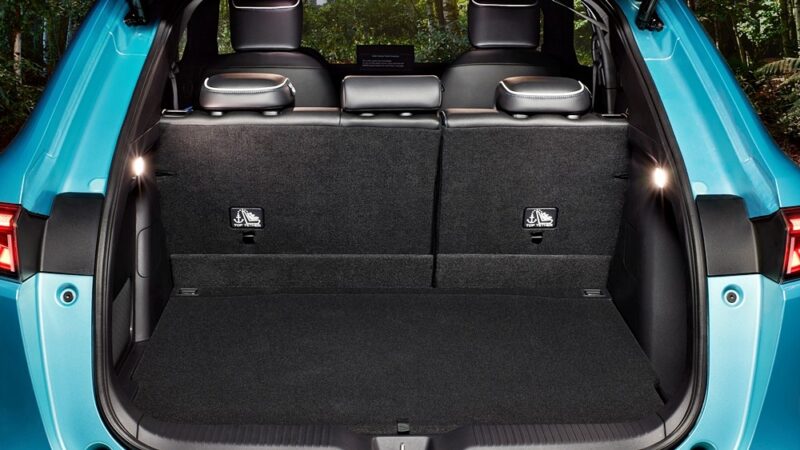
At KLIMS 2024, Honda Malaysia not only showcased the concept coupe model, Honda Prelude, but also unveiled an electric SUV – the Honda e:N1.
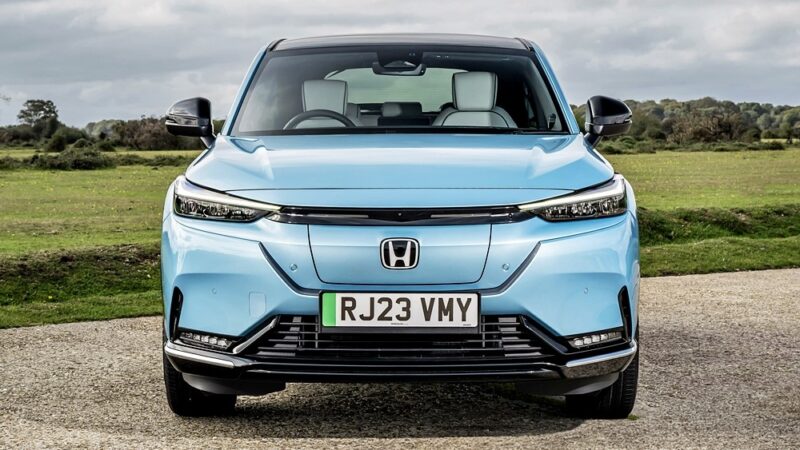
Despite sharing a similar appearance to the Honda HR-V, the e:N1 utilizes the e:N Architecture F platform, which offers a more rigid body structure, a lower center of gravity, and a more aerodynamic underbody.
It is powered by a front-wheel-drive electric motor that delivers 201 hp and 310 Nm of torque, paired with a 68.8 kWh battery pack.
With a full charge, the e:N1 can travel up to 412 km.
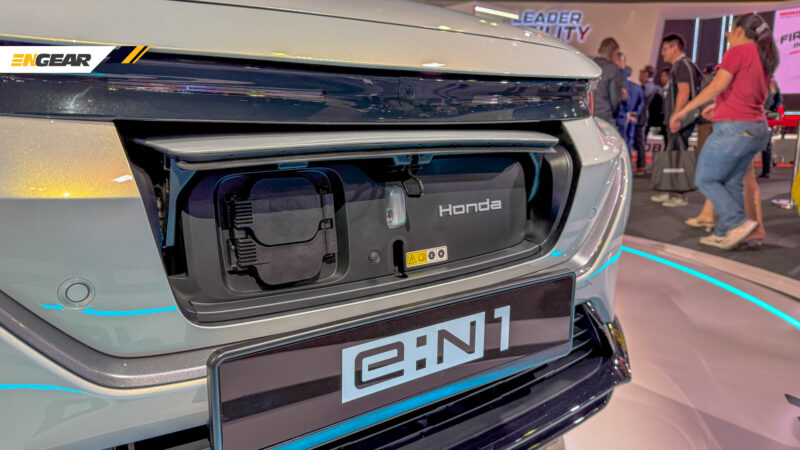
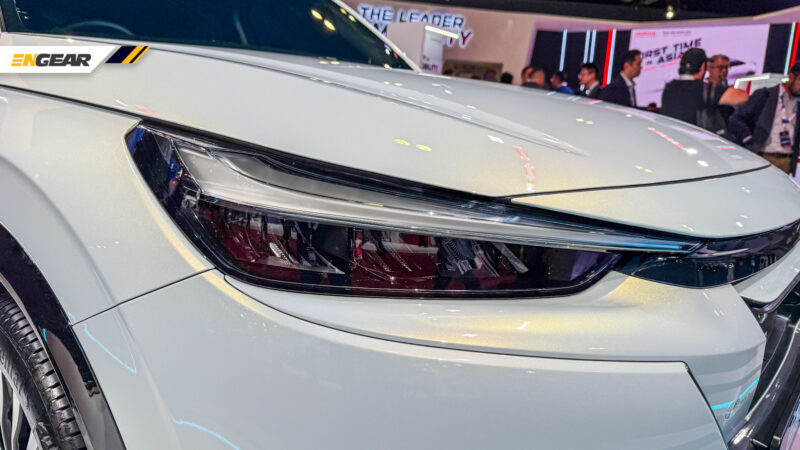
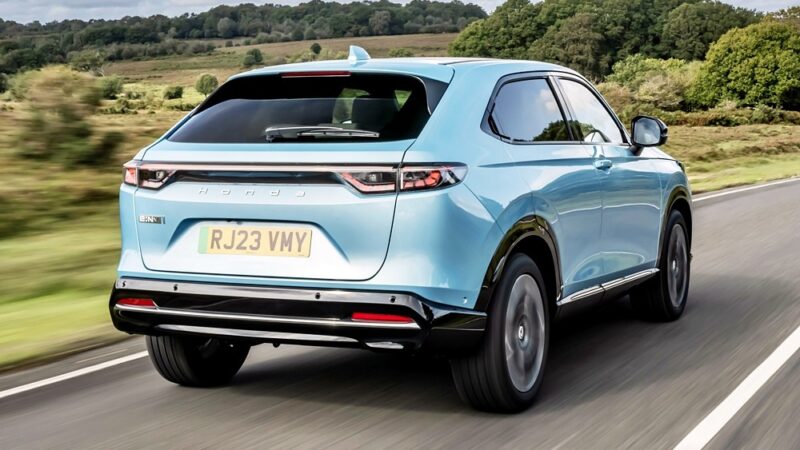
What sets the e:N1 apart from the standard HR-V is the presence of a charging port that replaces the front grille structure, along with the words “Honda” displayed in a more modern font at the rear.
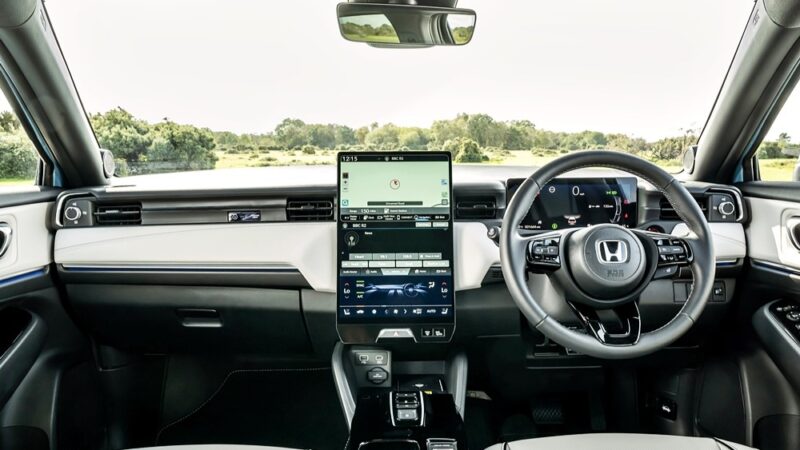
The layout of the e:N1’s cabin also appears quite different from the HR-V, featuring a 15-inch central screen, a 10.25-inch digital cluster screen, and support for Apple CarPlay and Android Auto.
At this time, Honda Malaysia has not officially revealed the detailed specifications for the e:N1 in the local market.
However, it is expected to be the first electric vehicle officially brought into the country by Honda Malaysia, with its launch scheduled for next year (2025).
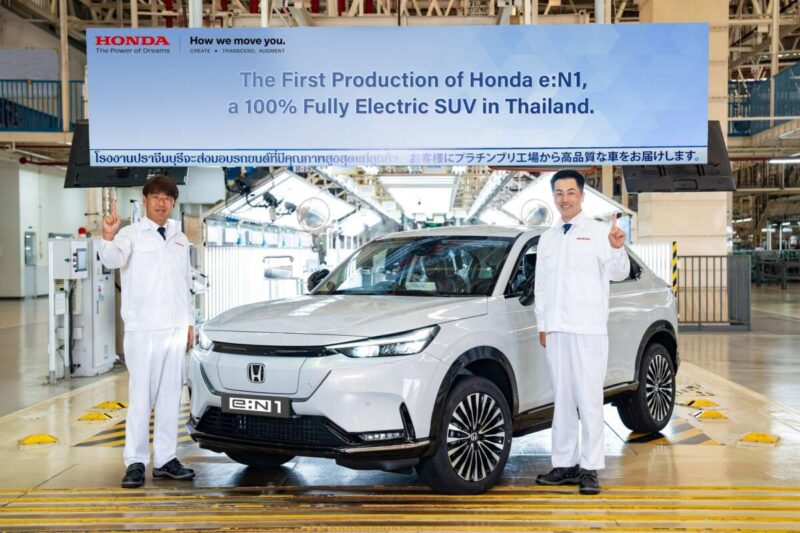
For your information, Honda has already started production of the Honda e:N1 electric SUV at the Rojana Industrial Park in Prachinburi Province, Thailand by the end of 2023.
The real question is, what will be the selling price set by Honda Malaysia for the e:N1 model? Currently, the Honda HR-V e:HEV variant available in the Malaysian market is priced at RM140,800.
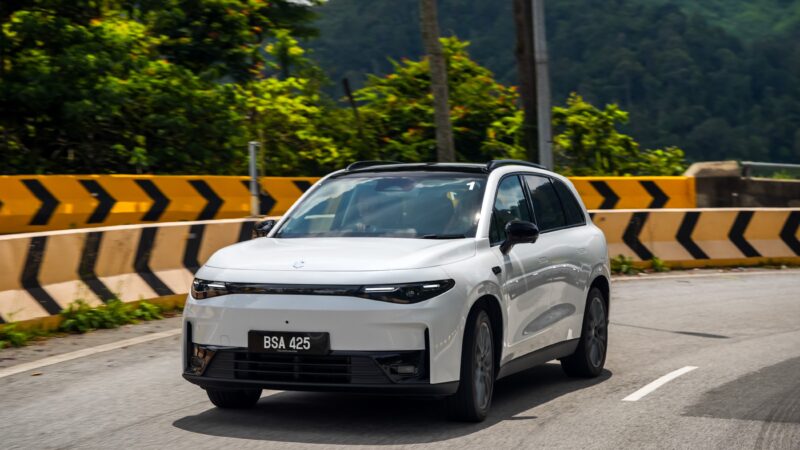
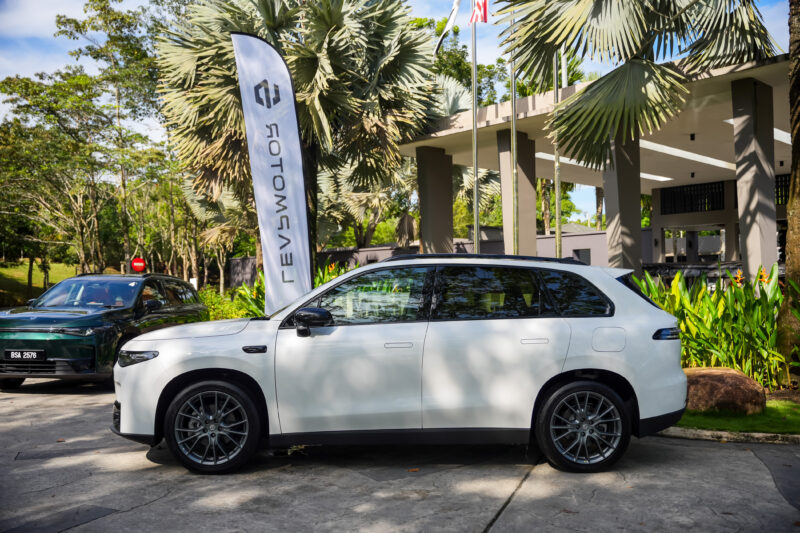
As a prominent name that encompasses popular brands like Alfa Romeo, Citroën, Maserati, and Peugeot, it may seem rather odd to see Leapmotor under the Stellantis umbrella.
For clarification, Leapmotor (or Ling Pao) is a Chinese automotive company founded in 2015.
In 2023, Stellantis acquired a 20% stake in Leapmotor, aligning it with the previously mentioned European brands.
Without further ado, Stellantis Malaysia announced the introduction of Leapmotor to the local market in April 2024, positioning it as an affordable EV brand.
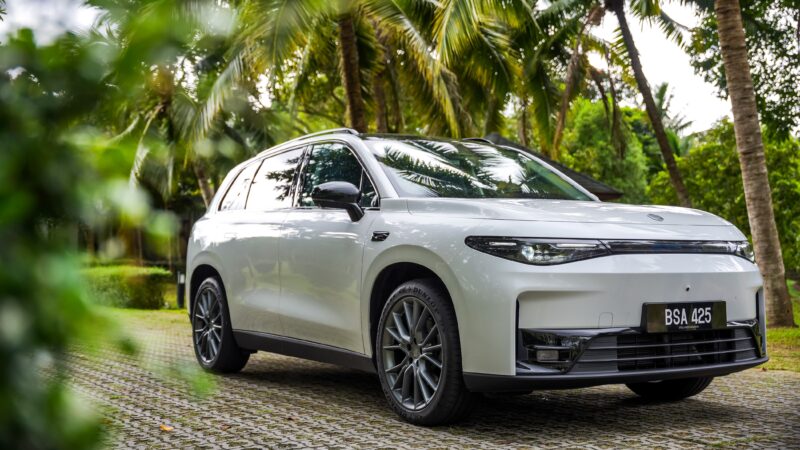
The first model for sale is the D-segment SUV, the Leapmotor C10, which was officially launched six months later with a selling price of RM159,000.
Recently, Stellantis Malaysia invited automotive media practitioners to experience the Leapmotor C10 on a drive to Gambang, Pahang.
Here’s our notes after driving this SUV for two days:
1. Dimensions
Unlike other EV models (mostly hatchbacks, SUVs, or sedans) available in the market, the Leapmotor C10 is more suited to be classified as a family-oriented electric vehicle.
Its relatively large size measures 4,739 mm in length, 1,900 mm in width, 1,680 mm in height, with a wheelbase of 2,825 mm.
Within the same price range, the Leapmotor C10 competes with combustion-engine models such as the Chery Tiggo 8 Pro and Proton X90.
While the sizes are similar, the C10 comes with a five-seat configuration, compared to the seven seats found in the two previously mentioned models.
2. Power
Only one variant is offered in Malaysia, featuring a single rear-wheel drive electric motor producing 215 hp and 320 Nm of torque.
Though the figures appear high, after testing the drive of this electric SUV, the acceleration is not as aggressive as that of many EVs available on the market.
However, this doesn’t mean the C10 is an “elephant baby” reluctant to move; rather, you can expect smoother power delivery to ensure no family members complain of neck pain at the start of the journey.
Even on the highway, I had no issues ensuring that this electric SUV could safely overtake any slow-moving trailers in the left lane without causing fast-moving cars behind to flash their high beams—even when fully loaded with passengers.
With a 69.9 kWh battery pack, the Leapmotor C10 can travel up to 420 km on a full charge.
Based on our drive, we reached our destination with about 112 km of range remaining, averaging an energy consumption of around 20.1 kWh/100 km, slightly higher than the official figure of 19.8 kWh/100 km.
3. Driving Experience
We took the opportunity to test the handling of this SUV while traversing the KL-Karak highway and Genting Highlands.
It was surprising to find that this large-sized SUV handled well through every turn and uphill stretch of the very popular road.
Returning to the desired speed posed no problems, without causing passengers to feel dizzy from sudden acceleration.
However, although the C10 features a suspension system that excellently absorbs impacts and Dunlop e-Sport Maxx tires that keep this SUV grounded in curves, it is not matched by a satisfying steering response.
Most of the time, the vehicle obeyed every command made by the driver, but conditions became less enjoyable when the Advanced Driver Assistance Systems (ADAS) such as Emergency Lane Keeping Assistance (ELKA) and Lane Centering Control (LCC), started to intervene.
These systems would aggressively attempt to correct the steering direction if they detected that the driver was not maintaining proper control of the vehicle.
This constant ‘interference’ could make driving more exhausting than usual, as the driver must counteract the corrections attempted by the system.
Therefore, I found it easier to simply disable these functions from the start, allowing the more critical systems to operate to ensure this SUV’s safety on the road.
I would prefer if the system could remember the initial settings so that the driver wouldn’t have to waste time staring at the screen every time they needed to drive the C10.
One aspect that made driving the C10 less reassuring is the feeling of a spongy brake pedal.
This issue wasn’t as noticeable during high-speed driving, where the braking system operated effectively, but at lower speeds, there were times when it felt as if the SUV didn’t want to stop, even when the brake pedal was pressed firmly to the floor.
It felt as though there was no bite from the brakes—completely unresponsive. Surely, we can’t rely on the emergency braking system every time we need to stop, right?
4. Interior
For this test drive session, I began my journey as a passenger in the second row.
Typically, I experience dizziness and nausea when I’m not behind the wheel; however, this time I was able to relax (and even take a nap) comfortably throughout the ride.
This is because the rear seats feature adjustable backrests (with two angles) for added comfort during the journey.
Perhaps the use of silicone leather upholstery, known as Oeko-Tex, significantly contributes to a more comfortable ride due to its soft and back-friendly material.
It also has waterproof properties and does not contain any toxic substances that could be harmful to infants—a highly beneficial feature for many families in Malaysia with small children.
In addition to ample legroom, rear passengers won’t feel cramped as there is generous headroom, thanks to the spacious panoramic roof, which also has a shade to block out the intense midday sun.
While black upholstery may sound somewhat conventional, there is an option for a brighter Criollo Brown finish, should you be interested in that beautiful Glazed Green color.
The NVH (Noise, Vibration, and Harshness) aspects are also satisfactory, with wind noise from outside being well-filtered, and tire noise is less noticeable from within the cabin.
Another advantage is the cargo space of 435 liters, which can be expanded to 1,410 liters when the second-row seats are folded flat.
5. Overly Minimalist Dashboard
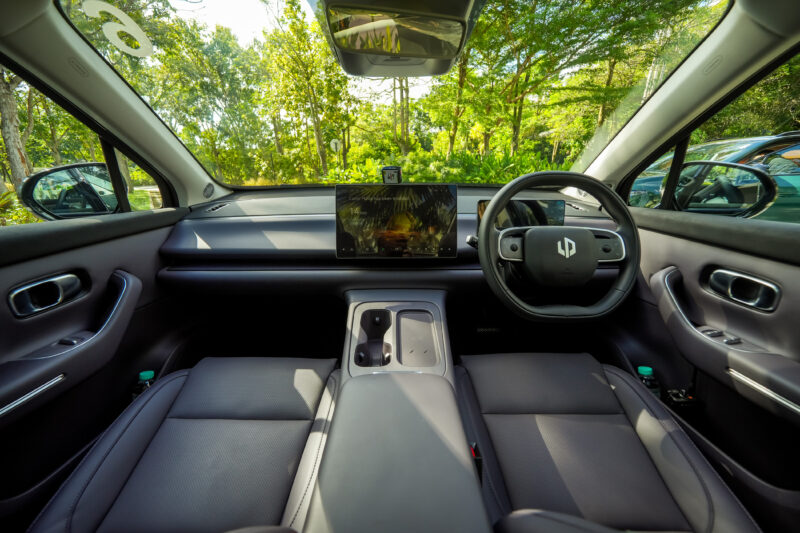
For someone used to a plethora of buttons and controls in a vehicle, entering the Leapmotor C10 creates a somewhat uncomfortable feeling.
This discomfort stems from the dashboard layout, which is overly simplistic and minimalistic, relying heavily on the menu embedded in the display screen, making it easier for the driver’s focus to be distracted on the road.
Therefore, if you’re interested in the C10, it’s best to avoid driving alone, so you can appreciate all the assistance provided when you wish to change a setting.
For example, adjusting the direction of the air conditioning, temperature settings, turning off the headlights, or simply disabling specific functions in the ADAS.
It is also unfortunate that side mirror adjustments must be accessed through the main screen.
Fortunately, Leapmotor has not adopted Tesla’s approach of eliminating the turn signal stalk entirely in favor of a button on the steering wheel.
Additionally, if you’re accustomed to pressing a start button, you will need to learn a new method on the C10, which involves scanning a card-shaped key on the center console before shifting the transmission lever to the D position.
Yes, you must do this every time before you begin your journey.
Another drawback that we find hard to accept is the absence of Apple CarPlay/Android Auto support.
6. ‘Healing’ mode inside
An interesting feature that can be beneficial for drivers after each trip is the Nap Mode.
When this mode is activated, you can enjoy ambient sounds such as rain, flowing river water, crickets, and ocean waves while you relax.
You can also set the desired nap duration, and the system will wake you up once the session ends.
With the ventilation function in the seats, your brief nap will be more comfortable while you wait for prayer time or for your spouse to finish shopping.
At the end of the day, in a market flooded with various EV models, the Leapmotor C10 certainly stands out with its spaciousness, making it suitable for everyday family use.
That is, if you don’t mind the overly minimalist dashboard design and the routine needed every day before starting your journey.
With a selling price below RM160,000, is it a worthwhile purchase? Perhaps, yes.
Leapmotor C10 Specifications
Electric Motor: Single, rear-wheel drive (RWD)
Power: 215 hp, 320 Nm
Acceleration: 0-100 km/h in 7.5 seconds
Top Speed: 170 km/h
Battery: LFP 69.9 kWh
Range: 424 km (WLTP data)
Suspension: MacPherson/Multi-Link
Ground Clearance: 180 mm
Cargo: 435 liters/1,410 liters
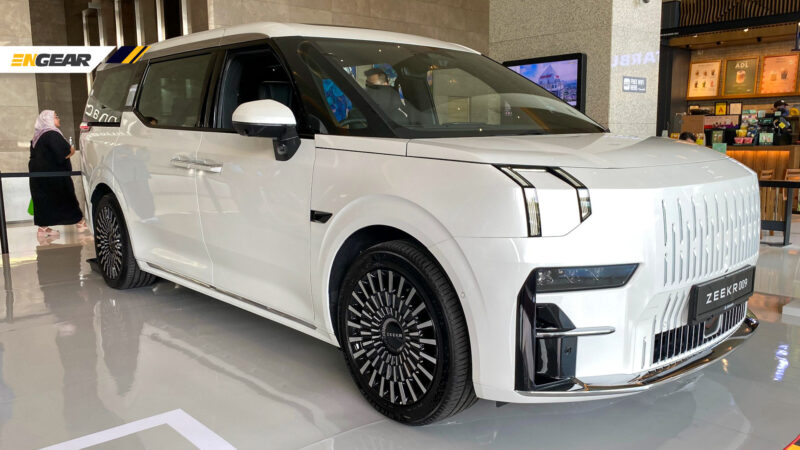
In addition to the X, Zeekr Malaysia has also launched a luxury MPV set to compete in the local EV market – the Zeekr 009.
The newcomer is poised to compete with popular models such as the Toyota Alphard/Vellfire, the Maxus Mifa 9, as well as upcoming models like the GWM Wey 80 and the Denza D9.
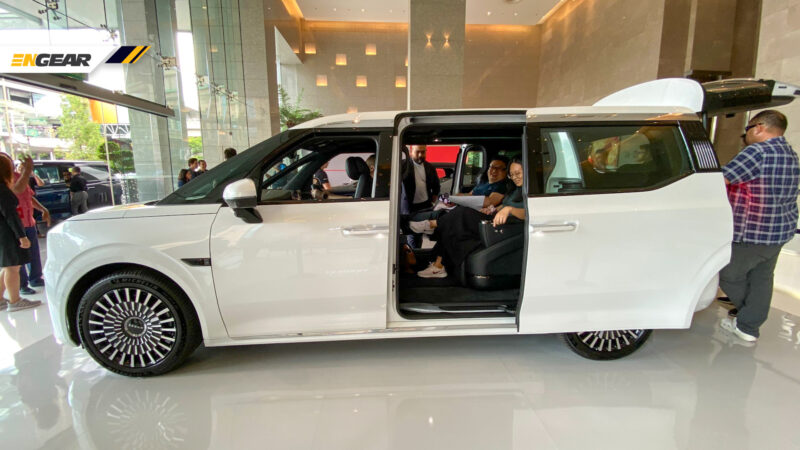
The 009 is available in two variants, namely Luxury and Ultra Luxury. The former is a seven-seater with a 2-2-3 seating configuration while the latter has six seats in a 2-2-2 layout.
Regardless of the chosen variant, the 009 is powered by a pair of electric motors that produce a total output of 603 hp and 693 Nm of torque, allowing it to accelerate from 0 to 100 km/h in 4.5 seconds.
The 116 kWh battery pack offers a range of up to 582 km (WLTP cycle) and supports DC fast charging at 150 kW, enabling charging from 10% to 80% in 30 minutes.
The driving experience of the Zeekr 009 is enhanced by a double-wishbone multilink suspension system, electromagnetic air suspension, and automatic leveling functions, alongside matrix LED headlights with adaptive driving beam (ADB) functionality and smart zone lighting.
Inside, you will find a 10.25-inch instrument cluster, a 15.05-inch infotainment screen, a 35.95-inch augmented reality head-up display, a 17-inch OLED roof screen, a Yamaha audio system, 50W wireless device charging, support for Apple CarPlay and Android Auto, and up to 9 USB-C ports.
The driver and front passenger seats feature 12-way adjustment with massage, ventilation, and memory functions.
Second-row passengers enjoy Sofaro First Class Aeronautics seats with an Ultra Long Electric Slide Rail function extending 1.1 metres, adjustable leg rests, and ventilation, massage, and memory functions. There’s also a 8.6-litre fridge with cooling and warming functions.
For safety, the 009 includes an ADAS system featuring lane centering control (LCC), adaptive cruise control (ACC), forward (CMSF) and rear collision mitigation support (CMSR), lane departure avoidance, blind spot detection (BSD), door opening warnings, and a driver performance monitoring system (DPM).
The 009 Luxury is priced at RM349,800, while the Ultra Luxury version costs RM359,800. Like the X, the 009 comes with a five-year/150,000 km vehicle warranty and an eight-year/160,000 km battery warranty.
Also included is 6GB of free internet data for two years, which provides access to the Zeekr app, onboard navigation, and over-the-air (OTA) software updates.
The first 500 buyers of the 009 will receive an exclusive package that includes a home charger, a mobile charger, and solar film.
Zeekr Malaysia has officially marked its entry into the local EV market with the launch of two new models: the Zeekr X and the 009. Both models were opened for orders earlier in October.
The X is offered in two variants, the Premium priced at RM155,800 and the Flagship AWD priced at RM172,800.
These prices include a five-year/150,000 km vehicle warranty and an eight-year/160,000 km battery warranty. Owners will also receive two years of complimentary connected services offering 6GB internet data.
To further sweeten the deal, the first 500 owners will receive an exclusive package that includes a home charger, protable charger, solar film, and sunshade cover.
Like the smart #1/#3 and the Volvo EX30, the X is built on Geely’s Sustainable Experience Architecture (SEA) platform.
With dimensions of 4,432 mm in length, 1,836 mm in width, and 1,566 mm in height, it is longer than the #1 and the EX30 but its width and height are quite similar to those of the EVs from smart and Volvo.
In terms of mechanical specifications, the Premium variant is powered by a rear-wheel-drive electric motor with an output of 268 hp, achieving 0-100 km/h in 5.6 seconds.
The Flagship AWD variant features two electric motors that generate 422 hp, allowing it to reach the same speed in just 3.8 seconds.
Both variants come with a 66 kWh battery pack that offers a range of 440 km based on the WLTP cycle. They support DC fast charging at 150 kW, which can restore energy from 10% to 80% in 30 minutes.
The safety system includes ADAS features such as adaptive cruise control (ACC), automatic lane changing (ALC), lane keeping assist (LKC), lane departure warning (LDW), forward collision mitigation support (FCM), rear collision mitigation support (RCM), and front (FCTA) and rear (RCTA) traffic crossing assistance.
Additionally, there are seven airbags, a 360-degree camera system, and a digital video recorder.
For the Malaysian market, the X is available in Crystal White, Mist Grey, Grid Grey, Palace Beige, and Pine Green. The cabin space can be had in either Charcoal Black or Stone Grey.
SAIC Motor Malaysia has announced the official sale price of the MG Cyberster at the 2024 Kuala Lumpur International Mobility Exhibition (KLIMS).
The battery electric roadster, which made its debut in the country last August, is priced at RM319,900 on-the-road without insurance.
It comes with a vehicle warranty of seven years/150,000 km, an eight-year/180,000 km high-voltage battery warranty, and an eight-year/160,000 km motor drive and motor control unit warranty.
In addition, SAIC Motor Malaysia is also offering a special package that includes one year of unlimited charging with JomCharge and a 7 kW Wallbox charger.
The Cyberster is available in a single variant powered by two electric motors, which together produce a total power output of 503 PS (375 kW) and 725 Nm of torque. This allows it to accelerate from 0 to 100 km/h in 3.2 seconds.
With a battery capacity of 77 kWh, the Cyberster is said to achieve a range of 446 km on a full charge based on the WLTP cycle.
Charging from 10% to 80% takes 38 minutes using a 150 kW DC fast charger, while a 7 kW AC charger requires approximately 10.5 hours to charge from 10% to full.
In terms of design, the Cyberster features a low and wide silhouette, along with a convertible soft-top roof. The equipment includes 20-inch Jetstream alloy wheels, red brake calipers, and automatic LED headlights with daytime running lights (DRL).
Inside, it boasts sport seats with Alcantara inserts, a Nappa leather-wrapped steering wheel, a seven-inch touchscreen, a 10.25-inch instrument panel, two additional seven-inch screens, and a Bose audio system with eight speakers.
For safety, the Cyberster is equipped with the MG Pilot ADAS system, which includes the following features:
Front Collision Warning (FCW)
Automatic Emergency Braking (AEB) with Pedestrian and Bicycle Detection
Adaptive Cruise Control (ACC)
Traffic Jam Assistance (TJA)
Lane Departure Warning (LDW)
Lane Keeping Assistance (LKA)
Blind Spot Detection (BSD)
Lane Change Assist (LCA)
Rear Cross Traffic Alert (RCTA)
Intelligent High Beam Assist
The Cyberster is available in four colours: Dynamic Red, Camden Grey, Inca Yellow, and English White. Dynamic Red and Camden Grey come with black and red interiors, while Inca Yellow and English White feature grey interiors. All colour options are complemented by a black roof.
Malaysia’s Leading Automotive News | ENGEAR ENGLISH