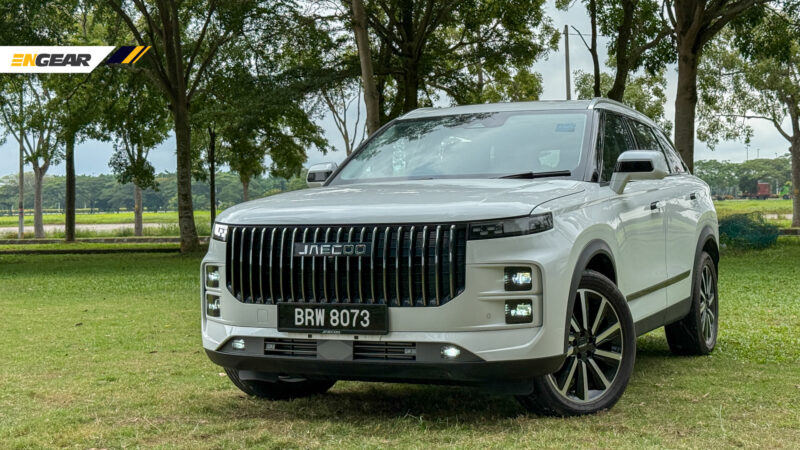
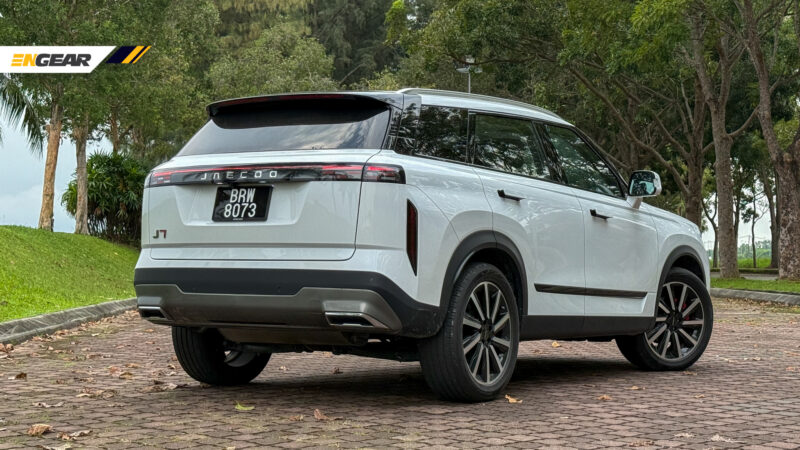
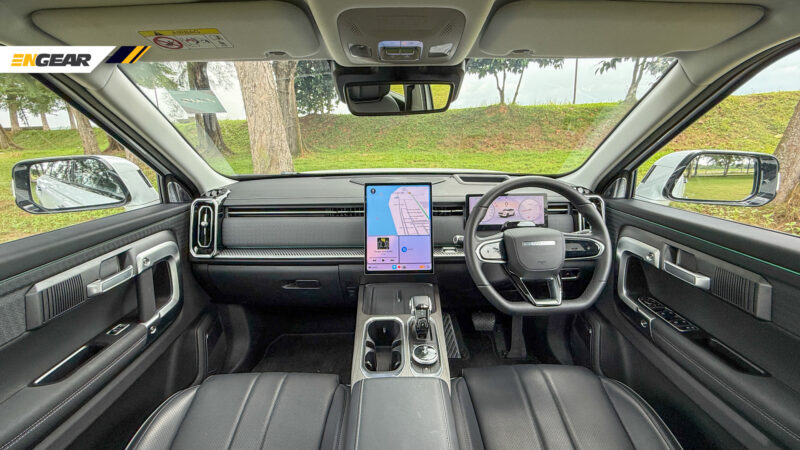
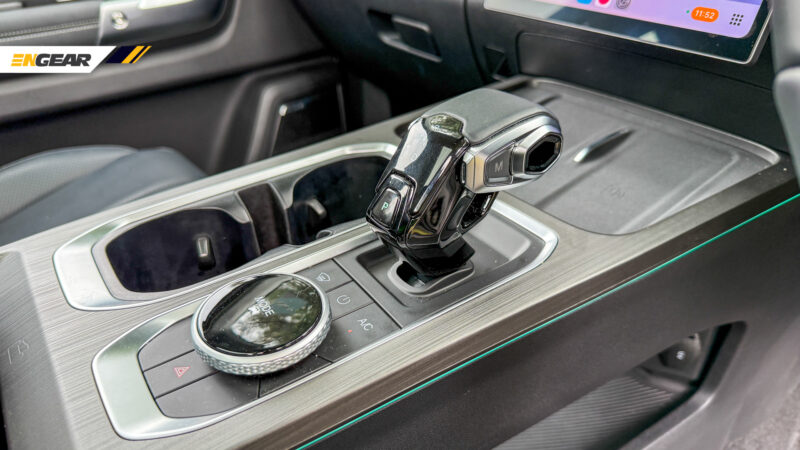
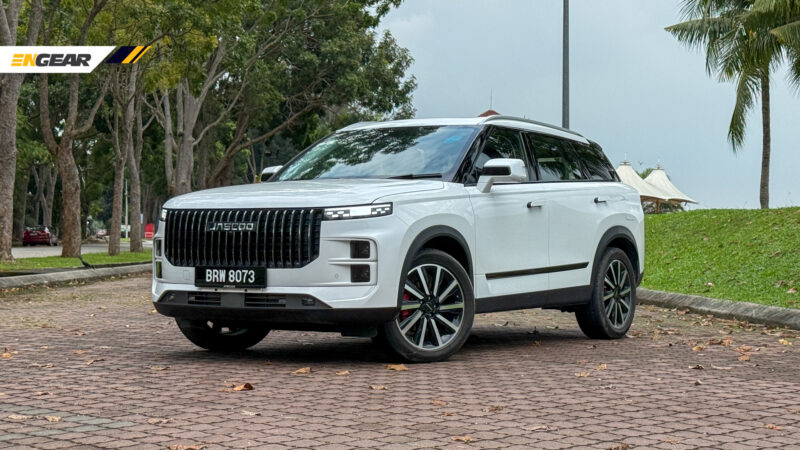
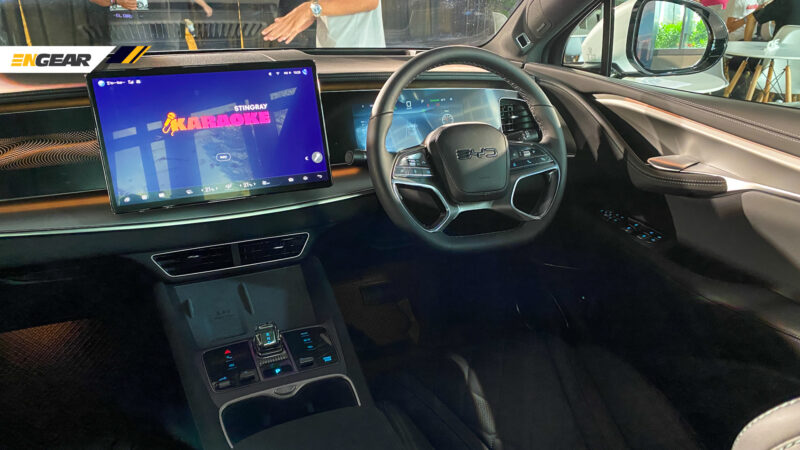
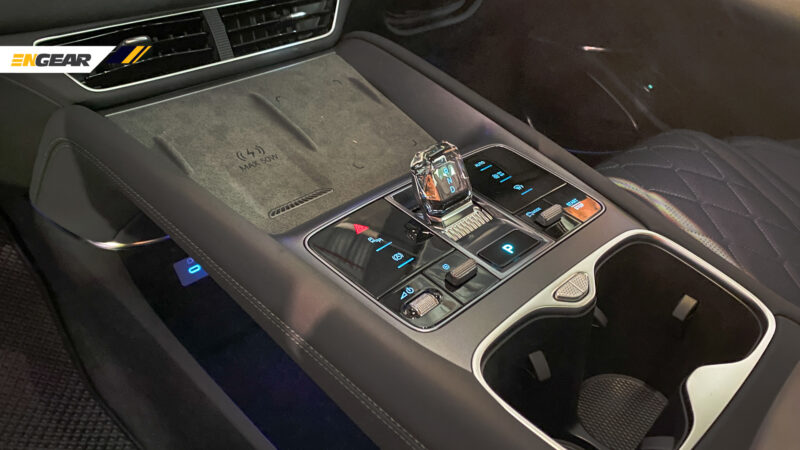
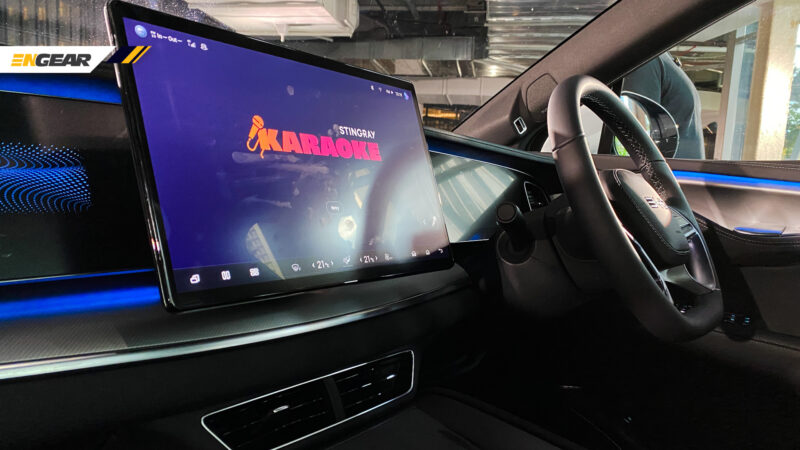
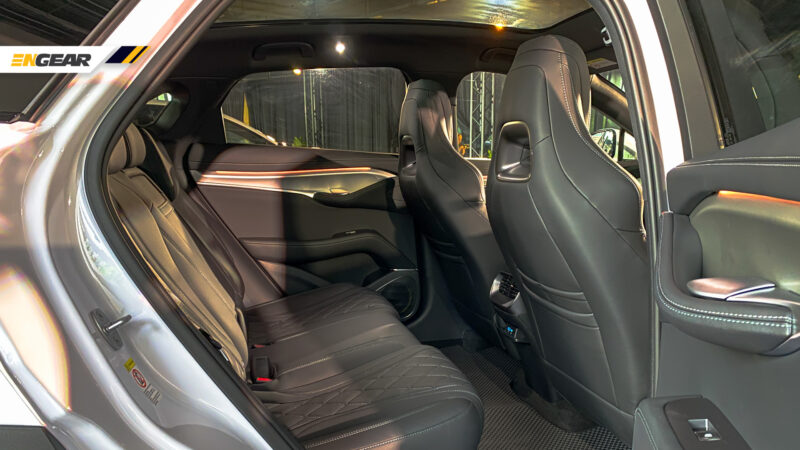
It’s no secret that Jaecoo Malaysia is set to expand its model lineup with the introduction of another SUV, the J7 PHEV.
The upcoming model was unveiled to the media last October and is scheduled for launch on February 28, with an estimated price of around RM170,000.
Although the J7 PHEV has not yet been officially launched, we were fortunate enough to be able to take it for a rather long distance drive last January.
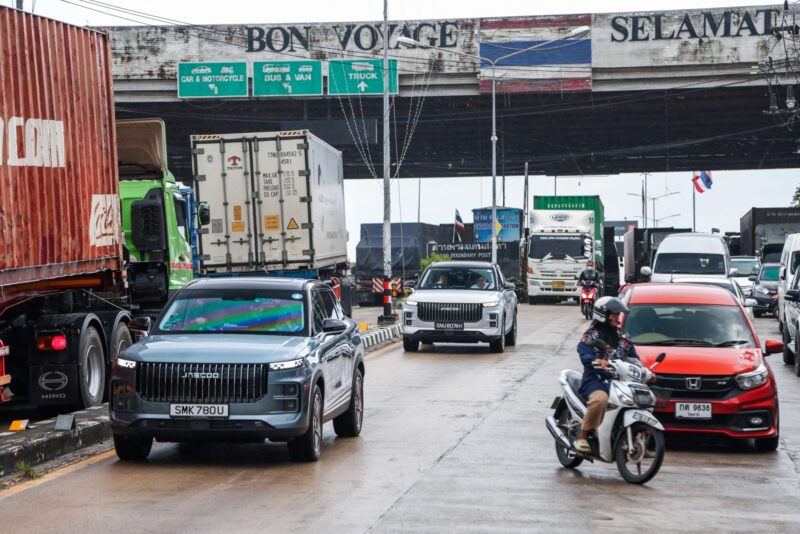
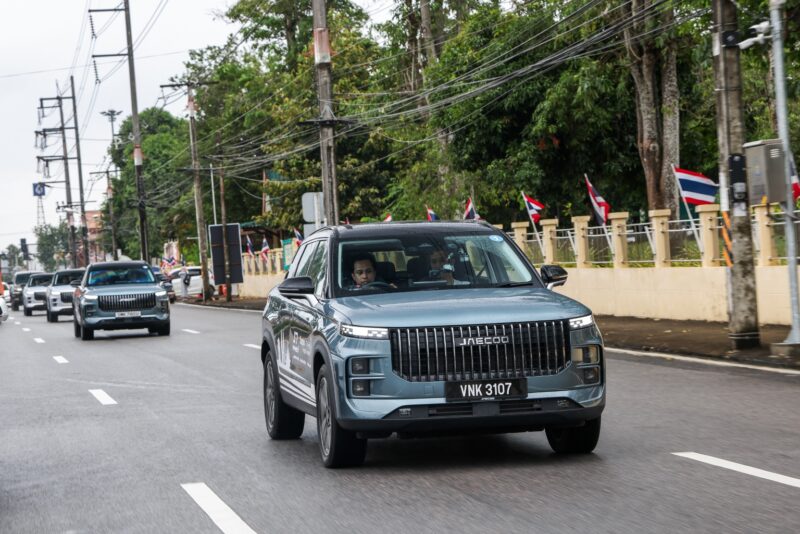
To be exact, yours truly and a few other media representatives actually embarked on a journey from Singapore, through Malaysia to Hatyai, Thailand with just one tank of fuel and a single charge.
The trip aimed to demonstrate the real-world capabilities of Jaecoo’s Super Hybrid System in terms of fuel efficiency.
In other words, it was to discover just how far the J7 PHEV could travel without needing to refuel or recharge the battery.
So, what exactly is the Super Hybrid System? For the J7 PHEV, it comprises a 1.5-litre turbocharged four-cylinder engine paired with a Dedicated Hybrid Transmission (DHT) and an 18.3 kWh battery.
Altogether, the powertrain produces a total system output of 347 hp and 525 Nm of torque, enabling the J7 PHEV to accelerate from 0 to 100 km/h in just 8.5 seconds.
But as you may already know, speed is not the primary focus of this SUV. Its true strength lies in its fuel efficiency, with Jaecoo claiming it can achieve readings as low as 5.99 litres per 100 km.
With a 60-litre tank and a zero-emission driving range of 106 km courtesy of the battery, Jaecoo claims that the J7 PHEV can cover an impressive distance of 1,300 km on a single tank.
On paper, those figures are indeed impressive, but can the SUV prove its mettle in the real world?
I personally believe that the J7 PHEV is capable of covering the claimed distance, at least in theory. But as you may already know, fuel consumption and range depend on various factors, such as driving style, traffic conditions, weather, load, and more.
The three-day trip was undertaken with careful consideration, meaning that the car was driven within the national speed limit for most of the journey. I also made a conscious effort to avoid aggressive acceleration to maintain optimal fuel consumption.
Additionally, to maximise distance, I made use of the regenerative braking system at varying levels of braking force according to the driving conditions.
For instance, when cruising on flat roads, the braking force was set to a low level to allow the vehicle to coast for longer. In hilly areas, however, I increased the braking force to allow the battery to charge more rapidly.
Upon reaching our final destination in Hatyai, the trip computer showed a distance of 1,051 km, with 269 km of fuel range and 21 km of battery range remaining.
When these three figures are combined, the J7 PHEV theoretically could cover up to 1,341 km without needing to refuel or recharge through a cable.
While achieving this figure may be challenging under more realistic driving conditions, if an owner could record a distance of around 1,100 to 1,200 km, I believe that would still be incredibly worthwhile.
Just think about it – how many other SUVs in the same price range can boast such fuel savings? Furthermore, with the anticipated restructuring of the RON95 petrol subsidy set to roll out this year, the J7 PHEV emerges as a very wise choice for buyers in this segment.
National automaker Proton in a statement said that its X-Series SUV lineup remains resilient in the market despite facing stiff competition from other brands vying for the same customer base.
X50
According to the automaker, the X50 has emerged as its best-selling SUV, with total sales of 23,647 units last year. The 2024 version, launched on 4 June, received an overwhelming response with a total of 8,000 bookings in the first month. A total of 13,780 units of the 2024 X50 were sold last year, accounting for 58.3% of the model’s total sales.
Meanwhile, the X50 Sport Edition (SE) received 941 orders, with 299 units registered in less than a month after its debut.
A recent survey of over 1,300 customers revealed that X50 owners were drawn to the vehicle primarily due to its combination of features, engine performance and spacious cabin.
X70
Proton’s first SUV, the X70, recorded sales of 5,628 units for the 2025 version. This makes up 62.6% of the total 8,992 units sold in 2024.
From the same recent survey, key reasons for purchase included fuel efficiency, features and engine performance.
Launched in August last year, the 2025 X70 is a comprehensive update to its predecessor, featuring revised exterior styling, new interior equipment and upgraded ADAS level 2 safety technology.
X90
The X90, Proton’s entrant in the D-segment SUV space, ended 2024 with 3,553 units delivered, maintaining its position as a market leader since its launch two years ago.
Proton reported that buyers were drawn to the X90’s driving performance, storage capacity and value for money. About 30% of buyers preferred the car for its strong driving performance, while 27% liked it because of its large storage compartments, good value for money and number of features compared to competitors.
The automaker added that X90 owners have families with children with a similar buying profile as X50.
“Thanks to our intelligent models, we have managed to raise the overall level of sophistication in cars offered to Malaysian buyers and while the strong market response to our current model lineup is testament to the trust and loyalty we have earned from our customers. Looking ahead, we remain dedicated to delivering vehicles that offer outstanding performance, features, and value,” said Roslan Abdullah, Chief Executive Officer of Proton Edar.
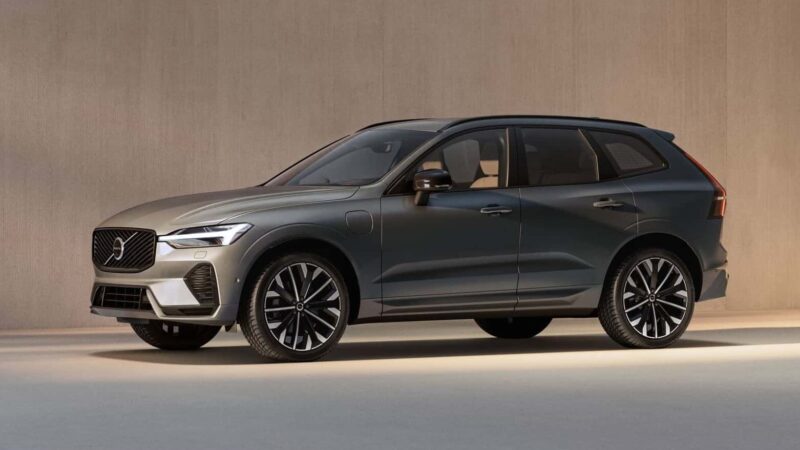
The second-generation mid-size premium SUV Volvo XC60 has been on the market since 2017.
This best-selling Volvo model has been updated for the 2026 model year, featuring several cosmetic changes borrowed from the XC90.
For instance, it has a redesigned grille structure, darker rear light units, and new wheel designs.
In addition, the Volvo XC60 is now offered in two new colors: Forest Lake and Aurora Silver, along with Mulberry Red for the first time.
Stepping inside the cabin, the XC60 is equipped with a larger infotainment screen (11.2 inches), supported by the latest software, over-the-air (OTA) updates, and upgraded hardware.
Thanks to the use of Qualcomm’s new-generation Snapdragon Cockpit Platform, this infotainment system is significantly faster than the existing one.
There have been no changes to the engine offerings, meaning the XC60 continues to feature the B5 mild hybrid variant with 250 PS, the T6 PHEV with 350 PS, or the T8 PHEV with 461 PS, depending on the market.
Jaecoo Malaysia has announced that the first locally assembled (CKD) J7 PHEV unit has started rolling off the production line at its Shah Alam facility.
According to Jaecoo Malaysia, the SUV will be officially launched by the end of this month.
“We believe the J7 PHEV fits in perfectly with the market’s appetite for an alternative between the Internal Combustion Engine (ICE) and Electric Vehicle (EV) segments providing the best of both worlds with its superior Super Hybrid System fondly known as SHS,” said Emily Lek, Vice President of Jaecoo Malaysia.
“As Malaysia’s EV ecosystem continues to develop, JAECOO is happy to offer greater peace of mind to consumers considering the transition to hybrid energy mobility,” she added.
The J7 PHEV is powered by a combination of a 1.5-litre TGDI engine, a one-speed hybrid DHT transmission, and an 18.3 kWh LFP Blade battery, delivering a total power output of 347 PS (255 kW) and 525 Nm of torque.
The battery supports 6.6 kW AC charging, enabling it to charge from 30% to 80% in three hours, and 40 kW DC charging, which only requires 20 minutes for the same charge level.
Alternatively, owners can use a standard three-pin 230 V household socket, which takes approximately 8.5 hours for a full charge.
Most recently, the J7 PHEV was tested in a long-distance drive from Singapore to Hatyai, Thailand and clocked over 1,200 km WLTP range.
The Jaecoo J7 was launched about six months ago, and we can still see this SUV on the roads, proving its popularity among Malaysians.
It is not just its looks that are appealing; the Jaecoo J7 also offers practical features and functions suitable for daily use.
In the Malaysian market, the J7 is available in a two-wheel drive (2WD) variant or an all-wheel drive (AWD) variant, with prices starting from RM138,800.
There are not many significant differences between the two models; in fact, both the 2WD and AWD variants are equipped with nearly comprehensive safety features to ensure a safer driving experience.
It may seem like a perfect SUV, but the Jaecoo J7 has its own weaknesses.
Range Rover-esque Appearance – Not for Everyone
As you can see, the Jaecoo J7 offers a unique and premium appearance for an SUV priced under RM150,000.
However, this aesthetic is subjective, and some may not particularly favor its resemblance to a Range Rover.
One thing we hope for is that the rear light units could be enlarged to enhance the overall design, which currently looks a bit empty.
Over-Reliance on the Screen
Like any modern car, the Jaecoo J7 follows the trend of incorporating various functions into the infotainment screen.
This is not necessarily a negative aspect if the manufacturer knows how to provide the right functions to facilitate the driver’s tasks, especially when driving alone.
Yes, voice commands are also available, but not everyone enjoys issuing voice commands for functions that could traditionally be adjusted manually—such as setting the temperature and fan speed of the air conditioning.
Fortunately, there is a dedicated AC button on the center console, making it easier for the driver to navigate the hidden climate control menu within the central screen.
Safety System Could Be Improved
Overall, the author is quite satisfied with the effectiveness of the safety systems in the Jaecoo J7.
However, it might be better if the lane departure avoidance system (and steering correction) is tuned more effectively, so drivers do not feel a ‘disconnection’ with the road.
It’s not a good situation when a driver does not receive the necessary feedback from the road due to the steering correction system intervening for several seconds before relinquishing control back to the driver.
You can read the full review of the Jaecoo J7 test drive at the link below:
With its striking price and appearance (some have said it resembles a Range Rover), the Jaecoo J7 has created its own phenomenon in the Malaysian market.
The Jaecoo J7 model was first showcased in early 2024 before officially launching a few months later, starting at RM138,800 for the two-wheel drive version and RM148,800 for the AWD version.
Since its official launch, this SUV model has become quite popular, almost as hot as fried bananas, even overshadowing local brands for a time.
Many may be drawn to its elegant exterior, while others may desire the off-road driving capabilities offered by the Jaecoo J7.
To investigate the real reasons behind this SUV’s popularity, we managed to obtain a Jaecoo J7 test unit for a week of driving, and here are our opinions:
1. Price Below RM150,000 for a ‘Range Rover’, Who Wouldn’t Want It?
We admit that after getting a closer look at the Jaecoo J7, it indeed has an aura that makes many consider it a ‘people’s version’ of the Range Rover.
This perception is especially strong when viewed from the side.
With its luxurious-looking design, the Jaecoo J7 appears to satisfy those who want a premium SUV image without sacrificing their bank account.
2. Is the Jaecoo J7 2WD Sufficient?
We were provided with the two-wheel drive (2WD) variant of the Jaecoo J7 for our test drive.
There are two significant differences between this model and the AWD variant, namely the drive system and the driving modes included.
The Jaecoo J7 2WD only offers three driving modes: Eco, Normal, and Sport, compared to up to seven driving modes for the AWD variant (which includes additional modes for Sand, Mud, Off-road, and Snow).
However, the capabilities of both variants remain the same, such as a ground clearance of 200 mm and the ability to wade through water up to 600 mm deep.
For those who do not prioritize off-road driving capabilities, the 2WD version is more than adequate.
We had the opportunity to test this SUV’s ability to navigate flash floods in the Klang area, and it performed excellently, able to maneuver past several cars that dared not proceed.
The suspension tuning of the Jaecoo J7 also impressed us, maintaining good controllability even on unpaved roads while preserving a comfortable driving experience.
3. Powerful Engine
Powering this SUV is a 1.6-liter turbocharged inline-four engine that produces a maximum output of 194 hp and a torque of 290 Nm.
With a seven-speed DCT transmission from Getrag, the Jaecoo J7 can accelerate from 0 to 100 km/h in just 9.2 seconds.
In terms of driving, the Jaecoo J7 poses no significant issues for swift cruising, offering stable and comfortable driving even at high speeds.
However, by default, the Jaecoo J7 starts in Eco mode every time the drive button is pressed, and you must switch it to Normal mode for a smoother takeoff.
In Eco mode, we noticed that the initial driving experience was not very pleasant at times, occasionally feeling as if the vehicle was somehow reluctant to move forward.
4. Minimalist Cabin
The simplified approach on the exterior continues into the design of the cabin space, which is more minimalist while simultaneously conveying a sense of premium atmosphere.
The centrally located 13.2-inch screen houses various functions and settings, including air conditioning controls and multiple safety features that can be adjusted.
The good news is that to raise or lower the cabin temperature, you only need to press a button on the center console to open the air conditioning control menu, without having to search for the menu, especially after the Apple CarPlay/Android Auto menu is displayed.
Although the front seats do not come with a comprehensive adjustment function, we appreciate that they provide enough cushion dimension to support the lower legs.
As a result, we did not feel excessively fatigued during our drive.
Accompanying us throughout the journey was a pleasant and captivating sound produced by eight Sony speakers, which filled the cabin.
There are several other features we liked, particularly the digital cluster screen that still offers analog meter display options, and a clear, easy-to-read head-up display.
For the rear seats, there are two adjustable reclining angles available.
5. Driving Experience
Aside from its handsome appearance, the Jaecoo J7 is actually very enjoyable to drive.
This is not only due to its ability to attract public attention but also the handling and comfort it offers.
The MacPherson strut suspension setup in the front and the Multi-Link setup in the rear contribute to good handling on winding roads, complemented by a responsive steering feel.
More importantly, the NVH (noise, vibration, and harshness) levels are minimal, allowing passengers to relax peacefully without significant disturbances.
From the driver’s perspective, the windshield of the Jaecoo J7 offers a wide field of view, supported by practical side mirrors for such a large SUV.
Thus, most of the time, I preferred to rely entirely on these physical features, only using the surround camera display to ensure there were no obstacles around the vehicle while positioning the car in the parking space.
6. Practicality
In addition to a cabin that offers ample leg and headroom for both front and rear passengers, the Jaecoo J7 provides a sizeable cargo space.
With a volume of 412 liters, it is adequate to accommodate various necessities, and it can be expanded up to 1,349 liters when the second-row seats are folded down.
Moreover, the Jaecoo J7 still has space to accommodate a full-size spare tire!
7. Comprehensive Safety Features
In terms of safety, the Jaecoo J7 is generous with various functions, including autonomous emergency braking, front collision warning, lane departure warning, lane-keeping assistance, forward vehicle movement warning, and adaptive cruise control.
It also includes rear collision warnings, rear traffic cross alerts, blind-spot monitoring, and a comprehensive 360-degree monitoring system.
To ensure your driving remains safe, the Jaecoo J7 is equipped with speed limit reminders and a very useful tire pressure monitoring system (TPMS).
In conclusion, the Jaecoo J7 could serve as an alternative for daily driving if you’re tired of the options currently available in the SUV market and want a vehicle with a premium image that attracts attention.
Its price is also reasonable enough not to leave your pocket feeling empty every month.
It wouldn’t be a mistake to change your mind and drive this model home, especially with the complete package of style and specifications offered for our market.
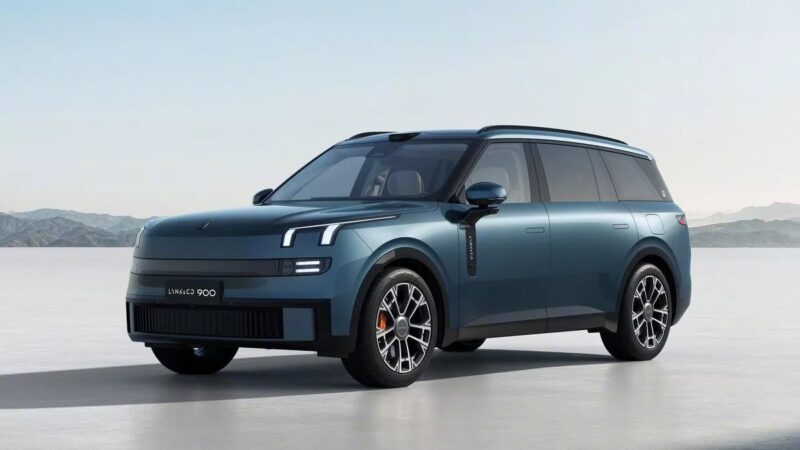
The Lynk & Co 900 is a luxury SUV with a six-seat configuration that is set to enter the Chinese market this March.
Built on the SPA Evo platform, the Lynk & Co 900 measures 5,240 mm in length, 1,999 mm in width, and 1,810 mm in height, with a wheelbase exceeding three meters (3,160 mm).
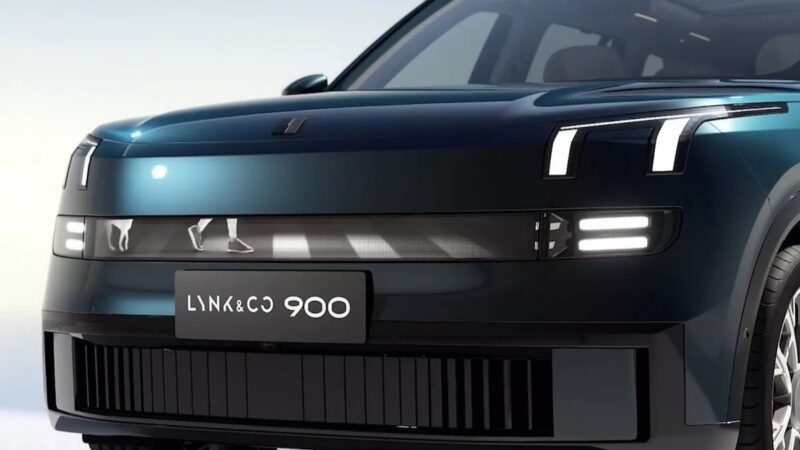
On the exterior, this SUV features design elements commonly found in Lynk & Co models (as well as Zeekr).
For instance, it boasts sharp LED daytime running lights, followed by low-mounted headlights positioned in the bumper.
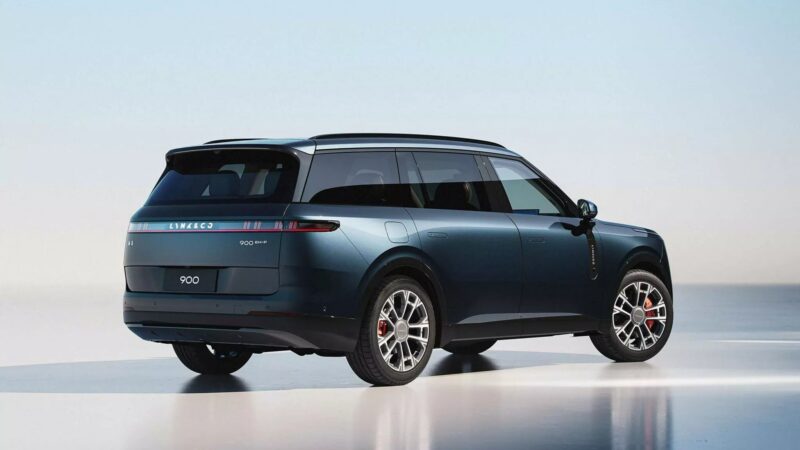
From a side view, the Lynk & Co 900 incorporates design elements inspired by the Range Rover, while the rear presents a more streamlined lighting unit.
Three plug-in hybrid (PHEV) powertrain options are available for buyers.
The base variant of the Lynk & Co 900 comes with a 1.5-liter turbo engine paired with two electric motors (215 hp front/308 hp rear), producing a total power output of 710 hp.
There is also a 2.0-liter turbo engine option, with the first version paired with a 165 hp electric motor in the front, followed by a 308 hp electric motor at the rear axle, bringing the total power output to 724 hp.
The most powerful version is equipped with three electric motors, including a 165 hp front motor and a pair of 215 hp rear motors, generating a staggering 845 hp!
This top variant is said to accelerate from 0 to 100 km/h in just four seconds.
The interior of the Lynk & Co 900 features a rather unique dashboard layout.
For the driver, there is a relatively small 12.66-inch digital cluster screen, while front passengers enjoy a large 30-inch floating display with a 6K resolution.
Additionally, it includes two wireless charging slots, ambient lighting, and a floating armrest on the door panel.
For second-row passengers, a small screen is provided on the center console, and a 30-inch 6K display that can be concealed in the roof lining.
As of now, the retail price for the Lynk & Co 900 SUV has not yet been announced.
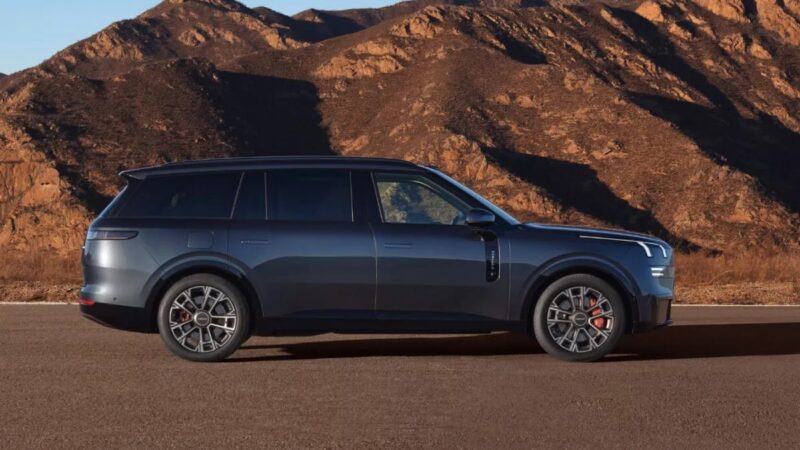
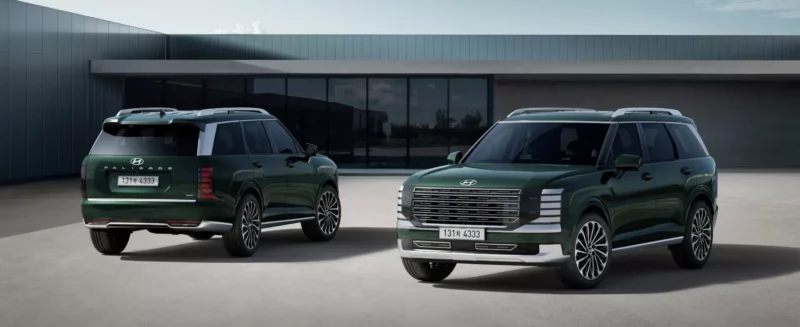
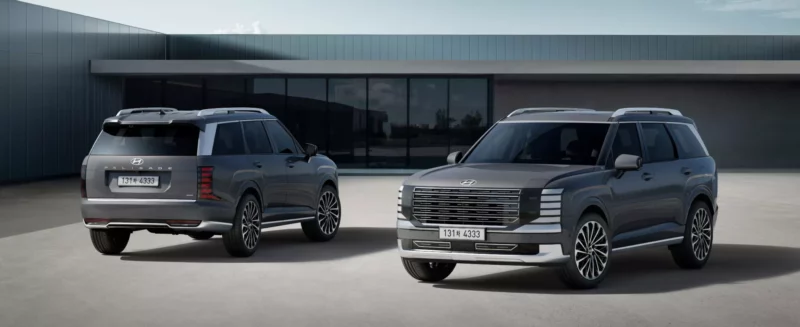
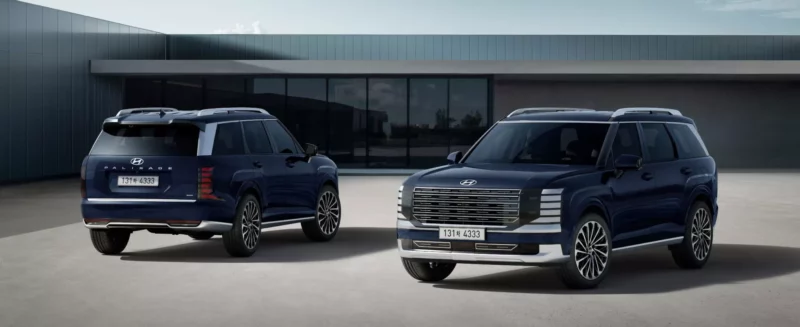
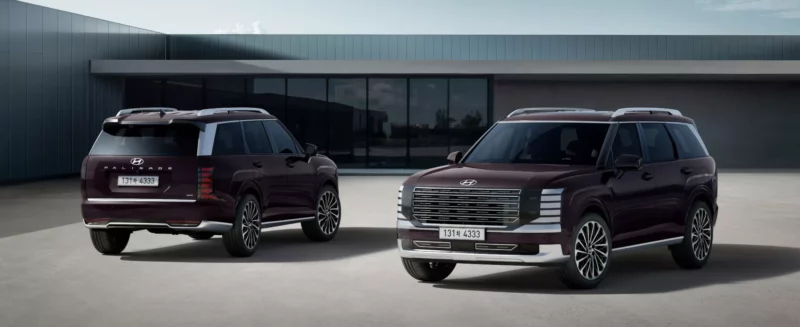
Whether one realizes it or not, the Hyundai Palisade has now entered a new generation after making its debut in 2018.
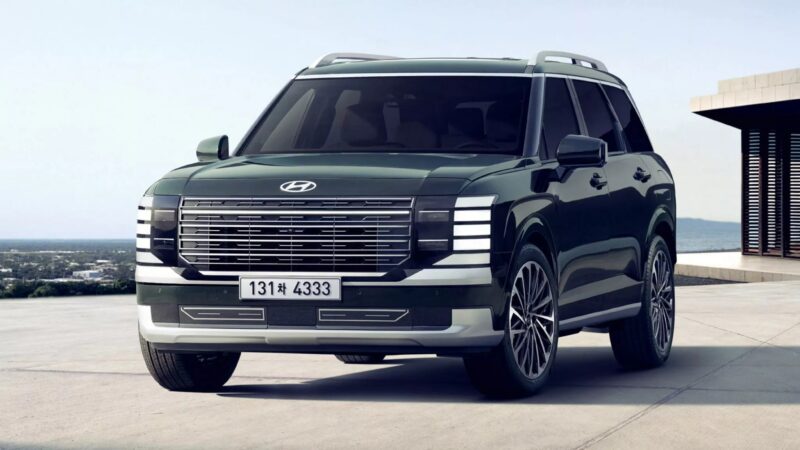
Unlike its predecessor, the second generation of the Hyundai Palisade 2026 boasts a sturdier design without overly busy body lines.
In terms of dimensions, the Hyundai Palisade 2026 is now 5,060 mm long (+65 mm), 1,980 mm wide (+5 mm), 1,805 mm tall (+55 mm), and has a wheelbase of 2,970 mm (+70 mm).
From the side profile, the added dimensions result in a shorter front overhang and a longer rear overhang.
It resembles a Range Rover.
This luxurious appearance is further enhanced by a relatively large and wide grille, followed by a cluster of gigantic LED daytime running lights that also serve as turn signal indicators visible from a distance.
The layered lighting theme continues at the rear, though without the transverse LED bar that is currently in trend.
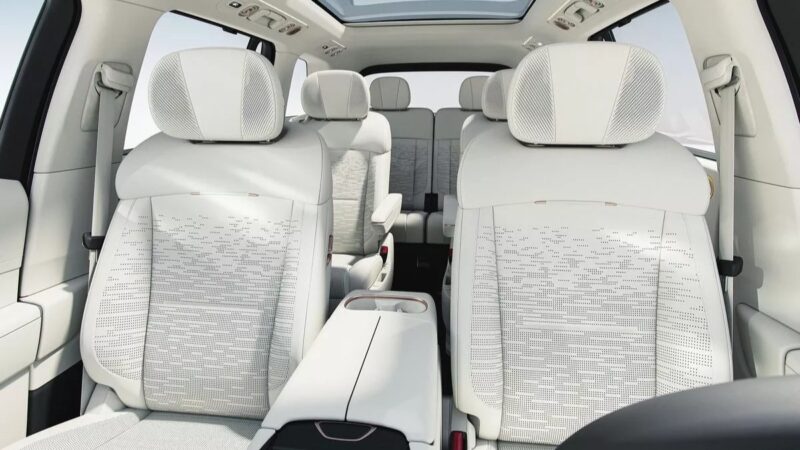
Inside the cabin, the Palisade features a layout that is far more luxurious, akin to a Genesis brand vehicle.
The dashboard houses a twin 12.3-inch screen in a single curved panel, adorned with wooden trim, ambient lighting, a steering wheel similar to the Range Rover model, and a cluster of controls for the infotainment and cabin temperature systems.
In Korea, the Hyundai Palisade is also available in a nine-seat version, where the ninth seat is a small bench between the front seats that can be converted into a center console.
For other markets, the Palisade remains available in seven- or eight-seat versions.
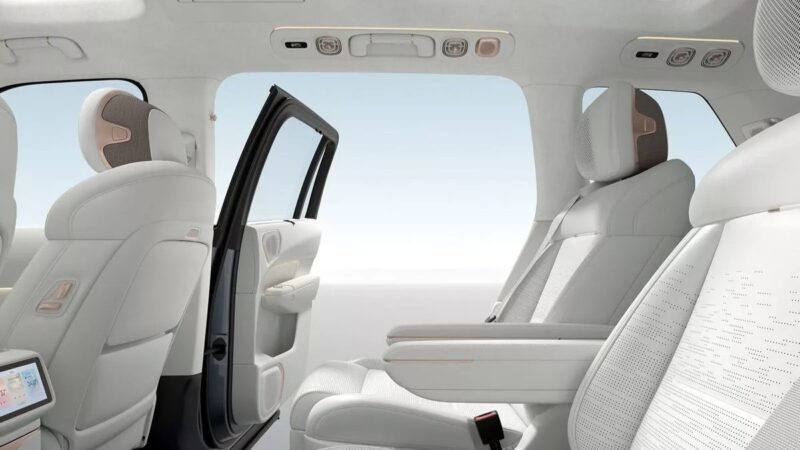
In the seven-passenger version, the second-row seats come with electric adjustability (including reclining and folding), massage functions, and a tilting walk-in feature for easy access to the third row.
Cargo space can also be maximized to 615 liters simply by moving the third-row seats slightly forward.
Drivers are also given the freedom to adjust the position and angle of the second and third-row seats through the infotainment screen menu.
It is worth noting that the Hyundai Palisade 2026 still retains the same unibody platform as its predecessor, although it has been upgraded.
Despite sharing the same platform, the new Hyundai Palisade does not retain the 3.8-liter V6 engine, instead replacing it with a 2.5-liter turbocharged inline-four engine that produces 277 hp and 422 Nm of torque.
The hybrid version, which consists of the 2.5-liter turbo engine, a single electric motor (72 hp/264 Nm), and a 1.65 kWh lithium-ion battery pack, can generate up to 330 hp, with a driving range exceeding 1,000 km!
In addition to the new engines, the Hyundai Palisade is the first Hyundai SUV to feature a technology known as Electronic Controlled Suspension (ECS).
This ECS system uses navigational data and sensors to adjust vehicle movements throughout the journey, prioritizing enhanced passenger comfort.
Furthermore, the new Palisade offers a quieter cabin using thicker glass and additional sound insulation around the windows.
The second-generation Hyundai Palisade 2026 is set to be sold in the Korean market starting at ₩43,830,000 (approximately RM135,724).
The Toyota Hilux Champ is a budget version of the truck produced by Toyota as a more affordable alternative to the mid-size Hilux pickup.
In addition to serving as a workhorse, the Hilux Champ also has the potential to function as a passenger vehicle — providing an alternative to the Toyota Fortuner.
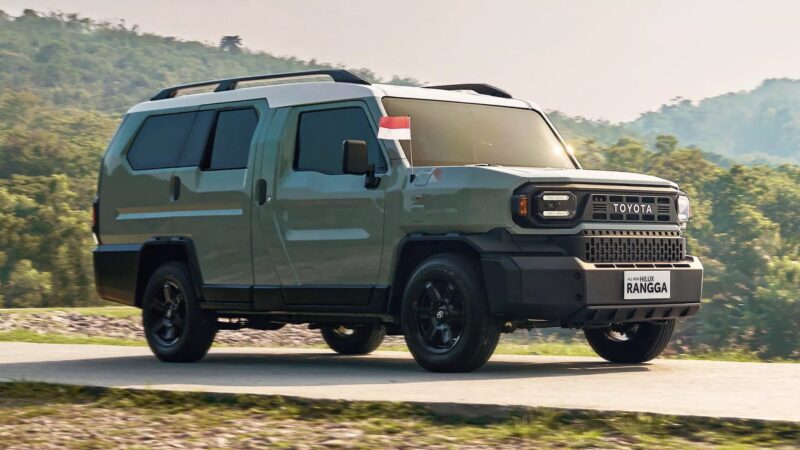
In Indonesia, the Hilux Rangga (another name for the Hilux Champ) will be officially offered by Toyota Astra Motor in an SUV version, featuring a three-row, seven-seat configuration.
Source: Indra Fathan Instagram
The construction of the body for this new SUV will be handled by New Armada.
It can be said that the front section of this SUV still retains the original design of the Hilux Rangga; however, everything changes from the B-pillar backward.
Angular design elements dominate the sides and rear of the Hilux Rangga SUV, and if you notice, the roof structure is higher compared to the Hilux Rangga pickup version.
At the rear, the word “RANGGA” appears on the tailgate, accompanied by more basic-design rear lights.
Source: Indra Fathan Instagram
The interior of the Rangga SUV features a 2+3+2 seating arrangement upholstered in leather-like material.
Due to the presence of a third-row seat, the cargo space is somewhat limited, even though the overall size is larger than the pickup version.
The Rangga SUV model is set to go on sale in Indonesia next year, with an estimated starting price below Rp 400,000,000 (approximately RM 111,000).
For comparison, the cheapest Hilux Rangga pickup carries a price tag of Rp 188,700,000 (approximately RM 53,000), while the larger Toyota Fortuner is priced from Rp 573,700,000 (approximately RM 160,000).
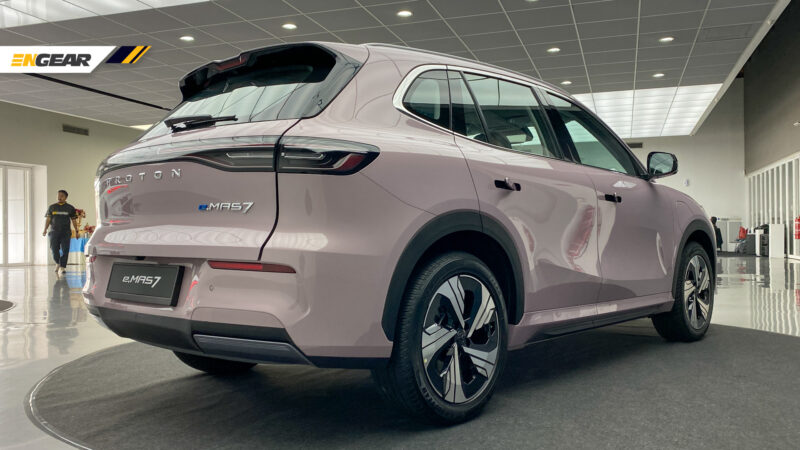
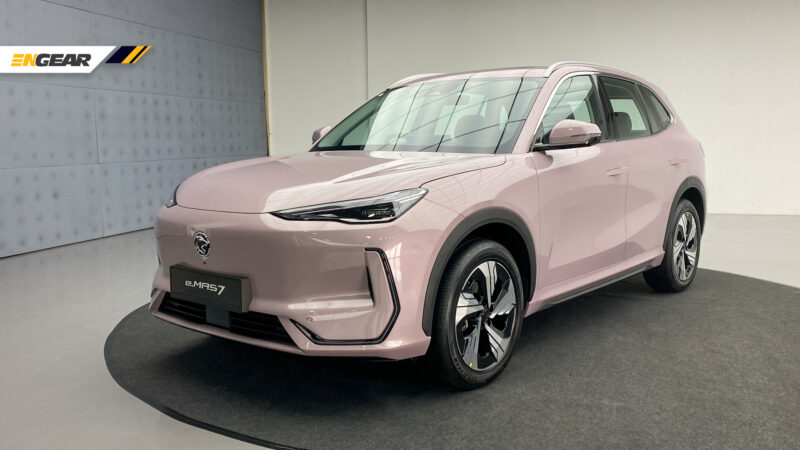
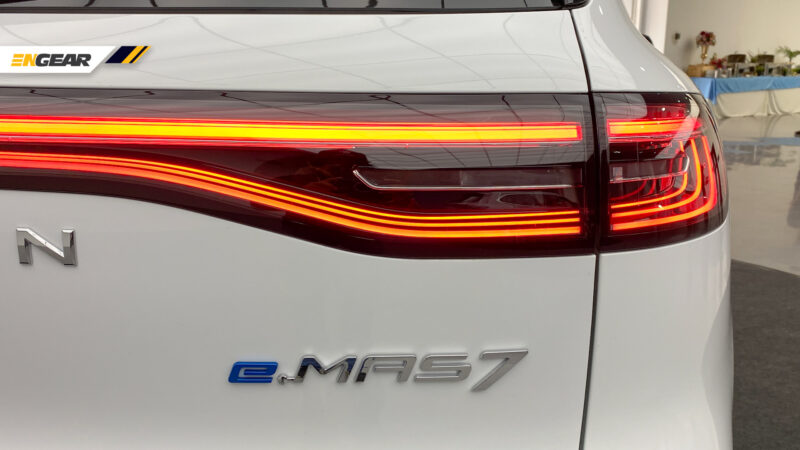
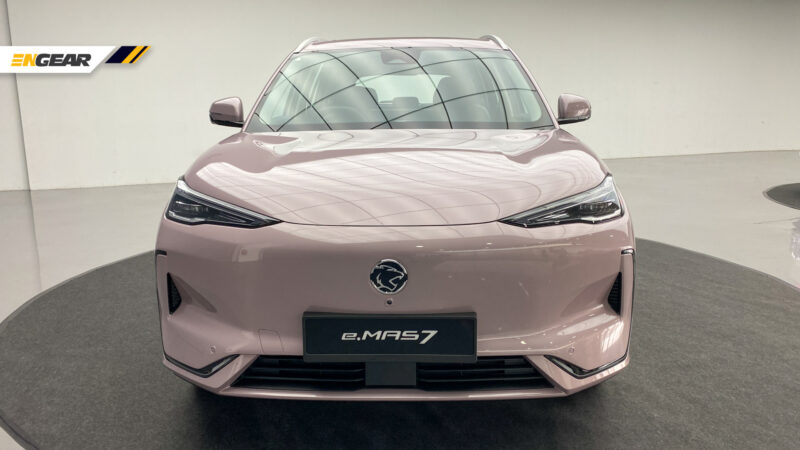
After several rounds of previews including test drives, Proton through its Pro-Net division has officially launched the first electric SUV, the e.MAS 7, for the local market.
Here are seven key facts you should know:
1. Dimensions
The Proton e.MAS 7 is an electric SUV in the C-segment, measuring 4,615 mm in length, 1,901 mm in width, 1,670 mm in height, and with a wheelbase of 2,750 mm.
Its turning radius is a compact 5.4 meters.
Standard features include a MacPherson strut setup at the front, complemented by a multilink configuration at the rear.
2. Power
The e.MAS 7 is powered by a single electric motor delivering 215 hp and 320 Nm of torque.
It can accelerate from 0 to 100 km/h in just 6.9 seconds, reaching a top speed of 175 km/h.
3. Two Battery Pack Options
For the local market, the Proton e.MAS 7 is available in two variants: Prime and Premium.
The Prime variant comes equipped with an LFP battery pack of 49.52 kWh, allowing a range of 345 km on a full charge (WLTP data), while the Premium variant features a 60.22 kWh battery pack with a range of 410 km.
This short blade Aegis battery supports AC charging at 11 kW and DC fast charging at 100 kW (80 kW for the smaller capacity battery), enabling the battery to be charged from 30% to 80% in just 20 minutes.
4. Exterior Features
Proton has made few changes to differentiate the e.MAS 7 from its donor model, the Geely Galaxy E5.
Standard exterior features of this electric SUV include LED headlights and taillights, 18-inch alloy wheels with 225/55 R18 tires, roof rails, and adjustable side mirrors with a heating function.
The Premium variant adds features such as a panoramic glass roof, powered tailgate, and Active Grille Shutter functionality.
5. Cabin Space
Similar to the exterior, the interior equipment closely resembles that of the Geely model.
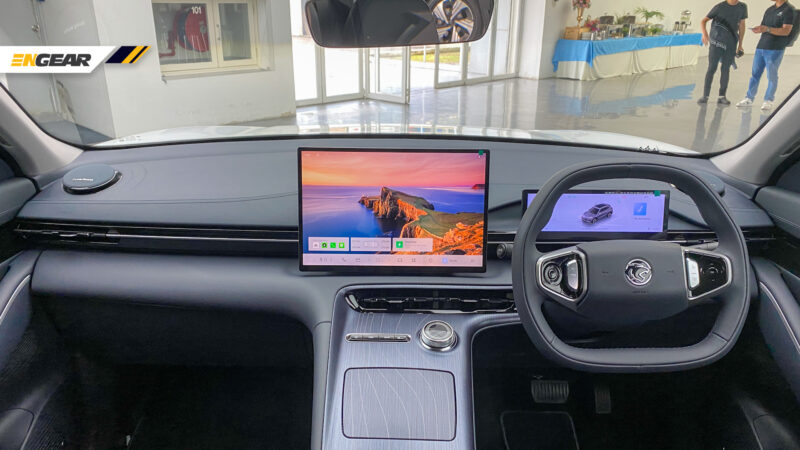
Inside, you will find features such as a 10.2-inch digital cluster display, a central 15.4-inch screen without Apple CarPlay or Android Auto support, a Flyme OS system, and a head-up display.
Additionally, the e.MAS 7 offers a six-way adjustable driver’s seat (four-way for the front passenger), ventilation functions, leatherette upholstery, ambient lighting with 256 color options, and several USB charging ports.
In the rear, the e.MAS 7 provides cargo space of 461 liters, which expands to 1,877 liters with the second-row seats folded down.
There is also 14 liters of storage space under the seats and a 10.8-liter center console drawer.
6. ADAS
For the first time, Proton offers Level 2 Advanced Driver Assistance Systems (ADAS) as standard across all e.MAS 7 variants.
This includes essential features such as an Automatic Emergency Braking (AEB) system, Forward Collision Warning (FCW), Lane Departure Warning (LDW), Lane Keeping Assist (LKA), Rear Cross Traffic Alert (RCTA), Lane Change Assist (LCA), and Adaptive Cruise Control (ACC).
Additionally, the e.MAS 7 comes equipped with six airbags, an auto hold function, front and rear radar, and a 360-degree camera system.
7. Pricing
The retail prices for the Proton e.MAS 7 are as follows:
e.MAS 7 Prime – RM109,800
e.MAS 7 Premium – RM123,800
For the first 3,000 customers, Proton is offering a rebate promotion worth RM4,000, bringing the starting price down to RM105,800 for the Prime variant, and up to RM119,800 for the Premium variant.
Here are the packages that buyers of the Proton e.MAS 7 will receive:
A 7kW home charging unit (valued at RM1,500)
V2L adapter (valued at RM500)
Financing package with interest rates starting as low as 1.98% (valued at RM3,000)
Unlimited internet data package for five years (valued at RM1,800)
RM1,200 rebate for existing Proton owners
Vehicle warranty of six years with no mileage limit, and a warranty for the high-voltage battery components of up to eight years or 160,000 km.
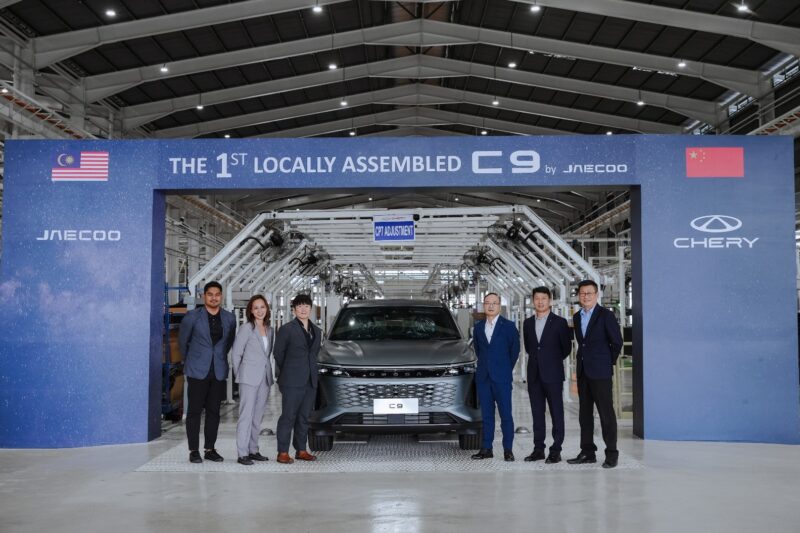
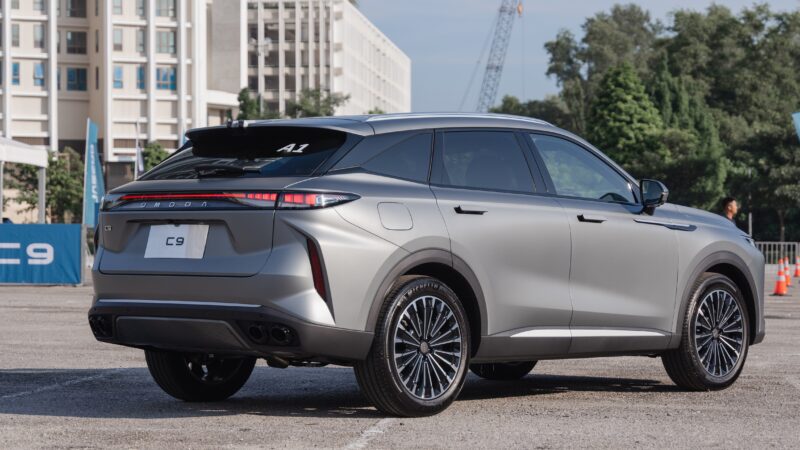
Jaecoo Malaysia has announced that the first locally assembled unit of the Omoda C9 has rolled out from its assembly plant in Shah Alam.
The company stated that the assembly of the coupe SUV, the second model to be launched under the Jaecoo umbrella, is well within its timeline to begin deliveries by January 2025.
Emily Lek, Vice President of Jaecoo Malaysia, expressed her pleasure at the encouraging response for the C9 and stated that they are ready to meet the demands of the Malaysian market.
“As a brand that is invested for the long term, we are equally dedicated to taking care of our customers throughout their ownership journey with us,” she added.
Launched on December 6, the C9 is offered in two variants: front-wheel drive (2WD) starting from RM168,800 and all-wheel drive (AWD) priced at RM188,800.
Both variants are powered by a 2.0-litre turbocharged inline four-cylinder engine, delivering 261 PS and 400 Nm of torque, paired with an eight-speed automatic transmission.
The C9 comes as standard with Level 2 Advanced Driver Assistance Systems (ADAS), which include features such as adaptive cruise control (ACC), traffic jam assist (TJA), automatic emergency braking (AEB), forward (FCW) and reverse collision warning (RCW), as well as a 540-degree surround view monitor (AVM).
In addition to the C9, the Jaecoo assembly plant in Shah Alam also produces the J7 AWD and 2WD models. Both of these models are now available for test drives and reservations at authorised Jaecoo dealers across Malaysia.
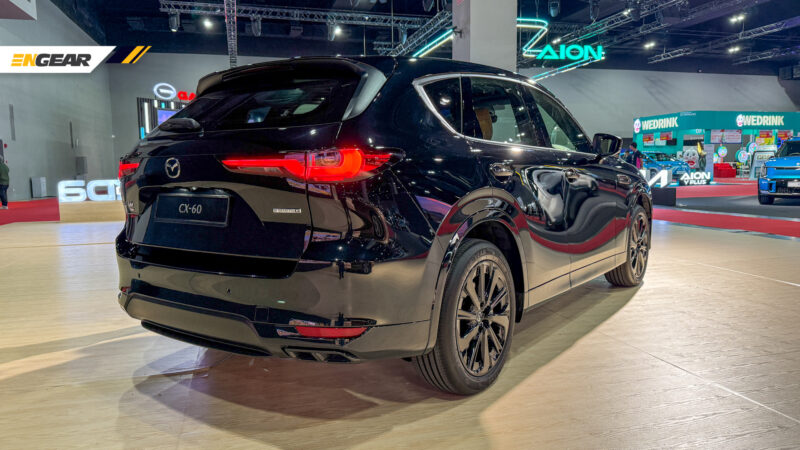
In addition to the Mazda CX-60, another SUV model showcased at 2024 KLIMS is the Mazda CX-80.
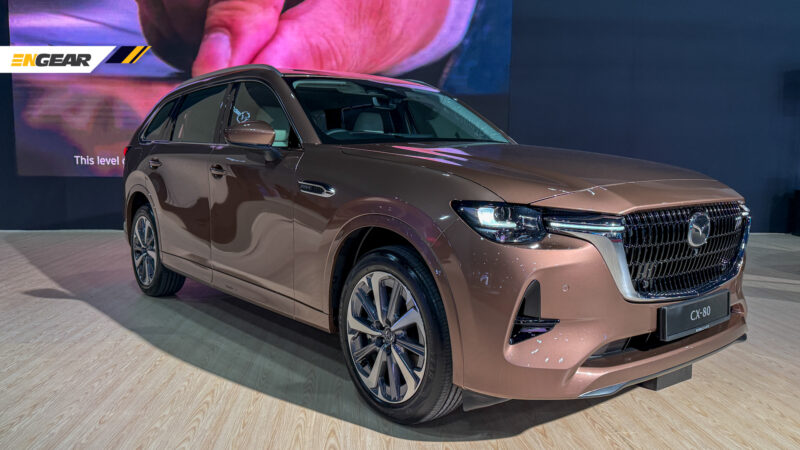
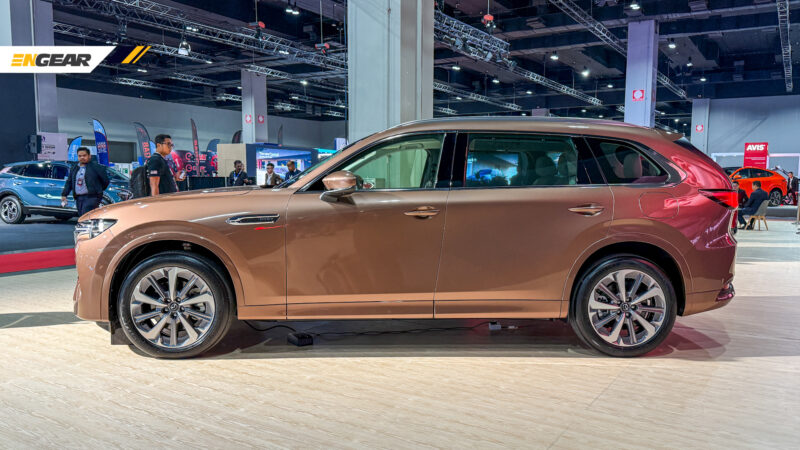
Like the Mazda CX-60, the Mazda CX-80 is a mid-size SUV built on the Large Group Product platform, but features a three-row seating configuration.
The exterior design of the CX-80 also incorporates design elements similar to those of the CX-60.
The dimensions of the CX-80 are larger than those of the CX-60, measuring 4,995 mm in length, 1,890 mm in width, and 1,710 mm in height, with a wheelbase of approximately 3,120 mm.
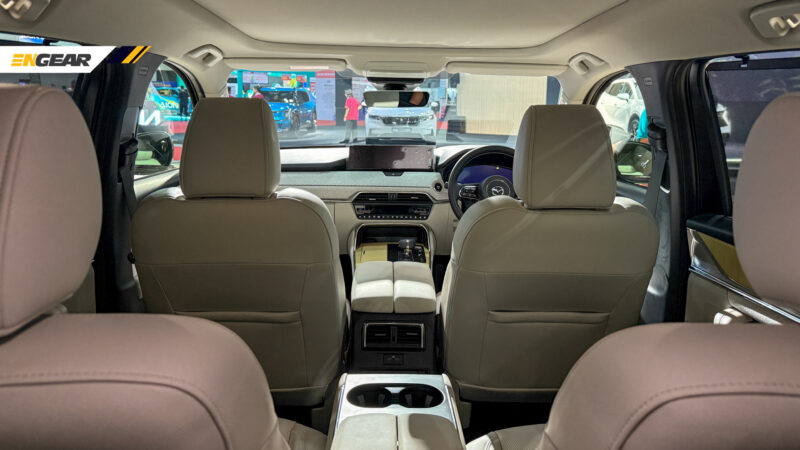
The cabin of the CX-80 also includes features and amenities consistent with the CX-60, such as a digital cluster display, a 12.3-inch central screen, a head-up display, and a Bose audio system.
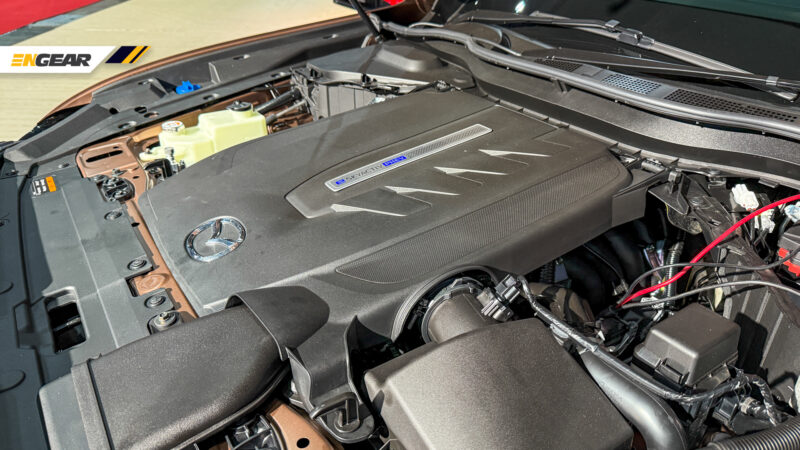
The unit displayed at KLIMS is equipped with a 2.5-liter e-Skyactiv G engine generating 328 PS and 500 Nm of torque, paired with an eight-speed automatic transmission.
At 2024 KLIMS, Bermaz Motor also took the opportunity to showcase two models from the Mazda Large Product group, namely the Mazda CX-60 and Mazda CX-80.
The Mazda CX-60 is a mid-size SUV that has been available in the global market since 2022.
It features dimensions of 4,745 mm in length, 1,890 mm in width, 1,685 mm in height, and a wheelbase of 2,870 mm, making it larger than the CX-50.
The exterior of the CX-60 embodies the design philosophy of ‘Kodo – Soul of Motion’ with a sharp front grille, smaller headlight units, and L-shaped daytime running lights that connect to the grille.
The cabin showcases a digital cluster display, a 12.3-inch infotainment screen, a head-up display, dedicated climate control buttons, and a cargo space of 570 liters.
The unit displayed at KLIMS is equipped with a 3.3-liter inline-six e-Skyactiv G engine with a hybrid system, producing 280 hp and 450 Nm of torque.
Honda may not be the first brand that springs to mind when discussing off-road vehicles, but the company is hoping to change it with the all-new fourth-generation Passport.
Much like its predecessors, the Passport will be exclusively available in the North American market. For the 2026 model year, it will be offered in three distinct variants, RTL, TrailSport, and TrailSport Elite, with prices starting from the mid-$40,000s (approximately RM178,708).
Each variant boasts a unique appearance. The RTL features sleek black trim and grille, a roof spoiler, and a silver skid garnish front and rear. It rides on 18-inch Gloss Shark Gray wheels fitted with 265/60 R18 all-season tyres.
In contrast, the TrailSport and TrailSport Elite present a more rugged aesthetic, equipped with exclusive off-road hardware such as bright orange heavy-duty recovery hooks, thick steel skid plates, and General Grabber all-terrain tyres in a size of 275/60 R18.
When compared to the third-generation model, the new Passport’s wheelbase has been extended (+2.75 inches) for better ride comfort, alongside wider tracks (+1.3 inches at the front and +1.5 inches at the rear) that contribute to improve cornering stability.
What’s particularly noteworthy is the matte black finish of the rear roof section, which is there to enable owners to lean skis, fishing poles and other equipment without fretting over scratches or damage.
Inside, Honda describes the Passport as perfectly suited for both daily routines and weekend adventures. The RTL variant features luxurious leather upholstery, while the TrailSport variants come with easy-to-clean synthetic leather.
Honda claims the 2026 Passport has the most cargo room in the model’s history, boasting up to 83.5 cubic feet behind the first row and 44 cubic feet behind the second row, which includes a larger redesigned underfloor storage area.
The cargo area is also offers plenty of space for those who enjoy the great outdoors, accommodating full-sized golf bags laid sideways, a large stroller, or two adult mountain bikes (with front wheels removed) when the rear seats are fully folded down.
On the equipment front, the Passport includes a 10.2-inch digital instrument panel and a 12.3-inch touchscreen—54% larger than its predecessor—featuring Google integration, as well as wireless Apple CarPlay and Android Auto compatibility.
Under the hood, the Passport is powered by a 3.5-litre V6 engine that delivers 285 hp and 355 Nm of torque, representing a 5 hp increase over earlier models. Power is directed to the wheels through a newly fine-tuned 10-speed automatic transmission specifically calibrated for the Passport.
Moreover, this SUV is equipped with the second-generation torque vectoring i-VTM4 all-wheel drive system, capable of handling 40% more torque and providing 30% faster response. This results in optimised traction across various driving scenarios.
Also enhanced is the suspension system, now featuring stronger forged steel suspension arms and cast-iron knuckles, alongside retuned MacPherson and multilink struts for a more confident handling feel. The steering ratio has also been recalibrated to provide quicker response.
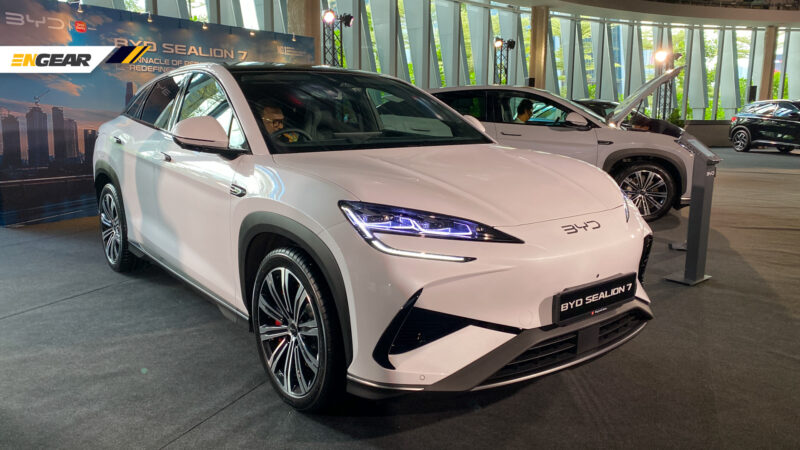
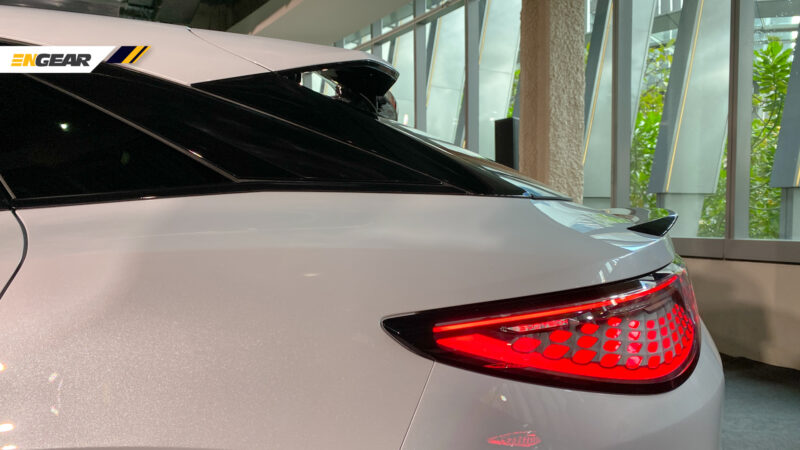
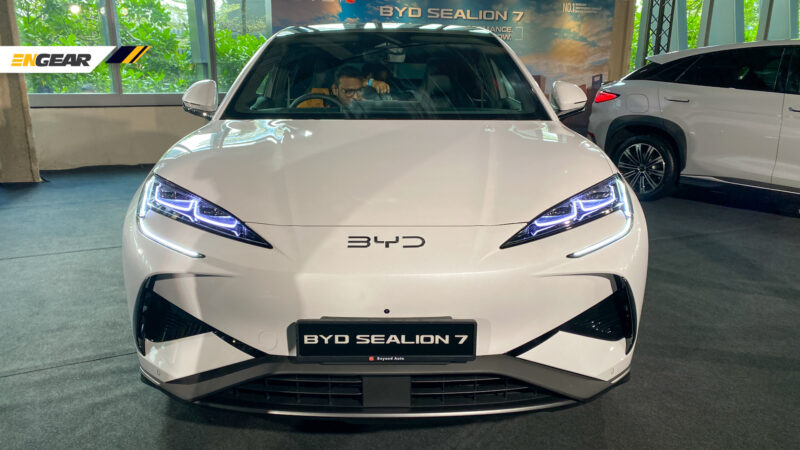
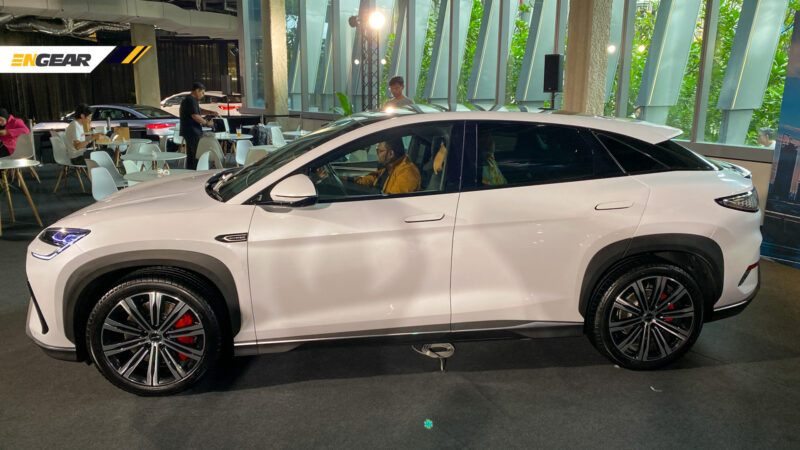
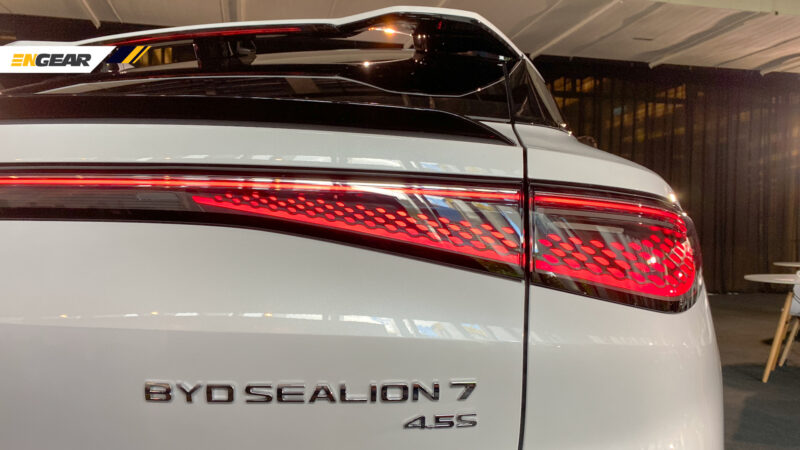
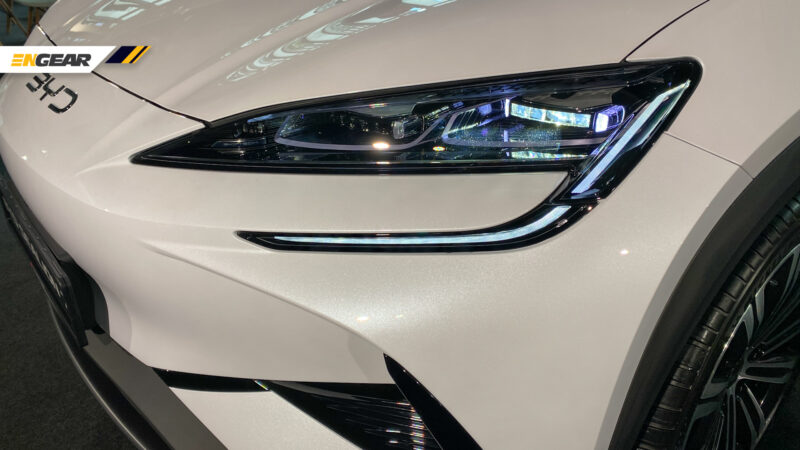
Sime Darby Motors, the official distributor of BYD in Malaysia, has launched another new electric vehicle, the 2025 BYD Sealion 7.
Available in two main variants, the BYD Sealion 7 is priced starting from RM183,800 for the Premium variant and from RM199,800 for the Performance variant.
The BYD Sealion 7 Premium features a single rear-wheel drive (RWD) electric motor with an output of 308 hp and 380 Nm of torque, enabling acceleration from 0 to 100 km/h in just 6.7 seconds.
Meanwhile, the Performance variant is equipped with a dual all-wheel drive (AWD) electric motor that delivers 523 hp and 690 Nm of torque, achieving 0 to 100 km/h in as little as 4.5 seconds.
Both variants are equipped with an 82.56 kWh battery pack. The driving range for the Premium variant is up to 567 km, while the Performance variant has a range of up to 542 km.
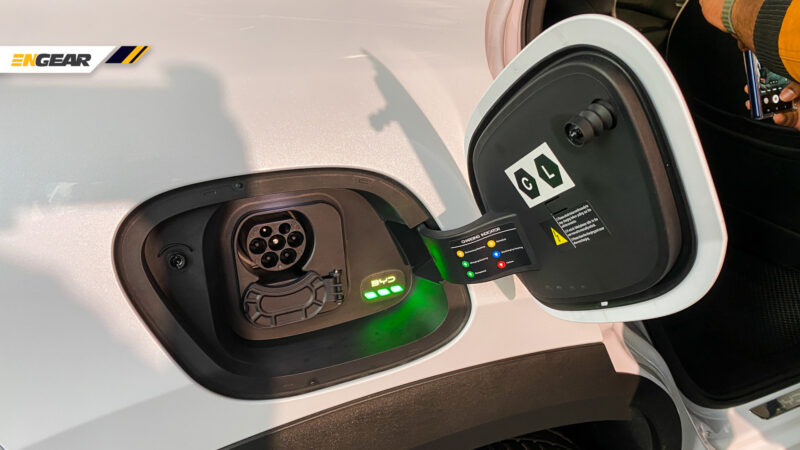
The Sealion 7 supports AC charging at 11 kW and fast DC charging up to 150 kW, allowing the battery to be charged from 10% to 80% in just 32 minutes.
Standard features for the Sealion 7 include 19-inch alloy wheels, while the AWD version comes with 20-inch wheels and red brake calipers.
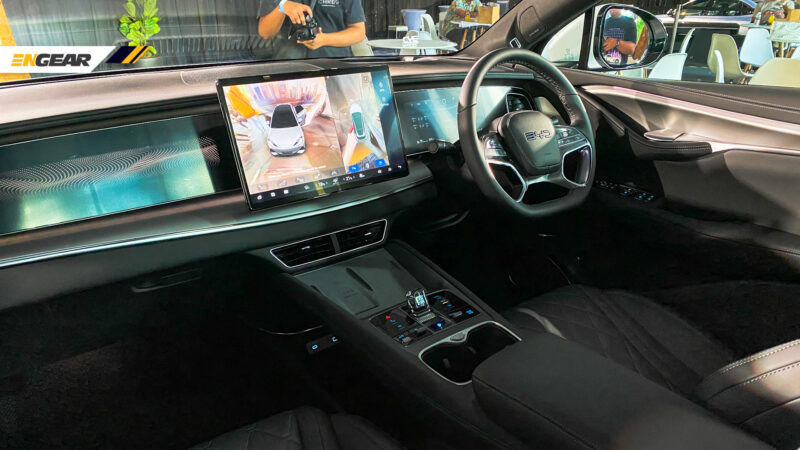
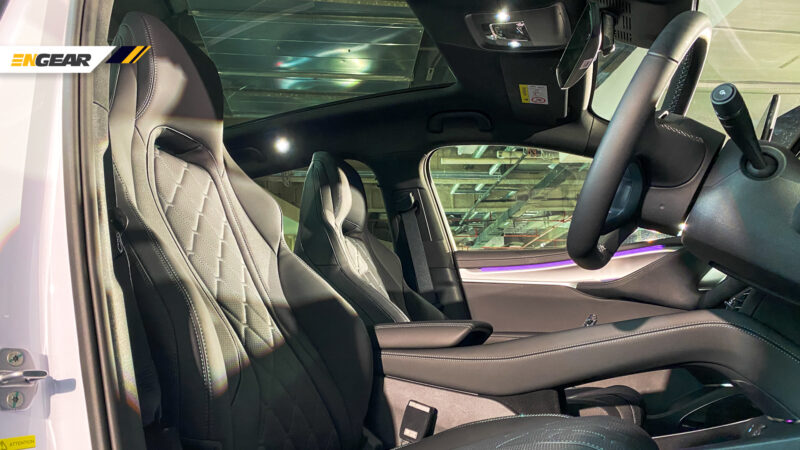
The cabin is well-equipped with a 10.25-inch digital cluster screen, a 15.6-inch central display with adjustable orientation, a 50-inch augmented reality head-up display, leather-wrapped seats, dual-zone climate control, and a PM2.5 air filtration system.
In addition, the Sealion 7 supports Apple CarPlay and Android Auto connectivity, a 50W wireless charging system for smart devices, and features a Dynaudio sound system with 12 speakers.
Both variants come standard with safety features including nine airbags, front and rear parking sensors, a 360-degree camera system, and Advanced Driver Assistance Systems (ADAS) featuring adaptive cruise control, automatic emergency braking, front and rear cross-traffic alerts, high beam assist, and driver attention warnings.
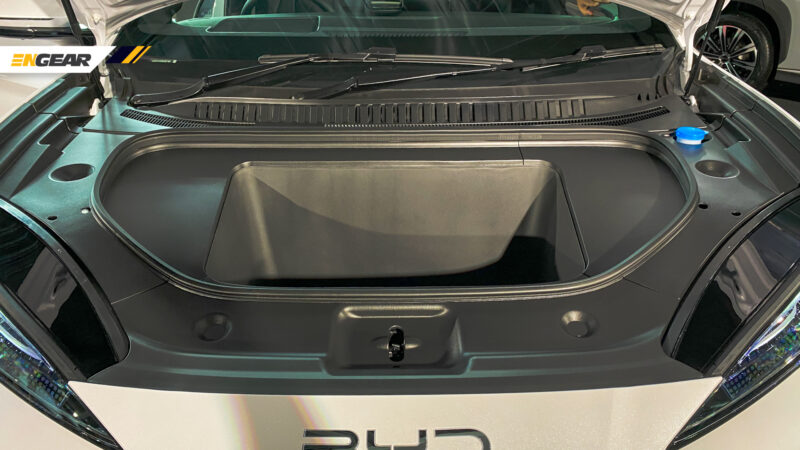
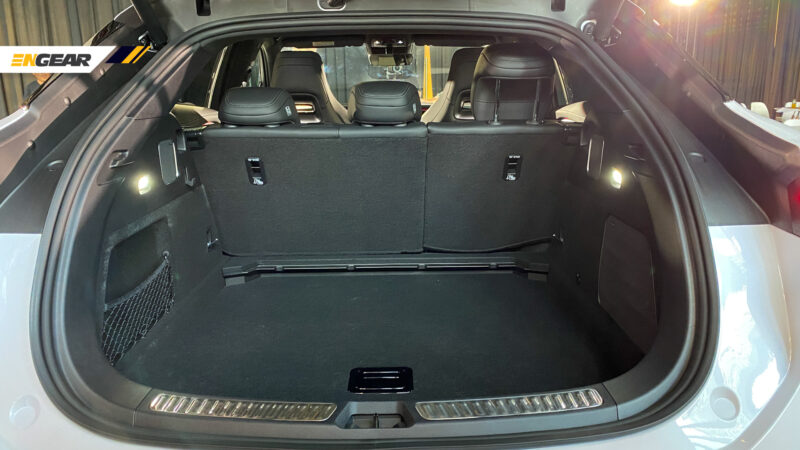
In terms of practicality, the Sealion 7 offers a cargo space of 500 liters, which expands to 1,769 liters with the rear seats folded down. Additionally, it includes a 58-liter front trunk (frunk).
There are four color options available: Cosmos Black, Aurora White, Atlantis Grey, and Shark Grey.
BYD Malaysia is offering an early booking package (valid until November 17), allowing customers to receive a complimentary home charger and RM800 charging credit, provided they register their vehicle by December 31, 2024.
Are you a fan of the Jaecoo brand but looking for a smaller-sized SUV compared to the current J7 offering?
Fret not, as Jaecoo Malaysia has confirmed the emergence of another new model set to hit the local market in the fourth quarter of the upcoming year (Q4 2025), namely the Jaecoo J5.
The Jaecoo J5 was officially unveiled at the Omoda | Jaecoo International User Summit 2024 in Wuhu, China recently.
Described as a pet-friendly SUV, the Jaecoo J5 comes equipped with several beneficial features.
For instance, extended seats for pet comfort, an air conditioning system with powerful filtration capabilities, smart climate control, and antibacterial health devices that can inhibit any bacteria growth inside the cabin.
The Jaecoo J5 is also suitable for outdoor activities as it has the ability to accommodate a load of up to 1,250 kg, a roof rack capable of holding up to 75 kg, charging ports, hooks in the cargo space, as well as versatile camping lights.
Other features include a free-hanging system, a 13.2-inch infotainment screen, and a 1.45 square meter panoramic glass roof claimed to be the largest in its class.
According to media reports, the Jaecoo J5 is equipped with the same 1.6-liter turbo TGDI engine used in the Jaecoo J7, producing 194 hp and 290 Nm paired with a seven-speed DCT transmission.
As mentioned earlier, the Jaecoo J5 has been confirmed for the Malaysian market in the fourth quarter of the upcoming year (Q4 2025) and will compete with models in its segment such as the Proton X50, Honda HR-V, Chery Omoda 5, and Peugeot 2008.
Jaecoo Malaysia today began the preview session for the new J7 PHEV SUV model that will be launched this year, located at Sunway Pyramid.
The plug-in hybrid SUV will be sold at an estimated price of around RM170,000 for the 2WD version.
Unlike the standard J7, which comes with a 1.6-liter turbo engine, the J7 PHEV is equipped with a fifth-generation hybrid powertrain, consisting of a 1.5-liter turbo engine (141 hp/215 Nm), electric motor (201 hp/310 Nm), and an 18.3 kWh battery pack.
Overall, the J7 PHEV is capable of generating up to 342 hp and a torque of 525 Nm, with acceleration from 0-100 km/h in just 8.5 seconds and a fuel consumption rate as low as 4.9 liters/100 km.
According to Jaecoo, the J7 PHEV can operate in zero-emission mode for up to 106 km, with an overall range reaching 1,300 km on a full tank of fuel.
The 2WD version comes with three driving modes, namely Economy, Standard, and Sports.
In terms of exterior, the design of the J7 PHEV does not show significant changes except for the aerodynamic 19-inch rims (235/50 R19 tires) and the battery charging port on the right side.
It also retains the MacPherson front suspension setup followed by a multilink at the rear, and the same dimension size as the petrol J7 model.
The cargo space of the J7 PHEV has also increased to 500 liters and can reach up to 1,265 liters when the second-row seats are folded.
The J7 PHEV cabin features include a 10.25-inch cluster screen, a 14.8-inch infotainment screen with Apple CarPlay and Android Auto support, and dual-zone climate control.
The most advanced safety features included are automatic emergency braking, adaptive cruise control, driver monitoring system, emergency lane-keeping assistance, intelligent high-beam assistance, lane departure warning, rear traffic warning, and traffic jam assistance.
There are three available colors, including black (Carbon Crystal Black), white (Crystal White), and silver (Moonlight Silver), all with a black roof.
I personally like the 2025 Proton X70, which was launched to the market back in August. It is more than just a mere facelift; the changes introduced are extensive, covering both the exterior and interior.
Firstly, the C-segment SUV now features a more appealing front design compared to its predecessor. Secondly, a recent media test drive in Kota Kinabalu demonstrated that it is a notably comfortable SUV. Not the best in the market but it’s certainly up there.
The suspension feels slightly firmer than that of the original CBU version but it soaks up bumpy roads and uneven surfaces en route to Kundasang really well.
Moreover, the low-speed rumble of the three-cylinder engine is less pronounced than before and the noise from the many trucks and lorries on the roads around KK and Kundasang is also well suppressed.
However, there are still a few aspects of the car that I did not favour:
Identical rear design
As mentioned, the 2025 X70 boasts a more attractive front end carried over from the Geely Boyue facelift released two years ago. One might argue that it is already outdated but in the eyes of this writer, the front fascia still looks fresh.
Unfortunately, the rear of this SUV appears untouched. While Proton has added horizontal reflectors (which were previously vertical) and fake air vents to make it appear wider, the tailgate and lights remain unchanged, quite possibly due to constraints from Geely.
That being so, whenever you see the new X70 on the road, you are likely to mistake it for the old version.
Odd gear shift pattern
In addition to the Stone Grey Nappa leather upholstery and ambient lighting system, another new feature in the 2025 X70 cabin is the gear lever.
The design remains the same; however, in this facelift model, the ‘P’ button has been repositioned. This is not an issue though and, in my opinion, makes it even easier to use.
What is rather peculiar, however, is the new shift pattern for the manual mode. Typically, you would pull the gear shift down to upshift and push it up to downshift.
In the X70 facelift, the ‘-’ and ‘+’ symbols are positioned to the left and right, meaning you must push the gear lever left to downshift and right to upshift in manual mode.
There’s a new Auto Open function for the tailgate but…
To enhance user convenience, Proton has added an Auto Open feature to the tailgate. This means you no longer need to press a button or kick your foot under the bumper to open it.
All you need to do is stand near the tailgate (with the key in your pocket, of course), and it will open automatically. This feature is indeed very practical, especially when your hands are full.
However, in my opinion, it could be improved further, as the tailgate takes a noticeably long time—over five seconds—to open.
Mitsubishi has introduced the upgraded version of the Outlander PHEV, which will begin sales in Japan this autumn, followed by 20 European markets in the spring of next year.
According to Mitsubishi, the petrol variant is scheduled to launch in 2025. Both versions will be entering the North American, Australian, and New Zealand markets soon.
As before, the Outlander PHEV is powered by a 2.4-litre four-cylinder petrol engine making 134 hp and 203 Nm. Augmenting the ICE is a front electric motor generating 114 hp and 255 Nm, and a rear electric motor contributing 134 hp and 195 Nm.
The combination of the internal combustion engine and dual electric motors provides the Outlander PHEV with a total output of 302 hp, allowing the SUV to accelerate from 0 to 100 km/h in 7.9 seconds.
With a larger fuel tank capacity of 53 litres, Mitsubishi claims that the Outlander PHEV can achieve a hybrid driving range of up to 844 km. Official tests also indicate it has fuel consumption as low as 0.8 l/100 km and emissions of 18 g/km.
A notable update to the Outlander PHEV’s powertrain is the lithium-ion battery pack, which is now 40% larger, with a capacity of 22.7 kWh, providing an electric driving range of 86 km based on the WLTP cycle.
Efficiency and performance can be further maximised with three drive modes: EV, Series Hybrid, and Parallel Hybrid.
The EV mode allows the vehicle to operate entirely on electric power, while the Series Hybrid mode uses the engine to generate electricity as needed. In Parallel Hybrid mode, both the electric motor and engine work in unison.
Additionally, the Outlander PHEV features Normal, EV, Save, and Charge modes. In EV mode, the SUV is capable of reaching a maximum speed of 135 km/h.
Mitsubishi says the battery pack can be charged using Type 2 and CHAdeMO chargers, and it also supports vehicle-to-home charging capabilities for emergency situations.
For the chassis, Mitsubishi has tuned the tyres, shock absorbers, and spring rates to enhance ride comfort, while the dual pinion assist electric power steering has been engineered for more manageable steering and increased feedback.
Moreover, the S-AWC (Super All Wheel Control) system now offers enhanced grip in all driving conditions, with seven selectable modes: Normal, Eco, Power, Tarmac, Gravel, Snow, and Mud.
In terms of appearance, not much has changed for the 2025 model year, except for the grille and the addition of 20-inch wheels. Inside, the Outlander PHEV now features a 12.3-inch digital instrument panel, a 12.3-inch touchscreen, and a Dynamic Sound audio system with 12 speakers from Yamaha.
The safety kit includes features such as Forward Collision Mitigation, Rear Automatic Emergency Braking, Blind Spot Warning with Lane Change Assist, Lane Departure Warning, Lane Keeping Assist, Adaptive Cruise Control, Traffic Sign Recognition, and a Driver Monitoring System.
The SUV market in Malaysia is set to be shaken up with the latest offering from Jaecoo Malaysia, the Omoda C9.
Unlike the Omoda 5 and the Omoda E5, which are marketed under the Chery brand, the new premium off-road SUV coupe will be sold by Jaecoo Malaysia alongside the J7.
Similar to the J7, the C9 will be available in two-wheel drive (2WD) and all-wheel drive (AWD) variants.
However, compared to its Jaecoo-branded stablemate, the C9 has a larger footprint, measuring 4,775 mm in length, 1,671 mm in height, 1,920 mm in width, and with a wheelbase of 2,800 mm.
Spec-wise, the C9 is equipped with front and rear LED lights, 20-inch wheels fitted with 245/50 Michelin Primacy tyres, acoustic windshield, and a keyless door entry with Near Field Communication (NFC) technology.
Inside, you will find a 24.6-inch infotainment screen, a 50W wireless charger, and a three zone air conditioning system with a fragrance and air quality system.
The AWD variant gets a 14-speaker audio system, whereas the 2WD variant comes with eight speakers.
The rear trunk has a capacity of 660 litres, which can expand up to 1,783 liters with the rear seats folded down.
Powering the C9 is a 2.0-liter four-cylinder TGDI engine that delivers a healthy output of 245 hp and 400 Nm of torque.
Regardless of the variant chosen, the engine is paired with an eight-speed automatic transmission.
However, there are differences in drive modes; the 2WD variant offers three drive modes, while the AWD variant features seven modes to help navigate urban and rough terrains.
With a ground clearance of 165 mm, the C9 is capable of traversing water at a maximum depth of 450 mm.
On the safety front, there’s Continuous Damping Control (CDC), a body constructed from 85% high-strength steel, and eight airbags.
On top of that, the C9 comes with ADAS 2.5, which features Blind Spot Detection (BSD), Door Opening Warning (DOW), Lane Departure Warning (LDW), Lane Departure Prevention (LDP), Lane Change Assistance (LCA), and Emergency Lane Keeping Assistance (ELKA).
The Omoda C9 will be priced at RM185,000 for the 2WD variant and RM195,000 for the AWD variant.
According to Jaecoo Malaysia, the official launch of this model is scheduled for December.
Malaysia’s Leading Automotive News | ENGEAR ENGLISH