SPPF Malaysia has launched next-generation automotive paint protection technology at AutoDetailer Studio, featuring a spray-on paint protection system that is fully developed in Japan.
Its focus: higher durability, better optical clarity, and a premium finish for modern vehicle owners.
This new technology utilizes Paintwork Fusion Bonding, producing a smooth layer without adhesive that can be adjusted in thickness according to needs. It also supports Renewable Surface Engineering, allowing surfaces to be restored repeatedly through professional polishing without compromising the original layer.
SPPF has also introduced Infinite Layer Technology, which allows for additional layers to be added over time to enhance protection without the need to replace the entire system.
Developed with racing DNA, SPPF has been tested in extreme motorsport conditions, offering greater durability compared to traditional protective films.
The Color Engineering segment demonstrates how SPPF integrates OEM paint systems like BASF Porsche and PPG Ferrari into the protective structure, enabling custom finishes while maintaining the authenticity of the original paint—ideal for collectors and automotive enthusiasts.
SPPF is also launching the SPPF.co app, which provides a digital identity for each vehicle, allowing owners to verify the authenticity of the protection and view a complete maintenance record. This app is scheduled to be released in the second half of 2026.
Say (or criticize) what you will about the Perodua Traz, but this is the most stylish SUV that Perodua has ever produced.
Although it arrived a bit late in the market, this twin of the Toyota Yaris Cross strives to maintain the widely recognized Perodua DNA.
It offers a spacious and practical interior, while also featuring modern technology.
We had the opportunity to test drive this SUV for several days, and here are our findings:
The Bold Design of the Traz
There’s no denying that the Perodua Traz shares many components with its twin, the Toyota Yaris Cross.
After all, it uses the same platform, the DNGA-B, as the Toyota Vios, Toyota Velos, and Perodua Alza.
However, its exterior can be distinguished by its unique grille design and more aggressive 17-inch rims.
I particularly like the Traz’s boxy and angular appearance, especially when viewed from the rear—it resembles a Lexus SUV with a Perodua badge.
For those wanting a more eye-catching look, the GearUp body kit is available.
Dimensions
In essence, the Traz presents much larger dimensions compared to the Ativa.
With a length of approximately 4,310 mm and a wheelbase of 2,620 mm, the Traz offers a spacious and comfortable cabin.
Its ground clearance of 210 mm is sufficient for Malaysian roads.
One of Traz’s main advantages is its substantial cargo space, around 471 liters.
Fold down the second-row seats, and you will have an even larger loading area with a nearly flat floor.
With a turning radius of just 5.2 meters, it excels in maneuverability, especially in tight urban areas.
Modern Cabin
Completing the sporty image of the Traz is a driver-oriented dashboard layout.
Honestly, the presence of old-school features like analog meters is something I truly appreciate.
They are simple and easy to read.
There is also a 4.2-inch TFT display, which is adequate for showing the necessary information.
The control buttons are large and easily accessible.
Thus, I had no issues reaching the controls and activating features while driving.
The sound quality from the Traz’s audio system is also satisfactory for someone who is not an audiophile.
It offers support for Apple CarPlay and Android Auto on the 9-inch screen, facilitating daily tasks that require navigation assistance.
However, Perodua should consider reducing the use of red accents on the dashboard, as they can be perceived as excessive.
Driving Experience
“Tekan, tekan pergi” is not the motto of the Traz, especially when compared to the turbocharged Ativa.
The Traz shares the same 1.5-liter (2NR-VE) engine found in the Perodua Myvi and Toyota Vios.
So don’t expect lightning-fast acceleration at traffic lights when the light turns green.
With a D-CVT transmission, the Traz is designed for a more relaxed driving experience, prioritizing comfort.
If you seek more energetic acceleration, simply switch to Power mode.
Even without a turbo engine, I prefer the driving dynamics of the Traz, which feel more stable compared to the Ativa.
The braking performance is also reassuring, although it could benefit from sharper steering tuning.
The handling feels somewhat stiff and less responsive than expected, particularly at higher highway speeds.
However, this is not a significant issue for most of Traz’s target demographic.
Thanks to its stable chassis, the Traz is actually enjoyable to drive through winding roads, even with standard Proxes CR1 tires.
Body roll is minimized, and at permissible speeds, the Traz can maintain its line through curves.
Comfort
One thing to commend is that the seats in the Traz are spacious and comfortable for adult passengers, both in the front and rear.
Unlike the Ativa, where the driver must sit upright, the driving position in the Traz feels more natural.
Honestly, these are among the best seats Perodua has ever produced.
With extended thigh support, they help reduce fatigue, especially during long journeys.
Manual adjustments? Not an issue.
At least, it decreases reliance on electronic devices in this SUV.
The NVH (Noise, Vibration, Harshness) aspect is also quite good, with the cabin remaining comfortably quiet.
Occasionally, focus may be slightly disrupted by engine noise when pushed hard.
The suspension tuning feels rather good for a Perodua, suitable for most road surfaces in Malaysia.
It absorbs road imperfections well, filtering and reducing vibrations to ensure a comfortable cabin experience—occasionally feeling like a rally car.
Safety
With features like ADAS, a 360-degree camera, a dashcam, and a five-star ASEAN NCAP rating, the Traz is a model worth considering.
However, among the features listed, there’s one downside: the absence of adaptive cruise control (ACC).
This omission can make the steering wheel feel somewhat empty, potentially deterring many prospective buyers.
However, try counting on your fingers how many times you really need (and activate) that feature while driving. Visits back to the hometown are occasional, right?
Conclusion
There are many options available in the B-segment SUV market right now.
In the price range of around RM100,000, there are SUVs that are overly powerful, overly sophisticated, and overly fuel-efficient.
Such features indeed excite the majority of today’s buying demographics, particularly the younger generation.
However, we shouldn’t overlook the group of consumers still seeking a modern vehicle with simpler, durable, and reliable technology, and more importantly, a lower ownership cost.
Therefore, the Perodua Traz is the ideal answer if you find yourself at a crossroads, searching for a suitable everyday SUV.
Since its first launch in 1989, the Mazda MX-5 (Miata) has maintained the same recipe.
A small and lightweight body, and a minimalistic design.
The difference in horsepower between the first-generation and fourth-generation models is not too vast.
But did you know that Mazda once tried to produce the MX-5 with a V6 engine?
A 20-Year-Old Experiment
Christian Schultze, Director of Research and Operations at Mazda Motor Europe, confirmed that this occurred around 20 years ago.
This may have happened during the transition from the second-generation MX-5 (NB) to the third-generation MX-5 (NC).
Speaking to AutoRAI, he revealed that the V6 2.5-liter MX-5 project was driven voluntarily by a group of engineers.
Although it was not explicitly stated, it is likely that it used the K-Series engine that Mazda employed in production cars like the 626 and MX-6.
With significantly more power output compared to the NB engine (140 hp/161 Nm), the V6 MX-5 offered a more exhilarating driving experience.
Two Main Issues
Schultze admitted that there were two main issues that prevented the project from progressing beyond the prototype stage.
First, the V6 engine was too tall, making the overall aesthetics of the car less appealing.
Second, using the V6 engine would affect the overall weight balance, as the 2.5-liter engine is heavier than the existing engine.
What about the new-generation MX-5?
The fourth-generation MX-5 has been on the market for 11 years now, and it is time for Mazda to replace this roadster with a completely new model.
If the MX-5 were offered in a hybrid version (complete with an electric motor and battery), how would Mazda ensure the existing lightweight car recipe is maintained?
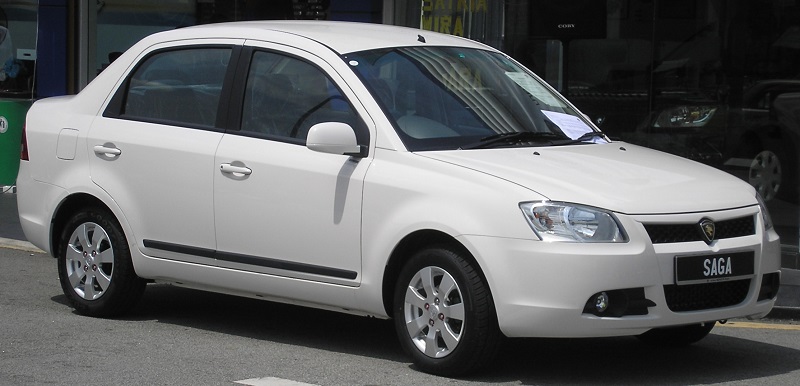
First introduced in 1985, the Proton Saga remains one of the most important models in Malaysia’s automotive landscape.
The Saga is not merely a mode of transport from point A to point B — it’s a necessity for those who want a comfortable, modern, and safe car.
The third facelift (MC3) launched last year, arrived with a strong package that easily embarrasses its rivals.
This was proven when Saga sales surpassed the Perodua Bezza throughout January 2026.
We had the chance to test-drive the Saga, and here are our thoughts on Proton’s new sedan.
A More Premium Saga Design
This entry-level sedan has gone through three design eras:
Mitsubishi’s boxy design (1985)
Proton’s original design (2008)
Geely-influenced design (2025)
There’s no denying that the new Saga offers a more sophisticated image, especially with a front fascia aligned with Proton’s other X models (X70 & X90).
Previously, DRLs came as a separate package, but the new Saga integrates DRLs into the main headlamp unit.
It also features bright LED projector headlamps for night driving.
The Saga’s image is further elevated with full-width LED taillights, matching current automotive design trends.
Unfortunately, the sedan’s side profile still reveals that it sits on the existing platform.
New Saga owners should probably thank the Proton Savvy for that.
A More Advanced and Premium Cabin
Since the original dimensions haven’t changed much, the cabin doesn’t feel significantly more spacious than before.
The dashboard layout has been refreshed.
Our Premium variant test unit comes with a 7-inch digital instrument cluster and a 9-inch infotainment screen in the centre.
Physical climate control buttons are retained, but with a simpler design and smaller knobs and switches.
There’s no denying that the new Saga delivers a more premium-feeling experience for an entry-level sedan.
The climate control knobs don’t feel cheap when turned, and the indicator/wiper stalks feel solid during use.
The air-conditioning system is excellent — a long-standing Proton trademark.
Another point, Saga now supports Apple CarPlay and Android Auto. Wirelessly.
The audio system also delivers pleasant sound quality, complementing the quiet cabin during drives.
Driving Experience
One of the biggest highlights of the new Saga is its new 1.5-litre i-GT engine.
This 1,499 cc engine produces 120 PS @ 6,100 rpm and 150 Nm @ 4,000 rpm — far more powerful than the old Campro’s 94 hp/120 Nm.
Fuel efficient? Absolutely.
A full tank can take the Saga more than 500 km, which is more than sufficient.
Fuel consumption is recorded at around 6.5 litres per 100 km.
Ride and handling have also been improved, making the Saga more exciting to drive, especially on winding roads.
The MacPherson strut and torsion beam suspension tuning feels just right — sporty yet still prioritising comfort.
Rough surfaces and vibrations are well-filtered, giving the Saga a surprisingly premium feel even when the road outside resembles the moon’s surface.
Engine noise no longer roars like the old Campro days.
The naturally aspirated i-GT engine produces only a low-frequency hum that doesn’t distract the driver even under heavy throttle.
Saga Is Not a Perfect Car
Despite the many positives, the Saga isn’t perfect.
A few things need attention to make it even better:
First, the CVT transmission response can be frustrating, especially at low rpm.
At normal speeds it’s fine, but the Saga can test your patience on roads with many traffic lights. Or Shah Alam, the Land of Roundabouts.
It’s hard to achieve smooth driving patterns because of this.
As someone used to manual cars, the writer hopes Proton will one day offer a six-speed transmission.
Second, the brake pedal bite point feels too far forward. Not that the braking system is bad — it still stops the car effectively.
But if you plan to drive the Saga fast, keep your foot ready for anything unexpected.
Third, the tyres. The standard Atlas tyres aren’t terrible, and they’re okay in the wet, but there are better options in the market.
If you’re buying a Saga, set aside some budget for tyre upgrades if you want a more confidence-inspiring drive.
Cabin weaknesses that can be improved
A few cabin improvements would make the Saga even better:
One, the instrument cluster brightness can be lowered further — it’s too bright at night, to the point the car next to you might notice.
Two, although Saga now supports wireless Apple CarPlay and Android Auto, the Altas operating system isn’t very stable.
Sometimes it restarts on its own, which is troublesome when you’re relying on navigation.
Three, the solution to sudden CarPlay/Android Auto disconnections is using a USB cable.
But the USB port is positioned too close to your knee, making driving uncomfortable — and the Saga doesn’t even have a left footrest.
Four, the driving position feels quite high, even at the lowest seat setting.
Your eye level ends up close to the rear-view mirror height.
This makes it difficult when going up or down multi-storey car parks.
Maybe this is a preview of the upcoming Saga Cross. Maybe.
Safety: Better Than Iriz and Persona
After a long wait, Proton has finally equipped an entry-level car with all the necessary safety features.
Six airbags come standard on the Premium variant, along with advanced safety features such as:
Autonomous Emergency Braking (AEB)
Lane Departure Warning (LDW)
Rear Cross Traffic Alert (RCTA)
Rear Collision Warning (RCW)
Door Opening Warning (DOW)
Auto High Beam (AHB)
And finally, the Saga now gets Blind Spot Monitoring (BSM) — a very welcome addition. Even the Iriz and Persona don’t get this.
Saga also gets front and rear parking sensors, which are quite sensitive and annoying in traffic jams.
There’s also a speed limit warning if the system detects the car exceeding the allowed limit.
One feature worth praising is the alert reminding drivers about children (and valuables) in the back seat whenever the engine is turned off.
The sound is loud and clear to ensure no Saga owner suffers from “forgotten child syndrome.”
Lose items and you can replace them. Lose a child and regret will haunt you.
Conclusion
Looking at the package and specifications offered, the Proton Saga is no longer a model you can take lightly.
It has everything needed in an entry-level sedan — power, comfort, space, and technology that makes daily life easier.
Most importantly, it’s priced within reach for most first-time car buyers.
Just like the Iriz in 2014, the Proton Saga has now set a new benchmark for the entry-level sedan segment.
Toyota has officially launched the 2026 RAV4 PHEV plug-in hybrid SUV along with the GR Sport variant for the Japanese market.
Specifications of the RAV4 PHEV
The new model features a next-generation plug-in hybrid system, which includes:
2.5-liter engine (code A25A-FXS) producing 174 hp at 6,000 rpm and 219 Nm at 3,600 rpm
Two electric motors
e-CVT transmission
E-Four all-wheel drive system
22.7 kWh battery pack
The overall power reaches 329 PS, contributing to a more energetic and responsive driving experience.
The use of silicon carbide (SiC) semiconductors in the power control unit (PCU) allows for an emission-free range of approximately 150 km.
RAV4 PHEV GR Sport
In the Japanese market, the RAV4 is available in the Z variant, which features exclusive black finishing.
For those seeking a sportier image, there is the GR Sport variant equipped with special features such as:
A more aggressive aerodynamic body kit, including a lip spoiler and rear spoiler
GR Performance Dampers by Yamaha
GR Braces
Special tuning on the suspension and EPS steering
Interestingly, the battery pack is also used as a structural reinforcement for the chassis, enhancing body rigidity and lowering the center of gravity.
Power Supply Function
One of the practical features of the RAV4 PHEV is its power supply function for outdoor activities and home use.
Owners can utilize this feature through a power socket located in the cargo space.
With a connector unit that plugs directly into the charging port, it transforms into an external 100V socket capable of delivering up to 1,500W of electrical power.
In emergency situations, the RAV4 PHEV can supply 400W of electrical energy for up to 6.5 days with a full fuel tank and a fully charged battery, or up to 7 days using the “Power Supply Time Priority” mode.
Pricing
The Toyota RAV4 PHEV is priced starting at ¥6,000,000 (RM151,190) for the Z variant, while the GR Sport variant is priced from ¥6,300,000 (RM158,750).
Mitsuoka Motor has announced that production of the classic compact sedan Ryugi which has been offered since 2014, will soon come to an end.
Along with this announcement, Mitsuoka has launched the Ryugi Final Edition model with production limited to just 20 units.
Special badge for 20 owners
Overall, the Ryugi Final Edition retains its classic design, featuring a vertical grille, round headlights, and chrome-plated bumpers.
The emblem on the grille and the rear cargo door is crafted using the traditional Japanese technique “Shippo-yaki,” showcasing the handmade touch that is Mitsuoka’s specialty.
Finally, each unit of the Ryugi Final Edition comes with a special closing edition badge on the rear.
This is the only distinction between the standard Ryugi model and the Final Edition.
Specifications of Mitsuoka Ryugi
The Ryugi is built on the 11th generation Corolla sedan, known as the Corolla Axio in Japan.
It measures 4,510 mm in length, 1,695 mm in width, and 1,460 mm in height.
Buyers can opt for a 1.5L NA engine (code 1NZ-FE) that produces 108 hp at 6,000 rpm and 138 Nm of torque at 4,400 rpm.
There is also a self-charging hybrid 1.5L engine version (code 1NZ-FXE) with a total power output of 99 hp.
Price
In Japan, the Mitsuoka Ryugi is priced as follows:
Horse Powertrain has announced a new hybrid engine designed for greater energy efficiency, utilizing 100% renewable petrol fuel.
The first demonstration vehicle is expected to be unveiled later this year.
More Fuel-Efficient Hybrid Engine
This new system is based on the Horse H12 hybrid engine concept developed in collaboration with the Spanish energy company Repsol.
The H12 engine offers the following features and benefits:
Maximum brake thermal efficiency rate of 44.2%
Fuel consumption reading of less than 3.3 liters per 100 km (WLTP testing)
High compression ratio of 17:1
New generation exhaust gas recirculation (EGR) system
High-energy ignition system
Optimized turbocharger
Hybrid-specific transmission tuning
New Repsol lubricant that reduces internal friction
With this new hybrid system, the engine provides a savings of over 40% compared to the average new passenger vehicle in Europe as of 2023.
Furthermore, the use of 100% renewable fuel in a mid-sized car is expected to reduce CO2 emissions by approximately 1.77 tons per year compared to conventional petrol vehicles, based on a driving distance of 12,500 km annually.
Who is Horse Powertrain?
Horse Powertrain is a global joint venture owned by Geely (45%), Renault Group (45%), and Aramco (10%).
The company supplies engines and hybrid systems to renowned automotive brands, including:
The Ministry of Industry and Information Technology (MIIT) of China is reported to implement two new automotive safety standards starting next year (2027).
This implementation is expected to have a significant impact on the design of modern vehicles, particularly electric vehicle (EV) models that feature minimalist cockpits and yoke steering wheels.
No More F1-Style Steering Wheels
The latest national safety standard GB 11557-202X which has been published, will come into effect on January 1, 2027.
This change is necessitated by the current standard (GB 1157-2011), which has been in use since 2011 and is no longer relevant to the latest technology.
The most critical change is the removal of exemptions for human impact testing, meaning all vehicle models must pass this test.
The new standard will also require testing at ten specific points on the steering wheel rim, including the weakest parts and areas without support.
Thus, it will be nearly impossible for any yoke-style steering wheel, which lacks a top portion, to meet the new standards.
From a safety perspective, data shows that 46% of driver injuries stem from steering mechanisms.
The traditional round design provides a larger impact absorption area, whereas yoke steering wheels increase the risk of secondary injury.
Many drivers have also reported difficulties in making U-turns and parking when using yoke steering wheels.
Mandatory Physical Buttons
In related developments, China has also finalized amendments to the GB 4094-2016 standard, which will require physical buttons for basic vehicle functions starting July 1, 2027.
This measure aims to reduce the reliance on infotainment screens that are increasingly dominating the designs of modern EV cockpits.
Functions that will require physical controls include:
Turn signal lights
Hazard lights
Horn
Gear shifting (PRND) (prohibition of gear shifting through the screen)
Activation button for Advanced Driver-Assistance Systems (ADAS)
Windshield wipers, defroster/defogger, power windows
Emergency call system, EV power switch
Additional requirements will also be set, such as:
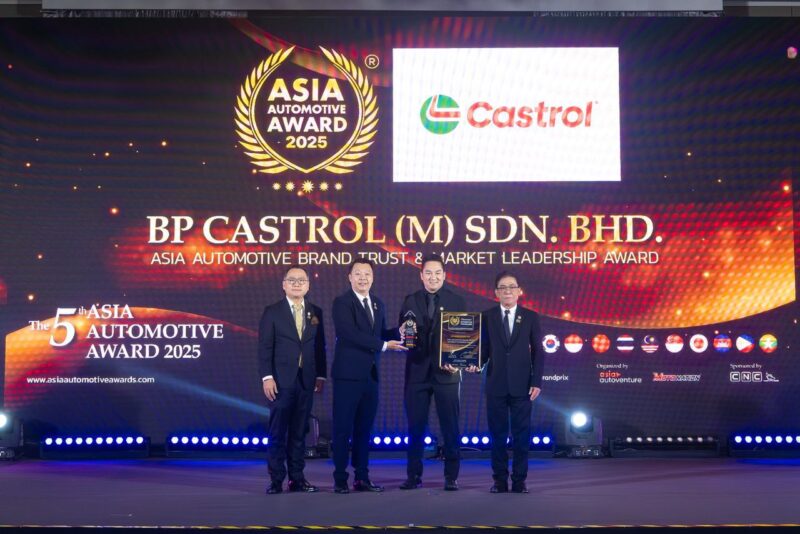
In January, Castrol Malaysia received the Brand Trust & Market Leadership Award at the 5th Asia Automotive Award in Bangkok, Thailand, a recognition spanning 11 Asian markets and awarded to brands that have earned the confidence of mechanics and service professionals across the region.
Mechanic trust as the new benchmark
Castrol’s recognition reflects its deep engagement with the mechanic community in Malaysia.
Through more than 3,000 Castrol-branded workshops nationwide, including Castrol Auto Service and Castrol Bike Point networks, the brand supports up to half a million motorists each month.
This footprint strengthens mechanics as trusted advisors, positioning Castrol as the reference point many motorists in Malaysia turn to when making engine-care decisions.
“Trust at the workshop level is built over time through consistent performance and close collaboration with mechanics. This award reflects the confidence mechanics have placed in Castrol, and we value the role mechanics play in helping motorists make the right engine-care decisions every day,” said Joshua Tan, Head of Marketing Castrol Malaysia & Singapore.
Building affinity through real-world relevance
As vehicles become more complex, with hybrids, electrification and new thermal demands shifting the technical landscape, the role of mechanics as advisors only grows.
Castrol’s investments in digital enablers such as the Castrol Motorist App and enhanced workshop visibility tools are designed to support this evolution, giving motorists clearer guidance, transparency and accessibility in their servicing decisions.
The Asia Automotive Award, held in Thailand, is regarded as a key regional benchmark for credibility across manufacturers, service providers and aftermarket brands.
Castrol’s win in the Brand Trust & Market Leadership category reflects the brand’s long-standing relevance in workshops, and how trust gained upstream continues to make a difference downstream, for everyday motorists.
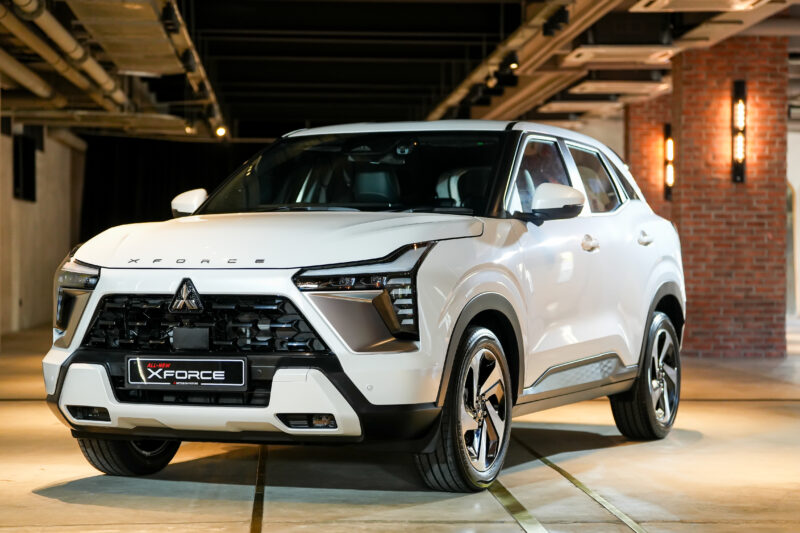
Mitsubishi Motors Malaysia (MMM), the official distributor of Mitsubishi vehicles in Malaysia, is proud to announce that the Mitsubishi Xforce has secured over 1,000 bookings within just one week of its pre-launch and booking period.
The strong response underscores Malaysians’ growing excitement for Mitsubishi Motors’ latest compact SUV, ahead of its official launch scheduled for early April.
In appreciation of the encouraging support, Mitsubishi Motors Malaysia is extending its exclusive Early Bird Package to the next 1,000 customers who place their bookings before the official launch.
Customers who secure their Mitsubishi Xforce during this extended Early Bird period will also enjoy:
RM5,000 cash rebate
Three times free labour service
Participation in a “Buy 1 Free 1” Contest, where customers who book before the official launch stand a chance to win another Mitsubishi Xforce Ultimate.
The stylishly designed Mitsubishi Xforce combines bold styling with everyday practicality.
Recognised with the iF DESIGN AWARD 2024, its distinctive, modern character stands out on the road while delivering driving excitement through superior handling. With four selectable drive modes, Active Yaw Control (AYC), and best-in-class 222mm ground clearance, it inspires confidence across varying road conditions.
Inside, the Mitsubishi Xforce offers ultimate comfort and seamless convenience. A spacious cabin with 8-step reclining rear seats, Dynamic Sound Yamaha Premium Audio System, 12.3-inch Display Audio with wireless Apple CarPlay™ and Android Auto™, and nanoe™ X dual-zone air-conditioning create a refined driving experience.
Complemented by smart features such as the Power Tailgate with Kick Motion, Mitsubishi Motors Safety Sensing (ADAS), 23 storage compartments with a centre cooler box, and an All-Round Monitor with parking sensors, the Mitsubishi Xforce is thoughtfully engineered for modern lifestyles.
Stellantis, a leading global automaker and mobility provider, has achieved a significant industrial milestone with the production start of the new PEUGEOT 408 at the Stellantis Gurun plant.
Featuring an updated 1.6-liter turbocharged PureTech powertrain with Euro 6 rating, the award-winning fastback is earmarked for regional export, with Taiwan confirmed as the third market to receive the Malaysian-built model after Thailand in 2024, and Cambodia in 2025.
Supported by a €1.5 million investment, the Stellantis Gurun plant has undergone a manufacturing line upgrade, including specialised Research & Development for powertrain calibration and localised parts development.
This configuration delivers an upgraded 225hp, similar to the Plug-In Hybrid (PHEV) variant while maintaining a lighter 168kg kerb weight. Additional markets across the Asia-Pacific region are currently being evaluated for the export of this high-performance and efficient model.
Isaac Yeo, Managing Director of Stellantis ASEAN said, “Our vision to transform Gurun into a key regional driver is taking shape, supported by strategic investments to upgrade this vital facility for both local and export production. This latest development emphasises our commitment to scaling production outputs in Malaysia while extending the breadth of brands and models within the Stellantis portfolio to meet the diverse needs of the region.”
This milestone is central to Stellantis’ strategic roadmap to transform the Gurun plant into a regional manufacturing powerhouse with industry-leading quality standards. The company aims to achieve full production capacity at the facility, targeting the export of 280,000 vehicles to 20 countries across the Asia-Pacific region by 2028.
Such growth is underpinned by a strategy set for Stellantis Gurun to accommodate the manufacturing of Battery Electric Vehicles (BEV), Internal Combustion Engines (ICE), and Mild Hybrid Electric Vehicles (MHEV). These efforts include the localised assembly of Leapmotor electric vehicles, beginning with the Leapmotor C10 following a dedicated €5 million investment.
Didi Group, the official distributor of Triumph motorcycles has launched two new models:
Street Triple 765 RX – RM81,100
Trident 800 – from RM53,900
Street Triple 765 RX
The Street Triple 765 RX is equipped with a 765 cc, 3-cylinder engine, producing approximately 130 PS at 12,000 rpm and 80 Nm at 9,500 rpm.
This bike features exclusive RX finishes, including a laser-engraved logo on the exhaust, RX seat, subframe, and red wheels, along with a Matt Aluminium Silver finish.
As a powerful weapon on the track, the Street Triple 765 R comes with adjustable Ohlins NIX30 front forks offering 115 mm of travel.
At the rear, it features an adjustable single shock Ohlins STX40 with 131.2 mm of travel.
The braking system utilizes Brembo Stylema four-piston calipers gripping dual 310 mm rotors in the front, alongside a single piston Brembo caliper and 220 mm rotor at the rear.
Nippon Paint Malaysia has recently launched an automotive paint protection system called Self-Healing Invisible Armor Paint Protective Spray-On (AI-PPS).
This new generation spray paint protection system employs self-healing technology and is the first of its kind in Malaysia.
AI-PPS offers a transparent protective layer that withstands stone chips, scratches, chemicals, and UV rays.
At the same time, it maintains the original color of the vehicle with a pristine finish.
This technology also sets a new benchmark in the local automotive aftermarket industry.
Unlike conventional Paint Protection Films (PPF) that require complicated installation, AI-PPS can be sprayed directly during body repair and painting processes.
It provides more uniform coverage on complex surfaces, is quicker to apply, and can be removed easily without adhesive residue — thereby enhancing workshop efficiency.
According to Tay Sze Tuck, General Manager of Nippon Paint Malaysia, AI-PPS not only drives innovation but also helps small and medium-sized workshops offer premium paint protection without a significant investment.
For vehicle owners, this system provides additional protection without altering the original appearance, with self-healing technology that helps reduce minor defects over time.
Proton has officially launched the 2026 Proton S70 for the local market.
Four variants are available, with the following prices:
1.5TD Executive – RM73,800
1.5TD Premium – RM79,800
1.5TD Flagship – RM89,800
1.5TD Flagship X – RM94,800
With a special launch rebate of RM5,000, the Proton S70 2026 can be purchased for as low as RM68,800.
Specifications
Among the major changes made to the S70 is the introduction of a 1.5-liter inline 4-cylinder i-GT turbo engine, replacing the original 3-cylinder engine.
This new engine produces 181 PS and 290 Nm of torque, paired with a 7-speed DCT (Dual Clutch Transmission).
Acceleration from 0 to 100 km/h is now achieved in just 7.5 seconds, with fuel consumption rated at only 5.7 liters per 100 km.
According to Proton, the S70 sedan also features Proton’s Ride & Handling tuning and enhanced Electronic Stability Control (ESC) software.
In terms of exterior design, the S70 comes with revised headlight units, daytime running lights (DRL), and 17-inch alloy wheels.
An aerodynamic kit is also available for a more stylish appearance.
The cabin is equipped with a 12.3-inch infotainment screen that now supports wireless Apple CarPlay and Android Auto.
The S70 features 13 Advanced Driver Assistance System (ADAS) Level 2 attributes, which include functions such as:
Autonomous Emergency Braking (AEB)
Lane Keeping Assistance (LKA)
Rear Cross Traffic Alert (RCTA)
Adaptive Cruise Control (ACC)
Lane Change Assistance (LCA)
Smart High Beam Control (IHBC)
Lastly, features like a 360-degree camera system and a Tire Pressure Monitoring System (TPMS) are also included.
Launch Package
For the first 2,000 customers, a special launch package is available, including:
RM5,000 rebate
Pro-Trade-In support with trade-in assistance of up to RM2,000
GWM Malaysia has announced that the Wey G9 MPV has garnered over 800 bookings within a week of its launch.
This achievement demonstrates a strong demand for the first locally assembled (CKD) luxury new energy MPV.
According to Mr. Roslan Abdullah, Chief Operating Officer of GWM Malaysia, “This achievement reflects the capabilities of the local assembly ecosystem in Malaysia.
“With the advantage of a skilled workforce and an existing vendor network, we are proving that Malaysia meets global standards while generating long-term value for the local industry.”
The GWM Wey G9 is powered by the advanced Hi4 PHEV smart hybrid system, capable of providing an emission-free driving range of up to 170 kilometers.
The overall driving range exceeds 1,000 kilometers, offering an efficient and quiet driving experience.
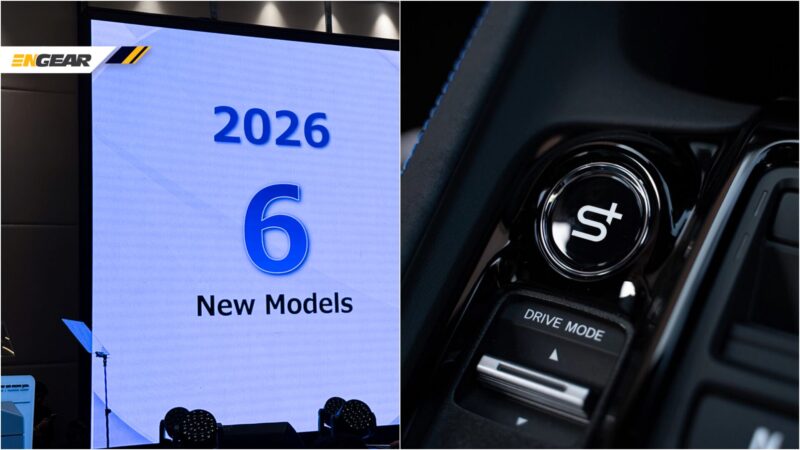
Honda Malaysia has announced plans to introduce up to six new models in 2026.
In line with its business direction, Honda Malaysia has also set a sales target of 60,000 units for this year.
Introduction of New Technology
In addition to announcing six new models, Honda has confirmed the introduction of the S+ Shift technology for the Malaysian market for the first time.
This technology is a power unit control system in the e:HEV hybrid that simulates manual gear shifting, providing a driving experience akin to that of a manual car.
So far, several models equipped with S+ Shift have emerged, including the Honda Prelude and the Honda Super ONE.
This feature is expected to be extended to more Honda e:HEV models in the future.
Expanding the e:HEV Model Lineup
Honda Malaysia is also anticipated to further expand its e:HEV model lineup for the local market.
As a leader in this segment since 2004, this approach demonstrates Honda Malaysia’s commitment to continually acquiring efficient, reliable, and high-performance hybrid technology.
The ‘Fun to Drive’ Spirit
The core strategy of Honda Malaysia is its commitment to continuously offering customers a ‘Fun to Drive’ experience.
According to Narushi Yazaki, Managing Director and CEO of Honda Malaysia, “The spirit of ‘Fun to Drive’ reflects our commitment to delivering vehicles that connect with our customers’ emotions.”
“The introduction of S+ Shift technology for the first time is a clear example of our direction.”
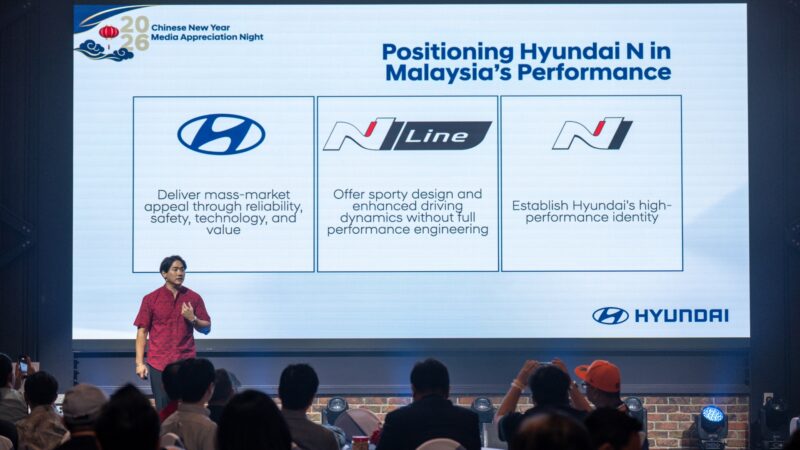
Hyundai Motor Malaysia is set to launch several new models throughout 2026.
Among the models expected to be introduced are the locally assembled (CKD) versions of the Tucson and Santa Fe.
The brand has also confirmed the arrival of a B-segment MPV in the fourth quarter of this year, namely the Hyundai Stargazer.
In addition, Hyundai plans to introduce two high-performance models, the Ioniq 5 N and Ioniq 6 N, along with a range of products under the N-Line sub-brand.
Target of 25 Sales and Service Centers
Hyundai Malaysia aims to have up to 25 sales and service centers, including in East Malaysia. Currently, Hyundai Malaysia has 12 branches, with five Letters of Intent signed in 2025 and one earlier this year.
Enhancing Ownership Experience
Hyundai aims to further improve the customer ownership experience through the myHyundaiCare program.
Initiatives under this program include:
Reassessing service and maintenance packages to lower ownership costs
Reducing hybrid battery costs by only replacing damaged battery modules instead of the entire unit
Free vehicle inspection and service campaigns during festive seasons
Mobile technical support teams
Service clinics and owner workshops to enhance confidence and product knowledge
Continuation of the 8-year/160,000 km warranty
Vehicle value protection through the Hyundai Protection Plan, supported by insurance partners including Allianz, Berjaya Sompo, Etiga General Takaful, Takaful Ikhlas, and Tokio Marine
Improved spare parts stock through the Glenmarie warehouse
Staria All-Star Referral Program
The Staria All-Star referral program offers the following benefits:
RM500 service credit for referrers
Savings of up to RM1,500 for new customers on existing promotions.
Malaysia’s Leading Automotive News | ENGEAR ENGLISH