Category Archives: TEST DRIVE

We have tried the Jaecoo J7 – Test Drive

With its striking price and appearance (some have said it resembles a Range Rover), the Jaecoo J7 has created its own phenomenon in the Malaysian market.

The Jaecoo J7 model was first showcased in early 2024 before officially launching a few months later, starting at RM138,800 for the two-wheel drive version and RM148,800 for the AWD version.

Since its official launch, this SUV model has become quite popular, almost as hot as fried bananas, even overshadowing local brands for a time.

Many may be drawn to its elegant exterior, while others may desire the off-road driving capabilities offered by the Jaecoo J7.

To investigate the real reasons behind this SUV’s popularity, we managed to obtain a Jaecoo J7 test unit for a week of driving, and here are our opinions:


1. Price Below RM150,000 for a ‘Range Rover’, Who Wouldn’t Want It?

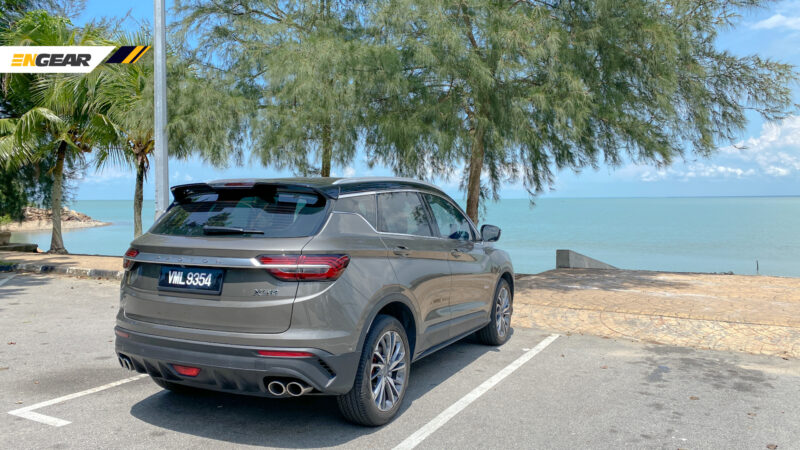
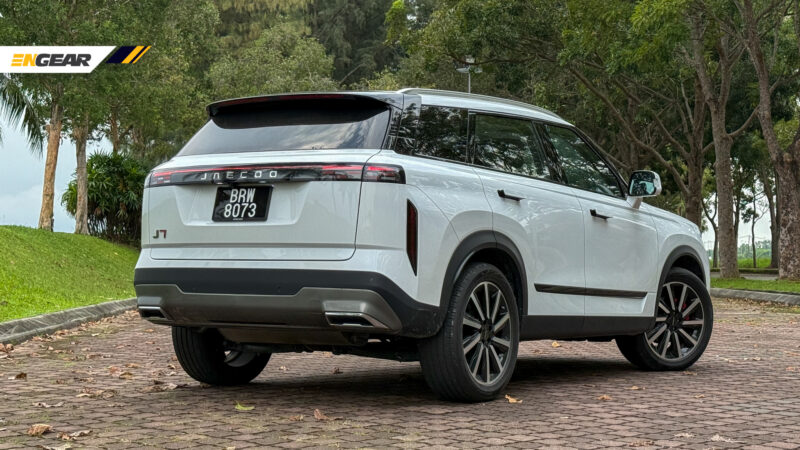
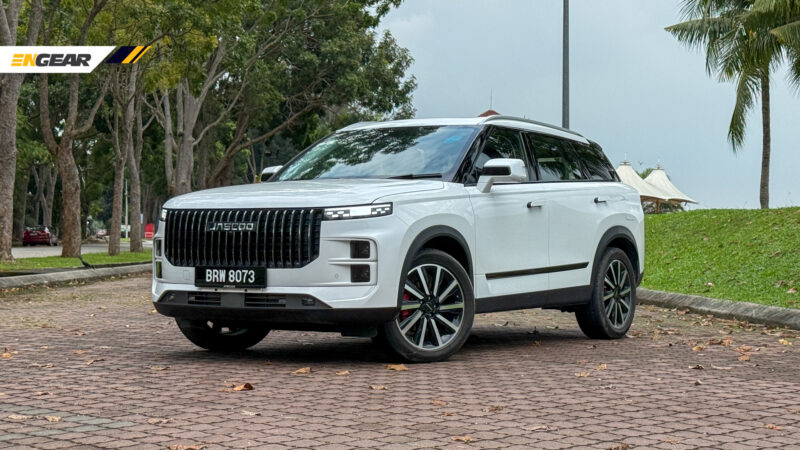
We admit that after getting a closer look at the Jaecoo J7, it indeed has an aura that makes many consider it a ‘people’s version’ of the Range Rover.

This perception is especially strong when viewed from the side.

With its luxurious-looking design, the Jaecoo J7 appears to satisfy those who want a premium SUV image without sacrificing their bank account.


2. Is the Jaecoo J7 2WD Sufficient?

We were provided with the two-wheel drive (2WD) variant of the Jaecoo J7 for our test drive.

There are two significant differences between this model and the AWD variant, namely the drive system and the driving modes included.

The Jaecoo J7 2WD only offers three driving modes: Eco, Normal, and Sport, compared to up to seven driving modes for the AWD variant (which includes additional modes for Sand, Mud, Off-road, and Snow).

However, the capabilities of both variants remain the same, such as a ground clearance of 200 mm and the ability to wade through water up to 600 mm deep.
For those who do not prioritize off-road driving capabilities, the 2WD version is more than adequate.

We had the opportunity to test this SUV’s ability to navigate flash floods in the Klang area, and it performed excellently, able to maneuver past several cars that dared not proceed.

The suspension tuning of the Jaecoo J7 also impressed us, maintaining good controllability even on unpaved roads while preserving a comfortable driving experience.


3. Powerful Engine

Powering this SUV is a 1.6-liter turbocharged inline-four engine that produces a maximum output of 194 hp and a torque of 290 Nm.

With a seven-speed DCT transmission from Getrag, the Jaecoo J7 can accelerate from 0 to 100 km/h in just 9.2 seconds.

In terms of driving, the Jaecoo J7 poses no significant issues for swift cruising, offering stable and comfortable driving even at high speeds.

However, by default, the Jaecoo J7 starts in Eco mode every time the drive button is pressed, and you must switch it to Normal mode for a smoother takeoff.

In Eco mode, we noticed that the initial driving experience was not very pleasant at times, occasionally feeling as if the vehicle was somehow reluctant to move forward.


4. Minimalist Cabin

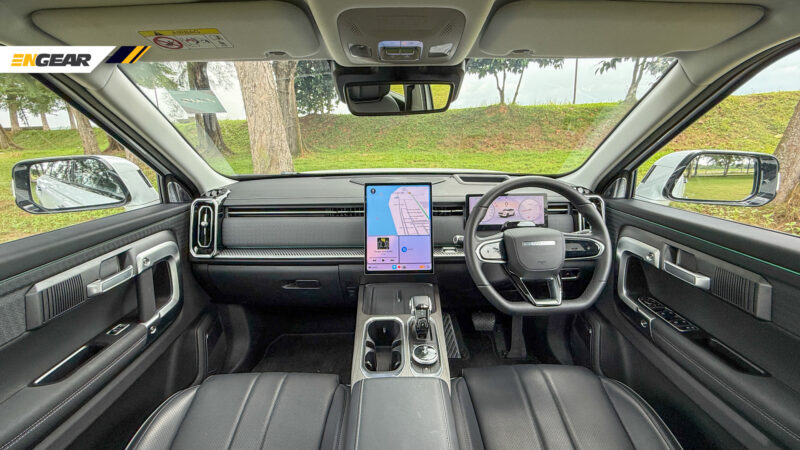
The simplified approach on the exterior continues into the design of the cabin space, which is more minimalist while simultaneously conveying a sense of premium atmosphere.

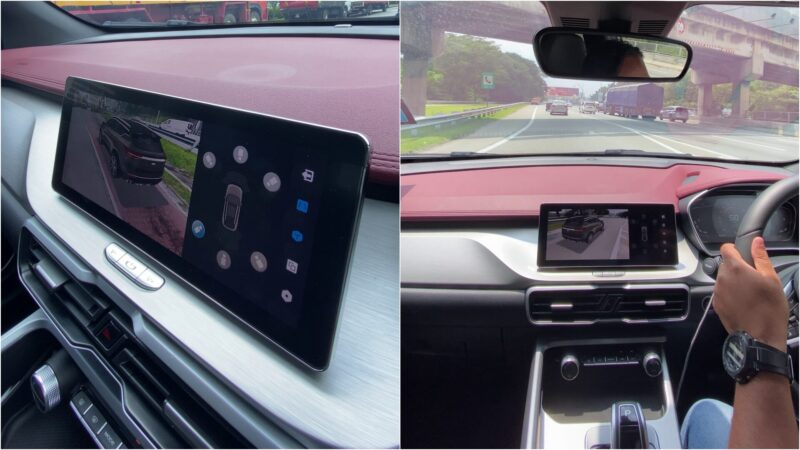
The centrally located 13.2-inch screen houses various functions and settings, including air conditioning controls and multiple safety features that can be adjusted.

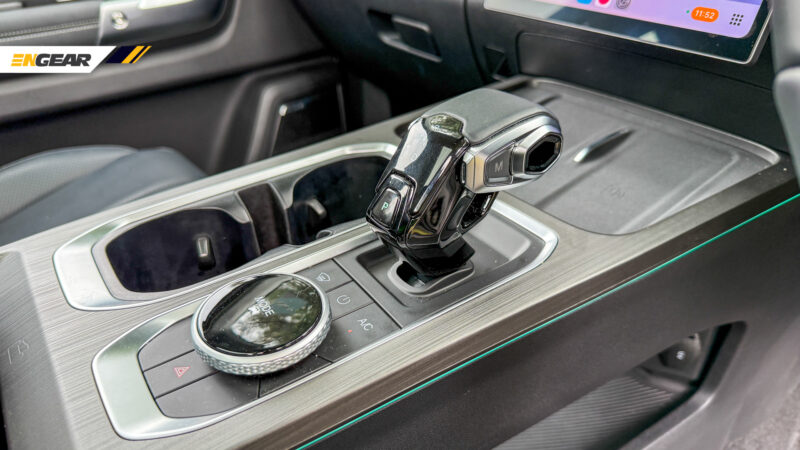
The good news is that to raise or lower the cabin temperature, you only need to press a button on the center console to open the air conditioning control menu, without having to search for the menu, especially after the Apple CarPlay/Android Auto menu is displayed.

Although the front seats do not come with a comprehensive adjustment function, we appreciate that they provide enough cushion dimension to support the lower legs.

As a result, we did not feel excessively fatigued during our drive.

Accompanying us throughout the journey was a pleasant and captivating sound produced by eight Sony speakers, which filled the cabin.

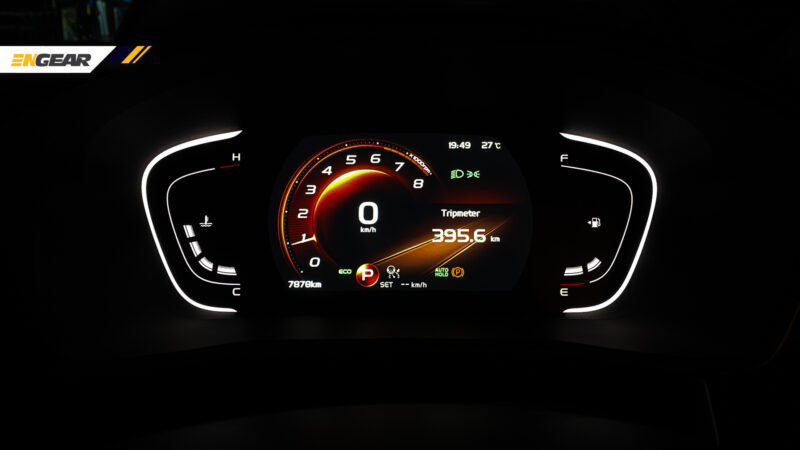
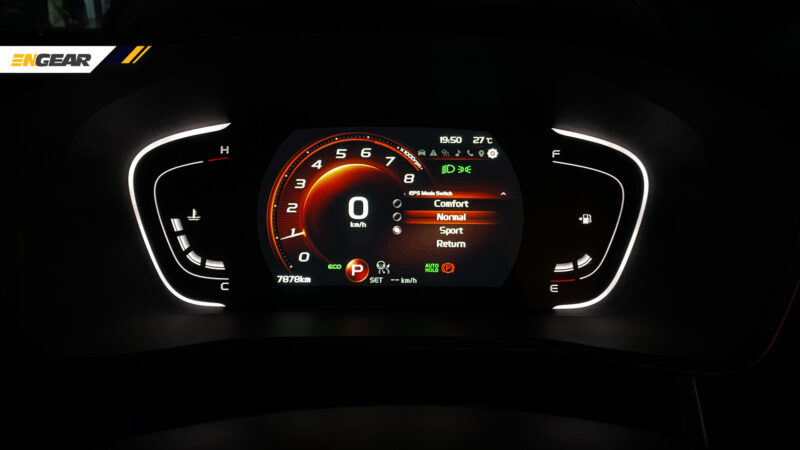
There are several other features we liked, particularly the digital cluster screen that still offers analog meter display options, and a clear, easy-to-read head-up display.

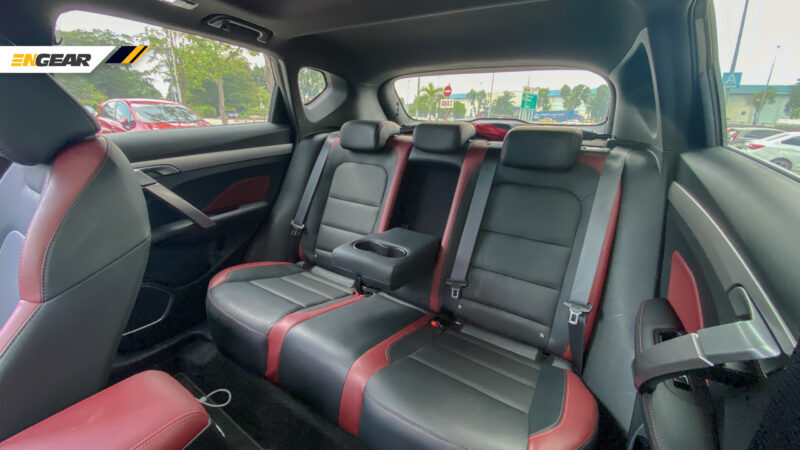
For the rear seats, there are two adjustable reclining angles available.


5. Driving Experience
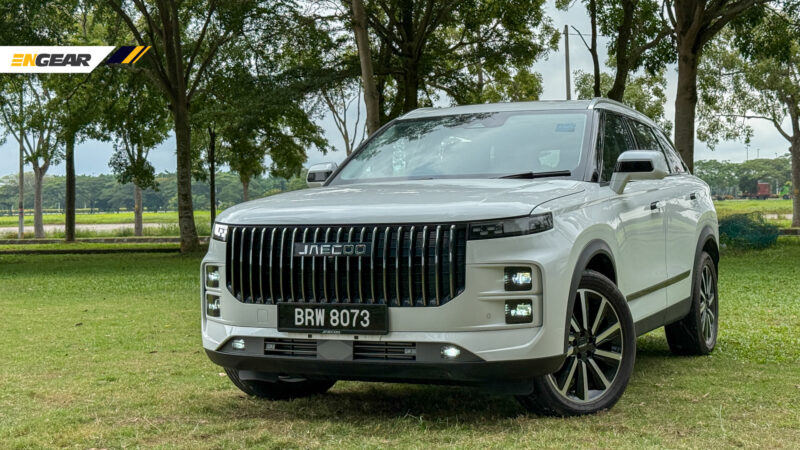
Aside from its handsome appearance, the Jaecoo J7 is actually very enjoyable to drive.

This is not only due to its ability to attract public attention but also the handling and comfort it offers.

The MacPherson strut suspension setup in the front and the Multi-Link setup in the rear contribute to good handling on winding roads, complemented by a responsive steering feel.

More importantly, the NVH (noise, vibration, and harshness) levels are minimal, allowing passengers to relax peacefully without significant disturbances.

From the driver’s perspective, the windshield of the Jaecoo J7 offers a wide field of view, supported by practical side mirrors for such a large SUV.

Thus, most of the time, I preferred to rely entirely on these physical features, only using the surround camera display to ensure there were no obstacles around the vehicle while positioning the car in the parking space.


6. Practicality

In addition to a cabin that offers ample leg and headroom for both front and rear passengers, the Jaecoo J7 provides a sizeable cargo space.

With a volume of 412 liters, it is adequate to accommodate various necessities, and it can be expanded up to 1,349 liters when the second-row seats are folded down.

Moreover, the Jaecoo J7 still has space to accommodate a full-size spare tire!


7. Comprehensive Safety Features

In terms of safety, the Jaecoo J7 is generous with various functions, including autonomous emergency braking, front collision warning, lane departure warning, lane-keeping assistance, forward vehicle movement warning, and adaptive cruise control.

It also includes rear collision warnings, rear traffic cross alerts, blind-spot monitoring, and a comprehensive 360-degree monitoring system.

To ensure your driving remains safe, the Jaecoo J7 is equipped with speed limit reminders and a very useful tire pressure monitoring system (TPMS).

In conclusion, the Jaecoo J7 could serve as an alternative for daily driving if you’re tired of the options currently available in the SUV market and want a vehicle with a premium image that attracts attention.

Its price is also reasonable enough not to leave your pocket feeling empty every month.

It wouldn’t be a mistake to change your mind and drive this model home, especially with the complete package of style and specifications offered for our market.


Specifications for the Jaecoo J7 2WD (RM138,800)

Engine: 1.6-liter turbocharged inline-four
Power: 194 hp, 290 Nm
Transmission: Seven-speed dual-clutch automatic
Drive: Front-wheel drive
Acceleration: 0-100 km/h in 9.2 seconds
 

Hyundai Santa Fe Hybrid, the ideal family SUV that’s often been overlooked – Test Drive

As a family head looking for a comfortable car/SUV packed with modern conveniences, several models from Japan and China are likely on your consideration list.

In addition to well-known Japanese brand SUVs that have a good reputation for reliability, there are now family SUVs from China that are significantly cheaper and offer more modern safety specifications.

However, many may forget that we actually have another family SUV model from a South Korean brand—the Hyundai Santa Fe Hybrid.

Officially (and quietly) launched in September last year, the facelifted Hyundai Santa Fe Hybrid can be positioned as an alternative for those who want something different from the usual choices available in Malaysia.

With a selling price of RM215,800, is the Hyundai Santa Fe Hybrid significantly better than competing models? Here are our first driving impressions after spending a short period with it:


1. Facelift – More Than Just a Cosmetic Change

For your information, the ‘new’ Santa Fe Hybrid launched a few months ago is not a completely new generation model.

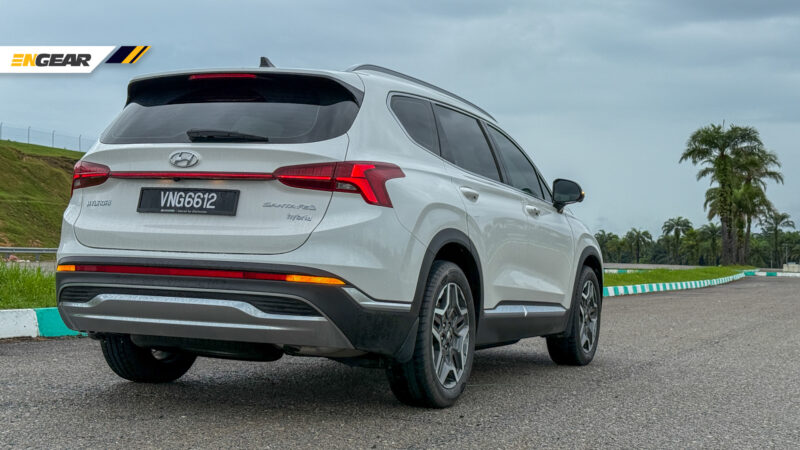
It is classified as a facelift model, featuring an updated front end with a wider grille and LED headlights resembling the hammer graphic associated with Volvo models, which tends to make heads turn when spotted on the road.

At the rear, the LED lights have been revamped with a more elegant geometric pattern, complemented by a horizontal LED bar connecting both light housings.

Yes, while the Santa Fe is a facelift model, the significant changes are actually hidden beneath its elegant exterior. It uses an all-new platform that has improved safety aspects, handling, fuel efficiency, and NVH (noise, vibration, and harshness) levels.

It is quite rare for a facelift model to come with an entirely new platform.


2. Cabin Space Features

One crucial aspect necessary for a comfortable family car is a spacious and comfortable cabin.

The Santa Fe Hybrid meets these needs with comfortable seating in the second and third rows, as well as a cargo space that can be maximized for various uses.

One feature we particularly liked is the third-row seating that can be folded down by simply pressing a button, along with separate air conditioning vents to ensure rear passengers remain comfortable throughout the journey.

Additionally, there are USB charging ports and power sockets available to charge electronic devices and smart gadgets.

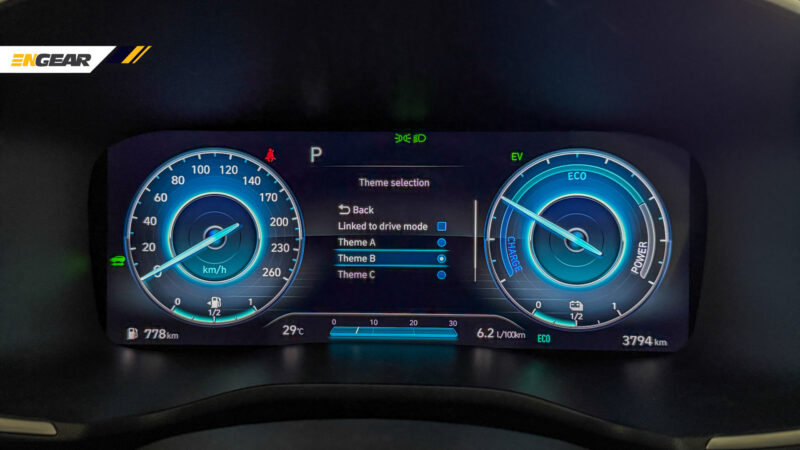
For the driver, the Santa Fe Hybrid provides a digital cluster screen with the option for easy-to-read analog meter graphics, as well as an eight-inch infotainment screen complete with wireless Apple CarPlay/Android Auto support.

The center console has been raised to function as a more comfortable armrest, also providing hidden storage space under the dashboard.

Moreover, the use of simpler PRND buttons in place of a traditional gear shift lever gives the cockpit a more spacious look.

The large functional button cluster also facilitates easy adjustments to settings such as the air conditioning system, drive modes, or simply ensuring front passengers are more comfortable with built-in heating and ventilation functions for the seats.

While the cabin layout of the Santa Fe may not be as minimalist as newer modern cars, it doesn’t prompt excessive complaints, particularly when searching for or adjusting desired functions.


3. Highly Fuel-Efficient Hybrid Engine

The Santa Fe Hybrid we tested is powered by a 1.6-liter Smartstream G1.6 T-GDI inline four-cylinder engine that produces 180 PS at 5,500 rpm and 265 Nm of torque at 1,500-4,400 rpm.

This engine is coupled with a 60 PS electric motor that provides 264 Nm of torque, bringing the total power output to 230 PS and 350 Nm.

While it may not be the most powerful SUV like a sports car, it is sufficiently capable of moving its relatively large body.

In terms of driving, the Santa Fe Hybrid offers lively initial acceleration to outpace sporty-looking cars next to it, while also delivering impressively economical fuel consumption.

We were unable to empty a full 67-liter RON95 tank in the Santa Fe Hybrid due to time constraints; however, according to Hyundai, this SUV can go up to 1,000 km before needing a refill.

Our short drive came close to 300 km, yet the fuel gauge barely registered a decrease.


4. Driving and Comfort

One of the advantages of the Santa Fe Hybrid is its ability to operate in electric driving mode at low speeds, and for relatively long distances as well.

This is a significant factor in the SUV’s fuel efficiency, as during most city driving, only the electric motor is in use, with the 1.6-liter turbo engine occasionally kicking in just to ensure that the 1.49 kWh battery maintains sufficient charge.

Moreover, in EV mode, the Santa Fe Hybrid does not operate entirely silently; it emits a futuristic warning sound to alert pedestrians of its presence on the road.

What we can praise about this hybrid SUV is the driving dynamics and handling, which are noticeably better compared to Chinese-made SUVs.

Why do we often emphasize good steering and suspension tuning? All of this contributes to the comfort of both the driver and passengers.

With a steering system that is responsive and not overly artificial, the driver will not feel excessively fatigued after a long journey.

The slightly firmer suspension tuning enhances cornering confidence, while still effectively filtering out the roughness that exists on beloved Malaysian roads. The result is a remarkably comfortable ride, regardless of the road quality encountered.

Most notably, the NVH (noise, vibration, and harshness) performance is exceptional, as we found it difficult to perceive any roughness, vibrations, or exterior noise inside the cabin.

Even though the turbo engine operates from time to time—especially when the right foot is pressed firmly to the floor—the engine sound is not intrusive within the cabin. The transition between engine and electric motor operation is also very smooth, making it sometimes difficult to detect.


5. Safety Features

As standard, the Hyundai Santa Fe Hybrid comes equipped with the Hyundai SmartSense Level 2 Advanced Driver Assistance Systems (ADAS), offering semi-autonomous driving support to ensure a safer and more reassuring driving experience.

A unique feature we appreciate in the Hyundai Santa Fe Hybrid is the Blind-Spot Monitor (BVM), where the display for the left or right blind spot appears on the digital cluster screen to assist with safe lane changes.

What we find particularly valuable about this function is that it provides only the necessary information for the driver to detect the presence of objects from behind, rather than a bird’s-eye view perspective that is often unhelpful.

Another important feature for families is the Rear Occupant Alert, which ensures you do not forget any young children seated in the back when leaving the vehicle in a parking spot, especially in hot weather conditions.


6. Price that Might Be Out of Budget

Despite its various advantages over competing models, a significant drawback of the Santa Fe Hybrid is its selling price, which may be beyond the means of some buyers.

At RM215,800, not many will consider it a budget-friendly purchase.

In fact, for a lower price, one could opt for a non-hybrid three-row SUV such as the Mazda CX-8 or Chery Tiggo 8 Pro, or a mild-hybrid SUV like the Proton X90.

For those with small family members, there are still hybrid SUV options with a five-seat configuration, such as the Toyota Corolla Cross HEV, Haval H6 HEV, or Honda CR-V e:HEV.

However, for those who can afford it and desire something different, the Hyundai Santa Fe Hybrid may still be a purchase that brings a smile and is appreciated by the whole family.


Specifications of the Hyundai Santa Fe Hybrid

  • Engine: Smartstream G1.6 T-GDI
  • Power: 180 PS @ 5,500 rpm, 265 Nm @ 1,500-4,400 rpm
  • Electric Motor: 60 PS, 264 Nm
  • Total Power: 230 PS, 350 Nm
  • Transmission: 6-speed automatic

Peugeot 408: Why the Premium variant is better than the GT

The Peugeot 408 was launched in the Malaysian market in April last year with three variants to choose from, namely Allure, Premium, and GT, priced at RM146,055, RM166,055, and RM196,055 respectively.

All three variants are powered by a 1.6-litre turbocharged PureTech four-cylinder engine that produces 218 PS and 300 Nm of torque. This engine is paired with an eight-speed automatic transmission that drives the front wheels.

Of course, the key difference between these three variants lies in their equipment levels. In this article, we will compare between the Premium and GT variants, and why this writer thinks the Premium is a better proposition than the GT.

It is more affordable

No matter how you slice it, RM196,055 for a C-segment car is quite unreasonable. In this context, the Premium variant appears to be a smarter and more sensible investment.

Indeed, with the GT variant, you receive an array of additional features such as Matrix LED headlights, 20-inch alloy wheels, Nappa leather upholstery, massage and memory functions for the driver’s seat, a 10-speaker Focal audio system, and more. However, in my opinion, the equipment included with the Premium is sufficient to meet the needs of buyers in this segment.

It is cheaper to maintain

All 408 variants are powered by the same engine; however, by choosing the Premium variant, you may save your bank account in the future, as it comes with 18-inch wheels instead of the 20-inch ones found on the GT.

Of course, tyres do not need to be replaced every year, but the price difference between 18-inch and 20-inch tyres can be quite significant, which can be seen as a worthwhile saving in the long run. Plus, the Premium wheels look so much better than the GT’s.

It is more practical

Another advantage of the Premium variant over the GT is its boot capacity, which can be expanded from 536 litres to 1,611 litres (compared to 1,583 litres in the GT), given that it does not include a subwoofer.

Additionally, it also comes with a space-saver spare tyre instead of the tyre repair kit that is included with the GT.

Now you can see that the highest variant does not necessarily mean it is the best choice. However, ultimately, the decision is yours.

Three shortcomings of the Nissan Kicks e-Power

Recently at the Kuala Lumpur International Mobility Show (KLIMS) 2024, Edaran Tan Chong Motor (ETCM) marked its revival with the launch of the Nissan Kicks e-Power.

The Kicks e-Power for the Malaysian market will be fully imported (CBU) from Thailand. This means we are getting the facelifted version of the crossover, which was originally launched in that country four years ago.

Although it is not the freshest product on the market, the Kicks offers something new: the e-Power powertrain. It features an internal combustion engine, but unlike conventional hybrids, the petrol mill serves only as a generator.

The wheels are driven 100% by an electric motor at all times, allowing you to enjoy a driving experience that is almost akin to that of an electric vehicle (EV) without having to get in a fluster about charging.

This is indeed appealing and certainly helps improve fuel efficiency; however, during a recent media test drive, I found three shortcomings.

Outdated exterior design

As mentioned, the Kicks e-Power is actually a product that is somewhat aged. This is evident in its exterior design, which appears rather dated when compared to its closest competitors.

Don’t get me wrong; its appearance is not unattractive, but it lacks any elements that might make it stand out in a showroom.

However, as you may know, appearance, design, and related matters are subjective. Not everyone desires a car that is overly flashy—some prefer a more casual and understated look.

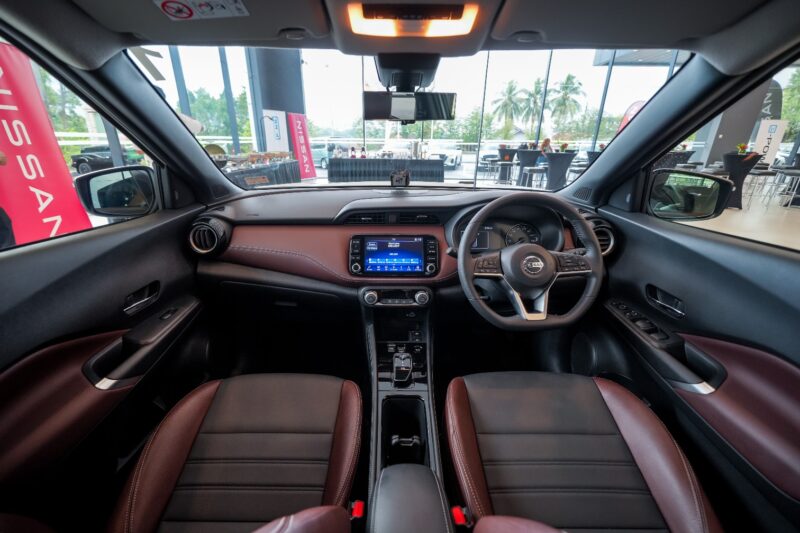
Underwhelming interior

The interior of the Kicks is neat and simple, but like its exterior, it is beginning to show its age.

This is because the layout is approximately 95% identical to that of the Almera’s but Kicks does come with a more sophisticated gear knob that feels somewhat awkward to use due to its shape.

Additionally, the use of hard plastic finishes on the dashboard and door panels detracts from the overall appeal of this car. The rear passenger space also feels somewhat cramped, despite the fact that its wheelbase is 5 mm longer than that of the HR-V.

Reasonably spacious boot, but…

The Kicks e-Power features a boot space that is quite generous, offering 423 litres of capacity. Unfortunately, lift the boot floor and you will not find any spare tyre. Instead, there is a tyre repair kit.

Was the decision to exclude a spare tyre made for cost or technical reasons? It is plausible that cost played a role, as the car market in Malaysia is generally quite price-sensitive so there’s a chance that ETCM may have taken this step to ensure that prices remain competitive.

Technical factors also make sense, as hybrid powertrains like e-Power involve additional components, and some of these components may encroach under the boot floor where spare tyres are usually found.

Chery Tiggo 7 Pro is inexpensive yet armed to the teeth – Test Drive

The Tiggo 7 Pro marks the fourth model launched by Chery Malaysia, following the Omoda 5, Tiggo 8 Pro, and Omoda E5.

Like its three predecessors, the Tiggo 7 Pro plays a crucial role in Chery’s efforts to cement its brand presence in Malaysia for the second time. It enters the fiercely competitive C-segment SUV market, going head-to-head with well-established rivals like Proton’s X70 and the immensely popular Honda CR-V.

As a newcomer, the Tiggo 7 Pro faces significant challenges, as its closest competitors boast impressive credentials proven by encouraging sales figures. However, this Chinese SUV has proven itself capable of standing up to the competition.

What makes the Tiggo 7 Pro particularly compelling is its pricing, which falls below RM130,000. It offers exceptional value, especially in terms of features, performance, and safety, making it a worthy alternative for those seeking quality without breaking the bank.

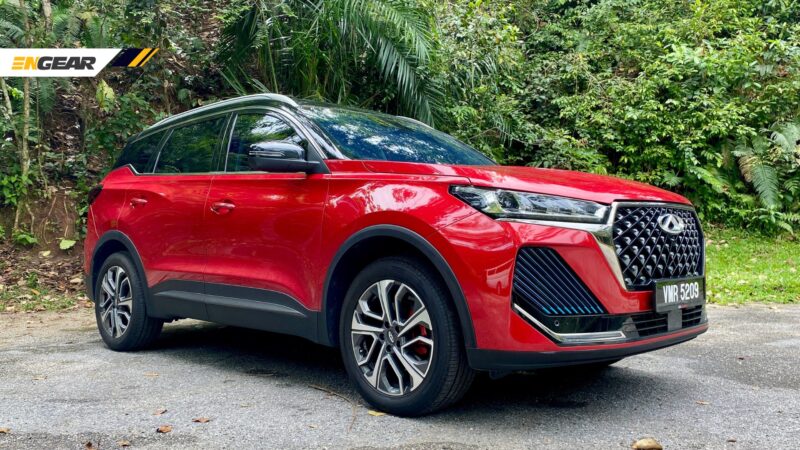
Aesthetics-wise, the Tiggo 7 Pro may not be as striking as the 2025 X70 or CR-V, but it certainly exudes a stylish, mature image that is capable of appealing to professionals.

While it may not scream for attention, pleasant details such as the Mercedes-esque diamond studs in the grille, the full-width rear light, and tasteful blue accents on the front bumper help it stand out subtly.

The vehicle sports attractive 18-inch alloy wheels, which hide red brake calipers—an unexpected touch for a family-oriented SUV, yet appealing to those who has a desire for sporty touches on their vehicles.

Measuring 4,513 mm in length, 1,862 mm in width, and 1,696 mm in height, the Tiggo 7 Pro is slightly shorter than the X70 and CR-V but boasts greater height compared to both models. Its wheelbase spans 2,670 mm, matching that of the X70 but falling 30 mm short of the CR-V.

Despite its smaller dimensions, the Tiggo 7 Pro’s cabin feels remarkably spacious and accommodating for a family of five. The materials used throughout convey quality rather than cheapness, justifying the already wallet-friendly price tag.

You’ll find leatherette upholstery enveloping much of the dashboard, seats, and steering wheel, complemented by touches of wood trim and glossy black and aluminium accents.

Notably, the dashboard is accented with nice-looking faux carbon fibre trim, complementing the sporty image initiated by those red brake calipers.

In terms of features, buyers will find everything they could possibly desire in a vehicle of this market category. For example, the infotainment system and essential vehicle information are displayed on a sizeable 24.6-inch screen, which actually comprises two separate displays of 12.3 inches each.

Additional offerings include wireless Apple CarPlay and Android Auto, a Sony audio system with eight speakers, a 50W wireless charger, and ambient lighting with 64 colour options.

Convenience features such as dual-zone climate control, six-way power adjustments for the driver’s seat, four-way adjustments for the front passenger, a panoramic sunroof, and Keyless Entry with Walk-Away Auto Lock make for a comfortable and user-friendly driving experience.

Don’t let the Tiggo 7 Pro’s smaller footprint fool you; it’s well-suited for family use. The rear seats are spacious, providing ample thigh support and a comfortable seating angle. The conventional SUV body shape also grants generous headroom for taller passengers.

The boot space, while smaller than that of the X70 and CR-V at 475 litres, remains plentiful. If you need extra room, simply fold down the rear seats for a vast total capacity of 1,672 litres.

On the safety front, there’s no cause for concern, as Chery has equipped this SUV with a host of active and passive safety features, including Autonomous Emergency Braking, Multi-Collision Braking, Blind Spot Detection, Traffic Jam Assist, Adaptive Cruise Control, Lane Change Assist, and more.

If that’s not enough, it also boasts seven airbags and a comprehensive 540-degree camera system complete with markers to assist drivers in tight spaces.

Despite its Chinese origins, the Tiggo 7 Pro does not compromise on quality; the camera displays are notably bright and sharp, outshining some of the more expensive SUVs on the market.

The design is appealing and the features provided are more than adequate but how does the Tiggo 7 Pro perform on the road?

Open the bonnet, and you won’t see much, as the 1.6-litre turbo engine and its associated components are neatly concealed beneath a large plastic cover.

That said, you won’t have any problem feeling the power as the four-cylinder engine produces 197 PS and 290 Nm of torque, surpassing the outputs offered by the three-cylinder engines found in Proton and Honda’s X70 and CR-V.

With a seven-speed DCT transmission driving the front wheels, this SUV is claimed to sprint from 0 to 100 km/h in just 8.3 seconds, reaching a top speed of 205 km/h.

Undeniably, the combination of engine and transmission endows the Tiggo 7 Pro with impressive acceleration, making it a joy to drive on wide-open motorways.

However, navigating busy city streets, I found the powertrain to be less smooth at times, with occasional jerks when initially pulling away.

According to Chery, the powertrain should achieve fuel consumption figures of around 7 l/100 km (14.2 km/l). In my mixed driving of both highways and urban areas, I recorded a consumption of about 8.9 l/100 km (11.2 km/l)—not too shabby considering the slightly aggressive driving style.

The suspension system is quite typical for a Chinese brand; it’s soft and comfortable, providing satisfactory shock absorption, which inspires confidence when tackling uneven roads.

Nevertheless, the softness of the suspension can make the Tiggo 7 Pro feel a bit precarious at higher speeds. While it handles corners well for an SUV, overly spirited driving can lead to the vehicle struggling to maintain composure.

In other words, I believe the Tiggo 7 Pro is better suited for relaxed and leisurely driving, even though it boasts a rather powerful engine and features aggressive design elements like red brake calipers and carbon fibre trim.

Conclusion

If you’re on the lookout for a versatile C-segment SUV that doesn’t cost an arm and a leg, the Chery Tiggo 7 Pro might just be your ideal choice.

While its design may not be the most eye-catching in its class, it makes up with an impressive list of features and satisfying performance.

Concerned about after-sales support? Rest easy, as Chery Malaysia offers a generous seven-year/150,000 km warranty, 24/7 free towing service, and a five-year complimentary service package for the Tiggo 7 Pro.

Chery Tiggo 7 Pro Specifications

Price: RM123,800
Engine: 1.6-litre turbo petrol, four-cylinder
Transmission: Seven-speed DCT
Power: 197 PS
Torque: 290 Nm

Haval H6 HEV: Can it compete with the Corolla Cross Hybrid, CR-V e:HEV? – Test Drive

On a global scale, the trend of electric vehicle ownership appears to be slowing down.

Major automotive manufacturers worldwide are starting to pull the handbrake and make a U-turn to resume producing fossil fuel vehicles for their customers.

What is certain is that this “ancient” technology has not yet reached its end point and is now being enhanced with the help of hybrid systems for longer ranges compared to battery electric vehicles (BEVs) and certainly compared to pure internal combustion engine (ICE) cars.

One of the hybrid vehicles made in China that has already entered the Malaysian market is the Haval H6 HEV.

Officially launched a few months ago, the Haval H6 HEV is a newcomer in the C-segment SUV category, competing against rivals such as the Honda CR-V, Mazda CX-5, and Proton X70.

Apart from its size, the Haval H6 HEV also comes with an attractive price package—RM139,800—making it as more affordable compared to  the Toyota Corolla Cross Hybrid.

Will this low pricing strategy be enough to attract buyers away from the Corolla Cross, or the more sophisticated CR-V?

We managed to obtain a test drive unit of the Haval H6 HEV for a few days, and here are our findings:


1. Exterior Design

Among the C-segment SUVs available, the Haval H6 HEV features a relatively safe design.

There are no aggressive sharp lines; the design is rounded, but not excessively so like the Proton X70.

The front end looks fierce with the presence of LED headlights and a wide ‘Star Matrix’ grille, though the 19-inch wheels appear somewhat small beneath the SUV’s wheel arches.

At the rear, it boasts a full-width LED light bar, along with a cluster of four brake lights positioned on the spoiler.

In short, the design is quite ordinary. There is nothing really “wow” about it, except for the HEV badge indicating that it is not an SUV that lumbers along like a baby elephant.

This rather conservative appearance also successfully conceals the fact that it is actually a fairly large SUV!

Measuring 4,683 mm x 1,886 mm x 1,730 mm, the Haval H6 is significantly wider and taller than the Honda CR-V, benefitting from a longer wheelbase.


2. Interior Design

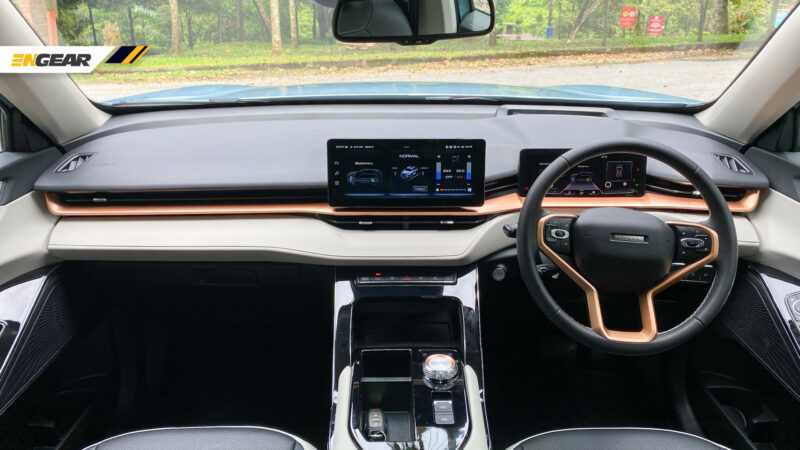
Following current trends, the Haval H6 HEV presents a more minimalist cabin layout.

Its features are comprehensive, with a 10.25-inch digital screen in front of the driver, a 12.3-inch infotainment screen complete with Apple CarPlay and Android Auto support (important features for a modern car!), dual-zone climate control, wireless device charging slots, a panoramic sunroof, a head-up display, and an audio system with eight speakers.

On the central console, there are several important function buttons, but unfortunately, it lacks a more crucial feature—controls for temperature and fan speed.

You have to navigate these functions through the central screen. This could be inconvenient, especially when driving alone.

The author also isn’t particularly fond of the three-tone finish featuring rose gold, which feels somewhat distracting while driving.

Moving to the front screen, we appreciate GWM’s decision not to clutter it with various logos and symbols that can be visually overwhelming.

The layout and graphics are sharp and easy to read, though it is unfortunate that there are fewer customization options available for those who prefer an analog speedometer display.


3. Exciting Power Package

This is one of the most powerful hybrid SUVs in its class.

The Haval H6 HEV is equipped with a hybrid engine system producing 243 PS and 530 Nm of torque, consisting of a 1.5-liter turbocharged inline-four engine (150 PS/230 Nm) and a single electric motor (177 PS/300 Nm), a two-speed Dedicated Hybrid Transmission (DHT), and front-wheel drive.

With the available Sport mode, the Haval H6 HEV can accelerate from a standstill to 100 km/h in just 7.75 seconds.

In comparison, the Corolla Cross Hybrid features a naturally aspirated 1.8-liter Atkinson cycle engine producing 98 PS/142 Nm and a single electric motor generating 72 PS/163 Nm, for a combined output of 122 PS.

Meanwhile, the CR-V e:HEV has a 2.0-liter naturally aspirated hybrid engine paired with two electric motors for a total output of 181 PS and 335 Nm.


4. Driving Experience

On paper, it certainly looks powerful, but the power delivery of the Haval H6 HEV is not as aggressive as that of sports cars or electric vehicles (EVs) with their intense torque.

When you press the accelerator pedal firmly to the floor, you can feel the responsive and smooth acceleration without straining your neck from high G-forces.

This power is particularly needed when driving with a cabin full of passengers and cargo, especially when overtaking a slow-moving eighteen-wheeler on a busy road due to overloading.

One thing we can commend about this SUV is the remarkable lack of engine vibrations felt inside the cabin.

Even at times when this SUV requires extra power, the operation of the 1.5-liter turbo engine is very efficient, devoid of the noise and vibrations mentioned earlier.

Despite its considerable size, this SUV remains easy to control, although the steering wheel feels somewhat oversized—it almost feels like driving a truck.

The handling is also satisfactory, as it is more tuned for the comfort of all passengers.

The Haval H6 HEV’s suspension system works effectively to absorb all the bumps and potholes from the road surface, while also avoiding excessive swaying on winding roads.

The braking system functions well to bring this heavy SUV to a stop; however, at low speeds, it takes a while to get used to the pedal response to avoid sudden stops.

According to GWM, a full tank of the Haval H6 HEV can cover distances of up to 1,000 km.

This figure has indeed been achieved by some media colleagues who have tested this SUV.

Based on personal experience, I managed to achieve a driving range exceeding 700 km—an impressive figure that can be attained even without driving conservatively to maximize fuel savings.

This is certainly beneficial for long-distance driving, where you won’t need to stop as frequently for refueling.


5. Comfort

While I am quite satisfied with the power delivery from this hybrid SUV, there is a key area that GWM needs to focus on—comfort.

For short drives, what the Haval H6 HEV offers won’t cause significant discomfort.

However, for families who often make long journeys (for instance, returning to their hometowns), this SUV may be a difficult choice.

What I noticed is that the seats in the Haval H6 HEV do not provide sufficient thigh support.

As a result, the legs of both the driver and passengers may feel dangling, leading to quicker fatigue.

The spacious dimensions allow the Haval H6 to provide ample legroom and headroom, but this is not complemented by comfortable upholstery.

There is a ‘boss switch’ feature that allows the driver to adjust the position of the front passenger seat if the passenger dozes off due to fatigue—a much-needed feature for any dedicated husband.

In terms of practicality, the Haval H6 HEV provides a cargo space of 560 liters, which is ample for carrying items such as luggage and shopping bags from major retailers.

If you need more space, simply fold down the second-row seats, and you will have a cargo space of 1,485 liters.

Finally, we found the NVH (Noise, Vibration, and Harshness) aspect of the Haval H6 HEV to be quite satisfactory.

With the use of quieter tires, it somewhat contributes to making the cabin of the Haval H6 more comfortable, effectively filtering out wind noise as well.

However, one point to note is that, despite being quiet, the standard tires on the Haval H6 HEV are not suitable for those who prefer aggressive driving styles.

A significant investment in higher-performance tires would be necessary to enjoy a more balanced driving experience in the Haval H6 HEV.


6. Hybrid, Yet Drives Like an EV!

You might be wondering why the Haval H6 HEV is equipped with only a two-speed gearbox.

The answer is simple: the Haval H6 HEV relies almost entirely on the electric motor for propulsion that doesn’t need too much gear ratio.

While the 1.5-liter turbo engine only engages when the driver requires extra power for aggressive driving.

The battery pack capacity is relatively small, at around 1.7 kWh, but it is sufficient to allow the Haval H6 HEV to behave like a pure EV!

The available electric range is not particularly long, stretching just a few kilometers, but I noticed that the Haval H6 HEV does not use engine power at all when driving in the city at low speeds.

In fact, some have even asked, “Is this SUV electric?” due to its remarkably quiet operation.


7. Value for Money

Currently, the selling price of the Haval H6 HEV in the Malaysian market starts at RM139,800, making it slightly cheaper than the Toyota Corolla Cross Hybrid (RM142,000).

Another popular C-segment SUV, the Honda CR-V e:HEV RS, is priced at RM195,900, offering a more aggressive appearance but less power compared to the Haval H6 HEV.

This indirectly positions the Haval H6 HEV as a formidable contender against those two Japanese models, with advantages in price, power, and practicality.

The question remains, with these advantages mentioned, can the presence of the Haval H6 HEV shake the foundations established by those two Japanese manufacturers?

For me, the true answer to this question may be difficult to please everyone.

This is because, after evaluating all three SUVs, I prefer the driving experience offered by the Japanese models, which feel more lively and connected to the driver, provide much better passenger comfort, and feature essential functions that are easier to operate without relying completely on the central screen.

I do not entirely dismiss the advantages present in the Haval H6 HEV; however, the factor of driving satisfaction is more important, far outweighing what GWM tries to promote with this model.


Specifications of the Haval H6 HEV:

Engine: 1.5-liter turbo inline-4
Power: 150 PS/230 Nm
Electric motor: 130 PS/300 Nm
Total power: 243 PS/530 Nm
Transmission: Dedicated Hybrid Transmission (DHT) with two speeds
Acceleration 0-100 km/h: 7.7 seconds
Top speed: 175 km/h

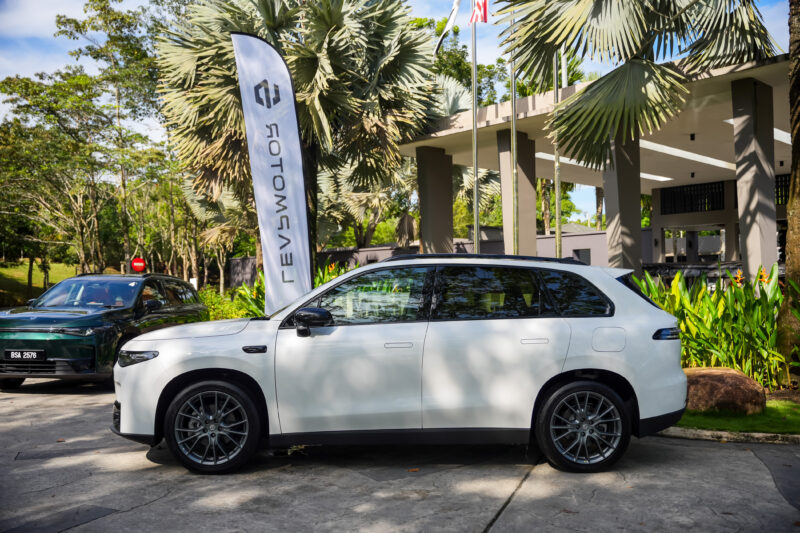
Leapmotor C10: a spacious electric SUV for family – first drive

As a prominent name that encompasses popular brands like Alfa Romeo, Citroën, Maserati, and Peugeot, it may seem rather odd to see Leapmotor under the Stellantis umbrella.

For clarification, Leapmotor (or Ling Pao) is a Chinese automotive company founded in 2015.

In 2023, Stellantis acquired a 20% stake in Leapmotor, aligning it with the previously mentioned European brands.

Without further ado, Stellantis Malaysia announced the introduction of Leapmotor to the local market in April 2024, positioning it as an affordable EV brand.

The first model for sale is the D-segment SUV, the Leapmotor C10, which was officially launched six months later with a selling price of RM159,000.

Recently, Stellantis Malaysia invited automotive media practitioners to experience the Leapmotor C10 on a drive to Gambang, Pahang.

Here’s our notes after driving this SUV for two days:


1. Dimensions

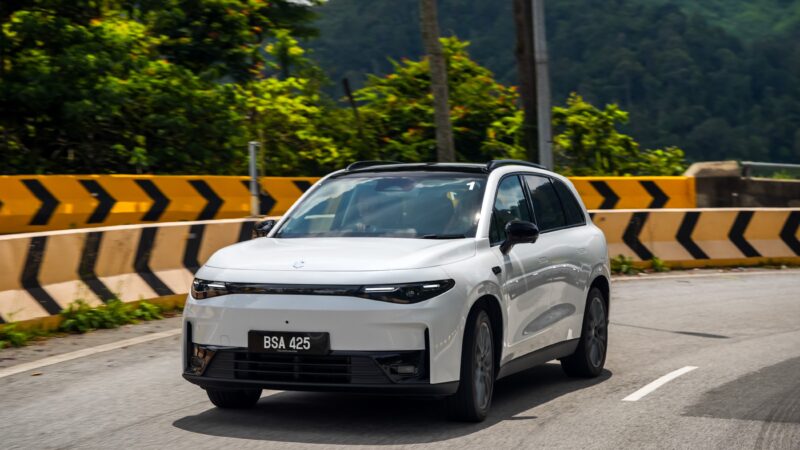
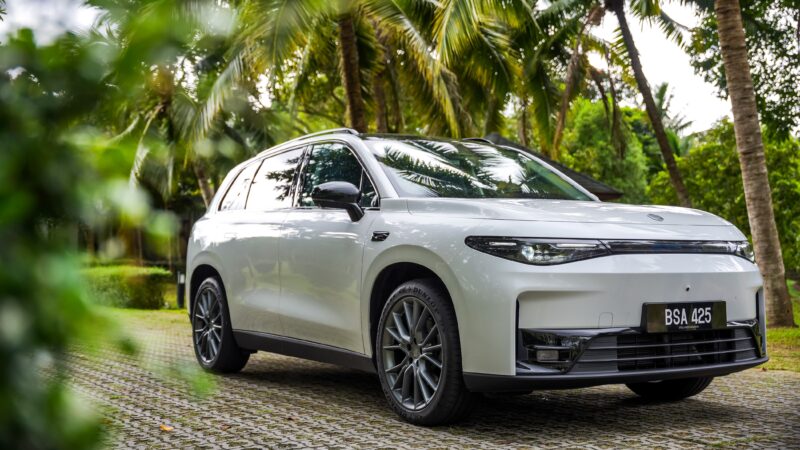
Unlike other EV models (mostly hatchbacks, SUVs, or sedans) available in the market, the Leapmotor C10 is more suited to be classified as a family-oriented electric vehicle.

Its relatively large size measures 4,739 mm in length, 1,900 mm in width, 1,680 mm in height, with a wheelbase of 2,825 mm.

Within the same price range, the Leapmotor C10 competes with combustion-engine models such as the Chery Tiggo 8 Pro and Proton X90.

While the sizes are similar, the C10 comes with a five-seat configuration, compared to the seven seats found in the two previously mentioned models.


2. Power

Only one variant is offered in Malaysia, featuring a single rear-wheel drive electric motor producing 215 hp and 320 Nm of torque.

Though the figures appear high, after testing the drive of this electric SUV, the acceleration is not as aggressive as that of many EVs available on the market.

However, this doesn’t mean the C10 is an “elephant baby” reluctant to move; rather, you can expect smoother power delivery to ensure no family members complain of neck pain at the start of the journey.

Even on the highway, I had no issues ensuring that this electric SUV could safely overtake any slow-moving trailers in the left lane without causing fast-moving cars behind to flash their high beams—even when fully loaded with passengers.

With a 69.9 kWh battery pack, the Leapmotor C10 can travel up to 420 km on a full charge.

Based on our drive, we reached our destination with about 112 km of range remaining, averaging an energy consumption of around 20.1 kWh/100 km, slightly higher than the official figure of 19.8 kWh/100 km.


3. Driving Experience

We took the opportunity to test the handling of this SUV while traversing the KL-Karak highway and Genting Highlands.

It was surprising to find that this large-sized SUV handled well through every turn and uphill stretch of the very popular road.

Returning to the desired speed posed no problems, without causing passengers to feel dizzy from sudden acceleration.

However, although the C10 features a suspension system that excellently absorbs impacts and Dunlop e-Sport Maxx tires that keep this SUV grounded in curves, it is not matched by a satisfying steering response.

Most of the time, the vehicle obeyed every command made by the driver, but conditions became less enjoyable when the Advanced Driver Assistance Systems (ADAS) such as Emergency Lane Keeping Assistance (ELKA) and Lane Centering Control (LCC), started to intervene.

These systems would aggressively attempt to correct the steering direction if they detected that the driver was not maintaining proper control of the vehicle.

This constant ‘interference’ could make driving more exhausting than usual, as the driver must counteract the corrections attempted by the system.

Therefore, I found it easier to simply disable these functions from the start, allowing the more critical systems to operate to ensure this SUV’s safety on the road.

I would prefer if the system could remember the initial settings so that the driver wouldn’t have to waste time staring at the screen every time they needed to drive the C10.

One aspect that made driving the C10 less reassuring is the feeling of a spongy brake pedal.

This issue wasn’t as noticeable during high-speed driving, where the braking system operated effectively, but at lower speeds, there were times when it felt as if the SUV didn’t want to stop, even when the brake pedal was pressed firmly to the floor.

It felt as though there was no bite from the brakes—completely unresponsive. Surely, we can’t rely on the emergency braking system every time we need to stop, right?

4. Interior

For this test drive session, I began my journey as a passenger in the second row.

Typically, I experience dizziness and nausea when I’m not behind the wheel; however, this time I was able to relax (and even take a nap) comfortably throughout the ride.

This is because the rear seats feature adjustable backrests (with two angles) for added comfort during the journey.

Perhaps the use of silicone leather upholstery, known as Oeko-Tex, significantly contributes to a more comfortable ride due to its soft and back-friendly material.

It also has waterproof properties and does not contain any toxic substances that could be harmful to infants—a highly beneficial feature for many families in Malaysia with small children.

In addition to ample legroom, rear passengers won’t feel cramped as there is generous headroom, thanks to the spacious panoramic roof, which also has a shade to block out the intense midday sun.

While black upholstery may sound somewhat conventional, there is an option for a brighter Criollo Brown finish, should you be interested in that beautiful Glazed Green color.

The NVH (Noise, Vibration, and Harshness) aspects are also satisfactory, with wind noise from outside being well-filtered, and tire noise is less noticeable from within the cabin.

Another advantage is the cargo space of 435 liters, which can be expanded to 1,410 liters when the second-row seats are folded flat.


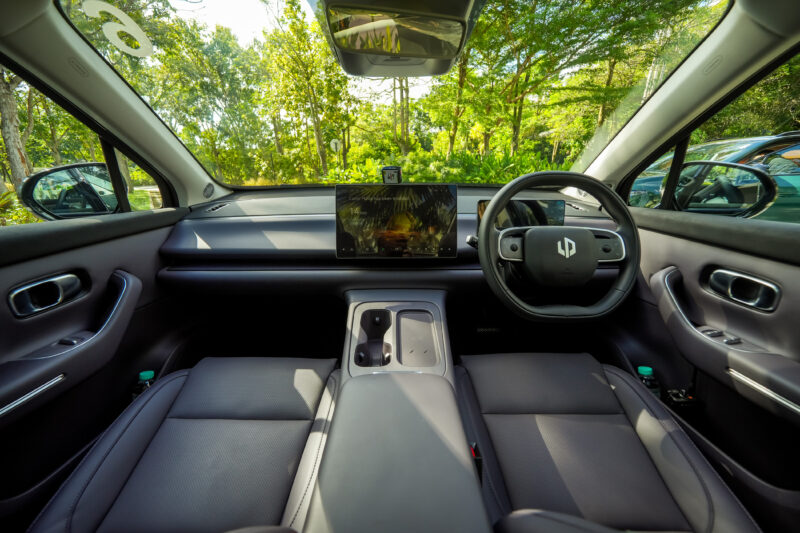
5. Overly Minimalist Dashboard

For someone used to a plethora of buttons and controls in a vehicle, entering the Leapmotor C10 creates a somewhat uncomfortable feeling.

This discomfort stems from the dashboard layout, which is overly simplistic and minimalistic, relying heavily on the menu embedded in the display screen, making it easier for the driver’s focus to be distracted on the road.

Therefore, if you’re interested in the C10, it’s best to avoid driving alone, so you can appreciate all the assistance provided when you wish to change a setting.

For example, adjusting the direction of the air conditioning, temperature settings, turning off the headlights, or simply disabling specific functions in the ADAS.

It is also unfortunate that side mirror adjustments must be accessed through the main screen.

Fortunately, Leapmotor has not adopted Tesla’s approach of eliminating the turn signal stalk entirely in favor of a button on the steering wheel.

Additionally, if you’re accustomed to pressing a start button, you will need to learn a new method on the C10, which involves scanning a card-shaped key on the center console before shifting the transmission lever to the D position.

Yes, you must do this every time before you begin your journey.

Another drawback that we find hard to accept is the absence of Apple CarPlay/Android Auto support.


6. ‘Healing’ mode inside

An interesting feature that can be beneficial for drivers after each trip is the Nap Mode.

When this mode is activated, you can enjoy ambient sounds such as rain, flowing river water, crickets, and ocean waves while you relax.

You can also set the desired nap duration, and the system will wake you up once the session ends.

With the ventilation function in the seats, your brief nap will be more comfortable while you wait for prayer time or for your spouse to finish shopping.

At the end of the day, in a market flooded with various EV models, the Leapmotor C10 certainly stands out with its spaciousness, making it suitable for everyday family use.

That is, if you don’t mind the overly minimalist dashboard design and the routine needed every day before starting your journey.

With a selling price below RM160,000, is it a worthwhile purchase? Perhaps, yes.


Leapmotor C10 Specifications

Electric Motor: Single, rear-wheel drive (RWD)
Power: 215 hp, 320 Nm
Acceleration: 0-100 km/h in 7.5 seconds
Top Speed: 170 km/h
Battery: LFP 69.9 kWh
Range: 424 km (WLTP data)
Suspension: MacPherson/Multi-Link
Ground Clearance: 180 mm
Cargo: 435 liters/1,410 liters


Leapmotor C10 in Glazed Green

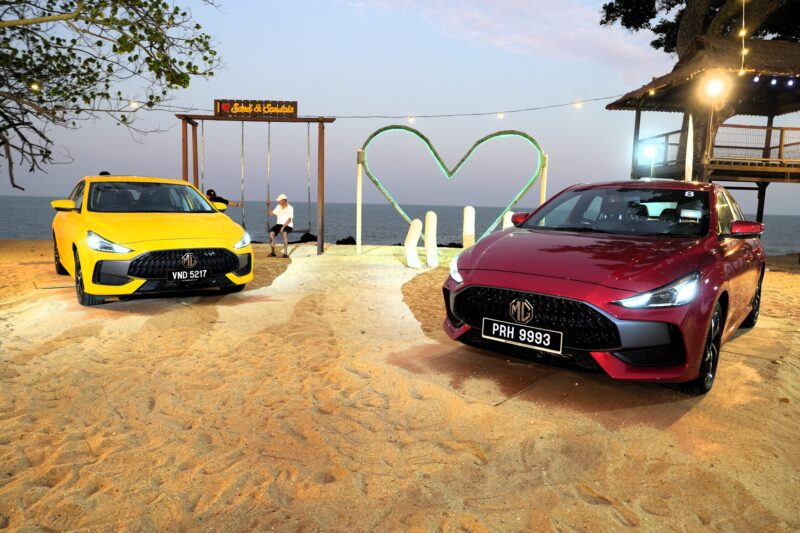
Three things about the MG5 that we’re not fond of – Test Drive

Recently, this writer had the opportunity to test drive the B-segment sedan that has been a hot topic of conversation among netizens for the past few months: the MG5.

To be honest, this writer didn’t have high expectations for the MG5, especially given the somewhat serious safety issues that have surrounded it.

However, after driving it for approximately 800 km from Kuala Lumpur to Desaru and back, this writer found that the car has its own advantages and is worth considering if you are in the market for a B-segment sedan.

That said, during the test drive session, this writer also encountered three less-than-ideal aspects of this car:

Rear Lights

Personally, this writer quite like the design of the front of the MG5, which resembles the Maserati Quattroporte or Ghibli. The coupe-like roof design lends the sedan an appealing side profile, though the 17-inch ‘Tomahawk’ alloy wheels appear somewhat small for a car of its size.

From the back, the wide hips (which are visible from the side mirrors) give the MG5 a solid and stable stance on the road.

However, this writer is not fond of the rear light design, which seems to be a clear imitation of Peugeot’s styling. They are not unattractive, but for some reason, the rear lights take the shine off the overall appearance of the car.

Ergonomic and visibility

Inside, the buttons and touchscreen are placed in a position that is easy to reach and directed towards the driver. However, due to the steering wheel lacking telescopic adjustment and the seat height being non-adjustable, this writer had to take some time to find the most ergonomic driving position before setting off.

Furthermore, this writer experienced some difficulty seeing traffic conditions through the rear-view mirror, as the coupe roof makes the rear window quite small. This issue is exacerbated by the three headrests in the back seats, which are rather high.

Air conditioning system

For a car priced at RM87,000 (after discounts), this writer believes the level of features included in the MG5 is fairly decent and capable of meeting customer needs.

However, this writer wasn’t keen on the fact that the fan speed for the air conditioning can only be adjusted via the touchscreen. Additionally, there is only one air vent for the rear passengers. This isn’t a problem for those with just one child, but for families with two or three children, it might lead to some competition for airflow.

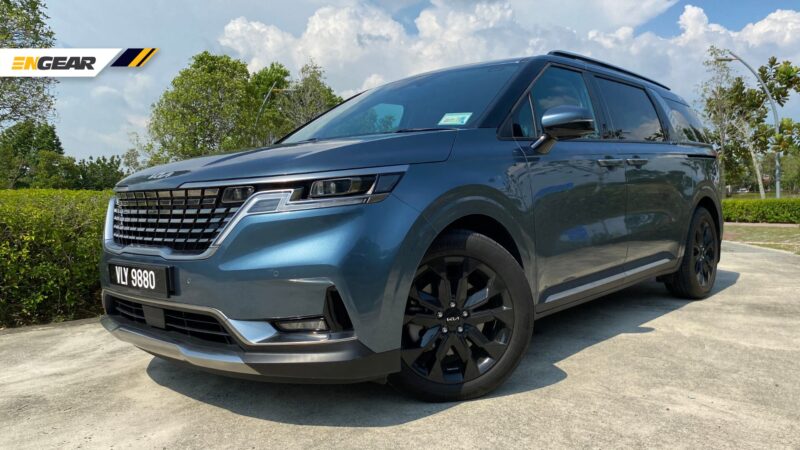
Kia Carnival is a worthy alternative to Alphard/Vellfire – Test Drive

In Malaysia, when discussing luxury MPVs, whether one likes them or not, the vehicles that invariably come to mind are the Toyota Alphard and Vellfire.

From time to time, names like the Mercedes-Benz Vito and Lexus LM may cross the lips of those with a penchant for the luxurious, but ultimately, the Alphard and Vellfire are consistently top of the list.

This is hardly surprising, as this writer is certain that both models are indeed impressive and worthwhile purchases. However, if you are seeking something different, their closest competitor, the Kia Carnival, proves to be a worthy alternative.

Why, you may ask?

First and foremost, it’s about size. In this writer’s opinion, those who purchase MPVs often rank size as one of the highest criteria before making a decision.

Therefore, if you desire a vehicle that is spacious and roomy, look no further than the Carnival, which is appreciably larger than the Alphard/Vellfire.

For comparison, the Carnival measures 5,155 mm in length, 1,995 mm in width, and 1,740 mm in height, with a wheelbase of 3,090 mm.

In contrast, the Alphard/Vellfire duo is somewhat smaller, with a length of 5,010 mm (5,005 mm for the Vellfire), a width of 1,850 mm, a height of 1,950 mm, and a wheelbase of 3,000 mm.

In terms of design, the Carnival boasts a sportier appearance that resembles a sleek long wagon due to its lower and wider body shape. This is further accentuated by 19-inch black alloy wheels replacing the previous 18-inch versions.

While the Toyota MPVs are not unattractive, their boxy design does come across as somewhat conventional when positioned alongside their Korean counterpart.

As for the interior, this writer can confidently assert that the quality and features offered by the Carnival are on par with those of the Japanese models, even though the price difference among these vehicles can be as much as RM300,000.

It’s true that the Alphard/Vellfire feel a touch more luxurious due to their Lexus-like touches and higher-grade materials such as genuine Nappa leather upholstery. However, the Carnival still impresses.

The materials covering the seats, dashboard, and door panels feel sufficiently high-quality, as do all the physical buttons present throughout.

The Carnival is replete with features, including a 12.3-inch digital instrument cluster, a 12.3-inch touchscreen, Apple CarPlay, Android Auto, a three-zone climate control system, heating and ventilation functions for the front seats, and a Bose audio system with 12 speakers.

Moreover, the High variant of the Carnival is now equipped with Blind Spot View Monitor (BVM) that displays video feed from the side mirror cameras on the digital instrument cluster, a feature that can be activated when you use the turn signals.

In summary, this writer can confidently say that the quality and features provided by the Carnival justify its price tag of almost RM250,000.

The unit that this writer recently test drove was the eight-seat variant featuring a 2-3-3 configuration. The centre seat in the second row is larger enough for adult passengers, and when not in use, it can fold down to create a small table complete with two cup holders.

What’s even more interesting is that this seat can be rotated backwards to face the third-row seats or can be completely removed if desired.

For any MPV, the best seat in the house is usually in the back, and the Carnival does not disappoint in this regard, ensuring passenger comfort with its individual climate control for the rear, as well as retractable sunshades and a sunroof.

Additionally, children need not dispute over charging points for their gadgets, as every seat in the Carnival comes with its own USB port.

It is common for three-row vehicles to have limited cargo space when all seats are in use, but with the Carnival, this is not a concern, as there is a generous, deep storage area located beneath the third-row seats.

Now, how does it perform on the road?

The Carnival is powered by a Smartstream 2.2-litre turbodiesel engine, paired with an eight-speed automatic transmission that drives the front wheels.

This engine generates 202 PS at 3,800 rpm and an impressive 440 Nm of torque, available from as low as 1,750 rpm. While the 2.4-litre turbo engine in the Alphard offers slightly more horsepower, the Carnival’s torque advantage (10 Nm more) does not go unnoticed.

As expected from a diesel engine, the torque is readily available in the lower rpm range, making the Carnival feel smooth from a standstill. In fact, its acceleration is fairly smooth and quick, which is not something you can always say about a vehicle weighing close to two tonnes.

On the highway, the engine remains exceptionally quiet. Should you find yourself needing to overtake, there’s no need for concern over power since it consistently feels adequate, even in Normal mode.

The gearbox is responsive, allowing you to quickly accelerate everytime the accelerator pedal is depressed. It also promptly downshifts to deliver the necessary power for easy overtaking.

With the recent diesel subsidy rationalisation, some may harbour concerns regarding the Carnival’s fuel consumption.

For your information, this writer recorded a fuel efficiency of around 15 km/l or 6.7 l/100 km during a mixed driving cycle that included both urban and highway conditions.

The Carnival boasts a 72-litre fuel tank, meaning that theoretically, the vehicle could be driven nearly 1,080 km before needing to refuel.

If you’re paying full price for diesel at RM3.35 per litre, a complete fill-up would cost approximately RM241.20. Is it worthwhile to spend RM241.20 for a driving range exceeding 1,000 km? That’s for you to decide.

Lastly, the Carnival’s suspension tuning and NVH (noise, vibration, and harshness) are noteworthy. The suspension is relatively soft, allowing for a confident ride over uneven surfaces without the constant need to apply the brakes.

Nevertheless, there is something about this suspension setup that instils a sense of confidence and stability, especially at higher speeds. This is what makes the MPV enjoyable to drive fast.

The NVH aspect has been carefully addressed, ensuring that as a passenger, you experience a comfortable journey, with wind and tyre noise significantly minimised. The sound of the diesel engine is only noticeable if you stand outside the vehicle.

In conclusion, there is little more that this writer can say about the Carnival except that it is exceptionally good, enjoyable to drive, and packed to the brim with features and tech to meet the needs of buyers in this segment. What’s even better is that its competitive pricing makes it accessible to a broader range of potential MPV buyers.

However, it cannot be denied that the rationalisation of diesel subsidy may lead some to reconsider their decision to purchase the Carnival.

But, for this writer, if you are in a position to spend over RM200,000 on a large MPV, you are likely capable of managing the fuel costs without subsidy.

Kia Carnival 8-Seater High Specifications

Price: RM245,888
Engine: Smartstream 2.2-litre, four-cylinder turbodiesel
Gearbox: 8-speed automatic
Power: 202 PS @ 3,800 rpm
Torque: 440 Nm @ 1,750 rpm

Mitsubishi Xpander vs Alza, Aruz & Veloz: Which 7-seater MPV offers the best value?

The Mitsubishi Xpander, despite arriving late to the market, has managed to maintain its position as the best-selling non-national MPV model.

With the launch of its facelift model just a few months ago, Xpander is poised to further strengthen its influence, particularly among the ‘cool dad’ demographic.

For those seeking a family car, a 7-seater MPV is one of the suitable options in Malaysia.

Aside from the Xpander, which other MPV models can be considered?

The Xpander directly competes with three other MPV models, namely the Perodua Alza, Perodua Aruz, and Toyota Veloz, all within a price range of around RM100,000, following the discontinuation of models such as the Honda BR-V, Nissan Grand Livina, and Proton Exora.

So, what sets the Xpander apart from its three competitors?


1. Price

Here is a comparison of the selling prices for the Xpander, Alza, Aruz, and Veloz:

  • Mitsubishi Xpander: RM99,980
  • Toyota Veloz: RM95,000
  • Perodua Aruz: RM72,900
  • Perodua Alza: RM62,500


2. Dimensions

In terms of size, the Xpander has an advantage due to its larger dimensions compared to its competitors.

Here are the dimensional comparisons for the four MPV models:

  • Xpander: 4,475 mm x 1,750 mm x 1,720 mm (WB: 2,775 mm)
  • Veloz: 4,475 mm x 1,750 mm x 1,700 mm (WB: 2,750 mm)
  • Aruz: 4,435 mm x 1,695 mm x 1,705 mm (WB: 2,685 mm)
  • Alza: 4,425 mm x 1,730 mm x 1,670 mm (WB: 2,750 mm)

Based on this comparison, the Xpander excels in width and height, as well as having a longer wheelbase, contributing to a more spacious cabin.


3. Cargo Space

All MPV models come with a three-row seating arrangement, but the cargo space provided in the back is relatively limited, and you may need to fold down the third-row seats.

The Xpander offers a standard rear space of 495 liters, whereas other competitors like the Aruz provide only 213 liters.

Alza and Veloz share a similar cargo space of 137 liters each.


4. Engine Performance

In terms of power, all four models are equipped with a 1.5-liter naturally aspirated engine.

Except for the Aruz, which comes with a rear-wheel drive (RWD) setup, the other three models utilize a front-wheel drive (FWD) configuration.

Which model is more powerful?

  • Xpander: 105 PS/141 Nm, 4-speed automatic transmission
  • Veloz: 106 PS/138 Nm, CVT
  • Aruz: 102 PS/133 Nm, 4-speed automatic transmission
  • Alza: 106 PS/138 Nm, D-CVT


5. Safety Features

The three listed MPV models have advantages regarding safety features, leaving a significant gap in comparison to the Xpander.

As standard, the Aruz, Alza, and Veloz are equipped with six airbags, not to mention advanced safety features such as Autonomous Emergency Braking (AEB), collision warnings, and seatbelt reminders.

Both Alza and Veloz come with additional features like steering correction, front vehicle movement warnings, pedal malfunction warnings, and rear cross-traffic alerts, making these two models particularly appealing.

In contrast, the Xpander offers basic safety features, including two airbags, without any advanced safety technologies.

Regardless of the advantages and disadvantages of each model, we are confident that you have your own reasons for making your choice that aligns with your budget and needs.

Can Nissan Kicks e-Power help Tan Chong get back on its feet? – First impression

The official distributor of Nissan in Malaysia, Edaran Tan Chong Motor (ETCM), has been rather quiet in recent years.

The last all-new model launched by the company was the second-generation Almera, which made its debut somewhere late 2020. Since then, it appears as though Nissan has vanished from the radar.

But ETCM appears to be far from defeated; having been the custodian of the Nissan brand in Malaysia for over 60 years, the company is determined to maintain its presence in the market.

The first step in ETCM’s revival strategy is the introduction of the long-awaited B-segment crossover, the Nissan Kicks e-Power.

The Kicks e-Power for the Malaysian market will be fully imported (CBU) from Thailand, which means we will be getting the facelifted version of the first-generation model that was originally launched in The Land of the Smiles four years ago.

While this car may not be the freshest offering on the market, it does present something new for the Nissan brand in Malaysia: the e-Power powertrain.

What’s even more exciting is that this facelifted model features the second-generation e-Power system, which is lighter and more powerful.

But before delving deeper into the e-Power, you might be wondering how big is the Kicks? It measures 4,290 mm in length, 1,760 mm in width, and stands 1,605 mm tall, making it nearly 100 mm shorter than the Honda HR-V.

In terms of design, some say it resembles a mini version of the Nissan X-Trail. Whatever the case is, this writer can’t help but feel that the Kicks appears somewhat ‘aged’ despite yet to hit the market.

Don’t get me wrong; its appearance is certainly appealing, yet it lacks the ‘X’ factor that would make it stand out in a showroom.

As you might already know, beauty, design, and aesthetics are subjective— not everyone desires a flashy car; some prefer a more understated and casual look, which is exactly what the Kicks offers.

The interior of the Kicks is tidy and simple, but much like its exterior, it is starting to show signs of age.

The layout is approximately 95% identical to that of the Almera’s cabin but Kicks comes with a more sophisticated gear knob that feels somewhat awkward to use due to its shape.

The level of standard equipment is decent. The Kicks is fitted with Zero Gravity seats, an eight-inch touchscreen with Apple CarPlay and Android Auto, a seven-inch TFT display, three USB ports, and manual adjustments for the driver and front passenger seats.

The top-of-the-range VLT variant adds a premium touch with two-tone leather upholstery adorning the seats and dashboard.

Nevertheless, there are elements that make the Kicks appear and feel somewhat inexpensive, one of which is the hard plastic trim on the door panels. Additionally, the air-conditioning control switches look like it came out 10 years ago and could benefit from a redesign.

Although the wheelbase is 5 mm longer than that of the HR-V, the rear passenger space in the Kicks feels a touch cramped, exacerbated by the somewhat upright seating position.

However, the boot space is fairly generous, offering a capacity of 423 litres. According to Nissan, it can accommodate two standard-sized golf bags, a large suitcase, and a medium-sized luggage. Sounds perfect for a weekend of golf.

The Kicks may have arrived fashionably late to the market, but as this writer has mentioned, it does bring something intriguing to the table: the e-Power powertrain.

So, what exactly is e-Power?

Nissan insists on not labelling it a hybrid, although the system integrates an internal combustion engine (ICE), an electric motor, and a battery. Thus, technically, it is a hybrid.

However, unlike conventional hybrid systems, the ICE in the e-Power setup does not drive the wheels. Its sole purpose is to charge the 2.1 kWh lithium-ion battery located in the middle of the frame. The wheels are powered entirely by the electric motor fed by this battery.

In essence, the wheels are propelled 100% by the electric motor, offering a driving feel akin to that of an electric vehicle, but with the added benefit that you need not worry about charging, ever.

How does it perform in the real world?

As soon as the accelerator pedal is depressed, the car pulls almost instantly and this is done without the roar of an ICE engine familiar in traditional vehicles.

Similar to a real EV, the powertrain delivers responsive acceleration and instant torque, allowing this writer to overtake other vehicles with ease, even when space was limited.

Yet, let’s not set our expectations too high, as the Kicks e-Power’s acceleration won’t melt your face like some high-performance EVs do. It delivers a modest 129 PS and 280 Nm—not particularly impressive, but still adequate to meet the needs of consumers in this segment.

The Kicks e-Power features three driving modes: Normal, Eco, and Sport. In this writer’s experience, the Normal mode is perfectly suitable for everyday driving, while the Sport mode can provide that extra power when needed.

Another advantage of the e-Power system is its single pedal driving capability known as e-Pedal Step. This feature is activated only in Eco and Sport modes, where the regenerative braking force is heightened, allowing the driver to slow down without depressing the brake pedal.

Moreover, with stronger regenerative braking, the battery charges more quickly. With a full battery, the EV mode can be activated, enabling the vehicle to travel up to 2.5 km on electric power at a speed of 40 km/h, with the engine completely turned off.

In addition to its addicting eagerness, the Kicks is a joy to driver, particularly on winding roads. Whatever magic the Nissan engineers have conjured for the suspension tuning, the crossover proves incredibly adept when tackling sharp bends.

Sound, vibration, and harshness (NVH) levels are also highly commendable. At higher speeds, wind and tyre noise are effectively suppressed. However, during aggressive acceleration, one may occasionally hear the engine working hard to recharge the battery.

Conclusion

Whether this model will help ETCM back on its feet is still uncertain, but in the Kicks, the company has a solid product, albeit one that is a touch aged.

This writer believes that by hyping up the strengths of e-Power and having an effective pricing strategy, ETCM may well find an opportunity to win back the hearts of consumers in this country.

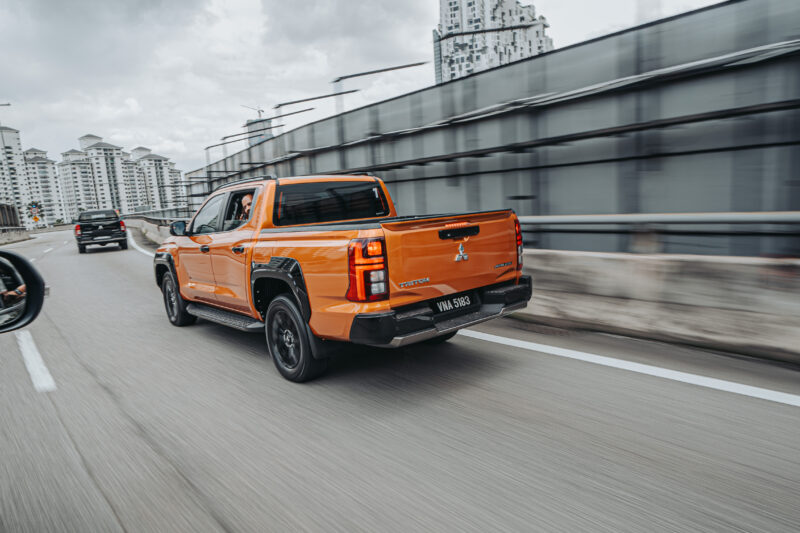
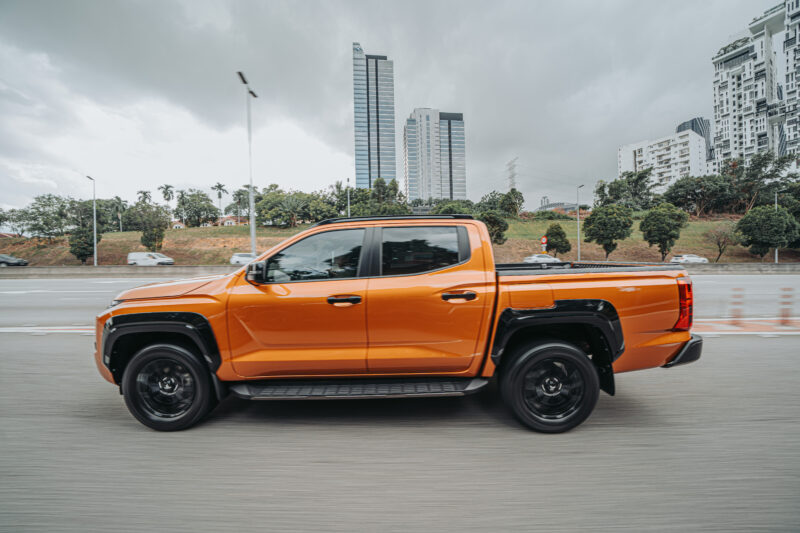
Three weaknesses we found on 2025 Mitsubishi Triton

Honestly, I’m not someone who enjoys driving pickup trucks, but my recent experience with the 2025 Mitsubishi Triton is still fresh in my memory.

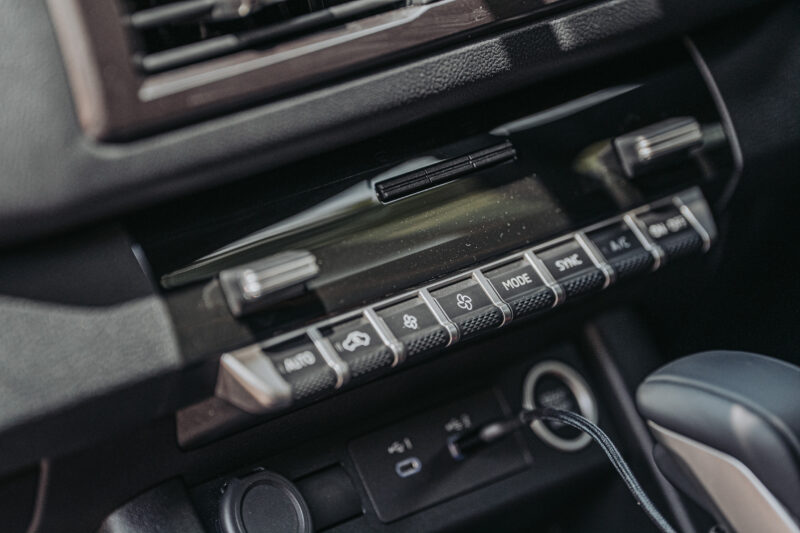
Apart from its more refreshed appearance, the new Triton now features a new platform and engine, a tuned suspension system, and a more user-friendly cabin layout.

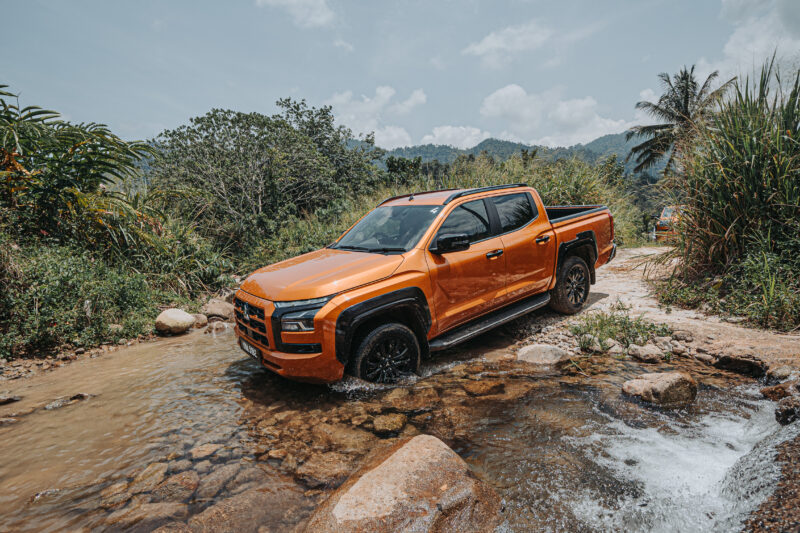
In short, this new Triton offers impressive on-road performance, while still being capable of tackling tougher and more challenging off-road routes.

However, in my opinion, there are three shortcomings that Mitsubishi should address to make the Triton a more valuable offering, justifying every ringgit spent.


1. Absence of a 360-Degree Camera

Did you know that the 2025 Triton uses a new platform that provides larger dimensions—longer, wider, and taller?

This means that this sixth-generation pickup truck is the largest model ever produced in Triton’s history.

Unfortunately, this increase in size does not come with a 360-degree (or 540-degree) camera feature.

The lack of this feature makes driving a bit challenging, especially when navigating narrow areas or winding through overgrown paths that lack clear routes.

The fairly high front bonnet structure at times makes me feel less confident when driving in tight spaces.


2. Subtle Steering Vibrations Can Make Driving Fatiguing

Based on my experience, I found that the steering response of the new Triton is very easy to handle, even though the Triton has grown in size.

The Lane Change Warning (LCA) feature enhances driving safety, as it only vibrates when the driver is detected not using the turn signal to change lanes.

The absence of Lane Keeping Assist (LKA) isn’t a significant issue. However, what I noticed is that the steering system of the Triton produces subtle vibrations while driving on the highway.

For short-distance driving, this slight vibration is not a problem, but it can become tiring for the driver over longer distances.


3. Rear Headrest Structure Is Not Passenger (or Driver) Friendly

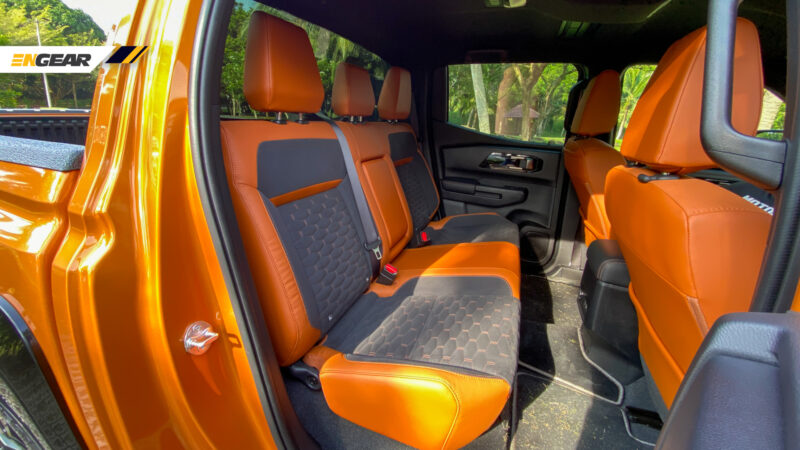
When I switched to the rear seats, I found that the rear bench of the 2025 Triton offers a comfortable reclining angle that isn’t too upright.

However, this comfort is hindered by the headrest structure, which does not adequately support a comfortable head position.

If you observe, the second-row passenger headrests are tilted forward. Therefore, rear passengers may feel slightly more upright than usual.

The position of the center headrest can also obstruct the rearview mirror’s field of vision, so it’s advisable to remove that headrest if your pickup truck isn’t carrying extra passengers.

You can read our findings and review of the 2025 Mitsubishi Triton at the link below:

2025 Mitsubishi Triton: Five new things we found – First Drive

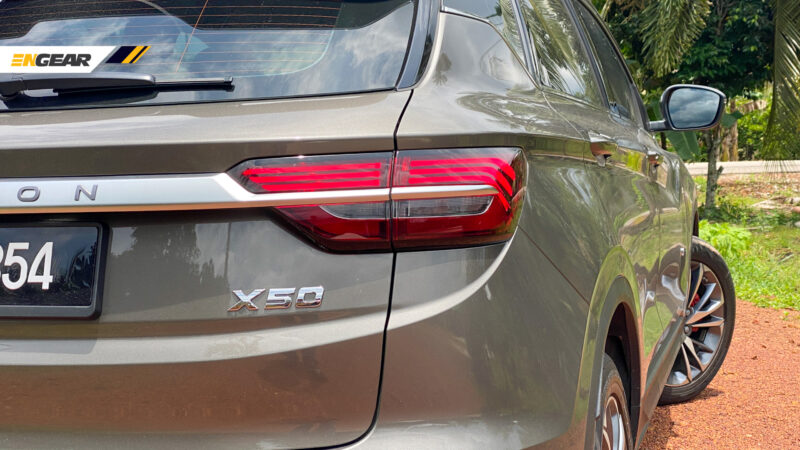
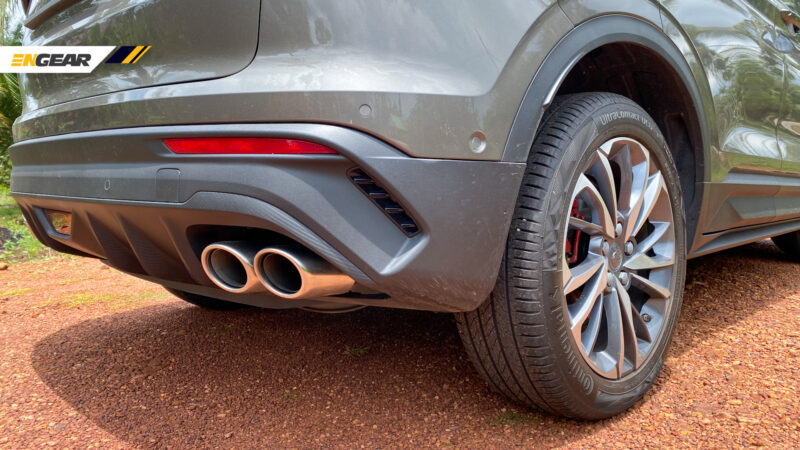
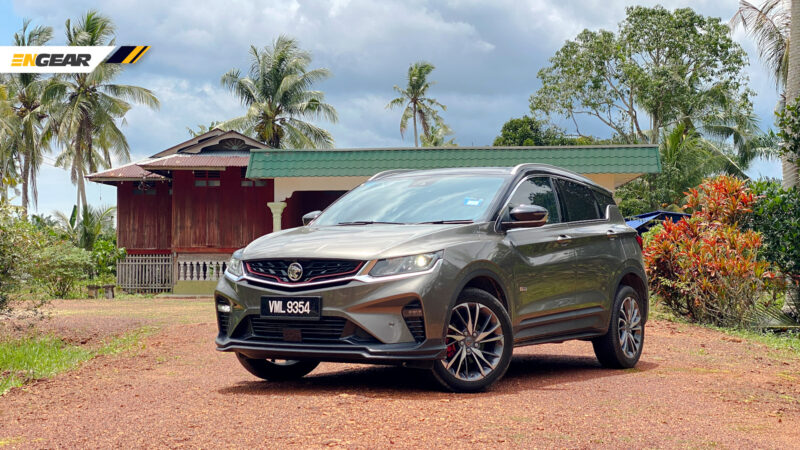
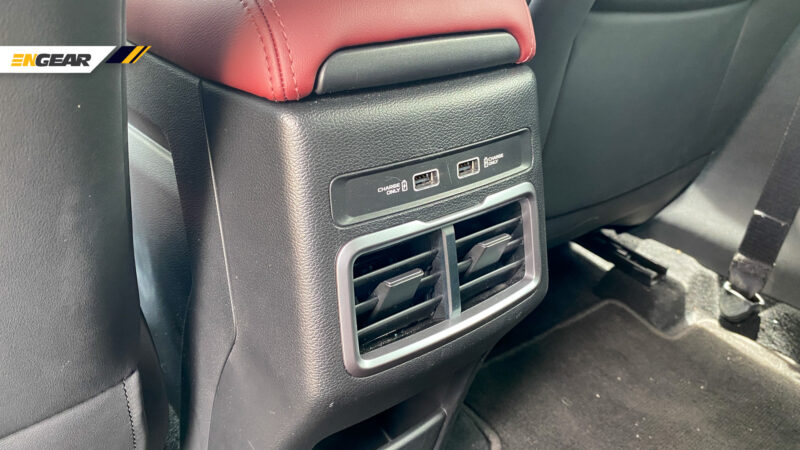
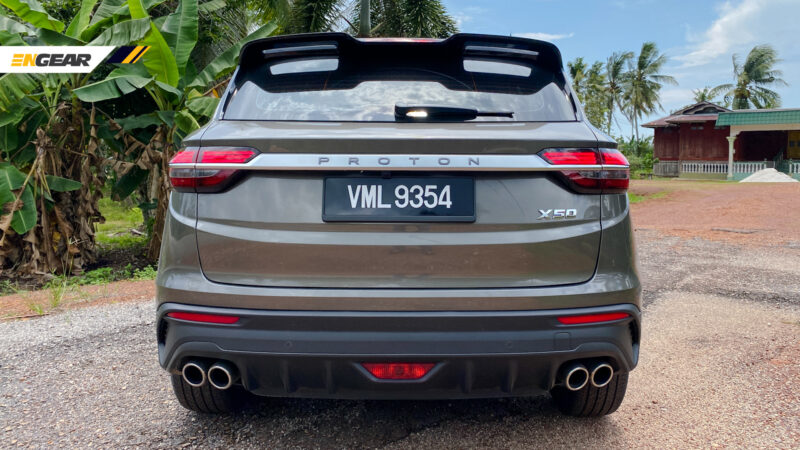
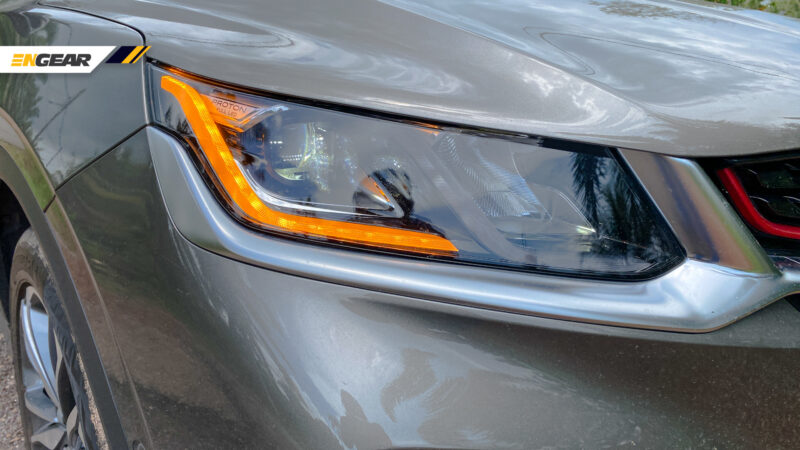
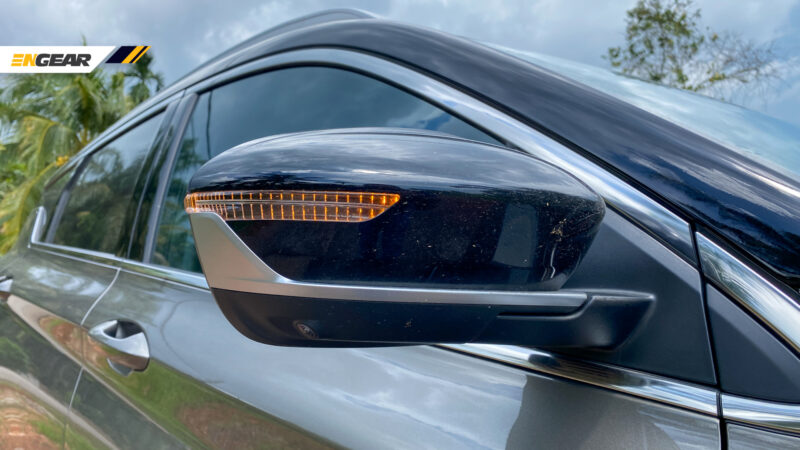
2024 Proton X50, still worth it? – Test Drive

Last year, Proton updated its popular B-segment SUV model, the Proton X50 2024.

At first glance, you might find it difficult to guess what changes have been made, as its appearance remains largely the same as the original model released in 2020.

The engine offerings are also unchanged, with this flagship version we tested equipped with a 1.5-liter TGDi engine producing 177 PS @ 5,500 rpm and torque of 255 Nm @ 1,500 rpm – 4,000 rpm.

The original suspension system has also seen no changes, meaning it still offers handling characteristics nearly identical to the previous model.

So, what has actually changed?

Based on a drive from the Klang Valley down south a few weeks ago, I found one positive aspect of the X50 – improved NVH (Noise, Vibration, and Harshness)!

NVH was one of the criticisms when this model first launched.

However, after driving for several days, I acknowledged that the noise from the tires meeting the road surface has been effectively filtered, making the cabin quieter.

Wind noise is also less noticeable at lower speeds but still exists when the X50 is driven beyond the legal highway speeds.

In the cabin, the Proton X50 has been given an upgraded infotainment unit with more powerful and faster processing capabilities.

The 360-degree camera system has also been improved, now displaying live three-dimensional images of the vehicle whenever the turn signal lever is activated.

Lastly, the Proton X50 comes standard with a powered tailgate for the flagship variant, making daily driving tasks easier and more pleasant.

It has now become an almost perfect SUV model to consider, except for a few factors that might make you think twice:


1. Still Not a Fuel-Efficient SUV

I’ve tested various SUV models that are not high-performance but come with turbocharged engines. Some of those models can offer reasonable fuel consumption rates, but not the X50.

Even when driven normally without sudden acceleration, I found myself needing to refuel every 400 km.

For long-distance driving, this is not very convenient, especially when heading to areas with few fuel station facilities.


2. Still Lacks Apple CarPlay and Android Auto

ONLY FOR 2025 PROTON X70!

Yes, for now, the Proton X50 still lacks standard support for Apple CarPlay and Android Auto.

As an alternative, you can use the MirrorLink function with a charging cable; however, this system is somewhat complicated and inconvenient. If you turn off your phone’s screen, the MirrorLink connection will disconnect.

You will then need to go through the entire process again to reconnect the infotainment system with your smart device.

A more economical alternative would be to purchase a smartphone holder that can be attached to the windshield.

It’s a shame that a car costing RM100,000 still lacks the AACP features that would make driving easier.

If you recall, the Proton X70 2025 facelift was officially launched last August, about two months after the Proton X50 2024 was released.

The difference in launch timing is only a few months, so why hasn’t the Proton X50 been equipped with Apple CarPlay and Android Auto like the Proton X70 facelift?


3. 360-Degree Camera Not Very Helpful on the Road

The presence of a 360-degree camera certainly helps drivers avoid scratching body panels when entering parking areas.

The clearer and sharper display makes the X50 feel more upscale, even though it is an SUV in the RM100,000 price range.

However, I’m not too fond of the default camera angle displayed when the turn signal lever is used, as it doesn’t fully showcase the blind spots on the left and right sides of the vehicle.

You can change the 3D Live Feed display angle by accessing the menu on the touchscreen, but this action is discouraged while the vehicle is moving quickly.

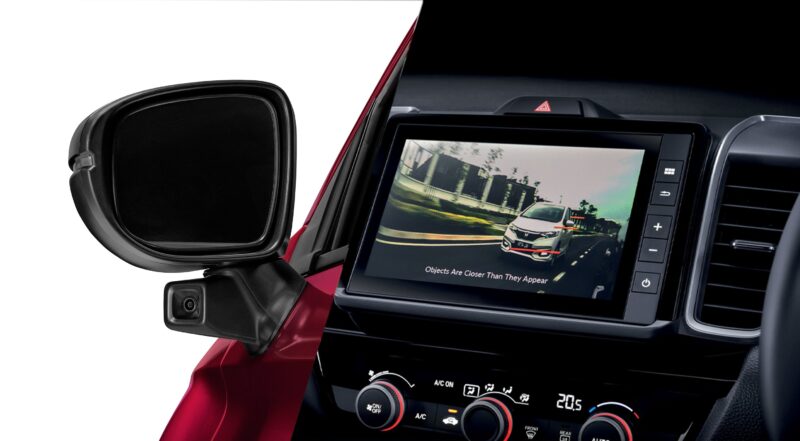
In this regard, I believe Honda’s LaneWatch feature offers more assistance, even though it only covers the left side of the vehicle.

Perhaps in future updates, Proton could adjust the default angle of the 3D Live Feed display to provide a better field of view as a driver aid to prevent unwanted incidents.

With the selling price remaining relatively unchanged at RM103,000, I still consider the X50 to be one of the more worthwhile B-segment SUV models to own.

That is, if you can accept and compromise on the three shortcomings I’ve mentioned above.

It’s your money, your choice.

2025 Mitsubishi Triton: Five new things we found – First Drive

The new generation Mitsubishi Triton has been officially launched for the local market last week after being introduced at the global level for over a year.

It can be said that almost every aspect of this pickup truck has been extensively redesigned, including the platform, engine, suspension system, cabin layout, and most importantly, a more rugged and bold appearance.

So, do the aforementioned changes have a significant impact on this Triton pickup truck?

Earlier this month, the writer and other media colleagues were invited to test drive the Mitsubishi Triton 2025 from the capital heading towards the East Coast.

Here is an overview of our experience after driving this pickup truck for two days:


1. More stable and confident driving

The Mitsubishi Triton 2025 utilizes an all-new platform with larger dimensions, making it appear more rugged on the road.

The new Triton also features a sturdier ladder-frame chassis, emphasizing the use of high-strength steel (1,180 MPa) to minimize weight gain.

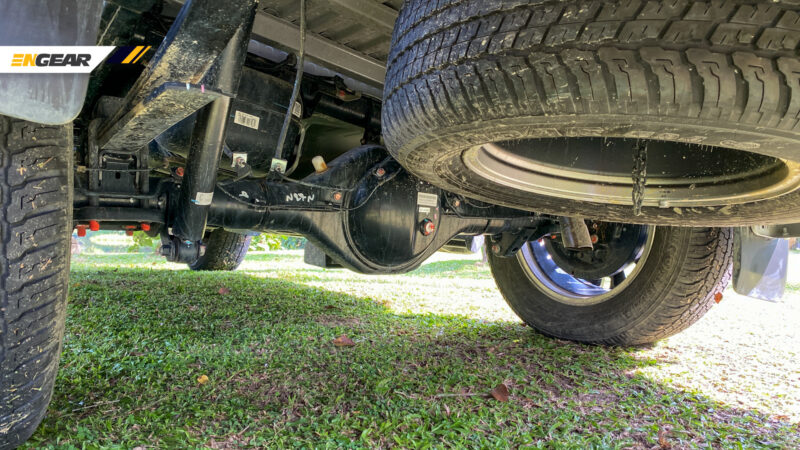
Additionally, the new Triton is equipped with a suspension system with longer travel distance and thicker stabilizer bars, along with an electronic power steering (EPS) system, all contributing to a more stable and confident driving experience.

Based on our experience, the Triton offers easy-to-handle steering response, not too heavy or too light, making it easier for the driver to navigate throughout the journey.

In addition, the journey is more comfortable due to less vibration and noise perceived from inside the cabin throughout the journey, even when traversing various types of road surfaces.


2. More powerful new engine

In addition to the platform, the Triton 2025 now also features an all-new diesel engine.

Although the capacity has not changed much, the 2.4-liter turbo MIVEC engine (code name 4N16) now produces a high output of 204 PS and torque of 470 Nm.

Coupled with a 6-speed automatic transmission, the Triton does not require much effort to overtake cargo trailers or those seeking rental properties in the middle of the highway.

At standard highway speeds, driving the Triton felt agile and powerful, resembling the feeling of driving an SUV.

The typical Active Yaw Control (AYC) feature found in high-performance Mitsubishi models is also offered in the new Triton, providing more confidence, especially when navigating winding roads.

However, it should be noted that the Triton is still a pickup truck, and one must be aware of the limits and capabilities of a pickup truck, as well as the driver’s skills in handling a vehicle with a high center of gravity.


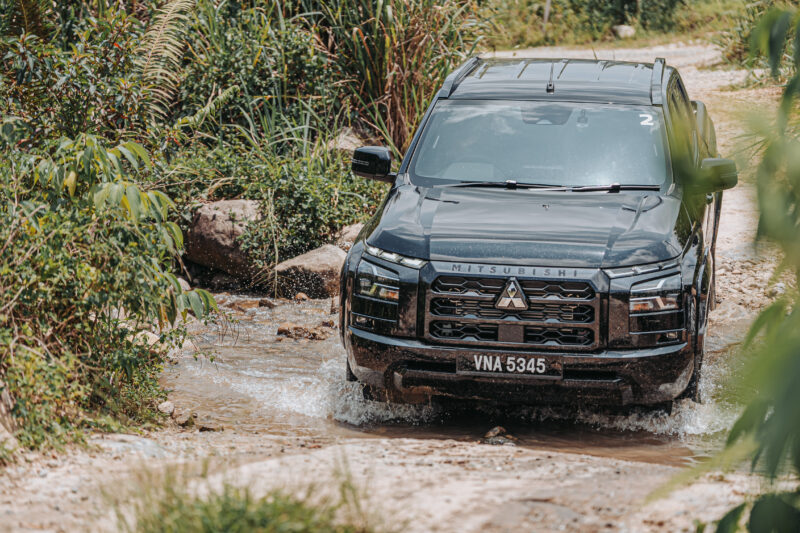
3. More confident off-road driving

We had the opportunity to test the handling of the Triton pickup truck on off-road routes in Janda Baik, followed by a special off-road driving session provided during the recent official launch.

To us, the combination of the platform, engine, suspension system, and the 4WD Super Select II system also provided advantages to the Triton in tackling more difficult and challenging routes.

Based on our experience, it was difficult for us to feel significant roughness inside the cabin even when the pickup truck was driven at high speed on dusty roads or over rocky terrain.

The power derived from the 2.4-liter diesel engine was also smoothly transmitted to the wheels to ensure the truck continued to move forward or overcome obstacles as directed by the driver.

With the use of EPS steering, handling on off-road routes also felt more assured, especially for those who may not be accustomed to handling larger vehicles.

The 4WD Super Select II system with on-the-fly mode selection operation is also very easy to use for adapting the pickup truck to various road surface conditions.

As standard, the Triton provides up to seven drive modes that can be selected through drive mode settings such as 2H, 4H, 4HLc, and 4LLc, not forgetting the Hill Descent Control (HDC) feature that allows the driver to control the vehicle while descending a slope without having to rely on the brakes..


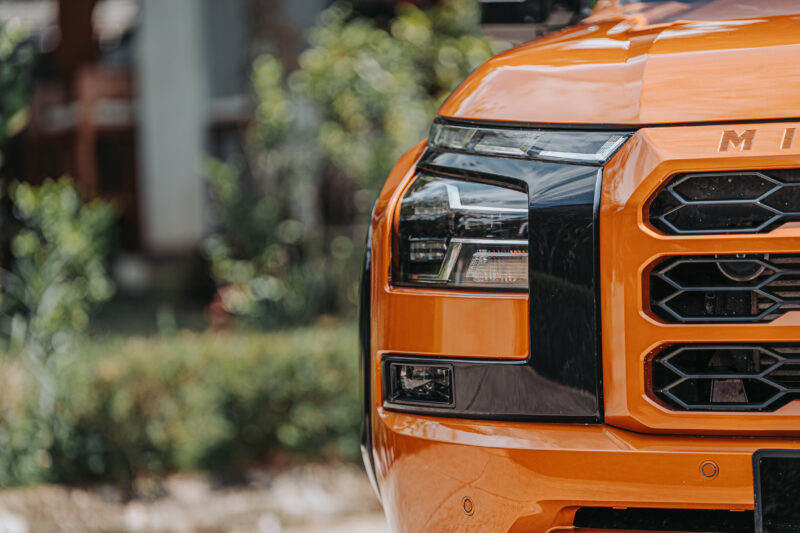
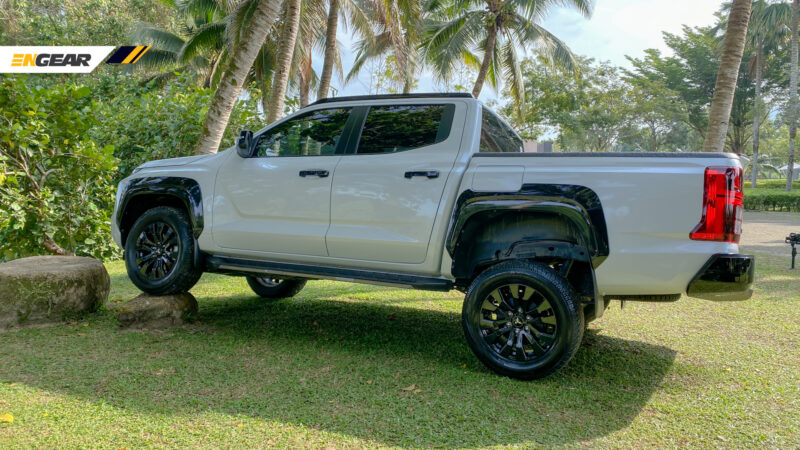
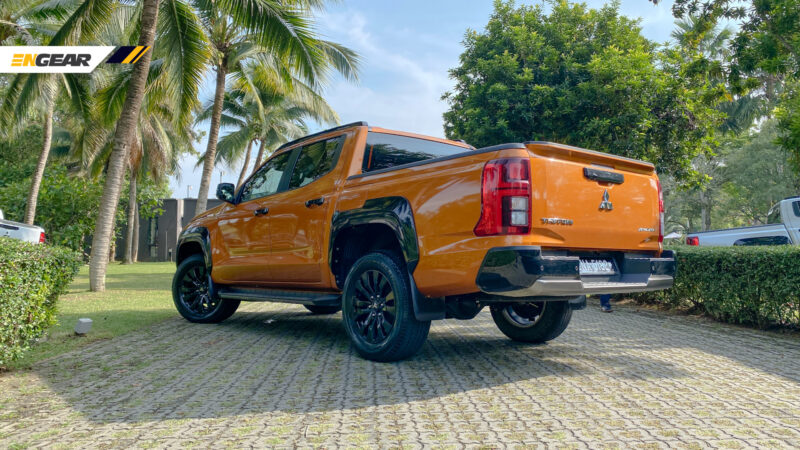
4. Beast Mode makes the Triton look more rugged

Initially, it was difficult for the writer to accept the visual changes present in this new Triton.

When placed alongside the previous generation Triton, many may be inclined to choose the Triton with the sharper design of the Dynamic Shield.

For the new Triton, the Dynamic Shield element has been renewed with the Beast Mode theme, making the appearance of this Triton look more rugged.

The L-shaped LED daytime running lights are intentionally designed to resemble sharp eagle eyes, while the rear lights with T-shaped graphics further accentuate the breadth of this pickup truck.

Additionally, the somewhat boxy body design makes this Triton resemble an American pickup truck.


5. More modern, user-friendly cabin space

The new Triton incorporates the Horizontal Axis design element to make the layout of the dashboard neater and less obstructive to the view.

The writer greatly appreciates the combination of analog meters and a digital screen with a black background that is very easy to read and devoid of distracting fancy colors that could disrupt driving focus.

The new Triton also features large and easy-to-use physical buttons and controls.

This is an important feature because most old-school drivers, like the writer, rely on muscle memory to adjust settings such as temperature, fan speed, or simply change the direction of airflow without needing to frequently divert their attention while driving.

The central screen also does not need to be excessively large to the point of obstructing the field of vision, it is adequate and at the same time still offers the desired functions of most users – Apple CarPlay and Android Auto.

One thing the writer likes about the Triton is the air conditioning vent positioned on the ceiling, which requires cool breeze from the front to make the rear passengers comfortable.

The second-row seats are also comfortable to use with a less steep angle, but the structure of the headrests themselves makes the passengers sit a little more upright than usual.

One significant drawback present in the new Triton is the absence of a 360-degree surround camera feature, which may make you feel the driving experience with the Triton especially on narrow roads or slightly challenging off-road routes a bit difficult due to the increased dimensions of the Triton, which have become larger, wider, and taller.

The turning radius of this pickup truck has also increased due to the longer wheelbase compared to previous models.

If there are no third-row passengers, it is recommended to remove the center headrest as its position could disrupt the rearview mirror’s field of vision.

2025 Mitsubishi Triton, new platform & engine, five variants, starting from RM102k

So, what is your opinion on the all-new 2025 Mitsubishi Triton? Do you think it is a worthwhile purchase for this year?

We will share more information and details with you if given the opportunity to further test the Mitsubishi Triton in the future.


2025 Mitsubishi Triton First Drive

3 things we don’t particularly like about the Volvo EX30

Launched in Malaysia last September, the Volvo EX30 is, without a doubt, an exciting electric vehicle. Firstly, it is a small car (it’s the smallest Volvo to date) and this makes it perfectly suited for urban driving.

Secondly, with its pixelated Thor hammer lights, short front and rear overhangs, and wide stance complemented by large wheels, the EX30 presents a modern and sporty appeal that is sure to attract younger buyers.

Thirdly, if you opt for the top variant, the Ultra Twin Performance, you can outperform most modern sports cars and supercars in 0-100 km/h acceleration without breaking a sweat. The EX30 achieves this impressive feat in just 3.6 seconds but first, you’ll need to activate the Performance AWD mode buried somewhere in the infotainment system.

However, there are still three aspects of the EX30 that the writer finds less than ideal. Let’s take a look at them:

Overreliance on the screen

Similar to other Volvo models, the EX30’s cabin design emphasises a minimalist concept. However, unlike the C40, XC90, and several other Volvo models that still feature physical buttons for audio controls and gear levers, the EX30 has no physical buttons apart from two power window switches on the center console.

This means that control for the infotainment system and climate control must be done through the touchscreen. While this isn’t unusual for an EV, as many other manufacturers follow suit, with the EX30, users may find it awkward since they also have to use the touchscreen to adjust the side mirrors and open the glove box.

Lack of head-up display

Perhaps in an effort to maintain a clean and tidy dashboard consistent with its minimalist design, the EX30 lacks a digital instrument panel. One might expect Volvo to offer a head-up display (HUD) as an alternative, but strangely that’s not the case.

Instead, all driving-related information (speed, gear position, and ADAS functions) is displayed on the touchscreen. This arrangement has two drawbacks: first, you have to divert your attention from the road to check this information; and second, all of it is displayed at the top of the screen in relatively small font.

Soundbar not as good as we expected

The EX30 does not come with conventional speakers on the front and rear door panels to create additional storage space. Instead, Volvo has placed a Harman Kardon soundbar that covers the entire width of the dashboard.

While it certainly looks appealing— and as we know, Harman Kardon audio quality is among the best in the industry— the absence of speakers in the rear diminishes the overall music listening experience, as the sound is concentrated only at the front of the cabin.

2024 Mitsubishi Xpander facelift, 3 things we dislike – Test Drive

For the information of our readers, Mitsubishi Motors Malaysia has recently launched the facelifted version of the Xpander a few weeks ago.

A test drive review has also been published by us, and you can read the details through THIS link.

However, behind the positive aspects that we highlighted in the test drive article, there are a few shortcomings that can be improved and enhanced for the benefit of users in Malaysia.


1. Lackluster Acceleration

The Xpander facelift maintains the four-cylinder in-line 1.5-liter MIVEC engine producing 105 PS and 141 Nm of torque, paired with an automatic gearbox – similar to the pre-facelift model.

Therefore, the driving dynamics have not changed significantly, and the acceleration aspect is not the most powerful in its class.

For those with a heavy right foot, this Xpander facelift may not live up to expectations, especially when navigating hilly terrains.

However, for casual driving, it is more than sufficient, especially since the Xpander is fuel-efficient if driven correctly.


2. Headlights Look More Modern, but…

One thing the writer appreciates about the Xpander facelift is its updated and aggressive exterior design.

The headlights now feature a horizontal T-shaped design, while the daytime running lights are more advanced and brighter compared to the previous model which used fog lights as DRLs.

However, the downside is that the DRLs are integrated with the turn signals.

When the turn signals are activated, it may be difficult to see, especially for oncoming drivers, due to the DRLs not being dimmed together.


3. Price Factor and Included Features

The pricing factor might also make some users hesitant to acquire this latest Xpander model.

Its competitor, the Perodua Alza, starts at RM62,500, while its counterpart, the Veloz, is priced at RM95,000.

For budget-conscious consumers, this Mitsubishi Xpander might be overlooked due to its relatively higher price tag compared to its competitors, priced at RM99,980 even though it is assembled in the Pekan, Pahang plant.

Another aspect that we find challenging to deny is the standard safety factor present in this MPV model.

For the facelift version, the Xpander only offers very basic specifications, with just two airbags, while other competitors offer up to six airbags and more advanced ADAS features.

Regardless of the weaknesses listed in this article and the advantages present in the Xpander facelift, it is up to the readers to assess and choose the best option for their family’s use.

At the end of the day (and month), it is you who must take money out of your pocket, right?

Three things the 2025 Proton X70 could improve on

I personally like the 2025 Proton X70, which was launched to the market back in August. It is more than just a mere facelift; the changes introduced are extensive, covering both the exterior and interior.

Firstly, the C-segment SUV now features a more appealing front design compared to its predecessor. Secondly, a recent media test drive in Kota Kinabalu demonstrated that it is a notably comfortable SUV. Not the best in the market but it’s certainly up there.

The suspension feels slightly firmer than that of the original CBU version but it soaks up bumpy roads and uneven surfaces en route to Kundasang really well.

Moreover, the low-speed rumble of the three-cylinder engine is less pronounced than before and the noise from the many trucks and lorries on the roads around KK and Kundasang is also well suppressed.

However, there are still a few aspects of the car that I did not favour:

Identical rear design

As mentioned, the 2025 X70 boasts a more attractive front end carried over from the Geely Boyue facelift released two years ago. One might argue that it is already outdated but in the eyes of this writer, the front fascia still looks fresh.

Unfortunately, the rear of this SUV appears untouched. While Proton has added horizontal reflectors (which were previously vertical) and fake air vents to make it appear wider, the tailgate and lights remain unchanged, quite possibly due to constraints from Geely.

That being so, whenever you see the new X70 on the road, you are likely to mistake it for the old version.

Odd gear shift pattern

In addition to the Stone Grey Nappa leather upholstery and ambient lighting system, another new feature in the 2025 X70 cabin is the gear lever.

The design remains the same; however, in this facelift model, the ‘P’ button has been repositioned. This is not an issue though and, in my opinion, makes it even easier to use.

What is rather peculiar, however, is the new shift pattern for the manual mode. Typically, you would pull the gear shift down to upshift and push it up to downshift.

In the X70 facelift, the ‘-’ and ‘+’ symbols are positioned to the left and right, meaning you must push the gear lever left to downshift and right to upshift in manual mode.

There’s a new Auto Open function for the tailgate but…

To enhance user convenience, Proton has added an Auto Open feature to the tailgate. This means you no longer need to press a button or kick your foot under the bumper to open it.

All you need to do is stand near the tailgate (with the key in your pocket, of course), and it will open automatically. This feature is indeed very practical, especially when your hands are full.

However, in my opinion, it could be improved further, as the tailgate takes a noticeably long time—over five seconds—to open.

@engear.tv 3 Benda Aku TAK SUKA Dengan Proton X70 2025 #fyp #carsoftiktok #proton #protonx70 #protoncars #protonmalaysia #suv #engeartv #malaysia ♬ original sound – Engear TV

3 things we don’t like about the Ora 07 Long Range – Test Drive

The electric sedan Ora 07, or also known as Ora Lightning Cat, may well be a unique EV package in the Malaysian market at this time.

It brings a package of aesthetics inspired by million-dollar models, while still being fairly affordable.

We’ve already shared a test drive review before, but in this article, we will discuss three things that are less favored in this model.


1. The ‘most red’ tail light housing

The exterior design of this Ora 07 is indeed feminine and looks simple, complete with an adaptive spoiler.

However, the less favored aspect is the entirely red tail light housing structure.

During daytime driving, other road users may find it difficult to guess whether the driver has already signaled to turn or is intending to enter an intersection using ‘niat’.


2. No analog meter theme options

We quite like the ‘cluster’ of Porsche 911-style meters present in the Ora 07’s cabin space.

It looks classic and modern at the same time.

However, its shortcoming is that it does not offer analog meter theme options to suit the masculine driving spirit of this Ora 07.

But honestly, the display of these meter graphics is much neater compared to other Chinese-made sedans in the market.


3. Easy but complicated-to-use convenience

As someone who doesn’t want driving focus disrupted on the road, the writer greatly appreciates the presence of a manual fan speed button in the center console for the air conditioning system.

This means it’s very easy to adjust the temperature and the speed of the cool air in the cabin.

However, that’s it.

Other functions such as the direction of the air need to be adjusted through a hidden menu on the infotainment screen, and there are no manual stalk available on the air vents!

You can read the full Ora 07 test drive report at the link below:

Ora 07 Long Range, feminine EV with masculine personality – Test Drive


2024 Mitsubishi Xpander facelift, 5 things u need to know – First Drive

Despite arriving to the Malaysian market quite late, the Mitsubishi Xpander has managed to become the best-selling non-national MPV, with over 40,000 units sold.

We believe the influence of the Xpander will strengthen here with the introduction of the Xpander 2024 facelift model, which was launched last month.

Especially for fathers looking for a suitable vehicle for family use.

Last week, Mitsubishi Motors Malaysia invited media practitioners to experience the driving experience of the Xpander facelift heading towards Malacca.

Based on the drive, what we can conclude is that the Xpander facelift can still be an ideal vehicle for contemporary family use.

Here are 5 things u need to know after driving the Xpander facelift:


1. More modern exterior appearance


Overall, the design of the Xpander has not changed much, except for the front fascia that now features a more modern and sleek Dynamic Shield design.

The T-shaped LED headlamps are enhanced with a cluster of LED lights that combine daytime running lights (DRL) and turn indicator lights.

The grille design also looks sleeker on the facelift model.

For the rear end, the redesigned lamp shape now features a T-shaped graphic that contributes to the changes in the rearview mirror shape.

Those opting for the Xpander Plus variant will receive additional features such as window visors and a black rear spoiler that is not overly aggressive but still manages to provide a sporty image.

Lastly, all four wheel arches are fitted with 17-inch rims wrapped in Bridgestone Ecopia tires.


2. More refined cabin space

Significant changes have been made to the cabin space, where the layout of the dashboard is now more refined.

As standard, the Xpander facelift still offers a 9-inch infotainment screen, a 4.2-inch TFT cluster screen with analog meter display, climate control with a digital display, and a steering wheel inspired by the Evo X sedan.

Despite coming with basic functions, the leatherette-wrapped seats remain comfortable to use, especially for long journeys.

The writer’s favorite feature is the available space provided when the new Xpander facelift replaces the physical handbrake with an electronic brake button.

It looks more organized and at the same time does not make the driving experience of this Xpander less practical.

You should know that the Xpander facelift now comes with several advanced features like wireless Qi smart device charging slot, front and rear driving recorders, and most importantly a 360-degree camera.

The use of soft-touch materials in certain areas also enhances a premium driving experience.


3. Practicality for the whole family

Compared to its competitors, the Xpander facelift has its own advantages, namely a more spacious cabin due to its larger dimensions.

There are no issues accommodating passengers in the third row seats as they are indeed comfortable to use.

If there are no additional passengers, the seats can be folded to provide a space of 837 liters, in addition to three additional hidden storage spaces in the cargo area.

Furthermore, there are plenty of small storage spaces provided around the cabin, especially in the door panels, small trays on the dashboard, a drawer under the front passenger seat, and small pockets behind the front seats.


4. Driving dynamics


What hasn’t changed with the Xpander facelift is the inline four-cylinder 1.5-liter engine producing 105 PS and 141 Nm of power, mated to a 4-speed automatic transmission.

Yes, it sounds somewhat outdated, considering that the average competitor is equipped with CVT or DCT transmissions.

It’s not the most modern gearbox, but it is retained to ensure owners need not worry about the durability and reliability of this component.

As a result, it can be said that the driving experience of the Xpander has not changed much in terms of power delivery and acceleration offered.


It still manages smooth gear changes, and at the same time, the issue of gear hunting does not haunt the driver during downshifts or hill climbs.

We experienced this on winding roads around Hulu Langat, but for regular highway driving, the engine and gearbox combination is more than sufficient.

At the same time, we can feel that the noise, vibration, and harshness (NVH) levels in the Xpander facelift cabin have improved compared to the previous model.

The engine noise is effectively filtered, while wind noise is only noticeable after exceeding 160 km/h.


5. Handling

Another aspect that makes the writer understand why the Xpander is the top choice is the comfort it offers.

If the previous Xpander already proved its own comfort for long journeys, this Xpander facelift takes it up another notch.

According to Mitsubishi, the rear suspension of this MPV has been retuned with larger shock absorbers to ensure a more comfortable driving experience.

It’s not surprising that we struggled to feel any significant roughness when the tires met uneven road surfaces.

To say the handling is on par with the Evo X would be a lie. But the Xpander facelift can be well-controlled on straight roads as well as on winding roads without disturbing the comfort of passengers in the back.


However, due to the higher ground clearance (225 mm), stability is felt to be somewhat lacking, especially when traversing crosswinds on the highway.

This may also be due to the use of Bridgestone Ecopia tires, which were felt to have less grip compared to the Toyo Proxes CR1 tires used in the previous model, although they are quieter.

One thing for sure, as a driver of the Xpander facelift, you need not worry about traversing uneven routes in rural and suburban areas, thanks to the higher ground clearance package compared to other competitors.

Based on the test drive conducted recently, the Mitsubishi Xpander 2024 facelift seems to be a viable choice for families in Malaysia, especially for those who prioritize comfort and practicality.


Mitsubishi Xpander 2024 (facelift) specifications
Engine: inline four-cylinder 1.5-liter MIVEC
Power: 105 PS @ 6,000 rpm
Torque: 141 Nm @ 4,000 rpm
Transmission: 4-speed Automatic
Drive: Front-Wheel Drive
Price: from RM99,980

We drove Proton e.MAS 7’s twin, the Geely Galaxy E5

Last week, the Proton Centre of Excellence (COE) served as the final destination for Geely’s Galaxy E5 world tour, which kicked off in China.

Despite being dubbed a ‘world tour’, the convoy, consisting of several left-hand drive Galaxy E5 units, actually traversed just three Southeast Asian countries: Laos, Thailand, and Malaysia.

Nevertheless, the 3,700 km journey was deemed sufficient to showcase the Galaxy E5’s capabilities and durability in real-world conditions.

According to a representative from Geely, the convoy successfully completed the journey without issues, with each unit arriving at the COE in good condition, despite having to face floods in Laos caused by Typhoon Yagi.

Taking advantage of the cars being here, Proton invited media representatives to test drive the Proton e.MAS 7 twin on its famed test track at the COE. Additionally, select media personnel were also given the opportunity to drive the EV on public roads for a more realistic driving experience.

From my observation, the test drive session provided clear hints as to the design, technology, and performance of the e.MAS 7, which will soon be launched in the local market.

Is the Exterior Design Similar?

Proton previously emphasised that the e.MAS 7 is not merely a rebadged Galaxy E5. This claim holds true on a technical front, as the e.MAS 7 was developed concurrently with the Galaxy E5. According to Proton, over 100 of their engineers were involved in this project.

However, in terms of exterior design, it is fair to say that Proton may not have all the freedom to make significant changes to the e.MAS 7, aside from altering the logo and badges. Elements like the Infinite Weave design found in other Geely-based models are also absent, as the e.MAS 7 lacks a front grille.

It is also interesting to note that the Galaxy E5 that we test drove came with 19-inch wheels, one inch bigger than that of the e.MAS 7.

A Spacious Yet Luxurious Interior

Similar to its exterior, the cabin design of the e.MAS 7 is expected to be quite similar to that of the Galaxy E5. This is a good thing, as the interior design of this Chinese EV is quite impressive in terms of layout and materials used.

The leather upholstery appears luxurious and feels soft to the touch. Importantly, it is applied extensively, not only on the seats but also covering a substantial part of the dashboard and door panels.

In addition to white, Geely offers choices in brown-red and dark blue. Will Proton offer the same colour options with the e.MAS 7? We look forward to finding out.

Roomy and Practical—Perfect for Malaysians

With a wheelbase of 2,750 mm, the Galaxy E5 offers a spacious and comfortable cabin. I was quite impressed with the rear legroom, which is comparable to that of D-segment vehicles, even though this is a C-segment SUV.

The rear seats provide adequate thigh support, but what’s more intriguing is the front passenger seat, which comes with Ottoman functionality—a feature typically found only in luxury MPVs.

For those who often carry a lot of items, fret not: the Galaxy E5 includes 33 storage compartments, including a drawer beneath the rear seats. Although the trunk space is modest (461 litres) for an SUV, there is an additional 51 liters of storage under the trunk floor.

Packed with Technology

Both the Galaxy E5 and the e.MAS 7 are powered by the same operating system, Flyme Auto, driven by the 7 nm Longying One Chip, which is touted as the first smart cockpit chip from China. Besides smartphone integration, this OS also offers voice command features for various tasks—think of it as your personal assistant.

The EV also boasts a Flyme Sound audio system with a capacity of 1,000 watts and 16 speakers, including those in the headrests. Additionally, there are external speakers useful for playing music during a gathering.

You can also use the external speakers to issue warnings to pedestrians or other road users. Notably, the sound choices available are quite unconventional, featuring sounds like “Hi,” roar of a tiger, a cat’s meow, supercar engine revving, and more.

The Galaxy E5 is Designed for Comfort—What About the e.MAS 7?

While brief, the driving session on both the Proton test track and public roads effectively revealed the character of the Galaxy E5. It was clear that the EV is tuned for a more relaxed driving experience, unlike other Chinese EVs I have tried, such as the smart #1.

The Galaxy E5 is equipped with a single electric motor at the front axle, generating 218 PS and 320 Nm of torque, enabling it to accelerate from 0 to 100 km/h in 6.8 seconds and reach a top speed of 184 km/h.

In today’s landscape, where EVs can easily match supercars, these figures may not seem impressive. However, I believe that the Galaxy E5 is sufficiently fast for the average driver. The throttle response is calm and unhurried, even when depressed aggressively.

Moreover, the Galaxy E5’s suspension system is very soft. During our drive to Puncak Alam, the vehicle proved adept at soaking up bumps from uneven surfaces almost seamlessly within the cabin. Nevertheless, the Galaxy E5 tend to bounce when cruising at high speeds or being driven on undulating roads.

Conclusion

As mentioned, the test drive session was valuable as it provided considerable insight into the upcoming Proton e.MAS 7.

In terms of exterior and interior design, as well as infotainment systems and technology, I personally do not expect significant changes, as the Galaxy E5 package is already appealing.

However, regarding driving dynamics—particularly throttle response and suspension tuning—Proton will undoubtedly apply its expertise to ensure the e.MAS 7 is well-suited for Malaysian road conditions while meeting the expectations of local EV buyers.