Category Archives: TEST DRIVE

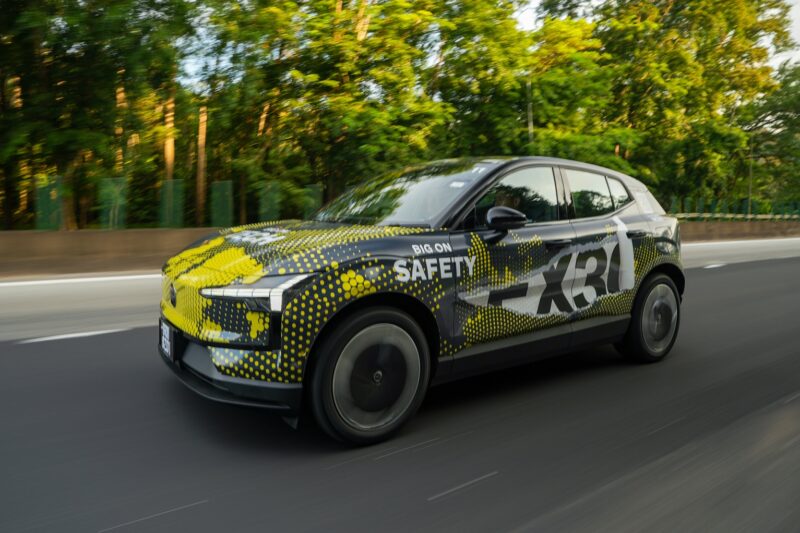
Volvo EX30 first impression: small on the outside, BIG on the inside

Developed on Geely’s SEA platform, which also underpins the smart #1 and Zeekr X, the EX30 is the smallest vehicle from Volvo to date.

That being said, don’t let its compact size fool you. The EX30 encompasses everything buyers in this segment desire—style, technology, practicality, and of course, performance.

Thanks to the well-thought-out though (though slightly unusual) activities organised during a recent media test drive by Volvo Car Malaysia, we gained a clear insight into the true capabilities of the EX30 and why it stands out in the market.

But before delving into the whole experience, let’s first explore the exterior and interior of this rather interesting EV. With dimensions of 4,223 mm in length, 1,837 mm in width, and 1,555 mm in height, it is indeed smaller than both the #1 and X.

Nevertheless, the EX30 boasts well-balanced and sporty proportions, featuring equally long front and rear overhangs, a lengthy wheelbase of 2,650 mm, and large wheels to complete the look.

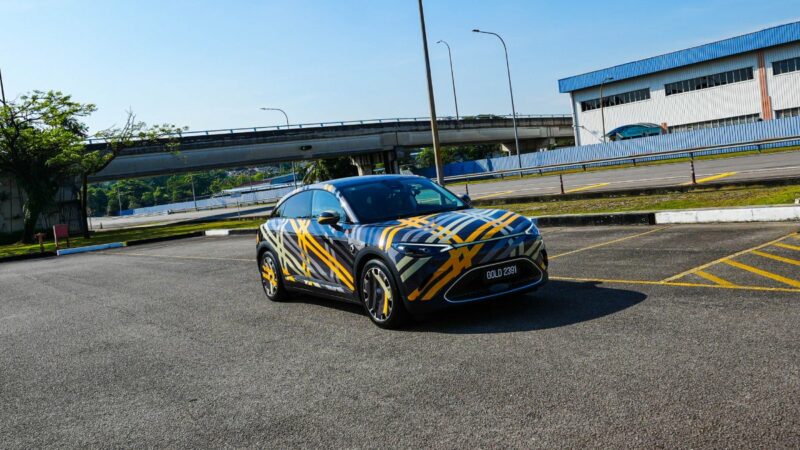
Even though the test units were wrapped in camouflage, it’s easy to pinpoint it as a Volvo at first glance, thanks to the prominent Thor’s Hammer LED daytime running lights. Of course, the brand logo is also clearly displayed on the front of the car.

As one would expect from the Swedish marque, the interior of the EX30 is stylish and well-organised. In line with its sustainability efforts, Volvo has chosen to apply generous amounts of renewable and recyclable materials throughout nearly every nook and cranny of the cabin.

Aside from the window controls on the center console, you won’t find any physical buttons in the EX30. In fact, there’s no traditional gauge cluster in this vehicle. All functions and information—like vehicle speed and gear position—must be accessed through a 12.3-inch portrait-oriented touchscreen.

The minimalist approach effectively creates a spacious cockpit; however, those accustomed to conventional controls will take some getting used to. Even adjusting the side mirrors and opening the glovebox must now be done via the touchscreen.

While the interior of the EX30 is undeniably compact, I don’t believe most users will struggle to store their belongings. This is because Volvo has creatively maximised storage space. Firstly, instead of conventional door-mounted speakers, you’ll find a Harman Kardon soundbar covering the entire width of the dashboard to make room in the door panels.

Furthermore, the cupholders in the center console can be slid out fully. Located below this is another substantial storage area where you can place items like a wallet. Interestingly, the floor of this compartment can be opened to create a deeper space, right behind which is a removable tray.

Now, returning to the previously mentioned media test drive. From Volvo Malaysia’s headquarters in Petaling Jaya, we departed for the old airport in Sungai Besi where we did two driving activities: a drag race and a slalom run.

While slalom isn’t new to me, this time it was a bit different as we had to perform it in reverse. The bright and clear video feeds from the exterior cameras helped me avoid the cones.

Next, racing against a Volvo V60 T8 demonstrated the true potential of the EX30 on a straight line. The Twin Motor Performance variant we drove has a ‘secret’ Performance All-Wheel Drive mode that, when activated, generates a maximum power output of 428 PS and 543 Nm.

Just like that, the EX30 blasts from 0 to 100 km/h in a scant 3.6 seconds, surpassing the plug-in hybrid wagon that is actually significantly more powerful.

After the activities in Sungai Besi, we moved to Bamboo Hills for a demonstration of the Park Pilot Assist feature. The feature is incredibly user-friendly and can instantly detect available parking spaces. You simply need to select your desired spot, and the car will handle the rest for you.

Next, we headed to Ikea Damansara for a unique shopping experience. Each team, composed of six media members, was given a budget of RM2,000 to buy as many items as possible to cram into the tiny EV.

Thanks to the boot space, which can accommodate up to 904 litres (when the back seats are folded), a 61-liter compartment beneath the boot floor, and a 7-litre frunk, our team successfully packed several chairs, a futon mattress, pillows, and many other items without a snag.

It is uncustomary for car manufacturers to let motoring media run wild in a mall as part of a media drive but this activity showcased that even though the EX30 is compact, its interior is versatile enough for weekend getaways in the Klang Valley and surrounding areas.

From Kuala Lumpur, we then headed to Janda Baik as the final stop of the media drive. The journey from the capital to this popular resort was enjoyable, especially when cruising along the Karak Highway, given the EX30’s stable and solid handling.

Even after an aggressively spirited day of driving, including the drag race earlier, we arrived in Janda Baik with about 45% battery power remaining. Just imagine the range if driven more conservatively.

For your information, the Twin Motor Performance variant features a 69 kWh Nickel Manganese Cobalt (NMC) battery, promising a driving range of approximately 450 km based on the WLTP cycle.

The battery can be charged from 10% to 80% in just 30 minutes using a 153 kW DC fast charger, while AC charging at 11 kW takes about 7.5 hours for a full charge.

Conclusion

For an electric vehicle, the Volvo EX30 offers numerous advantages. Its modern and attractive design—both exterior and interior—is eye-catching, yet never overwhelming.

While the lack of physical buttons might lead to potential buyers feeling a little hesitant, based on my experience, all functions and features can be easily accessed. It just takes a bit of time to learn how to use them.

For me, the key strengths of the EX30 lie in its performance and practicality, making it an ideal choice for young individuals with an active lifestyle.

Ora 07 Long Range, feminine EV with masculine personality – Test Drive

The first time this model stormed into memory was when attending the Auto Shanghai 2023 event last year.

Ora 07, or better known as Ora Lightning Cat in the international market, indeed brings a controversial design, reminiscent of the Porsche Panamera sedan and Porsche 911 models.

To place it on par with million-dollar models may be an unfair assessment.

Ora 07 is the second electric vehicle (EV) model introduced by GWM Malaysia after the cute Ora Good Cat hatchback, with a price offer below RM200,000 (RM169,800).

Compared to closest competitors like BYD Seal and Tesla Model 3, is the Ora 07 just an ordinary EV?

Based on a recent test drive experience, the definitive answer we can give is, “No!”


1. Feminine Design

BYD Seal and Tesla Model 3 present a more traditional sedan body design.

The Ora 07, on the other hand, is more reminiscent of the Porsche Panamera body, with a more tapered roof line, followed by a quite long body dimensions.

The rear also features an electrically powered adaptive spoiler that can be raised or lowered as needed, and the front lights, when viewed from any angle, resemble the 911.

Overall, this is not a negative aspect of the Ora 07. It is suitable for those with a feminine spirit and individuals looking for something different in the electric sedan segment.

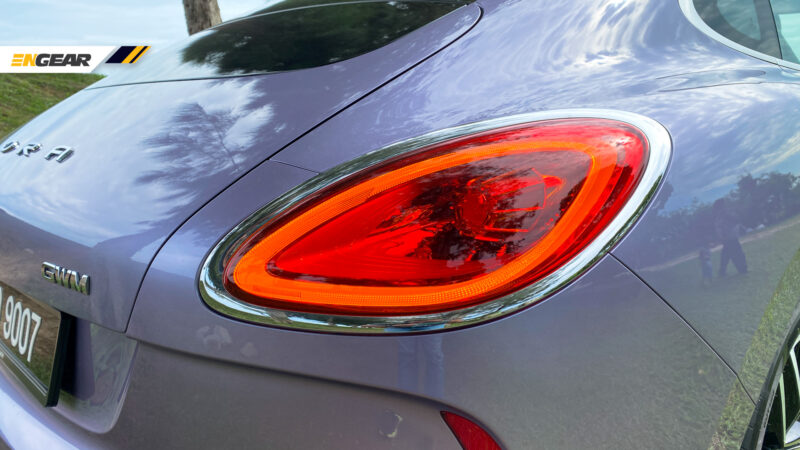
However, the all-red rear light design may confuse road users and make it difficult to determine whether the signal is for turning or not.


2. Bugatti, Porsche Inspired Interior

Not content with just the exterior, the interior layout also draws much inspiration from famous models.

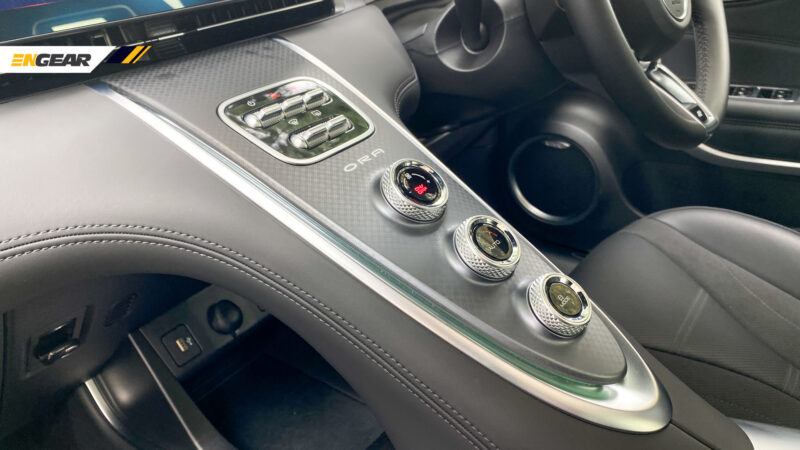
The high central console seems to take inspiration from Bugatti, while the front digital cluster screen clearly brings Porsche elements.

At the very least, the layout shown in this space is much better and more elegant compared to cars that simply place an iPad screen on the dashboard during development and then sell it to the public.

The writer particularly likes the design of the Ora 07’s digital cluster screen, it looks fresher.

However, the downside is that it does not come with theme options that match its round design. Moreover, there are no options for available analog meter graphics!


3. Easy to Operate, but Still Troublesome

One thing the writer appreciates about the Ora 07, apart from the support for Apple CarPlay/Android Auto, is the presence of manual control buttons in the central area for the air conditioning system.

It offers controls for fan speed and cabin temperature. Easy to operate using muscle memory. However, that’s the only benefit provided.

There are no physical fan speed controls included on the air conditioning vent. This means that if you feel bothered by the cold air blowing into your nose, you will have to delve into additional menus for climate control on the infotainment screen.

Yes, the Ora 07 includes several types of air flow mode on the screen for use during the summer, but it’s not a feature that can make daily driving more pleasant.

Fortunately, the Ora 07 is equipped with an engaging 11-speaker Infinity audio system, so you can enjoy your favorite songs after fiddling with the climate control settings.


4. Comfortable Cabin, but…

The use of premium materials dominates the Ora 07’s cabin space. It looks luxurious.

The standard factory-installed sports seats also contribute to the comfort aspect, as do the quite cushy rear seats.

Apart from the long wheelbase, one thing that makes the space look more spacious is the fairly wide and elongated panoramic glass roof.

Because of this, rear passengers can enjoy more headroom. Just avoid long-distance travel for extended periods when the sun is directly overhead.

There are no switches available to open the glass panel structure, and no sunshades provided in that area to filter out the sunlight that can burn your hair.


5. Limited Cargo Space Access

This sedan offers a cargo space of 333 liters, sufficiently enough for daily use.

Although the Ora 07 comes standard with a fastback sedan body shape, it does not provide the ability to open the rear extensively like any other aeroback model.

The somewhat limited opening may make it difficult for you to load larger items.

Fortunately, the second-row seats can be folded, allowing you to place longer items in the rear.

Additionally, there are several small storage spaces available in the cabin, further enhancing the practical aspect of the Ora 07.


6. Masculine Driving Experience

As standard, the Ora 07 comes with a single powerful electric motor setting of 201 hp and 340 Nm that drives the front wheels.

The power is sufficient to propel the electric sedan in urban routes, with no issues of power shortage.

Aggressive acceleration can also be achieved in a manner that is quite smooth and seamless, without resulting in the usual power surge effect experienced in other electric cars.

What makes the writer excited about this electric sedan is the delightful driving experience package that is hard to find in any other electric car.

Despite featuring various feminine characteristics, the driving aspect of the Ora 07 is more masculine. It’s like a car with dual personalities.

For a moment, the writer completely forgot that the Ora 07 is a heavy electric sedan (2.5 tons) when testing its handling on winding roads.

The steering response is good enough to ensure the car stays on the right track, in addition to the chassis tuning and suspension system that make the driving experience of this electric sedan quite enjoyable on the winding roads of Negeri Sembilan.

Body roll is also felt at a minimum level, making the writer more enthusiastic to continue pressing the accelerator pedal every time a straight road is connected to a curve.

The use of Hankook Ventus S1 Evo3 tires also helps the sedan grip well on the asphalt surface.

Adding vibrancy to the Ora 07’s driving experience is the simulated sound of a fake engine that can be activated through the infotainment screen.

At the very least, it can satisfy your longing for the sound of an engine, and the writer believes this feature is way much better than the spaceship-like sound found in more expensive EV models.

There are several driving modes included that can be accessed through the central manual button, including the Well Being mode, which will deactivate the regenerative braking function and allow the car to continue coasting when the foot is removed from the accelerator pedal.

Like an ICE car, isn’t it?


7. Concerns about Range Anxiety?

We tested the Long Range variant paired with an 83.5 kWh battery pack.

According to NEDC data, the sedan can travel up to 640 km on a full charge, a figure that may be challenging but not impossible to achieve.

Based on our usage, we managed to record a driving range of 470 km before the battery reached 15 percent state of charge (SoC), with an estimated remaining range of about 102 km.

In our opinion, the Ora 07 is suitable for use as a daily commuter car or occasionally for intercity travel beyond two stages.

DC charging up to 88 kW allows the battery to be charged to 80 percent in just half an hour, meaning you won’t have to wait long if you need to undertake a long journey in the Ora 07.


8. Safety

As standard, the Ora 07 comes with advanced driver-assistance systems (ADAS) Level 2, which includes several key functions such as adaptive cruise control, blind-spot monitoring, autonomous emergency braking, smart lane keeping, and lane centering assistance.

The adaptive cruise control feature proves effective when on the highway to maintain a safe driving distance.

However, the way the lane centering assistance operates on the other hand may be perceived as slightly aggressive, especially for those who are confident in their driving skills.


Conclusion

With a starting price of RM169,800, this Ora 07 Long Range could be an alternative electric sedan that caters to the preferences of buyers who seek something different and want to stand out from the norm.

Although it has some shortcomings, all those issues may fade away when you are able to enjoy the very satisfying driving experience this sedan offers.

Don’t believe it? Even now, the writer still can’t believe it!

Specifications:

Electric Motor: Single, front-wheel drive
Power: 201 hp, 340 Nm
Acceleration: 0-100 km/h in 7.9 seconds
Maximum Speed: 170 km/h
Battery: 83.5 kWh
Range: 640 km (NEDC data)

2025 Proton X70 first impression: now that’s more like it

The X70 may not be a bread-and-butter model like the Saga, but it will forever be remembered as the vehicle that arguably played the most significant role in Proton’s transformation.

As you may already know, the X70 is the first vehicle conceived under the Proton-Geely partnership that started back in 2017.

Not only that, the X70 is also responsible for leading Proton into the a new battleground that is the SUV segment. Therefore, it can be said that the car holds a special place in the history of the national car manufacturer.

The X70 has been on the Malaysian market for almost six years now, during which the C-segment SUV underwent one update in 2022, where it gained the three-cylinder engine from the X50 and a handful new features to stay relevant.

Now, nearly two years after said update, the X70 has once again been given a makeover but this time around, the changes are more comprehensive as it involves both exterior and interior.

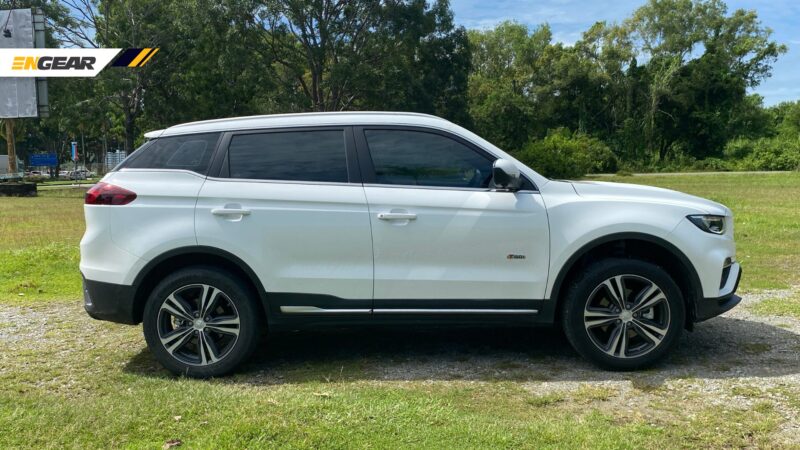
The facelifted version of the X70 showcases a new face carried over from the Geely Boyue facelift released two years ago. One might argue that it is already outdated but in the eyes of this writer, the front fascia still looks fresh.

With sharper and sleeker LED headlights and a wider grille adorned with Mercedes-Benz-style diamond-shaped chrome pins, the X70 now looks far more alluring than before.

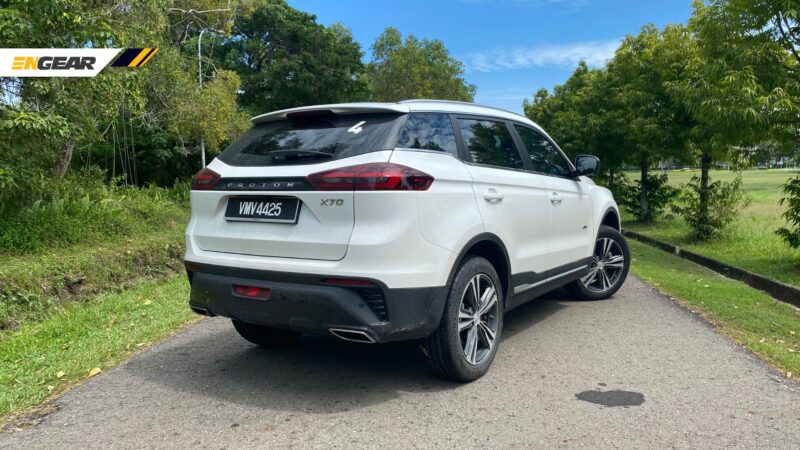
You will have no trouble identifying the facelifted model on the road. However, it may be a bit challenging to pick it out from the rear, as aside from slight modifications to the rear bumper, the rear of the new X70 is virtually unchanged.

The interior has also received a fresher look. The first thing you’ll notice is the Stone Grey Nappa leather upholstery wrapping the seats, door panels, and armrest.

Although it’s not as luxurious as the brown leather upholstery offered previously, the lighter shade does offer a more spacious feeling.

Additionally, the X70 gains an ambient lighting system with 72 colour options and a rhythmic function that changes the colours according to the beat of the music played. Although quite unfortunately, the X70 no longer comes with the nine-speaker Kenwood audio system.

The most significant change, in my opinion, is the introduction of wireless Apple CarPlay and Android Auto, making the X70 Proton’s first vehicle to offer this system.

However, the feature will not be available from launch. Proton stated that when it does become available, it will be integrated into the 12.3-inch touchscreen via over-the-air (OTA) update.

In addition to new looks and features, many other improvements have been incorporated into the new X70. According to the automaker, the SUV features 360 new components, with R&D taking a total of 290,000 man hours.

This is probably why Proton held a media test drive session in Kota Kinabalu. The diverse terrain and road conditions, which are reportedly not as good as those in Peninsular Malaysia, make KK the ideal location to test the overall performance of the X70.

First things first, comfort. I can confidently say that the X70 is a comfortable SUV. The suspension feels slightly firmer than that of the original CBU version but it soaks up bumpy roads and uneven surfaces en route to Kundasang really well.

The handling also feels more responsive compared to before, but it is somewhat disappointing that the steering remains relatively light. Strangely, switching the EPS mode from Comfort to Sport does not yield a noticeable change in feel.

Nonetheless, I was quite satisfied with the car’s NVH (Noise, Vibration, and Harshness). Not only is the rumble of the three-cylinder engine less pronounced at low speeds, but the noise from the many trucks and lorries on the roads around KK and Kundasang is also well suppressed.

Those expecting increased performance from the new X70 may be disappointed, as the 1.5-litre three-cylinder TGDI engine still produces the same output of 177 PS at 5,500 rpm and 255 Nm of torque from 1,500 to 4,000 rpm.

However, this does not mean the engine has been left untouched. According to Proton, several aspects such as combustion efficiency, thermal management, and friction reduction have been improved.

As a result, the engine is now capable of achieving a fuel consumption figure that is 4% lower than before, at 7.3 litres per 100 km. No matter how you slice it, a 4% reduction is minimal but for this writer, it’s certainly better than nothing.

In terms of power, the X70 successfully demonstrates that it has no trouble accelerating and overtaking other vehicles even when climbing steep hills with four adult passengers onboard.

There are still no paddle shifters available, so to shift gears manually, you need to use the gear lever. But this will take some getting used to as you will need to push the level to the left or right rather than up or down like most other cars.

In my opinion, the X70 is far from perfect but thanks to the more attractive exterior design and various new features introduced in the latest update, it has grown to be a much a better offering than before.

2025 Proton X70 Specifications

Price: RM98,800-RM126,800
Engine: TGDI 1.5-litre, three cylinders
Transmission: 7-speed dual-clutch
Power: 177 PS @ 5,500 rpm
Torque: 255 Nm @ 1,500-4,000 rpm

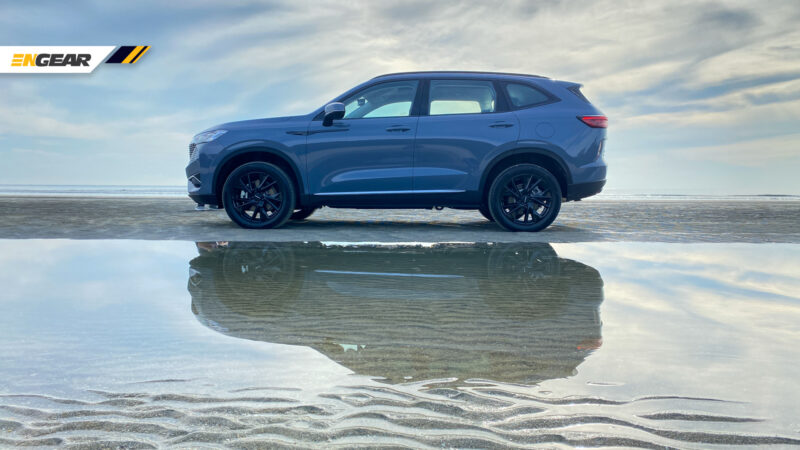
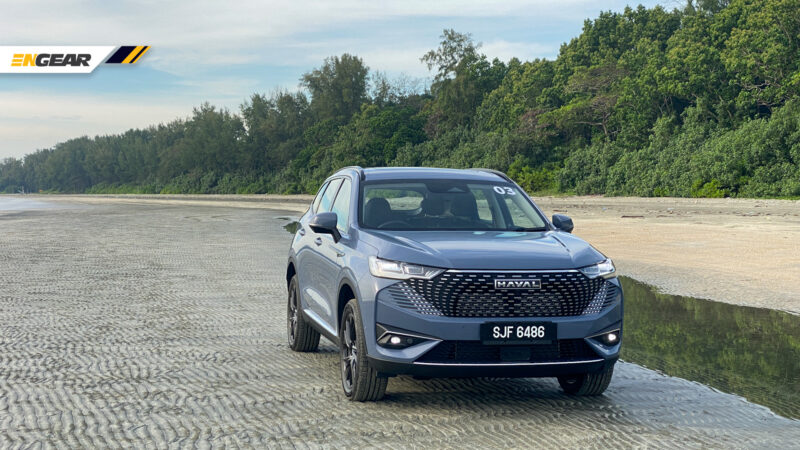
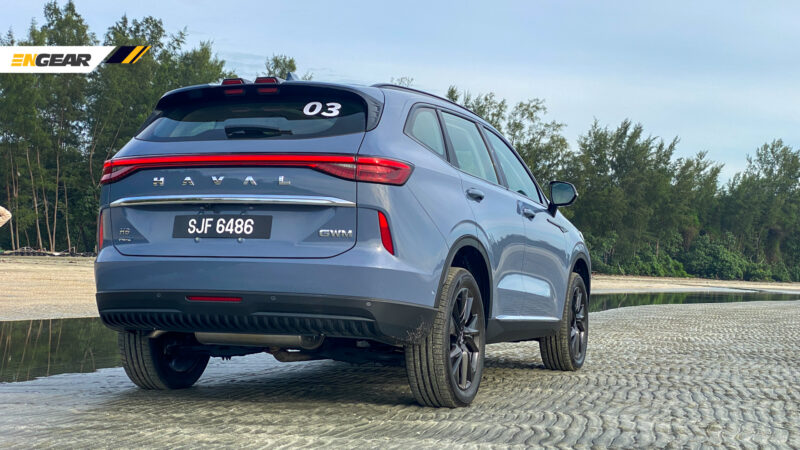
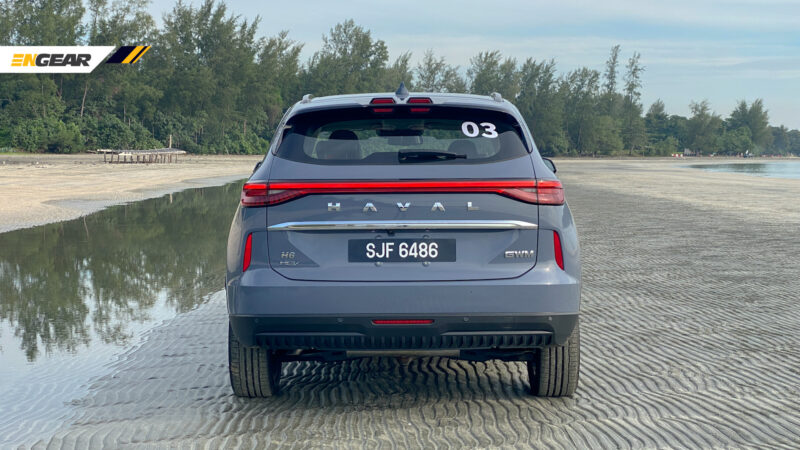
Haval H6 HEV, the most worthwhile hybrid SUV? – First Drive

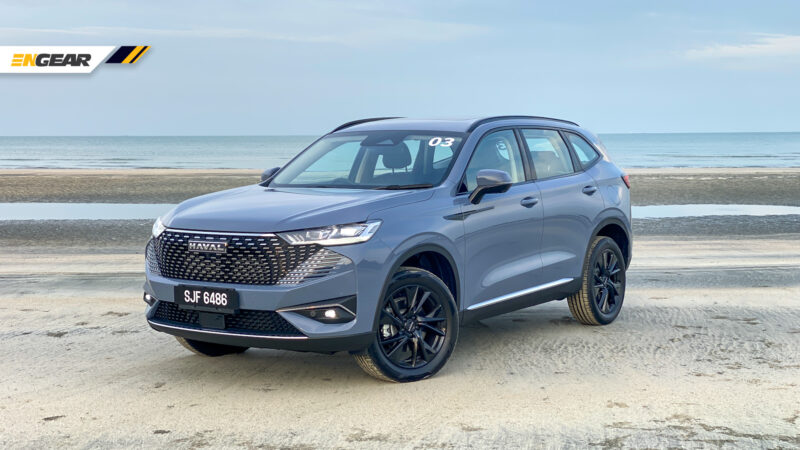
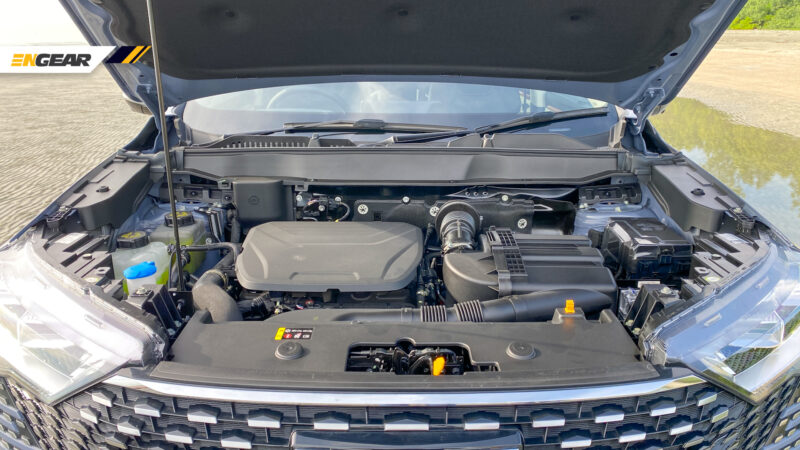
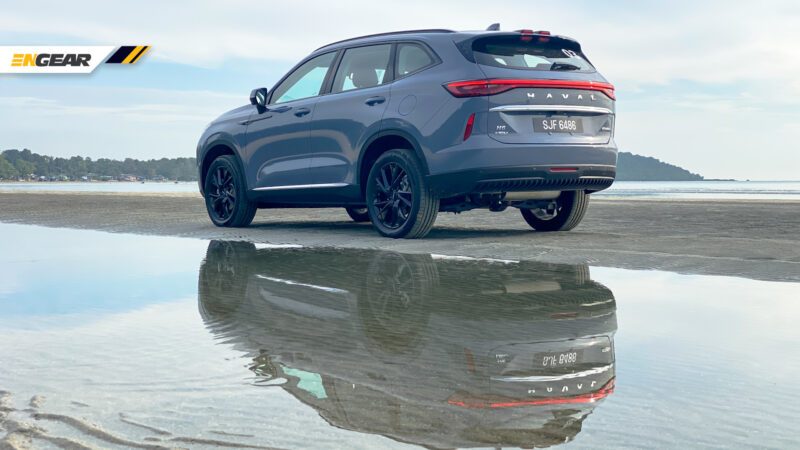
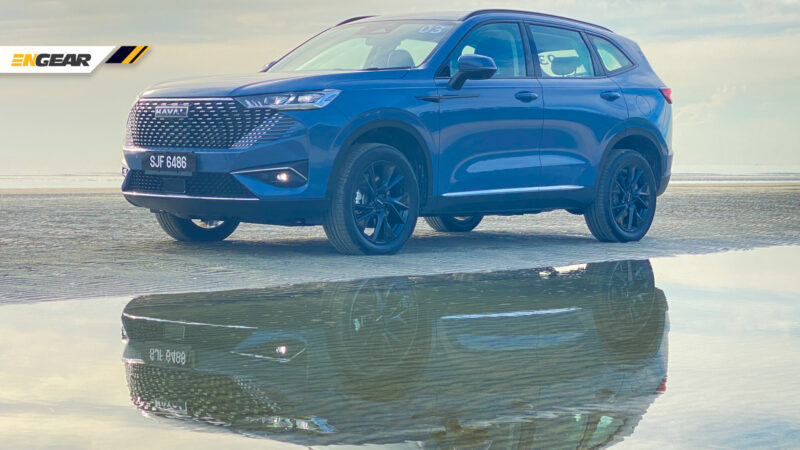
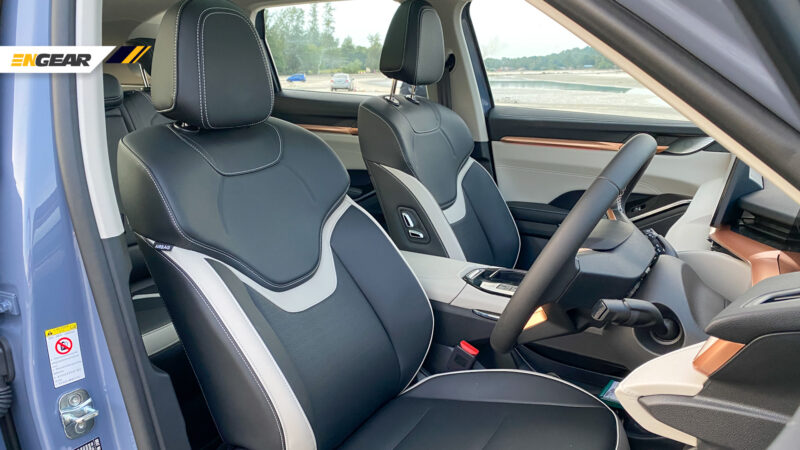
A few days ago, GWM Malaysia invited us to experience firsthand driving an upcoming hybrid SUV, the Haval H6 HEV.

Priced at an estimated RM145,000, it may very well be a very worthwhile purchase for those looking for a fuel-efficient, spacious, and comfortable SUV for the whole family.

Let’s briefly discuss the specifications of the Haval H6 HEV SUV.

Starting with the powertrain unit, the Haval H6 HEV is powered by a 1.5-liter turbocharged four-cylinder engine, paired with a single electric motor and a Dedicated Hybrid Transmission (DHT) with two-speed ratios.

The engine is capable of producing 150 PS/230 Nm, while the electric motor can generate an additional 130 PS/300 Nm of power.

Overall, the Haval H6 HEV boasts 243 PS of power and 530 Nm of torque, making it one of the most powerful in its class.

During a brief two-day drive across south borders that didn’t require a passport, the writer found that the power delivered by this SUV was consistent, especially when extra power was needed to overtake trucks ahead.

On paper, the 530 Nm figure might seem high, but during our drive, we didn’t feel any sudden surges of power that could cause neck discomfort.

This is because the power delivered when the accelerator pedal was pressed was smooth and seamless, unlike the aggression often experienced with most electric cars.

The hybrid system is also very efficient, as the writer and colleagues hardly felt the engine start-up process. There were no noticeable engine vibrations, and the engine noise was well-filtered from entering the cabin.

With a fuel consumption rate of around 5.8 liters/100 km, GWM claims that the Haval H6 HEV can cover a distance of up to 1,000 km on a full tank.

Perhaps we can test this further if given the opportunity to drive this SUV in the future.

The NVH aspect is also satisfactory, as we were able to chat comfortably inside the cabin without raising our voices or using a microphone.

The wind noise attempting to penetrate the cabin didn’t disrupt our conversation; only the tire noise was audible. This was partly due to the unsatisfactory quality of the tires used in some areas.

Equipped with a suspension system consisting of MacPherson struts at the front and a multi-link setup at the rear, this SUV didn’t pose any significant handling or comfort issues.

For Malaysian highway networks, it offers a balanced suspension setup for slightly aggressive driving while maintaining comfort for the whole family.

Additionally, the body roll generated during cornering was acceptable, not making the SUV sway excessively.

In terms of dimensions, the Haval H6 HEV offers a much larger size compared to popular C-segment SUVs like the Honda CR-V and Proton X70.

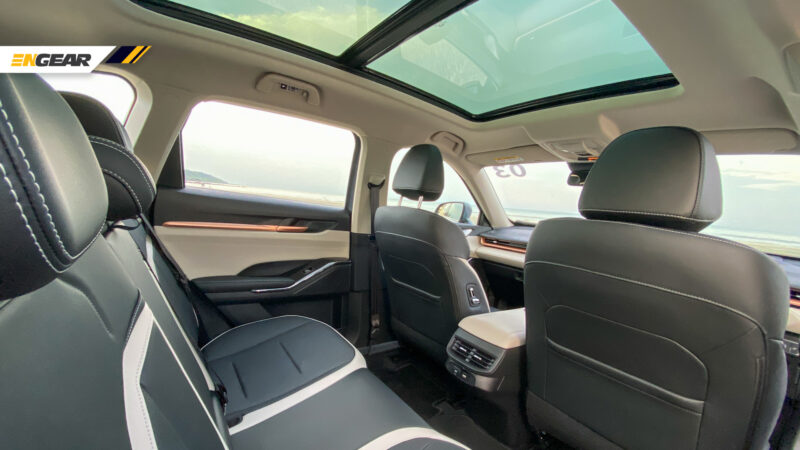
The long wheelbase also contributes to a more spacious cabin to accommodate five people at a time.

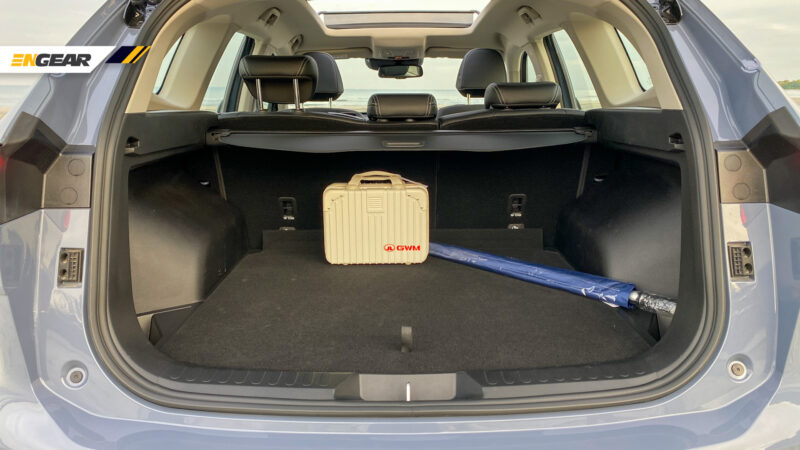
Furthermore, the Haval H6 HEV provides a cargo space of 560 liters, or up to 1,485 liters when the second-row seats with a 60:40 ratio are folded.

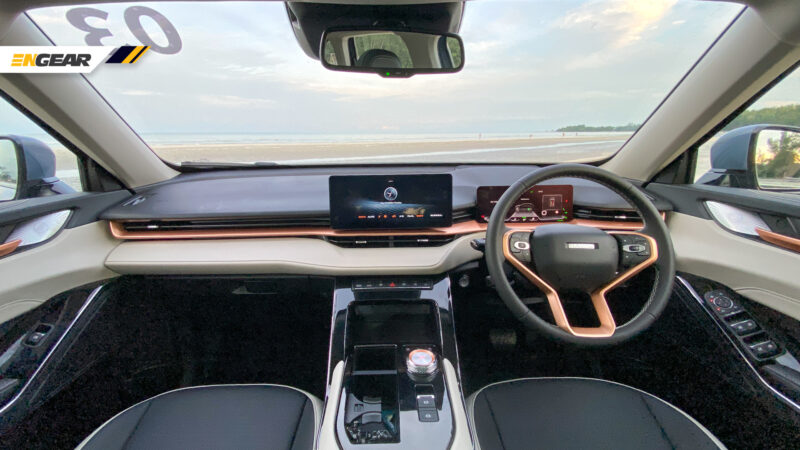
The layout of the dashboard is quite neat, but the combination of three colors (black, white, and rose gold) may not be favored by some.

There is a 10.25-inch cluster screen (with somewhat limited theme options) and a 12.3-inch infotainment screen that supports Apple CarPlay and Android Auto.

With a starting price below RM145,000, along with a package of specifications, the Haval H6 HEV could indeed be a very worthwhile purchase, especially for those who don’t have the budget to buy a hybrid SUV priced over RM200,000.

We will share more details and insights once given the opportunity to further test drive the Haval H6 HEV in the future.

Haval H6 HEV Specifications:

Engine: Four-cylinder in-line, 1.5-liter turbo
Power: 150 PS/230 Nm
Electric motor: 130 PS/300 Nm
Total power: 243 PS/530 Nm
Transmission: Dedicated Hybrid Transmission (DHT) two-speed
0-100 km/h acceleration: 7.7 seconds
Maximum speed: 175 km/h

Peugeot 408 GT, the lion for the brave – Test Drive

A bitter fact that we must digest at present is that everyone now wants a car with flood-resistant specifications.

SUV. Crossover. Or whatever three-letter acronym introduced by every manufacturer to distinguish their products from others.

As a result, we can now see various types of crossover SUV models in the local market, and the victims, of course, are the sedan models.

The latest Peugeot 408 available in the Malaysian market is no exception to falling victim to the SUV frenzy.

Is it a model worth buying? Feel free to read our brief review until the end.


Exterior design

If the two previous generations featured sedan body shapes, the new generation Peugeot 408 is now a modern mishmash car built for those who dare to drive it on the road.

Fundamentally, the 408 still retains the sedan body shape, but with a liftback rear design before being embellished with crossover elements around the body.

This is not a new thing, as several other manufacturers also use the same design format, such as Citroen with the C3X, and Toyota through the Crown Crossover model.

Not everyone likes this format, but it could be a suitable model for those seeking something different.

On the road, the Peugeot 408 GT looks aggressive with its lion fang-shaped main headlights, rear lights with claw graphics, and 20-inch black Monolithe rims with a slightly… peculiar design.

With slightly higher dimensions compared to sedans in its segment, along with a ground clearance of 189 mm, it’s difficult to classify this Peugeot 408 as a crossover SUV. The writer prefers to call it a crossover sedan.

As emphasized, the design delivered by this Peugeot 408 is not for everyone, only for the brave.


Modern cabin, but…

The Peugeot 408 GT brings the Peugeot i-Cockpit 3D, which is far more modern than the previous 408.

It features a flat top and bottom steering wheel, a 10-inch digital cluster screen with a three-dimensional display, a 10-inch infotainment screen, and i-Toggles screen where the driver can set up to five different shortcut functions according to personal needs.

In standard, the Peugeot 408 GT variant we test-drove also comes with Nappa leather-wrapped seats that have been recognized by the Aktion Gesunder Rücken (AGR) independent body, which promotes back health.

There is also a built-in massage function with several modes inspired by animals such as cats and snakes available for the driver and front passenger.

With these mentioned modern features, comfort is indeed not a major issue.

Despite the presence of customizable shortcut function buttons, the writer still believes that frequently used functions such as climate control don’t need to be integrated into the main screen.

The infotainment screen from the factory offers a fairly clear and sharp graphic display, but could be improved with faster and smoother graphic movements.

It can be quite annoying when one wants to quickly lower the cabin temperature, but have to wait a few moments for the ‘loading’ graphic to finish playing.

Fortunately, the Peugeot 408 comes standard with wireless Apple CarPlay and Android Auto support, so most of the time, the driver’s eyes only need to focus on the navigation map display and the appropriate music selection played by the Focal Audio system with its 10 speakers.


Powerful Engine

For the Malaysian market, the Peugeot 408 is only offered with one engine option, which is the 1.6-liter turbo PureTech inline-4.

It is capable of churning out a high power of 218 hp @ 5,750 rpm and a torque of 300 Nm @ 2,000 rpm, delivered to the front wheels via an 8-speed automatic transmission.

Accelerating at traffic lights is not a weakness for this crossover sedan; in fact, on highways, the Peugeot 408 can outperform any naturally aspirated sedan.

For a full tank, the writer successfully recorded a mileage of 510 km.


Driving Experience

From the driver’s seat, one actually needs time to get used to the layout of the Peugeot 408 GT’s 3D i-Cockpit. This is because compared to other cars, you need to read the digital cluster screen from above the steering wheel. If set too high, you may struggle to see the meter panel.

Just like the infotainment screen, this digital cluster screen also displays graphics movements somewhat slowly for a modern car. It still offers an analog-style meter display but with a more concise interface.

Despite the asymmetrical steering wheel design, the Peugeot 408 still offers adequate handling responses, not overly sporty but still enjoyable, particularly when maneuvering around corners.

The Peugeot 408’s suspension components, consisting of MacPherson struts at the front and a multilink setup at the rear, are adequate when driving on well-paved surfaces where body roll is at an acceptable level. However, the high body style of the car is its main downside.

The main enemy of the Peugeot 408 is uneven road surfaces, especially when encountering potholes or road debris.

It’s even more frustrating when you’re enjoying a corner, and there are potholes or road debris scattered on the road where this sedan is quick to jump and ‘veer off course’ set by the driver.

Not all negative aspects are felt in the Peugeot 408. The most appreciated aspect is the cabin’s NVH (Noise, Vibration, Harshness) level, where any roughness and engine noise are effectively filtered to ensure the driver’s and passengers’ comfort throughout the journey.


Practicality

The Peugeot 408 GT still offers a practical cabin space for the whole family, even with its bold crossover sedan body style.

For instance, on the center console, there is a special slot for wireless smart device charging, followed by space below for other smart devices and a dedicated hole for placing your SmartTag device.

The cute transmission tunnel also contributes to a more spacious cabin. There is also storage space below the central armrest with separate openings, while for rear passenger comfort, second-row air conditioning vents are provided.

Although it may seem narrow from the outside, the Peugeot 408’s cabin actually provides sufficient headroom and legroom for adult passengers. However, the relatively small rear mirror structure makes it difficult for any old-school driver to look back when parking the car.

Fortunately, the Peugeot 408 comes with a clear 360-degree surround-view camera that allows us to observe the presence of obstacles in the surroundings.

Moreover, the Peugeot 408 offers a cargo space capacity of 536 liters, expandable to up to 1,538 liters when the second-row seats are folded down.


Price… a bit expensive

Behind the bold exterior and the aforementioned modern features, one thing that makes the Peugeot 408 not as appealing is the price tag.

For the Malaysian market, you can get the basic Allure version of the Peugeot 408 with pricing starting from RM146,055. Sounds reasonable, right?

However, for the GT variant equipped with additional premium features, the starting selling price is from RM196,055. Wise buyers may suggest adding a bit more money and buying a much larger and more comfortable D-segment sedan.

Therefore, the writer likes to reiterate the argument mentioned at the beginning of the article, “Peugeot 408: A ‘French Lion’ for the Brave.”


Peugeot 408 GT Specifications

Engine: 1.6-liter turbocharged inline-four
Power: 218 hp @ 5,750 rpm, 300 Nm @ 2,000 rpm
Transmission: 8-speed automatic
Drive: Front-wheel drive
Suspension: MacPherson Strut (Front)/Multilink (Rear)
Tire Size: 245/40 R20
Price: RM196,555 OTR

4 areas the Range Rover Evoque facelift could improve on

Since entering the market for the first time in 2011, the Range Rover Evoque has been elevated to an icon of luxury SUVs, especially among female drivers.

If you think about it, the Evoque can be likened to a designer handbag. It is beautiful and attention-grabbing but there’s more than meets the eyes – it is also practical and versatile.

The Evoque is now in its second generation with better chassis, design, and technology. The facelift version launched in Malaysia earlier this year brings forth sharper looks and a minimalist cabin space.
In other words, Land Rover has made the Evoque a more tempting proposition than before but the compact SUV does have some drawbacks, somewhat spoiling its reputation:

Tight cabin space

The Evoque is a compact-sized SUV, evident in its relatively small interior space, particularly in the back. There’s enough room for two adult passengers in the rear, but it will start to feel a little cramped should another passenger decide to hop in.

As for the boot space, 591 litres may sound ample but for some reason, it doesn’t feel as spacious. Clearly, this is not meant for those with large families.

Inferior infotainment system

Apart from the more minimalist interior design, the most recent revision gave the Evoque a new 11.4-inch curved touchscreen.

It provides users access to the Pivi Pro infotainment system, which looks quite aesthetically pleasing, but fails to impress when it comes to speed and smoothness. Fair to say it’s not as remarkable as what the Germans offer.

Additionally, users control the temperature and fan speed of the air conditioning system through the touchscreen and only the touchscreen. This is how you cause driver distraction.

Somewhat lethargic engine

The beating heart of the Evoque is the Ingenium 2.0-litre turbocharged four-cylinder engine paired with a nine-speed automatic transmission and an all-wheel-drive system.

The engine generates 249 PS at 5,500 rpm and 365 Nm of torque from 1,300 to 4,500 rpm – neither impressive nor disappointing but the powertrain could use a lot more vigour especially when accelerating. Its reluctance to show urgency often leads to aggressive inputs on the accelerator pedal.

Fuel efficiency

With a rather aggressive driving style, the Ingenium mill unsurprisingly shows a relatively high fuel consumption rate for both city and highway use.

Throughout several days of driving, this writer could only achieve readings around 10.3 to 10.5 litres per 100 km. That’s quite high but it should be kept in mind that the Evoque weighs around 1.8 tons and has an AWD system.

The 2024 MINI Countryman S Electric is modernized and environmentally-friendly while retaining its sporty characteristics

If your car is an expression of your style, the MINI is your perfect match. With its iconic design and sporty drive, it’s where fashion meets function.

These qualities shine in the latest MINI models like the new Countryman S Electric, combining iconic style and go-kart-like sportiness with a modern twist.

Eco-friendly material

In the latest generation, the MINI Countryman S Electric introduces fabric made from high-quality recycled materials, featured on the dashboard and door panels. This fabric, sewn with unique 2D techniques, offers a distinct, stylish appearance and a refined texture. The dashboard fabric also serves as a canvas for ambient lighting, transforming with each MINI Experience Mode to enhance the unique interior vibe.

If you’re concerned about maintaining this stylish fabric, rest assured—MINI designed it to be easy to clean. So, feel free to bring the kids along without any worries in your MINI Countryman.

Modern technology with classic look

The MINI Countryman S Electric is modernized with the first circular OLED display in any car. This high-resolution screen delivers crystal-clear information while seamlessly blending with MINI’s signature high-style aesthetic.

The OLED display also offers MINI Experience Modes, featuring themes like Vivid, Core, Go-Kart, Timeless, Balance, Trail, and Personal. Each mode creates a distinct atmosphere and driving experience to match your mood. For instance, if you’re feeling tired after work, you can switch to Balance mode for a more relaxing vibe.

If you love vintage and retro vibes, choose the Timeless mode, which features a display meter inspired by the classic MINI Cooper from Mr. Bean’s era. Plus, you’ll even hear sounds from the classic MINI through the audio system, adding to the nostalgic experience!

Agile like a go-kart

A MINI wouldn’t be a MINI without that signature go-kart-like handling, and the new MINI Countryman S Electric is no exception. Even as the largest MINI ever produced, it retains the iconic driving feel that makes every ride a thrill.

The suspension system and steering have been finely calibrated for agile and precise responses, ensuring a dynamic driving experience. The thick steering rims add to the excitement, inviting you to fully enjoy the drive in the Countryman S Electric.

With 313PS and 494Nm of torque from its dual electric motors, the ALL4 all-wheel drive system delivers instant acceleration and thrills. It rockets from 0-100km/h in just 5.6 seconds, ensuring a grin every time you accelerate from a traffic light or toll booth.

Overall, the MINI Countryman S Electric offers super-responsive acceleration, precise steering feedback, and a finely-tuned suspension, making it feel like a five-seater go-kart. You’ll find yourself eager to seek out corners where the regenerative braking system enhances the sporty handling, before effortlessly accelerating out with a smile.

Like other electric vehicles, the 66.5kWh battery pack in the Countryman S Electric is positioned under the chassis, lowering the center of gravity and enhancing stability in all driving situations.

Stylish, fun to drive, from only RM2,777 per month

Overall, I thoroughly enjoyed test driving the new MINI Countryman S Electric. It’s stylish, eye-catching, and effortlessly handles both traffic jams and highway cruising.

Heading to a campsite or beach is a breeze with the Countryman’s higher ground clearance and rugged bumpers and side skirts.

This vehicle adds joy and excitement to your daily drive, making it anything but boring. With sustainable materials in the cabin and an electric power system that offers up to 433km on a single charge, you can enjoy peace of mind knowing you’re driving a car that contributes to environmental preservation.

Interested in test driving the new MINI Countryman S Electric? Visit any MINI showroom nationwide. With Easy Drive Financing, you can own the Countryman for just RM2,777 per month, and for a limited time, receive a free Wallbox charger.

The MINI Cooper Electric is also available with Easy Drive Financing from RM2,021 per month and includes free Wallbox installation. For more details about MINI in Malaysia, follow their social media pages.

Instagram: mini_malaysia
FB: https://www.facebook.com/MINImalaysia
Youtube: https://www.youtube.com/@minimalaysia/featured

Click here to book your test drive now.

5 things we don’t like about the BYD Seal

The electric vehicle (EV) market in Malaysia is heating up with the presence of various attractive models from all over the world.

The two EV brands currently hotly discussed are Tesla and BYD. The former made its mark in the local market with the launch of the facelifted Model 3 last October.

Meanwhile, the latter has introduced three EVs so far, with Seal being the latest offering to compete directly with the popular Model 3.

During a recent test drive, this writer found that the Seal has the right formula to go toe to toe with its closest rivals, but like most other cars, it still has some weaknesses.

Here are five things we don’t like about the Seal:

Two badges is one too many

For this writer, the Seal is one of the best looking cars, if not the best looking, in its segment. It has a sleek, sporty four-door sedan shape, which is further highlighted by strong character lines, 19-inch wheels, and a rear diffuser, to name a few.

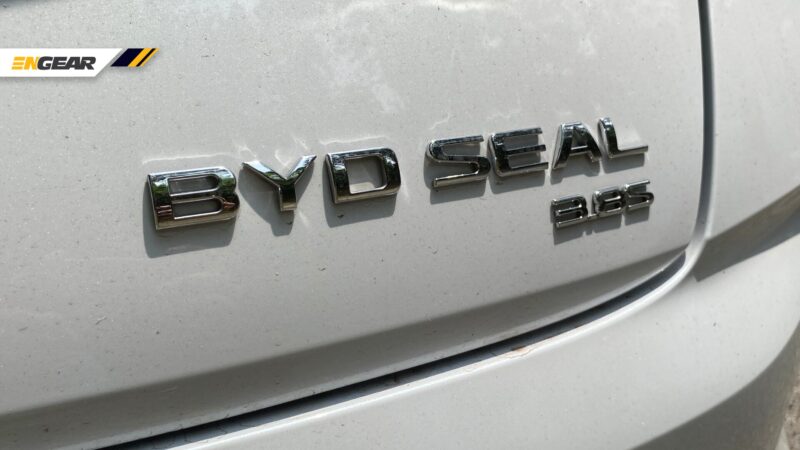
However, BYD unnecessarily placed two ‘BYD’ badges at the rear – one in the centre and another in the bottom corner of the tailgate. The automaker also put a ‘3.8s’ badge under the ‘BYD Seal’ lettering to let the tailgaters know how fast this car can sprint from 0 to 100 km/j. This isn’t necessary and makes the Seal look cheap.

There’s a large panoramic roof, but…

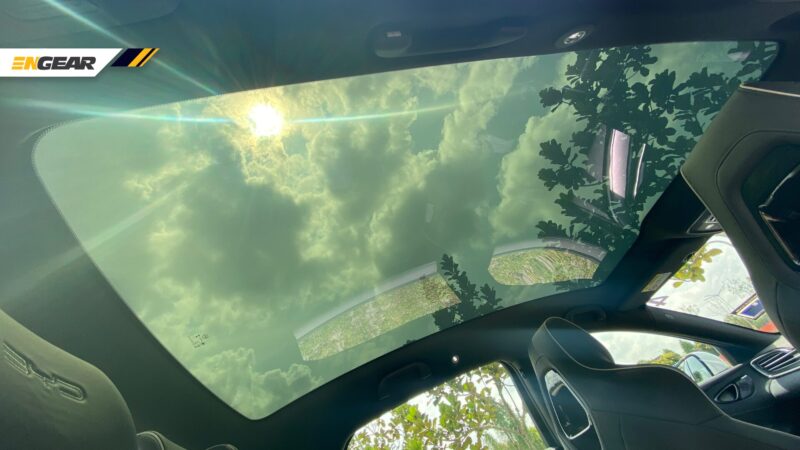
The Seal comes standard with a large panoramic sunroof, which offers great views at night but can turn the cabin into a sauna during the day when the sun is directly overhead.

Surprisingly, the car lacks a power sunshade for the panoramic sunroof. Instead, BYD provides two piece of sunshades that have to be manually placed, which is quite annoying for a car costing nearly RM200,000.

Overly sophisticated controls

This writer is aware that in order to design a clutter-free, minimalist cabin, automakers try to minimise the amount of physical knobs and buttons as much as possible, and integrate the functions into the infotainment system.

But it needs to be said that not all vehicle functions need to be digitised. One good example is the air-conditioning system. In the Seal, even the AC vents adjustment is done via the large display. Sometimes, less is more.

Slow charging

Despite using a 800V architecture commonly found in luxury EV models, Seal only supports fast charging up to 150 kW, which lower than many other 800V EVs on the market.

For AC charging, the Malaysian-spec Seal can only support up to 7 kW, taking approximately 15 hours for a full charge, whereas in Europe, this model comes with an 11 kW AC charger.

Limited boot space

Despite its longer and wider dimensions compared to most C-segment sedans, Seal has a relatively small boot space of only 400 litres. There’s an additional 53-litre storage space under the bonnet but it’s not that spacious.

In comparison, the Model 3 has a whopping 682 litres of boot space while the B-segment sedan Honda City offers 519 litres of storage space in the back.

Toyota Corolla 1.8G, the ‘perfect’ companion for a balik kampung trip – test drive

As someone who isn’t particularly fond of SUV body types (except for a few models), the writer feels grateful that the majority of major automotive manufacturers in Malaysia are still trying to maintain sales of sedan models, despite their decreasing popularity on a global level.

Here, we have several options of sedan models, ranging from affordable prices to high-performance luxury sedan models with considerable prices.

Unfortunately, the competition in the sedan models segment is not as strong as it was decades ago.

For example, in the C segment, consumers are only presented with a few models, such as the Proton S70, Mazda3, Honda Civic, and the very popular name worldwide – the Toyota Corolla Altis.

The Corolla indeed needs no introduction, unless you were born during the Covid era and are only more familiar with those lifeless electric cars.

The Toyota Corolla 1.8G that we test drove is a facelift model launched last year.

Despite being a facelift, if you are expecting something ‘wow’, this 1.8G Corolla may disappoint those expectations.

This is because there are not many changes to the exterior of this sedan model, except for a unique bumper design, followed by new 17-inch rims wrapped in 225/45 profile tires.

The design of the front projector LED headlights and rear lights remain the same. Perhaps it’s already perfect, so there’s no need to change those aspects.

However, you need to enter the cabin to enjoy the changes brought by Toyota in this model.

The front seats have been redesigned for comfort, in addition to providing better support for the driver during spirited driving.

The major change is the presence of a 12.3-inch digital cluster screen, providing a concise interface, and most importantly still offering classic analog meter graphics.

In addition to wireless Apple CarPlay support, the Corolla also provides USB-C charging slots on the center console, as well as clips for holding smartphones in the wireless charging slot.

Apart from that, the basic specifications remain the same, such as a cargo space of 470 liters, MacPherson front strut and double wishbone suspensions, electric power steering system, and front and rear disc brake system.

The writer had the opportunity to test drive this Corolla further while on vacation to the East Coast a few weeks ago.

One main thing that the writer noticed was the quieter NVH levels compared to the pre-facelift Corolla.

The 137 hp and 172 Nm of torque produced by the 1.8-liter engine is sufficient to move this 1.3-ton body.

It is agile, and no lack of power was felt throughout the journey.

Perhaps it’s due to the mindset of drivers who consider the Corolla not a sports car, so the driving is done in a relaxed and straightforward manner.

However, you need to experience the magic of this TNGA platform when exiting the highway and entering winding federal roads.

There, you will find the MacPherson/Double Wishbone suspension setup in this Corolla working brilliantly with stable handling every time it encounters twists and turns.

Body roll is still felt, but at a controllable level even though this sedan is not equipped with a sportier suspension like the GR Sport variant.

Additionally, the electric power steering system also assists the driver in handling this sedan accurately without the need for constant correction.

Whatever the driver directs, the Corolla makes it happen.

Attempts to escape from the highway, sometimes with speed trap cameras, seem to have successfully made the writer fall in love with a rarely used road, through driving this Corolla.

Certainly, the cabin atmosphere is not disturbed by engine noise or the whistling of the wind, and even the noise of the Dunlop SP Sport Maxx tires is well-filtered.

For a standard factory sedan, the writer truly enjoyed a more enjoyable drive than a Corolla compared to the Honda Civic and Proton S70.

The standard seats are also comfortable enough to accompany us throughout the journey.

Although at times, this sedan needs to traverse roads with qualities similar to the surface of Mars, the passenger in the adjacent seat still sleeps soundly.

The 470-liter cargo space is sufficient to accommodate essential items during cross-country trips.

Unlike the Vios, you can fold the second-row seats to provide a larger space.

Fuel consumption is also satisfying, where the writer managed to achieve as low as 8.1 liters per 100 km, or approximately 680 km on a full tank.

Safety aspects need not be worried about, because this Corolla comes standard with Toyota Safety Sense.

Among the features included are the pre-collision system (PCS), lane departure alert (LDA), automatic high beams (AHB), blind-spot monitoring (BSM), rear cross-traffic alert (RCTA), and dynamic radar cruise control (DRCC), which is very useful on the highway.

Furthermore, there are also seven SRS airbags, seatbelt warning, as well as ISOFIX anchors for child seats in the rear.

At the end of the day, what the writer can conclude is that this Toyota Corolla 1.8G could be a worthwhile option for a family sedan to own and consider.

The facelifted Toyota Corolla offers a complete package for those who prioritize practicality and comfort without sacrificing enjoyable driving.

With a starting price of RM147,800 for the 1.8G variant, it’s not wrong for you to break away from the usual preference for the H logo, for this rather perfect companion for the return to the hometown.


Specifications of the Toyota Corolla 1.8G
Engine: 1.8-liter inline-four cylinder (2ZR-FE)
Power: 137 hp @ 6,400 rpm
Torque: 172 Nm @ 4,000 rpm
Transmission: 7-speed CVT
Suspension: MacPherson/Double Wishbone
Rim: 17 inches
Cargo: 470 liters

BMW iX2 xDrive30 M Sport is a hoot to drive – Test Drive

Like its main rival from Stuttgart, BMW has been actively expanding its range of electric vehicles in Malaysia.

After launching models such as the i5, i7, and iX1, to name a few, BMW Malaysia introduced the latest addition to the BMW i series, the iX2 back in May this year. It is offered in the single xDrive30 M Sport variant at a price of RM 297,000.

So what exactly is the iX2?

Just as the iX1 is the electric version of the X1, the iX2 is essentially an electrically driven X2. The difference between the iX1 and iX2 lies mostly in the shape and design, the latter looking almost eccentric thanks to a more angular design approach and a coupe-style roof.

Not only that, it also gains the Iconic Glow illuminated grille, larger wheels (20 vs 19 inches), and the M High-Gloss Shadowline package with extended content that brings black accents to the radiator grille, tailgate logo, and side mirrors.

However, under the stylish skin, the iX2 xDrive30 shares the same dual-motor electric powertrain as the iX1 xDrive30, which generates a total output of 313 PS (with boost) and 494 Nm.

On paper, the difference in performance between the two are not exactly night and day. The iX2 is capable of sprinting from 0 to 100 km/h in 5.6 seconds, while the iX1 does it in 5.7 seconds.

Despite using the same 66.5 kWh battery, the iX2 offers a longer WLTP driving range of 449 km compared to 438 km by the iX1. 11 km may not sound much, but it can make a big difference, especially when the range anxiety kicks in as the battery runs low.

So, for a price difference of almost RM12,000, you get a more stylish EV with a longer driving range. Is it worth it to spend the extra buck on the iX2?

For this writer, it heavily depends on the individual taste. Those who are more conventional and not exactly risk-takers will choose the iX1, while those who like to be distinct and stand out more will be drawn towards the iX2.

Folks who pick the iX2 will not only appreciate its voguish exterior but also take a fancy to its its modern and sophisticated cabin. Almost every touchable surface feels luxurious and premium, as they should.

The first thing that catches attention is the large curved display that actually houses two displays, a 10.25-inch digital instrument cluster and a 10.7-inch touchscreen for the infotainment system.

The BMW Operating System 9 provides bright, easy-to-read graphics and an intuitive, user-friendly interface, but there are some functions that need some ‘digging’ to be accessed. The infotainment system is commendable, but this writer personally prefers the MBUX.

In terms of comfort and practicality, the cabin of the so-called Sport Activity Coupe is comfortable enough for four passengers. The front seats are highly adjustable and have thigh support, while the rear seats are not too upright and offer ample head and legroom.

There is space for a fifth passenger, but they might not feel comfortable especially on long journeys because the middle seat is rather small.

To say the iX2 is spacious might be a little far-fetched but there is plenty of storage space in the cabin. Each door has a sizeable storage area and cup holder, while under the centre console, there is another decent-sized space for storing items like a wallet.

There is also a storage space located under the armrest, but it is only meant for small, flat objects like access cards.

In addition to USB Type C charging ports, passengers can charge their smartphone on the wireless charging tray that has a bar to hold the phone in place. That’s clever.

At the back, the iX2 offers a larger boot (525 litres) compared to the iX1, but due to its sloping roofline, fitting tall items can be a bit challenging.

But if you’re thinking of weekend trips with the family, the boot has enough space and can easily accommodate at least three or four luggages. The car is also suitable for your shopping trips to Ikea as the rear seats can be folded flat in a 40:20:40 configuration.

The driving character shown by the iX2 is as expected from a premium EV – it’s fast, comfortable on smooth roads, and quiet.

Perhaps it’s not all that silent seeing hard acceleration is accompanied by BMW’s IconicSound synthesised sound effect developed in collaboration with renowned composer Hans Zimmer. However, in terms of NVH, it is all good in the iX2.

Driving an EV can be a bit boring after a while so to make things more interesting, BMW has included a boost pedal that provides an additional push for 10 seconds. Though honestly, the output provided by the two-motor setup is good enough for most daily driving situations.

In addition, the iX2 can help reduce driver fatigue through the standard Driving Assistant Plus system, which includes features such as Lane Control Assistant, Automatic Speed Limit Assist, Autonomous Emergency Braking, and more.

During the four days of driving, this writer recorded an energy consumption level of around 15 to 16 kWh per 100 km with a normal driving style, involving 70% city driving and 30% highway driving.

Needless to say, achieving the claimed driving range is no easy feat, but with the iX2, you can at least extend the range by using the regenerative braking system that offers four modes, including Adaptive.

Navigating through winding roads is not a problem for this car because its suspension system is more on the firm side of things, meaning it excels in eliminating body roll. But sometimes you do feel that the weight of the battery is taking a toll on it its handling.

Despite its firmness, the suspension system shows it can be quite comfortable for highway driving. However, it is not too keen to be driven on bumpy and uneven roads in urban areas. Hitting a pothole will send a jolt to the entire car.

In the city, the iX2 is overall easy to drive. That being said, you have to be mindful when reversing as the rear window is quite small due to to the sloping roofline. Thankfully, the car comes with a 360-degree camera.

If that’s not enough, you can also make use of the Reversing Assistant and Lateral Parking Aid for easier parking maneuvers.

Conclusion

Does the iX2 xDrive30 M Sport make sense in the current market? Honestly, at a price of nearly RM300,000, you could actually get another EV that offers high power and a longer range, like the Volvo C40.

However, the iX2 has its own unique appeal. Looks are subjective but the iX2 does have a stronger visual impact than its closest competitors, and it handles really well on the road – probably much better than the Swedish EV or the Mercedes-Benz EQA. And that’s good enough for this writer.

BMW iX2 xDrive30 M Sport Specifications

Price: RM297,000
Power: 313 PS (dengan boost)
Torque: 494 Nm
Battery: 66.5kWj
Range: 449 km (WLTP)

5 things we don’t fancy about the Mercedes-Benz EQS 500 4Matic

For the Malaysian market, the Mercedes-Benz EQS 500 4Matic, along with the SUV version, represents the flagship offerings in the brand’s electric vehicle lineup.

It was first launched in Malaysia in July 2022 in the fully imported EQS 450+ guise. Less than a year later, Mercedes-Benz Malaysia (MBM) pulled the covers off the locally assembled EQS 500 at its manufacturing plant in Pekan, Pahang.

Undeniably, as the highest variant in its lineup, the EQS 500 offers luxury and top technology for its customers, but for this writer, it still has some discernible shortcomings.

It’s not an S-Class

Some may have thought that the EQS is the electric version of the S-Class. This may be true in some ways but it is worth noting that the EQS is based on the automaker’s dedicated electric platform known as Electric Vehicle Architecture (EVA), while the S-Class is underpinned by the Modular Rear Architecture (MRA2) platform.

This gives the EQS a slightly smaller footprint than the S-Class, with a length of 5,216 mm, width of 1,926 mm, and height of 1,512 mm. The wheelbase is also 6 mm shorter at 3,210 mm. The interior is spacious but not as roomy as the S-Class.

Unconventional design

Unlike the S-Class, which exudes elegance in its traditional ‘three-box’ shape, the EQS has a much more unique appearance highlighted by its oval-shaped body. According to Mercedes, the shape plays a significant role in helping the EQS achieve a drag coefficient of 0.20, making it one of the most aerodynamic cars in the world.

While most were intrigued by its futuristic appearance, this writer can’t help but think how the EQS looks like an egg on wheels.

The MBUX Hyperscreen takes the cake but…

Inside, the centrepiece is Mercedes-Benz’s impressive MBUX Hyperscreen infotainment system, which combines three displays: a 12.3-inch digital driver instrument cluster, a 17.1-inch OLED touchscreen in the middle, and a 12.3-inch OLED touchscreen for the front passenger.

It has to be said that the giant display does make the EQS look somewhat like a spaceship, but the glass panel picks up smudges and fingerprints easily.

Say auf Wiedersehen to physical buttons

Save for the start stop and hazard light buttons, the majority of the vehicle’s functions, including the air conditioning system, can only be accessed through the central touchscreen. Needless to say, this will increase driver distraction.

On top of that, the touch panels on the steering wheel are not exactly user-friendly, and it will take some time getting used to.

Air suspension is supple but a little too soft

On the highway, the EQS demonstrates why Mercedes-Benz’s air suspension is among the best in the market. It absorbs every undulating surface so smoothly that long journeys are hardly felt.

However, on normal roads, this writer needs to be careful as the suspension is quite soft and tends to bottom out if the car is driven too fast over bumps. The suspension can be raised to increase the ground clearance but that means having to fiddle with the infotainment menu while driving.

Suzuki Gixxer 250, a simpler machine for fun riding – Test Ride

The selection of an affordable streetfighter machine that resonates with one’s soul is something that should not be taken lightly.

Otherwise, you might end up having to sell the bike because it does not match your personal taste.

Fortunately for B2 license holders in Malaysia, we are presented with various models of motorcycles under 250cc displacement, from Japan, Sweden, India, and there are even motorcycles made in China!

The Suzuki Gixxer 250 entered the Malaysian market at the end of last year, with a price tag that caught attention – around RM14,500.

Although its arrival might be somewhat late, the writer believes that the Suzuki Gixxer 250 is capable of posing a strong challenge to other 250cc models out there.

The following is a brief review after spending several days with the Suzuki Gixxer 250:

1. Streetfighter with average styling

Compared to other competitors in the market, the Gixxer 250 does not have an aggressive look.

The oval-shaped LED main headlight with three-layer lighting does look modern, but it is not complemented by LED turn signal lights, only traditional bulbs.

The same goes for the rear section.

However, the lighting aspect of this motorcycle is quite bright when ridden at night.


2. Natural riding position

One thing the writer appreciates about any naked bike is the rider’s more back-friendly riding position.

After all, reaching the age of 30, a sporty riding position is not a choice for cross-regional journeys.

Thus, with the Gixxer 250, it offers a more natural riding posture thanks to the upright handlebar position, along with a saddle height of 795mm that is comfortable for individuals of shorter stature and a relatively wide seat dimension.

As a result, it is more comfortable for long-distance rides.

The footpeg position is also satisfying, but its proximity to the side stand makes the left foot feel obstructed when trying to kick it out.


3. Fun horsepower to unleash

As standard, the Suzuki Gixxer 250 is equipped with a 249cc single-cylinder engine capable of producing 26.7 hp @ 9,300 rpm and a torque of 22.2 Nm @ 7,300 rpm.

Its sound might not be as aggressive as other competitors, but based on experience, the Gixxer 250 is capable of offering a fairly agile and powerful ride, especially when entering the mid-range of the engine revolution.

For urban use, it is not a problem at all, and the writer also enjoys riding this machine across the regions to breathe in the breeze of the Malacca Strait.

It’s a shame that it doesn’t come with a clutch assist & slipper feature, but there’s no need to worry as every gear change feels so smooth throughout the journey.

The Gixxer 250 also comes with gear shift indicators that will provide warnings to the rider.


4. Corner-friendly machine

There is no urge to test the highest speed of this machine, considering that the Gixxer 250 is actually more enjoyable to ride on roads away from the highways.

Even though it comes with standard conventional telescopic front fork and single shock absorber, this setup makes the Gixxer 250 suitable for the road conditions in Malaysia.

All vibrations and road irregularities are absorbed well, and it is still able to maintain stable movements when maneuvering through corners.

The standard tire size of 110/70 front and 150/60 rear also somewhat helps the Gixxer 250 to grip well on the asphalt, coupled with the dual-channel ABS braking system that enhances the bike’s stopping ability.

On paper, there may appear to be shortcomings in this machine, but not when you take it out of the garage to enjoy real routes.


5. Comfortable? Yes!

One thing that makes the writer satisfied with the Gixxer 250 is the effectiveness of its engine cooling system.

As standard, the Gixxer 250 comes with the Suzuki Oil Cooling System (SOCS) to ensure that both feet remain comfortable throughout the journey.

This is very different from another 250cc machine the writer has tested before, where the heat generated can make the feet feel burnt even on short journeys.

But not with the Gixxer 250, where the writer can go much further than usual without having to frequently stop just to cool down the feet.


6. Not many additional features

At a selling price of around RM14,500, the Suzuki Gixxer 250 indeed has some noticeable shortcomings.

Desired features such as inverted front fork, quick shifting capability, LED turn signals, color TFT display screen, and keyless start system are completely absent from this bike’s specifications list.

What you will get is a 250cc motorcycle friendly for B2 license holders that is quite simple but still suitable for enjoying commuting to work or relishing fresh air with friends on weekends heading to Lemang To’ Ki shop.

With a fuel tank capacity of 12 liters, it is sufficient to ensure you reach distances of up to 400 km before needing to stop at the next gas station.

In conclusion, the Suzuki Gixxer 250 can offer good riding and handling experience, while maintaining comfort aspects within a more affordable price range.

Should you consider buying another motorcycle? That is entirely up to personal opinion. However, this is one of the 250cc bikes that is very enjoyable to ride.


Specifications of the Suzuki Gixxer 250

Engine: 249 cc single-cylinder air/oil-cooled
Power: 26.7 hp @ 9,300 rpm
Torque: 22.2 Nm @ 7,300 rpm
Transmission: Six-speed gearbox
Fuel tank capacity: 12 liters
Saddle height: 795 mm

Steer clear of the Suzuki Jimny unless… – Test Drive

For this writer, the Suzuki Jimny is an inherently unique vehicle. Its extremely angular and boxy body makes it look rugged, yet with smaller dimensions compared to the Perodua Axia, it also appears rather cute at the same time.

Not only that, its relatively high ride, wide fenders, and rear-mounted spare tyre indicate that the Jimny is ready to tackle any terrain, anytime. However, is the price tag of RM158,900 justified by what it offers?

If you compare it with other vehicles in that price range, the answer is a big NO as for that price, you can land yourself a much larger, more practical vehicle equipped with more modern technology.

But if you look at what the Jimny can actually do, you might change your mind. As aferomentioned, it was conceived to be driven on rugged paths, even rocky or muddy roads. The Jimny, from then until now, is a true off-roader.

There are many factors contributing to Jimny’s off-road prowess. First and foremost, like most pickup trucks on the market, the Jimny is built on a ladder frame construction that is tougher and more suitable for off-road driving.

The frame is paired with front and rear rigid axles, which is simpler in construction but more robust in nature. It also offers better grip in rough conditions by pressing the other wheel down when the other tyre is being pushed up by an obstacle.

Of course, a true off-roader is not a true off-roader without a four-wheel drive system with a low range transfer case that allows you to crawl out of challenging situations easily.

Not all Jimny owners will use this feature, but at least they will feel more confident knowing that their vehicle is equipped with one.

Yes, the Jimny has it all if you are an outdoorsman who goes out camping in Janda Baik every now and then, but is it the perfect fit for city dwellers?

This writer can’t stress this enough but the Jimny is a tiny SUV, so don’t expect practicality to be one of its strengths like other SUVs on the market.

The cabin is cramped and if you and your passenger are considered ‘large’ (not to body shame, mind you!), rubbing shoulders is a common occurrence in the Jimny. Thankfully, the narrow interior is offset by the tall roof so you don’t feel like sitting in a literal sardine can.

In the rear, there are two seats but as expected, they seem more suitable for children. If the seats are in the normal position, you have virtually no space to put items such as luggage or a stroller.

So if you plan on going on a weekend trip, for instance, you have no choice but to fold the rear seats flat or add a roof rack. Without the latter, you only have space for one rear passenger or none at all, depending on how much luggage you bring.

With a 1.5-litre NA engine making only 100 hp and 130 Nm, you might think that the Jimny will struggle when driven with a full load. It’s not fast, but based on this writer’s experience, the Jimny was more than willing to climb hilly roads like the Karak Highway and Genting Highlands road—provided you don’t push it too hard.

This writer found the most ideal speed for the Jimny to be 110 km/h maximum. As soon as the speedometer needle exceeds that figure, it will start to feel unsettled. With its soft suspension and a rather numb steering, this is not a vehicle you want to use to carve tight corners.

On normal roads, the Jimny is comfortable, but with the ladder frame, the entire cabin will shake quite violently if you hit a pothole. The NVH level is satisfactory, which is somewhat surprising for an old-school vehicle like this, but it should be noted that it was driven at speeds below 100 km/h most of the time.

The Jimny is old school in spirit but it is young at heart, meaning it comes with some modern features to attract younger customers.

These include automatic LED headlights, a seven-inch touchscreen with Bluetooth, wired Apple CarPlay and Android Auto, a USB port, a reverse camera, Cruise Control, and audio control buttons on the steering wheel.

As for the safety front, it is equipped with ABS, Electronic Stability Program (ESP), Brake Assist, Hill Hold Control, Hill Descent Control, ISOFIX, and two airbags. Basic but should be enough for most users, this writer reckons.

However, aside from the mentioned features, the Jimny has virtually zero premium features. Every surface, except for the leather-wrapped steering wheel, is hard plastic, while the seats are upholstered in fabric and can only be adjusted manually.

Alternatively, there is the Jimny Black Edition that offers leather upholstery and various other accessories, but you need to fork out an additional RM13,000. There is also the more stylish Jimny Rhino, but it is RM16,000 dearer than the standard variant.

Going back to the earlier question, is the Jimny worth the money? If you’re someone who loves the great outdoors and is in the market for a vehicle that is not only rugged but also iconic, the Jimny is as a sensible choice if you can get over the somewhat high price.

But if practicality, comfort, and luxury are on top of your list, steer clear of the Jimny because there are many other vehicles on the market that are more well suited to your needs.

@engear.tv Suzuki Jimny ni boleh ke naik Genting Highland? #suzuki #jimny #suzukijimny #gentinghighlands #family #engeartv #malaysia #reels #fyp #carsoftiktok #tiktokmalaysia ♬ original sound – Engear TV

Suzuki Jimny AllGrip Specifications

Price: RM158,900 (OTR without insurance)
Engine: 1.5-litre, four-cylinder VVT
Transmission: Four-speed automatic
Power: 100 hp @ 6,000 rpm
Torque: 130 Nm @ 4,000 rpm

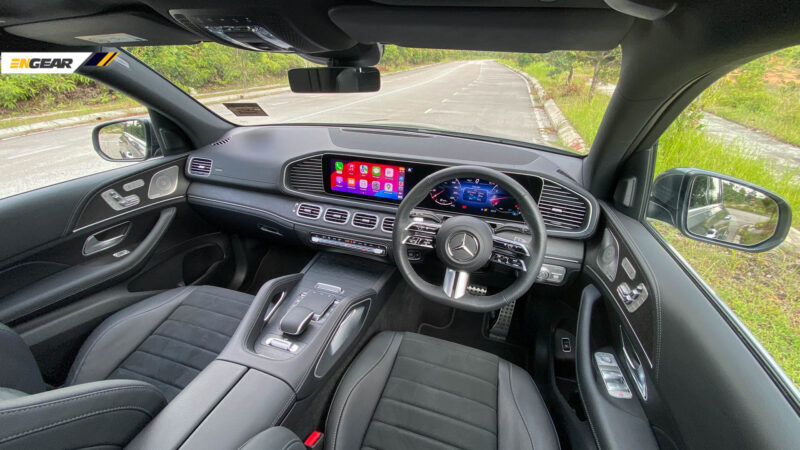
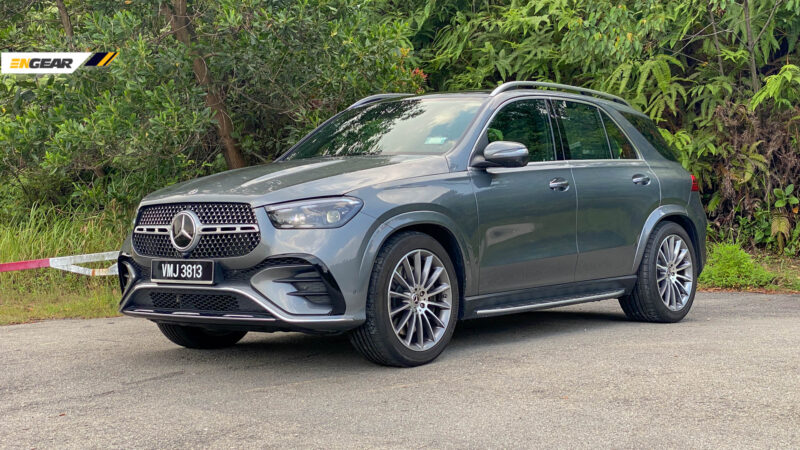
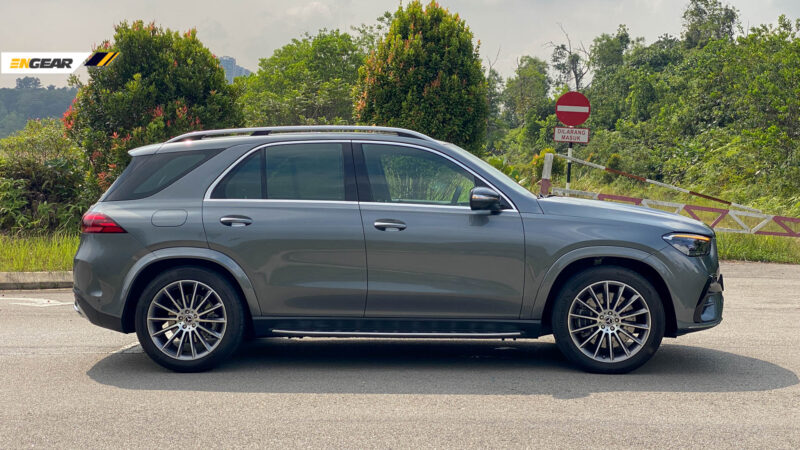
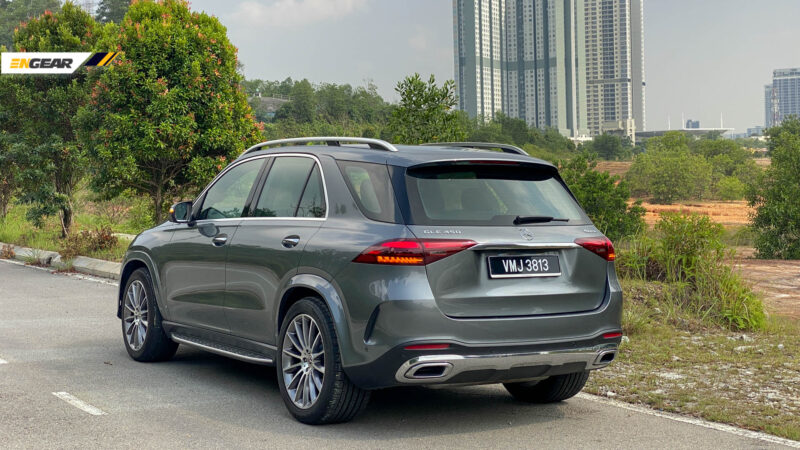
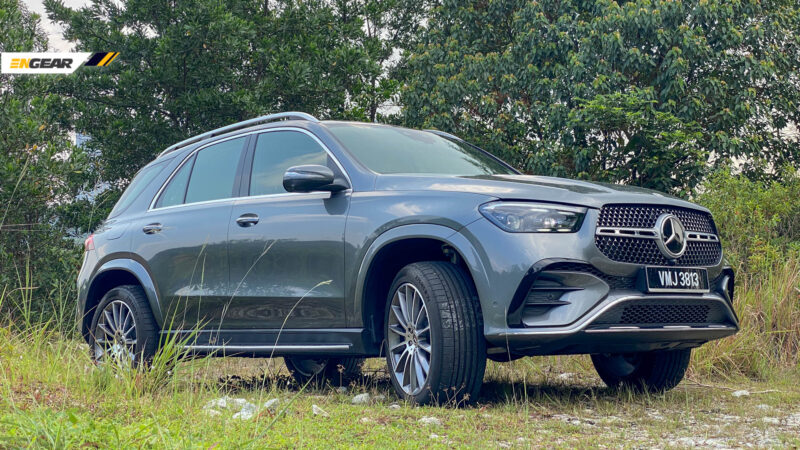
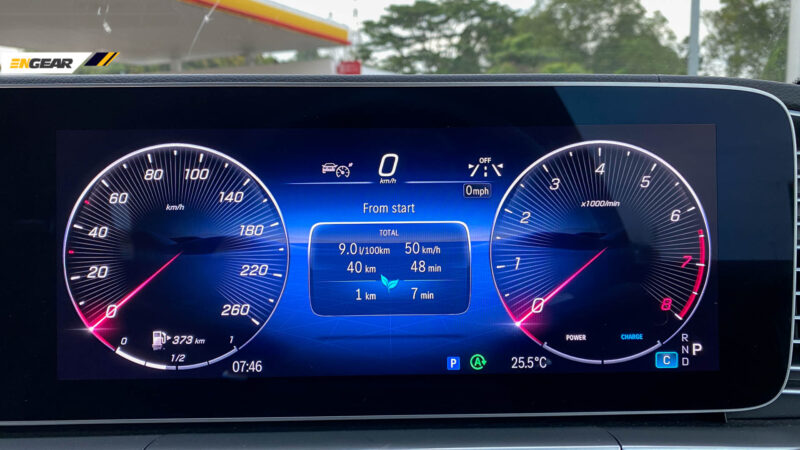
2024 Mercedes-Benz GLE 450 CKD: Good & Bad Things We Learnt – Test Drive

While the writer has yet to experience driving the GLS or G-wagen models, the 2024 Mercedes-Benz GLE 450 remains the largest SUV the writer has ever driven in his lifetime.

This luxurious SUV with a three-row seating configuration has been updated for the 2024 model year a few months ago.

It features several cosmetic changes on the exterior, followed by updates in the cabin space and an upgrade in power for the existing powertrain unit.

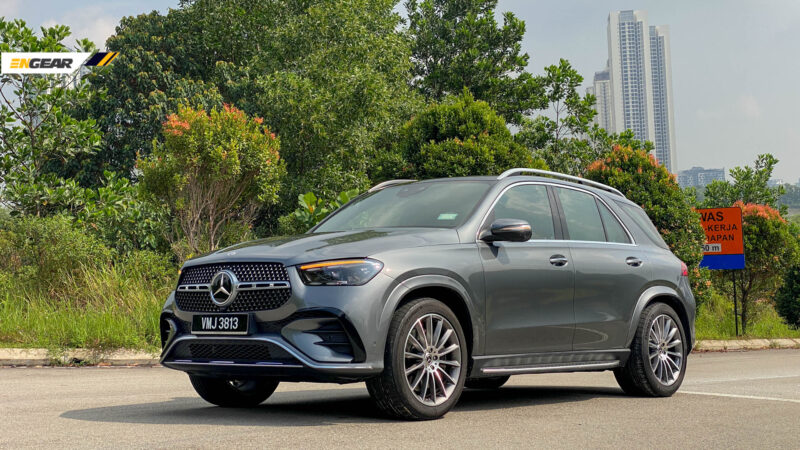
At first glance on the road, it might be difficult to distinguish it from the previous version. However, after test driving it for several days, there are a few things that make the writer find the GLE 450 CKD difficult to consider for purchase.


Simple, but too minimalistic lighting unit

Believe it or not, lighting actually plays a crucial role in ensuring the SUV’s appearance is more elegant on the road.

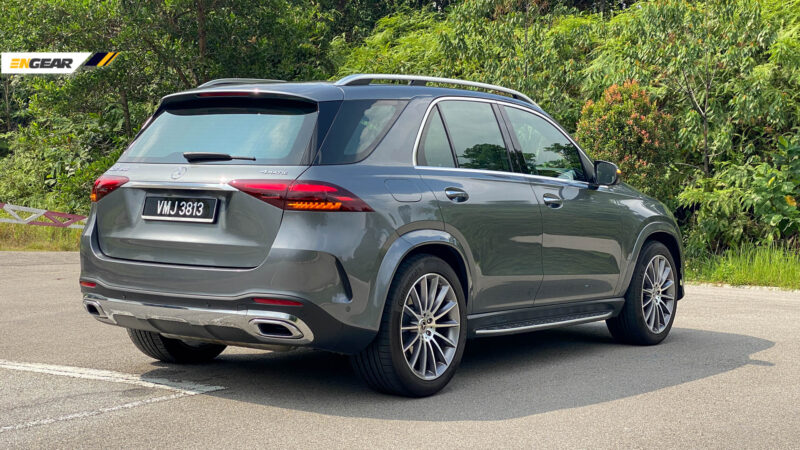
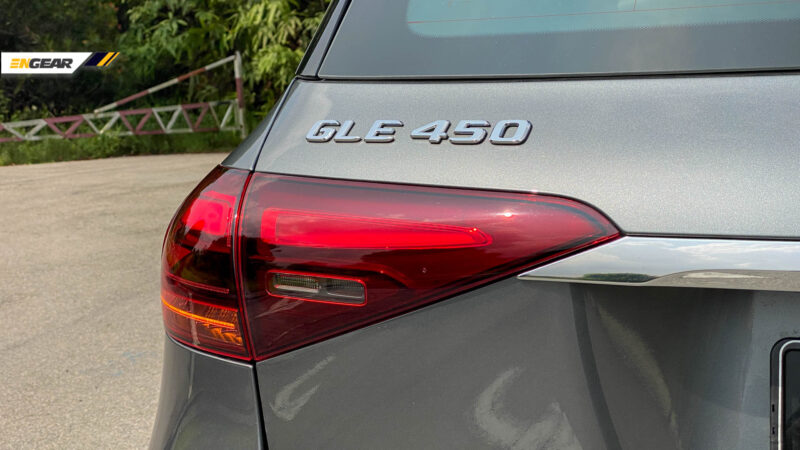
While the previous GLE model came with boomerang-shaped DRL graphics, this GLE 450 now comes with a more compact design. The same goes for the rear lights, where the LED graphics have become thinner.

It still looks sleek and elegant on the road, but its image might fade when parked next to the older GLE 450.


Same exterior appearance

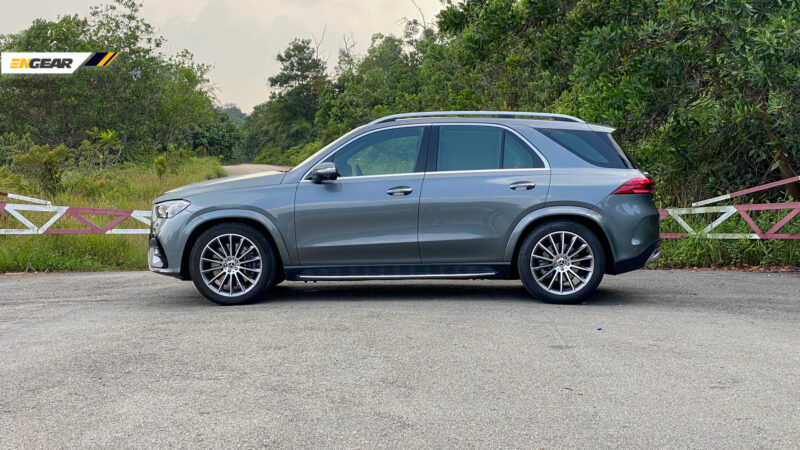
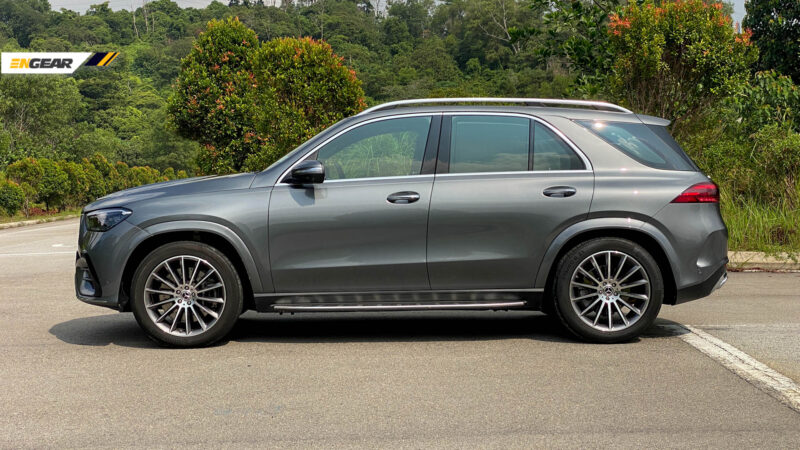
If you were expecting the GLE 450 to bring more dramatic changes, forget about that expectation, as the 2024 GLE 450 still maintains an almost similar external appearance.

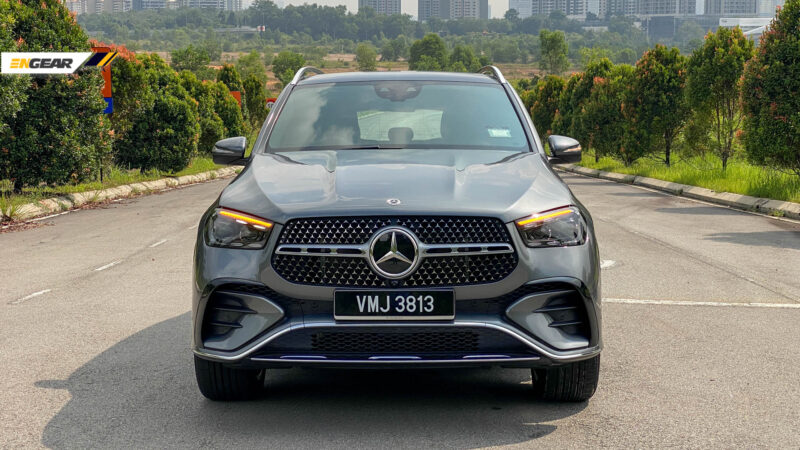
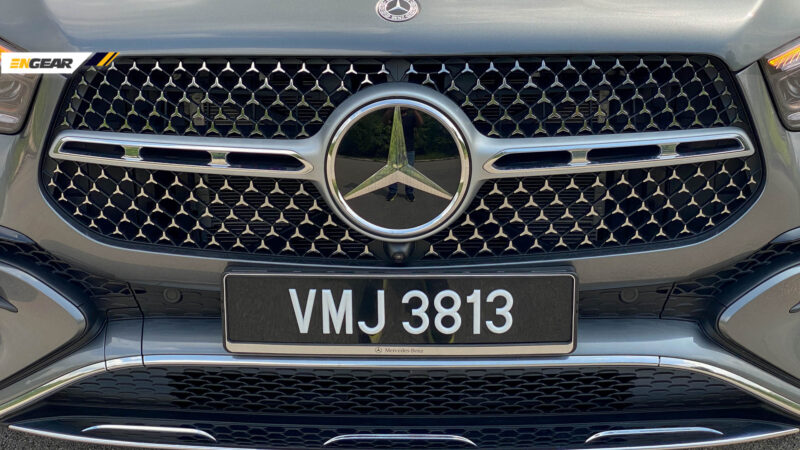
Yes, you can see the front bumper now looks more aggressive, and the front grille structure is more refined, but those are the only changes present.

The design of the 21-inch AMG rims is still unchanged from the previous model, and even the layout of the front fascia remains unaltered.


Steering wheel now dust and fingerprint friendly

Among the things the writer is less fond of regarding the GLE 450, other than the two points mentioned above, is the design of the steering wheel.

The GLE 450’s steering wheel now looks sportier and more sophisticated with touch-based operation, but it’s not the main point being emphasized.

The writer merely hopes that Mercedes-Benz would bring back a more premium finish on the steering wheel of any model to replace the use of black plastic. This is because the writer notices that the black plastic tends to trap dust and fingerprints, requiring the owner/driver to frequently wipe that area with a cloth.


Powerful engine, but jerky transmission

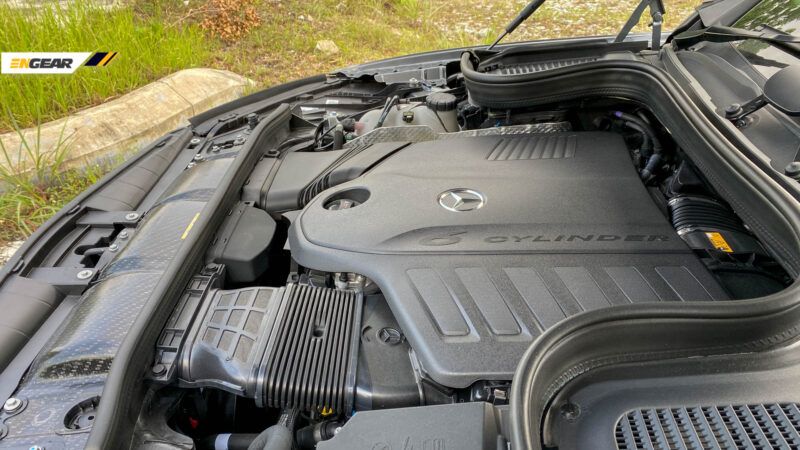
The Mercedes-Benz GLE 450 still retains its inline-six 3.0-liter turbo engine, but with an increase in power to 375 hp @ 5,800 rpm and torque of 500 Nm @ 1,800-5,000 rpm.

It also has a 48-volt mild hybrid system, featuring the second-generation ISG system capable of providing an additional 20 hp and 200 Nm of power.

On paper, it looks impressive, but there are times when the 9GTronic automatic transmission slightly disappoints when the traffic light turns green. Starting from first gear, it doesn’t pose a problem, but the drive feels not very smooth and slightly jerky when the gearbox is set to shift to the next gear (from first gear to second gear).


More expensive, despite being a CKD model

What’s certain is that the Mercedes-Benz GLE 450 CKD doesn’t come with a lower price. This SUV model assembled in Pekan, Pahang, is sold starting from RM528,888 on the road without insurance, which is RM13,000 more expensive than the previous model.

If you can compromise on the above five points, the following five aspects might make you consider this SUV for your family.


Comfortable for the whole family

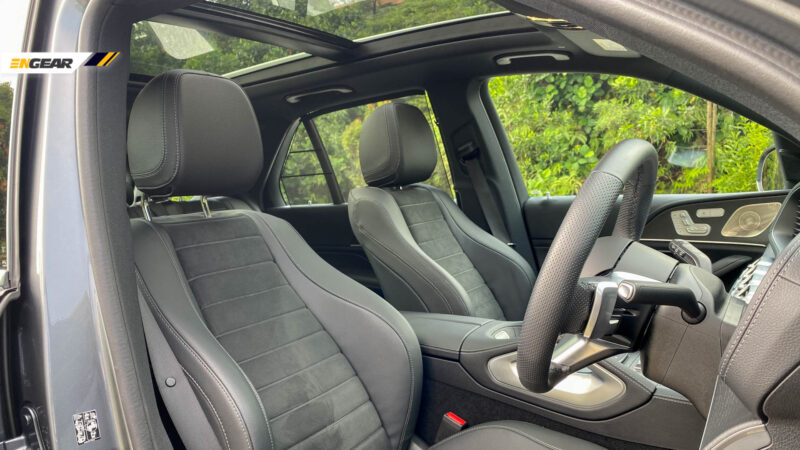
The GLE 450 brings advantages that are hard to match – comfort aspects for the whole family, especially when sitting in the second row.

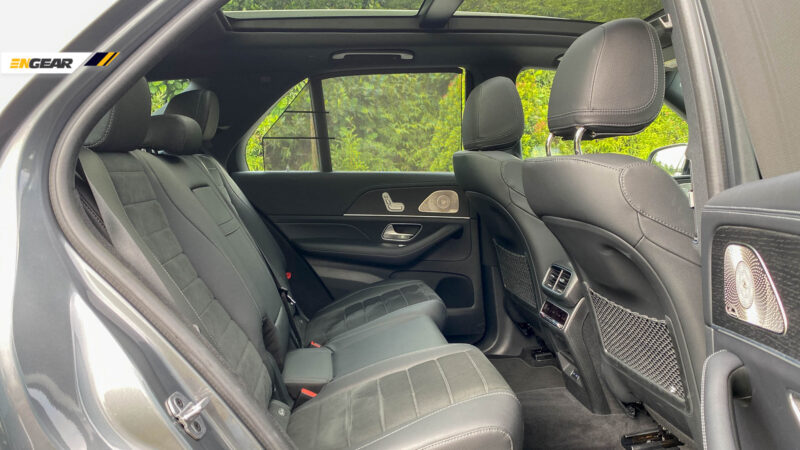
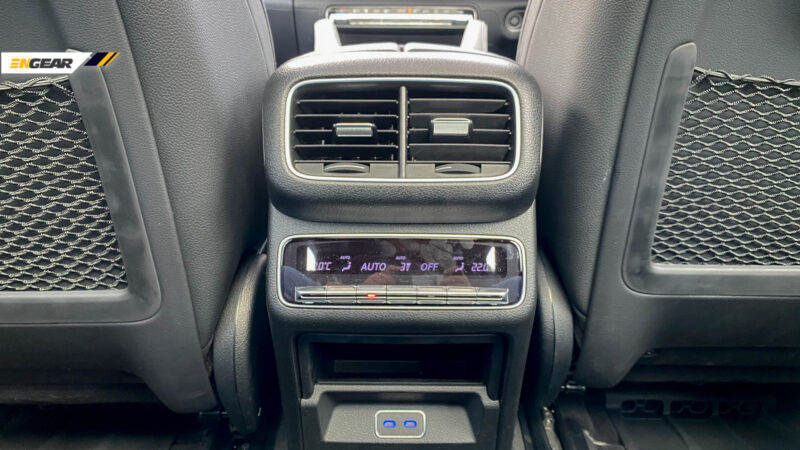
This is because the GLE 450 offers almost the same comfort functions as the front passengers, such as separate air conditioning vents for the left, center, and right, separate climate control, adjustable seats, as well as ample head and legroom!

The sufficiently large panoramic roof allows rear passengers to enjoy beautiful surroundings when returning home. Additionally, USB-C charging slots are provided for charging smart devices throughout the journey.


Heavy but agile

It should be noted that the Mercedes-Benz GLE 450 has always been an SUV weighing over two tonnes.

Certainly heavy, but with efficient engine and all-wheel drive systems, you may often forget that it is a heavy SUV. With its 381 hp engine and 500 Nm of torque, it only takes 5.6 seconds for a 0-100 km/h sprint, making it a fairly agile SUV, especially when pushed through winding roads.

The standard provision of Continental SportContact6 tires from the factory also helps ensure that this SUV grips well on various road surfaces.

Based on data, the author managed to achieve a fuel consumption rate as low as 9.0 liters/100 km.


Adjustable height suspension

As standard, the Mercedes GLE 450 is equipped with the Airmatic air suspension system assisted by the adaptive ADS+ damper system.

Depending on the selected driving mode, this system will raise or lower the ground clearance, besides facilitating loading cargo into the 630-liter cargo space.

Overall, the writer prefers to maintain the Comfort mode more suitable for Malaysia’s imperfect road conditions; it provides comfort and absorbs all road irregularities without any negative effects on the driver and passengers.

However, you can also customize the driving mode by adjusting the engine response, ESP, and suspension to be more sporty.


Off-road driving mode

One thing that makes the GLE 450 unique is the presence of the new Off-road driving mode.

In addition to the higher suspension setting and emphasis on an optimal grip, it also warns users not to use this mode on public roads, with the speed limited to only 110 km/h. This Off-road mode also provides an under-vehicle display so the driver can check for any obstacles in front of the vehicle, shielded beneath its bulky body.


From the driver’s perspective

Overall, the 2024 GLE 450 doesn’t bring significant changes. It offers comfortable seating that provides good support for the driver throughout the journey, with adequate steering response – not too heavy and not too light.

The NVH aspect is also quite good for a Mercedes-Benz, effectively deflecting and filtering out external noise. Engine noise is only evident when harshly revved, but not to the extent of being disruptive, and the same goes for wind noise.

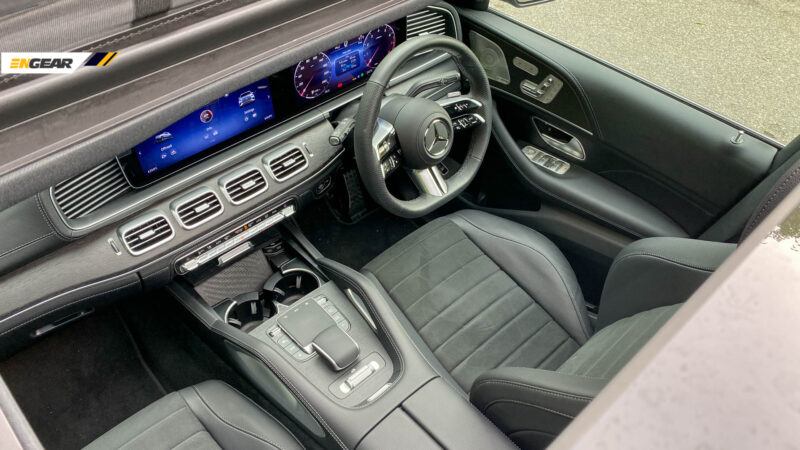
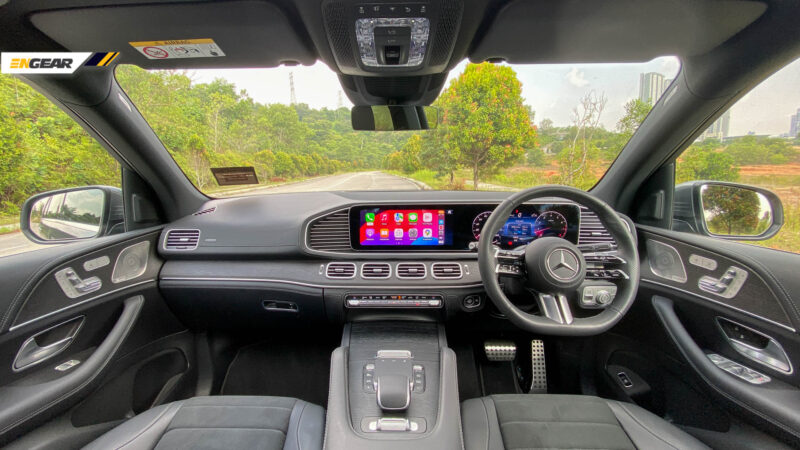
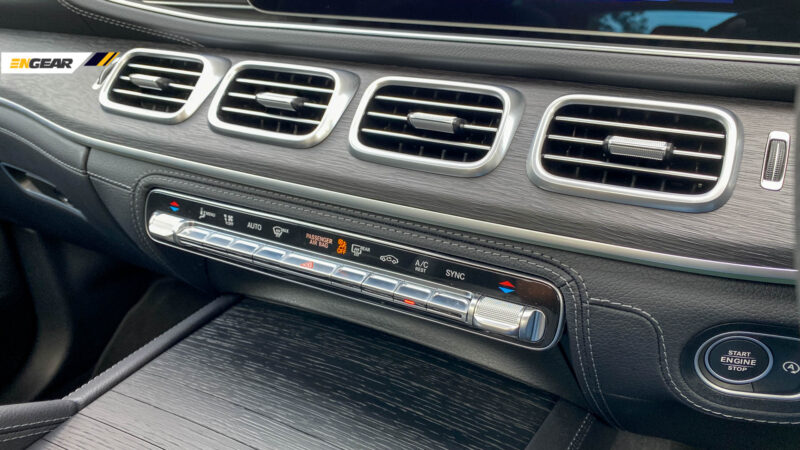
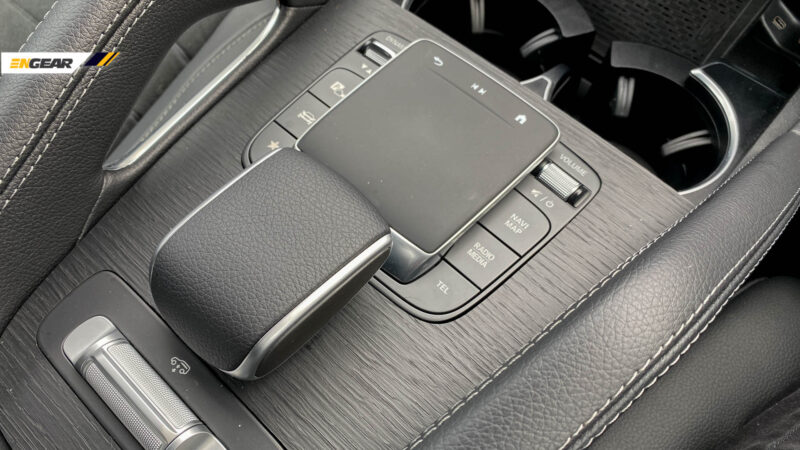
Compared to other Mercedes SUV models using similar dual iPad-like setups, the writer particularly likes the conventional-looking dashboard design used in the GLE 450. It retains physical function buttons necessary on the dashboard and center console, assisted by the presence of a touchpad to facilitate menu searching on the screen without needing to touch it more often.

To avoid confusion, Mercedes-Benz Malaysia only offers a single variant for the GLE-Class, so one needs to carefully consider before deciding to invest over half a million in getting a comfortable family SUV.


2024 Mercedes-Benz GLE 450 4MATIC CKD

Engine: Inline-six 3.0-liter turbo
Power: 381 hp, 500 Nm
Hybrid system: 48V mild, 20 hp/200 Nm
Transmission: 9GTronic Automatic
Drive System: All-wheel Drive 4MATIC
Acceleration: 0-100 km/h in 5.6 seconds
Top speed: 250 km/h
Price: RM528,888

2024 Lexus RZ 450e Luxury – First Drive Impression

Lexus Malaysia has officially launched its first electric SUV, the Lexus RZ 450e 2024, in the local market.

Offered in limited units, the Lexus RZ450e comes with a single Luxury specification, featuring dual electric motor setup as standard.

The front motor is capable of producing 204 hp/266 Nm of power, while the rear motor delivers 109 hp/169 Nm. Overall, the Lexus RZ 450e can generate up to 308 hp of power, driving the all-wheel-drive DIRECT4 system.

The 71.4 kWh battery pack allows for a driving range of up to 440 km on a full charge, supporting 11 kW AC charging with a full charging time of 6.5 hours, or fast DC charging up to 150 kW (shortened to 30 minutes).

Notable features in the Lexus RZ 450e include MacPherson/Double Wishbone suspension system, Electronic Power Steering (EPS), 20-inch aluminum wheels, Bi-AHS LED projector headlights with adaptive high-beam function, L-Bar design taillights, exterior and interior e-Latch door handles, and Lexus Spindle grille at the front.

The cabin is equipped with a 7-inch TFT instrument cluster screen, a 14-inch infotainment screen with Apple CarPlay and Android Auto support, Ultrasuede-wrapped seats with eight-way driver and passenger adjustments, synthetic leather-wrapped steering wheel, three-zone air conditioning, and shift-by-wire gear selector buttons.

During your journey, you will be accompanied by music from the Mark Levinson Premium Surround Sound system with 13 available speakers.

In addition to passive safety features such as 7 airbags, ABS, Brake Assist, Vehicle Stability Control (VSC), Traction Control System (TCS), and more, the Lexus RZ 450e is also equipped with the Lexus Safety System+ which includes features like:

• Pre-Collision System (PCS)
• Dynamic Radar Cruise Control (DRCC) with Stop & Go and Curve Speed Reduction functions
• Lane Keeping System (LKS) with Lane Tracing Assist (LTA) and Lane Departure Alert (LDA) functions
• Adaptive High-Beam System (AHS)

There are also two Lexus-specific features, Lexus Parking Assist Monitor and Lexus Teammate Advanced Park with Surround Panoramic View Monitoring (PVM) function.

The starting price of the 2024 Lexus RZ 450e is RM429,888.


First Drive Impression

During a test drive session offered for the Lexus LBX 2024 the other day, we were also given the opportunity to experience driving this electric SUV ourselves.

Our first impression is that the Lexus RZ 450e can be considered as an alternative if you are not interested in getting a German-made electric SUV in the same price range.

The acceleration performance offered by the Lexus RZ 450e is also what you would expect from an SUV with a dual electric motor configuration.

It may not be as aggressive as electric cars tuned for performance, but it is sufficient for you to outpace any fossil fuel-powered car at traffic lights.

Based on highway driving, you can feel that the NVH level of the Lexus RZ 450e is comfortable.

However, the 308 hp power output is not balanced with suspension tuning suitable for winding roads, and you can feel the body roll of this 2-ton SUV as the front end leans out of corners.

The writer understands that the Lexus RZ 450e is not a high-performance F-Sport SUV, so these weaknesses can be forgiven, as similar feelings were also experienced when the writer test drove a German-made electric SUV before this.

Not much can be shared at this time due to the very short test drive period. More information will be reviewed if there is an opportunity to test drive the Lexus RZ 450e in the future.


2024 Lexus LBX First Drive: 5 Things You Should Know About The Smallest Lexus

This may very well be the smallest and most affordable Lexus ever offered in the market for a new Lexus car.

Despite featuring characteristics typically associated with everyday cars, the 2024 Lexus LBX still offers its own identity to become part of the renowned Japanese luxury vehicle family.

Recently, we were given the opportunity to experience firsthand the first drive of the LBX crossing the Selangor-Pahang state border.

Although the distance given was quite short, the designated route included the necessary ingredients for us to evaluate the driving experience of the Lexus LBX on real roads, rather than just circling around exhibition centers.

Here are our five discoveries:


1. Toyota Platform, but with Identical Lexus Exterior Design

This is the first Lexus model to use the TNGA-B platform, making the Lexus LBX a ‘non-identical twin’ to the European market Toyota Yaris Cross crossover model.

While the dimensions of the LBX are not much different from the Yaris Cross, the LBX looks more imposing on the road with more prominent shoulder structures, followed by the aerodynamic spindle grille.

Moreover, the LBX’s appearance is more elegant and compact; the wheel arch protectors are more rounded compared to the angular design of the Yaris Cross.

For the rear design, the LBX features a sleeker tail lamp structure connected by a horizontal LED bar. The L Lexus logo has been replaced with the word L E X U S.

The shape of the LBX’s side mirrors actually reminds the writer of another more expensive Lexus model that shares the three-letter naming format, the Lexus LFA.


2. Three-Cylinder Inline Hybrid Engine

As standard, the Lexus LBX is equipped with a three-cylinder inline engine (code M15A-FXS) paired with a hybrid system.

The engine alone produces 90 hp and 120 Nm of torque, while the electric motor contributes 93 hp and 185 Nm, with a total output of around 136 hp.

Many may be skeptical about a three-cylinder engine, but the Proton X50 enthusiasts likely have long discarded that feeling. If you don’t believe it, check which model dominates the right lane of the highway apart from the low-power Perodua models.

Despite having only a three-cylinder inline engine, for us who experienced driving the LBX the other day, we can say the response provided is very satisfying.

You can enjoy a fun acceleration moment when the car moves away from a toll booth or when the traffic light turns green at intersections.

The power delivery is always there when needed at low speeds, aided by the efficiency of the eight-speed eCVT transmission that ensures the front wheels follow the driver’s direction.

Similar to any Toyota (and Lexus) hybrid model, the Lexus LBX also has an EV mode to allow the crossover to move without using any fuel at low speeds.


3. Simple Suspension Setup, but Suitable for Malaysian Roads

As standard, the Lexus LBX is fitted with MacPherson struts in the front and a torsion beam in the rear.

It is somehow similar to B-segment crossover models in the market.

Nevertheless, the tuning of the LBX suspension system makes it enjoyable to push through winding routes, like the ‘high-speed favorite circuit of many,’ the KL-Karak Expressway.

Throughout the drive, this small SUV feels stable and grips every corner, with body lean occurring when pushed aggressively.

For regular driving, the body roll produced is quite minimal, making it suitable and comfortable for those who do not fancy spirited driving.

Most importantly, the steering response itself is very obedient to every driver input, and it is what the writer expects from a Lexus after testing larger and more expensive models before – the Lexus ES, Lexus RX, and Lexus NX.

To delve further, we need to borrow this LBX again for a more comprehensive review. In short, the LBX is one Lexus that is enjoyable to drive!

With a chassis, engine, transmission, and suspension system that work in harmony, the writer is looking forward to testing the MORIZO RR variant, which comes with a more special recipe – the three-cylinder inline pulse of the GR Yaris and manual transmission!

Hopefully, Lexus Malaysia will consider this variant in the future.


4. Tazuna Concept for the Driver

Similar to any Lexus model in the market, the Lexus LBX prioritizes the Tazuna concept in the driver’s cockpit design.

In this section, Lexus has minimized the presence of function buttons and only focused on essential operation buttons, aiming to maximize the driver’s focus on the road.

The 12.3-inch digital cluster screen offers easily readable information, similarly to the 9.8-inch central screen that also supports connections to Apple CarPlay and Android Auto.

When the writer holds the steering wheel, it offers an indescribable feeling, as if it’s designed for those who appreciate and enjoy driving a Lexus.

The front seats are also quite comfortable and can hold the driver firmly throughout the drive, aided by the power-adjustable function.

Unfortunately, the front passenger seat only has manual adjustments. This isn’t a big issue, as it is still comfortable when sitting next to the driver.

The NVH (Noise, Vibration, Harshness) aspect of this crossover is also very good, with minimal vibrations, reduced wind noise, and tire roar that seeps into the cabin.

Let’s not pretend that the engine noise isn’t audible; it still exists, but a more aggressive growl only occurs when the accelerator pedal is pressed firmly to the floor. Even then, it’s not as loud as one might imagine.


5. Lexus LBX, suitable for whom?

One thing that makes the LBX less suitable for family use is the fairly cramped rear seats.

This situation may be influenced by the somewhat bulky structure of the front seats, resulting in limited legroom for rear passengers.

It might be suitable for small children, or adults with the physique of teenagers.

The cargo area provides a space of 315 liters, large enough to accommodate daily necessities.


So, if the LBX isn’t suitable for family use, who is it more suitable for?

For us, it might be considered as a second car used specifically for urban purposes by those who do not prioritize space, or given to children and young wives who are just starting to learn driving.

Its small size, along with its ease of driving, makes the Lexus LBX a luxurious car worth considering.

At the end of the day, not everyone wants a large luxury car, right?

For the Malaysian market, the Lexus LBX is sold starting from RM238,888 and is available in two variants, Premium and Luxury.


Mazda CX-5 2.5T is great and fast and all, but there’s 3 issues – Test drive

WE have driven the performance variant test of the CX-5, with the 2.5T turbo petrol engine delivering 228hp and 420Nm of torque, alongside the all-wheel drive (AWD) system.

Undoubtedly a unique offering from Mazda, with no clear close competitors, it provides more options besides naturally aspirated petrol and diesel.

However, due to demand, we also list some issues or problems with this Mazda CX-5 2.5T. Yes, as good as the car is, even though it’s advanced and powerful, issues can still arise. We have identified three main issues.

You’ll be loved by petrol station owners

Being loved is usually a positive thing, right? But that’s if you’re loved by your parents, loved by your wife. If you’re loved by petrol station owners, it’s not so great.

With the CX-5 2.5T, you will often visit petrol stations because this SUV truly gulps down petrol, unlike most of its competitors that just sip petrol. Throughout the writer’s experience driving this turbocharged CX-5 for over 1,000km, the writer could only achieve an average of 9.4km per liter. The writer tried very hard to achieve 10km per liter but failed.

It’s also enjoyable to experience the strong 420Nm torque, similar to a diesel, available as early as 2,000rpm, but with great power comes some sacrifices. Oh, the struggles…

The addition of the AWD and only six gears in the gearbox doesn’t help with fuel efficiency. Perhaps if Mazda offered this variant with an 8-speed gearbox, it would help achieve better fuel economy.

2. It looks too similar!

The second issue is that this 2.5T AWD turbo petrol version looks too similar to the other CX-5 variants. Obviously, we identify a car by its design and external identity.

With the CX-5 2.5 turbo, only the rear emblem with the red letter “T” indicates that this is the high-performance turbo petrol version. If you see this red “T”, just forget about poking fun at this CX-5, you’ll be way off the mark.

For owners who want to stand out a bit, they might feel unsatisfied with the too modest appearance of this CX-5 2.5T. Perhaps it should have larger rims with a unique design, additional red stripes on the front grille, or a rear roof spoiler. Anything that can make this performance SUV stand out more, Mazda knows better; the writer is not a designer.

3. A bit of identity confusion

The third and final issue is a slight identity confusion with this 2.5T CX-5. It’s not a significant problem, just that to the writer, this CX-5 is not quite an SUV, and not quite a sports car either.

It’s not as efficient (in fuel consumption) as other SUVs or other CX-5 variants, but it also doesn’t provide maximum satisfaction like driving a Mazda MX-5 Miata or Mazda3. This 2.5T CX-5 is too in the middle. No SUV satisfaction, nor true sports car satisfaction. Hence, the writer says it has a bit of identity confusion, not knowing which one it wants to be.

Conclusion

Those are the three issues the writer has experienced during the test drive of the Mazda CX-5 2.5T AWD. But there are many other great aspects about this model, which you can read about here.

And the writer still wants to thank Mazda for producing this unique performance SUV, even though there may not really be a need for it. It demonstrates Mazda’s capability and their identity of not caring about others; just producing enjoyable cars that will be appreciated by their fans.

Mazda CX-5 2.5T AWD: The letter T that makes it all – test drive

The writer did not expect that the 2024 Mazda CX-5 facelift would still be offered with the 2.5T variant, or its full name, the CX-5 2.5G Turbo AWD. It’s not that the writer didn’t want or like it, but there wasn’t really a need for a high-performance variant for the CX-5.

However, high-performance vehicles usually show up uninvited and unexpectedly, which is what makes them intriguing.

The writer had driven the old CX-5 2.5T a few years ago, but had not yet shared the experience here, so let’s follow the writer’s journey. We will also examine the updates and determine if it’s worth buying.

Simple appearance with hidden weapons

Interestingly, it is difficult to determine whether the CX-5 you see is the regular version or the turbo petrol one. From the outside, there is only an emblem at the back that reads “2.5T”. No fins, spoilers, decals, stickers, or large markings.

It’s like a hidden weapon. Looks ordinary, but if you mess around, here you go! Some people may like this, but not the Type R FK8 owners. It’s a ‘you know it if you know it’ situation.

The CX-5 still receives the facelift updates like the other variants, including a new front end, grille, paddle shifters, and the most noticeable change, the DRL graphics shaped like two Ls on each side.

It still looks sleek like the CX-5 we all know, just the mentioned updates make it slightly fresher for 2024. Is it enough to compete with the CR-V?

The 2.5T variant is also equipped with a 7-inch instrument display with new graphics, seats with cooling functions, Android Auto and Apple Carplay connectivity (wireless), a 360-degree camera, and wireless charging.

The writer also noticed a new Off-Road driving mode, in addition to the existing Normal and Sport modes. However, the infotainment screen in the middle with an 8-inch size feels a bit ‘stingy’, too small for a car like this. A 12.3-inch screen would be more fitting.

Power in mind all the time

Driving this Mazda CX-5 2.5 turbo petrol, the writer frankly admits that power is at the forefront of their thoughts. The 4-cylinder DOHC engine produces 228hp at 5,000rpm and 420Nm at 2,000rpm.

This is generous power, ladies and gentlemen. While the infotainment screen may be lacking, the power is abundant, surpassing the 2.5 naturally-aspirated (192hp and 258Nm) or the 2.0 (162hp and 213Nm) engines.

The 420Nm torque of the 2.5 petrol engine is almost on par with the 450Nm torque from the 2.2 diesel engine. However, the diesel model is only 2WD, while the 2.5 petrol is AWD, which the writer finds more balanced. The power is distributed more effectively, with both the front and rear axles receiving engine output.

Driving the CX-5 2.5T is quite straightforward. It’s quiet, can stay in any gear, even in 4th gear at 2,000rpm, and when you gently press the accelerator, it doesn’t need to downshift. The car continues to move forward smoothly.

The writer tested it on high-speed twisty roads in Karak and low-speed twisty corners around Jengka, Pahang. This high power can be seen as a safety feature, providing the confidence to overtake on highways. Less time is needed to be in the opposite lane. What do you think?

The handling is not as sporty as the Mazda MX-5 even though the CX-5 is much more powerful. It’s still an SUV.

However, it’s enjoyable to control the heavy and large body smoothly with braking while downshifting, steering inputs while releasing the steering, keeping the right foot on the pedal for positive traction in corners, and then gradually pressing the pedal to the floor when the road straightens.

Upshift as the rpm approaches redline, then repeat as the next corner approaches.

Yes, Mazda is equipped with G-Vectoring Control Plus (GVC Plus) and the Jinba-Ittai philosophy. Both these elements provide controlled, precise, calm, and non-fatiguing driving, in the writer’s opinion.

Even though it ‘only’ comes with a six-speed gearbox, all gears are sufficient for powerful acceleration even with a heavy load (passengers and cargo), while allowing the engine to operate at reasonable rpms when cruising on highways.

However, the compromise for the abundant power is its fuel consumption. The writer can report that the Mazda CX-5 2.5T is not fuel-efficient. The writer struggled to achieve over 10km per liter. After around 1,10km of driving, the writer only managed 9.4km per liter (and a smile). AWD becomes more significant.

Earlier, the writer mentioned that the CX-5 2.5T now comes with an Off-Road driving mode. Although the pre-facelift version also had AWD, it did not have an Off-Road mode.

The writer had the chance to briefly test this mode on a sandy beach. The delivery of its power can be felt smoother and more relaxed. This mode should assist you in crossing mild off-road terrains without any incidents of tires ‘digging’ into the ground/sand.

Is it worth buying?

If you desire an SUV that appears modest but has the ability to outshine hot hatches at traffic lights, you should consider checking out this CX-5 2.5T AWD. It is a unique offering by Bermaz Auto Berhad, with hardly any close competitors.

It still maintains its power and capability, but the upgrades make it more current, sophisticated, easier to use daily, and safer.

All variants of the Mazda CX-5 2024 in Malaysia come with a 5-year or 100,000km warranty, with a complimentary maintenance package for the same duration and distance.

smart #3 tested ahead of 21 May unveiling, here’s our verdict

Recently, smart Malaysia conducted a preview session for its latest model, the smart #3, exclusively at the Pro-Net headquarters. We had the opportunity to get a closer look and even test drive the smart #3 on the Proton test circuit in Shah Alam. But first, a little background.

Background

For those who are uninitiated, smart is now owned by Geely and Mercedes-Benz, focusing solely on producing fully electric vehicles (EVs) at the moment.

The smart #3 is not just a sportier coupe version of the #1; it comes with several technical differences. Firstly, it is built on the Sustainable Experience Architecture (SEA) platform shared with the #1 and several models under the Geely group.

In broad terms, the smart #3 is longer and wider than the #1 but lower, with approximately an 80mm difference between the two. Therefore, theoretically, the smart #3 is expected to offer more stable handling, right? We’ll discuss this further.

Unique features of smart #3

One distinctive feature of the smart #3 is its curved coupe-style roof, unlike the straight roof of the #1. The roof of the smart #3 has unique color play on the A-pillar and C-pillar, giving it a ‘floating roof’ effect.

Other features include front and rear LED lights, flush door handles, frameless windows, and illuminated logos. The smart #3 is also more aerodynamic than the #1, with a drag coefficient of 0.27 (0.29 for the #1).

Specification details

The lineup offers variants similar to the smart #1: Pro, Premium, and Brabus. The Pro variant has a 49kWh battery, while the Premium and Brabus variants come with a 66kWh battery.

The Pro and Premium variants have a single rear electric motor with an output of 272hp and 343Nm of torque, achieving 0-100 acceleration in 5.8 seconds.

On the other hand, the smart #3 features two motors on the front and rear axles, delivering a total power of 428hp and 543Nm of torque.

As the #3 Brabus is an AWD vehicle, its 0-100 acceleration is much quicker, around 3.7 seconds. The maximum speed for all variants is 180km/h, with a driving range of approximately 455km for Pro and Premium, and 415km for Brabus.

Initial impressions

So, how was the initial drive of the smart #3? From our experience on Proton’s high-speed oval track, the smart #3 accelerates smoothly.

The Premium variant reaching 100km/h in 5.8 seconds is more than sufficient. Imagine cruising this smart #3 on the highway; a smooth acceleration means easier lane changes and smoother traffic flow. Agree?

We also tested the dynamics at Pro-Net’s provided dynamic section, including figure-8, slalom, and straight-line acceleration. The smart #3’s chassis felt sturdier and agile due to its stiffer springs, shock absorbers, and anti-roll bars compared to the #1, giving it a sportier character.

The technical changes seem crucial and complement the sporty appearance of the #3. Turning in the figure-8 felt stable, with smooth torque delivery at low speeds.

This makes it suitable for everyday city driving by regular motorists. Among our experiences, the slalom tested the chassis stability, tire grip limits, and power delivery. The smart #3 easily reaches grip limits due to its rapid torque delivery, following your right foot’s commands.

However, the safety systems and strengthened chassis ensure the car remains in control and assists the driver in navigating through various situations. Body roll is noticeably reduced, making the smart #3 more nimble and agile when changing directions while accelerating and braking.

Overall, the smart #3 exhibits a distinct character compared to the #1, suitable for young buyers seeking an enjoyable EV for daily driving. Stay tuned for our extensive daily test drive report in both city and long-distance driving once we receive the smart #3 test unit shortly.

In the meantime, you can visit the Malaysia Autoshow 2024 from May 22 to May 26, 2024, as the smart #3 will make its debut appearance there. smart Malaysia representatives will be at Hall A2 (Premium Hall), MAEPS, Serdang.

5 things we don’t like about the Toyota Vios

Launched back in March 2023, the fourth-generation Toyota Vios is a fairly capable B-segment sedan in its own right.

There are several things that I like about the Vios, but like many other cars that I have had the opportunity to test drive, it also has some weak points which hopefully can be addressed in the future.

So, without further ado, here are five things I don’t particularly like about the Vios:

Limited rear passenger headroom

Honestly, I’m not what you would call a tall person, but during the Vios media drive in Langkawi last year, I found that the rear passenger headroom for rear passengers was rather limited. This is due to the fastback-style sloping roofline. It seems that in the pursuit of style, some comfort had to be sacrificed.

No rear folding seats

It’s quite unusual for a new car to have non-foldable rear seats, but according to Toyota engineers, this feature was omitted in the Vios because market research showed that users rarely use this function. Not only that, the 475-litre capacity is also considered large enough. Bad news for frequenters of Ikea, I guess.

No spare tyre

One of the most talked subjects during the Vios launch was the absence of a spare tyre. I was told that this important feature was sacrificed to reduce weight (they managed to shave off 110 kg, fair enough) and save some space. Users do get a tyre repair kit, though.

Underpowered engine

Although the Vios’ 2NR-VE 1.5-liter four-cylinder Dual VVTi engine is found to be very smooth in most driving situations, it falls short compared to its closest competitor, the Honda City, in terms of output.

The City has 119 hp and 145 Nm, which is 15 hp and 7 Nm higher than the Vios. In fact, the 2NR-VE engine is actually less powerful compared to the previous 2NR-FE engine.

Overloaded with features

There are simply too many features in the Vios. In terms of driver convenience, there’s a 9-inch touchscreen with wireless Apple CarPlay and Android Auto, wireless charger, a push-start system and many more.

When it comes to safety, the Vios is riddled with Toyota Safety Sense (TSS) features such as Pre-Collision System, Lane Departure Prevention, Lane Departure Warning, and Front Departure Alert, to name a few.