Tag Archives: test drive

Toyota Vios HEV GR Sport: Double the fun – test drive

The much-anticipated hybrid sedan, the Toyota Vios HEV GR Sport has finally hit the Malaysian market.

It was officially launched by UMW Toyota Motor earlier this year, priced at RM109,900 for the hybrid GR Sport version. This is only RM6,000 more than the standard 1.5 HEV model, or RM13,000 above the petrol version of the Vios.

Unlike previous offerings of the Vios GR Sport, this new model comes with an essential component—a hybrid heart.

Hybrid vehicles are often closely associated with fuel savings, so what benefits does the Vios HEV GR Sport offer?

Differences Between Vios HEV and the Standard Version

The standard Vios is equipped with a 1.5L 2NR-VE engine that produces 106 PS at 6,000 rpm and 138 Nm at 4,200 rpm.

In contrast, the hybrid Vios features a fourth-generation hybrid system that includes:

  • 1.5L 2NR-VEX Atkinson cycle engine, 91 PS at 5,500 rpm, 121 Nm at 4,000 rpm
  • Electric motor: 80 PS/141 Nm
  • Lithium-ion battery pack, 4.3 Ah
  • e-CVT transmission

The total power output is approximately 111 PS, which drives the front wheels.

On paper, the power increase isn’t drastic. However, the electric motor provides a more vigorous initial acceleration compared to the petrol model. The benefit? You can accelerate more quickly from highway exits to merge into the main traffic flow.

While engine noise is still present when the pedal is pressed to the floor, the cabin gradually quiets down once your desired speed is achieved.

Enhanced Driving Experience

It’s not just the power boost that makes this sedan feel more exciting. The Vios HEV GR Sport features a more responsive and slightly heavier EPS steering system compared to the standard model. This makes handling feel more stable, especially at higher speeds.

The braking system has also been tuned for earlier engagement, meaning you won’t have to slam on the brakes and hope the car comes to a complete stop.

What’s most appreciated is the GR Sport suspension tuning. Compared to the regular Vios, which is already a pleasure to drive, the sportier suspension setup gets two thumbs up automatically. As with any GR Sport model I’ve tested before, this Vios strikes a perfect balance between sporty driving dynamics and comfort.

Adding to this, the Vios HEV GR Sport is fitted with Continental PremiumContact C tires that provide enhanced grip—like a delicious lunch made even better with sambal tempoyak and fresh ulam to enhance the flavor.

Thanks to the harmonious interplay of these systems, drivers can enjoy a more thrilling driving experience without breaking the bank. Not all enjoyment comes solely from horsepower; sometimes, a simple and harmonious setup can bring a smile.

Words alone can hardly capture the exceptional joy offered by the Vios HEV GR Sport; you need to experience it for yourself.

Hybrid with EV-Like Behavior

A notable advantage of this model is its ability to drive in zero-emission mode. Although it lacks a larger battery pack, Toyota’s fourth-generation hybrid system allows for operation without a drop of petrol under certain conditions.

This function is particularly useful in urban settings or when searching for parking in shopping centers. I especially appreciate the percentage display of zero-emission driving recorded every time the vehicle is turned off. This feature encourages more mindful and economical driving.

Engine vibrations are also minimal, especially during transitions between power and EV modes.

Cabin Features

Inside, the Vios HEV GR Sport comes equipped with:

  • Leather/fabric seats
  • 10.1-inch Display Audio screen, larger than before
  • EV Mode button
  • 64-color ambient lighting
  • Hybrid-specific display for the digital cluster

Based on my experience, this brand-new display offers stable functionality, including support for Apple CarPlay and Android Auto. However, its large (and tall) size may obstruct the driver’s view if they prefer a lower seating position.

After all, this is a sporty car; you wouldn’t want to sit like it’s an SUV, right?

The leather/fabric seats are comfortable for long journeys and hold drivers securely during spirited driving. The button clusters on the steering wheel and center console are user-friendly. However, the 360-degree camera system feels outdated, especially due to its non-HD resolution for 2026.

Practicality

Due to the relocation of the 12V battery to the rear, the cargo space in the Vios HEV GR Sport is limited to 460 liters. This is adequate for daily necessities but may not suffice for longer items, as the rear seats do not fold like in other sedan models.

The good news is that the Vios HEV GR Sport now comes with a full-size spare tire in the rear, a feature highly valued by many drivers in Malaysia.

Safety Features

As standard, the Vios HEV GR Sport includes six airbags and Toyota Safety Sense features:

  • Pre-Collision System (PCS)
  • Autonomous Emergency Braking (AEB)
  • Lane Departure Alert (LDA)
  • Adaptive Cruise Control (ACC)
  • Forward Movement Warning (FMW)
  • High Beam Assist (HBA)
  • Blind Spot Monitoring System (BSM)

Conclusion

The Toyota Vios HEV GR Sport is not just a Vios with a GR emblem slapped on it. Compared to its competitors, it offers a more convincing driving experience, a hybrid system proven for its efficiency, and a balance of sporty driving and comfort.

It’s perfect for those seeking a daily sedan infused with a bit of extra character to make life more exciting. Life is too short to enjoy boring things (read: cars), making this ‘sportiest sedan’ a worthy consideration.

Chery Tiggo Cross: should you choose Hybrid or Turbo? – test drive

As the smallest SUV from Chery Malaysia, the Chery Tiggo Cross clearly has its unique advantages.

First, it comes with a competitive price package, priced at just under RM100,000.

Second, the Turbo and Hybrid versions of the Tiggo Cross feature different approaches and technologies, despite sharing a nearly identical appearance.

Most importantly, even at this price range, it does not feel like a budget SUV—making it appealing to test, own, and enjoy.

Chery Tiggo Cross: Turbo or Hybrid Engine?

For the Malaysian market, the Tiggo Cross is available with two powertrain options.

Those seeking spirited performance can opt for the 1.5-liter turbo petrol variant, which produces 147 PS and 210 Nm, with front-wheel drive and a 6-speed DCT transmission.

The Hybrid variant, in contrast, features the following specifications:

  • 1.5-liter NA Atkinson cycle engine: 102 PS/125 Nm
  • Two electric motors: 204 PS/310 Nm
  • Direct Hybrid (DHT) transmission
  • 1.8 kWh LFP battery pack

Chery claims a fuel consumption rate of approximately 6.3 liters per 100 km for the Turbo version and 5.4 liters per 100 km for the Hybrid.

Exterior Appearance of the Chery Tiggo Cross

Among subcompact SUVs in the market, the Chery Tiggo Cross offers a ‘safe’ appearance.

Not overly aggressive, yet distinctive enough to be recognized as different from other Chinese-made SUVs.

Between the two variants, there are few differences:

  • 18-inch rims (Turbo) vs. aerodynamic 17-inch rims (Hybrid)
  • Hybrid emblem

Cabin Space

The dashboard layout is nearly identical for both Tiggo Cross variants.

It features a dual 10.25-inch screen, with wireless Apple CarPlay and Android Auto support, along with a 15W wireless charging slot.

However,  sometimes the infotainment system for both variants may not be very stable.

This can create a bit of chaos during driving, especially when relying on the navigation system.

The sporty front seats provide the necessary support and comfort, particularly for long journeys.

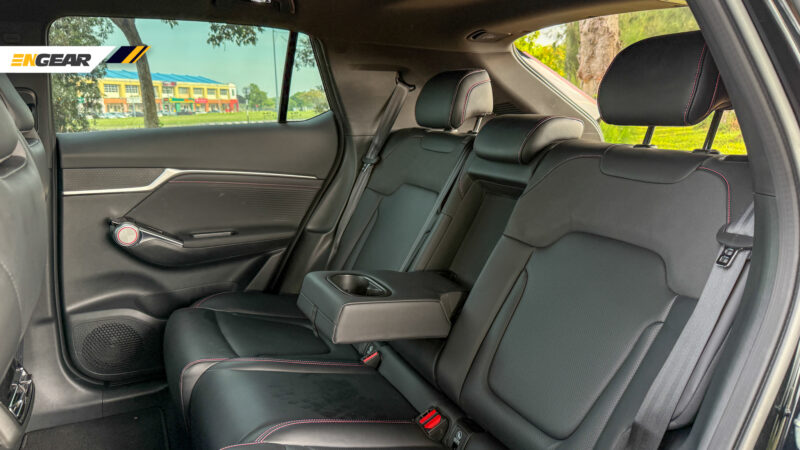
Rear passengers may need to be patient as they share a single air conditioning vent.

Physical Control Buttons Are Still Available!

The Tiggo Cross retains physical control buttons, making it easier for drivers to adjust necessary settings.

The ‘third screen’ for climate control in the center console adds a premium touch to this subcompact SUV.

However, it is merely an LCD panel with minimal touch functionality.

With this feature, drivers no longer need to fumble to change settings (fan speed, temperature) that are usually embedded in the infotainment screen.

For the Hybrid model, the center console appears somewhat barren, lacking the electronic parking brake and auto hold present in the Turbo variant.

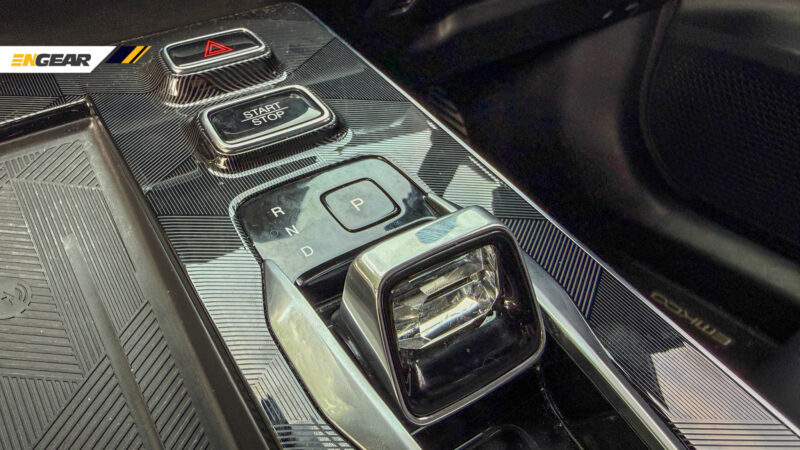
The electronic gear shifter is sized comfortably and easy to operate.

However, the glossy black finish may distract drivers, especially when traveling under intense sunlight.

Cargo Space

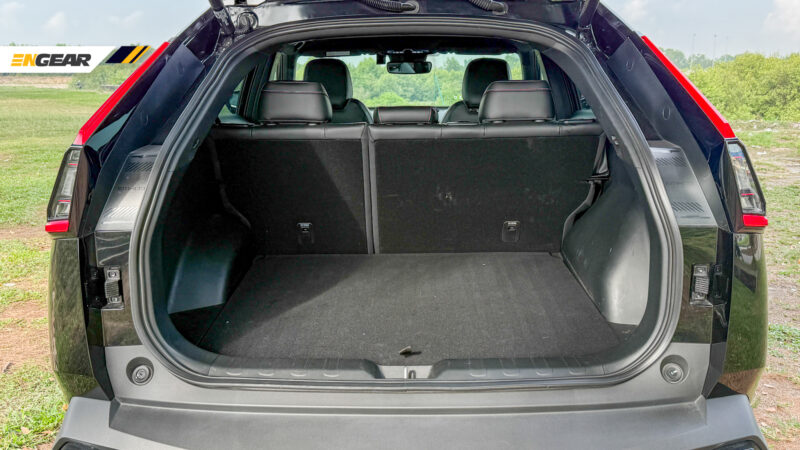
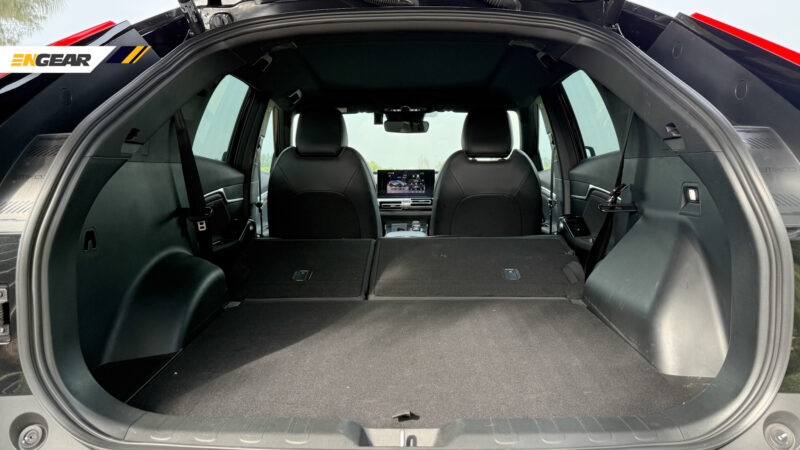
The Tiggo Cross Turbo offers 380 liters of cargo space, which is ample for storing necessities.

Due to the presence of the LFP battery pack in the Hybrid variant’s cargo area, it can only accommodate up to 350 liters.

Tiggo Cross Turbo driving experience

The Tiggo Cross Turbo can be the first choice, particularly for those who prefer a simpler setup without hybrid assistance.

On paper, it has adequate power and an appropriate transmission pairing to move this nearly 1.5-ton SUV.

It is not difficult to reach the desired speed on the highway, but one must contend with a bit of drama when this SUV starts from a standstill.

Despite its aggressive appearance, the Tiggo Cross Turbo is not inherently sporty.

Its suspension is tuned more for comfort rather than rigid cornering performance—suitable for its role as an urban SUV.

What the writer appreciates is the NVH level, making this SUV feel premium, as wind and tire noise are effectively suppressed.

Tiggo Cross Hybrid Is Indeed Economical!

In contrast to the Turbo variant, the Tiggo Cross Hybrid offers a smoother initial acceleration thanks to the electric motor assist and e-CVT transmission.

Most of the time (and at lower speeds), the Tiggo Cross Hybrid relies on electric drive.

You may not even notice the petrol engine’s operation, as there are no significant vibrations transmitted from the engine compartment into the cabin.

The Hybrid variant is designed for those seeking excellent fuel efficiency.

Based on personal experience, the writer found it challenging to deplete a full tank (51 liters) within a typical timeframe due to the system’s efficiency.

The writer merely hopes that one day, Chery will introduce a driving percentage feature in zero-emission mode each time driving is completed.

This would provide more motivation for owners to drive the Tiggo Cross Hybrid more often without worrying about their monthly fuel balance.

Safety Features

As standard, the Tiggo Cross is equipped with six airbags and ADAS features, including:

  • Lane Departure Warning (LDW)
  • Blind Spot Monitoring (BSM)
  • Rear Cross Traffic Alert (RCTA)
  • High Beam Assist
  • Lane Keep Assist (LKA)
  • Adaptive Cruise Control (ACC)
  • Forward Collision Warning (FCW)
  • Autonomous Emergency Braking (AEB)

The Tiggo Cross Hybrid, on the other hand receives seven airbags, along with additional ADAS functions such as:

  • Door Opening Warning (DOW)
  • Rear Collision Warning (RCW)
  • Rear Cross Traffic Braking System
  • Lane Change Assist (LCA)
  • Emergency Lane Keeping (ELK)
  • Multi-Collision Braking (MCB)
  • Traffic Jam Assist (TJA)

Conclusion

For whom is the Chery Tiggo Cross intended?

In simple terms:

  • Turbo – for those seeking a simpler powertrain setup
  • Hybrid – for those prioritizing fuel savings and an environmentally friendly drive.

The Tiggo Cross also offers advantages in NVH levels and impressive build quality for a subcompact SUV.

Notably, the Tiggo Cross Hybrid warrants special attention.

With a selling price of RM99,800, it is the cheapest hybrid SUV in Malaysia and stands out amid the influx of existing SUV models.

Chery Tiggo Cross Turbo (RM88,800)

Chery Tiggo Cross Hybrid (RM99,800)

Honda CR-V 1.5V AWD: the right choice for post-career life – test drive

Although the local market is flooded with various advanced SUV options, the Honda CR-V maintains its own loyal fanbase.

One reason may be the prominent “H” logo displayed on the front.

After being given the opportunity to test drive this SUV, several features make the CR-V stand out even more.

For those who want to enjoy life after their career, this could be the perfect choice.

A More Aggressive Appearance

Compared to earlier models that resembled a dumpling, the sixth-generation CR-V has a sharper and more aggressive look.

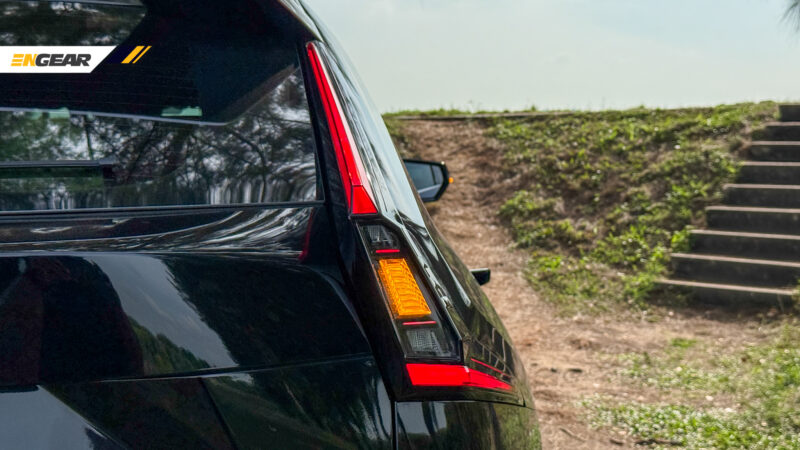
The design of the lights gets a modern makeover, especially at the rear, reminiscent of Swedish-made SUVs.

With the A-pillar moved back, the hood design of the CR-V appears longer.

Moreover, Honda engineers have lowered the position of the A-pillar base and shoulder line, creating a more balanced body proportion for the SUV.

As a result, the new CR-V looks smaller, yet its dimensions indicate that it is actually larger than its predecessor.

A More Spacious Cabin

In addition to the increase in length, the wheelbase has grown by 40 mm to 2,700 mm.

This contributes to a more spacious cabin, providing comfort for second-row passengers.

The “Machine Minimum, Man Maximum” approach has also been applied to the cabin space.

Unlike its predecessor, the CR-V adopts a dashboard design that closely resembles the 11th-generation Civic.

Despite a more minimalist design, it still offers an elegant and luxurious experience.

All function buttons feel tight, and the gear shifting for PRND feels neat with every drive.

Wood accents in several places align well with the theme of a post-career vehicle that many people are looking for.

User-friendly SUV

The CR-V does not come equipped with an oversized screen packed with various menus.

Instead, it features a 10-inch infotainment screen, complemented by a 9-inch analog and digital hybrid meter for drivers.

The menu display on both screens is clear, large, and easy to operate.

With connections for Apple CarPlay and Android Auto, there’s no need for a smartphone holder attached to the air vents.

This is impossible due to the factory-standard honeycomb grille installation.

Even without the presence of a Bose audio system with 12 speakers, the standard audio system in this variant offers pleasant sounds throughout the journey.

The provided seats are indeed very comfortable, complete with memory functions.

However, the leather upholstery can make the seating uncomfortable, especially after prolonged use.

Practicality at its best

The practicality aspect makes the CR-V well-suited for families.

The cargo space is exceptionally spacious, around 589 liters, and can reach up to 1,072 liters when the second-row seats are folded down.

Additionally, the CR-V offers nearly 90-degree door openings for the second row, making it easier for passengers to enter and exit without feeling cramped.

This is especially convenient when installing child seats.

The floor design for second-row passengers is nearly flat for an SUV with an all-wheel-drive (AWD) system.

What I particularly appreciate about the CR-V is its wide outward visibility, enhanced by the positioning of the side mirrors slightly back to reduce blind spots.

Turbo engine performance

The Honda CR-V 1.5V AWD is the ideal choice for those seeking a simple yet effective driving experience.

The 1.5-liter turbo engine, delivering 190 hp and 243 Nm of torque, is paired with a CVT transmission and an AWD system—a solid combination with no need for argument.

Acceleration feels smooth, and can be summoned easily when the driver needs extra power, especially for overtaking.

What makes this combination excellent is the performance at constant speeds— the cabin feels quiet without noticeable noise.

The AWD system provides additional confidence for the driver during highway cruising and offers more grip in curves.

Based on my driving experience, I achieved a fuel consumption rate of around 7.9 liters per 100 km.

Vehicle control – more important than ever

Enhancing the driving experience of the CR-V is how the handling system performs throughout the ride.

It is not a sport-tuned SUV produced as standard from the factory.

The suspension is not particularly stiff, leaning more towards comfort.

Nevertheless, you can feel the harmony of precise steering, responsive throttle and brakes, and comfortable suspension tuning, which keeps a smile on your face.

Is the road quality imperfect? It doesn’t matter when you’re sitting in the CR-V.

During the festive season, I intentionally avoided using the highway to assess the suspension system’s efficiency on the CR-V.

Honestly, it performs significantly better compared to earlier models.

Safety aspects could be improved

As standard, the Honda CR-V comes equipped with features such as:

  • Eight airbags
  • 360-degree camera
  • Tire Pressure Monitoring System (TPMS)
  • Honda LaneWatch
  • Honda Sensing features (FCW, AEB, ACC, LSF, etc.)

Honestly, I feel it’s a bit disappointing for an SUV priced at around RM180,000 not to be equipped with a blind-spot monitoring system for both left and right sides.

While the Honda LaneWatch system is helpful, its limited operation on the left side and the quality of the camera restrict its benefits.

Thankfully, in the latest 2026 update of the Honda CR-V, Honda Malaysia is willing to replace the LaneWatch system with a Blind Spot Information (BSI) system and a Cross Traffic Monitoring (CTM) system.

Conclusion

The Honda CR-V 1.5V AWD represents a great choice for those looking for a spacious, comfortable, and practical SUV.

Even though the market is saturated with various options, it does not hinder the CR-V from continuing to shine wherever you go.

With a well-rounded offering, it remains a top choice among consumers.

Five things that captivated us about the 2026 Mitsubishi Xforce – first drive

The Mitsubishi Xforce 2026 arrives at a time when the subcompact SUV (B segment) market in Malaysia is increasingly crowded and competitive.

Based on our initial brief test drive, it is clear that this new model is not merely trying to ride the wave of SUV popularity.

The question is: How will the Xforce stand out in a market flooded with various options from local manufacturers, as well as those from China and Japan?

Here are five aspects that captivated us about Mitsubishi Malaysia’s latest offering.

Distinctive Appearance

The Mitsubishi Xforce features a modern Dynamic Shield design approach.

With characteristics like large, sharp headlights and 18-inch alloy wheels, it’s no surprise that this SUV looks more striking and prominent on the road.

Fortunately, Mitsubishi has not followed the trend of horizontal LED light bars like many other manufacturers.

The exterior design of the Xforce also contributes to superior aerodynamics compared to its competitors.

When was the last time you saw a Mitsubishi car styled as elegantly as the Xforce?

Modern Cabin Space

In the author’s opinion, the layout of the Mitsubishi Xforce’s cockpit is one of the tidiest in the B-segment SUV category.

The menu display is easy to read, and the digital cluster screen is intentionally placed deeper, providing a more natural feel.

It doesn’t feel like you’re looking at two iPads perched on the dashboard.

What I particularly liked? The display shows the driving score reminiscent of the Pajero, complete with an airplane-style meter on the central screen.

The physical controls for the air conditioning system and drive mode switch are large and easy for drivers to reach.

Additionally, the Xforce offers quite comfortable seating in both the front and back rows, although it only has manual adjustments.

The cargo space is quite ample, around 410 liters, to accommodate daily necessities.

The next point will position the Xforce as one of the unique SUVs in its segment.

Yamaha Audio System

Unique in its segment due to an audio system specifically developed by Yamaha!

There are up to eight speakers installed in the Xforce cabin, including the following components:

  • 25mm tweeter × 2 on the A-pillars
  • 160mm woofer × 2
  • 160mm/25mm co-axial × 2 for the second-row passengers

Based on our brief experience, I admit that the sound quality and output from this Yamaha audio system resonate more with me compared to competing models.

It feels like driving a much more expensive vehicle.

Evo-Inspired Driving Dynamics

This SUV is built with daily use in Southeast Asia as its main goal.

Even though it uses the Xpander platform, the Xforce features a stiffer chassis structure combined with suspension tuning better suited to local road conditions.

It’s no surprise that the Xforce offers improved driving dynamics compared to the Xpander.

It might even be better than most competitors in the market.

The secret? The Xforce received input from Masahiro Tamura, the Chief Product Engineer at MMC and a former engineer for Mitsubishi’s high-performance Lancer Evolution!

The proof lies in the presence of Active Yaw Control (AYC) to ensure more confident handling of this SUV on the road.

Body roll is minimized, and steering feedback is more precise and reassuring, even when the SUV is driven a bit aggressively through corners.

The 1.5-liter MIVEC 4A91 engine, producing 103 hp and 141 Nm, is paired with a CVT for a smoother initial driving experience.

The throttle response is light, enhanced by a reassuring braking system to ensure the SUV stops effectively.

However, it may not be suitable for those who tend to put too much weight on the accelerator since the engine response may feel lacking when extra power is needed.

In our view, the Mitsubishi Xforce is more suited for relaxed driving, fitting its character as an urban SUV. Where would you rush to?

Driving Modes for ASEAN Weather Conditions

The Mitsubishi Xforce is equipped with several driving modes including Normal, Gravel, Mud, and Wet.

Not limited to adjusting power output, the Xforce’s driving modes modify throttle response, traction control, handling, and Active Yaw Control features based on the situation.

The most useful driving mode for the current weather conditions is undoubtedly the Wet mode.

We were given the opportunity to assess this mode’s effectiveness on a road intentionally wet to simulate conditions during rain.

In normal circumstances, the SUV would skid out when speed is increased.

However, handling became much easier to control when the Wet mode was activated, and the Xforce felt more glued to the slick road.

According to Mitsubishi, this Wet mode is a new feature developed specifically for ASEAN customers in regions with high rainfall frequency.

Conclusion

The Mitsubishi Xforce is an intriguing product offered by MMM for the local market.

With a more mature design, a far more modern cabin, and tuning tailored for Southeast Asian roads, it suggests that Mitsubishi genuinely wants to return as a top choice in this class.

The Mitsubishi Xforce 2026 will be launched soon, and we believe the estimated selling price starting from RM110,000 is not a significant hurdle for avid Mitsubishi fans.

2026 Perodua Traz: The ideal urban SUV – test drive

Say (or criticize) what you will about the Perodua Traz, but this is the most stylish SUV that Perodua has ever produced.

Although it arrived a bit late in the market, this twin of the Toyota Yaris Cross strives to maintain the widely recognized Perodua DNA.

It offers a spacious and practical interior, while also featuring modern technology.

We had the opportunity to test drive this SUV for several days, and here are our findings:


The Bold Design of the Traz

There’s no denying that the Perodua Traz shares many components with its twin, the Toyota Yaris Cross.

After all, it uses the same platform, the DNGA-B, as the Toyota Vios, Toyota Velos, and Perodua Alza.

However, its exterior can be distinguished by its unique grille design and more aggressive 17-inch rims.

I particularly like the Traz’s boxy and angular appearance, especially when viewed from the rear—it resembles a Lexus SUV with a Perodua badge.

For those wanting a more eye-catching look, the GearUp body kit is available.


Dimensions

In essence, the Traz presents much larger dimensions compared to the Ativa.

With a length of approximately 4,310 mm and a wheelbase of 2,620 mm, the Traz offers a spacious and comfortable cabin.

Its ground clearance of 210 mm is sufficient for Malaysian roads.

One of Traz’s main advantages is its substantial cargo space, around 471 liters.

Fold down the second-row seats, and you will have an even larger loading area with a nearly flat floor.

With a turning radius of just 5.2 meters, it excels in maneuverability, especially in tight urban areas.


Modern Cabin

Completing the sporty image of the Traz is a driver-oriented dashboard layout.

Honestly, the presence of old-school features like analog meters is something I truly appreciate.

They are simple and easy to read.

There is also a 4.2-inch TFT display, which is adequate for showing the necessary information.

The control buttons are large and easily accessible.

Thus, I had no issues reaching the controls and activating features while driving.

The sound quality from the Traz’s audio system is also satisfactory for someone who is not an audiophile.

It offers support for Apple CarPlay and Android Auto on the 9-inch screen, facilitating daily tasks that require navigation assistance.

However, Perodua should consider reducing the use of red accents on the dashboard, as they can be perceived as excessive.


Driving Experience

Tekan, tekan pergi” is not the motto of the Traz, especially when compared to the turbocharged Ativa.

The Traz shares the same 1.5-liter (2NR-VE) engine found in the Perodua Myvi and Toyota Vios.

So don’t expect lightning-fast acceleration at traffic lights when the light turns green.

With a D-CVT transmission, the Traz is designed for a more relaxed driving experience, prioritizing comfort.

If you seek more energetic acceleration, simply switch to Power mode.

Even without a turbo engine, I prefer the driving dynamics of the Traz, which feel more stable compared to the Ativa.

The braking performance is also reassuring, although it could benefit from sharper steering tuning.

The handling feels somewhat stiff and less responsive than expected, particularly at higher highway speeds.

However, this is not a significant issue for most of Traz’s target demographic.

Thanks to its stable chassis, the Traz is actually enjoyable to drive through winding roads, even with standard Proxes CR1 tires.

Body roll is minimized, and at permissible speeds, the Traz can maintain its line through curves.


Comfort

One thing to commend is that the seats in the Traz are spacious and comfortable for adult passengers, both in the front and rear.

Unlike the Ativa, where the driver must sit upright, the driving position in the Traz feels more natural.

Honestly, these are among the best seats Perodua has ever produced.

With extended thigh support, they help reduce fatigue, especially during long journeys.

Manual adjustments? Not an issue.

At least, it decreases reliance on electronic devices in this SUV.

The NVH (Noise, Vibration, Harshness) aspect is also quite good, with the cabin remaining comfortably quiet.

Occasionally, focus may be slightly disrupted by engine noise when pushed hard.

The suspension tuning feels rather good for a Perodua, suitable for most road surfaces in Malaysia.

It absorbs road imperfections well, filtering and reducing vibrations to ensure a comfortable cabin experience—occasionally feeling like a rally car.


Safety

With features like ADAS, a 360-degree camera, a dashcam, and a five-star ASEAN NCAP rating, the Traz is a model worth considering.

However, among the features listed, there’s one downside: the absence of adaptive cruise control (ACC).

This omission can make the steering wheel feel somewhat empty, potentially deterring many prospective buyers.

However, try counting on your fingers how many times you really need (and activate) that feature while driving. Visits back to the hometown are occasional, right?


Conclusion

There are many options available in the B-segment SUV market right now.

In the price range of around RM100,000, there are SUVs that are overly powerful, overly sophisticated, and overly fuel-efficient.

Such features indeed excite the majority of today’s buying demographics, particularly the younger generation.

However, we shouldn’t overlook the group of consumers still seeking a modern vehicle with simpler, durable, and reliable technology, and more importantly, a lower ownership cost.

Therefore, the Perodua Traz is the ideal answer if you find yourself at a crossroads, searching for a suitable everyday SUV.


Specifications of the Perodua Traz 2026:

  • Engine: 1.5-liter 2NR-VE
  • Power: 105 PS @ 6,000 rpm, torque: 138 Nm @ 4,200 rpm
  • Transmission: D-CVT
  • Drive: Front-wheel drive
  • Suspension: MacPherson strut/torsion beam
  • Rims: 17 inches

2026 Proton Saga: Entry-level sedan with great value – test drive review

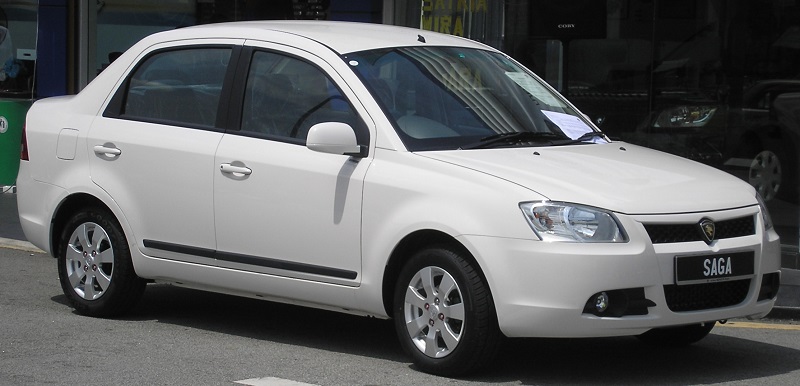
First introduced in 1985, the Proton Saga remains one of the most important models in Malaysia’s automotive landscape.

The Saga is not merely a mode of transport from point A to point B — it’s a necessity for those who want a comfortable, modern, and safe car.

The third facelift (MC3) launched last year, arrived with a strong package that easily embarrasses its rivals.

This was proven when Saga sales surpassed the Perodua Bezza throughout January 2026.

We had the chance to test-drive the Saga, and here are our thoughts on Proton’s new sedan.


A More Premium Saga Design

This entry-level sedan has gone through three design eras:

  • Mitsubishi’s boxy design (1985)
  • Proton’s original design (2008)
  • Geely-influenced design (2025)

There’s no denying that the new Saga offers a more sophisticated image, especially with a front fascia aligned with Proton’s other X models (X70 & X90).

Previously, DRLs came as a separate package, but the new Saga integrates DRLs into the main headlamp unit.

It also features bright LED projector headlamps for night driving.

The Saga’s image is further elevated with full-width LED taillights, matching current automotive design trends.

Unfortunately, the sedan’s side profile still reveals that it sits on the existing platform.

New Saga owners should probably thank the Proton Savvy for that.


A More Advanced and Premium Cabin

Since the original dimensions haven’t changed much, the cabin doesn’t feel significantly more spacious than before.

The dashboard layout has been refreshed.

Our Premium variant test unit comes with a 7-inch digital instrument cluster and a 9-inch infotainment screen in the centre.

Physical climate control buttons are retained, but with a simpler design and smaller knobs and switches.

There’s no denying that the new Saga delivers a more premium-feeling experience for an entry-level sedan.

The climate control knobs don’t feel cheap when turned, and the indicator/wiper stalks feel solid during use.

The air-conditioning system is excellent — a long-standing Proton trademark.

Another point, Saga now supports Apple CarPlay and Android Auto. Wirelessly.

The audio system also delivers pleasant sound quality, complementing the quiet cabin during drives.


Driving Experience

One of the biggest highlights of the new Saga is its new 1.5-litre i-GT engine.

This 1,499 cc engine produces 120 PS @ 6,100 rpm and 150 Nm @ 4,000 rpm — far more powerful than the old Campro’s 94 hp/120 Nm.

Fuel efficient? Absolutely.

A full tank can take the Saga more than 500 km, which is more than sufficient.

Fuel consumption is recorded at around 6.5 litres per 100 km.

Ride and handling have also been improved, making the Saga more exciting to drive, especially on winding roads.

The MacPherson strut and torsion beam suspension tuning feels just right — sporty yet still prioritising comfort.

Rough surfaces and vibrations are well-filtered, giving the Saga a surprisingly premium feel even when the road outside resembles the moon’s surface.

Engine noise no longer roars like the old Campro days.

The naturally aspirated i-GT engine produces only a low-frequency hum that doesn’t distract the driver even under heavy throttle.


Saga Is Not a Perfect Car

Despite the many positives, the Saga isn’t perfect.

A few things need attention to make it even better:

First, the CVT transmission response can be frustrating, especially at low rpm.

At normal speeds it’s fine, but the Saga can test your patience on roads with many traffic lights. Or Shah Alam, the Land of Roundabouts.

It’s hard to achieve smooth driving patterns because of this.

As someone used to manual cars, the writer hopes Proton will one day offer a six-speed transmission.

Second, the brake pedal bite point feels too far forward. Not that the braking system is bad — it still stops the car effectively.

But if you plan to drive the Saga fast, keep your foot ready for anything unexpected.

Third, the tyres. The standard Atlas tyres aren’t terrible, and they’re okay in the wet, but there are better options in the market.

If you’re buying a Saga, set aside some budget for tyre upgrades if you want a more confidence-inspiring drive.


Cabin weaknesses that can be improved

A few cabin improvements would make the Saga even better:

One, the instrument cluster brightness can be lowered further — it’s too bright at night, to the point the car next to you might notice.

Two, although Saga now supports wireless Apple CarPlay and Android Auto, the Altas operating system isn’t very stable.

Sometimes it restarts on its own, which is troublesome when you’re relying on navigation.

Three, the solution to sudden CarPlay/Android Auto disconnections is using a USB cable.

But the USB port is positioned too close to your knee, making driving uncomfortable — and the Saga doesn’t even have a left footrest.

Four, the driving position feels quite high, even at the lowest seat setting.

Your eye level ends up close to the rear-view mirror height.

This makes it difficult when going up or down multi-storey car parks.

Maybe this is a preview of the upcoming Saga Cross. Maybe.


Safety: Better Than Iriz and Persona

After a long wait, Proton has finally equipped an entry-level car with all the necessary safety features.

Six airbags come standard on the Premium variant, along with advanced safety features such as:

  • Autonomous Emergency Braking (AEB)
  • Lane Departure Warning (LDW)
  • Rear Cross Traffic Alert (RCTA)
  • Rear Collision Warning (RCW)
  • Door Opening Warning (DOW)
  • Auto High Beam (AHB)

And finally, the Saga now gets Blind Spot Monitoring (BSM) — a very welcome addition. Even the Iriz and Persona don’t get this.

Saga also gets front and rear parking sensors, which are quite sensitive and annoying in traffic jams.

There’s also a speed limit warning if the system detects the car exceeding the allowed limit.


One feature worth praising is the alert reminding drivers about children (and valuables) in the back seat whenever the engine is turned off.

The sound is loud and clear to ensure no Saga owner suffers from “forgotten child syndrome.”

Lose items and you can replace them. Lose a child and regret will haunt you.


Conclusion

Looking at the package and specifications offered, the Proton Saga is no longer a model you can take lightly.

It has everything needed in an entry-level sedan — power, comfort, space, and technology that makes daily life easier.

Most importantly, it’s priced within reach for most first-time car buyers.

Just like the Iriz in 2014, the Proton Saga has now set a new benchmark for the entry-level sedan segment.

Well done, Proton!


Proton Saga 2026 – Quick Specs

  • 1.5-litre i-GT Atkinson-cycle engine
  • 120 PS @ 6,100 rpm
  • 150 Nm @ 4,000 rpm
  • CVT transmission
  • Front-wheel drive
  • MacPherson strut / torsion beam suspension
  • 15-inch wheels

Nissan Serena e-Power (C28): a true evolution from S-Hybrid – first drive

As the Malay proverb goes, “better late than never.”

After more than three years since its global debut, Nissan distributor Edaran Tan Chong Motor (ETCM) is finally set to officially launch the Serena e-Power this March.

Although its arrival may be considered somewhat late, ETCM claims to have already received 400 orders for the MPV model.

Naturally, there are several features of the Serena e-Power that have piqued the interest of existing Nissan Serena owners in this new model.

Last week, ETCM invited a group of journalists for a test drive session from Petaling Jaya to Kuantan, allowing us to assess the improvements made.

Here are some positive aspects we found in the Serena e-Power:


e-Power is More Powerful

One of the most significant upgrades in this family MPV is the e-Power system (163 PS/315 Nm), which replaces the S-Hybrid system in the C27 model.

Whereas the Serena S-Hybrid previously felt like it could “manage… but don’t ask for more,” this new e-Power system offers a much more confident drive.

Its electric motor provides a more immediate response, more strength, and operates quietly, akin to an electric vehicle (EV).

It’s not to say it suddenly becomes a speedster, but this time the Serena feels less heavy when overtaking or climbing, compared to the previous S-Hybrid system.

Press the pedal, and the car moves smoothly without drama. This is the characteristic that should be present in a modern family MPV.

The Serena e-Power boasts fuel consumption as low as 5.4 liters per 100 km, with a driving range of up to 1,000 km.


Quiet Cabin

In addition to the efficient e-Power system, we also noticed a significant improvement in NVH (Noise, Vibration, and Harshness).

The cabin feels quieter and more comfortable, to the point that we forgot we were not driving an electric MPV.

This is attributed to several factors, including the use of acoustic glass and air curtains on the front bumper, which contribute to improved driving stability.

Wind noise is only noticeably heard at higher speeds; however, this isn’t a major issue as the MPV will most often be driven within the national speed limit.

Engine noise is also less pronounced when the e-Power system is engaged aggressively, almost as if Nissan has placed the 1.4L NA engine at the front of the bumper.

It doesn’t roar; rather, it produces a low hum that does not distract the driver.


Less Motion Sickness

One new feature in the Serena e-Power is the redesigned front suspension system, aimed at enhancing ride stability and comfort.

According to Nissan, the Serena e-Power utilizes SUV-based suspension architecture at the front to reduce body roll and improve control.

Overall, the suspension tuning of the Serena e-Power is designed to provide a more comfortable ride with less bouncing, aided by Zero Gravity seats to reduce motion sickness, especially for rear passengers.


A Champion of Practicality

As a family MPV, the Nissan Serena offers ample space for storage.

In line with current trends where people heavily rely on smart devices, the Serena includes designated spots for mobile phones, including a wireless charging slot and six USB ports.

The second-row passengers benefit from foldable tables and seats that can adjust in four directions.

Additionally, there are 22 cup-holder locations throughout the cabin.

It can be said that the Serena understands the realities of life: kids have toys, mothers have small bags, fathers have power banks – everyone has their place.


Retaining Elements of Previous Serena Models

Although the Serena e-Power introduces numerous enhancements, it still maintains the true identity of the Serena, such as the seating layout allowing easy passage from the first to the third row.

It also retains wide sliding doors on both the left and right, a high cabin dimension, large windows, and ease of access.

The Serena maintains the Dual Back Door feature with dual opening methods, making it convenient for loading and unloading items, especially in tight parking spaces.

Thus, exemplary fathers need not worry, as the identity of the previous Serena model is still preserved and passed down to the new Serena.


Conclusion

With its practical features and innovations, the Nissan Serena e-Power has the potential to be an ideal family car choice for 2026.

According to ETCM, the Serena e-Power is expected to be priced between RM160,000 and RM180,000.

Specifications for the Nissan Serena e-Power (including safety features) can be viewed at THIS LINK.

Chery Tiggo 7 PHEV successfully achieves 1,200 km mission without refueling – test drive

Chery Malaysia launched its latest plug-in hybrid SUV model, the Tiggo 7 PHEV, two months ago, with a starting price of RM129,800.

This makes the Tiggo 7 PHEV a highly worthwhile option to consider, especially for those affected by the implementation of the Budi95 subsidy and who do not want to make an electric vehicle (EV) their primary mode of transport.

On paper, the Chery Tiggo 7 PHEV is equipped with a 1.5-liter turbo engine (143 PS/215 Nm) paired with an electric motor (204 PS/310 Nm), yielding a total power output of 279 PS and 365 Nm.

With an 18.3 kWh battery pack (electric range of 90 km) and a 60-liter fuel tank, the Tiggo 7 PHEV can achieve a travel distance of up to 1,200 km.

The question now is: Can the Tiggo 7 PHEV reach the claimed distance?

Recently, Chery Malaysia organized a media test drive session called the Endless Horizon Challenge.

The challenge was straightforward: prove that the Tiggo 7 PHEV can achieve a driving range of 1,200 km without refueling or recharging the battery.

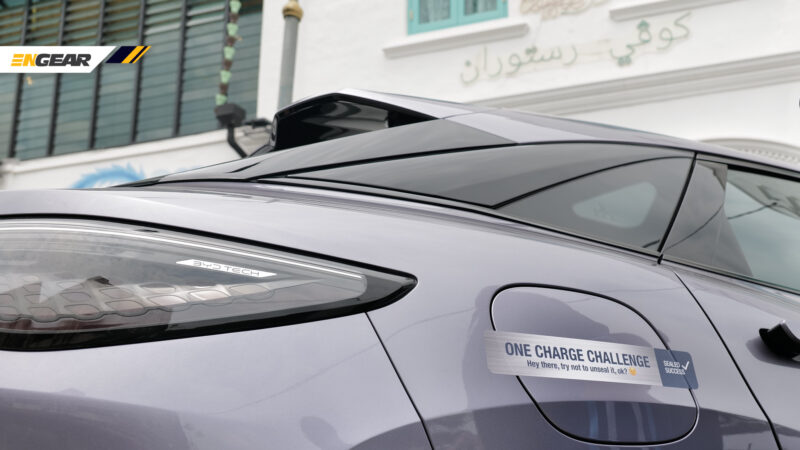
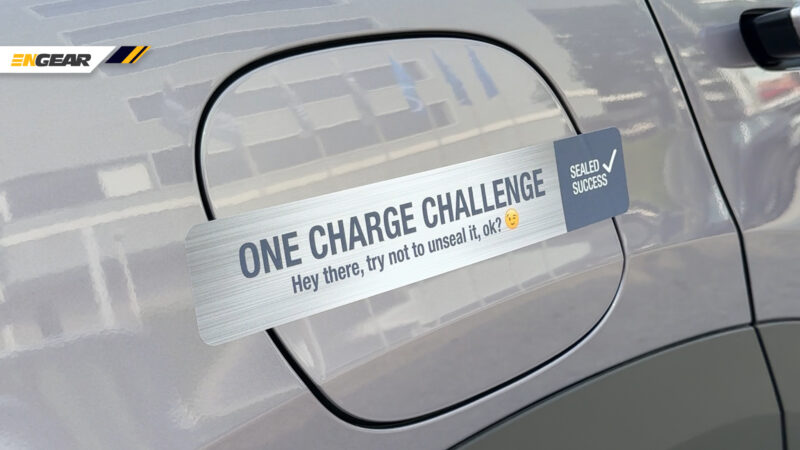
To avoid any cheating, both the fuel tank cap and the charging port were sealed with stickers, and we had to rely solely on what was provided from the starting line.


Day One: Kuala Lumpur to Kuala Terengganu

Our journey began at Bamboo Hills with a full 60-liter fuel tank and a 100 percent battery.

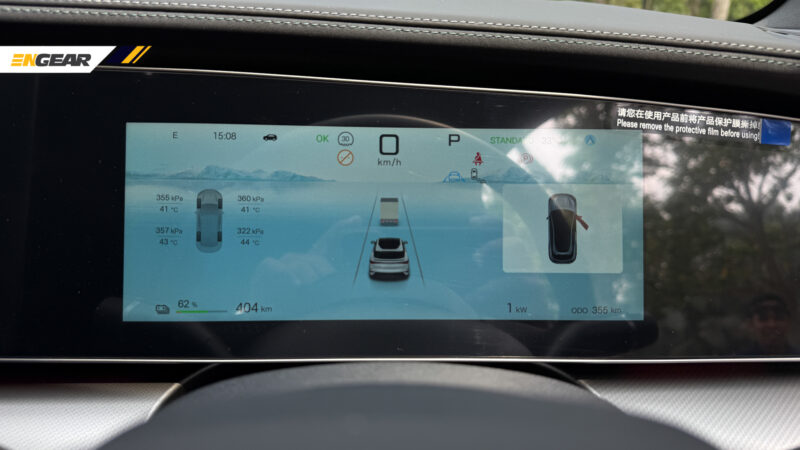
While the meter reading showed a driving distance of 862 km, it was enough to make any driver feel nervous. “Can this SUV really reach 1,200 km?”

Driving through the morning traffic congestion in Kuala Lumpur was not a significant challenge.

This was due to the Chery Super Hybrid (CSH) system, which intelligently adjusted its operations based on the throttle input from the driver’s right foot.

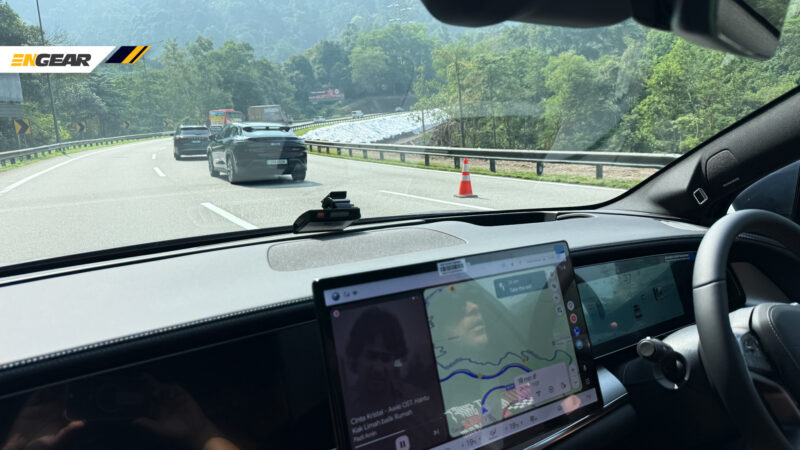
For most of the time, it relied solely on the electric motor, with the engine engaging only when necessary, especially when climbing steep roads on the KL-Karak Highway.

In Tandem mode, drivers hardly noticed when the engine was activated, thanks to its smooth operation that did not transmit any vibrations to passengers in the cabin.

Once we entered the East Coast area, rain began to fall, necessitating a slower driving speed—this was not an issue since we were committed to achieving the 1,200 km challenge.

The spacious cabin felt comfortable, with ample legroom and headroom, which helped reduce fatigue during long journeys.

We arrived in Kuala Terengganu shortly after 8 PM, having covered a total distance of approximately 471 km, leaving us with about 721 km remaining.

The fuel consumption rate recorded was 3.5 liters per 100 km.


Day Two: Kuala Terengganu to Royal Belum to Penang

The rain that had been falling since midnight made the second day appear more challenging.

We started from the Raia Hotel in Kuala Terengganu in heavy rain, leading to a lower average speed compared to the previous day.

Additionally, we had to navigate normal road conditions with varying quality asphalt and some areas that were flooded.

However, this was not a major problem as the Chery Tiggo 7 PHEV is capable of traversing water up to 500 mm deep.

A greater challenge awaited us on the East-West Highway, which is typically associated with large trucks and wild animals.

While navigating uphill roads with countless bends, we noticed that the fuel meter reading dropped at a quicker rate than usual.

Due to the still wet road conditions, we drove the Tiggo 7 PHEV more cautiously to avoid any unwanted incidents.

Upon reaching the Titiwangsa Rest Area in Gerik, Perak, the fuel meter indicated we had only 470 km of range left.

This was enough to raise our concerns as there was still a long distance to cover.

However, the advantages of the CSH system became apparent when the Tiggo 7 PHEV began descending hills, allowing the system to recharge the battery through regenerative braking.

We used the lowest brake setting to ensure smoother driving.

After lunch at Royal Belum, we continued our journey towards Penang, needing to take an alternative route due to a flooded road before arriving at Sungai Petani.

After covering 433 km, we arrived at the Crowne Plaza Hotel with the fuel meter indicating 368 km remaining.

Throughout this East-West route, we noticed one thing: the Tiggo 7 PHEV offers significantly better handling and driving dynamics compared to ICE models.

We took the opportunity to inquire about this, and Chery Malaysia confirmed that specific tuning had been applied by the local R&D unit to enhance handling and make the driving experience more comfortable.

We will provide further insights on this if given the opportunity.


Day Three: Penang to Ipoh to Kuala Lumpur

The final day arrived for us to complete the 1,200 km mission without needing to refuel or recharge the battery.

From our overnight stay in Penang, we continued towards Ipoh and Kuala Lumpur, traversing the North-South Highway.

Besides the usual traffic congestion around the Menora Tunnel, the rain throughout the journey from Ipoh to Kuala Lumpur ‘forced’ us to drive more cautiously at a moderate speed.

All this was to ensure that the Tiggo 7 PHEV did not get stranded along the way.

As the trip meter displayed 1,200 km at Bestari Jaya, we cheered with joy, having accomplished the mission set by Chery Malaysia.

Upon returning to Bamboo Hills, the Tiggo 7 PHEV recorded a total driving distance of 1,248 km, with the cluster meter showing a remaining range of approximately 93 km and a battery capable of allowing the SUV to travel an additional 16 km on electric power alone.

The overall fuel consumption rate was around 4.5 liters per 100 km, significantly lower than the official figure of 5 liters/100 km.

Who would have thought that the most affordable PHEV in Malaysia could perform comparably with other, much more expensive PHEVs on the market?

Want a sporty image? Reliable handling? A cabin that is comfortable, spacious, and quiet? Fuel-efficient? The Chery Tiggo 7 PHEV can meet your expectations

Denza D9: a better alternative to the Alphard/Vellfire – test drive

As of this writing, the presence of the Denza D9 electric minivan is increasingly noticeable on the roads.

If you visit any major shopping center, you’ll see this electric vehicle confidently parked alongside Malaysia’s popular boxy MPV choices, the Alphard and Vellfire.

With similar dimensions, height, and importantly, an impressively luxurious appearance on the road, the writer is convinced it can serve as the best alternative to the Alphard/Vellfire twins—provided you don’t mind spending time at charging stations.

Here are our thoughts after several days of testing the Denza D9.


Appearance

As previously mentioned, the Denza D9 has become a favored choice among Malaysians looking for a spacious and comfortable commuter vehicle.

Its significant advantages include larger dimensions compared to its competitors and a longer wheelbase, complemented by a premium overall look.

There’s no need for aggressive body lines or a fierce front end.

With its understated elegance, the Denza D9 stands out on the road, featuring a chrome grille, stylish 18-inch multi-spoke wheels, and slim LED daytime running lights that extend downward.

The rear design is simpler, although the graphics on the main light unit can be somewhat busy.


Driver’s Cockpit

For drivers, the Denza D9 is equipped with features that facilitate a seamless driving experience.

The front seats come with eight-way adjustments, lumbar support, ventilation, adjustable headrests, and crucially, a cushion that supports the thighs—especially important for long-distance driving.

Physical controls remain available despite the Denza D9 being an EV.

The central console hosts several important function switches, such as those for opening side sliding doors, selecting driving modes, and accessing the rear passenger fridge.

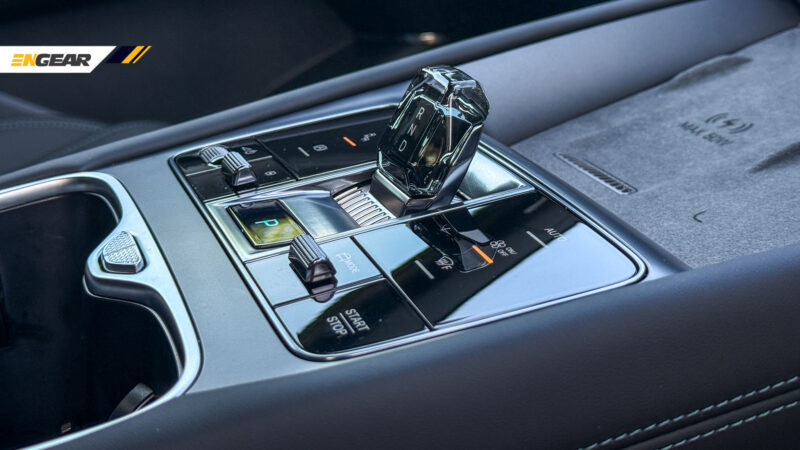
The gear knob is large and premium-feeling, though the placement of the P and Start/Stop buttons could be improved, leading to occasional confusion while trying to shift gears.

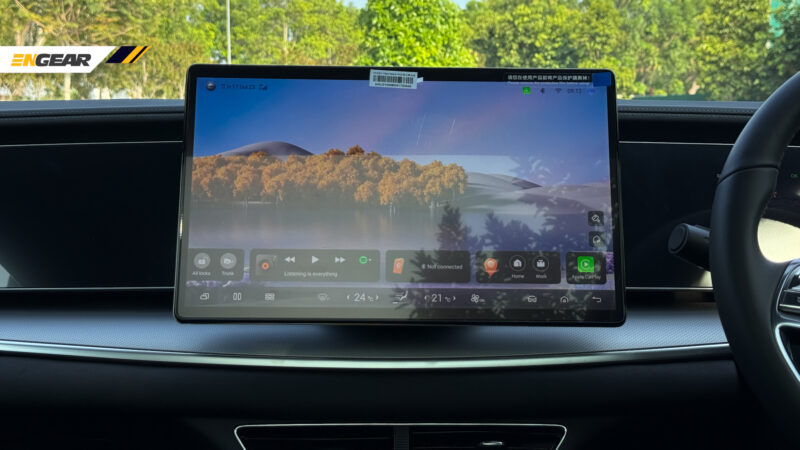
Climate control relies on a 15.6-inch central screen.

Overall, I have no complaints about this setup—all essential functions are easily accessible, ensuring maximum comfort for rear passengers.


Space for the Boss

Speaking of rear passengers, or rather the boss, they will undoubtedly appreciate the features offered in the second-row seating. Upon opening the door, you are greeted with captain’s chairs that boast rare amenities, including:

  • Heating and ventilation functions
  • A 10-point massage feature
  • Head and footrests
  • Zero-gravity settings for ultimate relaxation

All these functions can be activated via control screens for both seats.

Additionally, the left-side rear passenger can maximize space by activating a “boss switch.”

Working from the cabin is also made easy with folding tables and storage for cool beverages, with temperatures adjustable from -6 to 50 degrees Celsius.

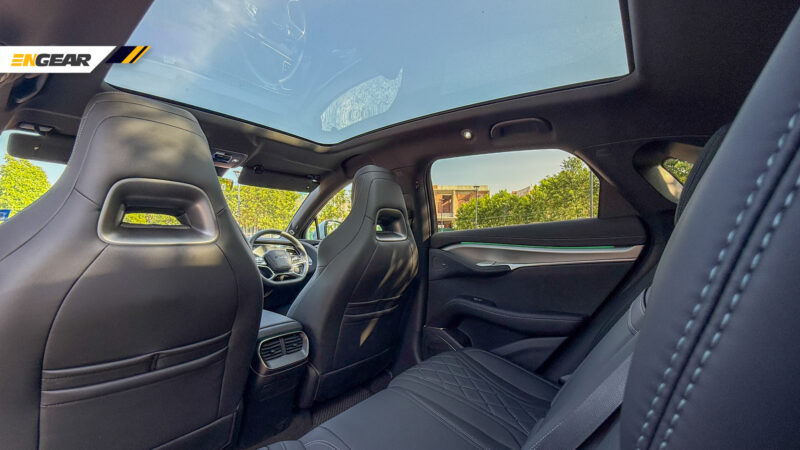
Thanks to premium Nappa upholstery, the travel experience is made even more comfortable, complemented by excellent noise and vibration isolation.

For the first time, I spent more time in the second row of the Denza D9 than in other test models, simply to enjoy its luxurious features.


Driving Experience

Despite its larger dimensions, I had no trouble handling this premium MPV.

It offers excellent visibility, responsive steering, and is aided by a surround camera system that provides clear, sharp images, thus ensuring the Denza D9 remains free of scratches.

As discussed in previous brief test drive articles, the Denza D9 offers settings for the drive system, steering, brake system, and MacPherson/Multi-link suspension configurations.

Notable features include adaptive Disus-C suspension settings for driving control and comfort tailored to your needs.

Most of the time, I preferred using Sport mode to ensure the comfort that rear passengers require, as body roll is more pronounced in Comfort mode, which could lead to discomfort.

It might be better to use Comfort mode on high-quality paved roads.

Despite being equipped with dual electric motors (outputting 369 hp and 470 Nm with acceleration times as quick as 6.9 seconds), I didn’t feel the need to drive the Denza D9 aggressively; a gentle throttle response sufficed for reaching desired speeds—all in the name of VIP passenger comfort.


Suitable for Long Journeys

The Denza D9 comes in two variants.

The version I tested is the AWD model, which has a moderate range of about 480 km (WLTP data).

If power isn’t a priority, you can opt for the FWD variant, producing 309 hp and 360 Nm, with a range of 520 km.

Fast charging is also a non-issue, as the Denza D9 supports DC charging up to 166 kW.

With fast charging stations available along major routes, long-distance driving in the Denza D9 is no longer a significant concern, especially when tasked with transporting VIPs to their destinations.


Price

Another advantage of the Denza D9 is its more affordable price.

Compared to competing models, the Denza D9 is available from as low as RM259,000, or slightly more for the Premium AWD variant, priced at RM309,000.

So, are you still considering purchasing a premium MPV from Japanese brands?


Denza D9 Specifications

  • Powertrain: Dual electric motors
  • Power: 369 hp, 470 Nm
  • Drivetrain: All-wheel drive (AWD)
  • Acceleration: 6.9 seconds (0-100 km/h)
  • Battery: LFP Blade, 103.36 kWh capacity
  • AC Charging: 11 kW
  • DC Charging: 166 kW
  • Range: 580 km (NEDC data)
  • Suspension: MacPherson/Multi-link, adaptive DiSus-C system
  • Dimensions: 5,250 mm x 1,960 mm x 1,920 mm
  • Wheelbase: 3,110 mm
  • Turning Radius: 5.95 m
  • Cargo: 410 liters – 2,310 liters

Malaysia is the number one market for MG Cyberster in Asia & Oceania

Did you know that Malaysia is the number one market for the MG Cyberster model in the Asia and Oceania region?

This impressive performance was announced by MG Motor Malaysia, marking an extraordinary success since its official launch in December 2024, with over 90 orders received.

The MG Cyberster is an electric roadster that is available in two main variants.

At its official launch, the MG Cyberster was available in an AWD variant featuring dual electric motors with a power output of 503 PS and 725 Nm, capable of traveling up to 446 km on a full charge.

The RWD variant was introduced last month, offering a rear-wheel drive electric motor setup with a power output of 340 PS and 475 Nm, and capable of reaching a distance of 508 km with the same 77 kWh battery pack.

The starting price is RM299,900 for the RWD variant and RM319,900 for the AWD variant.

MG Motor Malaysia will be holding a series of exclusive test drive events at selected locations across the country:

  • MG Motor Plentong (August 6-7)
  • MG Motor Muar (August 9-10)
  • MG Motor Seri Kembangan (August 9-10)
  • MG Motor Juru (August 13-14)
  • MG Motor Klang (August 16-17)
  • MG Motor Bandar Rimbayu (August 23-24)
  • MG Motor Tebrau (August 30-31)
  • MG Motor Ipoh (September 20-21)
  • MG Motor Damansara (September 27-28)
  • MG Motor Skudai (October 4-5)

Customers who place an order during this event will receive a special package, including one-year unlimited free charging (JomCharge), a 7kW AC wall charger, a diecast model of the MG Cyberster, and other exclusive gifts.

Kia Sportage 1.6T AWD: a relaxed and stylish SUV – test drive

The SUV segment in Malaysia is truly vibrant, featuring a variety of models and brands, both local and foreign.

It can be overwhelming if you are unsure of the criteria to consider.

If you are looking for something that stands out from the typical SUVs on the roads, we recommend the Kia Sportage 1.6T AWD as a solid choice.

It has everything you need for a daily-use vehicle, and most importantly, the driving satisfaction you crave.

What’s the point of buying an expensive car if you’re not satisfied with the driving experience, right?

Below is our opinion after borrowing this Kia Sportage from Kia Malaysia for a week.


Exterior Design: too striking?

For your information, the Kia Sportage marketed here is the pre-facelift version that has been around since 2021.

The more aggressive facelift version was launched in South Korea at the end of 2024; however, to say that the design of the Sportage is outdated would be inaccurate.

Even in its pre-facelift version, the Kia Sportage remains eye-catching when cruising on the road.

With boomerang LED graphics both at the front and rear, as well as a low roofline at the back, the Sportage exudes the sporty image it aims for.

At the very least, it is an original design that can make owners satisfied when they look at it, rather than resembling any other model.

If you don’t turn back to admire your car after parking, you might have bought the wrong vehicle.


Dimensions

The AWD version of the Kia Sportage measures 4,660 mm in length, 1,865 mm in width, and 1,665 mm in height, offering a wheelbase of 2,755 mm.

As a C-segment SUV, the Kia Sportage provides a comfortable cabin space for the whole family.

The absence of a panoramic sunroof is not a major issue, as headroom in this cabin is sufficiently spacious.

Rear passengers can also adjust the angle of their seatbacks for a more comfortable sitting posture, so they don’t have to remain upright all the time.

The Kia Sportage offers a standard cargo space of 543 liters, which can expand to a remarkable 1,829 liters with the second-row seats folded down.


Pleasant Features

One of the aspects I appreciated about the Kia Sportage is its driver-friendly dashboard layout.

In addition to the dual 12.3-inch curved screens, the Sportage dashboard features a touch-based control panel complete with physical knobs.

You can adjust the cabin temperature or change the media content playing through the eight speakers of the Harman Kardon audio system from this panel.

For me, this is a user-friendly feature that is highly welcome.

This is because most manufacturers tend to crowd the central screen with various functional buttons, requiring a search and potentially distracting the driver.

The center console also houses several important function buttons that are clear and easy to reach.

The PRND shift-by-wire dial certainly gives the cockpit a more spacious feel; however, there are times when I found the unconventional gear shifting somewhat awkward.

The digital cluster display in the Sportage continues to offer analog meter graphics with several themes that can be selected according to the driving mode (Eco, Normal, Sport, Smart).

Don’t worry— the infotainment screen also provides standard support for Apple CarPlay and Android Auto. You won’t have to wait for over-the-air (OTA) updates.

If you notice, the back of the front passenger headrest features a large hook that is perfect for hanging bags or shawls.

Additionally, there are a few “teh tarik” hooks provided, making the Kia Sportage more user-friendly for Malaysians than some Malaysian-branded SUVs available on the market.


What About the Driving Experience?

The unit we tested is equipped with a 1.6-liter turbocharged inline-four Gamma II T-GDI engine that produces 177 hp at 5,500 rpm and 265 Nm of torque at 4,500 rpm.

This power is transmitted to an all-wheel drive (AWD) system via a seven-speed dual-clutch transmission (DCT).

As experienced during the media test drive, the Kia Sportage 1.6T AWD offers somewhat sluggish response at low rpm ranges.

This presents some challenges when maneuvering in low-speed situations, such as in parking areas, where the Sportage hesitates to deliver power.

However, once this SUV reaches normal cruising speeds, the cabin feels quieter, with minimal vibration and roughness.

This is attributed to the MacPherson strut front suspension and multi-link rear suspension, which work effectively to absorb road imperfections.

It also allows the SUV to feel stable in corners with body roll that isn’t overly pronounced, making the driving experience more enjoyable.

However, if driven aggressively, these advantages can disappear. Therefore, it’s crucial to understand the limits and constraints of the Kia Sportage.

I have no comments regarding the handling of this SUV, as it meets what one would expect from a Kia vehicle.

The precise and responsive steering assist keeps me focused on the winding roads ahead, allowing the vehicle to comply with every direction given by the driver’s hands.

There are times when the steering correction system engages to ensure the SUV stays on course, but its operation never feels tiring or annoying.


Safety Features

The Kia Sportage offers a comprehensive range of safety features, including six airbags, ABS, ESC, and an extensive list of advanced safety technologies.

What I want to emphasize here is the Blind-Spot Monitoring (BVM) system, which displays what is in the blind spots to the left and right of the vehicle when the turn signal is activated.

This system, found in any Kia model (including Hyundai), significantly aids in detecting objects (cars, motorcyclists) that are typically obscured in the blind spot.

Other manufacturers offer more advanced 360-degree cameras that provide a bird’s-eye view.

However, most of the time, these are more for show, as they display images of the car being driven rather than what is concealed in the blind spot.


Sportage for Weekend Getaways

Another feature I appreciate about the Kia Sportage is the rear seats that can fold flat.

There’s no need to spend money on a tent; you can transform the back of the Kia Sportage into a ‘temporary tent’ for relaxing weekend activities.

In the cargo area, there is a 12V power outlet that can be used for charging smart devices or powering light equipment.

Additionally, there is a ‘Sound of Nature’ feature available in the Sportage’s infotainment screen to accompany your activities.

While enjoying leisure time, don’t forget your obligations as a Muslim.

If you wish to fulfill your prayer duties while camping, the Kia Sportage also features a qibla direction compass to serve as a guide.


Conclusion

Is the Kia Sportage 1.6T AWD the best SUV in its class?

Undeniably, the Kia Sportage has its unique advantages compared to competing models in the market.

It has a striking design, a practical package, spacious and comfortable cabin space, and nearly comprehensive safety features.

However, if you’re willing to compromise on the weaknesses mentioned, we believe that the Kia Sportage can be a worthwhile purchase.

Specifications of the Kia Sportage 1.6T AWD (RM186,899)

  • Engine: Gamma II 1.6-liter turbo, four-cylinder inline
  • Power: 177 hp @ 5,500 rpm, 265 Nm @ 1,500-4,500 rpm
  • Transmission: Seven-speed DCT
  • Drive: All-wheel drive (AWD)
  • Suspension: MacPherson strut / Multi-link
  • Cargo Capacity: 543 liters – 1,829 liters


Lexus LBX: the perfect sneakers for weekend driving – Test Drive

Who would have thought that this agile little crossover from Lexus was a direct response to a request from Akio Toyoda, the driving force behind Toyota?

During the early stages of development, Akio, also known as Morizo, asked the R&D team to create a casual car that could be driven on weekends, much like a beloved pair of sneakers.

The result is a luxurious compact crossover with an attractive design and a fun driving experience – the Lexus Breakthrough Crossover, or LBX.

The Lexus LBX is the smallest production car ever produced by Lexus and is positioned below the Lexus UX.

Although it is built on the GA-B platform, which serves as the foundation for the European market Yaris Cross, the LBX is more than just a badge-engineered product.


Design

Compared to the European specification Yaris Cross, the LBX has a more robust appearance.

This is achieved through more rounded wheel arches, wider and more pronounced fenders, and larger tire sizes.

Moreover, the shoulder line of the LBX is lower compared to the Yaris Cross, creating an almost snowman-like appearance from the front, side, and rear views.

Masahiro Sasaki, a racer and Toyota test driver, explains that this design gives the LBX a more balanced look and a lower center of gravity.

As a result, the LBX appears sturdy even when stationary in a parking spot, and even more so when driven on the road.


Interior Space

For me, the Lexus LBX is best described as a casual car to drive on weekends without compromising practicality.

Yes, the rear passenger space may seem small, and it is better suited for children or petite adults.

As for cargo space? It offers about 315 liters, which is ample for grocery shopping. Alternatively, if you fold down the second-row seats, you will have a cargo area of up to 992 liters.

Lexus seems to have focused heavily on the Tazuna concept, especially in the driver’s cockpit.

There are not many physical function buttons; only essential functions are retained.

The intention? To ensure that the driver’s attention remains on the road.

The control buttons on the steering wheel may appear vacant without any functions, but in reality, you can easily set shortcut buttons for various operations.

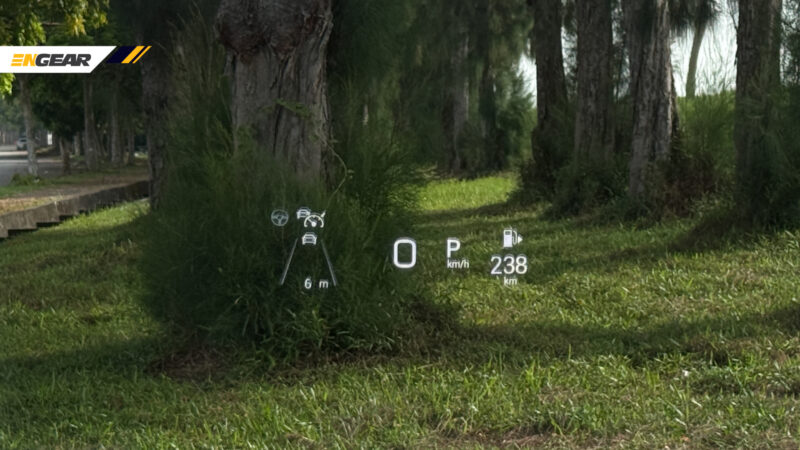
You’ll just need to keep an eye on the head-up display to see what operations are being activated or deactivated, such as adjusting the fan speed or changing the music playing.

Initially, it may take some time to get used to this setup, but over time, I have come to prefer this method as it minimizes eye movement while driving.

Additionally, the Lexus LBX offers plush seating that is comfortable and firmly supports the driver – a feature that’s hard to find in any car in a similar segment.

The 9.8-inch central screen displays easily accessible menus and supports connections to Apple CarPlay and Android Auto.

The 12.3-inch digital cluster screen is also easy on the driver’s eyes, and most importantly, the analog meter theme is still present!

The start drive button is positioned fairly high next to the instrument cluster, making it easy for the driver to see and reach.

Honestly, this is exactly what I expect from a Lexus: a luxury car that still prioritizes the needs of the driver.


Modern Features for Convenience

Inside the LBX cabin, you will find up to four USB Type-C charging ports, along with a wireless Qi charging slot for smart devices.

A Mark Levinson audio system with 13 speakers is ready to accompany you during spirited weekend drives.

Door operations are made easy with the e-Latch system; simply press the lever on the door panel (as well as the door handle outside) with just one finger, and the door will open.

Although the center console appears somewhat narrow for fitting two arms at once, it is still equipped with the necessary operational buttons for the driver.


Hybrid Engine with EV-like Behavior

One of the most exciting aspects of driving the Lexus LBX is its powerful hybrid engine performance.

Unlike typical Chinese hybrid cars that use turbo engines, the LBX offers a naturally aspirated (NA) 1.5-liter hybrid engine with the code M15A-FXE.

This engine, with an output of 90 hp and 120 Nm of torque, is paired with an electric motor producing 93 hp and 185 Nm, resulting in a combined output of around 136 hp.

The efficient eCVT transmission ensures that every brisk acceleration in the LBX can be fully enjoyed by the driver, especially when taking off from traffic lights or toll plazas.

After enjoying the curves, I returned to a more relaxed pace, navigating the central roads. Most of the time, the vehicle prioritized EV driving mode, creating a quieter and more comfortable atmosphere.

At times, I recorded a zero-emission driving ratio of 50 percent over a distance of 78 km.

Handling and Comfort, Perfectly Balanced!

As standard, the Lexus LBX features a MacPherson strut setup in the front, complemented by a simpler torsion beam system in the rear.

On paper, it may seem commonplace, similar to B-segment SUVs currently available in the market.

However, what sets the LBX apart is Lexus’s tuning of its handling, which distinguishes its performance from other SUVs.

During my test drive, I found it difficult to pinpoint negatives; the LBX felt stable and glued to every corner while effectively absorbing road imperfections.

In short, it strikes a balance between handling stability and driving comfort, further enhanced by the Vehicle Braking Posture Control function to reduce pitch and roll effects.

Additionally, the steering responsiveness is sufficiently tactile, adhering to every command from the driver without feeling overly light.

The harmonious integration of its chassis with a short wheelbase, powerful engine, efficient transmission, and suspension makes the Lexus LBX a remarkable product in its segment.

It’s hard to describe this feeling in words; you need to experience the LBX first-hand if given the chance.

The sound of the three-cylinder engine is also minimal, merely a whisper in your ears, especially when the accelerator is pressed hard. However, most of the time, the cabin remains quiet and comfortable.


Safety Features

As standard, the LBX comes equipped with safety features, including eight airbags, as well as the Lexus Safety System+, which encompasses functions such as:

  • Autonomous emergency braking
  • Adaptive cruise control with stop-and-go functionality
  • Lane-keeping assistance
  • Active steering assistance
  • Traffic sign recognition system
  • Blind spot monitoring system
  • Door opening warning
  • Automatic high beam assist


Conclusion

With a price tag of RM268,888, I must admit that the LBX is not a luxury car designed for everyone, nor is it suitable as a first car.

It has drawbacks that may be difficult to compromise on; however, it offers a package that can bring a smile to the driver after a long week of driving an SUV or MPV.

Much like a favorite pair of shoes, it is perfectly suited for when you need it.

Specifications for the Lexus LBX (RM268,888)

  • Engine: 1.5-liter inline three-cylinder NA (code M15A-FXE)
  • Power: 90 hp / 120 Nm
  • Electric Motor: 93 hp / 185 Nm
  • Total Power Output: 136 hp
  • Transmission: eCVT
  • Drive: Front-wheel drive
  • Suspension: MacPherson strut / torsion beam


Volvo EX30 exceeds expectations – test drive

The writer had the opportunity to test drive several small Volvo models before, including the Volvo V40 and the Volvo XC40 and C40 crossovers.

This time, it’s the turn of the smallest production model ever created by the Scandinavian manufacturer, the Volvo EX30.

It comes exclusively as an electric crossover, with no internal combustion engine options available.

Despite being available only in an EV version, the EX30 is not a model to underestimate.

It has a package that can meet the needs of every user—offering style, practical space, and performance capable of outperforming larger SUVs, especially when you choose the Ultra Twin Performance variant, which we drove for this test.

Here’s a summary of our experience after enjoying the EX30, priced at RM228,888, for several days.


Exterior Appearance

Yes, in terms of design, it’s hard to deny that this is a Volvo SUV.

Just look at the headlights with Thor hammer-shaped LED graphics, the front end without a grille displaying the minimalist Volvo logo, and the rear lights—all reminiscent of the Volvo EX90.

Its size is indeed quite compact, measuring 4,223 mm in length, 1,837 mm in width, 1,555 mm in height, and a wheelbase of 2,650 mm, making it smaller than its siblings, the XC40 and C40.

However, small does not mean the EX30 is less practical; the details can be found in the next section.


Practicality

Volvo seems clever in providing a comfortable and practical cabin space in the EX30.

Due to the absence of a speaker system (it has only a Harman Kardon soundbar on the dashboard), there is ample space on the door panels.

The center console appears simple, but when the weather is warm, you can place a cool drink in a pull-out cup holder that can be hidden away when not in use.

Is that not enough? The floor console is also provided, along with additional hidden compartments for smaller items and space in the console tunnel.

The glove box is positioned in the center for easy access by both the driver and front passenger.

Although it looks small from the outside, the Volvo EX30 offers a cargo space of 318 liters, which can expand up to 718 liters when the second-row seats are folded flat in a 60:40 ratio.

This is large enough to accommodate items up to 1.64 meters long and 0.86 meters high.

If you need to head to Ikea for furniture shopping, you can refer to the storage guide graphic provided on the rear tailgate.

Still not enough? There’s a frunk that offers a capacity of seven liters.


Extremely Minimalist to the Point of Confusion

Want to know why Volvo can provide such extensive space?

It’s because Volvo has taken minimalist design to an extreme level, requiring me to ‘reset’ my mindset each time before starting my journey.

The window buttons have been relocated to the center—like cars from the old days—and there are only two buttons available.

You need to press an extra button to open the rear passenger window.

To control the temperature of the air conditioning system? Use the central display screen.

To adjust the steering settings and side screens? Again, it’s done through the central display.

Want to open the glove box? Yes, you also need to press the menu on the central screen.

Fortunately, to start my journey, I didn’t have to scroll through the central screen to switch to Drive mode. The gear shift lever is provided in the steering column, complete with cruise control mode (you only need to pull the lever down once after entering Drive mode).


Finishing Touches

One commendable aspect of the Volvo EX30 is its extensive use of sustainable materials within the cabin.

For example, the upholstery for the seats, dashboard, and doors is made from recycled materials such as denim, hemp, and a wool blend.

The use of these materials does not compromise the comfort factor throughout the driving experience.

What I particularly like is the seating that fully supports the lower legs, along with the comfortable armrest panel on the door.

However, if you look closely, the plastic finishes in certain areas seem inconsistent with the luxurious image Volvo is trying to portray in the EX30. After all, it is made from recycled plastic.


Agile Driving on the Road

The Ultra Twin Performance variant of the EX30 comes equipped with two electric motors that produce 422 hp and 543 Nm of torque, allowing it to accelerate from 0 to 100 km/h in just 3.6 seconds.

With its small, agile body package, the EX30 has no trouble outperforming any sports car out there.

Its suspension tuning is excellent, effectively absorbing all the imperfections found on the road and providing a delightful driving experience, especially when encountering curves.

To be frank, I believe the suspension tuning in the EX30 is significantly better compared to its bigger siblings, the XC40 and C40.

Most of the time, the power delivered by the rear motor is sufficient, and I hardly relied on the Performance mode for the AWD system (which has to be accessed through the central screen).

The NMC 69 kWh battery pack allows you to achieve an impressive driving range of 450 km, making it well-suited for urban driving.

The steering response is also quite good, ensuring that the EX30 stays precisely on its intended path.


Unexpected Off-Road Capability

Clearly, the Volvo EX30 has its unique strengths, making it suitable as an everyday vehicle.

However, one unexpected advantage I discovered is the comfort it offers when the Volvo EX30 is taken off-road (more appropriately, soft-road).

I admit that this EV is already quite comfortable on paved roads, but when the tires hit gravel paths, the EX30’s suspension system effectively filters out all the roughness of unpaved roads.

It’s perfect for driving across rough terrain, allowing you to enjoy outdoor weekend activities like picnicking by the river or camping on the beach.

Given this impressive potential, it’s no surprise that Volvo showcased the EX30 Cross Country version earlier this year for those who seek a more rugged driving experience in this compact EV.

Will the EX30 Cross Country be realized in the future? We can only wait and see what plans Volvo has for this electric SUV.


Charging

The 69 kWh NMC battery supplied in the Volvo EX30 supports AC charging at 11 kW, taking eight hours for a full charge.

If you’re short on time, simply charge the EX30 at any fast-charging station, as this EV supports DC charging up to 153 kW.

In just half an hour, the 69 kWh battery can be charged from 10% to 80% state of charge.

Alternatively, you can visit any shopping center with fast-charging facilities, allowing you to shop for your desired items while the vehicle charges.

One feature I particularly like about this EV is the Google-based mapping system that displays the estimated battery state of charge upon arrival at your destination or after a round trip.


Safety

As a Volvo, the EX30 is equipped with nearly comprehensive safety features in this compact package.

These include adaptive cruise control, traffic jam assistance, collision avoidance assistance, autonomous emergency braking, lane keeping assistance, lane departure warning, blind spot monitoring, and rear cross-traffic alert.

Ironically, it also features a driver attention monitoring system that alerts the driver if it detects a lack of attention on the road.

What can you expect from a car that crams all sorts of settings and functions into a single 12.3-inch screen?

Essential information such as speed, battery state of charge, traffic light notifications, and gear position (RND) is displayed at the top of the screen.

During driving, I find myself looking to the left to ensure that this EV is being driven at the speed allowed by law.

Or every time my left finger pushes the lever to activate the turn signal.

Or each time I feel the cabin temperature is too cold and want to adjust the air conditioning.

It would be more pleasant if the EX30 had a separate screen behind the steering wheel, so that eye movement would be minimized compared to having to rely entirely on the central screen.

Directly installing a head-up display screen would probably be more practical.


Conclusion

For an urban-use EV, I find the Volvo EX30 has a solid foundation and an attractive design, making it suitable for young people with active lifestyles.

That is, if you don’t mind the overly minimalist dashboard layout presented in this Volvo.

Try taking the time to get used to it, and it won’t be a major issue.

However, it can be somewhat problematic for old-school drivers like me, who are still adjusting because we’re used to physical buttons and controls.

In terms of driving, the EX30 is certainly suitable as an everyday car, enjoyable to drive, and, most importantly, it does not compromise practicality and safety elements, which are the primary foundations of the Volvo brand.

However, if you aren’t concerned about all-wheel-drive performance or the panoramic glass roof, you can opt for a lower variant (priced from RM189k) to enjoy a longer driving range.

Specifications of the Volvo EX30 Ultra Twin Performance (RM228,888)

  • Drive Unit: Two electric motors
  • Power: 422 hp, 543 Nm
  • Acceleration: 0-100 km/h in 3.6 seconds
  • Battery: NMC 69 kWh
  • Driving Range: 450 km
  • Suspension: MacPherson strut / Multi-link
  • Rims: 19 inches
  • Tires: Goodyear EfficientGrip Performance SUV, 245/45R19
  • Cargo Space: 318 liters, or up to 718 liters


Denza D9: An alternative to premium minivans out there – First Drive

For most VIPs, VVIPs, and VVVIPs in Malaysia, the default vehicle frequently seen on the roads is none other than the most popular boxy MPVs: the Toyota Alphard/Vellfire.

This has been a common sight for the past 23 years, proving how essential such vehicles are for this demographic.

However, this situation may change with the introduction of several premium minivan models in the current market, which are available with electric (EV) and plug-in hybrid (PHEV) powertrain options.

One model that is already challenging the status quo is the Denza D9, a premium minivan from the luxury brand BYD.

Officially launched earlier last year, the Denza D9 is a three-row premium MPV that comes with a more affordable price tag compared to the Alphard/Vellfire duo—starting from RM259,000 to RM309,000 for the highest variant.

For this brief two-day, one-night test drive session, we were ‘challenged’ to experience the premium features that the Denza D9 aims to offer, starting from the Denza showroom on Jalan Klang Lama to Desaru, Johor.


Day One: Experience as a Boss

As soon as you open the sliding door, the Denza D9 provides a second-row layout featuring captain seats with a comprehensive package: headrest and footrest, heating and ventilation functions, 10-point massage, and zero gravity settings that can be adjusted via a separate touch screen on the armrest.

There are also wireless smart device charging slots and USB Type-C ports for both middle-row seats.

Feeling thirsty after a day of meetings? The Denza D9 includes a 6.8-liter refrigerator that can be set to temperatures between negative 6 and 50 degrees Celsius, enough to hold a few small bottles of water.

Additionally, there is a picnic table that can be unfolded from behind the front row seats. However, in our opinion, it might be more practical if the table were positioned closer to the second-row seats, to truly give that authentic business class flight feeling.

Want to maximize the second row? The Denza D9 does not offer a ‘boss switch’ function for the front passenger seat. Instead, you can access the ‘boss key’ menu through that small screen.

The use of premium Nappa upholstery makes for a more comfortable and less tiring travel experience.

Moreover, the noise, vibration, and harshness (NVH) levels in the Denza D9’s cabin are commendably low.

Tire noise is barely noticeable, and the use of double-glazed glass ensures that the sound of heavy rain doesn’t disturb the passengers’ sleep.

Importantly, with the standard smart adaptive suspension system DiSus-C, the Denza D9 is capable of providing a unique level of comfort throughout the journey.


Day Two: Working as a Driver for VIPs

After thoroughly enjoying the experience of being a VIP, on the second day, the writer ‘switched careers’ to take on the role of a driver responsible for bringing two VIPs back to Kuala Lumpur.

Upon entering the cockpit, the first thing the writer wants to commend is the driver’s seat adjustment, which is both comprehensive and perfectly suited for the task at hand.

It offers the essential support a driver needs, featuring eight adjustment levels, along with lumbar support, ventilation functions, and an adjustable headrest.

The center console still houses the gear knob and several physical buttons for key functions, such as drive mode selection, opening the side sliding door, and the rear door, plus a special button for accessing the refrigerator in the center.

The 10.25-inch cluster screen provides easily readable graphics; however, it would be better if it included a simpler analog theme option. Not all drivers prefer a screen filled with various information.

Fortunately, there is a head-up display (HUD) provided, allowing all crucial information to be read without requiring significant eye movement while driving.

The centrally located 15.6-inch screen is indeed large enough and supports Apple CarPlay and Android Auto, along with an easily navigable menu display and several shortcut buttons.

As a driver, this layout is genuinely appreciated, as it prevents the writer from fumbling to find and adjust vehicle settings, ensuring the two VIPs in the back remain comfortable without disturbance.


Driving Experience

In terms of dimensions, the Denza D9 is considerably larger compared to the Alphard/Vellfire duo, which is prevalent on the roads today.

However, it was not difficult for the writer to handle this premium MPV due to the large outward visibility, aided by a surround camera that ensures no body panels are scratched when entering narrow areas.

You can choose a softer and more relaxed steering tuning (Comfort mode) or a slightly heavier (Sport mode), depending on the conditions. However, most of the time, the writer preferred using Sport mode for a more natural response.

The driving modes available in the Denza D9 do not offer comprehensive settings.

This is because when Sport mode is selected, it only adjusts the ECU settings; you still need to enter the main screen menu to change the suspension, steering, and brake response settings as needed.

Speaking of suspension settings, based on our two-day driving experience, we found that the Denza D9 is more comfortable when using Sport settings.

In this condition, the body roll of this premium MPV is at an acceptable level, unlike in Comfort mode, where the body roll is more pronounced. Perhaps this mode is better suited for smoother and well-maintained road conditions.


Ideal for Long Journeys

The Denza D9 has advantages in terms of its powerful electric powertrain.

The unit we drove over the course of two days is the Premium AWD variant, equipped with a dual motor setup, with one motor for each axle.

The front axle is powered by an electric motor producing 308 hp and 360 Nm, while the rear axle is supported by a 60 hp and 110 Nm electric motor. Total power output? 369 hp and 470 Nm, with an acceleration performance of just 6.9 seconds from 0 to 100 km/h.

Based on the driving experience the other day, the acceleration of the Denza D9 feels sufficiently powerful, smooth, and linear. Achieving speeds above the national speed limit does not require overly aggressive throttle action.

Simply pressing the throttle gently, this premium MPV can easily reach triple-digit speeds, and most importantly, the passengers in the back are hardly affected by the driver’s actions.

Is the Denza D9 suitable for long journeys? Yes!

Range anxiety is not a concern you need to think about, as this MPV can travel up to 580 km (NEDC data) on a full charge, thanks to the standard 103.36 kWh battery pack.

Moreover, with numerous fast charging facilities available along the main routes in Peninsular Malaysia, it makes it easier for you to transport VIPs to their destination without unnecessary worry.

Just stop at any fast charging facility, such as Johor Premium Outlet or major Rest & Relaxation (R&R) stops, and you can charge the Denza D9’s battery from 30% to 80% state of charge in just 30 minutes.

This is because the Denza D9 MPV is standardly equipped to support DC fast charging up to 166 kW.


Conclusion

Based on our brief driving experience the other day, we believe the Denza D9 can be a premium MPV option worth considering, especially for those looking to move away from the typical VIP vehicles available on the market.

It offers a powerful zero-emission driving package, a spacious and quiet cabin filled with various premium features, and importantly, at a price that is not overly expensive.

Starting at just RM259,000, you can get the front-wheel-drive version of the Denza D9, or opt for the Premium AWD variant to enjoy all the features we’ve mentioned.

Most interestingly, the Denza D9 is offered with cross-border warranty coverage across three countries (Singapore, Malaysia, and Thailand), meaning that if you venture into these neighboring countries, you can still enjoy roadside assistance and after-sales service similar to what is provided in Malaysia.


Denza D9 Specifications

  • Drivetrain: Dual electric motors
  • Power: 369 hp, 470 Nm
  • Drive: All-wheel drive (AWD)
  • Acceleration: 6.9 seconds (0-100 km/h)
  • Battery: LFP Blade, capacity 103.36 kWh
  • AC charging: 11 kW
  • DC charging: 166 kW
  • Range: 580 km (NEDC data)
  • Suspension: MacPherson strut/Multi-link, adaptive DiSus-C system
  • Dimensions: 5,250 mm x 1,960 mm x 1,920 mm
  • Wheelbase: 3,110 mm
  • Turning radius: 5.95 m
  • Cargo space: 410 liters – 2,310 liters

Three shortcomings found in the Kia Sportage 1.6T cabin

The new generation of the Kia Sportage was officially launched at the end of last year as a locally assembled unit (CKD), although it actually arrived somewhat late compared to other markets.

With a competitively priced package accompanied by appealing specifications, the Kia Sportage has the potential to be an alternative in a market dominated by Japanese SUVs such as the Honda CR-V and Toyota Corolla Cross.

Based on a short test drive recently, the writer was generally satisfied with what the Kia Sportage offers.

Not all vehicles are perfect in their offerings; there are a few minor weaknesses present in this C-segment SUV.

However, for us, these are minor issues if you can tolerate the shortcomings and prioritize driving satisfaction.


Not Everyone is Fond of the Rotary PRND Dial

The variant we tested is equipped with a 1.6-liter turbo engine paired with a dual-clutch transmission (DCT) and e-shift functionality.

This means it does not come with the conventional gear lever commonly found in other SUV models.

The benefit of using a rotary dial is that it creates a more spacious cockpit appearance, but not everyone appreciates this feature.

Personally, I prefer a physical PRND gear lever, which is easier to control and aligns better with the muscle movements we are accustomed to.


Empty Function Buttons on the Center Console

Located next to the rotary PRND dial, you will notice a cluster of empty function buttons on the center console.

It is unfortunate that these function buttons are not assigned any features, unlike international specifications that offer features like heated steering wheels and heated or ventilated seats.

It appears empty and gives the impression that the Sportage 1.6T is a lower variant.


Climate Control Panel May Be Difficult to Use

Another interesting feature of the Kia Sportage 1.6T is the touch-based climate control panel and infotainment system located below the central air vents.

Essentially, the driver no longer needs to dig through control menus typically embedded in the infotainment screen.

However, it operates using a touch system, and at times it can be a bit difficult to control, especially for drivers with larger fingers.

Reasons why Toyota Vios is still worth buying in 2025 – Test Drive

Buyers in Malaysia seeking a B-segment sedan are quite fortunate, as we are presented with several attractive models including the Honda City, MG5, Nissan Almera, Proton Persona, and not to forget the Toyota Vios.

This segment is precisely suitable for those looking to upgrade to a larger daily vehicle after enjoying the experience of using a budget hatchback.

It offers a comfortable cabin for the whole family, ample cargo space, and a variety of modern technologies in line with current developments.

Most importantly, the annual road tax costs remain within the financial reach of most buyers.

The Toyota Vios was officially launched in 2023, but at that time, many may not have been fully receptive to its somewhat aggressive design.

However, the Vios has certainly found a place in the hearts of netizens, as it became one of the 10 most popular models in Malaysia for 2024, trailing the Honda City by just 1,900 units.

After two years have passed, is the Vios still worth owning in 2025? If you ask us, the answer is: Yes!

Here are five reasons why we believe the Vios should be considered by young people.


1. More Premium Appearance

In the past, the Vios had a rather ordinary sedan appearance. In fact, one generation of the Vios was likened to a dugong due to its round design.

However, this new generation of the Vios presents a bolder look, reminiscent of larger Toyota sedans like the Corolla and Camry.

Have you noticed that the front design of the Vios notably features elements inspired by the hammerhead shark, even before Toyota popularized it through models like the Prius and Crown?

The fastback sedan design, 17-inch wheels, diffuser, aerodynamic elements, and body kit contribute to the aggressive aesthetic of this sedan.

More importantly, the Vios can now proudly stand alongside the two sedans mentioned earlier.


2. More Fun to Drive

The Vios is not just a new exterior; it now boasts a foundation built on a brand-new platform developed in collaboration with Daihatsu.

The Daihatsu New Global Architecture (DNGA-B) platform, shared with models like the Perodua Alza/Toyota Veloz, provides significant benefits in terms of handling and comfort.

In short, the Vios is now more enjoyable to drive compared to its predecessors!

The author personally tested the harmonious tuning of steering, suspension, and chassis recently on a trip back to their hometown.

The improved driving dynamics are attributed to the more precise steering response, offering more feedback in any situation.

It is very easy to anticipate the sedan’s body movements, particularly when driven a bit aggressively, aided by well-tuned suspension that ensures stability on winding roads.

At times, the author found it exhilarating to tackle every curve before being reminded by the lane departure warning system (LDW) present in the Vios.

What about the engine performance?

As you may know, the Vios is equipped with a 1.5-liter engine producing 104 hp and 138 Nm of torque — on paper, this seems less powerful compared to competing models.

Yes, we admit there is still some engine noise that enters the cabin when the engine is pushed, but this occurs only occasionally. However, if you have a heavy right foot, that’s a different story.

Most of the time, the Vios has no trouble reaching the desired speed, and tackling mountainous areas is also not a significant issue.

This is because the Vios has been tuned for more economical fuel consumption, with Toyota claiming it can achieve a fuel efficiency rate of 5.2 liters/100 km.

One aspect that clearly sets the Vios a step above a competing local brand.

My experience returning to my hometown, which is located at the midpoint of Peninsular Malaysia, did not require frequent fuel refills.


3. Comfort is Paramount

In addition to driving factors, what makes the Vios feel more premium is the remarkably quiet cabin environment throughout the journey.

The standard suspension tuning provided in the Vios not only enhances driving pleasure but also minimizes any harshness and vibrations resulting from tire and road surface interactions.

As a result, the cabin remains comfortable and quiet, even the sound of the wind is difficult to hear at normal highway speeds.

One notable drawback of the Vios is the manual seat adjustment for both the driver and front passenger.

However, we believe this shortcoming can be overlooked due to the very supportive cushion dimensions, especially in the thigh area.

For those who enjoy long journeys, this feature is crucial for ensuring comfort throughout the drive, preventing excessive fatigue.

The cabin design of the Vios represents a significant upgrade introduced by Toyota to differentiate it from the previous Vios model.

The use of higher-quality materials and finishes, along with a more streamlined dashboard layout, successfully gives the Vios a more premium appearance, even though it shares many components with Daihatsu models.

One thing the author noticed is that although there are panel gaps on the dashboard, it is difficult to detect vibrations when the sedan traverses uneven surfaces, indicating a good level of factory assembly quality.

However, I hope the air conditioning control knobs can be improved in appearance to align better with the premium image that the dashboard aims to convey.

The quality of the air conditioning system in the Vios is not to be taken lightly; it is highly effective in keeping the cabin comfortable in Malaysia’s hot daytime temperatures.


4. Modern Features in the Vios

In line with current developments, the Vios also showcases several advanced features compared to competing models.

One of them is the digital cluster screen with various graphic display options that can be changed. If you prefer not to have an analog display, you can opt for the GR Corolla meter display.

The Vios is also equipped with a 360-degree camera system, enhancing its premium feel over competing models.

The resulting display image is quite clear, aiding owners in ensuring that the Vios’ beautiful body remains free from scratches, especially in tight areas.

Finally, the Vios includes an electronic parking brake (EPB) complete with an Auto Hold function, which is particularly helpful when caught in traffic congestion.

The Vios’s safety features are noteworthy as well; it includes a pre-collision system (PCS) that effectively prevents unintended collisions, adaptive cruise control (ACC), and forward motion alerts (FDA) to warn drivers who might lose focus at traffic signals.

The lane departure warning (LDW) feature also functions well, and I particularly enjoyed the notification sound reminiscent of warnings that pilots hear in an aircraft cockpit.

Additionally, the blind spot monitoring system (BSM) and rear cross traffic alert (RCTA) ensure day-to-day driving remains safe at all times.


5. Forgivable Weaknesses

As you may know, the Vios does have a few shortcomings, such as the absence of a spare tire and non-folding rear seats.

According to Toyota, most users do not utilize either of these functions, so they are not offered in the new Vios.

The absence of a spare tire allows for more hidden storage space in the rear.

What about the rear seating issue mentioned earlier?

Two years ago, the Chief Development Engineer of the Vios, Kamino Hideyuki, revealed that the lack of a rear seat folding mechanism was replaced with a brace to enhance the rigidity of the new Vios chassis.

Overall, the Vios is 110 kg lighter than its predecessor. As the saying goes: Weight reduction, bro!

In our opinion, these two weaknesses can be overlooked because the benefits of driving experience and handling are significantly improved in this Vios compared to earlier models.

In conclusion, the Toyota Vios is a B-segment sedan that is still worth considering and owning in 2025 if you have a budget of around RM100,000 and wish to upgrade to a larger, more practical vehicle.

More importantly, the Vios is now a car that is more enjoyable to drive!


Toyota Vios Specifications

Engine: Inline four-cylinder, 2NR-VE, 1.5-liter naturally aspirated
Power: 104 hp @ 6,000 rpm
Torque: 138 Nm @ 4,200 rpm
Transmission: 7-speed D-CVT
Suspension: MacPherson strut/torsion beam
Price: RM96,600

2025 Kia Sportage, five things you need to know – First Drive

A few days before the Chinese New Year celebrations, Dinamijaya Motors, the sole distributor of Kia vehicles, invited automotive media practitioners to test the newly launched C-segment SUV – the 2025 Kia Sportage.

For your information, our market has been somewhat slow to embrace this Sportage model, as the fifth generation was introduced as early as 2021.

However, there is no need for concern, as the launched Sportage units are CKD (Completely Knocked Down) vehicles produced at the Inokom plant in Kulim, Kedah, meaning they come with a very competitive price.

We had the opportunity to test drive the two highest variants, the Sportage 1.6T 2WD High and 1.6T AWD High.

Here are our first insights based on the short test drive we conducted recently:


1. A More Striking Exterior Design

The exterior design of the Kia Sportage represents a significant shift from the previous generation.

Employing an approach known as “Opposites United,” the Kia Sportage features an aggressive front design, beginning with its signature tiger nose grille and boomerang-shaped LED daytime running lights (DRL) that separate the grille from the main headlights.

This boomerang element is also mirrored in the rear lights, though with a smaller opening.

The SUV’s side profile is enhanced by an elongated chrome strip that adorns the lower edge of the glass housing, as well as black finishes at each wheel arch.

This aggressive design could be a ‘plus point’ for owners seeking something different on the road, and may particularly appeal to those weary of the ubiquitous Chinese SUVs.

Nonetheless, it’s wise to introspect and consider personal tastes before making a decision.


2. Driver-Oriented Cockpit Design

I am quite fond of the layout of the all-new Kia Sportage dashboard.

It is neat and, most importantly, designed with the driver in mind, as the central screen and control panel at the base of the air conditioning vents are angled towards the driver.

With an optimal driving posture, there’s no difficulty in reaching the aforementioned components to adjust settings while driving.

Although there are no physical buttons for the air conditioning system, the touch-based panel is user-friendly, allowing drivers to avoid digging through settings embedded in the main display.

What makes the front row seem more spacious is the presence of a rotary PRND knob in the central console.

Additionally, physical buttons remain in that area for essential functions like drive mode selection, Auto Hold, and the surround camera.

For fans of Apple CarPlay and Android Auto, rest assured that these features are indeed available in the Kia Sportage.


3. Comfortable and Practical Cabin

Positioned as a C-segment SUV, the Kia Sportage serves as an alternative for those who aren’t fond of larger SUVs like the Kia Sorento.

With dimensions close to those of a Honda CR-V, space is certainly not an issue for the Kia Sportage.

Importantly, rear passengers can enjoy a more generous recline angle, whether they prefer a more upright position or a comfier angle during their journey.

One feature that I appreciate about the Kia Sportage is the presence of a large hook on the headrest structure that can be used to hang jackets, shopping bags, or scarves.

The cargo space measures a generous 543 liters as standard, and can expand to 1,829 liters when the second-row seats are folded.


4. Driving Performance

To be honest, the driving experience offered by the Kia Sportage meets expectations.

With precise and responsive steering, I encountered no issues while handling this C-segment SUV, whether on the highway, at the Karak Circuit, or on winding rural roads.

Moreover, the steering correction system operates in a driver-friendly manner, not too aggressively to the point of annoyance, unlike some competitors’ models.

The Kia Sportage 1.6T can generate a power output of up to 177 hp and 265 Nm, paired with a seven-speed dual-clutch transmission (DCT).

Starting with the 1.6T AWD unit, the acceleration response felt somewhat less spirited compared to the 2WD variant we tested after lunch.

However, this isn’t a significant downside if you’re not a heavy-footed driver.

You should also know the next advantage of the Kia Sportage: a quiet cabin at normal speeds.

With a suspension setup effective for varying road conditions in Malaysia, it is also challenging to perceive significant vibrations and harshness in the cabin, unless driven more aggressively.


5. Price

The Kia Sportage 2025 for the Malaysian market is sold starting at RM149,781.78 for the 2.0G variant, while the unit we test drove starts at RM179,599 for the 1.6T 2WD variant, and from RM189,599 for the AWD variant.

What are the differences between the 1.6T 2WD and 1.6T AWD variants?

Only three aspects differentiate these two variants: the all-wheel drive system with a differential lock, roof rails, and an eight-speaker Harman Kardon audio system.

Therefore, choosing the 1.6T 2WD model is perfectly valid as it is also equipped with comprehensive safety features, including six airbags, a blind-spot collision warning (BCW), high beam assist (HBA), blind-spot monitoring (BVM), and intelligent cruise control (SCC).

We will share more information in a more comprehensive test drive article coming soon.


Kia Sportage 2025 Specifications

Engine: 1.6 liter turbo Gamma II, inline four-cylinder
Power: 177 hp @ 5,500 rpm, 265 Nm @ 1,500 rpm
Transmission: Seven-speed DCT
Front Suspension: MacPherson Strut
Rear Suspension: Multi-Link
Wheels: 18 inches

Proton eMAS 7 first impressions – buy it if you can live with the range

In September last year, I had the opportunity to drive the twin model of the Proton eMAS 7, the Geely Galaxy E5.

Rather than putting the Galaxy E5 through its paces at the Proton Centre of Excellence (COE) test track, we hit the roads around Puncak Alam for a more authentic experience.

As I observed, the suspension system of the Galaxy E5 is not particularly suited to the road conditions we face here. It is a tad too soft and tends to bounce and sway on undulating surfaces.

While this kind of setup may cater to customers in China, Proton needs to draw upon its expertise to ensure that the eMAS 7 is equipped to handle the more challenging roads of Malaysia.

Which is why I was quite excited when invited to test drive the eMAS 7 from Shah Alam to Melaka. I was eager not only to experience Proton’s magic firsthand but also because this was my first time getting up close with the nation’s very first EV.

Exterior Design

Many are already aware that the exterior appearance of the eMAS 7 does not differ significantly from that of the Galaxy E5. Both models feature the same headlight and taillight designs, L-shaped daytime running lights (DRLs), and identical bumpers.

Of course, the front bumper of the Proton showcases the Proton eMAS logo, which is slightly different from the traditional Proton logo. Meanwhile, the ‘PROTON’ lettering beneath the rear lights and the ‘eMAS 7’ badge on the tailgate solidify the identity of this EV at the back.

I have no complaints about this, as the eMAS 7 certainly looks sharp and robust in the metal. Its sleek headlights and wide taillights give it an air of sophistication that belies its price.

Interior Space

It comes as no surprise that the interior layout of the eMAS 7 closely resembles that of the Galaxy E5. However, Proton has opted for a darker colour scheme in the eMAS 7 instead of the lighter white found in its twin.

While light colours can create a sense of spaciousness, the darker tones lend the eMAS 7 a more sophisticated feel. This choice is also more popular among Malaysian buyers simply because it is easier to maintain.

In terms of material quality, there are no substantial differences. The leather upholstery that covers much of the dashboard, seats, and steering wheel is delightfully soft to the touch.

However, I was somewhat disappointed to find that the footrest for the front passenger seat has been omitted, likely for cost-saving reasons.

Features

Despite this, the eMAS 7 boasts all the features offered in the Galaxy E5. This includes a 15.4-inch touchscreen, a 10.2-inch driver’s instrument panel, and a Wanos audio system with 16 speakers from Flyme Sound.

These include those integrated into the driver’s headrest, which serves to channel navigation instructions directly to the driver’s ears.

Unfortunately, the systems for Apple CarPlay and Android Auto are still not available, though an update is expected this year via an over-the-air (OTA) release.

This is not too much of a concern, as the built-in navigation system of the eMAS 7 is user-friendly, despite the map’s appearance being in need of some refinement.

What I find most interesting about this system is its ability to locate nearby charging stations.

According to Proton, the system can identify over 1,700 charging points nationwide, thanks to partnerships with various charging point operators such as Gentari, JomCharge, chargEV, DC Handal, Carput Zap, and ChargeSini.

The system provides detailed information about the selected charging stations, including the operator, type, number, capacity and availability of chargers, rates, and much more.

Performance

Both the Prime and Premium variants of the eMAS 7 feature a single electric motor on the front axle, generating 218 PS (160 kW) and 320 Nm of torque.

The key difference between these variants lies in battery capacity: 49.52 kWh for the Prime and 60.22 kWh for the Premium. The Prime offers a WLTP driving range of 375 km, while the Premium extends this by an additional 65 km.

Driving from Shah Alam to Melaka, I had no worries about the vehicle’s range, as the distance is about 160 km, which is less than half the capacity offered by the Premium variant.

To assess the efficiency of this ‘12-in-1’ powertrain, I drove leisurely at speeds of around 90 to 100 km/h. Upon arriving at my destination, the energy consumption indicated a figure of around 10 to 11 kWh per 100 km, meaning I had used less than 30% of the battery’s energy for this journey.

Handling

Proton’s engagement in the eMAS 7/Galaxy E5 project is evident in the real-world performance of the eMAS 7’s suspension system.

The differences between the two models are notably pronounced, with the eMAS 7 demonstrating superior ride quality and handling characteristics.

The retuned dampers provide greater stability and tranquility at high speeds, while still managing to maintain comfort at lower speeds.

The steering feel is commendable for an EV, and the NVH (noise, vibration, and harshness) levels are impressive, with exterior noise being effectively muted. Road noise is minimal, even though this variant is fitted with 19-inch rims.

Conclusion

Personally, I find the eMAS 7 quite intriguing. Priced between RM109,800 and RM129,800, it offers excellent value for those keen to explore the world of EVs.

While the relatively short driving range may be a concern for frequent long-distance travellers, for those who do not regularly embark on such journeys, the eMAS 7 is definitely worth considering.

Specifications for the Proton eMAS 7 Premium

Price: RM129,800
Power: 218 PS (160 kW)
Torque: 320 Nm
Battery: 60.22 kWh
Driving Range: 410 km (WLTP)

MG4 XPower is blazingly fast but is it the pick of the bunch? – Test Drive

The MG4 XPower was launched in Malaysia nearly ago as the most affordable vehicle capable of sprinting from 0 to 100 km/h in 3.8 seconds.

Say what you want about EVs, but there’s no denying that said performance is absolutely remarkable—years ago, achieving such speeds was the realm of sports cars and supercars costing hundreds of thousands, if not millions, of ringgit.

Now, thanks to technological advancements in EVs, you can experience the same thrilling sensation for just under RM160,000.

Of course, there are a few other EV models that can reach 100 km/h a touch faster, like the Volvo EX30 Ultra Twin Performance (3.6 seconds) and the Smart #3 Brabus (3.7 seconds), but both of these come with a price tag exceeding RM200,000.

But does the MG4 XPower’s advantage lie solely in its speed? What about other aspects such as design, comfort, range, and technology? Read on to find out.

Design

The MG4 is a five-door hatchback with somewhat unique proportions. To the eye, it appears fairly large, yet it is actually 3 mm shorter than the cutesy BYD Dolphin. Comparatively, it is 17 mm longer than the Smart #1, but its wheelbase is 45 mm shorter.

What stands out, however, is that the MG4 is noticeably lower and wider than both models, giving it a more aggressive stance and an aerodynamic edge.

Its sporty appearance is complemented by its very sharp front-end design, a double roof spoiler, and striking orange brake caliper covers emblazoned with ‘XPower.’

It’s a bit odd, though, that apart from the brake calipers, there’s no other part of the car adorned with the XPower logo. Were this vehicle crafted by BMW or Mercedes-Benz, you’d no doubt find M and AMG badges scattered across the bodywork.

Interior

Unlike its exterior, the cabin design of the MG4 offers a more understated aesthetic. Those hoping for a modern, futuristic design might find themselves a bit disappointed, as nothing particularly cutting-edge stands out.

However, this isn’t necessarily a downside. A simple layout is easier to the eyes and can actually facilitate the transition from ICE (Internal Combustion Engine) vehicles to EVs.

What’s available is just what you need for everyday driving – a touchscreen complemented by a row of physical buttons beneath it, a floating centre console housing the gear knob and a wireless charger, steering wheel controls on either side, and a digital instrument panel.

Much like other EVs on the market, most features are accessed via the touchscreen. However, fear not—the MG4’s steering wheel comes equipped with star (shortcut) buttons, which can be configured for various functions such as climate control, energy recuperation, and driving modes.

One aspect that I found less appealing was the overly generous use of hard plastic for the dashboard and door panels. Not only that, but the gear knob also feels somewhat loose but I’d take this over having to select gears via the touchscreen any day.

Practicality and comfort

Hatchbacks generally offer limited cabin space, but with the MG4, you needn’t fret if you’re carting around extra passengers, as the interior feels rather spacious for its size.

It boasts ample storage in the centre console and each door, and the boot holds a decent capacity of 363 litres, which can expand further with the rear seats folded flat if the boot isn’t quite large enough.

Speaking of the back seats, I found them quite comfortable and not overly upright. Legroom and headroom are adequate for those of average build, though it would have been nice if MG had considered air vents for rear passengers.

Performance

As mentioned, the MG4 excels in acceleration. This is a welcome trait if you find yourself challenged by the car next to you at traffic lights, but to be honest, such ‘mad’ performance can become a bit exhausting.

This is because the car accelerates effortlessly, without the drama typically experienced in ICE vehicles. While this isn’t an issue on the motorway, in urban environments, the body movement due to inertia when accelerating (and braking) can leave you feeling worn out after some time.

To overcome this, I found using the ECO mode offered a more controlled acceleration.

In terms of range, the XPower variant isn’t the best choice if driving range is your top priority. It comes equipped with a 64 kWh battery that delivers a WLTP range of 385 km on a full charge.

While this is reasonable for city driving, it’s essential to remember that range can also depend on driving style and other factors. If your right foot tends to be heavy, that number will plummet significantly.

For peace of mind, you might opt for the Lux Extended Range variant, which sports a larger 77 kWh battery, promising a range of up to 520 km. That should be enough for four to five days, depending on your usage.

Conclusion

In summary, the MG4 XPower offers incredible value for money for EV enthusiasts craving performance without breaking the bank.

However, personally, I see the Lux Extended Range variant as a more rounded choice overall. It is RM10,000 cheaper, and with a century sprint of 6.1 seconds, it’s still plenty quick for most drivers out there. Moreover, with a larger battery, range anxiety won’t be something to lose sleep over.

MG4 XPower Specifications

Price: RM159,629
Power: 435 PS (320 kW)
Torque: 600 Nm
Battery: 64 kWj
Range: 385 km (WLTP)

Three weaknesses we found in the Jaecoo J7

The Jaecoo J7 was launched about six months ago, and we can still see this SUV on the roads, proving its popularity among Malaysians.

It is not just its looks that are appealing; the Jaecoo J7 also offers practical features and functions suitable for daily use.

In the Malaysian market, the J7 is available in a two-wheel drive (2WD) variant or an all-wheel drive (AWD) variant, with prices starting from RM138,800.

There are not many significant differences between the two models; in fact, both the 2WD and AWD variants are equipped with nearly comprehensive safety features to ensure a safer driving experience.

It may seem like a perfect SUV, but the Jaecoo J7 has its own weaknesses.


  1. Range Rover-esque Appearance – Not for Everyone

As you can see, the Jaecoo J7 offers a unique and premium appearance for an SUV priced under RM150,000.

However, this aesthetic is subjective, and some may not particularly favor its resemblance to a Range Rover.

One thing we hope for is that the rear light units could be enlarged to enhance the overall design, which currently looks a bit empty.


  1. Over-Reliance on the Screen

Like any modern car, the Jaecoo J7 follows the trend of incorporating various functions into the infotainment screen.

This is not necessarily a negative aspect if the manufacturer knows how to provide the right functions to facilitate the driver’s tasks, especially when driving alone.

Yes, voice commands are also available, but not everyone enjoys issuing voice commands for functions that could traditionally be adjusted manually—such as setting the temperature and fan speed of the air conditioning.

Fortunately, there is a dedicated AC button on the center console, making it easier for the driver to navigate the hidden climate control menu within the central screen.


  1. Safety System Could Be Improved

Overall, the author is quite satisfied with the effectiveness of the safety systems in the Jaecoo J7.

However, it might be better if the lane departure avoidance system (and steering correction) is tuned more effectively, so drivers do not feel a ‘disconnection’ with the road.
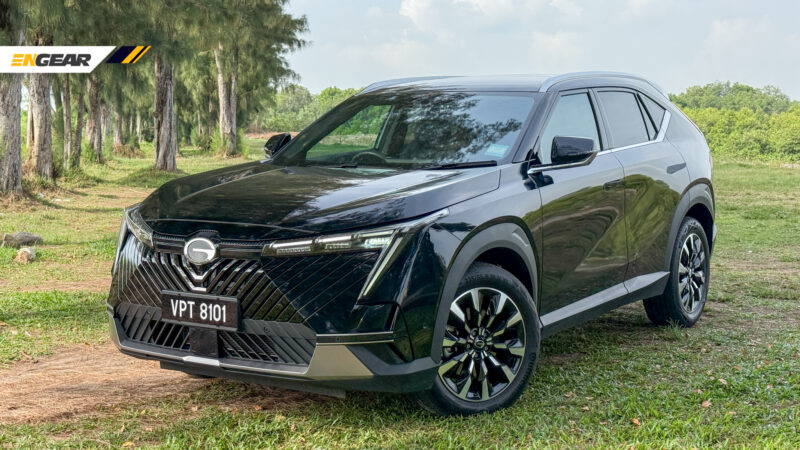
It’s not a good situation when a driver does not receive the necessary feedback from the road due to the steering correction system intervening for several seconds before relinquishing control back to the driver.

You can read the full review of the Jaecoo J7 test drive at the link below:

We have tried the Jaecoo J7 – Test Drive