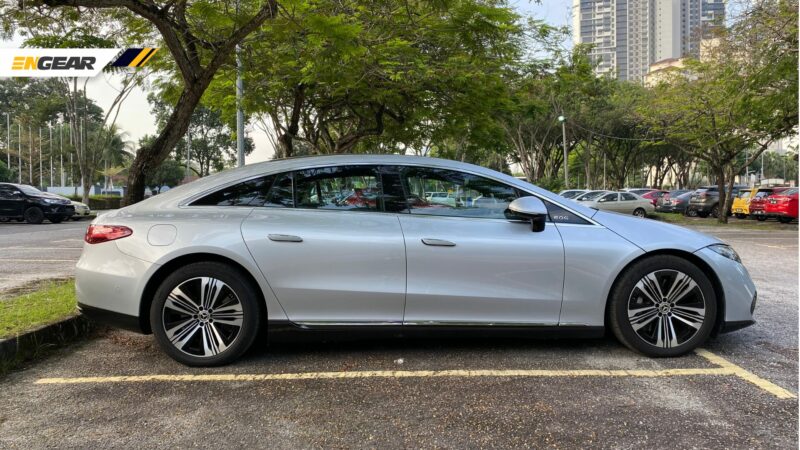
For the Malaysian market, the Mercedes-Benz EQS 500 4Matic, along with the SUV version, represents the flagship offerings in the brand’s electric vehicle lineup.
It was first launched in Malaysia in July 2022 in the fully imported EQS 450+ guise. Less than a year later, Mercedes-Benz Malaysia (MBM) pulled the covers off the locally assembled EQS 500 at its manufacturing plant in Pekan, Pahang.
Undeniably, as the highest variant in its lineup, the EQS 500 offers luxury and top technology for its customers, but for this writer, it still has some discernible shortcomings.
It’s not an S-Class
Some may have thought that the EQS is the electric version of the S-Class. This may be true in some ways but it is worth noting that the EQS is based on the automaker’s dedicated electric platform known as Electric Vehicle Architecture (EVA), while the S-Class is underpinned by the Modular Rear Architecture (MRA2) platform.
This gives the EQS a slightly smaller footprint than the S-Class, with a length of 5,216 mm, width of 1,926 mm, and height of 1,512 mm. The wheelbase is also 6 mm shorter at 3,210 mm. The interior is spacious but not as roomy as the S-Class.
Unconventional design
Unlike the S-Class, which exudes elegance in its traditional ‘three-box’ shape, the EQS has a much more unique appearance highlighted by its oval-shaped body. According to Mercedes, the shape plays a significant role in helping the EQS achieve a drag coefficient of 0.20, making it one of the most aerodynamic cars in the world.
While most were intrigued by its futuristic appearance, this writer can’t help but think how the EQS looks like an egg on wheels.
The MBUX Hyperscreen takes the cake but…
Inside, the centrepiece is Mercedes-Benz’s impressive MBUX Hyperscreen infotainment system, which combines three displays: a 12.3-inch digital driver instrument cluster, a 17.1-inch OLED touchscreen in the middle, and a 12.3-inch OLED touchscreen for the front passenger.
It has to be said that the giant display does make the EQS look somewhat like a spaceship, but the glass panel picks up smudges and fingerprints easily.
Say auf Wiedersehen to physical buttons
Save for the start stop and hazard light buttons, the majority of the vehicle’s functions, including the air conditioning system, can only be accessed through the central touchscreen. Needless to say, this will increase driver distraction.
On top of that, the touch panels on the steering wheel are not exactly user-friendly, and it will take some time getting used to.
Air suspension is supple but a little too soft
On the highway, the EQS demonstrates why Mercedes-Benz’s air suspension is among the best in the market. It absorbs every undulating surface so smoothly that long journeys are hardly felt.
However, on normal roads, this writer needs to be careful as the suspension is quite soft and tends to bottom out if the car is driven too fast over bumps. The suspension can be raised to increase the ground clearance but that means having to fiddle with the infotainment menu while driving.
For this writer, the Suzuki Jimny is an inherently unique vehicle. Its extremely angular and boxy body makes it look rugged, yet with smaller dimensions compared to the Perodua Axia, it also appears rather cute at the same time.
Not only that, its relatively high ride, wide fenders, and rear-mounted spare tyre indicate that the Jimny is ready to tackle any terrain, anytime. However, is the price tag of RM158,900 justified by what it offers?
If you compare it with other vehicles in that price range, the answer is a big NO as for that price, you can land yourself a much larger, more practical vehicle equipped with more modern technology.
But if you look at what the Jimny can actually do, you might change your mind. As aferomentioned, it was conceived to be driven on rugged paths, even rocky or muddy roads. The Jimny, from then until now, is a true off-roader.
There are many factors contributing to Jimny’s off-road prowess. First and foremost, like most pickup trucks on the market, the Jimny is built on a ladder frame construction that is tougher and more suitable for off-road driving.
The frame is paired with front and rear rigid axles, which is simpler in construction but more robust in nature. It also offers better grip in rough conditions by pressing the other wheel down when the other tyre is being pushed up by an obstacle.
Of course, a true off-roader is not a true off-roader without a four-wheel drive system with a low range transfer case that allows you to crawl out of challenging situations easily.
Not all Jimny owners will use this feature, but at least they will feel more confident knowing that their vehicle is equipped with one.
Yes, the Jimny has it all if you are an outdoorsman who goes out camping in Janda Baik every now and then, but is it the perfect fit for city dwellers?
This writer can’t stress this enough but the Jimny is a tiny SUV, so don’t expect practicality to be one of its strengths like other SUVs on the market.
The cabin is cramped and if you and your passenger are considered ‘large’ (not to body shame, mind you!), rubbing shoulders is a common occurrence in the Jimny. Thankfully, the narrow interior is offset by the tall roof so you don’t feel like sitting in a literal sardine can.
In the rear, there are two seats but as expected, they seem more suitable for children. If the seats are in the normal position, you have virtually no space to put items such as luggage or a stroller.
So if you plan on going on a weekend trip, for instance, you have no choice but to fold the rear seats flat or add a roof rack. Without the latter, you only have space for one rear passenger or none at all, depending on how much luggage you bring.
With a 1.5-litre NA engine making only 100 hp and 130 Nm, you might think that the Jimny will struggle when driven with a full load. It’s not fast, but based on this writer’s experience, the Jimny was more than willing to climb hilly roads like the Karak Highway and Genting Highlands road—provided you don’t push it too hard.
This writer found the most ideal speed for the Jimny to be 110 km/h maximum. As soon as the speedometer needle exceeds that figure, it will start to feel unsettled. With its soft suspension and a rather numb steering, this is not a vehicle you want to use to carve tight corners.
On normal roads, the Jimny is comfortable, but with the ladder frame, the entire cabin will shake quite violently if you hit a pothole. The NVH level is satisfactory, which is somewhat surprising for an old-school vehicle like this, but it should be noted that it was driven at speeds below 100 km/h most of the time.
The Jimny is old school in spirit but it is young at heart, meaning it comes with some modern features to attract younger customers.
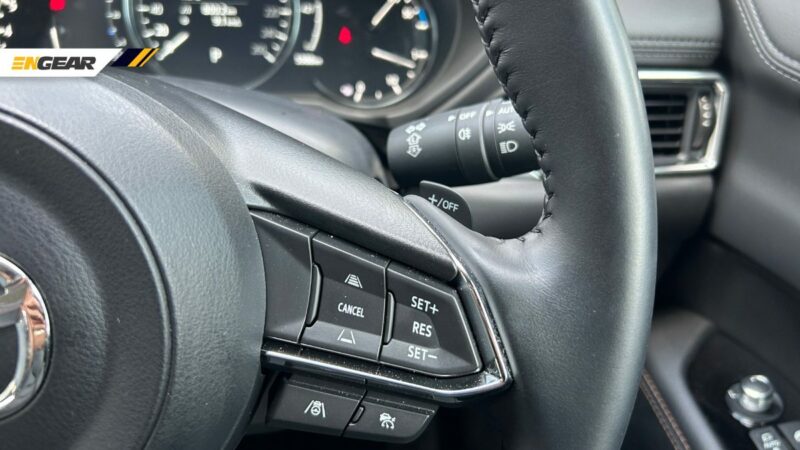
These include automatic LED headlights, a seven-inch touchscreen with Bluetooth, wired Apple CarPlay and Android Auto, a USB port, a reverse camera, Cruise Control, and audio control buttons on the steering wheel.
As for the safety front, it is equipped with ABS, Electronic Stability Program (ESP), Brake Assist, Hill Hold Control, Hill Descent Control, ISOFIX, and two airbags. Basic but should be enough for most users, this writer reckons.
However, aside from the mentioned features, the Jimny has virtually zero premium features. Every surface, except for the leather-wrapped steering wheel, is hard plastic, while the seats are upholstered in fabric and can only be adjusted manually.
Alternatively, there is the Jimny Black Edition that offers leather upholstery and various other accessories, but you need to fork out an additional RM13,000. There is also the more stylish Jimny Rhino, but it is RM16,000 dearer than the standard variant.
Going back to the earlier question, is the Jimny worth the money? If you’re someone who loves the great outdoors and is in the market for a vehicle that is not only rugged but also iconic, the Jimny is as a sensible choice if you can get over the somewhat high price.
But if practicality, comfort, and luxury are on top of your list, steer clear of the Jimny because there are many other vehicles on the market that are more well suited to your needs.
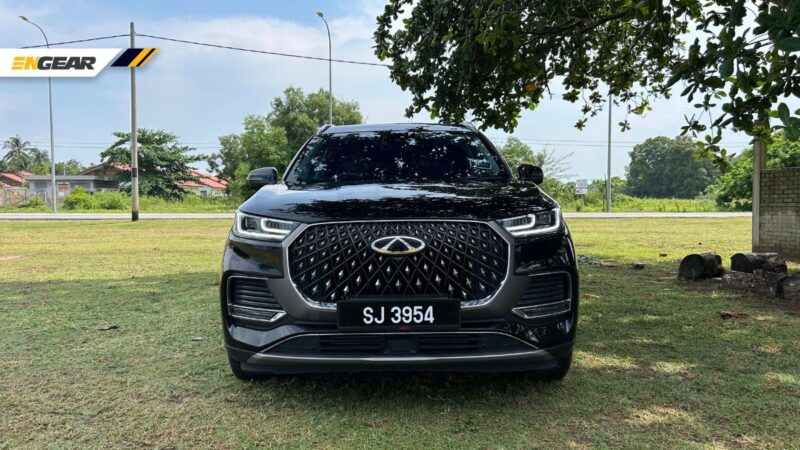
IT has been a year since the Chery Tiggo 8 Pro officially entered the Malaysian market. Although we have just received a test unit for evaluation, this segment-D SUV is not unfamiliar to Engear, as we previously conducted a brief test drive when Chery first arrived in Malaysia at the end of 2022.
Since then, for some reason, we focused on the Omoda 5 and Omoda E5. However, it is certainly not too late to thoroughly test the Tiggo 8 Pro. In fact, until now, we still receive inquiries about it, whether through social media DMs or during coffee shop conversations.
Attractive package, worth it?
One of the main attractions that led you to include the Tiggo 8 Pro on your list is its appealing price. It’s “only” RM159,800 for a seven-seater segment-D SUV.
And it certainly doesn’t feel cheap at all. You get high-end features such as a 2.0-liter turbo engine, three driving modes, full LED front and rear lights, 19-inch rims, a pair of 24.6-inch wide display panels with two screens, wood and chrome trim, leather seats, electronic gear knob, Apple Carplay and Android Auto connectivity, and a full ADAS package.
Not only that, everything you can see and touch feels premium and is worth its price, such as the wood and chrome trim on the dashboard and door panels, and switches and buttons with satisfying movements, and interior lighting.
If you were to scrutinize the Chery Tiggo 8 Pro in detail and later told someone that it was worth RM240,000, they might still believe it.
Not satisfied with that, the Tiggo 8 Pro can be equipped with automatic side steps for an additional RM2,999. These steps open automatically every time you open the door, just like in a Range Rover, which costs three or four times as much.
This is the cheapest non-national segment-D SUV, even cheaper than some segment-C SUVs. This makes the writer wonder how they can sell it at this price. Is there no profit at all?
Brand perception
However, it cannot be denied that there is a significant issue that balances the value offered above, that is brand perception.
We all know where Chery comes from, and if you are of the same age as the writer, growing up listening to Limp Bizkit and wearing Adidas Superstar on the weekends, you would certainly know that this is not Chery’s first time in Malaysia.
However, you must know that industrialization in China has progressed rapidly. They started later than Malaysia, but just look at their technological advancements today. And this also has an impact on the automotive industry.
You would likely agree if the writer were to say that vehicles from China can no longer be underestimated. They are now serious in the industry, striving to be the best, and developing rapidly.
For example, look at the mobile phone industry. Apart from their own brands, there are leading global brands that have opened manufacturing plants in China. Are the quality of their products different from those produced in other countries?
If you are truly interested in vehicles like the Chery Tiggo 8 Pro, brand perception is indeed something you cannot avoid.
Ehem, Proton X90, how is it?
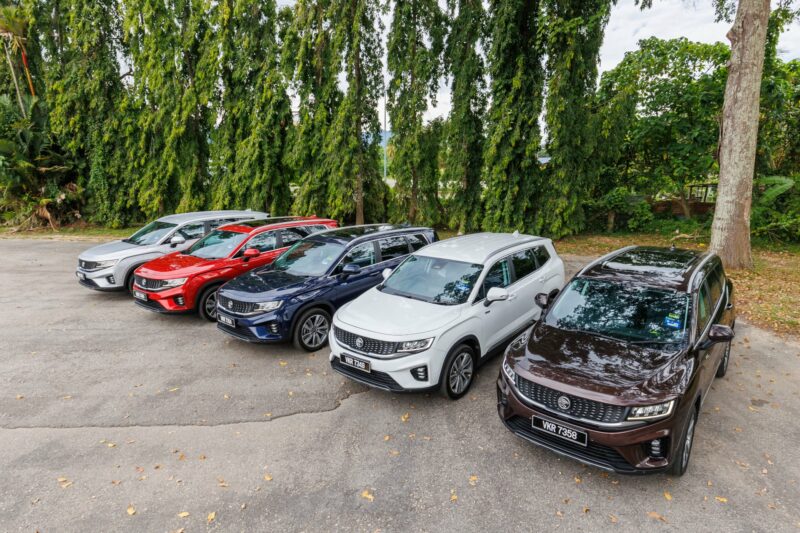
Oh yes, when talking about the Tiggo 8 Pro, you can’t avoid discussing the Proton X90 as well. The prices are quite close, ranging from RM123,800 for the Standard to RM152,800 for the Flagship.
The engines are different, with the X90 having a 1.5-liter turbo direct-injection (TGDI) powertrain with a hybrid system, while the Tiggo 8 Pro has a 2.0-liter turbo. Of course, the outputs are different, with the X90 at 177hp and 255Nm, while the Tiggo 8 Pro offers 257hp and 390Nm of torque.
Both SUVs are in the same segment, similar in size, and both can accommodate seven passengers.
Which one to choose? In terms of design, the writer finds the Tiggo 8 Pro to be more stylish overall and with more attractive details. However, you certainly get better value for the X90, as its price is lower due to its national car status (even though both SUVs are designed and developed in China).
Okay, the X90 may not be 100 percent developed in China, as Proton engineers have provided input for the suspension tuning. This is why the Proton X90 has a multi-link rear suspension compared to the Geely Haoyue.
The X90 also benefits from lower road tax, but if you need power and frequently carry many passengers, you might be willing to spend more and choose the Tiggo 8 Pro.
Solid and high-quality feel
Even more enticing, the Chery Tiggo 8 Pro feels very solid, sturdy, and high-quality. Whether examining the exterior details, simply sitting inside the cabin, or driving it, all these aspects give you a premium feeling.
For example, on the exterior, there is an illuminated front logo, automatic side steps as mentioned earlier, and just the right amount of chrome trim, not excessive. The cabin is spacious and the front seats are very comfortable. The first time the writer sat in the driver’s seat of the Tiggo 8 Pro, it felt like being in a car that costs twice as much.
Then, the high dashboard and center console reinforce the premium feel of this SUV. At the same time, all buttons and switches are easily accessible. As for driving, the writer felt that it has more than enough power for daily driving. The writer gained good confidence in handling this Chery Tiggo 8 Pro even on sharp corners.
Only the steering wheel feels a bit light, but the gas pedal and transmission are all quite responsive and have good tuning. In terms of fuel consumption, the writer recorded around 9.9km per liter, considered very good considering the size and driving style of the Tiggo 8 Pro.
Of course, such fuel consumption is not very suitable for daily city driving, unless you can afford it. But it is perfect for taking the family on weekend outings outside the city. Overall, the package offered by the Chery Tiggo 8 Pro is quite appealing with a combination of size, features, and price. This makes the writer excited to see the future Chery models. Perhaps we will also test drive the recently launched Tiggo 7 Pro.
Specifications of Chery Tiggo 8 Pro
Price: RM159,800
Engine: 2.0-liter petrol turbo
Gearbox: 7-speed dual-clutch auto
Power: 257hp @ 5,500rpm
Torque: 390Nm @ 2,000rpm
WE have driven the performance variant test of the CX-5, with the 2.5T turbo petrol engine delivering 228hp and 420Nm of torque, alongside the all-wheel drive (AWD) system.
Undoubtedly a unique offering from Mazda, with no clear close competitors, it provides more options besides naturally aspirated petrol and diesel.
However, due to demand, we also list some issues or problems with this Mazda CX-5 2.5T. Yes, as good as the car is, even though it’s advanced and powerful, issues can still arise. We have identified three main issues.
You’ll be loved by petrol station owners
Being loved is usually a positive thing, right? But that’s if you’re loved by your parents, loved by your wife. If you’re loved by petrol station owners, it’s not so great.
With the CX-5 2.5T, you will often visit petrol stations because this SUV truly gulps down petrol, unlike most of its competitors that just sip petrol. Throughout the writer’s experience driving this turbocharged CX-5 for over 1,000km, the writer could only achieve an average of 9.4km per liter. The writer tried very hard to achieve 10km per liter but failed.
It’s also enjoyable to experience the strong 420Nm torque, similar to a diesel, available as early as 2,000rpm, but with great power comes some sacrifices. Oh, the struggles…
The addition of the AWD and only six gears in the gearbox doesn’t help with fuel efficiency. Perhaps if Mazda offered this variant with an 8-speed gearbox, it would help achieve better fuel economy.
2. It looks too similar!
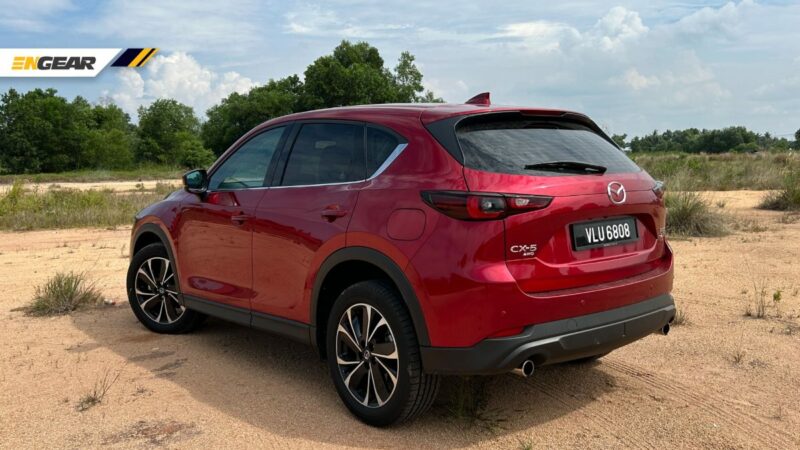
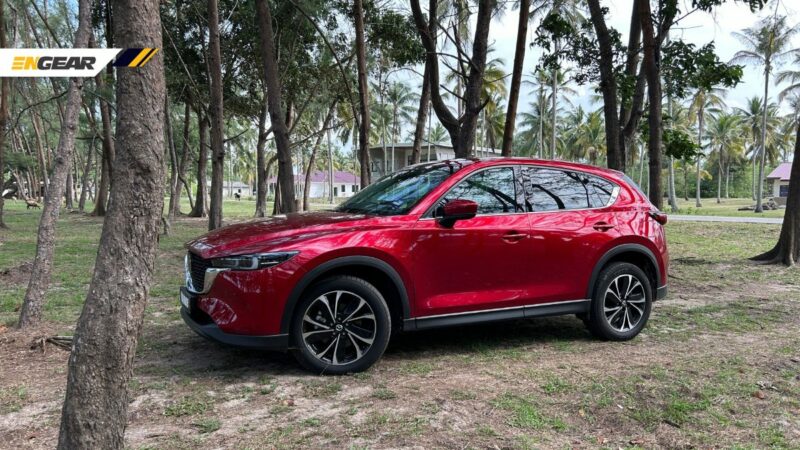
The second issue is that this 2.5T AWD turbo petrol version looks too similar to the other CX-5 variants. Obviously, we identify a car by its design and external identity.
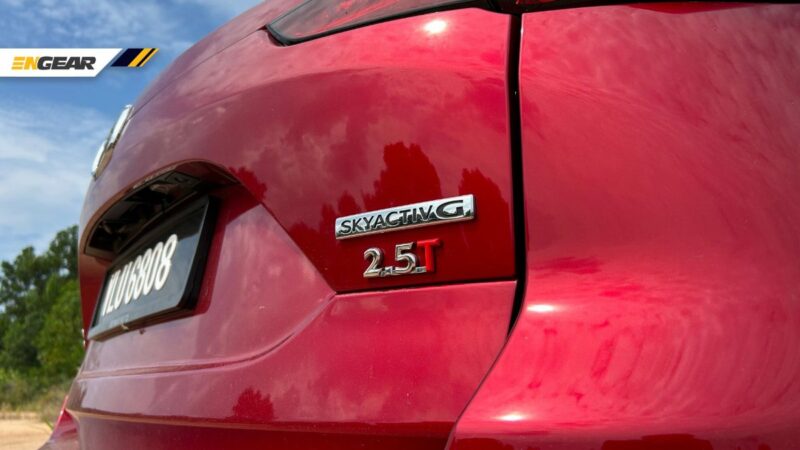
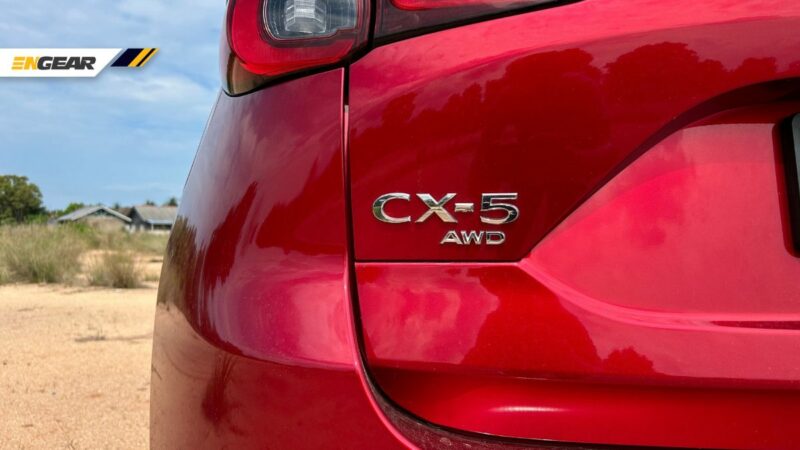
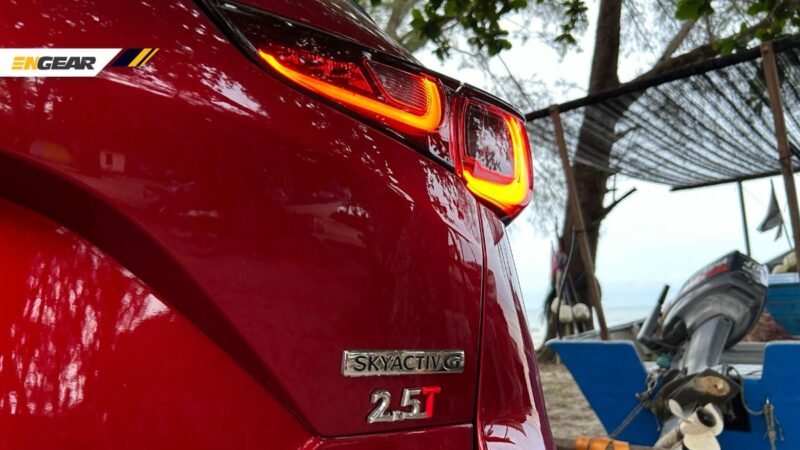
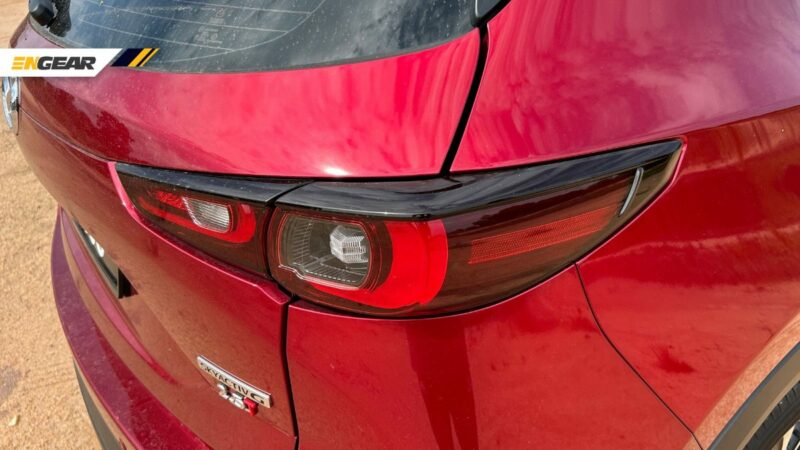
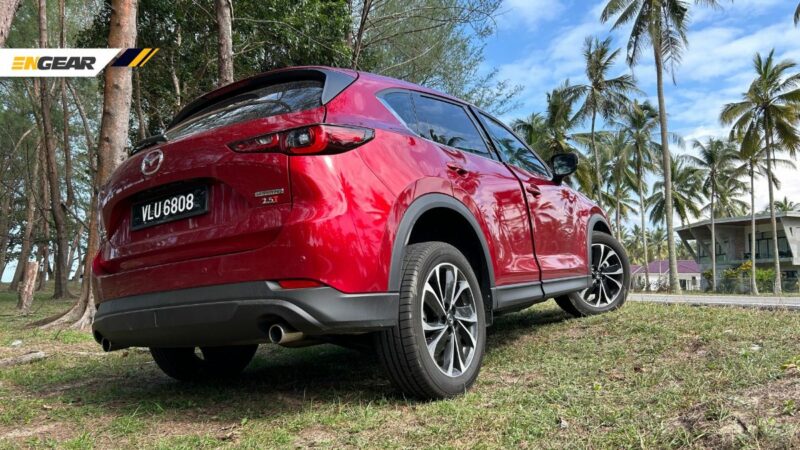
With the CX-5 2.5 turbo, only the rear emblem with the red letter “T” indicates that this is the high-performance turbo petrol version. If you see this red “T”, just forget about poking fun at this CX-5, you’ll be way off the mark.
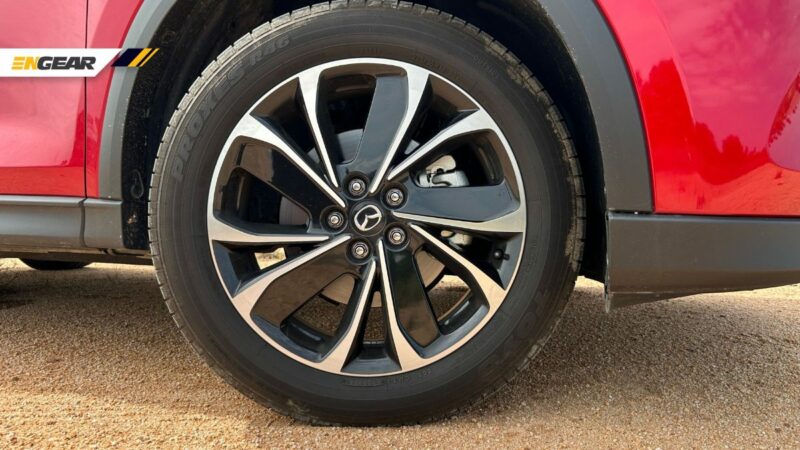
For owners who want to stand out a bit, they might feel unsatisfied with the too modest appearance of this CX-5 2.5T. Perhaps it should have larger rims with a unique design, additional red stripes on the front grille, or a rear roof spoiler. Anything that can make this performance SUV stand out more, Mazda knows better; the writer is not a designer.
3. A bit of identity confusion
The third and final issue is a slight identity confusion with this 2.5T CX-5. It’s not a significant problem, just that to the writer, this CX-5 is not quite an SUV, and not quite a sports car either.
It’s not as efficient (in fuel consumption) as other SUVs or other CX-5 variants, but it also doesn’t provide maximum satisfaction like driving a Mazda MX-5 Miata or Mazda3. This 2.5T CX-5 is too in the middle. No SUV satisfaction, nor true sports car satisfaction. Hence, the writer says it has a bit of identity confusion, not knowing which one it wants to be.
Conclusion
Those are the three issues the writer has experienced during the test drive of the Mazda CX-5 2.5T AWD. But there are many other great aspects about this model, which you can read about here.
And the writer still wants to thank Mazda for producing this unique performance SUV, even though there may not really be a need for it. It demonstrates Mazda’s capability and their identity of not caring about others; just producing enjoyable cars that will be appreciated by their fans.
The writer did not expect that the 2024 Mazda CX-5 facelift would still be offered with the 2.5T variant, or its full name, the CX-5 2.5G Turbo AWD. It’s not that the writer didn’t want or like it, but there wasn’t really a need for a high-performance variant for the CX-5.
However, high-performance vehicles usually show up uninvited and unexpectedly, which is what makes them intriguing.
The writer had driven the old CX-5 2.5T a few years ago, but had not yet shared the experience here, so let’s follow the writer’s journey. We will also examine the updates and determine if it’s worth buying.
Simple appearance with hidden weapons
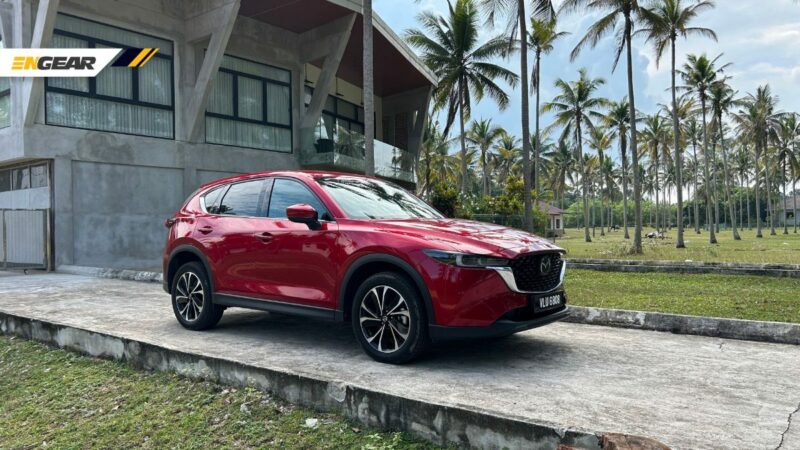
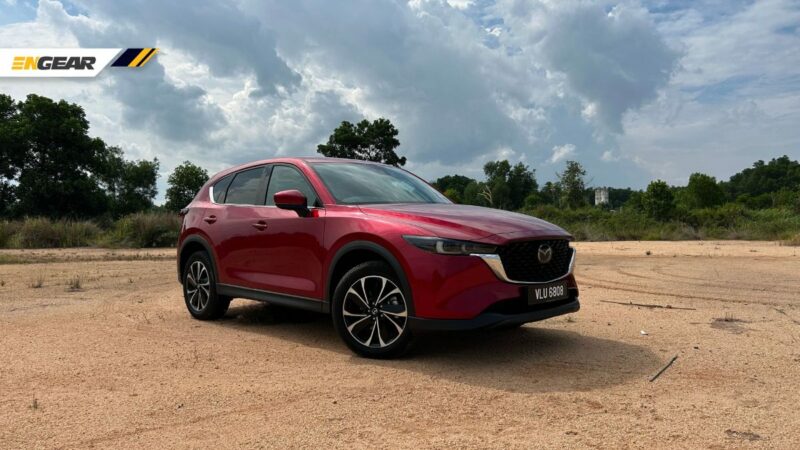
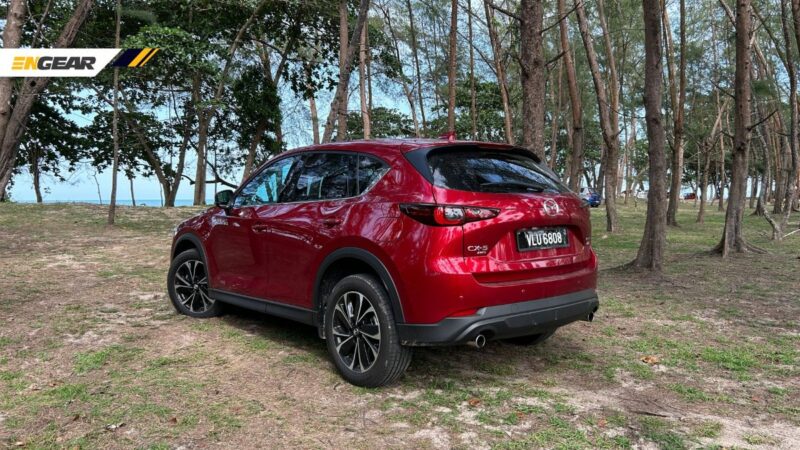
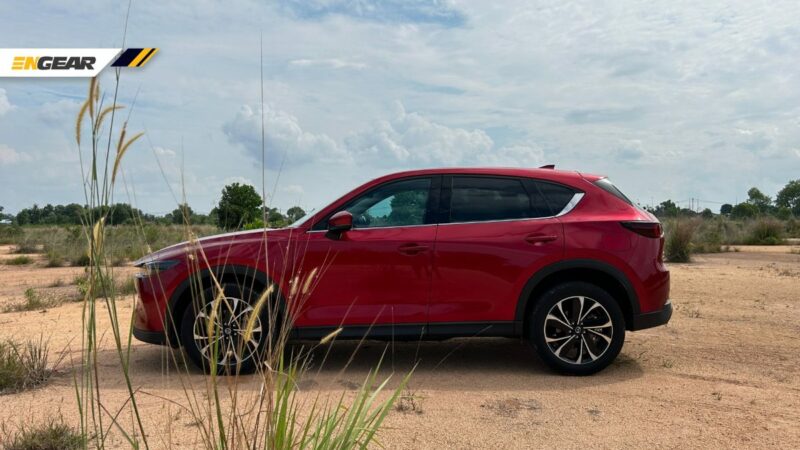
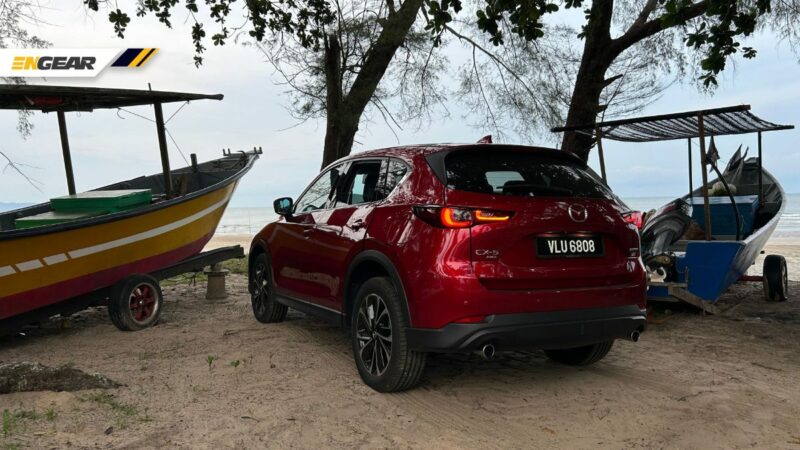
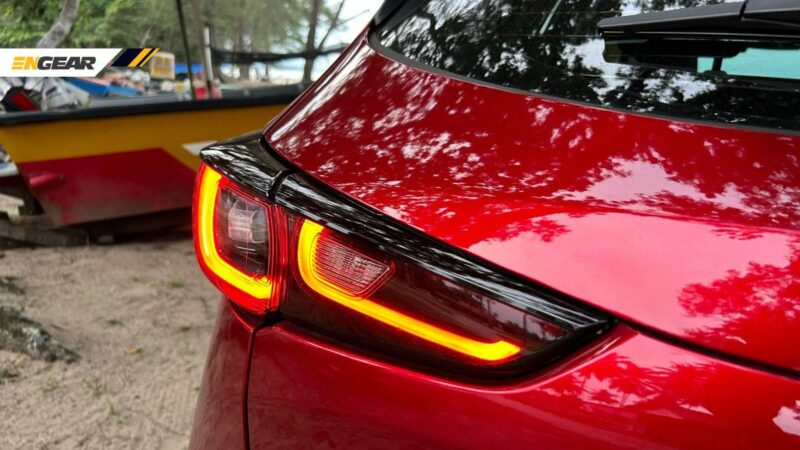
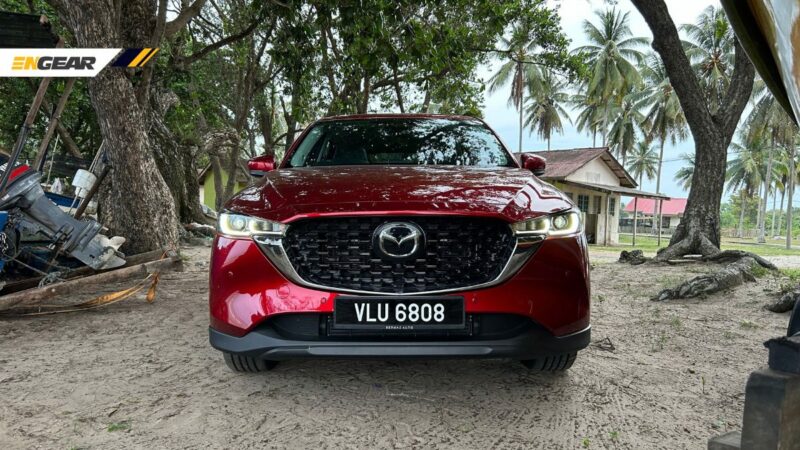
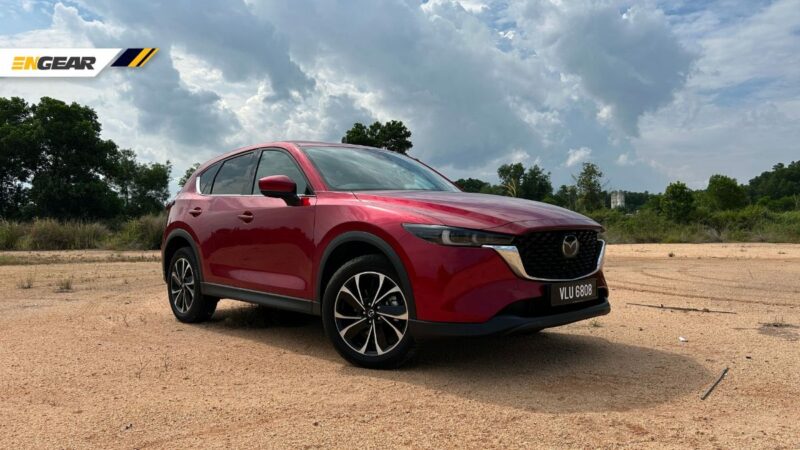
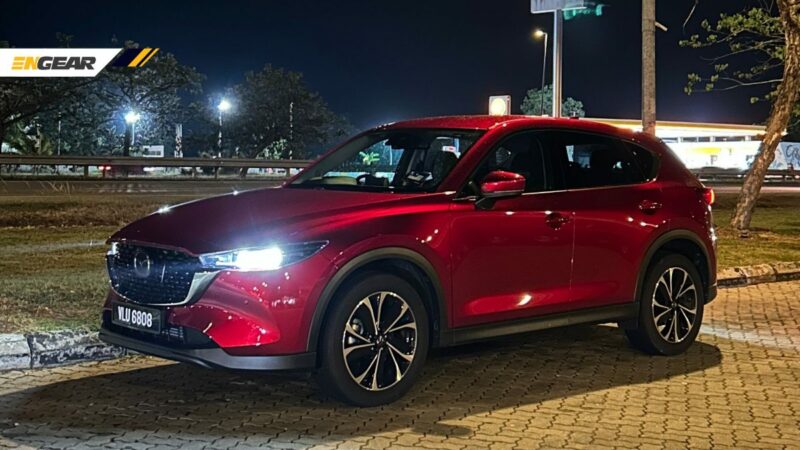
Interestingly, it is difficult to determine whether the CX-5 you see is the regular version or the turbo petrol one. From the outside, there is only an emblem at the back that reads “2.5T”. No fins, spoilers, decals, stickers, or large markings.
It’s like a hidden weapon. Looks ordinary, but if you mess around, here you go! Some people may like this, but not the Type R FK8 owners. It’s a ‘you know it if you know it’ situation.
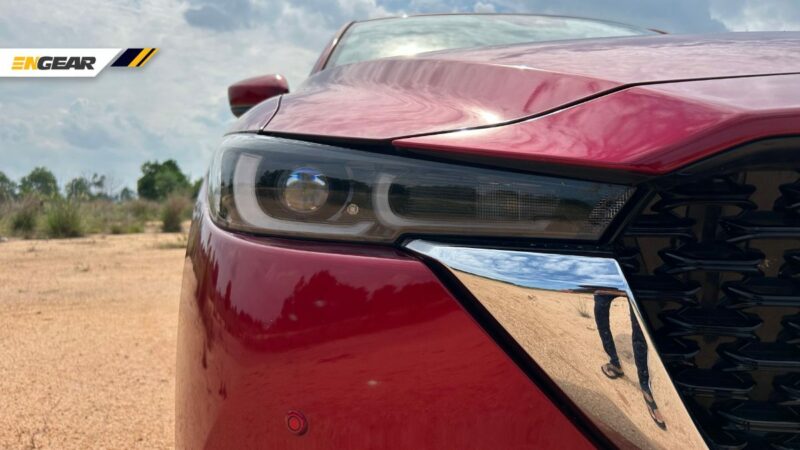
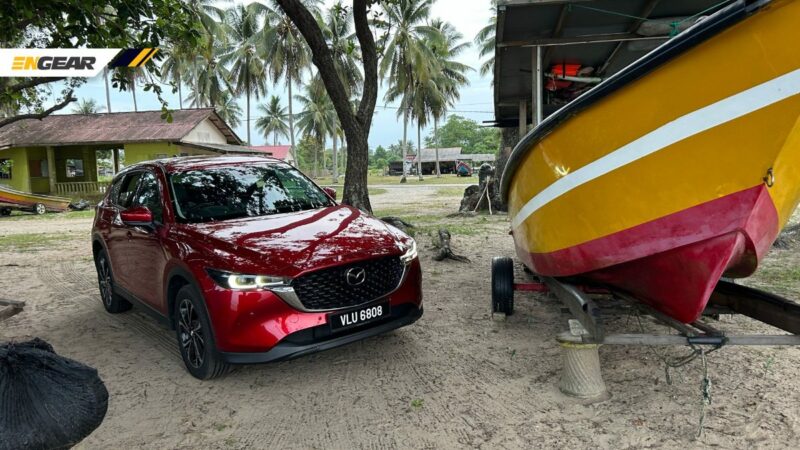
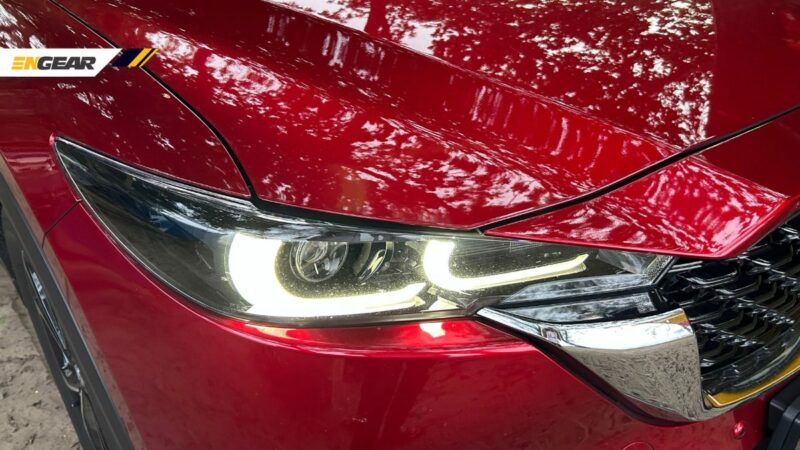
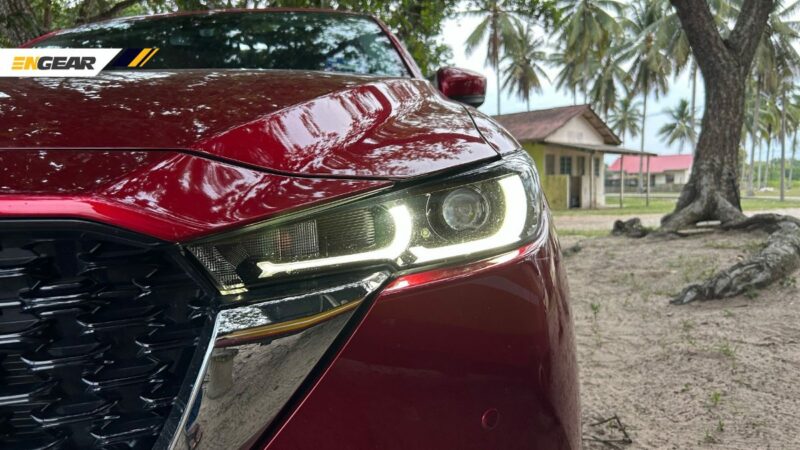
The CX-5 still receives the facelift updates like the other variants, including a new front end, grille, paddle shifters, and the most noticeable change, the DRL graphics shaped like two Ls on each side.
It still looks sleek like the CX-5 we all know, just the mentioned updates make it slightly fresher for 2024. Is it enough to compete with the CR-V?
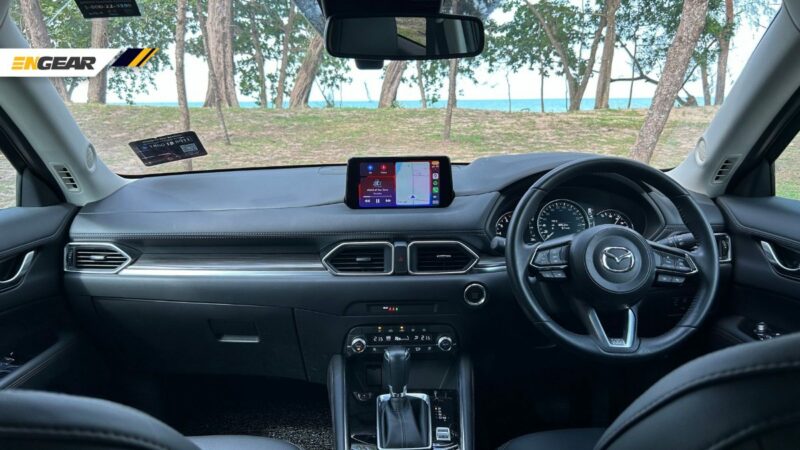
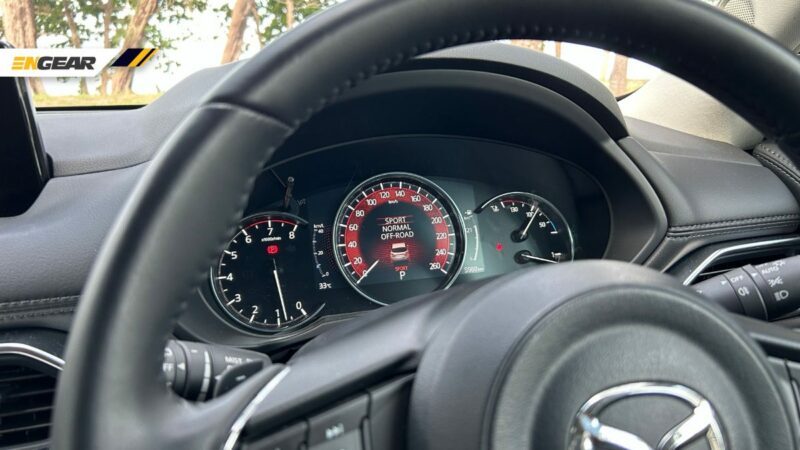
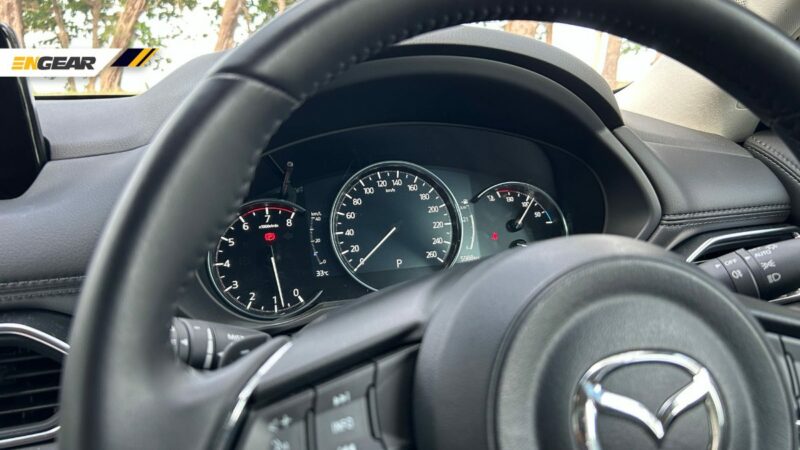
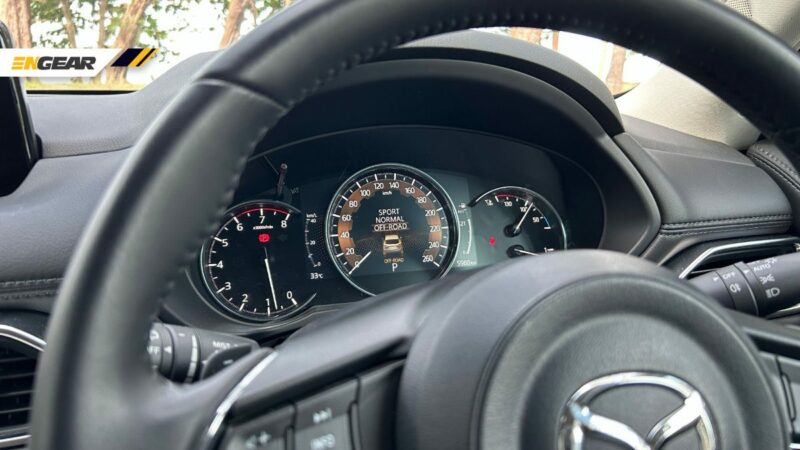
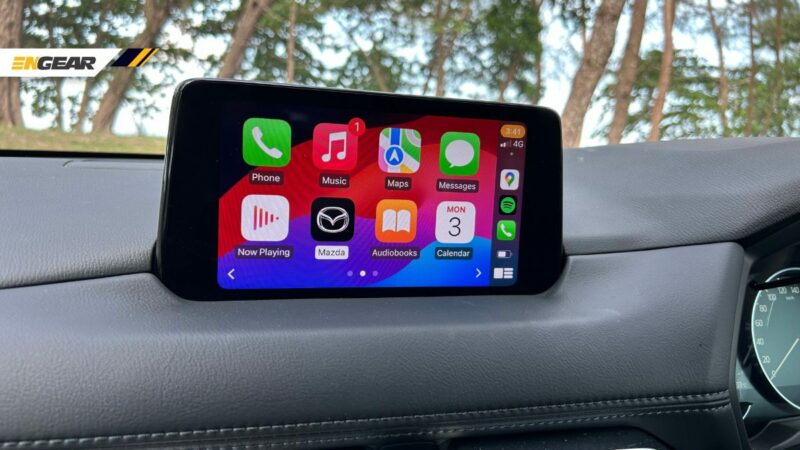
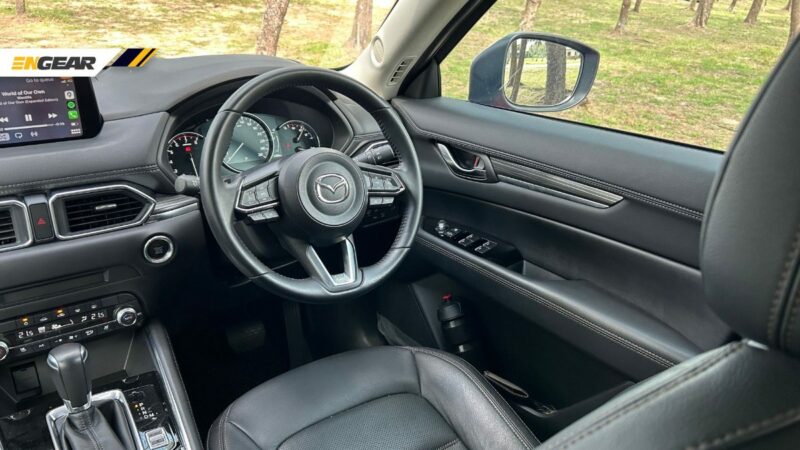
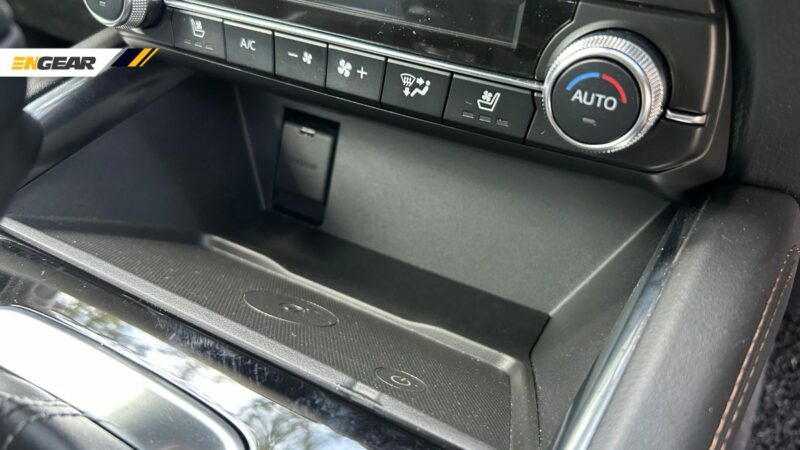
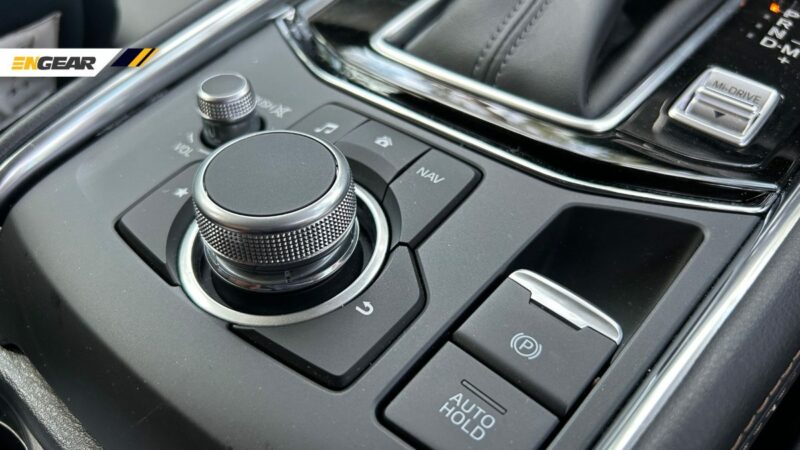
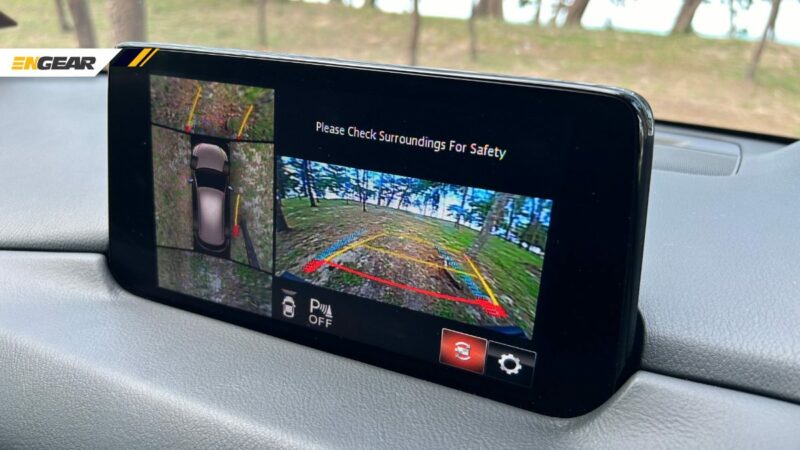
The 2.5T variant is also equipped with a 7-inch instrument display with new graphics, seats with cooling functions, Android Auto and Apple Carplay connectivity (wireless), a 360-degree camera, and wireless charging.
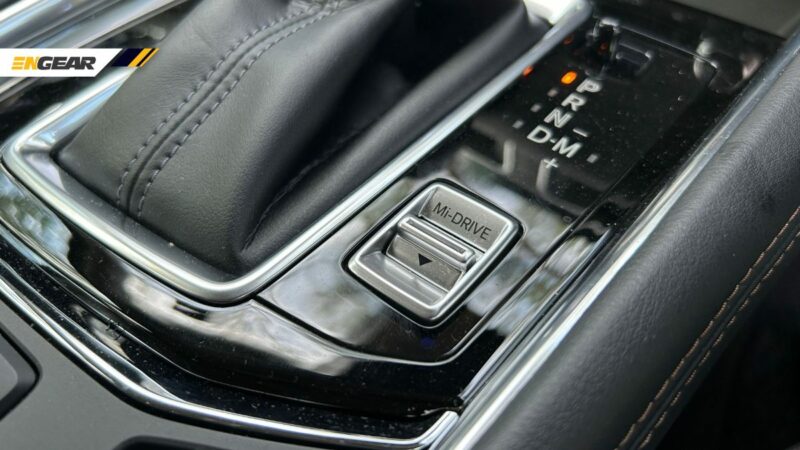
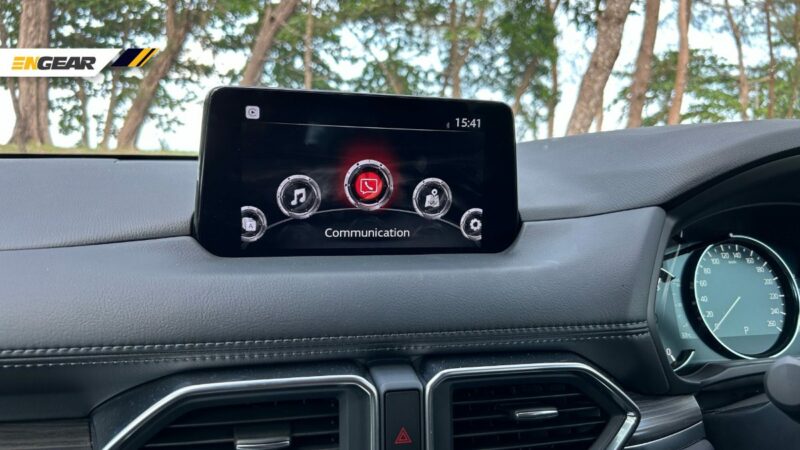
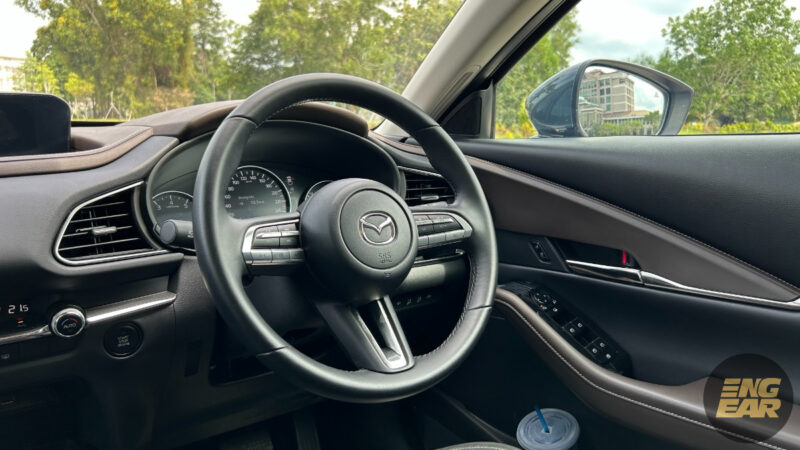
The writer also noticed a new Off-Road driving mode, in addition to the existing Normal and Sport modes. However, the infotainment screen in the middle with an 8-inch size feels a bit ‘stingy’, too small for a car like this. A 12.3-inch screen would be more fitting.
Power in mind all the time
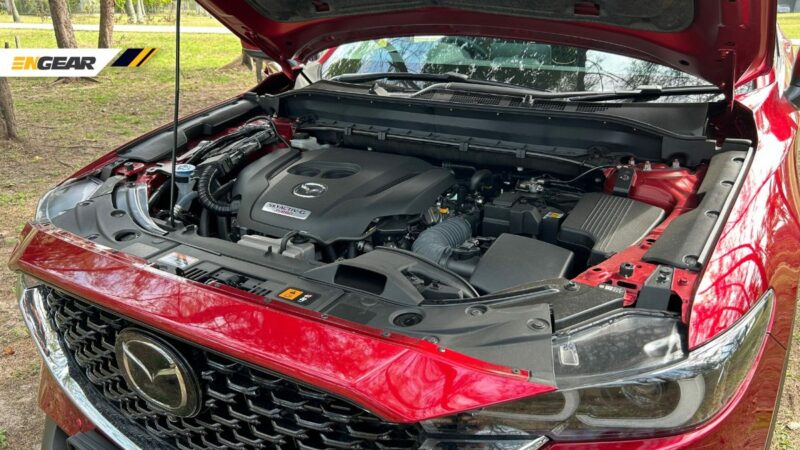
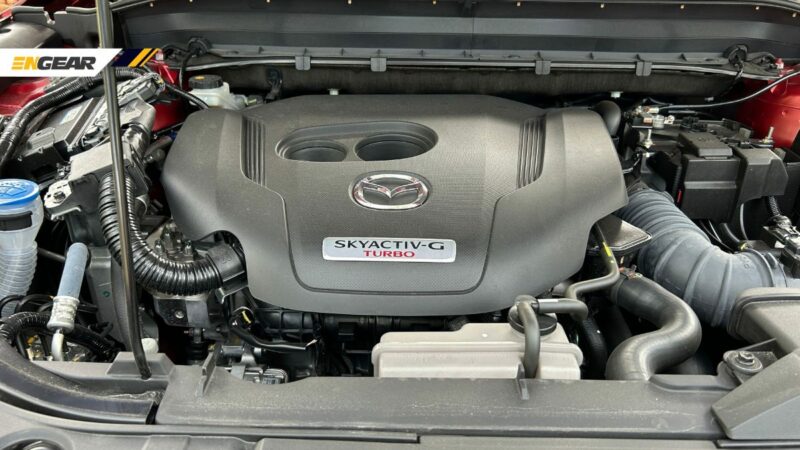
Driving this Mazda CX-5 2.5 turbo petrol, the writer frankly admits that power is at the forefront of their thoughts. The 4-cylinder DOHC engine produces 228hp at 5,000rpm and 420Nm at 2,000rpm.
This is generous power, ladies and gentlemen. While the infotainment screen may be lacking, the power is abundant, surpassing the 2.5 naturally-aspirated (192hp and 258Nm) or the 2.0 (162hp and 213Nm) engines.
The 420Nm torque of the 2.5 petrol engine is almost on par with the 450Nm torque from the 2.2 diesel engine. However, the diesel model is only 2WD, while the 2.5 petrol is AWD, which the writer finds more balanced. The power is distributed more effectively, with both the front and rear axles receiving engine output.
Driving the CX-5 2.5T is quite straightforward. It’s quiet, can stay in any gear, even in 4th gear at 2,000rpm, and when you gently press the accelerator, it doesn’t need to downshift. The car continues to move forward smoothly.
The writer tested it on high-speed twisty roads in Karak and low-speed twisty corners around Jengka, Pahang. This high power can be seen as a safety feature, providing the confidence to overtake on highways. Less time is needed to be in the opposite lane. What do you think?
The handling is not as sporty as the Mazda MX-5 even though the CX-5 is much more powerful. It’s still an SUV.
However, it’s enjoyable to control the heavy and large body smoothly with braking while downshifting, steering inputs while releasing the steering, keeping the right foot on the pedal for positive traction in corners, and then gradually pressing the pedal to the floor when the road straightens.
Upshift as the rpm approaches redline, then repeat as the next corner approaches.
Yes, Mazda is equipped with G-Vectoring Control Plus (GVC Plus) and the Jinba-Ittai philosophy. Both these elements provide controlled, precise, calm, and non-fatiguing driving, in the writer’s opinion.
Even though it ‘only’ comes with a six-speed gearbox, all gears are sufficient for powerful acceleration even with a heavy load (passengers and cargo), while allowing the engine to operate at reasonable rpms when cruising on highways.
However, the compromise for the abundant power is its fuel consumption. The writer can report that the Mazda CX-5 2.5T is not fuel-efficient. The writer struggled to achieve over 10km per liter. After around 1,10km of driving, the writer only managed 9.4km per liter (and a smile). AWD becomes more significant.
Earlier, the writer mentioned that the CX-5 2.5T now comes with an Off-Road driving mode. Although the pre-facelift version also had AWD, it did not have an Off-Road mode.
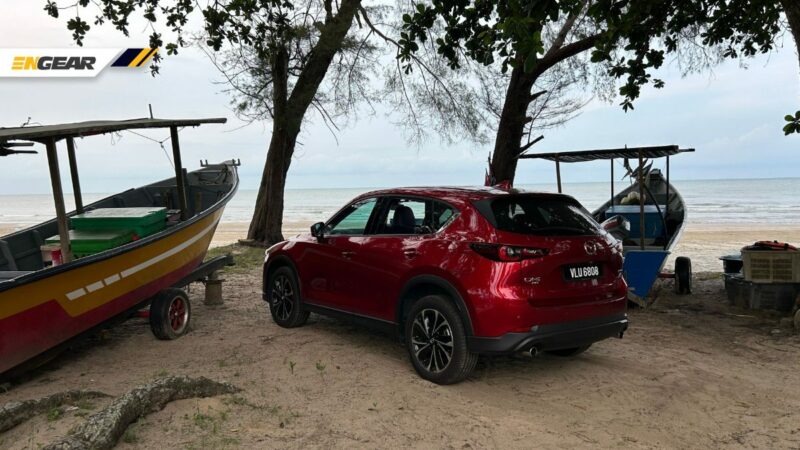
The writer had the chance to briefly test this mode on a sandy beach. The delivery of its power can be felt smoother and more relaxed. This mode should assist you in crossing mild off-road terrains without any incidents of tires ‘digging’ into the ground/sand.
Is it worth buying?
If you desire an SUV that appears modest but has the ability to outshine hot hatches at traffic lights, you should consider checking out this CX-5 2.5T AWD. It is a unique offering by Bermaz Auto Berhad, with hardly any close competitors.
It still maintains its power and capability, but the upgrades make it more current, sophisticated, easier to use daily, and safer.
All variants of the Mazda CX-5 2024 in Malaysia come with a 5-year or 100,000km warranty, with a complimentary maintenance package for the same duration and distance.
Recently, smart Malaysia conducted a preview session for its latest model, the smart #3, exclusively at the Pro-Net headquarters. We had the opportunity to get a closer look and even test drive the smart #3 on the Proton test circuit in Shah Alam. But first, a little background.
Background
For those who are uninitiated, smart is now owned by Geely and Mercedes-Benz, focusing solely on producing fully electric vehicles (EVs) at the moment.
The smart #3 is not just a sportier coupe version of the #1; it comes with several technical differences. Firstly, it is built on the Sustainable Experience Architecture (SEA) platform shared with the #1 and several models under the Geely group.
In broad terms, the smart #3 is longer and wider than the #1 but lower, with approximately an 80mm difference between the two. Therefore, theoretically, the smart #3 is expected to offer more stable handling, right? We’ll discuss this further.
Unique features of smart #3
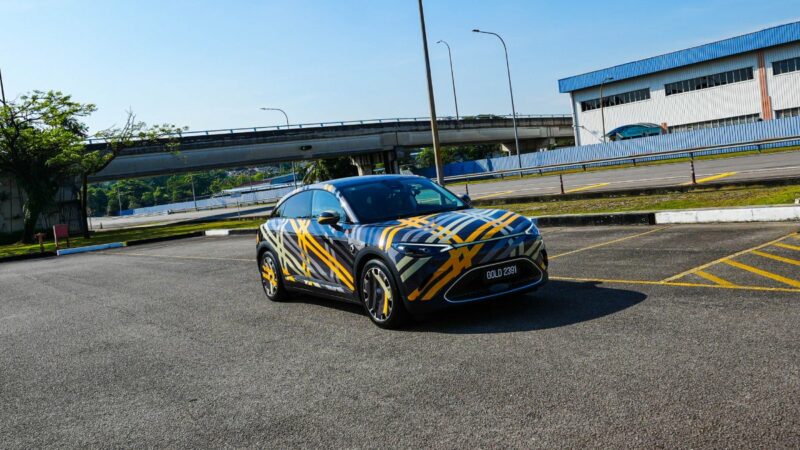
One distinctive feature of the smart #3 is its curved coupe-style roof, unlike the straight roof of the #1. The roof of the smart #3 has unique color play on the A-pillar and C-pillar, giving it a ‘floating roof’ effect.
Other features include front and rear LED lights, flush door handles, frameless windows, and illuminated logos. The smart #3 is also more aerodynamic than the #1, with a drag coefficient of 0.27 (0.29 for the #1).
Specification details
The lineup offers variants similar to the smart #1: Pro, Premium, and Brabus. The Pro variant has a 49kWh battery, while the Premium and Brabus variants come with a 66kWh battery.
The Pro and Premium variants have a single rear electric motor with an output of 272hp and 343Nm of torque, achieving 0-100 acceleration in 5.8 seconds.
On the other hand, the smart #3 features two motors on the front and rear axles, delivering a total power of 428hp and 543Nm of torque.
As the #3 Brabus is an AWD vehicle, its 0-100 acceleration is much quicker, around 3.7 seconds. The maximum speed for all variants is 180km/h, with a driving range of approximately 455km for Pro and Premium, and 415km for Brabus.
Initial impressions
So, how was the initial drive of the smart #3? From our experience on Proton’s high-speed oval track, the smart #3 accelerates smoothly.
The Premium variant reaching 100km/h in 5.8 seconds is more than sufficient. Imagine cruising this smart #3 on the highway; a smooth acceleration means easier lane changes and smoother traffic flow. Agree?
We also tested the dynamics at Pro-Net’s provided dynamic section, including figure-8, slalom, and straight-line acceleration. The smart #3’s chassis felt sturdier and agile due to its stiffer springs, shock absorbers, and anti-roll bars compared to the #1, giving it a sportier character.
The technical changes seem crucial and complement the sporty appearance of the #3. Turning in the figure-8 felt stable, with smooth torque delivery at low speeds.
This makes it suitable for everyday city driving by regular motorists. Among our experiences, the slalom tested the chassis stability, tire grip limits, and power delivery. The smart #3 easily reaches grip limits due to its rapid torque delivery, following your right foot’s commands.
However, the safety systems and strengthened chassis ensure the car remains in control and assists the driver in navigating through various situations. Body roll is noticeably reduced, making the smart #3 more nimble and agile when changing directions while accelerating and braking.
Overall, the smart #3 exhibits a distinct character compared to the #1, suitable for young buyers seeking an enjoyable EV for daily driving. Stay tuned for our extensive daily test drive report in both city and long-distance driving once we receive the smart #3 test unit shortly.
In the meantime, you can visit the Malaysia Autoshow 2024 from May 22 to May 26, 2024, as the smart #3 will make its debut appearance there. smart Malaysia representatives will be at Hall A2 (Premium Hall), MAEPS, Serdang.
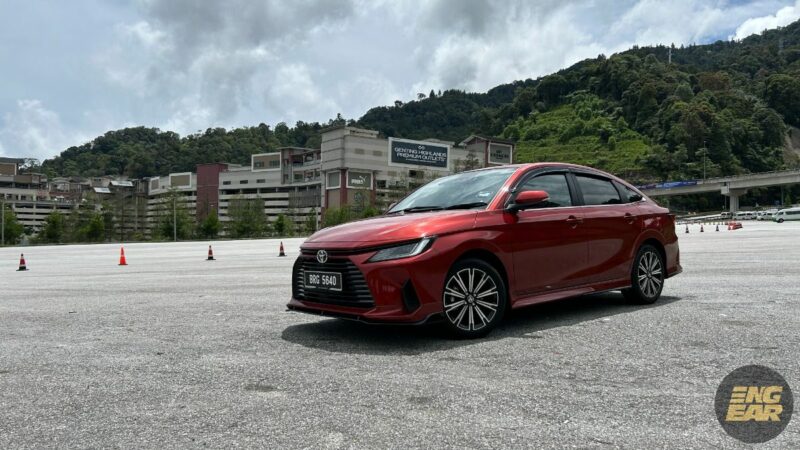
Launched back in March 2023, the fourth-generation Toyota Vios is a fairly capable B-segment sedan in its own right.
There are several things that I like about the Vios, but like many other cars that I have had the opportunity to test drive, it also has some weak points which hopefully can be addressed in the future.
So, without further ado, here are five things I don’t particularly like about the Vios:
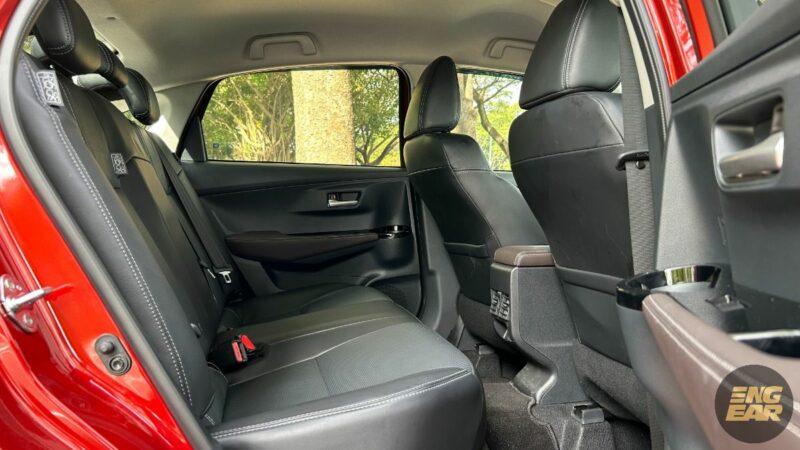
Limited rear passenger headroom
Honestly, I’m not what you would call a tall person, but during the Vios media drive in Langkawi last year, I found that the rear passenger headroom for rear passengers was rather limited. This is due to the fastback-style sloping roofline. It seems that in the pursuit of style, some comfort had to be sacrificed.
No rear folding seats
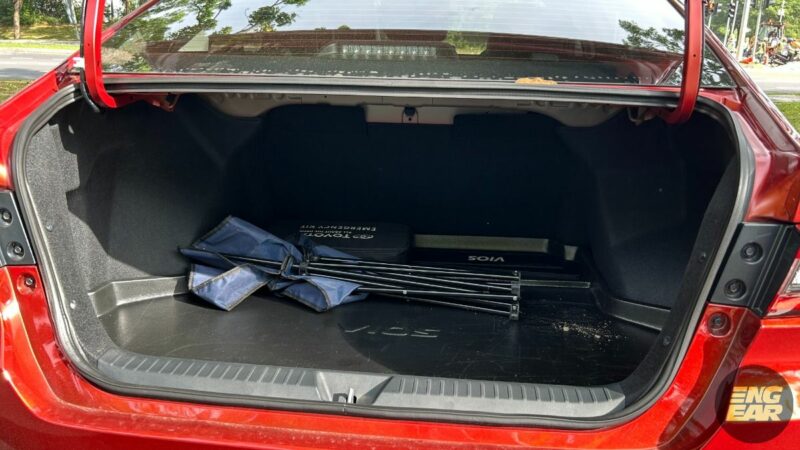
It’s quite unusual for a new car to have non-foldable rear seats, but according to Toyota engineers, this feature was omitted in the Vios because market research showed that users rarely use this function. Not only that, the 475-litre capacity is also considered large enough. Bad news for frequenters of Ikea, I guess.
No spare tyre
One of the most talked subjects during the Vios launch was the absence of a spare tyre. I was told that this important feature was sacrificed to reduce weight (they managed to shave off 110 kg, fair enough) and save some space. Users do get a tyre repair kit, though.
Underpowered engine
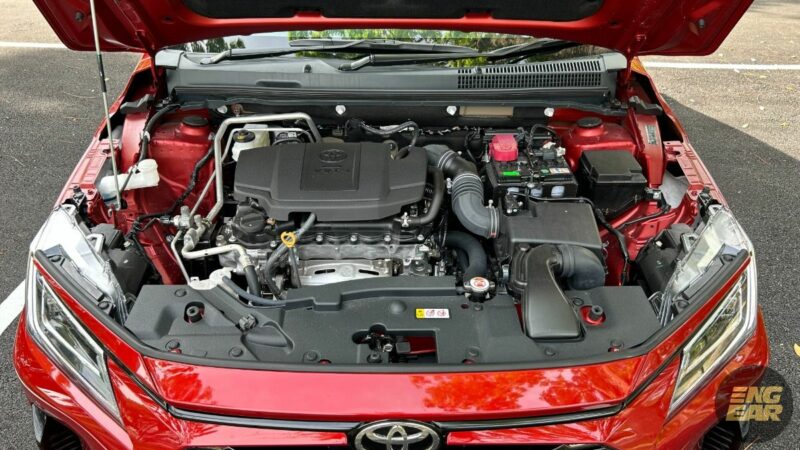
Although the Vios’ 2NR-VE 1.5-liter four-cylinder Dual VVTi engine is found to be very smooth in most driving situations, it falls short compared to its closest competitor, the Honda City, in terms of output.
The City has 119 hp and 145 Nm, which is 15 hp and 7 Nm higher than the Vios. In fact, the 2NR-VE engine is actually less powerful compared to the previous 2NR-FE engine.
Overloaded with features
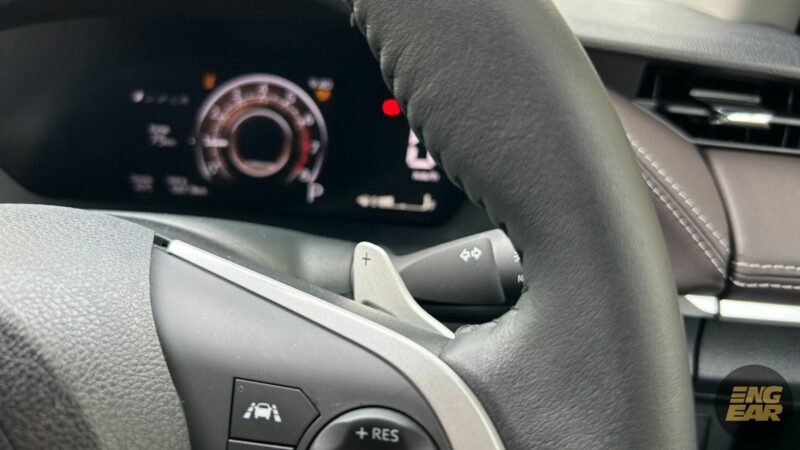
There are simply too many features in the Vios. In terms of driver convenience, there’s a 9-inch touchscreen with wireless Apple CarPlay and Android Auto, wireless charger, a push-start system and many more.
When it comes to safety, the Vios is riddled with Toyota Safety Sense (TSS) features such as Pre-Collision System, Lane Departure Prevention, Lane Departure Warning, and Front Departure Alert, to name a few.
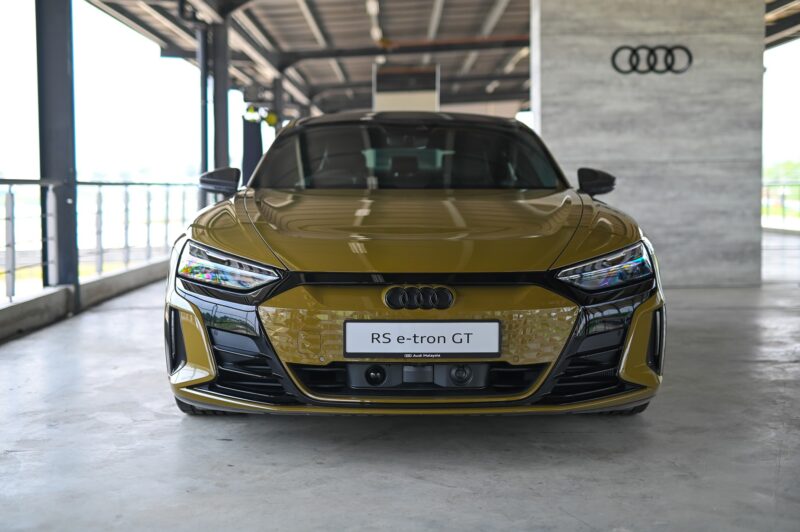
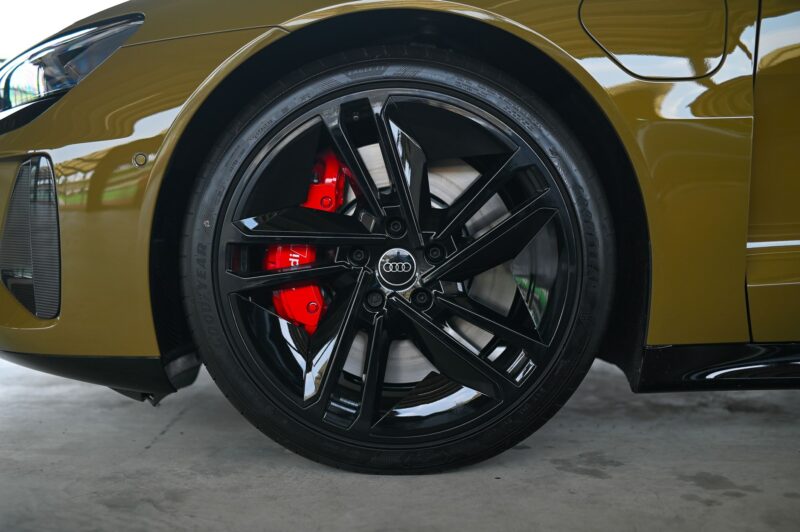
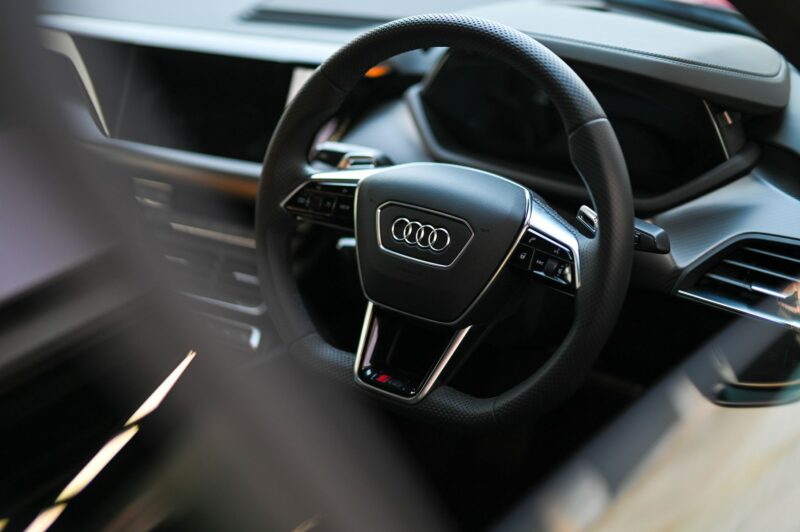
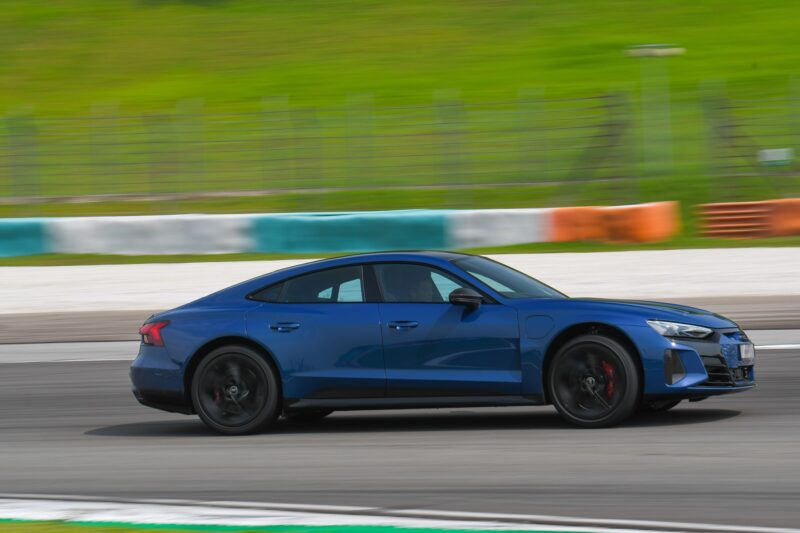
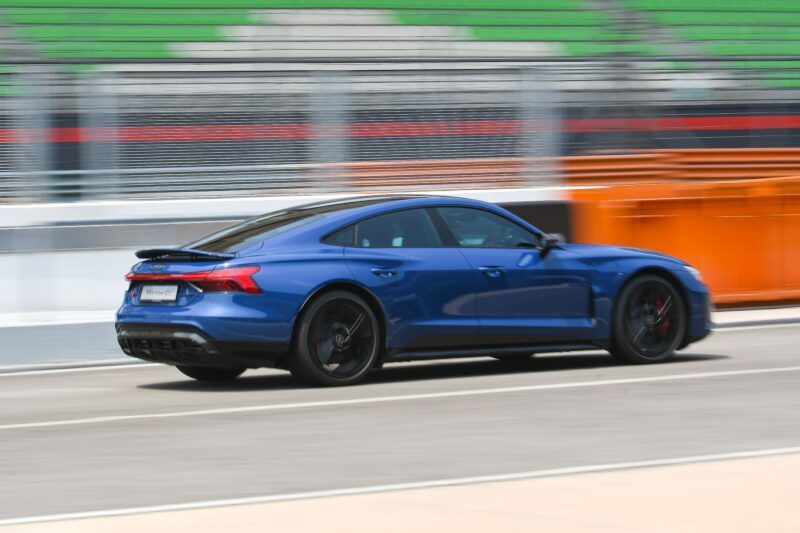
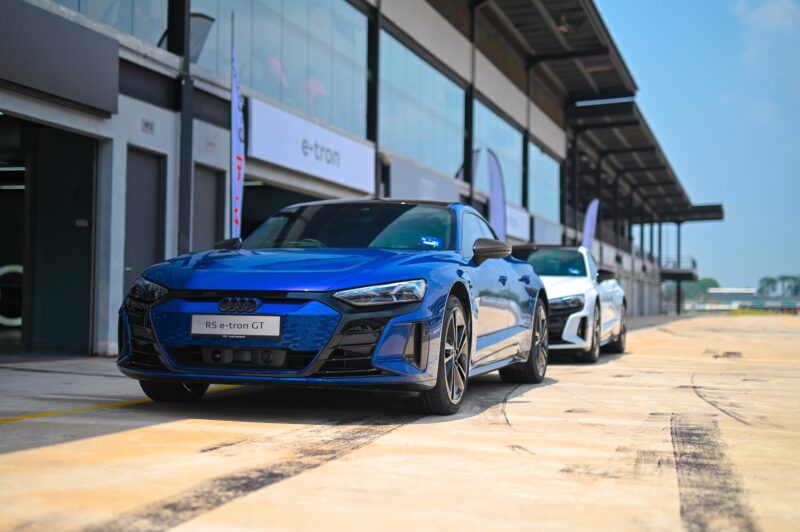
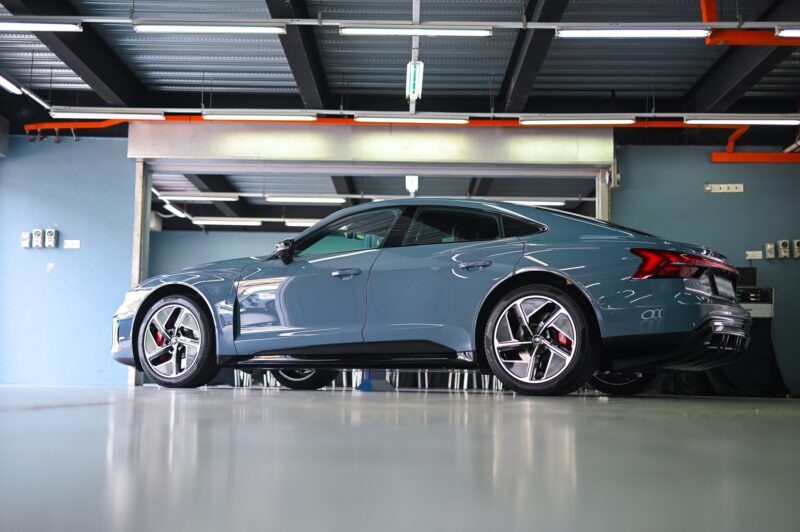
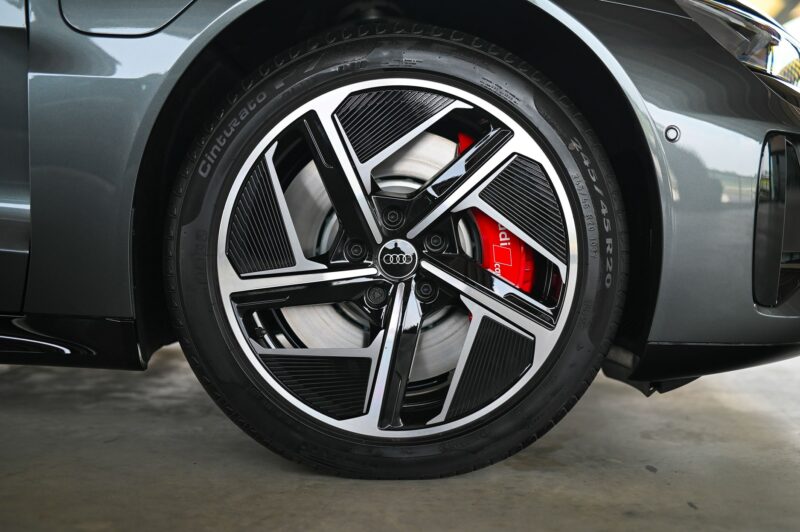
IF you were a wealthy individual looking to own an electric vehicle (EV), you’ll be delighted to see the wide range of options you have. Naturally, at a higher price range, most of the choices are tempting to say the last but dare I say that none stand out like the Audi e-tron GT.
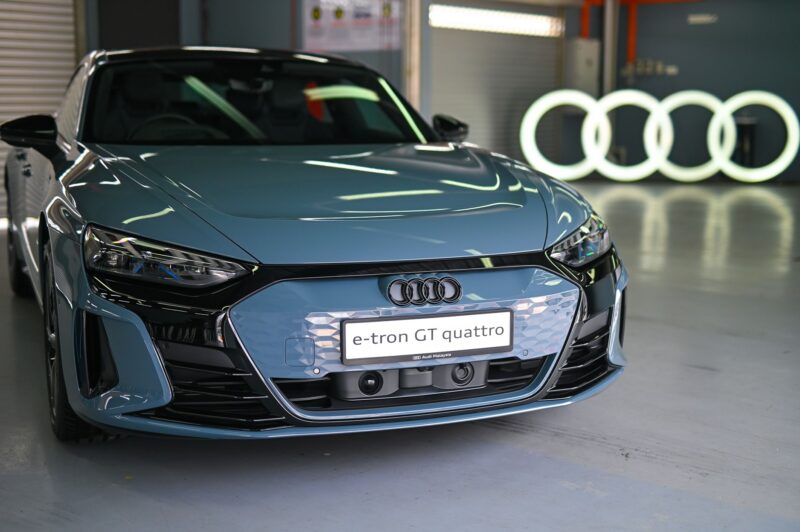
At first glance, you know that the e-tron GT is an EV designed specifically for elegant and well-to-do individuals like yourself.
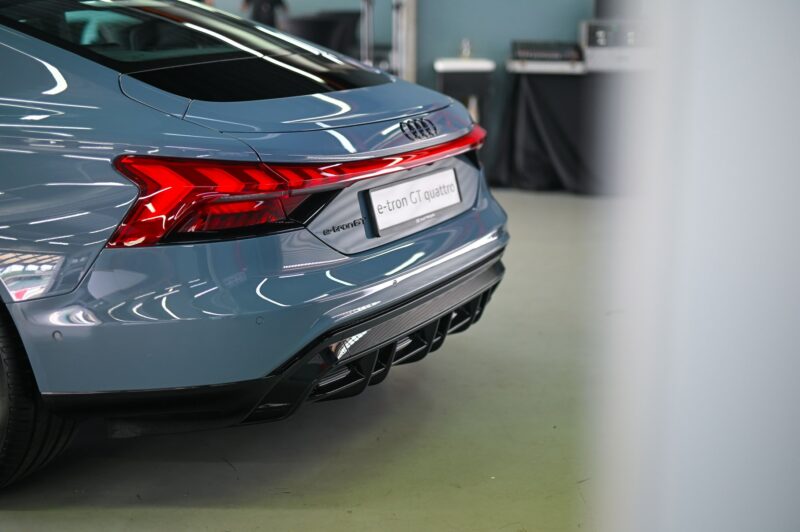
People around you will be saying you should’ve bought the Porsche Taycan because it’s a Porsche and it’s much faster. True, on paper, its Zuffenhausen twin is faster, but it won’t make you feel like Tony Stark with its space-age design.
Great looks aside, as a four-door sedan with a driving range of 458 km on a full charge, the e-tron GT can serve as a daily, whether you are single or happily married with kids.
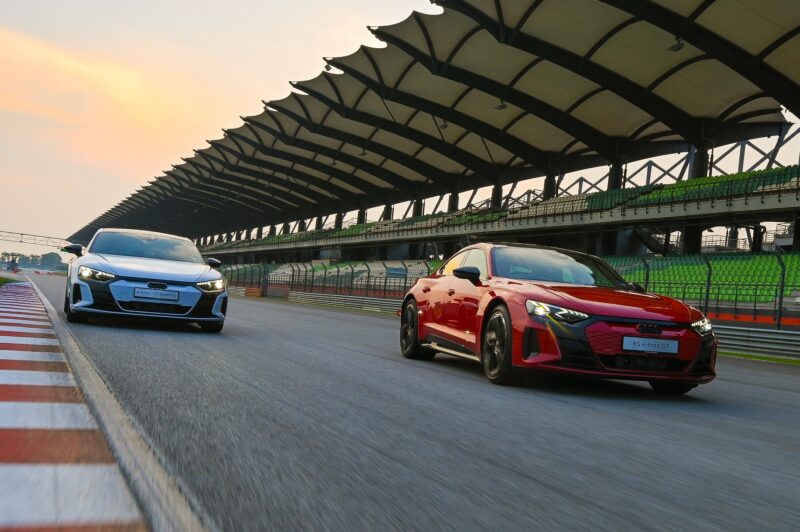
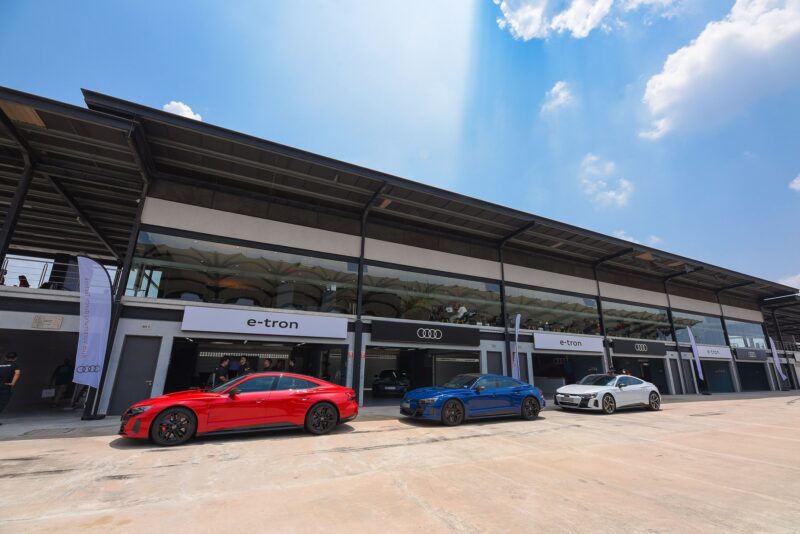
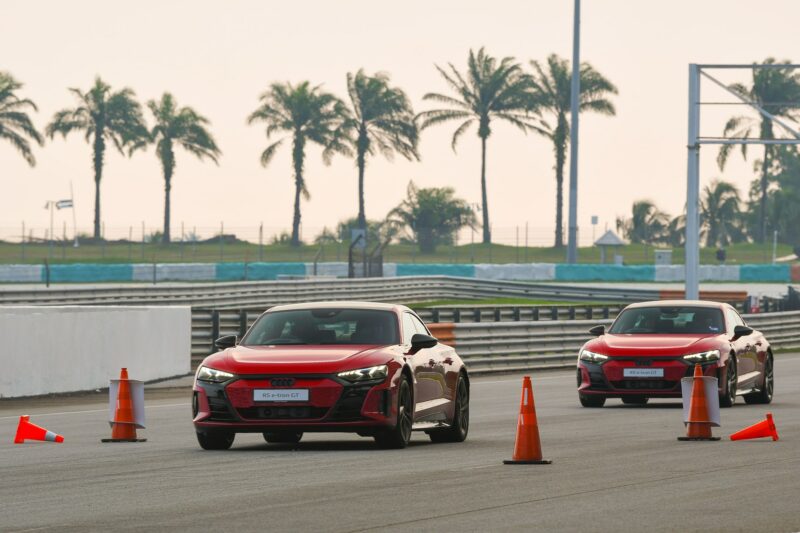
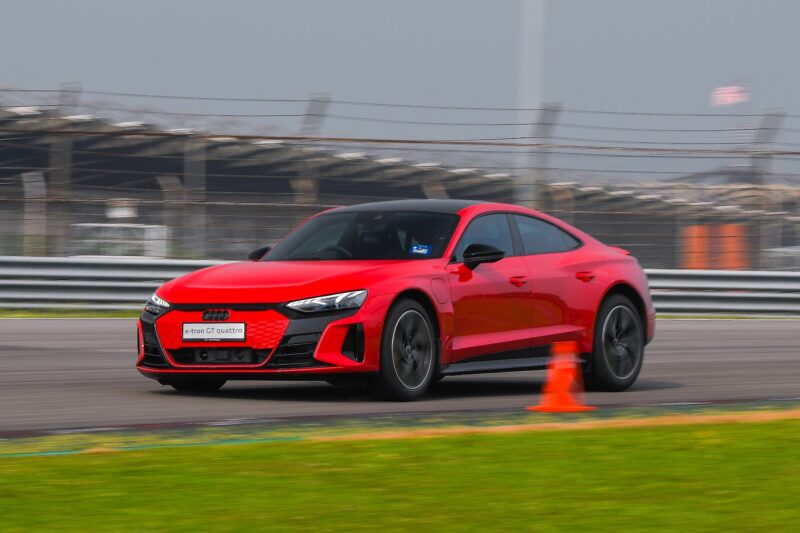
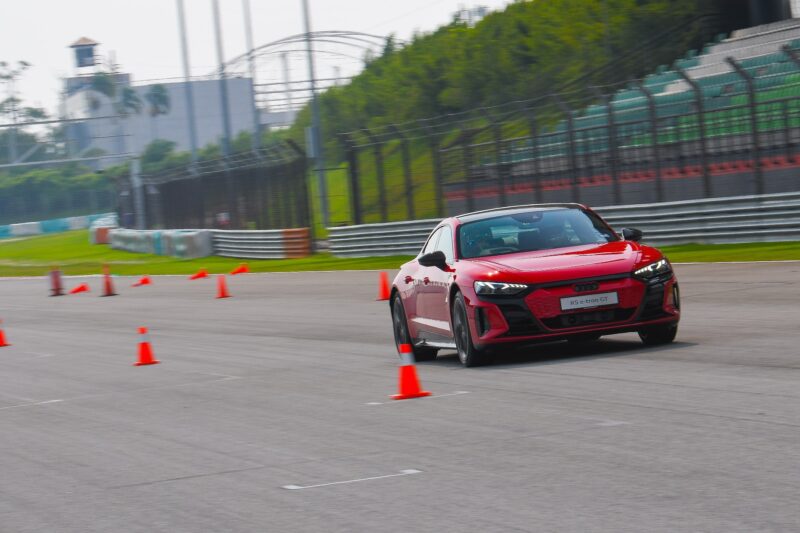
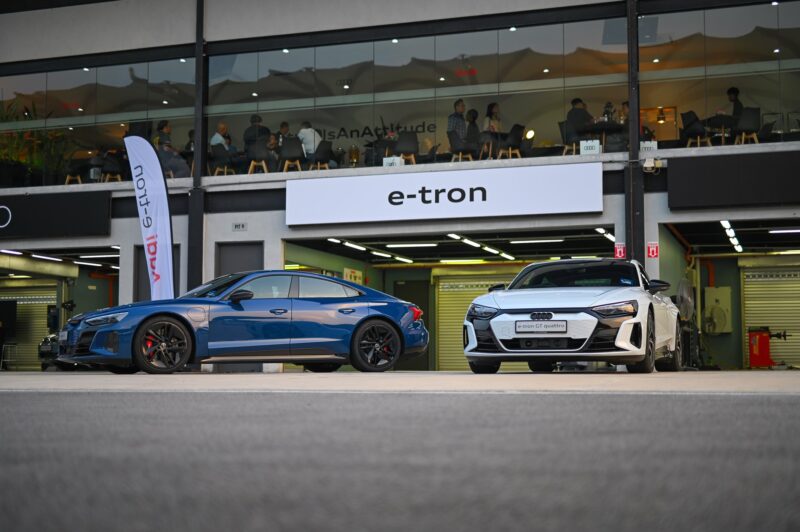
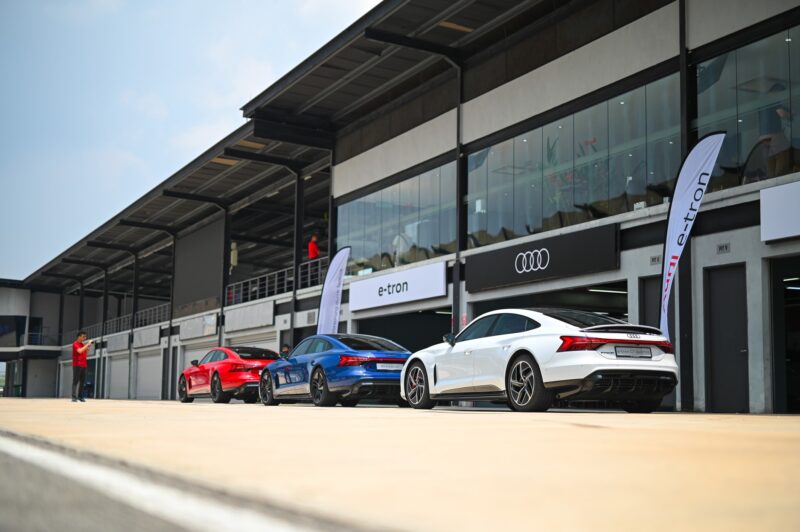
However, you should also know that this car is always ready to perform on the track. Recently, this writer was invited by Audi Malaysia to experience the e-tron GT quattro and RS e-tron GT’s on-track capabilities at the Sepang International Circuit.
The Audi Driving Experience event was limited to the souther section of the circuit (South Paddock). The driving activities were divided into two parts: a drive around the circuit and an acceleration test on the straight after Turn 14.
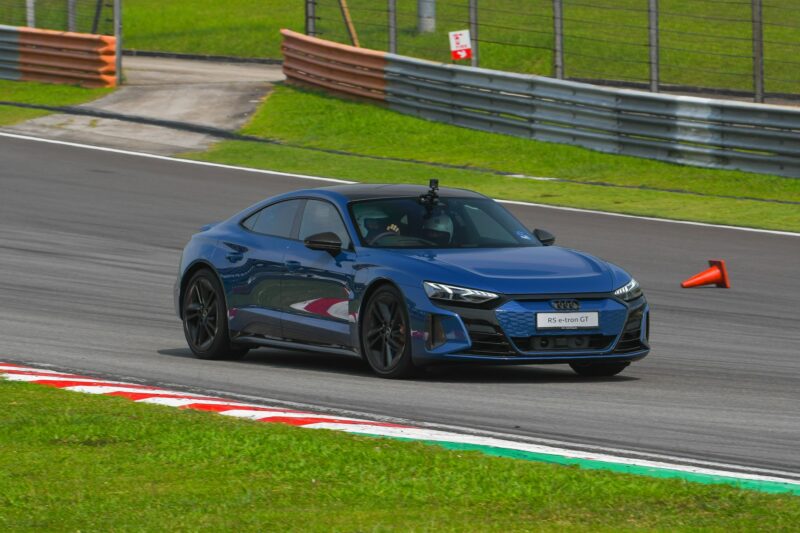
For the first round, I was given the opportunity to get behind the wheel of an e-tron GT quattro, the entry-level variant equipped with two electric motors producing a total output of 476 PS and 630 Nm.
As soon as it left the pit, a firm step on the throttle pedal brought the car to life and from that point, it accelerated like a true track weapon. My head was pushed back slightly against the headrest, indicating the e-tron’s strong pulling power.
The brochure says this model only takes 4.5 seconds to reach 100 km/h from a standstill but it definitely felt much faster than that. Not that it matters to most buyers but it’s certainly good to know that your EV is capable of doing earth-shattering accelerations.
One of the advantages of driving an EV is that torque is always readily available. In a high-speed circuit like Sepang, this comes in very handy as it allows you to exit corners quickly. And what’s amazing is that this can be done repeatedly.
In addition, Audi’s proprietary quattro all-wheel drive system plays a crucial role in providing high levels of grip on the tarmac, especially when facing chicanes at Turn 12 and Turn 13.
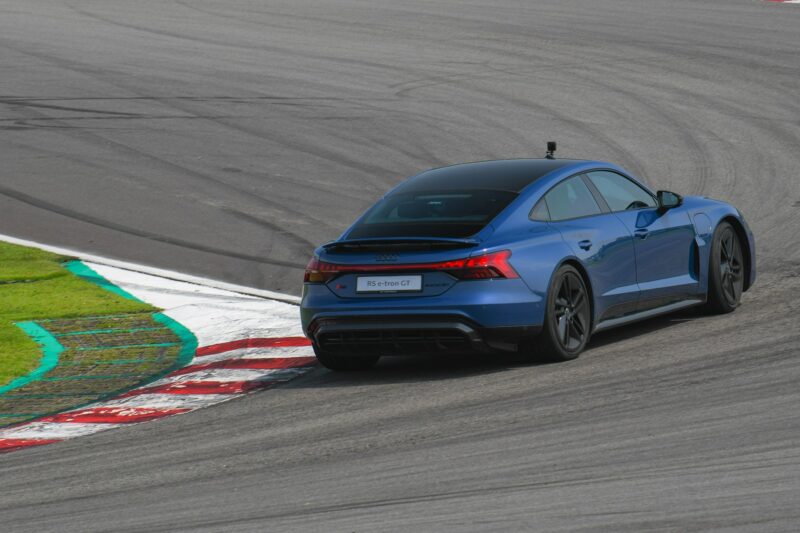
Next, the writer had the opportunity to try the RS e-tron GT, which is essentially a more powerful variant of the e-tron that also comes with higher equipment levels.
Like the base version, it also has an electric motor on each axle, but the power output is higher at 598 PS and 830 Nm. The difference in power can be felt clearly, and for tis writer, this variant feels more ‘wild’ when unleashed on the circuit.
However, it comes with several additional features that make it more formidable dynamically compared to the base version.
First up is the air suspension system. With adaptive dampers at the front and rear axles, the system is capable of lowering the car by 10 mm at 90 km/h and another 12 mm when the car is traveling at speeds of 180 km/h and above.
Not only that, the RS e-tron GT is also equipped with a rear-wheel steering system. At around 50 km/h, this system will turn the rear wheels in the opposite direction of the front wheels to provide a smaller turning radius.
At 80 km/h, the rear wheels will turn in the same direction as the front wheels, which in turn makes the car more stable, especially when taking corners at high speeds.
Another advantage of the RS version is the differential lock on the rear axle. In the context of circuit driving, this component uses torque vectoring to make the car more agile when entering sharp corners in addition to increasing the grip when exiting.
For the acceleration test session, the writer only did it with the RS e-tron GT. Here, the overboost function plays a significant role as it increases power to 646 PS for a temporary period to allow the car to come off the line as quickly as possible.
On paper, the RS model accelerates from 0 to 100 km/h in a mere 3.3 seconds, but the writer managed to do it in 3.2 seconds, based on the acceleration gauge displayed on the instrument panel.
In fact, some media members were able to achieve this acceleration in just 3.1 seconds, showing that in certain conditions, the RS e-tron GT is actually faster than what’s claimed.
Conclusion
Nobody buys an EV for track driving but if you happen to purchase an Audi e-tron GT or RS e-tron GT, keep in mind that you have a versatile, track-capable EV at your disposal.
You might be wondering if driving range pose a hindrance for spirited driving on the track. For an EV that can be driven for over 400 km on a single charge, I think it’s safe to say that a track day session at a racetrack is definitely doable. Taking into account the length of the Sepang circuit, which is 5.543 km, you can actually drive the e-tron GT for dozens of laps before the battery charge comes down to an alarming level.
Audi e-tron GT quattro Specifications
Price: RM588,790
Power: 476 PS (530 PS with overboost)
Torque: 630 Nm (64o Nm with overboost)
Battery: 93.4 kWh
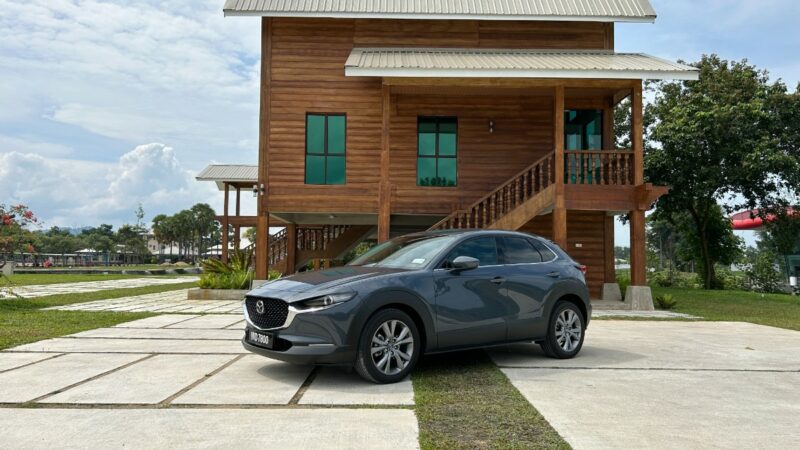
AS the Mazda CX-30 began making its way into the Malaysian market towards the end of 2019, the majority of us in the media deeply admired it. Not only does it look beautiful and sleek with curves and lines reminiscent of Italian SUVs, the CX-30 is also a joy to drive.
If you’re a driving enthusiast, the CX-30 will quickly win you over. However, the pricing of the CX-30 at that time was quite steep, causing concern for many potential buyers. This resulted in somewhat lackluster sales.
However, last year, Mazda Malaysia introduced a locally assembled CKD (completely knocked down) variant for this compact B-segment SUV, making its pricing more appealing. The CX-30 2.0G starts at RM131,000 and goes up to the 2.0G High+ Premium at RM159,000. This represents a discount of approximately RM13,000 compared to the 2019 2.0G model.
However, for this CKD version, all four variants now use only a 2.0-liter petrol engine, with no more option for the 1.8-liter diesel SkyActive-D as before, which used to cost over RM170,000.
Recently, we test drove the high-end mid-range variant, the CX-30 2.0G High+, priced at RM149,000. Is it worth it compared to models like the Honda HR-V and Toyota Corolla Cross? And who is the CX-30 for?
One class higher
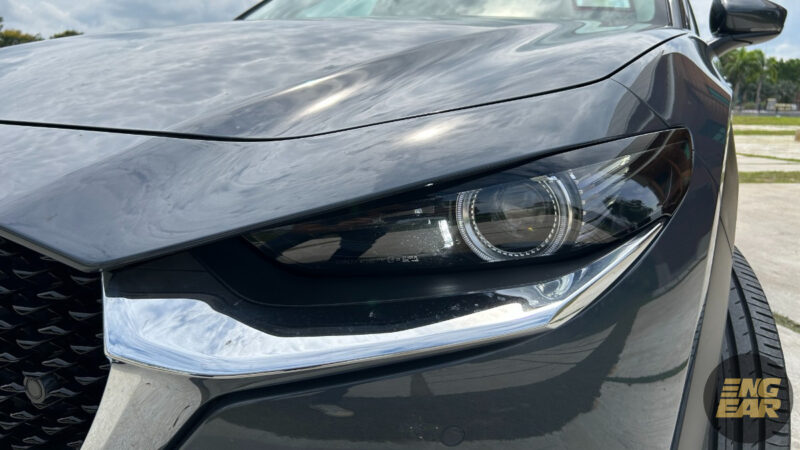
Upon closer inspection, the Mazda CX-30 seems to occupy a class above other models in its segment. For example, the chrome strip under the front grille that extends to the left and right front lights is actually expensive to manufacture because it’s a large piece of thin chrome.
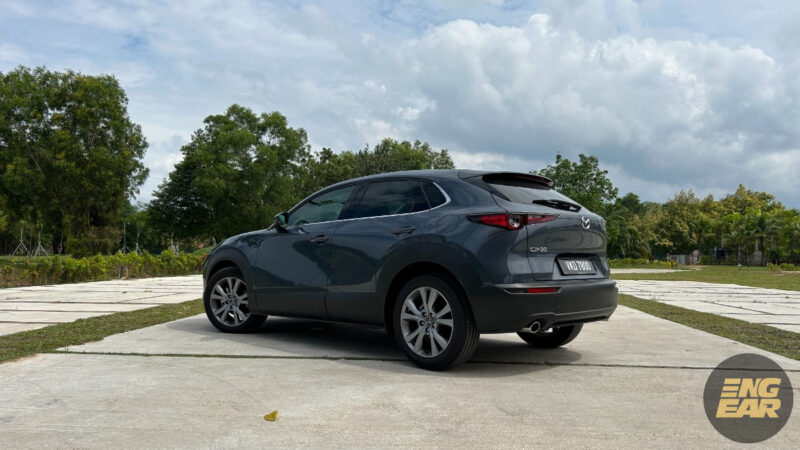
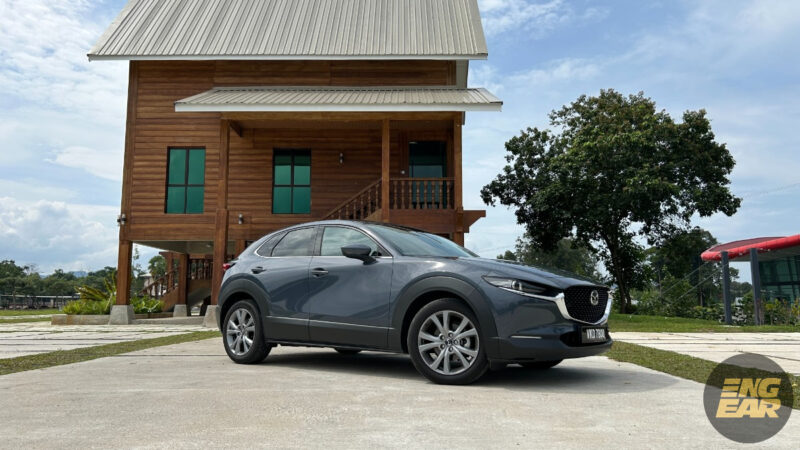
Then, the body panels from the fender, doors, to the rear of the car lack clear lines; instead, they curve and play with light in a captivating manner. It’s contoured and gives the CX-30 the image of a creature, not just a machine or object.
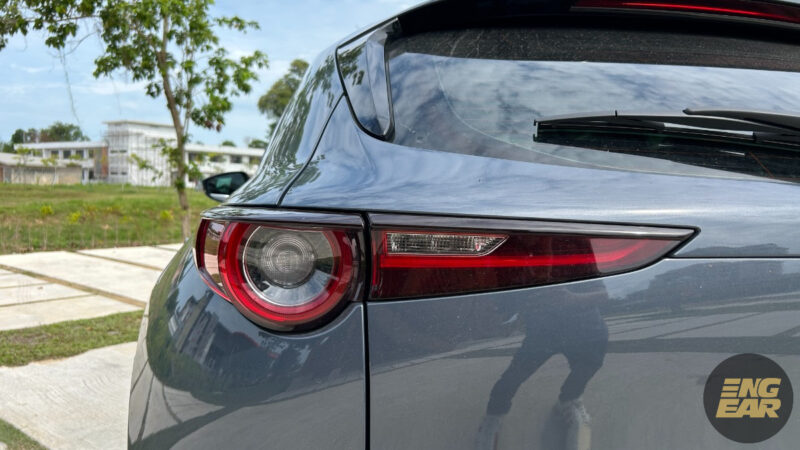
Such organic surfaces require a higher level of quality care and attention compared to conventional lines. The rear design is also quite elegant and sporty, resembling the more expensive Italian SUVs, like the Alfa Romeo Stelvio.
Inside, you’ll notice that the gas pedal in the CX-30 is an organ type, i.e., a hinged type on the floor. This automatically makes this SUV feel more expensive compared to models that use hanging pedals.
The same goes for the rpm and speedometer display. Only the rpm display is physical, while the speedometer is actually digital. However, Mazda has successfully made both of these look very similar. When you turn off the engine, you realize that the speedometer is a screen.
These are things we can’t see in brochures or specifications. So, it’s normal for us to have difficulty justifying the higher price of the Mazda CX-30. But after a test drive or spending a few days with it, then we can understand.
Sports car ‘compromises’
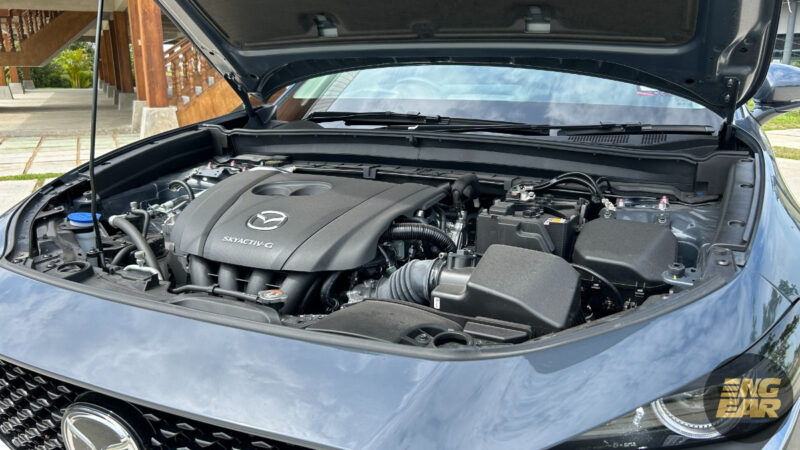
Beneath the front hood of the Mazda CX-30 lies a 2.0-liter SkyActiv-G naturally-aspirated petrol engine, capable of generating 162hp and 213Nm of torque. Although these figures may seem ordinary and not overly impressive, Mazda teaches us that sporty doesn’t solely mean high power output. Yes, the Mazda CX-30 is among the most sporty SUVs in its class, if not the sportiest.
Numbers aren’t everything when it comes to being sporty; it’s the way this SkyActiv engine revs up, responds, and sounds that gives you the feeling of being closely connected to the car.
From the ultra-fast response when you touch the gas pedal, to the smooth rise of the rpm needle to the 6,800rpm redline in manual mode, the sporty nature of the Mazda CX-30 shines through. The 6-speed SkyActiv-Drive gearbox used is a real 6-speed, not a virtual speed from a CVT like most of its competitors (except for the X50, which uses dual-clutch).
This means that the sensation of gear shifting is ‘real’ and genuine, not simulated. Shifting doesn’t need to be overly quick; what’s important is the adequate response, making you feel closely connected and familiar with this CX-30 powertrain.
As the revs approach the redline, your heartbeat quickens, accompanied by a pleasant sound at high revs, and when upshifting, your heartbeat subsides slightly, only to rise again when accelerating in the next gear.
The downshift also feels like a true sports car. Whether in automatic or manual mode, you can feel the clutch disengaging, the engine blipping for rev matching, and the clutch reengaging smoothly, yet sportily.
Don’t believe that output isn’t the determinant of a sporty feel? Well, consider the Lotus Elise with 217hp from a supercharged 1.8-liter engine, compared to the 255hp in the Mercedes C300 with a 2.0-liter turbo engine. Which one is more sporty?
So, this underscores the point that the ‘way’ an engine delivers its power or its character is more important than the numbers that we can just Google.
However, when driving a sporty vehicle, you might make some sacrifices in terms of space and practicality. In the case of the Mazda CX-30, I have to be honest and say that it’s not the most spacious in its segment. Adding to the issue is the black-brown color scheme in the cabin, which doesn’t help in this regard.
The seating is indeed comfortable and supportive, but when I had a stout passenger seated next to me and a rather tall one at the back, the cabin felt a bit tight. And if you sit in a low driving position, it’s somewhat difficult to see the left side and the rear corner of the car.
The dashboard panel and all switches and buttons are easily accessible, which is great as it gives us a sense of confidence and the feeling that the car is focused on the driver.
Not for everyone
Simply put, the Mazda CX-30 is not for everyone. It offers a delightful driving experience, suits dedicated and sporty drivers, but it may not be the best fit for most people.
If you’ve previously driven the Mazda MX-5 when you were single, the CX-30 is highly suitable for building a small family before transitioning to a larger vehicle when you have more than three children.
For the writer, I truly enjoy driving the Mazda CX-30 because its size is ideal for daily use, in addition to its responsive aspect and the precise driving feel offered by the Jinba Ittai concept. The CX-30’s design remains elegant and evergreen even as it approaches four years old, and Mazda has yet to provide any visual updates, which isn’t really necessary.
The CX-30 still looks fresh and new in the market. To answer the earlier question, the Mazda CX-30 may not appear worthwhile when compared to regular cars in its segment, but you will see better value when compared to models such as the MINI Countryman, Lexus UX, or Mercedes A-Class hatchback.
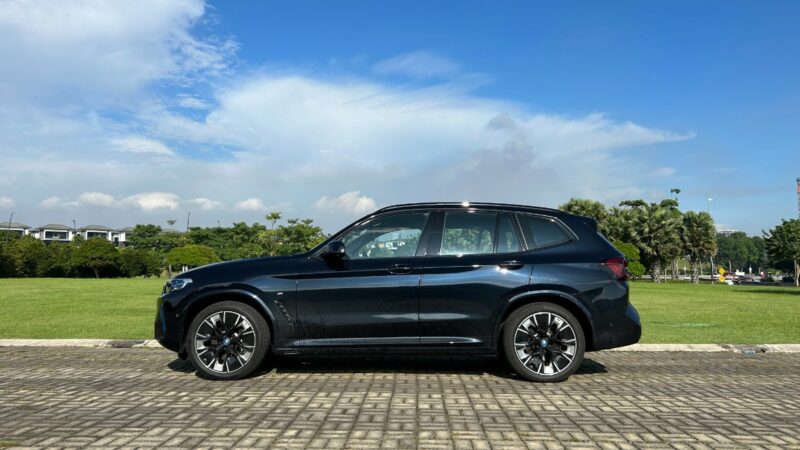
BMW is one of the manufacturers in Malaysia that offers a wide range of electric vehicle (EV) models, including the i4, i7, iX1, iX3, and iX. This time, Engear was given the opportunity by BMW Malaysia to spend the weekend with the iX3.
There is a secret, although the iX3 is a relatively new, futuristic, and state-of-the-art EV model, it possesses the characteristics of a traditional BMW. Why? Because it is a true rear-wheel-drive vehicle.
Yes, the BMW M3 now has all-wheel drive with the xDrive system, but the iX3, an EV SUV, is rear-wheel drive. Truly, it’s a strange world we live in now.
RWD Configuration
The BMW iX3 has a rear-wheel-drive configuration because it is powered by a single electric motor installed on the rear axle, with an output of 282hp and 400Nm of torque. This motor draws power from a 73.8kWh battery that gives the iX3 a driving range of up to 453km.
We insist on talking about RWD; why is it so important? Perhaps most drivers don’t care. It’s an interesting fact because when the front tires don’t need to deliver power and only bear the responsibility of steering, it results in a very precise and direct steering feel.
So, does this mean the car is fast? Not necessarily. It just means that the iX3 has the “feel” or sensation of a true sports car; 100% power at the rear tires, 100% steering by the front tires. When was the last time you drove a car like this?
But to say this BMW iX3 is slow, not quite. The performance is still solid. Despite weighing 2,200kg, it’s still capable of accelerating to 100km/h in 6.8 seconds, faster than most cars. The maximum speed is capped at “only” 180km/h, as is common with EVs.
However, it’s true that throughout the writer’s experience driving the BMW iX3, handling in corners was quite balanced and satisfying. Its weight is centered, the steering provides plenty of feedback, and the 400Nm of torque is accessible most of the time.
Driving at night is accompanied by BMW Laser Light, which not only looks sophisticated but also provides strong visibility for the driver. Indirectly, this also adds to the safety aspect.
Luxurious and practical for everyday use
The BMW iX3 we drove is an M Sport Impressive variant, so it gets a sporty body kit despite the presence of blue EV elements.
The blue elements can be seen on the closed grille, air intakes on the front bumper, and rear diffuser. However, the sporty elements dominate the exterior design of this iX3 M Sport, such as the 20-inch rims, aggressive side bumpers, and prominent rear diffuser design, in addition to the roof spoiler.
The side profile of the BMW iX3 is still classic SUV, and resembles the X3, signaling its familial aspect with other models. It should also be noted that the lower floor of this iX3 is nearly flat like a sports car, and it works in conjunction with the rear diffuser.
Only the overall cabin area feels ordinary and not too special. Its dashboard displays a design that we are already familiar with, not bad, just perhaps a bit dated.
However, if you diligently delve into its central screen, there is a lot of exclusive content for the electric model. This includes power distribution menus, regenerative mode, and charging planning.
The writer quite likes the 464-watt Harman Kardon audio system in this iX3, which can make you enjoy driving this car because it can play your favorite songs with a very pleasant sound. Even if your spouse asks you to buy a packet of sugar, you will be eager to drive the BMW iX3 even for short distances.
Space is not an issue for the iX3, it is quite spacious with sufficient leg and headroom for five adults.
Travel data
Well, now we shouldn’t forget the fact that the BMW iX3 is an EV, so how about its performance and daily practicality? Is 453km sufficient? In all honesty, when we got the car, its battery was at 95 percent with only 313km of driving range. Oh dear! How did that happen?
It should be noted that the EV car’s range reading is calculated based on the previous driving behavior. Perhaps the previous driver of the iX3 didn’t hold back, enjoying the 400Nm torque it offers.
From the writer’s experience, despite the displayed range being 313km, the writer managed to drive over 350km with 25km of range left when returning the iX3. How so? The writer did a lot of city driving at speeds below 120km/h, with frequent stop-and-go situations.
So, the car’s 2.2-ton weight gave momentum for the regenerative system to replenish energy back into the battery every time the writer slowed down. It can be said that in 90 percent of the writer’s driving situations, the brake pedal wasn’t pressed; simply lifting the foot off the accelerator pedal, and the iX3 used regen to stop, rather than the disc brakes.
Its regen system can also be adjusted at various levels, depending on the conditions and suitability. From the writer’s experience, you can use maximum regen in the city and for slow driving, while minimum regen for faster highway driving.
So, the writer didn’t run out of battery over several days of driving the iX3 around Kuala Lumpur, which is a good thing, isn’t it? But for your information, the iX3 will take seven and a half hours for a full charge if using AC. If using fast DC charging, it supports up to 150kW, meaning 80 percent of the battery can be reached in just 32 minutes.
Should I buy it?
The EV market in Malaysia has indeed been disrupted by the presence of Tesla, offering models with a driving range of over 500km at prices below RM200,000.
So, how about the BMW iX3? The M Sport Inspiring variant starts at RM307,160, while the M Sport Impressive variant that we tested is priced at RM328,160.
In the writer’s opinion, true car enthusiasts don’t mind all that, especially BMW enthusiasts. The iX3 is suitable for BMW owners who want EV technology after having a 5-Series or X3 at home.
The iX3 will be a practical EV for urban use, while maintaining a sporty image and appeal to “petrolheads”. In fact, it doesn’t immediately look like an EV at first glance, if that’s what you prefer.
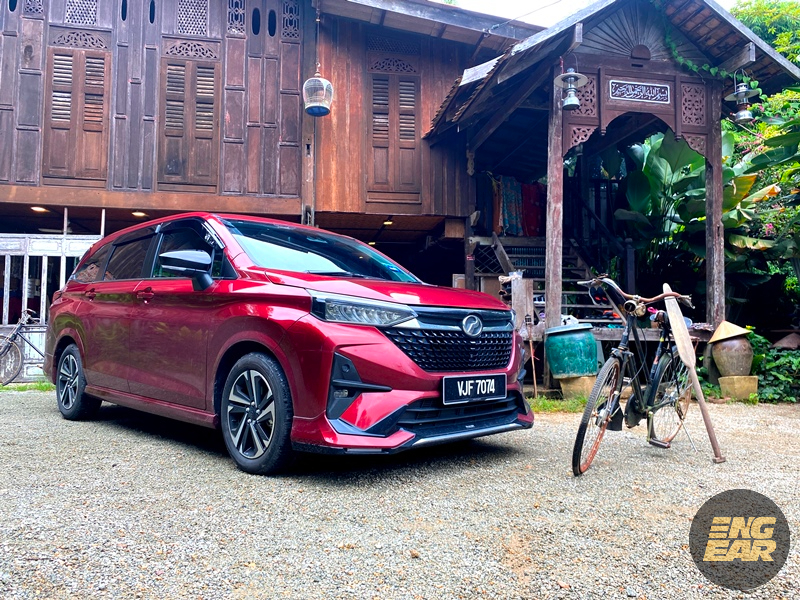
WITHOUT any doubt, the new Perodua Alza was the most talked-about car for the year 2022. This was evident from the discussions among netizens on social media and the significant traffic and engagement generated whenever we post anything about this model.
This phenomenon was not a surprising one, considering that the first-generation Alza has been on the market since November 2009, so it’s only natural that many were eagerly anticipating the arrival of its successor.
In July 2022, the second-generation Alza was finally launched, featuring comprehensive updates covering not only the exterior and interior design but also the platform, engine, and technology.
The majority of the motoring media were actually invited to take a closer look at the model several weeks before its launch date. However, this writer only had the opportunity to familiarise himself with it during a recent media test drive trip to Kota Bharu, Kelantan.
It was a trip to look forward to, not only because of the somewhat ‘unusual’ destination but also to personally check out the seven-seater MPV people have been raving about since it was first teased in June 2022.
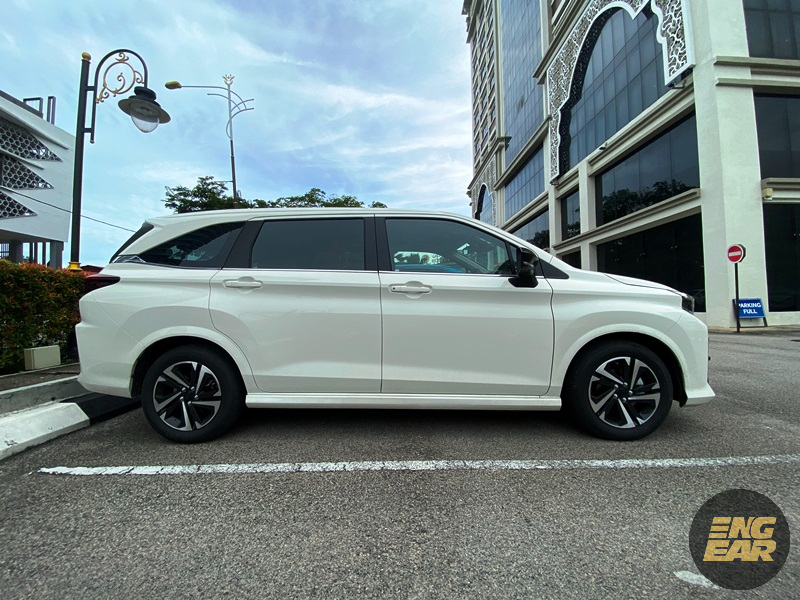
In terms of design, the new Alza is clearly more stylish and fresh compared to its predecessor. Some might say it looks a bit cluttered, but this writer feels the aggressive lines give the Alza a rather modern look capable of enticing a younger group of buyers.
The journey started from the Perodua headquarters in Rawang, passing through Batang Kali to reach the Karak Highway. From there, the convoy followed the East Coast Expressway 1 and 2 before exiting via the Kuala Terengganu exit. The total journey distance was about 650 km.
Three drivers were assigned to each car, meaning this writer only had the chance to take over the steering wheel after a lunch break in Kuantan.
The 200-km drive was done entirely on the straight stretches of the LPT, which felt a little dull after a while. But the highway’s bumpy and uneven surfaces turned out to be a proving ground for the Alza’s Daihatsu New Global Architecture (DNGA) platform, which performed superbly throughout the journey.
It is fair to say that the performance shown by the 2NR-VE 1.5-liter naturally aspirated four-cylinder engine was quite commandable despite the lack of a turbocharger. More importantly, the combination of the engine with the D-CVT transmission felt seamless as the RPM was maintained at around 2,000 to 2,100 at speeds of 110 km/h and above.
In short, for highway driving situations, the RPM remained below the 2,500 mark even when the vehicle exceeded the national speed limit. This shows that the Alza is the perfect car for those who want a comfortable and fuel-efficient people carrier.
Speaking of fuel efficiency, the fuel consumption level shown on the display dropped sharply due to aggressive driving by our fellow media friends, but with light-footed driving (and some patience), this writer managed to achieve a reading of 19 km/l before reaching the Kuala Terengganu exit. This is not far from the figure claimed by Perodua, which is 22 km/l.
When it comes to ride and handling, the DNGA platform felt comfortable despite facing the bumpy and uneven conditions of LPT2. Some degree of vibration managed to seep into the cabin, but it wasn’t to the extent of causing discomfort.
The use of the new platform also resulted in a larger rear space, which is exactly what most Alza buyers look for. For this writer, who stands at 167 cm tall, there was still ample legroom even when the driver’s seat was pushed back. The backrest angle was also not too upright.
The third-row seats, as expected, are more suitable for children due to their relatively small size. However, when not in use, they can be folded flat to achieve maximum cargo space of nearly 500 liters.
If that’s not enough, the new Alza also comes with a host of creature comforts including rear air conditioning vents located on the ceiling, complete with a control panel, two USB charging ports and cup holders in the second and third-row seats.
In conclusion, this writer thinks that the Alza is the best bang for your buck if you are looking to buy an affordable, fuss-free family car. But what it lacks in performance it more than makes up for in practicality, comfort, and features.
Perodua Alza Specifications
Price: From RM62,500 to RM75,500
Engine: 1.5-litre four-cylinder Dual-VVTi
Gearbox: D-CVT
Power: 105 hp
Torque: 138 Nm
THE segment-B sedan category is quite critical in our country as these cars are considered affordable and serve as the main vehicles for many families. Therefore, it is important for manufacturers to be sensitive to users because even a small ‘deviation’ could invite criticism. However, by adding premium or new features to this segment, manufacturers can receive high praise for several weeks after the launch news is still hot.
The 2023 Toyota Vios, launched last March, represents an entirely new generation with a completely new interior and exterior. We will discuss its performance later.
Three major issues
However, if you are looking into or researching cars in this segment, you would know that the new Toyota Vios has two major issues – the rear seats cannot be folded, and there is no spare tire.
Why? Well, regarding the non-folding rear seats, the Toyota Vios development team shared with the media that according to their market research, most users do not use this function. MOST. Are you among this group, or are you a minority who will complain? So, they did not include this function, and as a result, the car is 10kg lighter due to the absence of a folding mechanism.
For the lack of a spare tire, they stated that it is to provide more storage space. If you look under the boot floor, there is Styrofoam storage space for small items. The absence of a spare tire also further reduces the car’s weight.
Overall, this new generation Vios is about 110kg lighter than the previous model. This time, the 1.5 G variant weighs only 1,035kg.
In fact, there is a third issue, which is the lower engine power. Compared to the previous Vios, which had 105hp and 140Nm from the 1.5-liter 2NR-FE engine, the new Vios is powered by the 2NR-VE engine with an output of 104hp and 138Nm of torque.
These figures decreased by 1hp and 2Nm, but in all honesty, you won’t feel the difference. But considering the lighter weight as mentioned earlier, the new Vios actually has a better power-to-weight ratio than before.
So, overall and theoretically, the new Vios is definitely more fuel-efficient. According to Toyota, the Vios has a fuel efficiency of up to 5.2 liters per 100km or 19.2km per liter.
Regarding major issues like non-folding rear seats and the lack of a spare tire, we should look at it this way: Toyota may be in a dilemma choosing between facing criticism from many people for not having a spare tire, or a few people complaining about the non-folding rear seats. We also believe fuel efficiency is more important for cars like this. So, let’s move on to the next topic.
Becoming more upmarket
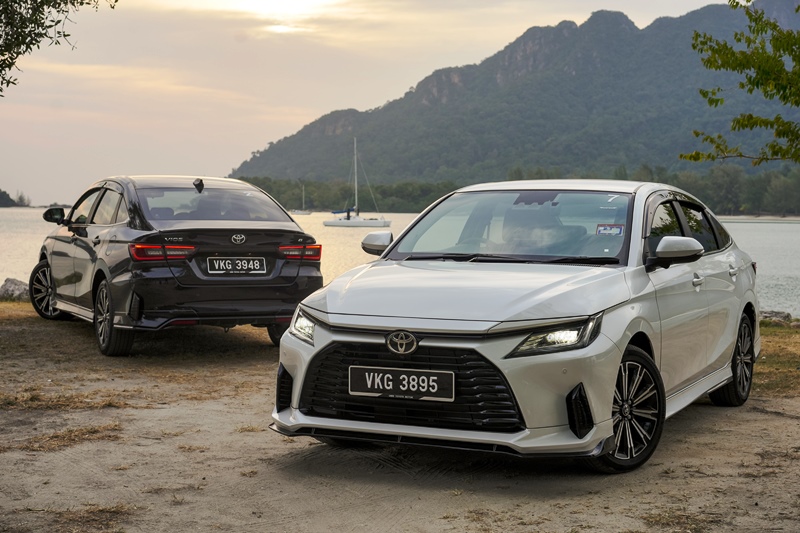
One crucial aspect for Segmen-B sedan cars is style and appearance. In this regard, the new Toyota Vios does not disappoint. Its overall look can be described as more ‘upmarket.’ The front end now resembles larger Toyota sedans (such as the Toyota Corolla), featuring larger 17-inch rims (in the G variant) and a rear roof design akin to a fastback, which is currently on-trend.
The front appearance with its slanted LED headlights is still challenging for the writer to grasp, but, importantly, it gives a fresh image, markedly different from before. The larger rims not only complement the overall shape but also have a positive impact on handling.
This upmarket feel extends to the interior, where the Vios dashboard now looks modern and not cheap. If it used to be filled with hard gray plastic, the 2023 Vios now boasts softer touches, different color tones, and textures.
Simultaneously, the button and switch layout is still neat, easily accessible, and more pleasant to the touch. Additionally, the instrument display is now fully digital, with electronic parking brakes coming standard.
An interesting touch for the writer is the positioning of the window switch surfaces on the left and right door panels. They are glossy black, like most cars, but instead of being plain, they feature a diamond texture and a slightly recessed surface.
This is an easy and cost-effective solution, yet effective in adding a sense of premium and sophistication to the Vios. This is important because many buyers of cars in this category are upgrading from budget cars.
Have you been driving the Myvi since you started working, and now with a family and a promotion, you’re upgrading to the Vios? A common scenario, isn’t it?
Oh, we know that because the Vios is built on the DNGA platform (Daihatsu New Global Architecture), it shares the dashboard with models like the Axia and Alza. So, one way to position the Vios in a higher tier is the inclusion of wireless Android Auto and Apple Carplay integration.
Solid look, solid driving?
For driving dynamics, perhaps not many Vios buyers emphasize this aspect, even though UMW Toyota has used this car for the Vios Challenge event for several years.
Nonetheless, the fact is that this all-new Toyota Vios has seen an improvement in terms of driving dynamics, whether you need it or not. The first thing the writer noticed is the more precise and responsive steering with increased feedback.
It doesn’t feel unnecessarily heavy, but just enough for a natural feel. This makes the new Vios more enjoyable to drive, whether cruising slowly in the city or taking corners at triple-digit speeds.
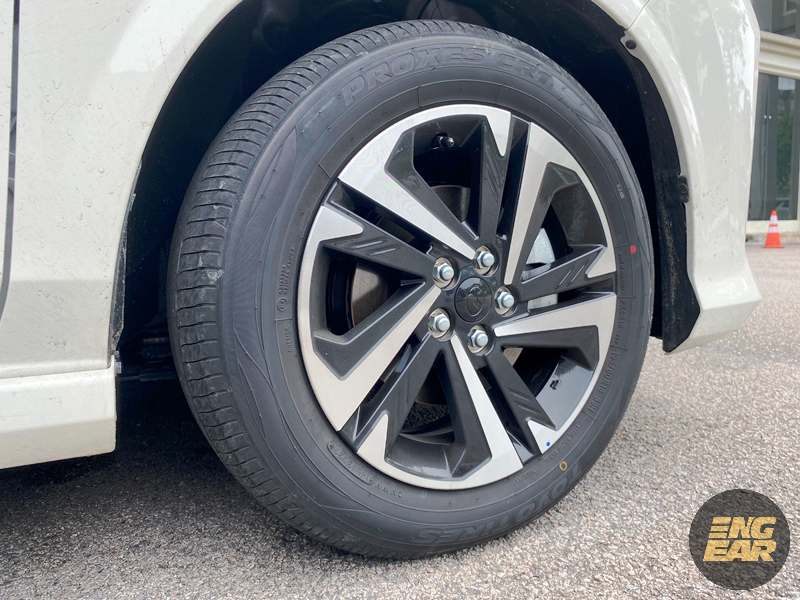
The 205/50 tire profile and 17-inch rims also contribute to a better steering feel; it’s not just for looks. However, it’s worth noting that the cost of replacing tires will increase, so this is something to keep in mind. Approximately RM380 to RM400 for one tire of this size.
For a delightful driving experience, some investment is necessary, right? Most importantly, this ‘delightfulness’ comes from the factory’s R&D, not just a gimmick by the car enthusiasts.
The chassis is now more robust and stable, thanks to the use of DNGA. When taking S corners while descending from Genting Highlands, the suspension and tires work more consistently and clearly, a result of the sturdy chassis.
The writer honestly no longer enjoys ‘testing’ cars in Genting because there are too many wannabe ‘racers’ there now, but happened to have work there, so took the opportunity to drive the Vios.
Sufficient power? 104hp and 138Nm of torque is more than enough even when driving up to the peak of Genting Highlands. The new D-CVT gearbox with a combination of physical gears and a belt assists in efficiently transmitting the overall power to the front wheels. You feel the full force of the 104hp without any power wastage.
The engine noise will enter the cabin when revved beyond 4,000rpm, which is normal. But when the rpm stabilizes and you’re cruising at a constant speed, the Vios is fairly quiet and comfortable to drive for long distances.
Even when pushed, we will begin to reach the limits of the engine, tires, and gearbox. The tires supplied are Continental PremiumContact 7, not performance tires, so they start to struggle when you’re not smooth enough with steering inputs. This doesn’t mean the tires are not good; they are perfect for daily use in the Vios.
The engine and gearbox also work hard to keep up with the writer’s accelerations and climbs, then brake into corners, then accelerate again. The TCU (Transmission Control Unit) tries to provide the best gear ratios according to speed, rpm, and right foot input. But there are no issues with the chassis.
Additional information: Toyota already has a unit for the use of the Vios Challenge based on this new platform. Surely, it uses semi-slick tires and a manual transmission, so maybe next season we will be able to see how the performance of this new generation Vios holds up in actual races.
Not races at the Genting International Circuit, of course. Always drive carefully on public roads!
Safety features are not forgotten; the Vios now comes standard with Toyota Safety Sense (TSS), which includes systems like Pre-Collision System, Lane Departure Warning, and Front Departure Alert. The G variant also includes Lane Keeping Control, Auto High Beam, and Adaptive Cruise Control. For the writer, the G variant is the way to go as these three features are highly useful for everyday driving. Additionally, the price difference in monthly installments isn’t significant.
In conclusion, the 2023 Toyota Vios is indeed a significant shift in all aspects compared to the car it replaces. It is now more modern and dynamic to drive, and most importantly, it makes you feel it offers better value for money.