THE Proton Arena is among the national car company’s models that didn’t sell well initially, but is now in high demand. The price is still steep, a brief survey on sales websites shows prices are still around RM25,000 to RM35,000.
However, in the United Kingdom (UK), there is a Proton Arena for sale at only £2,500 (RM14,739)! The Arena is known as the Proton Jumbuck in export markets such as the UK and Australia.
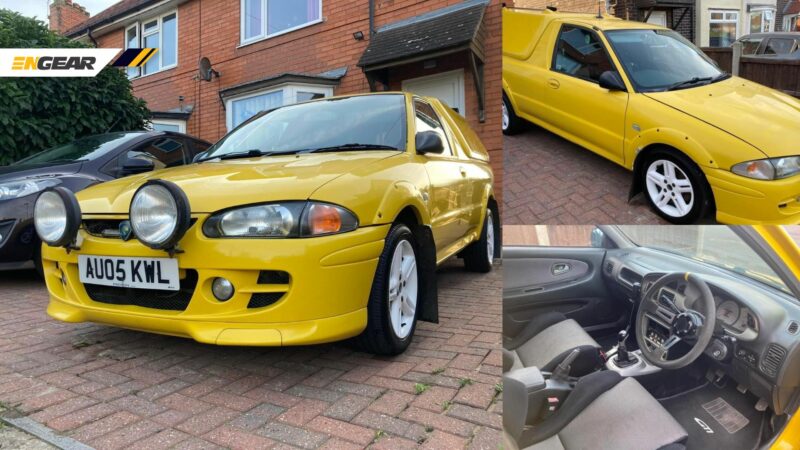
Not only is the price quite attractive, but this yellow Proton Jumbuck unit is even ‘copied’ with parts from the Satria GTi!
This can be seen in the front bumper, side fenders, and interior parts such as the dashboard, Recaro seats, pedals, and original GTi carpets. Quite handsome, if I may say so myself…
According to its owner, Paul Atkinson, who advertised the Jumbuck on the Proton gti owners UK page on Facebook, the engine is also from the GTi, a 4G93P 1.8-liter 16-valve unit.
The Proton Jumbuck GTi is painted in a sporty yellow color. It is further given a rally image with items such as WRC side mirrors, mud flaps, 15-inch white Momo rims, and the writer’s favorite, a pair of round spot lights at the front!
According to Atkinson, the Jumbuck is being sold because there have been changes to its design. “Jumbuck’s are getting quite rare now and especially modified ones,” he said.
“It always gets lots of compliments and is pretty quick for what it is (circa 140bhp), early Evo engines do drop straight in.
“MOT until August 2024, 100,000 miles, and the car is in Grantham, Lincolnshire,” Atkinson wrote.
Imagine if this Proton Arena were available in Malaysia, its price would surely easily reach RM55,000. Perhaps even more. This is because its other specifications are also quite tempting.
Below, we list what Atkinson shared:
Modifications:
• Satria GTi engine and gearbox (1.8 16v)
• Hockley exhaust manifold
• Custom stainless exhaust
• Pipercross induction kit
• Satria GTi interior
• Deep dish steering wheel
• Rearview camera
• CB radio
• Satria GTi body kit (front bumper & arches)
• Evo front suspension
• 15” Momo alloys (recently refurbished)
• 195 50 15 Avon ZV7 tires (new)
• WRC-style mirrors
• WRC-style mud flaps
• Rally spot lights
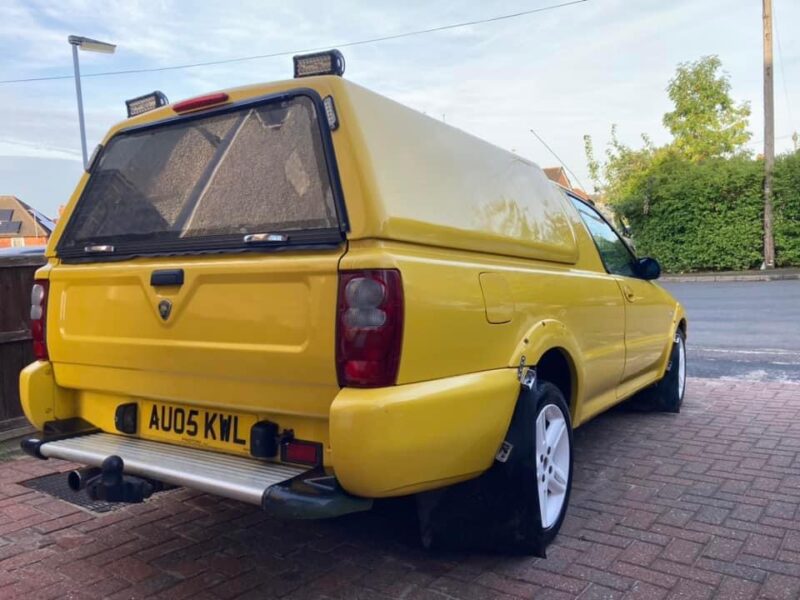
• Truckman cab
• LED rear work lights
• Air horns
• Tow bar
• Rear step
IT’S safe to say that many have been waiting for the arrival of the newest sedan from Proton, especially considering that the last time the national car maker brought a sedan to the market was the Persona back in 2016.
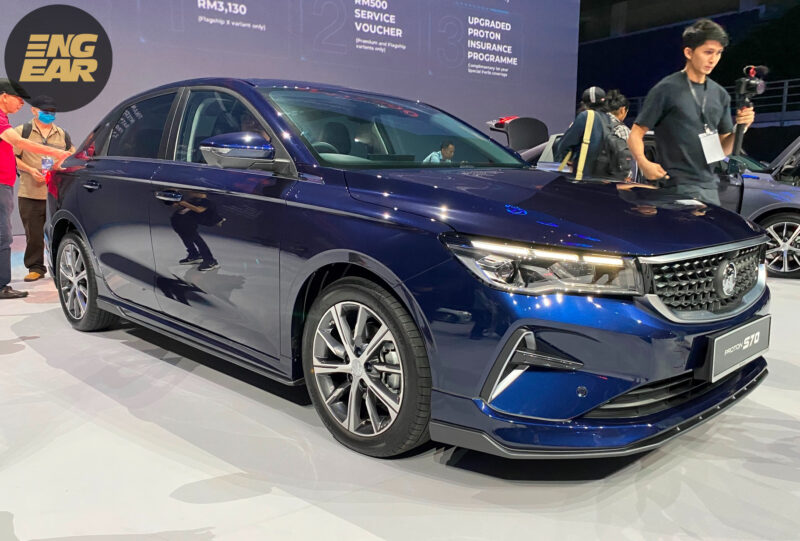
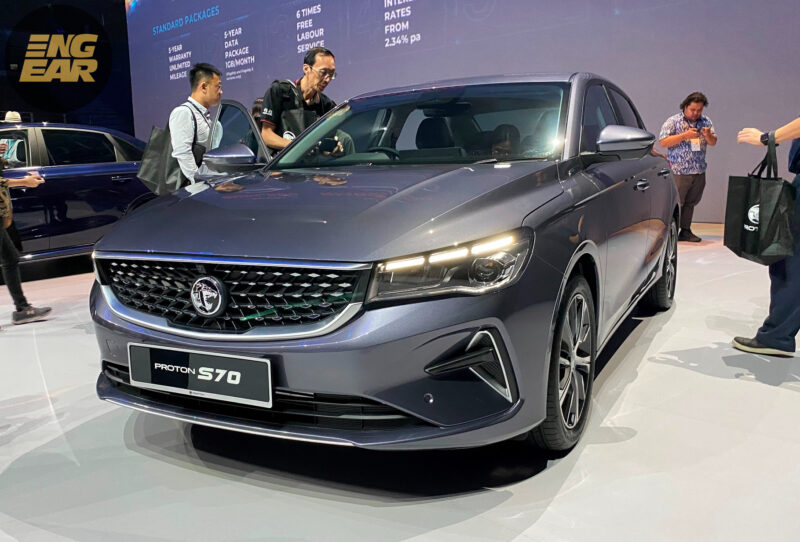
The wait ends today with the official launch of the Proton S70, which enters the Malaysian market as the fourth Proton model to be jointly developed with Geely after the X70, X50 dan X90.
As previously reported, the S70 will be available in four variants, namely Executive, Premium, Flagship, and Flagship X.
All four variants feature a combination of a 1.5-litre turbocharged three-cylinder engine and a seven-speed dual-clutch transmission (DCT) that produces 150 PS and 226 Nm of torque.
Note that this is the same port-injected engine and transmission used in the X50 Standard, Executive, and Premium models. The 1.5-litre TGDi engine with 177 PS and 255 Nm, found in the X50 Flagship and the new X70, is not offered in the S70, at least for the time being.
Built on the B-Segment Modular Architecture (BMA) platform, the S70 measures 4,602 mm in length, 1,809 mm in width, 1,466 mm in height, and has a wheelbase of 2,637 mm, making it slightly smaller than the Geely Emgrand it is based on.
In terms of equipment, the entry-level Executive variant comes with six airbags, Lane Change Assist, electronic parking brake, 16-inch alloy wheels, fabric seats, and an 8-inch infotainment screen.
The Premium adds LED headlights, rear light bars, leatherette upholstery, automatic air conditioning, and reverse camera.
The Flagship offers more additional features, including ADAS, tyre pressure monitoring system, 17-inch alloy wheels, a 10.3-inch digital instrument cluster, power adjustment for the driver’s seat, a 12.3-inch infotainment screen, wireless charger, and a 360-degree camera with a 3D display.
The range-topping Flagship X only offers one additional feature over the Flagship, which is a sunroof.
Safety-wise, the Flagship and Flagship X variants come with Advanced Driver Assistance Systems (ADAS) with 13 safety systems:
Autonomous Emergency Braking
Forward Collision Warning
Adaptive Cruise Control dengan Stop & Go
Intelligent Cruise Control
Lane Departure Warning
Lane Departure Prevention
Lane Centering Control
Traffic Sign Information
Intelligent High Beam Control
Lane Change Assist
Door Opening Warning
Rear Collision Warning
Rear Cross Traffic Alert
There are seven colour options available. Snow White and Space Grey are available for all four variants, while Armour Silver and Passion Red are only offered for the Premium and Flagship.
Marine Blue and Teal Bayou Green are exclusive to the Flagship and Flagship X, and Quartz Black is exclusive to the Flagship X.
Selling prices start from RM73,800 for the Executive, RM79,800 for the Premium, RM89,800 for the Flagship, and RM94,800 for the Flagship X.
The standard package for the S70 includes a five-year unlimited mileage warranty, a 1GB per month data package for five years, free labor for six times, financing interest rates from 2.34 percent, and Proton Insurance Program.
Additionally, the first 3,000 owners who register their cars before February 29, 2024, will receive an aero body kit worth RM3,130 (Flagship X only), a RM500 service voucher (Premium and Flagship only), and an upgraded Proton insurance program.
THE segment-B sedan category is quite critical in our country as these cars are considered affordable and serve as the main vehicles for many families. Therefore, it is important for manufacturers to be sensitive to users because even a small ‘deviation’ could invite criticism. However, by adding premium or new features to this segment, manufacturers can receive high praise for several weeks after the launch news is still hot.
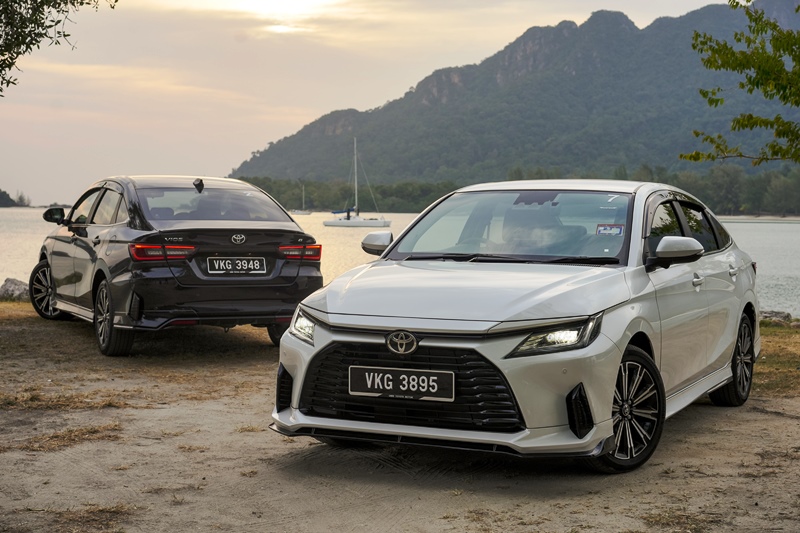
The 2023 Toyota Vios, launched last March, represents an entirely new generation with a completely new interior and exterior. We will discuss its performance later.
Three major issues
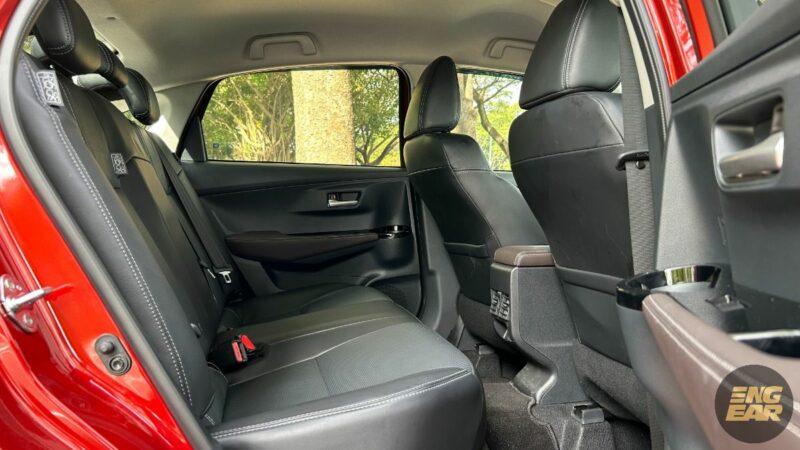
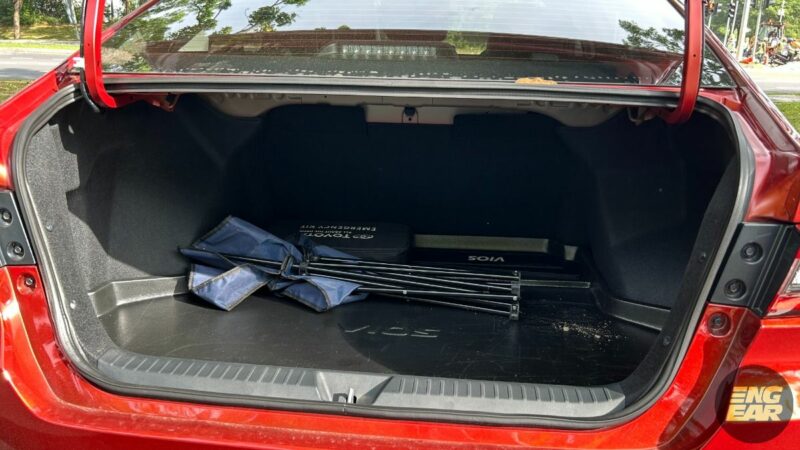
However, if you are looking into or researching cars in this segment, you would know that the new Toyota Vios has two major issues – the rear seats cannot be folded, and there is no spare tire.
Why? Well, regarding the non-folding rear seats, the Toyota Vios development team shared with the media that according to their market research, most users do not use this function. MOST. Are you among this group, or are you a minority who will complain? So, they did not include this function, and as a result, the car is 10kg lighter due to the absence of a folding mechanism.
For the lack of a spare tire, they stated that it is to provide more storage space. If you look under the boot floor, there is Styrofoam storage space for small items. The absence of a spare tire also further reduces the car’s weight.
Overall, this new generation Vios is about 110kg lighter than the previous model. This time, the 1.5 G variant weighs only 1,035kg.
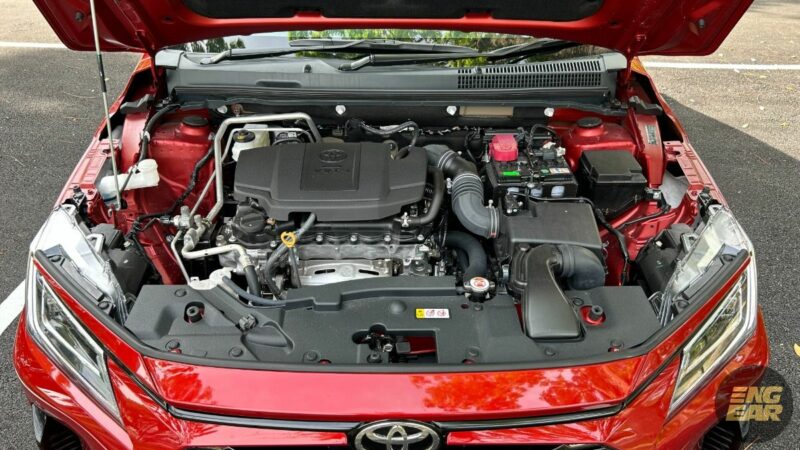
In fact, there is a third issue, which is the lower engine power. Compared to the previous Vios, which had 105hp and 140Nm from the 1.5-liter 2NR-FE engine, the new Vios is powered by the 2NR-VE engine with an output of 104hp and 138Nm of torque.
These figures decreased by 1hp and 2Nm, but in all honesty, you won’t feel the difference. But considering the lighter weight as mentioned earlier, the new Vios actually has a better power-to-weight ratio than before.
So, overall and theoretically, the new Vios is definitely more fuel-efficient. According to Toyota, the Vios has a fuel efficiency of up to 5.2 liters per 100km or 19.2km per liter.
Regarding major issues like non-folding rear seats and the lack of a spare tire, we should look at it this way: Toyota may be in a dilemma choosing between facing criticism from many people for not having a spare tire, or a few people complaining about the non-folding rear seats. We also believe fuel efficiency is more important for cars like this. So, let’s move on to the next topic.
Becoming more upmarket
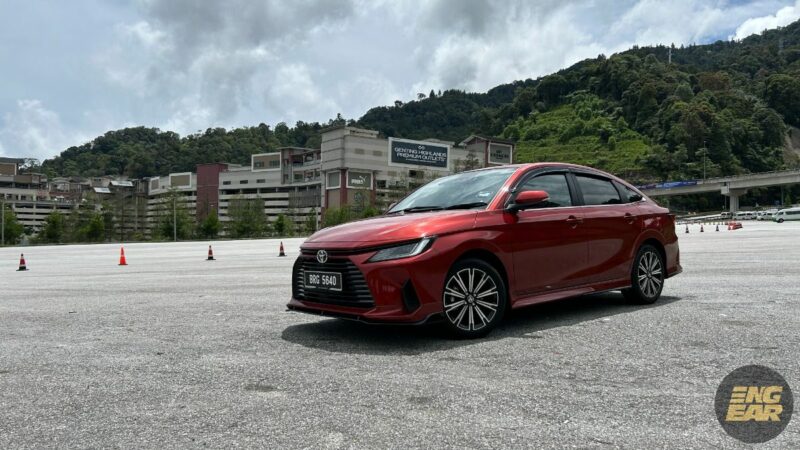
One crucial aspect for Segmen-B sedan cars is style and appearance. In this regard, the new Toyota Vios does not disappoint. Its overall look can be described as more ‘upmarket.’ The front end now resembles larger Toyota sedans (such as the Toyota Corolla), featuring larger 17-inch rims (in the G variant) and a rear roof design akin to a fastback, which is currently on-trend.
The front appearance with its slanted LED headlights is still challenging for the writer to grasp, but, importantly, it gives a fresh image, markedly different from before. The larger rims not only complement the overall shape but also have a positive impact on handling.
This upmarket feel extends to the interior, where the Vios dashboard now looks modern and not cheap. If it used to be filled with hard gray plastic, the 2023 Vios now boasts softer touches, different color tones, and textures.
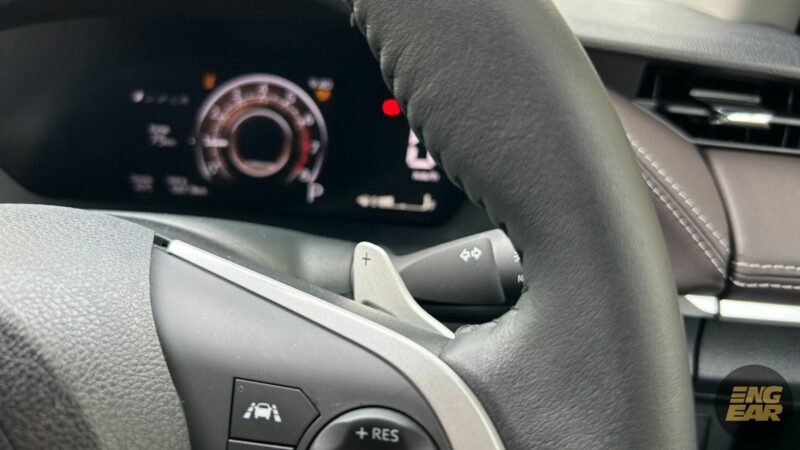
Simultaneously, the button and switch layout is still neat, easily accessible, and more pleasant to the touch. Additionally, the instrument display is now fully digital, with electronic parking brakes coming standard.
An interesting touch for the writer is the positioning of the window switch surfaces on the left and right door panels. They are glossy black, like most cars, but instead of being plain, they feature a diamond texture and a slightly recessed surface.
This is an easy and cost-effective solution, yet effective in adding a sense of premium and sophistication to the Vios. This is important because many buyers of cars in this category are upgrading from budget cars.
Have you been driving the Myvi since you started working, and now with a family and a promotion, you’re upgrading to the Vios? A common scenario, isn’t it?
Oh, we know that because the Vios is built on the DNGA platform (Daihatsu New Global Architecture), it shares the dashboard with models like the Axia and Alza. So, one way to position the Vios in a higher tier is the inclusion of wireless Android Auto and Apple Carplay integration.
Solid look, solid driving?
For driving dynamics, perhaps not many Vios buyers emphasize this aspect, even though UMW Toyota has used this car for the Vios Challenge event for several years.
Nonetheless, the fact is that this all-new Toyota Vios has seen an improvement in terms of driving dynamics, whether you need it or not. The first thing the writer noticed is the more precise and responsive steering with increased feedback.
It doesn’t feel unnecessarily heavy, but just enough for a natural feel. This makes the new Vios more enjoyable to drive, whether cruising slowly in the city or taking corners at triple-digit speeds.
The 205/50 tire profile and 17-inch rims also contribute to a better steering feel; it’s not just for looks. However, it’s worth noting that the cost of replacing tires will increase, so this is something to keep in mind. Approximately RM380 to RM400 for one tire of this size.
For a delightful driving experience, some investment is necessary, right? Most importantly, this ‘delightfulness’ comes from the factory’s R&D, not just a gimmick by the car enthusiasts.
The chassis is now more robust and stable, thanks to the use of DNGA. When taking S corners while descending from Genting Highlands, the suspension and tires work more consistently and clearly, a result of the sturdy chassis.
The writer honestly no longer enjoys ‘testing’ cars in Genting because there are too many wannabe ‘racers’ there now, but happened to have work there, so took the opportunity to drive the Vios.
Sufficient power? 104hp and 138Nm of torque is more than enough even when driving up to the peak of Genting Highlands. The new D-CVT gearbox with a combination of physical gears and a belt assists in efficiently transmitting the overall power to the front wheels. You feel the full force of the 104hp without any power wastage.
The engine noise will enter the cabin when revved beyond 4,000rpm, which is normal. But when the rpm stabilizes and you’re cruising at a constant speed, the Vios is fairly quiet and comfortable to drive for long distances.
Even when pushed, we will begin to reach the limits of the engine, tires, and gearbox. The tires supplied are Continental PremiumContact 7, not performance tires, so they start to struggle when you’re not smooth enough with steering inputs. This doesn’t mean the tires are not good; they are perfect for daily use in the Vios.
The engine and gearbox also work hard to keep up with the writer’s accelerations and climbs, then brake into corners, then accelerate again. The TCU (Transmission Control Unit) tries to provide the best gear ratios according to speed, rpm, and right foot input. But there are no issues with the chassis.
Additional information: Toyota already has a unit for the use of the Vios Challenge based on this new platform. Surely, it uses semi-slick tires and a manual transmission, so maybe next season we will be able to see how the performance of this new generation Vios holds up in actual races.
Not races at the Genting International Circuit, of course. Always drive carefully on public roads!
Safety features are not forgotten; the Vios now comes standard with Toyota Safety Sense (TSS), which includes systems like Pre-Collision System, Lane Departure Warning, and Front Departure Alert. The G variant also includes Lane Keeping Control, Auto High Beam, and Adaptive Cruise Control. For the writer, the G variant is the way to go as these three features are highly useful for everyday driving. Additionally, the price difference in monthly installments isn’t significant.
In conclusion, the 2023 Toyota Vios is indeed a significant shift in all aspects compared to the car it replaces. It is now more modern and dynamic to drive, and most importantly, it makes you feel it offers better value for money.