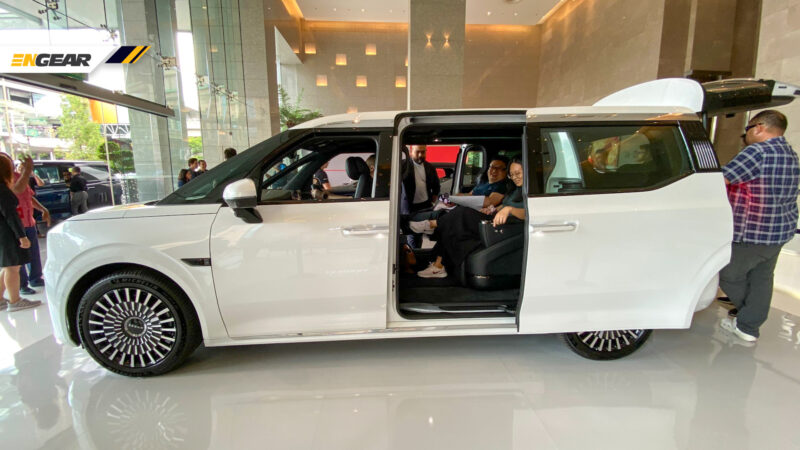
Hyundai Motor Malaysia has previewed the upcoming range‑topping variant of its B‑segment MPV, the Hyundai Stargazer X, ahead of its official launch.
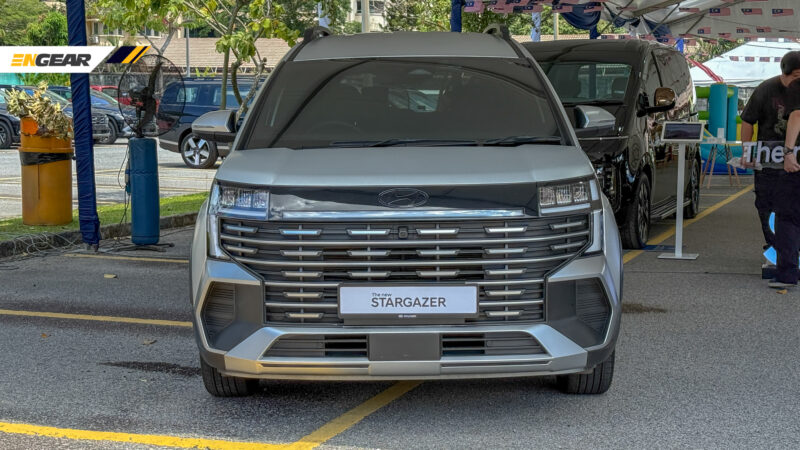
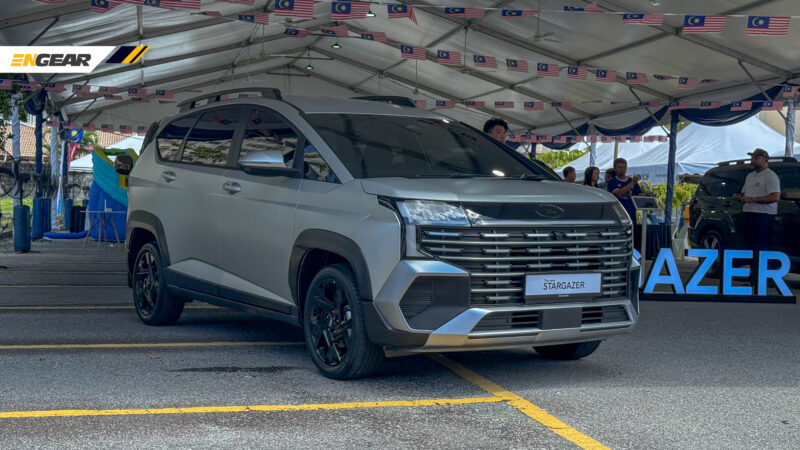
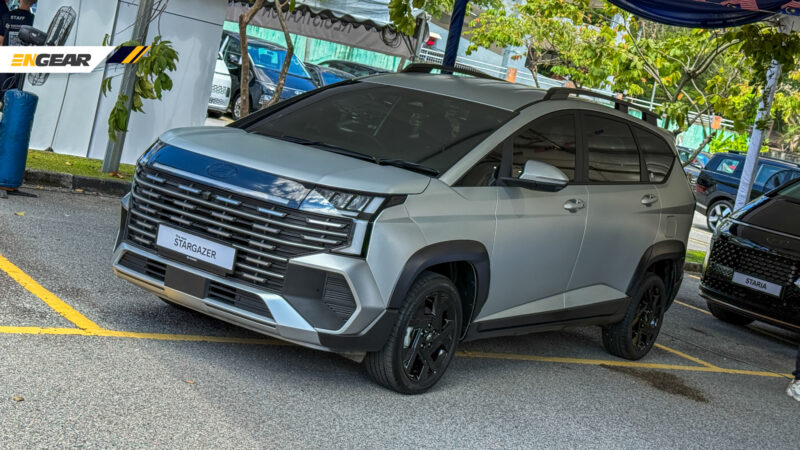
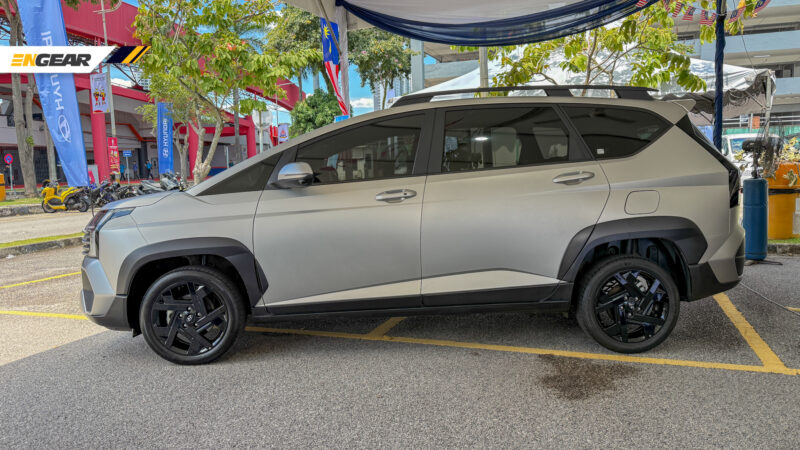
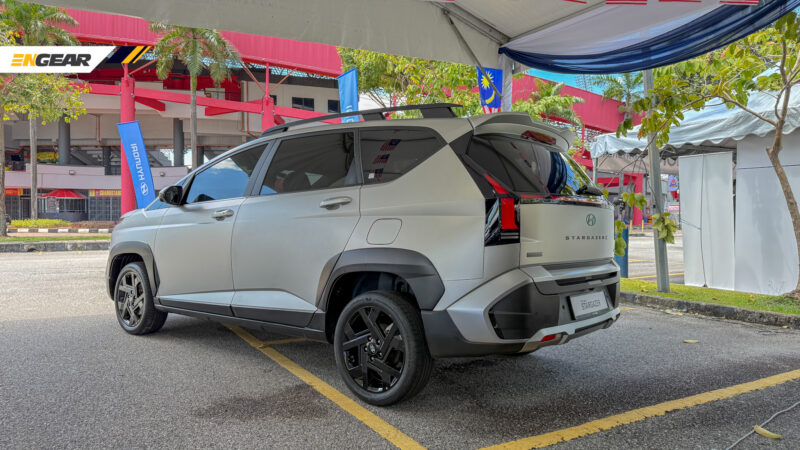
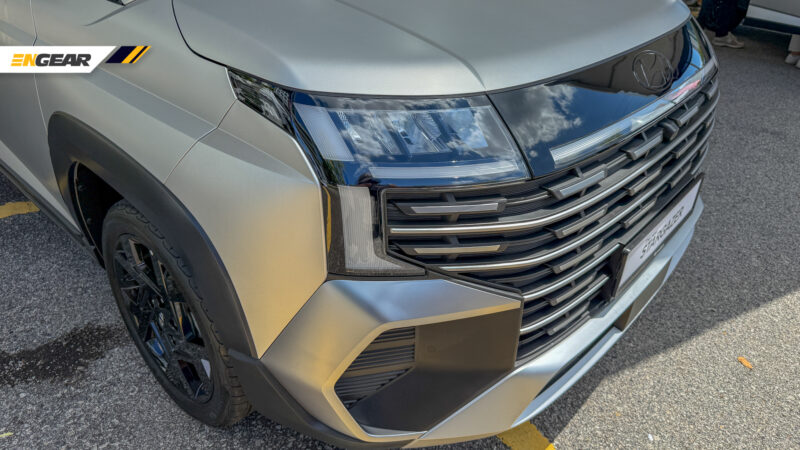
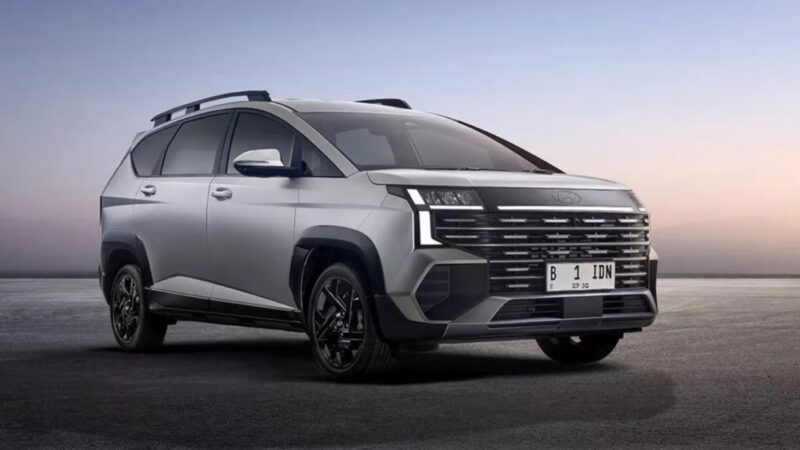
Unlike the standard Stargazer shown at KLIMS 2026, the Stargazer X carries a noticeably more rugged and adventurous appearance.
Equipment
At the front, the Stargazer X features a black H emblem, a black/silver radiator grille, and a sportier front bumper.
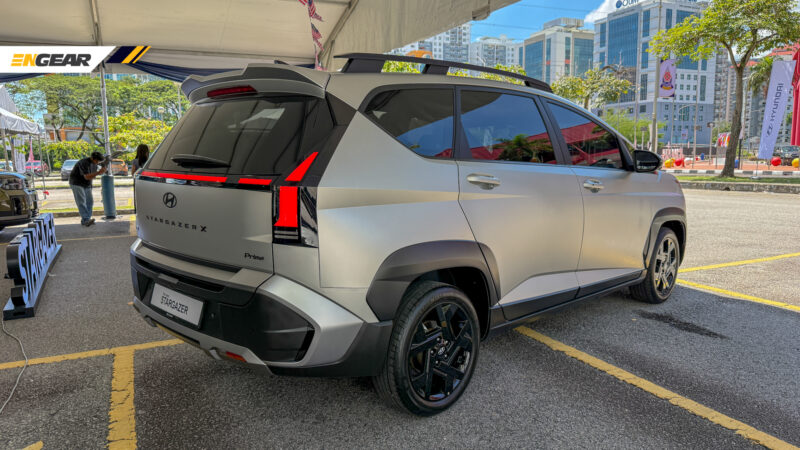
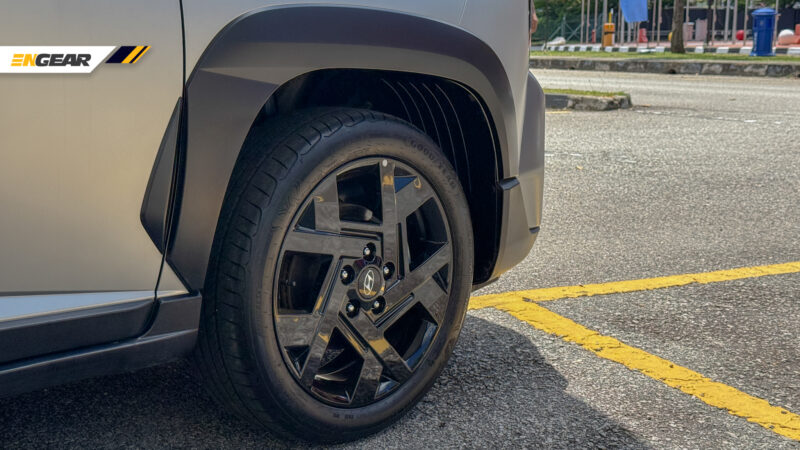
Along the sides, it is fitted with 17‑inch gloss‑black alloy wheels, side skirts, and wheel‑arch protective cladding.
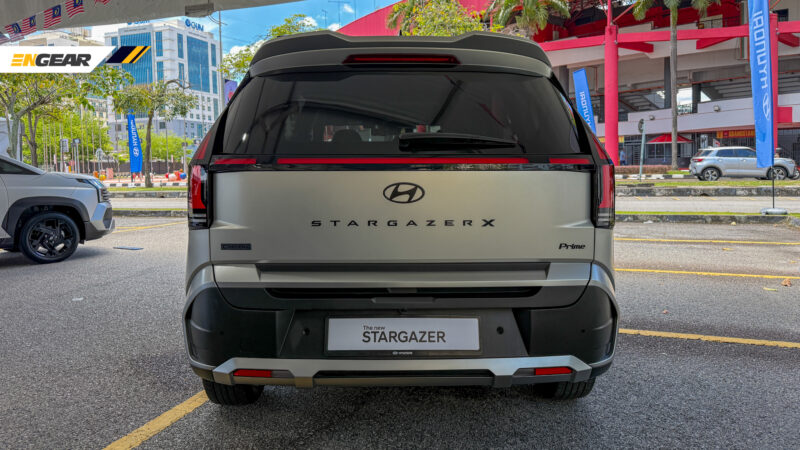
Additional exterior features include:
Rear spoiler
Rear disc brakes
Roof rails with a 100 kg load rating
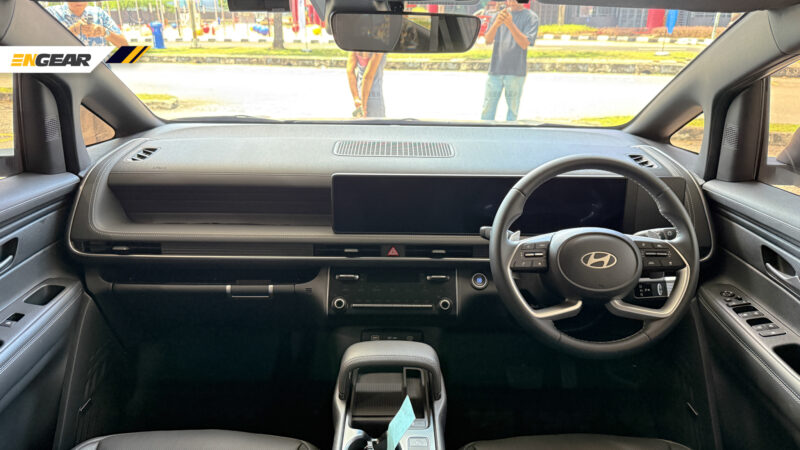
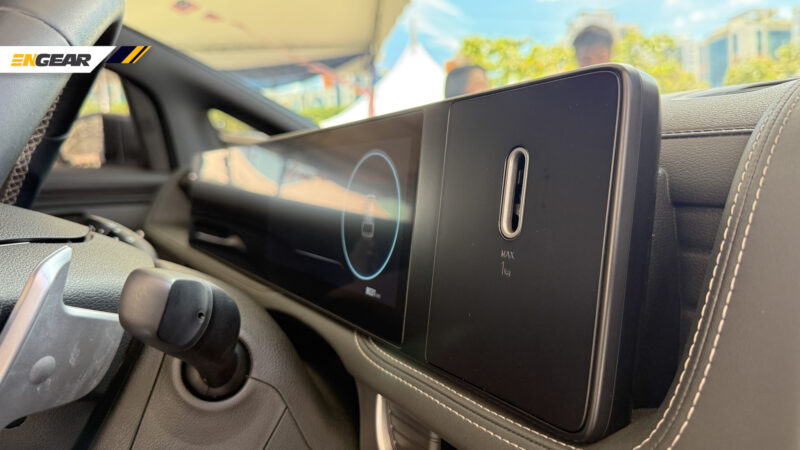
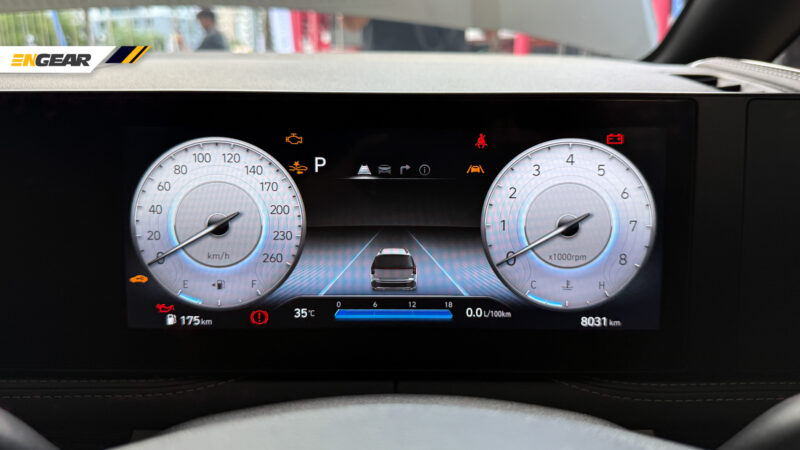
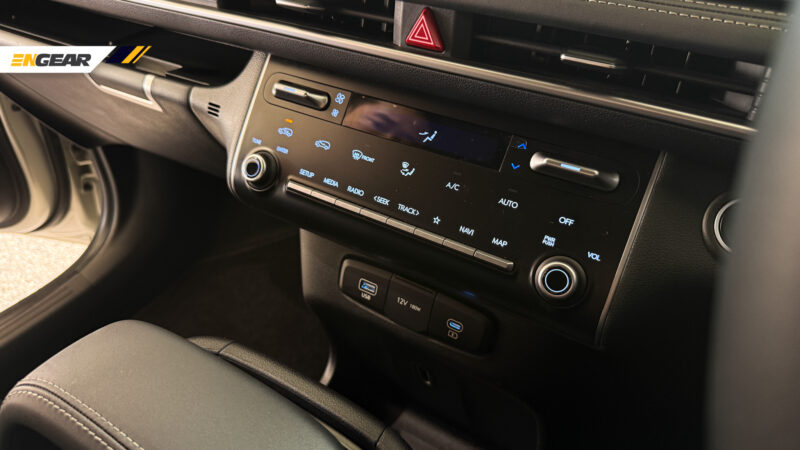
Similar to the Prime variant, the Stargazer X is equipped with a 10.25‑inch digital instrument cluster, a 10.25‑inch infotainment display, and an electronic parking brake (EPB).
Other interior features include:
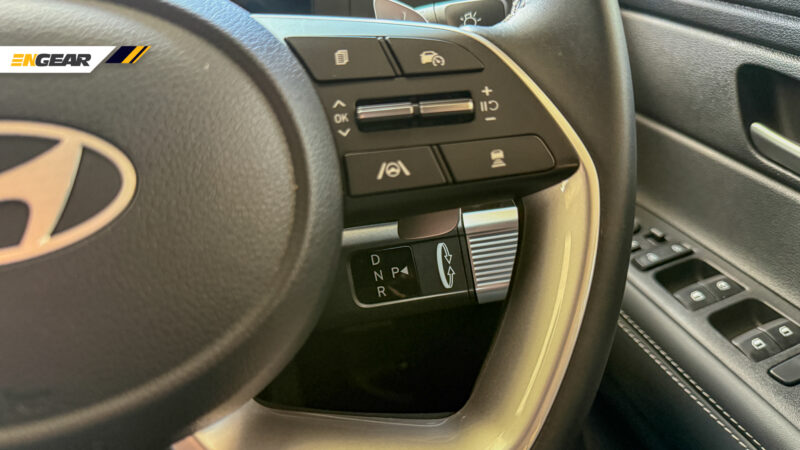
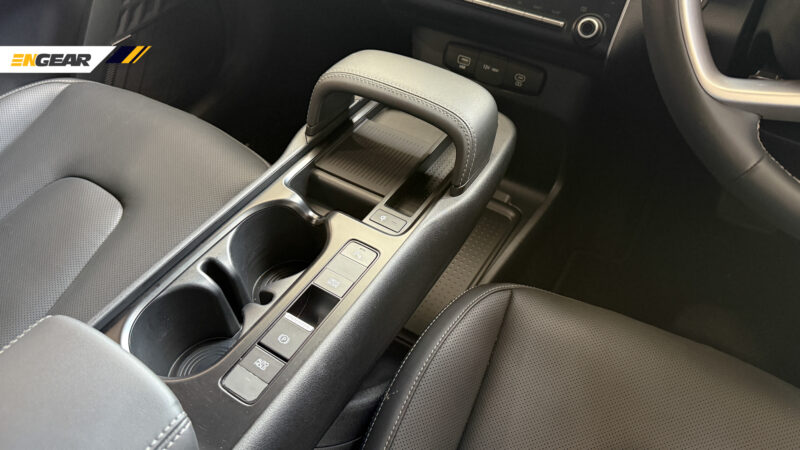
Column‑mounted shift‑by‑wire gear selector
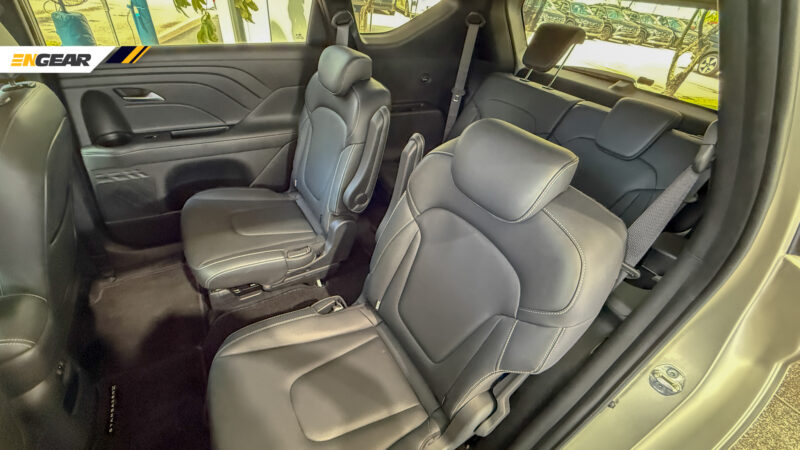
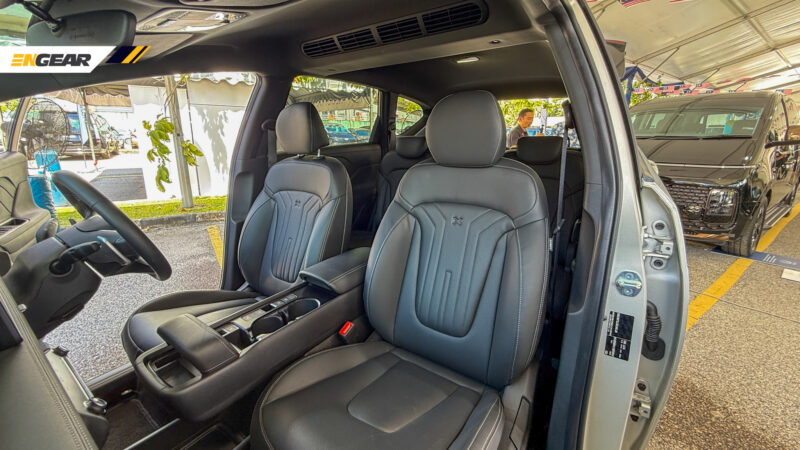
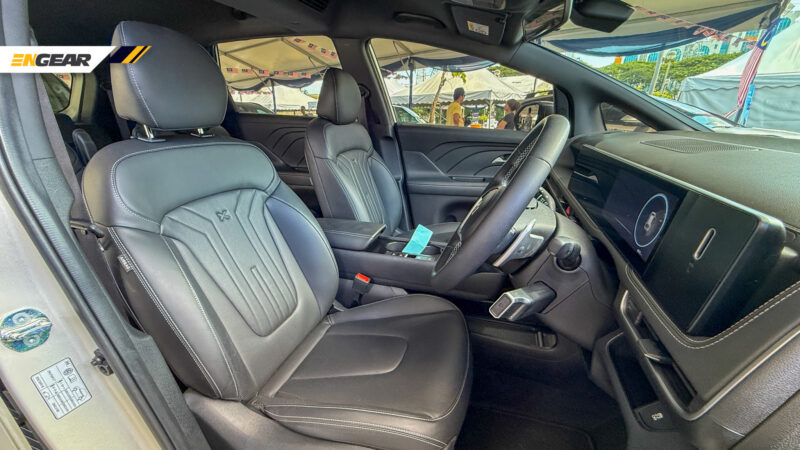
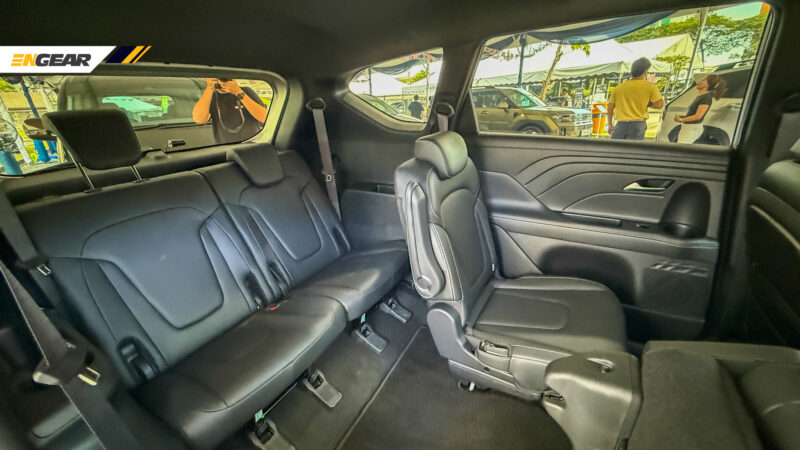
Leatherette‑wrapped seats
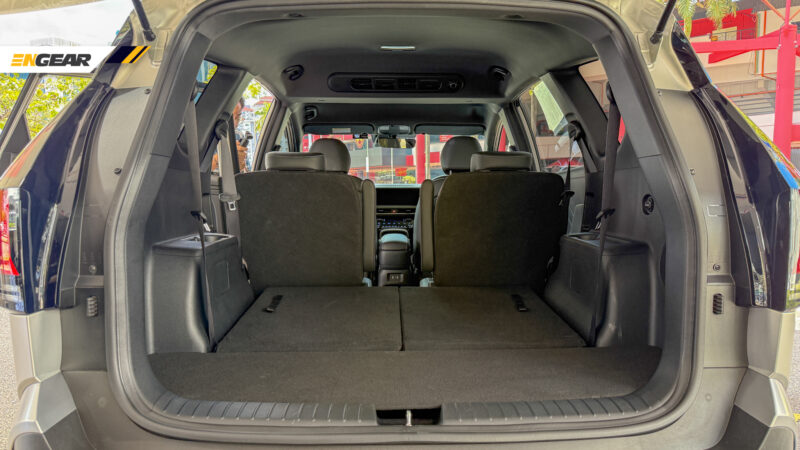
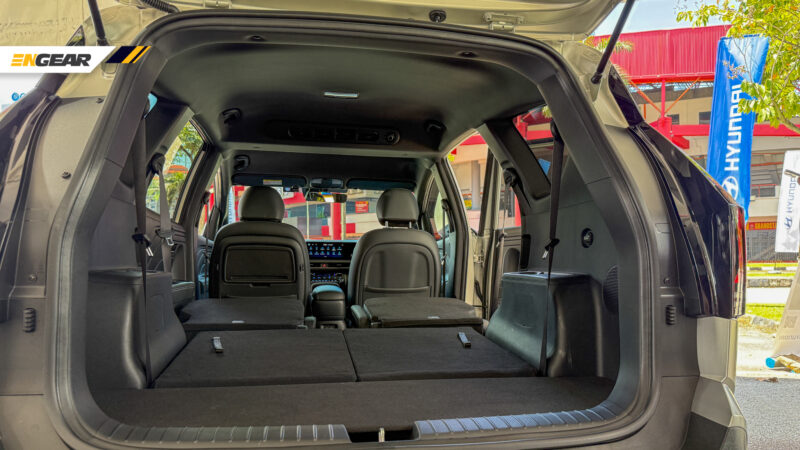
Second‑row captain seats
Floating‑type centre console
Armrest
Wireless smartphone charging pad
Foldable tray table
Six‑speaker audio system
Safety equipment includes:
Tyre Pressure Monitoring System (TPMS)
Rear Occupant Alert (ROA)
Smart Cruise Control with Stop & Go
Hyundai SmartSense ADAS suite
Six airbags
Compared to the Indonesian‑market Stargazer X, the Malaysian model does not include:
Surround View Monitor
Blind‑Spot View Monitor
Ambient lighting
Powered and ventilated driver’s seat
Nine‑speaker audio system
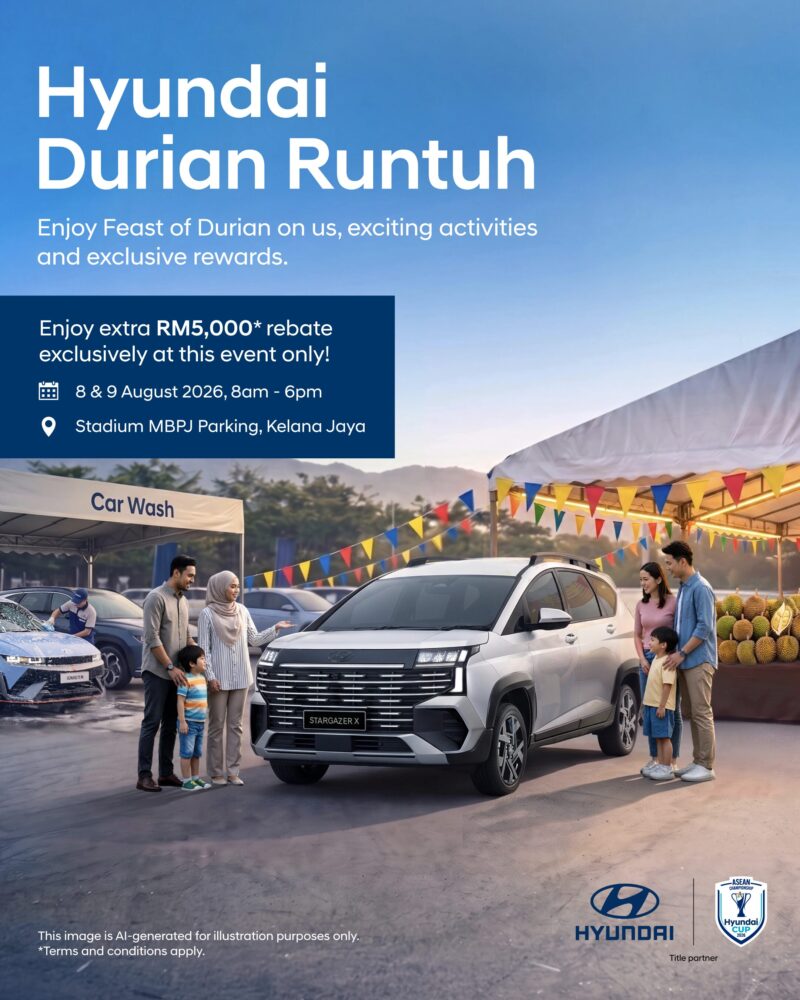
The Hyundai Stargazer X will be showcased this weekend (8–9 August) at the Hyundai Durian Runtuh event, held at the MBPJ Kelana Jaya Stadium parking area.
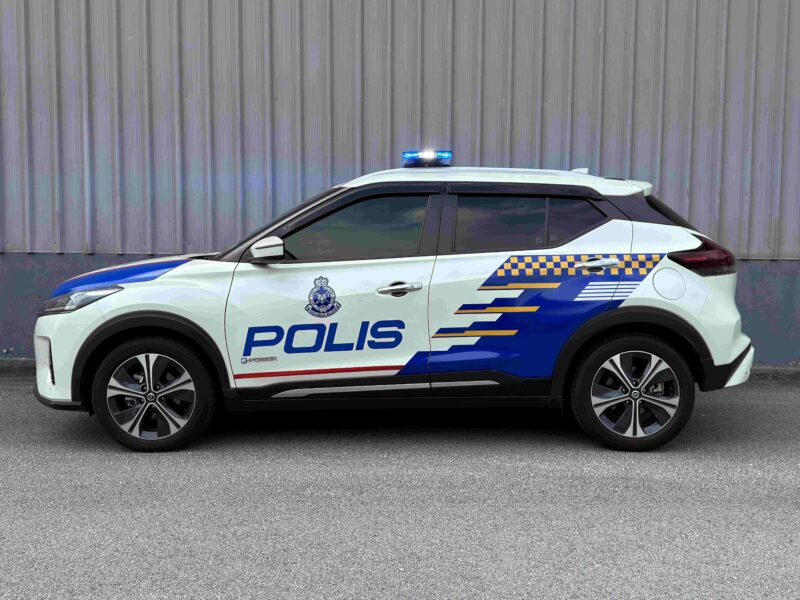
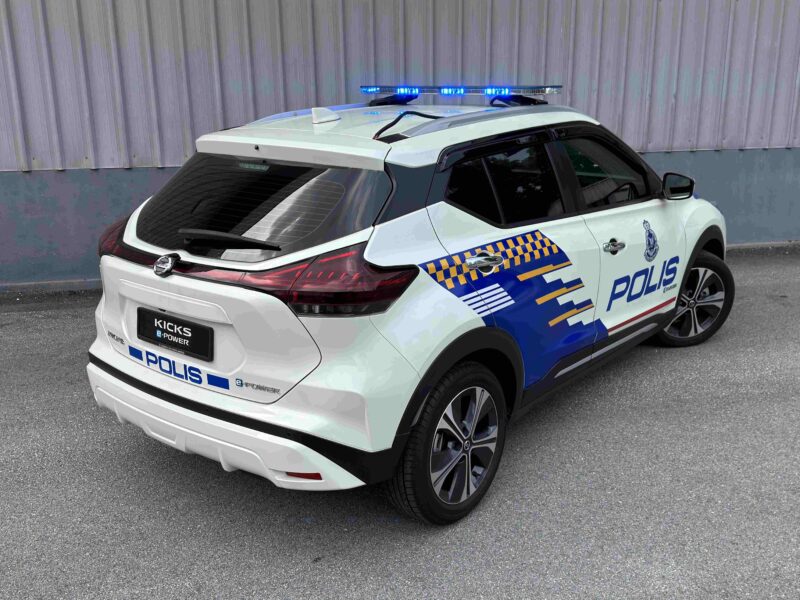
Edaran Tan Chong Motor Sdn Bhd (ETCM) has handed over two units of the Nissan Kicks e‑Power to the Royal Malaysia Police (PDRM) for evaluation purposes.
Both Nissan Kicks e‑Power units will undergo a two‑month proof‑of‑concept programme to assess their performance, practicality, and suitability for real‑world patrol operations.
Bukit Aman Logistics and Technology Department Director, Commissioner of Police Redzuan Bin Abd Hamid, said it is crucial for every new technology to be evaluated in an actual operational environment.
“This Proof of Concept programme allows us to assess the performance, practicality, and suitability of the Nissan Kicks e‑Power for frontline operational use.
“The findings from this evaluation will support our ongoing efforts to identify the most appropriate mobility solutions to meet operational needs,” he added.
ETCM Executive Vice President Christopher Tan said the best innovations are those that meet real‑world requirements.
“Nissan e‑Power delivers an EV‑like driving experience without the need for external charging, eliminating range anxiety.
“Through this evaluation programme, we hope to see how the Nissan Kicks e‑Power can support various fleet applications, including frontline service operations,” he said.
The Nissan Kicks e‑Power is powered by the e‑Power system, consisting of:
Kia Sales Malaysia (KSM) has announced the introduction of the 8-seater Kia Carnival for the local market, with a selling price of RM238,888.
The addition of this new variant complements the existing offerings, which include the eleven-seater variant priced at RM188,888 and the seven-seater variant at RM248,888.
Unique Second Row Features
The 8-seater variant offers a 2-3-3 seating configuration with soft leatherette upholstery.
The second row includes a 40:20:40 split, a remote sliding function, and can be adjusted to face either forward or backward.
The third row can be folded with a 60:40 split to allow for more flexible cargo and passenger arrangements.
Features Similar to the Seven-Seater Variant
This new variant also comes equipped with a curved panel that integrates a 12.3-inch digital cluster screen and a 12.3-inch infotainment screen.
Additionally, it features a Bose audio system with 12 speakers.
The Kia Carnival eight-seater is powered by a 2.2-liter Turbo Diesel Smartstream engine, producing 202 PS @ 3,800 rpm and 440 Nm @ 1,750-2,750 rpm.
Fuel consumption is approximately 6.5 liters/100 km (WLTP data), allowing for a range of over 900 km on a full tank.
Safety Features
Safety features include eight airbags, as well as Advanced Driver Assistance Systems (ADAS) similar to those in the seven-seater variant, which comprise:
Every purchase comes with a 5-year warranty or a mileage limit of 150,000 km (whichever comes first).
KSM is also offering interest rates as low as 1.98 percent per annum for financing periods of up to 9 years, or a fuel credit of RM6,000 through the ‘We Fuel You’ initiative.
Through Kia Cares, KSM provides a comprehensive insurance package with benefits such as:
Agreed value coverage for up to 15 years
Claim approval for amounts under RM30,000 within 24 hours
Free betterment for up to 10 years, and no excess for selected incidents
Edaran Tan Chong Motor (ETCM) has announced that it has received 1,300 bookings for the new-generation 2026 Nissan Serena e-Power MPV model.
So far, 250 units of the MPV have been delivered to their respective owners since its official launch last March.
According to Christopher Tan, Executive Vice President of ETCM, “For most families today, mobility is more than just transportation—it is a part of our everyday lifestyle.”
He added, “The Nissan Serena e-Power reflects Nissan’s commitment to ensuring that advanced technology enriches real-world journeys and meets the needs of families.”
He further explained that this MPV is specifically designed to address the daily realities faced by parents, children, and the elderly, who often experience discomfort, dizziness, or fatigue in traditional vehicles.
The Nissan Serena e-Power 2026 is available in five variants:
Serena X – RM154,800
Serena X Plus – RM159,800
Serena Highway Star – RM169,800
Serena Premium Highway Star – RM174,800
Serena Shiro Premium Highway Star – RM179,800
In light of the positive response, ETCM has extended a rebate offer of up to RM5,000 along with an accessory package worth RM8,000.
Edaran Tan Chong Motor Sdn Bhd (ETCM) has officially launched the 2026 Nissan Serena e-Power hybrid MPV for the Malaysian market.
The 2026 Nissan Serena e-Power arrives as a locally assembled (CKD) unit and is available in five distinct variants:
Serena X: RM154,800
Serena X Plus: RM159,800
Serena Highway Star: RM169,800
Serena Premium Highway Star: RM174,800
Serena Shiro Premium Highway Star: RM179,800
Early bird customers will benefit from rebates of up to RM5,000 and an accessory package valued at RM8,000.
The e-Power System
The vehicle is driven by Nissan’s proprietary e-Power system, which consists of:
A 1.4-liter naturally aspirated (NA) engine acting solely as a power generator.
An electric motor producing 163 PS and 315 Nm of torque.
A 1.77 kWh lithium-ion battery pack.
A single-speed automatic transmission.
The Serena e-Power boasts impressive efficiency with a fuel consumption rate as low as 5.4 liters per 100 km, providing a total driving range of up to 1,000 km.
It also features the e-Pedal function, allowing for single-pedal driving.
The chassis setup utilizes MacPherson struts at the front and a torsion beam for the rear axle.
Exterior Features
On the outside, the Serena e-Power showcases Nissan’s signature V-Motion front grille design. Standard exterior highlights include:
Three-tier LED projector headlamps with Auto Leveling.
LED boomerang-style taillights.
Dual-side sliding doors with automatic opening.
16-inch alloy wheels wrapped in 205/65R16 tires.
A signature Dual Back Door for easier access in tight spaces.
The Highway Star variants and above receive additional aerodynamic front and rear bumpers, LED fog lamps, and dual-sided electric power sliding doors.
Interior and Technology
The base Serena X variant comes equipped with:
A 7-inch digital instrument cluster and a 9-inch infotainment touchscreen.
Apple CarPlay and Android Auto support.
Dual-zone automatic climate control.
Water-repellent fabric seats and dual USB charging ports.
The X Plus adds leatherette upholstery, V-Kool tint film, and a 14-inch roof-mounted monitor.
Stepping up to the Highway Star variant introduces:
Larger 12.3-inch digital cluster and 12.3-inch infotainment screens.
Wireless Apple CarPlay and Android Auto.
Folding tables for second-row passengers, a wireless device charger, and six USB ports.
ProPilot System: Including Intelligent Cruise Control, Lane Intervention, and Blind Spot Intervention.
Intelligent Around View Monitor (360-degree camera) with Moving Object Detection (MOD).
The Premium Highway Star further enhances the cabin with Premium Black Nappa leather upholstery, a 14-inch roof monitor, and V-Kool window film.
The range-topping Shiro Premium Highway Star features Luxurious White Nappa leather, a motorized 14-inch roof monitor, a powered tailgate, and LED side sill plates.
Color Options
Color availability varies by variant:
X & X Plus: Brilliant White and Diamond Black.
Highway Star: Turquoise Blue, Dark Metal Grey, Brilliant White, and Diamond Black.
Premium Highway Star & Shiro: Exclusive two-tone finishes featuring a contrasting black roof.
As the Malay proverb goes, “better late than never.”
After more than three years since its global debut, Nissan distributor Edaran Tan Chong Motor (ETCM) is finally set to officially launch the Serena e-Power this March.
Although its arrival may be considered somewhat late, ETCM claims to have already received 400 orders for the MPV model.
Naturally, there are several features of the Serena e-Power that have piqued the interest of existing Nissan Serena owners in this new model.
Last week, ETCM invited a group of journalists for a test drive session from Petaling Jaya to Kuantan, allowing us to assess the improvements made.
Here are some positive aspects we found in the Serena e-Power:
e-Power is More Powerful
One of the most significant upgrades in this family MPV is the e-Power system (163 PS/315 Nm), which replaces the S-Hybrid system in the C27 model.
Whereas the Serena S-Hybrid previously felt like it could “manage… but don’t ask for more,” this new e-Power system offers a much more confident drive.
Its electric motor provides a more immediate response, more strength, and operates quietly, akin to an electric vehicle (EV).
It’s not to say it suddenly becomes a speedster, but this time the Serena feels less heavy when overtaking or climbing, compared to the previous S-Hybrid system.
Press the pedal, and the car moves smoothly without drama. This is the characteristic that should be present in a modern family MPV.
The Serena e-Power boasts fuel consumption as low as 5.4 liters per 100 km, with a driving range of up to 1,000 km.
Quiet Cabin
In addition to the efficient e-Power system, we also noticed a significant improvement in NVH (Noise, Vibration, and Harshness).
The cabin feels quieter and more comfortable, to the point that we forgot we were not driving an electric MPV.
This is attributed to several factors, including the use of acoustic glass and air curtains on the front bumper, which contribute to improved driving stability.
Wind noise is only noticeably heard at higher speeds; however, this isn’t a major issue as the MPV will most often be driven within the national speed limit.
Engine noise is also less pronounced when the e-Power system is engaged aggressively, almost as if Nissan has placed the 1.4L NA engine at the front of the bumper.
It doesn’t roar; rather, it produces a low hum that does not distract the driver.
Less Motion Sickness
One new feature in the Serena e-Power is the redesigned front suspension system, aimed at enhancing ride stability and comfort.
According to Nissan, the Serena e-Power utilizes SUV-based suspension architecture at the front to reduce body roll and improve control.
Overall, the suspension tuning of the Serena e-Power is designed to provide a more comfortable ride with less bouncing, aided by Zero Gravity seats to reduce motion sickness, especially for rear passengers.
A Champion of Practicality
As a family MPV, the Nissan Serena offers ample space for storage.
In line with current trends where people heavily rely on smart devices, the Serena includes designated spots for mobile phones, including a wireless charging slot and six USB ports.
The second-row passengers benefit from foldable tables and seats that can adjust in four directions.
Additionally, there are 22 cup-holder locations throughout the cabin.
It can be said that the Serena understands the realities of life: kids have toys, mothers have small bags, fathers have power banks – everyone has their place.
Retaining Elements of Previous Serena Models
Although the Serena e-Power introduces numerous enhancements, it still maintains the true identity of the Serena, such as the seating layout allowing easy passage from the first to the third row.
It also retains wide sliding doors on both the left and right, a high cabin dimension, large windows, and ease of access.
The Serena maintains the Dual Back Door feature with dual opening methods, making it convenient for loading and unloading items, especially in tight parking spaces.
Thus, exemplary fathers need not worry, as the identity of the previous Serena model is still preserved and passed down to the new Serena.
Conclusion
With its practical features and innovations, the Nissan Serena e-Power has the potential to be an ideal family car choice for 2026.
According to ETCM, the Serena e-Power is expected to be priced between RM160,000 and RM180,000.
Specifications for the Nissan Serena e-Power (including safety features) can be viewed at THIS LINK.
Edaran Tan Chong Motor Sdn Bhd has announced that the new Nissan Serena e-Power model will be launched in March 2026.
This locally assembled (CKD) model will be sold at a price range of RM160,000 to RM180,000.
During a test drive organized with media representatives, Christopher Tan, the Executive Vice President of ETCM, announced that they have received 400 bookings for the MPV model thus far.
The Nissan Serena e-Power 2026 will be offered in Premium Highway Star specification.
e-Power System
It is powered by the e-Power system, which consists of a 1.4-liter engine that acts as a power generator for the electric motor (163 PS/315 Nm), paired with a 1.769 kWh lithium-ion battery pack.
With a single-speed automatic transmission, the Serena e-Power offers fuel consumption as low as 5.4 liters per 100 km, with a driving range of up to 1,000 km.
It also features a one-pedal driving function or e-Pedal.
The Serena e-Power utilizes a MacPherson strut setup at the front and a torsion beam for the rear axle.
Exterior
In terms of exterior design, the Serena e-Power features a V-Motion front grille, three-layer LED projector headlights with Auto Levelling function, boomerang-style LED taillights, and automatic sliding doors on both the left and right.
Standard equipment includes 16-inch wheels wrapped in 205/65R16 tires, which prioritize both comfort and presence.
The Serena e-Power also inherits the Dual Back Door feature from the previous Serena model.
Interior
Cabin features include seats with Zero Gravity technology, black Nappa leather upholstery, second-row captain’s chairs complete with armrests and four-way sliding functions, a foldable table for second-row passengers, and an additional 14-inch display screen.
There is also a 12.3-inch TFT display, a 12.3-inch infotainment screen, support for Apple CarPlay and Android Auto, a climate control panel with a digital display, wireless charging slots, and six USB ports.
Safety
The Serena e-Power is equipped with six airbags, ABS, EBD, Brake Assist, Hill Start Assist (HSA), ISOFIX anchors, Vehicle Dynamic Control (VDC), and Traction Control System (TCS).
Advanced safety features include a semi-autonomous ProPilot system, Intelligent Around View Monitor (IAVM), Smart Moving Object Detection (MOD), Intelligent Forward Collision Warning (IPFCW), Intelligent Emergency Braking (IEB), Driver Attention Warning (IDA), Lane Departure Warning (LDW), Blind Spot Warning (BSW), and Rear Cross Traffic Alert (RCTA).
Colour Options
The Nissan Serena e-Power will be available in four two-tone colour options: Turquoise Blue, Dark Metal Gray, Brilliant White, and Diamond Black, all featuring a black roof.
Kia Sales Malaysia (KSM) today officially launched the facelifted 2026 Kia Carnival, marking the first model since its inception.
The 2026 Kia Carnival is a locally assembled unit (CKD) and is offered in two variants:
2.2D 11-seater
2.2D 7-seater
Both variants are powered by a 2.2-liter Smartstream turbo diesel engine producing 202 PS at 3,800 rpm and a torque of 440 Nm at 1,750-2,750 rpm.
The engine is paired with an eight-speed automatic transmission driving the front wheels, delivering a fuel consumption rate of 6.5 liters per 100 km.
Exterior
The Carnival facelift showcases a new image based on the Opposites United design philosophy, featuring all-new headlights, a wide grille, and redesigned taillights.
The 11-seater variant is equipped with 18-inch wheels, while the 7-seater variant boasts 19-inch wheels.
Interior
Inside, the vehicle includes features such as a 12.3-inch digital cluster display and a 12.3-inch infotainment screen integrated into a single panel, a leather-wrapped steering wheel, and a dual-zone climate control system.
The new Carnival also supports Apple CarPlay and Android Auto.
The 11-seater variant features foldable middle seats in the second and third rows for easier passenger access.
Meanwhile, the 7-seater variant has a seating arrangement of 2-2-3, followed by Premium Relaxation seats in the second row with side slide functions, and third-row seats that can be folded flat.
Special features for the 7-seater variant include a head-up display, heated and ventilated seating functions, and a Bose audio system with 12 speakers.
Cargo Space
The 11-seater variant offers a cargo space of 56 liters, which expands to 2,689 liters.
The 7-seater variant provides even more cargo space, around 627 liters, and up to 2,827 liters when the seats are folded down.
Safety Features
As standard, the Kia Carnival facelift is equipped with eight airbags, ABS, EBD, Brake Assist, Traction Control System (TCS), Hill Assist Control (HAC), ISOFIX anchors, and Auto Hold functionality.
Advanced safety features, known as ADAS, are available for the 7-seater variant, including functions such as:
High Beam Assist (HBA)
Blind Spot Collision Avoidance Assist (BCA)
Blind Spot Monitoring System (BSM)
Lane Keeping Assist (LKA)
Driver Attention Warning (DAW)
Forward Collision Avoidance Assist (FCA)
Lane Follow Assist (LFA)
Pricing
The 2026 Kia Carnival facelift is priced starting from RM188,888 for the 11-seater variant and RM248,888 for the 7-seater variant.
UMW Toyota Motor (UMWT) has officially launched the luxurious Toyota Vellfire 2.5 HEV Executive Lounge for the Malaysian market today.
The Vellfire HEV is powered by a self-charging hybrid system that consists of a 2.5-liter Dynamic Force engine (code A25A-FXS) producing 187 PS and 233 Nm, paired with an electric motor delivering 182 PS and 270 Nm, along with an e-CVT transmission.
Overall, this HEV system can generate a power output of up to 250 PS, which is 37 percent more powerful than the standard 2.5-liter model.
The fuel consumption rate is as low as 5.7 liters per 100 km, allowing the Vellfire HEV to cover a driving distance of up to 1,000 km on a 60-liter fuel tank.
In addition to Eco and Normal driving modes, the Vellfire HEV also offers an EV mode for zero-emission driving over short distances without using a drop of petrol.
In line with the Japanese hospitality philosophy of omotenashi, the Vellfire HEV provides a unique level of comfort.
The VIP Executive Lounge seats offer power adjustments, ventilation systems, as well as massage functions and ottomans, all controllable via a touchscreen panel.
Other features include foldable tables, larger armrests, anti-shake functions, Nappa leather upholstery, a 64-color ambient lighting system, a 14-inch rear screen, and a JBL audio system with 15 speakers.
In terms of safety, the Vellfire HEV comes equipped with the Toyota Safety Sense 3.0 package, which includes features such as Pre-Collision System (PCS), Lane Departure Alert (LDA), Dynamic Radar Cruise Control (DRCC) with Lane Tracing Assist (LTA), Adaptive High Beam System (AHS), Blind Spot Monitoring (BSM), Rear Cross Traffic Alert (RCTA), and Parking Brake Support (PKSB).
Three color options are available for the Vellfire HEV: Platinum White Pearl, Precious Metal, and black, which can be paired with either black or Sunset Brown interior finishes.
Aside from the Vellfire HEV, customers can still opt for the Vellfire equipped with a 2.5-liter engine (code 2AR-FE) producing 182 PS and 235 Nm, paired with a Super CVT-i 7-speed transmission.
The Vellfire 2.5 comes with features such as synthetic leather upholstery, Executive seating without control panels, and lacks rear seat entertainment and a head-up display (HUD).
The selling prices are as follows:
Toyota Vellfire 2.5 – RM448,000
Toyota Vellfire 2.5 HEV Executive Lounge – RM549,900
Honda continues to dominate the light vehicle (kei car) market in Japan.
For the 11th consecutive year since 2015, the Honda N-Box has been crowned the best-selling compact car, with a total of 201,354 units sold throughout 2025.
In December alone, Honda achieved sales of 15,570 units of the N-Box, surpassing the Suzuki Spacia in second place (11,397 units) and the Daihatsu Tanto in third place (9,287 units).
Here are the rankings of the top 10 best-selling kei cars for 2025:
Honda N-Box: 201,354 units
Suzuki Spacia: 165,589 units
Daihatsu Tanto: 124,619 units
Daihatsu Move: 122,349 units
Suzuki Hustler: 87,972 units
Suzuki Wagon R: 72,520 units
Nissan Roox: 71,498 units
Mitsubishi Delica Mini/ek: 58,916 units
Suzuki Alto: 57,553 units
Daihatsu Mira: 55,777 units
Meanwhile, Toyota claimed 8 positions in the list of the 10 best-selling passenger cars in Japan.
The top spot is held by the Toyota Yaris with total sales of 166,533 units, followed by the Toyota Corolla (138,829 units) and the Toyota Sienta (106,558 units).
Not only that, Toyota also dominates the MPV segment with models like the Alphard, Noah, and Voxy.
Honda ranks sixth with the Freed model (90,437 units), while Nissan ranks tenth with the Note model (78,123 units).
Here are the rankings of the top 10 best-selling passenger cars for 2025:
Edaran Tan Chong Motor (ETCM) recently held a preview session for its new MPV model set to launch next year, the Nissan Serena e-Power.
The sixth generation of the Nissan Serena e-Power (C28) is powered by the e-Power drivetrain, which consists of a 1.4-liter engine, a 163 PS electric motor producing 315 Nm, and a 1.769 kWh lithium-ion battery pack.
Unlike hybrid vehicles on the market, this e-Power system relies entirely on the electric motor for propulsion.
The 1.4-liter engine serves solely as a power generator but is equipped with direct injection technology and Mirror Bore Coating, which help reduce friction, vibration, and noise.
Fuel consumption is as low as 5.4 liters per 100 km, and this MPV can travel up to 1,000 km on a full tank.
In terms of appearance, the Serena e-Power C28 features a more modern design, beginning with a V-motion grille, a sleeker bumper, boomerang-patterned taillights, and the new Nissan logo.
The wheels are 16 inches in size.
According to ETCM, the Nissan Serena e-Power will be the first e-Power model to be assembled at the Serendah plant.
The retail price and full specifications of the Nissan Serena e-Power will be announced at the official launch, expected to take place in the first quarter of 2026 (Q1 2026).
WTC Automotive (M) Sdn Bhd, the sole distributor of the GAC brand in Malaysia, has announced the retail price for the plug-in hybrid MPV model, the GAC M8 PHEV 2025.
The GAC M8 PHEV is available in two variants:
Premium – RM328,800
Luxury – RM388,800
Customers who place their orders before December 31, 2025, will receive a portable charging cable and a complimentary two-year maintenance package, valued at RM3,800.
The M8 PHEV is powered by a 2.0-liter turbo engine paired with a single electric motor and a two-speed hybrid DHT transmission.
The total power output reaches 372 PS with a torque of 630 Nm.
With a battery pack of 25.57 kWh and a fuel tank capacity of 56 liters, the M8 PHEV can travel up to 1,038 km.
There are three intelligent driving modes: Intelligent Hybrid, All-Electric First, and Power Reservation, supported by features such as the Adaptive Vehicle Dynamic Control System and Electromagnetic Damping Suspension.
In addition, the GAC M8 PHEV offers features like:
LED headlights
18-inch alloy wheels with self-adjusting covers
Adjustable second and third-row seats up to 480 mm
Air conditioning system with Cool-Sense technology
Level 2 Advanced Driver Assistance System (ADAS)
Full Automatic Parking Assist (FAPA)
Rear curtain airbags as part of a 360-degree airbag system
The GAC M8 PHEV comes with a five-year manufacturer warranty or a mileage limit of 150,000 km, as well as an eight-year battery warranty or a mileage limit of 150,000 km (whichever comes first).
Hyundai Motor Malaysia has announced the opening of bookings for the locally assembled (CKD) Hyundai Staria model.
The MPV, which will be assembled at the Kulim factory in Kedah, will be sold at a price starting from RM179,888 to RM267,888.
Several new color options are available, including Jet Black, Snow Flake White Pearl, Meteor Grey, and Stormy Sea, across all variants.
In Malaysia, the Staria can be configured with either 10 seats or up to 7 seats for the premium variant.
In terms of power, the Staria is equipped with a 2.2-liter turbo diesel engine that produces 177 PS and 430 Nm of torque, paired with an 8-speed automatic transmission.
Further details about the Hyundai Staria can be read through this link [HERE].
In 2022, Hyundai launched the affordable MPV Stargazer to compete with manufacturers like Toyota, Daihatsu, and Mitsubishi in the Indonesian market.
The futuristic design has now been updated for the 2025 model year, featuring a bolder appearance and modern amenities.
The new facelift version of the Stargazer is known as the Stargazer Cartenz, named after Cartenz Peak, the highest mountain in Indonesia.
Significant changes are evident at the front, with more traditional headlight units, LED daytime running lights shaped like fangs, a grille structure, and a larger opening in the front bumper.
The new longer hood structure eliminates the egg-like appearance of the previous Stargazer.
At the rear, the Stargazer Cartenz features a redesigned bumper and thinner LED lights.
The Cartenz X model includes unique characteristics such as higher roof rails, protective plastic cladding around the body, a more aggressive bumper, and shiny black rims.
The Stargazer’s cabin has also been updated, with a digital cluster screen and central display integrated into a single panel, along with separate climate control panels.
As standard, the Stargazer comes with a seven-seat configuration; however, buyers can opt for the Captain Seat configuration in the middle to convert it into a six-seater vehicle.
Other features include ventilated seats with electric adjustments, wireless charging, a Bose sound system, smart cruise control, and a blind spot monitoring system.
The Cartenz X model is equipped with Shift-by-Wire technology, eliminating the gear lever for a more spacious central console.
In terms of power, the Stargazer retains the 1.5-liter naturally aspirated engine producing 113 hp and 144 Nm of torque, paired with either a six-speed manual transmission or a CVT.
Compared to its predecessor, this facelift version has increased dimensions, with an additional 115 mm in length, while the wheelbase remains at 2,780 mm, and ground clearance is at 205 mm.
In Indonesia, Hyundai sells the Stargazer Cartenz starting at Rp 350,400,000 (RM 90,580), while the Stargazer Cartenz X starts at Rp 361,900,000 (RM 93,553).
If you have noticed, the Hyundai Staria MPV has been one of Hyundai’s best-selling models in Malaysia since its official introduction three years ago.
Sales of this model will continue under Hyundai Motor Malaysia (HMY), with an updated version set to be officially launched on July 2.
Also showcased is the most premium variant, the Prestige, which offers a seven-seat configuration.
It features unique characteristics such as Brass Chrome trim on the exterior, including the side mirror housing, light housing, door handles, and the emblem.
In addition to the seven-seat Staria Prestige, there will also be a 10-seat Prestige version, as well as two other 10-seat variants: Style and Prime.
Depending on the variant, the Staria is equipped with features such as a dual panoramic glass roof, Premium Relaxation seats, automatic climate control, an 8-inch touchscreen, a Bose audio system with 12 speakers, and a cargo space of 431 liters.
All variants continue to be powered by a 2.2-liter CRDi diesel engine that produces 177 PS and 430 Nm of torque, drive only to the front wheels.
Interestingly, HMY’s press release mentions the upcoming hybrid variant, the Prestige HEV.
According to global market specifications, the Hyundai Staria HEV is powered by a Smartstream G1.6 T-GDi engine that delivers 245 PS and 367 Nm, paired with a 6-speed automatic transmission.
The Hyundai SmartSense safety features include functions such as Forward Collision-Avoidance Assist (FCA), Driver Attention Warning (DAW), Blind Spot Collision Warning (BCW), Safe Exit Assist (SEA), Smart Cruise Control (SCC), Lane Following Assist (LFA), Lane Keeping Assist (LKA), Rear Cross-Traffic Collision Avoidance Assist (RCCA), a surround view monitoring system, blind spot monitoring, and a Tire Pressure Monitoring System (TPMS).
More information, including pricing, will be revealed at the official launch event on July 2.
For most VIPs, VVIPs, and VVVIPs in Malaysia, the default vehicle frequently seen on the roads is none other than the most popular boxy MPVs: the Toyota Alphard/Vellfire.
This has been a common sight for the past 23 years, proving how essential such vehicles are for this demographic.
However, this situation may change with the introduction of several premium minivan models in the current market, which are available with electric (EV) and plug-in hybrid (PHEV) powertrain options.
One model that is already challenging the status quo is the Denza D9, a premium minivan from the luxury brand BYD.
Officially launched earlier last year, the Denza D9 is a three-row premium MPV that comes with a more affordable price tag compared to the Alphard/Vellfire duo—starting from RM259,000 to RM309,000 for the highest variant.
For this brief two-day, one-night test drive session, we were ‘challenged’ to experience the premium features that the Denza D9 aims to offer, starting from the Denza showroom on Jalan Klang Lama to Desaru, Johor.
Day One: Experience as a Boss
As soon as you open the sliding door, the Denza D9 provides a second-row layout featuring captain seats with a comprehensive package: headrest and footrest, heating and ventilation functions, 10-point massage, and zero gravity settings that can be adjusted via a separate touch screen on the armrest.
There are also wireless smart device charging slots and USB Type-C ports for both middle-row seats.
Feeling thirsty after a day of meetings? The Denza D9 includes a 6.8-liter refrigerator that can be set to temperatures between negative 6 and 50 degrees Celsius, enough to hold a few small bottles of water.
Additionally, there is a picnic table that can be unfolded from behind the front row seats. However, in our opinion, it might be more practical if the table were positioned closer to the second-row seats, to truly give that authentic business class flight feeling.
Want to maximize the second row? The Denza D9 does not offer a ‘boss switch’ function for the front passenger seat. Instead, you can access the ‘boss key’ menu through that small screen.
The use of premium Nappa upholstery makes for a more comfortable and less tiring travel experience.
Moreover, the noise, vibration, and harshness (NVH) levels in the Denza D9’s cabin are commendably low.
Tire noise is barely noticeable, and the use of double-glazed glass ensures that the sound of heavy rain doesn’t disturb the passengers’ sleep.
Importantly, with the standard smart adaptive suspension system DiSus-C, the Denza D9 is capable of providing a unique level of comfort throughout the journey.
Day Two: Working as a Driver for VIPs
After thoroughly enjoying the experience of being a VIP, on the second day, the writer ‘switched careers’ to take on the role of a driver responsible for bringing two VIPs back to Kuala Lumpur.
Upon entering the cockpit, the first thing the writer wants to commend is the driver’s seat adjustment, which is both comprehensive and perfectly suited for the task at hand.
It offers the essential support a driver needs, featuring eight adjustment levels, along with lumbar support, ventilation functions, and an adjustable headrest.
The center console still houses the gear knob and several physical buttons for key functions, such as drive mode selection, opening the side sliding door, and the rear door, plus a special button for accessing the refrigerator in the center.
The 10.25-inch cluster screen provides easily readable graphics; however, it would be better if it included a simpler analog theme option. Not all drivers prefer a screen filled with various information.
Fortunately, there is a head-up display (HUD) provided, allowing all crucial information to be read without requiring significant eye movement while driving.
The centrally located 15.6-inch screen is indeed large enough and supports Apple CarPlay and Android Auto, along with an easily navigable menu display and several shortcut buttons.
As a driver, this layout is genuinely appreciated, as it prevents the writer from fumbling to find and adjust vehicle settings, ensuring the two VIPs in the back remain comfortable without disturbance.
Driving Experience
In terms of dimensions, the Denza D9 is considerably larger compared to the Alphard/Vellfire duo, which is prevalent on the roads today.
However, it was not difficult for the writer to handle this premium MPV due to the large outward visibility, aided by a surround camera that ensures no body panels are scratched when entering narrow areas.
You can choose a softer and more relaxed steering tuning (Comfort mode) or a slightly heavier (Sport mode), depending on the conditions. However, most of the time, the writer preferred using Sport mode for a more natural response.
The driving modes available in the Denza D9 do not offer comprehensive settings.
This is because when Sport mode is selected, it only adjusts the ECU settings; you still need to enter the main screen menu to change the suspension, steering, and brake response settings as needed.
Speaking of suspension settings, based on our two-day driving experience, we found that the Denza D9 is more comfortable when using Sport settings.
In this condition, the body roll of this premium MPV is at an acceptable level, unlike in Comfort mode, where the body roll is more pronounced. Perhaps this mode is better suited for smoother and well-maintained road conditions.
Ideal for Long Journeys
The Denza D9 has advantages in terms of its powerful electric powertrain.
The unit we drove over the course of two days is the Premium AWD variant, equipped with a dual motor setup, with one motor for each axle.
The front axle is powered by an electric motor producing 308 hp and 360 Nm, while the rear axle is supported by a 60 hp and 110 Nm electric motor. Total power output? 369 hp and 470 Nm, with an acceleration performance of just 6.9 seconds from 0 to 100 km/h.
Based on the driving experience the other day, the acceleration of the Denza D9 feels sufficiently powerful, smooth, and linear. Achieving speeds above the national speed limit does not require overly aggressive throttle action.
Simply pressing the throttle gently, this premium MPV can easily reach triple-digit speeds, and most importantly, the passengers in the back are hardly affected by the driver’s actions.
Is the Denza D9 suitable for long journeys? Yes!
Range anxiety is not a concern you need to think about, as this MPV can travel up to 580 km (NEDC data) on a full charge, thanks to the standard 103.36 kWh battery pack.
Moreover, with numerous fast charging facilities available along the main routes in Peninsular Malaysia, it makes it easier for you to transport VIPs to their destination without unnecessary worry.
Just stop at any fast charging facility, such as Johor Premium Outlet or major Rest & Relaxation (R&R) stops, and you can charge the Denza D9’s battery from 30% to 80% state of charge in just 30 minutes.
This is because the Denza D9 MPV is standardly equipped to support DC fast charging up to 166 kW.
Conclusion
Based on our brief driving experience the other day, we believe the Denza D9 can be a premium MPV option worth considering, especially for those looking to move away from the typical VIP vehicles available on the market.
It offers a powerful zero-emission driving package, a spacious and quiet cabin filled with various premium features, and importantly, at a price that is not overly expensive.
Starting at just RM259,000, you can get the front-wheel-drive version of the Denza D9, or opt for the Premium AWD variant to enjoy all the features we’ve mentioned.
Most interestingly, the Denza D9 is offered with cross-border warranty coverage across three countries (Singapore, Malaysia, and Thailand), meaning that if you venture into these neighboring countries, you can still enjoy roadside assistance and after-sales service similar to what is provided in Malaysia.
Denza D9 Specifications
Drivetrain: Dual electric motors
Power: 369 hp, 470 Nm
Drive: All-wheel drive (AWD)
Acceleration: 6.9 seconds (0-100 km/h)
Battery: LFP Blade, capacity 103.36 kWh
AC charging: 11 kW
DC charging: 166 kW
Range: 580 km (NEDC data)
Suspension: MacPherson strut/Multi-link, adaptive DiSus-C system
Bermaz Xpeng Sdn Bhd, the official distributor of the Xpeng brand in Malaysia, has launched its second model, the X9.
Dubbed the “Ultra Smart Large Seven-seater,” the electric MPV is set to lock horns with the likes of the Zeekr 009 and Denza D9.
Order books for the X9 are now open, with prices and variants as follows:
X9 Standard Range 2WD Pro – RM269,888
X9 Long Range 2WD Pro – RM287,888
X9 Long Range 2WD Pro Plus – RM299,888
Bermaz offers a manufacturer’s warranty of five years/120,000 km, along with a complimentary service package for five years/100,000 km. Additionally, a high-voltage battery warranty is provided for eight years/160,000 km.
All three variants come equipped with a single electric motor on the front axle, producing 315 hp and 450 Nm of torque. The acceleration from 0 to 100 km/h takes just 7.7 seconds, and the maximum speed can reach 200 km/h.
Interestingly, the X9 is available with two types of batteries. The Standard Range 2WD Pro is equipped with an LFP 84.5 kWh battery that offers a WLTP range of 500 km, while the Long Range variants feature an NMC 101.5 kWh battery, providing a range of 590 km.
The X9 supports fast DC charging with a capacity of up to 317 kW, allowing the battery to be charged from 10% to 80% in just 20 minutes.
According to Xpeng, the X9 is the world’s first BEV 7-seater MPV to feature a front and rear-integrated die-cast aluminum body structure, enhancing safety and durability.
Additionally, the model is equipped with an active rear wheel steering system paired with dual-chamber air suspension, providing it with a turning radius of 5.4 metres.
Stepping inside, you will be greeted by starship-inspired cockpit. The Standard Range 2WD Pro and Long Range 2WD Pro are fitted with leatherette upholstery, while the Long Range 2WD Pro Plus gets Zero Gravity seats covered in Nappa leather.
The standout feature here is the 21.3-inch infotainment screen, complemented by the X-Opera audio system with 23 speakers that delivers concert-quality audio, along with an advanced air purification system.
The X9 comes with a seven-seat configuration but can be converted to a four-seat layout at the press of a button, which in turn will fold down the third-row seats, expanding the boot capacity from 755 litres to 2,554 litres.
For added comfort, features such as third-row seat adjustment, massage functions, and a smart fridge are also included.
In terms of safety, the X9 is equipped with the XPilot 2.5 system, which encompasses features like Adaptive Cruise Control (ACC) with Stop & Go, Lane Centreing Control (LCC), Adaptive Turning Cruise (ATC), Intelligent Speed Limit Assist (SAS), and Active Lane Change (ALC).
Parking is made easier with the Enhanced Auto Parking Assist (EAP 2.0), Auto Exit Parking Assist (AEP), and Straight Summon, which can be accessed via the XPeng mobile app.
Other safety highlights include six airbags, Forward Collision Warning (FCW), Autonomous Emergency Braking (AEB), Blind-Spot Detection (BSD), Lane Keeping Assist (LKA), and Rear Cross-Traffic Alert (RCTA).
The X9 is fully imported (CBU) from China and is available in three exterior colours, namely Nebula White, Crescent Silver, and Dark Night Black. As for the cabin, there are two shades to choose from – Starry Night Black and Moon Shadow Brown.
After being showcased in Malaysia for the first time last week, the premium electric MPV from BYD’s sub-brand Denza, the D9, has been officially launched.
With this launch, Denza also announced the selling prices of the D9, starting at RM259,000 for the Advanced FWD variant and RM309,000 for the Premium AWD variant.
The vehicle comes with a warranty of up to eight years or 160,000 km for the battery (with a state of health exceeding 70%) and a warranty of up to eight years or 150,000 km for the drive motor and motor controller.
Additionally, Denza offers a vehicle warranty of up to six years or 150,000 km.
As reported previously, the D9 features a seven-seat configuration. It measures 5,250 mm in length, 1,960 mm in width, and 1,920 mm in height, with a wheelbase of 3,110 mm.
The Advanced FWD variant is powered by a single electric motor on the front axle, generating 308 hp and 360 Nm of torque, allowing it to accelerate from 0 to 100 km/h in 9.5 seconds.
In contrast, the Premium AWD variant is equipped with two electric motors, delivering 369 hp and 470 Nm of torque, which reduces the acceleration time from 0 to 100 km/h to just 6.9 seconds.
Both variants are fitted with the same 103 kWh Blade LFP battery. However, the driving range (NEDC cycle) differs between the two variants, with the Advanced FWD achieving 600 km and the Premium AWD offering 580 km.
The battery supports DC fast charging of up to 166 kW, which can restore battery energy from 30% to 80% in just 30 minutes. Charging for 10 minutes will provide a range of 150 km.
Additionally, it is equipped with 11 kW AC charging.
A big plus in the interior is the captain’s seats in the second row. These seats feature 10-way electric adjustments, memory functions, and massage capabilities, all of which can be accessed and controlled via a small digital screen on the armrest.
The infotainment system includes a 10.25-inch digital instrument panel, a 15.6-inch touchscreen, a Dynaudio system with 14 speakers, and three 50W wireless chargers. Overall, this MPV offers six USB charging ports.
Moreover, features such as leather upholstery (Nappa for the Premium AWD), a panoramic glass roof, and a 7.5-litre refrigerator with heating functionality are also included.
In addition to the more luxurious leather upholstery, the Premium AWD variant comes with suede headliner, auto-dimming mirrors, a digital rearview mirror, and a 12-inch head-up display.
Another advantage of the range-topping variant is the inclusion of the intelligent Disus-C noise reduction system.
For safety, the D9 is equipped with six airbags and an advanced driver assistance system (ADAS) featuring functionalities such as Adaptive Cruise Control, Automatic Emergency Braking, Front Cross Traffic Alert, Lane Keeping Assist, Lane Departure Warning, and more.
Take note that Forward Traffic Crossing Alert (FCTA) and Forward Traffic Crossing Braking (FCTB) are only included in the Premium AWD variant.
It is no secret that Denza, BYD’s premium sub-brand, will make its way to the Malaysian market through Sime Darby Auto Imports as the official importer and BYD Malaysia as the official distributor.
The brand’s very first offering for the local crowd will be the Denza D9 luxury electric MPV, which has been officially showcased to the media ahead of its launch on February 20.
As expected, the price has yet to be announced; however, we can confirm that the D9 will be available in two variants: the Advanced FWD and the Premium AWD.
Both variants come standard with a seven-seat configuration and there will be three exterior colours to choose from, namely Arctic White, Whale Sea Blue, and Cosmos Black.
The Advanced FWD is powered by a single electric motor that generates 308 hp and 360 Nm, enabling it to accelerate from 0 to 100 km/h in 9.5 seconds.
Meanwhile, the Premium AWD features a two-motor setup, providing a total power output of 369 hp and 470 Nm. Thanks to the increased power, the 0-100 km/h acceleration time is reduced to just 6.9 seconds.
Both variants are equipped with a standard 103 kWh Blade LFP battery, which offers a NEDC range of 600 km for the Advanced FWD and 580 km for the Premium AWD.
The D9 supports DC fast charging of up to 166 kW, allowing the battery’s juice to be replenished from 30% to 80% in 30 minutes, or regain a range of up to 150 km with 10 minutes of charging. The battery also supports 11 kW AC charging.
Inside, the fully-electric MPV can accommodate up to seven passengers (with a height of up to 180 cm) in a 2-2-3 seating configuration, featuring captain’s chairs in the second row.
The captain’s chairs come with plenty of niceties, including 10-way electric adjustments, memory functions, and a massage feature, which can be accessed and controlled via a small digital screen on the armrest of each chair.
Other features include Nappa leather upholstery, suede headlining (available only in the Premium AWD variant), a panoramic glass roof, and a little refrigerator that also has a heating function.
As for the infotainment, the D9 is equipped as standard with a 10.25-inch digital instrument panel, a 15.6-inch touchscreen, a Dynaudio sound system with 14 speakers, and three 50W wireless chargers. In total, there are six USB charging ports.
Behind the third-row seats, there is cargo space which Denza claims is able to accommodate seven 20-inch suitcases along with seven backpacks.
Finally, the D9 is equipped with advanced driver assistance systems (ADAS), featuring capabilities such as Adaptive Cruise Control, Automatic Emergency Braking, Front Cross Traffic Alert, Lane Keeping Assist, Lane Departure Warning, and much more.
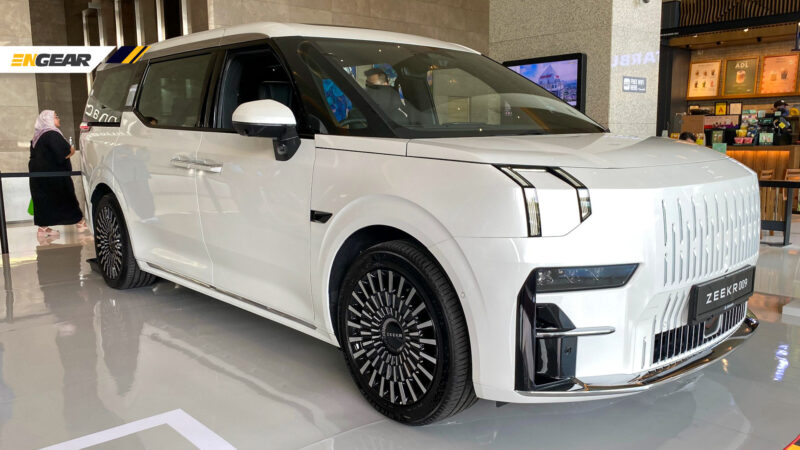
In addition to the X, Zeekr Malaysia has also launched a luxury MPV set to compete in the local EV market – the Zeekr 009.
The newcomer is poised to compete with popular models such as the Toyota Alphard/Vellfire, the Maxus Mifa 9, as well as upcoming models like the GWM Wey 80 and the Denza D9.
The 009 is available in two variants, namely Luxury and Ultra Luxury. The former is a seven-seater with a 2-2-3 seating configuration while the latter has six seats in a 2-2-2 layout.
Regardless of the chosen variant, the 009 is powered by a pair of electric motors that produce a total output of 603 hp and 693 Nm of torque, allowing it to accelerate from 0 to 100 km/h in 4.5 seconds.
The 116 kWh battery pack offers a range of up to 582 km (WLTP cycle) and supports DC fast charging at 150 kW, enabling charging from 10% to 80% in 30 minutes.
The driving experience of the Zeekr 009 is enhanced by a double-wishbone multilink suspension system, electromagnetic air suspension, and automatic leveling functions, alongside matrix LED headlights with adaptive driving beam (ADB) functionality and smart zone lighting.
Inside, you will find a 10.25-inch instrument cluster, a 15.05-inch infotainment screen, a 35.95-inch augmented reality head-up display, a 17-inch OLED roof screen, a Yamaha audio system, 50W wireless device charging, support for Apple CarPlay and Android Auto, and up to 9 USB-C ports.
The driver and front passenger seats feature 12-way adjustment with massage, ventilation, and memory functions.
Second-row passengers enjoy Sofaro First Class Aeronautics seats with an Ultra Long Electric Slide Rail function extending 1.1 metres, adjustable leg rests, and ventilation, massage, and memory functions. There’s also a 8.6-litre fridge with cooling and warming functions.
For safety, the 009 includes an ADAS system featuring lane centering control (LCC), adaptive cruise control (ACC), forward (CMSF) and rear collision mitigation support (CMSR), lane departure avoidance, blind spot detection (BSD), door opening warnings, and a driver performance monitoring system (DPM).
The 009 Luxury is priced at RM349,800, while the Ultra Luxury version costs RM359,800. Like the X, the 009 comes with a five-year/150,000 km vehicle warranty and an eight-year/160,000 km battery warranty.
Also included is 6GB of free internet data for two years, which provides access to the Zeekr app, onboard navigation, and over-the-air (OTA) software updates.
The first 500 buyers of the 009 will receive an exclusive package that includes a home charger, a mobile charger, and solar film.
Malaysia’s Leading Automotive News | ENGEAR ENGLISH