Tag Archives: TOYOTA

No more Toyota & Mercedes-AMG, Lotus Emira to feature new V6 engine from Horse Powertrain

After years of relying on engines produced by Toyota and Mercedes-AMG, Lotus has finally decided to transition to a new V6 engine from Horse Powertrain.

The 3.0L turbo hybrid V6 engine is expected to debut in the facelifted Lotus Emira by the end of the decade.

In an interview with Autocar, Lotus CEO Feng Qingfeng confirmed that the new V6 engine will replace the existing Toyota V6 and AMG four-cylinder engines.

Over 500 hp Power Output

The new engine is said to deliver an impressive 536 hp and 700 Nm of torque.

One of its advantages is its lighter weight, with the V6 engine estimated to be 10 kg lighter than any other V6 currently on the market and almost on par with a 2.0L four-cylinder engine.

The V6 will be paired with an automatic transmission and an integrated electric motor for additional power and lower emissions.

U.S. Market and EU Regulations as Deciding Factors

One reason for the choice of the V6 engine is the strong demand, particularly from the U.S. market.

According to Feng, most customers there prefer V6 engines, which explains why the Emira V6 has become the best-selling model.

Additionally, the existing V6 engine from Toyota is indeed in the process of being phased out.

This is due to its increasing difficulty in meeting the stringent EU regulatory requirements, compelling Horse to develop a new engine.

Possible Foundation for a New V8 Engine

Did you know that this new V6 engine actually uses a foundation from the existing four-cylinder engine?

According to Horse’s CEO Matias Giannini, the new V6 engine has a compact and lightweight design because it builds on a smaller engine framework.

This modular design technology allows Horse to easily scale the engine up or down, potentially creating a new V8 engine based on the V6 for future Lotus supercars.

No Demand for Emira EV

Another reason why the V6 is Lotus’s main focus is the unsuccessful electric sports car project.

Lotus initially planned to produce an electric sports car to replace the Emira in collaboration with Alpine.

However, the project was canceled when they found there was no demand for a zero-emission model.

Honda N-Box is the best-selling kei car in Japan for 11 consecutive years!

Honda continues to dominate the light vehicle (kei car) market in Japan.

For the 11th consecutive year since 2015, the Honda N-Box has been crowned the best-selling compact car, with a total of 201,354 units sold throughout 2025.

In December alone, Honda achieved sales of 15,570 units of the N-Box, surpassing the Suzuki Spacia in second place (11,397 units) and the Daihatsu Tanto in third place (9,287 units).

Here are the rankings of the top 10 best-selling kei cars for 2025:

  1. Honda N-Box: 201,354 units
  2. Suzuki Spacia: 165,589 units
  3. Daihatsu Tanto: 124,619 units
  4. Daihatsu Move: 122,349 units
  5. Suzuki Hustler: 87,972 units
  6. Suzuki Wagon R: 72,520 units
  7. Nissan Roox: 71,498 units
  8. Mitsubishi Delica Mini/ek: 58,916 units
  9. Suzuki Alto: 57,553 units
  10. Daihatsu Mira: 55,777 units

Meanwhile, Toyota claimed 8 positions in the list of the 10 best-selling passenger cars in Japan.

The top spot is held by the Toyota Yaris with total sales of 166,533 units, followed by the Toyota Corolla (138,829 units) and the Toyota Sienta (106,558 units).

Not only that, Toyota also dominates the MPV segment with models like the Alphard, Noah, and Voxy.

Honda ranks sixth with the Freed model (90,437 units), while Nissan ranks tenth with the Note model (78,123 units).

Here are the rankings of the top 10 best-selling passenger cars for 2025:

  1. Toyota Yaris: 166,533 units
  2. Toyota Corolla: 138,829 units
  3. Toyota Sienta: 106,558 units
  4. Toyota Raize: 100,851 units
  5. Toyota Roomy: 95,221 units
  6. Honda Freed: 90,437 units
  7. Toyota Alphard: 86,959 units
  8. Toyota Noah: 80,065 units
  9. Toyota Voxy: 78,760 units
  10. Nissan Note: 78,123 units

Toyota confirms Century Coupe will not be an electric grand tourer

At the Japan Mobility Show 2025 held a few months ago, Toyota confirmed that the Century will become a distinct ultra-luxury brand, no longer overshadowed by the Toyota name.

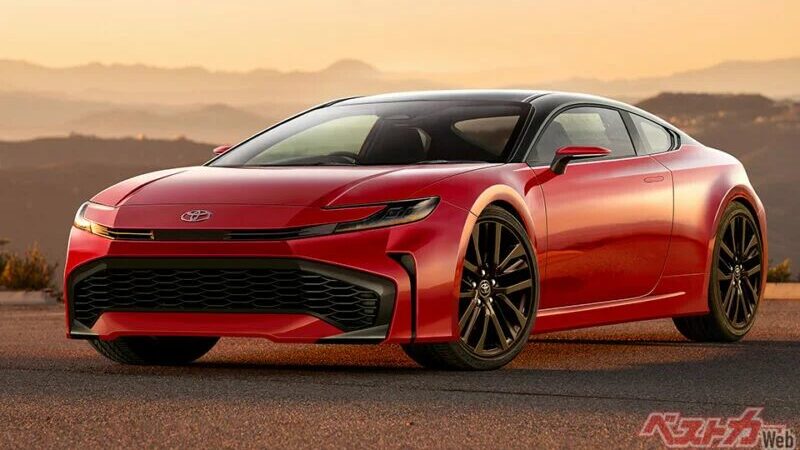
Toyota also showcased the latest concept model, the Century Coupe—a two-door grand tourer with crossover elements.

Details about the new model have not yet been finalized, but Toyota has confirmed it will not be offered in a full-time electric vehicle (EV) version.

According to a report from CarExpert, Takashi Uehara, president of Toyota’s powertrain unit, mentioned that the Century Coupe will feature a traditional engine.

“We have yet to decide on the type of engine to be installed in the model,” he stated.

“There are many combinations available; however, development time has been reduced, so this will happen soon.”

As part of its multipathway strategy, Toyota is also developing a new generation of internal combustion engines to meet various global needs.

In addition to a four-cylinder setup, the modular engine design allows Toyota to adjust the number of cylinders to suit specific models, such as a six-cylinder inline engine or an entirely new V8 engine.

This was confirmed by Takashi Uehara himself during a private briefing with Asian media at the Japan Mobility Show 2025.

In Japan, the new generation Century sedan is currently powered by a 5.0-liter V8 hybrid engine (code 2UR-FSE) with a total output of 425 hp.

Meanwhile, the Century SUV is equipped with a 3.5-liter V6 engine (code 2GR-FXS) featuring a plug-in hybrid (PHEV) system with two electric motors, producing a total output of 406 hp.

2025 JMS: Toyota’s 3 new principles to achieve the vision of Mobility for All and Carbon Neutrality

Toyota’s multi-pathway approach, which has been in place for several years, goes beyond achieving carbon neutrality through modern technologies such as hydrogen fuel cell vehicles (FCEV), hybrids (HEV), plug-in hybrids (PHEV), and battery electric vehicles (BEV).

It also includes more sustainable solutions that can be adapted to local contexts, such as the use of biofuels and compressed natural gas (CNG).

By offering low-emission and zero-emission mobility solutions that are more accessible, Toyota can meet the needs of various user segments in Asia.

At the same time, it can provide lasting value benefits to individuals and society.

The three new principles being implemented by Toyota under this Multi-Pathway Approach are Best in Town, Customer Comes First, and Start by Doing.


Best in Town

This philosophy emphasizes delivering the best products and services that meet the unique mobility needs of each Asian market.

One example provided is the global IMV platform, introduced in 2002, which aims to create a platform that can support various vehicles to cater to the mobility needs of developing markets.

Akio Toyoda stated, “We cannot satisfy customers by promoting the number of vehicles; what matters is being the best in the city.”


Customer Comes First

At the Japan Mobility Show 2025, Toyota introduced its brand lineup—Century, Lexus, Gazoo Racing, Toyota, and Daihatsu—each playing a unique role based on the principle of “Mobility for All.”

This aligns with Toyota’s theme “To You,” introduced this year, emphasizing that no one should be left behind.

Ultimately, the multi-pathway approach to achieving carbon neutrality offers a variety of sustainable solution options for users.


Start by Doing

To achieve its goals, action must be taken immediately.

For this purpose, Toyota has initiated several projects in collaboration with various partners, including the Commercial Japan Partnership Technologies Corporation (CJPT), which drives the logistics industry toward an era of efficiency and carbon reduction fueled by data.

Additionally, the Toyota Mobility Foundation’s (TMF) community projects aim to improve safety, reduce congestion, and enhance accessibility.

Toyota believes that mobility is not just a mode of transportation but rather a means to access opportunities, connections, and a better quality of life.

According to Masahiko Maeda, CEO of Toyota Motor Corporation’s Asia region, “At Toyota, we believe that achieving the Mobility for All and Carbon Neutrality goals requires more than just one solution for vehicles, energy, and data.”

“We believe the future of mobility is ours to create through collaboration, shared purpose, and collective action. As a result, we can build an ecosystem that brings smiles to people across the Asia region.”

2025 JMS: Toyota aims to introduce over 10 xEVs in Asia for the next 3 years

Toyota continues to strengthen its vision of “Mobility for All,” ensuring that no one is left behind through the Multi-Pathway Approach implemented over the past few years.

In the next three years, Toyota plans to introduce more than 10 electrified vehicles (xEV) for the Asian market.

The company also announced its “30 by 30” mission, targeting a sales goal of 30 percent xEVs in the ASEAN market by 2030, which translates to over 1.5 million units sold.

This goal equates to a positive environmental impact, such as planting 25 million trees or reducing CO2 emissions by 8 million tons.

Additionally, Toyota announced plans to begin battery electric vehicle (BEV) production in Thailand and Indonesia by the end of this year.

One of the planned BEV models will be built on the IMV (Innovative International Multi-Purpose Vehicle) platform, which serves as the foundation for popular models like the Hilux, Fortuner, Innova, and the Land Cruiser FJ.

Speaking of the Land Cruiser FJ, this compact model will be assembled in Thailand before being exported to the Asian market.

Through the Land Cruiser FJ, Toyota aims to offer new value in the form of Freedom & Joy that customers can enjoy in their own unique ways, while simultaneously maintaining reliability, durability, and off-road performance to meet their lifestyles.

Toyota Land Cruiser FJ: A compact off-roader derived from the Hilux platform

Ahead of the Japan Mobility Show 2025, Toyota has revealed another new model to complement its existing Land Cruiser family, named the Land Cruiser FJ.

With a more compact size, the Land Cruiser FJ is positioned as an entry-level LC without compromising on durability, reliability, and off-road driving performance.

The 2026 Land Cruiser FJ will be showcased at Toyota’s booth during the Japan Mobility Show 2025, which will take place on October 30.

Here are some key facts about the 2026 Land Cruiser FJ:


1. Platform

Unlike the Land Cruiser 300 Series and 250 Series, which are built on the TNGA-F platform, the Land Cruiser FJ uses the IMV platform.

This means that the FJ is a sibling to models such as the Hilux, Fortuner, and the first two generations of the Innova.

Although it uses a somewhat older platform, Toyota has equipped the FJ with additional underfloor braces and a stiffer body to ensure more stable handling.


2. Dimensions

The Land Cruiser FJ measures 4,575 mm in length, 1,855 mm in width, and 1,960 mm in height, with a wheelbase of 2,580 mm—significantly smaller than the Land Cruiser 300 Series and 250 Series.

When placed next to the Corolla Cross, the FJ has a length advantage of 114 mm, though its wheelbase is 58 mm shorter.


3. Exterior

The boxy design of the Land Cruiser FJ draws heavily from the Land Cruiser 250 Series design.

For example, the FJ is available with two different front-end designs, one featuring C-shaped DRLs and the other using round DRLs.

The presence of a full-size spare tire mounted at the rear enhances the rugged image of the FJ.

According to Toyota, this model also features easily replaceable front and rear bumper angles, and it can accommodate various accessories.

Among these is the Land Hopper, an electric-powered personal mobility vehicle with a three-wheeled setup that can fold and be stored in the cargo space.


4. Interior Space

The FJ’s cabin continues to showcase a large, easily accessible array of physical control buttons.

In addition to a centralized infotainment screen, a digital cluster screen is also provided for enhanced driver convenience.

In the center console, there is a physical gear knob complete with a handbrake lever and a rotary dial specifically for off-road driving.


5. Engine

The Land Cruiser FJ is powered by a 2.7-liter inline four-cylinder 2TR-FE engine that produces 163 PS and 246 Nm of torque.

This power is channeled to a part-time 4WD system through a Super ECT 6-speed automatic transmission.

Additionally, Toyota has no plans to market this “baby” Land Cruiser in markets such as the United States and Europe.

Instead, Toyota will focus the Land Cruiser FJ on markets such as Southeast Asia, Africa, Latin America, and the Middle East.

This off-road SUV will be assembled at Toyota’s factory located in Thailand.

Lotus Emira to receive V8 engine replacement for V6

The Lotus Emira is currently the only pure internal combustion sports car still offered by Lotus to its enthusiasts.

Before production of this model ends in 2027, Lotus is reportedly planning improvements to the model, particularly for the United States market.

According to recent reports from Autocar, Lotus is considering a V8 engine for the Emira.

Its CEO, Feng Qingfeng, stated that the brand is exploring the feasibility of a V8 engine to replace the currently used V6 engine.

The Lotus Emira is available with a 3.5-liter supercharged V6 sourced from Toyota, or a 2.0-liter engine from Mercedes-AMG.

Feng dismissed the idea of increasing the power of the existing V6 engine, citing that the Toyota engine is unable to meet the stricter Euro 7 standards.

Lotus previously planned to gradually phase out the V6 offering to make way for the AMG-powered model.

However, with strong demand for the six-cylinder model in the United States, Lotus is prompted to consider the proposal of installing a larger engine.

Lotus Europe CEO, Matt Windle, told Autocar, ““The US is an incredibly important market for us for the car. It always has been. So we’re looking at the market demand for the product going forward.”

He further explained that the company is exploring several options that could be implemented to ensure the full potential of the Emira can be realized, including possibly matching engines from existing suppliers—most likely Mercedes-AMG.

Toyota FT-Me breaks cover, rival to Citroen Ami and Opel Rocks-e

Alongside the C-HR+, Toyota Motor Europe has also introduced another electric vehicle, though this one is significantly more teeny and occupies only half a parking space.

Known as the FT-Me, it is a concept vehicle that embodies Toyota’s vision for all-electric micromobility that combines premium design with affordability.

The EV is indeed very small, measuring less than 2.5 metres in length and featuring just two seats. Its rather eccentric design is inspired by a jet helmet, and most components you see here are made using recycled materials, helping to reduce carbon emissions by up to 90%.

Battery specifications have not been disclosed but according to Toyota, its propulsion system consumes three times less energy per kilometre than a high-capacity battery electric car.

The propulsion system is complemented by solar panels on the roof that can add an extra 20 to 30 km of range, depending on weather conditions.

In addition to being small enough to fit in the narrow European streets, the FT-Me can be operated via hand controls, making it usable to wheelchair users without any aftermarket modification.

It is uncertain whether the FT-Me is intended for production, but Toyota states that the vehicle is designed for people with entry-level driving licences, including those as young as 14 years old in some markets.

This means that the FT-Me will be classified as a quadricycle, similar to the Citroën Ami and Opel Rocks-e, if it ever sees the light of day.

Toyota’s 3rd gen hydrogen fuel cell system promises more range

To this date, the use of electric vehicles with hydrogen fuel cell systems (FCEVs) is still not as widespread compared to electric vehicles (EVs).

Take, for instance, the Toyota Mirai, a hydrogen-powered sedan that has been available since 2014, with over 28,000 units sold in more than 30 countries.

This is a relatively small figure.

However, in addition to the passenger car market, Toyota has also been supplying this fuel cell system for other uses, such as buses, trains, and stationary power generation systems since 2019.

Looking ahead, Toyota still believes that this hydrogen system can serve as a better alternative to internal combustion engine (ICE) vehicles and EVs.

The third-generation fuel cell system was officially introduced recently, promising a more compact unit and a driving range that is 20 percent longer (up to 772 kilometers).

Furthermore, Toyota claims that this third-generation system can achieve durability comparable to that of diesel engines while offering maintenance-free design benefits.

Through innovations in cell design and manufacturing processes, this system is also cheaper to produce, contributing to a more affordable sales price.

The third-generation fuel cell system will not only be used for the passenger vehicle segment but is also expected to be expanded to the heavy-duty commercial vehicle segment for markets in Japan, Europe, North America, and China by 2026.


Second-generation Toyota Mirai

UMW Toyota Motor sold 5,383 units in January 2025

UMW Toyota Motor Sdn Bhd (UMWT) continues its strong performance in the Malaysian automotive market with total sales of 5,383 units for the month of January 2025.

With an unwavering commitment to quality, innovation, and customer satisfaction, UMWT says it is well-positioned to build on this momentum as the year progresses.

Datuk Ravindran K., President of UMW Toyota Motor said the company’s strong start to 2025 reflects its dedication to delivering exceptional vehicles that meet the evolving needs of customers.

“This achievement is a testament to the trust our customers place in us, and we remain dedicated to exceeding expectations by delivering advanced vehicles and unparalleled ownership experiences.

“With continuous innovation and exciting new models, we are committed to shaping the future of mobility in Malaysia,” he added.

Central to this effort is the Gazoo Racing (GR) brand, which has been expanded with the launch of the 2025 GR Yaris, GR Corolla and Corolla GR Sport during the Toyota Gazoo Racing (TGR) Season 7 closing ceremony recently.

UMWT says the GR brand has been well-received by both driving enthusiasts and mainstream customers, reinforcing its position as Toyota’s dedicated performance division.

In the meantime, UMWT is making 2025 even more exciting with attractive promotional savings, including promos worth up to RM8,500, with a monthly payment from as low as RM658.

Additionally, the Toyota Service Savers programme continues to provide peace of mind with cost-effective maintenance plans starting at just RM33 per month.

2024: Top 10 most popular cars in Malaysia

Based on registration data released by the Department of Road Transport (JPJ) through the website data.gov.my, 2024 has been an excellent period for Perodua.

During this time, the brand recorded vehicle registrations totaling 358,100 units, securing the top spot once again.

In second place is Proton, with a total of 147,587 units registered, while Toyota comes in third with 127,202 units registered.

Interestingly, among the top 10 manufacturers, Chinese automotive brands have started to emerge, surpassing brands that were previously popular.

For example, Chery ranks fifth, beating out Mitsubishi and Mazda, while BYD has managed to secure the tenth position, ahead of Nissan, which ranks eleventh.

But do you know the list of the 10 most popular cars in Malaysia for 2024?


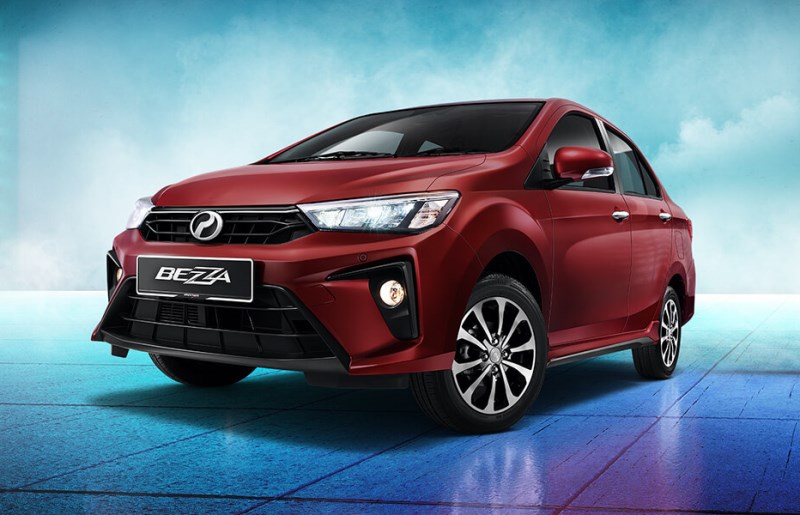
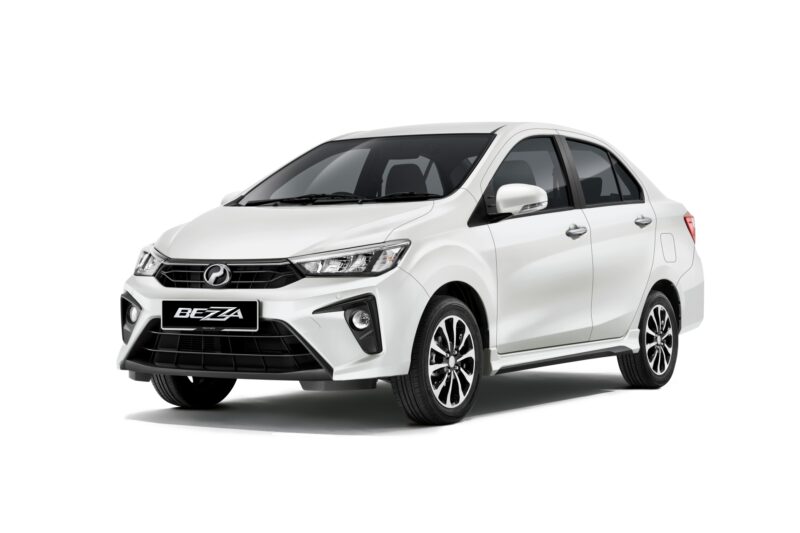
1. Perodua Bezza (100,814 units)


2. Perodua Axia (88,137 units)


3. Perodua Myvi (72,214 units)


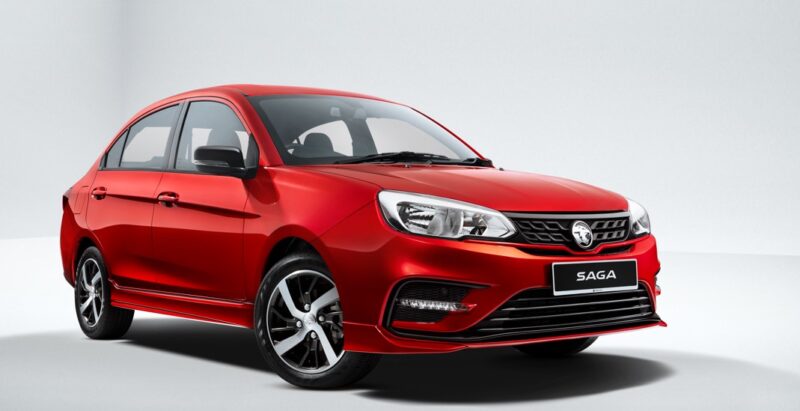
4. Proton Saga (69,863 units)


5. Perodua Alza (44,374 units)


6. Perodua Ativa (36,039 units)


7. Honda City (29,246 units)


8. Toyota Vios (28,667 units)


9. Toyota Hilux (26,738 units)


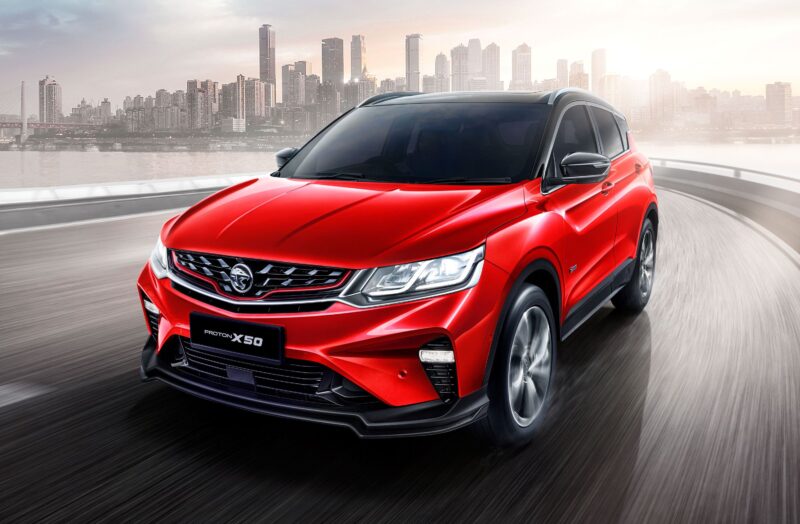
10. Proton X50 (22,674 units)

Toyota remains as world’s number one automaker for fifth consecutive year

Throughout 2024, Toyota Motor Corp sold a total of 10.82 million vehicles, allowing the automaker to maintain its global leadership for the fifth consecutive year.

Despite this figure representing a 3.7 percent decline compared to 2023, Toyota explained that there is still strong demand for its hybrid vehicles.

The second place was secured by the Volkswagen Group, with total sales of 9.03 million units, while the Hyundai Group recorded sales of 7.23 million units.

For the first time, BYD surpassed Honda, Nissan, and Suzuki with sales of 4.27 million units last year.

In comparison, Honda sold 3.81 million units, followed by Nissan with 3.35 million units and Suzuki with 3.25 million units.

Excluding brands under its umbrella such as Hino and Daihatsu, the sales figures for Toyota-branded vehicles alone reached 10.16 million units, a drop of 1.4 percent, following its involvement in a vehicle certification scandal, which led to a temporary halt in the production of certain models.

In key markets, Toyota recorded a 4.3 percent increase in sales, reaching 2.73 million vehicles in North America, followed by a 3.6 percent increase to 1.17 million vehicles in Europe.

However, Toyota’s sales in China saw a decline of 6.9 percent, totaling 1.78 million vehicles, due to ongoing price wars among major domestic manufacturers.

10 exciting cars to see at KLIMS 2024

In case you missed it, the Kuala Lumpur International Mobility Show (KLIMS) 2024 is set to open its curtains from December 5 to 11, 2024 at the Malaysia International Trade and Exhibition Centre (MITEC).

According to organiser Malaysian Automotive Association (MAA), the event, themed ‘Beyond Mobility’, will feature nearly 70 exhibitors, with an exhibition area covering almost 30,000 square feet across two floors of the MITEC building.

For those planning to attend, here are some of the exciting cars that will make their appearance at the event:

Perodua EMO-II

Undoubtedly, Perodua is set to capture visitors’ attention with their electric concept model, the EMO-II (Electric Mobility Online). The concept car previews the production version of Perodua’s first electric vehicle, which is expected to be launched in the market later this year.

Proton e.MAS 7

Although not officially announced, Proton’s first electric vehicle, the e.MAS 7, is highly likely to make its debut at KLIMS 2024. It will be available with two battery pack options, with an estimated price of RM120,000.

Honda Prelude Concept

Another brand that will undoubtedly attract attention at KLIMS 2024 is Honda. In addition to its latest model lineup, Honda Malaysia has announced that it will also showcase the Prelude Concept, making Malaysia the first country in Asia, besides Japan, to exhibit the hybrid coupe.

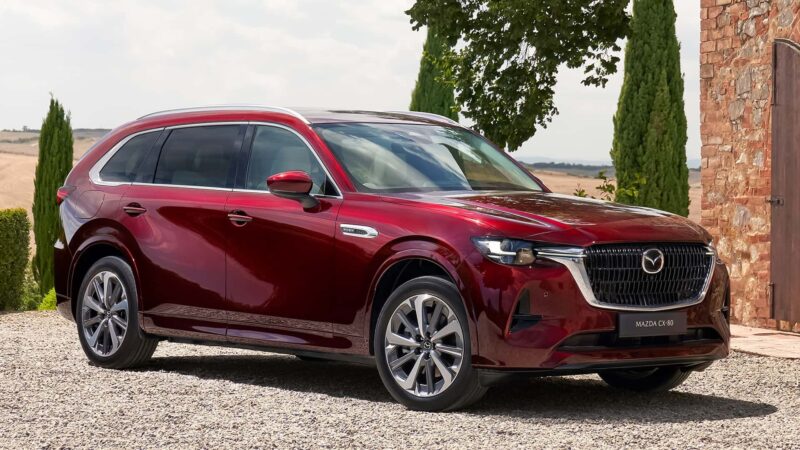
Mazda CX-60

For devoted Mazda fans, Bermaz Motor will be showcasing two upcoming SUVs, the CX-60 and CX-80. Built on the SkyActiv Multi Solution Scalable Architecture platform, the former offers petrol, diesel, and plug-in hybrid (PHEV) powertrain options, with rear-wheel drive and all-wheel drive capabilities.

Mazda CX-80

Like the CX-60, the CX-80 also belongs to Mazda’s Large Product group but offers three rows of seating. The powertrain options are similar to the CX-60, featuring inline six-cylinder petrol and diesel engines, PHEV, an eight-speed automatic transmission, and AWD or RWD systems.

Toyota Camry

Following its launch in Thailand last October, the ninth-generation Toyota Camry (XV80) will make its debut in Malaysia this week. The D-segment sedan is powered by a 2.5-litre hybrid engine combined with an e-CVT transmission, producing a total system output of 227 PS.

Toyota Corolla Cross

In addition to the Camry, UMW Toyota Motor will also introduce the facelifted version of the Corolla Cross, which has already been open for orders since November. Along with a refreshed exterior design, the SUV will also feature several new enhancements, including an electronic parking brake, Auto Hold, and improved driver-assistance systems.

Nissan Kicks e-Power

As previously reported, the Nissan Kicks e-Power will be available as a fully imported version (CBU) from Thailand, with two variants: VL and VLT. It features a 1.2-litre three-cylinder petrol engine that acts as a generator to charge the battery pack, which in return powers the electric motor on the front axle.

MG Cyberster

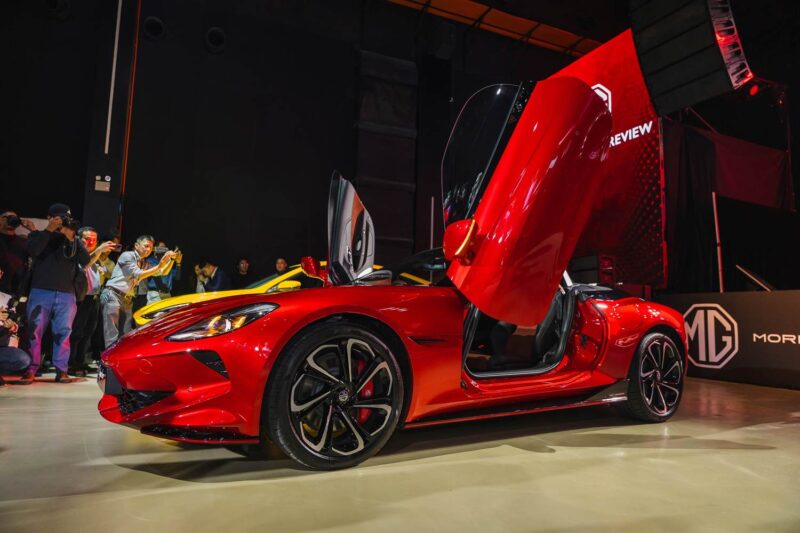
Without a doubt, among the standout cars at KLIMS 2024 will be the MG Cyberster, an electric roadster powered by two electric motors, delivering a combined output of 503 PS and 725 Nm. This allows it to accelerate from 0 to 100 km/h in just 3.2 seconds.

GWM Wey 80

Wey is a luxury sub-brand under Great Wall Motor (GWM). While it is still uncertain whether the luxury marque will be officially launched in the local market, it is certainly a possibility if the Wey 80 MPV receives a positive response at the show.

BYD becomes the sixth largest automotive manufacturer in the world, surpassing Ford sales

For the first time in history, Chinese automotive company BYD has successfully sold more vehicles than Ford.

During the third quarter (July-September), BYD sold 1.13 million vehicles, marking a 38 percent increase compared to the same period last year.

In comparison, Ford sold fewer than 40,000 vehicles during the same period, causing the manufacturer to drop one rank, becoming the seventh largest in the world.

However, for the period from January to September, Ford is still ahead of BYD with total sales of 3.3 million units, slightly more than BYD’s 3.25 million units.

It is not impossible that by the end of the year, BYD’s sales could reach 4 million, surpassing Ford’s total sales for the year 2024.

In addition to BYD, several Chinese automotive companies have also reported sales increases that could be concerning for Japanese, European, and American manufacturers.

For example, during Q3, Geely experienced a sales increase of 14 percent, reaching 820,000 vehicles, surpassing Nissan and trailing behind Honda at ninth place.

China’s third-largest manufacturer, Chery, recorded a 27 percent sales increase to 550,000 units, placing it in twelfth position.

Toyota’s sales, however, decreased by 4 percent to 2.73 million units, although the Japanese giant still leads the chart ahead of the VW Group, which saw a 7 percent decline to 2.17 million vehicles.

While Hyundai Motor Group remains comfortably in third place, it also reported a 3 percent sales decline to 1.77 million units.

In fifth place, Stellantis seems to need to work harder as the sales difference with BYD is only around 10,000 units.

Toyota confirms Celica development project is underway!

We must thank Toyota for continuing to produce a lineup of high-performance car models in the modern era for the enjoyment of its fans.

After years of rumors circulating, Toyota has finally confirmed that the iconic Celica nameplate will be making a comeback.

The announcement was made by Toyota’s Executive Vice President, Yuki Nakajima, in conjunction with the recent hosting of Rally Japan.

“Honestly, there are no signs (of the Celica) at this time. However, there are many people within the company who are eagerly awaiting the return of the Celica.

“So, I wonder if I can say this in a public forum, but we are developing the Celica!”

This latest development comes just weeks after Toyota hinted at new sports cars, including the Celica, GR GT3, and MR2, in the animated series GRIP, as well as updates to the existing lineup (GR86, GR Supra).

Interestingly, at the 2024 SEMA show, Toyota also seized the opportunity to showcase a concept car named the GR86 Rally Legacy Concept, inspired by the 1990s Celica GT-Four.

In addition to a Castrol-style livery, the GR86 is equipped with a GR Yaris engine producing 300 hp and 370 Nm of torque, paired with a GR-Four all-wheel-drive system to embody the Celica theme being brought back.

Are you excited about the return of the Celica name?

Toyota ‘unveils’ future sports car lineup in anime series GRIP

In addition to the Japanese animated series “Initial D” and “MF Ghost,” which feature characters driving Toyota-branded cars, there is also an anime series officially produced by the automaker itself.

The anime series “GRIP,” which can be watched legally on YouTube, is now in its second season and includes Easter eggs that will delight fans.

Shared on the Supra MKV forum, one such Easter egg appears on a chalkboard in a scene featuring a list of potential future GR sports cars, including the Supra Mk6, Celica Mk8, MR2 Mk4, GR86 Mk3, and GR GT3.

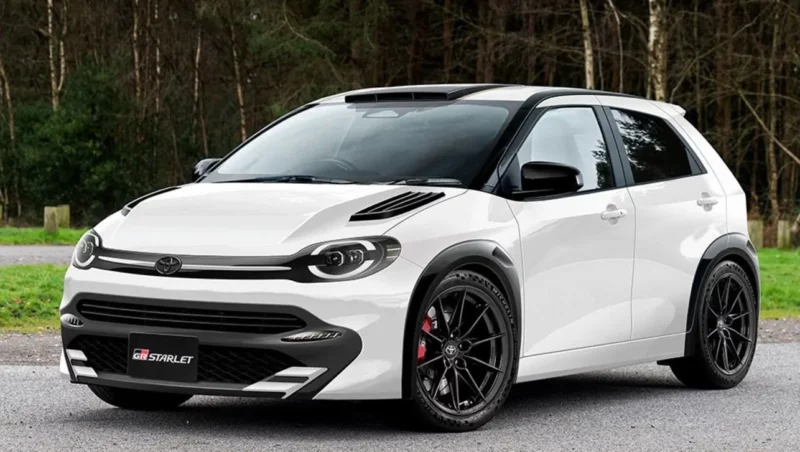
Notably, the GR Yaris and GR Corolla are completely absent from this list, along with the GR Starlet, which has been promoted as an affordable alternative to the GR Yaris hatchback model.

According to several previous reports, Toyota Gazoo Racing is set to revive several iconic names that are part of the brand’s motorsport history.

The Celica is expected to return as an all-wheel-drive coupe with a 2.0L turbo engine delivering 400 hp, while the MR2 is likely to make a comeback as a mid-engine sports car based on the FT-Se concept model.

In addition to the new generation GR86 and GR Supra, there is also the GR GT3/Lexus LFR, which may be powered by a V8 engine.

Toyota is also looking to develop another fast model, the GR Starlet, which will serve as a complement to the existing hot hatch lineup (GR Yaris, GR Corolla).

Unlike the two models equipped with GR-Four all-wheel-drive systems, the GR Starlet will utilize a three-cylinder inline engine producing around 150 hp and 220 Nm, driving only the front wheels.

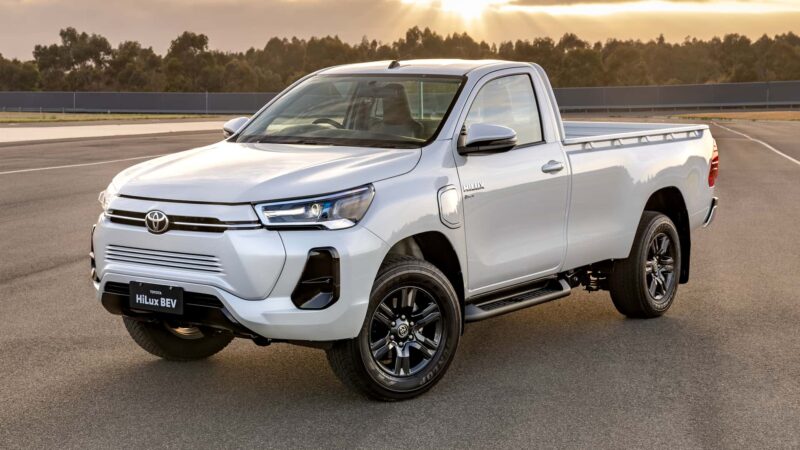
Toyota tests Hilux BEV prototype units at Australian mining site

The Toyota Hilux BEV was introduced in Thailand a few years ago, featuring a single cab body configuration.

To better suit the demands of mining operations, Toyota has decided to unveil a prototype unit of the Hilux BEV, based on the single cab body style.

In collaboration with mining company BHP, Toyota aims for this Hilux BEV prototype to provide invaluable data for developing a production model.

Over the next 12 months, this Hilux BEV pickup will replace diesel trucks for various operations at Port Hedland, one of the largest iron ore mining sites in the world.

This double-cab prototype Hilux BEV closely resembles the diesel engine version, with the only distinguishing feature being the presence of a charging port on the front fender.

Additionally, Toyota has fitted a bull bar at the front, complete with extra LED lights.

To date, Toyota has kept the specifications of the Hilux BEV prototype under wraps.

However, this is not the first time we’ve heard news about the use of electric Hilux trucks to replace diesel-powered vehicles in mining areas.

A few years ago, Toyota Australia developed an electric version of the Land Cruiser 70 Series as part of efforts to reduce emissions.

Last year, SEA Electric and MEVCO announced a AU$1 billion collaboration to develop 8,500 EV units based on the Hilux and Land Cruiser for use in the mining industry.

Moreover, in the UK, Toyota is conducting an initiative to test up to ten prototype Toyota Hilux units powered by fuel cell electric vehicle (FCEV) technology adapted from the hydrogen sedan Toyota Mirai.


Toyota Hilux FCEV

Unlike BMW Z4, Toyota GR Supra will continue to live on

Just a few months ago, it has been reported that BMW might axe the Z4 after March 2026. Needless to say, this news left fans of its twin, the Toyota GR Supra, feeling restless. Will Toyota follow in BMW’s footsteps?

It appears that GR Supra enthusiasts can breathe a sigh of relief, as recent reports suggest that Toyota plans to continue offering the two-door sports car for at least one more generation.

Speaking to CarExpert, Toyota Australia’s Vice President of Sales, Marketing and Franchise Operations Sean Hanley stated that the notion of the Supra being discontinued is purely speculative.

“There is no plan to discontinue the Supra brand in this car company. I know that. BMW is not Toyota.”

“And, quite frankly, I have no expectation, sitting here today, that the Supra brand will disappear. At all,” Hanley added.

He further explained that the Supra has a long and significant history, making it an important model within the GR lineup.

In addition to the GR Supra, the GR lineup also includes the GR Yaris, GR Corolla, and GR86.

This is an exciting development, as we all know that the Z4 and GR Supra were co-developed by BMW and Toyota. On top of that, both models are also assembled by Magna Steyr at the plant in Graz, Austria.

If BMW does kill the Z4, it would mean that Toyota would need to seek a new technical partner to develop the next generation of the GR Supra. Who do you think would be the most suitable candidate for this exciting project?

Global Toyota output dropped by 11.2 percent due to safety scandal, typhoon turmoil

Toyota Motor Corp confirmed in a statement last Friday that the total production volume globally in August decreased by 11.2 percent to 709,571 units compared to the same period last year.

This decline was caused by a vehicle certification test scandal and temporary factory closures due to a typhoon that struck Japan in late August.

Additionally, domestic production figures also decreased by 22.2 percent to 185,680 units as popular models such as Corolla Axio, Corolla Fielder, and Yaris Cross remained suspended since last June.

Toyota resumed the assembly operations of these three models at the beginning of September after the Japanese Ministry of Transport confirmed the vehicle safety aspects.

Domestic sales performance in Japan also recorded a decrease of 9.1 percent to 109,505 units.

Meanwhile, Toyota’s vehicle production outside of Japan also showed a decline, dropping by 6.5 percent to 523,891 units after a recall campaign involving the Grand Highlander and Lexus TX models in North America.

The Japanese manufacturer faces fierce competition in mainland China, where sales declined by 13.5 percent.

In addition to Toyota, Nissan experienced a 15.5 percent decrease to 236,016 units due to weak X-Trail SUV sales in China, while Honda witnessed an 11.3 percent decline to 307,870 units.

Five reasons why the Toyota Yaris remains relevant for youth

For the younger generation or those starting a new family who are in search of a new car, what features do you desire in a daily-use vehicle?

Compact size? Practicality? Fuel efficiency? Comprehensive safety features?

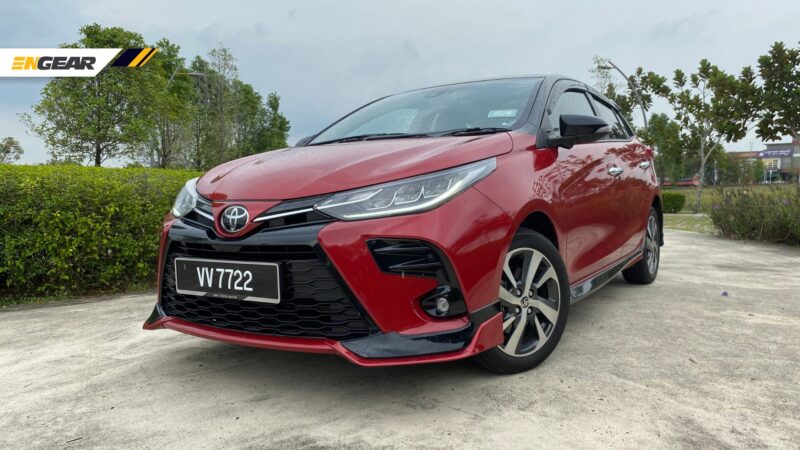
The answer to these questions can be found in the Toyota Yaris, which serves as an excellent example of a car that is highly relevant for young people in Malaysia.

Despite the overwhelming variety of attractive car models in the market, many young individuals may not realise that the Yaris still holds unique advantages.

1. Hatchback with Sporty Driving Experience

Equipped with a 1.5-litre inline four-cylinder engine delivering 107 hp and 140 Nm of torque, paired with a CVT, the Toyota Yaris offers a quiet and smooth driving experience while being fuel-efficient.

With exciting features like front and rear disc brakes, paddle shifters, and a Sport mode, young drivers should know that the Yaris is capable of delivering a sporty driving experience.

2. The Toyota Yaris is an Ideal First Car

Although it has a compact footprint, the Toyota Yaris can still provide a practical cabin layout and ample legroom for rear passengers.

Noise, vibration, and harshness (NVH) levels have been enhanced with acoustic glass to reduce outside noise. Moreover, the audio volume is also lowered when you shift into reverse.

The 286-litre cargo space is adequate for personal belongings, making the Yaris an ideal first car for young people.

3. Comprehensive Safety Features

For a car priced under RM100,000, the Toyota Yaris comes equipped with excellent safety features, ideal for young people wanting to protect their families.

Examples include Hill Start Assist Control (HAC), a 360-degree Panorama View Monitor (PVM), Rear Cross Traffic Alert (RCTA), as well as Blind Spot Monitoring (BSM), which displays live camera feed on the screen when the turn signals are activated.

The Toyota Yaris also comes with Toyota Safety Sense, which comprises Pre-Collision System (PCS) and Lane Departure Alert (LDA), ensuring a safer driving experience.

With seven airbags and six parking sensors (two front, four rear), the Toyota Yaris does not compromise on safety compared to more expensive vehicles.

4. Features Highly Appreciated by Women Drivers

The sporty package means little if the car lacks driver-friendly functions.

In addition to Apple CarPlay and Android Auto, there’s also an auto-dimming rearview mirror, automatic folding side mirrors, and a full-size spare tyre.

Not to forget, the Toyota Yaris now comes with front and rear dashcams!

For the ladies who are solo drivers or often drive home in the middle of the night, you’ll appreciate the “Follow Me Home” feature available in the Toyota Yaris.

5. Outstanding After-Sales Support from Toyota

An extensive specification list does not inherently guarantee user loyalty.

What gives young people confidence in the Toyota Yaris is the comprehensive and high-value after-sales support network from Toyota, covering aspects of purchasing, ownership, as well as service and maintenance.

The Toyota Yaris is available starting from RM88,000, and with promotions worth up to RM9,500, you can enjoy monthly installments as low as RM658.

For more information, visit your nearest Toyota showroom or click the link HERE.