Pininfarina and JAS Motorsport have unveiled official images of the restomod project for the first-generation Honda NSX, which is set to launch soon.
The project has also received an official name: “Tensei,” which means “rebirth” in Japanese.
From the images provided, the original look of the NSX NA1 has been carefully preserved, featuring elements such as the pop-up headlights, the rear spoiler, and the black canopy roof.
However, several modifications have been made, including the addition of LED daytime running lights (DRL), vents on the front hood, and larger air intakes at the rear.
The Tensei’s appearance has also been enhanced with a wider rear track and a shortened rear overhang.
Currently, the exact specifications of the Tensei have not been disclosed.
However, in a previous announcement, JAS Motorsport indicated that they would be re-tuning the original 3.0-liter V6 engine, which is expected to exceed the paper figures of 270 hp and 285 Nm that were standard when launched in the 1990s.
JAS Motorsport has also confirmed that the Tensei will feature a body construction made from carbon fiber.
This is great news for fans of classic Japanese supercars.
Pininfarina, which previously created the NSX HP-X concept model, has announced a collaboration with JAS Motorsport to revive the original 1990s NSX.
This restomod project will utilize the original chassis, but Pininfarina will produce custom carbon fiber body panels.
Rest assured, it will adhere closely to the beloved original design of the NSX.
Based on the supplied images, the restomod NSX retains the iconic pop-up headlight construction but features modern LED lighting units.
This NSX will be available in both right-hand drive (RHD) and left-hand drive (LHD) versions.
The naturally aspirated 3.0-liter V6 engine will be retained but tuned for greater performance, paired with a six-speed manual transmission.
According to JAS, this NSX restomod project will be offered in a very limited number of units, which means a selling price that is significantly higher than that of used NSX models.
Although production has long been discontinued, the first generation Honda NSX still has a large following worldwide, and prices remain stubbornly high.
At first glance, the vehicle before us might be mistaken for a restored Ford Mustang fitted with entirely new body panels.
This answer can be classified as half-correct and half-wrong.
The reason is that this machine is originally a 1971 Aston Martin DBS, with carbon fiber body panels produced by Ringbrothers, based in Wisconsin.
The design of body panels resembling a muscle car took 3,900 hours for the design process, followed by a formation and construction process that consumed 8,200 hours to complete.
Additionally, the front track width has been increased by 203 mm, while the rear track width is 254 mm wider.
As if that wasn’t enough, the wheelbase has also been extended by 76 mm, contributing to a more formidable appearance on the road.
Octavia is powered by a 5.0-liter Ford Coyote V8 engine capable of generating up to 805 hp, which drives the rear wheels through a six-speed manual Tremec transmission.
The secret behind this supercar-level power lies in the pairing with a custom 2.65-liter twin-screw supercharger from Happop, followed by a modified fuel system and a custom exhaust system from Ringbrothers.
Other features include RS SV suspension from Fox Racing, Brembo brakes, and HRE wheels wrapped in Michelin Pilot Sport Cup 2 tires.
The interior of Octavia appears more luxurious compared to the original model setup.
It showcases a blend of performance, luxury, modernity, and classic DBS elements contributed by the use of leather upholstery, along with carbon fiber, bronze, and billet aluminum materials.
According to Jim Ring, co-owner of Ringbrothers, “Octavia is a combination of imagination and the latest design process.
“We asked ourselves, ‘What would an MI6 agent drive while on holiday?’ This is the result,” he added.
Approximately five years after the introduction of the concept model, Ruf has officially revealed the production version of the Rodeo during Monterey Car Week.
This is not merely a modified Porsche 911 for off-road driving.
The Ruf Rodeo features a specially designed carbon fiber monocoque chassis, complemented by bash bar components integrated directly into the front and rear bumpers.
With a wider track of 41 mm at the front and 142 mm at the rear, Ruf has paired it with wider fender flares compared to the SCR model.
For off-road driving, the Rodeo is equipped with pushrod coilovers complete with active dampers, allowing for a ground clearance of up to 242 mm.
All four wheel corners come fitted with 18-inch rims, Goodyear all-terrain tires, a carbon ceramic brake system consisting of six-piston calipers at the front and four-piston calipers at the rear, along with 350 mm brake rotors.
In terms of power, the Rodeo is equipped with a 3.6-liter turbocharged flat-six engine that generates up to 610 horsepower and 700 Nm of torque.
This power is transmitted to an adjustable all-wheel-drive system through a six-speed manual transmission.
Additionally, it features a limited slip differential (LSD) on both the front and rear axles.
Inside the cabin, the Ruf Rodeo boasts modern features such as air conditioning, bucket seats, leather/Alcantara trims, and a three-spoke steering wheel.
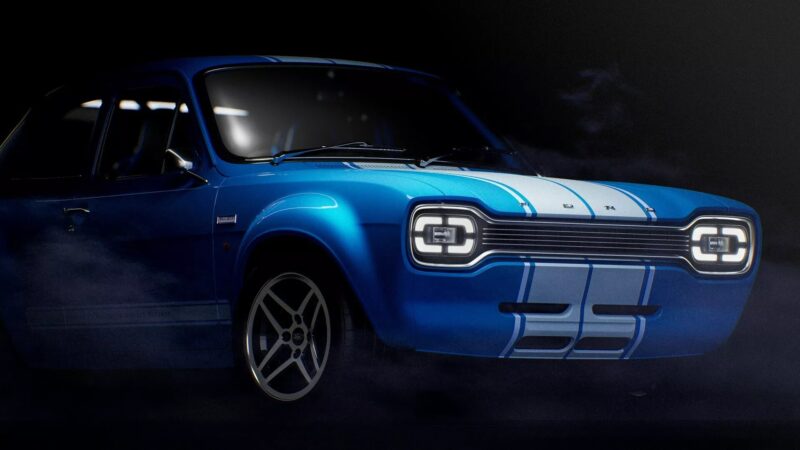
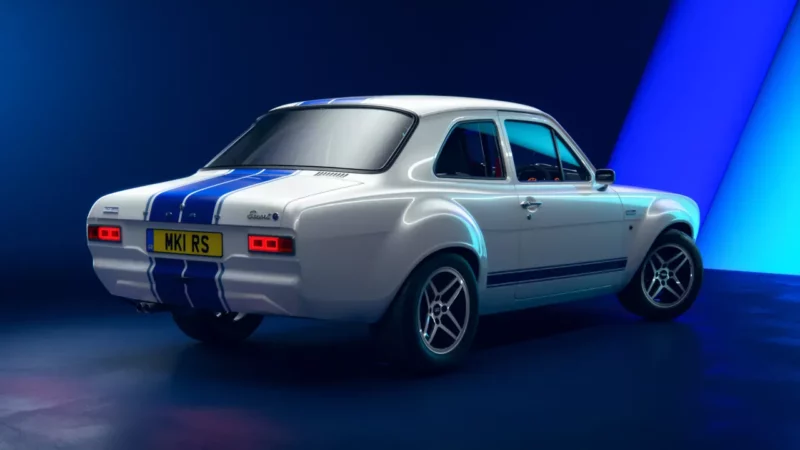
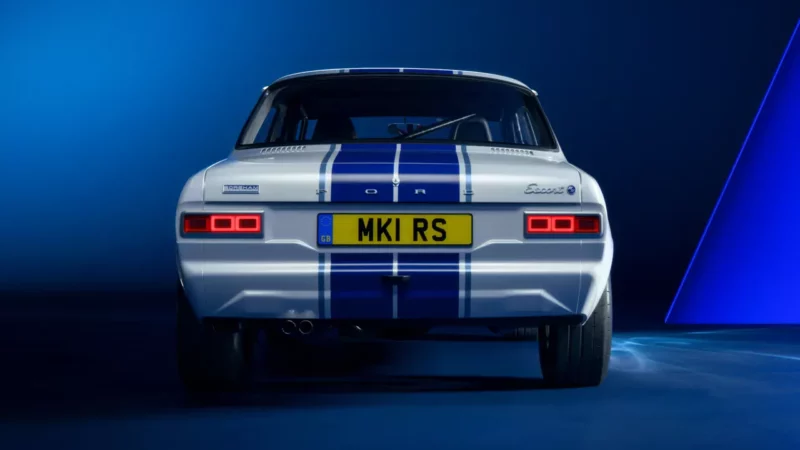
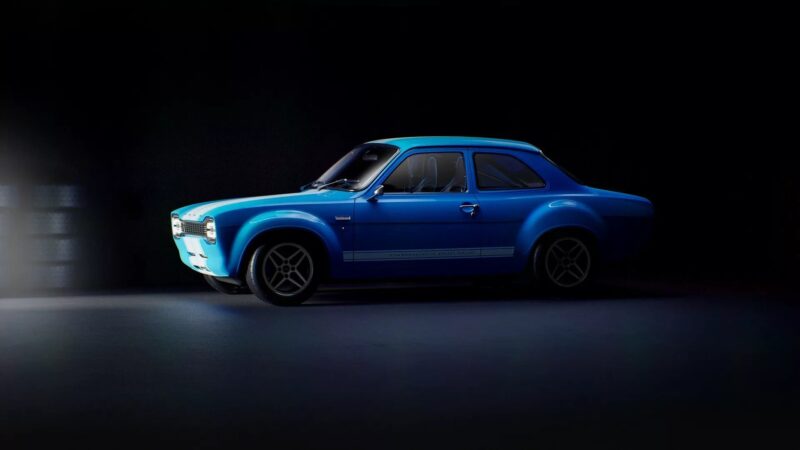
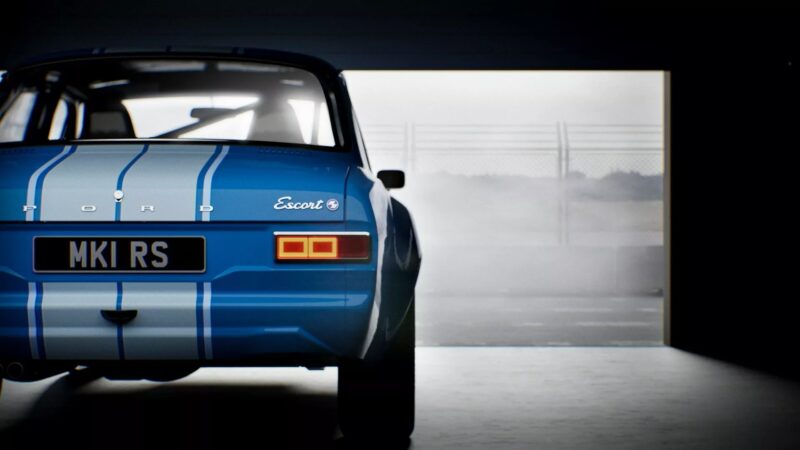
Ford has finally given the green light to Boreham Motorworks to reproduce the iconic classic Ford Escort Mk1 RS model.
Although it is built using the original 1970s blueprints, Boreham has injected several modern elements into this model.
Only 150 units of the Escort RS will be produced, and buyers will be given two engine options.
The most powerful version features a naturally aspirated 2.1-liter inline-four engine paired with a five-speed dogleg gearbox, producing an impressive 296 hp and capable of reaching engine speeds of 10,000 rpm.
This new engine showcases components such as steel connecting rods, a billet crankshaft, a fuel injection system, and a custom titanium exhaust.
Those seeking a more ‘authentic’ package can opt for the base version, which comes with an upgraded Twin-Cam 1,845 cc engine featuring a new fuel injection system.
With power reaching 182 hp, this is transmitted to the rear wheels via a four-speed straight-cut manual transmission.
In terms of exterior design, the Escort RS retains the spirit of the original model, but is enhanced with modern elements such as LED headlights, wider wheel arches, and custom 15-inch four-spoke rims.
According to Boreham, the car has a weight distribution ratio of 55:45, a coil spring suspension system, a limited-slip differential at the rear, and a floating-style aluminum and titanium rear axle.
The braking system consists of four-piston calipers and 260 mm rotors at the front, followed by two-piston calipers and 264 mm rotors at the rear.
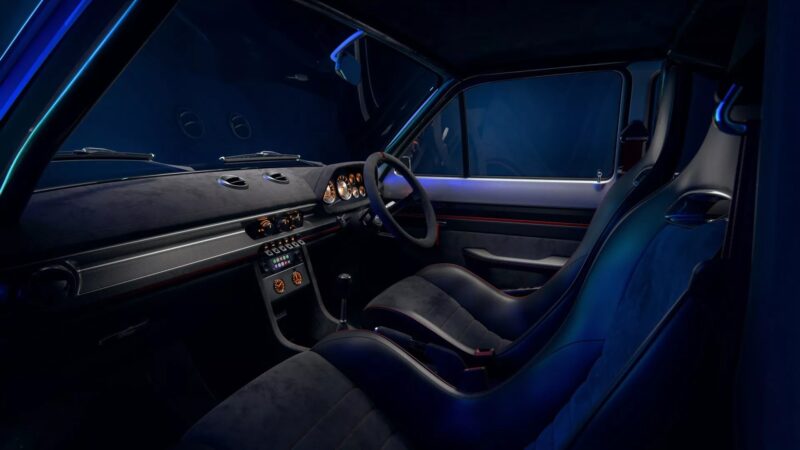
The cabin space is quite basic, as it is free from the presence of a large screen.
Instead, it features a carbon fiber dashboard complete with analog gauges, air conditioning, and a very simple audio system.
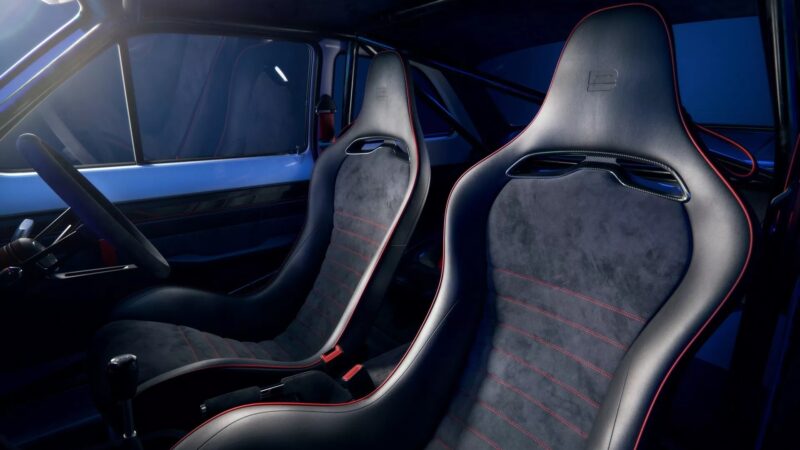
Additionally, there is a three-spoke Alcantara steering wheel, bucket seats, as well as options for installing a roll cage and a four-point harness system, plus storage space for racing helmets.
As mentioned earlier, only 150 units of the Escort MK1 RS will be produced, each carrying a price tag starting from £295,000 (approximately RM1.66 million) with a two-year warranty or a limit of 20,000 miles.
In conjunction with its 80th anniversary, Kia UK has unveiled a restomod project of the 1990s small hatchback bearing the Kia Pride EV brand.
This compact car was originally a rebranded version of the Ford Festiva, and was also marketed as the Mazda 121 model.
While it used to be equipped with 1.1 and 1.3-liter internal combustion engines, this latest restomod project has replaced these powerplants with a zero-emission powertrain unit producing 107 hp and 235 Nm of torque.
Utilizing expertise from Electrogenic, Kia has retained the original five-speed manual transmission, albeit with a performance-oriented clutch kit.
Despite the stated changes, the overall weight of this Pride EV is only 870 kg, which is 20 kg heavier than the original model.
For comparison, the modern EV6 from Kia, featuring a single electric motor with 225 hp, has a curb weight of around 2,065 kg.
The Kia Pride also offers several driving mode options.
In Eco mode, it limits power to 60 hp/118 Nm with a 0-100 km/h acceleration in 11.8 seconds, similar to the original ICE model.
The Auto driving mode (80 hp/176 Nm) offers a more modern EV driving experience, along with suitable regenerative braking function for urban use.
The Sport mode allows for a 0-100 km/h acceleration in eight seconds.
These sporty characteristics are well hidden as a key part of this car’s sleeper appeal, including the retention of the original 12-inch tire size and authentic rim caps.
Furthermore, the charging socket is also discreetly hidden behind the original fuel filler cap, which can be locked from the outside.
Other than the standard exterior appearance, Kia has only upgraded a few aspects, such as the White Pearl exterior paint, front and rear lights, and new upholstery for the cabin space.
Additionally, the original instrument cluster is still retained, with the only change being the fuel gauge, which has been converted into a battery capacity indicator.
One noticeable drawback of the Kia Pride EV is its limited range, approximately 193 km only.
This is because, unlike modern EVs, the Kia Pride EV has been fitted with two battery packs each with a capacity of 10 kWh (one in the front and one under the trunk floor).
With a charging power of 3.3 kW, it takes about six hours to fully charge.
Considering the level of craftsmanship exhibited by the Kia Pride EV, it would not be surprising for local manufacturers to embark on a restomod project using iconic models such as the Proton Saga Knight or Perodua Kancil.
Due to difficulties in meeting safety and emission regulations, Jaguar Land Rover made the decision to cease production of the classic Defender in 2016.
The introduction of the new generation Defender model in 2019 brought about significant changes, as it now uses an aluminum monocoque chassis instead of the previous body-on-frame construction.
However, this technological change does not mean that Land Rover will forsake the classic Defender generation.
Through the Works Bespoke division, Land Rover has announced a project to bring back the classic off-road SUV with a V8 engine offering.
It is not a completely new model, but rather a restomod project based on donor models from 2012-2016 and is available in the practical short-wheelbase 90 or 110 versions.
The mentioned V8 engine is capable of producing a high power of 405 hp and 515 Nm of torque, paired with an 8-speed ZF automatic transmission.
The suspension has been upgraded with the use of Bilstein dampers, Eibach springs, and an anti-roll bar, while the braking system utilizes four-piston Alcon calipers with 335mm front rotors and 300mm rear rotors.
In the cabin, Land Rover still maintains the old-school dashboard layout, but with the addition of a small 3.5-inch touchscreen complete with satellite navigation and digital radio.
In addition, there are Recaro front seats, as well as a choice of leather trim with five single-tone colors or eight dual-tone trim options.
Land Rover also offers customization packages ranging from roof tent and ladder installations to transforming it into a camping vehicle.
The price for a Land Rover Defender 90 starts at £190,000 (RM1.08 million), while the 110 five-seat version starts at £199,000 (RM1.13 million).
There is a 110 variant with seven seats available, for which the price is stated as £204,000 (RM1.16 million).
If the stated cost is too high, there is a more affordable alternative.
In the UK, there is an off-road SUV called the Ineos Grenadier, inspired by the Land Rover Defender, with a starting price of £65,015 (RM398,875).
It is powered by a straight-six 3.0-liter engine with an output of 282 hp/450 Nm for the petrol version, or 245 hp/550 Nm for the diesel version, paired with an 8-speed ZF automatic transmission.
A group of British OEM companies will join forces under the name Vision 148 to carry out a restomod project on a super saloon from the 80s, named the Carbon Piranha.
Using the chassis of the Ford Sierra Cosworth RS500 numbered #148, Carbon Piranha will showcase showcase bleeding-edge manufacturing and materials technology.
The original condition of the car has not been disclosed, but based on the images, it appears that the classic vehicle may have long been neglected and unused for quite some time.
The car will be sent to ASM Auto Recycling for a dismantling process where each panel will be scanned using 3D technology.
The results of this scanning process will be used by Yasid Design to create a brand-new carbon fiber body framework template.
The iconic vehicle will then be constructed by the Digital Manufacturing Centre (DMC), a component supplier for the motorsport and aerospace industries, with a target weight of around 1,000 kg, which is 210 kg lighter than the original model.
Finally, the inline-four 2.0-liter turbo engine will be rebuilt by the original supplier, Cosworth.
The exterior design of the Carbon Piranha displays mastery in carbon fiber construction, followed by more modern light units and larger wheel arches.
It also retains the whaletail spoiler structure, along with a redesigned boot lid spoiler for a more aggressive appearance.
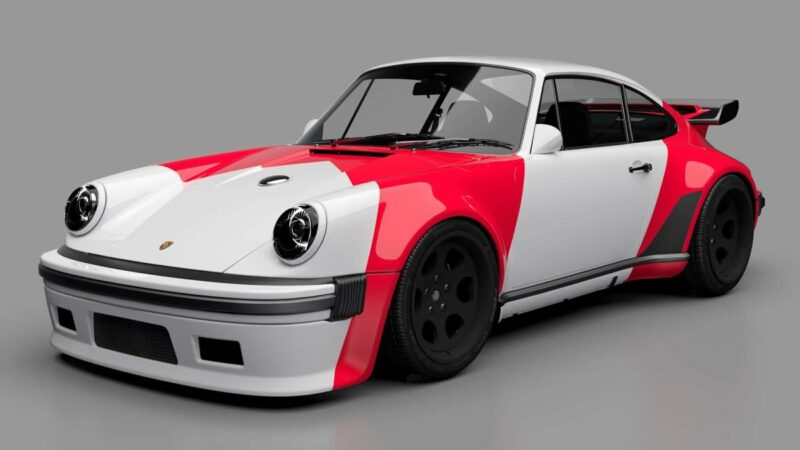
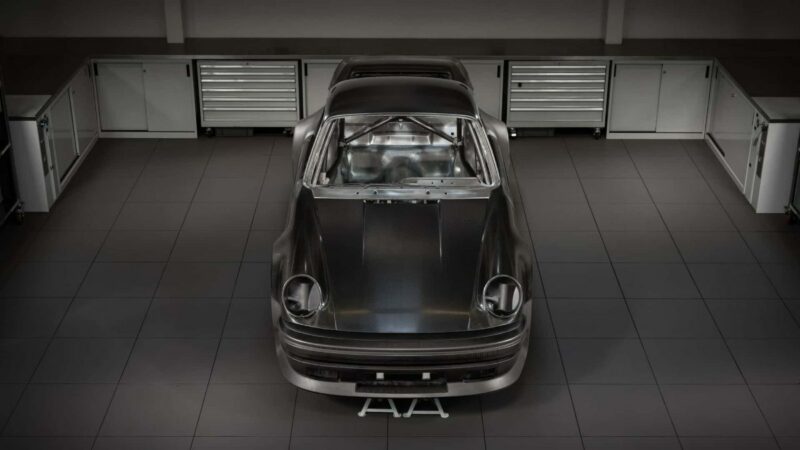
LANZANTE returns with yet another 930 Turbo project. This time, the TAG Championship project is lighter and more powerful than before.
The latest restomod project from the UK company will only produce three 911 units with F1 engines, each representing three F1 victories by McLaren in the 1980s.
Each 930 Turbo will be fitted with a 1.5-liter twin-turbo V6 TAG TTE P01 engine. The F1 engine has been re-tuned by Cosworth with upgraded components such as pistons, valves, and camshafts.
It also receives lighter titanium turbos, certified by McLaren. Additionally, it is equipped with a new airbox, improved cooling, and a more robust exhaust system.
To control power delivery optimally, the engine is managed by a new ECU from Cosworth, providing 625hp and capable of revving up to 10,250rpm.
Power will be transmitted to the rear wheels through the original 993 gearbox with six speeds, but with custom ratios. This allows the 911 restomod to reach speeds of 320km/h.
Meanwhile, the brake system is provided by carbon-ceramic discs with four pistons at the front and rear. The wheels are 18-inch magnesium rims wrapped in Michelin Pilot Sport 4 tires.
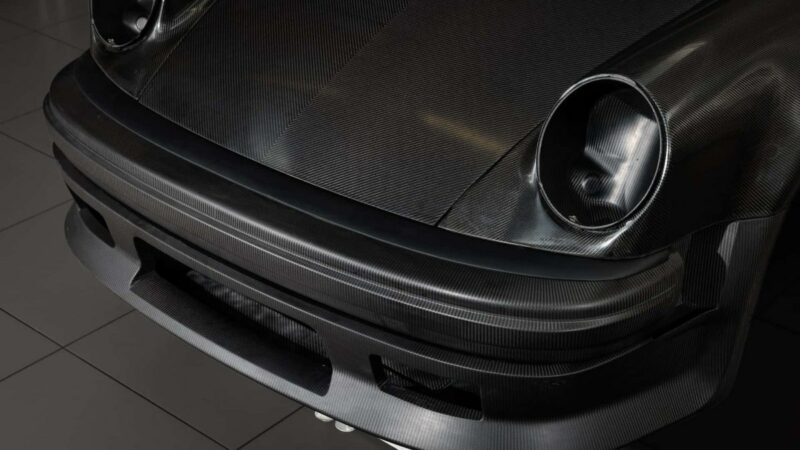
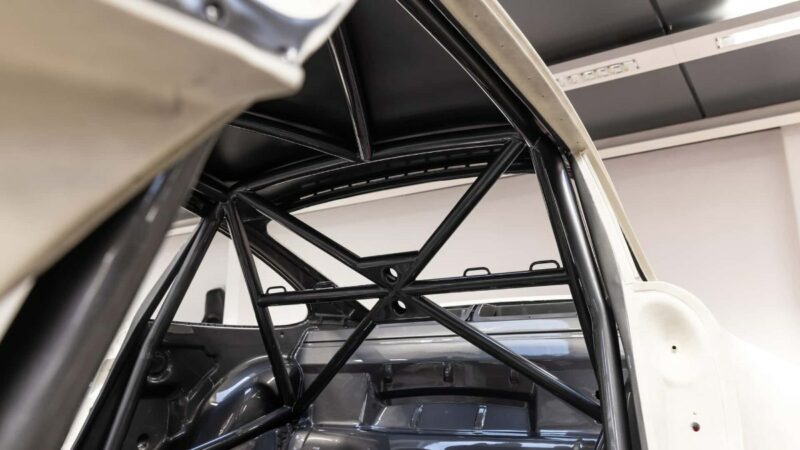
Not satisfied with just a powerful engine, Lanzante has also ‘shed’ weight from this 911. They have replaced original components such as the hood, doors, spoiler, roof, bumpers, and front splitter with carbon fiber. It is now 430kg lighter than the original.
The interior has also been put on a diet. No more power windows and mirrors. However, other comfort aspects are not neglected, as there is a lightweight air conditioning system. The seats are also lightweight Recaros with a six-point harness.
No price has been disclosed, but with a project of only three restomod units with race-spec components, it certainly won’t be cheap.
Malaysia’s Leading Automotive News | ENGEAR ENGLISH