Tag Archives: Nissan GT-R

The Nissan GT-R production finally ends after 18 years

After 18 years of production, Nissan has officially closed the curtain on the high-performance R35 GT-R model.

During its production run from 2007 to now, Nissan produced approximately 48,000 units of the GT-R.

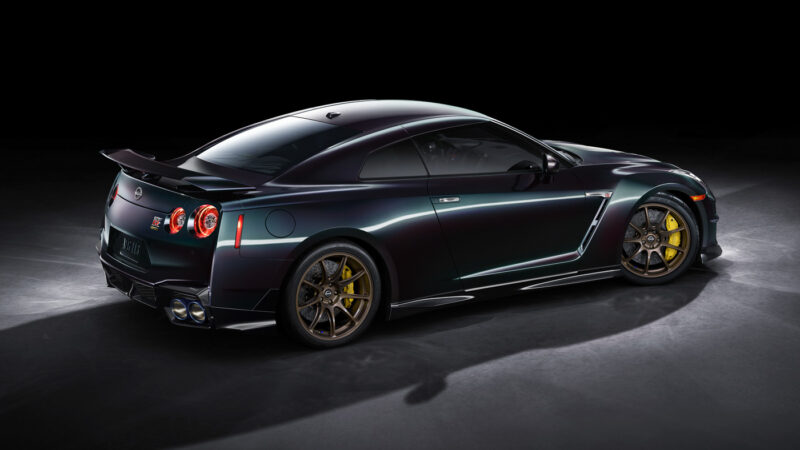
The final unit to roll off the production line is the Midnight Purple GT-R Premium Edition T-Spec, which will be delivered to its owner in Japan.

Is this truly the end for the GT-R generation?

According to Nissan CEO Ivan Espinosa, “Over the more than 18 years, the Nissan GT-R R35 has left a mark in automotive history.”

“For GT-R fans, this is not a permanent farewell to the GT-R. The model will return one day.”

However, he did not reveal any details regarding plans for reviving the GT-R in the future.

“I ask you all to be patient. We have not finalized any plans, but the GT-R will evolve and return.”

Nissan previously surprised the world with the unveiling of the Hyper Force concept model, touted as a successor to the GT-R R35 at the Japan Mobility Show 2023.

This concept model is said to produce up to 1,341 hp, reach speeds of 322 km/h, and be equipped with solid-state battery technology.

Nissan actually faces greater challenges beyond plans to continue the legacy of the GT-R.

Under the Re:Nissan recovery plan, the manufacturer is preparing to close up to seven assembly plants and reduce its workforce by up to 20,000 employees.

Thus, given that the Nissan GT-R is a low-volume model, it may be difficult to see a new generation of the GT-R in the near future, despite the clear intention of Nissan’s leadership to make a new GT-R part of their long-term agenda.

Nissan working on new generation GT-R: will it remain ICE or become an EV?

Despite facing uncertain current conditions, Nissan still has its plans for upcoming models. One of Nissan’s main objectives is to focus on its high-performance sub-brand, Nismo.

According to Arnauld Charpentier, Nissan’s Vice President of Marketing and Regional Mobility, “I see a bright future for Nismo. We will position it as the brand’s focal point.”

Nissan has not disclosed details about any Nismo models, but it is certain that the new Nissan GT-R will be part of those plans.

“There are teams working on this project. When and how, honestly, we don’t know,” he stated.

He also did not specifically mention whether the GT-R would continue with its original formula (internal combustion engine) or switch to full electric (EV).

“Whether the Nissan GT-R is an electric car or hybrid, it must remain a sports car. However, if it performs the same as an electric SUV, that would be a concern.

“We need to redefine the perception of sports cars,” he added.

What is clear is that niche products like the GT-R may not be a priority for Nissan at this moment.

Realistically, Nissan is planning to cut up to 20,000 jobs and close up to seven factories worldwide.

Additionally, Nissan aims to streamline its product portfolio by eliminating up to six vehicle platforms and targeting a reduction in parts complexity by up to 70 percent.

After 18 years, Nissan finally ends GT-R sales in Japan

At the end of February 2025, Nissan Japan announced that it will terminate sales of the GT-R model (R35 generation) after almost two decades on the market.

In a statement posted on its official website, Nissan said, “We have received many orders for the Nissan GT-R and have now finished accepting orders for the planned production quantity. We would like to express our sincere gratitude to all our customers for their support since its release in 2007.”

The Nissan GT-R R35 has long ceased to be offered in several key markets due to compliance issues, such as safety, noise, emissions, and more.

Markets such as Australia and New Zealand stopped selling the GT-R in October 2021, while Europe and the UK followed suit in March 2022.

The Nissan GT-R was first unveiled at the Tokyo Motor Show in 2007, and since then, it has undergone several upgrades and facelifts.

It is powered by a 3.8-liter V6 engine (VR38DETT) with an initial power output of 473 hp, increasing to 565 hp for the 2023 facelift model, while the Nismo version boosts that figure to 600 hp.

What will happen to the next generation of the Nissan GT-R? Will it continue the legacy left by the previous GT-R?

Or will it transform into what is envisioned through the Hyper Force Concept model?

Nissan seeks help from truck engineers to develop R35 GT-R

The Nissan GT-R (R35 generation) made its global debut in 2007 and is described as a supercar “for anyone, anywhere, at any time.”

However, did you know that Nissan was not alone in the development of this successor to the R34 Skyline GT-R?

According to an internal source, Nissan relied on individuals with expertise in truck engineering to develop the R35!

As quoted from microblogging user @trucknakanohito, 80 percent of the Nissan GT-R development team consisted of Isuzu engineers.

Without reliable sources, it is indeed difficult to accept such information.

However, this question was promptly addressed by Kazutoshi Mizuno, the chief engineer of the R35, or more accurately, Mr. GT-R.

In a reply tweet, Mizuno clarified that initially, none of the Isuzu engineers had experience in developing a supercar, as they came from the truck division.

“However, through strong teamwork, a high determination to achieve goals, and training and practice based on comprehensive vehicle measurement system results, all team members managed to become world-class engineers in just 1.5 years,” he stated.


Nissan plans to sell GT-R R35 for another 17 years

Do you know that the Nissan GT-R R35 generation is now 17 years old?

Compared to others, the Nissan GT-R is quite aged, but Nissan actually still intends to continue producing the R35 for another 17 years.

In an interview with Top Gear, Nissan’s Global Product Chief, Pierre Loing, stated, “(The Nissan GT-R) has been on sale for 17 years, and we want to continue it for another 17 years, but regulatory compliance is causing issues.”

For the past few years, Nissan has faced challenges in continuing the sales of the GT-R model.

In Europe, the supercar model’s sales were discontinued in July 2021 due to new noise regulations imposed.

It was also pulled from the Australian market due to failure to comply with stricter side-impact crash test regulations.

Normally, a manufacturer would provide a replacement model when production of the current model is discontinued.

However, this isn’t the case for the GT-R.

After ending the R35 GT-R production in 2025, there will be a gap for a long period before the successor model (Hyper Force) emerges in 2030.


“If you look at the history of the GT-R badge, we’ve had gaps before. We showed the GT-R concept in 2001, ended R34 Skyline GT-R production in 2002, then the R35 didn’t launch until 2007.”

“The gap between the ‘Kenmeri’ Skyline GT-R ending in 1975 and the R32 starting in 1989 was even larger.”

“The GT-R is strong enough to live with these gaps in its production. And we need to have a gap, because going into the electrified world, there is a lot of debate about ‘what is a GT-R in an era of electrification?’ We don’t have all the answers yet. We are in the middle of all those debates.”

It’s highly likely that when the new generation Nissan GT-R emerges in the coming years, it will be positioned as a higher-end model compared to the Z and upcoming Silvia.