Tag Archives: EV

Honda to launch N-Box EV version in 2027 to compete with BYD Racco, Suzuki expected to follow

Honda Motor is planning to introduce an electric version of its N-Box around 2027 to compete with the BYD-made kei car, according to a report by Nikkei Asia.

The Honda N-Box was first launched in Japan in 2011 and has now gone through three generations in the Japanese market.

It has been one of the best-selling vehicles in Japan for three consecutive years, with over 200,000 units sold in 2024.

Honda has not yet decided on the specifications or pricing for the N-Box EV model.

It is clear, however, that the N-Box EV will not entirely replace the role of the internal combustion engine (ICE) version.

For reference, Honda Japan has a similar kei car product, the N-Van e: which is aimed at commercial use and has been on sale since 2024.

The N-Van e: features a single electric motor with a power output of 64 PS and 152 Nm, and offers a driving range of 245 km on a full charge (WLTC data).

In Japan, new electric vehicle (EV) sales accounted for only 2 percent of total vehicle sales throughout 2024.

Of that total, more than 40 percent was dominated by the kei car twins, the Nissan Sakura EV and the Mitsubishi eK X EV.

Both of these EV models share specifications, including an electric motor producing 64 PS/195 Nm, a 20 kWh lithium-ion battery, and a driving range of up to 180 km (WLTC data).

Nissan Sakura EV & Mitsubishi eK X EV

In addition to Honda, Suzuki Motor is also planning to introduce a kei car EV by 2026.

The BYD Racco is a kei car specially developed by BYD for the Japanese market.

Unveiled for the first time at the Japan Mobility Show 2025, the BYD Racco features the following:

  • Dimensions: 3,395 mm x 1,475 mm x 1,800 mm
  • Sliding doors on both the left and right
  • 20 kWh LFP battery pack
  • Driving range of 180 km (WLTC data)

The arrival of the BYD Racco clearly demonstrates that the prominent Chinese brand is serious about producing a vehicle that complies with the dimensional regulations set for the kei car segment in Japan.

Zeekr delivers 2,000 electric vehicles in Malaysia within a year

Zeekr Intelligent Technology Malaysia has announced a new milestone, having delivered a total of 2,000 electric vehicles within a year.

Fifty units of the Zeekr 7X were handed over to their respective owners during an event held last weekend.

The 2,000th unit was delivered to its owner, Dato’ Sri Siti Nurhaliza.

According to Eddy Lu, General Manager of Zeekr Intelligent Technology Malaysia, “Reaching 2,000 owners in just one year is no easy feat, and it reflects the trust Malaysians have in Zeekr.”

“We will continue to enhance the quality of our sales and after-sales services to ensure that every journey with Zeekr is synonymous with luxury and peace of mind.”

Zeekr Malaysia is also striving to expand its presence across the country.

Starting January 2026, Zeekr will open new dealership branches in Johor Bahru, Melaka, Ampang, and Ipoh.

By the end of 2026, Zeekr will have a network of dealerships consisting of 18 showrooms, including over 10 Body & Paint Centers nationwide.

Additionally, Zeekr Malaysia is running a campaign in conjunction with the Christmas season, where every Zeekr model registered before December 31, 2025, is eligible to receive exclusive TRAPO items valued up to RM1,000.

Toyota confirms Century Coupe will not be an electric grand tourer

At the Japan Mobility Show 2025 held a few months ago, Toyota confirmed that the Century will become a distinct ultra-luxury brand, no longer overshadowed by the Toyota name.

Toyota also showcased the latest concept model, the Century Coupe—a two-door grand tourer with crossover elements.

Details about the new model have not yet been finalized, but Toyota has confirmed it will not be offered in a full-time electric vehicle (EV) version.

According to a report from CarExpert, Takashi Uehara, president of Toyota’s powertrain unit, mentioned that the Century Coupe will feature a traditional engine.

“We have yet to decide on the type of engine to be installed in the model,” he stated.

“There are many combinations available; however, development time has been reduced, so this will happen soon.”

As part of its multipathway strategy, Toyota is also developing a new generation of internal combustion engines to meet various global needs.

In addition to a four-cylinder setup, the modular engine design allows Toyota to adjust the number of cylinders to suit specific models, such as a six-cylinder inline engine or an entirely new V8 engine.

This was confirmed by Takashi Uehara himself during a private briefing with Asian media at the Japan Mobility Show 2025.

In Japan, the new generation Century sedan is currently powered by a 5.0-liter V8 hybrid engine (code 2UR-FSE) with a total output of 425 hp.

Meanwhile, the Century SUV is equipped with a 3.5-liter V6 engine (code 2GR-FXS) featuring a plug-in hybrid (PHEV) system with two electric motors, producing a total output of 406 hp.

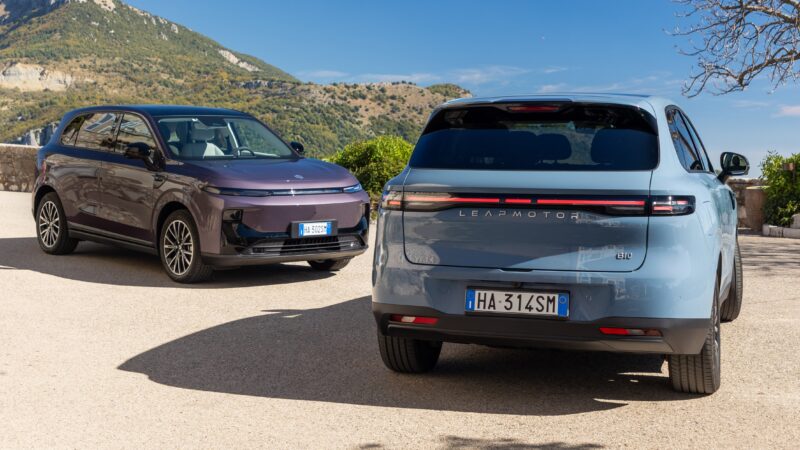
2026 Leapmotor B10 now in Malaysia, starting from RM99,800

Over a year after the launch of its inaugural model, the C10, Leapmotor Malaysia has introduced its second EV model, the Leapmotor B10 2026.

This C-segment electric SUV is priced starting from RM107,800 for the Life variant and RM118,800 for the Design variant.

Leapmotor Malaysia is also offering a promotional rebate in conjunction with the launch, where the sales price for the B10 Life starts as low as RM99,800, while the Design variant is priced from RM109,800.

Here are some brief details about the Leapmotor B10:


1. Dimensions

The Leapmotor B10 measures 4,515 mm in length, 1,855 mm in width, and 1,655 mm in height, with a wheelbase of 2,735 mm.

The cargo space is 430 liters and can expand to 1,700 liters when the second-row seats are folded down.

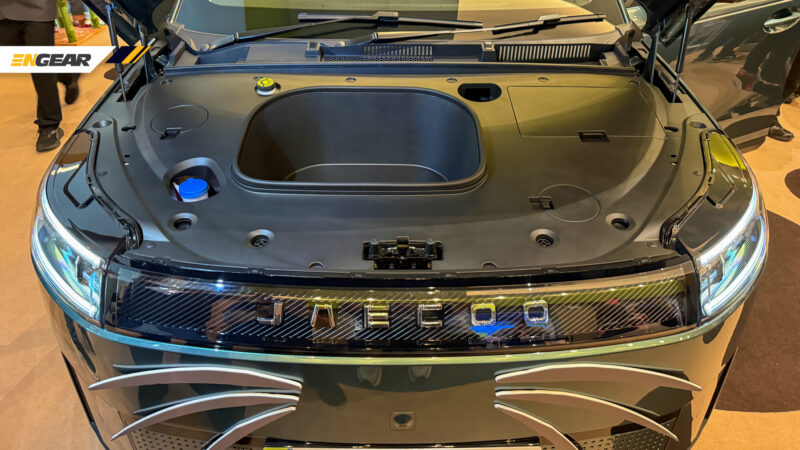
There is also a front trunk (frunk) with a capacity of 25 liters.


2. Power Output

For the Malaysian market, the Leapmotor B10 features a single rear-wheel drive (RWD) electric motor generating 218 hp and 240 Nm of torque.

It accelerates from 0-100 km/h in just 8 seconds, reaching a top speed of 170 km/h.

There are three driving modes available: Comfort, Standard, and Sport.


3. Battery and Charging

Two battery capacity options are available for the local market: a 56.2 kWh LFP CATL battery that offers a range of 361 km (WLTP data) and a larger 67.1 kWh battery with a range of 434 km.

The B10 supports AC charging up to 11 kW, as well as fast DC charging at 140 kW for the Life variant and up to 168 kW for the premium Design variant.

This means users can charge the battery from 30% to 80% State of Charge (SoC) in as little as 20 minutes for both variants.

Additionally, there is a vehicle-to-load (V2L) function with a capacity of up to 3.3 kW.


4. Exterior

The Leapmotor B10’s suspension system features a MacPherson strut at the front complemented by a multi-link setup at the rear.

Standard exterior equipment includes LED headlights, LED daytime running lights, LED fog lights, hidden door handles, 18-inch alloy wheels, and LED taillights.


5. Interior

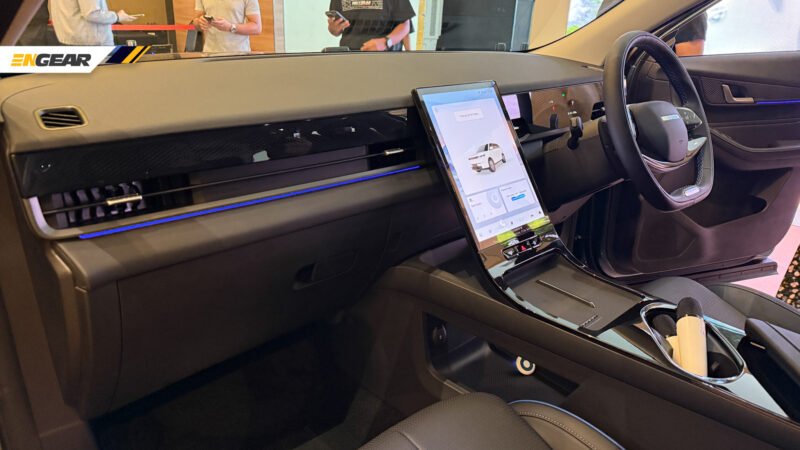
The cabin of the Leapmotor B10 is equipped with features such as an 8.8-inch digital display, a central 14.6-inch touchscreen with 2.5K resolution, and wireless support for Apple CarPlay and Android Auto (starting January 2026). It also supports over-the-air (OTA) updates.

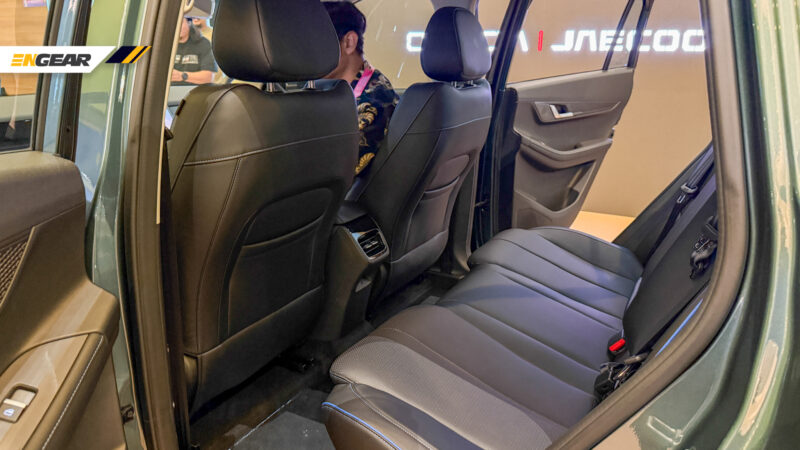
Additionally, the front seats come with ventilation functions, six-way adjustments for the driver, and four-way adjustments for the front passenger. Other features include a panoramic glass roof, an audio system with six speakers, a 15W wireless charging slot for smart devices, a 60W USB Type-C port, and ambient lighting.

Like the C10 model, the B10 is also equipped with Oeko-Tex Standard 100 upholstery, which is more baby-friendly.


6. Safety

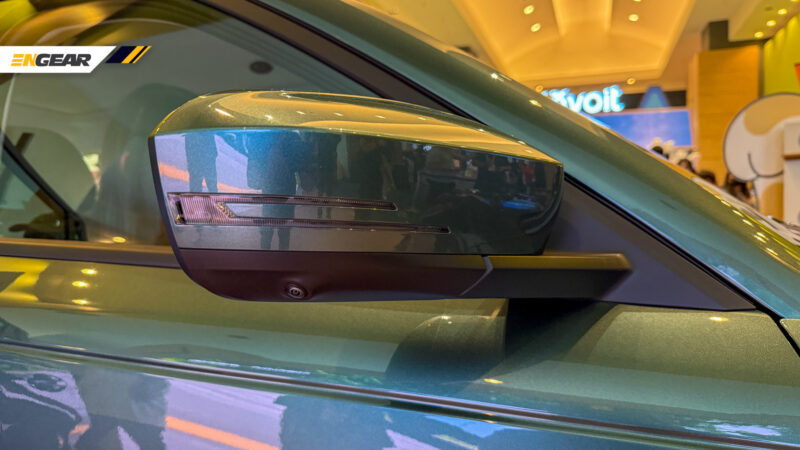
Safety features included in the Leapmotor B10 consist of ABS, EBD, Brake Assist, Vehicle Dynamic Control (VDC), Traction Control (TRC), a 360-degree camera system, ISOFIX mounts, and seven airbags.

The Leapmotor B10 also comes with ultrasonic sensors to support Level 2 semi-autonomous driving, offering 17 Advanced Driver Assistance System (ADAS) functions, including:

  • Adaptive Cruise Control (ACC)
  • Lane Centering Control (LCC)
  • Intelligent Speed Assist (ISA)
  • Lane Keep Assist (LKA)
  • Emergency Lane Keeping Assist (ELKA) 
  • Front Collision Warning (FCW)
  • Autonomous Emergency Brake (AEB)
  • Advanced Emergency Braking System (AEBS)
  • Blind Spot Detection (BSD)
  • Door Opening Warning (DOW)
  • Lane Departure Warning (LDW)
  • Hands Off Detection (HOD)
  • Rear Collision Warning (RCW) 
  • Rear Cross-Traffic Alert And Braking (RCTA + RCTB) 
  • Traffic Jam Assist (TJA)
  • Driver Drowsiness Alert Warning (DDAW) 
  • Advanced Driver Distraction Warning (ADDW)

BYD and Denza bring the Light the Change Festival at Desa ParkCity for one month!

The Waterfront @ Desa ParkCity will be enlivened by the Light the Change Festival organized by BYD and Denza.

This electric mobility brand will set up camp for one month, from November 28 to January 4, featuring a variety of activities and performances scheduled each week.

The festival aims to strengthen BYD and Denza’s commitment to environmental responsibility while raising awareness about sustainability, climate issues, and the future of mobility.

Additionally, BYD is implementing the global initiative “One Degree. One Future,” aimed at reducing the Earth’s temperature by one degree through electric mobility solutions.

Exciting activities include:

  • Planting pledges in the Greenfield Zone
  • Exploration of Electric Mobility
  • Test Drives (10 AM to 6 PM)
  • Golden Hour Performances (Friday to Sunday, 8 PM to 9 PM)
Week Dates Golden Hour Show
Week 1 28 – 30 November Bubble Show
Week 2 5 – 7 December
Week 3 12 – 14 December LED Butterfly Dance Performance
Week 4 19 – 20 December Bamboo Music Performance by Alena Murang
Week 5 22 – 28 December Xmas Snowfall
Week 6 2 – 4 January New Year Light Show


Since entering the new energy vehicle sector, BYD has successfully reduced over 9.3 million tons of CO2 emissions worldwide.

Locally, BYD and Denza have sold a total of 12,872 units as of November 2025, reflecting a 76% increase compared to the same period last year.

Since day one, total sales in Malaysia have surpassed 25,233 units, equivalent to reducing CO2 emissions by 62,191 tons annually or planting nearly 2.5 million trees.

Sime Motors has also played a crucial role in accelerating electric mobility in Malaysia.

In the past three years, Sime Motors and BYD have introduced seven EV models, established 39 sales and marketing branches, 24 after-sales branches, and 12 authorized body and paint centers.

Supported by a dedicated BYD Training Center and a centralized warehouse, Sime Motors ensures premium service and support for BYD customers across the country.

Aspark Owl Roadster now the fastest production car in the world: 0-100 km/h in 1.72 seconds!

Do you want a high-performance car made in Japan with acceleration that outpaces the Rimac Nevera? Consider the Aspark Owl Roadster.

This Japanese engineering company claims that the Owl Roadster EV can accelerate from 0 to 100 km/h in just 1.72 seconds!

With a mere 0.02-second advantage, the Owl Roadster holds the title of the fastest production car in the world.

While another speedster, the McMurtry Speirling, can achieve 0-100 km/h in just 1.40 seconds, it’s important to note that this is not a car intended for road use.

What makes the Aspark Owl Roadster so fast?

First and foremost, it features a carbon monocoque chassis and a full carbon fiber body, weighing a total of 2,050 kg, paired with four powerful electric motors.

It can achieve a top speed of 413 km/h, though it is electronically limited to 350 km/h for road use.

The 69 kWh battery offers a range of over 250 km on a single full charge.

The Owl Roadster comes with four driving modes: Rain-Snow, City-Comfort, Sport-Dynamic, and High Boost.

Driving dynamics are enhanced by double wishbone suspension with adjustable ride height, an active rear wing, a carbon ceramic brake system (10-piston front/4-piston rear), and 20-inch rims shod with Michelin Pilot Sport Cup 2R tires.

Since 2019, Aspark has shifted its production operations to Italy, with the Owl Roadster model limited to just 20 units worldwide.

Each unit is estimated to be worth US$3.5 million (RM14.45 million).

Perodua QV-E receives five-star ASEAN NCAP rating

ASEAN NCAP has announced that Perodua’s first electric SUV, the QV-E, has achieved a five-star rating in its newly launched vehicle assessment tests.

Based on these tests, the Perodua QV-E attained an impressive overall score of 88.36 points across four categories:

  • Adult Occupant Protection (AOP) – 36.63/40.00
  • Child Occupant Protection (COP) – 16.73/20.00
  • Safety Assistance (SA) – 20.00/20.00
  • Motorcycle Safety (MS) – 15.00/20.00


The Perodua QV-E is a segment B electric SUV available in a single variant, offering standard features such as six airbags, Electronic Stability Control (ESC), ABS, Seat Belt Reminder (SBR) for both front and rear passengers, a rear passenger detection system, ISOFIX anchor points, and a Child Presence Detection (CPD) system.

This electric vehicle is also equipped with advanced safety features including Autonomous Emergency Braking (AEB), Lane Departure Warning (LDW), Forward Collision Warning (FCW), Lane Keeping Assist (LKA), Blind Spot Detection (BSD), and High Beam Assistance (AHB).

The Perodua QV-E is priced starting at RM80,000 excluding insurance, while the battery leasing package starts from RM275 per month over a period of nine years.

2026 Perodua QV-E officially launched – starting from RM80,000

Perodua has officially launched its first electric vehicle (EV), named QV-E.

With a starting price of RM80,000, the Perodua QV-E is the first passenger car in Malaysia to come with a battery leasing scheme.

Here are some key facts you need to know:


1. Collaboration with Magna Steyr

The QV-E is a joint project between Perodua and Magna Steyr. A brand-new platform has been developed to accommodate various body shapes within the A and B segments.

This platform is not only for EVs but can also be adapted for hybrid drivetrains, as well as extended-range electric vehicles (REEVs).


2. Dimensions

The QV-E measures 4,170 mm in length, 1,800 mm in width, and 1,502 mm in height, with a wheelbase of 2,680 mm. It also offers a ground clearance of 158 mm.

When compared to its closest competitors, the QV-E has dimensional advantages with a length of 35 mm longer and a wheelbase 30 mm longer.

Additionally, the QV-E is significantly longer and wider but slightly lower compared to the Myvi model.


3. Performance

The Perodua QV-E is powered by a single electric motor delivering 201 hp and 285 Nm of torque, enabling acceleration from 0 to 100 km/h in just 7.5 seconds and a top speed of 165 km/h.

This makes the QV-E the fastest model ever produced by Perodua.

There are three driving modes: Eco, Normal, and Sport.


4. Battery

The 52.5 kWh battery pack from CATL allows this EV to travel up to 445 km on a full charge (NEDC data).

The QV-E supports AC charging at 6.6 kW, where the battery can be fully charged from 0 to 100 percent state of charge (SoC) in 8 hours.

For convenience, users can take advantage of DC fast charging at 60 kW, allowing the battery to charge from 30 to 80 percent SoC in just 30 minutes.

This battery also features a liquid cooling system and is rated IP68 (water) and IP69 (dust).


5. Exterior

The coupe SUV design of the QV-E brings a unique look not found in any existing Perodua model.

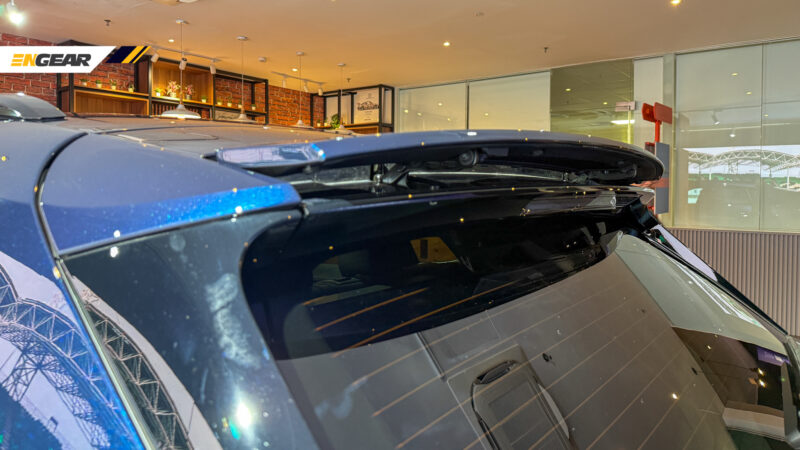
Standard features of the QV-E include 18-inch alloy wheels, LED headlights with daytime running lights (DRL), flush door handles, protective cladding on the sides, and a roof spoiler.

The charging port is located on the left front fender.


6. Cabin

In the cabin, there is a flat-bottom steering wheel, a 10.25-inch TFT digital cluster screen, a central screen of the same size, wireless support for Apple CarPlay and Android Auto, as well as a digital rearview mirror.
The QV-E still retains physical buttons for air conditioning controls located at the bottom of the air vents, along with a driving mode selection lever and a PRND rotary knob on the center console.

Other features include a driver’s seat with six-way power adjustment, automatic climate control, ambient lighting, a wireless smartphone charging slot, and partially leather-wrapped seats.


7. Safety

The QV-E comes equipped with six airbags, ABS (Anti-lock Braking System), EBD (Electronic Brakeforce Distribution), Brake Assist, Electronic Stability Control (ESC), Traction Control System (TCS), a dashcam, ISOFIX anchor points, and a Surround View Monitoring (SVM) system.

Active safety features include Autonomous Emergency Braking (AEB), Adaptive Cruise Control (ACC), Traffic Jam Assist (TJA), Highway Assist (HWA), Forward Collision Warning (FCW), Blind Spot Detection (BSD), Lane Departure Warning (LDW), Lane Keep Assist (LKA), and Rear Cross Traffic Alert (RCTA).

Additionally, there is a Child Presence Detector (CPD) for the second row seats, along with an Emergency Call System (SOS).


8. Battery as a Service

Perodua offers a battery leasing service to ensure guaranteed performance throughout a 9-year (108-month) contract period.

The monthly subscription fee (RM275 per month) will be added to the vehicle financing.

Under this program, the battery will remain the property of Perodua, but customers can fully own it after 9 years.

Once the battery reaches its End of Life, it must be returned to Perodua for proper disposal.

Perodua also installs battery tracking devices to minimize environmental risks if the battery is removed from the vehicle or left unused for an extended period.

This battery leasing program aims to alleviate customer concerns regarding the low resale value of EVs and the currently high costs associated with replacing EV batteries.

2026 iCaur V23 officially launched in Malaysia – prices starting from RM119,800

iCaur Malaysia has recently announced the official selling price for the V23 electric off-road SUV in the local market, starting from RM119,800 for the 2WD version and RM132,800 for the iWD version.

The 2WD variant is powered by a rear-wheel electric motor, producing 136 PS and 180 Nm of torque, paired with a 59.9 kWh LFP battery for a driving range of 360 km (NEDC data).

Meanwhile, the iWD variant features a dual motor setup with a total power output of 211 PS and 292 Nm, equipped with an 81.8 kWh NMC battery for a range of up to 430 km.

The V23 supports AC charging at 6.6 kW and DC fast charging of 85 kW, or up to 104 kW for the iWD variant.

With dimensions of 4,220 mm in length, 1,915 mm in width, 1,845 mm in height, and a wheelbase of 2,735 mm, the V23 boasts a short overhang design at both ends, offering a departure angle of 41 degrees and an approach angle of 42 degrees.

Additionally, it features a ground clearance of 210 mm and the capability to wade through water up to 600 mm deep.

Exterior features include LED headlights, LED daytime running lights, LED taillights, side steps, and 21-inch or 19-inch wheels for the 2WD variant.

The V23’s cabin houses a 15.4-inch infotainment screen powered by a Qualcomm Snapdragon 8155 processor, supports Apple CarPlay and Android Auto, features an audio system with seven speakers, and physical buttons for the air conditioning system and driving modes (Eco, Comfort, Sport, Individual, Slippery, Off-road).

The cargo space measures 234 liters and can expand to 744 liters when the second-row seats are folded down.

Safety features include Autonomous Emergency Braking (AEB), Forward Collision Warning (FCW), Lane Change Warning (LCW), Lane Departure Warning (LDW), Rear Collision Warning (RCW), Lane Departure Prevention (LDP), Rear Cross Traffic Alert (RCTA), Adaptive Cruise Control (ACC), Blind Spot Detection (BSD), and Door Open Warning (DOW).

Furthermore, it is equipped with a 540-degree Surround View Camera (AVM) system, a Tire Pressure Monitoring System (TPMS), and an NFC reader located in the driver’s side door.
Five color options are available: Off Road Orange, Khaki White, Army Green, Slate Silver, and Carbon Black.
Each purchase comes with the following packages:

  • A 7-year vehicle warranty or a limit of 150,000 km
  • An 8-year warranty for the battery and drive unit or a limit of 160,000 km
  • A battery replacement warranty if the state of charge (SoC) drops below 70 percent

For the first 1,000 buyers, iCaur Malaysia is offering a complimentary 7 kW wall charger valued at RM3,400, along with an additional 6.86-inch instrument cluster unit worth RM1,000.

Additionally, buyers will receive an extended warranty for the battery, electric motor, and power control unit for up to 10 years or a limit of 200,000 km.

smart #5 officially launched in Malaysia – two variants, starting from RM199,800

PRO-NET, the authorized distributor of the smart brand vehicles in Malaysia, has successfully launched another electric SUV for the local market, the smart #5.

Two variants are offered, starting with the Premium variant featuring a single electric motor and rear-wheel drive (RWD).

With a power output of 358 hp and torque of 373 Nm, the #5 Premium can accelerate from 0 to 100 km/h in just 6.5 seconds.

Its 100 kWh battery pack provides a driving range of up to 590 km according to WLTP data and supports AC charging at 22 kW as well as DC fast charging of up to 400 kW (10-80% state of charge in 15 minutes).

Meanwhile, the Brabus variant is powered by two electric motors and features an all-wheel-drive (AWD) system that can produce 637 hp and 710 Nm.

The Brabus version can accelerate from 0 to 100 km/h in just 3.8 seconds and offers a driving range of 540 km.

Standard equipment for the smart #5 includes:

  • A cargo space of 1,530 liters and a 72-liter frunk
  • Dual 13-inch OLED display screens
  • A 25.6-inch augmented reality head-up display
  • Apple CarPlay and Android Auto support
  • Sennheiser audio system with 20 speakers and Dolby Atmos technology
  • Nappa leather upholstery
  • Oak wood accents
  • A 1.7 square meter panoramic glass roof
  • A built-in cooler in the center console storage compartment

The Brabus variant includes additional features such as Launch Mode, Dinamica microfiber upholstery, red brake calipers, 21-inch Brabus Monoblock Z wheels, and sport-tuned suspension.

Safety features comprise a high-strength steel chassis with rigidity of up to 42,000 Nm, seven airbags, Highway Pilot Assist (HWA) with Stop & Go functionality, and a 360-degree camera system.

The retail price of the smart #5 starts at RM199,800 for the Premium variant, rising to RM249,800 for the Brabus variant.

The Premium variant is available in four colors: Meta Black, Cyber Silver, Pulsar Ruby, and Saturn Beige Matte, all equipped with an Eclipse Black colored roof.

The Brabus variant features three exclusive finishes: Atom Grey Matte, Meta Black, and Digital White, with an Eclipse Black roof.

Smart Malaysia is also offering a Comprehensive Premium Ownership concept that includes:

  • 8-Year / 200,000 km High-Voltage Battery Warranty
  • 8-Year / 150,000 km High-Voltage Component Warranty
  • 4-Year Vehicle Warranty with unlimited mileage
  • 2-Year Warranty on Parts with unlimited mileage
  • 24-hour Roadside Assistance
  • A free Wallbox charger valued at RM3,200
  • A free Vehicle-to-Load (V2L) adapter valued at RM800
  • A free accessory package with six items valued at RM2,000
  • Free Internet data for 3 years, 3GB/month (108GB total)

BYD Sime Motors launches BYD Tech Discovery tour in Malaysia, Nov 14-16 at Plaza Arkadia

BYD Malaysia, in collaboration with BYD Sime Motors, has launched a series of Electric Vehicle (EV) technology tours known as BYD Tech Discovery, starting in Kuala Lumpur from November 14 to 16.

A variety of exciting activities have been organized for visitors.

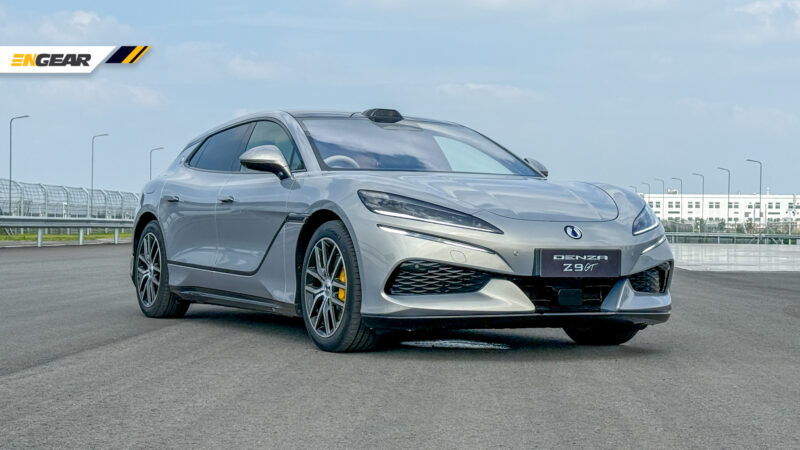
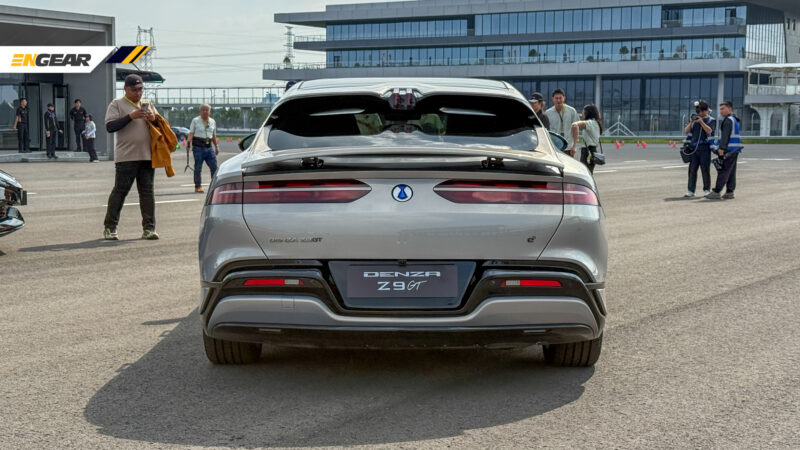
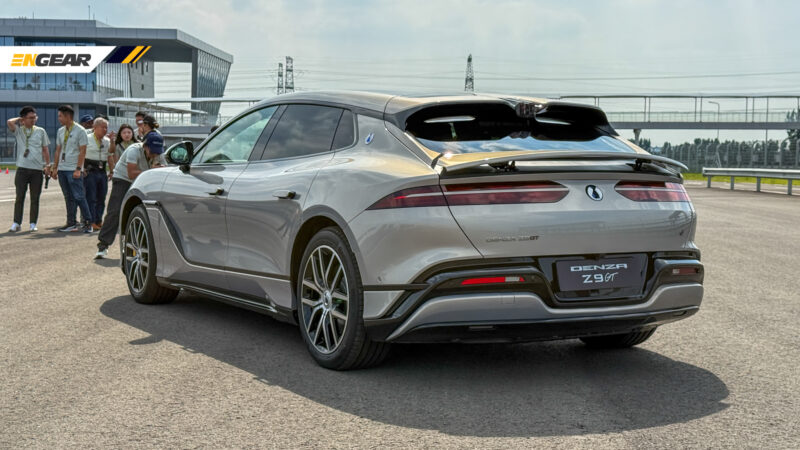
Among these are the Test Drive Zone and Trial Drive Area, featuring challenges such as the Camel Bridge and Cross-Axle, powered by DMO technology, as well as a 360-degree turn and Crabwalk demonstration using the Denza Z9GT.

Additionally, visitors will have the opportunity to learn about core technologies such as the Blade Battery, smart charging systems, and advanced safety features, all while enjoying complimentary coffee and receiving exclusive BYD merchandise.

Special promotions will also be available for select models, including:

  • Savings of up to RM20,000 and a lucky draw chance of up to RM38,888 for bookings of the BYD M6, BYD Atto 3 Ultra, or BYD Sealion 7.
  • Trade-in offers including rebates of up to RM11,000 for the BYD Atto 2 and BYD Seal.
  • A rebate of RM15,000 or interest-free financing for the Denza D9.

Taking place at Car Park 3, Plaza Arkadia, Desa ParkCity, BYD Tech Discovery is open to all Malaysians from 10:00 AM to 8:00 PM.

MGS5 EV receives five-star rating from ASEAN NCAP

ASEAN NCAP has announced that the MG MGS5 EV SUV has received a five-star rating in its new vehicle assessment tests.

Based on the evaluation, the MGS5 EV achieved an impressive overall score of 92.39 points across the following four categories:

  • Adult Occupant Protection (AOP) – 37.90/40.00
  • Child Occupant Protection (COP) – 16.99/20.00
  • Safety Assistance (SA) – 20.00/20.00
  • Motorcycle Safety (MS) – 17.50/20.00


The MGS5 EV is a segment C electric crossover with five seats that offers a range of safety features including seven airbags, ABS, seatbelt reminders, and a rear passenger detector.

Advanced safety features available include Autonomous Emergency Braking (AEB) for City, Inter-Urban, Pedestrian & Motorcycle scenarios, Blind Spot Detection (BSD), High Beam Assistance (AHB), Lane Departure Warning (LDW), Forward Collision Warning (FCW), and Lane Keeping Assistance (LKA).

Malaysians can purchase the MGS5 EV starting at a price of RM107,900 for the Com variant, RM117,900 for the Com Long Range variant, and RM127,900 for the Lux Long Range variant.

GWM Ora Good Cat GT arrives in Malaysia – 171 PS, 250 Nm, from RM119,800

Great Wall Motor Malaysia (GWM Malaysia) today announced the arrival of its more sporty electric vehicle (EV) model, the Ora Good Cat GT.

The starting price is RM119,800.

There are several differences between the Ora Good Cat GT and the Ultra variant that is also offered.

Here are some key details about the Ora Good Cat GT:


Dimensions

Compared to the Ora Good Cat Ultra, the Ora Good Cat GT features a length of 4,254 mm (+19 mm) and a width of 1,848 mm (+23 mm).

The height and wheelbase remain unchanged, with a ground clearance of 135 mm.


Performance

The Ora Good Cat GT is powered by an electric motor that generates 171 PS and 250 Nm of torque, providing an increase of 28 PS and 40 Nm over the Ultra variant.

However, the top speed is limited to 150 km/h.

The GT variant offers driving modes including Normal, Sport, ECO, ECO+, Auto, and Individual.

Like the Ultra variant, the Ora Good Cat GT is equipped with a 57.7 kWh lithium iron phosphate (LFP) battery pack, allowing for a driving range of up to 460 km.

Standard features include AC charging at 6.6 kW (full charge in 9 hours) and DC fast charging at 60 kW, enabling a 30-80% charge in just 38 minutes.

The Ora Good Cat also supports a Vehicle-to-Load (V2L) function at 3.3 kW.


Exterior Features

The GT variant is distinguished from the Ultra by its sportier exterior appearance.

The GT variant includes features such as:

  • More aggressive front and rear bumpers
  • Yellow brake calipers
  • 18-inch black alloy wheels with yellow trim
  • Power liftgate
  • Yellow accents on the bumpers
  • Yellow side mirror housings


Cabin Space

Both variants of the Ora Good Cat come with a two-tone interior, but the GT variant features a more striking combination of black and yellow.

Additionally, the GT includes exclusive features such as sporty front seats with ventilation and massage functions, as well as suede leather upholstery.

Other standard features include:

  • 7-inch digital display
  • 10.25-inch infotainment screen
  • Apple CarPlay and Android Auto support
  • 50W wireless device charger
  • Automatic climate control with a PM 2.5 filter
  • Six-speaker audio system
  • Panoramic glass roof


Safety Features

Standard safety features on both variants include:

  • Six airbags
  • Tire Pressure Monitoring System (TPMS)
  • Traction Control System (TCS)
  • ISOFIX anchors
  • 360-degree camera
  • Chassis leak camera function
  • Intelligent Parking Assistance System (IIP)
  • Adaptive Cruise Control (ACC)
  • Traffic Jam Assist (TJA)
  • Autonomous Emergency Braking (AEB)
  • Lane Departure Warning (LDW)
  • Lane Keeping Assist (LKA)
  • Center Lane Keeping Assist (LCK)
  • Rear Collision Warning (RCW)
  • Rear Cross Traffic Alert (RCTA)
  • Hill Start Assist (HSA)


Ora Good Cat Ultra variant

The Ora Good Cat Ultra variant is also officially available at a starting price of RM109,800, featuring the following specifications:

  • Single electric motor
  • 143 PS power, 210 Nm of torque
  • Driving range of 480 km
  • Driving modes: Normal, Sport, ECO, ECO+, and Auto
  • 18-inch alloy wheels
  • Interior finish options: Green/Grey, Brown/Rice, or Green/Rice (depending on exterior color)
  • Synthetic leather upholstery


Ora Good Cat GT


Ora Good Cat Ultra

BYD Seal 6 EV: a budget-friendly ‘sporty’ sedan – first drive

Sporty.

At least, that’s the characteristic BYD aims to highlight with its latest electric sedan, the BYD Seal 6, launched two months ago.

With a competitive price starting at RM100,000, the BYD Seal 6 successfully recorded sales of over 100 units in the first week following its launch.

A few weeks ago, BYD Malaysia invited us for a brief test drive to Janda Baik and Genting Highlands to experience the Premium variant of the BYD Seal 6 first-hand.

Here are our brief notes:


Dimensions and Design

The BYD Seal 6 is positioned as a C-segment sedan, significantly larger than competing models such as the Toyota Corolla and Honda Civic.

Its body design is less sporty compared to the more premium Seal, reminding the author of electric sedan models from Mercedes, namely the EQE and EQS.

However, a notable advantage of the Seal 6 is its cargo capacity of 525 liters, consisting of a 460-liter trunk and a 65-liter frunk.

Additionally, with a wheelbase of 2,820 mm, the Seal 6’s cabin feels spacious and comfortable, enhanced further by its flat rear floor structure.


On-Road Performance

The Premium variant we tested is equipped with a rear-wheel-drive electric motor producing 215 hp and 330 Nm of torque.

Driving is aided by MacPherson strut suspension at the front and a multi-link setup at the rear, tuned for Malaysian road conditions.

Acceleration feels relatively linear, with no sudden jolts that might strain the driver’s neck. With responsive throttle control, the Seal 6 can achieve desired speeds smoothly.

The suspension tuning effectively minimizes vibrations and road irregularities from disturbing passengers’ comfort.

Although it features a rear-wheel-drive setup, the Seal 6 does not exhibit a sporty character when driven aggressively.

This is due in part to the steering feel, which the author found underwhelming, and the rubber tires at all four corners, which felt less confident, especially in corners.

The benefits of the mentioned suspension tuning also diminish when driving up Genting Highlands, where the sedan can feel a bit floaty in most corners.


Cabin Experience

This sedan may not be the best choice for those seeking high-performance driving.

However, for most users, it offers more than adequate comfort.

The synthetic leather seats are sufficiently comfortable, providing ample support for the driver, with cushion dimensions that adequately support the thighs.

Rear seating is spacious and comfortable, complemented by a flat floor design.

The minimalist dashboard layout houses a 12-inch central screen that is non-rotatable but includes essential vehicle functionalities.

Importantly, it features wireless Apple CarPlay and Android Auto, which are essential in any modern car.

There are still some physical function buttons on the center console, along with a smartphone holder that includes wireless charging capabilities.

Fortunately, the side mirror adjustment function is still maintained on the door panel.

However, it’s unfortunate that despite having advanced safety features like AEB, FCW, LDW, and a 360-degree camera, the sedan lacks blind-spot monitoring (BSM) even in higher variants.


An Alternative to C-Segment Sedans?

Yes, with a price below RM120,000, the BYD Seal 6 can be a strong alternative for those needing a spacious, comfortable, and modern sedan.

Or if you are affected by the recent Budi95 subsidy.

In any case, consider your own needs and preferences. As we have emphasized before, test drive the vehicle before making any decisions.

Bookings for 2025 smart #5 now open, launch coming soon

Proton New Energy Technology (Pro-Net) has announced the opening of bookings for the 2025 smart #5 electric SUV model, which will be launched soon.

Interested Malaysians can reserve the smart #5 through the Hello smart app or the official smart Malaysia website, with a reservation fee of RM2,000.

Two variants are available: Premium and Brabus.

The smart #5 Premium features a rear-wheel-drive electric motor delivering 358 hp and 373 Nm of torque, with acceleration from 0 to 100 km/h in just 6.5 seconds.

On the other hand, the smart #5 Brabus comes with a dual-motor setup providing 637 hp and 710 Nm of torque, allowing for acceleration from 0 to 100 km/h in as little as 3.8 seconds.

Equipped with a 100 kWh NMC battery pack, this SUV can travel up to 590 km (WLTP data) on a full charge, or up to 540 km for the Brabus variant.

With an 800V electric architecture, the smart #5 supports AC charging at 22 kW, as well as DC fast charging at 400 kW, enabling the battery to charge from 10% to 80% state of charge in just 15 minutes.

Other features include:

  • 1,530 liters of cargo space and a 72-liter frunk
  • Dual 13-inch OLED display screens
  • 25.6-inch augmented reality head-up display
  • Apple CarPlay and Android Auto support
  • Sennheiser audio system with 20 speakers and Dolby Atmos technology
  • Nappa leather upholstery
  • Oak wood trim
  • 1.7 square meter panoramic glass roof
  • Built-in cooler in the center console storage compartment


The Brabus variant also includes additional features such as Launch Mode, Dinamica microfiber upholstery, red brake calipers, 21-inch Brabus Monoblock Z rims, and sport-tuned suspension.

The smart #5 offers safety features including a 360-degree camera and Smart Pilot Assist, which includes Highway Pilot Assist (HWA) with Stop & Go functionality for semi-automatic driving on highways.


smart #5 Brabus

smart #5 Premium

5 things you need to know about the Proton e.MAS 5 – first drive

To be frank, the Proton e.MAS 5 is currently one of the most interesting small electric vehicles to consider.

With an estimated selling price ranging from RM60,000 to RM80,000, the e.MAS 5 is highly suitable as a daily use vehicle.

A brief test drive conducted recently revealed some insights into what you can expect from the e.MAS 5.

Here is our concise review:


1. Compact Size, Yet Ample Space

It’s true that the e.MAS 5 appears compact when seen in person, even smaller than the BYD Dolphin.

However, as an electric vehicle, the e.MAS 5 offers adequate storage space, featuring a 70-liter frunk and a 375-liter cargo area (which can expand to 1,320 liters with the rear seats folded down).

Need more space? There are up to 32 storage compartments around the cabin, including a 28-liter drawer beneath the rear seats and a 20-liter space under the center console.


2. Comfortable Driving Position

Upon entering the cabin, I found the seats in the e.MAS 5 to be quite comfortable.

The dimensions of the driver’s seat cushion provide ample support for the thighs, making for a comfortable and less fatiguing drive.

It’s worth noting that the e.MAS 5 only features manual seat adjustments, which I personally don’t mind—fewer electronic systems to depend on.

The steering wheel is adjustable only up and down, with no telescopic adjustment.

For me, the driving position is quite comfortable, although it may not suit those with larger, taller physiques.


3. Acceleration and Braking

The variant I test drove was the e.MAS 5 Premium, equipped with a 114 hp/150 Nm electric motor.

While it isn’t the most powerful EV, it is sufficient for comfortable city driving and remains agile.

The e.MAS 5 can accelerate from 0 to 50 km/h in just 3.9 seconds. However, from my brief experience, it takes a bit longer to reach a top speed of 100 km/h.

What impressed me was the braking system, which can bring the vehicle to a stop from 100 to 0 km/h in just 36.9 meters without making the driver break a sweat.


4. Handling

Next, we were subjected to slalom and figure-eight handling tests.

With a turning radius as tight as 4.95 meters, a multi-link suspension setup, and rear-wheel drive, the e.MAS 5 displayed nimble characteristics and was easy to control.

The steering feel was adequate—not too light and quite precise.

Changing direction suddenly posed no issue; the e.MAS 5’s steering response was reassuring.

I also didn’t have to make frequent steering corrections when navigating through winding roads.


5. How Does It Handle on Highways?

In the next session, I experienced driving the e.MAS 5 on a high-speed track.

My conclusion? The e.MAS 5 is very stable at speeds reaching three digits.

I was pleasantly surprised to find that the suspension tuning of the e.MAS 5 felt superior compared to its larger sibling, the e.MAS 7, with significantly less body roll in corners.

Additionally, the steering was confidently tuned even at high speeds, needing minimal corrections to keep the EV on track.

The only downside I noticed was wind noise at 110 km/h, and you’ll have to be content with a maximum speed limit set at 140 km/h.

The Proton e.MAS 5 is set to launch soon, so what are your thoughts on this affordable Malaysian EV?

Rainer Zietlow’s ID. Buzz world record journey makes a pit stop in Malaysia

Volkswagen Passenger Cars Malaysia (VPCM) and Giti Tire Malaysia recently welcomed the famous world record holder Rainer Zietlow to Malaysia at the Volkswagen Glenmarie showroom (F.A. Wagen).

Driving a Volkswagen ID.Buzz, he is on a quest to set a world record for the “most countries visited with an electric vehicle.”

Since starting his journey, Zietlow has traversed 46 countries in 84 days, covering over 46,400 kilometers.

This is Zietlow’s second visit to Malaysia. Previously, he set a record by driving a Volkswagen Touareg in 2012.

For this journey, Zietlow is using an electric ID.Buzz van equipped with GitiSynergy H2 tires.

With advanced tire tread compounds and low rolling resistance, the GitiSynergy H2 tires are designed to support the heavy battery load, control torque instantly, and maximize travel distance.

They also perform excellently on wet surfaces to ensure stability and safety, especially when navigating through regions frequently affected by rain and slippery roads.

According to Renate Noessler, Managing Director of Volkswagen Passenger Cars Malaysia, Volkswagen embodies both innovation and exploration: “The Volkswagen brand is built on engineering excellence and emotional connection — vehicles that are made to move people, both physically and emotionally.

“The ID. Buzz is a modern revival of that legend, the VW Bus, the minibus a beloved icon. The ID. Buzz is carrying the same spirit, but reimagined for a new generation. Rainer’s mission really highlights its performance, reliability, and spirit of exploration that people all around the globe know and love.”

Shiroo Chia, Deputy GM, International Marketing, Giti Tire Group, emphasized how this journey showcases Giti’s technological strength: “Rainer’s ultra-long-distance journey is powerful real-world proof of GitiSynergy H2’s advanced technology and trusted performance. We’re proud that both the automaker and driver rely on Giti to conquer this 80,000-km, 70-country world tour.”

For Zietlow, the partnership between Volkswagen and Giti Tire has been central to his progress so far. “I am very happy to have Volkswagen and Giti Tire alongside me for this journey – the performance of the ID. Buzz and Giti tyres has met my expectations,” he said.

“The driving experience and overall capabilities are very good, and I am confident that I will be able to complete this zero-emissions world record attempt. I am thoroughly enjoying my second visit to Malaysia, and this will definitely not be my last.”

Proton e.MAS 5 now open for booking, estimated price from RM60,000 to RM80,000

Pro-Net has recently announced the opening of bookings for the Proton e.MAS 5 electric SUV model.

During a live streaming session, Pro-Net also revealed the estimated selling price starting from RM60,000 to RM80,000.

This positions the e.MAS 5 as one of the most affordable electric vehicles in Malaysia.

With a reservation fee as low as RM99, the first 5,000 customers will also have the opportunity to receive a limited edition Touch ‘n Go NFC card preloaded with RM100 credit, along with an additional rebate of RM500.

The Proton e.MAS 5 is equipped with an 11-in-1 drive unit, complemented by MacPherson strut and multi-link suspension settings, offering a driving range of up to 325 km.

It also comes with features such as innovative storage space, a crystal gear knob, bilingual voice commands (in English and Malay), LED lights, ADAS safety systems, a 360-degree camera, and support for Apple CarPlay and Android Auto.

Proton e.MAS 5: Five things you need to know

2025 Xpeng G6 facelift officially launched in Malaysia – prices starting from RM178,888

Bermaz Xpeng, the exclusive distributor of Xpeng vehicles in Malaysia, has announced the arrival of the upgraded G6 SUV for the local market.

Orders for the 2025 facelift model of the Xpeng G6 are now open, with sales prices starting from RM178,888.

Here’s a brief overview of the Xpeng G6 electric SUV:


Exterior

The exterior has undergone several minor changes, including Starlight Wing LED lights complete with turn signals, a repositioned Xpeng logo, and wheel arch trims that match the body color. The rear features a ducktail design that also contributes to road stability.


Interior

Inside, the G6 boasts a refreshed dashboard layout, featuring a 10.25-inch digital cluster screen and a center screen measuring 15.6 inches, supporting Apple CarPlay and Android Auto, as well as the voice command “Hey Xpeng.” Two theme color options are available: Dark Gray and Light Gray.

Additionally, it includes a panoramic glass roof, front seats with massage functions, lumbar support, heating, and ventilation, along with 12-way adjustable rear passenger seats.


Variants

For the Malaysian market, two variants of the Xpeng G6 are offered, detailed as follows:

  • RWD Long Range

    • Single electric motor, rear-wheel drive
    • 292 hp, 440 Nm
    • 0-100 km/h in 6.7 seconds
  • AWD Performance

    • Dual electric motors, all-wheel drive
    • 480 hp, 660 Nm
    • 0-100 km/h in 4.13 seconds

The maximum speed is capped at 202 km/h.

Six driving modes are available: Eco, Comfort, Sport, Individual, Launch, and Escape.


Battery

Both variants of the G6 come standard with an 80.8 kWh battery pack, allowing a range of up to 525 km according to WLTP data (510 km for the AWD version). The G6 also supports AC charging at 11 kW and fast DC charging up to 451 kW, thanks to the 800V platform that enables battery charging from 10% to 80% in just 12 minutes.

Vehicle-to-load (V2L) functionality is also available.


Safety

Standard safety features on the Xpeng G6 include XPilot Assist Driving, which encompasses adaptive cruise control (ACC), lane centering control (LCC), and automatic lane change (ALC).

Additionally, XPilot Assist Safety features include autonomous emergency braking (AEB), driver status monitoring (DSM), forward collision warning (FCW), rear cross traffic alert (RCTA), and XPilot Assist Parking.

Fully imported from China, the 2025 facelift version of the Xpeng G6 is available in five color options:

  • Arctic White
  • Graphite Gray
  • Midnight Black
  • Silver Frost
  • Stellar Purple

A special Black Edition model is also offered, featuring unique attributes such as a black Xpeng logo, 20-inch glossy black alloy wheels, and black brake calipers exclusive to the AWD Performance variant.

The sales prices are as follows:

  • Xpeng G6 RWD Long Range Pro – RM178,888
  • Xpeng G6 AWD Performance – RM189,888
  • Xpeng G6 AWD Black Edition – RM193,888

Xpeng Malaysia offers a five-year manufacturer warranty (or a mileage limit of 120,000 km, whichever comes first), a complimentary five-year service and maintenance package (or 100,000 km), and an eight-year high-voltage battery warranty with a mileage limit of 160,000 km.

Xiaomi SU7 Ultra makes its first appearance in Japan

Chinese electronics giant Xiaomi has showcased its high-performance electric sedan, the SU7 Ultra for the first time in Akihabara, Japan.

The exhibition event, held from September 26 to 28, also revealed Xiaomi’s future plans.

According to Kyodo News, Xiaomi plans to expand its retail network selling smart devices, home appliances, and mobile phones in several major cities in Japan to strengthen its presence.

Similar to the approach taken in China, Xiaomi will also sell electric vehicles (EVs) through Xiaomi stores, although no specific launch date for the model has been announced.

Currently, Xiaomi has opened two branches in Saitama Prefecture and plans to add three more outlets in Tokyo, including one in Chiba, by the end of this year.

The starting price for the Xiaomi SU7 Ultra is 529,900 yuan (approximately RM314,000).

Additionally, Xiaomi has launched a 1:18 scale die-cast model for the SU7 series, priced at 14,800 yen (approximately RM420) for the standard version and 16,800 yen (approximately RM477) for the SU7 Ultra version.