Fisker may not be widely recognized by the younger generation today, but the company is among the earliest electric vehicle (EV) manufacturers alongside Tesla.
However, recently, Fisker has filed for bankruptcy through Chapter 11 protection. This makes them the second EV company to do so after Lordstown Motors.
This news comes less than two weeks after Fisker issued a recall for nearly all 6,864 units of its Ocean SUV, related to an issue with the Motor Control Unit (MCU).
“Like other companies in the electric vehicle industry, we have faced various market and macroeconomic headwinds that have impacted our ability to operate efficiently,” Fisker wrote in a statement.
“After evaluating all options for our business, we determined that proceeding with a sale of our assets under Chapter 11 is the most viable path forward for the company.”
According to Fisker’s statement, the previously announced cessation of production operations will continue until further notice.
The company hopes to resume operations on a smaller scale, including paying employee salaries and benefits, maintaining some customer programs while selling assets, and restructuring debts.
Fisker was launched in Manhattan Beach, California in 2016 by automotive designer Henrik Fisker, who has since become the company’s chairman and CEO.
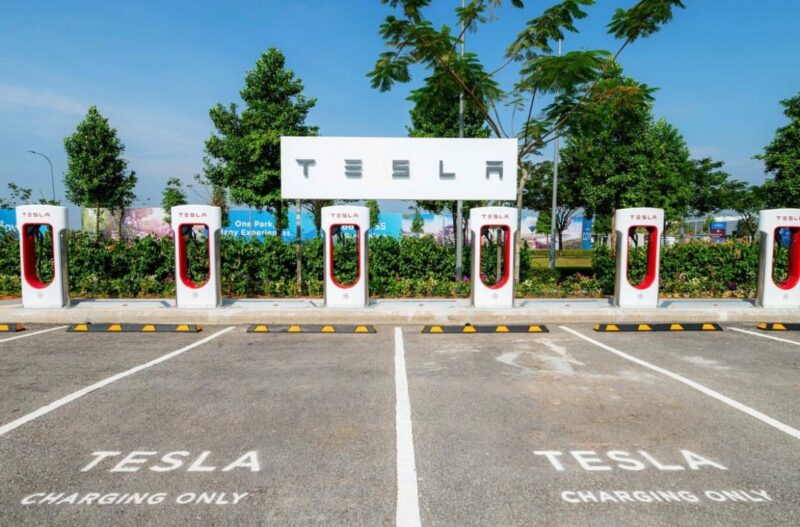
TESLA has opened and activated a Supercharger station in Kuantan, Pahang. Located on the premises of the Kuantan City Council (MBK), it is the first Tesla Supercharger on the east coast of Peninsular Malaysia.
According to Josh KY Chua, who shared some pictures on the Facebook’s Warga Kuantan page, the station can be used by the public 24 hours a day.
There are four charging bays at this location. Similar to other Supercharger stations throughout the country, the new station in Kuantan also has a charging rate of RM1.25 per kWh.
There is also an idle fee of RM4.00 per minute if the station is full.
Although Tesla has started rolling out Supercharger V4 networks in Malaysia, the MBK station, however, is equipped with Supercharger V3 technology.
The launch of this new Supercharger station aligns with the announcement made by Tesla’s Regional Director, Isabel Fan, in March, stating that the Kuantan Supercharger would be operational by the end of the second quarter of this year.
Other locations for the second quarter include the first Supercharger in Penang located in Prai.
Xpeng, the Chinese EV brand that will soon enter the Malaysian market, has introduced its first model under the MONA series, the M03.
MONA is a series that stands for ‘Made Of New AI’ and it will reportedly focus on new technology and intelligent driving.
According to CarNewsChina, the M03 was developed by Xpeng in cooperation with Chinese ride-hailing firm Didi. Xpeng is responsible for the supply chain and manufacturing, while Didi is tasked to come up with the design and sales operation.
In a previous interview, Xpeng’s chairman, He Xiaopeng, indicated that the M03 will be built on the Fuyao platform. This means it will also come with the Xpeng Navigation Guided Pilot (XNGP) system and the X-EEA 3.0 electrical architecture.
The battery will be supplied by BYD, with a promised range of over 500 km based on the CLTC cycle.
Like the P7, the M03 will be assembled at Xpeng’s factory in Guangdong. It is expected to be officially introduced in June and will enter the market in the third quarter of this year at a price below 200,000 yuan (RM130,385).
THE first-ever electric air taxi service in the world will begin testing for transporting pilgrims between the holy sites of Mina, Muzdalifah, and Arafah this year.
The launch was officiated by the Minister of Transport and Logistics and Chairman of the General Authority of Civil Aviation (GACA) Board of Directors Eng. Saleh Al-Jasser in Mecca.
The air taxi is a small commercial aircraft that operates short flights on demand. It is said to be the first of its kind in the world and is licensed by GACA.
The pilotless aircraft will be utilized during this year’s Hajj season, particularly for emergency services, as well as transporting goods and medical supplies to the pilgrims.
Meanwhile, the Ministry of Transport and Logistics is also working on enhancing smart mobility initiatives and developing laws and regulations to enable the use of modern technology while providing an experimental environment to advance the adoption of various future transportation technologies.
Previously, Saudi Arabian Airlines (Saudia) unveiled plans to operate flying taxis in the future to transport Hajj pilgrims between King Abdulaziz International Airport in Jeddah and hotels in Mecca.
Saudia also intends to acquire around 100 aircraft for this service.
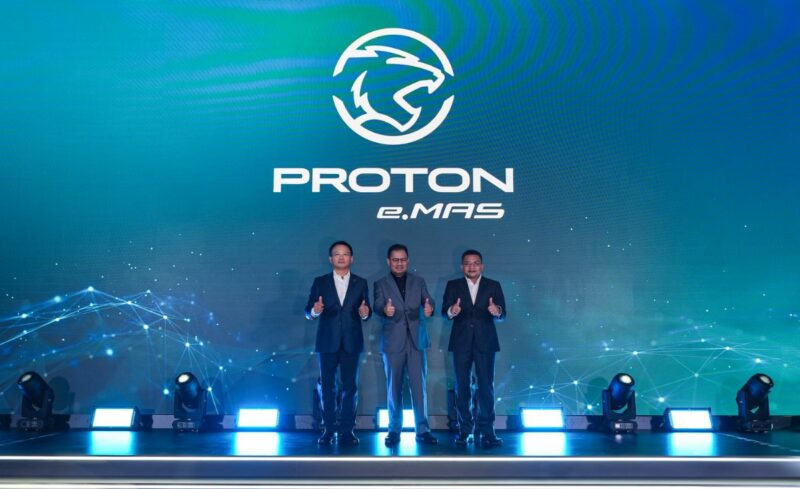
PROTON today introduced e.MAS as a sub-brand of their fully electric (EV) models. Before we proceed further, the pronunciation of e.MAS is “imas”, with the letter ‘e’ connected to the word ‘mas’. It stands for Electrifying Malaysia.
Proton also unveiled the e.MAS logo, featuring the display of a tiger’s head without confinement. According to Proton, it aligns with the current design trend for EV brands that lean towards cleaner and less complicated graphics.
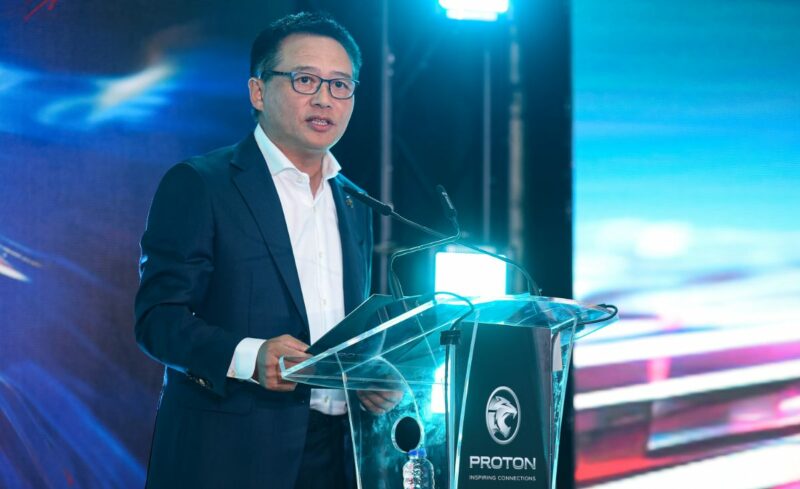
“The unveiling of the e.MAS brand and logo today marks a significant step forward in Proton’s journey towards launching our own EV model,” said Dr Li Chunrong, Chief Executive Officer, Proton.
“We are aware that as a company tied to the industrialisation of Malaysia, we have a responsibility to provide mobility solutions relevant and within reach of all Malaysians.
“This is why Proton has been deliberate in its approach towards EVs, developing our knowledge base step by step to ensure we have a thorough understanding of the products, technology and user concerns before sales even begin,” he added.
Also announced at this event is the appointment of the first 17 Proton EV dealers who have signed their agreements earlier today.
“As Malaysia’s first automotive brand it is important for Proton to invest in infrastructure to offer a full range of services to EV buyers, instead of just selling product.
“Therefore, when Proton e.MAS models go on sale, customers can be reassured their every need will be taken care of just like it would be for buyers of the current Proton range,” added Dr Li Chunrong.
Proton also shared with the media practitioners that when the cooperation with Geely began in 2017, plans were made to introduce Proton EV models.
Despite delays during the pandemic, activities resumed with the signing of a Memorandum of Agreement (MOA) between Proton and smart on January 19, 2022.
This was followed by the signing of the General Distribution Agreement (GDA) between the two parties on August 18, and the establishment of PRO-NET on September 9 to oversee sales and distribution of smart vehicles and future EV offerings from Proton.
The next step was to sign a Memorandum of Understanding (MOU) with Gentari in October to collaborate on establishing charging infrastructure.
This was followed by sending 16 engineers to China in December 2022 for On-Job Training (OJT) in EVs and related fields such as charging and servicing.
In 2023, Proton appointed dealers for smart and recruited staff from various industries to strengthen the workforce to manage the brand.
Commenting on the new EV brand, Dr. Li Chunrong added, “The e.MAS brand and its products are an extension of Proton’s three core values: innovative technology, reliability, and international standards. This is the next step in the company’s evolution, and in the coming months, we will make new announcements to build brand recognition and product promotion ahead of the launch of the first Proton e.MAS EV in December this year.”
ZEEKR, the luxury electric vehicle (EV) brand under the Geely Group, has reportedly signed a cooperation agreement with Sentinel Automotive Sdn. Bhd. for the distribution of its EVs in Malaysia.
According to CarNewsChina (CNC), the agreement was signed on June 8. Zeekr also signed a similar agreement with a company from Indonesia, PT Premium Auto Prima.
The automotive portal from China also reported that the brand will open its first store in Kuala Lumpur, with other stores in Selangor and Penang expected to commence construction later this year.
The first models to be introduced to Malaysia and Indonesia will be the X and 009. Previously, CNC reported that the first right-hand drive versions of the X have rolled off the the production line in China with overseas deliveries expected to begin in the third quarter of this year.
The X is a compact all-electric SUV built on the Sustainable Experience Architecture (SEA) platform, which also underpins other Zeekr models.
Based on technical data obtained from Zeekr’s website, the X measures 4,432 mm in length, 1,836 mm in width, 1,566 mm in height, and has a wheelbase of 2,750 mm.
It is available in RWD and AWD versions. The former features a single electric motor at the rear axle generating 272 hp and 343 Nm, enabling it to accelerate from 0 to 100 km/h in 5.6 seconds.
Meanwhile, the AWD version with a twin-motor setup delivers 428 hp and 543 Nm. It can accelerate from 0-100 km/h in 3.8 seconds and reach a maximum speed of 180 km/h, the same as the RWD model.
Both versions are equipped with a 69 kWh battery, providing a WLTP range of 440 km for the RWD and 400 km for the AWD.
On the other hand, the 009 is a luxury MPV measuring 5,209 mm in length, 2,024 mm in width and 1,848 mm in height. The people mover has a rather sizeable wheelbase of 3,205 mm.
The 009 is powered by two electric motors generating a total power of 544 PS, allowing it to accelerate from 0-100 km/h in just 4.5 seconds.
As for the battery, the 009 is said to be the first vehicle in the world equipped with a 140 kWh CATL battery, which promises a driving range of up to 822 km based on the CLTC cycle.
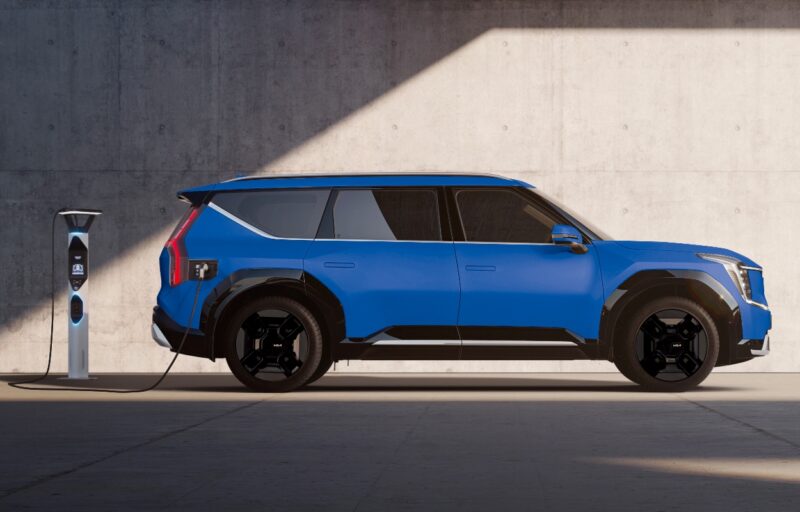
DINAMIKJAYA Motors has launched its latest battery electric vehicle (BEV), the Kia EV9. The model is now available for booking and test drives at any Kia showrooms nationwide.
Since its debut in March 2023, the EV9 has already garnered prestigious awards like the 2024 World Car of The Year and the Best of the Best Award in Cars and Motorcycle category by Red Dot Award: Product Design 2024.
For the Malaysian market, the EV9 is offered in the GT-Line AWD variant with a choice of six or seven seats. Save for the seating configuration, both versions have the same exact specifications.
Pricing (OTR without insurance) starts at RM374,668 for the six-seater variant and RM369,668 for the seven-seater variant. The EV9 is fully imported from South Korea.
In terms of performance, the EV9 is powered by two electric motors that combine to produce a total power of 380 hp and 700 Nm. This allows the electric SUV to accelerate up to 200 km/h.
As for the battery, the electric SUV employs a 99.8 kWh unit that offers a driving range of up to 505 km on a full charge.
The EV9 supports DC fast charging of up to 350 kW, allowing it to replenish the battery from 10 to 80% in 24 minutes. It is also equipped with an 11 kW AC charger, which takes approximately 10.5 hours for a full charge.
Similar to the EV6, the EV9 is built using the Electric Global Modular Platform (E-GMP). It has a rather large footprint, measuring 5,015 mm in length, 1,980 mm in width, 1,780 mm in height, with a wheelbase of 3,100 mm.
Its exterior design features the Digital Tiger Face, which includes the Digital Pattern Lighting Grille, vertical LED lights, and Star Map Lighting on the daytime running lights and taillights. Both variants come with 21-inch wheels.
There are five colours to choose from, namely Ocean Blue, Snow White Pearl, Pebble Grey, Aurora Black Pearl, and Iceberg Green.
Inside, you’ll find a dual screen setup, each measuring 12.3 inches, and a five-inch segment display that enables control of the vehicle’s functionality while ensuring physical buttons are kept to a minimum.
Look closely and you’ll find that the EV9 lacks conventional side mirrors. Instead, the SUV is fitted with exterior cameras that provide live feeds through two small screens located on the left and right door panels.
Other niceties include Apple CarPlay, Android Auto, wireless charging, USB-C charging ports in the front, middle, and rear, ambient lighting, and a Meridian audio system with 14 speakers.
With the flexible Integrated Charging Control Unit (ICCU) charging system, the EV9 also has a Vehicle-to-Load (V2L) function that can supply power up to 3.6 kWh to charge various electronic devices.
In terms of safety and driver assistance, the EV9 is equipped with the following features:
High Beam Assist (HBA)
Parking Collision-Avoidance Assist (PCA)
Blind-Spot Collision-Avoidance Assist (BCA)
Rear Cross-Traffic Collision Assist (RCCA)
Blind-Spot View Monitor (BVM)
Lane Keeping Assist (LKA)
Driver Attention Warning (DAW)
Forward Collision-Avoidance Assist (FCA2)
Lane Following Assist (LFA2)
Smart Cruise Control (SCC)
Dinamikjaya Motors offers a manufacturer’s warranty for five years/150,000 km and a battery warranty for eight years/160,000 km.
Announced officially last year, the Lotus Emeya is a powerful electric hyper-GT intended to challenge fast electric sedans such as the Tesla Model S, Porsche Taycan, and Audi e-Tron GT.
With twin electric motors producing 905 hp/984 Nm, the Emeya is capable of accelerating from 0-100 km/h in just 2.8 seconds.
Did you know that not only is the Emeya swift in acceleration, but this hyper-GT is also capable of offering the fastest DC charging rate?
Based on tests conducted by the global consulting firm P3 Group, the Lotus Emeya set a record for the fastest 10-80 percent battery charging time, achieving it in just 14 minutes when using a 400 kW DC charger.
This is an impressive feat, as the Lotus Emeya managed to outperform leading EV models such as the Mercedes-Benz EQS, BMW i7, Tesla Model Y, Genesis G80, Xpeng G9, Kia EV9, Hyundai Ioniq 6, Nio ET5, and BYD Atto 3.
The P3 Group report also found that the Emeya is capable of reaching a peak charging power of 402 kW, with an average charging power of around 331 kW during the 10-80 percent charging period.
Coupled with an energy consumption rate of 18.7 kWh/100 km, the Lotus Emeya can offer a range of 310 km after just a 10-minute charging session—a time frame nearly equivalent to refueling a gasoline-powered car at a petrol station.
According to Lotus, the Emeya utilizes a cell-to-back battery structure, containing 20 percent more cell content that can be packed into the same space compared to a standard module design.
As standard, the 102 kWh battery pack provided with the Emeya allows the sedan to travel up to 600 km on a single full charge.
Similar to the Eletre, the Lotus Emeya also features an active aerodynamic system to reduce drag and at the same time acts as a cooling system for the battery and brakes.
IT is safe to say that the transition towards full electric (EV) is not progressing as some manufacturers expected. Several manufacturers have delayed their electrification goals.
Just last year, Volkswagen projected that EVs would account for up to 80 percent of vehicle sales in Europe by the end of this decade. However, the lukewarm reception of their ID models has led VW to reassess their strategy.
Of the 180 billion Euros (RM914 billion) budget allocated in 2023 for new-generation EVs, the German manufacturer will now use one-third of it for the development of combustion engines.
This announcement came from Arn Antlitz, Chief Financial Officer and Chief Operating Officer at Volkswagen Group. “The company aims to spend approximately 60 billion Euros (RM304 billion) to ensure our combustion cars remain competitive.”
He added, “The future is electric, but the past has not yet ended.”
Last year, VW CEO Thomas Schäfer referred to ICE as “old technology” in the context of e-fuel. He stated that synthetic fuels were just “unnecessary noise,” even though Porsche, also part of the same group, is actively involved in synthetic fuels at its plant in Chile.
Another premium brand under VW is also researching how sustainable fuels can evolve. Bugatti plans to build fuel stations that can be installed at owners’ homes and filled with synthetic fuels.
Lamborghini believes combustion engines can be saved by making them run on fuels other than fossil oil. Bentley is also exploring fuels with almost zero carbon emissions.
It is clear that more car manufacturers are reassessing their EV strategies as consumers are not yet ready to let go of ICE engines.
Manufacturers are somewhat aggressive as emission standards become stricter, necessitating investment in cleaner-running petrol engines. At the same time, the influx of EVs from China is also concerning major manufacturers.
CHINA has reportedly granted permission to nine vehicle manufacturers to test Level 3 autonomous driving systems on public roads.
This move comes about eight months after the Chinese government issued guidelines and began accepting applications from companies interested in testing their autonomous driving technology.
The Ministry of Industry and Information Technology of China has confirmed that approvals have been granted to Nio, BYD, Changan Auto, GAC, SAIC, BAIC BluePark, China FAW Group, SAIC Hongyan, and Yutong Bus.
These companies will be allowed to test autonomous vehicles on limited roads, with drivers permitted to release their hands from the steering wheel.
Level 3 semi-autonomous vehicles are not yet being sold in the Chinese market, but this testing will pave the way for such systems to be launched for individual buyers and fleet operators.
According to Reuters, at least 10 car manufacturers in China are offering vehicles with Level 2 autonomous driving systems, including Huawei and Xpeng.
The testing program will be supervised by the Ministry of Industry and Information Technology of China, the Ministry of Transport, the Ministry of Housing and Urban-Rural Development, and the Ministry of Public Security.
The new legislation also allows Tesla to start offering its semi-autonomous driving system in the country.
Previously, Elon Musk hinted that the brand might launch a robotaxi equipped with Full Self-Driving technology before introducing it to privately-owned cars. Chinese representatives were reportedly open to this idea.
However, before this can happen, Tesla needs approval to collect and transfer the necessary data for its autonomous system.
The Model 3 and Model Y are now permitted to enter specific areas in China after previously being restricted due to data safety concerns. This permission was granted after a leading Chinese automotive association confirmed that Tesla complies with data safety regulations.
PERODUA is currently evaluating the construction of a new plant by 2025 to support the production of the new generation Myvi, as reported by Wapcar.
As you might have known, the new generation Myvi will also feature a fully electric (EV) variant.
At present, Perodua operates two plants located in Rawang. The first plant, Perodua Manufacturing Sdn Bhd (PMSB), currently produces Alza, Aruz, and Myvi, along with the Toyota Veloz under contract.
The second plant, Perodua Global Manufacturing Sdn Bhd (PGMSB), currently manufactures Axia, Bezza, and Ativa. The third plant is referred to as the ‘BEV plant’ for electric battery vehicles.
At the same time, Perodua is exploring other options. An alternate plan is to collaborate with other manufacturers on a contract basis.
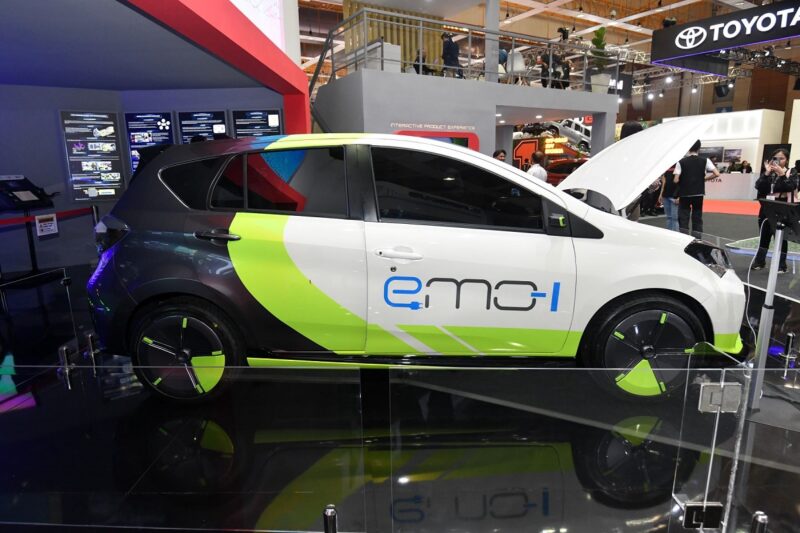
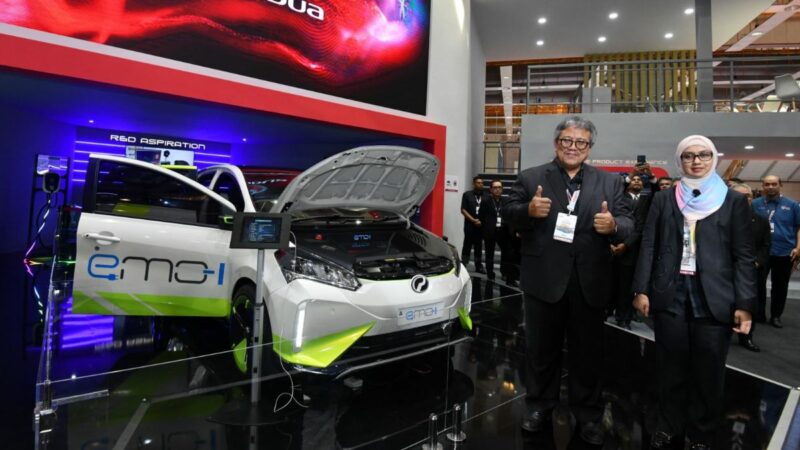
Speaking during the public unveiling of the Perodua EMO-1 concept last week, its President and CEO, Dato’ Sri Zainal Abidin Ahmad, said, “I cannot disrupt the current plants. They are operating at over 300,000 units (per year).”
“As I mentioned earlier, our target is to produce around 340,000 to 350,000 units. This already exceeds our normal capacity.
“So, I cannot disrupt the current plants. This EV (battery) is something we have to consider to build a new plant, or seek a partner, who has the capability in Malaysia to enable us to carry out the installations,” he added.
The new generation Perodua BEV is being developed independently, without technical assistance from Daihatsu.
Starting from scratch, this project is being carried out in collaboration with three local universities and electric vehicle conversion experts from Australia, namely EV North.
Led by chief engineer, Puan Jehan Adnan, this project utilizes a prototype with support from 60 local vendors, ensuring that Malaysia has a supply chain for domestic EV production.
Based on the Myvi, this prototype is equipped with a 55.7kWh battery pack giving it a driving range of up to 350km.
It features a single electric motor at the front wheel with an output of 161hp and 220Nm of torque.
It is understood that the first Perodua EV model is planned to be launched by the end of 2025 with a price not exceeding RM100,000.
Toyota is currently testing the battery-electric Hilux BEV to assess its performance as it prepares to commence the production of the truck in Thailand by the end of 2025.
According to Reuters, Thailand is a critical market for Toyota, with pickup trucksmaking up more than half of total vehicle sales. The company also has a large manufacturing plant in the country.
“Our intention is to be producing the Hilux BEV over here,” Pras Ganesh, executive vice president of Toyota Motor Asia told Reuters.
Ganesh did not provide any details on pricing or production volume for the Hilux BEV, which would be Toyota’s first electric pickup truck offering.
He added that the pickup truck will be primarily targeted at the Thai domestic market but Toyota will also consider exporting the model.
The Japanese automaker is testing the Hilux BEV for various use cases in different road and temperature conditions.
“The more range I have to put on it, the more battery I have to put on it, which means the weight of the vehicle also becomes significantly heavier, which means the loading can be much less,” Ganesh said.
“So ‘Is it going to meet the customer’s usage needs?’ is always our biggest issue. We are always trying to understand what they do,” he added.
Meanwhile, Toyota’s closest rival Isuzu Motors also plans to assemble its electric D-Max pickup truck in Thailand.
KIA continues to expand their lineup of electric vehicles (EVs) with the introduction of the EV3, a compact SUV. This model joins the existing lineup, including the EV5, EV6, and EV9.
The Kia EV3 is built on the E-GMP (Electric-Global Modular Platform) but does not feature the 800-volt architecture found in the EV6 and EV9. Instead, it comes with a 400-volt architecture similar to the EV5, enabling DC charging from 10 to 80 percent in 31 minutes.
With a full charge, it can be driven up to 600km based on WLTP cycle. This range applies to the Long Range model, while the Standard Range variant offers a slightly shorter distance.
Power is supplied by nickel manganese cobalt (NMC) batteries, known for offering better power and longer lifespan.
Both variants are equipped with the same electric motor, mounted on the front axle. This motor has an output of 201hp and 283Nm of torque, allowing the EV3 to accelerate to 100km/h in 7.5 seconds. The maximum speed is limited to 170km/h.
The Kia EV3 is equipped with eDTVC (Electric Dynamic Torque Vectoring Control) for optimal grip, as well as a new feature called i-Pedal 3.0, which functions as regenerative braking.
The EV3 offers a cargo space of 460 liters, and since it has no engine, it also has an additional 25 liters of space under the front hood.
In terms of appearance, the Kia EV3 features the ‘Tiger Face Star Map’, a result of the design of the DRL (Daytime Running Lights) and main headlights. The grille also comes in two different bumper design options, depending on the variant.
Despite its boxy and angular shape, the Kia EV3 maintains aerodynamics, with a drag coefficient as low as 0.263.
The cabin design showcases a minimalist concept. There is a single horizontal air vent, dividing the dashboard into two sections. Several physical buttons are located on the center console.
The screen on the dashboard is quite large, consisting of a 12.3-inch instrument display, a 12.3-inch infotainment display, and a 5-inch air conditioning panel.
Some parts of the cabin are made from recycled materials, with the option of Air, Earth, or Water trim.
Other features include the Harman Kardon audio system, AI assistance, Automotive Content Platform, and ADAS (Advanced Driver Assistance Systems).
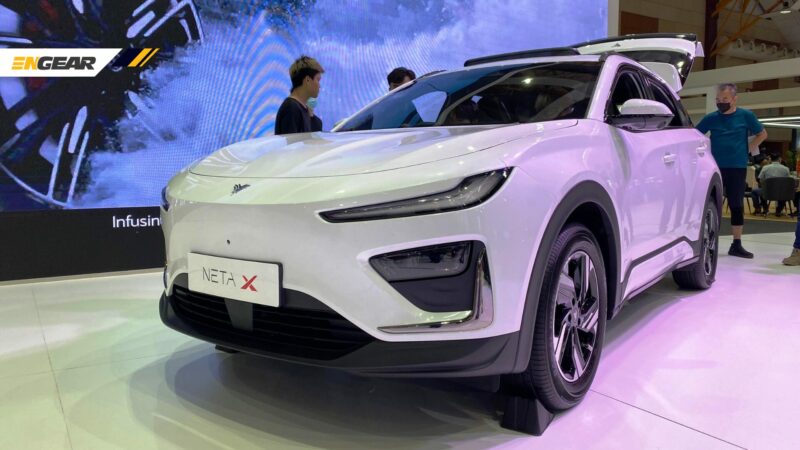
NETA, distributed by Intro Synergy Sdn Bhd, a subsidiary of GoAuto Group, has introduced their second EV for the Malaysian market, namely the Neta X.
According to the company, the Neta X will be officially launched in the second quarter of this year. There are three variants to choose from, namely 400 Comfort, 400 Luxury, and 500 Luxury, with estimated prices ranging from RM119,900 to RM139,900.
All three variants feature an electric motor on the front axle generating 161 hp (120 kW) and 210 Nm. Neta Malaysia claims that this model can accelerate from 0 to 100 km/h in under 9.5 seconds, with a maximum speed exceeding 150 km/h.
Regarding the batteries, the 400 variants use a 52.49 kWh battery offering a range of up to 401 km based on the NEDC cycle. The 500 Luxury variant is equipped with a 64.14 kWh battery providing a range of up to 480 km on a full charge.
The Neta X comes with an onboard 6.6-kW AC charger capable of charging from 0 to 100% in nine hours. It also has DC fast charging that takes 30 minutes for a 30-80% charge but the capacity is not specified.
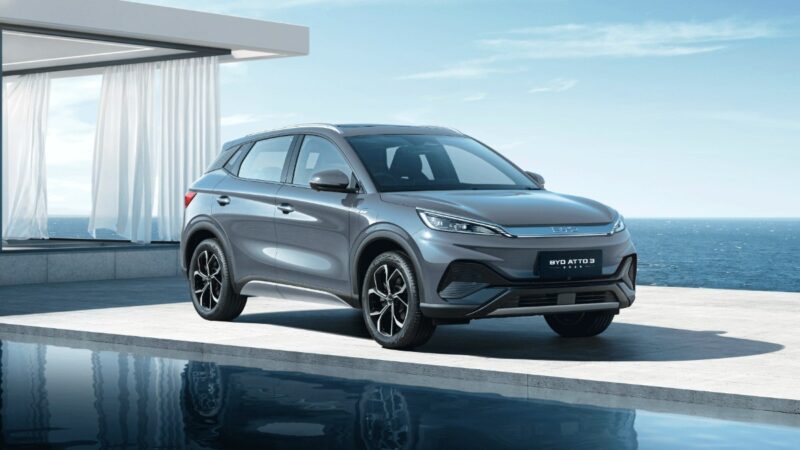
Size-wise, the Neta X is larger than its two closest competitors, the BYD Atto 3 and Chery Omoda 5, measuring 4,619 mm in length, 1,860 mm in width, 1,628 mm in height, with a 2,770 mm wheelbase.
Other niceties include an 8.9-inch digital instrument cluster and a 15.6-inch HD display powered by Qualcomm Snapdragon 8155. It also has Apple CarPlay and wireless charging.
Additionally, the 400 and 500 Luxury variants are equipped with Level 2 ADAS, encompassing Forward Collision Warning (FCW), Autonomous Emergency Braking (AEB), Adaptive Cruise Control (ACC), Traffic Jam Assist (TJA), and Intelligent Cruise Assistance (ICA), to name a few.
With the abundance of affordable electric vehicles (EV) from China, European manufacturers are beginning to feel worried.
Renault took the initiative to collaborate with Volkswagen in this competition, but it seems unsuccessful. The jointly developed low-cost EV will not be continued.
Renault’s CEO, Luca de Meo, stated that the discussions between the two parties have ended. He described the project as a “lost opportunity,” but mentioned that Renault is still open to cooperation with other manufacturers: “Maybe there are others.”
VW declined to comment, but it is confirmed that the two automotive giants will not continue their collaboration. Meanwhile, Renault will continue to produce the new generation Twingo, expected to arrive in 2026.
The current generation Twingo is still available, with options for traditional engines and EV. The upcoming new generation model will only be offered as an EV, with an expected price of less than €20,000 (RM101,965). On VW’s front, their plans after concluding discussions with Renault are still unclear.
Currently, the German manufacturer has the compact EV ID.3. The successor to the e-up! is also in development, expected to arrive in 2027, possibly named ID.1.
MERCEDES-BENZ Malaysia (MBM) has expanded its EQE lineup with the launch of three new variants, namely the EQE 350+ Electric Art Line, EQE 350+ SUV Electric Art Line, and EQE 350+ SUV AMG Line.
Additionally, the EQE 350+ AMG Line, which was first launched here back in December 2022, has been given fresh updates.
EQE 350+ Electric Art Line & AMG Line
Coming in as the entry-level offering, the EQE 350+ Electric Art Line features the Electric Art Line exterior package, 19-inch twin-spoke alloy wheels, and Digital Light with Adaptive Highbeam Assist Plus.
The interior is complemented by Artico man-made leather upholstery in black and sapce grey, along with the Advanced Sound System, laser-cut backlit trim with Mercedes-Benz pattern on the dashboard, active ambient lighting, Keyless-Go, and Parking Package with 360° camera.
Similar to the EQE 350+ AMG Line, it is equipped with a single electric motor that drives the rear wheels, producing 292 hp and 565 Nm of torque. It can accelerate from 0 to 100 km/h in 6.4 seconds, with a maximum speed of 210 km/h.
The battery capacity is also identical at 90.56 kWh, providing a range of 665 to 682 km based on WLTP cycle. The model comes with a 22 kW AC charger, requiring 4 hours and 45 minutes for a full charge, and DC fast charging up to 170 kW that takes only 32 minutes to charge from 10% to 80%.
Meanwhile, the EQE 350+ AMG Line now gets a panoramic sunroof, radiator grille with Mercedes-Benz pattern, rear axle steering with up to 10° steering angle adjustment, Airmatic air suspension, an electric charging socket flap, and 22 kW AC onboard charging.
Pricing starts at RM379,888 for the Electric Art Line variant and RM429,888 for the AMG Line.
EQE 350+ SUV Electric Art Line & AMG Line
Launched five months after the EQE 500 SUV, both variants of the EQE 350+ SUV are powered by a single electric motor positioned at the rear axle, delivering 292 hp and 565 Nm of torque.
Performance-wise, it can accelerate from 0 to 100 km/h in 6.7 seconds and reach a maximum speed of 210 km/h. That’s just 0.3 seconds slower than its sedan stablemate.
With a battery capacity of 90.56 kWh, the EQE 350+ SUV offers a range of 485 to 596 km based on the WLTP cycle. Its energy consumption ranges from about 21.6 to 17.5 kWh per 100 km.
The charging time is similar to the sedan version, taking 4 hours and 45 minutes for a full charge using a 22 kW AC charger and 32 minutes for 10-80% charge using a 170 kW DC fast charger.
The differences between the two variants lie in their features. The Electric Art Line variant boasts the Electric Art package for the exterior and interior, 20-inch five-spoke alloy wheels, Neotex/Artico leather upholstery, laser-cut backlit trim with Mercedes-Benz pattern, comfort suspension, Advanced Sound System.
It is also fitted with Digital Light, Adaptive High Beam Assist Plus, Driving Assistance Package Plus, Parking Package with 360-degree camera and AR navigation.
On the other hand, the AMG Line variant shares the same features as the EQE 500 SUV, including a panoramic sunroof, Airmatic air suspension system, rear-axle steering control, Burmester 3D audio system, and sports seats. New to the EQE 350+ SUV AMG Line is the 20-inch AMG five-twin-spoke light-alloy wheels.
Pricing starts at RM398,888 for the Electric Art Line variant and RM448,888 for the AMG Line.
VOLVO Buses, a part of the Volvo Group, together with Gemilang International Ltd, has launched a fully electric bus (EV).
The all-new Volvo BZL-GML Eco Range is a premium low-floor urban electric bus with two doors, the first of its kind assembled in the country (CKD) by Volvo.
The manufacturer has also collaborated with Rapid Bus Sdn Bhd for the trial operation of the Volvo BZL-GML Eco Range.
The trial is set to commence in July 2024 and is expected to last for a minimum of six months to a year.
A Volvo electric bus will operate on Route 581, covering the journey from Desa Tasik to LRT Bandar Tasik Selatan.
The chassis and powertrain components with efficient energy from Volvo BZL have been engineered and built to the highest standards at Volvo’s manufacturing plant in Sweden.
This bus can accommodate up to 91 passengers with a capacity of 33 seats, including safety seats, seats for specific groups, foldable seats, and standing passenger space.
It features a completely flat and low floor design from the front to the back, providing stability and easier access for passengers.
An electric powertrain system with a power output of 540hp and immediate torque.
The EV bus is also equipped with various advanced braking technologies, including Volvo disc brakes, Electronic Brake System (EBS), Anti-lock Braking System (ABS), Acceleration Slip Regulator (ASR), Brake Blending, Hill Assist System (HAS), and Electronic Stability Control (ESC).
Additionally, other safety features such as warning alerts, collision warnings, 360 cameras, and e-mirrors to assist the driver will be offered as options.
In the event of an unlikely breakdown, the battery cells and surrounding area are designed to ‘self-extinguish’ by automatically releasing temperature extinguishing agents to prevent nearby battery cells from damage. This feature has been proven effective through repeated testing.
The Volvo BZL-GML Eco Range electric bus offers flexible charging through the OppCharge interface hardware for automatic high-power charging and CCS charging sockets.
The energy storage is placed on the roof, providing more spacious passenger areas and optimizing weight distribution.
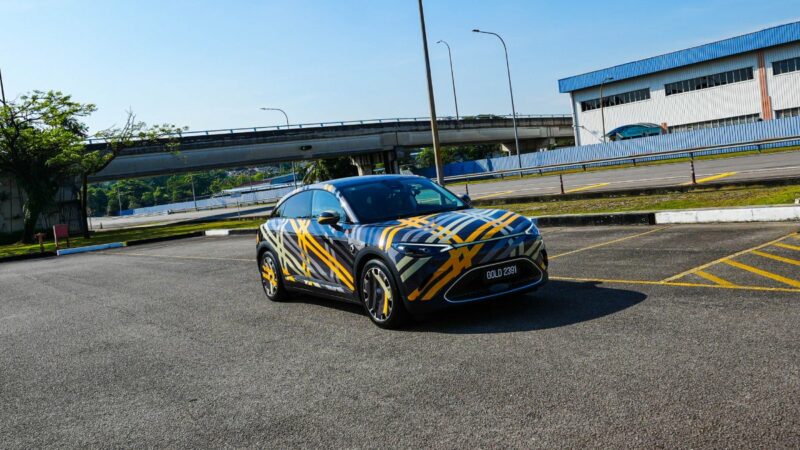
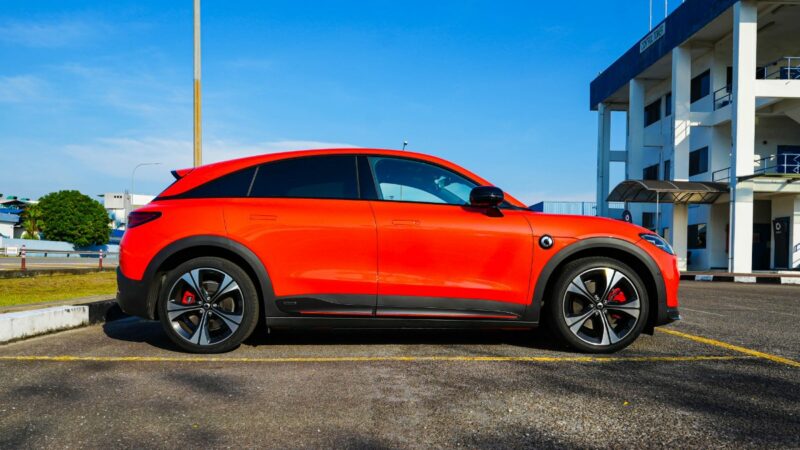
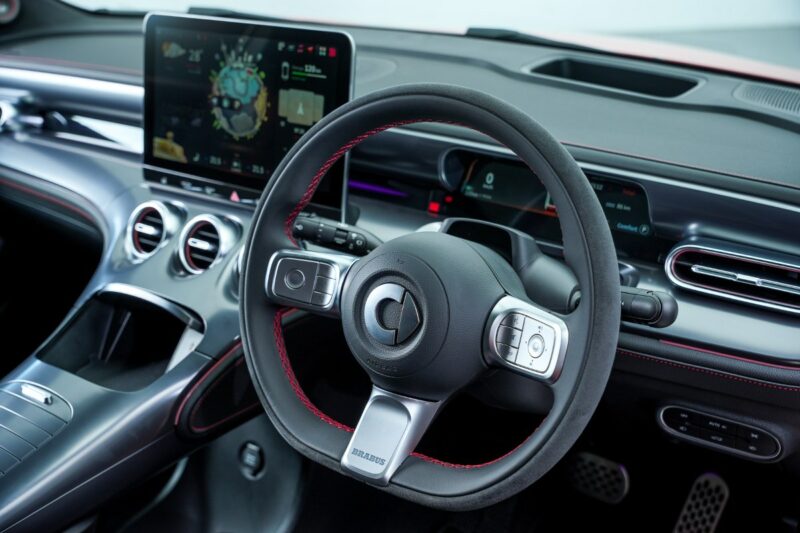
As reported earlier, the smart Malaysia has now showcased the #3 for the first time to the public. The unveiling took place at the Malaysia Autoshow 2024 at MAEPS, Serdang, marking the electric SUV’s debut in Southeast Asia.
The price has not been revealed, but smart Malaysia has announced that reservations for the smart #3 are now open.
Three variants are being offered: BRABUS, Premium, and Pro. The Pro variant comes with a 49kWh capacity battery, while the Premium and Brabus variants have a 66kWh battery.
The Pro and Premium variants are equipped with a single rear electric motor, delivering an output of 272hp and 343Nm torque, accelerating from 0 to 100 in 5.8 seconds.
The smart #3 Brabus, on the other hand, is equipped with two motors on the front and rear axles, with a total power of 428hp and 543Nm torque. The #3 Brabus, being an AWD vehicle, accelerates from 0 to 100 much faster, in approximately 3.7 seconds.
The maximum speed for all variants is 180km/h. The driving range is approximately 455km for the Pro and Premium, and 415km for the Brabus.
Both the BRABUS and Premium variants offer the best-in-segment 22kWh AC chargers, capable of charging the battery from 10 to 80 percent in less than 3 hours.
The smart #3 has been enhanced with the latest safety technology, featuring 23 high-precision sensors supporting 21 ADAS functions to ensure driver safety on the road.
Standard features of the smart #3 include the Panoramic Halo Roof, CyberSparksLED+ with adaptive lighting, and illuminated front grille.
Customers can book the smart #3 through their nearest authorized smart dealer or via the Hello smart Application. Customers who place early reservations have the opportunity to receive exclusive official smart merchandise worth up to RM1,500.
This limited offer is reserved for the first 333 customers, with a refundable booking fee of RM1,000.
smart #1 Pricing Update
Additionally, smart Malaysia announced the revised prices for the smart #1:
smart #3 Premium – RM209,000
smart #1 Pro – RM169,000
smart Malaysia is also offering a complimentary 4-year vehicle service package to existing owners of the smart #1 Premium and Pro models.
PERODUA has unveiled its first electric vehicle (EV) prototype – known as the Myvi Conversion – which will serve as the foundation for the compact car manufacturer in developing its electric technology.
As the name suggests, the prototype is based on the Myvi but equipped with a 55.7kWh battery pack, providing a driving range of up to 350km. It features a single electric motor at the front wheel, delivering an output of 161hp and 220Nm of torque.
The EV prototype consists of three main components: the power bench, the power converter system, and the overall frame design, all made in Malaysia.
Meanwhile, the development of the power conversion technology is carried out in collaboration with a company based in Australia. Perodua is also cooperating with three local universities for this project.
“The process of developing the power bench is carried out by Perodua in collaboration with three local universities, namely Universiti Tenaga Nasional, Universiti Kuala Lumpur, and Universiti Putra Malaysia,” said Perodua’s President and Chief Executive Officer, Dato’ Sri Zainal Abidin Ahmad.
“This collaboration aims to fully understand the technology used.”
This collaboration, which began in September 2022, sees Perodua and the three universities working together to develop the EV power converter system from the basic stage.
The collaboration opens up opportunities for all parties to enhance their expertise and capabilities in the field of EV.
It is understood that Perodua’s first EV model is planned to be launched at the end of 2025 with a price not exceeding RM100,000.
“We chose the Perodua Myvi as the model of choice for this project because it is our car model that has won the hearts of most Malaysians,” said Zainal.
“Although the actual appearance of our EV is different from what is being showcased here, rest assured that Perodua’s electric car will make its presence in the market.
“Meanwhile, we invite the public to visit the Perodua booth at the Malaysia Auto Show 2024 to see the Perodua Myvi Conversion for themselves and participate in various attractive campaigns that we have prepared.
“We also welcome customers to interact with our staff here to obtain further information about Perodua, such as our newly implemented Standard Outlet aimed at providing a seamless experience to customers at our 3S center,” said Dato’ Sri Zainal.
SHANGHAI-BASED electric vehicle manufacturer Nio, recently launched a new smart EV sub-brand known as Onvo.
According to the automaker, Onvo is short for “On Voyage”, and its first product to enter the market will be the L60, an electric SUV designed compete with the Tesla Model Y.
The L60 is available for pre-order in China with prices starting at RMB219,900 (RM142,670), with deliveries expected to commence in the third quarter of this year.
In comparison, the Model Y in Malaysia starts from RM191,000 for the Rear-Wheel Drive variant and goes up to RM280,000 for the Performance variant.
According to Onvo, the L60 is built using a 900V high-voltage architecture, claimed to be more energy efficient, boasting CLTC energy efficiency of 92.3% and the world’s lowest drag coefficient of 0.229 for a production SUV.
As a result, the company claims that the electric SUV can achieve energy consumption as low as 12.1 kW.h per 100 km.
In its Standard Range configuration, the L60 can travel up to 555 km on a single charge, while the Long Range configuration offers a range of up to 730 km. With the Ultra Long Range battery, it can provide a driving range of over 1,000 km.
Furthermore, the L60 features battery swapping technology with Nio, allowing drivers to replace their EV batteries in just three minutes at over 1,000 battery swapping stations across China.
Additionally, customers have the option to purchase the L60 without a battery. It is sold at a lower price of RMB170,000 (RM110,558), but they are are required to pay a monthly subscription for the battery under the Battery as a Service (BaaS) program.
After the initial launch in China, Onvo reportedly plans to market the L60 globally, including in Europe, towards the end of this year.
Malaysia’s Leading Automotive News | ENGEAR ENGLISH