Tag Archives: China

ZXMoto to enter Malaysia, Mforce appointed as exclusive distributor

Mforce Bike Holdings has been appointed as the exclusive distributor for the new motorcycle brand ZXMoto in the Malaysian market.

This strategic partnership began in October 2025 following a visit from ZXMoto founder Zhang Xue to the Mforce factory in Penang.

The visit served as an important platform for both parties to exchange views and explore collaboration potential in the region.

As a result of constructive discussions, both parties reached an agreement to establish cooperation, marking a significant step in the local motorcycle industry.

Mforce has received three models of ZXMoto motorcycles to undergo durability tests in Malaysia.

This testing is aimed at ensuring that each model meets performance, durability, and suitability standards for local road conditions and climate before their official introduction.

Official Launch at 2026 Malaysia Bike Show

Asri Ahmad, Chief Operating Officer of Mforce, revealed that the brand will be officially introduced on May 29, 2026, during the Malaysia Bike Show 2026.

He further stated that all ZXMoto enthusiasts will have the opportunity to witness the latest motorcycle lineup, including high-performance models.

Visitors will also be able to see the racing machine, which has secured two wins in the WorldSSP class at the Portugal Superbike World Championship (WSBK).

The founder of ZXMoto is also scheduled to attend to enhance the event’s atmosphere.

Which Models Will Arrive in Malaysia?

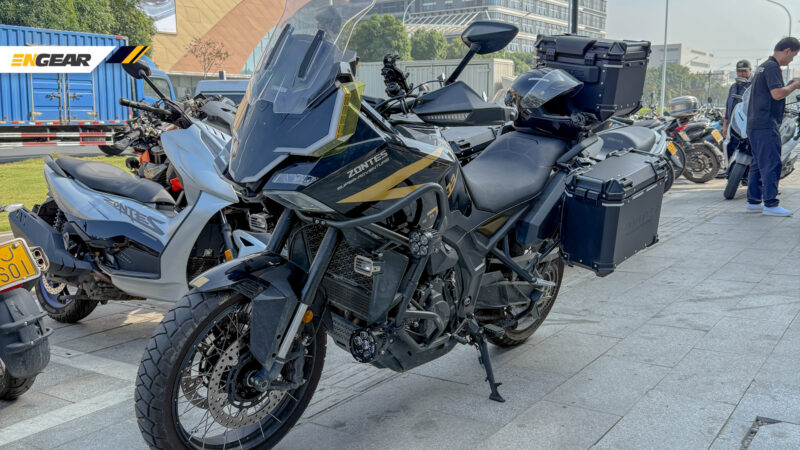
ZXMoto made its debut at 2025 EICMA, showcasing an impressive lineup of motorcycles including:

  • 820RR – a sports bike with a 3-cylinder 819 cc engine producing 135 hp
  • 820RR-R – a more powerful version with 145 hp
  • 820R – a streetfighter with an 819 cc engine, capable of 130 hp
  • 820 ADV – an adventure bike with an 819 cc engine, delivering 117 hp
  • 500RR – a sports bike with a 4-cylinder 470 cc engine producing 84 hp
  • 450 Rally – an off-road bike inspired by the Dakar Rally, with a 450 cc engine producing 59 hp
  • 600 V – a cruiser with a 578 cc V-twin engine

Additional models include MX250 and MX450 motocross, as well as ZX300 and ZX350 enduro bikes.

Among the models listed, which one will make its way to Malaysia soon?

China to ban yoke steering wheels, mandate physical buttons starting in 2027

The Ministry of Industry and Information Technology (MIIT) of China is reported to implement two new automotive safety standards starting next year (2027).

This implementation is expected to have a significant impact on the design of modern vehicles, particularly electric vehicle (EV) models that feature minimalist cockpits and yoke steering wheels.


No More F1-Style Steering Wheels

The latest national safety standard GB 11557-202X which has been published, will come into effect on January 1, 2027.

This change is necessitated by the current standard (GB 1157-2011), which has been in use since 2011 and is no longer relevant to the latest technology.

The most critical change is the removal of exemptions for human impact testing, meaning all vehicle models must pass this test.

The new standard will also require testing at ten specific points on the steering wheel rim, including the weakest parts and areas without support.

Thus, it will be nearly impossible for any yoke-style steering wheel, which lacks a top portion, to meet the new standards.

From a safety perspective, data shows that 46% of driver injuries stem from steering mechanisms.

The traditional round design provides a larger impact absorption area, whereas yoke steering wheels increase the risk of secondary injury.

Many drivers have also reported difficulties in making U-turns and parking when using yoke steering wheels.


Mandatory Physical Buttons

In related developments, China has also finalized amendments to the GB 4094-2016 standard, which will require physical buttons for basic vehicle functions starting July 1, 2027.

This measure aims to reduce the reliance on infotainment screens that are increasingly dominating the designs of modern EV cockpits.

Functions that will require physical controls include:

  • Turn signal lights
  • Hazard lights
  • Horn
  • Gear shifting (PRND) (prohibition of gear shifting through the screen)
  • Activation button for Advanced Driver-Assistance Systems (ADAS)
  • Windshield wipers, defroster/defogger, power windows
  • Emergency call system, EV power switch

Additional requirements will also be set, such as:

  • Minimum button size of 10 mm x 10 mm
  • Fixed position
  • Operable without looking
  • Must function even if the vehicle’s system fails

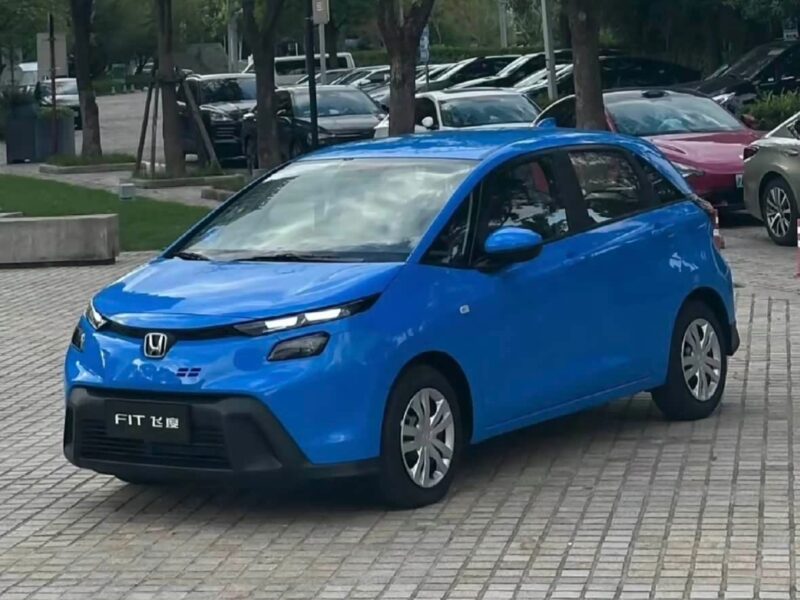
2026 Honda Fit facelift spied with a new front look in China

Do you still miss the Honda Jazz, which is no longer offered here?

For your information, the fourth generation of the Honda Fit (or Jazz) has been available in the European and Japanese markets since 2020.

It features a cuter design, yet with smaller dimensions compared to the City Hatchback.

Following the introduction of the facelift version in 2022, the Honda Fit is expected to receive its second facelift update for the 2026 model year.

Based on images from the Autohome website, the facelifted Fit now showcases a front end reminiscent of models produced by Vinfast.

In addition to the separated headlight units, it also features a thinner grille structure and relatively small air intake openings.

At the rear, the lamp design remains largely unchanged, except for the bumper which now includes additional structures resembling a diffuser, contributing to an elongated appearance for the Fit.

Autohome also reports that the facelifted Fit will come equipped with a larger infotainment screen, complete with support for Apple CarPlay, Huawei HiCar, and Carlife.

The 2026 facelifted Honda Fit is expected to retain its 1.5-liter DOHC i-VTEC engine, producing 124 PS and 145 Nm of torque, paired with a CVT transmission.

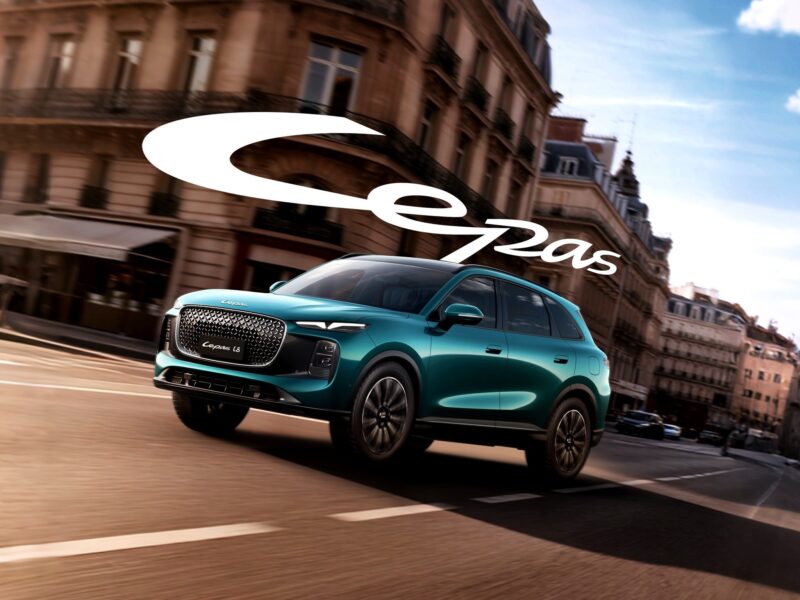
Lepas set to enter the Malaysian market next year

Another sub-brand of Chery, Lepas, will officially be introduced to the Malaysian market in the first half of 2026.

This was announced by Chery Corporate Malaysia during the recently held Chery International User Summit 2025 at Chery’s headquarters in Wuhu, China.

The introduction of this new brand is part of a multi-brand strategy designed to cater to the full spectrum of consumers in Malaysia.

For your information, Lepas is a combination of the words “Leap” and “Passion.”

The new premium sub-brand was officially announced during the Auto Shanghai 2025 exhibition held last April as a global brand featuring unique designs.

In addition to Lepas, several other Chery sub-brands are already established in Malaysia, such as Omoda, Jaecoo, and iCaur, as well as the Jetour brand, which is managed by a different entity.

This Corolla Cross twin features unique front design in the Chinese market

Introduced in 2020, the Toyota Corolla Cross has become a widely popular name worldwide.

However, it is important to note that the Corolla Cross has a twin model in the Chinese market known by a different name: the Toyota Frontlander.

Unlike the Corolla Cross, which is produced through the FAW Toyota partnership, the Frontlander is the result of collaboration with GAC Toyota.

Unique to that market, GAC Toyota has made different changes compared to the model offered by FAW Toyota, which more closely resembles the global market version.

These changes include a more streamlined front end inspired by EV models, followed by redesigned rear light graphics.

Significant alterations are evident in the cabin space, where the Frontlander now features a more premium dashboard design.

No longer will there be clusters of physical climate control buttons; instead, these functions have been integrated into a 12.9-inch central screen.

The air conditioning vents are also smaller, alongside the addition of ambient lighting, an 8.8-inch digital cluster screen, and a higher-positioned smartphone charging slot in the center console.

Finally, the Frontlander also benefits from an upgrade to the advanced Toyota Safety Sense safety system.

Similar to the previous model, the Frontlander is available in a 2.0L NA petrol version producing 169 hp that drives the front wheels, as well as a hybrid 2.0L version with 111 hp paired with E-CVT transmission.

The selling price starts at RMB 132,800 (~RM78,575) for the NA version, while the Frontlander HEV starts at RMB 145,800 (~RM86,267).

No more flush door handles: China aims to standardize designs for safety reasons

Most new cars—especially those emerging from the Chinese market—feature ‘flush’ door handles, which are seamlessly integrated into the vehicle’s body.

While this design gives a car a sleeker and more futuristic appearance, did you know that it is actually considered an unsafe feature in China?

According to a report by Mingjing Pro, citing automotive industry sources earlier last month, Chinese authorities are in discussions to completely ban fully integrated door handle designs.

Manufacturers will still be allowed to install traditional and semi-retractable door handles, but they must be equipped with mechanical opening support.

Authorities also plan to implement this new regulation starting in July 2027, meaning that all new vehicles sold in China after that date will no longer feature recessed door handle designs.

The discussions also encompass automatic door opening mechanisms, especially in accident scenarios.

This recessed door handle design trend is said to contribute to aerodynamics and allow for longer ranges.

However, recent disclosures suggest that this ‘modern’ feature only contributes to a drag coefficient reduction of 0.005-0.01 Cd.

This ‘advanced’ system is also reported to be heavier, three times more expensive to repair, and has an eight-fold failure rate.

Several incidents were reported throughout 2024 in which these electric door handles failed to function during emergencies such as accidents and fires; there was even an instance where a user became trapped inside a vehicle because they could not open the door from the inside.

Other incidents included electrical shorts caused by heavy rain, which prevented passengers from opening the doors from inside, forcing them to break windows to escape.

In a recent development, the Ministry of Industry and Information Technology of China released guidelines titled “Technical Requirements for Vehicle Door Handle Safety,” which are open for public consultation before finalization on November 22.

Among the listed requirements are:

  • Each door (excluding the trunk) must have an external door handle with mechanical opening functionality.
  • In accidents involving fire, unaffected side doors must be able to open without the aid of tools.
  • Regardless of position, each door handle must provide sufficient operating space for the hand.
  • Each door must feature an internal door release lever with mechanical release capability without tool assistance.
  • If using electric internal handles, a mechanical backup handle must also be provided.
  • Each handle/lever must be easily recognizable, clearly visible, positioned within 300 mm from the door’s edge, and located in specific zones relative to the seating position.

In summary, these new standards focus on three key aspects: regulating the type of door handle structure, ensuring the system remains operable during power loss incidents, and standardizing handle positions with clear safety markings.

Toyota Corolla facelift to feature Prius front design in China

Another Toyota model will adopt the shark-nosed front design of the Prius: the Toyota Corolla facelift.

According to images provided by the Ministry of Industry and Information Technology of China, this C-segment sedan features C-shaped headlights, a slimmer grille structure, and a redesigned front bumper.

The side profile of the sedan remains largely unchanged, except for sportier rims exclusive to the higher-end variants.

The rear light housing appears slightly darker, while the Corolla HEV variant showcases the regular Toyota logo, replacing the blue logo seen on previous models.

Customers in China will still have the option to purchase the Corolla facelift with a 2.0L petrol engine producing 169 hp or a 1.8L hybrid engine generating 121 hp.

For now, the Prius-inspired facelift of the Corolla is specific to the Chinese market.

2026 Volvo XC70 now available in China, starting price from RM177k

Volvo has officially unveiled its latest SUV, the 2026 XC70, marking the start of the pre-sales for the Chinese market.

Built on the Scalable Modular Architecture (SMA) platform, the Volvo XC70 is no longer just a high wagon, as seen in its previous versions.

For the Chinese market, the XC70 is equipped with a plug-in hybrid (PHEV) powertrain, featuring a 1.5-liter turbo engine (161 hp/255 Nm) paired with an electric motor and a 3DHT transmission.

Specifications are as follows:

Two-Wheel Drive Variant

  • Power: 318 hp
  • Acceleration 0-100 km/h in 8 seconds
  • Battery pack: 21.2 kWh
  • Zero-emission range: 116 km
  • Fuel consumption: 1.27L/100 km

Four-Wheel Drive Variant

  • Power: 462 hp
  • Three electric motors
  • Acceleration 0-100 km/h in 5.3 seconds
  • Battery pack: 39.6 kWh
  • Zero-emission range: 212 km
  • Fuel consumption: 0.98L/100 km


Additional features include support for AC charging at 7 kW, fast DC charging at 87 kW (0-80% in as little as 23 minutes), a fuel tank capacity of 60 liters, and four driving modes (Hybrid, Sport, Electric, and Off-road).

As a mid-size crossover, the XC70 has dimensions of 4,815 mm in length, 1,890 mm in width, 1,650 mm in height, and a wheelbase of 2,895 mm.

Inside, the cabin features a 12.3-inch digital cluster screen, a 15.4-inch central display, a 9.2-inch HUD display with augmented reality (AR), a Harman Kardon audio system with 23 speakers, a panoramic glass roof, and 50W wireless device charging.

The starting price for the Volvo XC70 PHEV 2026 is 299,900 yuan (RM177,000) for the 2WD version, and goes up to 329,900 yuan (RM196,000) for the 4WD version.

2026 GWM Haval Raptor PHEV launched in China, output reaches 443 hp!

Great Wall Motor (GWM) has officially launched its off-road SUV model with a plug-in hybrid system, the Haval Raptor PHEV 2026, for the Chinese market.

To note, the off-road SUV Haval Raptor was first introduced in the Chinese market in 2023, featuring a design very similar to the Haval H9.

However, unlike the H9, which uses a body-on-frame construction, the Haval Raptor boasts a unibody construction, with slightly larger dimensions compared to the Haval H6.

What changes can we expect in the Haval Raptor PHEV 2026?


1. Updated Design

This facelift version comes with several cosmetic changes.

For instance, it features more squared-off headlights and a completely new grille structure, complete with LED strips beneath the Haval emblem.

The rear lights have also been refreshed, now showing 300 LED ‘beads’.

Additionally, each wheel arch displays an exposed ribbed design, followed by a new 19-inch wheel rim design.

The full-size spare tire option is available only for the highest variant.


2. Interior

Among the changes in the cabin are a new two-spoke steering wheel design, a gear shift lever on the steering column, a 12.3-inch digital cluster screen, and a 14.3-inch central screen featuring Coffee OS 3.

Other features include electrically adjustable seats with heating and ventilation functions, second-row seating with adjustable recline angles (27° & 32°), a panoramic glass roof, and a W-HUD display screen.

The top-tier Ultra Navigator variant receives additional features, including a fish-eye camera system, radar, 12 ultrasonic sensors, and a TDA4VH 32TOPS chip for highway driving assistance at speeds of up to 150 km/h.


3. Engine

The Haval Raptor 2026 is equipped with a 1.5-liter turbo engine (154 hp/243 Nm) and two electric motors.

The total power output reaches 443 hp and torque of 750 Nm, allowing for acceleration from 0 to 100 km/h in just 5.9 seconds.

There are seven driving modes available, including Standard, Eco, Sport, Snow, Mud, Sand, and 4WD, supported by an intelligent Hi4 torque vectoring system and improved snow driving algorithms.


4. EV Driving Range up to 200 km

The brand-new 35.43 kWh ternary lithium battery pack fitted in the Haval Raptor allows the SUV to be driven without a drop of petrol for up to 200 km.

There are also options for battery packs with capacities of 18.74 kWh (driving range 102 km) and 27.54 kWh (driving range 145 km), carried over from the previous offerings.


5. Price

In China, the Haval Raptor 2026 is priced starting from RMB 173,800 (approximately RM102,328) to RMB 208,800 (approximately RM122,935).

In comparison, its competitor, the Jetour Shanhai T2, is priced from RMB 179,900 (approximately RM105,920).

China imposes strict regulations on one-pedal driving features for EVs starting 2027

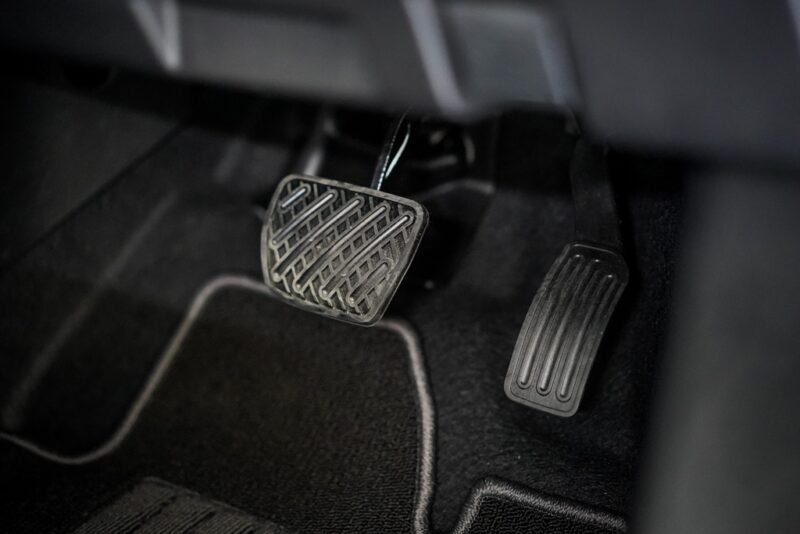
One of the unique features of electric vehicles (EVs) is the one-pedal driving mode. This mode simplifies the driving process by allowing the driver to control both acceleration and deceleration with just a single pedal.

However, studies have shown that excessive reliance on this feature can lead to slower driver reactions, especially in emergency situations.

For safety reasons, China will introduce new legislation that prohibits manufacturers from setting the one-pedal mode as the default driving system.

According to a report by The Paper, the new regulations will come into effect on January 1, 2027.

Additionally, there are two changes to standards that will take effect earlier, on January 1, 2026.

One of these changes mandates that every new EV must ensure that the brake lights illuminate when the deceleration process, triggered by energy recovery systems, exceeds 1.3 m/s².

This measure is deemed necessary to reduce the risk of rear-end collisions and to warn other road users.

Another change, which has been implemented at a slower pace compared to other continents, is the requirement for every new vehicle to be equipped with an anti-lock braking system (ABS).

The ABS has been mandatory in Europe since 2004, prior to being adopted by other markets.

Maextro S800 receives nearly 4,000 orders in just one week

Maextro, the luxury sedan manufacturer resulting from the collaboration between Huawei and JAC, has successfully secured 3,600 unit orders for its ultra-luxury sedan model S800 in just one week.

With a selling price ranging from 708,000 yuan to 1,018,000 yuan (RM418,000 to RM600,000), the Maextro S800 has certainly captured attention, becoming an alternative to competitors such as the Maybach S-Class and Yangwang U7.

The Maextro S800 features relatively large dimensions, measuring 5,480 mm in length, 2,000 mm in width, 1,536 mm in height, and having a wheelbase of 3,370 mm.

In the Chinese market, the S800 is available in an EV variant equipped with two electric motors producing 523 hp and a 95 kWh battery pack that offers a driving range of 702 km (according to CLTC data).

Additionally, there is an EREV version of the S800 with the option of two or up to three electric motors (825 hp) paired with a 1.5-liter engine producing 154 hp.

The 65 kWh battery pack allows this sedan to operate for up to 400 km without using a drop of gasoline.

This sedan also offers the option of side cameras to replace side mirrors, along with a rear-wheel steering system.

The cabin of the S800 provides up to three displays ranging from 15.6 to 16 inches, a head-up display, a 2,920 W audio system with 43 speakers, and a passenger window tinting function that can be controlled by hand signals.

Depending on the specifications, buyers can choose the S800 in a five-seat configuration or a more luxurious four-seat variant.

Wuyang Honda E-VO: electric cafe racer for the Chinese market, range up to 170 km

This cafe racer is the E-VO, the first electric motorcycle from the Wuyang Honda brand designed for the Chinese market.

This modern retro machine is powered by an electric motor with a peak power of 20.5 hp (15.3 kW) or a continuous power of 11 hp, and can reach a top speed of 120 km/h.

There are two battery options available: 4.1 kWh and 6.2 kWh.

The 4.1 kWh version features a dual battery setup, offering a range of up to 120 km, and can be charged in 1 hour and 30 minutes.

A charging time of one hour is achievable if the owner uses a conventional car charger.

Meanwhile, the 6.2 kWh version comes with a three-battery setup that provides a range of 170 km.

It can be charged in 2 hours and 30 minutes at home or in 1 hour and 30 minutes using a car charger.

Riding performance is enhanced by three power modes (Eco, Normal, Sport), complemented by inverted telescopic front forks and a single shock absorber at the rear.

Standard features of the E-VO include a seven-inch TFT display, a tire pressure monitoring system, a front-facing riding camera (with an additional rear unit for the 6.2 kWh model), and a seat height of 765 mm.

The two-battery version of the E-VO weighs approximately 143 kg, while the three-battery version weighs 156 kg.

In China, the Wuyang Honda E-VO is priced from CNY 29,999 to CNY 36,999 (RM17,683 to RM21,809).

Volvo XC70 makes a comeback as PHEV SUV

Earlier this month, Volvo announced the return of the iconic XC70 nameplate, complementing its existing SUV model lineup.

The XC70 is no longer a crossover wagon; instead, it has transformed into a true SUV model.

The Volvo XC70 is the first Volvo vehicle built on the Scalable Modular Architecture (SMA) platform. This platform has previously served as the foundation for the Lynk & Co 07 and 08 models.

According to information disclosed on the website of China’s Ministry of Industry and Information Technology, the Volvo XC70 PHEV will measure 4,815 mm in length, 1,890 mm in width, 1,650 mm in height, and have a wheelbase of 2,895 mm.

There will be options for 19-inch or 20-inch wheels.

Utilizing the SMA platform, the Volvo XC70 features a plug-in hybrid (PHEV) system that includes an electric motor and a 1.5-liter engine developed by Aurobay.

For your information, Aurobay is now part of the Geely-Renault joint venture known as Horse Powertrain.

For the Chinese market, there will be two battery pack options.

The base variant will come with a 21.22 kWh LFP CATL battery, allowing for an all-electric range of 100 km (CTLC data).

Meanwhile, the top variant will feature a 39.63 kWh NMC battery pack, enabling the XC70 to travel 180 km without a drop of petrol.

In terms of design, the XC70 adopts the styling used in the XC90 facelift, such as the Thor hammer-designed headlights and vertical LED taillight graphics.

It also features hidden door handles and a frameless window design.

Currently, the Volvo XC70 is being developed specifically for the Chinese market, responding to the growing demand for PHEV models with longer electric ranges there.

More details on Mazda EZ-60 specifications revealed

Further details regarding the Mazda EZ-60 electric SUV have been revealed through the website of the Chinese Ministry of Industry and Information Technology.

According to preliminary reports, the Mazda EZ-60 is equipped with a single electric motor producing 255 hp, capable of reaching a top speed of 185 km/h.

In terms of dimensions, the SUV measures 4,850 mm in length, 1,935 mm in width, 1,620 mm in height, and has a wheelbase of 2,902 mm, placing it in the mid-size SUV category.

The EZ-60 features a futuristic and minimalist cabin layout, with a floating 26.45-inch 5K display, a two-spoke steering wheel, and side display screens.

Additionally, the front seats come equipped with a zero-gravity function, premium upholstery, ventilation, heating, massage features, built-in speakers in the headrest, and wireless charging slots.

Mazda has also disclosed that this SUV weighs approximately 2,180 kg and has a weight distribution ratio of 47:53, compared to 50:50 for the extended-range version (EREV) of the EZ-60.

For your information, the Mazda EZ-60 EREV combines a 255 hp electric motor with a 1.5-liter engine that serves only as a power generator, along with a 31.73 kWh LFP battery pack.

This configuration allows the EZ-60 EREV to travel up to 160 km on a zero-emission drive.

Interestingly, since its debut last month, Mazda has received interest for 20,000 pre-orders for the EZ-60.

While the sale price has not been disclosed, local automotive websites suggest that the price for the EZ-60 starts from RMB 150,000 to RMB 300,000 (approximately RM 88,000 to RM 175,000).

12 interesting things we found at the Zontes factory in China

When the name Zontes is mentioned, many will certainly recall the Zontes 368G ADV adventure scooter that recently entered the Malaysian market early last year.

However, if we look back five years ago, it was a name that was quite unfamiliar, especially at a time when many well-known motorcycle brands had already established themselves here.

For your information, Zontes is one of over 200 motorcycle brands in the Chinese market and is also one of the brands owned by Guangdong Tayo Motorcycle Technology Co. Ltd, which was established in 2003.

There, Zontes is responsible for producing a range of medium and large displacement motorcycles, and the brand has now established a presence in several key markets worldwide.

At the end of 2024, our team along with a group of other automotive media had the opportunity to visit the Tayo factory located in Guangdong, China.

There were several interesting things we noticed during our visit to this state-of-the-art factory:

1. Before entering the factory, one must go through a door that resembles a military base seen in sci-fi stories. It can be activated through a facial recognition process.

2. Tayo Factory has nearly 4,000 employees, with 60 percent being graduates with college degrees or higher—primarily young people!

It is not surprising that we see their product lineup consistently featuring fresh specifications.

3. Of that number, approximately one thousand are placed in the research and development (R&D) department. Some were seated in front of computers, while we noticed some of them working on motorcycle models made of clay.

Unfortunately, we were not allowed to photograph those models.

4. Zontes also handles complaints about motorcycle components received from owners, including those from overseas, where the responsible engineers must resolve the issues within 24 hours (only on working days).

5. The Tayo Factory has up to 12 production lines responsible for manufacturing various motorcycle and scooter models.

6. According to the officials on duty, Zontes produces all engine components (including the crankshaft, engine outer casing, gears, and balancers) used in their motorcycle model lineup without assistance from third parties.

7. 60 to 70 percent of motorcycle components (excluding engines) are also produced in-house at this factory, including swingarm units, body panels, seats, and display screens.

Only components like tires and suspension systems are imported from external suppliers.

8. As a sophisticated factory, advanced robotic technology is fully utilized for manufacturing tasks such as forming aluminum and plastic components, welding frames and fuel tanks, as well as painting parts.

9. To ensure high-quality workmanship, the Tayo factory imports several special robots from overseas and programs them specifically for the factory.

For example, there are plastic component printing machines from Germany, painting robots from Japan, CNC machines from Germany, and Panasonic-weld robots (from Japan).

10. The welding unit in the factory can complete an entire Zontes 368 scooter frame in just 210 seconds, without human assistance!

11. To ensure that every produced component meets standards, there are rapid scanning machines available to check quality while the manufacturing process is still ongoing.

If the machines detect any issues, production on that line will be halted immediately.

12. Is the existing technology sufficient?

No, because we were informed that Tayo has invested RMB 5 billion (approximately RM3 billion) to fully utilize autonomous robots to help increase production volumes.

Moreover, during our visit, we also witnessed the installation processes for new machines and robots that were underway in the factory.

Given the level of sophistication and precision displayed, and hopefully with solid sales and after-sales support, it is not impossible for the Zontes brand to one day stand out even more in the Malaysian market.

Xiaomi YU7 offers 760 km range, a better alternative to the Tesla Model Y?

A few weeks ago, Xiaomi unveiled its second electric vehicle (EV) model set to launch this year, known as the YU7.

This electric SUV is expected to pose a strong challenge to the popular Tesla Model Y.

According to data obtained from Chinese government ministry websites, the Xiaomi YU7 measures 4,999 mm in length, 1,996 mm in width, 1,600 mm in height, and has a wheelbase of 3,000 mm, making it larger than the Model Y.

The all-wheel-drive (AWD) version of the Xiaomi YU7, boasting 691 PS, will be offered with range options of 670 km, 750 km, and 760 km.

Currently, Xiaomi has not yet disclosed the range for the rear-wheel-drive (RWD) variant (320 PS) or the capacity of the NMC (nickel manganese cobalt) battery pack that will be available for each variant.

The selling price has also yet to be finalized, but local media suggest that the Xiaomi YU7 will start at around RMB 250,000 (RM 151,958), making it significantly cheaper than the Tesla Model Y, which starts at RMB 263,500 (RM 160,163).

GWM showcases new PHEV technology, launches off-road initiative in Changbaishan

When we talk about off-road driving, several brands and models of vehicles suitable for this purpose inevitably come to mind.

However, it’s important to note that Chinese automotive manufacturers are no longer lagging far behind as they once were.

In fact, with the advent of various new and rugged technologies, they are now able to stand shoulder to shoulder with leading brands around the world.

From January 9 to 15, GWM held an event known as the Ice & Snow Festival in the mountainous region of Changbai, Jilin Province.

There, we were given the opportunity to personally test the capabilities of the Haval, Tank, and Poer off-road vehicle lineup as they maneuvered through extreme icy and snowy paths in temperatures plummeting to negative 30 degrees Celsius.

Despite being equipped with standard factory specifications without any modifications, all of these off-road vehicles proved their true capabilities by successfully navigating a variety of terrains around the Huamei Resort.

A major highlight of the Ice & Snow Festival was the introduction of a new plug-in hybrid system through the Tank 500 Hi4-Z model.

Compared to the more “hardcore” Hi4-T hybrid system, the Hi4-Z no longer features a drive shaft connecting the engine to the rear axle.

Instead, the rear wheels are now powered by an electric motor.

As a result, GWM is able to include a larger capacity battery pack (59.05 kWh) that offers an emission-free range of up to 200 km!

With a 2.0-liter turbo engine (248 hp/380 Nm) paired with two electric motors, the Hi4-Z system can produce a total power output of 852 hp and torque of 1,195 Nm.

This allows the Tank 500 Hi4-Z to accelerate from 0 to 100 km/h in just 4.6 seconds.

In addition, GWM also launched the GWM Off-Road Alliance initiative.

This latest initiative aims to strengthen the global off-road community by offering various activities such as off-road driving technique training and optimizing vehicle performance for different terrain types.

GWM also introduced an off-road trail grading system (on a scale of 1 to 10) that provides a clearer framework for tackling various terrain conditions.

For drivers in Malaysia, this grading system can serve as a reference for preparing to face challenges such as sandy coastal areas, muddy farm tracks, and steep mountainous roads.

All of this is designed to ensure that the off-road community can enjoy challenging journeys more safely while also having a fun experience.

This Sunshine EV is a versatile kei van from China

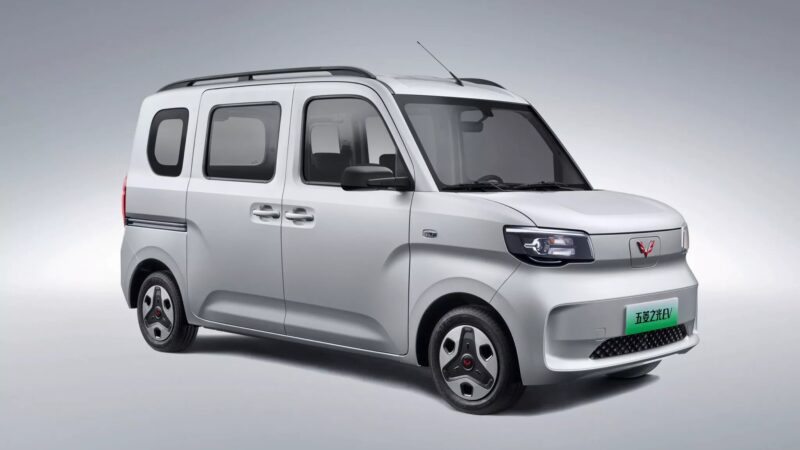
At first glance, this may be the latest kei van model to come from the Japanese market. However, don’t be deceived by the logo displayed, as it tells all — this is a light commercial vehicle (LCV) produced by SAIC-GM-Wuling.

Focusing on practicality and affordability, the Sunshine EV undeniably draws inspiration from the Japanese kei van lineup, featuring a short front end, small wheels, sliding doors on both the left and right, and tall body dimensions.

When compared by size dimensions, the Sunshine EV is roughly bigger than Japanese kei vans, measuring 3,685 mm in length, 1,530 mm in width, 1,750 mm in height, and with a wheelbase of 2,600 mm.

In its five-seat configuration, the Sunshine EV can offer a cargo space of 527 liters or up to 1,117 liters when the second-row seats are folded flat.

For the cabin space, it provides very basic equipment but emphasizes practicality and versatility for various uses.

Based on the supplied images, this compact van can be transformed into various types of mobile shops, used as a camper van, or converted into a mini workshop complete with professional tools.

In terms of power, this EV features a single electric motor that produces 40 hp with a top speed of around 100 km/h.

Buyers will have the option of a 17.6 kWh battery pack or a 26.5 kWh capacity option that can be swapped through the CATL battery swapping network.

The Sunshine EV is set to be launched in the Chinese market as early as 2025, with a selling price starting at around 50,000 yuan (RM30,580).

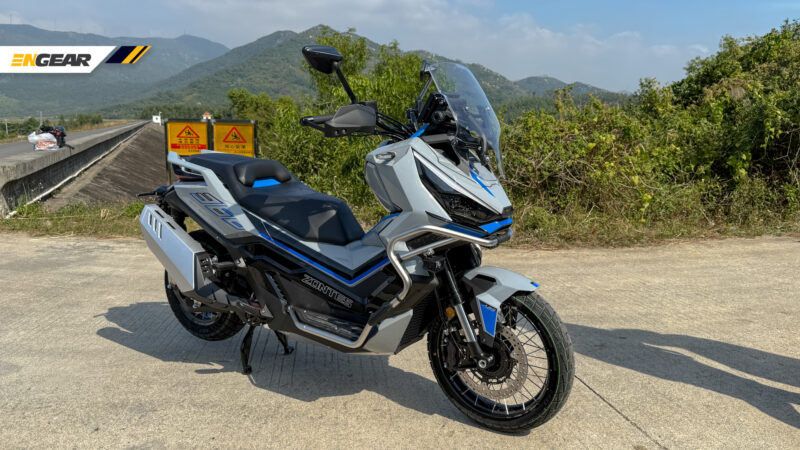
Zontes 368G ADV: We’ve tried this scooter in China

Good news for adventure scooter enthusiasts, Zontes Malaysia has confirmed that the Zontes 368G ADV model will enter the Malaysian market in early 2025.


Specifications

According to the specifications, the Zontes 368G ADV is powered by a single-cylinder liquid-cooled SOHC engine generating 38 hp at 7,500 rpm and 40 Nm of torque at 6,000 rpm, with two available modes: Eco and Sport.

Riding aspects are enhanced by the use of a 41 mm upside-down (USD) front fork suspension with compression/rebound adjustability, dual shock absorbers at the rear with preload adjustment, and a J.Juan braking system.

It also features a two-channel ABS, traction control, and a tire pressure monitoring system (TPMS) as standard features.

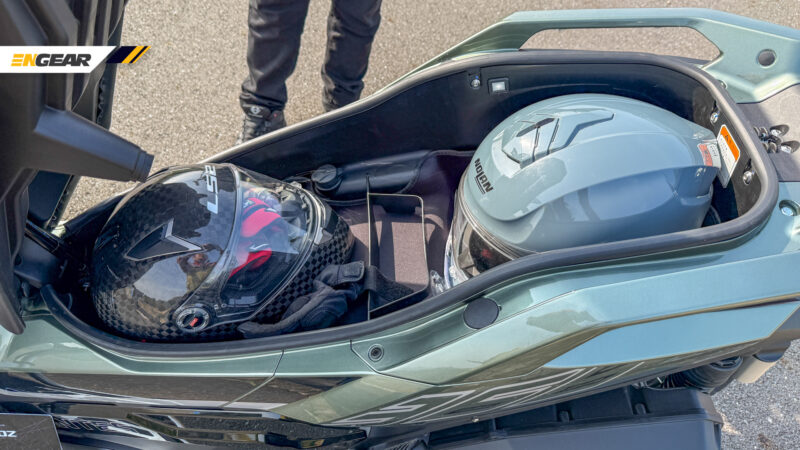
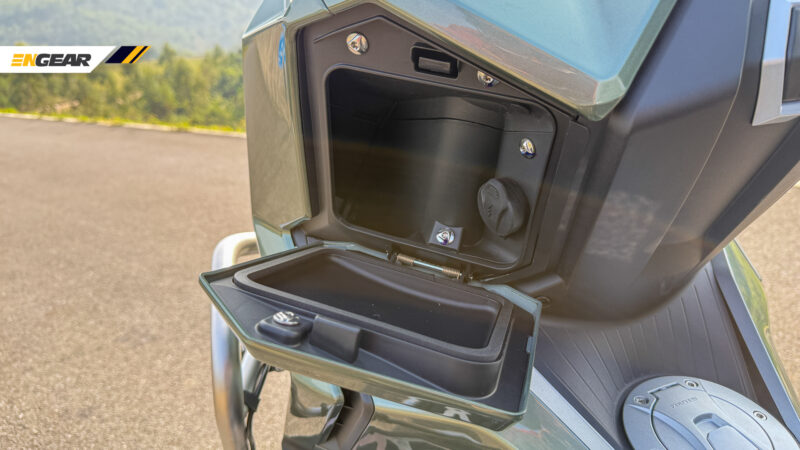
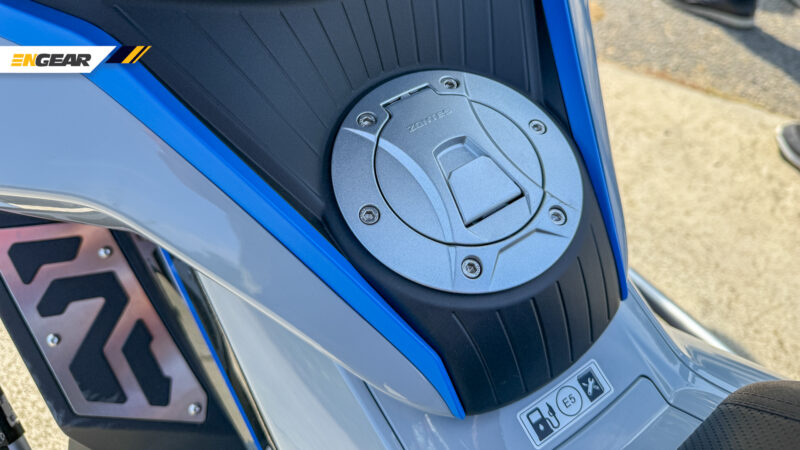
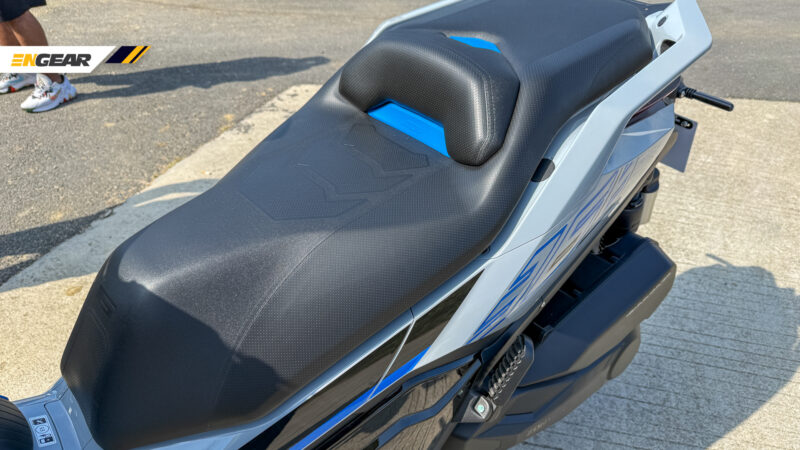
This ADV scooter is equipped with a 17.5-liter fuel tank, under-seat storage that can accommodate two full-face helmets, an adjustable windscreen with five levels, and a seat height of 790 mm (or 770 mm for the lower version).

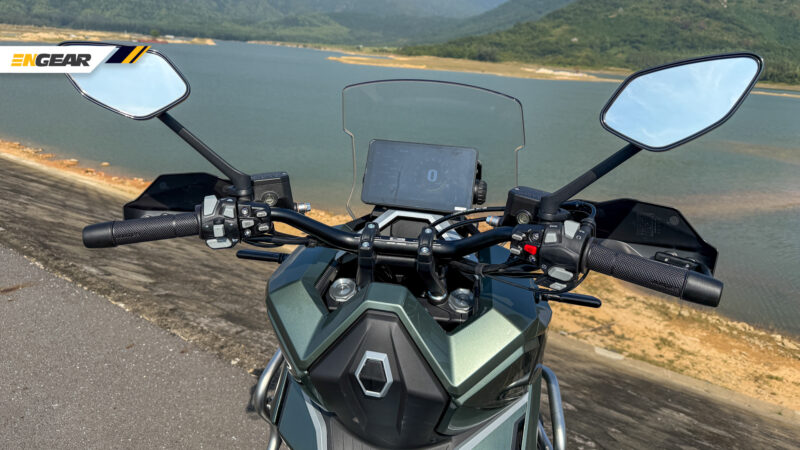
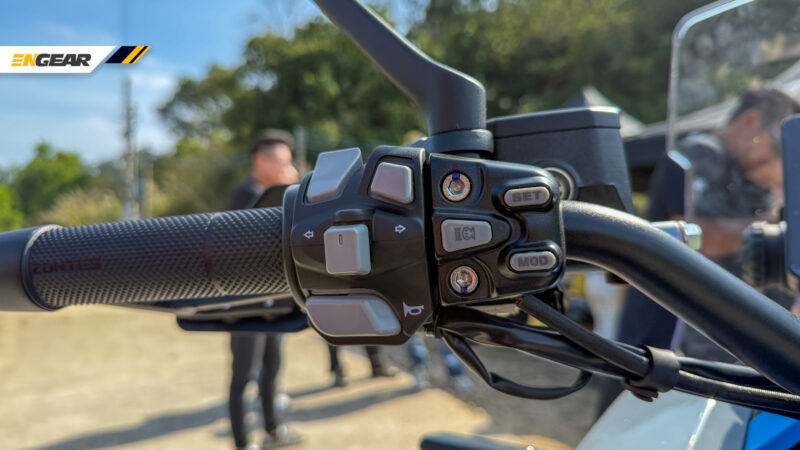
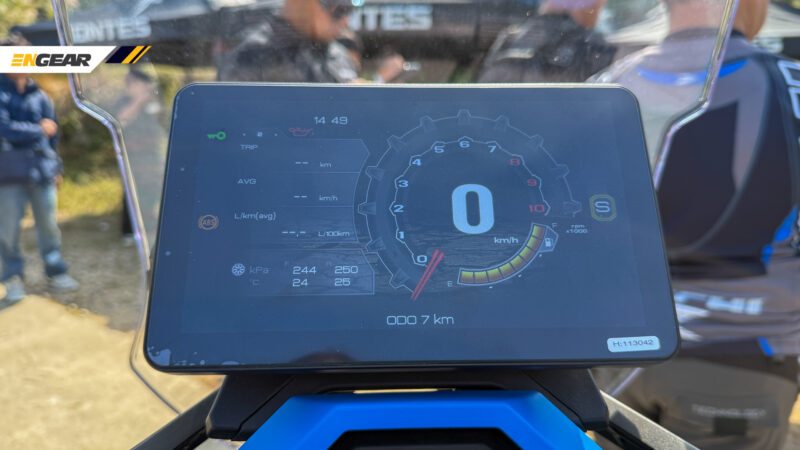
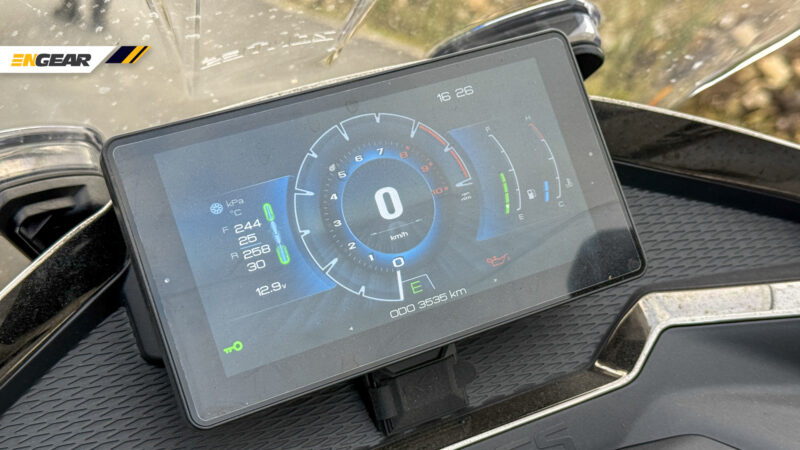
All essential information and additional function settings can be accessed via an eight-inch TFT display.

Interestingly, Zontes also offers several standard features for the 368G ADV model.

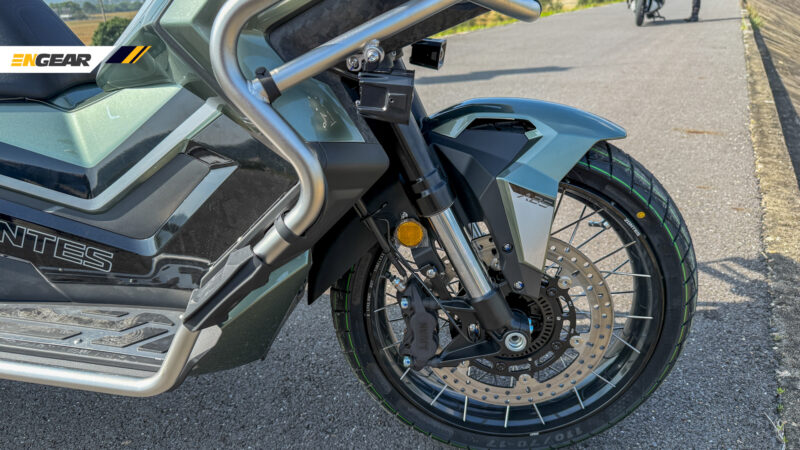
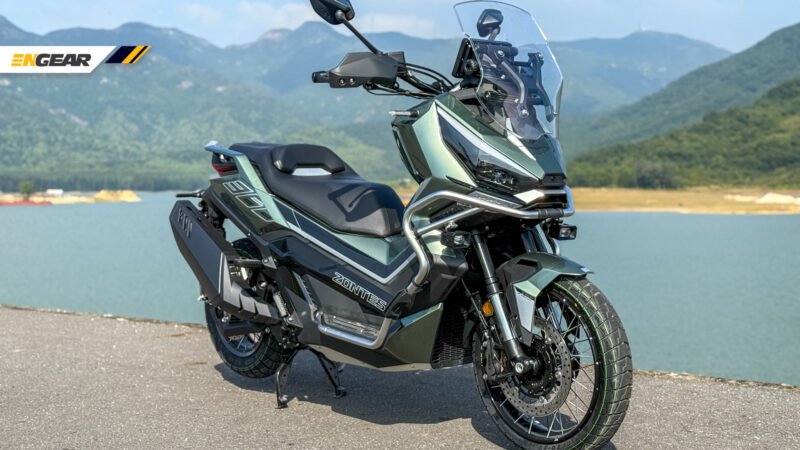
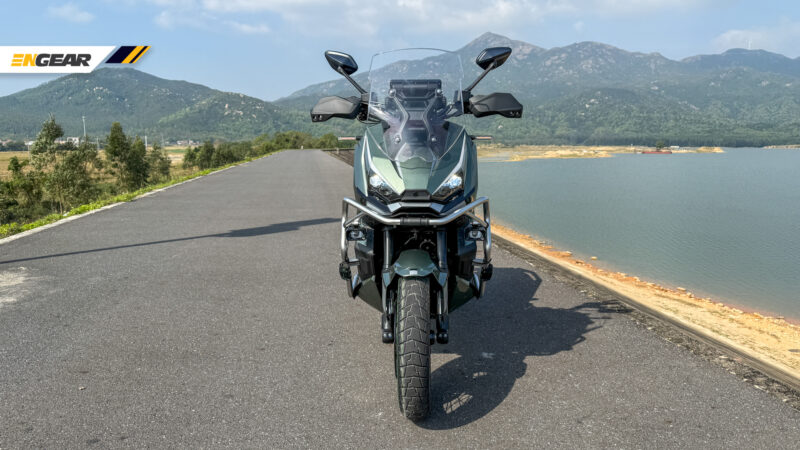
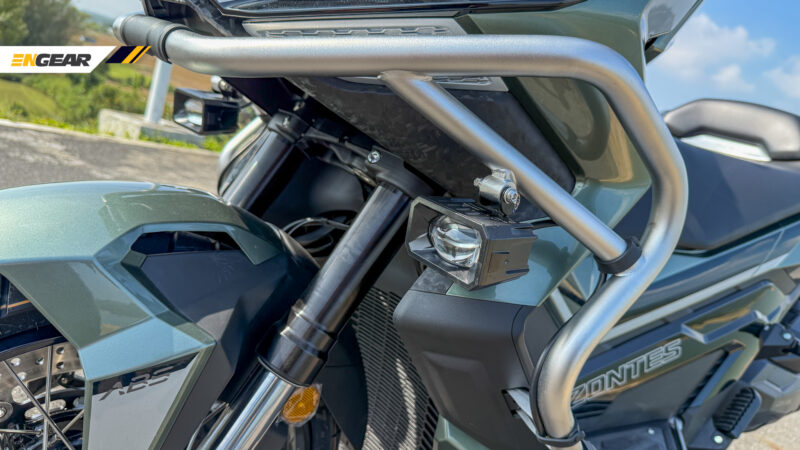
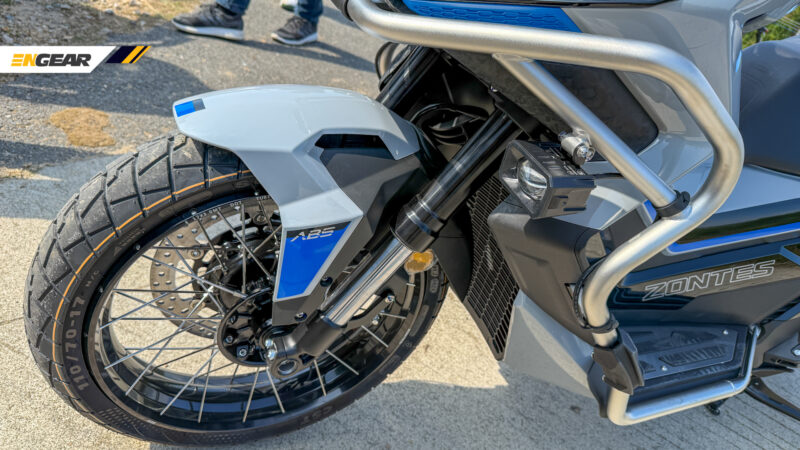
For instance, there are crash bars and handguards on the handlebars, as well as fog lights with various beam settings to enhance the stylish ADV scooter image.

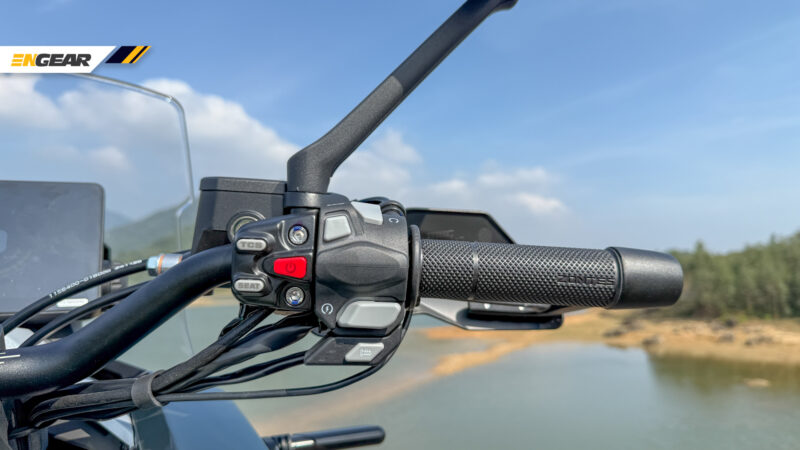
For rider comfort, the 368G is fitted with grip heating functions that are very useful during winter or rainy rides.

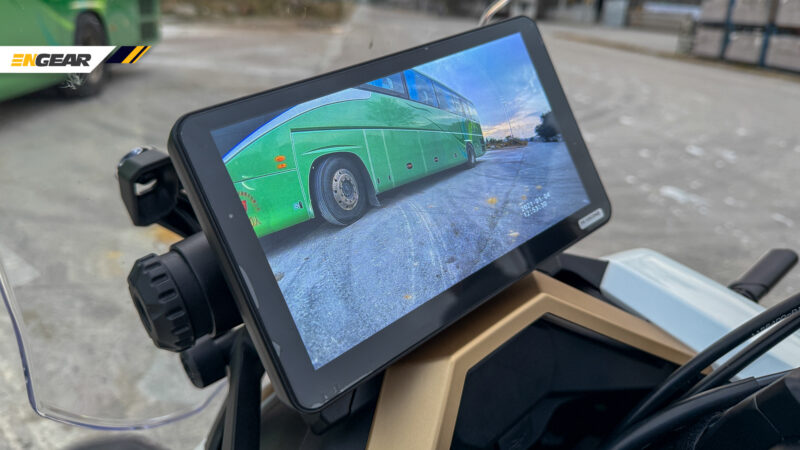
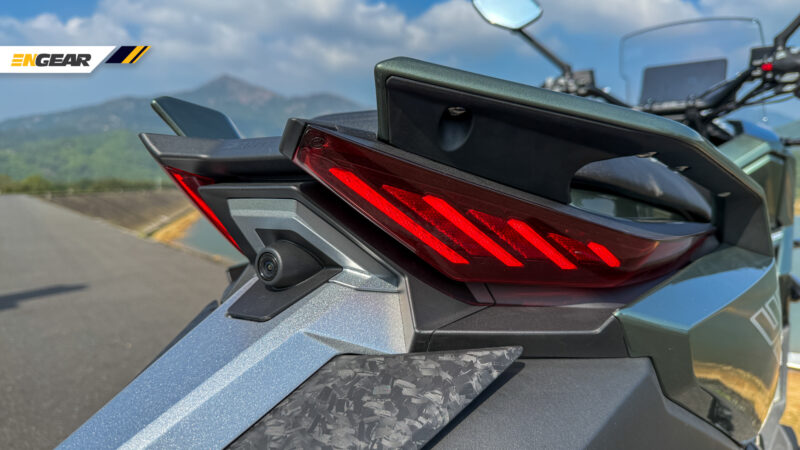
Finally, there’s a front and rear dashcam featuring a Sony Starvis sensor capable of capturing HD 1080p video and storing up to 128 GB.


First Impressions

We had the opportunity to take a closer look and test the capabilities of this ADV scooter during a visit to the Zontes factory located in Jiangmen, China, this week.

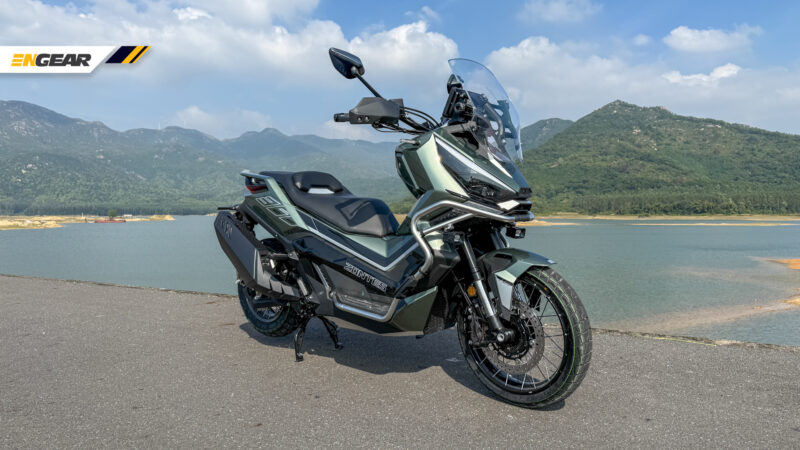
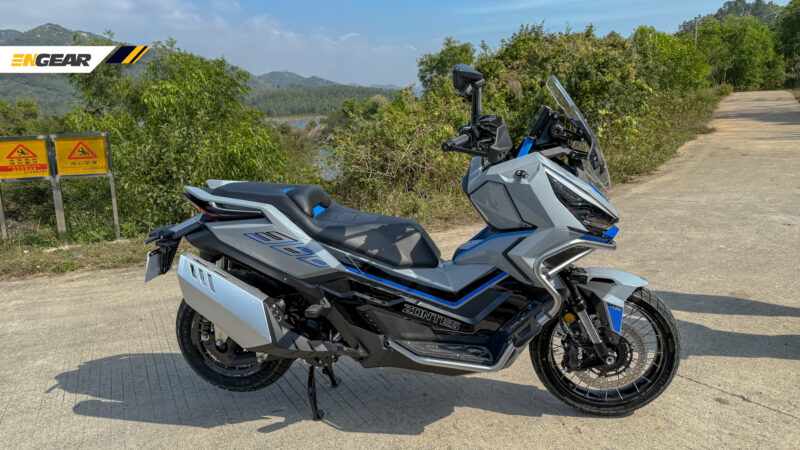
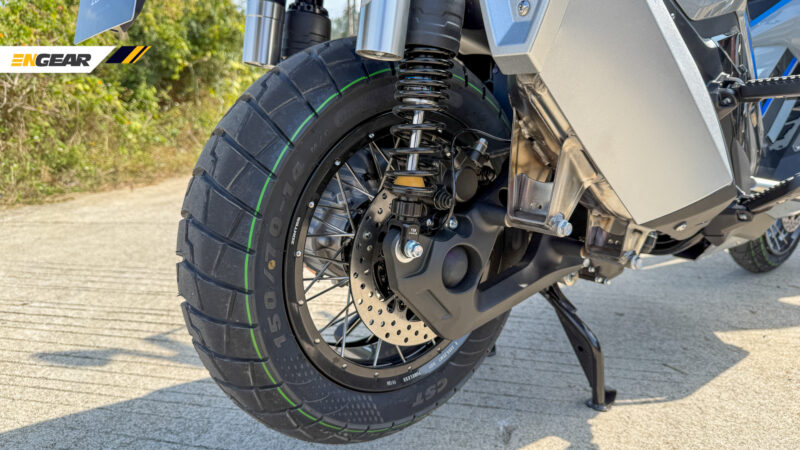
At first glance, adventure scooter fans may fall in love at first sight due to its stylish appearance, complete with crash bars, fog lights, and spoked wheels (17 inches front, 14 inches rear).

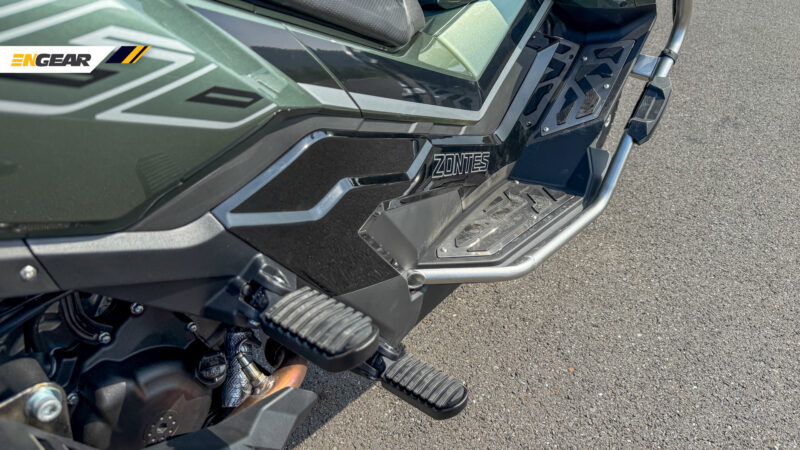
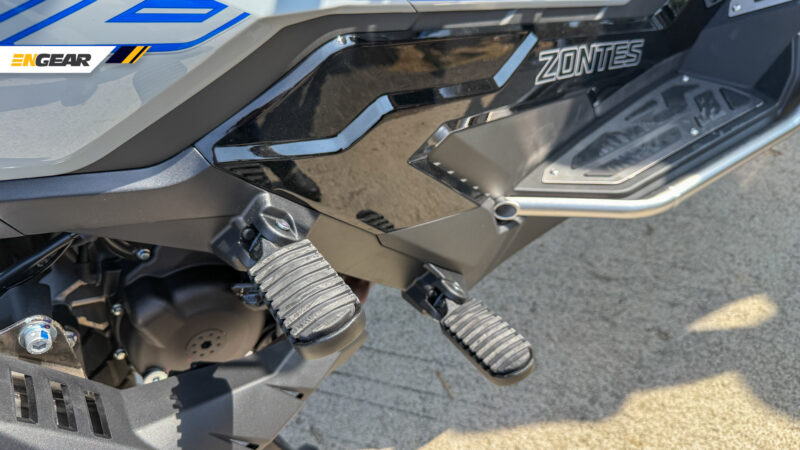
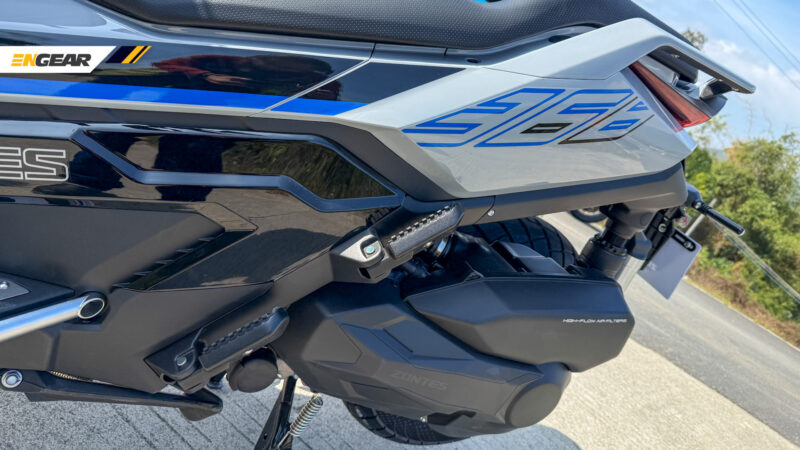
We were also particularly impressed by the relatively spacious floor design, which offers multiple comfortable riding positions and includes additional foot pegs in the middle to facilitate standing riding on off-road paths.

Based on a few hours of riding, we can say that the Zontes 368G ADV offers a good power delivery that is easy to control, with the author taking little time to get accustomed to the throttle response of this scooter.

Its dimensions, which are not overly wide, make the scooter easier to maneuver, especially in heavy urban traffic.

The braking performance does not disappoint, and importantly, with its slightly stiff suspension system, you can enjoy a somewhat aggressive riding experience when tackling corners on rural roads.

For those who remain skeptical about Chinese-made motorcycles, the Zontes 368G may leave you momentarily speechless.

With impressive build quality, it is hard to find any loose parts or poorly finished areas; in fact, while riding, there is virtually no noticeable vibration that could disrupt your journey.

The large TFT display is very easy to read, even when riding under the scorching sun at midday.

Another aspect that excites us is the sharp and clear quality of the dashcam recording, which captures all necessary evidence in case you (heaven forbid) encounter any unwanted situations.


Price

We were informed that the selling price of the Zontes 368G ADV will be around RM28,000 when it launches next year.

This is a price that offers excellent value considering the specifications and features packed into this adventure machine, making Honda ADV350 owners feel a bit challenged.

2025 Nissan N7 unveiled, electric sedan for the Chinese market

As we know, Nissan has been one of the early pioneers of electric vehicles for the mass market.

However, relying solely on the Nissan Ariya and somewhat outdated LEAF could cause Nissan to fall significantly behind, especially when competing with rivals like BYD and Tesla.

Recently, the Dongfeng Nissan partnership showcased the Nissan N7 EV, an electric sedan designed specifically for the Chinese market.

Built on a modular platform, this mid-size sedan measures 4,930 mm in length, 1,895 mm in width, 1,487 mm in height, and has a wheelbase of 2,915 mm.

The V-motion design elements are still present in the N7, but with a more modern approach.

It features an LED light strip that spans the width of the vehicle, consisting of 710 LED units, followed by boomerang-shaped headlights, while the rear showcases a light structure composed of 882 OLED units.

The aerodynamic design of the Nissan N7 allows it to achieve a drag coefficient (Cd) as low as 0.208, aided by the sleek design of its door handles.

The Nissan N7 also features frameless door construction.

Although no images of the cabin have been provided, Nissan confirms that the N7’s cockpit will utilize a Qualcomm Snapdragon 8295P processing chip, with 256GB of storage and 32GB of memory.

Through a collaboration with Momenta, Dongfeng Nissan will equip the N7 with an advanced driver assistance system named ‘Navigate on Autopilot.’

The arrival of the N7 EV electric sedan is expected to restore Nissan’s reputation in the Chinese market when it goes on sale in the first half of 2025.

Further details, such as specifications and the range of this electric sedan, will only be revealed ahead of the official launch next year.