Tag Archives: Asean

Mitsubishi unveils the 7-seater Destinator for the ASEAN market

After months of showcasing the DST Concept, Mitsubishi has officially launched the production model of its seven-seat SUV, now named the Destinator.

In addition to the ASEAN market, Mitsubishi plans to introduce this model in Africa, Latin America, and the Middle East.

Here are some key facts you need to know:


1. Platform

The Mitsubishi Destinator is built on the B-segment SUV platform, specifically the XForce, but features a three-row seating configuration.

Its dimensions are also larger, measuring 4,680 mm in length, 1,840 mm in width, 1,780 mm in height, and a wheelbase of 2,815 mm.

The ground clearance stands at 214 mm, while the turning radius is approximately 5.4 meters.

Compared to the Xpander, the Destinator boasts an advantage in size, being 85 mm longer, 40 mm wider, 30 mm taller, and with a wheelbase that is 40 mm longer.


2. Engine

One aspect not shared with the Xforce model is the powertrain.

The Destinator is equipped with a 1.5-liter MIVEC turbo engine (code 4B40) capable of producing 161 hp at 5,000 rpm and 250 Nm of torque at 2,000-4,000 rpm.

Power is transmitted to the front wheels via a CVT transmission.

There are five driving modes: Wet, Tarmac, Normal, Gravel, and Mud.


3. Suspension

This SUV features a MacPherson strut suspension setup for the front axle and a simpler torsion beam for the rear axle.

However, Mitsubishi claims that the tuning for the Destinator has been adapted for road use in ASEAN.

In addition to its high ground clearance, the Destinator offers a 21-degree approach angle, a 25.5-degree departure angle, and a 20.8-degree breakover angle, facilitating driving on rough and bumpy terrains.


4. Exterior Design

The Destinator employs the concepts of Gravitas and Dynamism, highlighted by its robust body design, high ground clearance, and 18-inch wheel size.

The front end features a modern Dynamic Shield design, enhanced by T-shaped headlight housings and angular grilles.

Meanwhile, the rear introduces the Hexaguard Horizon concept, inspired by the hexagonal design found in the Pajero’s spare tire compartment.


5. Cabin Space

With a longer wheelbase compared to the Xpander, the Destinator’s cabin offers more comfortable headroom and legroom.

Additional features include a panoramic sunroof, a 64-color ambient lighting system, air conditioning vents for each row, USB Type-A and C charging ports, and cup holders available in the center console and door trims.

The driver is provided with an eight-inch digital cluster screen that draws inspiration from the Pajero model, while the central screen is 12.3 inches, equipped with a Yamaha Premium Dynamic Sound audio system featuring eight speakers and four modes optimized for high-quality sound.


6. Safety Features

Following the facelifted Xpander, the Destinator now offers up to six SRS airbags.

It also includes Mitsubishi Motors Safety Sensing, which encompasses:

  • Adaptive Cruise Control (ACC)
  • Forward Collision Mitigation (FCM)
  • Blind Spot Warning (BSW)
  • Rear Cross Traffic Alert (RCTA)
  • Automatic High Beam Assistance (AHB)
  • Lead Car Departure Warning (LCDN)
  • Surround Monitoring System (MAM)

Additionally, the Destinator offers an emergency call function and enhanced call center support.

The Mitsubishi Destinator will be showcased to the public at the Gaikindo Indonesia International Auto Show on July 23.

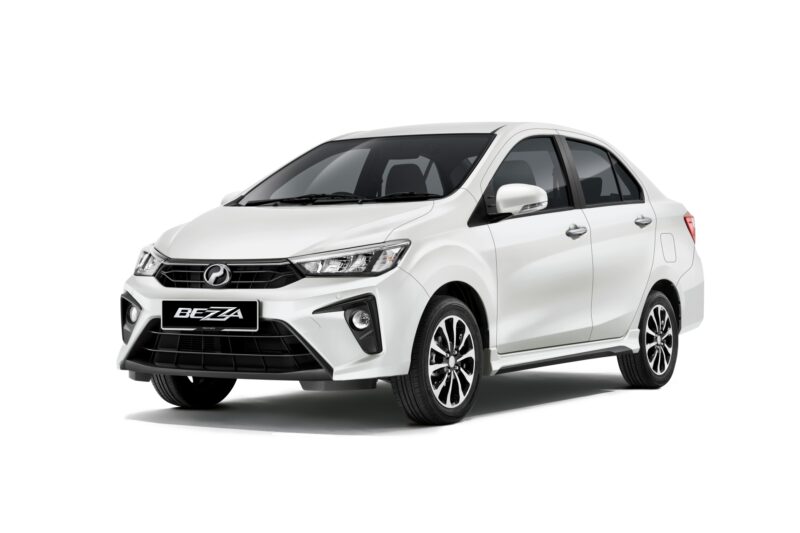
Perodua becomes the second largest manufacturer in ASEAN for 2024

The year 2024 saw Perodua not only achieving the highest vehicle registration record for the local market but also successfully ranking second in the ASEAN passenger vehicle sales chart for the same year.

This announcement was shared directly by Perodua with media practitioners during the ‘Up-Close & Casual With Perodua’ event yesterday.

According to the ASEAN passenger vehicle sales data for 2024, Perodua recorded sales of 358,000 units, surpassing Honda, which is now in third place with 303,000 units.

For the record, in 2023, Perodua ranked third with total vehicle sales of 330,000 units, behind Honda’s 351,000 units and Toyota, which was first with 752,000 units.

Since its establishment, Perodua has recorded a total of 5.1 million vehicles on the road.

Among these, the Myvi remains the king of the road, with 1.487 million units, followed by the Perodua Axia (746,000 units), Perodua Kancil (709,000 units), and Perodua Alza (503,000 units).

Additionally, 2024 also saw Perodua exceeding its original production capacity of 320,000 units, with a total of 368,100 vehicles produced that year.

According to Dato’ Sri Zainal Abidin Ahmad, President and CEO of Perodua, “The record of 368,100 units was achieved by minimizing downtime according to the maintenance schedule, through dynamic coordination and planning with suppliers and distributors, and swiftly addressing challenges.”

For 2025, Perodua has allocated RM1.6 billion for model expenditure, much of which will be dedicated to factory improvements, stamping capacity upgrades, as well as new model development and tooling.

Meanwhile, Perodua anticipates a 4.9 percent decrease in production for 2025, forecasting a total of 350,000 units, along with a projected 3.7 percent reduction in registrations to 345,000 units.

“However, demand for our vehicles remains strong, with current back orders reaching 68,000 units, of which 28,000 orders have commitment letters issued without stock,” he further explained.

In terms of after-sales service, Dato’ Sri Zainal stated that the company aims to increase vehicle maintenance numbers this year to 3.7 million, representing a rise of 7.6 percent.

Perodua will also continue to support the nation’s automotive ecosystem with an estimated RM10.8 billion in local component purchases from suppliers in the country.

“2025 will be an exciting year for Perodua as we prepare the company and our strategic partners for any forthcoming changes. We believe that once these changes are complete, we will be able to strengthen our position both in this country and in the region,” he said.

Mitsubishi DST Concept, 7-seater SUV for ASEAN market

At the Philippine International Motor Show, Mitsubishi Motors unveiled a three-row seating SUV concept named DST.

Mitsubishi announced that the DST Concept will be realized as an actual production model, set to be launched in 2025.

With the introduction of the DST, Mitsubishi aims to further expand its SUV product portfolio (including Pajero Sport, Xforce & Xpander Cross) in the ASEAN market, and it is not designed to replace existing products.

Here are some facts you need to know about the Mitsubishi DST Concept:


1. Monocoque Chassis SUV

The Mitsubishi DST is built on a unibody platform and does not rely on a ladder-frame platform.

It is likely to share the same platform used in the Xforce B-segment SUV model.


2. Gravitas & Dynamism Theme

In addition to the Dynamic Shield elements that are the hallmark of Mitsubishi vehicles, the exterior of the DST Concept also emphasizes the Gravitas & Dynamism design theme.

This design concept is presented through the boxy body shape offering spacious and comfortable cabin space, even with the presence of the third-row seats.

The use of contoured fenders, large-diameter tires, and high ground clearance further accentuate the rugged and athletic character of this SUV, especially on the road.


3. Elements unlikely to exist in the actual production model

Typical of a concept car, the DST possesses several unique features.

These include frameless door design, absence of door handles, digital side mirrors with a special display screen on the dashboard, and an extended roof solar panel.

It is highly likely that all of these features will be revised to suit the specifications of the actual production model.


4. Premium cabin space

For the interior, Mitsubishi employs soft-touch materials on the door panels and dashboard.

The trend of a digital screen with a single curved display is also used in the DST Concept, followed by a somewhat futuristic center console and a new two-spoke steering wheel design.

There is no information available regarding the cargo space capacity, possibly limited based on the third-row seating image provided by Mitsubishi.


5. Front-wheel-drive SUV, 5 driving modes

Mitsubishi has not disclosed the powertrain that will be used in the actual production version of the DST Concept.

However, it is certain that the DST will have a front-wheel-drive (FWD) system complemented with five driving modes: Normal, Tarmac, Gravel, Mud, and Wet.

For reference, the previously launched Mitsubishi Xforce was equipped with a 1.5-liter engine producing 103 hp paired with a CVT transmission driving the front wheels.

Ducati aspires to make Thailand as export hub

Ducati Motor Holding, a leading Italian motorcycle manufacturer, aims to establish Thailand as a key export hub following the opening of a production plant in Rayong. This marks Ducati’s first assembly plant in Asia.

With an investment of 400 million Baht (RM51.6 million), the facility is capable of producing 10,000 motorcycles annually in its initial phase.

“Thailand is a crucial market for big or premium motorcycles, and we aspire to make Thailand our export base,” stated Claudio Domenicali, CEO of Ducati Motor Holding.

“We manufacture all Ducati models at the Rayong plant, ensuring that our products meet the high standards set by the company in Italy,” he added.

The company aims to export its production to the Asia-Pacific region. Its current primary markets outside of Asia include Italy, Germany, the UK, and the United States.

In Thailand, the high-performance motorcycle market is expected to grow, driven by the lifestyles of riders.

The Federation of Thai Industries (FTI) forecasts an overall sales of high-performance motorcycles to reach approximately 15,000 units in Thailand this year.

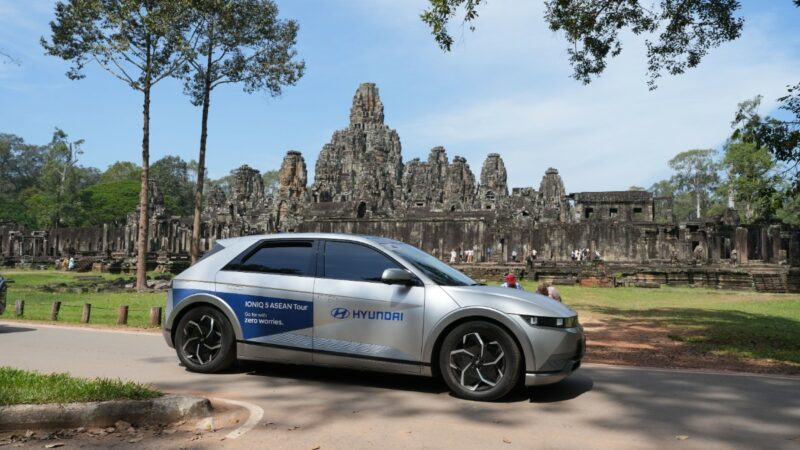
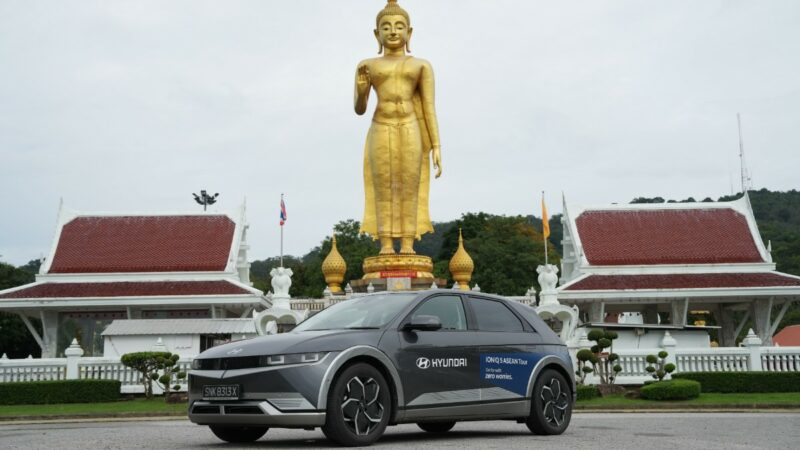
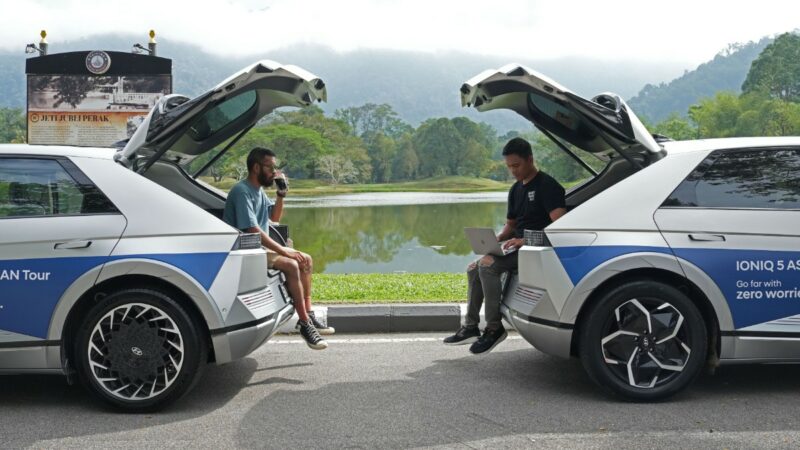
Hyundai Ioniq 5 EV convoy completes ASEAN tour – 3,197km in 11 days

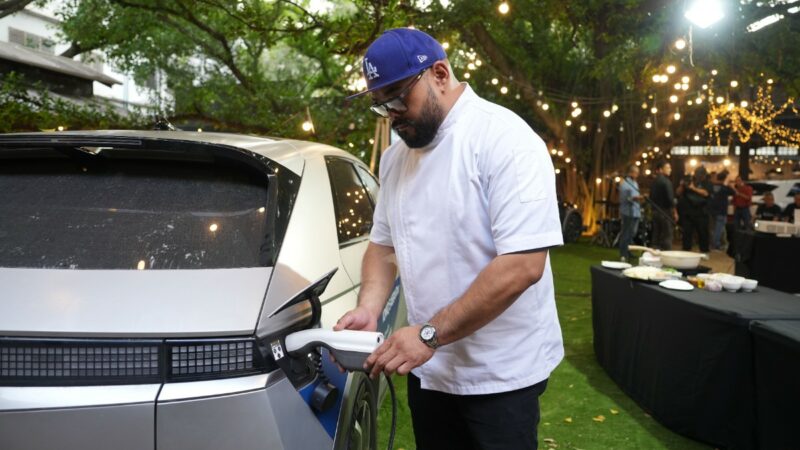
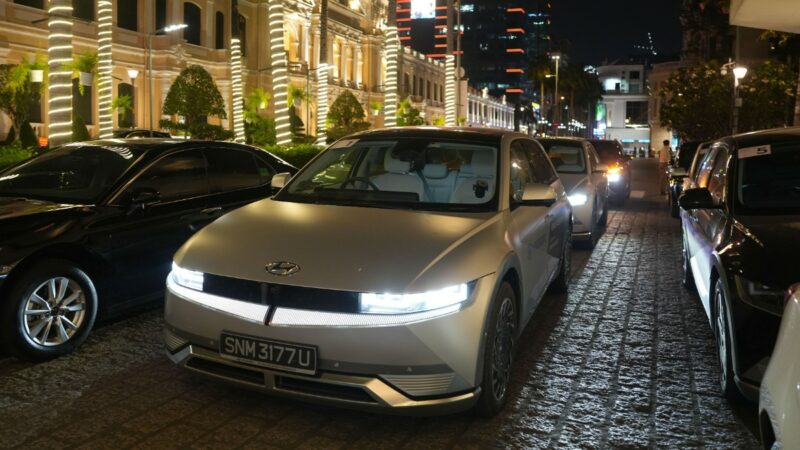
After 11 days and 3,197km, the Hyundai Ioniq 5 convoy has finally succeeded in completing their zero-emission journey across the ASEAN region.

They commenced their expedition in Singapore, then traversed through Malaysia, Thailand, Cambodia, and concluded in Ho Chi Minh City, Vietnam on November 30, 2023.

This expedition marks the most extensive cross-country tour by electric vehicles (EVs) within ASEAN. Furthermore, the total distance of 3,197km exceeded the original estimate by 446km.

The purpose of this journey was to showcase the Ioniq 5’s capabilities for long-distance travel and its environmentally friendly nature, particularly in a region where the capabilities of EVs are still a matter of skepticism.

Additionally, the Hyundai Ioniq 5 demonstrated cost savings, with an average expenditure of only USD116 (RM537.60) for the entire journey. This represents approximately half the typical fuel expenses for a conventional internal combustion engine (ICE) vehicle.

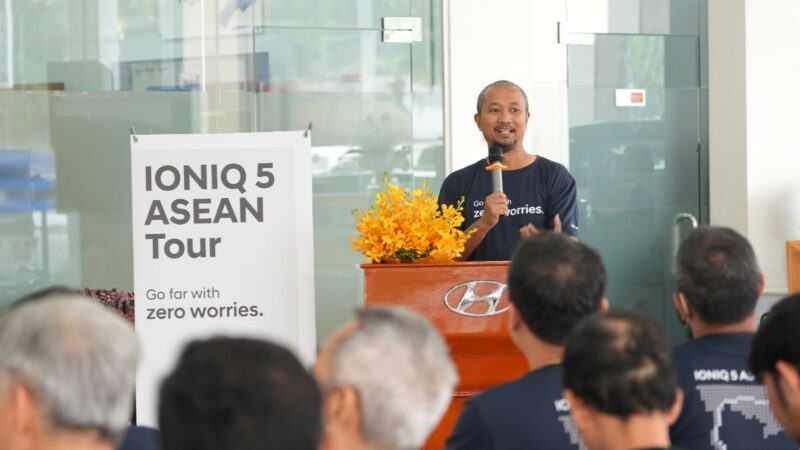
Youngtack Lee, President of Hyundai Motor ASEAN, stated, “Our dedication to making EVs more accessible as a clean transportation solution has successfully propelled us forward.

“With the success of the Ioniq 5 expedition, we are excited to further accelerate our innovations in developing EV infrastructure and ecosystems in this region. While this journey may have concluded, the excitement for electrification has only just begun,” he added.

The Hyundai Ioniq 5 convoy consisted of five vehicles, two of which were deployed in Indonesia and the remaining three in Singapore.

Hyundai Ioniq 5 convoy embarks on ASEAN tour journey

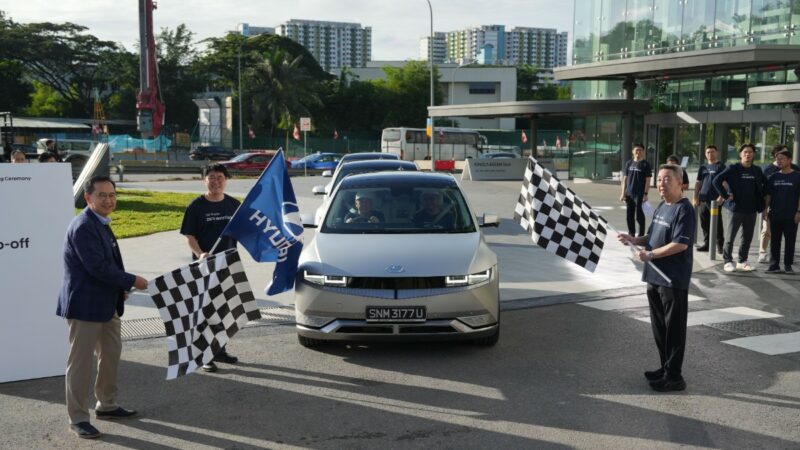
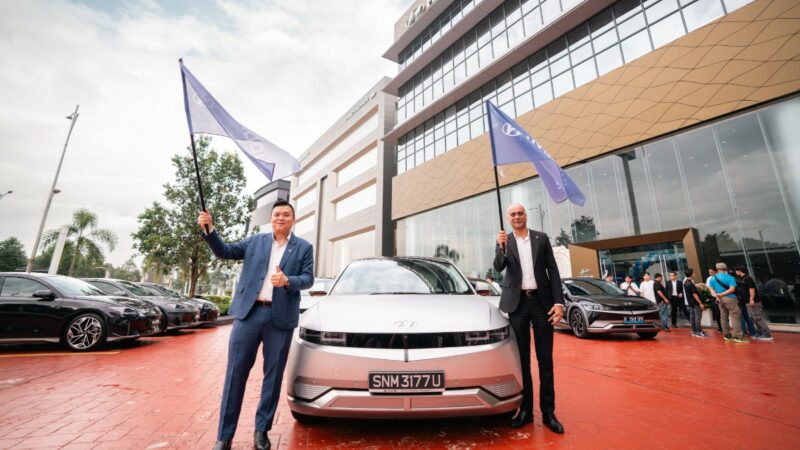
THE Hyundai Ioniq 5 convoy has commenced their ASEAN journey, making a stop at Hyundai Ara Damansara today before continuing their travels.

The journey commenced on November 20, 2023 from the Hyundai Motor Group Innovation Centre Singapore (HMGICS) before arriving in Malaysia.

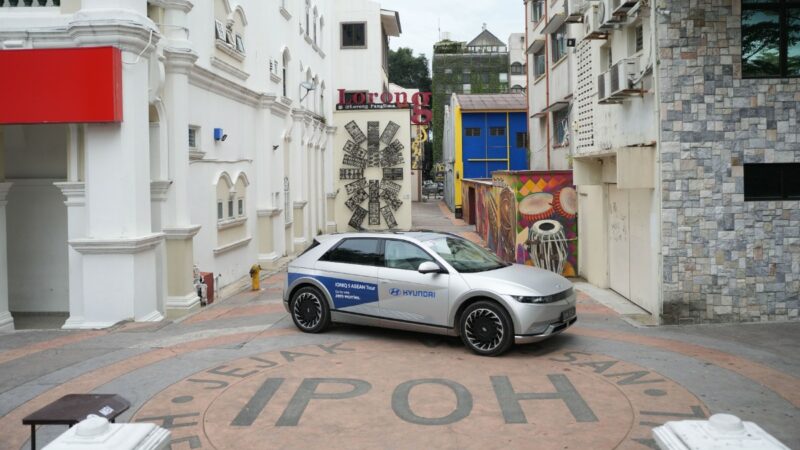
Following a flag-off session this morning, the convoy will proceed on a three-day journey through Kuala Lumpur, Ipoh, and Batu Ferringhi.

After Malaysia, they will enter Thailand for a four-day stretch, with stops in Hat Yai, Chumphon, Wat Phra Boromthat, Klai Kangwon Palace, and Bangkok.

From there, they will travel to Cambodia for three days, passing through Angkor Wat, Bayon Temple, and Banteay Srei, before journeying to Vietnam and concluding in Ho Chi Minh City on November 30.

The three-car convoy from HMGICS is also accompanied by two units from Hyundai Motor Manufacturing Indonesia (HMMI).

These cars are driven by 24 participants representing Hyundai, club members, local influencers from ASEAN, and Key Opinion Leaders (KOL) from Indonesia and Thailand.

This 2,751km journey is an initiative of “Go Far with Zero Worries,” showcasing the long-distance capabilities of the Ioniq 5 in addition to its eco-friendly nature.

“Our aspiration for this expedition is to demonstrate the capabilities of the Ioniq 5, in efforts to alleviate user skepticism and concerns about EVs, especially in this region,” said Youngtack Lee, President of Hyundai Motor ASEAN.

“This journey not only makes history among many stakeholders but also demonstrates smooth cross-border relations and cooperation. The expedition serves as a catalyst for positive change and technological innovation,” Hyundai stated in a press release.