Volvo Malaysia Sdn Bhd (Volvo Trucks) has launched an updated range of heavy-duty trucks to support businesses in their efforts to enhance fuel efficiency and achieve lower carbon emissions.
The range, which includes the Volvo FH, FM, and FMX, features aerodynamic design upgrades, enhanced driveline systems, improved driver environment, and intelligent safety systems.
Key features include a more aerodynamic Globetrotter cabin which contributes up to 9% enhanced fuel efficiency.
The company has also made the Forward Collision Warning system with an automatic emergency braking system a standard feature in the newly updated range of heavy-duty trucks.
Furthermore, the new range is now designed for the trailer parking brake to be engaged when the parking brake is activated.
Also included is Cruise Control with I-See, which integrates smarter cruise control technology which optimises speed and gear change according to topography, thus contributing to fuel efficiency.
The safety system encompasses features such as Volvo Dynamic Steering (VDS), a Camera Monitoring System (CMS) with night-vision infrared capability, Adaptive Cruise Control, Lane Keeping Support, Lane Change Support, Driver Alert Support, and Trailer Connect Indicator, available from Volvo Trucks’ Safety+ package.
To help heavy-duty truck drivers stay focused and less fatigued on long-haul journeys, Volvo Trucks has also upgraded the cabin with ergonomic controls, a secondary information display, an improved audio system, and USB-C charging ports.
“Safety, Quality and Sustainability or environmental care, are our core values at Volvo Trucks. Volvo Trucks remains passionate about delivering solutions that elevate safety for both drivers and operators across the transport industry,” said Volvo Trucks Southeast Asia and Japan Managing Director, Anna Engblom.
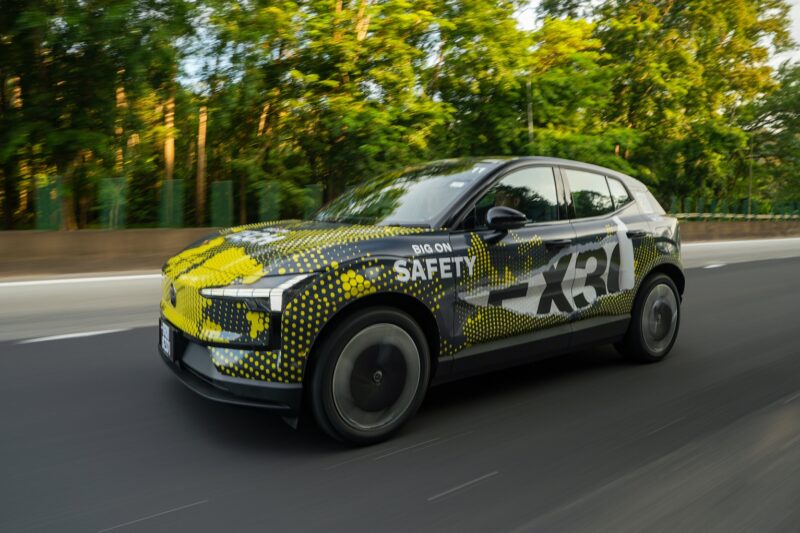
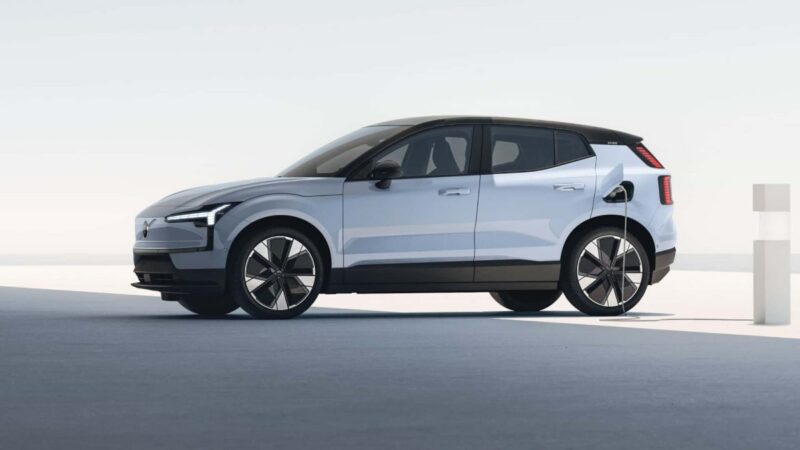
Launched in Malaysia last September, the Volvo EX30 is, without a doubt, an exciting electric vehicle. Firstly, it is a small car (it’s the smallest Volvo to date) and this makes it perfectly suited for urban driving.
Secondly, with its pixelated Thor hammer lights, short front and rear overhangs, and wide stance complemented by large wheels, the EX30 presents a modern and sporty appeal that is sure to attract younger buyers.
Thirdly, if you opt for the top variant, the Ultra Twin Performance, you can outperform most modern sports cars and supercars in 0-100 km/h acceleration without breaking a sweat. The EX30 achieves this impressive feat in just 3.6 seconds but first, you’ll need to activate the Performance AWD mode buried somewhere in the infotainment system.
However, there are still three aspects of the EX30 that the writer finds less than ideal. Let’s take a look at them:
Overreliance on the screen
Similar to other Volvo models, the EX30’s cabin design emphasises a minimalist concept. However, unlike the C40, XC90, and several other Volvo models that still feature physical buttons for audio controls and gear levers, the EX30 has no physical buttons apart from two power window switches on the center console.
This means that control for the infotainment system and climate control must be done through the touchscreen. While this isn’t unusual for an EV, as many other manufacturers follow suit, with the EX30, users may find it awkward since they also have to use the touchscreen to adjust the side mirrors and open the glove box.
Lack of head-up display
Perhaps in an effort to maintain a clean and tidy dashboard consistent with its minimalist design, the EX30 lacks a digital instrument panel. One might expect Volvo to offer a head-up display (HUD) as an alternative, but strangely that’s not the case.
Instead, all driving-related information (speed, gear position, and ADAS functions) is displayed on the touchscreen. This arrangement has two drawbacks: first, you have to divert your attention from the road to check this information; and second, all of it is displayed at the top of the screen in relatively small font.
Soundbar not as good as we expected
The EX30 does not come with conventional speakers on the front and rear door panels to create additional storage space. Instead, Volvo has placed a Harman Kardon soundbar that covers the entire width of the dashboard.
While it certainly looks appealing— and as we know, Harman Kardon audio quality is among the best in the industry— the absence of speakers in the rear diminishes the overall music listening experience, as the sound is concentrated only at the front of the cabin.
Volvo Car Malaysia will be hosting the Volvo Executive Car Sales event at Symphony Square, Petaling Jaya on October 19 and 20, from 10 AM to 6 PM.
More than 50 units of Volvo SELEKT cars will be showcased with prices starting as low as RM165,000, including units exclusively used by management.
Interestingly, all cars for sale have mileage not exceeding 15,000 km, with the lowest recorded at about 1,200 km only.
However, all car models come with an unlimited mileage guarantee, Volvo Service Inclusive for EV models, digital services, 24-hour roadside assistance, and a high-voltage battery guarantee similar to new cars.
This is also the last chance for wagon enthusiasts to get the Volvo V60 Recharge model, as its production has been discontinued by Volvo Car Malaysia.
This wagon model offers 462 hp with fuel consumption as low as 1.4 liters/100 km in hybrid mode, in addition to offering an electric range of up to 90 km.
Two Volvo EVs will also be showcased at the Volvo Executive Car Sales event, namely the Volvo C40 and the Volvo XC40 Recharge Pure Electric.
Developed on Geely’s SEA platform, which also underpins the smart #1 and Zeekr X, the EX30 is the smallest vehicle from Volvo to date.
That being said, don’t let its compact size fool you. The EX30 encompasses everything buyers in this segment desire—style, technology, practicality, and of course, performance.
Thanks to the well-thought-out though (though slightly unusual) activities organised during a recent media test drive by Volvo Car Malaysia, we gained a clear insight into the true capabilities of the EX30 and why it stands out in the market.
But before delving into the whole experience, let’s first explore the exterior and interior of this rather interesting EV. With dimensions of 4,223 mm in length, 1,837 mm in width, and 1,555 mm in height, it is indeed smaller than both the #1 and X.
Nevertheless, the EX30 boasts well-balanced and sporty proportions, featuring equally long front and rear overhangs, a lengthy wheelbase of 2,650 mm, and large wheels to complete the look.
Even though the test units were wrapped in camouflage, it’s easy to pinpoint it as a Volvo at first glance, thanks to the prominent Thor’s Hammer LED daytime running lights. Of course, the brand logo is also clearly displayed on the front of the car.
As one would expect from the Swedish marque, the interior of the EX30 is stylish and well-organised. In line with its sustainability efforts, Volvo has chosen to apply generous amounts of renewable and recyclable materials throughout nearly every nook and cranny of the cabin.
Aside from the window controls on the center console, you won’t find any physical buttons in the EX30. In fact, there’s no traditional gauge cluster in this vehicle. All functions and information—like vehicle speed and gear position—must be accessed through a 12.3-inch portrait-oriented touchscreen.
The minimalist approach effectively creates a spacious cockpit; however, those accustomed to conventional controls will take some getting used to. Even adjusting the side mirrors and opening the glovebox must now be done via the touchscreen.
While the interior of the EX30 is undeniably compact, I don’t believe most users will struggle to store their belongings. This is because Volvo has creatively maximised storage space. Firstly, instead of conventional door-mounted speakers, you’ll find a Harman Kardon soundbar covering the entire width of the dashboard to make room in the door panels.
Furthermore, the cupholders in the center console can be slid out fully. Located below this is another substantial storage area where you can place items like a wallet. Interestingly, the floor of this compartment can be opened to create a deeper space, right behind which is a removable tray.
Now, returning to the previously mentioned media test drive. From Volvo Malaysia’s headquarters in Petaling Jaya, we departed for the old airport in Sungai Besi where we did two driving activities: a drag race and a slalom run.
While slalom isn’t new to me, this time it was a bit different as we had to perform it in reverse. The bright and clear video feeds from the exterior cameras helped me avoid the cones.
Next, racing against a Volvo V60 T8 demonstrated the true potential of the EX30 on a straight line. The Twin Motor Performance variant we drove has a ‘secret’ Performance All-Wheel Drive mode that, when activated, generates a maximum power output of 428 PS and 543 Nm.
Just like that, the EX30 blasts from 0 to 100 km/h in a scant 3.6 seconds, surpassing the plug-in hybrid wagon that is actually significantly more powerful.
After the activities in Sungai Besi, we moved to Bamboo Hills for a demonstration of the Park Pilot Assist feature. The feature is incredibly user-friendly and can instantly detect available parking spaces. You simply need to select your desired spot, and the car will handle the rest for you.
Next, we headed to Ikea Damansara for a unique shopping experience. Each team, composed of six media members, was given a budget of RM2,000 to buy as many items as possible to cram into the tiny EV.
Thanks to the boot space, which can accommodate up to 904 litres (when the back seats are folded), a 61-liter compartment beneath the boot floor, and a 7-litre frunk, our team successfully packed several chairs, a futon mattress, pillows, and many other items without a snag.
It is uncustomary for car manufacturers to let motoring media run wild in a mall as part of a media drive but this activity showcased that even though the EX30 is compact, its interior is versatile enough for weekend getaways in the Klang Valley and surrounding areas.
From Kuala Lumpur, we then headed to Janda Baik as the final stop of the media drive. The journey from the capital to this popular resort was enjoyable, especially when cruising along the Karak Highway, given the EX30’s stable and solid handling.
Even after an aggressively spirited day of driving, including the drag race earlier, we arrived in Janda Baik with about 45% battery power remaining. Just imagine the range if driven more conservatively.
For your information, the Twin Motor Performance variant features a 69 kWh Nickel Manganese Cobalt (NMC) battery, promising a driving range of approximately 450 km based on the WLTP cycle.
The battery can be charged from 10% to 80% in just 30 minutes using a 153 kW DC fast charger, while AC charging at 11 kW takes about 7.5 hours for a full charge.
Conclusion
For an electric vehicle, the Volvo EX30 offers numerous advantages. Its modern and attractive design—both exterior and interior—is eye-catching, yet never overwhelming.
While the lack of physical buttons might lead to potential buyers feeling a little hesitant, based on my experience, all functions and features can be easily accessed. It just takes a bit of time to learn how to use them.
For me, the key strengths of the EX30 lie in its performance and practicality, making it an ideal choice for young individuals with an active lifestyle.
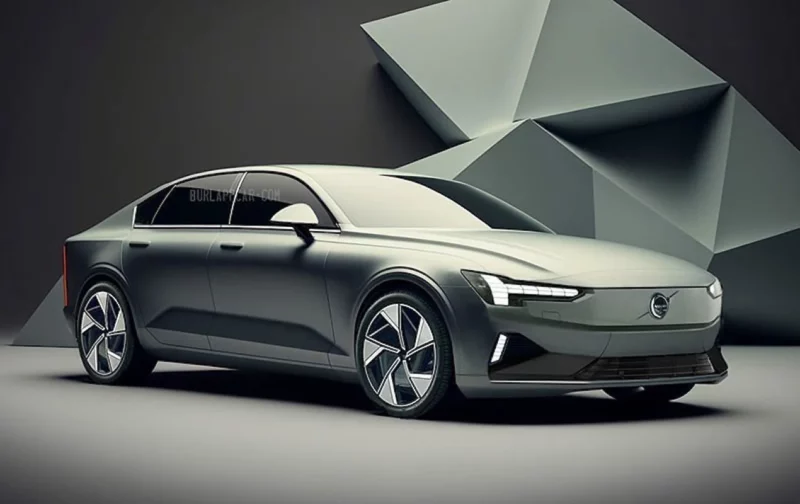
Electric cars that prioritize high aerodynamic efficiency and low drag coefficient are indeed capable of offering benefits in terms of longer range.
However, their drawback is that they will not have the sleek design of traditional cars that exist in the market.
The closest examples you can see are the designs of any electric sedan by Mercedes-Benz, such as the EQS, EQE, and the concept model Vision EQXX.
Speaking to the automotive website Drive Australia, Florian Mockenhaupt, Volvo’s Senior Exterior Design Manager, said, “It’s not about aesthetic value, but producing a car that looks like an Apple mouse will come with various compromises.”
He added that Volvo’s future cars will benefit from improved aerodynamics while maintaining the comfort aspect desired by customers.
Mockenhaupt also emphasized that Volvo will not employ the “same sausage, different lengths” strategy used by some competitors from Germany.
According to Automotive News, the CEO of Volvo confirmed that the brand will launch up to 10 new generation models and updated versions over the next 24 months.
Two of these will be the all new EX60 crossover and the ES90 sedan, which will be offered in both EV and plug-in hybrid (PHEV) versions.
Volvo Car Malaysia has launched its latest electric vehicle, the Volvo EX30. This marks the smallest and fastest vehicle ever produced by the brand to date.
For the local market, the EX30 is offered in three variants: Plus, Ultra, and Ultra Twin Performance.
The Plus and Ultra variants utilise a Single Motor Extended Range powertrain that generates 272 PS and 343 Nm of torque, allowing acceleration from 0 to 100 km/h in just 5.3 seconds.
The Ultra Twin Performance variant is equipped with dual motors, producing a total system output 428 PS and 543 Nm of torque, achieving the same acceleration in a scant 3.6 seconds.
All variants are equipped with a 69 kWh NMC battery, providing a range of up to 476 km for the single motor variants and 450 km for the Ultra Twin Performance.
The battery supports fast charging via a 175 kW DC charger, which is capable of juicing up the battery from 10% to 80% in only 28 minutes.
Standard features include LED headlights, 19-inch Diamond Cut alloy wheels, a premium Harman Kardon sound bar audio system, power tailgate, frameless auto-dimming side and rear-view mirrors, and themed ambient interior lighting.
The Ultra variant adds Park Pilot Assist, a 360° camera, powered front seats, and a panoramic sunroof.
Safety-wise, it includes advanced driver assistance systems featuring enhanced Pilot Assist, Park Pilot Assist, door opening alert, automatic braking and automatic steering avoidance.
Customers have the option of exterior colours such as Cloud Blue, Vapour Grey, Crystal White, and Onyx Black, with the unique Moss Yellow color available exclusively for the Ultra variant for a limited time in Malaysia.
Pricing starts at RM188,888 for the EX30 Plus, RM208,888 for the EX30 Ultra, and RM228,888 for the EX30 Ultra Twin Performance.
Like every fully electric Volvo model, the EX30 comes with a five-year Volvo Service Plan (VSP), digital services, 24-hour roadside assistance, and an unlimited mileage vehicle warranty.
For further peace of mind, the high-voltage battery pack is warrantied for eight years.
In support of developing skilled heavy-duty truck drivers, Volvo Malaysia Sdn Bhd (Volvo Trucks), has introduced its Volvo Iron Women initiative to Malaysia.
With the support of the Women, Family and Community Development Ministry as strategic partner, Volvo Trucks recently celebrated the inaugural graduation of five women as fully certified heavy-duty truck drivers.
“Volvo Iron Women has enjoyed much success globally and we are very excited to see the opportunities it will unlock with Malaysia as a pioneer of the programme in the Southeast Asia region,” said Volvo Trucks International, Vice President, Johan Selvén.
Minister of Women, Family and Community Development, Yang Berhormat Dato’ Seri Hajah Nancy Shukri, who graced the graduation ceremony, said in her address, “KPWKM’s collaboration with Volvo Trucks through the Iron Women initiative is a shining example of an impactful public-private partnership. I believe we are moving the needle steadily in addressing gender disparities in the workforce.”
Nancy also acknowledged Taipanco Sdn Bhd, who will be employing the first cohort of graduates, for being among the few industry players to recognise the value of women heavy-duty truck drivers as valuable assets to their fleet.
The Ministry stated that it would lend its support to equip the Iron Women graduates with the knowledge and skills to navigate a male-dominated industry, especially with an awareness to recognise and address any form of gender bias harassment with confidence.
This includes endorsing the Volvo Iron Women programme for counselling and training for gender bias harassment, and provision of a hotline for women drivers in need of counselling or advise should the need arise.
The Ministry also stated it would assist in identifying and recommending viable candidates as participants. By integrating a support system for the women, the Ministry hopes to create a seamless and sustainable transition of more women into new economic sectors, especially one traditionally dominated by men.
“Being in the logistics industry for over two decades, we see great potential in the empowerment and participation of women to address the industry’s growing demand for skilled truck drivers,” said Taipanco Sdn Bhd, Executive Director, Dato’ Nazari Akhbar.
The Volvo Iron Women programme is designed to empower candidates from end to end, beginning with the undertaking of lessons and examinations through an authorised driving institution to obtain a Class E license to drive heavy vehicles.
Following a full health evaluation, candidates then progress to the next stage of obtaining a Goods Driving License (GDL) by attending a seven-hour lecture and theory examination, of which all costs will be borne by the employing company. The GDL is divided into three categories, namely light vehicles, heavy vehicles and jointed vehicles. The Volvo Iron Women programme in Malaysia is focused on jointed vehicles.
Volvo Car Malaysia will be giving customers the opportunity to get in the driver’s seat of the Volvo EX30 at a massive, first-of-its-kind launch showcase and driving experience happening from 26 to 29 September at KL Base, Sungai Besi.
The Volvo EX30 Experience will come hot on the heels of the official unveiling – slated for September 25 – and will offer customers the opportunity to be amongst the first to experience Volvo’s new, fully electric SUV.
The EX30 is packed with technology, featuring a new automatic parking feature, Google Built-in, upgraded Pilot Assist, and 360° environmental awareness from multiple cameras, sensors, and radars that look out for you and others on the road.
Big on tech and safety, it is also Volvo’s fastest-accelerating car and is designed to have the smallest carbon footprint ever of any Volvo car to date.
Attendees at the Volvo EX30 Experience will be able to:
Understand the many little ideas, inspirations, calculations and tests that built up to make a big impact in the design of the EX30.
See, touch, hear, and feel the EX30 in person.
Learn about the EX30’s cutting-edge technology and safety features in an interactive, guided car ride.
Experience the EX30’s blisteringly fast acceleration and dynamic handling on the runway of the iconic Sungai Besi airstrip.
Drive the EX30 on real-world city roads to appreciate its urban-friendly design.
Enjoy warm Scandinavian hospitality accompanied by knowledgeable consultants from Volvo’s authorised dealers.
The Volvo EX30 Experience will run from 10:00AM to 6:00PM each day and slots are available on a first-come, first-served basis. Register for the event at https://forms.volvocarmalaysia.com/ex30.
Customers can place their bookings online for the EX30 from 25 September.
The last time the Volvo XC90 was given an update was back in 2019. Now, five years later, the flagship SUV has received another round of makeover that sees it adapting design elements from the Swedish marque’s electric offering.
As you can see, the XC90 sports a new grille and LED headlights with sharper ‘Thor’s hammer’ DRL signatures. The front bumper also gets a fresh look with vertical air vents and wider lower air intake.
The shape of the taillights remains unchanged, but they now appear more modern thanks to a new lighting pattern.
For the interior, Volvo has made it even more practical in response to feedback from current XC90 owners. The center console now has additional storage space and cup holders, while the wireless charger is placed behind the central tunnel for better convenience.
On top of that, the XC90 gets a larger 11.2-inch touchscreen with a sharper and brighter display with 21% higher pixel density.
There’s also the the Bowers & Wilkins High Fidelity audio system which Volvo claims can “faithfully replicate the acoustics of a stage, a concert hall or a jazz club.”
The XC90 will continue to be offered in the range-topping T8 plug-in hybrid variant. It combines a petrol engine and an electric motor that offers a range of over 800 km.
Volvo also offers B5 and B6 petrol mild hybrid variants, both assisted by a 48v lithium-ion battery and an integrated starter/generator which can help reduce emissions and fuel consumption by up to 15% in real-world driving.
The automaker has revised the suspension system so that each individual damper can adapt mechanically to current road conditions to optimise both comfort and stability.
Alternatively, customers can tick the box for the available air suspension system that works with an active chassis system to monitor the car, road and driver 500 times per second to give the most comfortable ride possible.
The air suspension system can lower itself by 20 mm or raise itself by 40 mm, making it easier for passengers to get in and out, improving aerodynamics, and increasing ground clearance for off-road driving.
Finally, Volvo has added extra insulation to certain parts of the car for less wind and road noise.
Did you know that Volvo is among the earliest automotive manufacturers in the world to announce a strategy to offer a full-time EV portfolio by 2030?
In fact, by the end of May 2024, its CEO, Jim Rowan, explained that the target could still be achievable, and he also believes that Volvo can end the sales of internal combustion engine vehicles within the next five years.
However, in an event held with investors in late July, the CEO finally admitted that “it will take time to connect various parts of the world to achieve full electrification.”
In other words, the initial goal of becoming a pure EV brand by 2030 may be difficult to achieve.
Considering the latest developments, Volvo has decided to realign its sales targets, aiming for 90-100 percent of sales to consist of EVs and PHEVs by the end of this decade.
Meanwhile, non-plug-in hybrid vehicles will continue to be sold for a longer period than initially expected.
The Swedish manufacturer believes that several factors contribute to the slowing transition to EV usage, such as slow infrastructure development, reduced EV sales incentives, and the introduction of new tariffs for EVs in some markets.
In addition to Volvo, several other major global manufacturers are also reconsidering their aggressive electrification strategies, including Porsche, Mercedes-Benz, Bentley, and Ford.
VOLVO Car Malaysia (VCM) seems to be launching the EX30 in the near future. Bookings are now open, and those interested can start registering on the newly opened dedicated webpage.
The Volvo EX30 is a new-generation compact electric vehicle (EV) from the Swedish manufacturer. It measures 4,223mm in length, 1,837mm in width, 1,555mm in height, with a wheelbase of 2,650mm.
Depending on the variant, this SUV is equipped with a 69kWh nickel manganese cobalt (NMC) battery. It can be charged using AC 11kWh (7.5 hours) or DC 153kW (26.5 minutes from 10 to 80 percent).
The specific variant available in the Malaysian market is yet to be confirmed, but the EX30 comes with three motor configuration options.
The Core Single Motor Extended Range and Ultra Single Motor Extended Range models each have a single electric motor at the rear, with outputs of 268hp and 343Nm, and a driving range of 480km.
The higher variant is the Ultra Twin Motor Performance with two electric motors, and outputs of 422hp and 543Nm torque. It has a slightly lower driving range of 460km according to WLTP cycle.
Like previous Volvo models, the EX30 cabin is quite minimalistic but features a completely new design. The dashboard features a 12.3-inch vertical infotainment screen with software such as Google, Apple, and Qualcomm. It also has ECARX, and all of this can be updated over-the-air.
The EX30 also comes with a digital key that can be integrated with various smartphones, with applications for functions such as charging, location, locking, and heating. The Park Pilot Assist on the EX30 is the latest version.
Interested in the latest Volvo electric SUV? You can register your interest at this link.
Volvo Cars today reports an operating profit (EBIT), excluding joint ventures and associates, of SEK 8.2 billion for the second quarter of 2024, the highest-ever in a single quarter and an increase of 28 per cent versus the same period in 2023.
The corresponding core EBIT margin reached a record high of 8.1 per cent, versus 6.3 per cent in the same period last year. This improvement in the underlying profitability was a result of the company’s focus on pricing discipline, internal cost control and sustained growth in sales.
During the quarter, global retail sales rose by 15 per cent year-on-year to 205,400 cars. This was driven by the performance of the company’s electrified cars – both plug-in hybrids and electric cars – sales of which grew by 43 per cent in the second quarter, versus the same period last year.
48 per cent of Volvo Cars’ global sales volume during the quarter consisted of plug-in hybrid (PHEV) and fully electric (EV) cars, while its EV-only share of sales rose to 26 per cent. The strong demand for the company’s electrified cars was demonstrated by the EX30 small SUV, which was among the top three best-selling EVs in Europe, while the XC60 plug-in hybrid continues to be the best-selling PHEV in Europe in recent months.
The EX30 has proved popular with customers in Europe and other markets. This has been reflected in Volvo Cars’ gross margins, which increased to 22.8 per cent from 19.0 per cent last year. Gross margins on its EVs reached a new high of 20 per cent in the period, demonstrating that Volvo Cars continues to make the transition towards electrification profitably.
Revenue for the second quarter came in at SEK 101.5 billion, versus SEK 102.2 billion reported in the same period last year. The slight revenue decline was due to reduced income from contract manufacturing and a normalisation of sales to rental companies. Volvo Cars’ core revenues from operations during the quarter, excluding income from contract manufacturing, remained stable.
“We delivered a strong second quarter performance in 2024 with record underlying profitability, demonstrating our ability to create value despite a complex geopolitical and economic environment,” said Jim Rowan, chief executive of Volvo Cars. “Our core operational momentum remains on a firm footing, thanks to the strength of our balanced strategy, product portfolio and our agility in responding decisively to headwinds.”
“Our brand and values around safety and sustainability, as well as our unique technology approach, continue to resonate strongly with customers,” added Jim Rowan.
The EX30, EM90 and EX90 are clear examples of where Volvo Cars is going, as it continues its journey towards full electrification. Together with its plug-in and mild hybrid cars, these EV models provide Volvo Cars with a balanced portfolio that serves as a clear bridge to an all-electric future.
This transition will not be a linear development. Many consumers are not yet able to go fully electric, particularly in areas with low infrastructure development or because of the early withdrawal of incentives by governments. These factors make Volvo Cars’ balanced line-up of fully electric, plug-in and mild hybrid models important as a bridge.
Volvo Cars continues to invest across the breadth of its product range, both in new models and ongoing improvements to existing ones. During its Capital Markets Day in September, Volvo Cars will reveal more details on its technological roadmap as well as forthcoming models and updates.
Yet like all global companies, Volvo Cars operates in a complex geopolitical environment that impacts trade and tests supply chain resilience. In the short term, potential tariffs from the EU commission affecting EVs from China will affect the EX30.
However, as the company previously announced, it will start producing the EX30 in its Ghent, Belgium plant next year, as part of its ‘Build where we sell’ strategy. The company aims to start production of the EX30 in Ghent during the first half of 2025, with volumes ramping up during the second half of that year.
THE Volvo S60 in America has become a quiet alternative to the BMW 3-Series and Mercedes-Benz C-Class. Now, this executive sedan has reached the end of its life.
Volvo has confirmed that sales of the S60 will be discontinued in the United States (US) after 24 years, spanning three generations.
“After five years Volvo Cars is ending production of the S60 sedan in Ridgeville, South Carolina at the end of June 2024 for the US and some other markets to focus on the all-new EX90,” a Volvo spokesperson told Motor1.
The third-generation Volvo S60 was introduced as a 2019 model and manufactured in the South Carolina facility.
Several variants were offered throughout production, from the base T5 version with 252hp to the high-performance Polestar Engineered model.
Compared to its competitors, Volvo S60 sales have been relatively lackluster in the US. Its sales have never exceeded 20,000 units per year, averaging around 10,000 to 12,000 units annually.
In comparison, BMW and Mercedes each sold 33,000 units of the 3-Series and C-Class respectively last year.
At the same time, the discontinuation of the Volvo S60 is expected to pave the way for more profits for Volvo when they introduce the EX90 later.
The EX90 is Volvo’s first fully electric (EV) three-row SUV, equipped with a 111kWh battery delivering 496hp and a driving range of up to 480km.
TAMIYA is an expert in producing radio-controlled vehicle models (RC) with intricate details like scale models for decoration. The latest model from their 1/14 scale truck series is the Volvo FH16 Globetrotter XL 750 4×2.
The actual truck, which has a 16.1-liter 6-cylinder turbo in-line engine with 750hp, has been recreated as an RC model with a realistic body. The chassis features various iron components and a three-speed gearbox.
The FH16 model measures 462mm in length, 193mm in width, and 309mm in height, weighing approximately 3.5kg. It is also equipped with an aluminum shock absorber with leaf springs.
Details on the cab include an air deflector, stainless steel grille, LED headlights with fog lights, antenna, roof LED light set, side mirrors, battery box, air tank, and a coupler for trailer connection.
For even more realism, you can get the Tamiya Multi-Function Control Unit (sold separately) that offers sound, lights, and vibrations. The digital sound is recorded from the actual truck, including air horn and gear shifting sounds. Furthermore, all light operations, signals, including 3-speed gear shifting, can also be controlled remotely.
The RC model Volvo FH16 Globetrotter can be found at Tamiya stores and official distributors worldwide.
The electric SUV Volvo EX90 had already been officially launched at the end of 2022, but production of the model will only begin in South Carolina, United States, this month.
The production delay is due to the complexity of the LIDAR system that will be incorporated into the Volvo EX90. However, one thing is certain, the Volvo EX90 will be the world’s first car to have its own battery passport system.
This documentation system will record all essential information about the battery pack, including the origin of raw materials, components, recycled content, and the overall carbon footprint.
This passport will also record current information regarding the battery health for up to 15 years. This is crucial for customers in determining the current value of an EV, especially as the Volvo EX90 begins to enter the used vehicle market.
Volvo took over five years to develop this passport system in collaboration with the UK startup company Circulor, with an expected cost of approximately $10 (RM47) per vehicle.
In addition to the Volvo EX90, this battery passport will be expanded for use in other Volvo EVs. According to a Reuters report, every EV sold in Europe will be required to have a battery passport starting in February 2027.
VOLVO Buses, a part of the Volvo Group, together with Gemilang International Ltd, has launched a fully electric bus (EV).
The all-new Volvo BZL-GML Eco Range is a premium low-floor urban electric bus with two doors, the first of its kind assembled in the country (CKD) by Volvo.
The manufacturer has also collaborated with Rapid Bus Sdn Bhd for the trial operation of the Volvo BZL-GML Eco Range.
The trial is set to commence in July 2024 and is expected to last for a minimum of six months to a year.
A Volvo electric bus will operate on Route 581, covering the journey from Desa Tasik to LRT Bandar Tasik Selatan.
The chassis and powertrain components with efficient energy from Volvo BZL have been engineered and built to the highest standards at Volvo’s manufacturing plant in Sweden.
This bus can accommodate up to 91 passengers with a capacity of 33 seats, including safety seats, seats for specific groups, foldable seats, and standing passenger space.
It features a completely flat and low floor design from the front to the back, providing stability and easier access for passengers.
An electric powertrain system with a power output of 540hp and immediate torque.
The EV bus is also equipped with various advanced braking technologies, including Volvo disc brakes, Electronic Brake System (EBS), Anti-lock Braking System (ABS), Acceleration Slip Regulator (ASR), Brake Blending, Hill Assist System (HAS), and Electronic Stability Control (ESC).
Additionally, other safety features such as warning alerts, collision warnings, 360 cameras, and e-mirrors to assist the driver will be offered as options.
In the event of an unlikely breakdown, the battery cells and surrounding area are designed to ‘self-extinguish’ by automatically releasing temperature extinguishing agents to prevent nearby battery cells from damage. This feature has been proven effective through repeated testing.
The Volvo BZL-GML Eco Range electric bus offers flexible charging through the OppCharge interface hardware for automatic high-power charging and CCS charging sockets.
The energy storage is placed on the roof, providing more spacious passenger areas and optimizing weight distribution.
ARE you in the market for a new electric vehicle (EV)? How about trying out Volvo, where you might just stand a chance to win a trip to Sweden for two worth up to RM50,000!
Yes, this offer is made by Volvo Car Malaysia in conjunction with the Volvo Birthday Sale, as the Swedish brand celebrates its 97th birthday this month.
The Volvo Birthday Sale event will take place next week, from 26th to 28th April 2024 at Sentul Depot. It will also be held at selected Volvo dealers across the country, as well as in Sabah and Sarawak.
As mentioned earlier, the purchase of Volvo EV vehicles enables you to win a trip to the birthplace of Volvo in Gothenburg, Sweden, in addition to the opportunity to visit the recently opened World of Volvo experience center on the 14th of April.
During the Volvo Birthday Sale event, you can also enjoy a rebate of RM15,000 and other offers for the C40 and XC40 Recharge Pure Electric models.
The latest C40 Recharge Pure Electric has been updated for 2024, now offering an extended driving range of up to 550km (WLTP cycle), faster DC charging, pixel technology headlights, and a new Vapour Grey color.
Other Volvo models will also be showcased at this event, including the PHEV lineup (XC60, XC90, S60, S90, and V60 Recharge). Additionally, the Volvo SELEKT range will be offered, which consists of certified pre-owned vehicles with full assurance and inspection by Volvo Car Malaysia.
To further sweeten the deal for you as a customer or potential customer, the first 97 customers who make reservations within the three-day period will receive an exclusive Volvo Gift Box upon delivery of the new vehicle.
When asked what comes to mind with Volvo, undoubtedly safety springs to mind. The Swedish manufacturer is synonymous with safety and takes pride in it.
Recently, Volvo Car Malaysia organized their first Volvo Safety Driving Experience at the country’s first air base (former) in Bandar Malaysia, Sungai Besi.
The event, held on a Saturday a few weeks ago, saw over 240 Volvo owners and enthusiasts learning driving skills through exercises such as braking, steering, and quick lane changes.
For us in the media industry, such activities are not entirely unfamiliar, but it was the first time with Volvo, making it still something interesting to observe.
The first driving activity involved changing lanes to the left or right followed by maximum braking until the vehicle stopped. Using the Volvo C40 Recharge and XC40 Recharge, this activity was performed at speeds of 60 or 70 km/h.
Even at this speed, it was evident that it could feel aggressive for passengers despite the car remaining stable. Imagine having to perform this emergency maneuver while driving at 110 km/h on the highway…
Next, we were taken to the braking activity on a straight road while avoiding obstacles. Here, it could be seen that the ABS allowed the car to remain controllable even when braking hard.
Most importantly, the driver’s ability to react and focus during driving to reduce the risk of collisions in emergency situations is crucial.
Next, we were shown demonstrations of the safety systems present in the latest Volvo models.
Among them was the Cross Traffic Alert, which warns the driver of traffic behind when attempting to reverse out of a parking spot. The warning provided is accurate depending on the direction and distance of the traffic.
We also had the opportunity to try the Pilot Assist system with the Volvo V60, which helps the driver control speed in traffic along with steering assistance.
Crucially, Pilot Assist is also capable of braking automatically if the traffic ahead slows down, and it does so smoothly and naturally, like a real driver. This can undoubtedly reduce the burden and fatigue on the driver in everyday situations.
The last activity included a slalom course and high-speed acceleration. During the slalom, we could feel the agility of the Volvo S90, V60, XC60, and XC90 being driven through narrow routes adeptly, but in a safe manner.
Despite most of these models weighing around two tons, they were still stable and agile and had very convincing braking performance.
Lastly, for the high-speed driving activity, we were given the opportunity to accelerate on the Sungai Besi Airfield runway, which is 1.8 km long, although we were not pilots wanting to take off.
Instead, we pushed these Volvo plug-in hybrid models to their maximum speed of 180 km/h and demonstrated the stability of these models when braking from high speeds. This maximum speed could also be achieved very quickly, in about 20 seconds.
Overall, the Volvo Safety Driving Experience provides participants the chance to experience and test the capabilities of Volvo models in safety-related situations.
Moreover, in the hangar, there was an exhibition of all Volvo models, sponsored by Pirelli, the main tire sponsor, and family activities such as Småland for children, as well as an exhibition by PURAS.
VOLVO is standardising the names for two of its fully electric models, the XC40 Recharge and C40 Recharge, in line with its transformation towards becoming a fully electric car manufacturer by 2030.
Effective immediately, said models are renamed to EX40 and EC40 respectively, following in the footsteps of other Volvo fully electric models, which are the EX30, EX90 and EM90. The XC40 name remains for internal combustion-powered variants of the model.
The update also includes the removal of Recharge badging from Volvo’s plug-in hybrid models, which are now denoted simply by the T6 or T8 suffix indicating different levels of power output.
The new and streamlined model name standard makes it even easier for existing and new customers to understand which of the Volvo models are fully electric and which are hybrids.
The Swedish automaker is also introducing a new Performance software pack for the EX40 and EC40 Twin Motor variants, and as an upgrade for the previous model year in selected markets.
The Performance software pack, which increases power output by 25 kW (34 hp) for faster acceleration, also includes unique pedal mapping for quicker accelerator response and a ‘Performance’ drive mode to unlock the full 325 kW (436 hp).
In available markets, the Performance software will be offered as an optional upgrade pack via the Volvo Cars app when ordering a new car, while drivers of previous model year 2024 C40 and fully electric XC40 Recharge can purchase and download the software from the comfort of their sofa.
Additionally, B5 mild hybrid petrol variants of XC60 and XC90 now employ a more efficient engine combustion cycle, expected to result in CO2 emission reductions and fuel economy improvements of up to around 4% for the XC60 and around 2% for the XC90 based on the WLTP cycle.
There are also a special Black Edition of the EX40, EC40 and the XC40. The Black Edition models come with Onyx Black paint, high gloss black badging, 20-inch five-spoke alloys in high gloss black and the choice between microtech or textile charcoal interiors.
VOLVO Car Malaysia (VCM) today announced that the electric SUV (EV) C40 has received enhancements for the year 2024. It is now offered with an extended driving range of up to 550km and pixel LED headlights.
Its battery pack has been increased from 78kWh to 82kWh, and with better cooling system, it adds 100km of driving range compared to before.
The 2024 Volvo C40’s battery now also supports DC charging of up to 200kW (compared to 150kW previously), meaning the battery level can go from 10 percent to 80 percent in just 28 minutes.
The powertrain has also been improved. Instead of having two motors with the same 150kW (204hp) power in the front and rear, the C40 now features a pair of motors with different outputs.
The front motor has an output of 117kW (159hp) while the rear has 183kW (249hp). The total power remains the same at 300kW (408hp).
As mentioned earlier, the 2024 Volvo C40 is also equipped with matrix LED lights for better illumination. Other features include 19-inch rims and the new Vapour Grey color.
With these added specifications, VCM has maintained the price of the C40 Recharge at RM288,888 on the road without insurance. This also includes a five-year unlimited mileage warranty, as well as an eight-year or 160,000km battery warranty.
There is also a five-year or 100,000km free service package and roadside assistance for the same duration.
Malaysia’s Leading Automotive News | ENGEAR ENGLISH