Proton sold 154,611 cars in 2023, best performance since 2012

PROTON ended 2023 with 12,711 units sold in December, bring its year-end total sales figure to 154,611 units for domestic and export markets.

The sales figure represents a 9.3% increase compared to the 141,432 units recorded in 2022.

That being so, Proton has successfully achieved its best sales performance since 2012 and a fifth consecutive year of sales growth.

The company’s overall market share is calculated to be 19.4% of the estimated total industry volume of 794,948 units, approximately 10.3% than the previous year.

This positions Proton in the second place in overall sales for the fifth consecutive year.

According to the company, the the rebound in demand for the PIES models (Persona, Iriz, Exora and Saga) powered its sales growth in 2023.

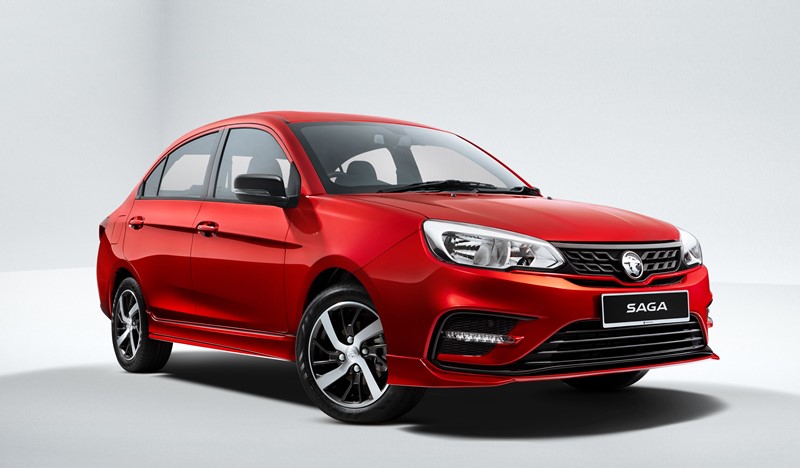
The Saga remains Proton’s best-selling model with 70,184 units sold, its best performance since 2012 and placing it as the fourth best-selling vehicle in Malaysia for 2023.

The Persona saw the most significant growth as sales rose by 48.9% to 24,362 units. The Iriz, which also suffered delays due to last year’s chip shortage, posted a tidy 33.8% increase in sales to 7,639 units in 2023.

The Exora signed off with a sales increase of 4.6%, ending the year with 4,473 units sold. Since its launch in 2009, Proton has sold over 194,000 units of the Exora, making it the most successful C-segment MPV in Malaysia’s automotive history.

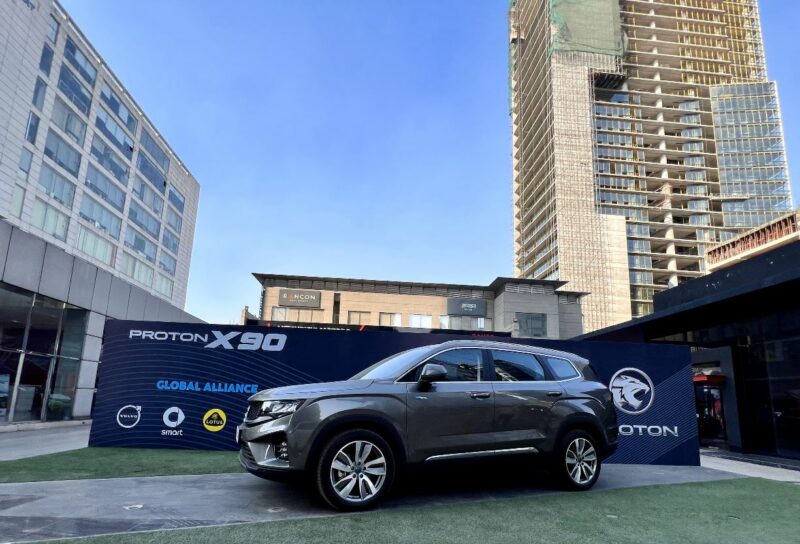
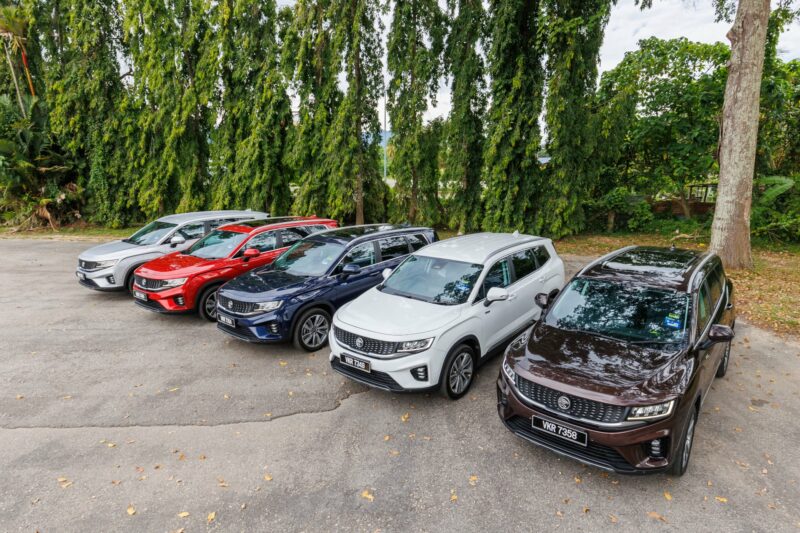
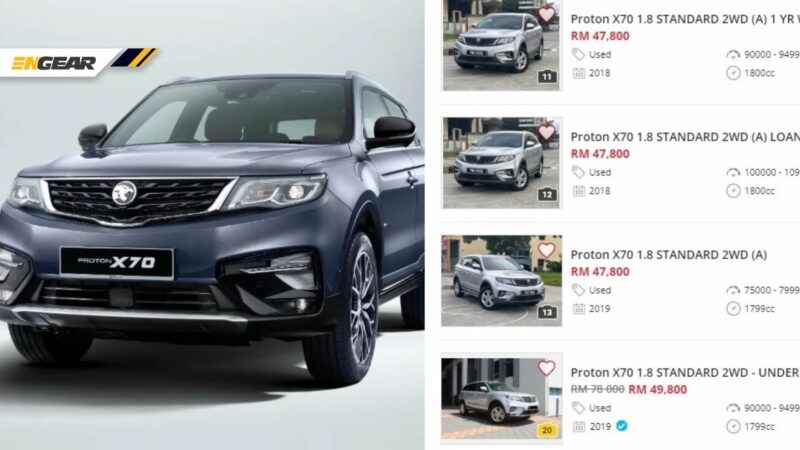
Proton’s SUV lineup also ended the year on a positive note. Demand for the X50 remains strong with 31,829 units sold in Malaysia and overseas throughout the past year. Following this is the X70 with 11,200 units and the X90 with 4,815 units sold.

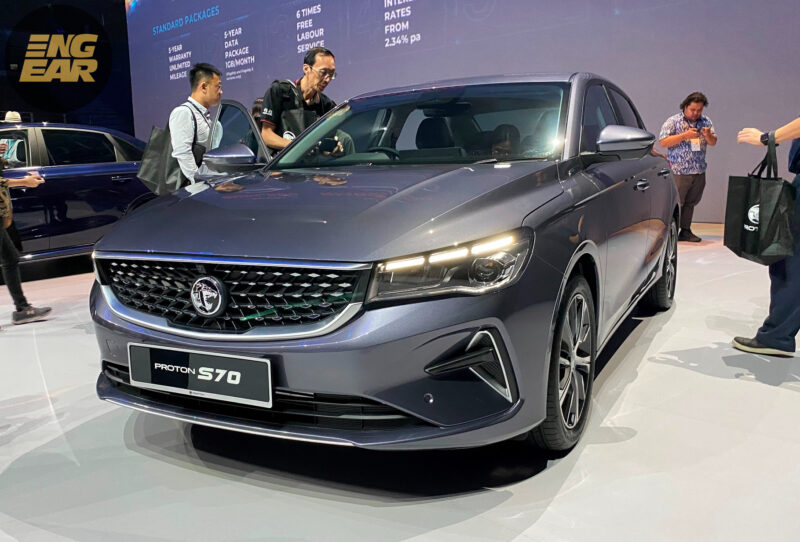
As for the S70, customer deliveries will begin in 2024 and to date, more than 5,000 bookings have been received.

Proton Arena ‘GTi’ for sale in the UK, for RM14.7k only!

THE Proton Arena is among the national car company’s models that didn’t sell well initially, but is now in high demand. The price is still steep, a brief survey on sales websites shows prices are still around RM25,000 to RM35,000.

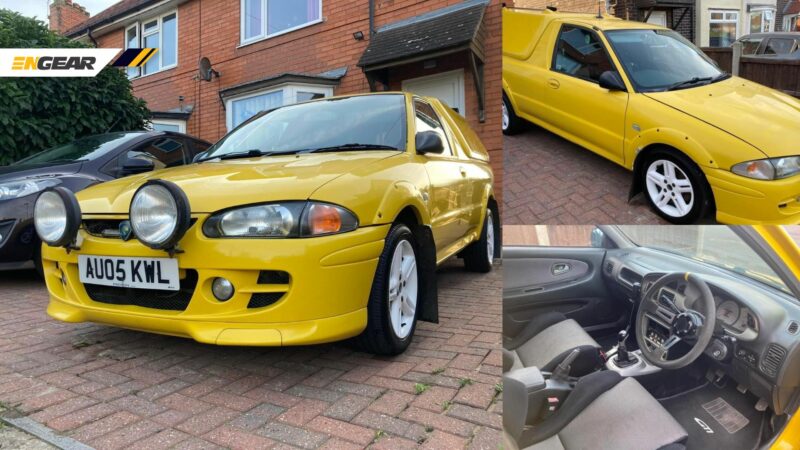
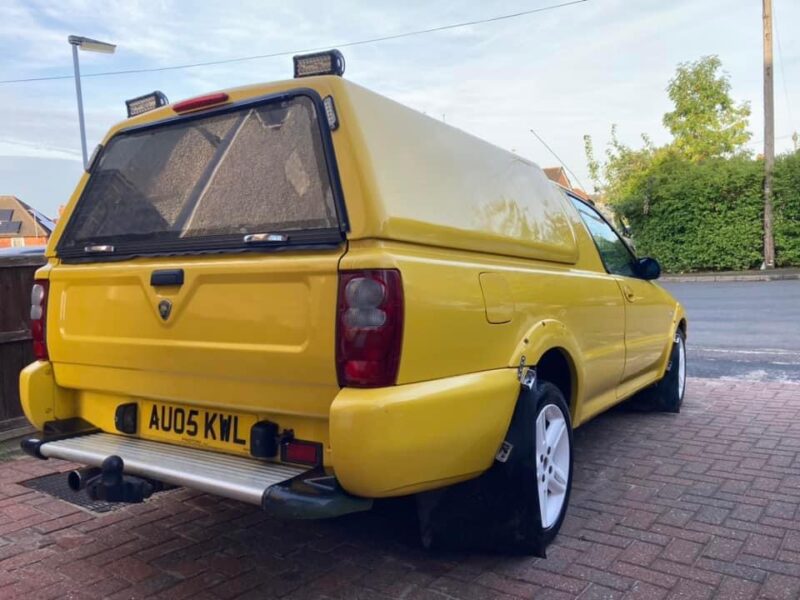
However, in the United Kingdom (UK), there is a Proton Arena for sale at only £2,500 (RM14,739)! The Arena is known as the Proton Jumbuck in export markets such as the UK and Australia.

Not only is the price quite attractive, but this yellow Proton Jumbuck unit is even ‘copied’ with parts from the Satria GTi!

This can be seen in the front bumper, side fenders, and interior parts such as the dashboard, Recaro seats, pedals, and original GTi carpets. Quite handsome, if I may say so myself…

According to its owner, Paul Atkinson, who advertised the Jumbuck on the Proton gti owners UK page on Facebook, the engine is also from the GTi, a 4G93P 1.8-liter 16-valve unit.

The Proton Jumbuck GTi is painted in a sporty yellow color. It is further given a rally image with items such as WRC side mirrors, mud flaps, 15-inch white Momo rims, and the writer’s favorite, a pair of round spot lights at the front!

According to Atkinson, the Jumbuck is being sold because there have been changes to its design. “Jumbuck’s are getting quite rare now and especially modified ones,” he said.

“It always gets lots of compliments and is pretty quick for what it is (circa 140bhp), early Evo engines do drop straight in.

“MOT until August 2024, 100,000 miles, and the car is in Grantham, Lincolnshire,” Atkinson wrote.

Imagine if this Proton Arena were available in Malaysia, its price would surely easily reach RM55,000. Perhaps even more. This is because its other specifications are also quite tempting.

Below, we list what Atkinson shared:

Modifications:

• Satria GTi engine and gearbox (1.8 16v)
• Hockley exhaust manifold
• Custom stainless exhaust
• Pipercross induction kit
• Satria GTi interior
• Deep dish steering wheel
• Rearview camera
• CB radio
• Satria GTi body kit (front bumper & arches)
• Evo front suspension
• 15” Momo alloys (recently refurbished)
• 195 50 15 Avon ZV7 tires (new)
• WRC-style mirrors
• WRC-style mud flaps
• Rally spot lights
• Truckman cab
• LED rear work lights
• Air horns
• Tow bar
• Rear step

Proton S70 officially launched – 4 variants, priced from RM73,800

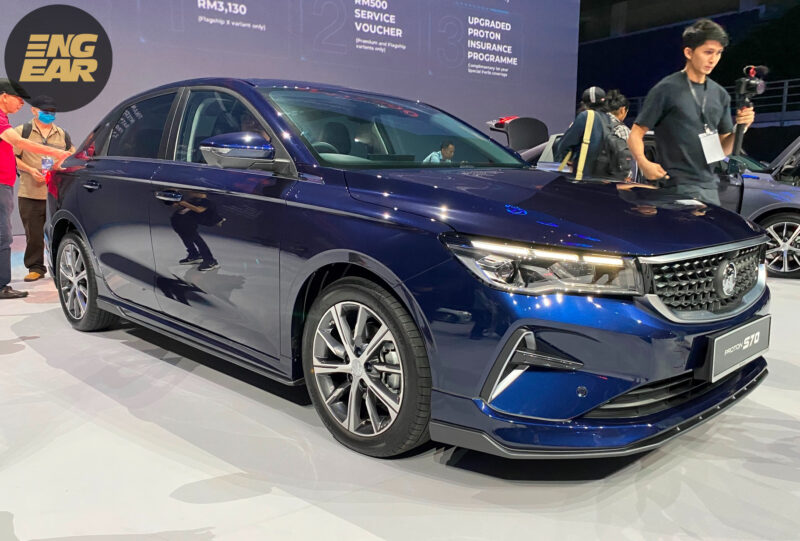
IT’S safe to say that many have been waiting for the arrival of the newest sedan from Proton, especially considering that the last time the national car maker brought a sedan to the market was the Persona back in 2016.

The wait ends today with the official launch of the Proton S70, which enters the Malaysian market as the fourth Proton model to be jointly developed with Geely after the X70, X50 dan X90.

As previously reported, the S70 will be available in four variants, namely Executive, Premium, Flagship, and Flagship X.

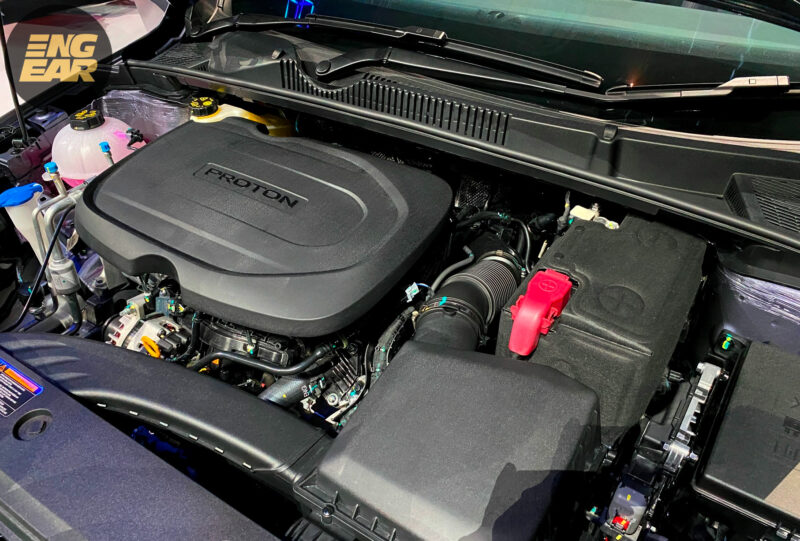
All four variants feature a combination of a 1.5-litre turbocharged three-cylinder engine and a seven-speed dual-clutch transmission (DCT) that produces 150 PS and 226 Nm of torque.

Note that this is the same port-injected engine and transmission used in the X50 Standard, Executive, and Premium models. The 1.5-litre TGDi engine with 177 PS and 255 Nm, found in the X50 Flagship and the new X70, is not offered in the S70, at least for the time being.

Built on the B-Segment Modular Architecture (BMA) platform, the S70 measures 4,602 mm in length, 1,809 mm in width, 1,466 mm in height, and has a wheelbase of 2,637 mm, making it slightly smaller than the Geely Emgrand it is based on.

In terms of equipment, the entry-level Executive variant comes with six airbags, Lane Change Assist, electronic parking brake, 16-inch alloy wheels, fabric seats, and an 8-inch infotainment screen.

The Premium adds LED headlights, rear light bars, leatherette upholstery, automatic air conditioning, and reverse camera.

The Flagship offers more additional features, including ADAS, tyre pressure monitoring system, 17-inch alloy wheels, a 10.3-inch digital instrument cluster, power adjustment for the driver’s seat, a 12.3-inch infotainment screen, wireless charger, and a 360-degree camera with a 3D display.

The range-topping Flagship X only offers one additional feature over the Flagship, which is a sunroof.

Safety-wise, the Flagship and Flagship X variants come with Advanced Driver Assistance Systems (ADAS) with 13 safety systems:

  • Autonomous Emergency Braking
  • Forward Collision Warning
  • Adaptive Cruise Control dengan Stop & Go
  • Intelligent Cruise Control
  • Lane Departure Warning
  • Lane Departure Prevention
  • Lane Centering Control
  • Traffic Sign Information
  • Intelligent High Beam Control
  • Lane Change Assist
  • Door Opening Warning
  • Rear Collision Warning
  • Rear Cross Traffic Alert

There are seven colour options available. Snow White and Space Grey are available for all four variants, while Armour Silver and Passion Red are only offered for the Premium and Flagship.

Marine Blue and Teal Bayou Green are exclusive to the Flagship and Flagship X, and Quartz Black is exclusive to the Flagship X.

Selling prices start from RM73,800 for the Executive, RM79,800 for the Premium, RM89,800 for the Flagship, and RM94,800 for the Flagship X.

The standard package for the S70 includes a five-year unlimited mileage warranty, a 1GB per month data package for five years, free labor for six times, financing interest rates from 2.34 percent, and Proton Insurance Program.

Additionally, the first 3,000 owners who register their cars before February 29, 2024, will receive an aero body kit worth RM3,130 (Flagship X only), a RM500 service voucher (Premium and Flagship only), and an upgraded Proton insurance program.

Warming up engines: Do you perform it correctly?

THE issue of engine warm-up has been debated for a long time, from casual conversations at coffee shops, hanging out at TT gatherings, to discussions in internet forums and Facebook groups.

Why is it necessary to warm up the engine? Is it just a fad, or does it serve a real purpose? We will attempt to explain this with an easy-to-understand explanation and relate it to several common situations we encounter.

Warming up the engine has been a practice since 30 to 40 years ago, when carburetor engines used a choke to mix air and petrol for combustion. In cold weather, petrol doesn’t vaporize, and since the carburetor doesn’t have a temperature sensor, it cannot adjust combustion efficiently and effectively. More fuel is used during this time. Therefore, the engine needs to be warmed up before driving.

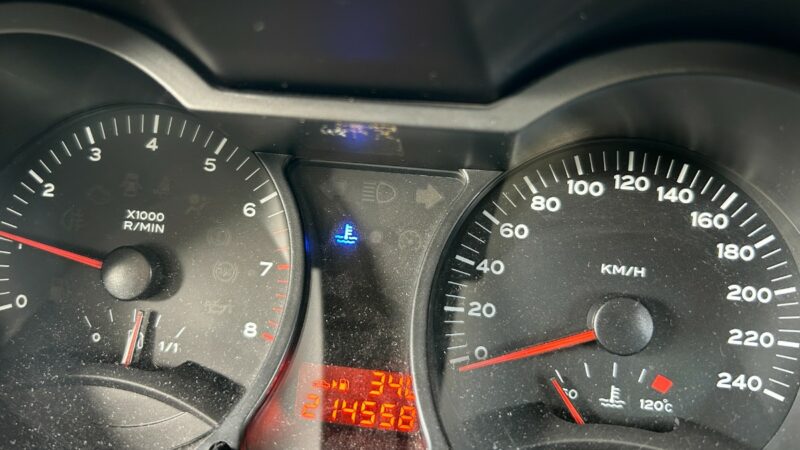
For most modern cars that we drive today, their engines are equipped with sensors to precisely calculate the air-fuel mixture ratio. This ratio is also adjusted based on the temperature.

Therefore, in cold weather, engines with electronic fuel injection systems will inject more fuel (burning rich) to ensure proper combustion until the engine reaches the ideal temperature. This process is much faster compared to older engines with carburetor systems.

How long should you wait before driving?

The simple answer is to start the engine, wait just a little while, and then drive immediately. You actually don’t need to wait 15 or 20 minutes to warm up the engine. It’s just a waste of fuel.

Do you have deep pockets and don’t care about the cost of fuel? Well, a mechanical engineer from the Argonne National Laboratory reported that fuel is a solvent and can thin the engine oil on the cylinder walls if the engine is left idling for a long period.

As you may understand, if there is less oil on the cylinder walls, there will be more friction, and various components can be damaged or have their lifespan shortened if we warm up the engine for too long.

According to a representative from Volvo who conducted cold weather tests in the Arctic, they stated that new cars do not need to have their engines warmed up. “It’s best to start the engine for a short time to build fuel pressure, and then drive as usual,” they said.

But don’t start the engine and immediately press the accelerator hard. After about 20 or 30 seconds of starting the engine in the morning, you can slowly drive out of the housing estate, then a few turns before accelerating on the main road.

What about a car that’s been left unused for a long time?

There are times when we leave a car unused for a long period, regardless of the reason. This also raises the issue of warming up the engine, which means starting the engine briefly before leaving the car again.

But what is the correct way to warm up the engine, start and let it idle for 10 minutes? The answer is that the above method is not correct. If you have a car that is rarely driven, the best way to warm up the engine occasionally is to start the engine, drive it out of the house, and drive slowly in the surrounding area. There’s no need to do it for a long time. 10 or 15 minutes is enough.

This method is better because not only does the engine components move, but the fluid and oil in the transmission system also move around the entire area, as well as the tires and axles, everything moves. So, the grit and lubricating oil can be spread evenly.

To revisit the initial point of the article, merely warming up the engine by idling in place is less effective and can even jeopardize some components.