Nissan is reportedly facing the possibility of selling its headquarters building located in the Minato-Mirai 21 district of Yokohama, Japan.
A report from Nikkei Asia claims that the headquarters building has been listed as one of the assets Nissan needs to divest by the end of March 2026.
The newly appointed CEO of Nissan, Ivan Espinosa, announced that there are several assets of Nissan that are set to be sold, although he did not specifically mention the headquarters complex.
According to a local real estate agent, the Nissan headquarters complex is estimated to be worth over 100 billion yen, or approximately RM2.95 billion.
Even if Nissan no longer owns the building, the company will continue to lease the property from the new owner to maintain its operations as usual.
This approach is similar to what McLaren employed after the supercar manufacturer sold its headquarters located in Woking as a way to reduce debt.
The sale of the headquarters building is one of the strategies Nissan is implementing to significantly cut costs after facing a loss of $4.5 billion (RM18.95 billion) last year.
Nissan will also be closing up to seven global factories, including two domestic plants (known as the Oppama and Shonan plants), and will lay off 20,000 workers.
Additionally, development for certain models will be halted, and the company plans to streamline its existing platforms to just seven in order to reduce parts complexity by up to 70 percent.
The Nissan LEAF battery electric vehicle has been on the global market since 2010 and has endured through two generations in a hatchback body style.
However, for the third generation, the Nissan LEAF has been redesigned as a crossover to align with the market demand, which leans more towards larger-bodied models.
Built on the CMF-EV platform owned by the Renault-Nissan-Mitsubishi alliance, the new LEAF features increased overall dimensions, though it is slightly shorter compared to the existing LEAF.
From the showcased design, it is evident that the LEAF borrows many styling elements from the Ariya EV and boasts a drag coefficient of 0.25.
Nissan has not disclosed further specifications for the LEAF.
However, according to Nissan Europe’s product chief, Francois Bailly, the new LEAF is capable of offering a real-world driving range exceeding 598 km.
He added that the LEAF will also receive the latest Google-based infotainment system, complemented by advanced driver assistance systems.
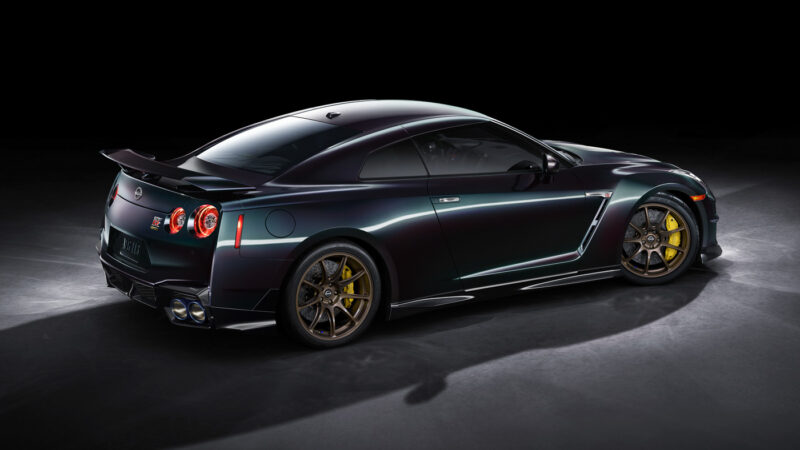
At the end of February 2025, Nissan Japan announced that it will terminate sales of the GT-R model (R35 generation) after almost two decades on the market.
In a statement posted on its official website, Nissan said, “We have received many orders for the Nissan GT-R and have now finished accepting orders for the planned production quantity. We would like to express our sincere gratitude to all our customers for their support since its release in 2007.”
The Nissan GT-R R35 has long ceased to be offered in several key markets due to compliance issues, such as safety, noise, emissions, and more.
Markets such as Australia and New Zealand stopped selling the GT-R in October 2021, while Europe and the UK followed suit in March 2022.
The Nissan GT-R was first unveiled at the Tokyo Motor Show in 2007, and since then, it has undergone several upgrades and facelifts.
It is powered by a 3.8-liter V6 engine (VR38DETT) with an initial power output of 473 hp, increasing to 565 hp for the 2023 facelift model, while the Nismo version boosts that figure to 600 hp.
What will happen to the next generation of the Nissan GT-R? Will it continue the legacy left by the previous GT-R?
Or will it transform into what is envisioned through the Hyper Force Concept model?
Launched last December at the Kuala Lumpur International Motor Show (KLIMS) 2024, the Nissan Kicks e-Power bears the significant responsibility of driving the resurgence of Edaran Tan Chong Motor (ETCM).
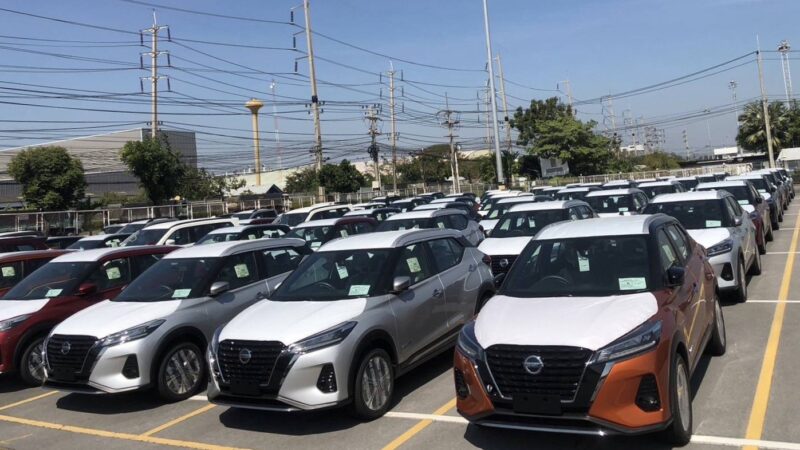
For the Malaysian market, the Kicks e-Power is fully imported (CBU) from Thailand. We get the first-generation facelift model that was actually introduced in that country four years ago.
Although it may not be the freshest product on the market, it offers something new to car buyers in Malaysia – the e-Power powertrain.
Unlike conventional hybrid systems, the internal combustion engine in the e-Power system does not drive the wheels. Its role is to charge the 2.1 kWh battery, which in turn powers the front axle.
Sounds pretty fancy, but what are the maintenance costs like?
For mileage intervals of 10,000 km, 20,000 km, 50,000 km, and 70,000 km, customers will need to spend RM252.80 for replacements of engine oil, oil filter, sump washer, and a multipoint inspection.
When the odometer hits 30,000 km, 60,000 km, and 90,000 km, Nissan will replace the air conditioning filter, bringing the cost to RM367.80.
For mileage at 40,000 km and 80,000 km, the DOT3 brake fluid will be replaced along with the engine oil, oil filter, and sump washer. For these two intervals, the cost reaches RM468.80 each.
Once the odometer surpasses six figures, you will need to spend RM571.80 for services involving the replacements of engine oil, oil filter, sump washer, spark plugs, and multipoint inspection.
According to ETCM, the prices mentioned include labour costs but exclude an 8% service tax.
The first replacement for coolant will be carried out at 160,000 km and will occur every 80,000 km thereafter. The inverter coolant will begin to be replaced at 200,000 km and subsequently every 80,000 km.
Conclusion
The total cost of regular servicing for the Nissan Kicks e-Power is approximately RM3,624 for a mileage of 100,000 km/five years of ownership. This means, on average, owners should expect to spend about RM724.80 per year or RM60.40 per month on servicing.
This calculation is important because, in addition to instalment payments, customers also need to consider servicing costs and other expenses such as fuel, insurance, and tolls before making a decision.
Edaran Tan Chong Motor (ETCM) has announced that the new Nissan Kicks e-Power crossover will be delivered to its customers in the upcoming weeks.
According to Khoo Cheng Pah, CEO of Edaran Tan Chong Motor Sdn Bhd, “We are excited to share that the Nissan Kicks e-Power is on track for delivery in the coming weeks.
“Our team is committed to accelerating this process to ensure our customers can experience the e-Power technology as soon as possible.”
Officially launched at the Kuala Lumpur International Motor Show (KLIMS) 2024, the Nissan Kicks e-Power features a second-generation e-Power system that offers improved fuel efficiency (21.7 km/l) and a driving range of up to 900 km on a full tank.
The e-Power system consists of a 129 PS/280 Nm electric motor, a 1.2-liter HR12DE engine (82 PS/103 Nm) that serves as a power generator, and a 2.06 kWh battery pack.
The all-new Nissan Kicks e-Power is now available for booking in two variants, VL and VLT, with a starting price of just RM113,800.
The Nissan GT-R (R35 generation) made its global debut in 2007 and is described as a supercar “for anyone, anywhere, at any time.”
However, did you know that Nissan was not alone in the development of this successor to the R34 Skyline GT-R?
According to an internal source, Nissan relied on individuals with expertise in truck engineering to develop the R35!
As quoted from microblogging user @trucknakanohito, 80 percent of the Nissan GT-R development team consisted of Isuzu engineers.
Without reliable sources, it is indeed difficult to accept such information.
However, this question was promptly addressed by Kazutoshi Mizuno, the chief engineer of the R35, or more accurately, Mr. GT-R.
In a reply tweet, Mizuno clarified that initially, none of the Isuzu engineers had experience in developing a supercar, as they came from the truck division.
“However, through strong teamwork, a high determination to achieve goals, and training and practice based on comprehensive vehicle measurement system results, all team members managed to become world-class engineers in just 1.5 years,” he stated.
The phrase “sports car” and “practicality” may seem difficult to place in the same sentence.
However, that is precisely what a group of students from Nissan Automotive College aims to achieve for the Tokyo Auto Salon 2025.
The project is named Z Lealia, a combination of the words “Lead” and “Familia,” where Z Lealia is designed as a sports wagon suitable for the entire family.
This sporty wagon does not actually originate from the rear-wheel-drive platform of the Nissan Z; instead, it is entirely based on the second-generation Nissan Stagea wagon platform.
From the front view, we can see the successful integration of the front fascia of the Nissan Z.
However, the work on the rear section of the wagon appears to be lacking, particularly in terms of the excessively wide fender dimensions and the gap existing between the taillights and the rear bumper.
The vehicle is finished in Ikazuchi Yellow, featuring 19-inch aftermarket rims, a steering wheel from the Nissan Z, and a custom two-tone upholstery.
Praise should be given to the college students for their boldness in creating something unique.
In addition to the Z Wagon, there are two other modified models: the Nissan Neo Skyline and the Bluebird Kiwami, produced by two different student groups.
The Nissan Neo Skyline is essentially a Skyline Coupe V35 with custom body panels inspired by the 1970s “Kenmeri” Skyline model.
The entire body is painted in Tomoaki Blue, complemented by 18-inch rims and a two-tone interior finish.
On the other hand, the Bluebird Kiwami (from Aichi College) is built based on the Nissan Bluebird Maxima that existed 36 years ago, featuring a wide, boxy body kit.
At the same time, the student group successfully maintained the original features of the vehicle, including the frameless door design and luxurious interior finishes.
All three customized cars will be officially showcased at the Tokyo Auto Salon 2025, taking place from January 10 to 12 in Japan.
Edaran Tan Chong Motors Sdn Bhd has extended its Early Bird promotion for the all-new Nissan Kicks e-Power, which is now available to the first 1,000 customers.
The Early Bird promotion offers an introductory discount of RM5,000, as well as a ten-year guarantee on EV components or a mileage limit of 160,000 km.
With this rebate, the selling price of the Kicks e-Power starts at RM108,800 for the VL variant, RM116,800 for the VLT variant, and RM120,800 for the two-tone VLT variant.
The Nissan Kicks e-Power was officially launched this month, powered by a second-generation e-Power system that combines a 1.2-liter three-cylinder inline engine, which acts solely as a power generator, with an electric motor and a 2.1 kWh lithium-ion battery.
Overall, the Kicks e-Power is capable of producing up to 129 PS and 280 Nm of torque, promising immediate torque response and smooth acceleration.
On a full tank, the Kicks e-Power can travel up to 900 km, with a fuel consumption figure of approximately 21.7 km/liter.
With just a few weeks left until the Tokyo Auto Salon 2025 opens its doors, Nissan is set to unveil something special.
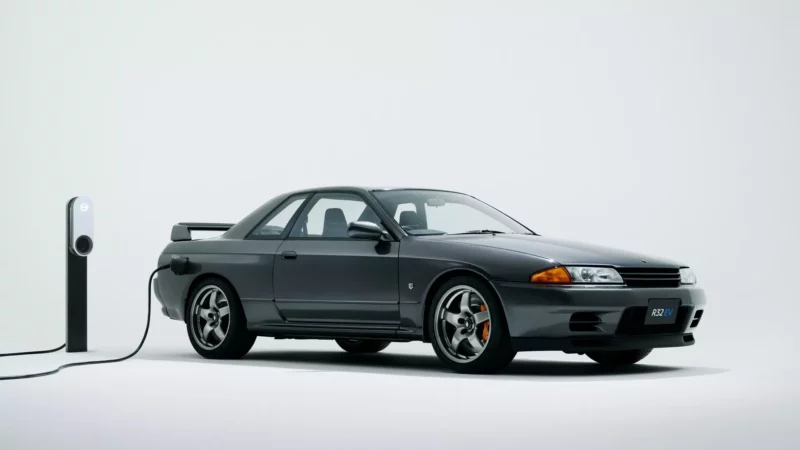
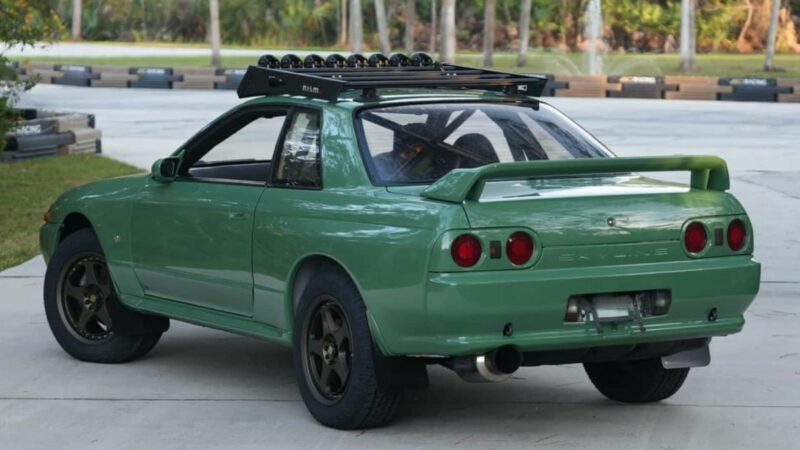
It isn’t a new generation GT-R; rather, it is a Nissan Skyline GT-R R32 without the iconic RB26DETT inline-six engine.
More precisely, it is an R32 EV!
This project actually began back in March 2023, when the legendary RB26 engine – highly regarded among JDM enthusiasts – was retired to make way for a full-time electric power unit.
At this time, Nissan has not yet disclosed details about the modifications made to this iconic model.
In terms of outward appearance, it is quite difficult to detect any changes, except for the removal of the fog lights and the absence of exhaust pipes at the rear.
What do you think about Nissan’s R32 GT-R EV project?
Recently at the Kuala Lumpur International Mobility Show (KLIMS) 2024, Edaran Tan Chong Motor (ETCM) marked its revival with the launch of the Nissan Kicks e-Power.
The Kicks e-Power for the Malaysian market will be fully imported (CBU) from Thailand. This means we are getting the facelifted version of the crossover, which was originally launched in that country four years ago.
Although it is not the freshest product on the market, the Kicks offers something new: the e-Power powertrain. It features an internal combustion engine, but unlike conventional hybrids, the petrol mill serves only as a generator.
The wheels are driven 100% by an electric motor at all times, allowing you to enjoy a driving experience that is almost akin to that of an electric vehicle (EV) without having to get in a fluster about charging.
This is indeed appealing and certainly helps improve fuel efficiency; however, during a recent media test drive, I found three shortcomings.
Outdated exterior design
As mentioned, the Kicks e-Power is actually a product that is somewhat aged. This is evident in its exterior design, which appears rather dated when compared to its closest competitors.
Don’t get me wrong; its appearance is not unattractive, but it lacks any elements that might make it stand out in a showroom.
However, as you may know, appearance, design, and related matters are subjective. Not everyone desires a car that is overly flashy—some prefer a more casual and understated look.
Underwhelming interior
The interior of the Kicks is neat and simple, but like its exterior, it is beginning to show its age.
This is because the layout is approximately 95% identical to that of the Almera’s but Kicks does come with a more sophisticated gear knob that feels somewhat awkward to use due to its shape.
Additionally, the use of hard plastic finishes on the dashboard and door panels detracts from the overall appeal of this car. The rear passenger space also feels somewhat cramped, despite the fact that its wheelbase is 5 mm longer than that of the HR-V.
Reasonably spacious boot, but…
The Kicks e-Power features a boot space that is quite generous, offering 423 litres of capacity. Unfortunately, lift the boot floor and you will not find any spare tyre. Instead, there is a tyre repair kit.
Was the decision to exclude a spare tyre made for cost or technical reasons? It is plausible that cost played a role, as the car market in Malaysia is generally quite price-sensitive so there’s a chance that ETCM may have taken this step to ensure that prices remain competitive.
Technical factors also make sense, as hybrid powertrains like e-Power involve additional components, and some of these components may encroach under the boot floor where spare tyres are usually found.
Edaran Tan Chong Motor Sdn Bhd (ETCM) has officially launched the Nissan Kicks e-Power in the local market.
As reported, this compact crossover is available in two variants: VL and VLT. The official selling prices have been announced, starting at RM113,800 for the former and RM121,800 for the latter.
The VLT variant can also be had with a two-tone colour scheme for an additional RM4,000, bringing its selling price to RM125,800.
Interestingly, ETCM is offering an Early Bird promotion, where the first 500 customers will receive a 10-year/160,000 km EV component warranty and an introductory rebate of RM5,000.
With said rebate, the selling price of the Kicks e-Power is reduced to RM108,800 for the VL, RM116,800 for the VLT, and RM120,800 for the VLT in the two-tone option.
The Kicks e-Power features the e-Power drivetrain, which combines a 1.2-litre three-cylinder petrol engine, an electric motor, and a 2.1 kWh lithium-ion battery. The combination produces a total system output of 129 PS and 280 Nm.
Unlike a conventional hybrid drivetrain, the internal combustion engine in the e-Power system acts solely as a generator, tasked with charging the battery. The power is then delivered to the electric motor to drive the wheels.
This means that the Kicks e-Power is fully powered by the electric motor, much like a true electric vehicle, but it does not require charging.
Fuel consumption is rated at 21.7 km/l based on the NEDC cycle. With a 41-litre fuel tank, it is claimed to be capable of achieving a range of up to 900 km.
In terms of equipment, the Kicks e-Power comes standard with automatic LED headlights, LED fog lights, automatically folding side mirrors, speed-sensitive wipers, and a tyre repair kit (no spare tyre).
Inside, highlights include Zero Gravity seats covered in fabric, manual six-way adjustment for the driver’s seat, four-way adjustment for the front passenger seat, an eight-inch touchscreen with Apple CarPlay and Android Auto, a seven-inch TFT display, and three USB ports.
Safety features comprise Vehicle Dynamic Control, Traction Control System, Hill Start Assist, Intelligent Driver Alertness, Cruise Control, Intelligent Forward Collision Warning, and Forward Emergency Braking.
Those opting for the VLT variant receive additional kit such as two-tone leather upholstery, a 360-degree camera, Intelligent Rear View Mirror, Intelligent Cruise Control, Blind Spot Warning, and Rear Cross Traffic Alert.
The Kicks e-Power is available in Black Star, Sunrise Orange, Brilliant White Pearl, Brilliant Silver, and Red Pearl.
The VLT variant can also be ordered with a Super Black roof for the Sunrise Orange, White Pearl, and Red Pearl colours. Another two-tone option available for the range-topping variant is Dark Metal Grey.
The Japanese automotive manufacturer Nissan Motor Co is now in urgent need of finding long-term investors to stabilize its operations amidst restructuring and declining sales.
According to a recent report from The Financial Times, at least two unnamed Nissan executives have confirmed that the brand is seeking new investors.
Nissan is targeting institutional investors such as banking or insurance companies to replace part of Renault’s stake.
The source also indicated that the company may only have a 12 to 14-month window to survive.
Nissan was previously rescued from bankruptcy in 1999 by Renault, which purchased a 36.8 percent stake in the company.
In 2002, Nissan acquired a 15 percent stake in Renault, while Renault increased its stake in Nissan to 43 percent.
However, in 2023, Renault reduced its stake in Nissan to 15 percent, aligning with the percentage that Nissan holds in Renault.
In recent months, Nissan (and Mitsubishi) has reportedly been exploring collaboration with Honda to develop electric vehicles (EVs) and technology software as a way to address competition from Chinese companies.
The collaboration was officially announced in August, but the development has not been well received by former Nissan CEO Carlos Ghosn, who described the merger as a disguised acquisition.
“I can’t imagine for one moment how it’s going to work between Honda and Nissan unless it’s a takeover, unless it’s a disguised takeover by Honda of Nissan and Mitsubishi with Honda in the driver’s seat,” Ghosn said.
“It’s going to be a takeover, a disguised takeover.”
Nissan Motor Co. is expected to lay off or transfer approximately 1,000 employees in Thailand by the fall of 2025 as it faces declining profits.
According to sources close to the developments, this move aligns with plans to reduce the global workforce by seven percent, or about 9,000 employees, by fiscal year 2026, which ends in March 2027.
Despite having dominated the Thai market for a long time, the presence of electric vehicle models from the Chinese market appears to have challenged the position of several Japanese automakers.
In recent years, Nissan has experienced a sharp 29.7 percent decline in sales, with only 14,244 vehicles sold in fiscal year 2023.
In Thailand, Nissan’s factory produces four models for the domestic market and export, including the Nissan Kicks SUV.
In addition to Thailand, Nissan is also expected to reduce its workforce by approximately six percent, or about 1,000 employees, in the United States by the end of this year.
As we know, Nissan has been one of the early pioneers of electric vehicles for the mass market.
However, relying solely on the Nissan Ariya and somewhat outdated LEAF could cause Nissan to fall significantly behind, especially when competing with rivals like BYD and Tesla.
Recently, the Dongfeng Nissan partnership showcased the Nissan N7 EV, an electric sedan designed specifically for the Chinese market.
Built on a modular platform, this mid-size sedan measures 4,930 mm in length, 1,895 mm in width, 1,487 mm in height, and has a wheelbase of 2,915 mm.
The V-motion design elements are still present in the N7, but with a more modern approach.
It features an LED light strip that spans the width of the vehicle, consisting of 710 LED units, followed by boomerang-shaped headlights, while the rear showcases a light structure composed of 882 OLED units.
The aerodynamic design of the Nissan N7 allows it to achieve a drag coefficient (Cd) as low as 0.208, aided by the sleek design of its door handles.
The Nissan N7 also features frameless door construction.
Although no images of the cabin have been provided, Nissan confirms that the N7’s cockpit will utilize a Qualcomm Snapdragon 8295P processing chip, with 256GB of storage and 32GB of memory.
Through a collaboration with Momenta, Dongfeng Nissan will equip the N7 with an advanced driver assistance system named ‘Navigate on Autopilot.’
The arrival of the N7 EV electric sedan is expected to restore Nissan’s reputation in the Chinese market when it goes on sale in the first half of 2025.
Further details, such as specifications and the range of this electric sedan, will only be revealed ahead of the official launch next year.
The official distributor of Nissan in Malaysia, Edaran Tan Chong Motor (ETCM), has been rather quiet in recent years.
The last all-new model launched by the company was the second-generation Almera, which made its debut somewhere late 2020. Since then, it appears as though Nissan has vanished from the radar.
But ETCM appears to be far from defeated; having been the custodian of the Nissan brand in Malaysia for over 60 years, the company is determined to maintain its presence in the market.
The first step in ETCM’s revival strategy is the introduction of the long-awaited B-segment crossover, the Nissan Kicks e-Power.
The Kicks e-Power for the Malaysian market will be fully imported (CBU) from Thailand, which means we will be getting the facelifted version of the first-generation model that was originally launched in The Land of the Smiles four years ago.
While this car may not be the freshest offering on the market, it does present something new for the Nissan brand in Malaysia: the e-Power powertrain.
What’s even more exciting is that this facelifted model features the second-generation e-Power system, which is lighter and more powerful.
But before delving deeper into the e-Power, you might be wondering how big is the Kicks? It measures 4,290 mm in length, 1,760 mm in width, and stands 1,605 mm tall, making it nearly 100 mm shorter than the Honda HR-V.
In terms of design, some say it resembles a mini version of the Nissan X-Trail. Whatever the case is, this writer can’t help but feel that the Kicks appears somewhat ‘aged’ despite yet to hit the market.
Don’t get me wrong; its appearance is certainly appealing, yet it lacks the ‘X’ factor that would make it stand out in a showroom.
As you might already know, beauty, design, and aesthetics are subjective— not everyone desires a flashy car; some prefer a more understated and casual look, which is exactly what the Kicks offers.
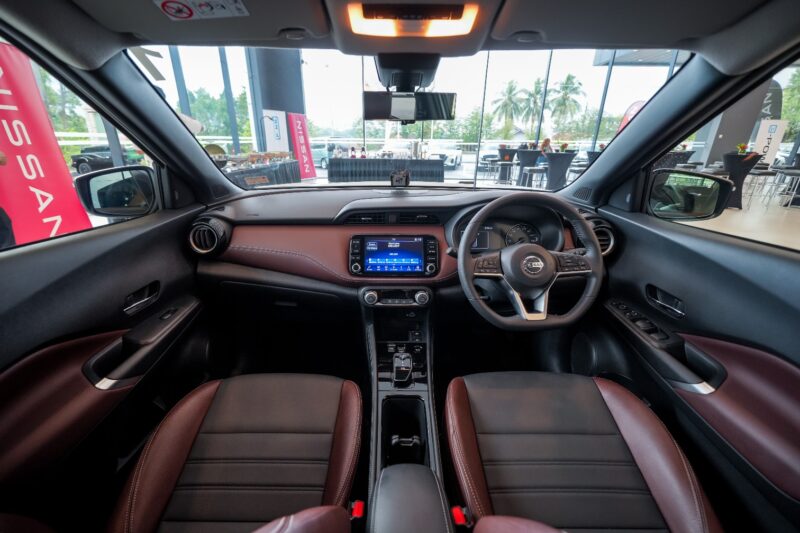
The interior of the Kicks is tidy and simple, but much like its exterior, it is starting to show signs of age.
The layout is approximately 95% identical to that of the Almera’s cabin but Kicks comes with a more sophisticated gear knob that feels somewhat awkward to use due to its shape.
The level of standard equipment is decent. The Kicks is fitted with Zero Gravity seats, an eight-inch touchscreen with Apple CarPlay and Android Auto, a seven-inch TFT display, three USB ports, and manual adjustments for the driver and front passenger seats.
The top-of-the-range VLT variant adds a premium touch with two-tone leather upholstery adorning the seats and dashboard.
Nevertheless, there are elements that make the Kicks appear and feel somewhat inexpensive, one of which is the hard plastic trim on the door panels. Additionally, the air-conditioning control switches look like it came out 10 years ago and could benefit from a redesign.
Although the wheelbase is 5 mm longer than that of the HR-V, the rear passenger space in the Kicks feels a touch cramped, exacerbated by the somewhat upright seating position.
However, the boot space is fairly generous, offering a capacity of 423 litres. According to Nissan, it can accommodate two standard-sized golf bags, a large suitcase, and a medium-sized luggage. Sounds perfect for a weekend of golf.
The Kicks may have arrived fashionably late to the market, but as this writer has mentioned, it does bring something intriguing to the table: the e-Power powertrain.
So, what exactly is e-Power?
Nissan insists on not labelling it a hybrid, although the system integrates an internal combustion engine (ICE), an electric motor, and a battery. Thus, technically, it is a hybrid.
However, unlike conventional hybrid systems, the ICE in the e-Power setup does not drive the wheels. Its sole purpose is to charge the 2.1 kWh lithium-ion battery located in the middle of the frame. The wheels are powered entirely by the electric motor fed by this battery.
In essence, the wheels are propelled 100% by the electric motor, offering a driving feel akin to that of an electric vehicle, but with the added benefit that you need not worry about charging, ever.
How does it perform in the real world?
As soon as the accelerator pedal is depressed, the car pulls almost instantly and this is done without the roar of an ICE engine familiar in traditional vehicles.
Similar to a real EV, the powertrain delivers responsive acceleration and instant torque, allowing this writer to overtake other vehicles with ease, even when space was limited.
Yet, let’s not set our expectations too high, as the Kicks e-Power’s acceleration won’t melt your face like some high-performance EVs do. It delivers a modest 129 PS and 280 Nm—not particularly impressive, but still adequate to meet the needs of consumers in this segment.
The Kicks e-Power features three driving modes: Normal, Eco, and Sport. In this writer’s experience, the Normal mode is perfectly suitable for everyday driving, while the Sport mode can provide that extra power when needed.
Another advantage of the e-Power system is its single pedal driving capability known as e-Pedal Step. This feature is activated only in Eco and Sport modes, where the regenerative braking force is heightened, allowing the driver to slow down without depressing the brake pedal.
Moreover, with stronger regenerative braking, the battery charges more quickly. With a full battery, the EV mode can be activated, enabling the vehicle to travel up to 2.5 km on electric power at a speed of 40 km/h, with the engine completely turned off.
In addition to its addicting eagerness, the Kicks is a joy to driver, particularly on winding roads. Whatever magic the Nissan engineers have conjured for the suspension tuning, the crossover proves incredibly adept when tackling sharp bends.
Sound, vibration, and harshness (NVH) levels are also highly commendable. At higher speeds, wind and tyre noise are effectively suppressed. However, during aggressive acceleration, one may occasionally hear the engine working hard to recharge the battery.
Conclusion
Whether this model will help ETCM back on its feet is still uncertain, but in the Kicks, the company has a solid product, albeit one that is a touch aged.
This writer believes that by hyping up the strengths of e-Power and having an effective pricing strategy, ETCM may well find an opportunity to win back the hearts of consumers in this country.
Edaran Tan Chong Motor (ETCM) has unveiled the specifications of the Nissan Kicks e-Power, which is set to launch in the local market this December.
According to ETCM, the B-segment SUV will be available as a fully imported (CBU) model from Thailand and will be offered in two variants, namely VL and VLT.
Both variants feature an e-Power powertrain that combines a 1.2-litre three-cylinder petrol engine with an electric motor and a 2.1 kW/h lithium-ion battery. The combination produces a total output of 129 PS and 280 Nm of torque.
Unlike conventional hybrid powertrains, the engine in the e-Power system acts solely as a generator to charge the battery. The power is then sent to the electric motor, which drives the front wheels.
This means the Kicks e-Power is entirely propelled by the electric motor, much like a real electric vehicle, but without the need for external charging.
Fuel efficiency is rated at a 21.7 km/l based on the NEDC cycle, and with a 41-litre fuel tank, the car is said to be capable of achieving a total range of up to 900 km.
In addition to Normal, Sport, and Eco modes, there is also an EV mode where the engine remains completely off, allowing for a driving experience akin to that of a true EV.
However, the mode can only be activated when the battery is fully charged and is limited to a range of 2.5 km due to the small battery size. Also featured is a one-pedal driving system called e-Pedal Step.
In terms of equipment, the Kicks e-Power comes standard with automatic LED headlights, LED fog lights, automatic folding side mirrors, speed-sensing wipers, and a tyre repair kit (no spare tyre included).
Inside, the SUV boasts Zero Gravity seats upholstered in fabric, manual six-way adjustment for the driver’s seat and four-way adjustment for the front passenger seat, an eight-inch touchscreen with Apple CarPlay and Android Auto, a seven-inch TFT meter display, and three USB ports.
Safety features include Vehicle Dynamic Control, Traction Control System, Hill Start Assist, Intelligent Driver Alertness, Cruise Control, Intelligent Forward Collision Warning, and Forward Emergency Braking.
Those opting for the VLT variant will enjoy added features such as two-tone leather upholstery, a 360-degree camera, an Intelligent Rear View Mirror, Intelligent Cruise Control, Blind Spot Warning, and Rear Cross Traffic Alert.
The Kicks e-Power will be available in five striking colours: Black Star, Sunrise Orange, Brilliant White Pearl, Brilliant Silver, and Red Pearl.
The VLT variant can also be ordered with a Super Black roof for the Sunrise Orange, White Pearl, and Red Pearl colours. Alternatively, buyers can opt for the two-tone Dark Metal Grey.
Do you know that the Nissan GT-R R35 generation is now 17 years old?
Compared to others, the Nissan GT-R is quite aged, but Nissan actually still intends to continue producing the R35 for another 17 years.
In an interview with Top Gear, Nissan’s Global Product Chief, Pierre Loing, stated, “(The Nissan GT-R) has been on sale for 17 years, and we want to continue it for another 17 years, but regulatory compliance is causing issues.”
For the past few years, Nissan has faced challenges in continuing the sales of the GT-R model.
In Europe, the supercar model’s sales were discontinued in July 2021 due to new noise regulations imposed.
It was also pulled from the Australian market due to failure to comply with stricter side-impact crash test regulations.
Normally, a manufacturer would provide a replacement model when production of the current model is discontinued.
However, this isn’t the case for the GT-R.
After ending the R35 GT-R production in 2025, there will be a gap for a long period before the successor model (Hyper Force) emerges in 2030.
“If you look at the history of the GT-R badge, we’ve had gaps before. We showed the GT-R concept in 2001, ended R34 Skyline GT-R production in 2002, then the R35 didn’t launch until 2007.”
“The gap between the ‘Kenmeri’ Skyline GT-R ending in 1975 and the R32 starting in 1989 was even larger.”
“The GT-R is strong enough to live with these gaps in its production. And we need to have a gap, because going into the electrified world, there is a lot of debate about ‘what is a GT-R in an era of electrification?’ We don’t have all the answers yet. We are in the middle of all those debates.”
It’s highly likely that when the new generation Nissan GT-R emerges in the coming years, it will be positioned as a higher-end model compared to the Z and upcoming Silvia.
The off-road sports car segment currently joined by the Porsche 911 Dakar and the Lamborghini Huracan Sterrato, may soon be enlivened by another newcomer, this time from the Land of the Rising Sun.
According to reports, Nissan has registered the trademark ‘Z Warrior’ with the IP Australia office, indicating the emergence of a Z sports car specifically designed to conquer off-road terrain.
Nissan had previously showcased an intriguing Safari Rally Z Tribute concept, inspired by the Datsun 240Z vehicle that won the 1971 East African Safary Rally.
The new generation Nissan Z has been equipped with a 2-inch higher KW Safari suspension, as well as prototype Nismo Safari 17-inch rims wrapped in Yokohama Geolander M/T G003 tires. Additional lighting units on the hood, bumper, and A-pillars further enhance the appearance of a true rally vehicle.
The original engine unit has also been tuned, with the twin-turbo 3.0-liter V6 engine being paired with several Nismo components, including dual clutches, a flywheel, heat exchanger unit, coolant tank, cold air intake system, carbon fiber wire harness protector, and a cat-back exhaust system.
It’s worth noting that Nissan Australia also offers the Warrior trim for models such as Navara and Patrol, both of which come equipped with body kits and accessories specifically designed to conquer various terrains across the globe.
Fans and owners of the Nissan GT-R in Malaysia are invited to participate in the GT-R Festival taking place at Crowne Plaza Penang Straits City on October 4-6.
The 3-day, 2-night event is aimed at becoming the largest gathering of GT-R models to be immortalized in the Malaysia Book of Records.
Furthermore, the GT-R Festival also offers the opportunity for GT-R owners to personally meet Hiroshi Tamura, better known as the “Father of The Modern Nissan GT-R”.
The 62-year-old individual joined Nissan in 1984, working there for three years before moving to Autech, a subsidiary responsible for building GT-R vehicles.
He rejoined Nissan in 1993 in the product planning department, where he had the opportunity to develop the Nissan Skyline GT-R R34 model.
In 2006, Hiroshi Tamura was appointed as Chief Product Specialist, and since then he has been better known as the Modern GT-R Father.
For the GT-R Festival, there are two categories open to all GT-R owners as follows:
1. Elite
Valued at RM1,999, this category will be open to 250 participants, including a 3-day 2-night stay, dinner event, convoy, session with Hiroshi Tamura, photo session, exclusive GT-R Festival t-shirt, and 2 tickets to the Tokyo Auto Salon Kuala Lumpur.
2. Ultimate Elite
Priced at RM3,499, this category will be limited to only 20 participants, where each participant will receive the same benefits as the Elite category.
Additionally, participants in this category will also receive an exclusive GT-R Festival jacket, two VIP tickets to the Tokyo Auto Salon Kuala Lumpur 2024, and an exclusive dinner session with Hiroshi Tamura at Crown Plaza Penang Straits City.
Do you still remember the Nissan IDx sports concept car showcased eleven years ago?
It was one of the concept models that garnered a lot of attention, but unfortunately, it was not realized due to the relatively high development costs, coupled with lackluster demand.
Nevertheless, in 2024, Nissan is reported to be developing a third high-performance sports car model after the Z and GT-R.
Speaking to the media, Nissan’s Vice President of Global Product Strategy, Ivan Espinosa, shared plans to revive the iconic Silvia model, despite the shrinking sports car market.
“I am trying to make it happen. It is not easy, as the sports car market is increasingly shrinking.”
He revealed a vision where the Silvia would be reborn as an electric sports car (positioned between the Z and GT-R) so that this new model can comply with emission laws in as many countries as possible.
In this way, Nissan can increase production numbers to achieve the necessary economies of scale.
Furthermore, Nissan will not follow the footsteps of collaborative manufacturers in developing sports cars like the Toyota GR Supra/BMW Z4, and Toyota GR86/Subaru BRZ.
Instead, Nissan aims to independently develop this new Silvia model without assistance from any party.
Espinosa is confident that Nissan can proceed alone in developing this Silvia model, albeit acknowledging that this project is challenging and requires serious investment.
The future Nissan Silvia will not be an isolated model, considering that it will face fierce competition from other Japanese manufacturers.
For instance, Mazda is developing a new generation MX-5, Honda is presenting the Prelude sports car, and Toyota’s GR86 might be upgraded with a hybrid engine package.
Malaysia’s Leading Automotive News | ENGEAR ENGLISH