After four years, Kia Corporation and Bermaz Auto Berhad have officially ended their strategic partnership, marking a new era for Kia’s operations in Malaysia.
Effective January 1, 2026, Kia Sales Malaysia will take over all aspects of sales, after-sales, marketing, customer service, and training across Malaysia from Bermaz.
The new entity will be led by Hyung Ho Kim as President and CEO, with Emily Lek serving as Managing Director, who previously worked at Omoda | Jaecoo Malaysia.
In an official statement, Ki Seok Ahn, President and CEO of Kia Asia Pacific, stated, “Kia is very excited to reinforce its brand presence in Malaysia.
“We believe that our customer-centric strategies and innovations will continue to enrich the customer experience as we support the growth of Malaysia’s economy and automotive industry.”
Kia Sales Malaysia will also focus on enhancing the Kia dealership network, investing in after-sales services, and introducing new models in the near future.
During this transition period, any orders placed before November 30 will be fulfilled as scheduled.
Customers can begin placing orders for new vehicles starting in January 2026 to facilitate a smoother operational transition.
Hong Leong Yamaha Motor (HLYM) has announced the arrival of the new Yamaha Ego Gear Pro, with a retail price of RM6,198 excluding insurance.
This scooter is powered by a single-cylinder 125 cc Blue Core Hybrid engine, assisted by a Smart Motor Generator (SMG), producing 8.4 PS at 6,500 rpm and a torque of 9.9 Nm at 5,000 rpm.
The engine also features a Power Assist function for more robust acceleration, along with smoother Start & Stop operations.
The suspension consists of telescopic forks at the front, complemented by a swingarm setup and a single shock absorber at the rear.
Available features include LED lighting units, a wide anti-slip floorboard, an 18.6-liter under-seat storage compartment, a 5.1-liter fuel tank, an LCD display screen, and support for connection to the Y-Connect app.
The scooter is available in three colors: Stellar White, Navy Green, and Cosmic Blue.
Proton has officially announced the sales prices for the 2026 Proton Saga in the Malaysian market.
The following are the sale prices for each variant offered:
1.5 Standard – RM37,990
1.5 Executive – RM43,990
1.5 Premium – RM48,990
The 2026 Proton Saga is powered by a 1.5-liter inline four-cylinder i-GT engine that produces 120 PS at 6,100 rpm and 150 Nm of torque at 4,000 rpm.
There are two transmission options available: a 4-speed automatic for the Standard and Executive variants, while the Premium variant features a CVT.
In terms of dimensions, the new Saga measures 4,390 mm in length, 1,690 mm in width, and 1,525 mm in height, with a wheelbase of 2,465 mm. The turning radius is a compact 5.2 meters.
The suspension system consists of MacPherson struts in the front, complemented by a torsion beam setup in the rear.
Exterior features include LED projector headlights, LED daytime running lights, 15-inch alloy wheels (14 inches for the Standard variant), electrically adjustable side mirrors, and a full-width LED rear light.
Inside the cabin, the Saga boasts a seven-inch instrument cluster display, a nine-inch infotainment screen, support for Apple CarPlay and Android Auto, four speakers (two for the Standard variant), leatherette seat upholstery (fabric for the lower two variants), and USB charging ports.
Safety features include six airbags, ABS, EBD, Brake Assist, Electronic Stability Control (ESC), Traction Control System (TCS), Hill Hold Assist (HHA), and various Advanced Driver Assistance Systems (ADAS) such as:
iCaur Malaysia has recently announced the official selling price for the V23 electric off-road SUV in the local market, starting from RM119,800 for the 2WD version and RM132,800 for the iWD version.
The 2WD variant is powered by a rear-wheel electric motor, producing 136 PS and 180 Nm of torque, paired with a 59.9 kWh LFP battery for a driving range of 360 km (NEDC data).
Meanwhile, the iWD variant features a dual motor setup with a total power output of 211 PS and 292 Nm, equipped with an 81.8 kWh NMC battery for a range of up to 430 km.
The V23 supports AC charging at 6.6 kW and DC fast charging of 85 kW, or up to 104 kW for the iWD variant.
With dimensions of 4,220 mm in length, 1,915 mm in width, 1,845 mm in height, and a wheelbase of 2,735 mm, the V23 boasts a short overhang design at both ends, offering a departure angle of 41 degrees and an approach angle of 42 degrees.
Additionally, it features a ground clearance of 210 mm and the capability to wade through water up to 600 mm deep.
Exterior features include LED headlights, LED daytime running lights, LED taillights, side steps, and 21-inch or 19-inch wheels for the 2WD variant.
The V23’s cabin houses a 15.4-inch infotainment screen powered by a Qualcomm Snapdragon 8155 processor, supports Apple CarPlay and Android Auto, features an audio system with seven speakers, and physical buttons for the air conditioning system and driving modes (Eco, Comfort, Sport, Individual, Slippery, Off-road).
The cargo space measures 234 liters and can expand to 744 liters when the second-row seats are folded down.
Safety features include Autonomous Emergency Braking (AEB), Forward Collision Warning (FCW), Lane Change Warning (LCW), Lane Departure Warning (LDW), Rear Collision Warning (RCW), Lane Departure Prevention (LDP), Rear Cross Traffic Alert (RCTA), Adaptive Cruise Control (ACC), Blind Spot Detection (BSD), and Door Open Warning (DOW).
Furthermore, it is equipped with a 540-degree Surround View Camera (AVM) system, a Tire Pressure Monitoring System (TPMS), and an NFC reader located in the driver’s side door.
Five color options are available: Off Road Orange, Khaki White, Army Green, Slate Silver, and Carbon Black.
Each purchase comes with the following packages:
A 7-year vehicle warranty or a limit of 150,000 km
An 8-year warranty for the battery and drive unit or a limit of 160,000 km
A battery replacement warranty if the state of charge (SoC) drops below 70 percent
For the first 1,000 buyers, iCaur Malaysia is offering a complimentary 7 kW wall charger valued at RM3,400, along with an additional 6.86-inch instrument cluster unit worth RM1,000.
Additionally, buyers will receive an extended warranty for the battery, electric motor, and power control unit for up to 10 years or a limit of 200,000 km.
World-renowned watchmaker Seiko has announced three new models under its Speedtimer series: SPB517, SRQ057, and SSC957.
Each of these watches features a unique design inspired by the legendary Datsun 240Z.
The SPB517 watch showcases the classic Datsun logo on the dial and the case back.
The Seiko SPB517 is powered by the automatic movement Caliber 6R55, housed in a 39.5 mm case and offers water resistance up to 20 bar.
Only 2,500 units will be produced, each priced at RM6,000.
Meanwhile, the SRQ057 features the Datsun name in cursive writing and includes the Datsun logo used on rally vehicles on its case back.
The Seiko SRQ057 is powered by the automatic movement Caliber 8R48, protected by a 42 mm case, and offers water resistance of 10 bar.
Only 500 units will be available, each priced at RM16,500.
Finally, the SSC957 presents the Datsun name in a sleeker font and has a case back featuring an original sketch of the Datsun 240Z.
The Seiko SSC957 boasts a solar chronograph movement V192 within a 41.4 mm case and offers water resistance up to 10 bar.
Only 4,000 units will be produced, with each priced starting from RM4,500.
The Speedtimer series began in 1969 when Seiko launched the world’s first automatic chronograph watch featuring advanced vertical clutch and column wheel technology.
That same year, the Datsun 240Z became an incredibly popular model worldwide, especially in Japan and North America.
Sharing a spirit of challenge, Seiko also supported motorsport activities for the Datsun 240Z in the early 1970s.
In 1971, Datsun 240Z number 11, adorned with the Seiko logo on its side, achieved success in the East African Safari Rally, covering 6,200 km and regarded as one of the toughest races in the world.
Sime Darby Auto ConneXion-Ford (Auto ConneXion-Ford) has launched a corporate social responsibility (CSR) initiative to provide assistance to those in need across the Klang Valley, Penang, Ipoh, and Kuantan.
During an 11-day campaign, over 600 beneficiaries were reached, including families from the B40 income group, persons with disabilities, single mothers, and communities classified as needy, as well as Indigenous people. The aid provided consisted of food and basic healthcare services.
The assistance distributed was as follows:
Klang Valley: 200 recipients (B40 group, needy individuals, and persons with disabilities in Putra Ria & Abdullah Hukum apartments).
Penang: 100 recipients (B40 community and needy individuals in George Town & Jalan Patani).
Ipoh: 150 recipients (single mothers, B40 group, and needy individuals in Sungai Rokam).
Kuantan: 150 recipients (Indigenous community in Kampung Paya Bungor, Gambang).
At the core of this local campaign is the use of the Ford Mobile Clinic, launched in February this year.
In collaboration with Auto ConneXion-Ford, Sime Darby Foundation, Ford Philanthropy, and MyFundAction, the Ford Mobile Clinic deployed healthcare professionals to the four locations to provide basic healthcare services in rural areas.
This initiative in Malaysia is part of Ford’s Global Caring Month, an annual global volunteer program under Ford Philanthropy.
The local effort contributes to the world’s largest automotive dealer food drive campaign under Ford’s Building Together initiative, involving over 1,600 Ford dealers across 31 countries.
This program successfully gathered over 907,000 kg of food supplies, surpassing the original target of 500,000 kg.
Previously, Auto ConneXion-Ford has undertaken community aid projects such as the Clean Water Project in Gerik and the Better World Operation in Kuala Lumpur.
Naza Eastern Motors has officially launched the latest Suzuki Fronx Hybrid SUV for the local market, priced at RM147,888.
Here are some key facts you should know:
Dimensions
The Fronx Hybrid measures 3,995 mm in length, 1,765 mm in width, and 1,550 mm in height, with a wheelbase of 2,520 mm.
It also offers a ground clearance of 170 mm, along with a cargo space of 308 liters.
Engine
The Fronx is powered by a 1.5-liter mild hybrid engine (code K15C) that produces 103 hp at 6,000 rpm and a torque of 138 Nm at 4,400 rpm, paired with a six-speed automatic transmission.
With a fuel tank capacity of 37 liters, the Suzuki Fronx Hybrid can travel up to 700 km on a single tank (WLTP data).
Suspension & Brakes
The Fronx features a MacPherson strut front suspension, complemented by a torsion beam setup in the rear. The braking system utilizes ventilated disc brakes at the front axle, followed by drum brakes at the rear.
Exterior Features
As standard, the Fronx Hybrid comes equipped with roof rails, 16-inch rims, LED headlights with daytime running lights (DRL), LED tail lights, skid plates on the front, sides, and rear, door visors, and chrome accents on the front grille.
Interior
In the cabin space, there are seats upholstered in fabric/leather, a three-spoke electric power steering (EPS), paddle shifters, a 9-inch infotainment screen with Apple CarPlay and Android Auto support, a head-up display, and a wireless charging slot for smart devices.
The Fronx Hybrid also includes safety features such as six airbags, ABS, EBD, adaptive cruise control (ACC), blind spot monitoring (BSM), rear cross traffic alert (RCTA), lane departure warning (LDW), lane departure prevention (LDP), lane keeping assist (LKA), lane change assist (LCA), high beam assist (HBA), and a 360-degree camera system.
Several colors are available, including Magma Gray, Pearl Snow White, Cool Black, Pearl Mellow Deep Red, as well as three two-tone options: Rising Orange/Cool Black, Ice Grayish Blue/Cool Black, and Savanna Ivory/Cool Black.
After more than 10 years, the Alfa Romeo brand makes a comeback in the Malaysian market.
The brand is now operated by DLSB Partners Sdn Bhd, an independent distributor supported by members of the Atlantis Motor Group, focusing on providing long-term support and owner satisfaction to strengthen the presence and legacy of this brand nationwide.
The return of Alfa Romeo to the Malaysian market is further highlighted by the introduction of two significant modern models – the Giulia Veloce and the Stelvio Veloce.
Here are the brief specifications for both models:
Alfa Romeo Giulia Veloce
2.0-liter turbocharged inline-four engine
Power: 280 hp and torque: 400 Nm
8-speed automatic transmission
Rear-wheel drive system
Acceleration from 0-100 km/h in 5.7 seconds
Maximum speed: 240 km/h
Alfa™ Link suspension system
Nearly 50:50 weight distribution
Carbon fiber drive shaft
Limited-slip differential Q2
12.3-inch TFT display screen
Sport seats
Three-spoke leather-wrapped steering wheel
Aluminum trim
Alfa Romeo Stelvio Veloce
2.0-liter turbocharged inline-four engine
Power: 280 hp and torque: 400 Nm
8-speed automatic transmission
Q4 all-wheel drive system
50:50 weight distribution
Alfa™ Link suspension system
Leather-wrapped sport seats
Aluminum trim
Flexible cargo space
Alfa Romeo Malaysia has announced the opening of its latest premium 3S center, ‘Casa Alfa Romeo,’ located in Rhapsody Square, TREC Kuala Lumpur.
As a community hub for Alfisti, customers can explore and test-drive the latest models, as well as send their vehicles for servicing.
Alfa Romeo Malaysia also introduced an exclusive ownership special package featuring:
La Bella Vita: lifestyle events both domestically and internationally
Speed Dating: a unique track experience
Alfa Concierge: personalized services for new owners
In appreciation of existing Alfa Romeo owners, Alfa Romeo Malaysia has launched the Famiglia Alfa Romeo program, which offers professional support, including certified technicians, genuine spare parts, and roadside assistance regardless of whether the model is modern or classic.
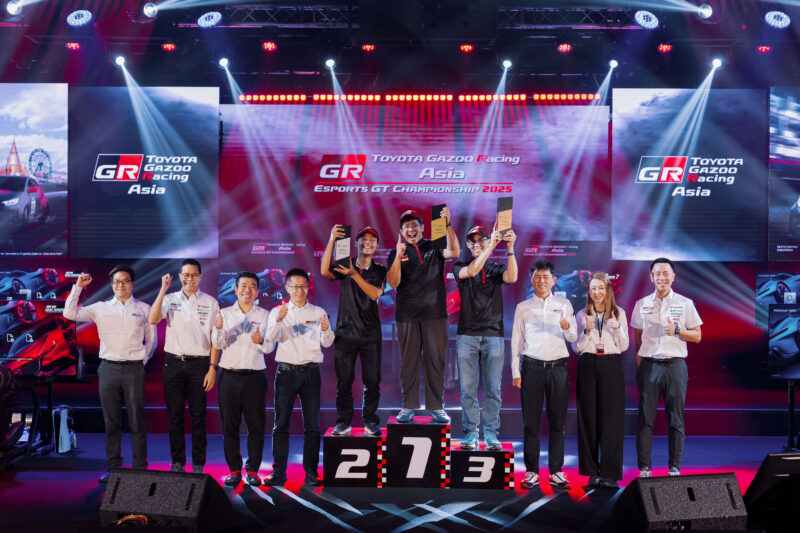
Malaysian racer Chong Kai Chang achieved an impressive third place in the recently concluded Toyota Gazoo Racing (TGR) Asia Esports GT 2025 championship held last weekend.
The tournament featured fierce competition among fifteen sim racers from Indonesia, the Philippines, Singapore, Thailand, and Malaysia, represented by Taj Aiman, Iqbal Suji, and Chong Kai Chang, using the Gran Turismo 7 platform.
In the individual category, Indonesian racer Andika Rama topped the podium with a total of 74 points, followed closely by his compatriot Moreno Pratama with 62 points.
Chong Kai Chang accumulated a total of 59 points.
With two drivers dominating the podium, Indonesia scored a total of 169 points in the country category, followed by Malaysia with 151 points and Singapore with 93 points.
The top three individuals and teams each took home cash prizes of USD 8,000 (RM 33,176), USD 4,500 (RM 18,662), and USD 3,000 (RM 12,441), respectively.
Special awards were also presented to recognize outstanding performances, as follows:
Driver of the Day: Andika Rama (Indonesia)
Best Racecraft Driver: Chong Kai Chang (Malaysia)
Fastest Race Pace: Fadtris Isa (Singapore)
The final races took place at three different locations: Suzuka Circuit (Japan) using the GR Yaris, Interlagos (Brazil) with the GR010 Hybrid, and finally at Watkins Glen (United States) using the GR Supra.
Recordings of the TGR Asia Esports GT 2025 championship can be viewed through the link below:
Sime Darby Auto ConneXion (SDAC), the sole distributor of Ford vehicles in Malaysia, has announced the launch of the all-new Ford Ranger Raptor Sport 3.0 pickup truck.
Priced from RM273,888, the Ford Ranger Raptor Sport is powered by a 3.0-liter twin-turbo EcoBoost V6 engine, delivering 397 PS at 5,650 rpm and 583 Nm of torque at 3,500 rpm.
Like the Ranger Raptor, this Sport variant is equipped with an adaptive Fox suspension system featuring 2.5-inch Live Valve Internal Bypass shock absorbers and a Bottom-Out Control system.
In addition, there are enhancements including exclusive Raptor decals on the sides, a new Sport Hoop design, and 17-inch beadlock-style wheels built for off-road driving.
Two color options are available: Arctic White and Meteor Grey.
Every purchase of the Ranger Raptor Sport comes with a five-year manufacturer’s warranty and a complimentary two-year service package.
Customers will also receive an exclusive “Live The Ranger Life” cooler bag as a delivery gift.
PRO-NET, the authorized distributor of the smart brand vehicles in Malaysia, has successfully launched another electric SUV for the local market, the smart #5.
Two variants are offered, starting with the Premium variant featuring a single electric motor and rear-wheel drive (RWD).
With a power output of 358 hp and torque of 373 Nm, the #5 Premium can accelerate from 0 to 100 km/h in just 6.5 seconds.
Its 100 kWh battery pack provides a driving range of up to 590 km according to WLTP data and supports AC charging at 22 kW as well as DC fast charging of up to 400 kW (10-80% state of charge in 15 minutes).
Meanwhile, the Brabus variant is powered by two electric motors and features an all-wheel-drive (AWD) system that can produce 637 hp and 710 Nm.
The Brabus version can accelerate from 0 to 100 km/h in just 3.8 seconds and offers a driving range of 540 km.
Standard equipment for the smart #5 includes:
A cargo space of 1,530 liters and a 72-liter frunk
Dual 13-inch OLED display screens
A 25.6-inch augmented reality head-up display
Apple CarPlay and Android Auto support
Sennheiser audio system with 20 speakers and Dolby Atmos technology
Nappa leather upholstery
Oak wood accents
A 1.7 square meter panoramic glass roof
A built-in cooler in the center console storage compartment
The Brabus variant includes additional features such as Launch Mode, Dinamica microfiber upholstery, red brake calipers, 21-inch Brabus Monoblock Z wheels, and sport-tuned suspension.
Safety features comprise a high-strength steel chassis with rigidity of up to 42,000 Nm, seven airbags, Highway Pilot Assist (HWA) with Stop & Go functionality, and a 360-degree camera system.
The retail price of the smart #5 starts at RM199,800 for the Premium variant, rising to RM249,800 for the Brabus variant.
The Premium variant is available in four colors: Meta Black, Cyber Silver, Pulsar Ruby, and Saturn Beige Matte, all equipped with an Eclipse Black colored roof.
The Brabus variant features three exclusive finishes: Atom Grey Matte, Meta Black, and Digital White, with an Eclipse Black roof.
Smart Malaysia is also offering a Comprehensive Premium Ownership concept that includes:
8-Year / 200,000 km High-Voltage Battery Warranty
8-Year / 150,000 km High-Voltage Component Warranty
4-Year Vehicle Warranty with unlimited mileage
2-Year Warranty on Parts with unlimited mileage
24-hour Roadside Assistance
A free Wallbox charger valued at RM3,200
A free Vehicle-to-Load (V2L) adapter valued at RM800
A free accessory package with six items valued at RM2,000
Free Internet data for 3 years, 3GB/month (108GB total)
Aveta Malaysia has announced the introduction of a new Twilight Blue colour for the Vanguard 250 SE maxi scooter, complementing the existing Majestic Green and Titanium Grey options.
In addition to the new colour, Aveta Malaysia has confirmed that the Standard version of the Vanguard 250 will no longer be officially offered.
The Vanguard 250 features a single-cylinder, 244.2 cc engine capable of delivering a maximum power output of 24.8 hp at 8,500 rpm and a torque of 22.5 Nm at 6,500 rpm. It is equipped with a Bosch fuel injection system.
According to previously announced specifications, the Vanguard 250 SE comes with features such as a 37 mm telescopic forks, twin gas shock absorbers at the rear, a four-piston brake caliper at the front, and a two-piston caliper at the rear, along with 15-inch front and 14-inch rear wheels.
Other features include a riding recorder camera, a seven-inch TFT display, a Tire Pressure Monitoring System (TPMS), a dual-channel ABS braking system, and Traction Control System (TCS).
The selling price remains unchanged, starting from RM16,388, excluding road tax and insurance.
In the latest development, Aveta Malaysia has been recognized by TARO Motor (a Chinese manufacturer) as the Global Best Sales Partner for achieving outstanding sales performance of the Vanguard 250 model.
This achievement further solidifies Malaysia’s position as a market leader in TARO’s global network.
BYD Malaysia, in collaboration with BYD Sime Motors, has launched a series of Electric Vehicle (EV) technology tours known as BYD Tech Discovery, starting in Kuala Lumpur from November 14 to 16.
A variety of exciting activities have been organized for visitors.
Among these are the Test Drive Zone and Trial Drive Area, featuring challenges such as the Camel Bridge and Cross-Axle, powered by DMO technology, as well as a 360-degree turn and Crabwalk demonstration using the Denza Z9GT.
Additionally, visitors will have the opportunity to learn about core technologies such as the Blade Battery, smart charging systems, and advanced safety features, all while enjoying complimentary coffee and receiving exclusive BYD merchandise.
Special promotions will also be available for select models, including:
Savings of up to RM20,000 and a lucky draw chance of up to RM38,888 for bookings of the BYD M6, BYD Atto 3 Ultra, or BYD Sealion 7.
Trade-in offers including rebates of up to RM11,000 for the BYD Atto 2 and BYD Seal.
A rebate of RM15,000 or interest-free financing for the Denza D9.
Taking place at Car Park 3, Plaza Arkadia, Desa ParkCity, BYD Tech Discovery is open to all Malaysians from 10:00 AM to 8:00 PM.
In conjunction with the 2025 BYD Tech Discovery event at Plaza Arkadia (November 14-16), BYD Sime Motors is showcasing the Shark 6 pickup truck for the first time.
BYD is using this model to demonstrate its Dual Mode Off-road (DMO) Super Hybrid technology to the public.
The showcased unit is a right-hand drive (RHD) model, indicating that it may soon be officially launched in the local market.
Here are some quick facts you should know about the BYD Shark 6:
Platform
This pickup truck features a body-on-frame chassis and shares the same platform as the Fangchengbao Bao 5 (also known as Leopard 5) SUV.
The Bao 5 SUV was previously displayed at the Malaysia Autoshow 2024.
Engine
The Shark 6 is not an electric-powered pickup truck; rather, it is equipped with a plug-in hybrid electric vehicle (PHEV) powertrain. The DMO Super Hybrid system consists of:
A 1.5-liter turbocharged inline four-cylinder engine (181 hp/260 Nm)
Two electric motors
A 29.58 kWh LFP battery pack
The total power output reaches 430 hp and 650 Nm, enabling acceleration from 0-100 km/h in just 5.7 seconds and a top speed of 160 km/h.
Range
For zero-emission driving, the BYD Shark 6 offers an electric range of up to 100 km.
However, when combined with its 59-liter fuel tank, the Shark 6 can achieve a total range of 840 km according to NEDC data.
Charging
The LFP battery pack supports AC charging of up to 7 kW and DC fast charging of up to 55 kW. With this capability, the battery can be charged from 30% to 80% state of charge (SoC) in just 25 minutes.
The Shark 6 also features vehicle-to-load (V2L) functionality up to 6.6 kW.
Dimensions
In terms of size, the BYD Shark 6 measures 5,457 mm in length, 1,971 mm in width, and 1,925 mm in height, with a wheelbase of 3,260 mm. With a double-wishbone rear suspension setup, the Shark 6 provides a ground clearance of 230 mm.
Its approach angle is 31 degrees, while the departure angle measures 19 degrees. The rear cargo area has a capacity of 1,450 liters, with a payload limit of 835 kg.
Features
Based on the showcased RHD unit, exterior features include front and rear LED headlights, 18-inch alloy wheels, a charging port on the right side, and a V2L socket.
The cabin is equipped with a 10.25-inch digital cluster display, a 15.6-inch infotainment screen, wireless smartphone charging, and a head-up display.
Givi Asia Sdn Bhd has announced the launch of its official online shopping platform, GIVI Point Malaysia.
This platform simplifies the process for motorcyclists in Malaysia to purchase genuine GIVI items and accessories, such as helmets, bags, raincoats, storage boxes, and more, in a safer and more streamlined manner.
In conjunction with the launch, GIVI Asia is also offering a limited-time promotion for customers, valid from November 13, 2025 (11:00 AM) to November 14, 2025 (11:59 PM), which includes:
Free shipping (within Peninsular Malaysia)
A 10% discount on all products with the coupon code WELCOME10
Five selected GIVI items available for only RM130
According to Aaron On, Assistant Managing Director of GIVI Asia Sdn Bhd, “Through GIVI Point Malaysia, we aim to bring our products closer to motorcyclists while enhancing their online shopping experience.
“This marks an important step in GIVI’s ongoing efforts to continue evolving according to our customers’ needs,” he added.
Volvo Car Malaysia is rebranding its industry-first aftersales assurance initiative as the Volvo Genuine Parts Extended Warranty programme, offering a lifetime warranty at no additional cost on Volvo Genuine Parts installed at authorised Volvo dealerships nationwide.
This programme, tailored for customers whose Volvo cars have exceeded the standard warranty, sets a high benchmark in Malaysia’s premium car segment. It underscores the company’s ongoing commitment to product quality, customer satisfaction, and reducing the total cost of long-term ownership with parts that are guaranteed “For Life”.
Unlike the standard warranty included with a new vehicle purchase, the Volvo Genuine Parts Extended Warranty provides lifetime coverage, including labour costs, for all eligible Volvo Genuine Parts installed by authorised Volvo dealers outside the standard manufacturers’ warranty.
All Volvo Genuine Parts are covered under the extended warranty except wholesale, over-the-counter, consumables, batteries, accessories, and wear-and-tear parts. Parts covered by the Volvo Genuine Parts Extended Warranty can be replaced unlimited times subject to the specified exceptions.
The extended warranty also covers eligible remanufactured Volvo Genuine Parts that were sold and installed through authorised dealers, as well as parts that require replacement by an authorised Volvo workshop in a different country participating in the extended warranty programme, if the defect occurs there.
If a defective part covered under the Volvo Genuine Parts Extended Warranty causes a failure in other parts eligible under the extended warranty, those parts will also be replaced free of charge.
To qualify for coverage, parts must be purchased and installed on or after 1 October 2021 at an authorised Volvo dealership, with a valid invoice as proof of installation.
The lifetime warranty is non-transferable and applies only to one ownership, including fleet and company cars, and customers are required to follow Volvo’s recommended maintenance schedule.
Vehicles that have not visited a Volvo authorised workshop for more than two years after the standard warranty will need to undergo a health check at the owners cost to ensure that the vehicle is in good condition and not been modified or tampered in any way.
The validity of the Volvo Genuine Parts Extended Warranty is subject to the vehicle being subsequently serviced and maintained at Volvo’s authorised service network.
BMW Motorrad Malaysia has announced the arrival of the high-performance BMW M 1000 R Competition model, complementing the previously launched M 1000 RR Competition.
This Hyper Naked motorcycle is powered by a 999 cc inline-four engine that produces 210 hp at 13,750 rpm and 113 Nm of torque at 11,000 rpm.
It accelerates from 0-100 km/h in just 3.2 seconds, with a top speed exceeding 250 km/h, while still meeting the Euro 5+ emission standards.
Riding control is enhanced by a short-stroke throttle system, Dynamic Traction Control (DTC), Riding Modes Pro (which includes Rain, Road, Dynamic, Race, and three Race Pro modes), cruise control, and the Gear Shift Assistant Pro.
Standard features include an M chassis kit, M lightweight battery, M brakes, M titanium exhaust, M seat, and a display screen complete with M startup animations.
This motorcycle is offered in the exclusive M Competition variant featuring the Blackstorm metallic M Motorsport color, along with the full M Competition package, which includes:
M Carbon Package
M Carbon Wheels
M Carbon Winglets
M Endurance Chain
M Passenger Kit
M GPS-Laptrigger
The BMW M 1000 R Competition is priced starting at RM219,500, which includes a three-year warranty and three-year roadside assistance, excluding insurance.
With the BMW Group Financial Services Malaysia financing package, this motorcycle is available for a monthly installment of RM3,068 based on a 90% loan over seven years.
UMW Toyota Motor (UMWT) has announced the return of the Toyota Dream Car Art Contest (DCAC) for its 19th edition.
This contest will take place in Malaysia from October 1, 2025, to February 8, 2026, under the theme “Your Dream Car.” It is open to participants in three age categories:
Group 1: Ages 7 and below
Group 2: Ages 8-11
Group 3: Ages 12-15
Five main winners will be selected based on age category, and from these, nine winners (three from each category) will be chosen to represent Malaysia on the global stage in Japan. The list of national winners will be announced in April 2026.
For this year’s contest, participants are encouraged to submit hand-drawn and digital artworks, regardless of materials, media, and techniques used, in either A3 paper format or digital formats such as JPG or PNG.
Since its inception in 2004, the Toyota Dream Car Art Contest has provided a platform for nearly 9.4 million children worldwide to share their ideas and imagination, which may help shape the vehicles of the future.
In previous editions, the contest garnered a remarkable 665,326 entries from 90 countries, showcasing its global reach and ability to inspire creative thinking across borders.
Hong Leong Yamaha Motor (HLYM) has announced an update to the Yamaha Y15ZR model with three new colour options.
The new colours are Blue Spark, Aqua Violet, and Mecha Green.
The Yamaha Y15ZR in these new colors has been available at all authorized Yamaha dealers nationwide since November 6, with a selling price starting at RM8,998, excluding registration and insurance.
The basic specifications of the Yamaha Y15ZR remain unchanged, featuring a single-cylinder 150 cc liquid-cooled SOHC engine that produces 15.2 hp at 8,500 rpm and torque of 13.8 Nm at 7,000 rpm.
The suspension consists of telescopic forks at the front, followed by a swingarm at the rear, while the braking system uses a single rotor setup for both wheels.
The Y15ZR offers a fuel tank capacity of 4.2 liters and a seat height of 780 mm.
Royal Enfield Malaysia has announced the arrival of the affordable roadster model, the Hunter 350, which has been updated for the Malaysian market.
It is powered by an air/oil-cooled single-cylinder engine, delivering 20.2 hp at 6,100 rpm and a torque of 27 Nm at 4,000 rpm.
The power is transferred to the rear wheel through a five-speed transmission, assisted by an Assist & Slipper clutch.
The twin downtube spine frame is complemented by a 41 mm telescopic front fork suspension, along with twin shock absorbers that offer six levels of preload adjustment.
The braking system consists of a dual-piston caliper and a 300 mm rotor at the front, followed by a single-piston caliper and a 270 mm rotor at the rear. A dual-channel ABS system is also provided.
The Hunter 350 features modern elements such as LED lighting units, a digital-analog meter display complete with Tripper Pod navigation assistance, and a USB Type-C charging port.
The fuel tank capacity is 13 liters, while the seat height is 790 mm.
For the Malaysian market, the Royal Enfield Hunter 350 is priced from RM21,900 for the Rio White and Dapper Grey color variants, and from RM22,500 for the Tokyo Black, London Red, and Rebel Blue colors.
Malaysia’s Leading Automotive News | ENGEAR ENGLISH