Tag Archives: supercar

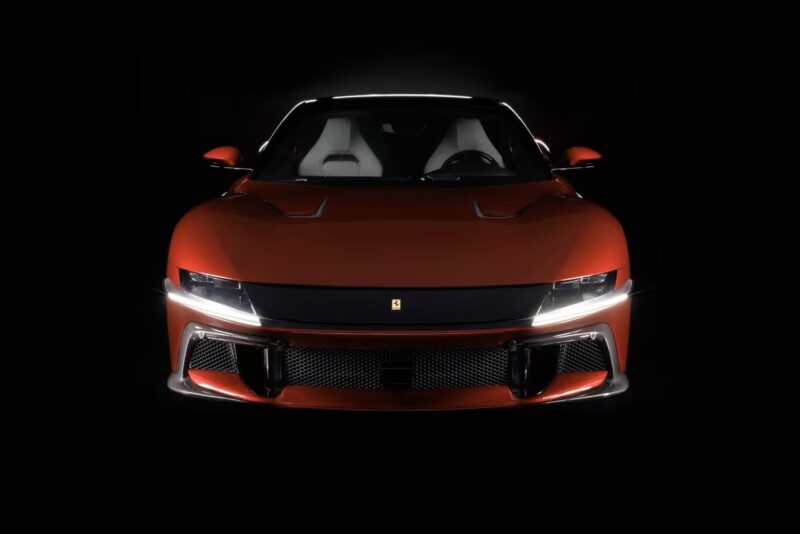
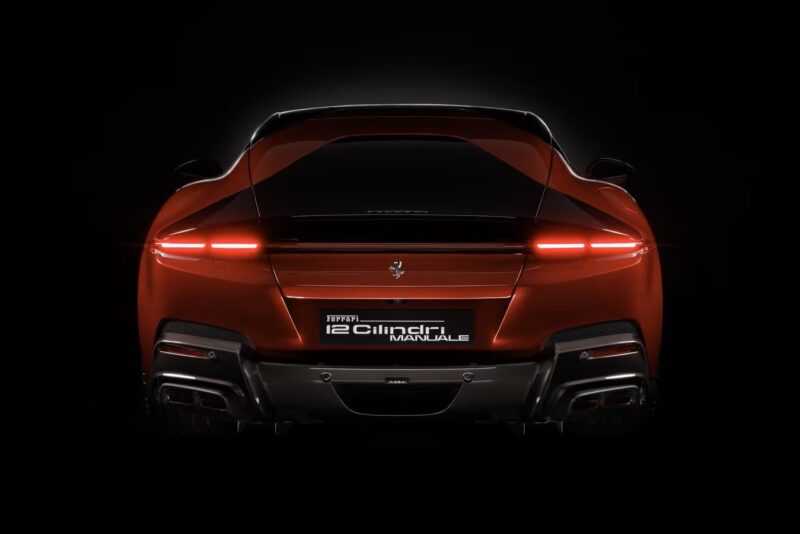
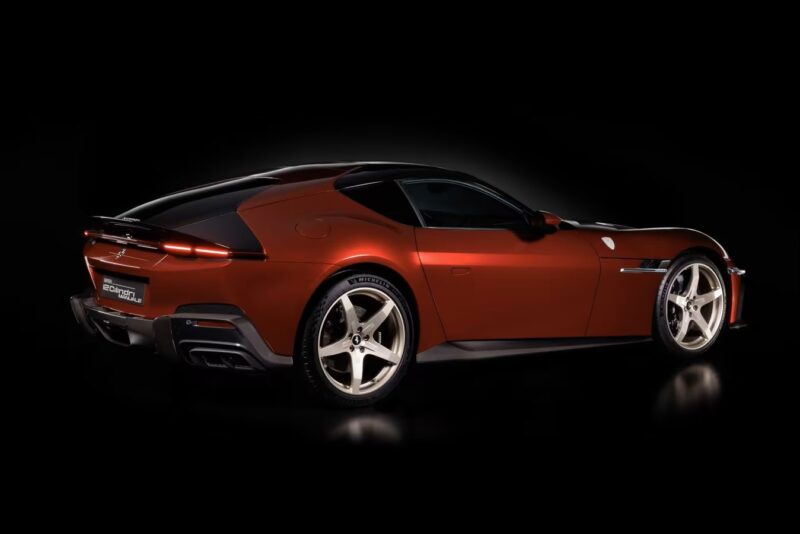
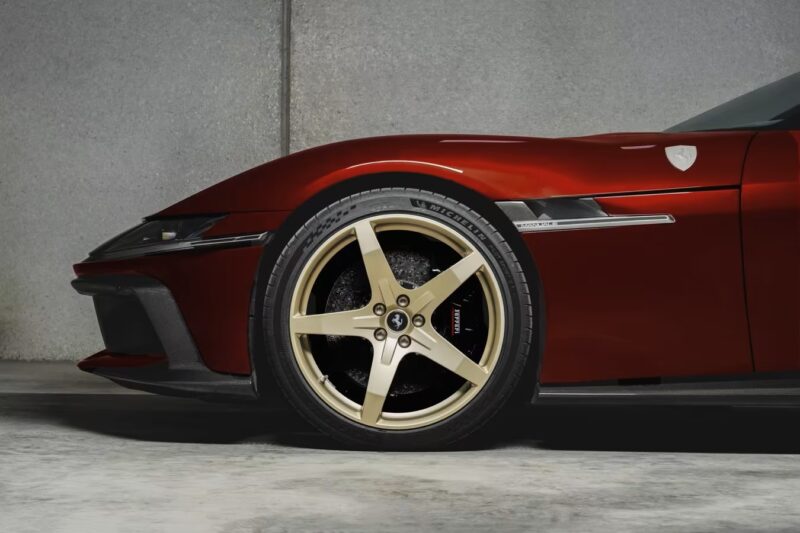
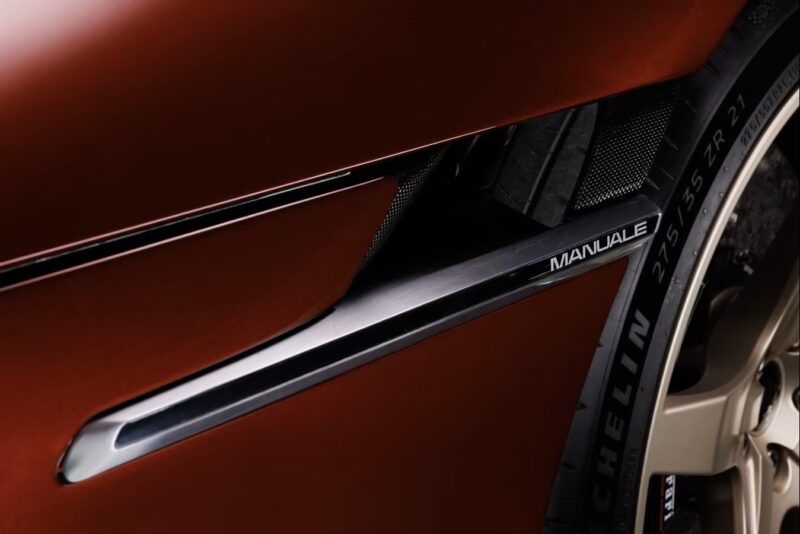
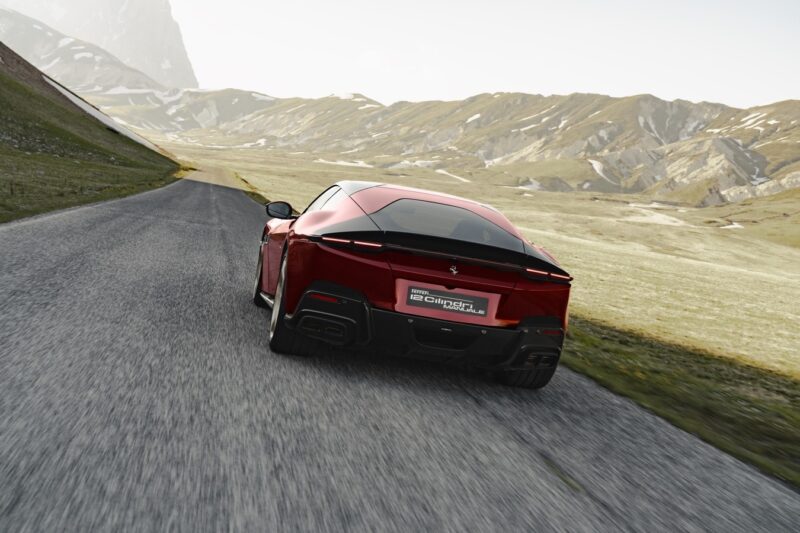
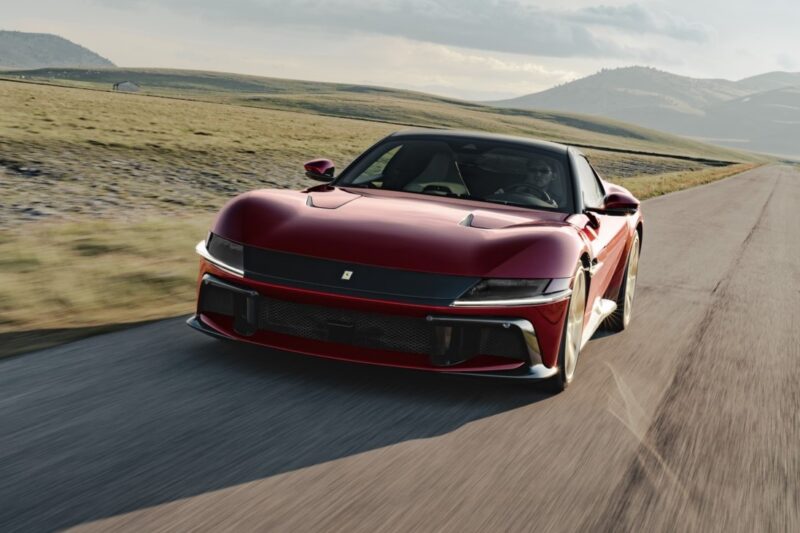
Ferrari 12Cilindri Manuale restores the ‘manual’ driving experience, limited to 1,499 units

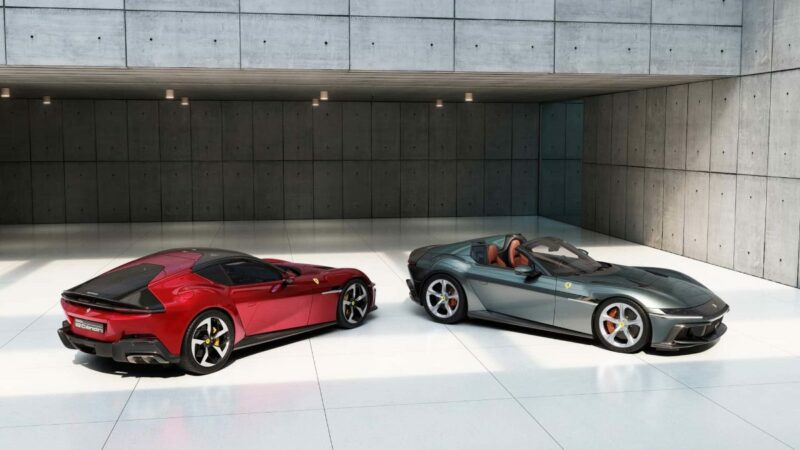
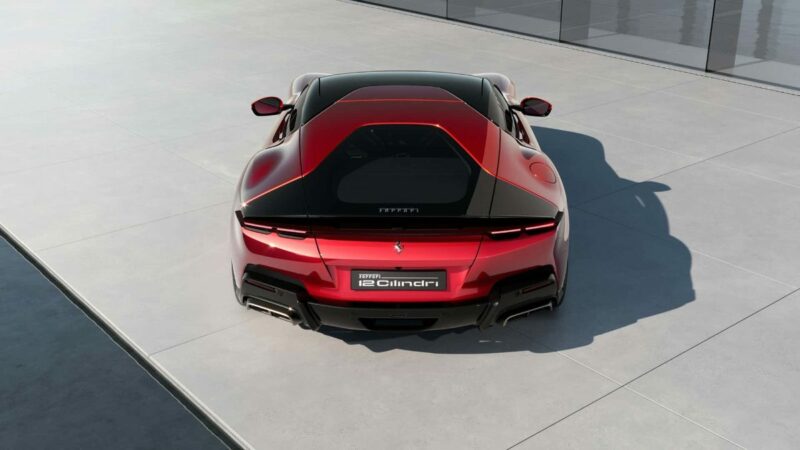
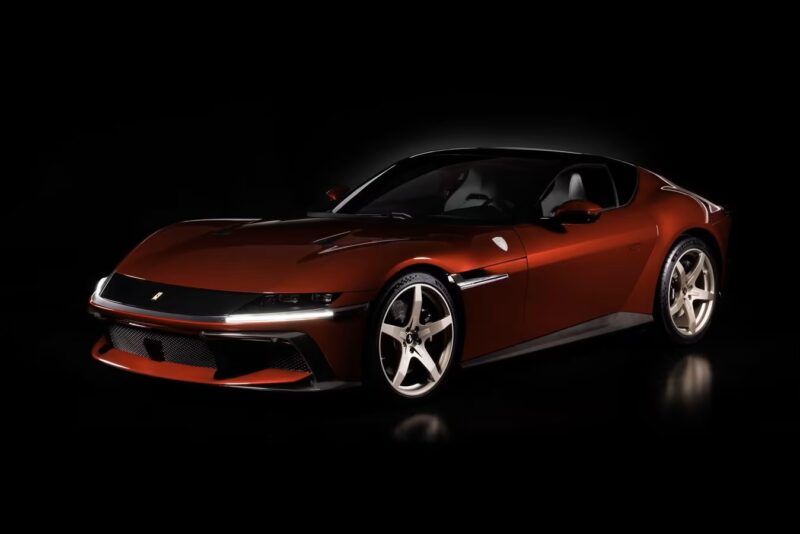
Here is Ferrari’s answer to fans craving a manual-transmission supercar: the Ferrari 12Cilindri Manuale.

It sounds like Ferrari is trying to revive nostalgia since production of the last manual model (599 GTB) ended in 2012.

Core recipe remains the same
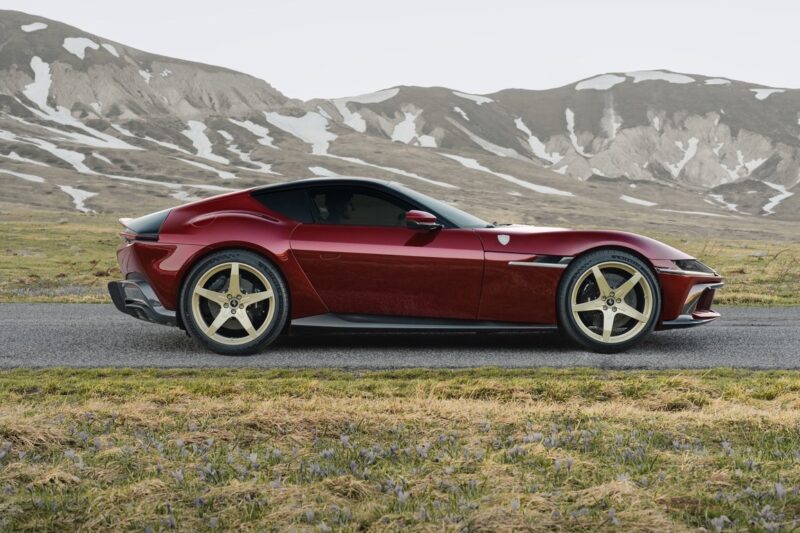
With the 12Cilindri Manuale, Ferrari keeps the basic formula of a Prancing Horse machine: a naturally aspirated V12 heart, a twin-clutch (DCT) gearbox, and rear-wheel drive (RWD).

The engine can still produce up to 819 hp and 678 Nm, enabling a 0-100 km/h time of 2.9 seconds.

However, the way the driver controls this machine is slightly different.
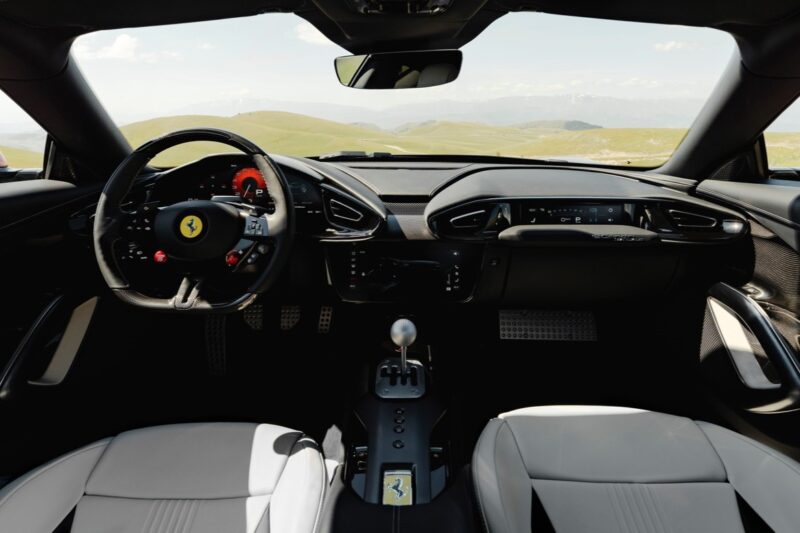
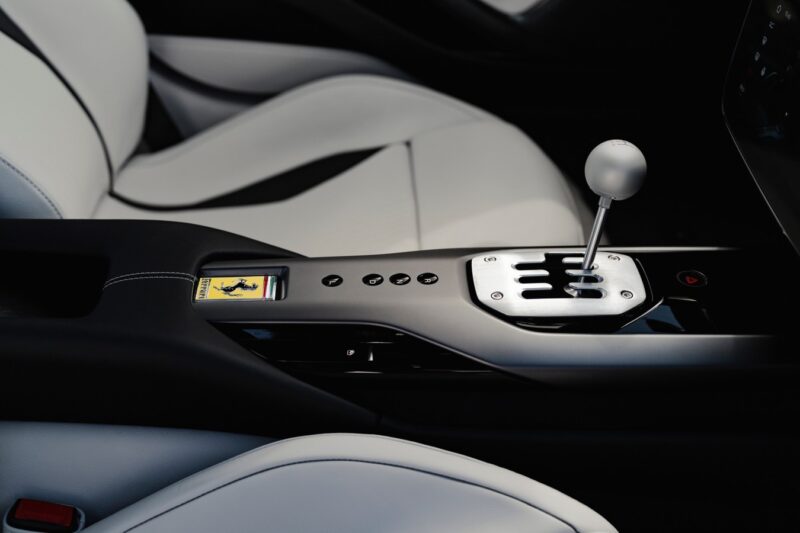
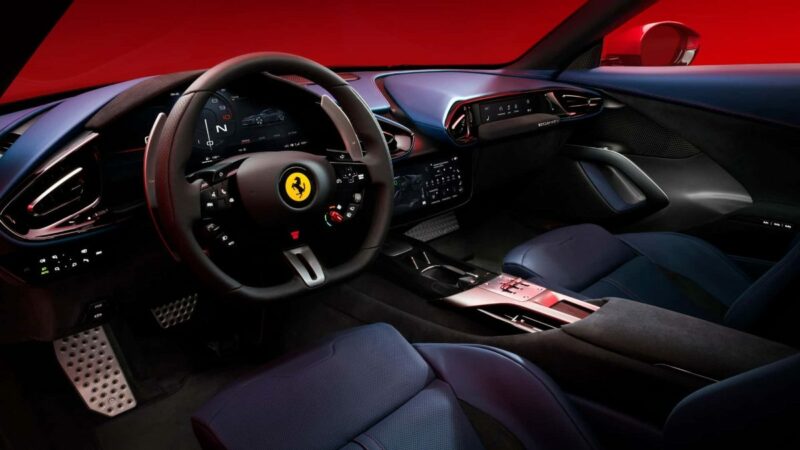
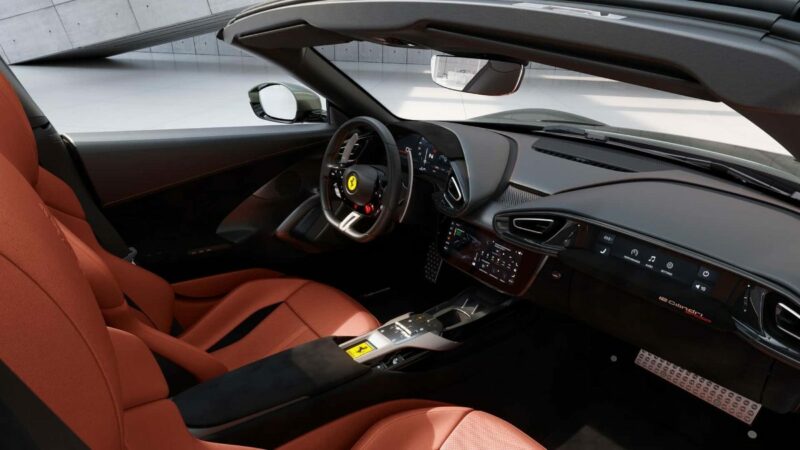
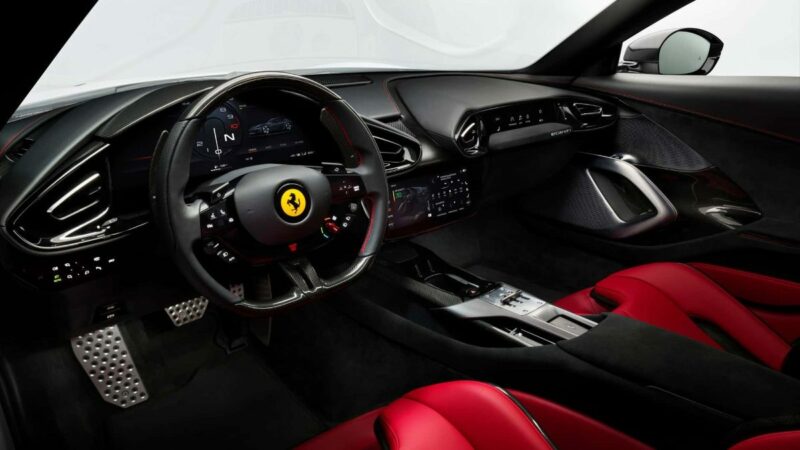
Unlike the existing 12Cilindri models, the 12Cilindri Manuale is equipped with hardware favored by true manual enthusiasts:

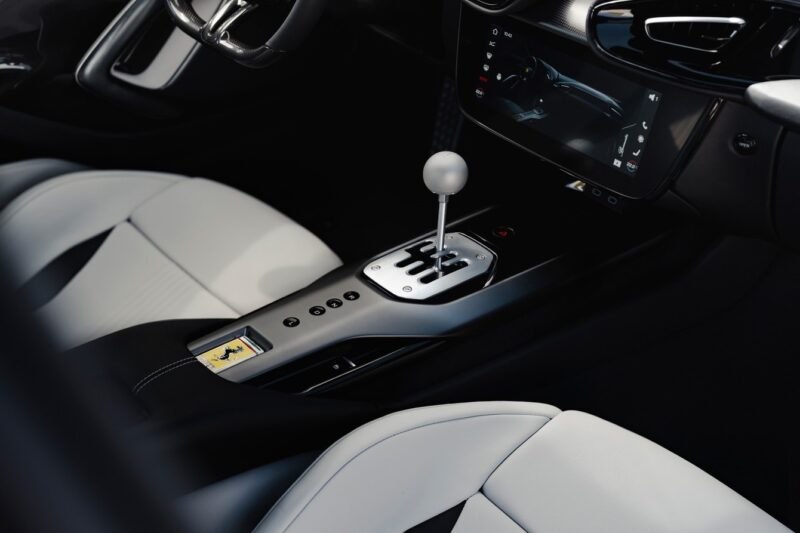
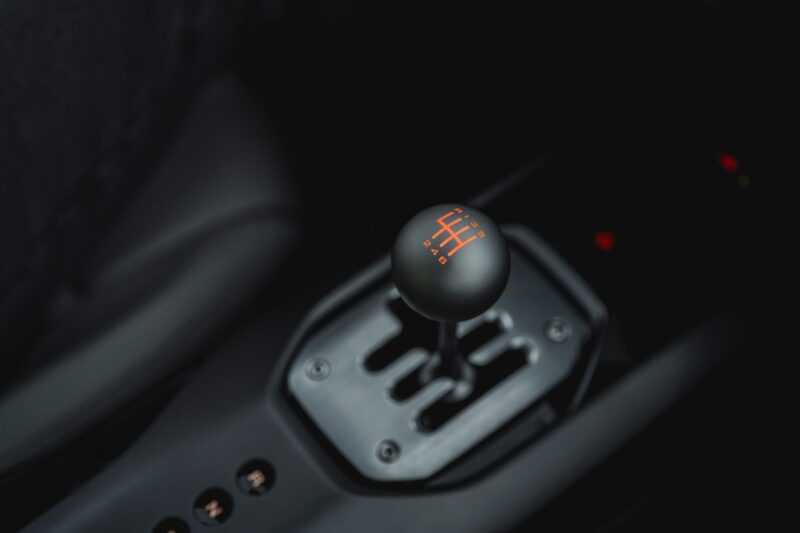
  • gated shifter on the center console
  • classic round aluminum knob
  • three-pedal setup

The cabin layout has also been revised (including the center tunnel and ergonomic aspects) to make driving more exciting.

Manuale-by-Wire
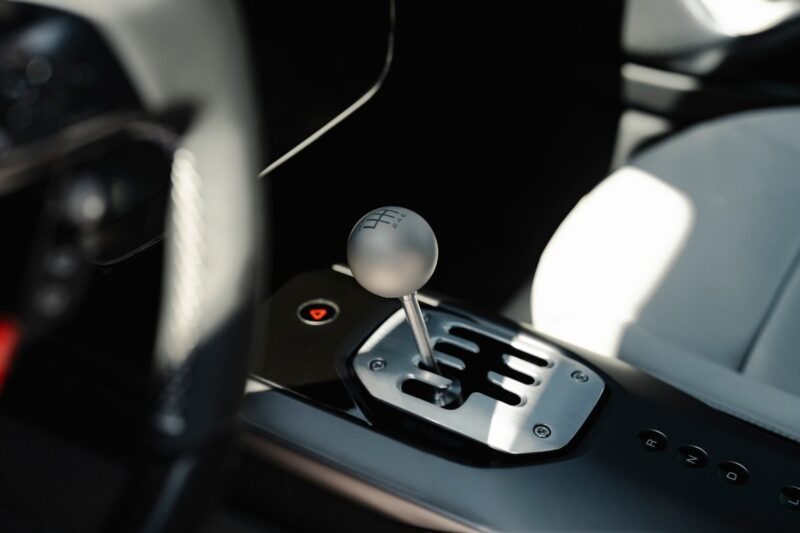
The gear-shifting system in the 12Cilindri is called Manuale-by-Wire, and it does not have a direct mechanical link between the gear knob, clutch pedal, and the transmission.

Through this system, input from the clutch pedal and gear-knob position is transmitted electronically to the transmission control unit to change gears.

Imagine a sim rig used for virtual racing, but this time it’s more realistic.

The gear-shifting mechanism and the clutch pedal are designed to mimic the resistance experienced by a driver with a real manual system.
Just like a conventional manual car:

  • if the clutch is released too early, the engine may jerk or cut out
  • if the driver successfully executes precise gear changes, the drive will be smoother

It also includes a safety mechanism that prevents the driver from making disallowed gear changes (in other words: money shifts).

The manual driving mode (gears 1-6) can be used at speeds below 100 km/h, provided the clutch is pressed each time a gear is changed.

If the driver has had enough of manual driving, they can switch to automatic mode at any time.

To make the experience more authentic, the Ferrari 12Cilindri Manuale does not include paddle shifters behind the steering wheel.
The Ferrari 12Cilindri Manuale will be produced in a limited run of 1,499 units as a nod to Ferrari’s first 12-cylinder engine displacement produced in 1947.

Each 12Cilindri Manuale will be offered through the Tailor Made program.

This means each “manual” vehicle will have different fittings and specifications from one another.

In Europe, the 12Cilindri Manuale is priced from €590,000 (about RM2.7 million).
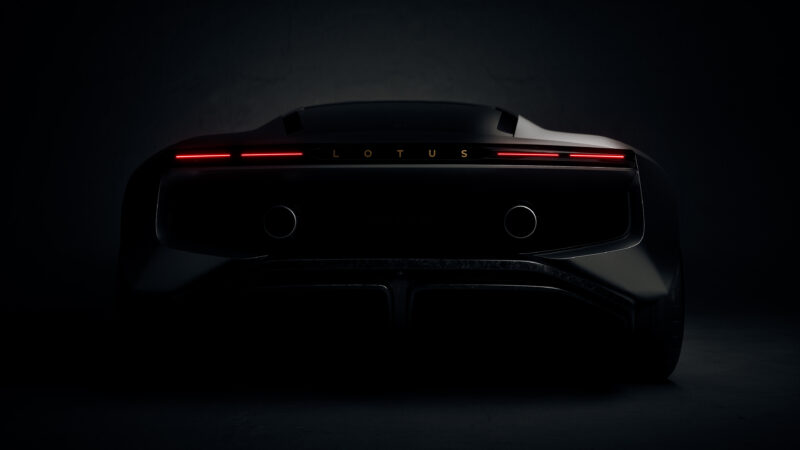
Lotus Type 135: a 1,000+ hp V8 supercar, Esprit successor?

Lotus is reportedly developing a new supercar powered by a V8 engine, currently designated as the Type 135.

The last time Lotus utilized a V8 powerplant was in 2004, the same year production for the legendary Esprit officially ended.

The First Lotus Supercar

The Type 135 is slated to be Lotus’s first dedicated supercar and is expected to launch in 2028.

Within the current product hierarchy, the Type 135 will be positioned between the Emira sports car and the Evija hypercar.

This new model will feature a hybrid V8 configuration with an output exceeding 1,000 hp.

Mercedes-AMG or Toyota V8?

At this stage, Lotus has not released specific details regarding the engine supplier for the Type 135.

Currently, Lotus sources internal combustion engines for the Emira from two partners: Mercedes-AMG and Toyota.

Interestingly, both manufacturers are developing brand-new V8 powertrains set to debut officially this year.

The question remains: which will Lotus choose? A Mercedes-AMG V8 or a GR twin-turbo hybrid unit?

Not the First Lotus Hybrid

Technically, the Type 135 will not be the first hybrid vehicle produced by Lotus.

That title belongs to the Lotus Eletre PHEV, which is already available in the Chinese market with a total system output of 939 hp.

Will the Esprit Name Return?

A major point of speculation is whether the “Esprit” nameplate will be revived for this model.

From a heritage perspective, reviving the iconic name makes more sense than marketing it as an upgraded version of the Emira.

Furthermore, the design is said to draw inspiration from the Theory 1 concept introduced in September 2024.

The Future of the Emira

The Type 135 project is a core component of Lotus’s “Focus 2030” business plan.

In the near term, Lotus will also introduce an updated version of the Emira, featuring an enhanced engine and a weight-reduction program.

Denza Z to debut at Goodwood FOS, ready to challenge Porsche 911

The premium BYD brand, Denza is set to enliven this year’s Goodwood Festival of Speed with a new flagship model.

The model was previously showcased under the name Z Concept at last year’s Shanghai Auto Show.

Bright Orange Production Version Revealed

Denza has also unveiled early images of the bright orange production version, which is being overshadowed by Stella Li (Executive Vice President of BYD) and Daniel Craig (the actor known for his role as James Bond).

Based on the images, it still retains the design of the original concept model.

Some noticeable features include:

  • Sharp diamond-shaped headlights
  • Aggressive front bumper
  • Two-tone rims

However, the production version does not include the large front splitter and rear spoiler.

Basic Specifications Remain a Mystery

Denza has yet to confirm the complete specifications of the powertrain that will drive the Z model.

However, it is highly likely that it will utilize the same system as the Z9 GT model, which consists of three electric motors, powers exceeding 952 hp, and a 100 kWh Blade battery.

These figures are certainly enough to make the Porsche 911 break a sweat.

It is also expected to feature advanced technologies such as:

  • Magnetorheological suspension
  • Steer-by-wire system
  • Crab-walk capability

Former Secret Agent Helps Promote Denza Z

BYD has collaborated with renowned actor Daniel Craig for the global campaign of Denza.

This collaboration aims to strengthen the brand’s presence in Europe, Latin America, the Middle East, and Africa.

Lexus Sport Concept: is this the true LFA’s successor?

Last week at the Monterey Car Week, Lexus took the opportunity to showcase its next-generation sports car for the first time.

Named the Lexus Sport Concept, it represents an evolution of the Electrified Sport Concept that debuted in late 2021.

In comparison to its predecessor, the Sport Concept boasts a design that is more suited for actual production.

In addition to the typical modern Lexus design elements, this Sport Concept also draws inspiration from the V10 Lexus LFA supercar, particularly noticeable on the C-pillar, with air vents at the rear bumper and an active rear spoiler.

At this time, Lexus is still keeping the full specifications of the Sport Concept under wraps.

However, upon closer inspection, the Lexus Sport Concept features exhaust outlets cleverly concealed beneath the active spoiler.

Reports suggest that the Sport Concept will be equipped with a twin-turbo V8 engine configuration with a front-engine, rear-wheel-drive (FR) layout, along with hybrid system assistance.

Why a V8 engine? This is based on a test unit, heavily masked, that was spotted undergoing testing at the Nürburgring a few months ago.

So, could the Sport Concept truly be the rightful successor to the Lexus LFA?

GWM’s first V8 PHEV supercar is set to compete with Yangwang U9

The world of supercars is set to be enlivened by the arrival of a new contender from yet another Chinese manufacturer, GWM.

A teaser image was uploaded by GWM Chairman Wei Jianjun on the social media platform Weibo during the 35th anniversary celebration of Great Wall Motor.

The supercar is still covered in black cloth, but we can see it is a genuine supercar based on its long, low, and wide dimensions.

At the front, distinct lines indicate the positioning of the headlights on the fender, along with an aggressive bumper opening.

The side view features additional cooling inlet openings, further confirming that this supercar will have a mid-engine configuration.

The official specifications of the vehicle are still under wraps, but GWM is expected to pair this supercar with a 4.0-liter twin-turbo V8 engine featuring a plug-in hybrid (PHEV) system.

This new engine unit made its debut at the 2025 Shanghai Auto Show recently and has been developed entirely in-house by GWM.

According to GWM Chief Technology Officer Wu Huixiao, this first supercar has undergone a five-year development program.

He further stated that they are employing a high-performance approach while still offering a price point lower than that of competitors.

Huixiao also revealed that the supercar will be built on a carbon fiber monocoque chassis and is said to be “far superior to the Ferrari SF90 model.”

GWM’s first supercar is set to be officially unveiled by the end of this year, with a price tag of under 1 million yuan (approximately RM590,000).

2025 Lamborghini Temerario officially launched in Malaysia – price starts at RM1.35 million

Lamborghini Kuala Lumpur has announced the arrival of the plug-in hybrid (PHEV) supercar model that replaces the Huracan, the 2025 Lamborghini Temerario for the local market.

Each Temerario comes with a starting price of RM1.35 million, excluding duty, tax and customization costs.

Here are some key facts you should know about this HPEV (High-Performance Electrified Vehicle) from Lamborghini:


1. Power

Gone is the V10 engine, as Lamborghini has fitted a brand new powertrain unit.

The 2025 Temerario is equipped with a 4.0-liter twin-turbo V8 engine (789 hp/730 Nm) combined with three axial-flux electric motors.

With a combined output of 920 hp, it can accelerate from 0 to 100 km/h in just 2.7 seconds before reaching a top speed of 343 km/h.


2. Zero-Emission Mode

Interestingly, the Lamborghini can be driven in zero-emission mode using the two electric motors at the front axle, each producing 82 hp.

It comes with a 3.8 kWh battery pack that can be charged in 30 minutes using a 7 kW AC port, or as quickly as six minutes using power from the V8 engine.

Where is the third electric motor? It is positioned between the engine and the 8-speed dual-clutch gearbox, capable of generating up to 150 hp and 300 Nm.


3. Chassis

In contrast to the Huracan’s chassis, which uses a mix of aluminum and carbon fiber, Lamborghini has utilized all-aluminum for the Temerario’s chassis.

This not only ensures that the weight remains at the desired level but also claims to provide 20 percent greater torsional stiffness.


4. Hexagonal Elements Take Center Stage

The exterior of the Temerario features a blend of design elements found in both the Revuelto and Huracan models.

The headlamps of the Temerario are slimmer than those of the Huracan, and if you notice, hexagonal graphic elements dominate the exterior of this PHEV.

Just look at the headlights on the front bumper, the rear lights, the exhaust outlets, and not forgetting both the fuel tank and charging port covers.


5. Cabin Space

The hexagonal theme extends to the cabin, with a design inspired by fighter jet cockpits.

It features a 12.3-inch digital cluster screen, an 8.4-inch vertical center screen, and a 9.1-inch screen for passengers.

Comfort has also been prioritized, as the Temerario now offers greater head and leg room compared to the Huracan.

Lamborghini even claims that an NBA player standing at 198 cm can fit comfortably inside the Temerario cabin while wearing a helmet!

40% of our new clients are aged 40 and below – Ferrari CEO

Many people dream of owning a Ferrari (myself included) but not everyone has the financial means to turn their dreams into reality.

“Those who are able to splurge millions of ringgit on the supercar from Maranello are typically in their mid-life because, unless they come from a wealthy family, accumulating six figures in their bank account can take ages.

Nevertheless, recently, Ferrari has become increasingly popular among younger buyers.

Speaking to CNBC, Ferrari chief executive officer Benedetto Vigna revealed that 40% of the brand’s new buyers are under the age of 40.

The figure mentioned by Vigna represents a significant increase of 10% compared to 18 months ago.

“I’m not sure about other brands, but for us, it is an achievement thanks to our team,” he added.

The figure can be considered surprising, given that Ferrari is a brand that puts exclusivity before everything else.

Last year, Fortune reported that 81% of new Ferraris were sold to existing customers, with 48% of those already owning more than one Ferrari.

For this writer, however, this is not particularly surprising, as we can see that an increasing number of young people are becoming wealthy by jumping on the cryptocurrency and content creation bandwagons.

Then there are also the young professional athletes and celebrities who enjoy collecting luxury cars like Ferraris.

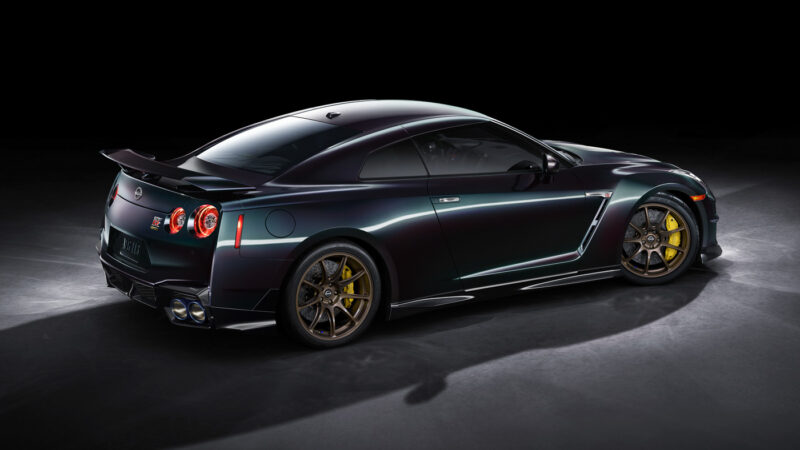
Nissan plans to sell GT-R R35 for another 17 years

Do you know that the Nissan GT-R R35 generation is now 17 years old?

Compared to others, the Nissan GT-R is quite aged, but Nissan actually still intends to continue producing the R35 for another 17 years.

In an interview with Top Gear, Nissan’s Global Product Chief, Pierre Loing, stated, “(The Nissan GT-R) has been on sale for 17 years, and we want to continue it for another 17 years, but regulatory compliance is causing issues.”

For the past few years, Nissan has faced challenges in continuing the sales of the GT-R model.

In Europe, the supercar model’s sales were discontinued in July 2021 due to new noise regulations imposed.

It was also pulled from the Australian market due to failure to comply with stricter side-impact crash test regulations.

Normally, a manufacturer would provide a replacement model when production of the current model is discontinued.

However, this isn’t the case for the GT-R.

After ending the R35 GT-R production in 2025, there will be a gap for a long period before the successor model (Hyper Force) emerges in 2030.


“If you look at the history of the GT-R badge, we’ve had gaps before. We showed the GT-R concept in 2001, ended R34 Skyline GT-R production in 2002, then the R35 didn’t launch until 2007.”

“The gap between the ‘Kenmeri’ Skyline GT-R ending in 1975 and the R32 starting in 1989 was even larger.”

“The GT-R is strong enough to live with these gaps in its production. And we need to have a gap, because going into the electrified world, there is a lot of debate about ‘what is a GT-R in an era of electrification?’ We don’t have all the answers yet. We are in the middle of all those debates.”

It’s highly likely that when the new generation Nissan GT-R emerges in the coming years, it will be positioned as a higher-end model compared to the Z and upcoming Silvia.

Lotus Theory 1, a three-seater supercar concept with 1,000 PS power

Lotus seems to be relentless in introducing new powerful electric models.

The latest offering from the British manufacturer is a concept model named Lotus Theory 1.

This electric supercar features dual electric motors with all-wheel drive system capable of generating 1,000 PS of power.

It accelerates from 0-100 km/h in less than 2.5 seconds, reaching a maximum speed of 320 km/h.

Its 70 kWh battery pack allows a range of 402 km on a full charge.

The carbon chassis construction also contributes to keeping the weight below 1,600 kg.

Moreover, the exterior design of the Theory 1 is said to be inspired by the S1 Esprit, showcasing sharp edges and a cab-forward shape reminiscent of the mid-engined layout of the Esprit model.

The concept model also introduces several interesting innovations.

For instance, the adaptive robotic system Lotuswear, developed in collaboration with Motorskins, provides tactile feedback to the driver through the bumps generated on the seats and the steering wheel.

Lotus Theory 1 also comes with steer-by-wire steering system, allowing the driver to customize steering ratio and response according to individual preferences.

In the center of the carbon tub, Theory 1 features a three-seater layout, where the middle seat is dedicated to the driver, while the passengers sit on the driver’s right and left.

It is equipped with a head-up display screen, along with built-in speakers integrated into the headrest structure for each seat.

4 high performance cars with manual transmissions

Toyota initially introduced the GR Yaris and GR Corolla with manual transmissions, but the manufacturer is now further enhancing the hot hatch offerings with the more efficient and quicker gear changes of the DAT automatic transmission.

With the continuous advancement of technology, high-performance cars no longer require conventional manual gearboxes to operate more efficiently.

The demand for manual transmission cars is decreasing every year, and some manufacturers are discontinuing manual car offerings due to very low sales percentages.

Do not worry, there are still those who are concerned about your need to continue using a clutch pedal in this modern era, and here is a list of high-performance cars still equipped with manual gearboxes:


1. Aston Martin Valour

This British-made sports car is produced in limited quantities worldwide, inspired by the iconic Vantage V8 models of the 70s and 80s.

Equipped with a twin-turbo 5.2-liter V12 engine capable of generating 705 hp, it is paired with a six-speed manual transmission and a mechanical limited-slip differential.


2. Gordon Murray Automotive T.33 & T.50

The two high-performance vehicles produced by Gordon Murray Automotive come with a naturally aspirated Cosworth 4.0-liter V12 engine.

The 615 PS/451 Nm power output (or 663 PS/467 Nm in the T.50) is transmitted to the rear wheels through the Xtrac six-speed manual gearbox.


3. Koenigsegg CC850

Technically, the CC850 does not come with a manual gearbox.

Instead, it uses the LST, or Light Speed Transmission, with a nine-speed gearbox delivering a power output of 1,201 PS/1,385 Nm to the rear wheels.

However, the CC850 also features a system called Engage Shifter System, where the driver can simulate a six-speed manual gearbox using a physical clutch pedal!


4. Pagani Utopia

In theory, this is the most expensive high-performance car with a manual gearbox you can buy on Earth.

The Pagani Utopia comes with a 864 PS and 1,100 Nm V12 Mercedes-AMG engine paired with a seven-speed Xtrac manual gearbox.

Unfortunately, all Utopia production units have already been sold out.

10 Most Powerful Production Cars in the World (Part 1)

Once upon a time, real production cars with over 1,000 hp were quite difficult to find.

However, with current technological advancements, it has now become commonplace for every manufacturer to compete in producing cars capable of unleashing up to two thousand horsepower, whether internal combustion engine or electric-powered.

As long as more advanced technologies exist, the race for the highest horsepower will not cease.

Below is a list of the most powerful new production cars that exist on this planet:


1. Koenigsegg Gemera

The Koenigsegg Gemera is a four-seater grand tourer equipped with a 5.0-liter hybrid V8 engine capable of generating up to 2,300 hp and 2,750 Nm of torque.

Looking for a less powerful version? You can opt for the inline-three-cylinder 2.0-liter hybrid variant, with a total output of 1,400 hp and 1,800 Nm of torque.

Even this might not be produced by Koenigsegg in the near future, as the majority of Gemera owners prefer the V8 engine.


2. Lotus Evija

Lotus, well-known for its lightweight cars, has ventured into producing electric sports/supercars.

Introduced in 2019, the Evija features four electric motors, each producing 503 PS of power, with a total power output of 2,011 hp and 1,704 Nm of torque.

This limited-production sports car can travel a distance of up to 346 km, thanks to its 93 kWh battery pack.


3. Aspark Owl

Despite its name not sounding Japanese, the Aspark Owl is actually an electric sports car developed by the engineering firm Aspark from the Land of the Rising Sun.

With four electric motors (one for each wheel), the Aspark Owl can deliver 1,984 hp and 2,000 Nm of torque.

Its 69 kWh battery pack allows it to travel up to 451 km on a single full charge.


4. Pininfarina Battista

Another powerful electric supercar on the list produced by Automobili Pininfarina GmbH.

It is also powered by four electric motors with a combined output reaching 1,900 hp and 2,300 Nm of torque.

A full battery charge enables this car to travel up to 450 km.


5. Rimac Nevera

This Rimac-built supercar shares the same factory used to assemble the Pininfarina Battista.

The Rimac Nevera is equipped with four electric motors driving each wheel, producing 1,888 hp and 2,360 Nm of torque, achieving a top speed of 412 km/h – one of the fastest EVs in the world.


6. Hennessey Venom F5

Hennessey Special Vehicles began producing the Venom F5 sports car in 2020, offering various options to its customers.

Regardless of the sold-out versions or the Roadster version currently being produced, each unit comes with a twin-turbocharged 6.6-liter V8 engine, generating up to 1,817 hp and 1,617 Nm of torque.

Maximum speed? Over 500 km/h!


7. Bugatti Tourbillon

The Bugatti Tourbillon is a hybrid sports car set to be produced starting from 2026.

Limited to only 250 units, the Bugatti Tourbillon features a V16 engine with a displacement of 8,355 cc paired with three electric motors.

The engine alone can produce 986 hp/900 Nm, but with the help of the electric motors, the Tourbillon can reach a power output of 1,775 hp and 3,000 Nm.

0-100 km/h in just 2.0 seconds, followed by 0-200 km/h in under five seconds, while 0-400 km/h is accomplished in less than 25 seconds before reaching a top speed of 380 km/h.


8. Koenigsegg CC850

Built as a tribute to the CC8S model, the Koenigsegg CC850 is a limited-production car celebrating the 50th birthday of its founder, Christian von Koenigsegg.

Borrowing the twin-turbocharged 5.0-liter V8 engine from the Jesko model, the CC850 outputs 1,385 hp and 1,385 Nm, or 1,185 hp when using regular fuel.


9. SSC Tuatara

The SSC Tuatara was originally powered by a twin-turbocharged 6.9-liter V8 engine, but the engine capacity has been reduced to 5.9 liters to allow it to reach a higher redline (8,800 rpm).

According to SSC, the Tuatara is capable of producing up to 1,350 hp and 1,735 Nm of torque, or up to 1,750 hp when using E85 fuel.


10. Czinger 21C VMax

The car in this final list is produced by the American automotive manufacturer, Czinger Vehicles.

The 21C is essentially a hybrid sports car with a 2.88-liter V8 engine paired with three electric motors, delivering 1,250 hp and 1,830 Nm of torque.

Acceleration from 0-96 km/h takes just 1.9 seconds before reaching a maximum speed of 407 km/h!

Aston Martin Valiant is a hardcore road-legal supercar with a manual transmission

ASTON Martin has unveiled a track-focused vehicle that is road-legal. Introducing Valiant, a supercar packed with aerodynamic packages and based on Valour.

It is powered by the desired heartbeat of Aston Martin enthusiasts, the V12 twin-turbo engine producing over 730hp. What’s even more intriguing, this engine is paired with a 6-speed manual gearbox. According to Aston, the Valiant model is inspired by their Formula 1 team driver, Fernando Alonso.

On the Valiant’s body, you can see a large front splitter, big rear spoiler, and a substantial diffuser. Its body is made of carbon fiber and shaped for optimal airflow.

21-inch magnesium wheels are wrapped in aero discs to enhance airflow, inspired by the Aston RHAM/1 that raced at Le Mans in the late 1970s. The brakes are 16.1 inches at the front and 14.1 inches at the rear.

There are several interesting components within the body. Valiant uses a 3D printed rear subframe, titanium torque tube, lightweight lithium-ion battery, all reducing weight by 51 pounds.

Its suspension is equipped with Multimatic Adaptive Spool Valve (ASV) dampers. According to Aston, this system “can adjust each damper in less than six milliseconds”.

The V12 twin-turbo engine in Valiant produces 735hp and 752Nm of torque. The manual gearbox is mounted at the rear for better weight distribution, along with a mechanical LSD.

As expected, the interior resembles a racing machine, where Valiant features a half-cage, Recaro Podium seats, and four-point harnesses. The dashboard trim is made of Alcantara and carbon fiber, with exposed gear knobs.

Only 38 Valiant units will be produced by Aston Martin, and each unit has been sold. But if you’re curious about the price, it’s around 2 million pounds (RM11.95 million).

Deliveries will commence in the fourth quarter of 2024; meanwhile, this Aston Martin Valiant will make an appearance at the Goodwood Festival of Speed next month.

Ferrari 12Cilindri: A powerhouse with disappointing name

THE Ferrari 12Cilindri, while packing a punch with its powerful engine, falls short in the nomenclature department. The name does not do justice to its remarkable performance.

The 12Cilindri proudly boasts a 6.5-liter naturally-aspirated V12 engine, generating an impressive 819hp and 678Nm of torque.

Placed in a front-mid configuration with a characteristic long front hood, it embodies the classic Ferrari aesthetic. The front-mid configuration, positioned ahead of the cabin but behind the front axle, ensures optimal balance.

This V12 unit has a longstanding heritage, dating back to the Enzo. Remarkably, the 12Cilindri achieves stringent standards without hybrid assistance or electrification. This allows the engine to deliver its peak power with unadulterated sound and force.

The V12 engine incorporates Aspirated Torque Shaping technology, utilizing electronics to modulate torque delivery in gears three and four. Paired with an 8-speed automatic gearbox located at the rear for weight distribution, it boasts a 30% faster gear shift compared to its predecessor, the 812.

Ferrari claims the 12Cilindri accelerates from 0 to 100km/h in just 2.9 seconds and achieves 200km/h in under 7.9 seconds. The Spider variant, slightly less swift, accomplishes 0 to 100km/h in 2.95 seconds and reaches 200km/h in 8.2 seconds. Both models boast a top speed exceeding 340km/h.

The Ferrari 12Cilindri is equipped with advanced chassis control systems, including Side Slip Control 8, four-wheel steering, a choice of 20 or 21-inch rims, and Michelin Pilot Sport S 5 or Goodyear Eagle F1 Supersport tires. The chassis is also 15% stiffer than its predecessor, the 812.

As expected, the 12Cilindri comes with a high price tag, retailing at USD423,000 (RM2.006 million) for the coupe and USD466,000 (RM2.209 million) for the Spider. Given Ferrari’s high demand for V12 engines, these models are likely to be quickly sold out.

In conclusion, while the Ferrari 12Cilindri impresses with its power and performance, its nomenclature may not reflect its true capabilities. However, it is anticipated that the allure of Ferrari’s V12 engines will continue to drive strong consumer demand.

Lamborghini Huracan STJ marks end of V10 era

AFTER a succesful 10-year run, the Lamborghini Huracan and its screaming V10 engine finally bid arrivederci to make way for an “all-new super sports car equipped with a new hybrid powertrain”.

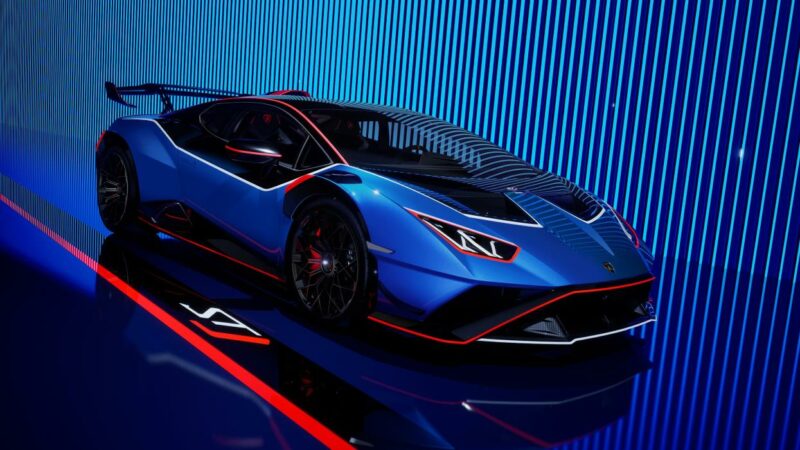
However, before the curtains are drawn on the Huracan, Lamborghini will offer 10 units of the Huracan Super Trofeo Jota (STJ) as a final tribute to the supercar.

Essentially, the Huracan STJ is a Huracan STO with an upgraded aerodynamic package. Firstly, you’ll find two new carbon fibre aerodynamic flicks on the left and right sides of the front bumper.

At the back, the angle of the rear spoiler has also been increased by 3 degrees to increase the aerodynamic load by 10% while keeping the car perfectly balanced.

The mechanical grip has been increased significantly by a set of four adjustable racing-derived shock absorbers, which are capable of optimising the rebound and compression at both high and low frequencies.

Not only that, the combination of 20-inch single nut rims and specially developed Bridgestone Potenza Race tyres also help maximise the driving dynamics.

However, there are no upgrades made to the engine. Like the STO, the Huracan STJ has 640 PS at 8,000 rpm and 565 Nm at 8,000 rpm delivered by the 5.2-litre V10 engine. Power is channeled to the rear wheels through a 7-speed dual clutch (LDF – Lamborghini Doppia Frizione) gearbox.

Although the STJ did not receive any additional power, Lamborghini says the technical features enabled an improvement of more than one second on the Nardò Technical Center Handling Track laptime compared to the STO.

For the final version, Lamborghini offers two livery options designed by the Lamborghini Centro Stile studio. The first combines Grigio Telesto (grey) bodywork with a Nero Noctis (black) roof and Rosso Mars (red) and Bianco Isi (white) details, while the cabin is characterised by Nero Cosmus (black) Alcantara seats with leather details and contrasting Rosso Alala (red) stitching.

The second configuration has Blu Eliadi (blue) bodywork with a Nero Noctis (black) roof and Rosso Mars (red) and Bianco Isi (white) details. Both versions also feature a special, numbered carbon fiber plate marked “1 of 10”.

In addition, there is the option to add a custom plate on the passenger side according to the customer’s instructions.

McLaren Artura Spider has 700 PS and a hardtop that opens in 11 seconds

THREE years ago, McLaren took the covers off the Artura, its first series-production High Performance Hybrid supercar. Now, the range has been further expanded with the introduction of the convertible version called the Artura Spider.

McLaren says the Spider has significant upgrades over the original model, including more power, more performance and greater driver engagement.

First and foremost, the 3.0-litre V6 hybrid engine has been reworked to bump up the total system output by 20 PS to 700 PS. Torque remains at a healthy 720 Nm but its delivery has been optimised thanks to minor changes to electronic mapping.

The engine is paired with an electric motor housed in the gearbox. The motor generates 95 PS and 225 Nm, and is coupled with a 7.4 kWh capacity battery that provides an electric range of up to 33 km.

With a recalibrated eight-speed transmission, the Artura Spider can accelerate from 0 to 100 km/h in 3.0 seconds and from 0 to 200 km/h in 8.4 seconds. Despite being a convertible, it can reach a maximum speed of 330 km/h.

The powertrain benefits from new mounts that are tuned to improve control within the chassis. This limits powertrain movement, especially when under load and in turn improves stability, steering feel and overall vehicle agility.

The Artura Spider uses a retractable one-piece hard-top that operates electrically in just 11 seconds, at speeds of up to 50km/h. It has a kerb weight of 1,560 kg, just 62 kg more than the Artura coupe.

To provide a full convertible experience, McLaren has fitted a revised valved exhaust system incorporating a tuned resonator and upward conical shape to the tailpipes to further refine the engine note at the middle and higher points of the rev range.

An optional sports exhaust system is available, should the buyers want an enhanced, clearer tone overall. This system uses an exhaust symposer that channels authentic sound waves from the tailpipe into the cabin.

Ride and handling is enhanced through revised response rates of the Proactive Damping Control suspension system. The rates have been increased by up to 90%, improving reaction to driver input and changes in road surface.

For braking, the Artura Spider utilises carbon ceramic discs measuring 390 mm at the front and 380 mm at the rear. Each are coupled with six- and four-piston aluminum monobloc calipers, respectively.

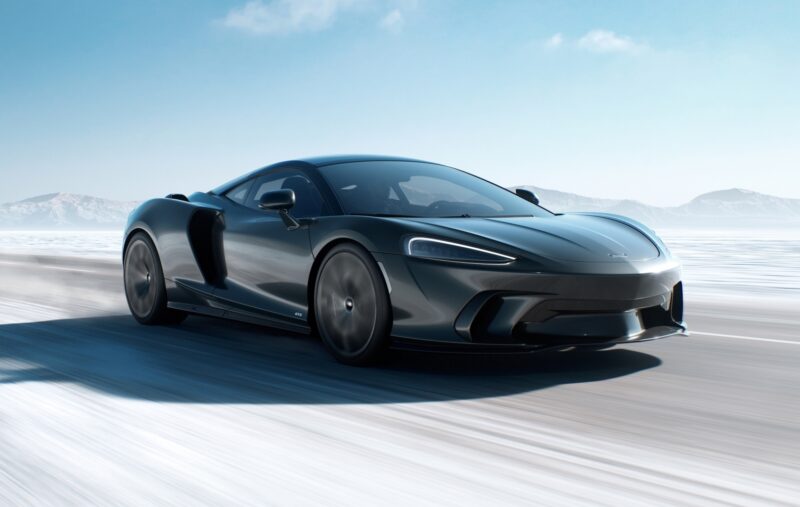
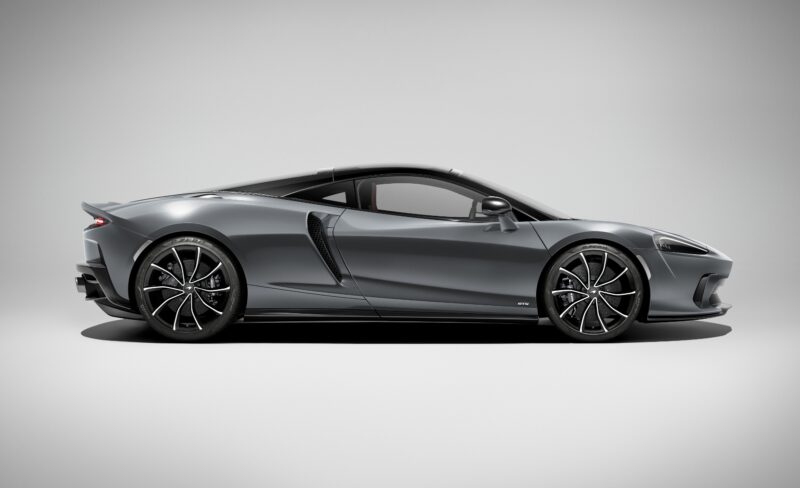
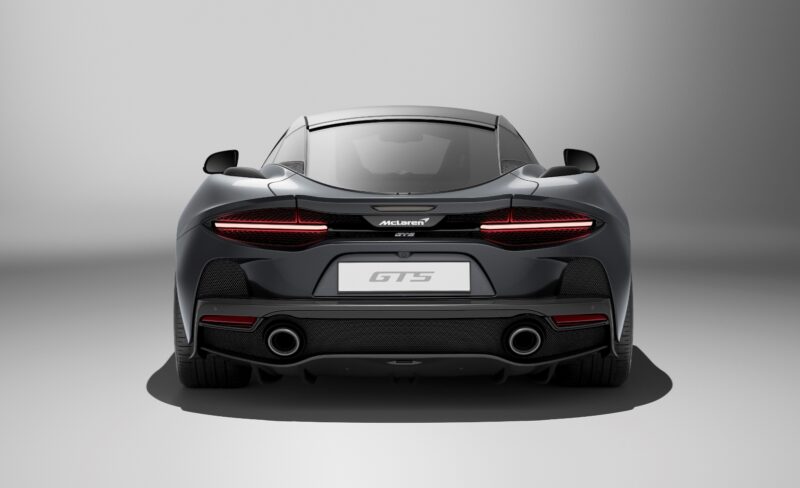
McLaren GTS replaces the GT with more power, less weight

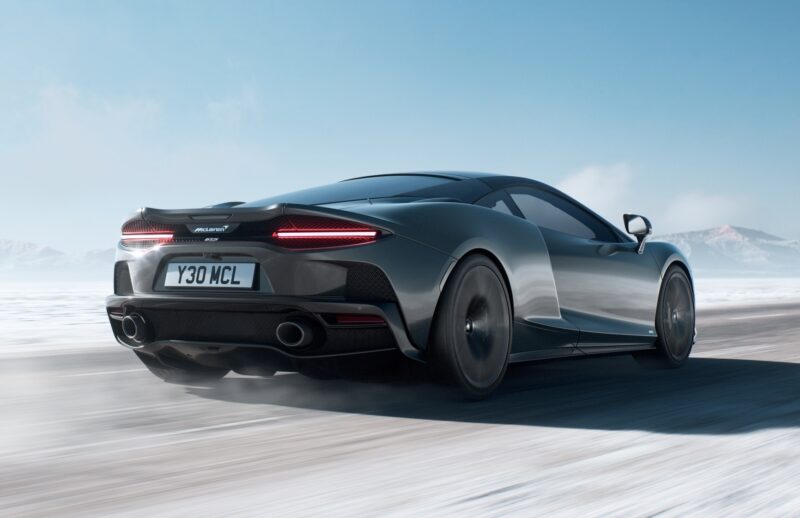
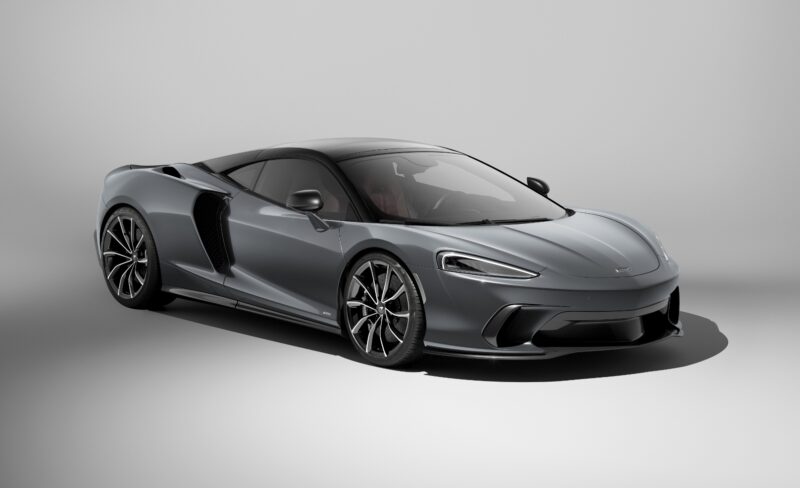
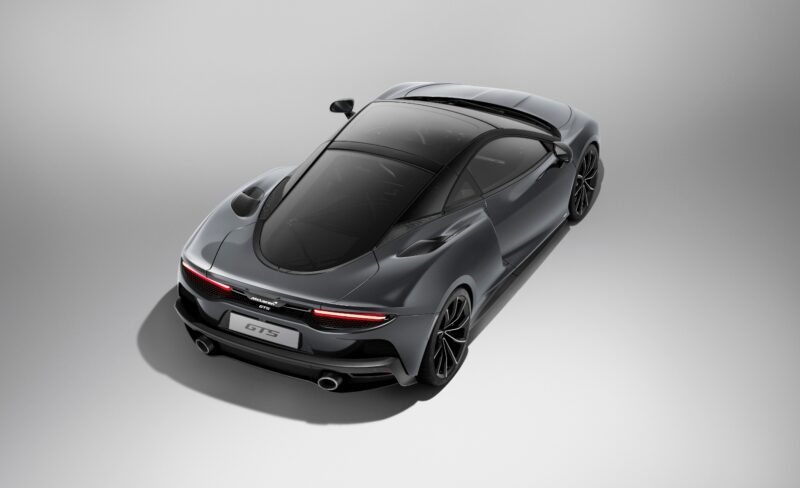
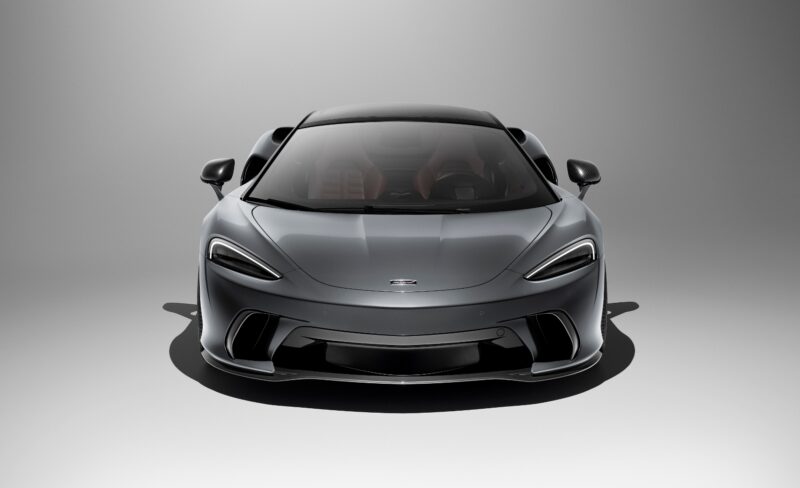
AFTER nearly five years on the market, the McLaren GT makes way for its replacement, known as the GTS.

The newest offering from Woking boasts a number of enhancements, which cover areas such as the design, equipment, and perhaps more excitingly, performance.

While the overall shape of this grand tourer remains unchanged, the front fascia now incorporates wider, more pronounced air intakes to channel more air into the radiator system.

On the rear fenders, new, taller air scoops sit on the shoulders to enable greater airflow into the 4.0-litre twin-turbocharged V8 engine.

Alongside new colour options such as Mantis Green, Tanzanite Blue and Ice White, the GTS can be had in an exclusive colour called Lava Grey. It incorporates a shimmering red fleck that catches the light to create a distinctive effect.

There are two alloy wheel designs to choose from, both of which can be fitted with titanium bolts said to be 35% lighter than standard bolts. The wheels are wrapped in Pirelli P Zero rubbers developed specifically for the GTS.

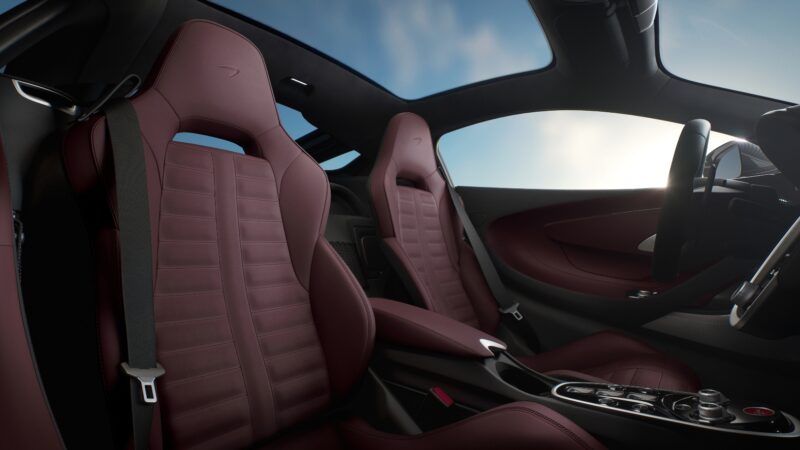
As for the interior, customers can now opt for Softgrain Aniline leather upholstery with double piping and contrast stitching.

In addition to the visual upgrades, McLaren has reduced the weight of the GTS through the use of composite roof and upper structure at the rear, both made of carbon fibre. This makes the car 10 kg lighter, with a kerb weight of 1,520 kg.

With an output of 635 PS, which is 15 PS higher than its predecessor, and 630 Nm of torque, the GTS only takes 3.2 seconds to accelerate from 0 to 100 km/h and 8.9 seconds to reach a speed of 200 km/h. The maximum speed is 326 km/h.

Higher output does not necessiate that practicality has to be compromised. In fact, the GTS is more practical than the model it replaces as the lift system can now raise or lower the nose in only four seconds – more than twice as fast as before.

Additionally, the GTS has a boot space of 420 litres accessible via a front-hinged, electrically-operated glass tailgate. It also has a 150-litre storage space within the nose, giving it a total cargo space of 570 litres.

The electro-hydraulic steering system has also been retuned to deliver a more accurate level of feedback. The steering’s level of assistance is also increased at low speeds for easier low-speed manoeuvres.