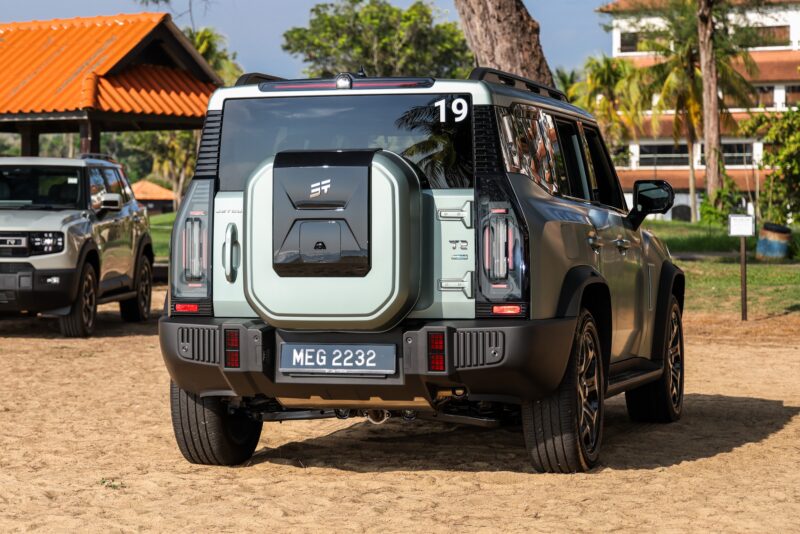
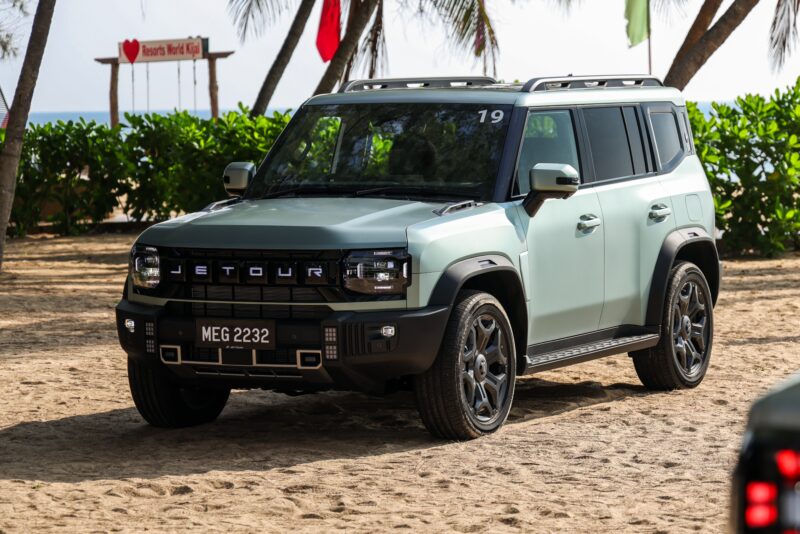
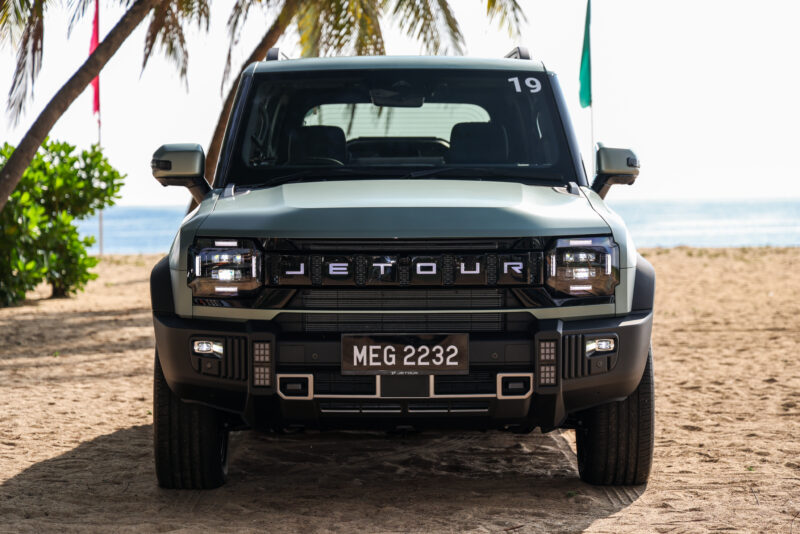
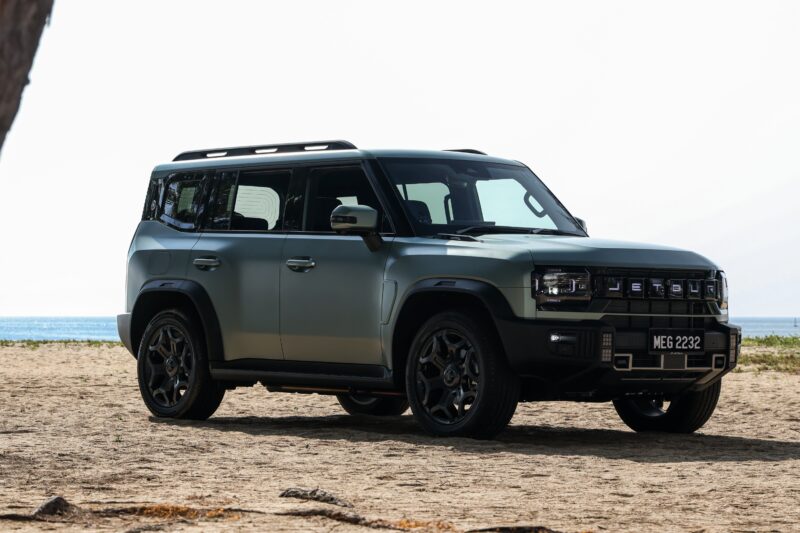
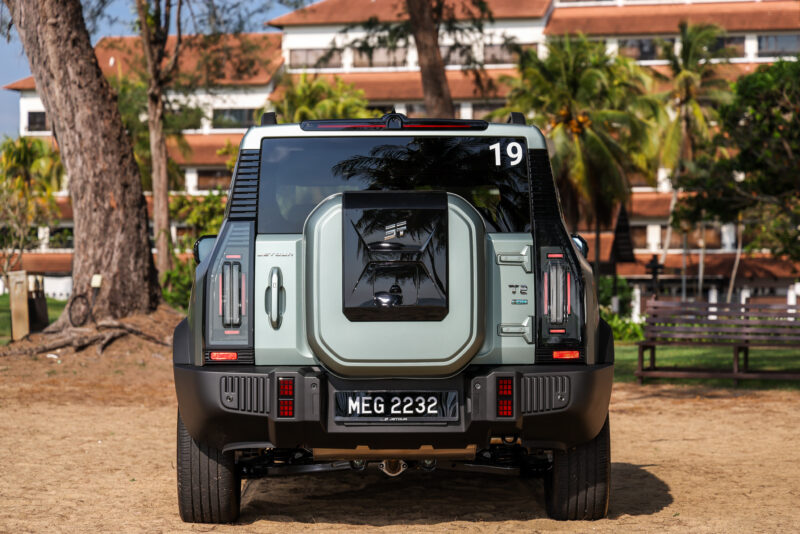
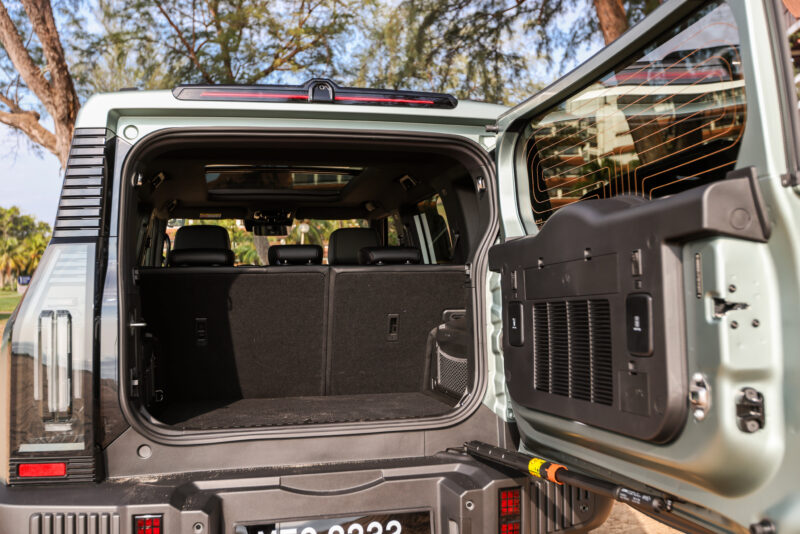
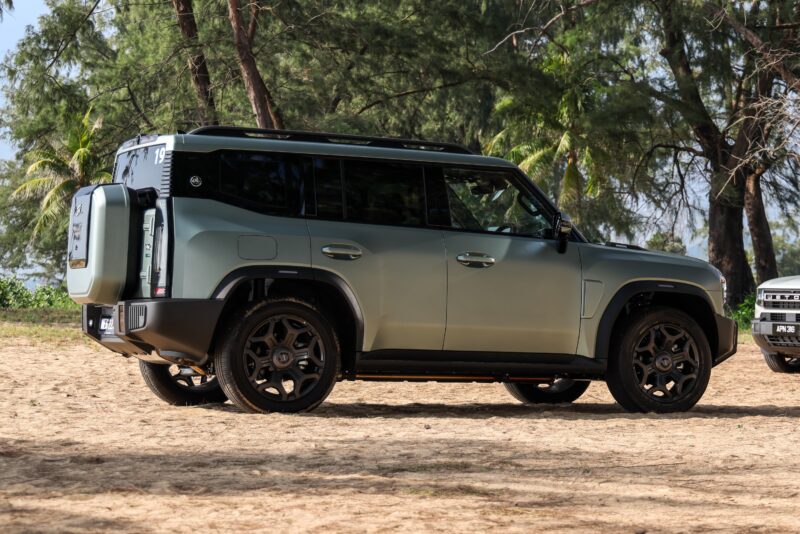
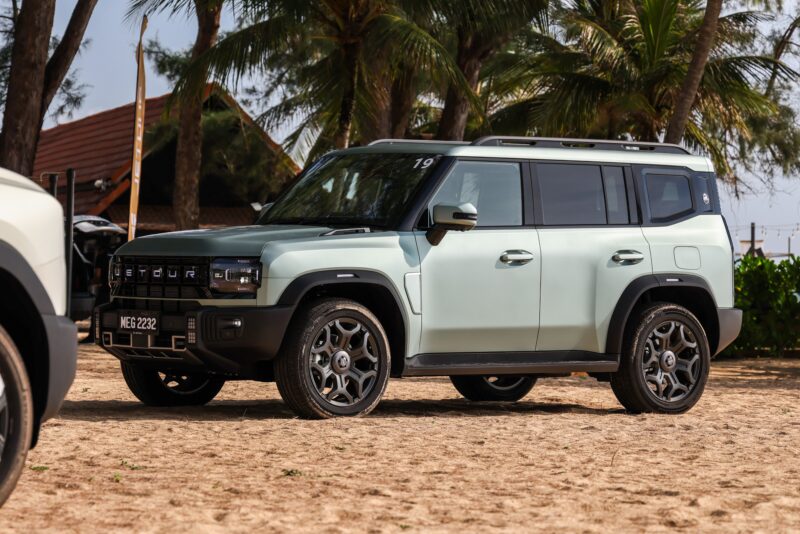
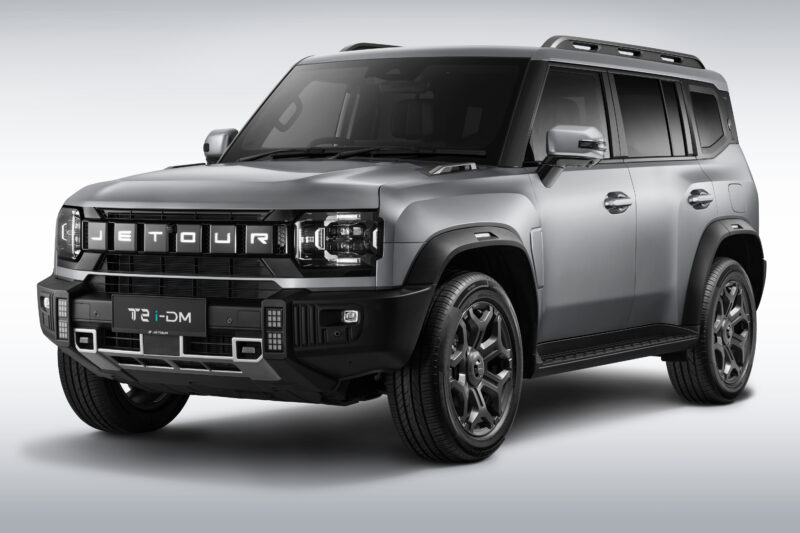
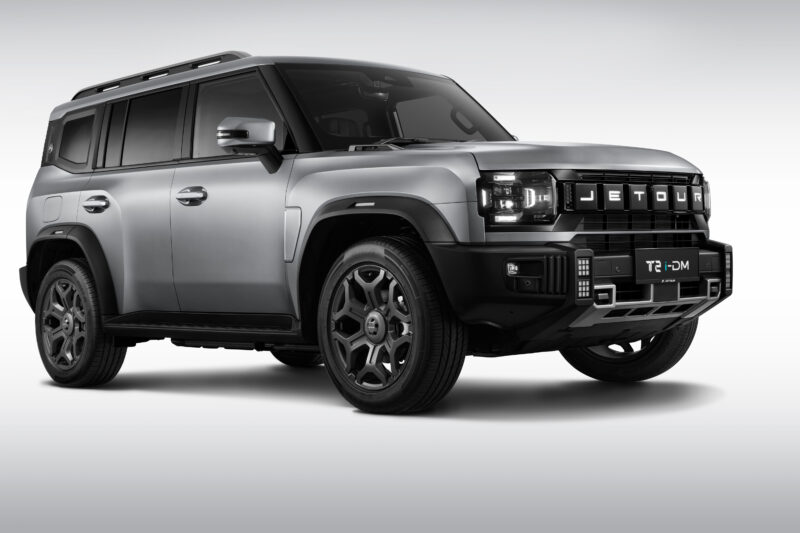
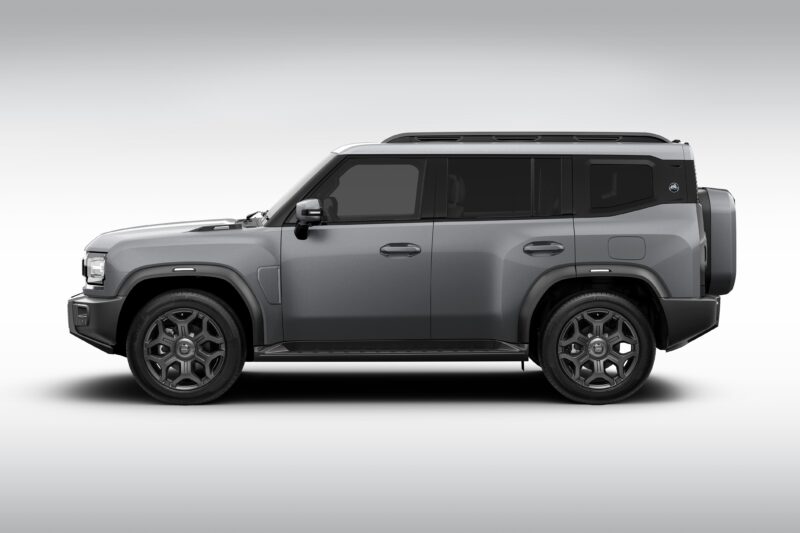
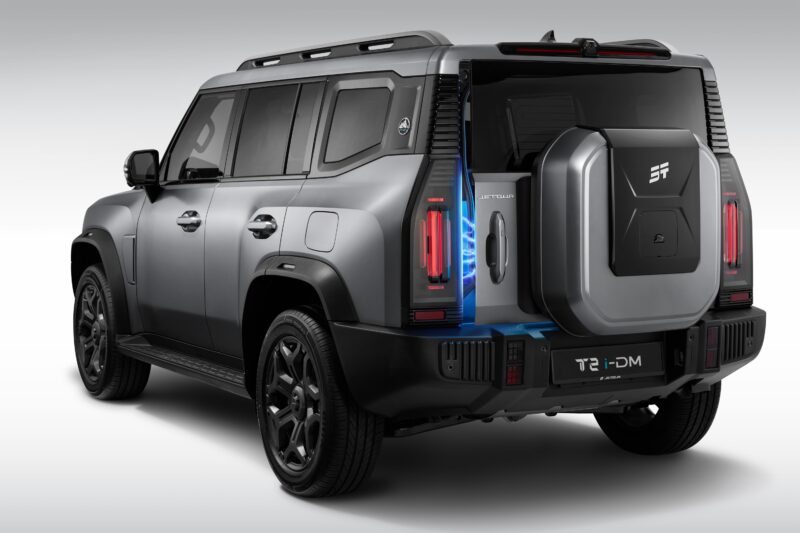
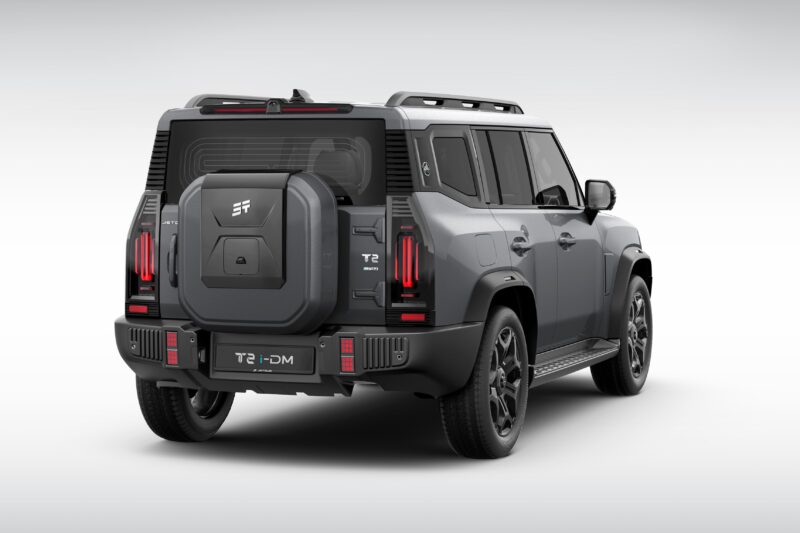
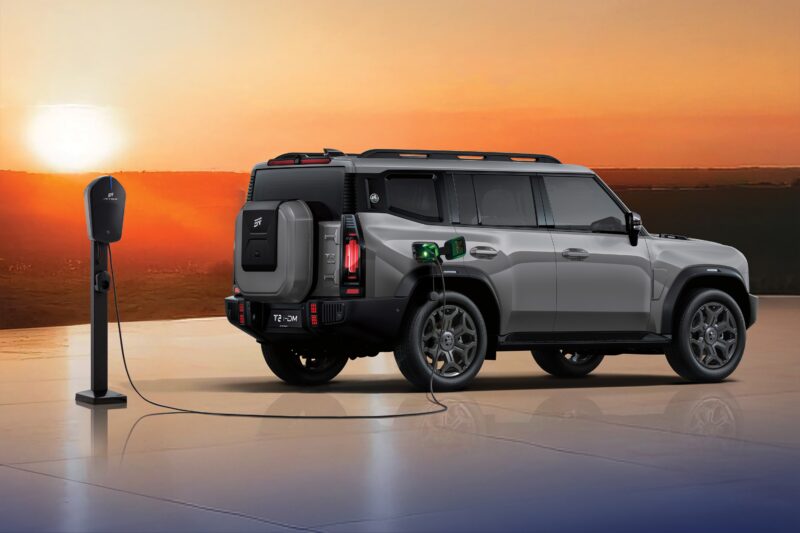
Jetour Malaysia has officially introduced the Jetour T2 i-DM variant for the local market.
The plug-in hybrid (PHEV) version of the T2 is priced from RM162,800.
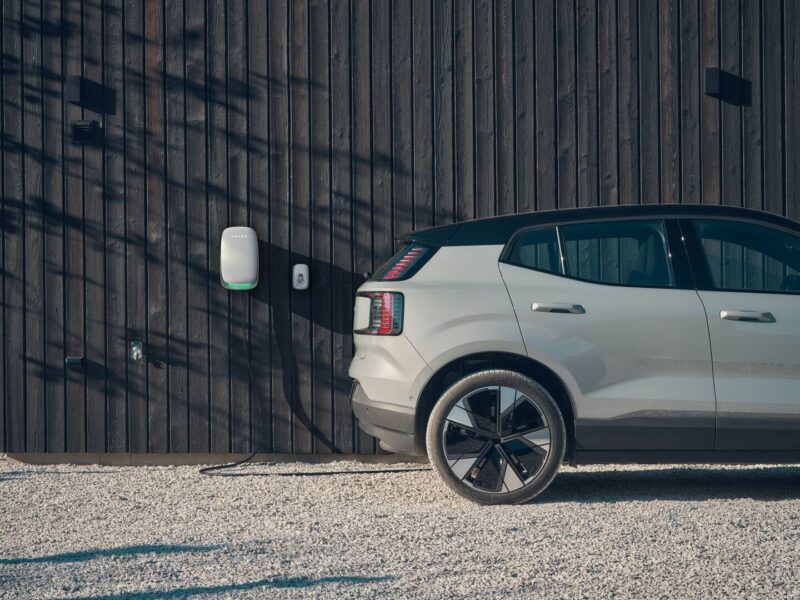
An Early Bird Package worth RM3,000 is offered to the first 2,000 registrations, consisting of either a 7 kW wallbox charger or RM2,000 ChargeSini charging credits. Both options come with a free V2L adapter cable.
Powertrain Specifications
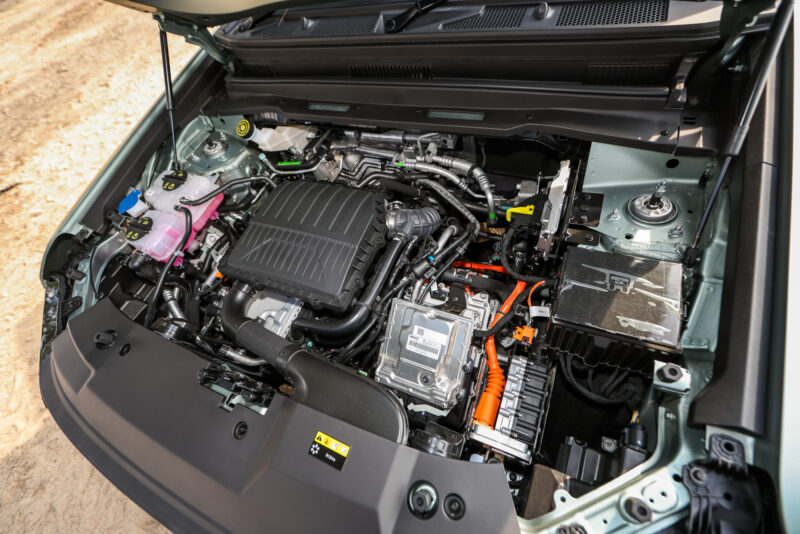
The T2 i-DM is powered by a PHEV system comprising:
1.5L turbocharged TGDi engine
3‑speed transmission
Dual electric motors
Together, the system delivers 355 hp and 610 Nm.
An 18.4 kWh LFP battery pack provides up to 100 km of zero‑emission driving, with a combined driving range of up to 1,200 km.
Charging support includes:
AC charging at 6.6 kW
DC fast charging at 57 kW, enabling a 30–80% charge in 27 minutes
The SUV also offers Vehicle‑to‑Load (V2L) capability at 3.3 kW.
Equipment
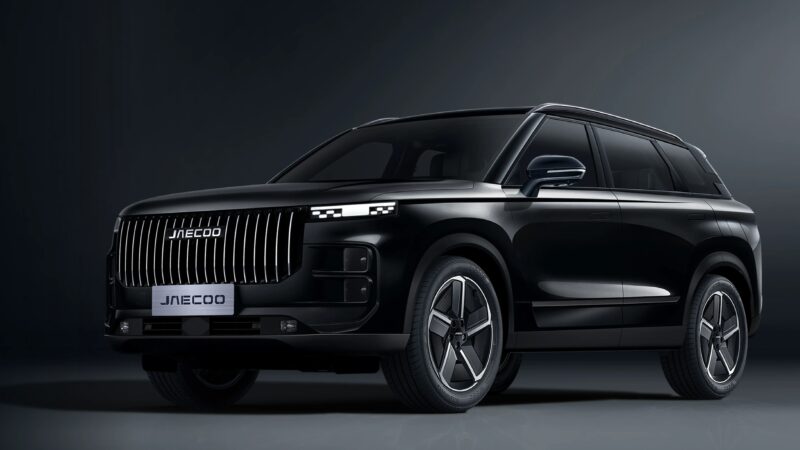
Visually, the Jetour T2 i-DM retains a design similar to the previous version.
Key exterior features include:
Automatic LED headlights
Illuminated JETOUR script
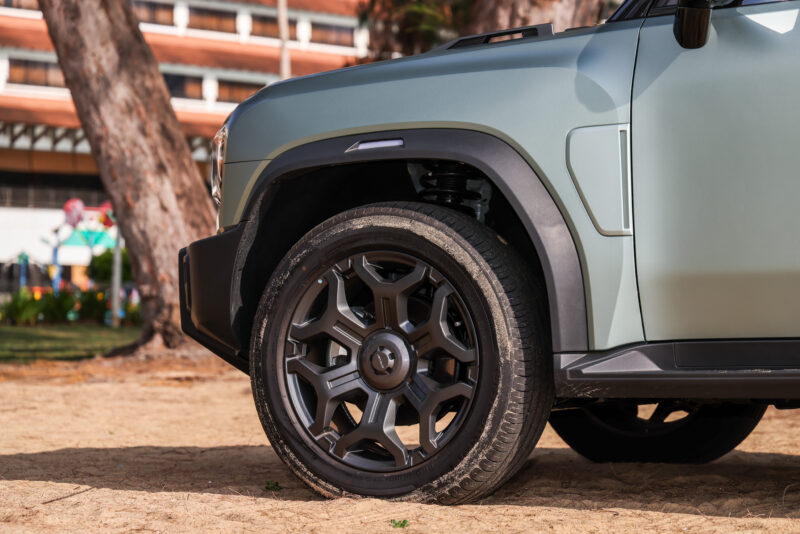
20-inch Trailblazer alloy wheels
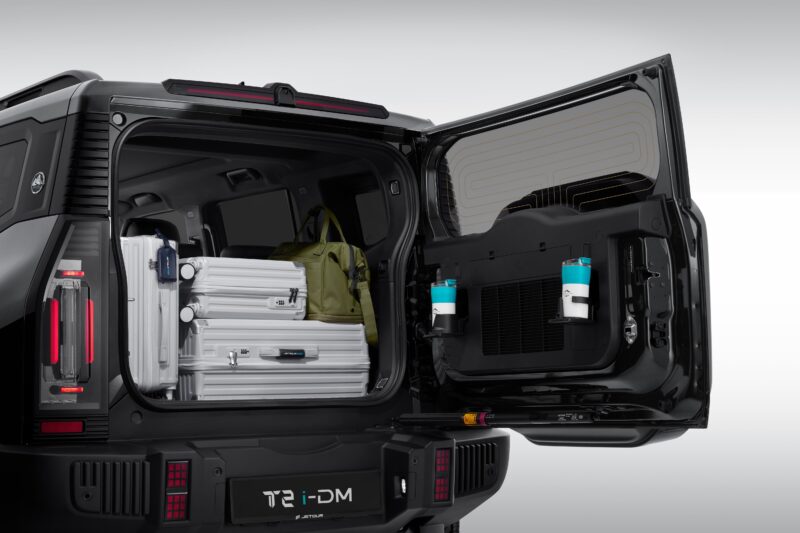
Electric Suction tailgate
Full-size spare tyre
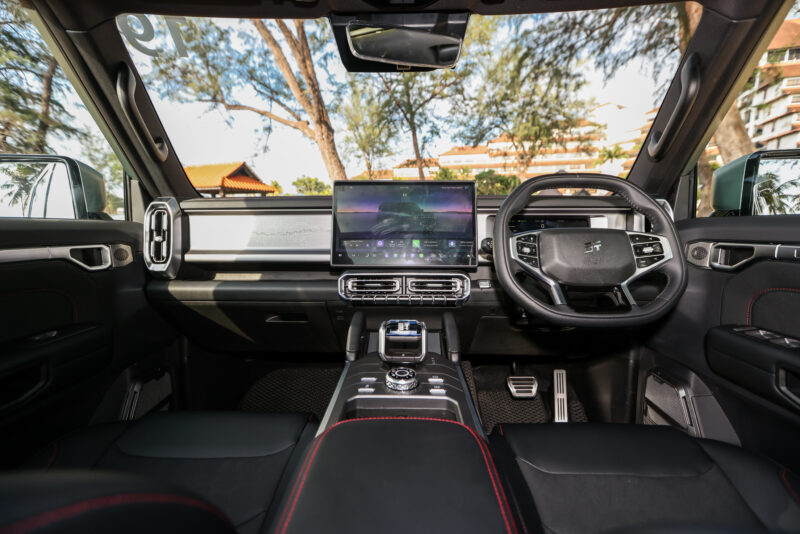
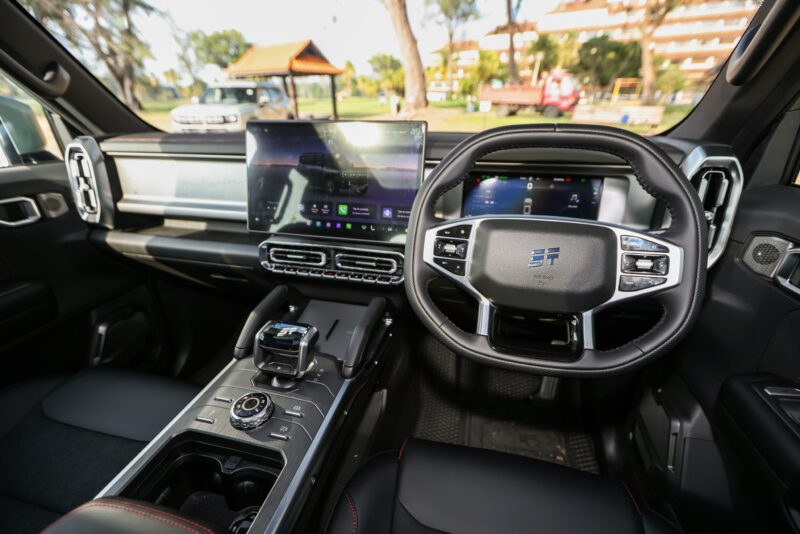
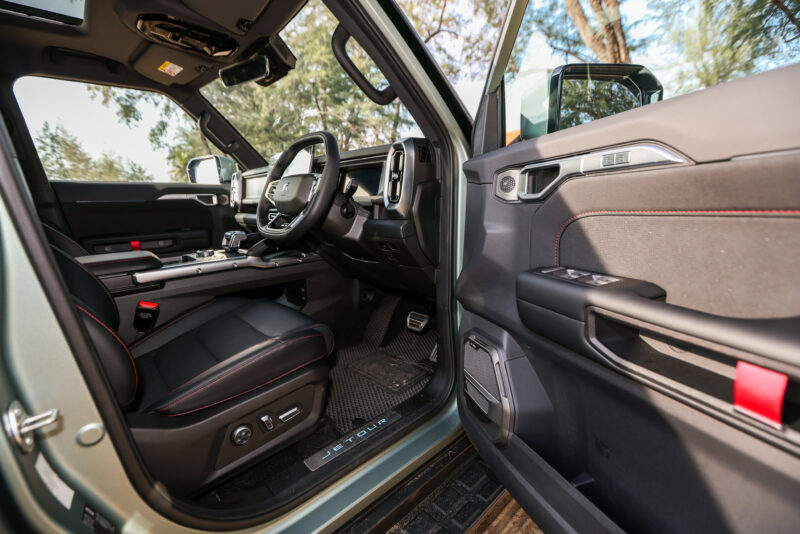
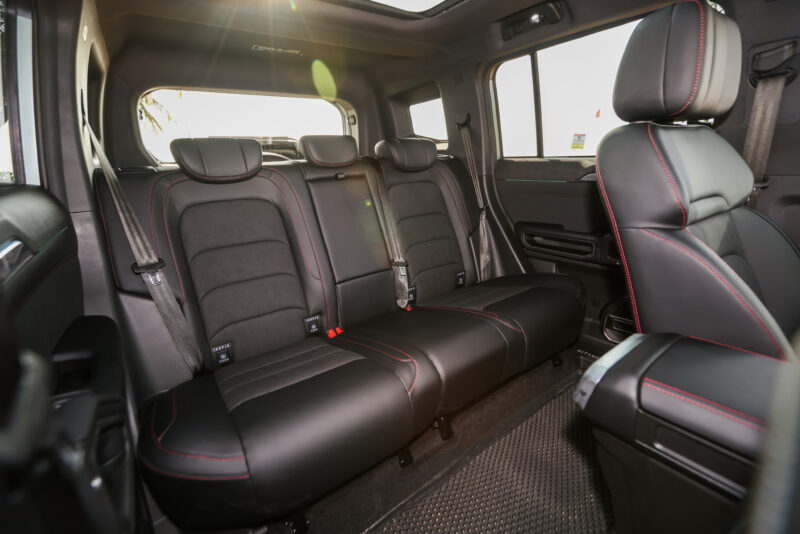
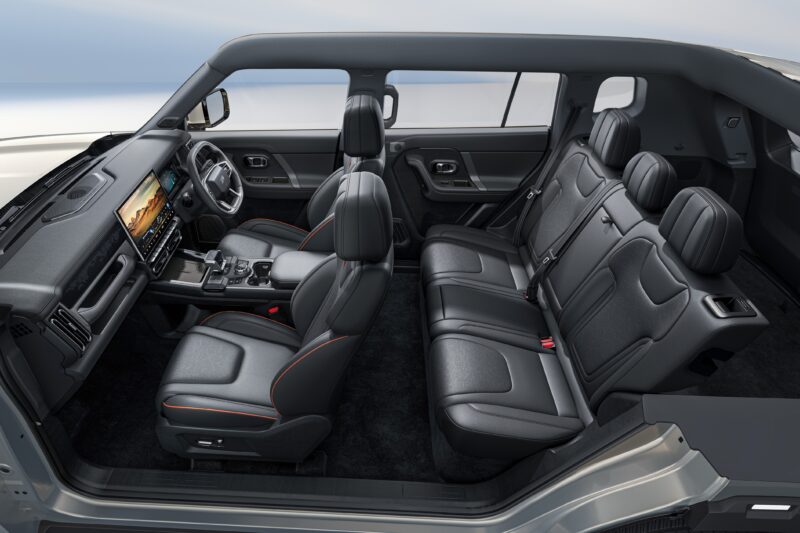
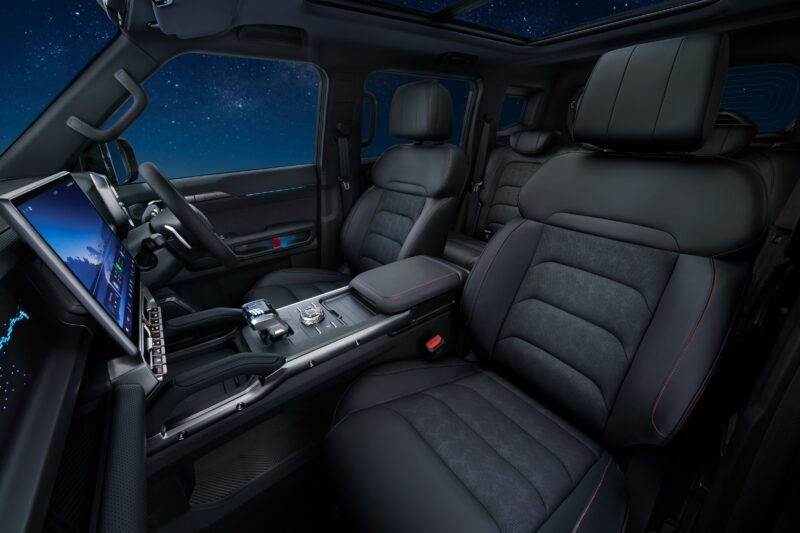
Inside, the cabin is equipped with:
10.25-inch digital instrument cluster
15.6-inch infotainment display
Wireless Apple CarPlay & Android Auto
Sony audio system with 12 speakers
50W wireless charger
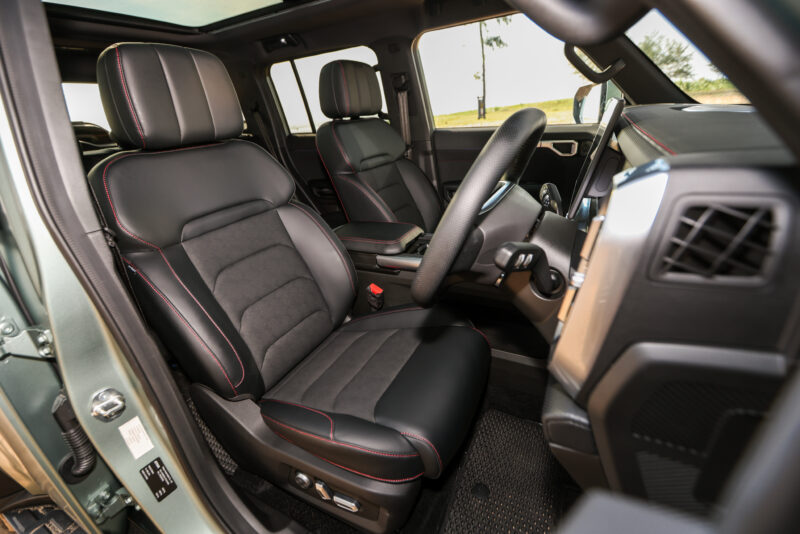
The front seats offer ventilation, memory function, and welcome function.
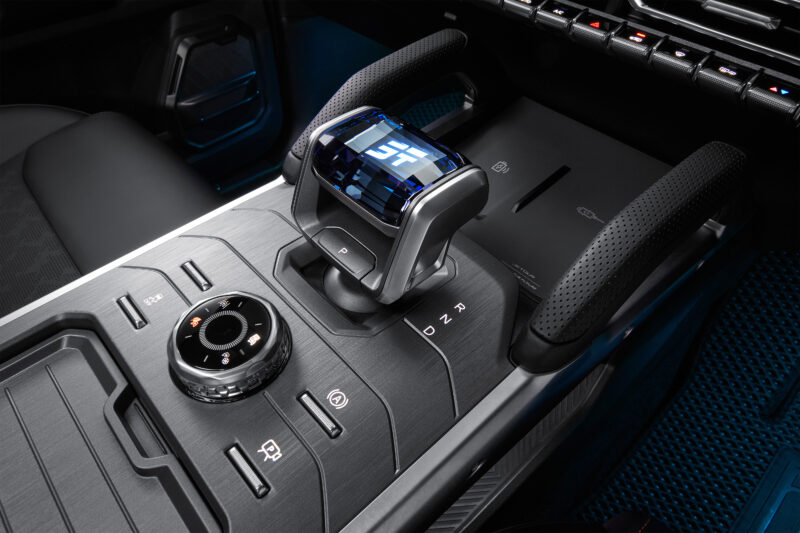
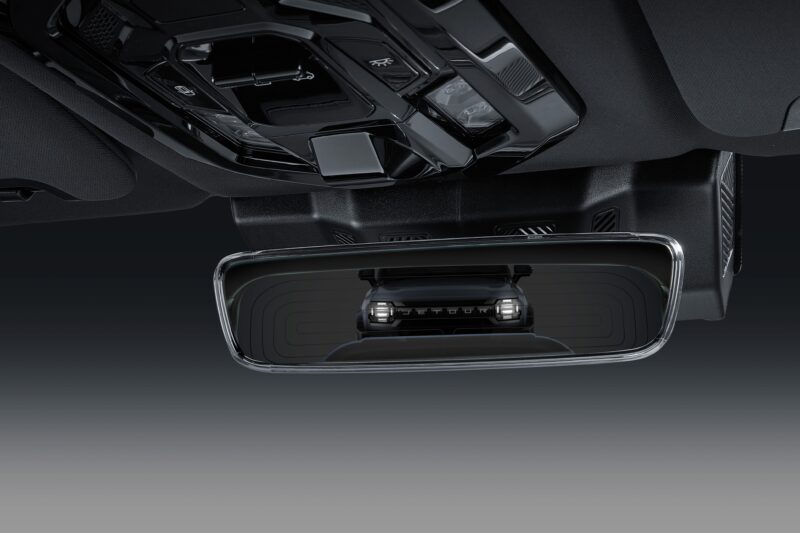
Additional features include:
Illuminated crystal gear selector
Auto-dimming rear-view mirror
Cosmic Multicolour ambient lighting
Safety
Standard safety equipment includes six airbags, a panoramic monitoring system, and tyre pressure monitoring.
The Level 2 Advanced Driver Assistance System (ADAS) package includes:
Autonomous Emergency Braking (AEB)
Lane Assist (LAI)
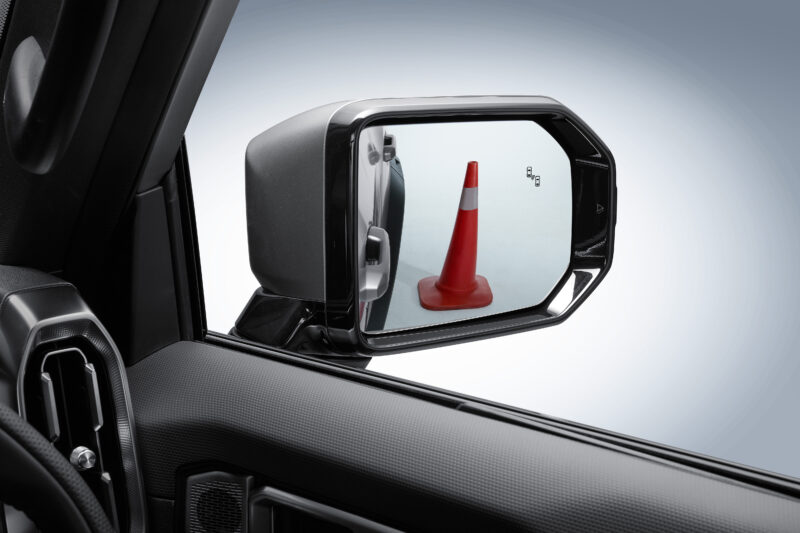
Blind Spot Detection (BSD)
Integrated Cruise Assist (ICA)
Rear Cross Traffic Alert (RCTA)
Intelligent High Beam (IHB)
Jetour Insurance Program
Owners may opt for additional coverage such as:
Wallbox charger protection up to RM5,000
Third-party personal liability coverage up to RM50,000 for injury, death, or damage arising from EV charger usage
Jetour Malaysia is also offering Special Risk Protection to the first 2,000 registered owners or until 28 February 2027.
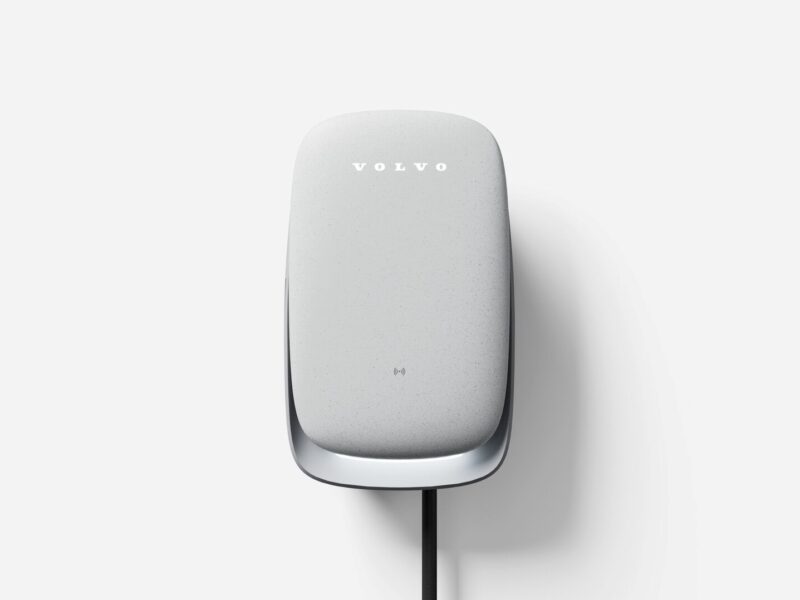
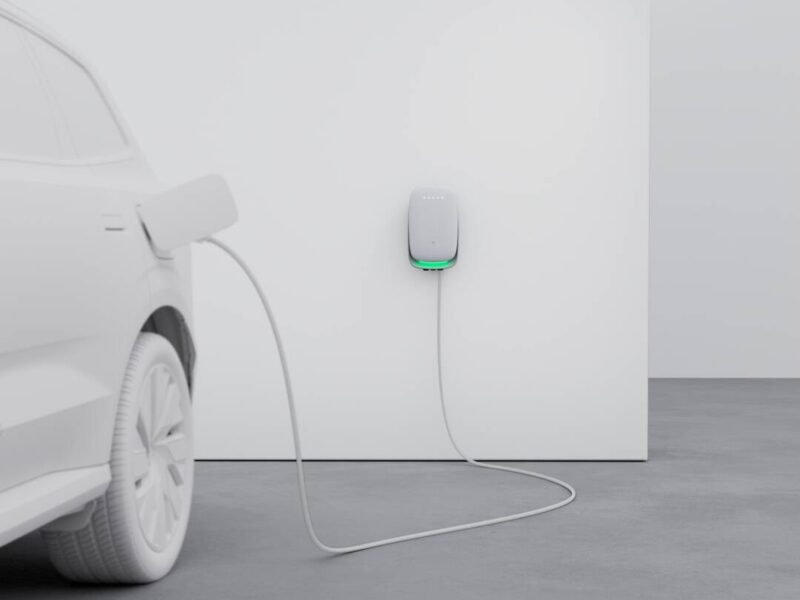
Volvo Car Malaysia has introduced the Volvo Wallbox as a complement to its existing battery electric vehicle (BEV) and plug-in hybrid (PHEV) offerings.
The 11 kW wall charger offers the following features:
a sleek, weatherproof exterior design with an IP55 rating
a standard Type 2 cable
full control via the Volvo Cars app using Wi-Fi, Ethernet, or SIM card connectivity
two RFID cards to facilitate shared charging access
connectivity with an external energy meter, particularly for homes equipped with solar panels
According to Sun Qian, Head of Commercial Marketing APeC at Volvo Cars, “Our commitment is to always support customers in every aspect, starting from the first day of Volvo ownership.
“This new Volvo Wallbox is directly connected to the Volvo Cars app.
“It empowers drivers to control not only the vehicle, but the entire home charging system via their smartphone screen,” he added.
The Volvo wall charger is available at all authorised Volvo dealers nationwide, with a retail price of RM3,990.
Each purchase comes with a comprehensive 36-month hardware warranty.
Volvo has also partnered with EV Connection Sdn Bhd to offer installation packages starting from as low as RM1,600.
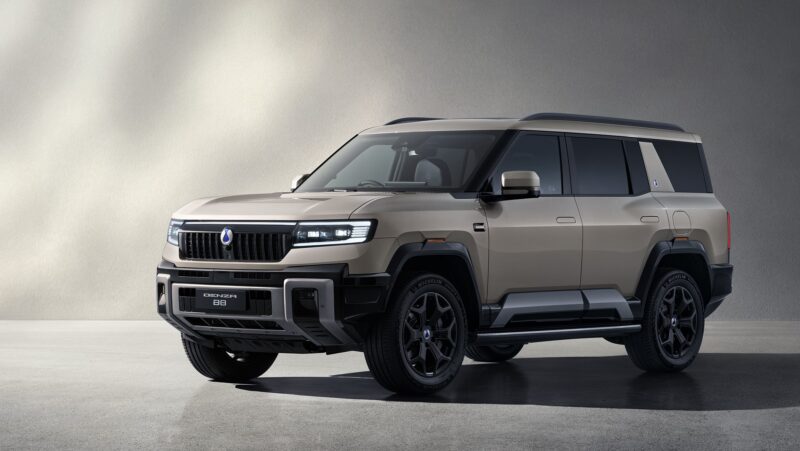
Denza Malaysia has confirmed that the new Denza B8 model will be launched this month.
This marks the brand’s entry into the luxury off-road SUV segment.
Here are some key facts you need to know about the Denza B8 SUV.
First Plug-in Hybrid Model by Denza in Malaysia
Unlike the D9, the B8 is the brand’s first plug-in hybrid electric vehicle (PHEV) here.
It is developed based on three main pillars:
DMO (Dual Mode Off-road) Super Hybrid Platform
DiSus-P Intelligent Body Control Suspension System
Premium Cabin Experience
Performance
The Denza B8 is powered by the DMO system, which consists of:
A 2.0-liter engine
Two electric motors
A Blade battery pack
This system generates a power output of 603 hp and 760 Nm of torque.
It offers an electric-only driving range of up to 115 km, while the total driving range can reach 1,040 km (NEDC data).
There are intelligent driving modes: Pure EV, HEV Series, and Parallel Mode, which adjust power delivery based on current conditions.
DiSus-P System
The Denza B8 features the DiSus-P Intelligent Hydraulic Body Control suspension settings.
This system is designed to respond actively to changes in road surface and driving conditions.
Its aim is to maintain vehicle dynamic stability and comfort, ensuring minimal disruption inside the cabin.
Premium Elements Prioritized
This SUV showcases the ‘Starship Mecha’ design language for a bold and futuristic look on the road.
It is equipped with ‘Starship Wing’ LED daytime running light graphics and ‘Energy Thruster’-inspired rear lights.
The cabin features Nappa leather trim, a premium Devialet audio system with 18 speakers, a 12.2-inch digital cluster screen, and a central display measuring 17.3 inches.
The Denza B8 will be officially launched at the end of this month.
Malaysians interested in the vehicle can visit the Bangsar Shopping Centre from May 22-24 2026, where the SUV will be unveiled to the public for the first time.
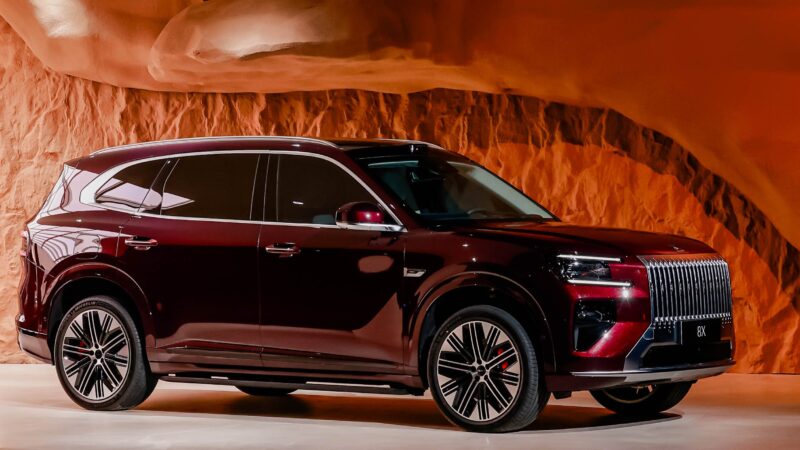
Zeekr has recently launched the new 8X model for the Chinese market, a full-size plug-in hybrid SUV (PHEV).
Positioned below the 9X model, the Zeekr 8X is priced starting at 329,800 yuan (approximately RM191,000), while the premium version is priced at 473,800 yuan (about RM275,000).
Specifications & Technology
The Zeekr 8X is built on the advanced Haohan-S 900V hybrid platform, featuring a 2.0-liter turbo engine paired with either a dual or tri-motor electric configuration.
The dual-motor version produces a remarkable 885 hp and accelerates from 0 to 100 km/h in just 3.7 seconds.
In contrast, the tri-motor variant delivers an impressive 1,381 hp, allowing it to sprint from 0 to 100 km/h in a mere 2.96 seconds.
Its 70 kWh battery enables an emission-free driving range of up to 410 km, with a total range that can reach 1,416 km.
With 6C fast charging technology, the battery can be charged from 20% to 80% in just 9 minutes.
Driving Dynamics
The Zeekr 8X features an advanced digital chassis system combined with adaptive air suspension and active damping control.
This system supports rapid torque distribution and adjustable ride height.
Additionally, it includes advanced driver assistance features powered by a LiDAR unit and dual Nvidia Drive Thor-U processing chips, capable of processing up to 1,400 TOPS.
The system supports highway navigation assistance and automatic parking functions.
Dimensions
The Zeekr 8X measures 5,100 mm in length, 1,998 mm in width, and 1,780 mm in height, with a wheelbase of 3,069 mm.
Although smaller than the 9X model, the Zeekr 8X is still classified as a full-size SUV.
This SUV also retains Zeekr’s latest design language, featuring elements such as a large vertical front grille, separate headlights, and a LiDAR unit mounted on the roof.
Cabin
The cabin of the Zeekr 8X includes features such as (depending on the variant):
A 13.02-inch digital cluster screen for the driver
A 44-inch head-up display
A 16-inch infotainment screen with 3.5K resolution
An optional passenger screen
A 17-inch 3K OLED roof screen
A Naim audio system with 29 speakers and Dolby Atmos support
The Jaecoo 7 has been declared the best-selling vehicle in the UK market for March 2026.
This marks the first time a model from China has led this market.
Top-Selling PHEV Variant
Last month, Jaecoo recorded 10,064 registrations for the Jaecoo 7, surpassing popular models such as the Ford Puma, Nissan Qashqai, Kia Sportage, and Vauxhall Corsa.
With a total of 15,559 units registered so far this year, the Jaecoo 7 is closing in on the Ford Puma, which holds the record with 16,128 units sold.
According to Jaecoo, the plug-in hybrid (PHEV) version is the most popular variant, accounting for 85% of total sales in March.
In the UK, the Jaecoo 7 is priced starting from £29,105 (approximately RM155k) for the petrol version and up to £35,175 (approximately RM188k) for the PHEV version.
Sales Figures on the Rise
The UK market has also seen a 6.6% increase in sales performance, reaching 380,627 units. Below is the breakdown by vehicle segment for the month:
Denza Malaysia has announced the opening of interest registration for the new Denza B8 SUV model, which will be arriving soon.
This marks the third model for Denza Malaysia, following the Denza D9 MPV and the Denza Z9GT, both of which are expected to launch in the near future.
Denza B8 Specifications
The Denza B8 is powered by a dual-mode off-road hybrid electric vehicle (PHEV) powertrain, consisting of:
A 2.0L turbo engine
Two electric motors
A 36.8 kWh LFP battery pack
This system is capable of generating a total power output of up to 738 hp and 760 Nm of torque, allowing for acceleration from 0 to 100 km/h in just 4.8 seconds.
The zero-emission driving range is up to 115 km (NEDC data), while the full tank range (including a fully charged battery) can reach up to 1,200 km (CLTC data).
The body-on-frame chassis of the B8 is supported by a DiSus-P air suspension system.
For your information, the Denza B8 is a full-size SUV, with dimensions of 5,195 mm in length, 1,994 mm in width, and 1,905 mm in height.
The wheelbase measures 2,920 mm.
According to Denza Malaysia, there are three color options available: Dawn Gold, Eclipse Black, and Nebula Silver.
Meanwhile, the cabin space offers two color choices: Jasper Brown and Onyx Black.
In the Chinese market, the Denza B8 is better known as the Fangchengbao 8.
Introducing the pickup truck set to arrive in Australia in the fourth quarter (Q4) of this year, codenamed KP31.
In the Chinese market, the KP31 is better known as the Rely P3X.
The KP31 concept features a double-cab pickup style with a boxy design.
Its front end, with round headlight units, is reminiscent of the Jeep Gladiator.
It also showcases BFGoodrich all-terrain tires, large side mirrors, traditional door handles, and an illuminated Chery logo.
Specifications of the Chery KP31
This concept boasts dimensions of 5,610 mm in length, 1,920 mm in width, and 1,925 mm in height.
However, the production version’s length will be shortened to 5,450 mm, with a payload capacity of 1 ton.
The truck will also be capable of towing a load of 3.5 tons.
The world’s first diesel PHEV truck
Chery claims the KP31 is the world’s first diesel plug-in hybrid (PHEV) truck.
It is equipped with a 2.5-liter turbo diesel engine that offers fuel efficiency 10 percent better than standard diesel engines.
Additionally, it can achieve a thermal efficiency of 47 percent and reduces vibrations by 30 percent.
Rely Brand exclusively for pickup models
Rely R08
Rely Reaolc (Jetour Reaolc)
Chery has also revealed plans to establish Rely as a standalone brand offering various types of pickup models.
This is the newest model set to arrive following the debut of the Rely R08 (known in some markets as the Chery Himla) and the Rely Reaolc, which has a design similar to the Ford Ranger.
However, in the Australian market, the KP31 will be marketed under the Chery brand.
This pickup truck is expected to compete with models such as the BYD Shark 6 and GWM Cannon.
GWM Malaysia has announced that the Wey G9 MPV has garnered over 800 bookings within a week of its launch.
This achievement demonstrates a strong demand for the first locally assembled (CKD) luxury new energy MPV.
According to Mr. Roslan Abdullah, Chief Operating Officer of GWM Malaysia, “This achievement reflects the capabilities of the local assembly ecosystem in Malaysia.
“With the advantage of a skilled workforce and an existing vendor network, we are proving that Malaysia meets global standards while generating long-term value for the local industry.”
The GWM Wey G9 is powered by the advanced Hi4 PHEV smart hybrid system, capable of providing an emission-free driving range of up to 170 kilometers.
The overall driving range exceeds 1,000 kilometers, offering an efficient and quiet driving experience.
GWM Malaysia has officially launched the latest plug-in hybrid MPV model, the GWM Wey G9 Hi4 PHEV for the Malaysian market.
This locally assembled unit is priced starting from RM269,800.
Here are some key facts you should know:
Dimensions
The Wey G9 measures 5,050 mm in length, 1,985 mm in width, and 1,900 mm in height, with a wheelbase of 3,085 mm.
The ground clearance is 155 mm.
The cargo capacity is 233 liters, expandable to a maximum of 1,725 liters.
Hi-4 Hybrid System
This plug-in hybrid MPV features the Hi4 hybrid system, which includes:
1.5-liter turbo GDI engine with 150 PS @ 5,500 rpm and 240 Nm @ 1,800-2,400 rpm
Front electric motor with 108 PS and 170 Nm
Rear electric motor with 184 PS and 232 Nm
Total power output of 442 PS and 642 Nm
4-speed DHT transmission
44.2 kWh battery pack
Acceleration from 0 to 100 km/h is achieved in just 5.7 seconds, with a top speed of 190 km/h.
The Hi4 system allows the Wey G9 to operate in zero-emission mode for up to 170 km, with a total range reaching up to 1,000 km (NEDC data).
Fuel consumption is as low as 1.2 liters per 100 km.
There are five driving modes: Normal, Eco, Sport, AWD, and Snow.
Chassis & Exterior Features
As standard, the Wey G9 comes equipped with FRD (Frequency Response Damper), disc brake system, 18-inch wheels, and Michelin e-Primacy tires (size 245/50 R18).
Other features include an all-LED lighting system with automatic headlights and automatic high beam (AHB) function, a front and rear panoramic glass roof, and an electronic tailgate.
Interior
The interior of the Wey G9 offers a three-row seating configuration, finished with Premium Nappa leather and leatherette for the third row.
The driver’s seat features eight-level adjustments, memory function, lumbar support, a 10-point massage feature, and ventilation, while the front passenger seat includes six-level electric adjustments, a Bosch switch, memory function, and ventilation.
Second-row passengers can enjoy Zero Gravity seating, complete with ventilation, massage, six-level adjustments, and a small control panel.
Other incorporated features include a 64-color ambient lighting system, a 12.3-inch digital display, a 14.6-inch central screen, wireless Apple CarPlay and Android Auto support, a 21-speaker audio system, HALOSonic active noise cancellation, a 12.5-liter refrigerator, and USB charging ports.
Safety Features
The Wey G9 is equipped with safety features such as six airbags, ABS, EBD, Traction Control (TCS), ISOFIX anchors, and a 360-degree camera system with Transparent Chassis functionality.
Lotus China has announced the arrival of the Eletre plug-in hybrid (PHEV) variant for the Chinese market, bearing a rather peculiar name: For Me.
According to reports from CarNewsChina, the Lotus For Me is set for an official launch in the first quarter of 2026.
In terms of dimensions, the Eletre PHEV does not significantly differ from the EV version, measuring 5,103 mm in length, 2,019 mm in width, 1,636 mm in height, and with a wheelbase of 3,019 mm.
It is also equipped with Brembo braking systems with six-piston calipers in the front, an active spoiler, and custom Pirelli P Zero 5 LTS tires.
Handling has been improved with a dual-chamber, dual-valve suspension system featuring Continuous Damping Control (CDC), adaptive dampers, and an adaptive sway bar.
The plug-in hybrid system in the Lotus For Me consists of a 2.0-liter turbo engine paired with two electric motors (one for each axle).
The maximum power reaches 952 hp, enabling acceleration from 0 to 100 km/h in just 3.3 seconds.
With a 900V architecture, the 70 kWh battery can be charged from 30% to 80% in just 8 minutes.
The zero-emission range can reach up to 420 km (CLTC data).
Currently, Lotus has yet to disclose the actual sale price for the For Me model.
Mercedes-Benz Malaysia has launched another new SUV model, the GLE 400 e 4MATIC, featuring a plug-in hybrid system.
Its full name is the Mercedes-Benz GLE 400e 4MATIC with EQ Hybrid Technology AMG Line.
This marks the first GLE PHEV model introduced to the Malaysian market, assembled at the Mercedes-Benz plant in Pekan, Pahang.
Here are some key facts you should know:
1. Engine
The GLE 400 e is equipped with a 2.0-liter inline four-cylinder turbo engine that delivers 252 hp at 5,800 rpm and 400 Nm of torque at 2,000-3,200 rpm, complemented by an electric motor providing 154 hp and 440 Nm of torque.
In total, the GLE 400 e generates up to 381 hp and 650 Nm of torque, allowing for acceleration from 0 to 100 km/h in just 6.1 seconds.
The top speed is limited to 210 km/h.
This PHEV system allows the GLE 400 e to operate in zero-emission mode for up to 114 km (WLTP data), which can be advantageous for off-road driving.
2. Exterior
The GLE 400 e features AMG Line exterior trim, highlighting a front grille adorned with the Mercedes star, front and rear aprons, AMG side panels, 21-inch AMG five-spoke alloy wheels, and aluminum-style side steps.
This SUV also includes Multibeam LED headlights with Adaptive Highbeam Assist Plus functionality.
3. Interior
This five-seater SUV showcases features such as a Nappa leather-wrapped sports steering wheel, AMG sports pedals, a combination of ARTICO leather and MICROCUT microfiber upholstery, and Anthracite wood trim.
Additionally, it comes equipped with the MBUX multimedia system, featuring two 12.3-inch wide screens, a Burmester surround sound system with 13 speakers, support for Apple CarPlay and Android Auto, wireless device charging, and a 64-color ambient lighting system.
4. Safety
Standard safety features in the GLE 400 e include Active Steering Assist, Active Lane Keeping Assist, Blind Spot Assist, Active Distance Monitoring Assist, and a vehicle exit warning function.
Additional features include a Parking Package with a 360-degree camera, Active Parking Assist, and a tire pressure monitoring system.
5. Price
The Mercedes-Benz GLE 400e 4MATIC with EQ Hybrid Technology AMG Line is priced starting from RM498,888 on-the-road, excluding insurance.
When we talk about flat or boxer engines, the names of two manufacturers typically come to mind: Porsche and Subaru.
This unique engine configuration offers benefits in terms of better vehicle handling due to its lower center of gravity compared to conventional engines.
You might not suspect that a popular name in China is also venturing into producing boxer engines.
That name is none other than BYD!
This news is quite surprising as BYD already has a family of engines for its plug-in hybrid (PHEV) model lineup.
This brand-new 2.0-liter turbo boxer engine will be paired with four electric motors to power the luxury sedan Yangwang U7.
Overall, it can generate up to 1,287 hp and 1,680 Nm of torque.
Acceleration from 0 to 100 km/h can be achieved in just 2.9 seconds, a truly impressive figure for a sedan weighing 3 tons!
Interestingly, the engine serves primarily as a range extender to charge the battery, which then supplies power to the electric motors.
However, under certain conditions, this engine can deliver 272 hp and 380 Nm of power directly to the rear axle.
With the help of this boxer engine, BYD was able to design the Yangwang U7 with a lower hood profile, giving the sedan a sportier appearance.
Additionally, the NVH (noise, vibration, and harshness) aspects of this sedan are significantly improved due to the reduced vibrations from the boxer engine.
With the boxer range extender, the Yangwang U7 can travel up to 966 km on a full tank and fully charged battery, while the zero-emission range can reach up to 193 km.
In China, the BYD Yangwang U7 is priced between RMB628,000 and RMB708,000 (RM367,000 to RM414,000).
Chery Malaysia launched its latest plug-in hybrid SUV model, the Tiggo 7 PHEV, two months ago, with a starting price of RM129,800.
This makes the Tiggo 7 PHEV a highly worthwhile option to consider, especially for those affected by the implementation of the Budi95 subsidy and who do not want to make an electric vehicle (EV) their primary mode of transport.
On paper, the Chery Tiggo 7 PHEV is equipped with a 1.5-liter turbo engine (143 PS/215 Nm) paired with an electric motor (204 PS/310 Nm), yielding a total power output of 279 PS and 365 Nm.
With an 18.3 kWh battery pack (electric range of 90 km) and a 60-liter fuel tank, the Tiggo 7 PHEV can achieve a travel distance of up to 1,200 km.
The question now is: Can the Tiggo 7 PHEV reach the claimed distance?
Recently, Chery Malaysia organized a media test drive session called the Endless Horizon Challenge.
The challenge was straightforward: prove that the Tiggo 7 PHEV can achieve a driving range of 1,200 km without refueling or recharging the battery.
To avoid any cheating, both the fuel tank cap and the charging port were sealed with stickers, and we had to rely solely on what was provided from the starting line.
Day One: Kuala Lumpur to Kuala Terengganu
Our journey began at Bamboo Hills with a full 60-liter fuel tank and a 100 percent battery.
While the meter reading showed a driving distance of 862 km, it was enough to make any driver feel nervous. “Can this SUV really reach 1,200 km?”
Driving through the morning traffic congestion in Kuala Lumpur was not a significant challenge.
This was due to the Chery Super Hybrid (CSH) system, which intelligently adjusted its operations based on the throttle input from the driver’s right foot.
For most of the time, it relied solely on the electric motor, with the engine engaging only when necessary, especially when climbing steep roads on the KL-Karak Highway.
In Tandem mode, drivers hardly noticed when the engine was activated, thanks to its smooth operation that did not transmit any vibrations to passengers in the cabin.
Once we entered the East Coast area, rain began to fall, necessitating a slower driving speed—this was not an issue since we were committed to achieving the 1,200 km challenge.
The spacious cabin felt comfortable, with ample legroom and headroom, which helped reduce fatigue during long journeys.
We arrived in Kuala Terengganu shortly after 8 PM, having covered a total distance of approximately 471 km, leaving us with about 721 km remaining.
The fuel consumption rate recorded was 3.5 liters per 100 km.
Day Two: Kuala Terengganu to Royal Belum to Penang
The rain that had been falling since midnight made the second day appear more challenging.
We started from the Raia Hotel in Kuala Terengganu in heavy rain, leading to a lower average speed compared to the previous day.
Additionally, we had to navigate normal road conditions with varying quality asphalt and some areas that were flooded.
However, this was not a major problem as the Chery Tiggo 7 PHEV is capable of traversing water up to 500 mm deep.
A greater challenge awaited us on the East-West Highway, which is typically associated with large trucks and wild animals.
While navigating uphill roads with countless bends, we noticed that the fuel meter reading dropped at a quicker rate than usual.
Due to the still wet road conditions, we drove the Tiggo 7 PHEV more cautiously to avoid any unwanted incidents.
Upon reaching the Titiwangsa Rest Area in Gerik, Perak, the fuel meter indicated we had only 470 km of range left.
This was enough to raise our concerns as there was still a long distance to cover.
However, the advantages of the CSH system became apparent when the Tiggo 7 PHEV began descending hills, allowing the system to recharge the battery through regenerative braking.
We used the lowest brake setting to ensure smoother driving.
After lunch at Royal Belum, we continued our journey towards Penang, needing to take an alternative route due to a flooded road before arriving at Sungai Petani.
After covering 433 km, we arrived at the Crowne Plaza Hotel with the fuel meter indicating 368 km remaining.
Throughout this East-West route, we noticed one thing: the Tiggo 7 PHEV offers significantly better handling and driving dynamics compared to ICE models.
We took the opportunity to inquire about this, and Chery Malaysia confirmed that specific tuning had been applied by the local R&D unit to enhance handling and make the driving experience more comfortable.
We will provide further insights on this if given the opportunity.
Day Three: Penang to Ipoh to Kuala Lumpur
The final day arrived for us to complete the 1,200 km mission without needing to refuel or recharge the battery.
From our overnight stay in Penang, we continued towards Ipoh and Kuala Lumpur, traversing the North-South Highway.
Besides the usual traffic congestion around the Menora Tunnel, the rain throughout the journey from Ipoh to Kuala Lumpur ‘forced’ us to drive more cautiously at a moderate speed.
All this was to ensure that the Tiggo 7 PHEV did not get stranded along the way.
As the trip meter displayed 1,200 km at Bestari Jaya, we cheered with joy, having accomplished the mission set by Chery Malaysia.
Upon returning to Bamboo Hills, the Tiggo 7 PHEV recorded a total driving distance of 1,248 km, with the cluster meter showing a remaining range of approximately 93 km and a battery capable of allowing the SUV to travel an additional 16 km on electric power alone.
The overall fuel consumption rate was around 4.5 liters per 100 km, significantly lower than the official figure of 5 liters/100 km.
Who would have thought that the most affordable PHEV in Malaysia could perform comparably with other, much more expensive PHEVs on the market?
Want a sporty image? Reliable handling? A cabin that is comfortable, spacious, and quiet? Fuel-efficient? The Chery Tiggo 7 PHEV can meet your expectations
In conjunction with the 2025 BYD Tech Discovery event at Plaza Arkadia (November 14-16), BYD Sime Motors is showcasing the Shark 6 pickup truck for the first time.
BYD is using this model to demonstrate its Dual Mode Off-road (DMO) Super Hybrid technology to the public.
The showcased unit is a right-hand drive (RHD) model, indicating that it may soon be officially launched in the local market.
Here are some quick facts you should know about the BYD Shark 6:
Platform
This pickup truck features a body-on-frame chassis and shares the same platform as the Fangchengbao Bao 5 (also known as Leopard 5) SUV.
The Bao 5 SUV was previously displayed at the Malaysia Autoshow 2024.
Engine
The Shark 6 is not an electric-powered pickup truck; rather, it is equipped with a plug-in hybrid electric vehicle (PHEV) powertrain. The DMO Super Hybrid system consists of:
A 1.5-liter turbocharged inline four-cylinder engine (181 hp/260 Nm)
Two electric motors
A 29.58 kWh LFP battery pack
The total power output reaches 430 hp and 650 Nm, enabling acceleration from 0-100 km/h in just 5.7 seconds and a top speed of 160 km/h.
Range
For zero-emission driving, the BYD Shark 6 offers an electric range of up to 100 km.
However, when combined with its 59-liter fuel tank, the Shark 6 can achieve a total range of 840 km according to NEDC data.
Charging
The LFP battery pack supports AC charging of up to 7 kW and DC fast charging of up to 55 kW. With this capability, the battery can be charged from 30% to 80% state of charge (SoC) in just 25 minutes.
The Shark 6 also features vehicle-to-load (V2L) functionality up to 6.6 kW.
Dimensions
In terms of size, the BYD Shark 6 measures 5,457 mm in length, 1,971 mm in width, and 1,925 mm in height, with a wheelbase of 3,260 mm. With a double-wishbone rear suspension setup, the Shark 6 provides a ground clearance of 230 mm.
Its approach angle is 31 degrees, while the departure angle measures 19 degrees. The rear cargo area has a capacity of 1,450 liters, with a payload limit of 835 kg.
Features
Based on the showcased RHD unit, exterior features include front and rear LED headlights, 18-inch alloy wheels, a charging port on the right side, and a V2L socket.
The cabin is equipped with a 10.25-inch digital cluster display, a 15.6-inch infotainment screen, wireless smartphone charging, and a head-up display.
WTC Automotive (M) Sdn Bhd, the sole distributor of the GAC brand in Malaysia, has announced the retail price for the plug-in hybrid MPV model, the GAC M8 PHEV 2025.
The GAC M8 PHEV is available in two variants:
Premium – RM328,800
Luxury – RM388,800
Customers who place their orders before December 31, 2025, will receive a portable charging cable and a complimentary two-year maintenance package, valued at RM3,800.
The M8 PHEV is powered by a 2.0-liter turbo engine paired with a single electric motor and a two-speed hybrid DHT transmission.
The total power output reaches 372 PS with a torque of 630 Nm.
With a battery pack of 25.57 kWh and a fuel tank capacity of 56 liters, the M8 PHEV can travel up to 1,038 km.
There are three intelligent driving modes: Intelligent Hybrid, All-Electric First, and Power Reservation, supported by features such as the Adaptive Vehicle Dynamic Control System and Electromagnetic Damping Suspension.
In addition, the GAC M8 PHEV offers features like:
LED headlights
18-inch alloy wheels with self-adjusting covers
Adjustable second and third-row seats up to 480 mm
Air conditioning system with Cool-Sense technology
Level 2 Advanced Driver Assistance System (ADAS)
Full Automatic Parking Assist (FAPA)
Rear curtain airbags as part of a 360-degree airbag system
The GAC M8 PHEV comes with a five-year manufacturer warranty or a mileage limit of 150,000 km, as well as an eight-year battery warranty or a mileage limit of 150,000 km (whichever comes first).
Chery Malaysia today announced the official sales price for its latest plug-in hybrid SUV model, the Tiggo 7 CSH 2025.
Here are some key facts you need to know:
Engine
The Tiggo 7 CSH is powered by a plug-in hybrid powertrain, consisting of a 1.5-liter turbo engine (143 PS/215 Nm) paired with an electric motor producing 204 PS and 310 Nm of torque.
The total output reaches 279 PS with a combined torque of 365 Nm. Fuel consumption is as low as 5.0 liters per 100 km.
There are three driving modes: Eco, Normal, and Sport.
Battery
This SUV is equipped with an 18.3 kWh battery pack that offers an emission-free driving range of up to 90 km.
It supports AC charging at 6.6 kW, allowing a charge from 30% to 80% in just 3 hours, and features fast DC charging at 40 kW, achieving a charge from 30% to 80% in only 19 minutes.
The Tiggo 7 PHEV also supports a vehicle-to-load (V2L) function of 3.3 kW.
With a fuel tank capacity of 60 liters, this SUV can achieve an overall driving range of up to 1,200 km.
Dimensions
The Tiggo 7 CSH measures 4,553 mm in length, 1,862 mm in width, and 1,696 mm in height, with a wheelbase of 2,670 mm.
Features
Notable features include 18 inches alloy wheels, LED headlights and taillights, a panoramic sunroof, hands-free powered tailgate, a spoiler, roof rails, and a shark fin antenna.
The cabin boasts a dual 24.6-inch screen setup with support for Apple CarPlay and Android Auto, a Sony audio system with 8 speakers, a 540-degree surround camera, ambient lighting with 64 colors, dual-zone automatic climate control, and acoustic glass.
Safety
Available safety features include eight airbags, ISOFIX anchor points, traction control (TCS), tire pressure monitoring system (TPMS), and a dashboard camera (DVR).
The Tiggo 7 CSH also offers advanced driver-assistance systems (ADAS) such as adaptive cruise control (ACC), autonomous emergency braking (AEB), rear cross-traffic alert (RCTA), front and rear collision warnings (FCW & RCW), lane departure warning (LDW), and a driver monitoring system (DMS).
The vehicle is available in three colors: Bloodstone Red (with a black roof), Khaki White, and Phantom Grey.
The starting price for the Chery Tiggo 7 CSH 2025 is RM129,800.
Chery Malaysia also offers the following packages:
7-year warranty or up to 150,000 km
8-year warranty or up to 160,000 km for battery components, motors, and hybrid control units
5-year free service
one-for-one battery replacement if battery health drops below 70% during the warranty period.
smart has reportedly begun pre-sale sessions for its largest SUV model, the #5 EHD, in the Chinese market, with prices starting at RMB 189,900 (approximately RM112,000).
Unlike existing offerings, the #5 EHD is a plug-in hybrid electric vehicle (PHEV) powered by Geely’s NordThor Hybrid 2.0 system.
It features a 1.5-liter turbo engine (161 hp) paired with an electric motor producing 268 hp and a DHT transmission with three speed ratios.
The lithium iron phosphate battery pack from CATL has a capacity of 41.46 kWh, offering an electric driving range of 252 km (according to CLTC data), while the total driving range can reach up to 1,615 km.
The battery can be charged from 10% to 80% State of Charge (SoC) in just 20 minutes.
The exterior design of the #5 EHD resembles the boxy design seen in the BEV variant, featuring a cluster of 328 LEDs at the front and 196 LEDs at the rear lights.
However, the rear bumper has been refreshed, while the exhaust outlets have been intentionally concealed.
The cabin layout is largely similar to that of the BEV variant, showcasing a 10.3-inch digital cluster display, a twin 2.5K AMOLED screen measuring 13 inches, a 25.6-inch augmented reality head-up display, ambient lighting with 265 colors, and a Sennheiser audio system with 20 speakers.
The cargo space can be expanded up to 1,525 liters when the rear seats are folded down.
The smart #5 EHD also features a lidar unit, 12 cameras, five millimeter-wave radars, and 12 ultrasonic sensors, along with dual Nvidia Drive OrinX chips to support its advanced driving assistance system, Pilot Assist.
Mercedes-Benz Malaysia has announced updated luxury sedan model, the S 580 e with EQ Hybrid Technology for the local market.
The S-Class sedan, assembled at the Pekan factory in Pahang, is now sold at a starting price of RM 738,888 on the road without insurance.
Compared to its predecessor, the 2025 S 580 e offers several new features, including:
20-inch multi-spoke alloy wheels
Rear axle steering (up to 4.5 degrees)
Fast DC charging at 60 kW, allowing for a 20-minute charge (10-80% capacity)
The cabin has also received updates such as:
New finishes on the center console
Three-stage ventilation and heating functions for the front seats
PM2.5 air filter with Energizing Air Control
In terms of power, the S 580 e retains its plug-in hybrid (PHEV) setup, consisting of a 2,999 cc inline six-cylinder engine and an electric motor, delivering a total output of 510 hp and 750 Nm of torque.
Acceleration from 0-100 km/h is achieved in just 5.2 seconds, and the top speed is limited to 250 km/h.
The 28.6 kWh battery pack allows for an emissions-free driving range of up to 100 km.
Other features include an Airmatic air suspension system, digital lights, run-flat tires, Nappa leather-wrapped seats and steering wheel, a dual-screen setup of 12.3 and 12.8 inches with Apple CarPlay and Android Auto support, and a Burmester 3D audio system.
For rear-seat passengers, the vehicle is equipped with electrically adjustable seating, the MBUX High-End Rear Seat Entertainment System, which includes a tablet, wireless headphones, and dual 11.6-inch screens.
Safety features include Active Steering Assist, Active Lane Keeping Assist, a 360-degree surround camera system, a Tire Pressure Monitoring System (TPMS), parking assistance, and the Driving Assistance Package.
Bermaz Motor has launched another model for the local market—the 2025 Mazda CX-80 PHEV.
Like the CX-60, the Mazda CX-80 shares the Large Group Product platform but features a longer dimension and a three-row seating configuration.
Here are some key details about the 2025 Mazda CX-80:
Engine
The Mazda CX-80 is powered by a Skyactiv-G 2.5-liter engine complemented by a plug-in hybrid system.
This engine produces 189 hp and 261 Nm of torque, paired with an electric motor generating 172 hp and 270 Nm of torque, resulting in a total power output of 323 hp at 6,000 rpm and torque of 500 Nm at 4,000 rpm.
The 17.8 kWh lithium-ion battery allows for an all-electric range of up to 65 km, along with supporting AC charging at 7.2 kW (full charging time: 2 hours and 30 minutes).
With a fuel tank capacity of 70 liters, the CX-80 offers a fuel consumption rate as low as 1.6L/100 km.
There are four driving modes: Normal, Sport, Off-road, and EV.
Dimensions
The CX-80 measures 4,995 mm in length, 1,890 mm in width, and 1,705 mm in height, with a wheelbase of 3,120 mm.
It has a ground clearance of 175 mm and a turning radius of 5.80 meters.
Suspension
Similar to the CX-60, the CX-80 features a double wishbone setup at the front and a multi-link system at the rear, along with Kinematic Posture Control (KPC).
Exterior
Exterior features of the CX-80 include LED headlights with daytime running lights, 20-inch rims, windshield wipers with a rain sensor, powered side mirrors, and a power-operated hands-free tailgate.
Interior
The CX-80 cabin is equipped with features such as a 12.3-inch digital cluster screen, a 12.3-inch infotainment screen, Apple CarPlay and Android Auto support, a Bose audio system with 12 speakers, as well as leather and gunmetal trim on the dashboard.
As mentioned, the CX-80 offers three rows of Nappa leather seating that can accommodate six passengers at once.
The driver and front passenger seats provide up to 10-way adjustment, including memory functions, ventilation, and heating.
Additional features include dual-zone automatic climate control, 12V power slots, USB ports, a frameless rearview mirror, and a wireless charging pad.
Safety
The safety equipment of the CX-80 matches what is offered in the CX-60, including airbags, ABS, EBD, Brake Assist, Stability Control, Traction Control, a 360-degree camera, and Hill Launch Assist (HLA).
The CX-80 also comes with several advanced safety technologies including:
Adaptive LED Headlights (ALH)
Blind Spot Monitoring System (BSM)
Front and Rear Traffic Cross Alert (FCTA & RCTA)
Lane Departure Warning System (LDWS)
Lane Keeping Assist (LAS)
Driver Attention Alert (DAA)
Traffic Jam and Cruising Support (CTS)
Smart Brake Support (SBS)
Mazda Radar Cruise Control (MRCC)
Price
Fully imported from Japan (CBU), the 2025 Mazda CX-80 is priced starting at RM331,610.
Volvo has officially unveiled its latest SUV, the 2026 XC70, marking the start of the pre-sales for the Chinese market.
Built on the Scalable Modular Architecture (SMA) platform, the Volvo XC70 is no longer just a high wagon, as seen in its previous versions.
For the Chinese market, the XC70 is equipped with a plug-in hybrid (PHEV) powertrain, featuring a 1.5-liter turbo engine (161 hp/255 Nm) paired with an electric motor and a 3DHT transmission.
Specifications are as follows:
Two-Wheel Drive Variant
Power: 318 hp
Acceleration 0-100 km/h in 8 seconds
Battery pack: 21.2 kWh
Zero-emission range: 116 km
Fuel consumption: 1.27L/100 km
Four-Wheel Drive Variant
Power: 462 hp
Three electric motors
Acceleration 0-100 km/h in 5.3 seconds
Battery pack: 39.6 kWh
Zero-emission range: 212 km
Fuel consumption: 0.98L/100 km
Additional features include support for AC charging at 7 kW, fast DC charging at 87 kW (0-80% in as little as 23 minutes), a fuel tank capacity of 60 liters, and four driving modes (Hybrid, Sport, Electric, and Off-road).
As a mid-size crossover, the XC70 has dimensions of 4,815 mm in length, 1,890 mm in width, 1,650 mm in height, and a wheelbase of 2,895 mm.
Inside, the cabin features a 12.3-inch digital cluster screen, a 15.4-inch central display, a 9.2-inch HUD display with augmented reality (AR), a Harman Kardon audio system with 23 speakers, a panoramic glass roof, and 50W wireless device charging.
The starting price for the Volvo XC70 PHEV 2026 is 299,900 yuan (RM177,000) for the 2WD version, and goes up to 329,900 yuan (RM196,000) for the 4WD version.
Malaysia’s Leading Automotive News | ENGEAR ENGLISH