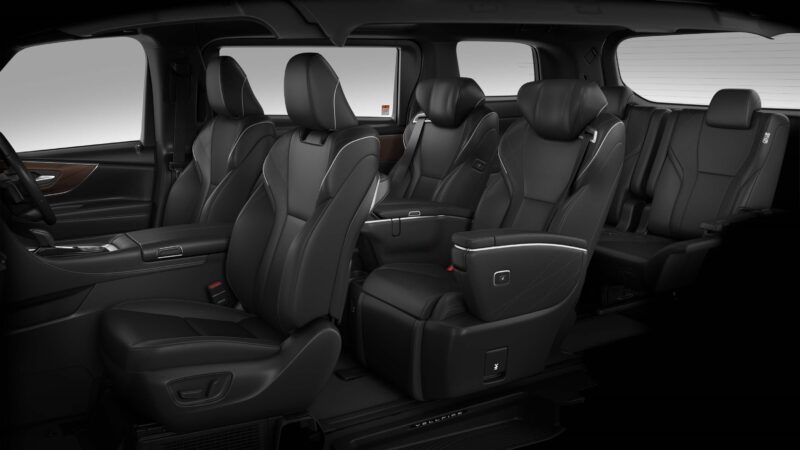
Did you know that the first generation of the Honda Stepwgn minivan was officially launched in May 1996, featuring a simple design aimed at maximizing practicality.
After five generations, the sixth generation of the Stepwgn is making a comeback with a two-box design configuration, boasting a more minimalist aesthetic and the most spacious cabin yet.
In conjunction with the 30th anniversary of the Stepwgn next year, Honda Japan has announced a special edition model available in two variants: AIR EX and SPADA.
Both the AIR EX and SPADA variants include features such as:
Multi-view camera system
Exit support system
LED cabin lights
Second-row seat heating
Adaptive headlight assist
30th anniversary tag
30th anniversary emblem
The differences between the two variants are as follows:
AIR EX
Fabric upholstery with brighter colors
Color options: Fjord Mist Pearl, Platinum White Pearl, Meteoroid Gray Metallic, Crystal Black Pearl, and Seabed Blue Pearl
Price starting from 4,098,600 yen (RM106,678)
SPADA
Leather upholstery
Color options: Twilight Mist Black Pearl, Platinum White Pearl, Meteoroid Gray Metallic, Crystal Black Pearl, and Premium Crystal Garnet Metallic
Price starting from 4,159,100 yen (RM108,253)
In terms of power, the 2026 Honda Stepwgn is equipped with the e:HEV hybrid powertrain, which consists of a 2.0L i-VTEC engine (143 hp/175 Nm) paired with two electric motors (181 hp/315 Nm).
The total power output reaches 212 hp and 315 Nm, combined with an e-CVT transmission and front-wheel drive system.
For reference, the Honda Stepwgn e:HEV has already entered the neighboring market of Thailand, with estimated prices starting from 1.7 million Baht (RM222,000).
In addition to the two-door Century idea and the aggressively styled new-generation Corolla, Toyota has presented yet another bold concept: a minivan with six wheels!
This unique and out-of-the-box concept will be officially showcased at this year’s Tokyo Mobility Show.
Named the LS (Luxury Space?), it bears no direct relation to the LS sedan, which has been discontinued in several markets.
Instead, the Lexus LS Concept is a three-axle minivan that appears larger than the existing Lexus LM model.
Based on the single image provided, it is safe to assume that the Lexus LS Concept is an electric minivan featuring a spacious cabin, aided by its boxy shape and high roofline.
The front of this minivan showcases vertical LED lighting units, complemented by LED light strips that deliberately extend to the D-pillar to emphasize the vehicle’s height.
This six-wheeled minivan concept will also be displayed at the Japan Mobility Show 2025 later this month.
In late 2020, Kia introduced the Carnival Hi Limousine variant, featuring a taller roof design compared to the standard Carnival.
This is not merely a roof storage box added to the Carnival; rather, it is a raised roof section that provides a larger cabin space.
For the updated 2026 model year, the Kia Carnival Hi Limousine has received several new features and, for the first time, a hybrid engine option.
There is a choice of seven or nine-seat configurations for the Noblesse version, whereas the more luxurious Signature version can only accommodate four people at a time.
The Signature trim not only features captain’s seats complete with footrests, but also offers a massage function and special storage for shoes.
Passengers in the second row must share a control screen to adjust settings, along with a 21.5-inch screen mounted on the ceiling.
Additionally, there are wireless smartphone charging slots, coat hooks, a refrigerator, and a Bose audio system with 12 speakers.
To ensure the comfort of VIP passengers in the rear, Kia has added soft padding, sound dampening, and lowered the height of the rear seats.
In terms of power, the Carnival Hi Limousine is available with a 3.5-liter V6 engine producing 290 hp, and a 1.6-liter turbo hybrid engine capable of generating 242 hp.
Unfortunately, there is no 2.2-liter diesel engine option offered for the Carnival Hi Limousine.
In the South Korean market, the 2026 Kia Carnival Hi Limousine is priced from 63.27 million won (RM192,000) to 97.8 million won (RM297,000) for the Signature Hybrid variant.
As of this writing, the presence of the Denza D9 electric minivan is increasingly noticeable on the roads.
If you visit any major shopping center, you’ll see this electric vehicle confidently parked alongside Malaysia’s popular boxy MPV choices, the Alphard and Vellfire.
With similar dimensions, height, and importantly, an impressively luxurious appearance on the road, the writer is convinced it can serve as the best alternative to the Alphard/Vellfire twins—provided you don’t mind spending time at charging stations.
Here are our thoughts after several days of testing the Denza D9.
Appearance
As previously mentioned, the Denza D9 has become a favored choice among Malaysians looking for a spacious and comfortable commuter vehicle.
Its significant advantages include larger dimensions compared to its competitors and a longer wheelbase, complemented by a premium overall look.
There’s no need for aggressive body lines or a fierce front end.
With its understated elegance, the Denza D9 stands out on the road, featuring a chrome grille, stylish 18-inch multi-spoke wheels, and slim LED daytime running lights that extend downward.
The rear design is simpler, although the graphics on the main light unit can be somewhat busy.
Driver’s Cockpit
For drivers, the Denza D9 is equipped with features that facilitate a seamless driving experience.
The front seats come with eight-way adjustments, lumbar support, ventilation, adjustable headrests, and crucially, a cushion that supports the thighs—especially important for long-distance driving.
Physical controls remain available despite the Denza D9 being an EV.
The central console hosts several important function switches, such as those for opening side sliding doors, selecting driving modes, and accessing the rear passenger fridge.
The gear knob is large and premium-feeling, though the placement of the P and Start/Stop buttons could be improved, leading to occasional confusion while trying to shift gears.
Climate control relies on a 15.6-inch central screen.
Overall, I have no complaints about this setup—all essential functions are easily accessible, ensuring maximum comfort for rear passengers.
Space for the Boss
Speaking of rear passengers, or rather the boss, they will undoubtedly appreciate the features offered in the second-row seating. Upon opening the door, you are greeted with captain’s chairs that boast rare amenities, including:
Heating and ventilation functions
A 10-point massage feature
Head and footrests
Zero-gravity settings for ultimate relaxation
All these functions can be activated via control screens for both seats.
Additionally, the left-side rear passenger can maximize space by activating a “boss switch.”
Working from the cabin is also made easy with folding tables and storage for cool beverages, with temperatures adjustable from -6 to 50 degrees Celsius.
Thanks to premium Nappa upholstery, the travel experience is made even more comfortable, complemented by excellent noise and vibration isolation.
For the first time, I spent more time in the second row of the Denza D9 than in other test models, simply to enjoy its luxurious features.
Driving Experience
Despite its larger dimensions, I had no trouble handling this premium MPV.
It offers excellent visibility, responsive steering, and is aided by a surround camera system that provides clear, sharp images, thus ensuring the Denza D9 remains free of scratches.
As discussed in previous brief test drive articles, the Denza D9 offers settings for the drive system, steering, brake system, and MacPherson/Multi-link suspension configurations.
Notable features include adaptive Disus-C suspension settings for driving control and comfort tailored to your needs.
Most of the time, I preferred using Sport mode to ensure the comfort that rear passengers require, as body roll is more pronounced in Comfort mode, which could lead to discomfort.
It might be better to use Comfort mode on high-quality paved roads.
Despite being equipped with dual electric motors (outputting 369 hp and 470 Nm with acceleration times as quick as 6.9 seconds), I didn’t feel the need to drive the Denza D9 aggressively; a gentle throttle response sufficed for reaching desired speeds—all in the name of VIP passenger comfort.
Suitable for Long Journeys
The Denza D9 comes in two variants.
The version I tested is the AWD model, which has a moderate range of about 480 km (WLTP data).
If power isn’t a priority, you can opt for the FWD variant, producing 309 hp and 360 Nm, with a range of 520 km.
Fast charging is also a non-issue, as the Denza D9 supports DC charging up to 166 kW.
With fast charging stations available along major routes, long-distance driving in the Denza D9 is no longer a significant concern, especially when tasked with transporting VIPs to their destinations.
Price
Another advantage of the Denza D9 is its more affordable price.
Compared to competing models, the Denza D9 is available from as low as RM259,000, or slightly more for the Premium AWD variant, priced at RM309,000.
So, are you still considering purchasing a premium MPV from Japanese brands?
Denza D9 Specifications
Powertrain: Dual electric motors
Power: 369 hp, 470 Nm
Drivetrain: All-wheel drive (AWD)
Acceleration: 6.9 seconds (0-100 km/h)
Battery: LFP Blade, 103.36 kWh capacity
AC Charging: 11 kW
DC Charging: 166 kW
Range: 580 km (NEDC data)
Suspension: MacPherson/Multi-link, adaptive DiSus-C system
For most VIPs, VVIPs, and VVVIPs in Malaysia, the default vehicle frequently seen on the roads is none other than the most popular boxy MPVs: the Toyota Alphard/Vellfire.
This has been a common sight for the past 23 years, proving how essential such vehicles are for this demographic.
However, this situation may change with the introduction of several premium minivan models in the current market, which are available with electric (EV) and plug-in hybrid (PHEV) powertrain options.
One model that is already challenging the status quo is the Denza D9, a premium minivan from the luxury brand BYD.
Officially launched earlier last year, the Denza D9 is a three-row premium MPV that comes with a more affordable price tag compared to the Alphard/Vellfire duo—starting from RM259,000 to RM309,000 for the highest variant.
For this brief two-day, one-night test drive session, we were ‘challenged’ to experience the premium features that the Denza D9 aims to offer, starting from the Denza showroom on Jalan Klang Lama to Desaru, Johor.
Day One: Experience as a Boss
As soon as you open the sliding door, the Denza D9 provides a second-row layout featuring captain seats with a comprehensive package: headrest and footrest, heating and ventilation functions, 10-point massage, and zero gravity settings that can be adjusted via a separate touch screen on the armrest.
There are also wireless smart device charging slots and USB Type-C ports for both middle-row seats.
Feeling thirsty after a day of meetings? The Denza D9 includes a 6.8-liter refrigerator that can be set to temperatures between negative 6 and 50 degrees Celsius, enough to hold a few small bottles of water.
Additionally, there is a picnic table that can be unfolded from behind the front row seats. However, in our opinion, it might be more practical if the table were positioned closer to the second-row seats, to truly give that authentic business class flight feeling.
Want to maximize the second row? The Denza D9 does not offer a ‘boss switch’ function for the front passenger seat. Instead, you can access the ‘boss key’ menu through that small screen.
The use of premium Nappa upholstery makes for a more comfortable and less tiring travel experience.
Moreover, the noise, vibration, and harshness (NVH) levels in the Denza D9’s cabin are commendably low.
Tire noise is barely noticeable, and the use of double-glazed glass ensures that the sound of heavy rain doesn’t disturb the passengers’ sleep.
Importantly, with the standard smart adaptive suspension system DiSus-C, the Denza D9 is capable of providing a unique level of comfort throughout the journey.
Day Two: Working as a Driver for VIPs
After thoroughly enjoying the experience of being a VIP, on the second day, the writer ‘switched careers’ to take on the role of a driver responsible for bringing two VIPs back to Kuala Lumpur.
Upon entering the cockpit, the first thing the writer wants to commend is the driver’s seat adjustment, which is both comprehensive and perfectly suited for the task at hand.
It offers the essential support a driver needs, featuring eight adjustment levels, along with lumbar support, ventilation functions, and an adjustable headrest.
The center console still houses the gear knob and several physical buttons for key functions, such as drive mode selection, opening the side sliding door, and the rear door, plus a special button for accessing the refrigerator in the center.
The 10.25-inch cluster screen provides easily readable graphics; however, it would be better if it included a simpler analog theme option. Not all drivers prefer a screen filled with various information.
Fortunately, there is a head-up display (HUD) provided, allowing all crucial information to be read without requiring significant eye movement while driving.
The centrally located 15.6-inch screen is indeed large enough and supports Apple CarPlay and Android Auto, along with an easily navigable menu display and several shortcut buttons.
As a driver, this layout is genuinely appreciated, as it prevents the writer from fumbling to find and adjust vehicle settings, ensuring the two VIPs in the back remain comfortable without disturbance.
Driving Experience
In terms of dimensions, the Denza D9 is considerably larger compared to the Alphard/Vellfire duo, which is prevalent on the roads today.
However, it was not difficult for the writer to handle this premium MPV due to the large outward visibility, aided by a surround camera that ensures no body panels are scratched when entering narrow areas.
You can choose a softer and more relaxed steering tuning (Comfort mode) or a slightly heavier (Sport mode), depending on the conditions. However, most of the time, the writer preferred using Sport mode for a more natural response.
The driving modes available in the Denza D9 do not offer comprehensive settings.
This is because when Sport mode is selected, it only adjusts the ECU settings; you still need to enter the main screen menu to change the suspension, steering, and brake response settings as needed.
Speaking of suspension settings, based on our two-day driving experience, we found that the Denza D9 is more comfortable when using Sport settings.
In this condition, the body roll of this premium MPV is at an acceptable level, unlike in Comfort mode, where the body roll is more pronounced. Perhaps this mode is better suited for smoother and well-maintained road conditions.
Ideal for Long Journeys
The Denza D9 has advantages in terms of its powerful electric powertrain.
The unit we drove over the course of two days is the Premium AWD variant, equipped with a dual motor setup, with one motor for each axle.
The front axle is powered by an electric motor producing 308 hp and 360 Nm, while the rear axle is supported by a 60 hp and 110 Nm electric motor. Total power output? 369 hp and 470 Nm, with an acceleration performance of just 6.9 seconds from 0 to 100 km/h.
Based on the driving experience the other day, the acceleration of the Denza D9 feels sufficiently powerful, smooth, and linear. Achieving speeds above the national speed limit does not require overly aggressive throttle action.
Simply pressing the throttle gently, this premium MPV can easily reach triple-digit speeds, and most importantly, the passengers in the back are hardly affected by the driver’s actions.
Is the Denza D9 suitable for long journeys? Yes!
Range anxiety is not a concern you need to think about, as this MPV can travel up to 580 km (NEDC data) on a full charge, thanks to the standard 103.36 kWh battery pack.
Moreover, with numerous fast charging facilities available along the main routes in Peninsular Malaysia, it makes it easier for you to transport VIPs to their destination without unnecessary worry.
Just stop at any fast charging facility, such as Johor Premium Outlet or major Rest & Relaxation (R&R) stops, and you can charge the Denza D9’s battery from 30% to 80% state of charge in just 30 minutes.
This is because the Denza D9 MPV is standardly equipped to support DC fast charging up to 166 kW.
Conclusion
Based on our brief driving experience the other day, we believe the Denza D9 can be a premium MPV option worth considering, especially for those looking to move away from the typical VIP vehicles available on the market.
It offers a powerful zero-emission driving package, a spacious and quiet cabin filled with various premium features, and importantly, at a price that is not overly expensive.
Starting at just RM259,000, you can get the front-wheel-drive version of the Denza D9, or opt for the Premium AWD variant to enjoy all the features we’ve mentioned.
Most interestingly, the Denza D9 is offered with cross-border warranty coverage across three countries (Singapore, Malaysia, and Thailand), meaning that if you venture into these neighboring countries, you can still enjoy roadside assistance and after-sales service similar to what is provided in Malaysia.
Denza D9 Specifications
Drivetrain: Dual electric motors
Power: 369 hp, 470 Nm
Drive: All-wheel drive (AWD)
Acceleration: 6.9 seconds (0-100 km/h)
Battery: LFP Blade, capacity 103.36 kWh
AC charging: 11 kW
DC charging: 166 kW
Range: 580 km (NEDC data)
Suspension: MacPherson strut/Multi-link, adaptive DiSus-C system
Bermaz Auto has showcased its new electric vehicle (EV) model, the Xpeng X9, which is set to launch this year.
The second EV model after the Xpeng G6, the Xpeng X9 is an all-electric minivan that offers a three-row seating configuration and is poised to compete with electric MPVs such as the Denza D9 and Zeekr 009.
In terms of dimensions, the Xpeng X9 measures 5,293 mm in length, 1,988 mm in width, 1,785 mm in height, and has a wheelbase of 3,160 mm.
Currently, Bermaz has yet to finalize the specifications that will be offered for the Malaysian market.
However, the Xpeng X9 will be available in a front-wheel-drive version with an output of 315 hp, or an all-wheel-drive (AWD) version with an output of 500 hp.
There are two battery pack options: a lithium iron phosphate (LFP) 84.5 kWh battery with a range of 610 km (CLTC data), or a nickel manganese cobalt (NMC) 101.5 kWh battery with a range of up to 702 km.
The Xpeng X9 platform also supports 800V fast charging, allowing for an addition of 300 km of range in just 10 minutes of charging.
Interior features include a 12.3-inch digital cluster display, a 17.3-inch infotainment screen, a 21.4-inch rear passenger screen, and rear passenger seats equipped with zero-gravity technology, heating, ventilation, and massage functions.
On the exterior, this electric MPV showcases a unique design, with a rear section featuring sharper and more angular shapes compared to most MPVs currently available on the market.
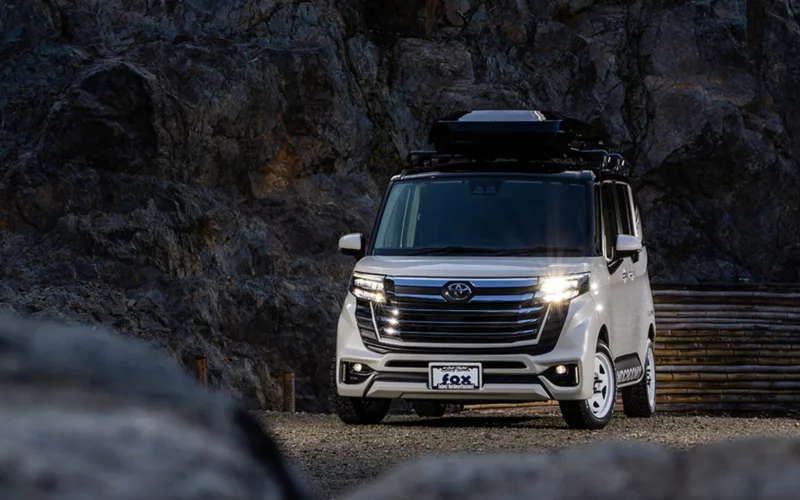
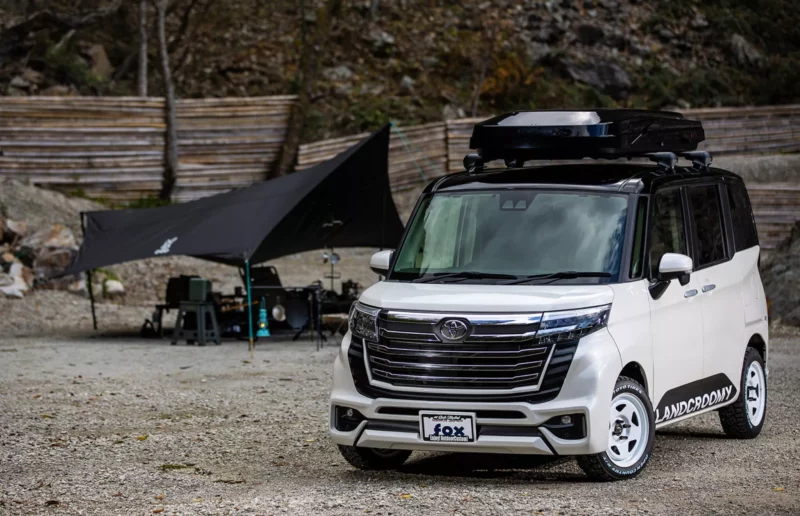
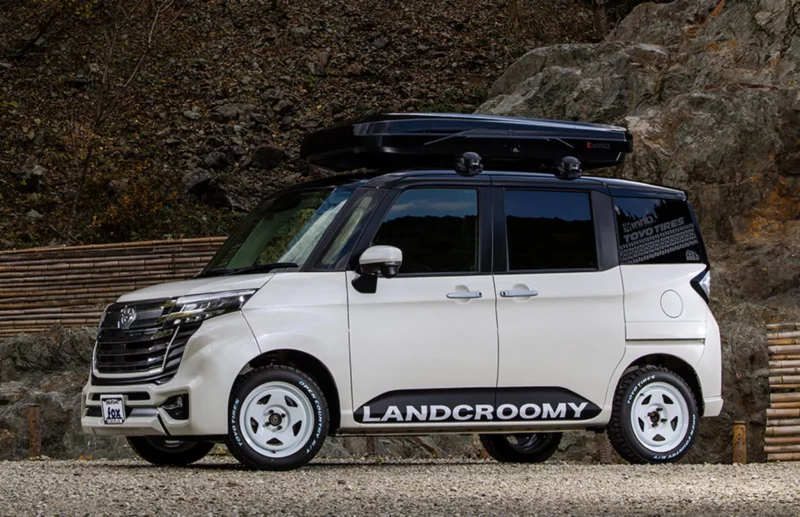
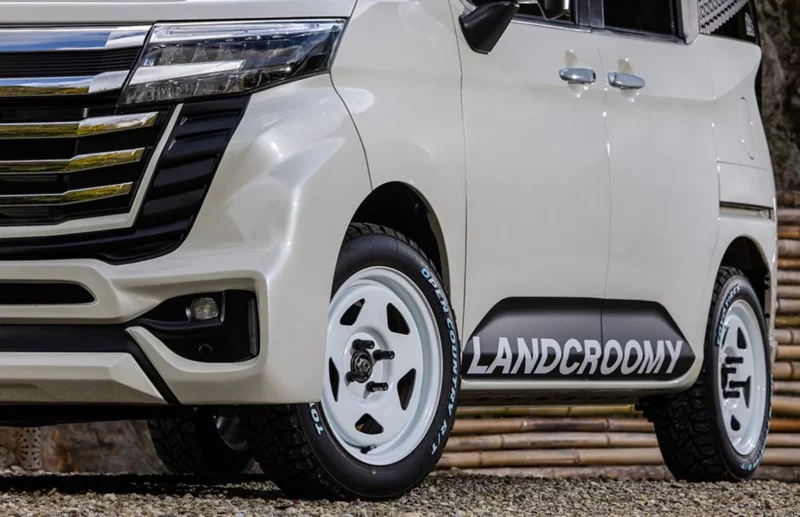
If you find the Toyota Land Cruiser (and Prado) too large to fit in your garage, worry not, as ESB Style now brings elements of this off-road SUV to the Toyota Roomy minivan.
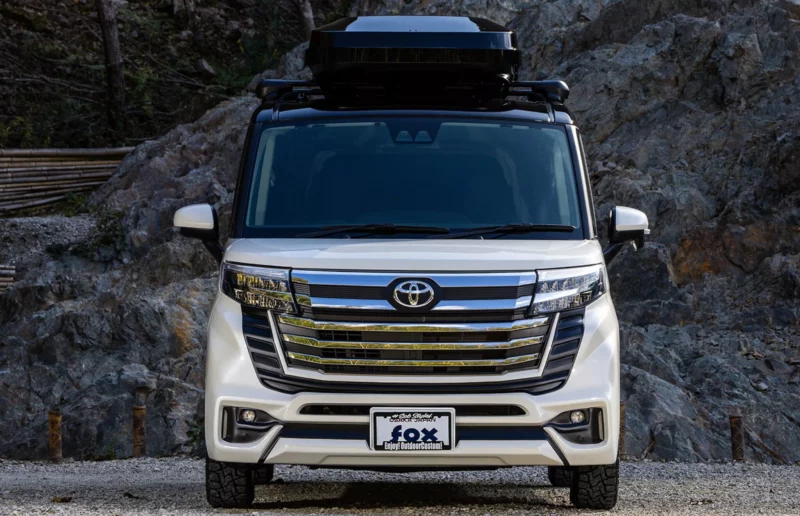
The package, dubbed ‘Landc Roomy,’ borrows several design features from the Land Cruiser, such as a large, wide grille complemented by an aggressive bumper.
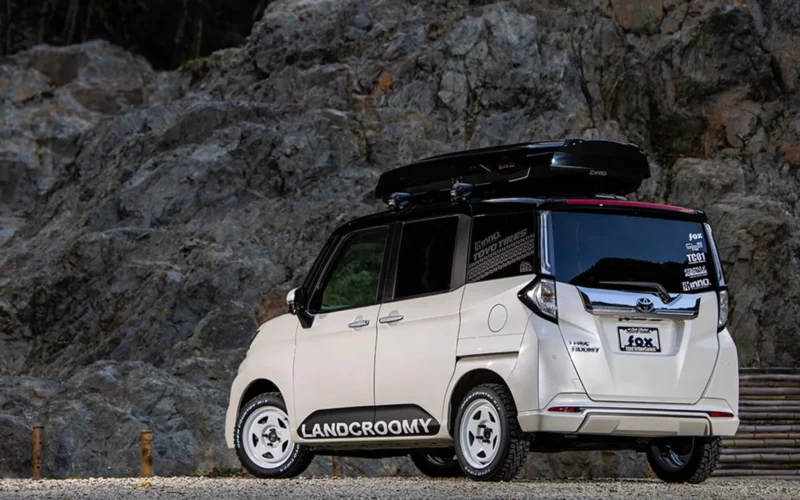
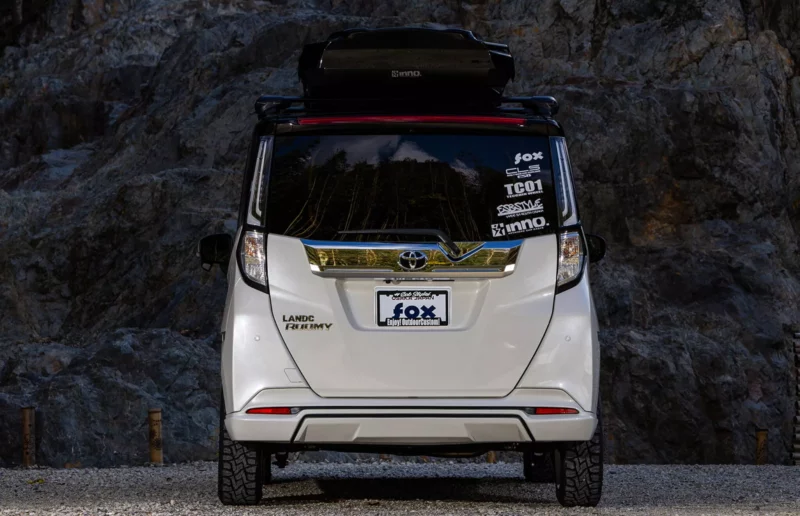
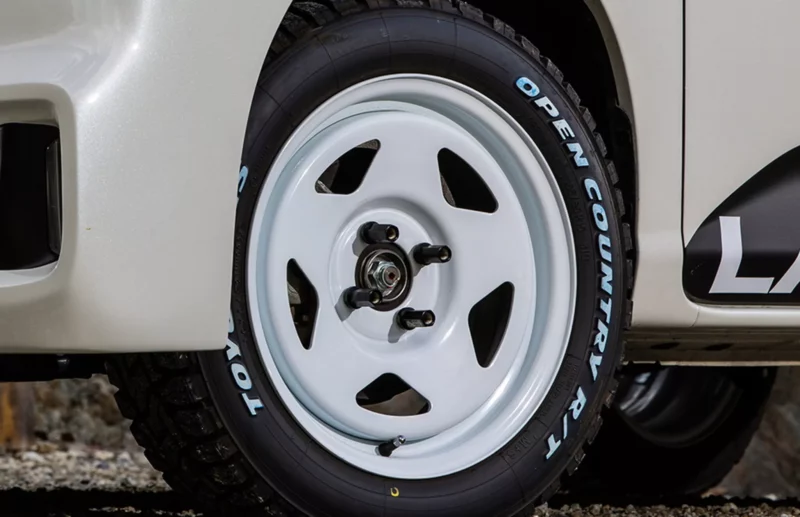
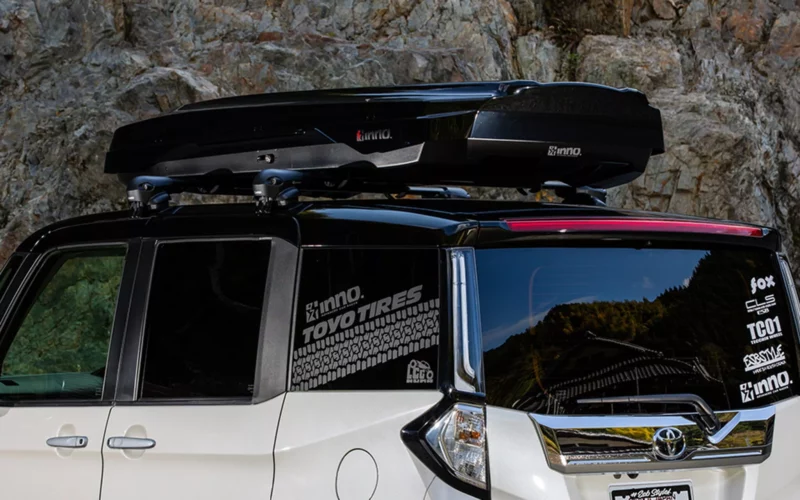
Due to spatial limitations, it is somewhat challenging to incorporate all of the Land Cruiser’s elements into this minivan. Therefore, ESB Style has restricted the modifications to the front end, while the rear bumper still receives a sporty touch, accompanied by white steel rims wrapped in Toyo Open Country R/T tires.
Additionally, the suspension system has been raised by 30 mm to enable the ‘Landc Roomy’ to tackle light off-road trails more easily.
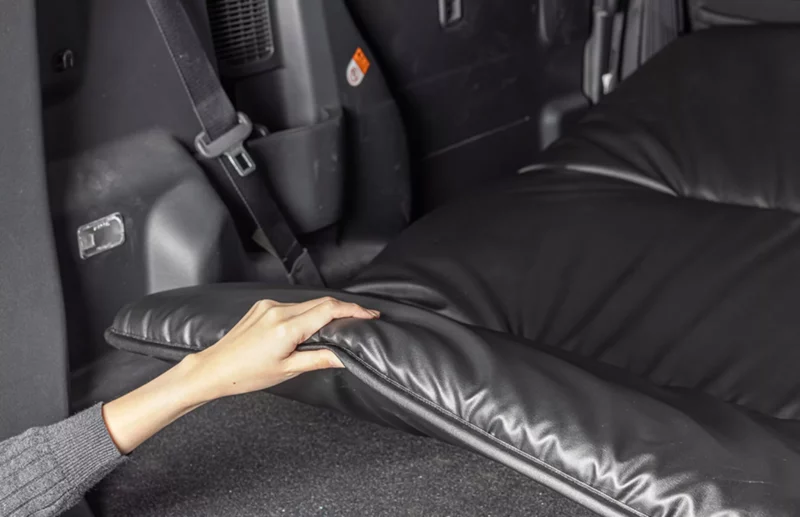
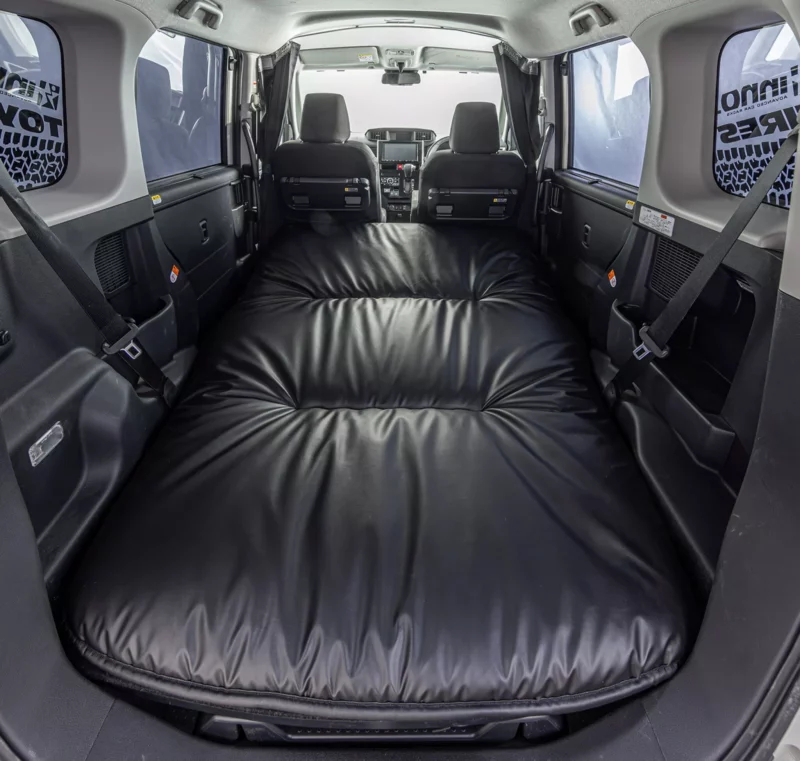
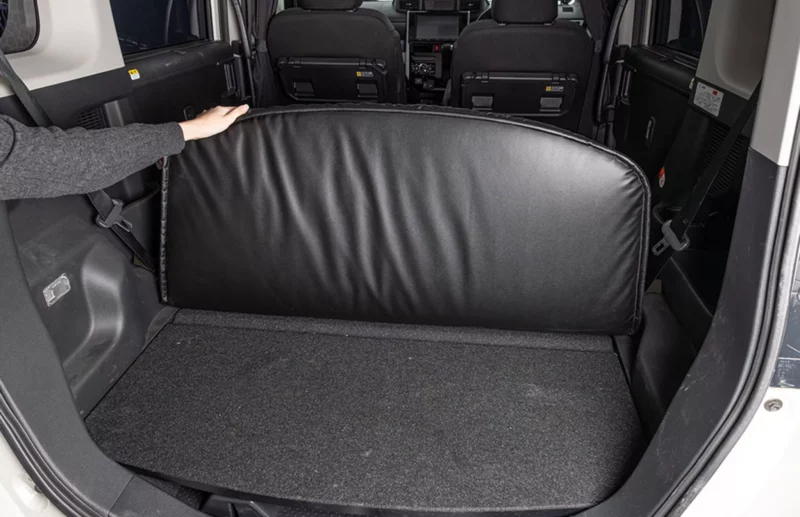
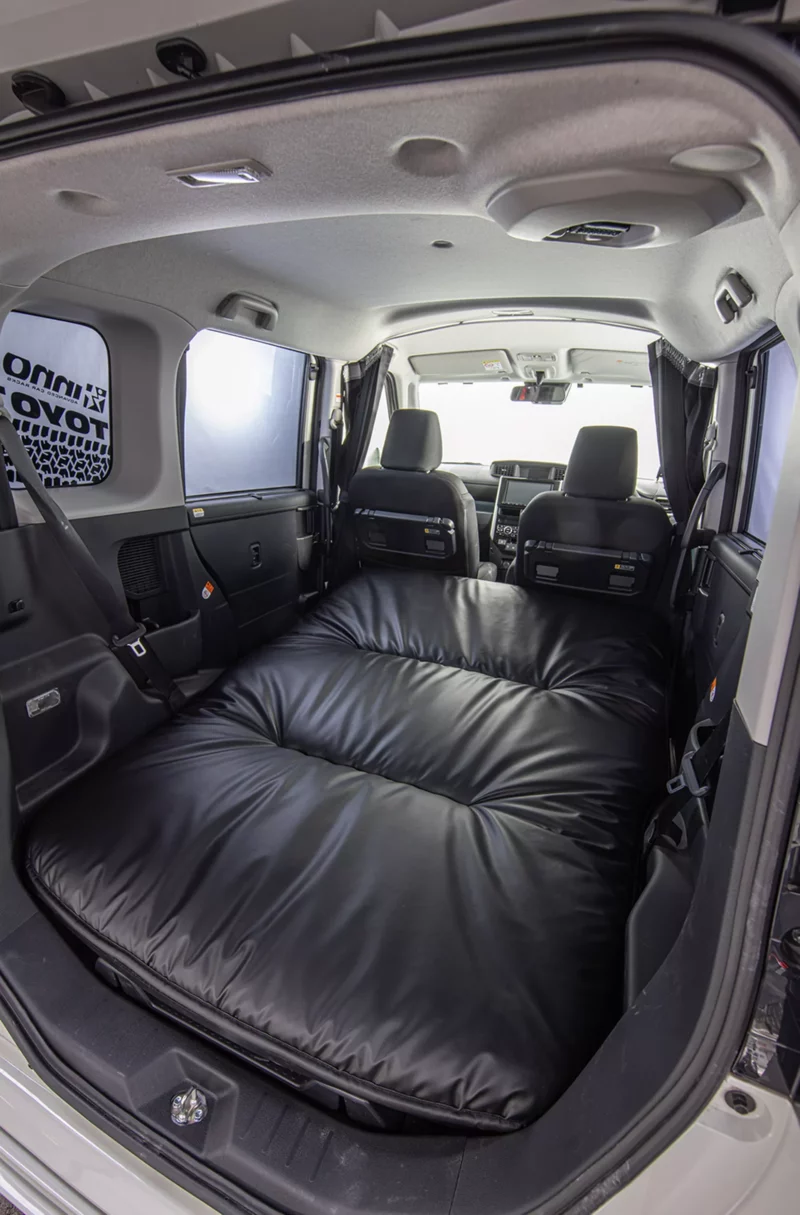
Inside the cabin, ESB Style offers accessories like a foldable “Fox Mat,” which allows the Roomy’s cabin space to be transformed into a camping van.
Here is a list of accessory prices offered by ESB Style for your reference:
Front Bumper – ¥100,000 (RM2,848)
Rear Bumper – ¥60,000 (RM1,709)
Suspension Kit – ¥50,000 (RM1,424)
Set of Steel Rims – ¥60,000 (RM1,709)
Fox Mat – ¥25,000 (RM712)
In Japan, the Toyota Roomy is not classified as a kei van, as it comes with larger dimensions and is powered by a three-cylinder inline engine of 996 cc capable of producing up to 98 PS.
The naturally aspirated version only generates a power output of 69 PS, but you can opt for the Toyota Roomy (or Daihatsu Thor/Subaru Justy) with either front-wheel drive or all-wheel drive (AWD).
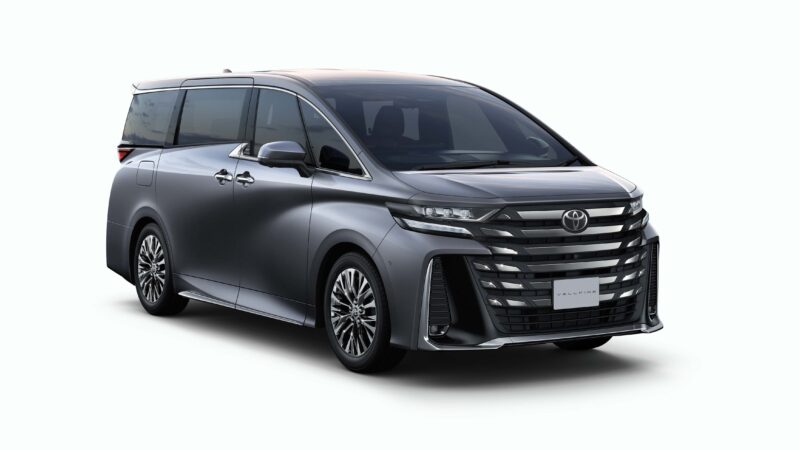
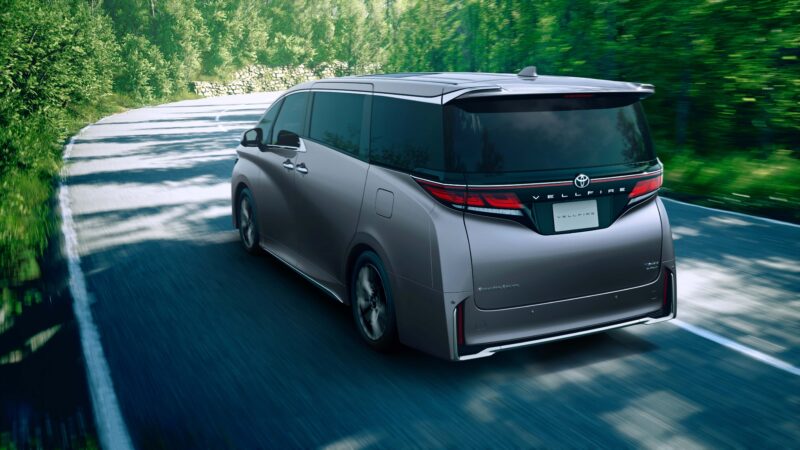
Toyota has announced its latest update, introducing the 2025 model year Alphard/Vellfire with a plug-in hybrid (PHEV) engine option.
This PHEV configuration combines a 2.5-liter engine (A25A-FXS) with an electric motor and a lithium-ion battery, capable of providing an electric driving range of up to 73 km on a full charge.
Overall, the system can generate a power output of up to 306 PS.
Like Toyota’s conventional hybrid vehicles, the BEV mode is prioritized to achieve lower fuel consumption rates of 16.7 km/liter (or 5.98 liters/100 km).
According to Toyota, the lithium-ion battery pack is positioned under the floor to maximize cabin space and lower the center of gravity by 35 mm compared to the HEV model.
Charging the battery (up to 80 percent) takes approximately 38 minutes.
In addition to offering a quieter driving experience (with added sound insulation), enhanced comfort, and reduced vibrations, Toyota has introduced the Smooth Stop control feature, which prevents nose-dive effects during deceleration to ensure passenger comfort.
The PHEV model also features “My Room Mode,” allowing users to enjoy a comfortable cabin space for working, resting, or engaging in other activities while charging.
Along with the Vehicle-to-Load (V2L) function, both the Alphard and Vellfire PHEVs are equipped with a Vehicle-to-Home (V2H) feature for emergency purposes, where a full tank of fuel and a charged battery can provide power for up to 5.5 days.
Other enhancements include a Digital Inner Mirror system and front and rear dash cameras as standard features, followed by a premium JBL audio system with 15 speakers and a 14-inch rear infotainment system for the Z and Z Premier trims.
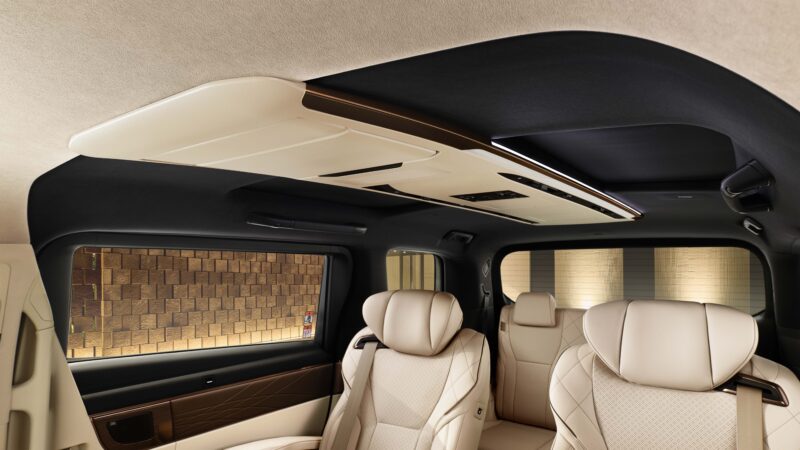
Toyota Auto Body also offers the Alphard Spacious Lounge, a four-seat version that provides more legroom and is equipped with various luxurious amenities.
In Japan, the retail price of the Alphard PHEV starts at JPY 10,650,000 (RM306,177), while the Vellfire PHEV is priced from JPY 10,850,000 (RM311,927).
In addition to the Zeekr X, Zeekr Malaysia has also opened bookings for another electric model, the Zeekr 009 minivan.
Targeted as a competitor to the popular Alphard/Vellfire MPVs, the Zeekr 009 offers a package that is much more spacious, powerful, and at the same time, more affordable.
Two variants are offered, namely the Luxury with a seven-seater configuration, and the Ultra Luxury with six seats.
This electric MPV comes with twin electric motors producing 603 hp and 693 Nm, powering all wheels (AWD), achieving acceleration from 0-100 km/h in just 4.5 seconds.
The 116 kWh battery pack offers a driving range of up to 582 km (WLTP data), in addition to supporting fast DC charging at 150 kW (charging from 10 to 80 percent in 30 minutes).
The driving aspect of the Zeekr 009 is assisted by a double-wishbone multilink suspension system, electromagnetic air suspension, and automatic balancing function, along with matrix LED lighting with adaptive driving beam (ADB) and smart zone lighting functions.
The Zeekr 009’s cabin space is equipped with a 10.25-inch cluster meter, a 15.05-inch infotainment screen, a 35.95-inch augmented reality (AR) head-up display, a 17-inch OLED roof screen, Yamaha surround sound system, 50W wireless smart device charging, Apple CarPlay and Android Auto support, and up to 9 USB-C ports available.
The driver and front passenger seats are provided with 12-way adjustment, massage function, ventilation, and memory.
Meanwhile, the second-row passengers are provided with Sofaro First Class Aeronautics seats with an Ultra Long Electric Slide Rail function extending 1.1 meters, adjustable footrest, ventilation, massage, and memory functions.
The ADAS system includes features such as lane centering control (LCC), adaptive cruise control (ACC), front (CMSF) and rear (CMSR) collision mitigation support, lane departure prevention, blind spot detection (BSD), door opening alerts, and driver performance monitoring system (DPM).
For the Malaysian market, the estimated price of the Zeekr 009 starts from RM370,000 with a reservation fee of RM4,000.
Malaysia’s Leading Automotive News | ENGEAR ENGLISH