Tag Archives: lotus

Lotus Emira 420 Sport: the most powerful, lightest, and most aerodynamic Emira yet

Say welcome to the Lotus Emira 420 Sport, the highest and most extreme variant ever built.

This is due to its more powerful engine package, lighter weight, and improved aerodynamics compared to the existing Emira.

Power up to 420 PS

The new 2.0-liter inline 4-cylinder turbo engine now generates an impressive power output of 420 PS at 6,500 rpm and a torque of 500 Nm.

This power is transmitted to the wheels through an 8-speed dual-clutch transmission.

Acceleration from 0 to 100 km/h takes just 3.9 seconds before reaching a top speed of 300 km/h.

Enhanced Aerodynamics

The exterior of the Emira 420 Sport features unique characteristics including:

  • Front splitter
  • Redesigned front air intakes
  • Larger air inlet openings
  • Lip spoiler
  • Esprit Turbo-style tailgate louvre

These modifications contribute to improved airflow to the radiator and a 10% better brake cooling performance.

Additionally, the Emira’s suspension setup has been reviewed, lowering the vehicle’s height by 5 mm, which enhances handling.

Lighter Package

The Emira 420 Sport is also available with a Lightweight Handling Pack, which includes:

  • Adjustable 2-way Multimatic dampers
  • Titanium exhaust system
  • Lithium-ion battery
  • Carbon fiber components
  • Lotus Track Performance application

With this package, the Emira 420 Sport is 25 kg lighter than the Emira Turbo and achieves an additional 25 kg of downforce.

Cabin Space

Drivers are now equipped with new carbon fiber paddle shifters and a 12-way adjustable seat that supports both road and track driving.

For the first time, all Emira variants come with a removable glass roof panel.

Inspired by the Esprit, drivers can enjoy both coupe and open-top configurations at any time.

The glass panel can be stored in a special bag and placed behind the seats.

Optional Packages

The Emira 420 Sport is also available with a carbon fiber package for the exterior, including:

  • Front splitter
  • Side sills
  • Wheel arch vents
  • Side pods
  • Rear spoiler
  • Diffuser

Buyers can choose from up to nine rim designs and finishes, including 20-inch satin dark grey forged alloy wheels.

Additionally, two new optional packages can be added:

  • Carbon Fibre Pack – featuring unique geometric finishes on the instrument cluster housing, steering wheel spokes, and rear seat trim
  • Hand Painted Pack – featuring Tangelo Orange accents on the center console, steering wheel spokes, gear shifter, and air conditioning vents

Pricing

In the UK market, the Lotus Emira 420 Sport is priced from £105,900 (approximately RM566,000).

No more Toyota & Mercedes-AMG, Lotus Emira to feature new V6 engine from Horse Powertrain

After years of relying on engines produced by Toyota and Mercedes-AMG, Lotus has finally decided to transition to a new V6 engine from Horse Powertrain.

The 3.0L turbo hybrid V6 engine is expected to debut in the facelifted Lotus Emira by the end of the decade.

In an interview with Autocar, Lotus CEO Feng Qingfeng confirmed that the new V6 engine will replace the existing Toyota V6 and AMG four-cylinder engines.

Over 500 hp Power Output

The new engine is said to deliver an impressive 536 hp and 700 Nm of torque.

One of its advantages is its lighter weight, with the V6 engine estimated to be 10 kg lighter than any other V6 currently on the market and almost on par with a 2.0L four-cylinder engine.

The V6 will be paired with an automatic transmission and an integrated electric motor for additional power and lower emissions.

U.S. Market and EU Regulations as Deciding Factors

One reason for the choice of the V6 engine is the strong demand, particularly from the U.S. market.

According to Feng, most customers there prefer V6 engines, which explains why the Emira V6 has become the best-selling model.

Additionally, the existing V6 engine from Toyota is indeed in the process of being phased out.

This is due to its increasing difficulty in meeting the stringent EU regulatory requirements, compelling Horse to develop a new engine.

Possible Foundation for a New V8 Engine

Did you know that this new V6 engine actually uses a foundation from the existing four-cylinder engine?

According to Horse’s CEO Matias Giannini, the new V6 engine has a compact and lightweight design because it builds on a smaller engine framework.

This modular design technology allows Horse to easily scale the engine up or down, potentially creating a new V8 engine based on the V6 for future Lotus supercars.

No Demand for Emira EV

Another reason why the V6 is Lotus’s main focus is the unsuccessful electric sports car project.

Lotus initially planned to produce an electric sports car to replace the Emira in collaboration with Alpine.

However, the project was canceled when they found there was no demand for a zero-emission model.

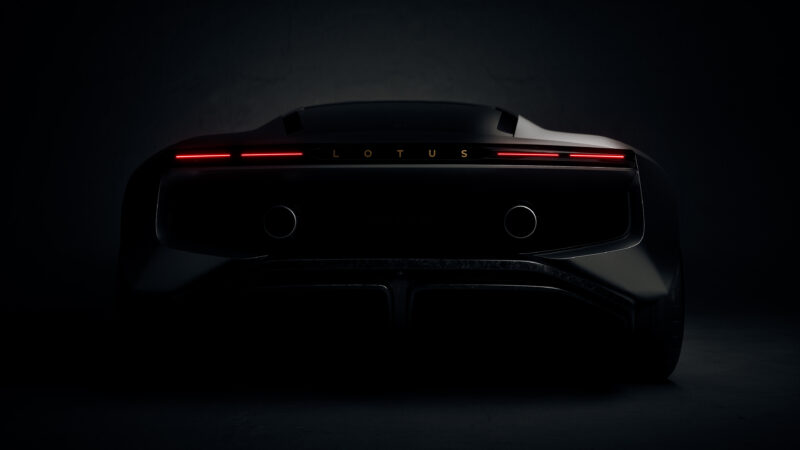
Lotus Type 135: a 1,000+ hp V8 supercar, Esprit successor?

Lotus is reportedly developing a new supercar powered by a V8 engine, currently designated as the Type 135.

The last time Lotus utilized a V8 powerplant was in 2004, the same year production for the legendary Esprit officially ended.

The First Lotus Supercar

The Type 135 is slated to be Lotus’s first dedicated supercar and is expected to launch in 2028.

Within the current product hierarchy, the Type 135 will be positioned between the Emira sports car and the Evija hypercar.

This new model will feature a hybrid V8 configuration with an output exceeding 1,000 hp.

Mercedes-AMG or Toyota V8?

At this stage, Lotus has not released specific details regarding the engine supplier for the Type 135.

Currently, Lotus sources internal combustion engines for the Emira from two partners: Mercedes-AMG and Toyota.

Interestingly, both manufacturers are developing brand-new V8 powertrains set to debut officially this year.

The question remains: which will Lotus choose? A Mercedes-AMG V8 or a GR twin-turbo hybrid unit?

Not the First Lotus Hybrid

Technically, the Type 135 will not be the first hybrid vehicle produced by Lotus.

That title belongs to the Lotus Eletre PHEV, which is already available in the Chinese market with a total system output of 939 hp.

Will the Esprit Name Return?

A major point of speculation is whether the “Esprit” nameplate will be revived for this model.

From a heritage perspective, reviving the iconic name makes more sense than marketing it as an upgraded version of the Emira.

Furthermore, the design is said to draw inspiration from the Theory 1 concept introduced in September 2024.

The Future of the Emira

The Type 135 project is a core component of Lotus’s “Focus 2030” business plan.

In the near term, Lotus will also introduce an updated version of the Emira, featuring an enhanced engine and a weight-reduction program.

Lotus Emira to receive V8 engine replacement for V6

The Lotus Emira is currently the only pure internal combustion sports car still offered by Lotus to its enthusiasts.

Before production of this model ends in 2027, Lotus is reportedly planning improvements to the model, particularly for the United States market.

According to recent reports from Autocar, Lotus is considering a V8 engine for the Emira.

Its CEO, Feng Qingfeng, stated that the brand is exploring the feasibility of a V8 engine to replace the currently used V6 engine.

The Lotus Emira is available with a 3.5-liter supercharged V6 sourced from Toyota, or a 2.0-liter engine from Mercedes-AMG.

Feng dismissed the idea of increasing the power of the existing V6 engine, citing that the Toyota engine is unable to meet the stricter Euro 7 standards.

Lotus previously planned to gradually phase out the V6 offering to make way for the AMG-powered model.

However, with strong demand for the six-cylinder model in the United States, Lotus is prompted to consider the proposal of installing a larger engine.

Lotus Europe CEO, Matt Windle, told Autocar, ““The US is an incredibly important market for us for the car. It always has been. So we’re looking at the market demand for the product going forward.”

He further explained that the company is exploring several options that could be implemented to ensure the full potential of the Emira can be realized, including possibly matching engines from existing suppliers—most likely Mercedes-AMG.

Lotus makes a U-Turn, abandons plans to become an EV brand

The reluctance of luxury car buyers to switch to electric vehicles (EVs) has prompted Lotus to cancel its original plan to become a fully electric brand by 2028.

This change was confirmed by Lotus CEO Feng Qingfeng when he addressed media representatives at the recent Guangzhou Motor Show.

“I believe that fuel-powered vehicles still have a long life cycle,” he stated, noting that most Lotus drivers average 30,000 kilometers per year.

This means that driving range is an important factor for customers, which leads some of them to be less interested in switching to EVs.

According to Qingfeng, range anxiety is not the only issue raised.

“The penetration rate of pure electric vehicles in the luxury car segment is slow because luxury car engines are already powerful, and the driving experience similar to eight-cylinder and twelve-cylinder engines shows strong performance.

“The increase in power offered is not significant, so some customers are not particularly interested in making the switch,” he added.

Feng Qingfeng explained that Lotus will develop “Super Hybrid” technology that features ultra-fast 900-volt charging, as well as an internal combustion engine with forced induction turbo to provide a range of up to 1,094 kilometers.

Currently, Lotus has not disclosed which model will receive this new hybrid system, but it is likely to be better suited for models such as the Eletre and Emeya, rather than sports cars like the Emira.

Lotus Emeya electric hyper GT now in Malaysia – 3 variants, priced from RM555k-RM777k

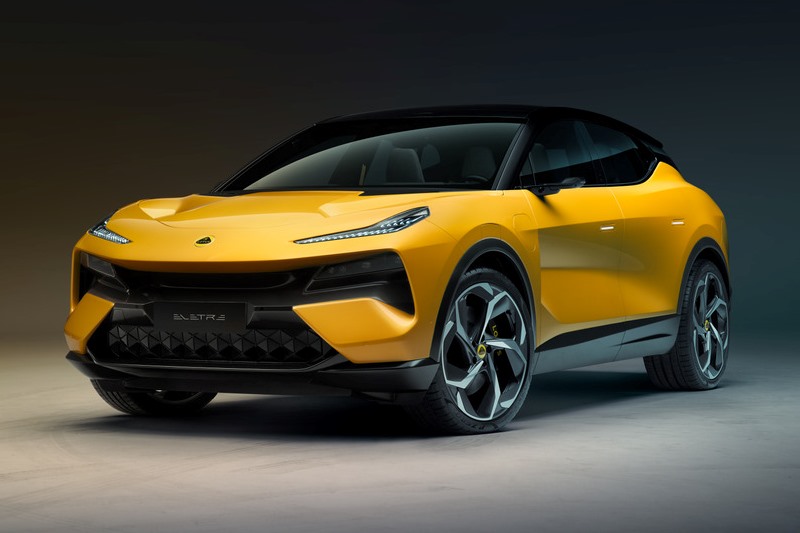
LOTUS Cars Malaysia’s second electric vehicle offering for the local market, the Emeya, has been officially launched.

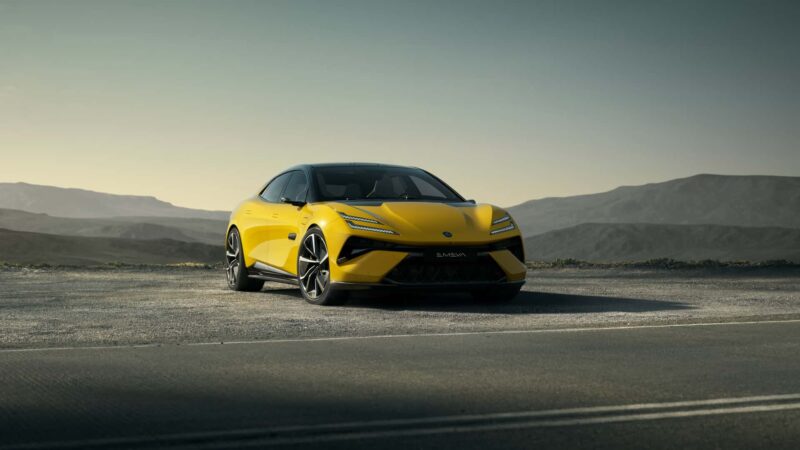
Much like the Eletre, the fully electric Hyper-GT is available in three variants – Emeya, Emeya S, and Emeya R. The base variant is priced at RM555,000, the S variant at RM643,000, while the R variant goes for RM777,000.

These prices do not include road tax and insurance. All variants of the Emeya come with a five-year/150,000 km manufacturer’s warranty, while the battery comes with an eight-year/200,000 km warranty.

Both the base Emeya and Emeya S are powered by two electric motors producing 603 hp and 710 Nm. With a single-speed transmission, it can accelerate from 0-100 km/h in 4.2 seconds before reaching a maximum speed of 250 km/h.

Meanwhile, the range-topping Emeya R boasts a whopping 905 hp and 985 Nm. Unlike the other two variants, this one has a two-speed transmission, enabling it to complete the century sprint in just 2.8 seconds. Its maximum speed is slightly higher at 256 km/h.

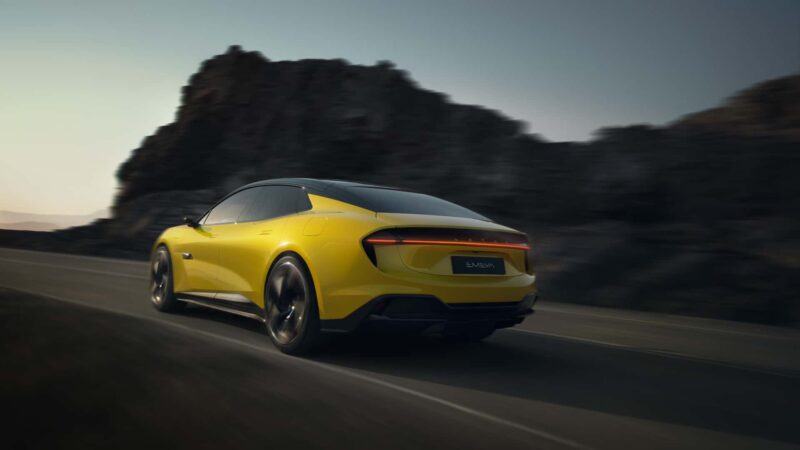
In addition to the powerful electric motors, most of the Emeya’s performance is contributed by its sleek, aerodynamic design.

The car is equipped with an active front grille to reduce wind resistance and cool the battery, an active air dam to increase downforce at the front, an active rear diffuser, as well as a dual-layer active rear spoiler that can generate up to 215 kg of downforce.

Moreover, the Emeya also comes with an all-wheel drive system with Lotus ICC intelligent torque distribution and an electronically controlled air suspension system that is capable of ‘feeling’ the road 1,000 times a second.

All three variants come with a 102 kWh battery, but the range (WLTP) for each variant differs. The base variant offers a range of 610 km, while the S variant offers 540 km. The Emeya R can travel up to 435 km.

On top of 22 kW AC charging, the Emeya also supports fast DC charging up to 350 kW, which can recharge the battery from 10% to 80% in just 18 minutes.

The Emeya’s interior features a minimalist design combined with sustainable and durable materials and advanced technology. To reduce carbon footprint, Lotus uses new luxury thread made from repurposed fibres from the fashion industry.

Additionally, you will find a 15.1-inch touchscreen powered by Unreal Engine, as well as a KEF audio system with Uni-Q speakers, Uni-Core space-saving subwoofer enclosure, and 3D Dolby Atmos surround sound. The Road Noise Cancellation (RNC) feature is also included.

For safety, there is a full suite of Advanced Driver Assistance Systems (ADAS) comprising features such as obstacle warnings, lane departure, forward collision alerts and blind-spot monitoring. All essential information is displayed through a 55-inch projected augmented reality (AR) head-up display.

The one-off Lotus Evija X crashed at Goodwood starting line

The Goodwood Festival of Speed has claimed its first ‘victim’. The Lotus Evija X – a one-off track machine built for a specific Nurburgring record – was involved in an accident at the Goodwood event, causing extensive damage to its front end. Fortunately, the driver escaped unharmed.

While it’s not uncommon to see high-powered cars go off track and crash at this short Goodwood course, the Lotus incident is somewhat unusual.

It didn’t occur at Molecomb corner, a challenging left-hander in the middle of the course capable of catching out even professional drivers. Instead, the incident took place right at the start line.

Footage shows the Evija X performing a burnout with thick smoke before suddenly veering to the right and crashing into a hay bale wall. Its front clamshell is crushed, but the driver compartment remains intact.

Analysts suspect it may have stemmed from the software controlling the four electric motors on each wheel, generating almost 2,000hp causing a loss of control. The accident doesn’t appear to be too severe, and it is hoped that the vehicle can be repaired and back in action.

Only one unit was ever produced, and Lotus surely doesn’t have any spares or replacements. In a statement released by Lotus, a few days after the incident:

Evija X is a one-off track version of our electric hyper-car, Evija; one of the most powerful production cars in the world. The Evija X took part in a hill run at Goodwood Festival of Speed on Thursday, 11th July, where it was involved in an incident at the start line.

Following a formal evaluation by both Goodwood and Lotus, asymmetric grip caused by overcorrection during rapid acceleration at the start line was determined to be the cause. Driver was unharmed in the incident and there was minimal damage to the car.

Lotus Emeya broke DC charging record, 10 to 80 percent in just 14 minutes

Announced officially last year, the Lotus Emeya is a powerful electric hyper-GT intended to challenge fast electric sedans such as the Tesla Model S, Porsche Taycan, and Audi e-Tron GT.

With twin electric motors producing 905 hp/984 Nm, the Emeya is capable of accelerating from 0-100 km/h in just 2.8 seconds.

Did you know that not only is the Emeya swift in acceleration, but this hyper-GT is also capable of offering the fastest DC charging rate?

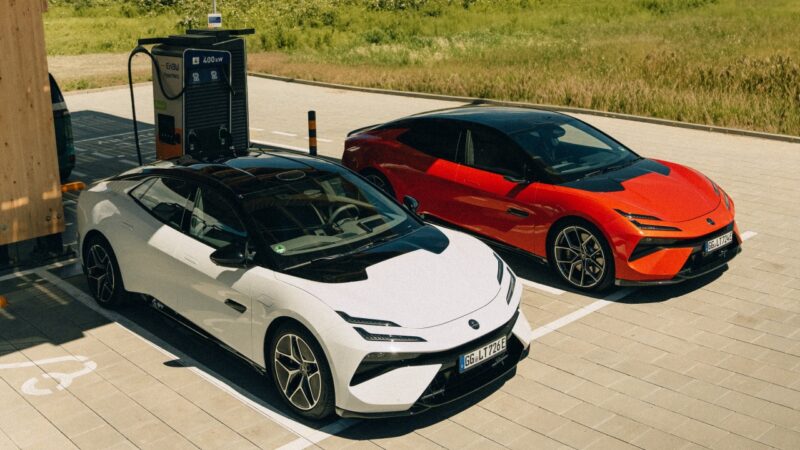
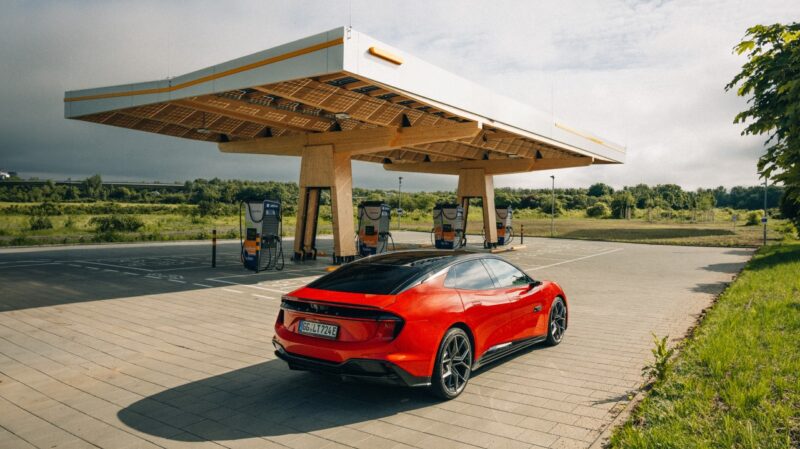
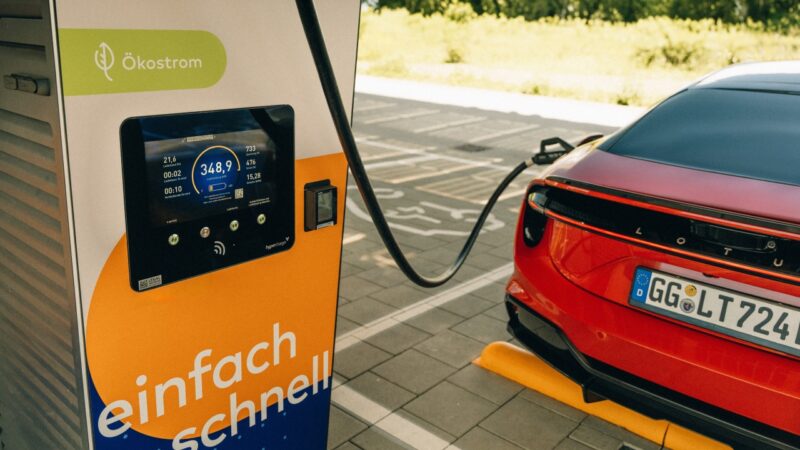
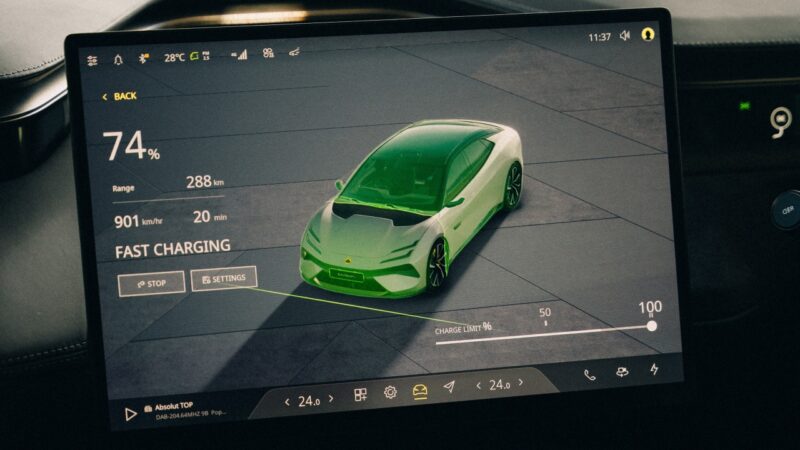
Based on tests conducted by the global consulting firm P3 Group, the Lotus Emeya set a record for the fastest 10-80 percent battery charging time, achieving it in just 14 minutes when using a 400 kW DC charger.

This is an impressive feat, as the Lotus Emeya managed to outperform leading EV models such as the Mercedes-Benz EQS, BMW i7, Tesla Model Y, Genesis G80, Xpeng G9, Kia EV9, Hyundai Ioniq 6, Nio ET5, and BYD Atto 3.

The P3 Group report also found that the Emeya is capable of reaching a peak charging power of 402 kW, with an average charging power of around 331 kW during the 10-80 percent charging period.

Coupled with an energy consumption rate of 18.7 kWh/100 km, the Lotus Emeya can offer a range of 310 km after just a 10-minute charging session—a time frame nearly equivalent to refueling a gasoline-powered car at a petrol station.

According to Lotus, the Emeya utilizes a cell-to-back battery structure, containing 20 percent more cell content that can be packed into the same space compared to a standard module design.

As standard, the 102 kWh battery pack provided with the Emeya allows the sedan to travel up to 600 km on a single full charge.

Similar to the Eletre, the Lotus Emeya also features an active aerodynamic system to reduce drag and at the same time acts as a cooling system for the battery and brakes.

Configure your dream car at Lotus Store Pavilion Damansara Heights

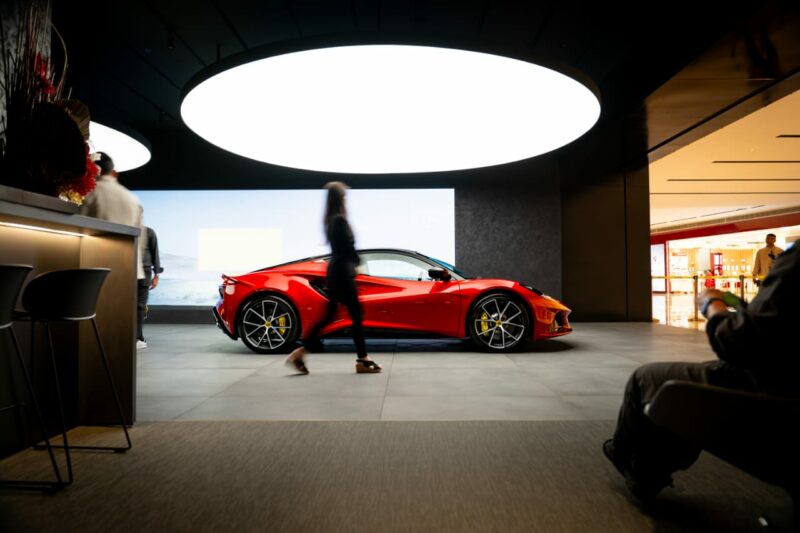
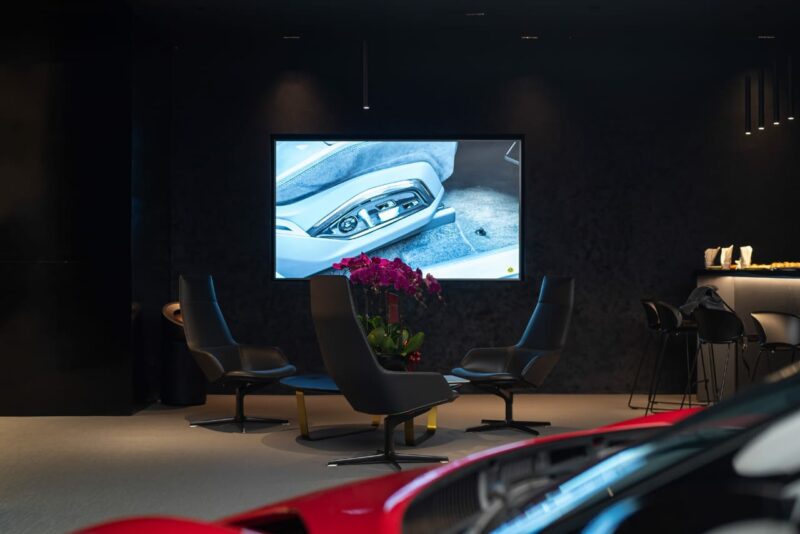
LOTUS Cars continues to strengthen its brand presence in Malaysia with the opening of its first Lotus Store at Pavilion Damansara Heights.

The 173.58 square meter showroom opens its doors 10 months after the introduction of the Eletre. The electric Hyper SUV has seen strong demand in the country, with over 50 units already delivered to customers to date and another 200 units on arrival.

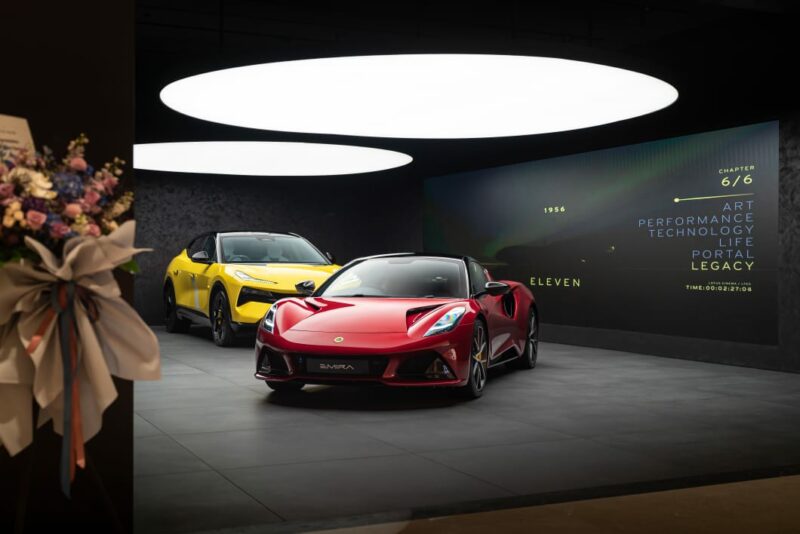
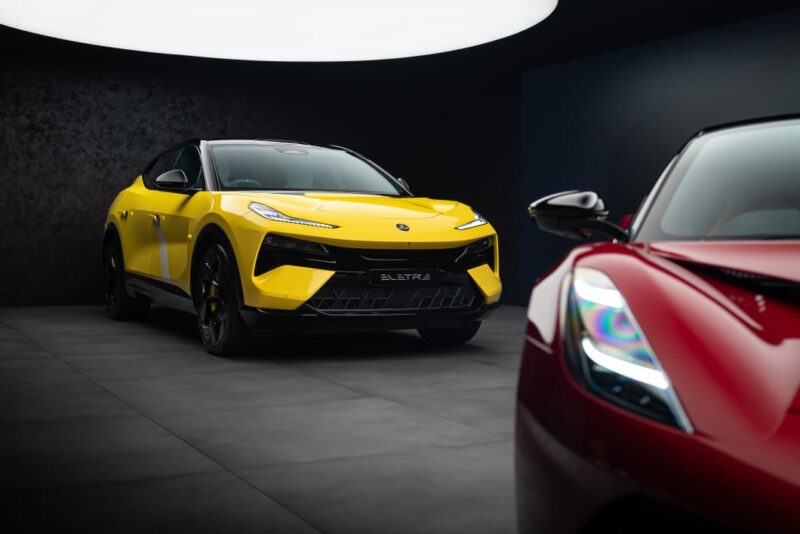
Designed to reflect Lotus’ all-new corporate identity, the showroom houses two of the brand’s latest arrivals in Malaysia – the Eletre and the Emira.

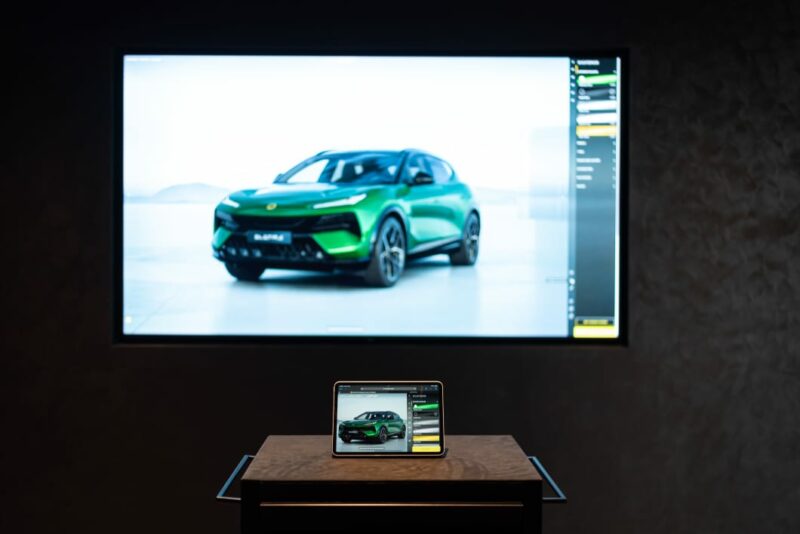
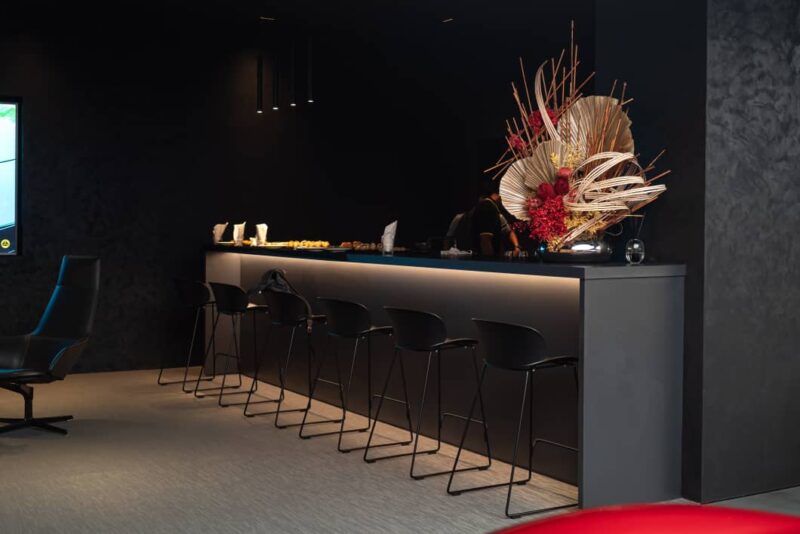
In addition, the Lotus Store provides facilities such as a configurator room where customers can personalize and accessorize their own vehicles, a dedicated wing for exclusive Lotus merchandises and apparel, and a well-appointed lounge area.

The configurator allows customers to to customize every aspect of the vehicle, which ranges from exterior (trim, colour, rims and tyres, coloured brake calipers, carbon ceramic brakes, and badges) and interior elements (themes, materials, seat belts, steering wheel, and carbon inlays).
Additionally, customers can choose the level of equipment including the side mirrors, Lotus Dynamic Handling package, smart glass roof, on top of adding driving aid features like Parking Pack and Highway Assist Pack.
Operating daily from 10 am to 10 pm, the Lotus Store at Pavilion Damansara Heights also marks a preamble to the opening of Lotus Cars Malaysia’s flagship showroom in Glenmarie, Shah Alam, which is scheduled for completion in Q2 2024.

Lotus also aims to further extend its footpring in the Northern and Southern regions, and implement a Lotus Mobile Service Solution to improve customer convenience.