Honda continues to dominate the light vehicle (kei car) market in Japan.
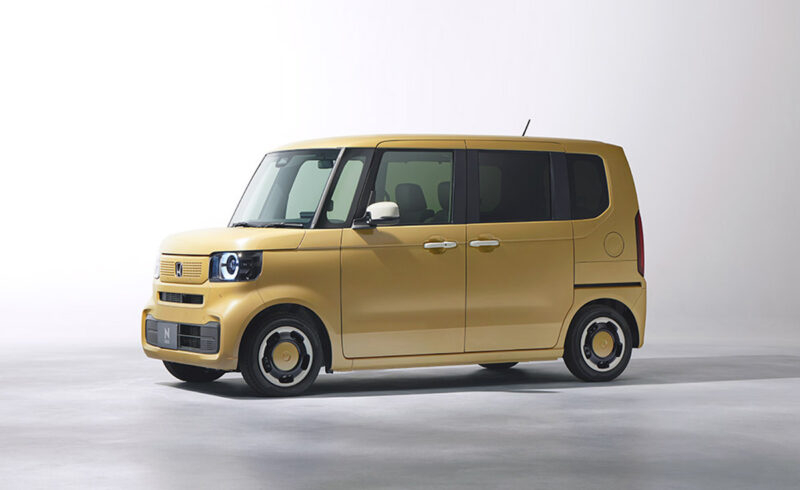
For the 11th consecutive year since 2015, the Honda N-Box has been crowned the best-selling compact car, with a total of 201,354 units sold throughout 2025.
In December alone, Honda achieved sales of 15,570 units of the N-Box, surpassing the Suzuki Spacia in second place (11,397 units) and the Daihatsu Tanto in third place (9,287 units).
Here are the rankings of the top 10 best-selling kei cars for 2025:
Honda N-Box: 201,354 units
Suzuki Spacia: 165,589 units
Daihatsu Tanto: 124,619 units
Daihatsu Move: 122,349 units
Suzuki Hustler: 87,972 units
Suzuki Wagon R: 72,520 units
Nissan Roox: 71,498 units
Mitsubishi Delica Mini/ek: 58,916 units
Suzuki Alto: 57,553 units
Daihatsu Mira: 55,777 units
Meanwhile, Toyota claimed 8 positions in the list of the 10 best-selling passenger cars in Japan.
The top spot is held by the Toyota Yaris with total sales of 166,533 units, followed by the Toyota Corolla (138,829 units) and the Toyota Sienta (106,558 units).
Not only that, Toyota also dominates the MPV segment with models like the Alphard, Noah, and Voxy.
Honda ranks sixth with the Freed model (90,437 units), while Nissan ranks tenth with the Note model (78,123 units).
Here are the rankings of the top 10 best-selling passenger cars for 2025:
Kei cars typically feature a cuter design, suited to their small size.
However, leading body kit manufacturer DAMD has come up with an idea to give kei cars a more aggressive, rugged, and stylish appearance.
For instance, the “Dali” body kit (shortened from Dakar Rally) successfully transforms the cute Mitsubishi Delica Mini into a retro machine inspired by the 1980s Pajero model.
If you notice, the new headlights resemble the design of the first-generation Pajero. Additionally, it features a square grille structure, complete with the original Mitsubishi emblem, which also houses various ADAS sensors.
The original front bumper structure of the Delica Mini has been retained, including the “DELICA” lettering and original air intakes, but it has been enhanced with special decorative elements finished in glossy black.
Importantly, all these additions do not compromise the original dimensions of the Delica Mini and still comply with the kei car regulations set by the Japanese government.
DAMD is also offering a custom side decal set, 15-inch Cantabile alloy wheels shod with Toyo Tires Open Country R/T tires, and, of course, a roof rack.
Accessories for the cabin are still in the development phase. The complete package price will be announced later.
This model will be officially showcased at DAMD’s booth at the Tokyo Auto Salon 2026, taking place this month.
Honda Motor is planning to introduce an electric version of its N-Box around 2027 to compete with the BYD-made kei car, according to a report by Nikkei Asia.
The Honda N-Box was first launched in Japan in 2011 and has now gone through three generations in the Japanese market.
It has been one of the best-selling vehicles in Japan for three consecutive years, with over 200,000 units sold in 2024.
Honda has not yet decided on the specifications or pricing for the N-Box EV model.
It is clear, however, that the N-Box EV will not entirely replace the role of the internal combustion engine (ICE) version.
For reference, Honda Japan has a similar kei car product, the N-Van e: which is aimed at commercial use and has been on sale since 2024.
The N-Van e: features a single electric motor with a power output of 64 PS and 152 Nm, and offers a driving range of 245 km on a full charge (WLTC data).
In Japan, new electric vehicle (EV) sales accounted for only 2 percent of total vehicle sales throughout 2024.
Of that total, more than 40 percent was dominated by the kei car twins, the Nissan Sakura EV and the Mitsubishi eK X EV.
Both of these EV models share specifications, including an electric motor producing 64 PS/195 Nm, a 20 kWh lithium-ion battery, and a driving range of up to 180 km (WLTC data).
Nissan Sakura EV & Mitsubishi eK X EV
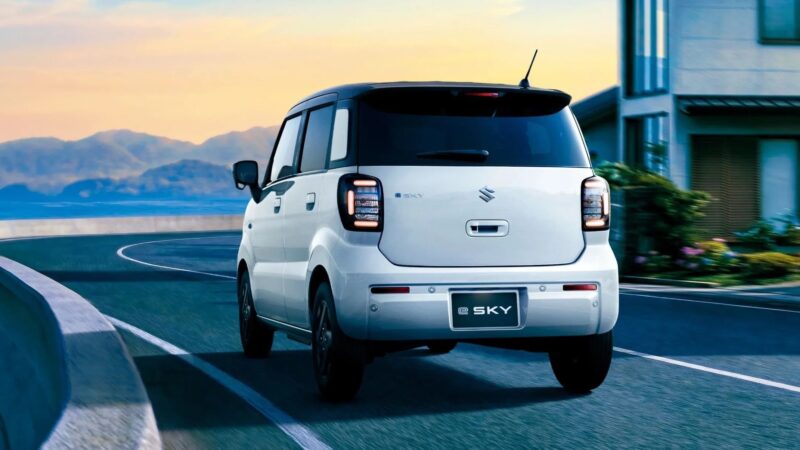
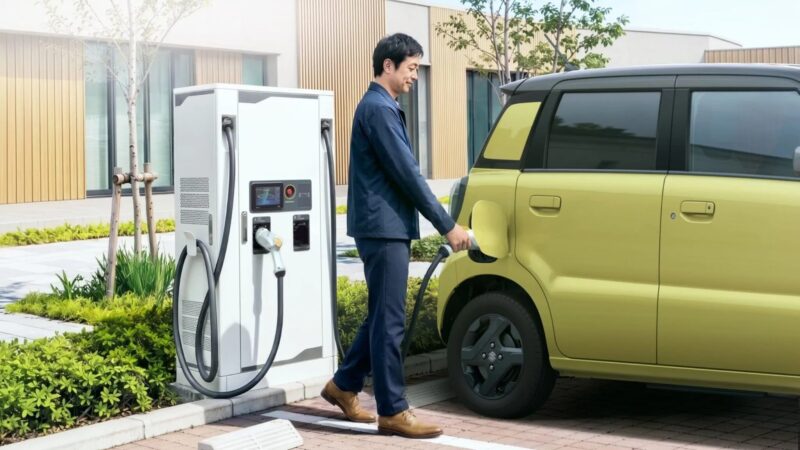
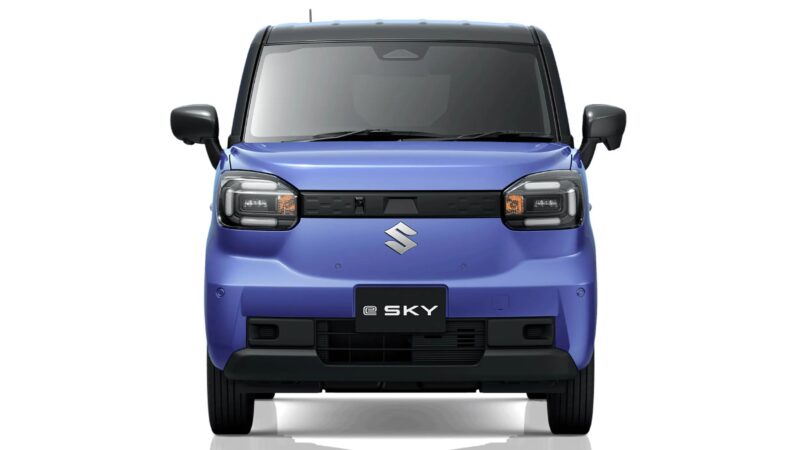
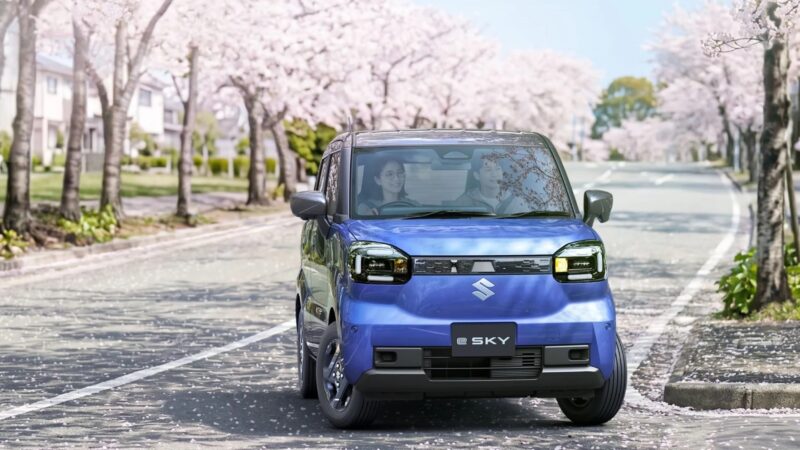
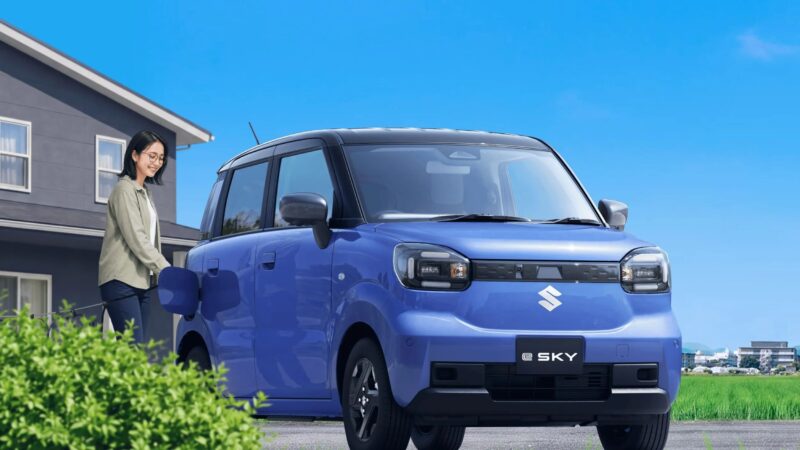
In addition to Honda, Suzuki Motor is also planning to introduce a kei car EV by 2026.
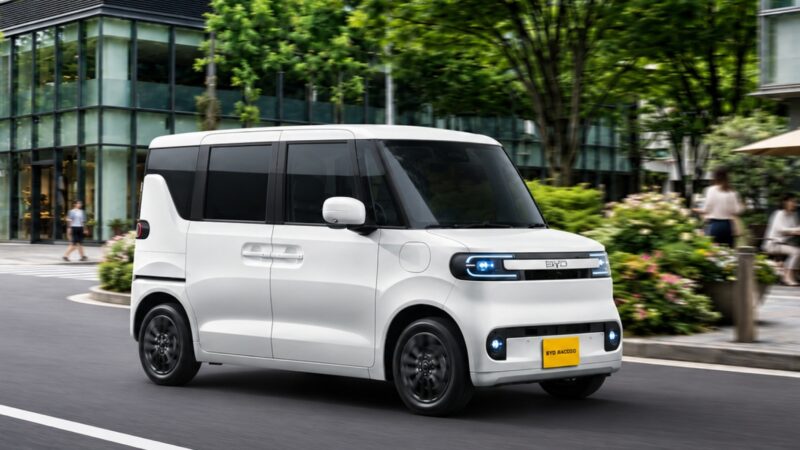
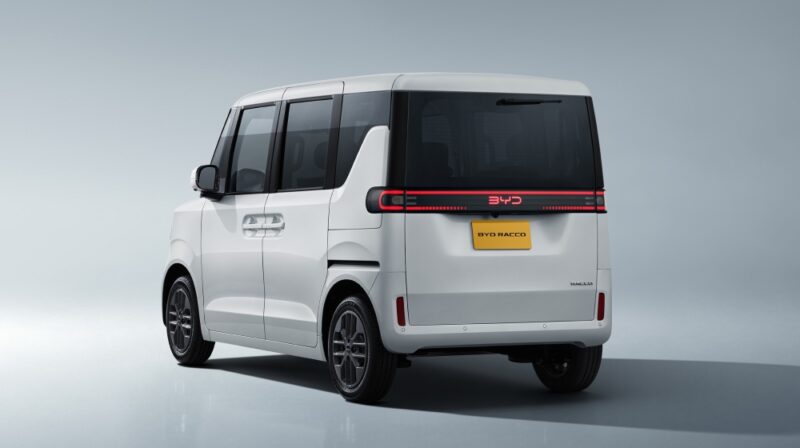
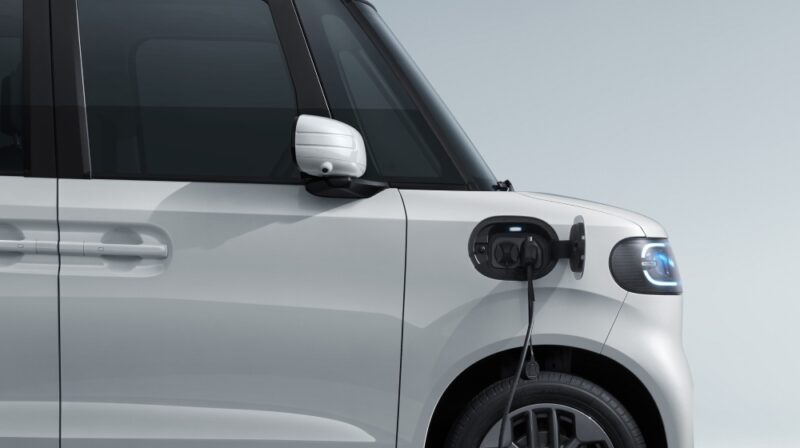
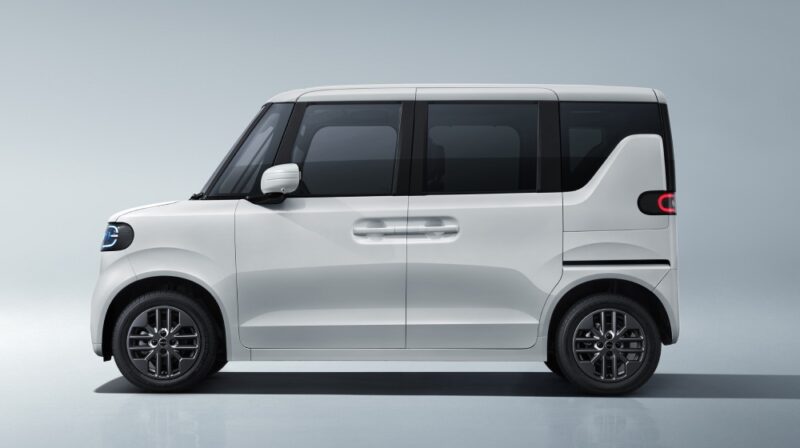
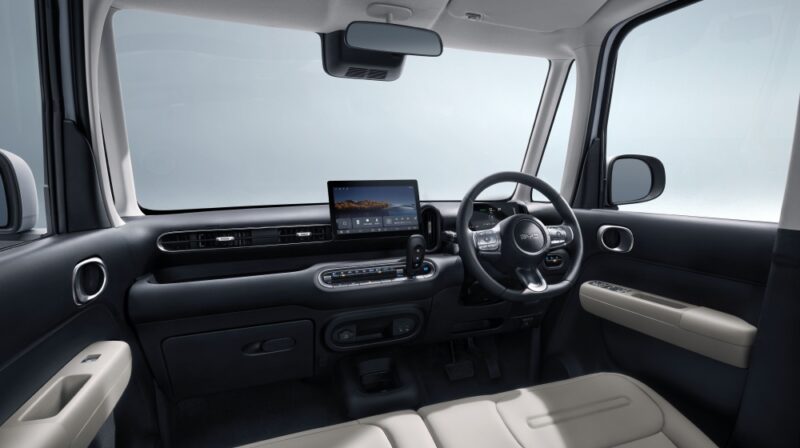
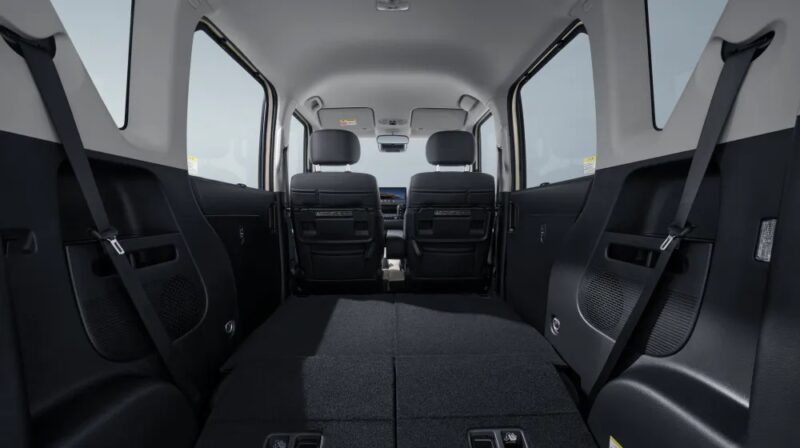
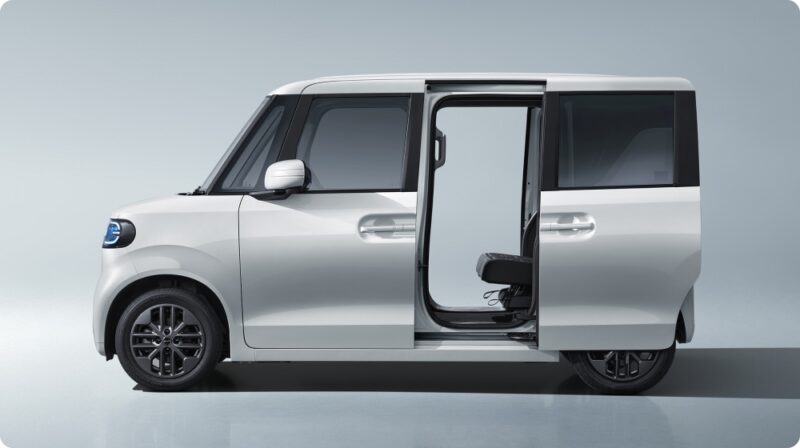
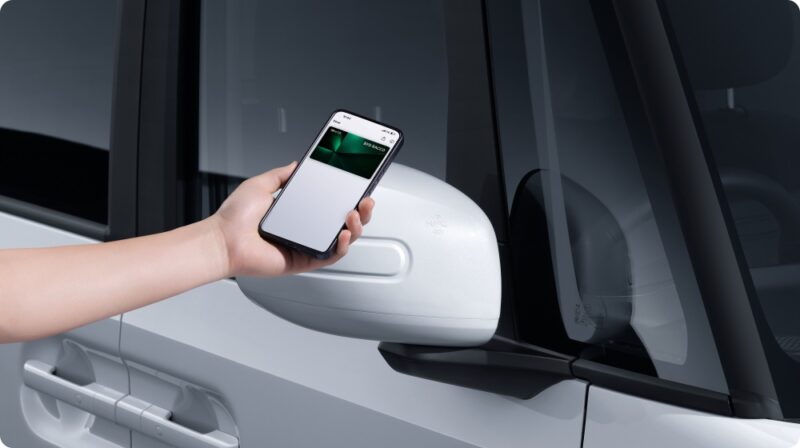
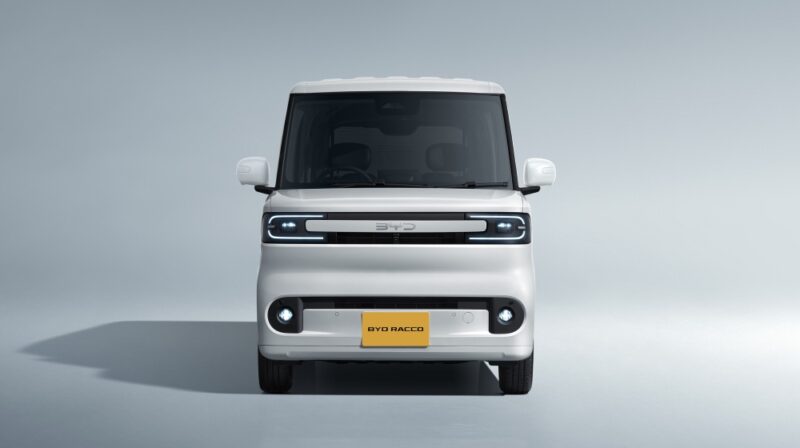
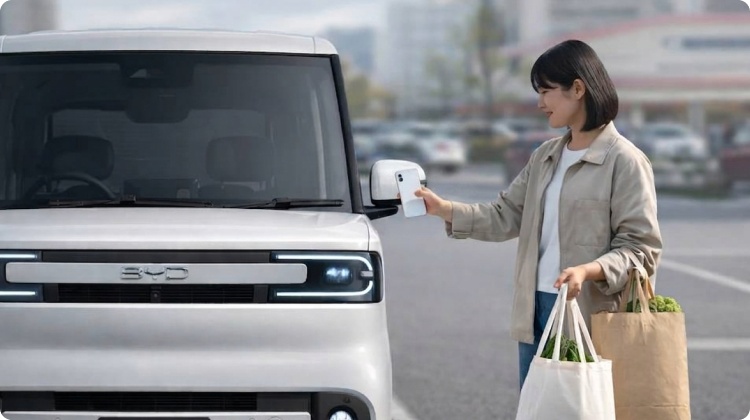
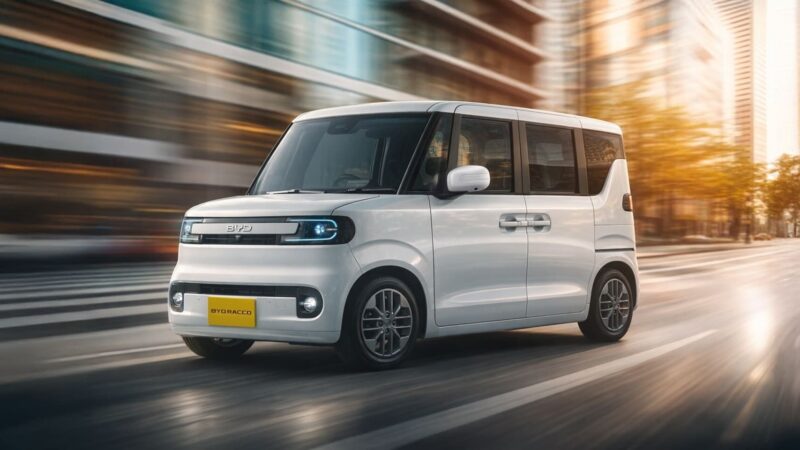
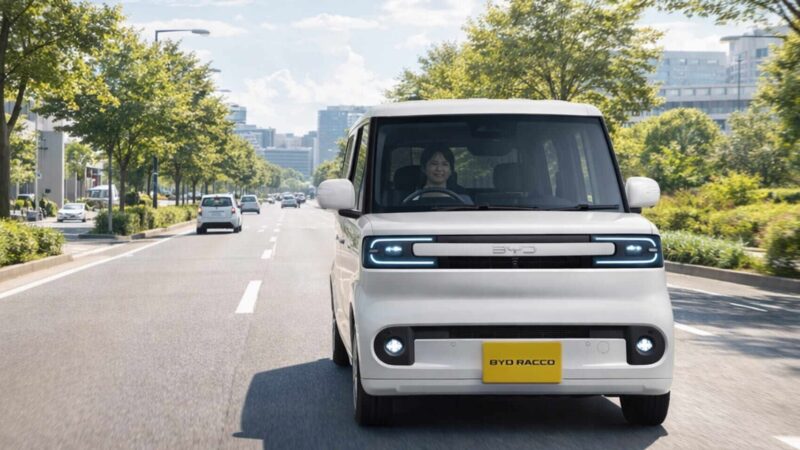
The BYD Racco is a kei car specially developed by BYD for the Japanese market.
Unveiled for the first time at the Japan Mobility Show 2025, the BYD Racco features the following:
Dimensions: 3,395 mm x 1,475 mm x 1,800 mm
Sliding doors on both the left and right
20 kWh LFP battery pack
Driving range of 180 km (WLTC data)
The arrival of the BYD Racco clearly demonstrates that the prominent Chinese brand is serious about producing a vehicle that complies with the dimensional regulations set for the kei car segment in Japan.
This is the fourth generation of Nissan’s kei car, the 2025 Roox.
Notably, this model shares the same platform as the Mitsubishi Delica Mini and the eK Space, which bears a design more similar to the Roox.
The design of the Roox is quite similar to its predecessor; however, it features a new headlight design that conveys a premium MPV image.
Designed based on the ‘Roomy x Max’ concept, the Roox offers a more spacious cabin while maintaining the small dimensions typical of kei cars.
Compared to the previous generation, the overall interior length has increased by 115 mm to 2,315 mm.
In addition, the Roox provides the best knee space in its class, allowing children to comfortably stand to change clothes when the vehicle is stationary.
The cargo space is also quite generous, measuring approximately 675 mm in length, which can accommodate four 48-liter luggage bags.
The sliding door opening is 650 mm wide, while the rear seat can be moved up to 320 mm.
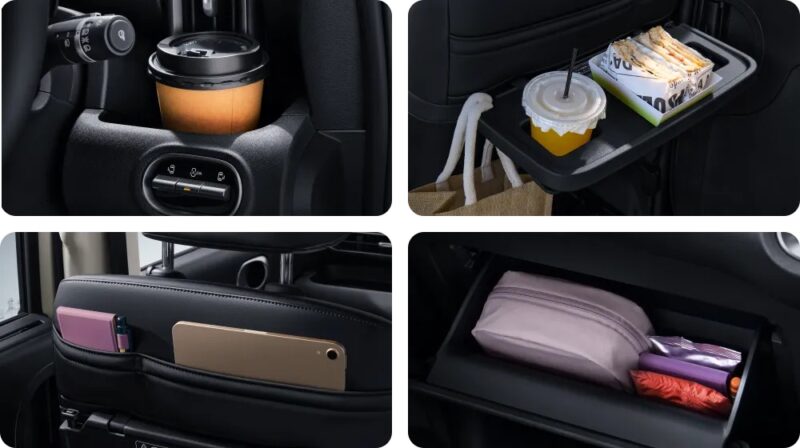
Several additional storage compartments are available, including large cup holders, a glove compartment, a device holder, and a covered space behind the display screen.
Additionally, there is a 12.3-inch display screen, among the largest ever fitted in any kei car.
The Roox also introduces a first for the kei car class: the Intelligent Around View Monitor, featuring the Invisible Hood View function.
The ProPILOT safety system now includes smart emergency braking (AEB), rear cross-traffic alert (RCTA), smart blind-spot collision avoidance (ISB), and blind-spot warning (BSW).
Buyers can choose from up to 17 color options, including six two-tone colors for the Standard and Highway STAR variants.
The estimated starting price is 1.6 million yen (approximately RM46,000).
The engine specifications are likely unchanged, still featuring the 658 cc powertrain that generates 52 hp and 60 Nm of torque.
Mitsubishi Japan has unveiled two kei car models set to launch soon: the new-generation 2025 Delica Mini and 2025 eK Space.
Reservations for both models are now open, with prices starting at approximately 1.95 million yen (RM56,000) for the Delica Mini and from 1.75 million yen (RM50,000) for the eK Space.
Delica Mini
In terms of appearance, one might assume that the second generation of the Delica Mini remains unchanged due to its identical front design. Even the dimensions haven’t changed.
However, upon closer inspection, it can be said that nearly all body panels have been redesigned.
The headlights, featuring a U-shaped graphic, are now larger, accompanied by a thicker grille structure and Dynamic Shield elements that match the body color.
The A-pillar has also become more vertical to create a roomier cabin space.
The hood, front fenders, and doors now showcase distinct body lines, while the D-pillar is thicker compared to the previous model.
According to Mitsubishi, the new Delica Mini features Kayaba Prosmooth shock absorbers, which also come with different settings for the all-wheel drive model.
Inside the cabin, the dashboard layout has been updated, featuring a seven-inch cluster screen and a central 12.3-inch screen integrated into a single panel, along with a newly designed two-spoke steering wheel.
In the center, there is a rotary dial for selecting driving modes, including Power, Normal, Eco, Gravel, and Snow.
Lastly, the Delica Mini is equipped with an Advanced Driver Assistance System (ADAS) and a surround monitoring system that utilizes four camera sensors.
eK Space
The eK Space is a third-generation model introduced alongside the Delica Mini.
Unlike the Delica Mini, the eK Space presents a more elegant front without rugged elements such as body cladding and a skid plate.
The cabin layout is similarly designed to the Delica Mini, but the eK Space offers only three driving modes: Power, Normal, and Eco.
No details have been disclosed regarding the engines to be used in either the Delica Mini or the eK Space.
The previous Delica Mini was available with a choice of a naturally aspirated three-cylinder 658 cc engine producing 51 hp, or a turbo engine generating 63 hp.
Introducing the smallest electric car produced by Honda: the Honda N-One e:.
With dimensions that place it within the kei car class, it replaces the Honda e, which ceased production in January of last year.
Here are some key facts you should know:
1. Honda’s second electric kei car
This is not the first ultra-compact electric car, as Honda previously launched the commercial EV N-Van e: last year.
The specifications of the N-One e: are expected to mimic those of the N-Van e:, featuring a single electric motor that drives the front wheels (64 hp).
2. Driving Range
Equipped with a 29.6 kWh battery pack, the N-Van e: can travel up to 245 km; however, when paired with the N-One e:, it has an estimated range of over 270 km based on WLTC data.
The N-Van e: also supports DC fast charging at 50 kW, allowing the battery to charge in 30 minutes or 4.5 hours using AC charging at 6.0 kW.
3. Nostalgic features from the 1960s
Honda employs the e:Daily Partner approach for the N-One e, offering an attractive exterior design along with a spacious cabin.
The N-One e: also provides the benefit of easy handling—evoking features from Honda’s classic kei car, the N360, of the 1960s and 70s.
4. Cabin space
The cabin of the N-One e: follows the Man Maximum Machine Minimum philosophy, showcasing a minimalist design.
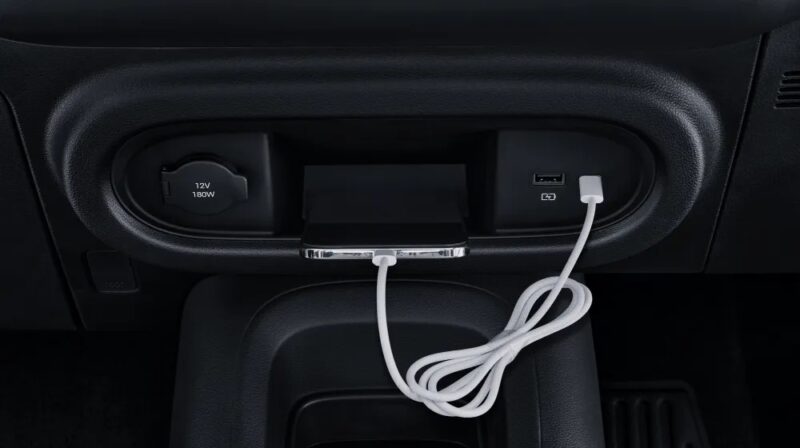
It comes with an LCD cluster screen, a nine-inch central display, USB charging ports, a PRND selection button, and central climate controls, along with a two-spoke steering wheel similar to that of the N-Van e:.
Practicality is enhanced by a small tray on the dashboard, cup holders in the driver’s area and center console, as well as foldable rear seats to suit various needs.
5. Variations
Two variants are offered for the Japanese market: the e: L, which is more fully equipped, and the base e: G.
Both variants come standard with front and rear LED lights and an ADAS system (complete with cameras).
The base e: G features 14-inch steel rims with hub covers.
Its cabin appears more minimalist, as it includes only a simple audio system with Bluetooth support.
The e: L variant, on the other hand, is equipped with sporty 14-inch six-spoke aluminum rims and a cabin that includes the infotainment screen mentioned in point four.
6. Honda Access Accessories
As always, no Honda car offering would be complete without a wide array of accessories.
Honda Access provides a V2L adapter kit that offers up to 1,500W of power for emergency use.
A charging indication light module is also available, allowing owners to see the battery charge level from outside, even when the car is locked.
The Premium Style package adds decorative racing stripes to the hood, tailgate, sides of the car, and front grille.
7. Sales
Honda Japan will begin sales of the N-One e: starting this September.
Interestingly, this kei car will also make its official debut in the European market at the IAA event in Munich during the same month.
Here it is: the new generation of the popular kei car, the Daihatsu Move, which was supposed to be launched two years ago.
However, the launch was delayed due to a safety scandal involving the brand.
The 2025 Daihatsu Move is equipped with a 658 cc three-cylinder engine, available in two variants.
The naturally aspirated (NA) unit generates 51 hp at 6,900 rpm and 60 Nm of torque at 3,600 rpm, while the turbocharged unit produces 63 hp at 6,400 rpm and 100 Nm of torque at 3,600 rpm.
Unfortunately, there is no manual transmission option available; buyers can only choose the CVT gearbox, but with options for either front-wheel drive or all-wheel drive (AWD).
In terms of dimensions, the Move retains a length of 3,395 mm, but the wheelbase is now 5 mm longer at 2,460 mm.
It also now uses the DNGA platform (the same platform as the Hijet and Atrai), featuring a more modern and practical exterior design.
For instance, it has a neater headlight unit and grille, a sportier front bumper, and sliding rear passenger doors.
At the rear, the taillight housing is now smaller in size.
Inside the cabin, features include analog gauges with a MID screen in the center, a choice of 7, 9, or 10-inch infotainment screen, climate control with a digital screen, a wireless device charging slot, and several small storage compartments.
In Japan, buyers can choose from the Dandy Sport or Noble Chic exterior packages, as well as the Move RS variant (turbo engine) which adds a sport suspension package and 15-inch wheel designs.
The selling price starts from ¥1,358,500 (RM39,919) to ¥2,044,000 (RM60,108).
CarNewsChina reports that BYD is currently developing a prototype of a mini-sized electric vehicle with one goal: to capture Japan’s kei car market.
Although still covered in camouflage stickers, the car showcases features such as sliding rear doors, twin A-pillars, and a relatively high window glass housing structure.
This demonstrates BYD’s seriousness in creating a product that complies with the dimensional regulations set for the kei car segment in Japan.
For your information, the kei car segment is a category of ultra-compact cars in Japan, with a maximum length of 3.4 meters, a width of 1.48 meters, and a height of 2 meters.
Furthermore, engine power is limited to a maximum of 64 hp according to the agreement of the Japan Automobile Manufacturers Association (JAMA).
Although BYD currently offers the Seagull as its smallest EV, its size is still too large to be categorized as a kei car.
According to reports from China, BYD’s electric ‘kei car’ will be equipped with a 20 kWh battery that offers a range of about 180 km (WLTC data), along with support for fast charging at 100 kW.
BYD plans to produce this electric kei car in China for export to the Japanese market starting in late 2026, with the ambition to capture 40 percent of the electric kei car market within a few years.
Currently, the kei car market in Japan offers two EV models: the Nissan Sakura and its twin, the Mitsubishi eK X EV.
Both models were launched in 2022, equipped with a 64 hp electric motor producing 195 Nm of torque, and a 20 kWh battery pack with a driving range of up to 180 km.
Despite Honda’s overall sales figures being difficult to surpass those of the Japanese giant Toyota, at the very least, Honda has managed to prove that it can be the best-selling model there.
The model in question is the Honda N-BOX kei car.
Yes, this boxy car is not only popular among kei car enthusiasts here, but it also holds a significant name and can outshine its competitors.
According to a report from Response JP, the Honda N-BOX recorded sales of 102,226 units during the first half of the fiscal year 2024 (April-September), marking an increase of 1.8 percent compared to the same period last year.
This makes the Honda N-BOX the best-selling car for the third consecutive year!
The second place is held by the kei car Suzuki Spacia (80,179 units), followed by the Toyota Corolla (77,030 units), and the Toyota Yaris (73,052 units).
Impacted by the safety scandal issue, the popular car Daihatsu Tanto dropped three ranks to sixth place, with sales of 53,177 units, marking a decrease of 26.3 percent.
An interesting point coming from the Land of the Rising Sun is the rather slow transition rate to EVs, where EVs only make up 1.3 percent of new vehicle sales, marking a decrease of 0.6 percent.
The Subaru Chiffon is a kei car based on the Daihatsu Tanto that has been available in the Japanese market since 2016.
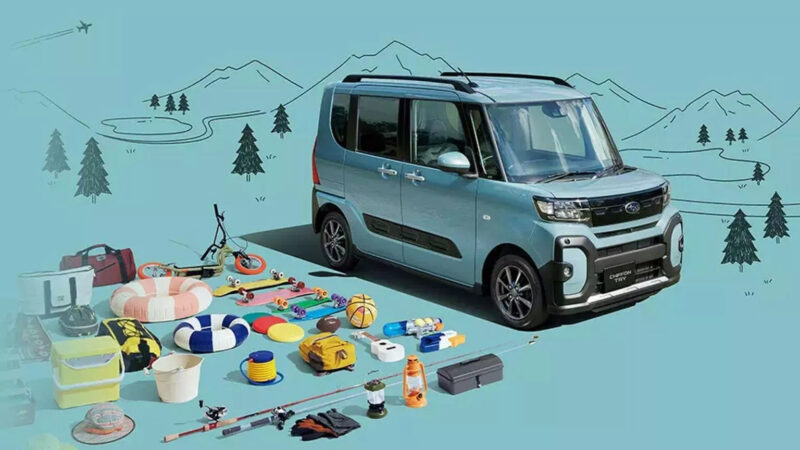
Thanks to a growing interest in outdoor lifestyles, Subaru has now introduced a more rugged version of the Chiffon known as the Chiffon Try.
While the basic shape of the Chiffon remains unchanged, the Try version sports a more robust appearance brought about by a skid plate and black plastic accents on the front bumper, rear bumper, and sides.
Additionally, the car also comes equipped with roof rails. For colour options, there are 11 choices available, including five new colours: Black Mica Metallic/Lake Blue Metallic, Black Mica Metallic/Sand Beige Metallic, Black Mica Metallic/Forest Khaki Metallic, Lake Blue Metallic, and Forest Khaki Metallic.
Measuring approximately 3,395 mm in length, 1,475 mm in width, 1,755 mm in height, and with a wheelbase of 2,460 mm, the Chiffon Try is unmistakably compact.
However, egress and ingress is an easy affair due to the lack of B-pillars. Subaru coins this particular design as the “Miracle Open Door,” which also incorporates electric sliding doors for added convenience.
The interior design is not significantly different from the base version; however, as a variant tailored for outdoor activities, the Chiffon Try features water-resistant upholstery on all seats.
Additionally, the Chiffon Try offers a flexible seating configuration, allowing the front seats to slide back up to 540 mm. The front seats can also be fully reclined, enabling passengers to rest or to accommodate longer items like surfboards.
To maximise rear legroom or cargo space, the rear seats can also slide up to 240 mm.
Powering the Chiffon Try is a 660 cc three-cylinder engine that generates 52 PS and 60 Nm of torque. A CVT is responsible for delivering power to the front wheels, with an all-wheel-drive (AWD) version available for customers as an alternative.
Pricing in Japan starts at 1,665,000 yen (approximately RM48,171) for the 2WD version and 1,765,000 yen (approximately RM51,064) for the AWD version.
Malaysia’s Leading Automotive News | ENGEAR ENGLISH