Tag Archives: Japan

This is the new Honda Freed, two engine choice and with waterproof interior fabric!

WHO still remembers the Honda Freed that previously entered the Malaysian market? The third generation of the Freed has just been launched in Japan with options for a 1.5-liter NA engine and a hybrid variant. Let’s take a closer look at the details.

The 1.5-liter petrol 4-cylinder engine offers 117hp and 142Nm of torque, with a CVT transmission sending power to the front wheels. There is also an option for all-wheel drive.

The hybrid variant is equipped with the e:HEV system, comprising a 1.5-liter engine producing 105hp and 127Nm, paired with an electric motor generating 121hp and 253Nm. This system is similar to the e:HEV found in the City and Civic models.

In terms of dimensions, this new Honda Freed measures 4,310mm in length, 1,720mm in width, and up to 1,780mm in height, with a wheelbase remaining at 2,740mm.

The design of the new Freed is more angular with flat surfaces on the body sides. The front end is more upright, featuring trapezoidal headlights and dotted DRLs. The central grille has only a small opening, while the lower apron is more open.

Visible on the side are sliding rear doors, and there are side lines drawn from the front lights passing through the door handles. Opting for the Crosstar variant provides a unique rugged appearance and styling.

The interior design also appears upright, emphasizing space and practicality. The instrument display is now digital, and the dashboard is wrapped in a fabric finish. According to Honda, the fabric used is water and oil repellent.

Depending on the variant, you can choose a 2+2+2 or 2+3+2 seating configuration, but the Crosstar variant only offers seating for five or six individuals.

The Japanese Honda Freed comes equipped with Honda Sensing safety features, including Autonomous Emergency Braking, Adaptive Cruise Control, Lane Keep Assist, and more. The price starts at 2.5 million Yen (RM73,536).

Would it be interesting to bring this model to Malaysia? We believe it could be a choice for small business owners and weekend adventurers.

Mazda admits to using ‘external device’, modified engine sofware on vehicle testing

Following the safety test scandal of Daihatsu, the Ministry of Land, Infrastructure, Transport and Tourism (MLIT) of Japan has initiated an investigation into other domestic manufacturers.

In an official statement, Mazda stated it had conducted an investigation into all of its 2,403 tests for applications for Type Designation tests performed between January 2014 and January 2024. The investigation results confirmed irregularities in a total of five tests in two test categories.

The irregularities, which were reported to MLIT on May 30, involve 150,878 manufactured vehicles, out of which 149,313 were sold in the domestic market.

According to Mazda, they had used an “external device” in the frontal collision test for the Mazda 6 and Mazda 3, respectively known as Atenza and Axela in Japan.

The devise was used to trigger a timed activation of the airbag instead of spontaneous activation based on collision detection by an onboard sensor.

Even though these models are no longer being produced, Mazda said it has conducted in-house technical verification as well as re-tests, and confirmed that these models have the performance that meets the legal standards for occupant protection performance in the event of a frontal collision.

Additionally, Mazda admitted to using a different engine control software in the petrol engine output test for the MX-5 RF and Mazda 2.

“The test should have been performed using engine control software in the same condition as a mass-production vehicle, but it was conducted by using control software in which the ignition timing adjust function was partially deactivated,” the manufacturer said.

In light of the result, Mazda stated that they will rewrite the engine control software and conduct the tests again under the same conditions as those for mass-production vehicles.

The company assured that the affected units are still safe to drive but have temporarily suspended their sales since May 30.

Gachaco opens public battery sharing service for EV scooters in Japan

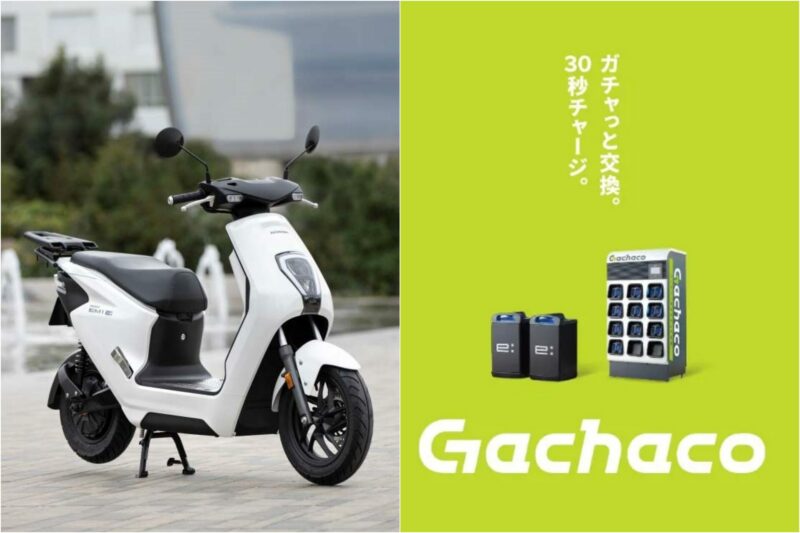
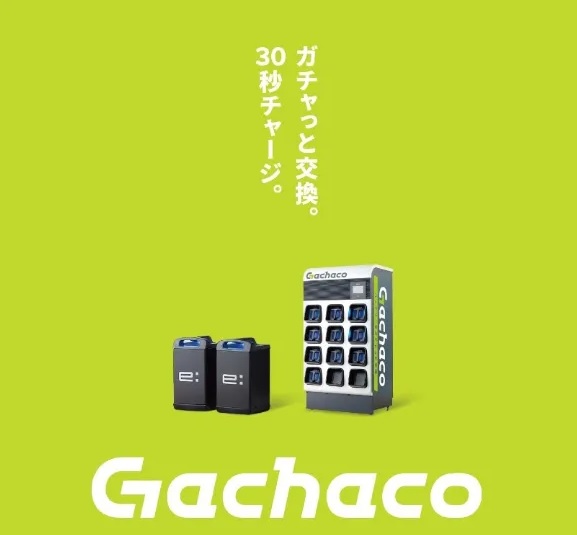
JAPAN’S Big Four Companies (Kawasaki, Suzuki, Yamaha, and Honda) and the energy company Eneos have formed Gachaco, a electric scooter battery swapping service in the Japanese market.

Initially, Gachaco was targeted for business and delivery use only and could only be used for certain models of Honda electric scooters, such as Benly e:, Gyro e:, Gyro Canopy e:, and EM1 e:.

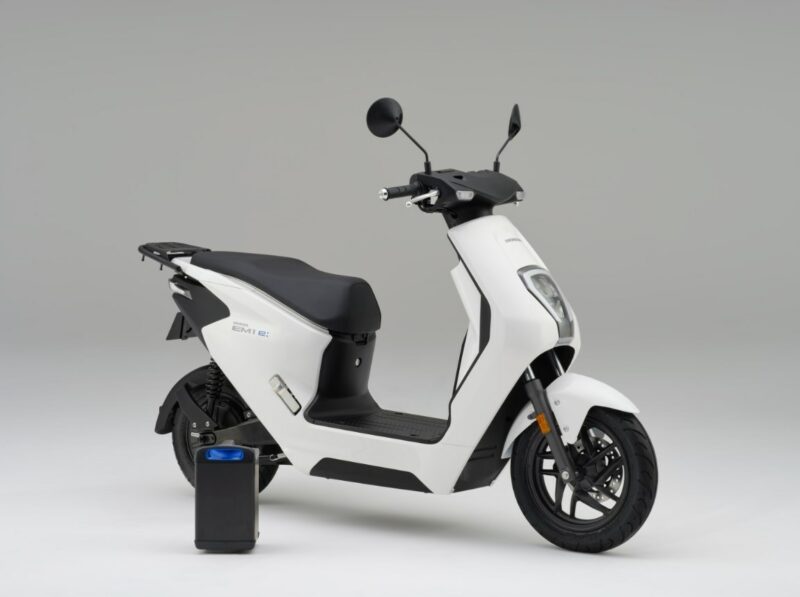
Only the EM1 e: model is available for public purchase, where interested individuals can subscribe to Gachaco’s battery swapping service.

By reclassifying the battery as a service and excluding it from the selling price, Honda customers can obtain the EM1 e: scooter at a lower cost, approximately 97,200 yen (RM3,167).

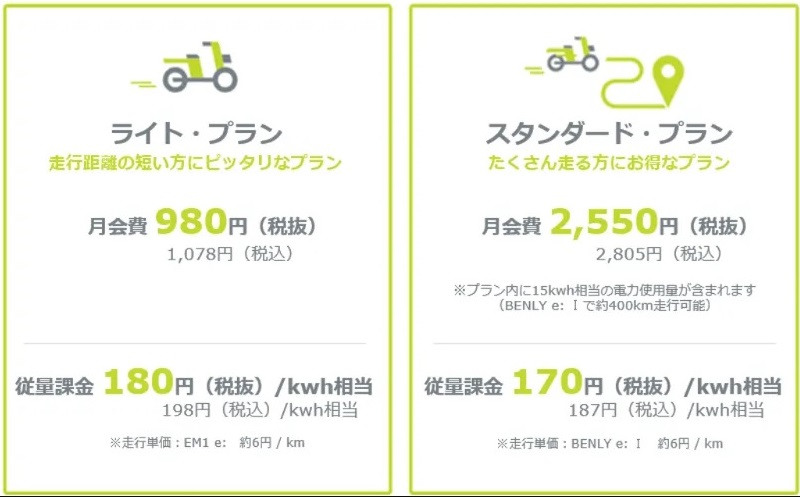
What they need to do is subscribe to Gachaco’s battery swapping service based on their current usage. For example, the basic plan starts at about 1,078 yen per month (RM35 per month), while the standard plan costs 2,805 yen per month (RM91.39 per month).

Gachaco also offers a pay-per-use option for each usage, priced at 180 yen per kWh (RM5.86 per kWh).

At present, the Gachaco battery swapping service, which utilizes the Honda Mobile Power Pack e: unit, is only available in Japan.

Toyota Crown Sport PHEV goes on sale in Japan, 1,200 km on one full tank

THE Toyota Crown Sport, which is one of the four models in the Crown lineup, is now available with a plug-in hybrid (PHEV) powertrain in its home market, where it is priced from 7.65 million yen (RM248,030).

Similar to the hybrid version, the aforementioned powertrain employs the A25A-FXS 2.5-litre Dynamic Force engine, but in this version, the engine is assisted by a pair of electric motors.

On its own, the engine develops 177 PS and 219 Nm of torque, while the front and rear electric motors generate 182 PS/270 Nm and 54 PS/121 Nm, respectively.

The ICE-electric motor combo provides the Crown Sport PHEV with an E-Four all-wheel drive system and a healthy total system output of 306 PS.

With a 51-Ah lithium-ion battery, the SUV is capable of traveling up to 90 km without using a drop of fuel.

Not only that, it is also said to offer a fuel consumption rate of about 20.3 km/l and with a 55-litre fuel tank, it boasts a total cruising range of more than 1,200 km on a full tank.

According to Toyota, the Crown Sport PHEV supports both standard and rapid charging, with the latter enabling a charge to 80% power in 38 minutes.

The exterior may appear to be unchanged from the hybrid version, but underneath the gorgeous sheetmetal lies an additional braces to the floor tunnel to ensure an optimal balance of body rigidity.

Furthermore, the damping characteristics of the Adaptive Variable Suspension (AVS) system have been retuned for smoother and more stable ride.

The Crown Sport PHEV comes standard with 21-inch aluminum rims, 20-inch ventilated disc brakes with red calipers on all four corners, black and red interior colour scheme, paddle shifters and sports seats.

Other features include the Vehicle to Home (V2H) that can provide enough electricity for about 6.5 days of use in emergency situations, and My Room Mode, which allows users to enjoy air conditioning and audio systems from an external power source.