Tag Archives: Japan

2026 Nissan Kicks officially enters Japanese market with e‑Power and e‑4ORCE

The 2026 Nissan Kicks has officially gone on sale in Japan, featuring the brand’s third‑generation e‑Power system and the option of the e‑4ORCE all‑wheel‑drive setup.

For context, the Japanese‑market Kicks is the second‑generation model, which closely resembles the version sold in the United States.

This makes it entirely different from the first‑generation Kicks available in Malaysia, including the first facelift and the second facelift recently introduced in Thailand.

In Japan, the Nissan Kicks e‑Power is priced from 2,999,700 yen (RM76,774) for the 2WD version, going up to 4,248,200 yen (RM108,728) for the range‑topping e‑4ORCE variant.

e‑Power & e‑4ORCE system

In Japan, the Nissan Kicks is offered exclusively with the e‑Power powertrain, which integrates five key components:

  • electric motors
  • generators unit
  • inverters
  • reducers
  • speed-up drivers

The FWD variant uses a 141 hp electric motor, while the e‑4ORCE version adds a second electric motor on the rear axle producing 67 hp.

A 1.4‑litre HR14DDe engine (97 hp/123 Nm) functions solely as a generator to supply power to the electric motors and recharge the battery.

Nissan claims this new setup is 10 percent more energy‑efficient than the previous system.

Exterior & Interior Equipment

As mentioned earlier, the Japanese‑market Kicks adopts a different design from the one we’re familiar with. It takes after the U.S. model, featuring a wider grille and overlapping daytime running lights (DRL).

At the rear, the SUV sports L‑shaped taillight housings with a layered graphic similar to the DRL signature.

Inside, the cabin is equipped with dual 12.3‑inch displays, a dedicated climate control panel, PRND buttons on the centre console, Zero Gravity seats, and a choice of synthetic leather or fabric upholstery.

Safety features under the ProPILOT suite include:

  • Intelligent Around View Monitor
  • Intelligent Emergency Braking (IEB)
  • Intelligent Backward Collision Prevention Support System (IBSI)
  • Backward Vehicle Detection Warning (BSW)
  • Rear Cross Traffic Alert (RCTA)

Nissan Kicks Rock Creek

This is the more rugged Kicks variant developed by Nissan Motorsports & Customize (NMC).

It features a distinctive exterior package that includes silver grille accents, black front bumper trim, Lava Red highlights, an aluminium skid plate, and five‑spoke alloy wheels.

The cabin receives water‑resistant upholstery and Lava Red contrast stitching.

Honda Access launches “Bulldog Style” accessory package for Super-ONE EV

Prospective buyers of the Honda Super-ONE EV can now purchase the “Bulldog Style” genuine accessory package from Honda Access.

This package is designed to highlight a sportier character and the unique personality of this compact EV.

Exciting Accessory List for the Super-ONE

At first glance, the design appears as a tribute to the classic 1983 Honda City Turbo II, affectionately known as the “Bulldog” by its fans.

This resemblance is particularly noticeable in the Bulldog side decals, which reuse the typography of the City Turbo II.

The original model featured the wording “Turbo II With Intercooler,” while the Honda Super-ONE delivers a new era message: “Bulldog With Electric Power.”

Additional features include a sculpted tailgate spoiler for a more aggressive look, dual-color fog lights (available in white or yellow), and 15-inch ME-027 wheels.

Finally, the Super-ONE is enhanced with a black “H” logo package and a dark-finish model name emblem.

Official Launch This Year

Honda is expected to launch this model in the Japanese market by mid-year.

Weighing around 1,090 kg, the Super-ONE EV is one of the lighter electric cars in its class.

It also boasts a lower center of gravity compared to equivalent petrol vehicles, capable of achieving a driving range of 274 km (WLTC data).

This EV additionally offers a special “Boost” driving mode that enhances power output from 63 hp to 94 hp for more dynamic acceleration.

Furthermore, it can simulate a seven-speed gear shift and features an active noise control system that mimics the sound of an internal combustion engine.

According to reports from media partner Paultan, this model is also expected to enter the Malaysian market in the future.

2026 Mitsuoka Ryugi Final Edition: Limited to 20 units, priced from RM83,000 in Japan

Mitsuoka Motor has announced that production of the classic compact sedan Ryugi which has been offered since 2014, will soon come to an end.

Along with this announcement, Mitsuoka has launched the Ryugi Final Edition model with production limited to just 20 units.


Special badge for 20 owners

Overall, the Ryugi Final Edition retains its classic design, featuring a vertical grille, round headlights, and chrome-plated bumpers.

The emblem on the grille and the rear cargo door is crafted using the traditional Japanese technique “Shippo-yaki,” showcasing the handmade touch that is Mitsuoka’s specialty.

Finally, each unit of the Ryugi Final Edition comes with a special closing edition badge on the rear.

This is the only distinction between the standard Ryugi model and the Final Edition.


Specifications of Mitsuoka Ryugi

The Ryugi is built on the 11th generation Corolla sedan, known as the Corolla Axio in Japan.

It measures 4,510 mm in length, 1,695 mm in width, and 1,460 mm in height.

Buyers can opt for a 1.5L NA engine (code 1NZ-FE) that produces 108 hp at 6,000 rpm and 138 Nm of torque at 4,400 rpm.

There is also a self-charging hybrid 1.5L engine version (code 1NZ-FXE) with a total power output of 99 hp.


Price

In Japan, the Mitsuoka Ryugi is priced as follows:

  • Ryugi 15EX – ¥3,305,500 (RM83,360)
  • Ryugi 15EX 4WD – ¥3,424,300 (RM86,356)
  • Ryugi Hybrid EX – ¥3,855,500 (RM97,231)

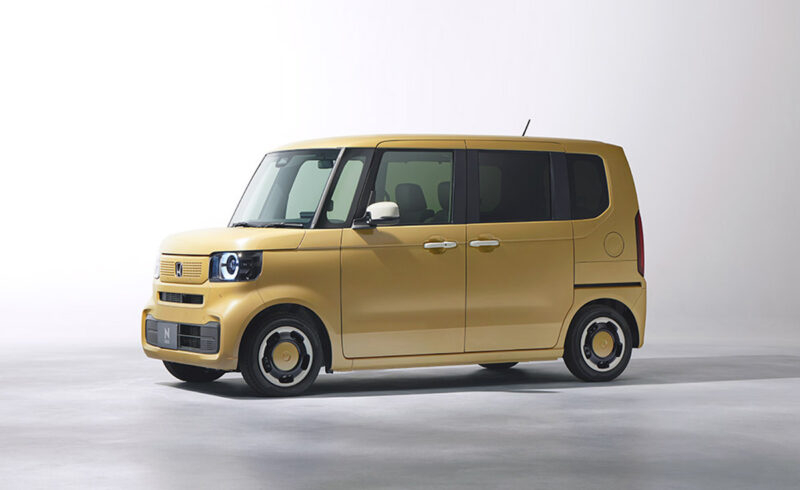
Honda N-Box is the best-selling kei car in Japan for 11 consecutive years!

Honda continues to dominate the light vehicle (kei car) market in Japan.

For the 11th consecutive year since 2015, the Honda N-Box has been crowned the best-selling compact car, with a total of 201,354 units sold throughout 2025.

In December alone, Honda achieved sales of 15,570 units of the N-Box, surpassing the Suzuki Spacia in second place (11,397 units) and the Daihatsu Tanto in third place (9,287 units).

Here are the rankings of the top 10 best-selling kei cars for 2025:

  1. Honda N-Box: 201,354 units
  2. Suzuki Spacia: 165,589 units
  3. Daihatsu Tanto: 124,619 units
  4. Daihatsu Move: 122,349 units
  5. Suzuki Hustler: 87,972 units
  6. Suzuki Wagon R: 72,520 units
  7. Nissan Roox: 71,498 units
  8. Mitsubishi Delica Mini/ek: 58,916 units
  9. Suzuki Alto: 57,553 units
  10. Daihatsu Mira: 55,777 units

Meanwhile, Toyota claimed 8 positions in the list of the 10 best-selling passenger cars in Japan.

The top spot is held by the Toyota Yaris with total sales of 166,533 units, followed by the Toyota Corolla (138,829 units) and the Toyota Sienta (106,558 units).

Not only that, Toyota also dominates the MPV segment with models like the Alphard, Noah, and Voxy.

Honda ranks sixth with the Freed model (90,437 units), while Nissan ranks tenth with the Note model (78,123 units).

Here are the rankings of the top 10 best-selling passenger cars for 2025:

  1. Toyota Yaris: 166,533 units
  2. Toyota Corolla: 138,829 units
  3. Toyota Sienta: 106,558 units
  4. Toyota Raize: 100,851 units
  5. Toyota Roomy: 95,221 units
  6. Honda Freed: 90,437 units
  7. Toyota Alphard: 86,959 units
  8. Toyota Noah: 80,065 units
  9. Toyota Voxy: 78,760 units
  10. Nissan Note: 78,123 units

2026 Nissan Serena facelift launched in Japan, now includes Multi Box variant

The sixth generation of the Nissan Serena minivan (code C28) has been available in the market (except Malaysia) since 2022.

With three years having passed, it’s time for Nissan to update this model, coinciding with its 35th anniversary to be celebrated next year.

Several changes have been introduced in this facelifted version of the Nissan Serena:


Exterior

Compared to the pre-facelift model, the Nissan Serena facelift features a new front grille with an asymmetrical V-pattern design, complemented by newly designed alloy wheels.

Additionally, three new exterior colors are offered: Moonbow Blue, Aqua Mint, and Deep Ocean Blue.


Infotainment Powered by Google

For the first time, the Serena is equipped with the NissanConnect infotainment system powered by Google.

This system supports Google Maps, Google Assistant, and the Google Play Store.

In response to customer demand, Nissan has also added a memory function for the e-Pedal feature, allowing the system to remember the previously set operation modes before the vehicle is turned off.


Safety Enhancements

Safety features have also been improved, particularly the Intelligent Around View Monitor (IAVM), which includes 3D viewing, wide front views, and dual side views when the side mirrors are folded.

The Nissan Serena also includes a reminder function for drivers who may forget to lock the doors, turn off the hazard lights, close the windows, or check the rear seats.


Premium Autech Line Variant

Nissan offers a more premium Autech Line variant, which features:

  • Metallic finishing on the side mirror housings
  • 16-inch dark metallic silver alloy wheels
  • Dark chrome finishing on the front grille
  • Tailor Fit upholstery that is softer and more comfortable


Outdoor-Friendly Multi Box Variant

In addition to seven- and eight-seater variants, the Nissan Serena is also available in a Multi Box variant.

This version features a seating arrangement that accommodates five people at a time, with the third-row seats replaced by a large-capacity storage box.

This storage box can be used as a space for storing items, a bench, or a foldable table.

The area can also be converted into a sleeping space, where users can lay down a mattress made from waterproof Cordura material.


Engine Options: 2.0L NA or 1.5L e-Power

In Japan, the Nissan Serena comes with a choice of a 2.0-liter naturally aspirated (NA) engine that produces 150 PS and 200 Nm of torque.

There is also an e-Power option, which includes a 1.5-liter three-cylinder engine that acts as a power generator for the 163 PS and 315 Nm electric motor.

The facelifted Nissan Serena is priced starting from 2,856,700 yen (approximately RM74,161).

Honda to launch N-Box EV version in 2027 to compete with BYD Racco, Suzuki expected to follow

Honda Motor is planning to introduce an electric version of its N-Box around 2027 to compete with the BYD-made kei car, according to a report by Nikkei Asia.

The Honda N-Box was first launched in Japan in 2011 and has now gone through three generations in the Japanese market.

It has been one of the best-selling vehicles in Japan for three consecutive years, with over 200,000 units sold in 2024.

Honda has not yet decided on the specifications or pricing for the N-Box EV model.

It is clear, however, that the N-Box EV will not entirely replace the role of the internal combustion engine (ICE) version.

For reference, Honda Japan has a similar kei car product, the N-Van e: which is aimed at commercial use and has been on sale since 2024.

The N-Van e: features a single electric motor with a power output of 64 PS and 152 Nm, and offers a driving range of 245 km on a full charge (WLTC data).

In Japan, new electric vehicle (EV) sales accounted for only 2 percent of total vehicle sales throughout 2024.

Of that total, more than 40 percent was dominated by the kei car twins, the Nissan Sakura EV and the Mitsubishi eK X EV.

Both of these EV models share specifications, including an electric motor producing 64 PS/195 Nm, a 20 kWh lithium-ion battery, and a driving range of up to 180 km (WLTC data).

Nissan Sakura EV & Mitsubishi eK X EV

In addition to Honda, Suzuki Motor is also planning to introduce a kei car EV by 2026.

The BYD Racco is a kei car specially developed by BYD for the Japanese market.

Unveiled for the first time at the Japan Mobility Show 2025, the BYD Racco features the following:

  • Dimensions: 3,395 mm x 1,475 mm x 1,800 mm
  • Sliding doors on both the left and right
  • 20 kWh LFP battery pack
  • Driving range of 180 km (WLTC data)

The arrival of the BYD Racco clearly demonstrates that the prominent Chinese brand is serious about producing a vehicle that complies with the dimensional regulations set for the kei car segment in Japan.

Honda Stepwgn celebrates 30th anniversary in Japan

Did you know that the first generation of the Honda Stepwgn minivan was officially launched in May 1996, featuring a simple design aimed at maximizing practicality.

After five generations, the sixth generation of the Stepwgn is making a comeback with a two-box design configuration, boasting a more minimalist aesthetic and the most spacious cabin yet.

In conjunction with the 30th anniversary of the Stepwgn next year, Honda Japan has announced a special edition model available in two variants: AIR EX and SPADA.

Both the AIR EX and SPADA variants include features such as:

  • Multi-view camera system
  • Exit support system
  • LED cabin lights
  • Second-row seat heating
  • Adaptive headlight assist
  • 30th anniversary tag
  • 30th anniversary emblem

The differences between the two variants are as follows:


AIR EX

  • Fabric upholstery with brighter colors
  • Color options: Fjord Mist Pearl, Platinum White Pearl, Meteoroid Gray Metallic, Crystal Black Pearl, and Seabed Blue Pearl
  • Price starting from 4,098,600 yen (RM106,678)


SPADA

  • Leather upholstery
  • Color options: Twilight Mist Black Pearl, Platinum White Pearl, Meteoroid Gray Metallic, Crystal Black Pearl, and Premium Crystal Garnet Metallic
  • Price starting from 4,159,100 yen (RM108,253)

In terms of power, the 2026 Honda Stepwgn is equipped with the e:HEV hybrid powertrain, which consists of a 2.0L i-VTEC engine (143 hp/175 Nm) paired with two electric motors (181 hp/315 Nm).

The total power output reaches 212 hp and 315 Nm, combined with an e-CVT transmission and front-wheel drive system.

For reference, the Honda Stepwgn e:HEV has already entered the neighboring market of Thailand, with estimated prices starting from 1.7 million Baht (RM222,000).

Aspark Owl Roadster now the fastest production car in the world: 0-100 km/h in 1.72 seconds!

Do you want a high-performance car made in Japan with acceleration that outpaces the Rimac Nevera? Consider the Aspark Owl Roadster.

This Japanese engineering company claims that the Owl Roadster EV can accelerate from 0 to 100 km/h in just 1.72 seconds!

With a mere 0.02-second advantage, the Owl Roadster holds the title of the fastest production car in the world.

While another speedster, the McMurtry Speirling, can achieve 0-100 km/h in just 1.40 seconds, it’s important to note that this is not a car intended for road use.

What makes the Aspark Owl Roadster so fast?

First and foremost, it features a carbon monocoque chassis and a full carbon fiber body, weighing a total of 2,050 kg, paired with four powerful electric motors.

It can achieve a top speed of 413 km/h, though it is electronically limited to 350 km/h for road use.

The 69 kWh battery offers a range of over 250 km on a single full charge.

The Owl Roadster comes with four driving modes: Rain-Snow, City-Comfort, Sport-Dynamic, and High Boost.

Driving dynamics are enhanced by double wishbone suspension with adjustable ride height, an active rear wing, a carbon ceramic brake system (10-piston front/4-piston rear), and 20-inch rims shod with Michelin Pilot Sport Cup 2R tires.

Since 2019, Aspark has shifted its production operations to Italy, with the Owl Roadster model limited to just 20 units worldwide.

Each unit is estimated to be worth US$3.5 million (RM14.45 million).

Xiaomi SU7 Ultra makes its first appearance in Japan

Chinese electronics giant Xiaomi has showcased its high-performance electric sedan, the SU7 Ultra for the first time in Akihabara, Japan.

The exhibition event, held from September 26 to 28, also revealed Xiaomi’s future plans.

According to Kyodo News, Xiaomi plans to expand its retail network selling smart devices, home appliances, and mobile phones in several major cities in Japan to strengthen its presence.

Similar to the approach taken in China, Xiaomi will also sell electric vehicles (EVs) through Xiaomi stores, although no specific launch date for the model has been announced.

Currently, Xiaomi has opened two branches in Saitama Prefecture and plans to add three more outlets in Tokyo, including one in Chiba, by the end of this year.

The starting price for the Xiaomi SU7 Ultra is 529,900 yuan (approximately RM314,000).

Additionally, Xiaomi has launched a 1:18 scale die-cast model for the SU7 series, priced at 14,800 yen (approximately RM420) for the standard version and 16,800 yen (approximately RM477) for the SU7 Ultra version.

2025 Nissan Roox offers spacious cabin despite compact dimensions

This is the fourth generation of Nissan’s kei car, the 2025 Roox.

Notably, this model shares the same platform as the Mitsubishi Delica Mini and the eK Space, which bears a design more similar to the Roox.

The design of the Roox is quite similar to its predecessor; however, it features a new headlight design that conveys a premium MPV image.

Designed based on the ‘Roomy x Max’ concept, the Roox offers a more spacious cabin while maintaining the small dimensions typical of kei cars.

Compared to the previous generation, the overall interior length has increased by 115 mm to 2,315 mm.

In addition, the Roox provides the best knee space in its class, allowing children to comfortably stand to change clothes when the vehicle is stationary.

The cargo space is also quite generous, measuring approximately 675 mm in length, which can accommodate four 48-liter luggage bags.

The sliding door opening is 650 mm wide, while the rear seat can be moved up to 320 mm.

Several additional storage compartments are available, including large cup holders, a glove compartment, a device holder, and a covered space behind the display screen.

Additionally, there is a 12.3-inch display screen, among the largest ever fitted in any kei car.

The Roox also introduces a first for the kei car class: the Intelligent Around View Monitor, featuring the Invisible Hood View function.

The ProPILOT safety system now includes smart emergency braking (AEB), rear cross-traffic alert (RCTA), smart blind-spot collision avoidance (ISB), and blind-spot warning (BSW).

Buyers can choose from up to 17 color options, including six two-tone colors for the Standard and Highway STAR variants.

The estimated starting price is 1.6 million yen (approximately RM46,000).

The engine specifications are likely unchanged, still featuring the 658 cc powertrain that generates 52 hp and 60 Nm of torque.

Nissan may need to sell HQ in Japan to survive

Nissan is reportedly facing the possibility of selling its headquarters building located in the Minato-Mirai 21 district of Yokohama, Japan.

A report from Nikkei Asia claims that the headquarters building has been listed as one of the assets Nissan needs to divest by the end of March 2026.

The newly appointed CEO of Nissan, Ivan Espinosa, announced that there are several assets of Nissan that are set to be sold, although he did not specifically mention the headquarters complex.

According to a local real estate agent, the Nissan headquarters complex is estimated to be worth over 100 billion yen, or approximately RM2.95 billion.

Even if Nissan no longer owns the building, the company will continue to lease the property from the new owner to maintain its operations as usual.

This approach is similar to what McLaren employed after the supercar manufacturer sold its headquarters located in Woking as a way to reduce debt.

The sale of the headquarters building is one of the strategies Nissan is implementing to significantly cut costs after facing a loss of $4.5 billion (RM18.95 billion) last year.

Nissan will also be closing up to seven global factories, including two domestic plants (known as the Oppama and Shonan plants), and will lay off 20,000 workers.

Additionally, development for certain models will be halted, and the company plans to streamline its existing platforms to just seven in order to reduce parts complexity by up to 70 percent.

BYD’s ultra-compact EV spied undergoing testing, aiming for Japan’s kei car market

CarNewsChina reports that BYD is currently developing a prototype of a mini-sized electric vehicle with one goal: to capture Japan’s kei car market.

Although still covered in camouflage stickers, the car showcases features such as sliding rear doors, twin A-pillars, and a relatively high window glass housing structure.

This demonstrates BYD’s seriousness in creating a product that complies with the dimensional regulations set for the kei car segment in Japan.

For your information, the kei car segment is a category of ultra-compact cars in Japan, with a maximum length of 3.4 meters, a width of 1.48 meters, and a height of 2 meters.

Furthermore, engine power is limited to a maximum of 64 hp according to the agreement of the Japan Automobile Manufacturers Association (JAMA).

Although BYD currently offers the Seagull as its smallest EV, its size is still too large to be categorized as a kei car.

According to reports from China, BYD’s electric ‘kei car’ will be equipped with a 20 kWh battery that offers a range of about 180 km (WLTC data), along with support for fast charging at 100 kW.

BYD plans to produce this electric kei car in China for export to the Japanese market starting in late 2026, with the ambition to capture 40 percent of the electric kei car market within a few years.

Currently, the kei car market in Japan offers two EV models: the Nissan Sakura and its twin, the Mitsubishi eK X EV.

Both models were launched in 2022, equipped with a 64 hp electric motor producing 195 Nm of torque, and a 20 kWh battery pack with a driving range of up to 180 km.

This Toyota GR Supra final edition features more upgrades than Malaysian spec Supra

First revealed in November last year, Toyota Gazoo Racing has officially announced the sales of the GR Supra A90 Final Edition for the Japanese market.

Only 300 units of this Final Edition model will be produced, with 150 units allocated for the Land of the Rising Sun, and the remaining units will be sold in the European market.

What makes the GR Supra A90 Final Edition particularly special is the standard features it offers directly from the factory, compared to the regular GR Supra model.

In terms of performance, the GR Supra A90 Final Edition is equipped with a B58 engine that has been upgraded to deliver 441 PS and 571 Nm of torque, compared to the standard 387 PS and 500 Nm.

Toyota has also optimized the intake and cooling systems, culminating in a titanium Akrapovic exhaust unit.

Moreover, the chassis of the GR Supra has been reinforced with the addition of brace structures in several locations, followed by front and rear stabilizer bars crafted from reinforced aluminum.

KW adjustable suspension is utilized at all four corners, with the camber angle adjusted for both the front and rear wheels.

Contributing to improved handling are the active differential control and an optimized electronic steering system.

The 19-inch front and 20-inch rear aluminum rims are fitted with wider Michelin Pilot Sport Cup 2 tires, which are 10 mm wider than the standard settings.

The exterior appearance of the GR Supra A90 Final Edition is enhanced by carbon fiber components like the front spoiler and canards, along with a “ducktail” rear wing.

Inside the cabin, there are full Recaro Podium CF bucket seats, red seatbelts, and extensive carbon fiber and Alcantara trim that dominate the interior space.

With the improvements offered in this model, it’s no surprise that Toyota has set a sales price of approximately 15,000,000 yen (RM 443,000), which is higher than that of the GR Supra RZ grade.

Interested parties can register at all GR Garage locations across Japan starting April 13; however, buyers will be selected via a lottery system. Winners (a.k.a the rightful owners) will be announced on May 9.

Toyota Crown Estate HEV & PHEV officially launched in Japan

The sixteenth generation of the Toyota Crown family is now available in Sedan, Crossover, and Sport versions.

If you’re looking for a much more practical Crown, the Crown Estate is the answer you need.

Toyota Japan has officially begun sales of the Crown Estate, which comes with the option of a hybrid electric vehicle (HEV) or plug-in hybrid electric vehicle (PHEV) powertrain.

Both systems utilize a 2.5-liter engine (code A25A-FXS) paired with two electric motors and an E-Four all-wheel-drive system.

In the Crown Estate HEV, the front motor output is enhanced by 50 percent compared to the Crossover and Sport models, aimed at improving acceleration, especially when carrying passengers.

Meanwhile, the Estate PHEV version is equipped with a lithium-ion battery pack that allows for a zero-emission driving range of up to 89 km.

Built on the TNGA-K platform, the Toyota Crown Estate measures 4,930 mm in length, 1,880 mm in width, 1,625 mm in height, with a wheelbase of 2,850 mm.

The suspension system features MacPherson struts in the front, followed by Multi-link setup in the rear.

Driving dynamics are enhanced with the inclusion of a Dynamic Rear Steering (DRS) system for more agile handling, as well as Adaptive Variable Suspension (AVS) to ensure passengers remain comfortable and enjoy a high-quality ride.

The exterior design of the Crown Estate follows the design language shared with its siblings.

The front features hammerhead shark-like elements with thinner daytime running lights, a neatly integrated grille structure in the bumper, and 21-inch wheels.

The cabin layout is similar to what is featured in the Crossover, Sport, and Sedan models, with a 12.3-inch cluster display paired with a similarly sized infotainment screen.

Using an island architecture, the dashboard layout is designed to minimize eye movement during driving.

The Crown Estate’s cargo space can accommodate up to 570 liters of goods, or up to 1,470 liters with the second-row seats folded flat.

Toyota also offers special items for this model, including seat cushions and a small table to use in that space, especially when engaging in outdoor activities.

In Japan, the Toyota Crown Estate is priced starting at 6,350,000 yen (RM190,457) for the HEV version, and can reach up to 8,100,000 yen (RM242,945) for the PHEV version.

Toyota Land Cruiser was a favorite among thieves in Japan last year

We’re accustomed to hearing about Toyota’s success, particularly regarding sales performance and customer reliability.

However, in Japan, Toyota reportedly topped the charts for the most stolen vehicles throughout 2024, dominating the top ten spots!

According to data from the Japan General Insurance Association, the Toyota Land Cruiser (including the Prado model) has topped the list for the fourth consecutive year.

In 2024, there were 688 reported Land Cruiser thefts, accounting for 27.5 percent of every 100 vehicles stolen.

This means more than one in four vehicles stolen were Land Cruiser models.

The Alphard minivan took second place with 289 cases, followed by the Toyota Prius (235) in third. The Lexus LX ranked fourth (109), the Lexus RX fifth (89), Toyota Crown (62), Toyota Hiace (43), Toyota Vellfire (38), Lexus LS (34), and finally, the Toyota Voxy (21).

According to the data, Land Cruiser thefts in 2024 increased significantly compared to 2023 (383 cases), contributing to a total of 2,499 theft cases overall.

Suzuki Jimny Nomade lands in Japan, imported from India, priced from RM76k

Suzuki has officially launched a more practical five-door off-road SUV variant of the Jimny, known as the Jimny Nomade for the Japanese market.

Compared to the three-door Jimny Sierra still available there, the Jimny Nomade measures 3,890 mm in length, making it 340 mm longer, and resulting in a wheelbase of 2,590 mm.

The benefits? More spacious rear passenger seating, as well as increased cargo capacity, making it more practical.

The Jimny Nomade can be distinguished by its honeycomb grille structure with a Gun Metallic finish, as well as new color options including Sizzling Red Metallic and Celestial Blue Pearl Metallic.

In terms of power, the Suzuki Jimny Nomade retains the 1.5-liter engine that produces 103 hp and 134 Nm of torque, paired with either a 5-speed manual transmission or a 4-speed automatic transmission.

Additionally, the Jimny Nomade comes standard with a part-time four-wheel drive (4WD) system and maintains a 36-degree approach angle and a 47-degree departure angle.

In Japan, Suzuki sells the Jimny Nomade starting at ¥2,651,000 (approximately RM75,643).

For reference, the Suzuki Jimny Nomade is a completely imported unit from the Gurugram assembly plant in India, unlike the Jimny Sierra (3-door variant) which is assembled in Japan.

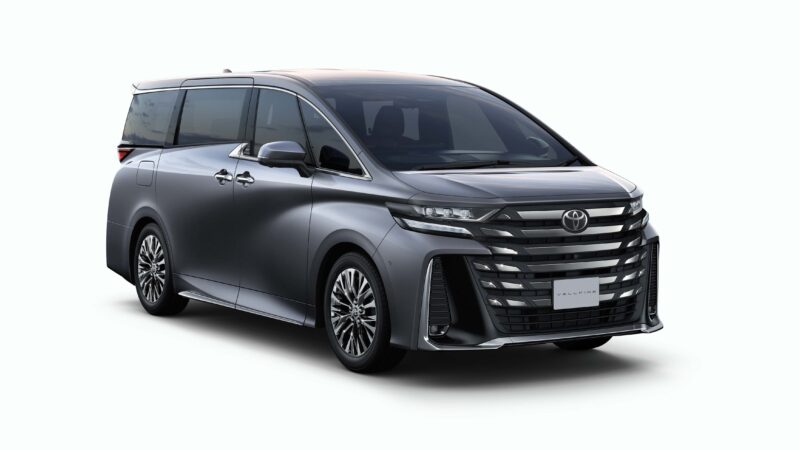
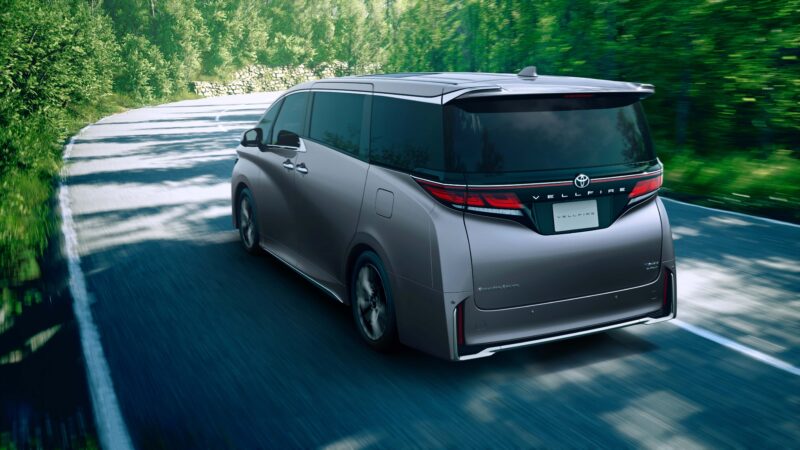
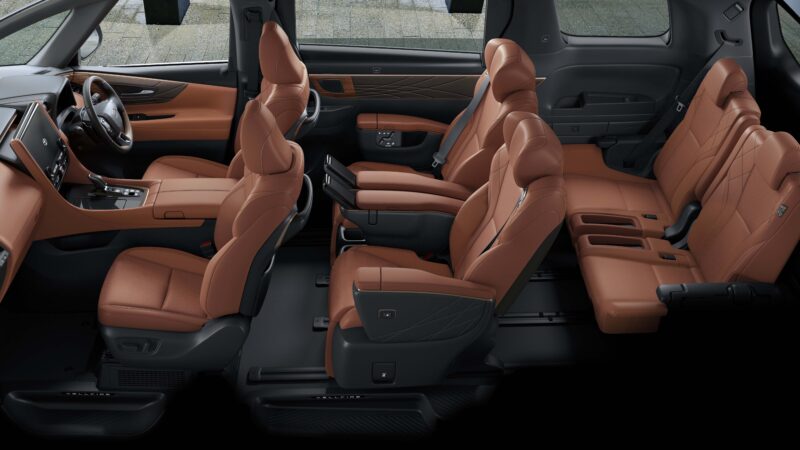
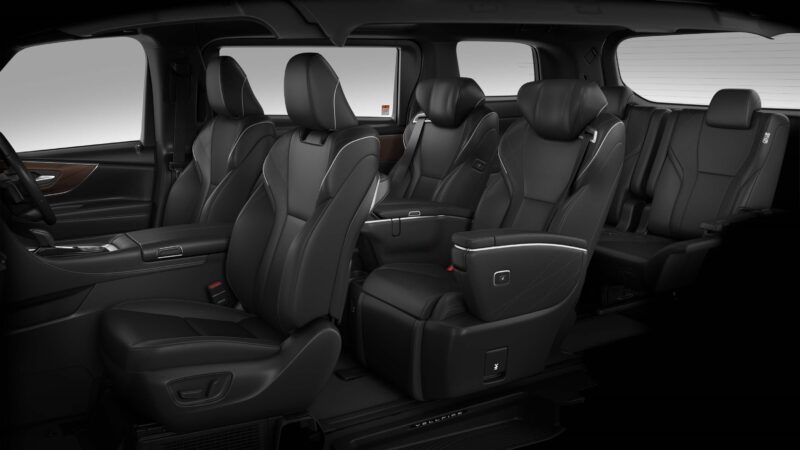
Toyota Alphard/Vellfire PHEV launched in Japan, 73 km EV range, starting from RM306k

Toyota has announced its latest update, introducing the 2025 model year Alphard/Vellfire with a plug-in hybrid (PHEV) engine option.

This PHEV configuration combines a 2.5-liter engine (A25A-FXS) with an electric motor and a lithium-ion battery, capable of providing an electric driving range of up to 73 km on a full charge.

Overall, the system can generate a power output of up to 306 PS.

Like Toyota’s conventional hybrid vehicles, the BEV mode is prioritized to achieve lower fuel consumption rates of 16.7 km/liter (or 5.98 liters/100 km).

According to Toyota, the lithium-ion battery pack is positioned under the floor to maximize cabin space and lower the center of gravity by 35 mm compared to the HEV model.

Charging the battery (up to 80 percent) takes approximately 38 minutes.

In addition to offering a quieter driving experience (with added sound insulation), enhanced comfort, and reduced vibrations, Toyota has introduced the Smooth Stop control feature, which prevents nose-dive effects during deceleration to ensure passenger comfort.

The PHEV model also features “My Room Mode,” allowing users to enjoy a comfortable cabin space for working, resting, or engaging in other activities while charging.

Along with the Vehicle-to-Load (V2L) function, both the Alphard and Vellfire PHEVs are equipped with a Vehicle-to-Home (V2H) feature for emergency purposes, where a full tank of fuel and a charged battery can provide power for up to 5.5 days.

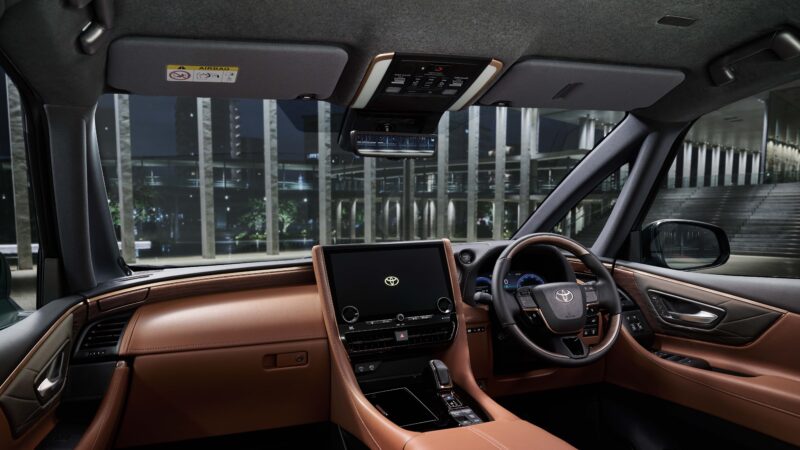
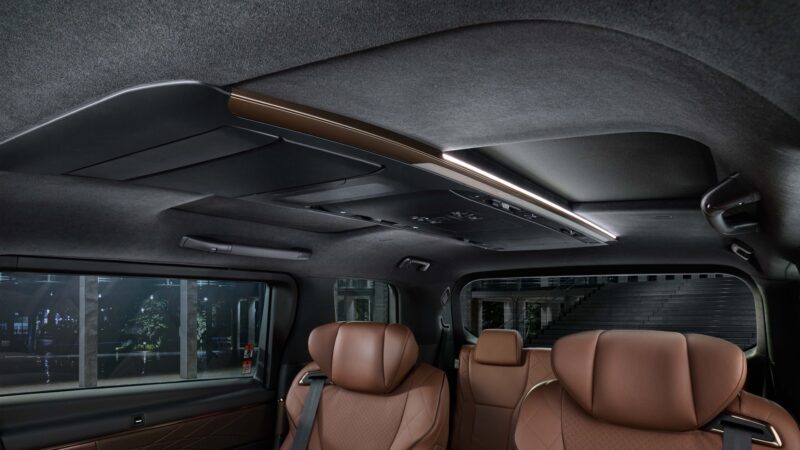
Other enhancements include a Digital Inner Mirror system and front and rear dash cameras as standard features, followed by a premium JBL audio system with 15 speakers and a 14-inch rear infotainment system for the Z and Z Premier trims.

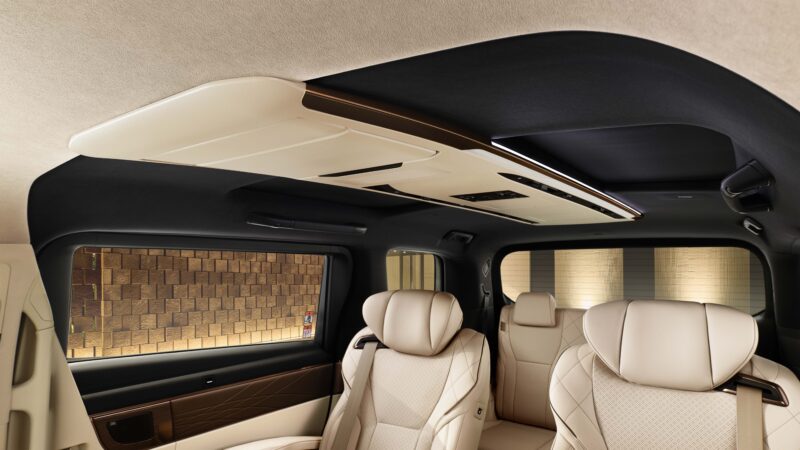
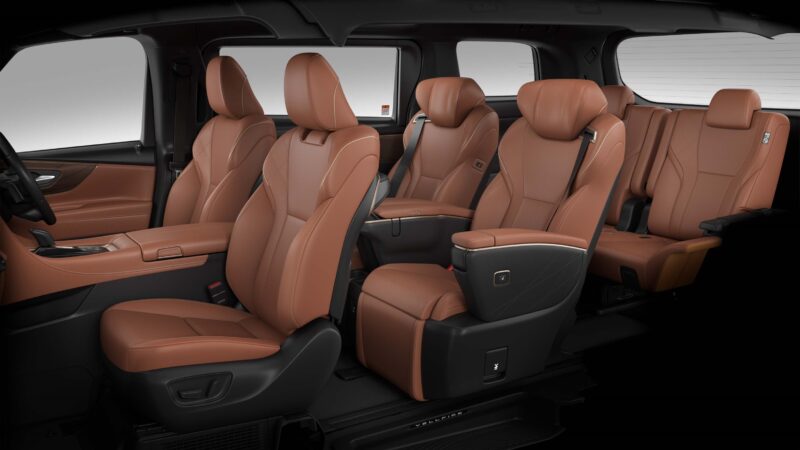
Toyota Auto Body also offers the Alphard Spacious Lounge, a four-seat version that provides more legroom and is equipped with various luxurious amenities.

In Japan, the retail price of the Alphard PHEV starts at JPY 10,650,000 (RM306,177), while the Vellfire PHEV is priced from JPY 10,850,000 (RM311,927).

Honda N-BOX still remains the best-selling car in Japan

Despite Honda’s overall sales figures being difficult to surpass those of the Japanese giant Toyota, at the very least, Honda has managed to prove that it can be the best-selling model there.

The model in question is the Honda N-BOX kei car.

Yes, this boxy car is not only popular among kei car enthusiasts here, but it also holds a significant name and can outshine its competitors.

According to a report from Response JP, the Honda N-BOX recorded sales of 102,226 units during the first half of the fiscal year 2024 (April-September), marking an increase of 1.8 percent compared to the same period last year.

This makes the Honda N-BOX the best-selling car for the third consecutive year!

The second place is held by the kei car Suzuki Spacia (80,179 units), followed by the Toyota Corolla (77,030 units), and the Toyota Yaris (73,052 units).

Impacted by the safety scandal issue, the popular car Daihatsu Tanto dropped three ranks to sixth place, with sales of 53,177 units, marking a decrease of 26.3 percent.

An interesting point coming from the Land of the Rising Sun is the rather slow transition rate to EVs, where EVs only make up 1.3 percent of new vehicle sales, marking a decrease of 0.6 percent.

Honda confirms Super Cub model will not disappear

About two weeks ago, several Japanese media outlets reported that Honda would terminate the production of motorcycles with a displacement of 50 cc and below by May 2025.

As a result, it also sparked some commotion in the Land of the Rising Sun, as some claimed that the production of the Super Cub model would also be completely discontinued.

In a latest report by Young Machine, only the production of the 50 cc version of the Super Cub model will be affected.


Meanwhile, production for the 110 cc and 125 cc versions of the Super Cub model will continue as usual.

According to Honda’s motorcycle business unit leader, Minoru Kato, he also confirmed that they are currently developing a new Super Cub model that can meet stricter emission standards as a replacement for the 50 cc Super Cub model.

In accordance with the new framework expected to be implemented by November 2025, moped license holders (with a limit of 50 cc) will be allowed to ride motorcycles with a displacement of 125 cc and below, provided that the power output of the model is limited to only 4 kW (5.4 hp).

Japan wants to build a 500 km conveyor belt system to address truck driver shortage

Those who have traveled abroad are surely impressed by the efficiency of staff and machinery at airports in handling hundreds to thousands of bags in a day. Now, imagine the same system, but over a longer distance.

Yes, that is one of the solutions being proposed by the Japanese Ministry of Transport in an effort to address the increasingly acute shortage of truck drivers each year. According to Japan News, a system called Autoflow Road, or simply a conveyor belt system, will be built to connect Tokyo and Osaka over 500 km for the purpose of distributing cargo.


This conveyor belt system can be built adjacent to existing main roads or using underground routes. With continuous operation every day, theoretically, this system can handle the same cargo delivery capacity made by 25,000 truck drivers in a day.

As previously reported, Japan is expected to face a shortage of up to 36 percent of the workforce needed to handle 1.40 billion tons of cargo by 2030. By potentially reducing up to 25,000 trucks from the roads, it may help alleviate traffic congestion, reduce emission levels, and mitigate the impact of the labor shortage crisis.


The use of a conveyor belt system is not unfamiliar, as Japan itself already uses a similar method to transport limestone over 23 km. The main challenge, of course, is the construction cost.

According to a study conducted by a construction company, the cost of building an underground tunnel starts from ¥7 billion (RM204 million) and could reach up to ¥80 billion (RM2.3 billion) for every 10 km. Therefore, the total cost of building a system connecting Tokyo and Osaka could potentially reach up to ¥3.7 trillion (RM108.2 billion)!