— ∬なのぽよ∬🧪🗿 💬🔁💙 𝙉𝙚𝙭𝙩→? (@You_SuiKoyoAZ) July 22, 2026
The “new Toyota MR2” is expected to be powered by a newly developed G20E inline‑four engine.
More compact than the current 2.4‑litre turbo unit, the G20E is reportedly capable of producing around 300 hp and 400 Nm, with higher‑output versions potentially reaching up to 400 hp and 550 Nm.
Interestingly, the upcoming MR2 is not expected to follow the original recipe of a mid‑engine, rear‑wheel‑drive setup.
Instead, it is said to adopt an all‑wheel‑drive system equipped with front and rear Torsen limited‑slip differentials.
GR Lineup Continues to Grow
Premières images de la Toyota WRC27 en essais au Portugal #WRC
Four years after the introduction of the Toyota GR Corolla, a more hardcore version is now available in the form of the GRMN Corolla.
Like previous GRMN models, the development of the GRMN Corolla focused on the Nurburgring circuit, incorporating experiences drawn from motorsport involvement.
It features a stiffer chassis, increased power, a more extreme body kit, and most importantly, it now accommodates only two passengers.
More Aerodynamic
The standard GR Corolla already has a stiffer chassis structure, thanks to the addition of adhesive structures totaling 13.9 meters to 32.7 meters.
The GRMN version builds on this foundation and adds aerodynamic components for high-speed driving, such as engine hood vents, fender vents, and a front spoiler.
Additionally, the carbon fiber rear wing includes a manual adjustment mechanism with 1-degree increments across five settings.
Exclusive Suspension Tuning
This hot hatch also comes equipped with specially tuned suspension for better grip when cornering at high speeds.
Each component has been adjusted down to the millimeter to ensure optimal balance.
Driving dynamics are further enhanced by the use of wider Michelin Pilot Sport Cup 2 tires, which are 10 mm larger than those on the standard GR Corolla.
Finally, the GRMN Corolla is equipped with a recalibrated EPS steering system and GR-Four drivetrain for improved driving stability.
More Powerful Engine
In addition to its chassis and handling improvements, Toyota has upgraded the existing engine to produce an impressive 300 hp and 415 Nm of torque!
These figures are attainable thanks to involvement in the Super Taikyu Series through the GR Corolla, which is paired with a hydrogen-powered engine.
To maintain performance stability, the GRMN Corolla is also equipped with an additional intercooler spray system.
Currently, the GRMN Corolla is exclusively offered with a 6-speed manual transmission (iMT).
Lighter Weight
As part of its weight reduction package, Toyota has removed the rear seats.
As a result, the GRMN Corolla is 30 kg lighter than the GR Corolla, contributing to a better power-to-weight ratio.
Driver-Friendly Cockpit
To enhance driver focus, the GRMN Corolla comes with several exclusive features.
These include a full bucket driver’s seat based on the position of Super Taikyu Series racers, constructed from GFRP (glass fiber-reinforced polymer).
The cabin of the GRMN Corolla adopts a darker color scheme, complemented by carbon fiber accents.
Finally, the GRMN logo is embroidered on the headrests, with Alumite Red trim on the door and gear shift, along with Morizo’s signature on the dashboard and the GRMN serial number plaque.
Limited Production for Three Countries Only
Unfortunately, the GRMN Corolla will be produced in limited units.
It will not be widely available, as it is designated exclusively for the Japanese, North American, and Australian markets.
GR Corolla Morizo RR
Not stopping at the GRMN Corolla, Toyota is also developing another GR Corolla variant under the Morizo RR label.
While the GRMN Corolla comes with a 6-speed manual transmission, the GR Corolla Morizo RR is specifically designed with an 8-speed automatic transmission.
More importantly, it retains the five-seat configuration despite its extreme exterior appearance.
The much-anticipated hybrid sedan, the Toyota Vios HEV GR Sport has finally hit the Malaysian market.
It was officially launched by UMW Toyota Motor earlier this year, priced at RM109,900 for the hybrid GR Sport version. This is only RM6,000 more than the standard 1.5 HEV model, or RM13,000 above the petrol version of the Vios.
Unlike previous offerings of the Vios GR Sport, this new model comes with an essential component—a hybrid heart.
Hybrid vehicles are often closely associated with fuel savings, so what benefits does the Vios HEV GR Sport offer?
Differences Between Vios HEV and the Standard Version
The standard Vios is equipped with a 1.5L 2NR-VE engine that produces 106 PS at 6,000 rpm and 138 Nm at 4,200 rpm.
In contrast, the hybrid Vios features a fourth-generation hybrid system that includes:
1.5L 2NR-VEX Atkinson cycle engine, 91 PS at 5,500 rpm, 121 Nm at 4,000 rpm
Electric motor: 80 PS/141 Nm
Lithium-ion battery pack, 4.3 Ah
e-CVT transmission
The total power output is approximately 111 PS, which drives the front wheels.
On paper, the power increase isn’t drastic. However, the electric motor provides a more vigorous initial acceleration compared to the petrol model. The benefit? You can accelerate more quickly from highway exits to merge into the main traffic flow.
While engine noise is still present when the pedal is pressed to the floor, the cabin gradually quiets down once your desired speed is achieved.
Enhanced Driving Experience
It’s not just the power boost that makes this sedan feel more exciting. The Vios HEV GR Sport features a more responsive and slightly heavier EPS steering system compared to the standard model. This makes handling feel more stable, especially at higher speeds.
The braking system has also been tuned for earlier engagement, meaning you won’t have to slam on the brakes and hope the car comes to a complete stop.
What’s most appreciated is the GR Sport suspension tuning. Compared to the regular Vios, which is already a pleasure to drive, the sportier suspension setup gets two thumbs up automatically. As with any GR Sport model I’ve tested before, this Vios strikes a perfect balance between sporty driving dynamics and comfort.
Adding to this, the Vios HEV GR Sport is fitted with Continental PremiumContact C tires that provide enhanced grip—like a delicious lunch made even better with sambal tempoyak and fresh ulam to enhance the flavor.
Thanks to the harmonious interplay of these systems, drivers can enjoy a more thrilling driving experience without breaking the bank. Not all enjoyment comes solely from horsepower; sometimes, a simple and harmonious setup can bring a smile.
Words alone can hardly capture the exceptional joy offered by the Vios HEV GR Sport; you need to experience it for yourself.
Hybrid with EV-Like Behavior
A notable advantage of this model is its ability to drive in zero-emission mode. Although it lacks a larger battery pack, Toyota’s fourth-generation hybrid system allows for operation without a drop of petrol under certain conditions.
This function is particularly useful in urban settings or when searching for parking in shopping centers. I especially appreciate the percentage display of zero-emission driving recorded every time the vehicle is turned off. This feature encourages more mindful and economical driving.
Engine vibrations are also minimal, especially during transitions between power and EV modes.
Cabin Features
Inside, the Vios HEV GR Sport comes equipped with:
Leather/fabric seats
10.1-inch Display Audio screen, larger than before
EV Mode button
64-color ambient lighting
Hybrid-specific display for the digital cluster
Based on my experience, this brand-new display offers stable functionality, including support for Apple CarPlay and Android Auto. However, its large (and tall) size may obstruct the driver’s view if they prefer a lower seating position.
After all, this is a sporty car; you wouldn’t want to sit like it’s an SUV, right?
The leather/fabric seats are comfortable for long journeys and hold drivers securely during spirited driving. The button clusters on the steering wheel and center console are user-friendly. However, the 360-degree camera system feels outdated, especially due to its non-HD resolution for 2026.
Practicality
Due to the relocation of the 12V battery to the rear, the cargo space in the Vios HEV GR Sport is limited to 460 liters. This is adequate for daily necessities but may not suffice for longer items, as the rear seats do not fold like in other sedan models.
The good news is that the Vios HEV GR Sport now comes with a full-size spare tire in the rear, a feature highly valued by many drivers in Malaysia.
Safety Features
As standard, the Vios HEV GR Sport includes six airbags and Toyota Safety Sense features:
Pre-Collision System (PCS)
Autonomous Emergency Braking (AEB)
Lane Departure Alert (LDA)
Adaptive Cruise Control (ACC)
Forward Movement Warning (FMW)
High Beam Assist (HBA)
Blind Spot Monitoring System (BSM)
Conclusion
The Toyota Vios HEV GR Sport is not just a Vios with a GR emblem slapped on it. Compared to its competitors, it offers a more convincing driving experience, a hybrid system proven for its efficiency, and a balance of sporty driving and comfort.
It’s perfect for those seeking a daily sedan infused with a bit of extra character to make life more exciting. Life is too short to enjoy boring things (read: cars), making this ‘sportiest sedan’ a worthy consideration.
Wing Hin Motorsports showcased an impressive performance in the opening round of the Toyota Gazoo Racing GR86/BRZ Clubman Series held recently.
The driver development program of Wing Hin Motorsports featured Mitchell Cheah from Malaysia, supported by teammate Jordan Johan from TGR Indonesia.
For the record, Wing Hin Motorsports was the overall champion of the Toyota Gazoo Racing GR86/BRZ Clubman Series last year.
Strong Debut Performance
Despite racing in Japan for the first time, Cheah, 28, displayed a solid performance by finishing the race in second place.
According to Cheah, preparations included spending time on the simulator to familiarize himself with the Autopolis circuit. He also underwent a brief test with the vehicle before race week, acknowledging that it is not an easy car to master.
His teammate, Jordan Johan finished the race in sixth place moving up one position from his seventh place starting position in the qualifying round.
Both drivers were guided by Masahiro Sasaki, a racer from Gazoo Racing and Rookie Racing, who is also leading Wing Hin Motorsports’ efforts to pave the way for Asia’s talent development.
The Real Challenge Sharpens Driver Skills
According to the Team Manager of Wing Hin Motorsports, this program offers not just practice and training time but real racing to accelerate learning and sharpen driver skills.
“This is a strong result to start the season; however, the development process will continue, and both drivers acknowledge that the challenges ahead will be tougher.”
There are seven rounds scheduled in the TGR GR86/BRZ Cup 2026 calendar this year:
Since its introduction in 2020, the Toyota GR Yaris has undergone significant changes both inside and out.
Following the launch of the facelift version in 2024, Toyota has now announced the ‘Type 26’ model.
Similar to its predecessors, the new version features enhancements drawn from experiences in motorsport.
New GR Steering Wheel
Among the notable changes in the 2026 GR Yaris is a completely redesigned steering wheel aimed at ensuring better control.
Due to the switch placement on the previous steering wheel, some drivers complained about their inability to position their hands in the ideal location.
With input from professional racers, Toyota developed a prototype steering unit and tested it on actual race tracks.
As a result, the steering wheel now features a smaller diameter for improved responsiveness, along with a left and right grip design that is more comfortable when navigating corners.
The switch layout on the steering wheel is now individually positioned for easier operation, enhanced by ring lighting for better visibility at night.
Additionally, the Electric Power Steering (EPS) system has been recalibrated for more precise and consistent handling in various driving conditions.
New High-Performance Tires
The Toyota GR Yaris trim RZ High Performance + Aero Performance Package and the RZ High Performance trim now come standard with Bridgestone Potenza Race tires.
These newly developed tires offer a revised tread pattern, internal structure, and rubber compound.
They have also undergone rigorous testing to deliver high grip performance over extended periods.
The optimized damping characteristics at the front and rear axles contribute to maximum tire performance.
Added Features: Heated Steering Wheel and Seats
Customers of the 2026 Toyota GR Yaris can now opt for a heated steering wheel and seats by choosing the vertical parking brake option along with the Navigation Package or Comfort Package.
The Toyota GR Yaris continues to feature the G16E-GTS engine, capable of generating 304 PS at 6,500 rpm and a torque of 400 Nm at 3,250-4,600 rpm.
This hot hatch can be paired with a 6-speed iMT transmission or an 8-speed Direct Automatic Transmission (DAT).
The selling price of the Toyota GR Yaris starts at 3,617,200 yen (approximately RM89,255) for the RC iMT version and goes up to 5,882,200 yen (approximately RM145,144) for the RZ High Performance + Aero Performance Package with DAT.
UMW Toyota Motor (UMWT) has announced the formation of the TGR Racing Malaysia team, which will compete in the 2026 Thailand Super Series in the GT4 category.
This participation marks a new chapter for Toyota Malaysia as it expands its involvement in regional GT racing.
It also strengthens the company’s role in driving the development of motorsport in the country.
The establishment of this team is based on the extensive experience gained over eight seasons of the Toyota GAZOO Racing Vios Challenge.
Through this platform, UMWT has successfully developed local driver talent, enhanced technical capabilities, and improved racing operations expertise.
TGR Racing Malaysia Features Local Drivers
Throughout the five rounds of the Thailand Super Series GT4, TGR Racing Malaysia will feature a lineup of local drivers:
Shaun Thong
Weiron Tan
Nazim Azman
Putera Adam
All these drivers will be supported by an experienced technical and operations crew from both Malaysia and Japan.
GR Supra GT4 EVO2 as the main weapon
TGR Racing Malaysia will field two GR Supra GT4 EVO2 vehicles prepared according to the regulations of the Thailand Super Series GT4.
Developed by Toyota GAZOO Racing Europe, the EVO2 version features several improvements:
Enhanced braking system performance
Refined shock absorber tuning for optimum stability
Improvements to the cooling system and ABS calibration
The GR Supra GT4 EVO2 is powered by a turbocharged inline-six engine.
This engine is paired with a modified ZF automatic transmission, supported by a Marelli ECU, an Akrapovic racing exhaust system, and a Drexler LSD.
Other features include:
KW adjustable racing shock absorbers
Six-piston Brembo calipers and 390 mm front rotors
Four-piston Brembo calipers and 335 mm rear rotors
18-inch OZ wheels
Pirelli tires
FIA-compliant safety cage
ABS and TCS as standard features
Fire suppression system
The GR Supra GT4 EVO2 will compete alongside other racing machines such as the Porsche 718 Cayman GT4 RS Clubsport, Mercedes-AMG GT4, Aston Martin Vantage GT4, and at least five other GR Supra GT4 EVO2 vehicles.
2026 Thailand Super Series Calendar
The following is the calendar for the 2026 Thailand Super Series:
April 22-23: Pre-season testing at Chang International Circuit
May 21-24: Opening round at Chang International Circuit
July 1-5: Second round at Bangsaen Grand Prix, Chonburi
August 21-23: Third round at PETRONAS Sepang International Circuit
September 18-20: Fourth round at PETRONAS Sepang International Circuit
October 30-November 1: Final round at Chang International Circuit
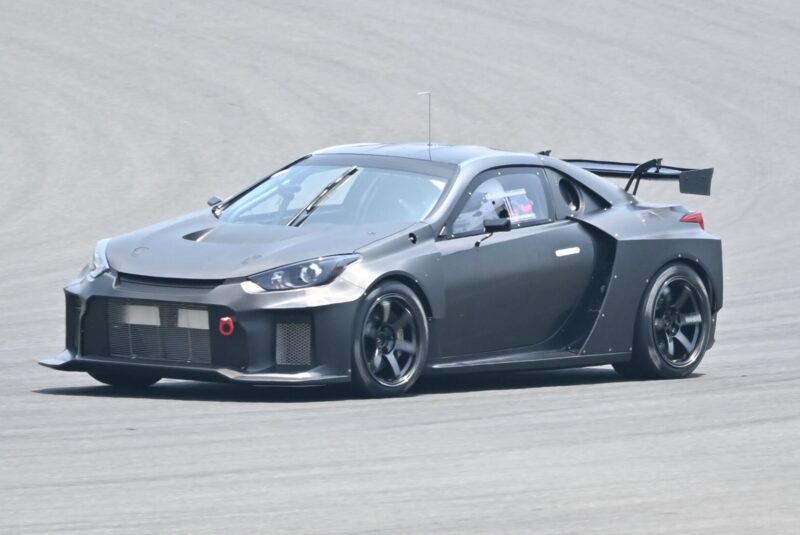
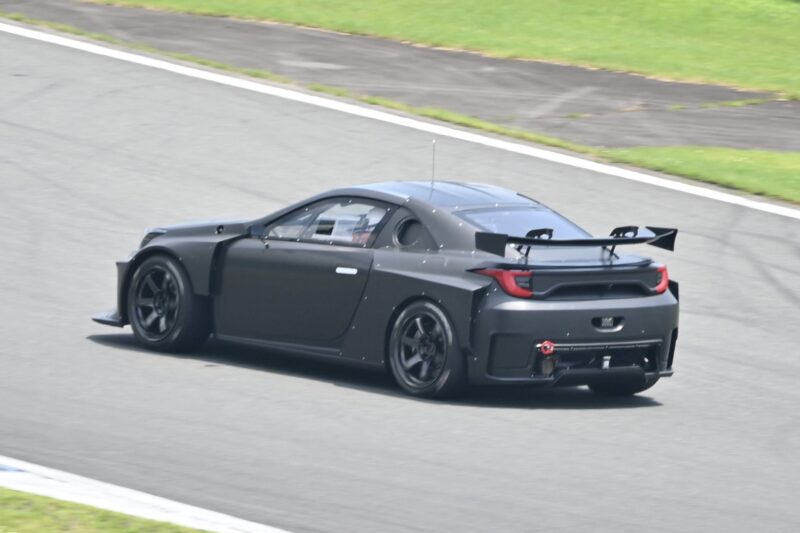
A mysterious rally car, believed to be the Toyota GR Celica, has been spotted undergoing testing in Portugal.
Based on images and videos that have surfaced on social media, the vehicle features a two-door coupe body style, adorned with Toyota Gazoo Racing camouflage stickers.
Premières images de la Toyota WRC27 en essais au Portugal #WRC
It also sports a relatively tall rear spoiler, a roof scoop, and wide fenders.
Not much information has been disclosed at this time, but it is highly likely that this is the Celica, which will join the lineup of upcoming GR high-performance cars.
UMT Toyota Motor has announced the arrival of yet another high-performance model, the Toyota GR Corolla, in an automatic transmission version.
The basic specifications of this vehicle remain the same, featuring a 1.6-liter three-cylinder G16E-GTS turbo engine that delivers 300 PS and 400 Nm of torque.
Like the GR Yaris AT, the GR Corolla AT is equipped with an eight-speed Direct Automatic Transmission (DAT) gearbox, complete with the exclusive Launch Control feature.
Acceleration from 0 to 100 km/h takes just 5.3 seconds.
The GR-Four all-wheel-drive system offers three power distribution settings: Normal, Gravel, and Track, complemented by three driving modes: Sport, Normal, and Eco.
Standard equipment for the GR Corolla AT includes a Torsen limited-slip differential (LSD) at both the front and rear.
Notable enhancements include an ABS system tuned for more stable braking power on any surface, along with suspension tuning for improved cornering confidence.
In the cabin, the 2026 GR Corolla AT features a 10-inch Display Audio screen, a 12.3-inch digital cluster display, wireless Apple CarPlay and Android Auto support, a head-up display (HUD), paddle shifters, and an added blind-spot monitoring (BSM) feature.
The retail price for the GR Corolla AT starts at RM378,950, which is RM10,000 more expensive than the manual version of the GR Corolla.
The Toyota GR Yaris has not been a perfect hot hatch since its initial introduction.
This is because there is still room for innovation and improvement by Toyota Gazoo Racing to enhance the driving experience.
Building on the experience gained from the 2025 Nurburgring 24 Hours, Toyota Gazoo Racing has introduced the GR Yaris MORIZO RR, developed in collaboration with Master Driver Akio Toyoda — better known as Morizo.
In terms of exterior features, the GR Yaris MORIZO RR comes equipped with a larger fixed rear wing made of carbon fiber, a front spoiler, side skirts, a carbon fiber engine hood, yellow brake calipers, Matte Bronze rims, a MORIZO RR emblem, and Morizo’s signature on the windshield.
The cabin features an exclusive GR suede-wrapped steering wheel with a smaller diameter.
If you notice, the layout of the function buttons is different from that of the existing GR Yaris; this setup is more similar to what is used in the GR Yaris Rally2 rally car.
Finally, the GR-Four drive mode selector now includes a special “PUSH MORIZO” function, replacing the Gravel mode found in the standard GR Yaris.
In this mode, developed in partnership with MORIZO, the power distribution is set to 50:50 between the front and rear wheels.
The driving aspects have also been enhanced with suspension settings recalibrated based on the road surface at Nurburgring, ensuring a balance between comfort and sporty handling.
The Electric Power Steering (EPS) has also been recalibrated by GAZOO Racing.
The Toyota GR Yaris MORIZO RR will be produced in a limited run of 100 units for the Japanese market, and applications can be submitted through the official TGR app, the GR App.
An additional 100 units will also be offered in select markets across Europe.
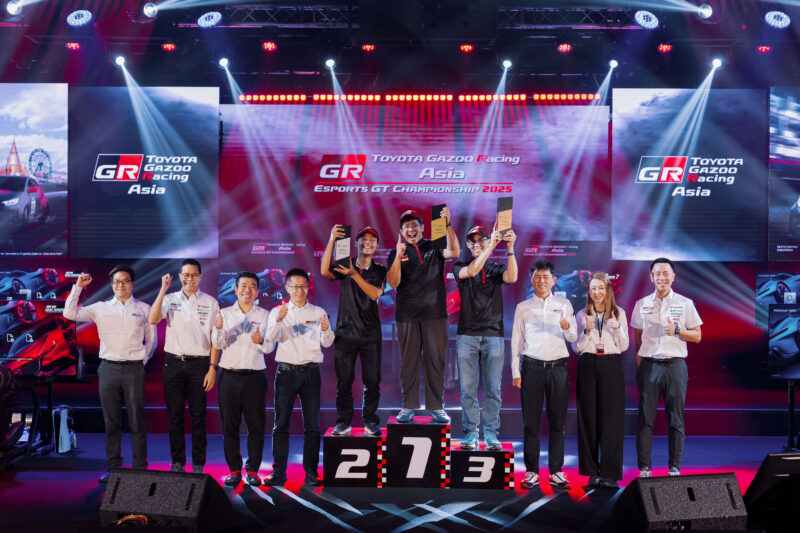
Malaysian racer Chong Kai Chang achieved an impressive third place in the recently concluded Toyota Gazoo Racing (TGR) Asia Esports GT 2025 championship held last weekend.
The tournament featured fierce competition among fifteen sim racers from Indonesia, the Philippines, Singapore, Thailand, and Malaysia, represented by Taj Aiman, Iqbal Suji, and Chong Kai Chang, using the Gran Turismo 7 platform.
In the individual category, Indonesian racer Andika Rama topped the podium with a total of 74 points, followed closely by his compatriot Moreno Pratama with 62 points.
Chong Kai Chang accumulated a total of 59 points.
With two drivers dominating the podium, Indonesia scored a total of 169 points in the country category, followed by Malaysia with 151 points and Singapore with 93 points.
The top three individuals and teams each took home cash prizes of USD 8,000 (RM 33,176), USD 4,500 (RM 18,662), and USD 3,000 (RM 12,441), respectively.
Special awards were also presented to recognize outstanding performances, as follows:
Driver of the Day: Andika Rama (Indonesia)
Best Racecraft Driver: Chong Kai Chang (Malaysia)
Fastest Race Pace: Fadtris Isa (Singapore)
The final races took place at three different locations: Suzuka Circuit (Japan) using the GR Yaris, Interlagos (Brazil) with the GR010 Hybrid, and finally at Watkins Glen (United States) using the GR Supra.
Recordings of the TGR Asia Esports GT 2025 championship can be viewed through the link below:
The 2025 Toyota Gazoo Racing Malaysia eRacing Championship concluded last weekend, showcasing remarkable performances from the country’s top simulation racers vying for a total cash prize of RM123,000.
Organized by UMW Toyota Motor, this championship also serves as a platform to discover the new generation of national racers.
There are two main categories: the Pro Championship, featuring elite simulation racers, and the Campus Tour, an initiative that brings professional-grade simulators to local universities to scout for new talent.
After three intense races in the final round, which was also the fourth and fifth rounds of the championship, siblings Nabil and Naquib Azlan emerged as the champion and overall runner-up in the Pro Class.
Meanwhile, Taj Izrin Aiman secured third place, successfully defending his GT title.
Twenty-six-year-old Taj Aiman will represent Malaysia at the Toyota GR Asia eSports GT Championship in Bangkok this November, joined by Iqbal Suji in second place and Chong Kai Chang in third.
This year, the Toyota Gazoo Racing Malaysia eRacing Championship featured a multi-platform format, including Assetto Corsa, RaceRoom, iRacing, and Gran Turismo 7.
Each platform showcased unique handling dynamics, compelling racers to adapt to various racing conditions, closely resembling international league standards.
This new format also saw 35 percent of the semi-final participants consisting of newcomers, many of whom have prior experience in sim racing.
According to Nabil, who took home a prize of RM25,000, “This year’s championship format is very different; it is not only better but also more challenging, forcing us to learn and adapt.
“Each platform tests various aspects of driving techniques and racing strategies. Sim racing has taught me to become a better and more competitive racer,” he added.
Additionally, the final race of the Campus Tour featured the ten fastest participants from each university, with Randy Goh from INTI Subang emerging as the champion.
Moreover, a Media Exhibition Race involved ten media practitioners who experienced the thrill of using professional simulators for the first time.
In the meantime, Toyota Gazoo Racing Malaysia has also announced the opening of registrations for the Toyota Gazoo Racing Young Talent Development program for the 2026 intake.
Open to simulation racers and kart racers aged between 16 and 22, the program offers a comprehensive training package under the guidance of professional mentors.
It has proven to be a platform that has produced many renowned racers in Malaysia.
Those interested can register at the website tyt.my/rookiesignup2026 before the application deadline on October 26, 2025.
Through its collaboration with Subaru, Toyota introduced the sports car 86 at the Tokyo Motor Show in December 2011.
The second generation of the 86 known as the GR86, debuted in 2020 with Toyota continuing its partnership with Subaru.
But what about the third generation?
Japanese automotive website Best Car claims that Toyota will develop a new GR86 independently, although it may seek assistance from Mazda to lead the project.
The new GR86 will be built on a new ultra-lightweight platform that will also be utilized for the development of the next-generation Mazda MX-5.
Unlike the approach used for the GR86/BRZ, the new GR86 and MX-5 will feature many differences.
According to Best Car’s report, the MX-5 will remain a two-seater sports car, while the same platform will be slightly lengthened to allow the GR86 to retain its 2+2 coupe configuration.
Both models will also utilize different engines, with the MX-5 featuring a Mazda-made 2.0L hybrid engine and the GR86 using a Toyota-configured 2.0L hybrid engine.
This is not the first time the Mazda MX-5 has served as a base for the development of other manufacturers’ models.
The fourth-generation ND served as the foundation for the Fiat 124 Spider, which features a different design and powertrain, followed by Japanese manufacturer Mitsuoka for the Rock Star model.
As a fan of high-performance Japanese cars, you should express your gratitude to Akio Toyoda, a key figure at Toyota.
Akio, affectionately known as Morizo, believes that motorsports serves as the ideal platform for developing the best street cars.
Thanks to his vision, we now see one of the key Gazoo Racing model, the hot hatch GR Corolla now receiving a new enhancement package without a long wait.
Here are the changes introduced to the GR Corolla:
An increase in chassis structural adhesive from 13.9 meters to 32.7 meters for a sturdier and more stable chassis, capable of handling vertical and lateral G-forces.
A new cooling duct has been added to the second air intake, aimed at stabilizing engine output under high-temperature driving conditions.
The JBL Premium audio system has been improved with the addition of a subwoofer in the cargo area, complemented by the Active Noise Control (ANC) system.
Additionally, the Active Sound Control (ASC) system enhances the sporty sound profile during acceleration and deceleration. Even when the throttle is released, this system generates a pop from the exhaust.
In terms of power, the 2026 GR Corolla continues to feature the G16E-GTS engine, capable of producing 300 hp and 400 Nm, paired with either a six-speed manual transmission or an eight-speed automatic.
For current GR Corolla owners, Toyota Gazoo Racing will introduce a software-inclusive upgrade program designed to increase torque from 370 Nm to 400 Nm.
The GR-Four drive system will also be upgraded, with the distribution ratio of 30:70 being replaced by a Gravel mode (50:50), while the Track mode (50:50) can be adjusted to 60:40 and 30:70.
In Japan, the 2026 Toyota GR Corolla is priced starting at ¥5,680,000 (RM161,000) for the manual version and ¥5,980,000 (RM169,000) for the automatic version.
Do you think that with the power upgrade and automatic transmission offering, the Toyota GR Yaris is already perfect?
It seems your assumption is completely wrong, once again!
Officials at Toyota Gazoo Racing still see room for improvement in this model with the introduction of the “Aero Performance” package for the GR Yaris.
Developed through extensive racing experience and input from professional drivers, this latest package can maximize the aerodynamic performance and cooling aspects of the hot hatch.
The Aero Performance package includes six components, five of which are designed to enhance stability at high speeds and aerodynamic performance, such as the front fender vents, fuel tank undertray, rear bumper vents, and adjustable rear wing.
The addition of the front lip spoiler is based on feedback from professional racer Oshima to reduce front lift, thereby improving the aerodynamic balance of the vehicle.
Cooling is addressed by an aluminum engine hood with vents, sharing the same design as the carbon fiber hood used in the GRMN Yaris model.
The basic specifications of the GR Yaris remain unchanged, featuring the G16E-GTS engine that generates 304 PS and 400 Nm of torque, with a choice of either a 6-speed manual or 8-speed DAT transmission and the GR-Four all-wheel drive system.
In Japan, the Toyota GR Yaris with the Aero Performance package is priced starting at 4,055,000 yen (approximately RM115,911).
Take a look at the image above. Did you notice its presence? If you did, congratulations on your keen eye.
We would like to share the existence of a high-performance Toyota GR Corolla taxi operating in Sendai, Japan.
Image via X @okt0927
The sight of a GR Corolla serving as a taxi is quite unique, as most taxis there typically use models like the Toyota Crown Comfort, Toyota Prius, and the specially designed Toyota JPN Taxi.
A quick search on social media platform X (formerly known as Twitter) reveals that the GR Corolla taxi features an eight-speed automatic transmission (GR-DAT).
Moreover, this hot hatch has been equipped with a meter installation and rear passenger doors that have been modified for automatic electric operation by Futaba System.
The Toyota GR Corolla is a compact hot hatch powered by a three-cylinder inline engine, the G16E-GTS, producing 304 PS and 400 Nm of torque.
Image via X @okt0927
Originally, it was only available with a six-speed manual transmission; however, with the introduction of the facelift model in August 2024, buyers can now get the GR Corolla with Direct Automatic Transmission (DAT) featuring an eight-speed option, complete with paddle shifters.
As hot hatch enthusiasts, we can only imagine the excitement of passengers who manage to experience the Toyota GR Corolla taxi service on their travels.
In addition to the Toyota GR Corolla, the taxi company in Sendai also features another unique model, the Subaru Levorg GT.
The third round of the Vios Challenge will take place at the PETRONAS International Circuit (SIC) from August 8 to 10.
Taking place concurrently with the 2025 Malaysian Touring Car Championship, this race will be decisive for the final outcomes of the Vios Challenge across three categories: Super Sporting, Sporting, and Rookie.
So far, the overall points standings remain tight among the top three drivers in each category.
In the Super Sporting class, fierce competition is expected between 2023 champion Mitchell Cheah (Team Prima Pearl SP Selatan), who is currently in first place with 83 points, and Freddie Ang (Telagamas Toyota), who has 81 points, followed by Ady Rahimy (Laser Motor Racing) with 72 points.
In the Sporting category, Jwan Hii (Hong Kuat X Armada KK Racing) holds a comfortable lead with 85 points, ahead of Elson Lew (BAE Racing) with 76 points and Varunchit Wattanathanakun (RUK Team Nexzter PMC) with 62 points.
The Rookie class features intense competition between Aydan Khaliq and Rahul Dev, who are currently at the top with 94 and 93 points, respectively.
Third place is held by Harkiesh Geeva with 72 points, followed by Ian James with 71 points, and the only female driver in the category, Genevieve Ooi, with 66 points.
Similar to the second round, all three classes of the Vios Challenge will compete in a combined one-hour semi-endurance race around the full 5.543 km circuit.
The Rally Finland event, set to take place from July 31 to August 3, will witness the debut of a vehicle specially developed by Toyota Gazoo Racing and powered by hydrogen.
The rally vehicle in question is the Toyota GR Yaris Rally2 H2 Concept, built on the proven GR Yaris Rally2 chassis.
Developed at the TGR-WRT headquarters located in Jyväskylä, Finland, the true capabilities of this hydrogen rally vehicle have also been tested on roads around the area, including the gravel surfaces typically used in Rally Finland.
For its inaugural appearance, the GR Yaris Rally2 H2 Concept will be driven by four-time world champion Juha Kankkunen, who is also the deputy principal of the TGR-WRT team.
The combination of Toyota and hydrogen engines is not unfamiliar in the world of motorsports.
Hydrogen-powered internal combustion engines were used in racing through the Corolla vehicle in 2021, during the Super Taikyu endurance racing series.
This technology was showcased on the European rally stage for the first time in 2022 with the experimental GR Yaris H2 at the FIA World Rally Championship round in Belgium, driven by Akio Toyoda and Juha Kankkunen.
Unlike the GR Yaris Rally1, which uses a four-cylinder inline engine, the GR Yaris Rally2 uses the same engine found in the production version of the GR Yaris, which is the G16E-GTS 1.6-liter turbo unit.
However, the fuel supply and injection systems have been modified to accommodate hydrogen fuel.
More importantly, this engine still manages to deliver performance, as well as the sound and sensations that rally fans crave, all while achieving near-zero emissions—a feat that is challenging for any high-performance EV to provide.
The one make racing event, Vios Challenge, was exceptionally unique this time as it featured a different format compared to the previous two races.
For the first time, the Vios Challenge made its international debut concurrently with the Autobacs Super GT round in Malaysia, held from June 26-28.
Additionally, this second round of the 8th season of the Vios Challenge introduced a one-hour race format covering a total distance of 5.543 km, as opposed to the previous 10-lap sprint races that utilized half of the Sepang circuit.
To make the race more exciting, all 36 drivers from three racing classes (Super Sporting, Sporting, and Rookie) were released simultaneously, which significantly increased the challenge and provided a fairer opportunity for all competitors.
This was reflected in the final results of both races, where podium positions varied for each racing class.
The Vios Challenge still has two rounds remaining, with the third round scheduled to coincide with the Malaysia Championship Series (MCS) on August 8-10.
Meanwhile, the fourth round is planned for October 2025 in Johor, with the exact location and date to be announced later.
Below are the race results of the Vios Challenge by class:
Super Sporting Class
Race 1 1. Freddie Ang (Telagamas Toyota)
2. Nabil Azlan (Wheelcorp)
3. William Ho (Toyotsu Toyota)
Race 2 1. Mitchell Cheah (Team Prima Pearl SP Selatan)
2. Ady Rahimy (Laser Motor Racing)
3. Freddie Ang (Telagamas Toyota)
Sporting Class
Race 1 1. Jwan Hii (Hong Huat x Armada KK Racing)
2. Dato Dr Ken Foo (Kulim Top Wheels)
3. Warunchit Wattanathanakun (RUK Team Nexzter PMC 52)
Race 2 1. Justin Toh (BAE Racing by ES Yang)
2. Elson Lew (BAE Racing by ES Yang)
3. Warunchit Wattanathanakun (RUK Team Nexzter PMC 52)
The Vios Challenge still has two rounds remaining, with the third round scheduled to take place concurrently with the Malaysia Championship Series (MCS) on August 8-10.
Meanwhile, the fourth round is planned for October 2025 in Johor, with the exact location and date to be announced later.
Round 3 of the Super GT Malaysia 2025 saw the Deloitte TOM’s GR Supra and UPGARAGE AMG GT3 excel in the GT500 and GT300 classes, respectively, under track temperatures reaching 42°C.
Here are the final results of Round 3 of Super GT Malaysia 2025:
GT500 Class
Deloitte TOM’s GR Supra #37
Arta Mugen Civic Type-R GT #8
TRS Impul with SDG Z #12
GT300 Class
Upgarage AMG GT3 #18
Green Brave GR Supra GT #52
Goodsmile Hatsune Miku AMG #4
After the Malaysian round, Super GT will return to Japan, where the fourth round will take place at Fuji Speedway on August 2-3.
Malaysia remains the only location outside of Japan to host Super GT races, and this year marks the first time this prestigious event has returned to the Sepang Circuit since its last hosting in 2013.
UMW Toyota and Toyota Gazoo Racing Malaysia have announced a change in the Vios Challenge race format in conjunction with the AUTOBACS Super GT Malaysia event, which will take place from June 26-28.
Unlike the usual 30-minute sprint race format, this time the Vios Challenge will adopt a one-hour endurance race format covering the full distance of the Sepang International Circuit, which is 5.543 km long.
The Vios Challenge 2025 will continue to feature three classes of racing: Super Sporting, Sporting, and Rookie.
This means that in the second race of this season, all five Rookie class drivers will showcase their talents on the international stage for the first time.
To date, 22 drivers have graduated from the Toyota Gazoo Racing Young Talent Development Program since its launch in 2021.
Of that number, more than 10 drivers are currently competing at the local level, and four drivers have already achieved victories and championship titles at the international level.
According to Datuk Ravindran K., President of UMW Toyota Motor, “Our participation as the Main Sponsor reflects UMWT’s ongoing commitment to elevate motorsports in Malaysia.
“The Vios Challenge has proven to be a stepping stone for local talents, marking a significant achievement where our drivers can compete on the same platform as international teams in Super GT.
“The Super GT Malaysia Festival is not just a competitive stage; it is a launchpad that proudly places the name of Toyota Gazoo Racing Malaysia on the map of global motorsports and shows that Toyota Gazoo Racing Malaysia is here, actively moving forward and ready to grow.”
He further stated that there are plans to establish the Toyota Gazoo Racing Malaysia (TGRMY) manufacturer team to participate in regional racing events to strengthen Malaysia’s presence in motorsports.
Returning to the Super GT race, this is the only race round held outside Japan for the 2025 Super GT calendar.
Visitors can witness the action of the GT500 class GR Supra from the Toyota team, including the GR Supra TOM’s, which previously won the opening round in Okayama, and the GR Supra KeePer CERUMO, which won the second round at Fuji Speedway.
Additionally, there will be an exhibition of a lineup of GR models, including the GR Supra, GR Yaris, GR Corolla, GR86, as well as Corolla GR Sport and Corolla Cross GR Sport HEV.
On the same dates, the Sepang Circuit will host the inaugural race of the Toyota GR86 Cup Malaysia as a support race for Super GT.
Not only that, visitors to the Super GT Malaysia Festival will also have the opportunity to participate in Japanese cultural and food events, namely Nihon Matsuri, as well as enjoy the post-race concert GT Live!, featuring a variety of renowned artists.
Among them are the trio Tenxi, Naykilla & Jemsii (TNJ), KLP48, Fareed K-Clique, Sabhi Saddi, and Kaka Azraff.
Malaysia’s Leading Automotive News | ENGEAR ENGLISH