In addition to its efforts to revive the rotary engine, a hallmark of the brand, Mazda is also looking to improve its existing internal combustion engine offerings.
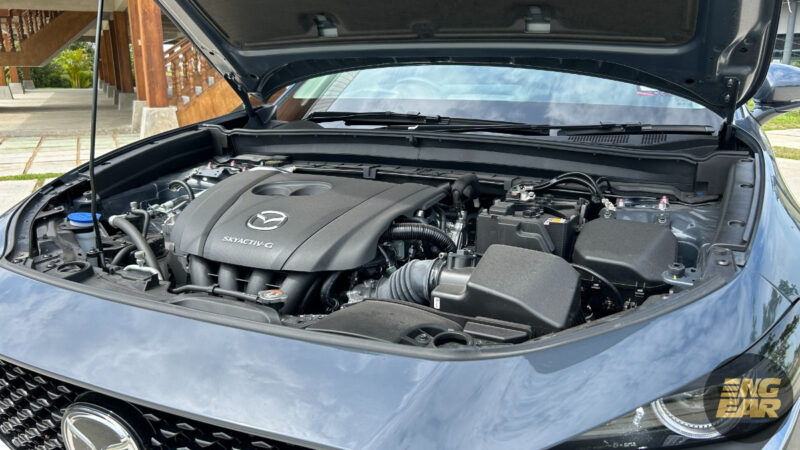
According to a recent financial report, Mazda has revealed plans for the development of the new Skyactiv-Z four-cylinder engine.
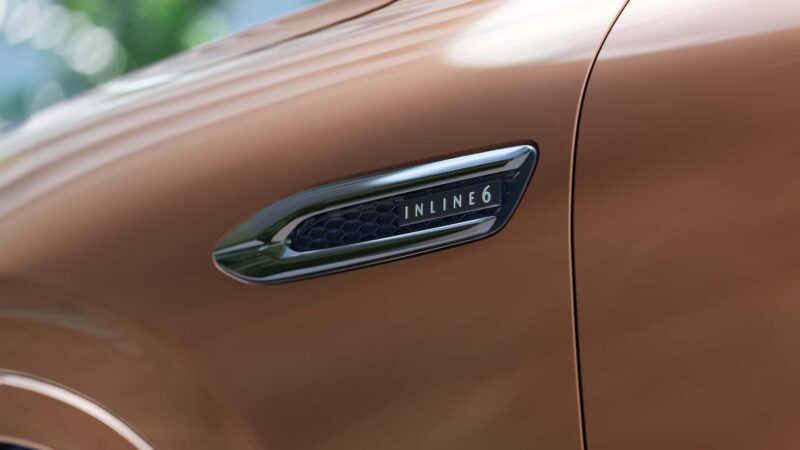
The results from this Skyactiv-Z four-cylinder engine development will be utilized in the upcoming development of a new inline six-cylinder engine.
This new engine will employ the lambda one combustion method, which represents a balanced air-fuel ratio achieved during the combustion process.
In this scenario, the Skyactiv-Z engine promises operational efficiency and excellent performance while minimizing emissions.
Mazda aims to introduce the Skyactiv-Z engine to the European and American markets by 2027, gradually phasing out the existing Skyactiv-G and Skyactiv-X engines.
In addition to the inline four-cylinder engine, Mazda is also committed to maintaining the rotary engine that has been a defining feature of the brand.
If you recall, earlier this year, Mazda established a special team responsible for research and development on rotary engines.
This team, consisting of 36 engineers, will continue to explore the use of the rotary engine not only as a range-extending unit but also adaptable for carbon-neutral fuel (CNF) to comply with regulations in major global markets.
After a year of speculation, Mazda has officially announced plans to turn its Iconic SP concept model into a real production vehicle.
According to Masashi Nakayama, head of Mazda’s design unit, “This concept is not just an empty show car; it has been designed with a genuine intention to transform it into a production model soon.”
Previously, there were hints that Mazda was looking to realize this project.
The first indication came during the Japan Mobility Show 2023, where Mazda President and CEO Masahiro Moro described the Iconic SP as a landmark of the brand’s “commitment to the future.”
Months later, reports emerged that Mazda had joined a coalition aimed at developing internal combustion engines designed to meet carbon neutrality targets, reaffirming the manufacturer’s commitment to maintaining its iconic rotary engines.
Intended as a successor to the RX-7 and RX-8 sports cars, the Mazda Iconic SP features a twin-rotor rotary engine combined with an electric power unit (EV), with a total output capable of reaching 365 hp.
Mazda claims that this range-extending rotary engine can utilize any carbon-neutral fuel, potentially reducing emissions by up to 90 percent.
Additionally, Mazda is currently testing technology that can capture CO2 from exhaust emissions, which may play a crucial role in the development of the brand’s future vehicles.
Mazda has announced the sale price for the EZ-6 sedan model, designed as the spiritual successor to the Mazda6 for the Chinese market.
The EZ-6 sedan is essentially a badge-engineered version of the Deepal SL03 model produced by Changan Automobile.
There, buyers can acquire an electric sedan powered by a single rear-wheel-drive electric motor delivering 255 hp and 320 Nm of torque, paired with two battery capacity options.
The base version comes with a 56.1 kWh lithium iron phosphate battery pack, offering a range of 480 km, while the 68.8 kWh battery pack allows for a range of over 600 km on a full charge.
There is also a range-extender version, where the Mazda EZ-6 range extender comes equipped with a 215 hp and 320 Nm electric motor supported by a 1.5-liter engine producing 94 hp to charge the battery pack.
Two battery capacity options are available for the range-extender version: 18.9 kWh or 28.4 kWh, with the smaller version enabling a zero-emission range of 105 km, while the larger unit increases the range to 160 km.
Most notably, thanks to the additional engine, the overall range of the EZ-6 range extender sedan can reach up to 1,300 km!
In terms of dimensions, the Mazda EZ-6 measures 4,921 mm in length with a wheelbase of approximately 2,895 mm, making it longer than its competitor, the Toyota Camry.
Other features include a 10.1-inch digital cluster screen, a 14.6-inch central screen, leather or Nappa leather upholstery, dual-zone automatic climate control, wireless device charging, a 64-color ambient lighting system, and a premium Sony audio system with 14 speakers.
The sale price starts at 139,800 yuan (RM85,531) for the range-extender variant, while the pure EV version starts at 159,800 yuan (RM97,768)
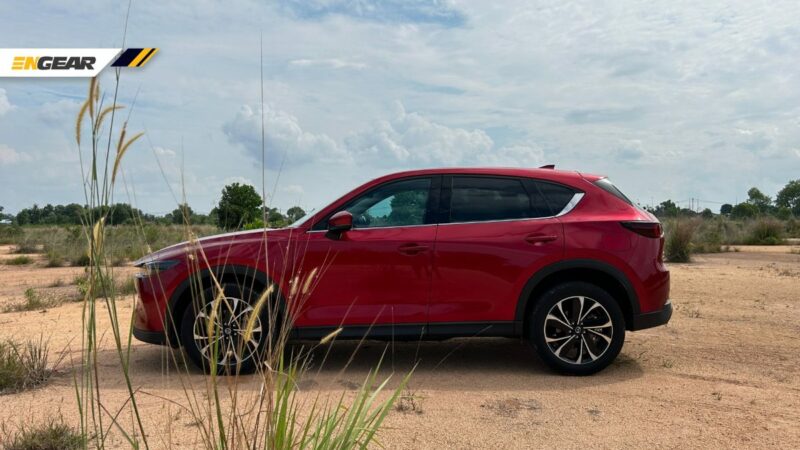
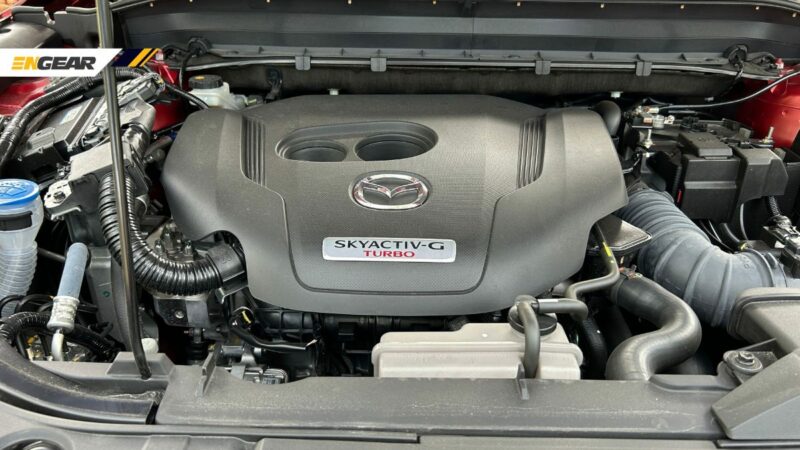
WE have driven the performance variant test of the CX-5, with the 2.5T turbo petrol engine delivering 228hp and 420Nm of torque, alongside the all-wheel drive (AWD) system.
Undoubtedly a unique offering from Mazda, with no clear close competitors, it provides more options besides naturally aspirated petrol and diesel.
However, due to demand, we also list some issues or problems with this Mazda CX-5 2.5T. Yes, as good as the car is, even though it’s advanced and powerful, issues can still arise. We have identified three main issues.
You’ll be loved by petrol station owners
Being loved is usually a positive thing, right? But that’s if you’re loved by your parents, loved by your wife. If you’re loved by petrol station owners, it’s not so great.
With the CX-5 2.5T, you will often visit petrol stations because this SUV truly gulps down petrol, unlike most of its competitors that just sip petrol. Throughout the writer’s experience driving this turbocharged CX-5 for over 1,000km, the writer could only achieve an average of 9.4km per liter. The writer tried very hard to achieve 10km per liter but failed.
It’s also enjoyable to experience the strong 420Nm torque, similar to a diesel, available as early as 2,000rpm, but with great power comes some sacrifices. Oh, the struggles…
The addition of the AWD and only six gears in the gearbox doesn’t help with fuel efficiency. Perhaps if Mazda offered this variant with an 8-speed gearbox, it would help achieve better fuel economy.
2. It looks too similar!
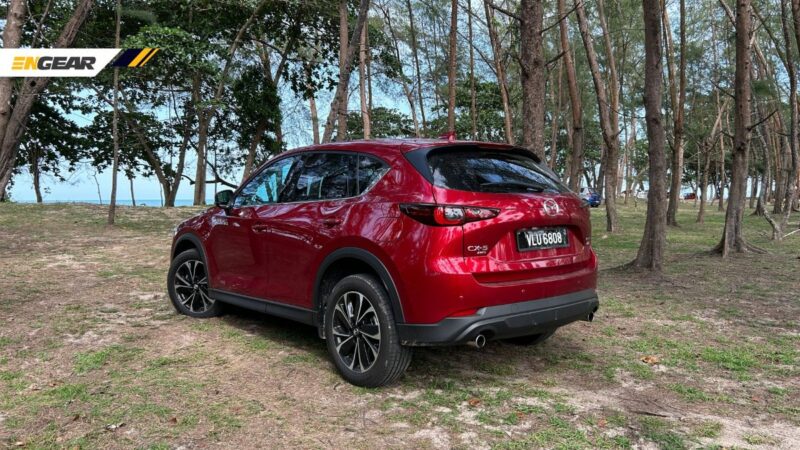
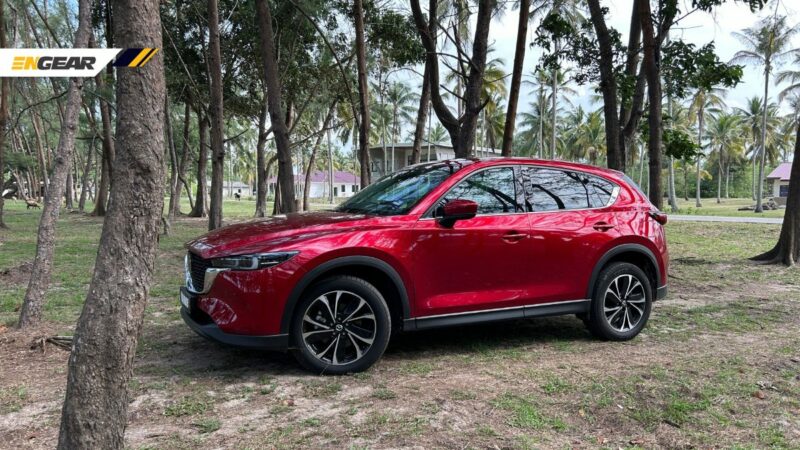
The second issue is that this 2.5T AWD turbo petrol version looks too similar to the other CX-5 variants. Obviously, we identify a car by its design and external identity.
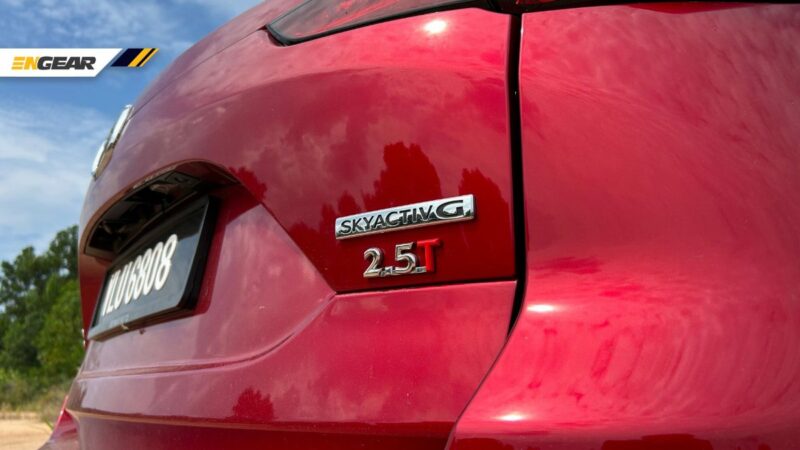
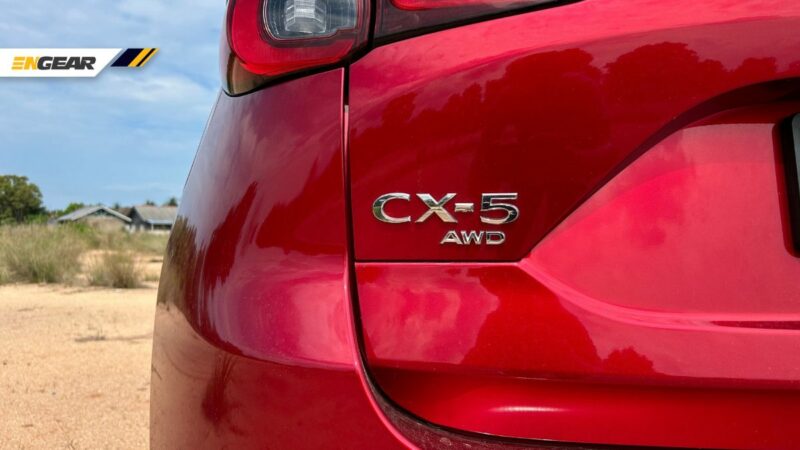
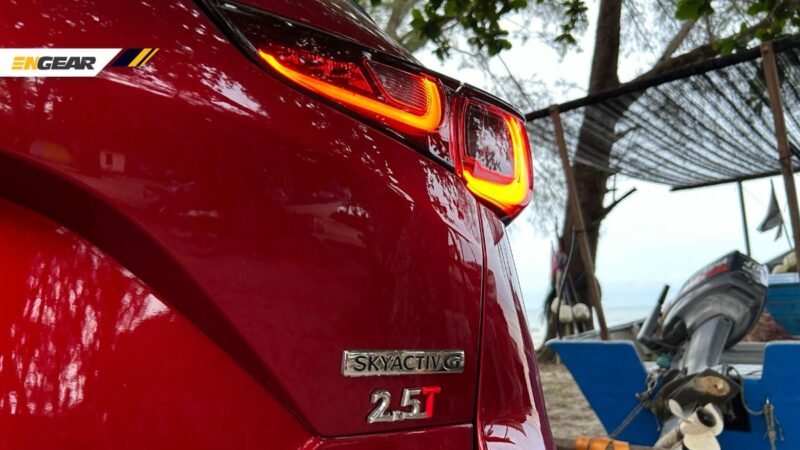
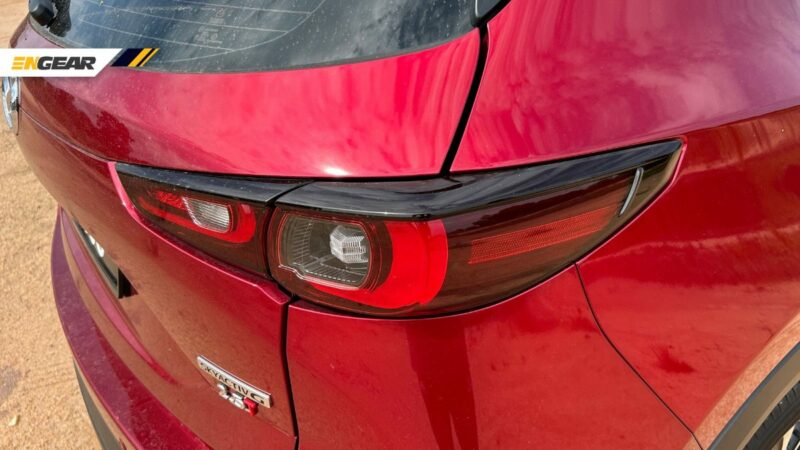
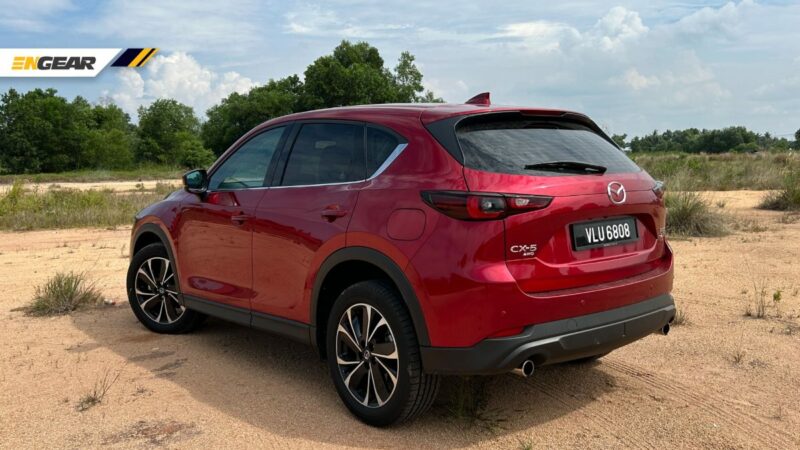
With the CX-5 2.5 turbo, only the rear emblem with the red letter “T” indicates that this is the high-performance turbo petrol version. If you see this red “T”, just forget about poking fun at this CX-5, you’ll be way off the mark.
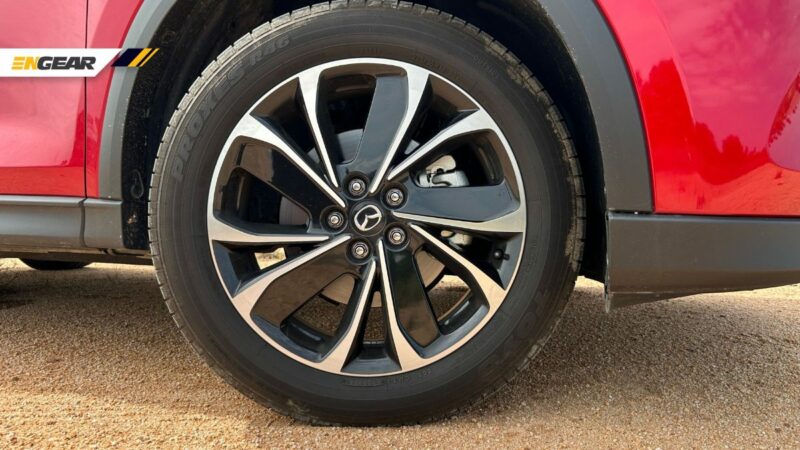
For owners who want to stand out a bit, they might feel unsatisfied with the too modest appearance of this CX-5 2.5T. Perhaps it should have larger rims with a unique design, additional red stripes on the front grille, or a rear roof spoiler. Anything that can make this performance SUV stand out more, Mazda knows better; the writer is not a designer.
3. A bit of identity confusion
The third and final issue is a slight identity confusion with this 2.5T CX-5. It’s not a significant problem, just that to the writer, this CX-5 is not quite an SUV, and not quite a sports car either.
It’s not as efficient (in fuel consumption) as other SUVs or other CX-5 variants, but it also doesn’t provide maximum satisfaction like driving a Mazda MX-5 Miata or Mazda3. This 2.5T CX-5 is too in the middle. No SUV satisfaction, nor true sports car satisfaction. Hence, the writer says it has a bit of identity confusion, not knowing which one it wants to be.
Conclusion
Those are the three issues the writer has experienced during the test drive of the Mazda CX-5 2.5T AWD. But there are many other great aspects about this model, which you can read about here.
And the writer still wants to thank Mazda for producing this unique performance SUV, even though there may not really be a need for it. It demonstrates Mazda’s capability and their identity of not caring about others; just producing enjoyable cars that will be appreciated by their fans.
Mazda has updated its compact crossover offering, the Mazda CX-50 for the 2025 model year, where it now utilizes hybrid powertrain borrowed from Toyota.
Specifically, the 2025 Mazda CX-50 hybrid variant has been equipped with the Toyota Hybrid System, consisting of a 2.5-liter inline-four cylinder engine, three electric motors, a small-capacity battery pack, and electronically controlled CVT transmission.
The same setup used in several Toyota models now delivers a total output of 219 hp and 221 Nm of torque for the 2025 CX-50.
Although the system comes from Toyota, Mazda engineers have fine-tuned the hybrid powertrain to offer smooth pedal response and a more engaging driving dynamics.
Furthermore, the hybrid version of the Mazda CX-50 can now offer the ability to tow loads weighing up to 680 kg.
While other CX-50 variants still retain the 2.5-liter Skyactiv engine producing 187 hp/251 Nm, and a 2.5-liter turbo engine capable of generating as much as 256 hp and 433 Nm of torque.
Externally, the 2025 CX-50 has received a redesigned front bumper, followed by unique alloy wheels in 17 or 19 inches.
The mentioned hybrid variant gets exclusive features such as red leather upholstery, while other variants receive updates like Alexa integration and additional safety features such as lane departure warnings and Smart Brake Support that now supports pedestrian detection during the night.
In the United States, the Mazda CX-50 is available starting at $30,300 (RM142,046), while the hybrid variant starts at $33,970 (RM159,251).
The writer did not expect that the 2024 Mazda CX-5 facelift would still be offered with the 2.5T variant, or its full name, the CX-5 2.5G Turbo AWD. It’s not that the writer didn’t want or like it, but there wasn’t really a need for a high-performance variant for the CX-5.
However, high-performance vehicles usually show up uninvited and unexpectedly, which is what makes them intriguing.
The writer had driven the old CX-5 2.5T a few years ago, but had not yet shared the experience here, so let’s follow the writer’s journey. We will also examine the updates and determine if it’s worth buying.
Simple appearance with hidden weapons
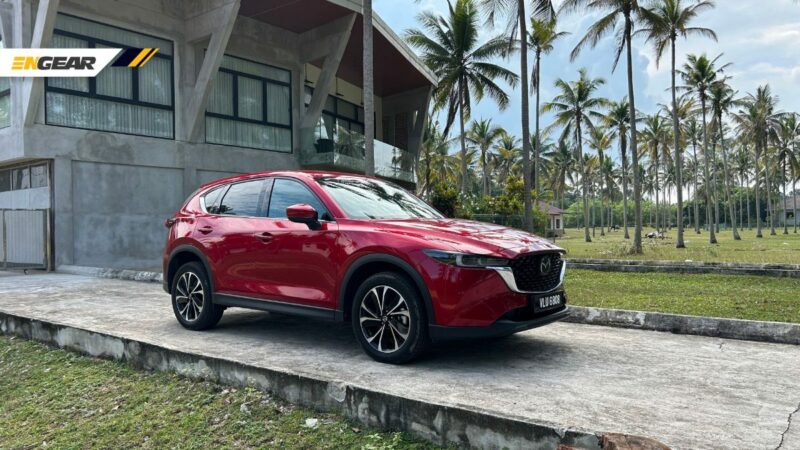
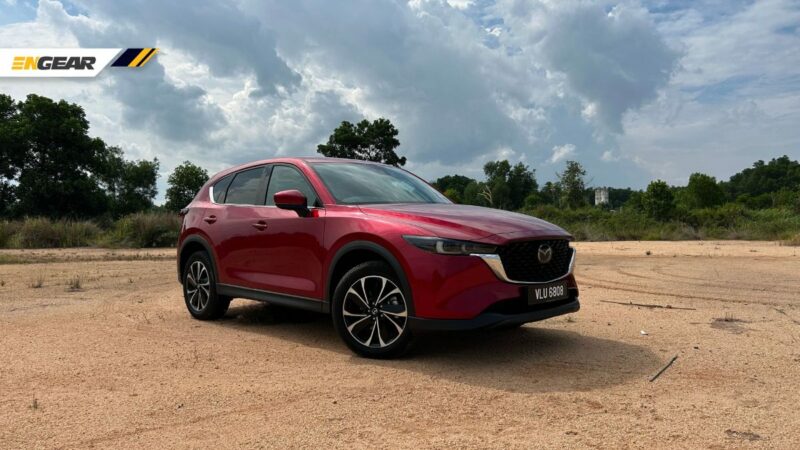
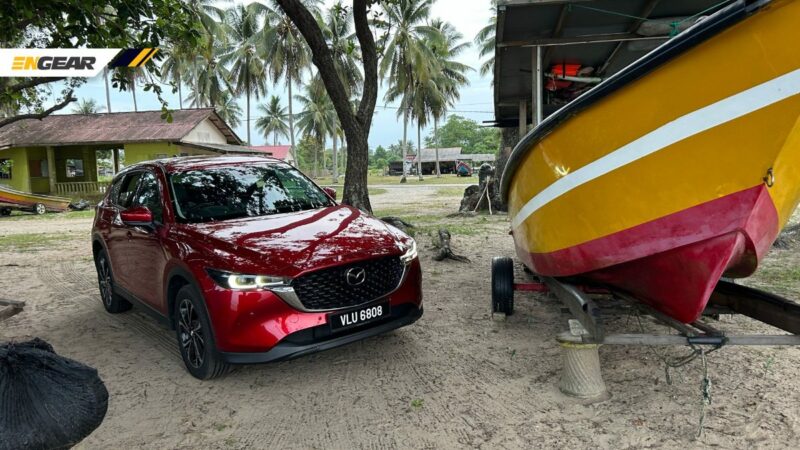
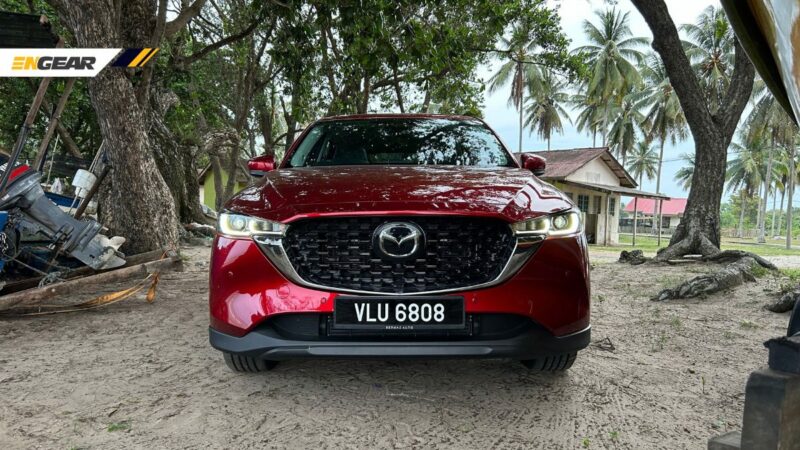
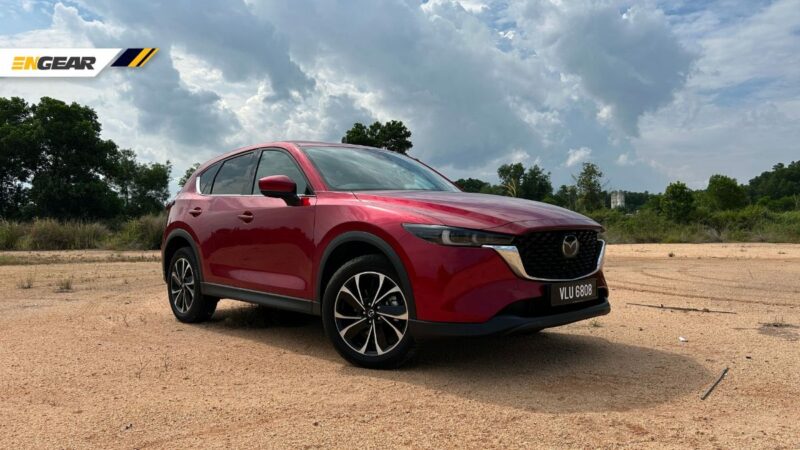
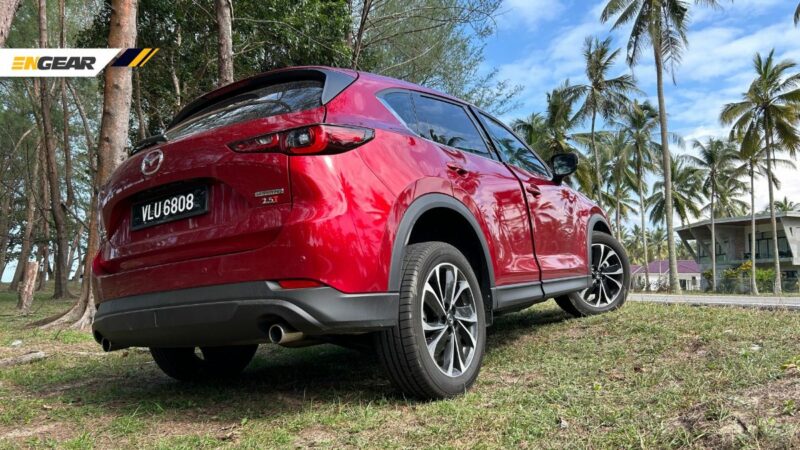
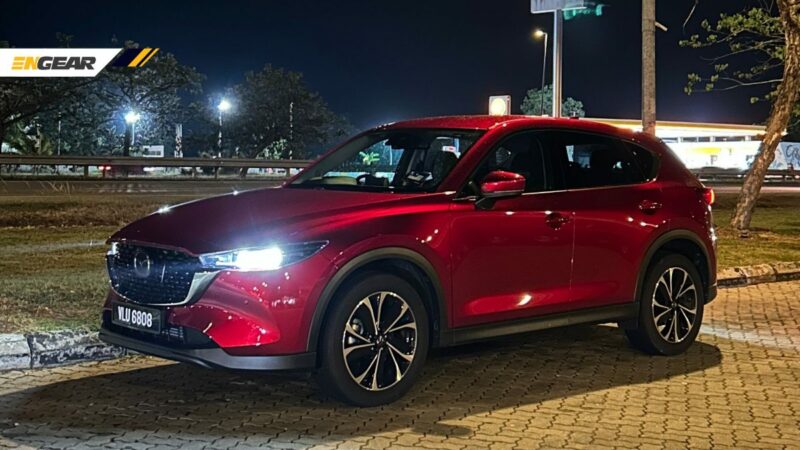
Interestingly, it is difficult to determine whether the CX-5 you see is the regular version or the turbo petrol one. From the outside, there is only an emblem at the back that reads “2.5T”. No fins, spoilers, decals, stickers, or large markings.
It’s like a hidden weapon. Looks ordinary, but if you mess around, here you go! Some people may like this, but not the Type R FK8 owners. It’s a ‘you know it if you know it’ situation.
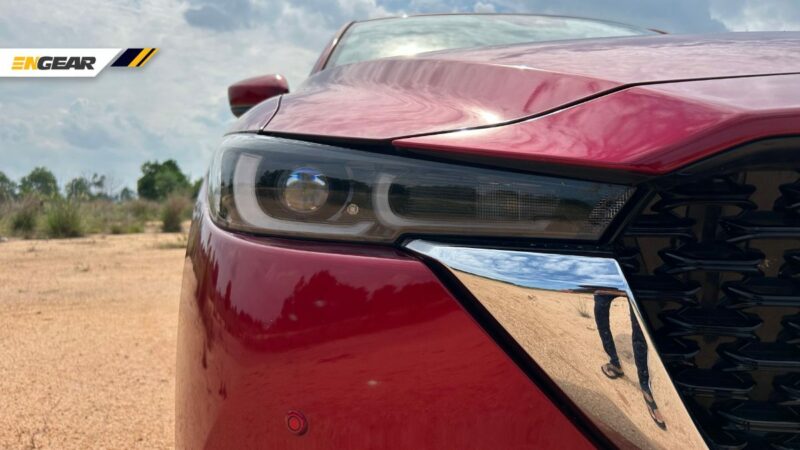
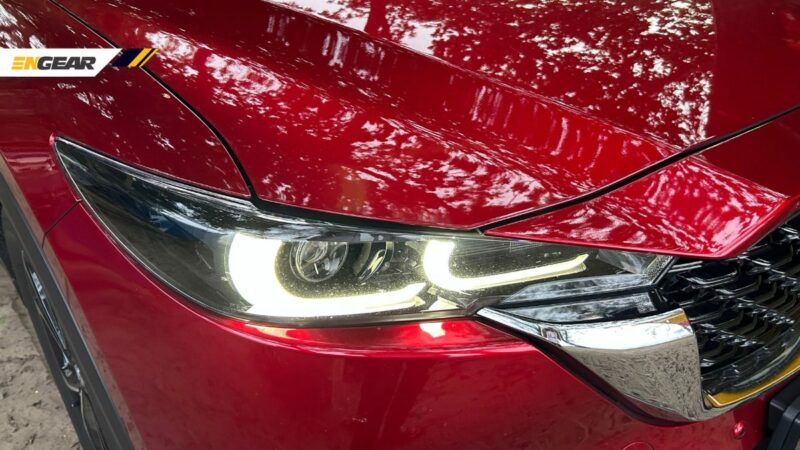
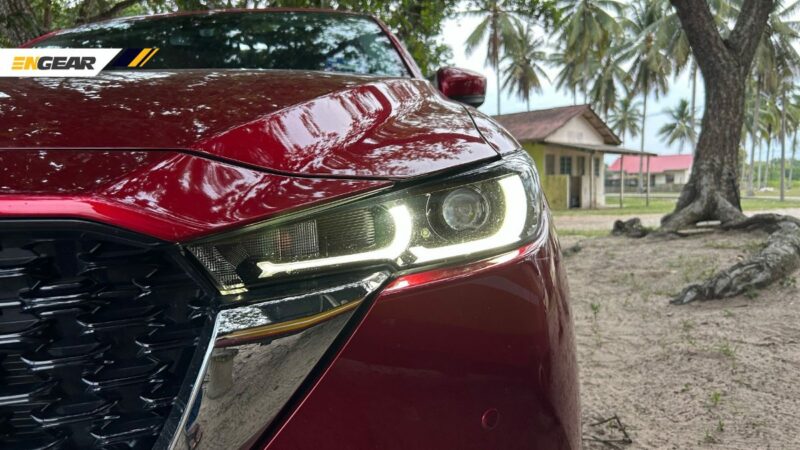
The CX-5 still receives the facelift updates like the other variants, including a new front end, grille, paddle shifters, and the most noticeable change, the DRL graphics shaped like two Ls on each side.
It still looks sleek like the CX-5 we all know, just the mentioned updates make it slightly fresher for 2024. Is it enough to compete with the CR-V?
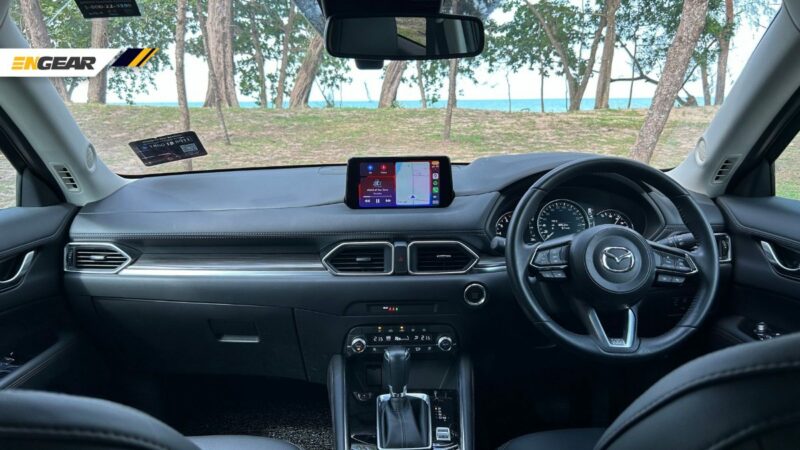
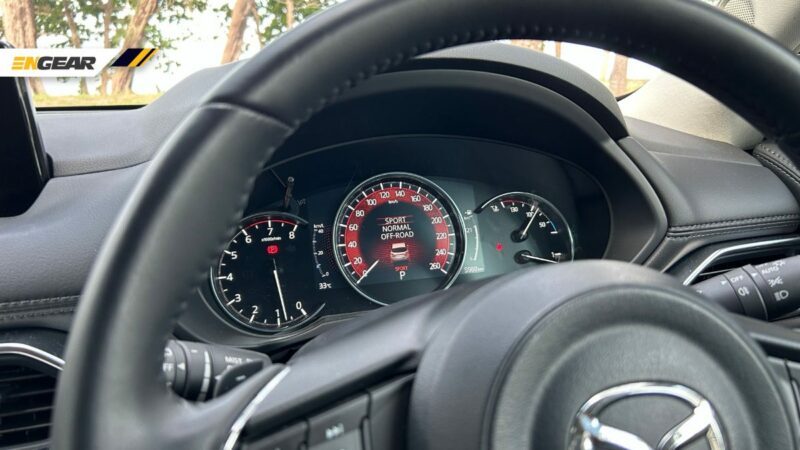
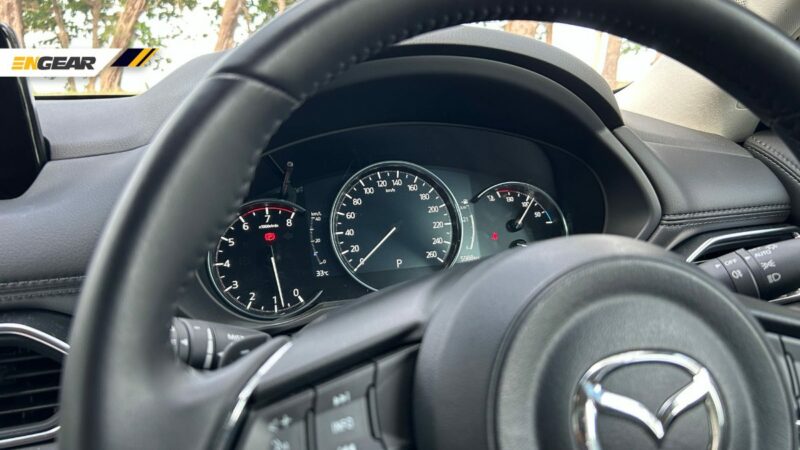
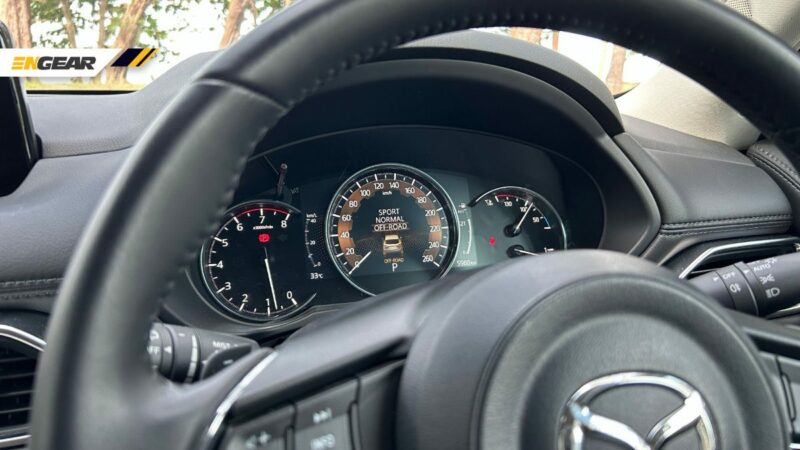
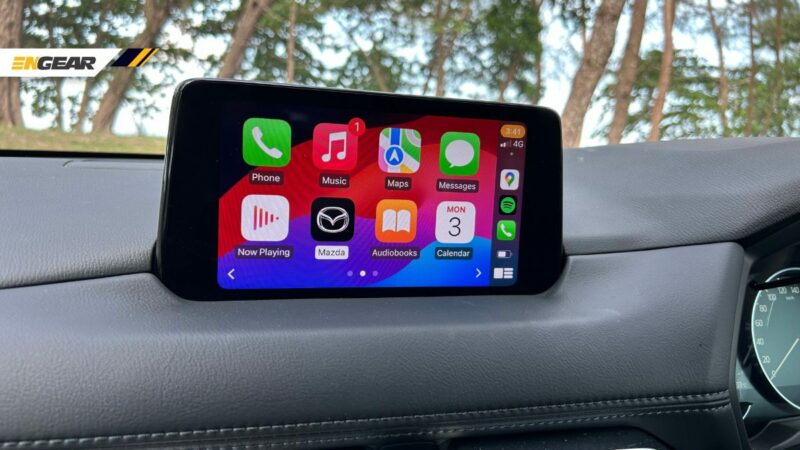
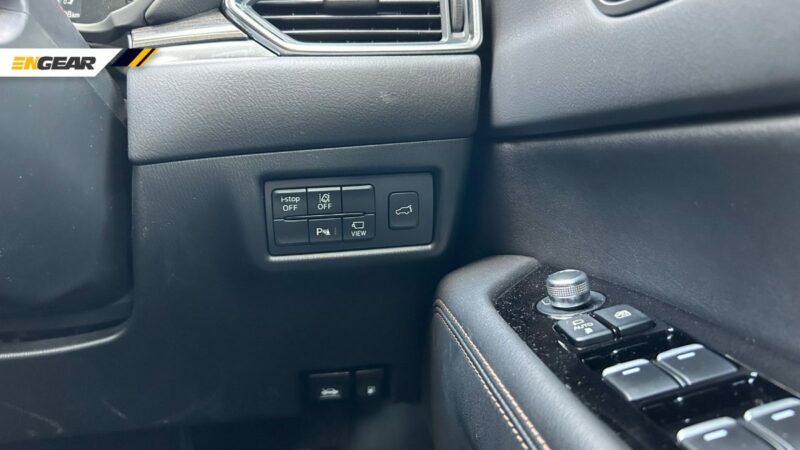
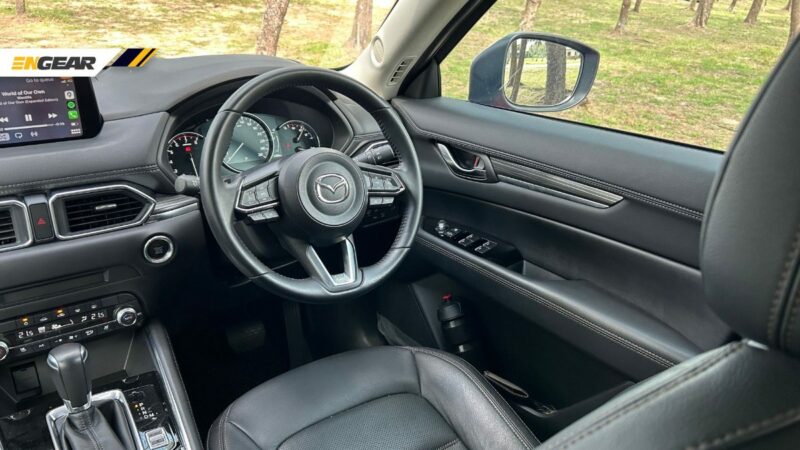
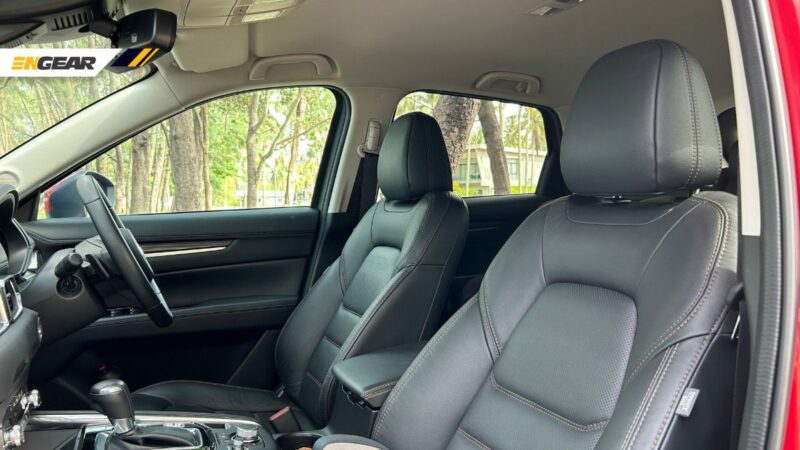
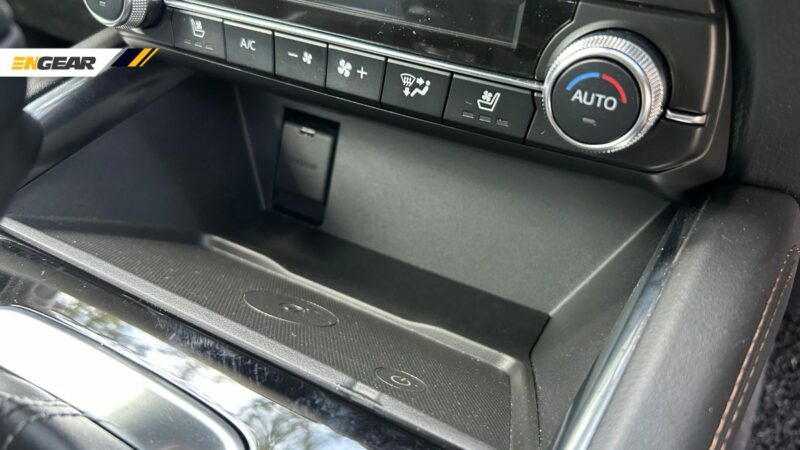
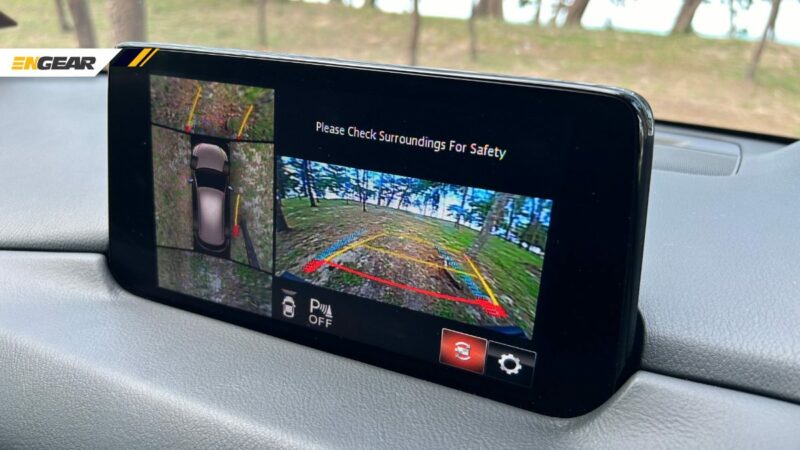
The 2.5T variant is also equipped with a 7-inch instrument display with new graphics, seats with cooling functions, Android Auto and Apple Carplay connectivity (wireless), a 360-degree camera, and wireless charging.
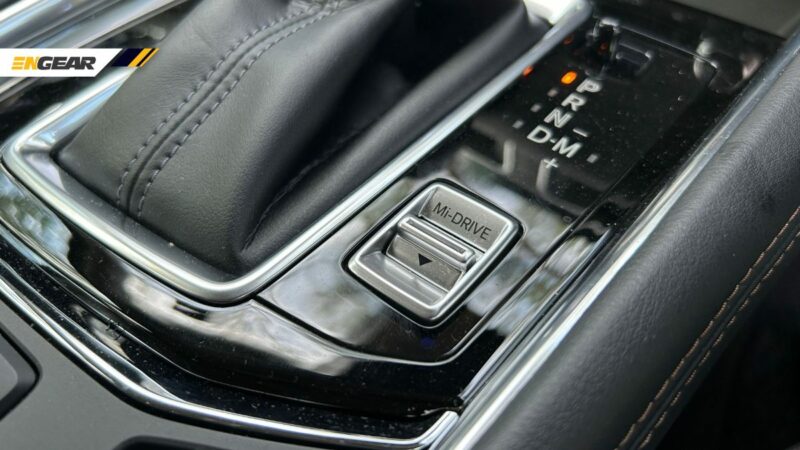
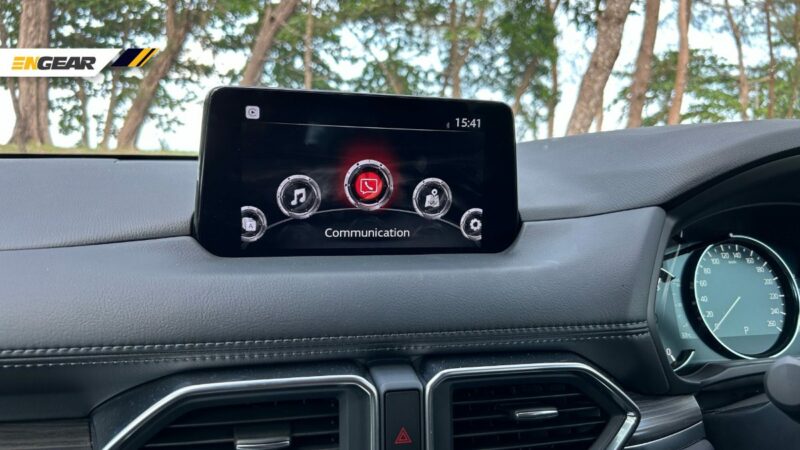
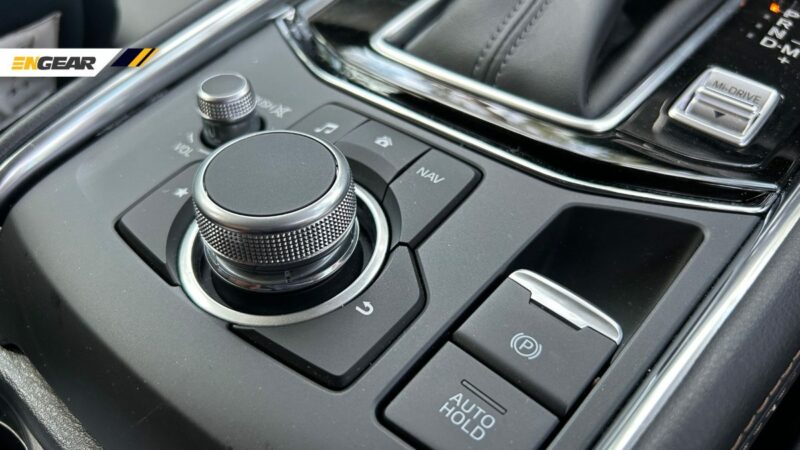
The writer also noticed a new Off-Road driving mode, in addition to the existing Normal and Sport modes. However, the infotainment screen in the middle with an 8-inch size feels a bit ‘stingy’, too small for a car like this. A 12.3-inch screen would be more fitting.
Power in mind all the time
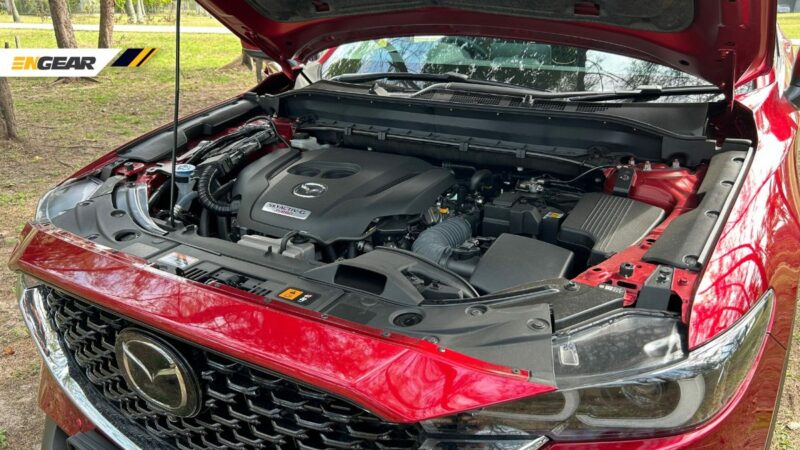
Driving this Mazda CX-5 2.5 turbo petrol, the writer frankly admits that power is at the forefront of their thoughts. The 4-cylinder DOHC engine produces 228hp at 5,000rpm and 420Nm at 2,000rpm.
This is generous power, ladies and gentlemen. While the infotainment screen may be lacking, the power is abundant, surpassing the 2.5 naturally-aspirated (192hp and 258Nm) or the 2.0 (162hp and 213Nm) engines.
The 420Nm torque of the 2.5 petrol engine is almost on par with the 450Nm torque from the 2.2 diesel engine. However, the diesel model is only 2WD, while the 2.5 petrol is AWD, which the writer finds more balanced. The power is distributed more effectively, with both the front and rear axles receiving engine output.
Driving the CX-5 2.5T is quite straightforward. It’s quiet, can stay in any gear, even in 4th gear at 2,000rpm, and when you gently press the accelerator, it doesn’t need to downshift. The car continues to move forward smoothly.
The writer tested it on high-speed twisty roads in Karak and low-speed twisty corners around Jengka, Pahang. This high power can be seen as a safety feature, providing the confidence to overtake on highways. Less time is needed to be in the opposite lane. What do you think?
The handling is not as sporty as the Mazda MX-5 even though the CX-5 is much more powerful. It’s still an SUV.
However, it’s enjoyable to control the heavy and large body smoothly with braking while downshifting, steering inputs while releasing the steering, keeping the right foot on the pedal for positive traction in corners, and then gradually pressing the pedal to the floor when the road straightens.
Upshift as the rpm approaches redline, then repeat as the next corner approaches.
Yes, Mazda is equipped with G-Vectoring Control Plus (GVC Plus) and the Jinba-Ittai philosophy. Both these elements provide controlled, precise, calm, and non-fatiguing driving, in the writer’s opinion.
Even though it ‘only’ comes with a six-speed gearbox, all gears are sufficient for powerful acceleration even with a heavy load (passengers and cargo), while allowing the engine to operate at reasonable rpms when cruising on highways.
However, the compromise for the abundant power is its fuel consumption. The writer can report that the Mazda CX-5 2.5T is not fuel-efficient. The writer struggled to achieve over 10km per liter. After around 1,10km of driving, the writer only managed 9.4km per liter (and a smile). AWD becomes more significant.
Earlier, the writer mentioned that the CX-5 2.5T now comes with an Off-Road driving mode. Although the pre-facelift version also had AWD, it did not have an Off-Road mode.
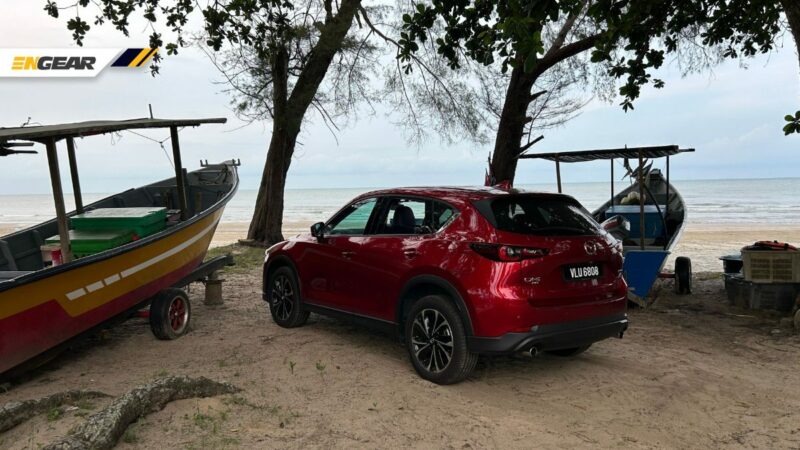
The writer had the chance to briefly test this mode on a sandy beach. The delivery of its power can be felt smoother and more relaxed. This mode should assist you in crossing mild off-road terrains without any incidents of tires ‘digging’ into the ground/sand.
Is it worth buying?
If you desire an SUV that appears modest but has the ability to outshine hot hatches at traffic lights, you should consider checking out this CX-5 2.5T AWD. It is a unique offering by Bermaz Auto Berhad, with hardly any close competitors.
It still maintains its power and capability, but the upgrades make it more current, sophisticated, easier to use daily, and safer.
All variants of the Mazda CX-5 2024 in Malaysia come with a 5-year or 100,000km warranty, with a complimentary maintenance package for the same duration and distance.
Following the safety test scandal of Daihatsu, the Ministry of Land, Infrastructure, Transport and Tourism (MLIT) of Japan has initiated an investigation into other domestic manufacturers.
In an official statement, Mazda stated it had conducted an investigation into all of its 2,403 tests for applications for Type Designation tests performed between January 2014 and January 2024. The investigation results confirmed irregularities in a total of five tests in two test categories.
The irregularities, which were reported to MLIT on May 30, involve 150,878 manufactured vehicles, out of which 149,313 were sold in the domestic market.
According to Mazda, they had used an “external device” in the frontal collision test for the Mazda 6 and Mazda 3, respectively known as Atenza and Axela in Japan.
The devise was used to trigger a timed activation of the airbag instead of spontaneous activation based on collision detection by an onboard sensor.
Even though these models are no longer being produced, Mazda said it has conducted in-house technical verification as well as re-tests, and confirmed that these models have the performance that meets the legal standards for occupant protection performance in the event of a frontal collision.
Additionally, Mazda admitted to using a different engine control software in the petrol engine output test for the MX-5 RF and Mazda 2.
“The test should have been performed using engine control software in the same condition as a mass-production vehicle, but it was conducted by using control software in which the ignition timing adjust function was partially deactivated,” the manufacturer said.
In light of the result, Mazda stated that they will rewrite the engine control software and conduct the tests again under the same conditions as those for mass-production vehicles.
The company assured that the affected units are still safe to drive but have temporarily suspended their sales since May 30.
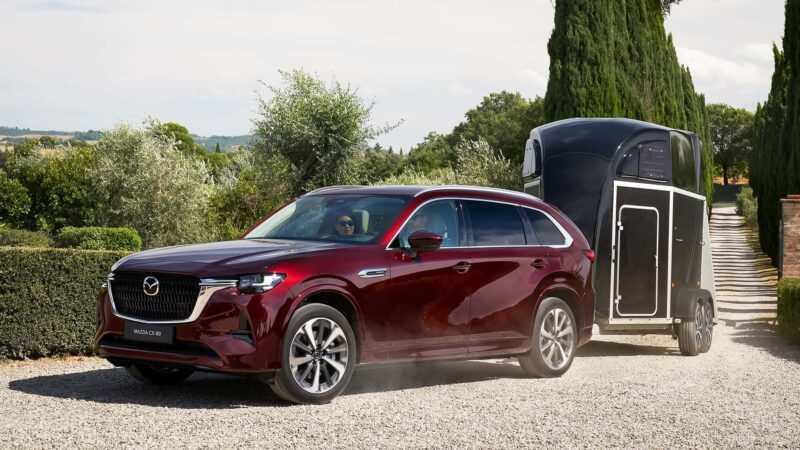
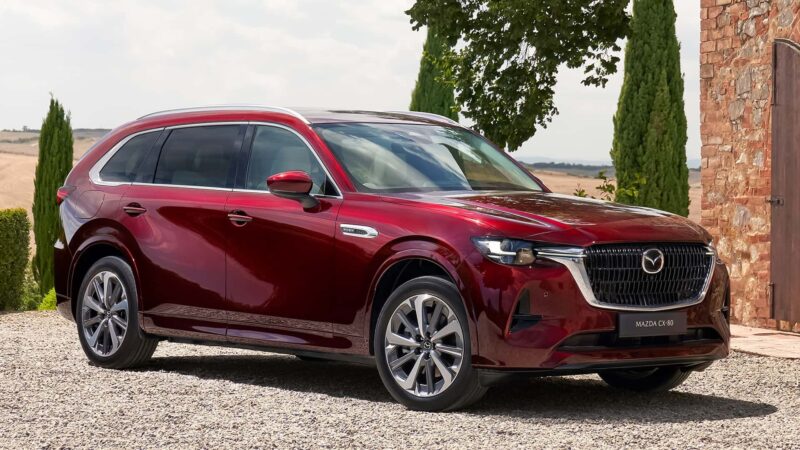
Mazda has finally completed their offering of a new generation SUV through the launch of a model that offers a three-row seating arrangement – the Mazda CX-80.
This mid-size SUV is Mazda’s fourth model to utilize the Large Product Group’s rear-wheel-drive platform, following the models CX-60, CX-70, and CX-90.
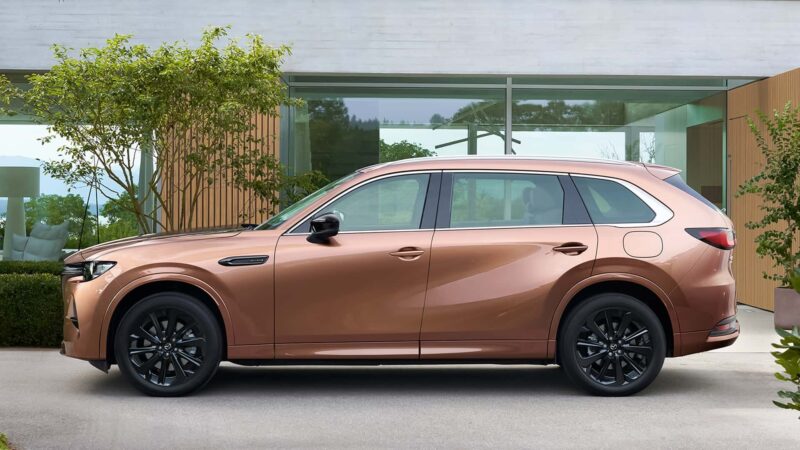
Unlike the CX-70 (with two rows of seating) and CX-90 (with three rows of seating) models, which share similarities in terms of dimensions, the CX-80 introduces larger dimensions compared to the CX-60.
The Mazda CX-80 measures five meters in length, with a wheelbase of around three meters, compared to the CX-60, which has dimensions of 4,745 mm in length and a wheelbase of 2,870 mm.
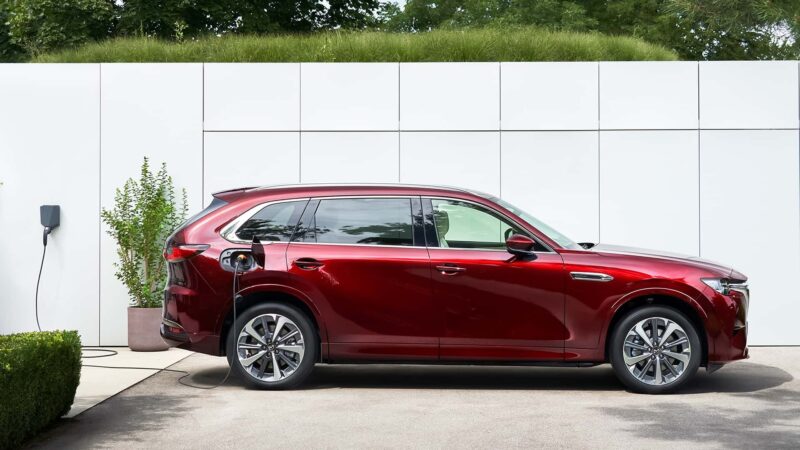
The CX-80 can be distinguished by the longer rear passenger door and window dimensions, followed by more prominent chrome accents on the sides.
This latest Mazda SUV offers a three-row seating arrangement, with a capacity for six to seven passengers at a time. Buyers can opt for a regular second-row seat (3 individuals), or accommodate two individuals with captain’s chairs and a center console.
There is also a configuration with two seats, where the middle space is left empty without a console to facilitate movement to the back. To maximize cargo space, the two third-row seats can be folded flat.
For the European market, the Mazda CX-80 offers the same powertrain specifications as the CX-60 model, with the option of a mild hybrid diesel engine or a plug-in hybrid (PHEV) powertrain.
The base version comes with a 3.3-liter in-line six-cylinder diesel engine producing 251 hp and 550 Nm, coupled with the 48V M Hybrid Boost mild hybrid system, all-wheel drive, and an 8-speed automatic transmission.
The more powerful version features the e-Skyactiv PHEV powertrain, consisting of a 2.5-liter in-line four-cylinder engine, electric motor, 17.8 kWh battery pack, with a total power output of 323 hp and 500 Nm.
The Mazda CX-80 PHEV is capable of offering an emission-free range of up to 60 km, with 0-100 km/h acceleration in just 6.8 seconds. Due to its shared platform with the Mazda CX-60, the layout of the dashboard also resembles what is offered in the two-row seating SUV model.
In addition to the use of premium materials, the Mazda CX-80 also offers advanced infotainment system equipped with Alexa voice control, support for Apple CarPlay and Android Auto, a 12.3-inch digital cluster screen, Bose sound system, and power outlets in the cargo space.
As standard, the Mazda CX-80 offers a space of 258 liters, and can reach a capacity of up to 1,220 liters when the third-row seats are folded flat. Need more space? Just fold down the second-row seats, and you’ll get a cargo space of 1,971 liters.
Pre-sales for the Mazda CX-80 are expected to start in May, and it will be arriving at dealerships towards the autumn season of this year. Mazda is also expected to launch the CX-80 model in the Japanese and Australian markets towards the end of this year.
BERMAZ Auto has officially launched the Mazda CX-5 facelift in the Malaysian market, offering it in five variants with a choice of petrol and diesel engines.
The five variants are as follows:
2.0G 2WD Mid (RM144,459.20)
2.0G 2WD High (RM161,469.20)
2.5G 2WD High (RM174,960.40)
2.2D 2WD High (RM180,322.80)
2.5G AWD High (RM188,760.40)
In terms of design, the CX-5 facelift retains the same general shape as before, but its front fascia has been redesigned to give it a three-dimensional look. The grille has also been touched up, while the central air intake is now more compact.
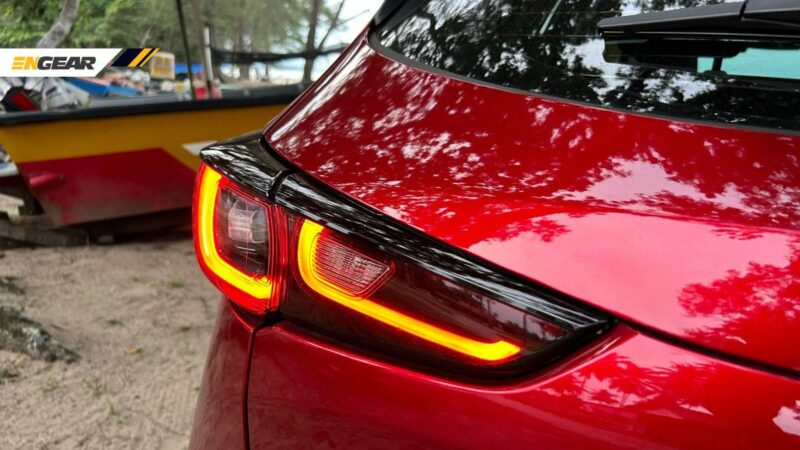
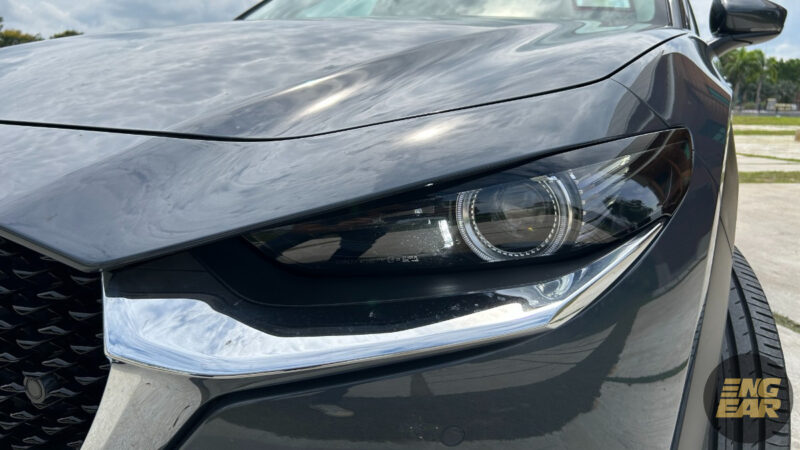
Not only that, the front and rear lights now feature new L-shaped LED graphics. The wheels come in two sizes, 17 inches for the 2.0G 2WD Mid and High variants, and 19 inches for the other variants.
The colours offered are Jet Black, Snowflake White Pearl, Machine Grey, Deep Crystal Blue, Soul Red Crystal, Polymetal Grey, and Platinum Quartz.
Inside, all five variants come standard with an eight-inch touch screen with wireless Apple CarPlay and Android Auto, six speakers, and four USB ports.
Other standard features include Stop Start technology, G-Vectoring Control Plus, and wireless charging. In addition, all variants except the 2.0G 2WD Mid get a 360-degree camera and paddle shifters.
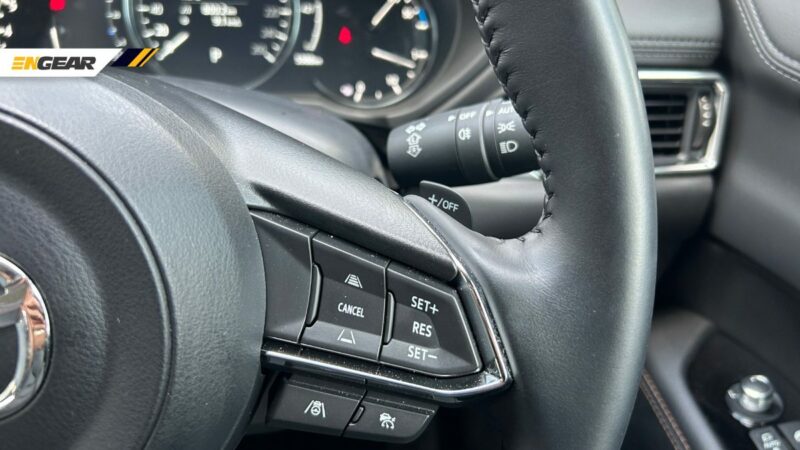
On the safety front, all variants except the 2.0G 2WD Mid are equipped with driver assistance systems which include Adaptive Front Lighting, High Beam Control, Blind Spot Monitoring, Rear Cross Traffic Alert, Lane Departure Warning, Lane Keep Assist, Driver Attention Alert, Smart City Brake Support, Smart Brake Support, Radar Cruise Control, and Cruising & Traffic Support.
As for the powertrain, both the 2.0G variants are powered by a SkyActiv 2.0-litre four-cylinder engine producing 162 hp and 213 Nm of torque, while the 2.5G 2WD High variant features a 2.5-litre four-cylinder engine with 192 hp and 258 Nm.
The 2.2D variant comes with a 2.2-litre four-cylinder turbodiesel engine with 188 hp and 450 Nm on tap. The range-topping 2.5G High AWD is powered by a turbocharged 2.5-litre four-cylinder engine that makes 228 hp and 420 Nm of torque.
The facelifted Mazda CX-5 comes with a manufacturer’s warranty for five years/100,000 km, along with a five-year/100,000 km free maintenance package.
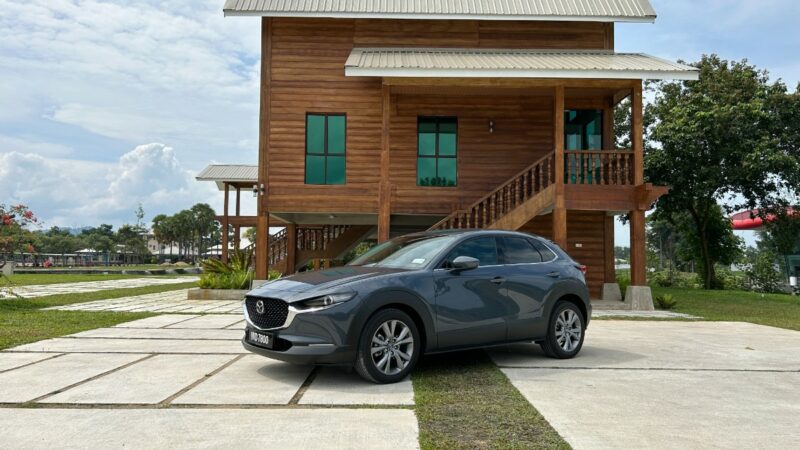
AS the Mazda CX-30 began making its way into the Malaysian market towards the end of 2019, the majority of us in the media deeply admired it. Not only does it look beautiful and sleek with curves and lines reminiscent of Italian SUVs, the CX-30 is also a joy to drive.
If you’re a driving enthusiast, the CX-30 will quickly win you over. However, the pricing of the CX-30 at that time was quite steep, causing concern for many potential buyers. This resulted in somewhat lackluster sales.
However, last year, Mazda Malaysia introduced a locally assembled CKD (completely knocked down) variant for this compact B-segment SUV, making its pricing more appealing. The CX-30 2.0G starts at RM131,000 and goes up to the 2.0G High+ Premium at RM159,000. This represents a discount of approximately RM13,000 compared to the 2019 2.0G model.
However, for this CKD version, all four variants now use only a 2.0-liter petrol engine, with no more option for the 1.8-liter diesel SkyActive-D as before, which used to cost over RM170,000.
Recently, we test drove the high-end mid-range variant, the CX-30 2.0G High+, priced at RM149,000. Is it worth it compared to models like the Honda HR-V and Toyota Corolla Cross? And who is the CX-30 for?
One class higher
Upon closer inspection, the Mazda CX-30 seems to occupy a class above other models in its segment. For example, the chrome strip under the front grille that extends to the left and right front lights is actually expensive to manufacture because it’s a large piece of thin chrome.
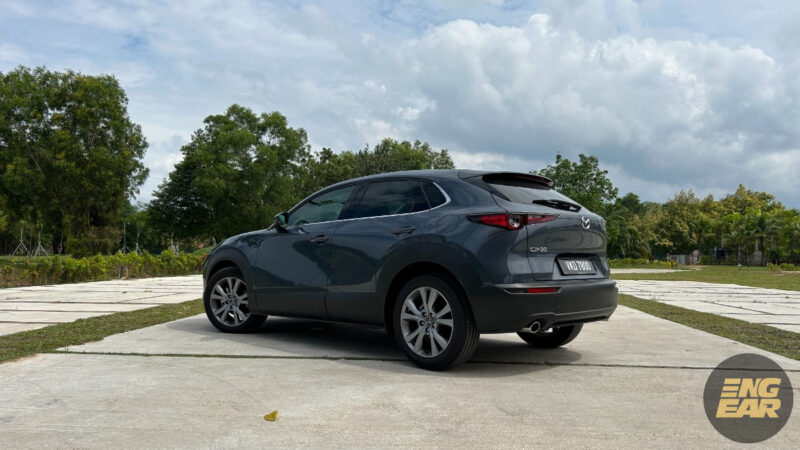
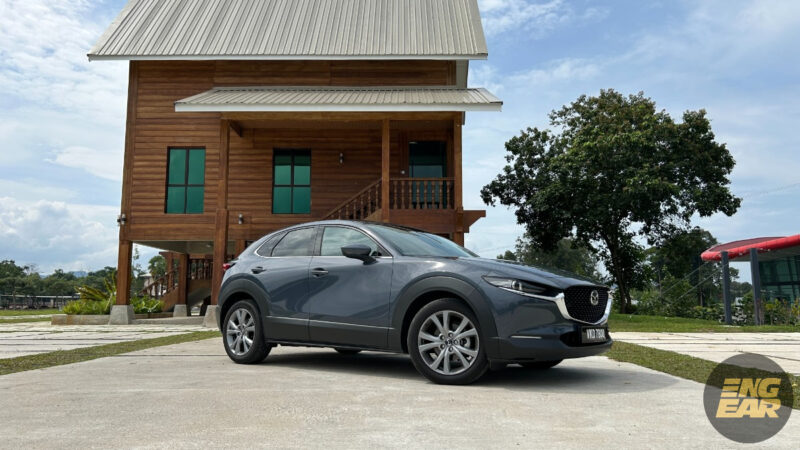
Then, the body panels from the fender, doors, to the rear of the car lack clear lines; instead, they curve and play with light in a captivating manner. It’s contoured and gives the CX-30 the image of a creature, not just a machine or object.
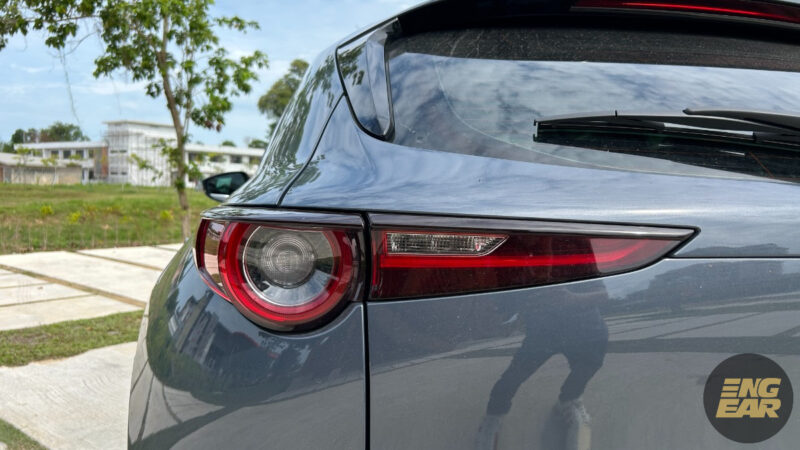
Such organic surfaces require a higher level of quality care and attention compared to conventional lines. The rear design is also quite elegant and sporty, resembling the more expensive Italian SUVs, like the Alfa Romeo Stelvio.
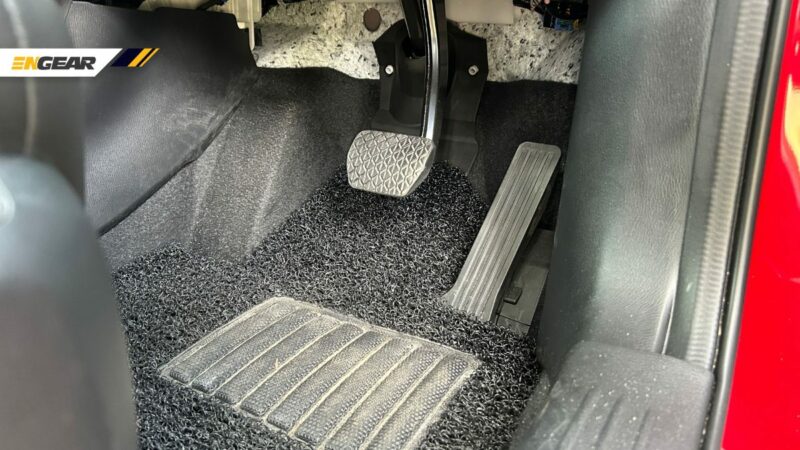
Inside, you’ll notice that the gas pedal in the CX-30 is an organ type, i.e., a hinged type on the floor. This automatically makes this SUV feel more expensive compared to models that use hanging pedals.
The same goes for the rpm and speedometer display. Only the rpm display is physical, while the speedometer is actually digital. However, Mazda has successfully made both of these look very similar. When you turn off the engine, you realize that the speedometer is a screen.
These are things we can’t see in brochures or specifications. So, it’s normal for us to have difficulty justifying the higher price of the Mazda CX-30. But after a test drive or spending a few days with it, then we can understand.
Sports car ‘compromises’
Beneath the front hood of the Mazda CX-30 lies a 2.0-liter SkyActiv-G naturally-aspirated petrol engine, capable of generating 162hp and 213Nm of torque. Although these figures may seem ordinary and not overly impressive, Mazda teaches us that sporty doesn’t solely mean high power output. Yes, the Mazda CX-30 is among the most sporty SUVs in its class, if not the sportiest.
Numbers aren’t everything when it comes to being sporty; it’s the way this SkyActiv engine revs up, responds, and sounds that gives you the feeling of being closely connected to the car.
From the ultra-fast response when you touch the gas pedal, to the smooth rise of the rpm needle to the 6,800rpm redline in manual mode, the sporty nature of the Mazda CX-30 shines through. The 6-speed SkyActiv-Drive gearbox used is a real 6-speed, not a virtual speed from a CVT like most of its competitors (except for the X50, which uses dual-clutch).
This means that the sensation of gear shifting is ‘real’ and genuine, not simulated. Shifting doesn’t need to be overly quick; what’s important is the adequate response, making you feel closely connected and familiar with this CX-30 powertrain.
As the revs approach the redline, your heartbeat quickens, accompanied by a pleasant sound at high revs, and when upshifting, your heartbeat subsides slightly, only to rise again when accelerating in the next gear.
The downshift also feels like a true sports car. Whether in automatic or manual mode, you can feel the clutch disengaging, the engine blipping for rev matching, and the clutch reengaging smoothly, yet sportily.
Don’t believe that output isn’t the determinant of a sporty feel? Well, consider the Lotus Elise with 217hp from a supercharged 1.8-liter engine, compared to the 255hp in the Mercedes C300 with a 2.0-liter turbo engine. Which one is more sporty?
So, this underscores the point that the ‘way’ an engine delivers its power or its character is more important than the numbers that we can just Google.
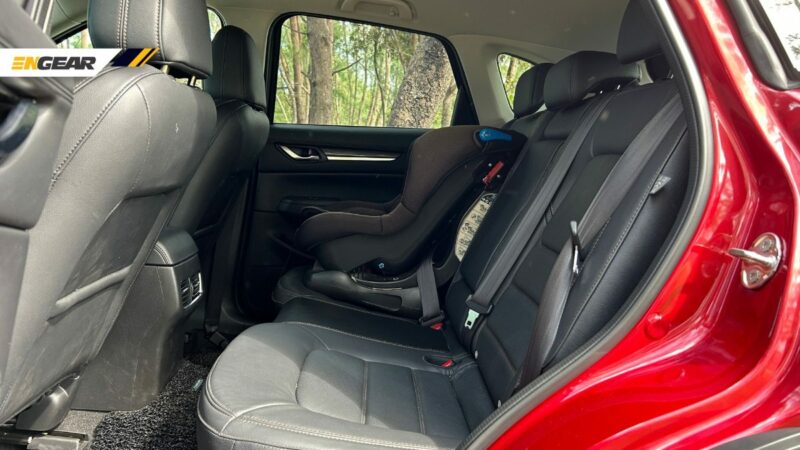
However, when driving a sporty vehicle, you might make some sacrifices in terms of space and practicality. In the case of the Mazda CX-30, I have to be honest and say that it’s not the most spacious in its segment. Adding to the issue is the black-brown color scheme in the cabin, which doesn’t help in this regard.
The seating is indeed comfortable and supportive, but when I had a stout passenger seated next to me and a rather tall one at the back, the cabin felt a bit tight. And if you sit in a low driving position, it’s somewhat difficult to see the left side and the rear corner of the car.
The dashboard panel and all switches and buttons are easily accessible, which is great as it gives us a sense of confidence and the feeling that the car is focused on the driver.
Not for everyone
Simply put, the Mazda CX-30 is not for everyone. It offers a delightful driving experience, suits dedicated and sporty drivers, but it may not be the best fit for most people.
If you’ve previously driven the Mazda MX-5 when you were single, the CX-30 is highly suitable for building a small family before transitioning to a larger vehicle when you have more than three children.
For the writer, I truly enjoy driving the Mazda CX-30 because its size is ideal for daily use, in addition to its responsive aspect and the precise driving feel offered by the Jinba Ittai concept. The CX-30’s design remains elegant and evergreen even as it approaches four years old, and Mazda has yet to provide any visual updates, which isn’t really necessary.
The CX-30 still looks fresh and new in the market. To answer the earlier question, the Mazda CX-30 may not appear worthwhile when compared to regular cars in its segment, but you will see better value when compared to models such as the MINI Countryman, Lexus UX, or Mercedes A-Class hatchback.
FINALLY, after four years in the market, the Mazda3 has received a facelift and update. It’s not to say that it necessarily needed a facelift because the Mazda3 still looks beautiful and fresh, but it might need an update in terms of specifications and features.
The updated Mazda3 for 2023 is offered in four variants for the Malaysian market as follows:
Mazda3 2.0 High Sedan – RM156,059
Mazda3 2.0 High Plus Sedan – RM166,059
Mazda3 2.0 High Plus Liftback – RM166,059
Mazda3 2.0 Ignite Edition Liftback – RM175,059
As you can see above, all variants now come with only a 2.0-liter engine for the sedan and Liftback (hatchback), meaning the 1.5-liter engine has been dropped. The 2.0 SkyActiv-G engine is featured in all models, with an output of 162hp and 213Nm torque.
This engine is paired with a 6-speed SkyActiv-Drive gearbox with manual mode. Fuel efficiency figures are up to 6.2L/100km for the sedan model, while it is 6.3L/100km for the hatchback.
For exterior features, all variants receive LED headlights, but LED DRLs are only available for the top three variants, with the High sedan model featuring LED fog lights. Other features are similar, such as LED fog lamps, auto-folding side mirrors, auto-dimming rearview mirror, and front and rear parking sensors.
The High Sedan comes with 16-inch wheels with 205/60 tires, while the three higher variants are equipped with 18-inch wheels wrapped in 215/45 tires.
Interior features for all models include leather seats with 10-way adjustment for the driver, electronic parking brake, 7-inch instrument display, color head-up display (HUD), and dual-zone air conditioning.
The infotainment system consists of a 10.25-inch central display, Apple Carplay and Android Auto connectivity, eight speakers, and two USB Type-C ports. A reverse camera is also standard, but the top variant, Mazda3 2.0 Ignite Edition hatchback, gets an additional 360-degree camera.
For safety systems, all variants come with standard features such as ABS, EBD, Dynamic Stability Control, Emergency Stop Signal, Hill Launch Assist, and ISOFIX. However, only the top three variants are equipped with advanced assistance systems such as adaptive headlights, Blind Spot Monitoring, Rear Cross Traffic Alert, Lane Departure Warning System, Lane-Keep Assist System, Driver Attention Alert, Smart Brake Support, and Mazda Radar Cruise Control.
All 2023 Mazda3 variants are fully imported, which is why their prices are higher compared to models like the Honda Civic and Toyota Corolla. What is your opinion, is it worthwhile to choose the Mazda3?
For us, this model always looks and feels more premium than its competitors, and although it looks ‘fresh’ in the market, it is indeed deserving of an update in features.
Malaysia’s Leading Automotive News | ENGEAR ENGLISH