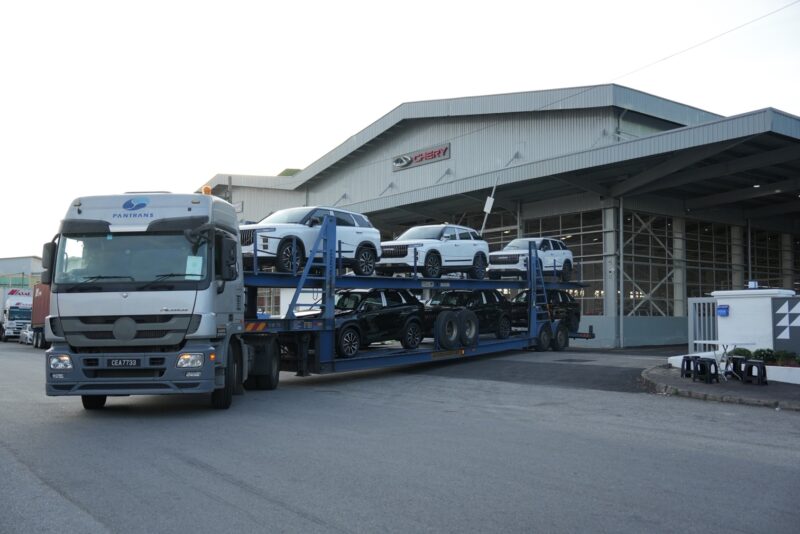
JAECOO Malaysia has officially begun delivering its first 500 units of the J7 premium off-road SUV to dealerships.
The brand has been at work over the past seven months setting up a self-sufficient ecosystem and network, which culminated in the official launch of the J7 in mid-July.
Three weeks since the launch, the brand is now fulfilling its promise of delivering the first batch of J7 SUVs in the third quarter of the year, well within its anticipated schedule.
“It has been a great year for Jaecoo beginning with an exciting preview period which led to an overwhelmingly positive reception during the official launch of the J7. We are very excited to deliver the first 500 units of our J7, and we are equally excited to place customers in the driver’s seat of Malaysia’s hottest premium off-road SUV,” said Chery Corporate Malaysia Executive Vice President, Leo Chen.
The first 500 units comprise the all-wheel-drive (AWD) variant. The next group, to be delivered in September, will comprise the two-wheel-drive (2WD) variant.
The J7 is priced at RM148,800 for the AWD variant, and at RM138,800 for the 2WD. Jaecoo’s pricing strategy has positioned the J7 as a formidable challenger in the C-segment SUV category as an attainable luxury brand.
“Our focus is on maintaining a steady momentum of delivering orders for the J7 in the coming months. We are also very happy to share that our network is ready to immerse our customers in the Jaecoo “From Classic, Beyond Classic” premium customer experience, from vehicle handovers to after-sales service,” said Jaecoo Malaysia Vice President, Emily Lek.
Both variants of the J7 come with a seven-year/150,000 km mileage warranty, a testament to the brand’s confidence in its innovation and quality.
Customers will be supported by a nationwide dealership network comprising 35 locations across the country, a dedicated production plant and a Jaecoo genuine parts warehouse, ensuring speedy and seamless after-sales support.
LIKE other industries, the automotive industry has benefited massively from technological advancements. Since day one, the vast array of clever innovations brought forward by car manufacturers has made driving more efficient, enjoyable, and safe.
However, as car companies rush to introduce the latest and freshest gizmos to fervent consumers, some so-called innovations render driving more complicated and cause drivers to lose focus instead.
In this writer’s opinion, these are the seven most useless car features:
Messaging app integration
Systems like Apple CarPlay and Android Auto are handy if you want quick access to navigation apps like Waze and music streaming services like Spotify. But their functionality is not limited to just that – these systems can also read and reply to messages you receive in WhatsApp or Telegram through voice commands. This can certainly be distracting for the driver.
Voice command
Voice command is designed to help drivers control certain car functions without having to take their hands off the wheel. Sounds great but based on this writer’s experience, there are voice command systems that have difficulty recognising and understanding Malaysian English, making the overall process more complicated and ultimately leading to distracted driving.
Gesture control
This is another feature that serves no real purpose other than to distract the driver on the road. The aim of this system is similar to voice command but instead of using voice to control it, user must perform hand gestures (pointing fingers, swiping left and right) to complete the simplest of tasks like turning the volume up or down or answering calls. What’s wrong with just using physical knobs and buttons?
G-Force meter
G-Force (G for gravity) is a measure of acceleration, which is created when an object speeds up, slows down or switches direction. In an aircraft, a G-Force meter is a vital tool for pilots to ensure they do not exceed the limits of the aircraft. In a car? The only real use is when you want to brag to your friends during the weekend trip to Genting Highlands.
Wireless charger
Most, if not all, modern vehicles come with USB Type A and Type C charging ports to allow passengers to charge their devices while in the car. Cables are great for charging but the cabin can get quite messy. Therefore, manufacturers have started placing wireless chargers in the cabin. It’s a good alternative but wireless chargers take a long time to charge and usually, the phone gets really warm.
Auto Start/Stop
This system is designed to reduce fuel consumption, but the way it operates can be very disruptive to driving, especially when you are in heavy traffic. In fact, the first thing this writer does every time he gets a test car is to turn off this function. How much fuel can really be saved with this system?
Air-con that can only be controlled via touchscreen
Over time, the number of physical buttons and knobs used in cars has significantly decreased. All functions are now integrated into the infotainment system and can only be accessed via touchscreen. This is probably the most effective approach if automakers want to design a modern, clutter-free interior but as a driver, certain functions like air conditioning still require physical control to allow us to maintain focus on the road.
Volkswagen Passenger Cars Malaysia (VPCM) has launched the exclusive Golf GTI Edition 50 as part of the Golf’s 50 years anniversary celebrations.
The hatchback is priced at the recommended retail price (RRP) of RM267,990, inclusive of Volkswagen Assurance Package (VAP), which supports owners with five years maintenance, five years unlimited mileage warranty, and five years roadside assistance.
The GTI Edition 50 is decked with an Oettinger body kit, new 18-inch Pretoria light alloy wheels in high-gloss black, black side mirror caps, exclusive Edition 50 emblems, and sporty side decorative films inspired by the signature GTI honeycomb.
Finishing touches to the are “Edition 50” tint, and “50” emblems on both B-pillars. The are two exterior colours to choose from, namely Oryx White and Moonstone Grey.
Inside, embellishments include a “50” emblem at the centre spoke of the GTI’s multi-function sport steering wheel, and “Edition 50” aluminium side scuff and front carpet mats.
No changes to the powertrain. The 2.0-litre TSI mill, which is coupled with a seven-speed wet clutch DSG, still generates a healthy 245 PS and 370 Nm.
Other niceties include a 10-speaker, 480-watt Harman Kardon premium sound system, a 10-inch Discover Media infotainment touchscreen with wireless Android Auto and Apple CarPlay, as well as a 10.25-inch digital instrument cluster.
Safety is supported with Volkswagen’s IQ.DRIVE technology and advanced driver assistance systems such as Travel Assist with Adaptive Cruise Control (ACC), Side Assist, Front Assist, Lane Assist and Head-up Display.
Driving a convertible car offers a unique and delightful experience that cannot be matched by any other type of vehicle.
The open roof and the wind playing with your hair will make you feel as if you are running freely on the beach, while in reality, you are actually surrounded by a concrete jungle.
If you are in the market for a convertible, you may need to make a choice between a hard top and a soft top. Both have their own advantages and disadvantages, but which one is a better choice?
Let’s delve into it:
Hard top
As the name suggests, a convertible car with a hard top has a, well, hard roof (usually made up of metal or composite panels) that can be automatically folded into a storage space behind the cabin.
However, there are also hard top cars with roof panels that need to be manually opened. Yes, the driver and passengers need to do everything themselves – get out of the car, unbuckle the roof panels by hand, and store them in a storage compartment. Repeat this process to put it back on.
Although this can be somewhat inconvenient, this type of roof has a number of advantages. Since it is made of the same material as the body, it has a much stronger construction.
This means it provides better protection for passengers against elements such as weather and noise. It is also more difficult to break into and arguably safer in the event of an accident.
On top of that, a hard top also has a more rigid structure, making it more agile and stable on corners.
However, the more robust construction means that the hard top has more components, making it heavier and slower to stow away compared to a soft top.
Not only that, this also means that a hard top is more prone to breakdowns and could cost a lot more to maintain. Another drawback is that some boot capacity needs to be sacrificed because it requires a larger storage space.
Some popular convertible models with a hard top include the Ferrari 296 GTS, Lamborghini Aventador Roadster, Chevrolet Corvette Convertible C8, and Mazda MX-5 RF.
Soft top
Unlike hard tops, a soft top convertible uses fabric and it usually comes in different colours from the body, though options are limited to dull shades such as black, maroon, cream, gray, and beige.
This type of roof has plenty of advantages. In terms of appearance, a soft top car provides class and elegance better than its hard top counterpart.
Due to its less complicated construction, it is also lighter and takes less time to be retracted. The simplicity in its build also means that it will not break down as often, and even if it requires any repairs, the cost will not be as high.
Not only that, a soft top also does not take up as much storage space, meaning you don’t have to worry about the trunk for a weekend trip with this car.
Of course, a soft top also has its downsides. First and foremost, the protection it offers is not as good as a hard top, and the NVH level is also greatly affected.
It is also quicker to succumb to wear and tear and much more vulnerable to thefts and break-ins, as the fabric used can be easily slashed with a knife.
Those who enjoy spirited driving every now and then will also find that the chassis of a soft top convertible is not as rigid as a car with a hard top convertible roof.
Here are some convertible cars that use a soft top: Mazda MX-5, Porsche 718 Boxster, Lexus LC Convertible, Ford Mustang Convertible, and MINI Convertible.
Which one should I pick?
As a buyer, the choice is ultimately in your hands. For this writer, the hard top convertible comes with more versatility as it combines the freedom of a convertible with safety and performance of a regular coupe or sedan.
Meanwhile, the soft top roof seems to be more suitable for those who value classic style and simplicity.
Either way, know that driving a car with an open roof will make every journey unforgettable, even if it’s just a quick grocery run.
EV Connection (EVC), the operator of JomCharge, and Gentari became the first parties to receive licences for public installation of EV charging systems in Sabah from the Energy Commission of Sabah (ECoS).
ECoS licences are equivalent to the licences issued by Suruhanjaya Tenaga (ST) in Peninsular Malaysia and are pivotal in ensuring safe installations that comply with safety standards to protect public usage.
EVC and Gentari were also the first parties in Peninsular Malaysia to be licenced by ST.
ECoS is a statutory body established by the State Government of Sabah since 10 January 2023. It operates as the official regulator for the energy sector within the Chief Minister’s portfolio.
The primary objectives of ECoS are to ensure secure, sustainable, affordable, and accessible energy for the State of Sabah.
It plays a pivotal role in shaping Sabah’s energy landscape, promoting responsible energy practices, and safeguarding the interests of both consumers and the environment.
Prior to the licence handover ceremony, ECoS organised a briefing session that was attended by representatives from BOMBA, local authorities, installation contractors, and EV Charge Point Operators (CPOs).
Haikal Zubir, Chief Operating Officer of Gentari Green Mobility remarked, “Gentari is committed towards supporting the green mobility transition across the whole of Malaysia. Being the first CPO to be licensed in Sabah in partnership with EVC underscores Gentari’s focus on safety, reliability and customer centricity in our operations.”
Ir Lee Yuen How, Managing Director of EVC commented, “We are very honoured to be one of the first CPOs alongside Gentari to receive these licences from ECoS. Public safety whilst charging has always been of paramount importance to us and we look forward to working closely with ECoS in ensuring this.”
As the number of EVs continuously grows in Sabah, EVC and Gentari are committed to supporting the Sabah EV Charging infrastructure that is required to underpin such growth.
This is in line with the sustainable energy agenda as a strategic initiative stated in the Sabah Energy Roadmap & Masterplan 2040 and also in tune with the federal government’s target of achieving 10,000 public chargers by 2025.
Like its main rival from Stuttgart, BMW has been actively expanding its range of electric vehicles in Malaysia.
After launching models such as the i5, i7, and iX1, to name a few, BMW Malaysia introduced the latest addition to the BMW i series, the iX2 back in May this year. It is offered in the single xDrive30 M Sport variant at a price of RM 297,000.
So what exactly is the iX2?
Just as the iX1 is the electric version of the X1, the iX2 is essentially an electrically driven X2. The difference between the iX1 and iX2 lies mostly in the shape and design, the latter looking almost eccentric thanks to a more angular design approach and a coupe-style roof.
Not only that, it also gains the Iconic Glow illuminated grille, larger wheels (20 vs 19 inches), and the M High-Gloss Shadowline package with extended content that brings black accents to the radiator grille, tailgate logo, and side mirrors.
However, under the stylish skin, the iX2 xDrive30 shares the same dual-motor electric powertrain as the iX1 xDrive30, which generates a total output of 313 PS (with boost) and 494 Nm.
On paper, the difference in performance between the two are not exactly night and day. The iX2 is capable of sprinting from 0 to 100 km/h in 5.6 seconds, while the iX1 does it in 5.7 seconds.
Despite using the same 66.5 kWh battery, the iX2 offers a longer WLTP driving range of 449 km compared to 438 km by the iX1. 11 km may not sound much, but it can make a big difference, especially when the range anxiety kicks in as the battery runs low.
So, for a price difference of almost RM12,000, you get a more stylish EV with a longer driving range. Is it worth it to spend the extra buck on the iX2?
For this writer, it heavily depends on the individual taste. Those who are more conventional and not exactly risk-takers will choose the iX1, while those who like to be distinct and stand out more will be drawn towards the iX2.
Folks who pick the iX2 will not only appreciate its voguish exterior but also take a fancy to its its modern and sophisticated cabin. Almost every touchable surface feels luxurious and premium, as they should.
The first thing that catches attention is the large curved display that actually houses two displays, a 10.25-inch digital instrument cluster and a 10.7-inch touchscreen for the infotainment system.
The BMW Operating System 9 provides bright, easy-to-read graphics and an intuitive, user-friendly interface, but there are some functions that need some ‘digging’ to be accessed. The infotainment system is commendable, but this writer personally prefers the MBUX.
In terms of comfort and practicality, the cabin of the so-called Sport Activity Coupe is comfortable enough for four passengers. The front seats are highly adjustable and have thigh support, while the rear seats are not too upright and offer ample head and legroom.
There is space for a fifth passenger, but they might not feel comfortable especially on long journeys because the middle seat is rather small.
To say the iX2 is spacious might be a little far-fetched but there is plenty of storage space in the cabin. Each door has a sizeable storage area and cup holder, while under the centre console, there is another decent-sized space for storing items like a wallet.
There is also a storage space located under the armrest, but it is only meant for small, flat objects like access cards.
In addition to USB Type C charging ports, passengers can charge their smartphone on the wireless charging tray that has a bar to hold the phone in place. That’s clever.
At the back, the iX2 offers a larger boot (525 litres) compared to the iX1, but due to its sloping roofline, fitting tall items can be a bit challenging.
But if you’re thinking of weekend trips with the family, the boot has enough space and can easily accommodate at least three or four luggages. The car is also suitable for your shopping trips to Ikea as the rear seats can be folded flat in a 40:20:40 configuration.
The driving character shown by the iX2 is as expected from a premium EV – it’s fast, comfortable on smooth roads, and quiet.
Perhaps it’s not all that silent seeing hard acceleration is accompanied by BMW’s IconicSound synthesised sound effect developed in collaboration with renowned composer Hans Zimmer. However, in terms of NVH, it is all good in the iX2.
Driving an EV can be a bit boring after a while so to make things more interesting, BMW has included a boost pedal that provides an additional push for 10 seconds. Though honestly, the output provided by the two-motor setup is good enough for most daily driving situations.
In addition, the iX2 can help reduce driver fatigue through the standard Driving Assistant Plus system, which includes features such as Lane Control Assistant, Automatic Speed Limit Assist, Autonomous Emergency Braking, and more.
During the four days of driving, this writer recorded an energy consumption level of around 15 to 16 kWh per 100 km with a normal driving style, involving 70% city driving and 30% highway driving.
Needless to say, achieving the claimed driving range is no easy feat, but with the iX2, you can at least extend the range by using the regenerative braking system that offers four modes, including Adaptive.
Navigating through winding roads is not a problem for this car because its suspension system is more on the firm side of things, meaning it excels in eliminating body roll. But sometimes you do feel that the weight of the battery is taking a toll on it its handling.
Despite its firmness, the suspension system shows it can be quite comfortable for highway driving. However, it is not too keen to be driven on bumpy and uneven roads in urban areas. Hitting a pothole will send a jolt to the entire car.
In the city, the iX2 is overall easy to drive. That being said, you have to be mindful when reversing as the rear window is quite small due to to the sloping roofline. Thankfully, the car comes with a 360-degree camera.
If that’s not enough, you can also make use of the Reversing Assistant and Lateral Parking Aid for easier parking maneuvers.
Conclusion
Does the iX2 xDrive30 M Sport make sense in the current market? Honestly, at a price of nearly RM300,000, you could actually get another EV that offers high power and a longer range, like the Volvo C40.
However, the iX2 has its own unique appeal. Looks are subjective but the iX2 does have a stronger visual impact than its closest competitors, and it handles really well on the road – probably much better than the Swedish EV or the Mercedes-Benz EQA. And that’s good enough for this writer.
Mercedes-Benz Malaysia (MBM) has announced the arrival of the limited edition Mercedes-AMG A45 S 4Matic+ Limited Edition in the local market.
Since it’s a limited edition model, only 10 units of the A45 S Limited Edition will be offered in Malaysia, each priced at RM558,888 OTR without insurance. Bookings can be made through the online showroom at Mercedes-Benz Store.
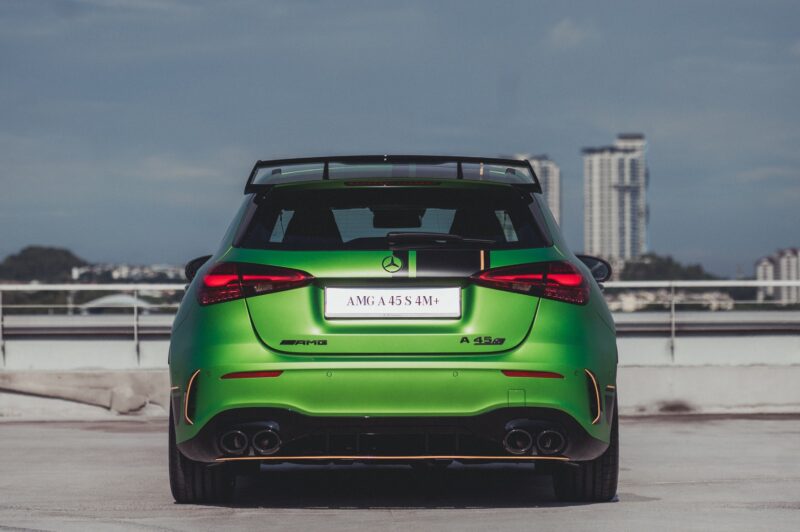
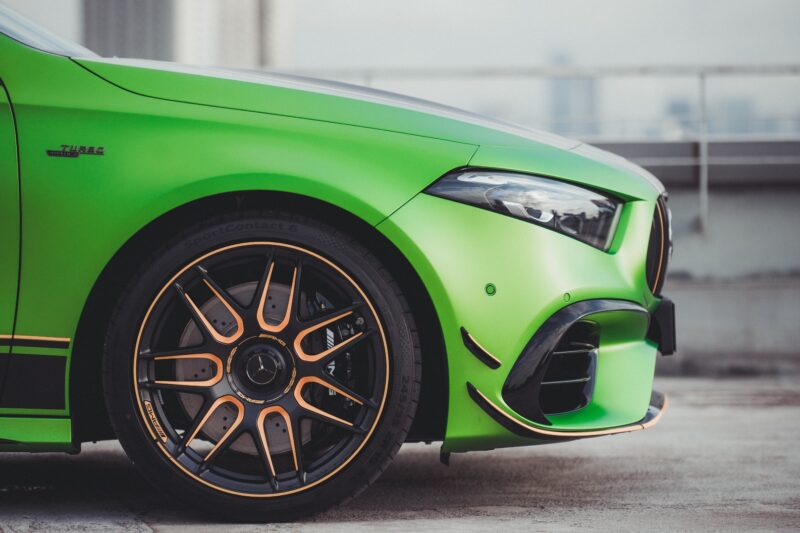
First and foremost, the A45 S Limited Edition sets itself apart from the standard version through the AMG Green Hell Magno colour, which was first introduced in 2018 through the Mercedes-AMG GT R.
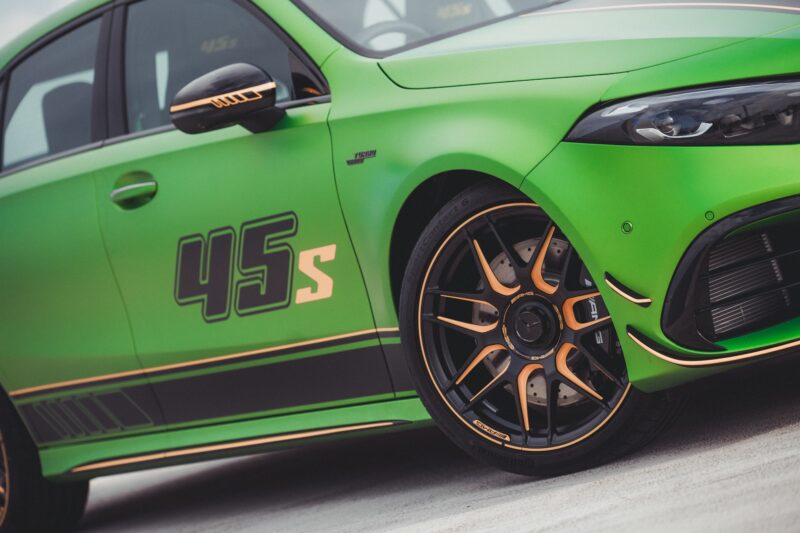
The striking green hue is complemented by yellow stripes on the body and rims, as well as the AMG crest on the bonnet and ’45 S’ lettering on the doors. It rides on 19-inch AMG forged wheels in a model-exclusive seven-twin-spoke design.
Hidden behind the wheels are AMG High Performance brake calipers which are coloured glossy black and have white AMG logos.
Completing the exterior package are the exclusive fuel cap with the AMG logo and the light projector that shines the AMG coat of arms onto the road when you get in and out of the vehicle.
The A45 S Limited Edition comes with three equipment packages, namely the AMG Night Package, AMG Night Package II, and AMG Aerodynamics Package.
The AMG Night Package includes elements in black and high-gloss black such as the front splitter, side mirrors, and beltline, while the AMG Night Package II brings darkened struts on the radiator trim as well as the black chrome typography on the front fenders and tailgate.
The AMG Aerodynamics Package, as the name suggests, includes special add-on parts and a fixed AMG rear wing that were developed in a wind tunnel.
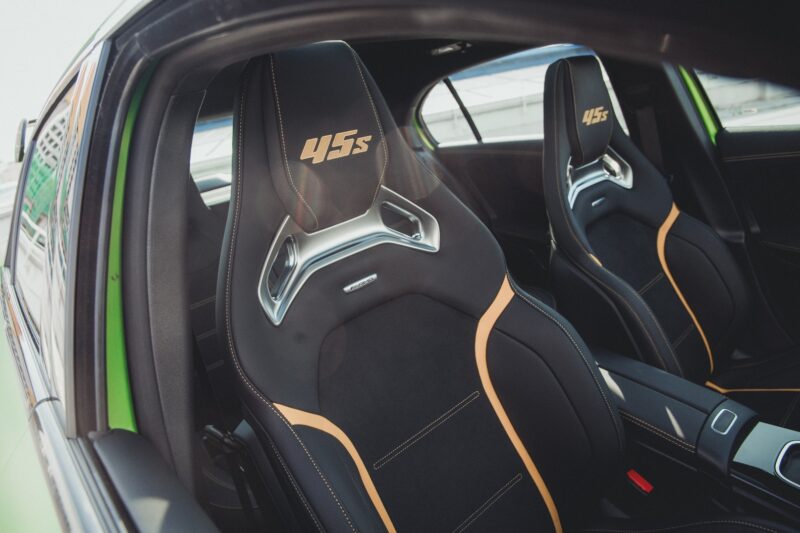
Inside, you’ll find AMG Performance seats wrapped in Artico man-made leather and Microcut microfibre. Like the exterior, yellow stripes are used to adorn the seats, door panels, and instrument panels.
Additionally, there are also an AMG Performance steering wheel with Nappa leather/Microcut wrap, ’45 S’ embroidery on the headrests, aluminium trim elements with AMG pattern and yellow AMG lettering, AMG floor mats, and illuminated AMG door sill panels.
The A45 S Limited Edition is powered by a 2.0-litre turbocharged four-cylinder engine producing 421 hp at 6,750 rpm and 500 Nm from 5,000 to 5,250 rpm.
With an eight-speed dual-clutch automatic transmission and the 4Matic+ all-wheel-drive system, it can accelerate from 0 to 100 km/h in 3.9 seconds before maxing out at 270 km/h.
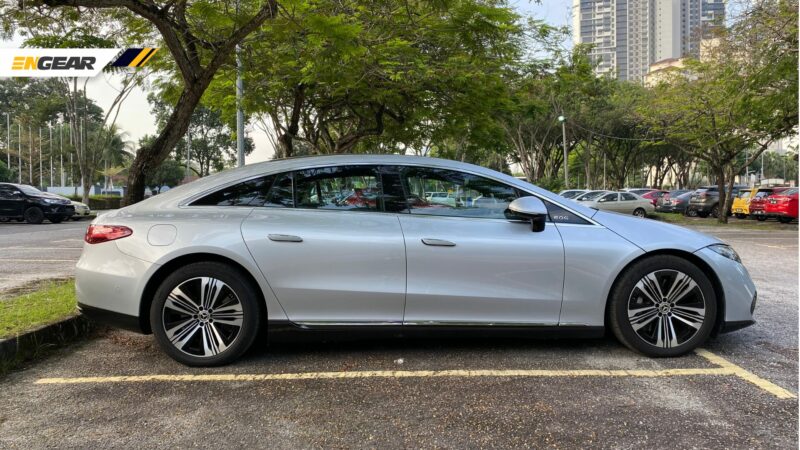
For the Malaysian market, the Mercedes-Benz EQS 500 4Matic, along with the SUV version, represents the flagship offerings in the brand’s electric vehicle lineup.
It was first launched in Malaysia in July 2022 in the fully imported EQS 450+ guise. Less than a year later, Mercedes-Benz Malaysia (MBM) pulled the covers off the locally assembled EQS 500 at its manufacturing plant in Pekan, Pahang.
Undeniably, as the highest variant in its lineup, the EQS 500 offers luxury and top technology for its customers, but for this writer, it still has some discernible shortcomings.
It’s not an S-Class
Some may have thought that the EQS is the electric version of the S-Class. This may be true in some ways but it is worth noting that the EQS is based on the automaker’s dedicated electric platform known as Electric Vehicle Architecture (EVA), while the S-Class is underpinned by the Modular Rear Architecture (MRA2) platform.
This gives the EQS a slightly smaller footprint than the S-Class, with a length of 5,216 mm, width of 1,926 mm, and height of 1,512 mm. The wheelbase is also 6 mm shorter at 3,210 mm. The interior is spacious but not as roomy as the S-Class.
Unconventional design
Unlike the S-Class, which exudes elegance in its traditional ‘three-box’ shape, the EQS has a much more unique appearance highlighted by its oval-shaped body. According to Mercedes, the shape plays a significant role in helping the EQS achieve a drag coefficient of 0.20, making it one of the most aerodynamic cars in the world.
While most were intrigued by its futuristic appearance, this writer can’t help but think how the EQS looks like an egg on wheels.
The MBUX Hyperscreen takes the cake but…
Inside, the centrepiece is Mercedes-Benz’s impressive MBUX Hyperscreen infotainment system, which combines three displays: a 12.3-inch digital driver instrument cluster, a 17.1-inch OLED touchscreen in the middle, and a 12.3-inch OLED touchscreen for the front passenger.
It has to be said that the giant display does make the EQS look somewhat like a spaceship, but the glass panel picks up smudges and fingerprints easily.
Say auf Wiedersehen to physical buttons
Save for the start stop and hazard light buttons, the majority of the vehicle’s functions, including the air conditioning system, can only be accessed through the central touchscreen. Needless to say, this will increase driver distraction.
On top of that, the touch panels on the steering wheel are not exactly user-friendly, and it will take some time getting used to.
Air suspension is supple but a little too soft
On the highway, the EQS demonstrates why Mercedes-Benz’s air suspension is among the best in the market. It absorbs every undulating surface so smoothly that long journeys are hardly felt.
However, on normal roads, this writer needs to be careful as the suspension is quite soft and tends to bottom out if the car is driven too fast over bumps. The suspension can be raised to increase the ground clearance but that means having to fiddle with the infotainment menu while driving.
PROTON posted a strong start to the second half of the year with a total of 15,103 units sold in July (domestic and export).
The national automaker says the figure is the highest since September 2022 and represents a 37.3% jump over the previous month.
Total year-to-date sales (YTD) up to the end of July stand at 88,799 units, allowing Proton to cement its hold on second place.
Total industry volume (TIV) for the month is estimated to be 73,761 units, an increase of 27.1% over the previous month while the estimated market share for Proton in July has increased to 20.5%.
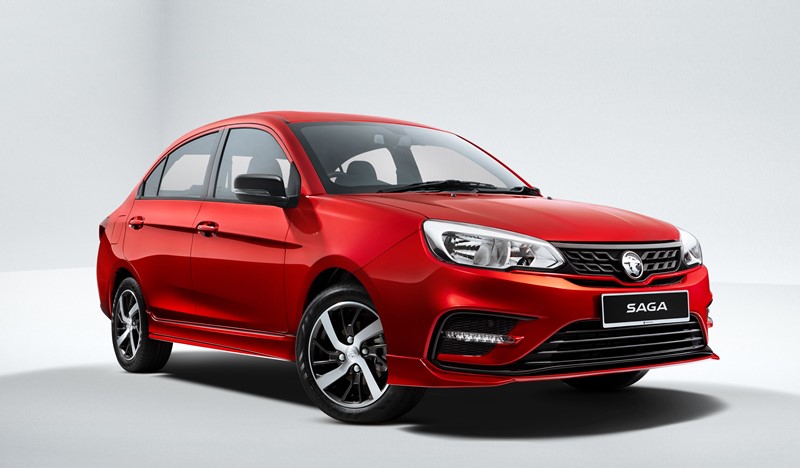
Proton’s sales growth in July was led by the Proton Saga with 7,855 units sold, marking the best achievement for the model since October 2013.
This brings total YTD sales for the Saga to 42,693 units, which is 8.8% ahead of sales from 2023.
Other Proton models also achieved sparkling results. The X50 recorded its best sales of the year with 2,585 units sold in July, bringing YTD sales to 12,789 units.
The Persona also recorded its best sales month of 2024 with 1,911 units sold bringing its YTD total to 11,664 units.
The S70 recorded 1,636 units sold in July and has a cumulative YTD figure of 12,550 units.
“July has been the best sales month for Proton in 2024 so far, setting the tone for what we hope is a productive second half of 2024.
“There are many plans to be executed in the coming months, starting with the 2025 Proton X70 which will be launched in August. At the same time, the groundwork for the launch of Proton’s first EV model is also proceeding rapidly, which will lead to the launch of the first Malaysian EV,” said Roslan Abdullah, Chief Executive Officer, Proton Edar.
SPOILERS look stunning when installed on the right car, but did you know that this component actually has another use besides sprucing up your ride?
Like the name suggests, spoilers are tasked to “spoil” the airflow that affects the stability of the car. In other words, spoilers are used to reduce the negative effects of the airflow.
The popularity of spoilers began to rise around the 1960s when vehicle manufacturers were seeking ways to improve the aerodynamics of race cars.
Thanks to fuel economy regulations, spoilers later began to be widely used on passenger cars to allow manufacturers to achieve better fuel efficiency. The first car to come with a spoiler was the 1967 Dodge Charger.
Just by mentioning the word spoiler, you might imagine a wing-type spoiler that sits on the rear deck lid.
Yes, that is a spoiler, but spoilers also come in different shapes and sizes, and can be fitted to the front and sides of the car to improve aerodynamic efficiency.
When a car is moving at a high speed, a vast amount of air can flow underneath it, creating “lift” which reduces grip and affects the stability of the car.
This can be overcome by installing a spoiler or splitter beneath the front bumper. It essentially blocks the air flow from getting under the car and helps direct air to cool the brakes and other components.
At the rear, the air flow tends to be more turbulent, so a spoiler is used to generate downforce that will push the car down into the ground. This will provide the car with better traction, making it more stable and agile in turns.
That being said, installing a spoiler also has its drawbacks. Besides the added weight, the main problem with spoilers is that they also create drag that can affect the maximum speed and fuel efficiency.
Additionally, a high spoiler can obstruct the driver’s view, especially when looking at the rearview mirror while reversing.
With technological advancements, some manufacturers now offer active aero elements on their vehicles. The strong point of this system is that it can automatically adjust the aerodynamic features based on the vehicle’s speed.
Among the main components of active aerodynamics are the front grille, front splitter, diffuser, and spoiler. The first car to have active aero was the Porsche 959 but it was the Volkswagen Corrado that made the technology much more attainable.
ISUZU Malaysia has launched Isuzu Insurance Pro, a new comprehensive insurance policy designed to ensure their Isuzu vehicles and drivers are well protected.
According to the company, Isuzu Insurance Pro is available for all Isuzu vehicles, be it for new purchases or renewals.
It is underwritten by a panel of five major insurance and takaful companies and covers all D-Max models as well as the full range of light-, medium- and heavy-duty trucks such as ELF, FORWARD and GIGA including prime movers.
List of benefits include:
fast approvals for claims below RM20,000
unlimited number of free 300 km round-trip towing for D-Max
three free 100 km round-trip towing for ELF models
free all drivers coverage
flood relief benefits
key-loss coverage
motor personal accident coverage of up to RM10,000 for both policy holders and authorised drivers
Other benefits include 24/7 roadside assistance, 10 years of betterment and excess exemption, and agreed value up to 10 years for D-Max and for the first year for Isuzu trucks.
All insurance claims made under the Isuzu Insurance Pro programme will be honoured with full Isuzu genuine parts as long as the vehicles are returned to authorized Isuzu centres for claim.
“By introducing Isuzu Insurance Pro, not only have we created a one-step solution for our customers, the numerous benefits that come with the policy ensures that our owners receive targeted, speedy and convenient protection that have been customized to exclusively benefit Isuzu owners,” said Isuzu Malaysia’s Chief Executive Officer Shunsuke Okazoe.
Purchase of Isuzu Insurance Pro is only available through authorized Isuzu dealers beginning August 5 th 2024. Early subscribers will receive an early bird gift of an exclusive Isuzu Insurance Pro merchandise.
Have you ever noticed the letters and numbers written on the side of your car’s tyres?
For your information, these letters and numbers are not randomly placed by the tyre manufacturers. Each of them has a specific meaning that can help you choose the right tyres for your vehicle.
What should you look for when selecting tires?
Besides the brand and the tyre model itself, you need to choose the correct tyre size. Tyres don’t come in Small, Medium, or Large sizes like clothing; instead, you should look for a sequence of numbers and letters that might be written like this:
175/65 R14 82H
It may seem confusing to the uninitiated, but deciphering the code above is not rocket science.
Firstly, the number “175” represents the width of your tyre in millimeters. Therefore, the tyre above has a width of 175 mm.
After the slash, the number you see is the aspect ratio, which tells you how tall your tyre profile is. It’s not in millimeters but as a percentage after dividing a tyre’s height off the rim by its width.
Hence, “65” here means the tyre’s height is 65% of its width.
Next, the letter “R” refers to the construction of the tyre, which is Radial. This is the most common construction for passenger vehicle tyres.
The number after R indicates the size of the rim diameter in inches. This means a tyre with the 195/55 R15 dimension would fit a 15-inch rim.
The next number indicates the load index, the maximum load a single tyre can carry at full inflation. Each number corresponds to a specific load capacity listed in an index. For instance: “85” means the tyre can carry a load of up to 515 kg.
The letter after the load index refers to the tyre’s designed speed capability or in other words, it’s the fastest speed a tyre can handle before its performance is affected. The letter H means thys tyre can reach a speed of 210 km/h.
You can also find out when a tyre was manufactured by looking for a four-digit code usually located near the Department of Transport (DOT) marking.
The first two numbers indicate the week, and the last two numbers are the production year. Therefore, the code “0523” indicates that the tire was manufactured in the 5th week of the year 2023.
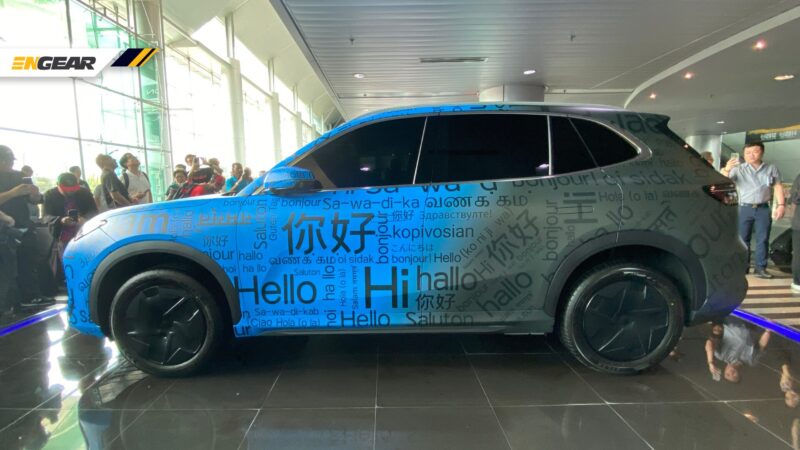
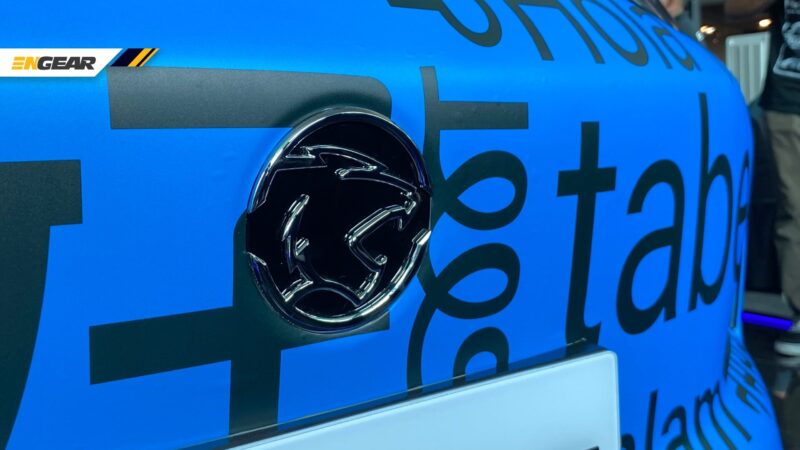
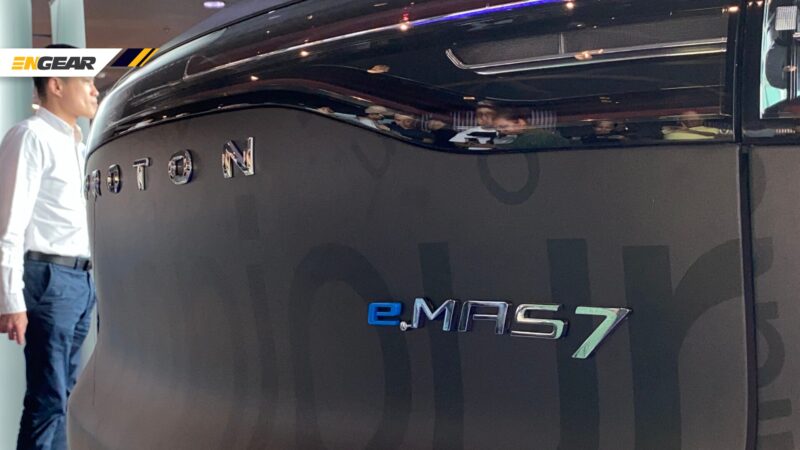
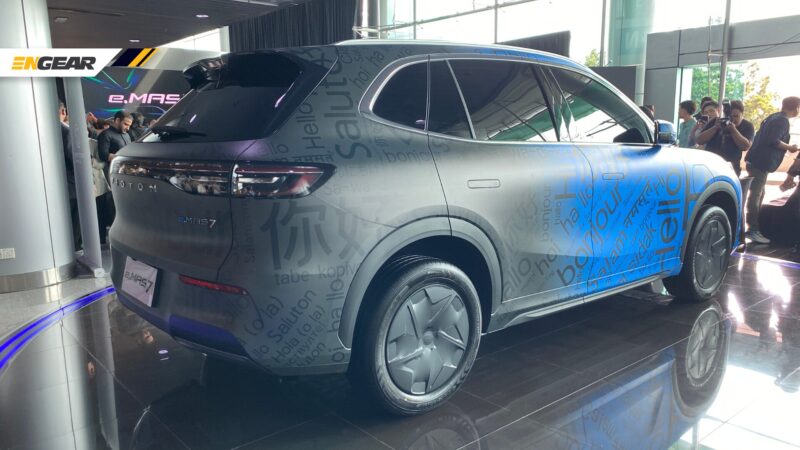
PROTON has announced that Malaysia’s first local electric vehicle (EV) will officially be known as the Proton e.MAS 7. The electric vehicle brand was revealed last June and will be managed by Pro-Net.
The e.MAS 7 is developed based on the Global Modular Architecture (GMA) platform and has dimensions of 4,615 mm in length, 1,901 mm in width, 1,670 mm in height, and a wheelbase of 2,750 mm.
The GMA platform supports Cell-to-Body (CTB) architecture which enhances structural strength, increase interior space, improves stability in high-speed cornering, and overall handling.
Proton says the e.MAS 7 will feature a 12-in-1 intelligent electric propulsion system,, although specific details such as motor count and output are yet to be disclosed.
The powertrain gets its juice from Geely’s Aegis short blade battery, which is said to offer higher energy density, improved safety, and better durability.
The interior is yet to be revealed, but according to Proton, the e-MAS 7 will be equipped with the Flyme Auto Connectivity System that integrates with the local IHU system.
There’s a Telematic Service Provider that supports various advanced functions, bringing intelligent technology directly to the consumer.
At the preview, Proton reiterated that the e.MAS 7 was developed in collaboration with Geely and is not merely a rebadge of the Geely Galaxy E5, as previously assumed by many.
Over 100 Proton engineers were involved in the project. The e.MAS 7 has undergone rigorous testing, with 700,000 manhours and 10 million kilometres of testing performed to verify its durability and reliability.
Since the announcement of the e.MAS brand name and the subsequent introduction of 18 Proton e.MAS outlets in June, Pro-Net has now expanded its reach to a total of 29 outlets.
The company aims to have 25 Proton e.MAS showrooms operational before the launch of the public launch of the e.MAS 7.
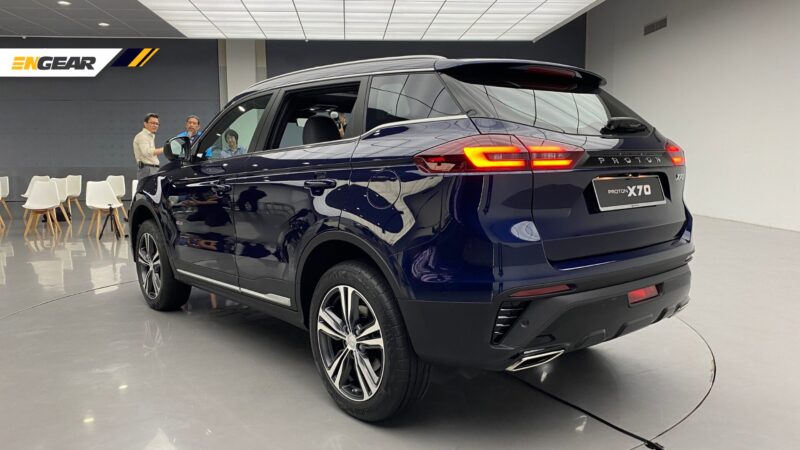
The first product to be born of the Proton-Geely partnership, the X70, has been in the market since December 2018.
During that period, it has received several updates to keep things fresh but for the 2025 model, Proton has given the SUV more comprehensive improvements.
Here’s what you need to know about the Proton X70 2025:
It is available in four variants, namely Standard, Executive, Premium, and Premium X.
Proton says the facelift model features 360 new components, with the R&D process taking 290,000 hours. Road tests have been conducted covering a distance of 4.2 million km.
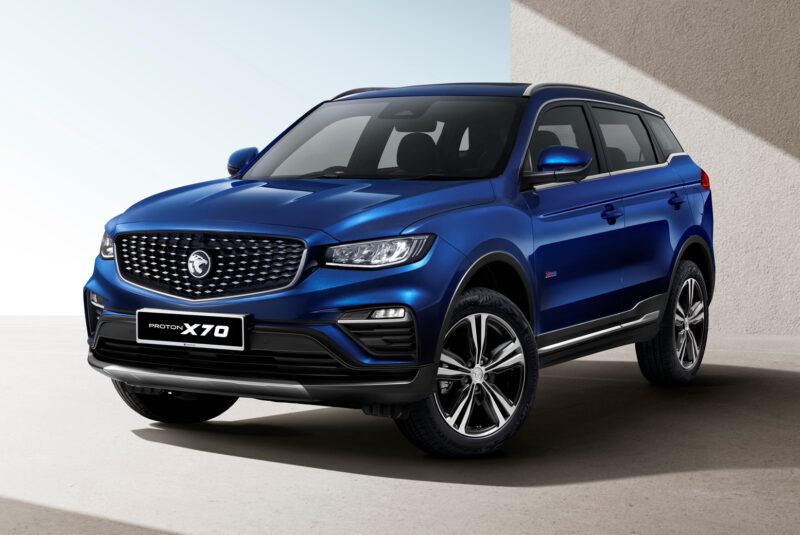
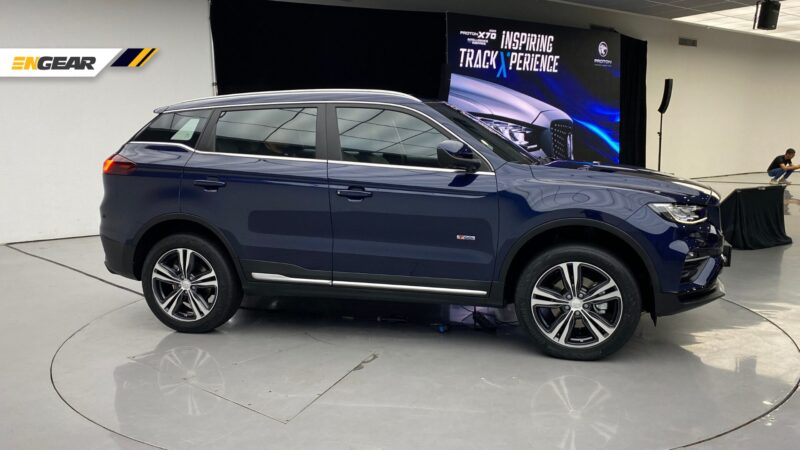
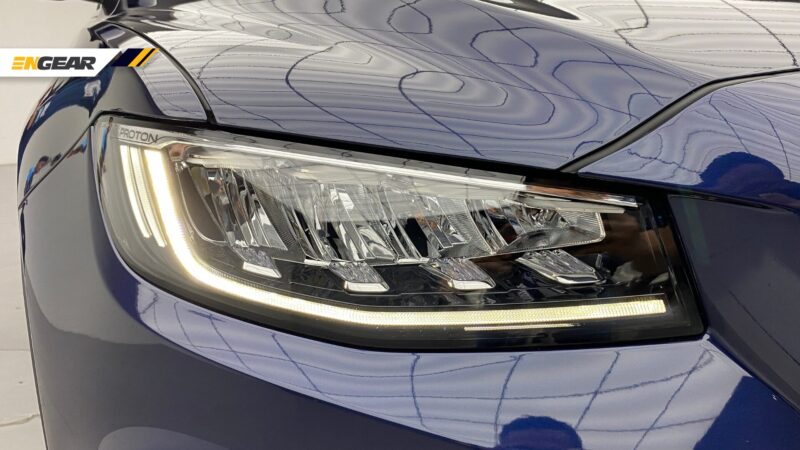
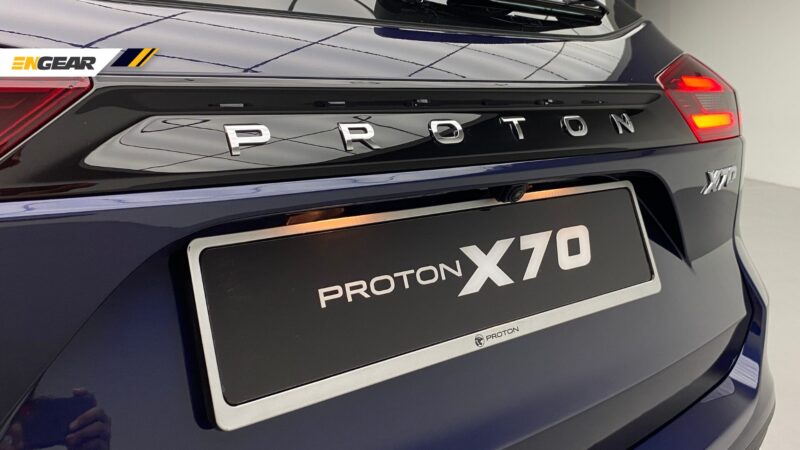
The X70 2025 boasts a fresher carried over from the Geely Boyue facelift 2022. In addition to new LED lights, it comes with a larger grille with diamond-like studs, as well as a redesigned hood, front and rear bumpers, as well as tailgate.
It also gets newly designed 19-inch alloy wheels for the Premium and Premium X, and 18-inch for the Executive.
Five colours to choose from: Snow White, Amour Silver, Jet Grey, Ruby Red, and the new Marine Blue.
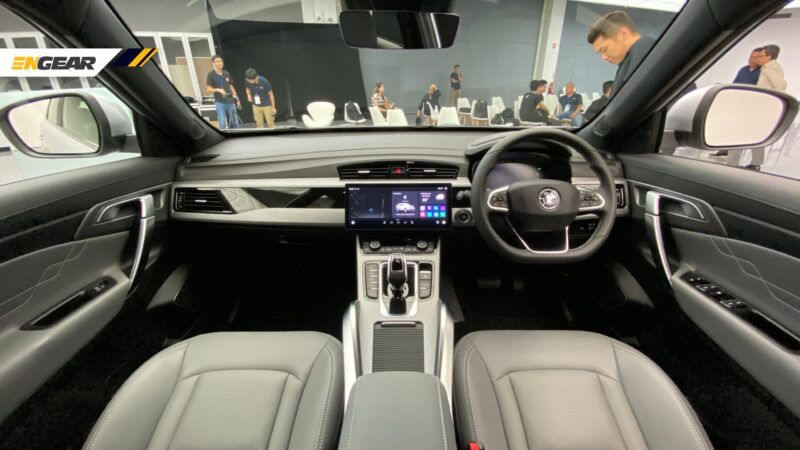
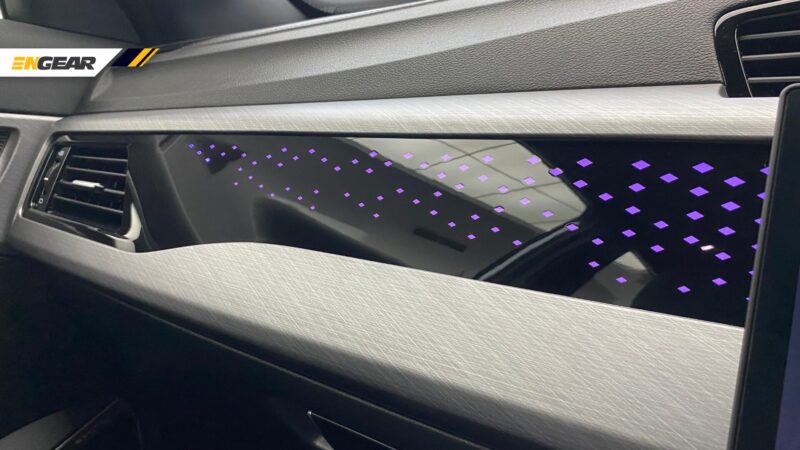
The dashboard now features a piano black panel with 72-colour “rhythmic” ambient lighting.
Placed in the center of the dashboard is a new 12.3-inch infotainment touchscreen. For the first time for Proton, Apple CarPlay and Android Auto are onboard.
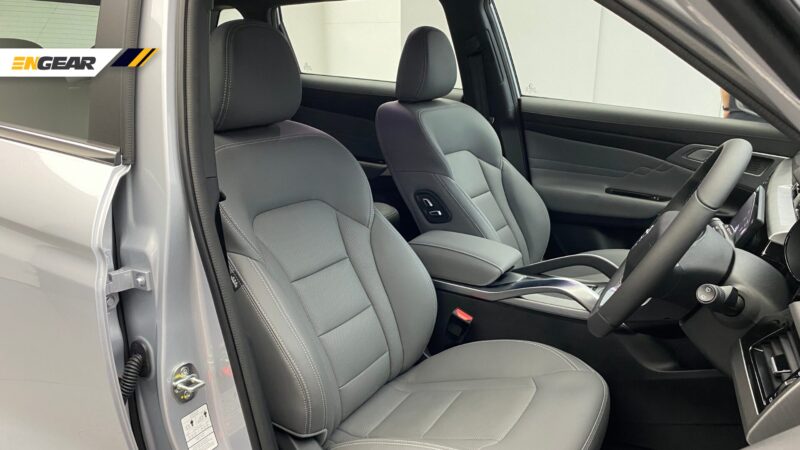
Additionally, the X70 2025 receives a new steering wheel, a new display on the LCD meter panel, and Nappa leather upholstery in Stone Grey.
In terms of features, the X70 now comes with Walk Away Auto Lock, while its powered tailgate now has the Nearby Auto Open function for hands-free operation.
ADAS is available on the Premium and Premium X variants. It includes several new features such as Adaptive Cruise Control with Stop & Go, Intelligent Cruise Control, Lane Departure Warning, Lane Departure Prevention, Lane Centering Control, Traffic Sign Information, and Rear Collision Warning.
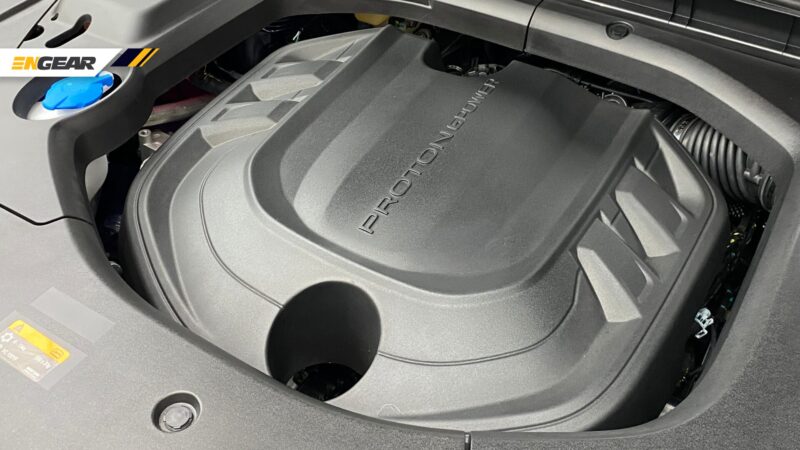
All variants are powered by a 1.5-litre TGDI three-cylinder engine producing 5,500 rpm and 255 Nm from 1,500-4,000 rpm. It is paired with a seven-speed DCT transmission.
With improvements in areas such as combustion efficiency, thermal management, and friction reduction, Proton claims the engine achieves a fuel consumption of 7.3 litres/100 km, which is 4% better than the X70 2022.
Chery Malaysia has announced the opening of a new showroom and service centre in Johor, owned and operated by dealer-partner Li Koon Auto Sdn. Bhd.
Located at No. 5 & No. 6, Jalan Kluang Perdana 1, Taman Kluang Perdana, 86000 Kluang, Johor, the new 3S centre covers 896 square meters and provides various services for Chery owners in the vicinity.
These include a fully equipped service centre with four service bays, all staffed by highly trained Chery technicians.
Chery Kluang is staffed by a team of highly trained professionals, ensuring that every customer’s needs are met with the highest standards of quality and care.
“Our mission is to offer high-quality vehicles and ensure that every customer receives the best possible care and support throughout their ownership journey,” said Network Director of Chery Malaysia Soon Boon Ping.
The showroom is open daily – from 9am to 6pm (Monday – Sunday) including Public Holidays. While the service centre is open from 8am to 5.15pm (Monday – Friday); 8am to 12.45pm (Saturday); closed on Sundays and Public Holidays.
Currently, Chery operates six showrooms and five service centres in Johor, along with two body and paint outlets, to comprehensively meet the needs of Chery customers in the state.
National automaker Proton has today announced that the eagerly awaited X70 2025 is now open for booking.
Those interested can place their bookings for the SUV at any Proton 3S and 4S showroom with a deposit of RM500.
The latest upgraded version of Proton’s first SUV features a significantly refreshed exterior together with enhanced performance boosting both its aesthetic and driving appeal experience.
Nearly six years after it pioneered the Advanced Driver Assistance Systems (ADAS) for premium C-segment SUVs, the 2025 X70 is upgraded with Level 2 ADAS for improved safety and convenience.
Another notable feature is the 12.3-inch infotainment head unit equipped with Android Auto and Apple CarPlay connectivity.
The PROTON Link app has the extended capability to start the engine remotely to cool down the vehicle.
The interior has been updated with Nappa leather seats in stone grey and multicolour rhythmic ambient light. Additional details will be revealed during the official launch soon.
Similar to the 2024 X50, the soon-to-launched 2025 X70 will have an amazing price and early bird package to award the customers for their trust and support.
CAR manufacturers showcase exciting new designs and technologies that may make into the market in the future through concept cars.
Depending on various factors, usually financial and market-related, some concept cars managed to see the light of day but many did not.
Here are 10 concept cars that should have been made into production models:
Lamborghini Estoque
Designed to compete with the likes of the Porsche Panamera and Aston Martin Rapide, the Estoque featured a striking four-door coupe design and a screaming V10 engine sourced from the Gallardo. Unfortunately, the project was canceled due to market uncertainties at that time.
Yamaha OX99-11
This concept car amassed all of Yamaha’s automobile technology and know-how gained over the years since first manufacturing the Toyota 2000GT. It had a 3.5-litre V12 engine capable of spinning up to 10,000 rpm and a motorcycle-like seating configuration. Yamaha had to cancel its plan to sell the OX99-11 in 1994 due to the global economic recession.
Saab Aero-X
Saab’s Aero-X concept car was rather interesting, featuring a a twin-turbo V8 engine producing 400 hp and a seven-speed manual transmission. Though its aircraft-like cockpit canopy garnered attention at the 2006 Geneva Motor Show, Saab’s then-boss Victor Muller said its production was not a priority.
Nissan IDx
Unveiled some 11 years ago, Nissan presented the IDx concept as a basis for an affordable rear-wheel-drive coupe. Due to unfavourable market conditions and various other factors, the spiritual successor to the iconic Datsun 510 remained a concept car to this day.
Hyundai N Vision 74
This writer rarely wants a Hyundai concept car to make it to production but the N Vision 74’s modern retro styling and hydrogen fuel cell powertrain generating 671 hp was too compelling to ignore.
Chrysler ME Four-Twelve
It’s hard to believe that this sleek concept car was developed by the same company that made the PT Cruiser. The ‘ME’ in its name stands for ‘Mid-Engine’ while Four-Twelve refers to amount of turbochargers and engine cylinders. Sadly, the global financial crisis made it irrelevant.
Mitsubishi Concept-RA
Introduced at the North American International Auto Show (NAIAS) in January 2008, the Concept-RA was a unique all-wheel-drive sports coupe as it came with a diesel engine. Not only that, its bulbous body panels were made from plastic resin.
Lotus Eterne
The Eterne, a four-door grand tourer with a supercharged 5.0-litre V8 engine, was one of the five concept cars that was proudly showcased by Lotus at the 2010 Paris Motor Show that never made it to production.
Maserati Birdcage
Designed by Pininfarina, which took inspiration from the Tipo 63 race car, the Birdcage had a carbon fiber frame from the MC12 GT1 race car and a 700 hp V12 engine. As it lacked doors, the driver had to use the roof to get into the cabin.
Mazda Furai
Developed to be a street-legal race car, the Furai had a three-rotor rotary engine running exclusively on ethanol to produce 450 hp. Sounds interesting, but what happened to it? The gorgeous car burned to a crisp during a Top Gear test drive in 2008.
Toyota Research Institute (TRI) and Stanford Engineering said they have successfully performed tandem drifts with two self-driving Toyota GR Supras.
For nearly seven years, both teams have collaborated on research to make driving safer. But what does autonomous tandem drifting has to do with safety?
According to TRI, by adding a second car drifting in tandem, the teams have now more closely simulated dynamic conditions where cars must respond quickly to other vehicles, pedestrians, and cyclists.
Both cars were programmed to perform tandem drifting using the latest tools in AI. Algorithms on the lead car were developed at TRI, while Stanford engineers developed those on the chase car.
TRI focused on developing robust and stable control mechanisms for the lead car, allowing it to make repeatable, safe lead runs.
Meanwhile, the AI models and algorithms developed by Stanford enabled the chase car to adapt dynamically to the motion of the lead car so that it can drift alongside without colliding.
Both cars were modified by GReddy and Toyota Racing Development (TRD) and built to the same specifications used in Formula Drift competitions to help the teams collect data with expert drivers in a controlled environment.
Both are equipped with computers and sensors that allow them to control their steering, throttle, and brakes while also sensing their motion. The cars share a dedicated WiFi network that allows them to communicate in real time by exchanging information such as their relative positions and planned trajectories.
To achieve autonomous tandem drifting, the vehicles must continually plan their steering, throttle, and brake commands and the trajectory they intend to follow using a technique called Nonlinear Model Predictive Control (NMPC).
BATIK Air Malaysia has launched its latest routes from Kuala Lumpur to four more destinations in Indonesia, expanding Batik Air Malaysia’s network to a total of eight cities in the country.
According to the company, flights to Lombok have commenced on July 31, 2024, followed by the inaugural route to Surabaya on August 1.
Additionally, flights to Pekanbaru and Padang will commence on August 10.
In a statement, Batik Air said these new routes will significantly enhance connectivity between Malaysia and Indonesia, providing travellers with more options to explore Indonesia’s diverse attractions.
The airline will be operating 14 weekly flights to Surabaya, four weekly flights to Lombok, and seven weekly flights each to Pekanbaru and Padang.
Batik Air Chief Executive Officer, Datuk Chandran Rama Muthy, stated that the new routes will foster stronger ties between Malaysia and Indonesia by promoting greater cultural and economic exchange.
“Expanding our network not only meets the growing demand for travel but also supports economic growth by facilitating smoother business transactions and partnerships,” he commented.
Additionally, he emphasised KLIA’s strategic role as a pivotal Umrah hub, serving as a transit point for pilgrims travelling to Saudi Arabia for Umrah, especially those from Southeast Asia.
Currently, Batik Air is operating direct flights to Jeddah and will soon commence flights to Madinah in August.
“With the addition of these new routes, KLIA’s connectivity and capacity are further enhanced, offering more convenient options for pilgrims and boosting its status as a major international transit hub,” he said.
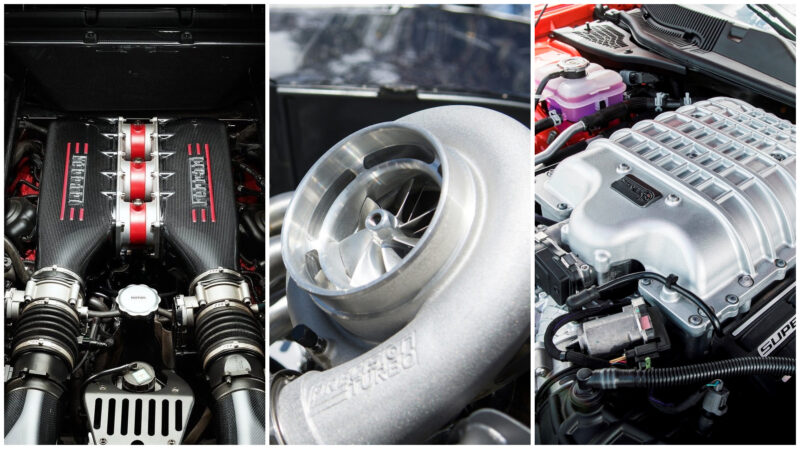
When it comes to internal combustion engines, there are three common terms that you will come across: NA, turbocharger, and supercharger. Basically, all three refer to how an engine brings air into the combustion chamber to generate power.
Naturally aspirated (NA) engines take in naturally through atmospheric pressure. This type of engine does not come with a force induction system.
Meanwhile, both turbochargers and superchargers are forced induction systems that essentially compress air to create more powerful combustion.
NA engines are the most widely used as they are cheaper to run and easier to maintain, while turbocharged engines are typically found in performance vehicles. However, with the changing automotive landscape, the adoption of turbocharging has become more widespread among manufacturers.
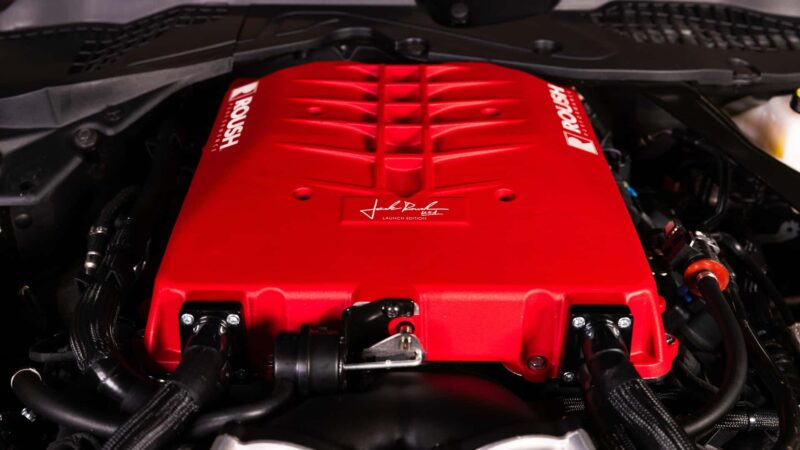
After Mercedes-Benz continued their Kompressor engines, the use of superchargers has declined but there are some models that still employ this system, such as the Dodge Challenger/Charger and all SVR models from Jaguar Land Rover.
How does a turbocharger work?
According to renowned turbocharger manufacturer Garrett, a turbocharger uses an engine’s exhaust gas to drive the turbine wheel at speeds of up to 350,000 RPM. The turbine wheel then drives the compressor wheel through a shaft.
As both wheels spin, a large amount of air is drawn in and compressed before being cooled via an intercooler to further increase its density before it enters the engine.
The compressed-air makes the fuel burn more efficiently for greater power and fuel economy.
Pros and cons of a of turbocharger
With a turbocharger, the engine enjoys a significant increase in power. In fact, a turbocharged engine can produce as much power as an NA engine with a larger capacity.
Additionally, turbocharged engines are said to be more fuel-efficient because they can generate higher power with less fuel.
However, the high performance nature of a turbocharged engine can lead to overheating and higher levels of stress on internal components, thus requiring more frequent maintenance to ensure it remains in optimal condition.
How does a supercharger work?
If a turbocharger is driven by exhaust gas, a supercharger is mechanically powered by a belt connected directly to the engine’s crankshaft.
The supercharger increases intake by compressing air above atmospheric pressure without creating a vacuum, which in turn forces more air into the engine. With the additional air, more fuel can be injected, thus producing higher power.
Pros and cons of a supercharger
Like turbochargers, superchargers allow the engine to produce higher power and torque. However, it doesn’t face the issue of turbo lag because a supercharger is powered by the engine’s crankshaft. Additionally, a supercharger provides better low-RPM response.
That said, superchargers are not as efficient as turbochargers as they require engine power to generate more power. Additionally, internal components are exposed to higher pressure and heat, affecting the engine’s lifespan.
Which is best?
If performance is not a priority, an NA engine is sufficient because the power and torque it produces is adequate for daily use and it is cheaper to operate.
For those seeking high performance, turbocharged and supercharged engines are the perfect fit. However, turbocharged engines seem to make more sense due to their higher efficiency and market availability.
Alternatively, some manufacturers offer twin-charged engines, such as Volkswagen, Audi, and Volvo, for those unable to choose between the two systems.
Malaysia’s Leading Automotive News | ENGEAR ENGLISH