Tag Archives: MOT

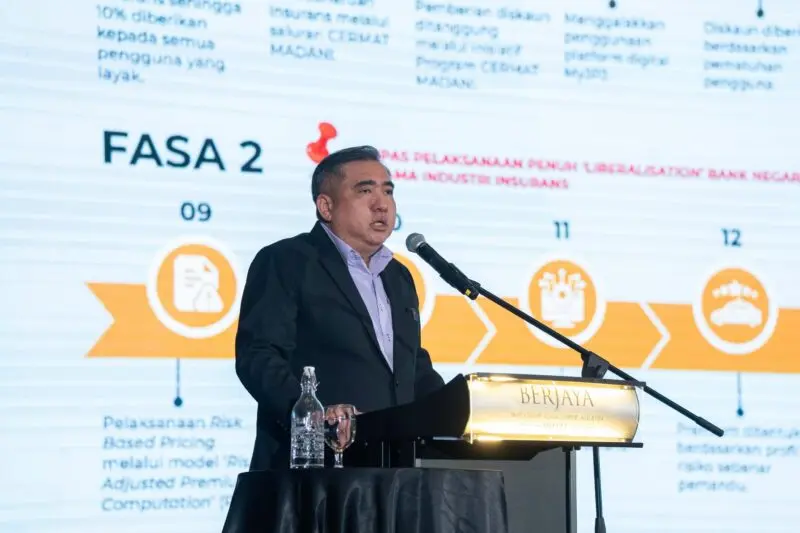
MOT launches Cermat Madani initiative, offers up to 10% insurance premium rebates

Drivers with a good driving record will benefit from vehicle insurance premium discounts of up to 10% through the CERMAT MADANI initiative, according to Berita RTM.

Transport Minister Anthony Loke stated that the benefits are subject to the assessment and decisions of participating insurance companies.

NCD Claims of Up to 65%

He explained that this initiative aims to promote a culture of safer, more responsible, and prudent driving by utilizing relevant information and data in vehicle insurance risk assessment.

“Previously, the maximum No Claim Discount (NCD) was 55%.

“Now, drivers with good records may be considered for an additional premium benefit of up to 10%,” he said at the press conference for the CERMAT MADANI Launch.

As of today, ten insurance companies have joined the CERMAT MADANI initiative.

Rebate Offer Period of Up to Three Months

The additional rebate will be offered unconditionally for three months, starting today until September 9.

After this period, premium benefits will be determined based on the driver’s risk assessment, including accident records and traffic summonses recorded in the MySikap database, beginning September 10.

Initially, the assessment will only involve data from the Road Transport Department (JPJ) integrated with the Royal Malaysia Police (PDRM).

Data related to summonses issued by local authorities (PBT) will not be considered at this time.

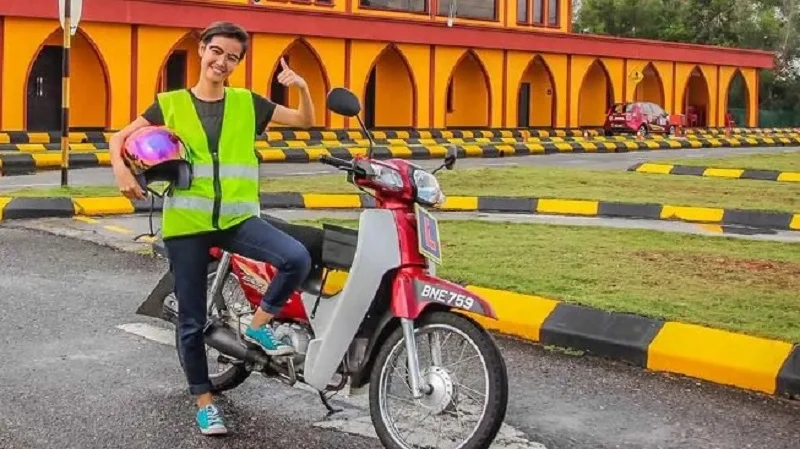
MOT announces additional 10,000 quota for MyLesen B2 programme this year

The Ministry of Transport (MOT), through the Road Transport Department (JPJ), has increased the quota, by 10,000, for the MyLesen B2 programme this year, with a total allocation of RM3.5 million according to Bernama.

Its Minister Anthony Loke said the move was made following the encouraging response to the initial 15,000 quota, which was almost fully taken up, with 14,581 participants, 97 per cent of whom are youths, having joined the programme.

“I discussed with JPJ earlier. This year, we have implemented the programme for nearly 15,000 participants. In the first six months alone, it was almost fully taken up. Starting mid-year, we will increase the quota by 10,000 nationwide, with allocations provided through initiatives under the ministry,” he said.

“The cost of obtaining the licence is RM350 per participant. I also urge schools to help identify students who ride motorcycles without a licence, as they are the main target group for this initiative. We want to help them get the licence; we do not want young people riding motorcycles to school without a licence. That is why the role of schools is crucial,” he told reporters today.

Loke said this after the presentation of the state-level MyLesen B2 driving licences, which was also attended by JPJ director-general Datuk Aedy Fadly Ramli and Negeri Sembilan JPJ director Hanif Yusabra Yusuf.

The Seremban Member of Parliament said that the programme reflects the government’s commitment to assist the B40 low-income group, in improving their socio-economic status and household income through job opportunities, particularly in the gig economy, while also aiming to produce competent and safe drivers.

He added that the initiative also enables the target group to obtain a Class B2 motorcycle licence legally, in an easier and more affordable manner.

“I don’t want to hear of any school students riding motorcycles without a licence. This is a reminder—riding without a licence is illegal and puts lives at risk. Driving institutes must also ensure that these individuals are properly trained,” he said.

Loke also expressed hope that the young recipients of the licence would serve as ambassadors, by setting good examples within their communities, promoting road safety awareness, the importance of obeying traffic rules, and encouraging prudent, careful, and responsible riding.

Minister acknowledges failure of the Kejara system, plans major overhaul

Minister of Transport, Anthony Loke, has acknowledged that the Demerit Points System for Traffic Offenses (Kejara), implemented since April 2017, is a failed and ineffective system, according to Bernama.

According to him, the current system only applies demerit points after traffic offenders have paid their fines or have been prosecuted in court, rather than starting when they receive the notice of the offense.

As a result, he announced that the Kejara system will undergo a significant overhaul soon.

“As the Minister of Transport, I admit that this Kejara system has failed because we have taken the wrong approach.

“That is why I say this system really needs to be restructured, and the ministry is exploring a new approach that will be implemented,” he stated at a press conference following the implementation ceremony for the Speed Limitation Device (SLD) for commercial vehicles at Scania (Malaysia) Sdn Bhd last week.

The Kejara system is a procedure for awarding demerit points to motor vehicle drivers who commit scheduled offenses under the Road Transport Act 1987 and its associated regulations.

Twenty offenses identified as potentially leading to serious accidents or fatalities, and that endanger other road users, are included in the list of offenses under the demerit point system.

Government drafts new policy mandating speed limiters for heavy vehicles

Bernama reports that the government is drafting a new policy, including the mandatory implementation of speed limiters for heavy vehicles, as part of efforts to strengthen road safety measures.

Transport Minister Anthony Loke stated that the policy is being thoroughly reviewed, including mechanisms to eliminate any potential loopholes when it is enforced.

“The government will not stop in its efforts to enhance road safety policies. We are committed to protecting road users, especially from the threats posed by irresponsible drivers and heavy vehicles that do not meet established safety standards,” he said in a Facebook post.

Yesterday, the nation was shocked by an accident that claimed the lives of 15 students from Sultan Idris Education University (UPSI) when a chartered bus traveling from Jertih, Terengganu to Tanjung Malim, Perak overturned after colliding with a multi-purpose vehicle (MPV) on the East-West Highway near Banding Lake, Gerik.

The tragedy also resulted in 33 others being injured, including the bus driver and conductor, as well as the driver and three passengers of the Perodua Alza MPV.

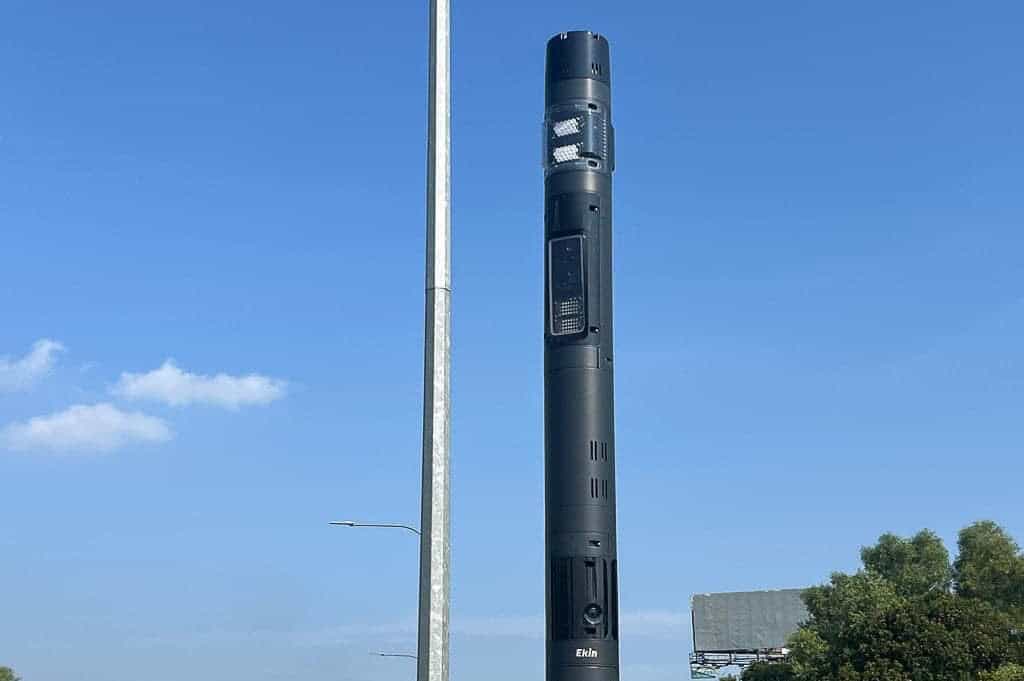
Pilot testing of point-to-point speed monitoring system yet to commence – MOT

The Ministry of Transport has announced that the pilot testing of the point-to-point speed monitoring system (AWAS) has not yet begun, according to Berita Harian.

Currently, there is no information regarding the scheduled start date for the new system, and any developments will be announced in due course.

In a prior report, it was stated that this artificial intelligence (AI)-based system will be tested at two major highway locations: from the Genting Sempah Tunnel to the Gombak Rest Stop (KLK), and from the Senawang Toll Plaza to the Simpang Ampat Toll Plaza (PLUS).

There are also plans to install the system at locations that are frequent accident hotspots, such as the Menora Tunnel to Sungai Perak Rest Stop (PLUS).

Transport Minister Anthony Loke previously mentioned that the implementation of this system was expected to begin this June.

This new system is designed to replace the existing static camera method, which is deemed ineffective in reducing vehicle speeds.

If drivers are detected arriving earlier than the expected time, a fine will be automatically issued through the vehicle registration number detection system.

The system is also capable of detecting if drivers stop as a tactic to evade detection.

UMW Toyota forms strategic partnership with MOT, delivers five electrified vehicles for evaluation

UMW Toyota Motor (UMWT) has forged a strategic partnership with the Ministry of Transport Malaysia (MOT) to drive green mobility initiatives.

As a show of strong support, UMWT has delivered five electrified vehicles, including hybrid electric vehicles (HEVs) such as the Toyota Alphard, Camry, and Corolla Cross, as well as two battery electric vehicles (BEVs), the Toyota bZ4X and Lexus RZ.

Through this initiative, the MOT has the opportunity to assess the true capabilities of these vehicles concerning suitability, performance, and benefits for daily use.

Additionally, UMWT will provide comprehensive hands-on learning opportunities for MOT officials, covering aspects from infrastructure readiness, user experience to operational efficiency across various platforms.

According to Datuk Ravindran K, President of UMW Toyota Motor, “Malaysia’s journey towards achieving net-zero emissions by 2050 is not just an empty vision, but a collective mission that demands close collaboration across all sectors.”

“Through the ‘Multipathway Toyota’ approach, electrification is not merely viewed as an innovation, but is also adapted in an inclusive and pragmatic manner according to the needs, readiness, and capabilities of various segments of society.”

“With this approach, every layer of society is given the opportunity to move forward together towards a greener and more sustainable future—no one will be left behind, no one will be marginalized,” he further stated.

While full electrification remains a long-term aspiration for the country, hybrid technology emerges as an effective solution to minimize carbon emissions without requiring drastic changes to existing infrastructure or consumer habits.

According to Mohd Shamsor Mohd Zain, Executive Director of UMW Toyota Motor, “Hybrid technology continues to be a key driver in Toyota’s electrification plan, particularly in the context of markets like Malaysia.”

“Its ability to reduce carbon emissions immediately without necessitating major changes to the supporting ecosystem makes it the most ideal option.”

“It not only offers practical solutions but also builds confidence among mainstream consumers while paving a smoother and more progressive path towards a fully electric mobility future.”

One theory class for motorcycle and car licenses to start on August 1 – Minister

The Road Transport Department (JPJ) will unify the Theory Course Curriculum Module (KPP01) for motorcycle and car licenses starting August 1, reports Bernama.

According to Transport Minister Anthony Loke Siew Fook, the one theory class policy was initiated as early as 2023; however, JPJ had been using separate modules for motorcycles and cars until now.

“The two previously separate KPP01 modules have been updated into a single learning module to place additional emphasis on safe driving,” he explained.

He further stated that more information regarding the requirements, implementation methods, and operational procedures will be announced by JPJ in due course.

Additionally, among the improvements to JPJ services that will be introduced are payment methods through the TnG e-wallet, as well as simplifying fine payments through the MyJPJ application.

It has also been reported that JPJ will introduce a new official portal that is more minimalist and organized, in line with current technology.

Heavy vehicles forbidden to use right lane on highways

The Ministry of Transport (MOT) is set to implement stricter regulations regarding commercial vehicles, including buses and lorries, according to Berita Harian.

Five improvements will be enforced, including a ban on the use of the right lane on highways, mandatory speed control device installations, GPS device installations, the installation of High Speed-Weigh in Motion (HS-WIM) load detection systems at 11 locations, and the addition of Automatic Enforcement System (AES) cameras.

According to the Secretary-General of the Ministry of Transport, Datuk Jana Santhiran Muniayan, the regulation prohibiting buses and lorries from using the right lane has been in effect since 2015 but has not yet been enforced.

“Under this regulation, lorries and buses must remain in the left lane and cannot exceed speed limits. If they wish to overtake, they are allowed to switch to the second lane and then return to the left lane.

“However, they must not occupy the third lane at any time. Therefore, we will propose this matter again to the minister to ensure enforcement concerning heavy vehicles on highways,” he said to Berita Harian.

At present, the installation of speed control devices is mandatory for all new lorries, while older vehicles have the option to install them voluntarily.

The regulation for GPS installations is expected to begin this month, allowing the Land Public Transport Agency (APAD) to monitor and take direct action.

According to Jana Santhiran, inspections will be conducted every six months at the Computerized Vehicle Inspection Center (PUSPAKOM) to ensure compliance with the established regulations for speed control devices and GPS.

The permits for lorry or bus companies may be suspended or revoked in the event of any traffic regulation violations.

Meanwhile, the installation of the HS-WIM system at 11 highway locations is expected to be completed by the first quarter of next year.

Suzuki Malaysia launches safety campaign with the theme “Share the Road, Ride with Courtesy”

Suzuki Malaysia Sdn Bhd launched the AMI-Suzuki 2025 Road Safety Campaign yesterday (January 14) at the Dataran Ilmu, Selayang Stadium.

The campaign was launched in collaboration with the Malaysian Motorcycle and Scooter Dealers Association (MMSDA) and was officiated by YB Datuk Haji Hasbi Haji Habibollah, the Deputy Minister of Transport Malaysia.

This campaign, themed “Share the Road, Ride with Courtesy,” is organized for the second time by Suzuki Malaysia and for the eighth time by AFY Mobility Industries (AMI).

The initiative aims to raise awareness about road safety among motorcyclists, vehicle drivers, and the general public.

Additionally, the campaign is hoped to contribute to a reduction in accident rates and to foster a safer road culture.

Various exciting activities are provided for visitors, including free 16-point motorcycle inspections, the distribution of new helmets (400 units), the giveaway of children’s helmets, as well as exhibitions of motorcycles and safety accessories.

AwAS camera system enhanced, switching from static methods

The implementation of the Automatic Awareness Safety System (AwAS) cameras will be improved by adopting a point-to-point method instead of the previously employed static method, according to Astro Awani.

Transport Minister Anthony Loke stated that this new approach will allow for more comprehensive monitoring of vehicle speeds by measuring the average speed of vehicles between two camera points based on the distance and travel time.

He noted that the current implementation of AwAS cameras, which are installed at a single static location, has not effectively achieved the objective of reducing vehicle speeds and thus lowering the risk of accidents.

Source: Bernama

“What we want to adopt in this new approach is that we already have new technology; we will look at the two checkpoint points.

“We do not want drivers to slow down only in front of the camera, but to maintain a slow speed over a certain distance.

“Let’s say between Point A and Point B, we want to know how long drivers take to travel that distance.

“If they take less than the appropriate time, it means they are speeding and will face penalties (fines),” he said at a press conference here on Monday.

Source: Utusan

As a starting point, he said this implementation will be carried out in hazardous and high-risk areas, such as the hilly regions on the Kuala Lumpur-Karak Highway (KLK) in Genting Sempah and the Menora Tunnel in Ipoh.

“Our objective is to ensure that vehicles, especially buses, slow down so that drivers do not accelerate while descending hills.

“The current method is less effective; even though we install cameras, vehicles only slow down at that location and then speed up again,” he said.

He expressed hope that, through the enhancement of the AwAS system with the point-to-point mechanism, there would be a reduction in road accident rates and an increase in awareness and discipline among drivers nationwide.

MOT amends Act 333 to tackle Mat Rempit issue

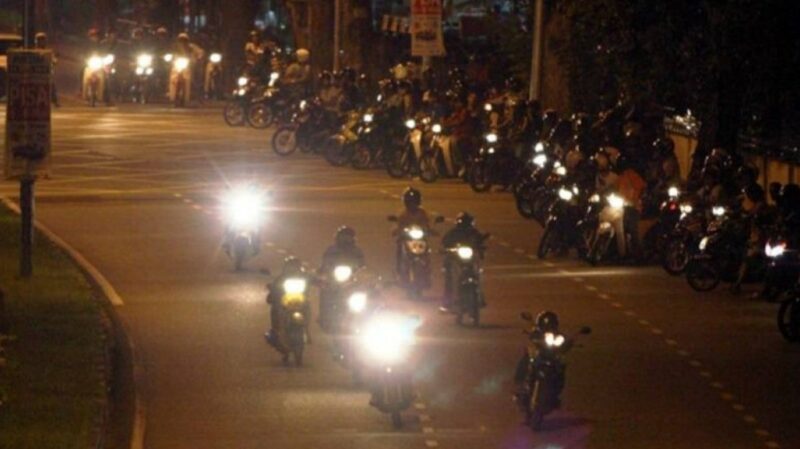
The Ministry of Transport (MOT) is finalising amendments to the Road Transport Act 1987 (Act 333) to tackle the issue of Mat Rempit.

According to its Deputy Minister, Datuk Hasbi Habibollah, the amendment aims to provide clearer definitions of dangerous acts by Mat Rempit, such as reckless motorcycle riding or participation in illegal street racing.

He added that the amendments are are intended to act as a deterrent for those involved in such activities.

He was replying to a question from Pang Hok Liong (PH-Labis) regarding the most effective measures to curb Mat Rempit groups, whose stunts endanger themselves and other road users.

Hasbi said the amendments would also introduce harsher penalties for offences related to dangerous stunts and illegal street racing, adding that the proposal has been submitted to the Attorney General’s Chambers (AGC) for consideration.

“These measures are being taken to ensure that penalties imposed serve as an effective deterrent and preventive step against offenders,” he added.

On enforcement efforts to tackle Mat Rempit activities, Hasbi noted that the Road Transport Department (JPJ) and the police work closely, conducting joint enforcement operations, such as Ops Samseng Jalanan, involving various agencies and local authorities.

Additionally, he said that MOT, through JPJ, collaborates with the Domestic Trade and Cost of Living Ministry to curb the sale and modification of motorcycles that do not meet specifications.

“The government will continue to implement consistent and effective enforcement actions to address road offences, particularly illegal racing activities involving youths or the Mat Rempit phenomenon,” he added.

Faulty wiring found in express bus electrocution incident

Bernama news portal reports that faulty electrical wiring system was among the causes of an electric shock incident that occurred on an express bus recently.

Transport Minister Anthony Loke stated that the wiring system in the bus was installed by individuals who did not have authorization from the Energy Commission (EC).

An initial report by the Special Task Force also found that the wiring connection from the distribution box (DB) to the socket wiring was installed incorrectly.

“This bus’ wiring is new, but what this team has identified is that there is irregular wiring making it unsafe, such as socket wiring being installed incorrectly, causing the input and output to be reversed.

“High voltage was output through that socket and when that voltage flowed through the victim’s body, it resulted in death. This is what we have identified as one of the causes of this incident,” he said at a press conference at the Parliament Building today.

The Land Public Transport Agency (APAD) had previously issued a ban on the use of 3-pin and USB sockets in all express buses on November 6, which is effective until new wiring policies and guidelines are issued by the Ministry of Transport.

“Bus operators are encouraged to send the buses for additional wiring inspections and tests that have been accredited by the Energy Commission. If they pass, they can submit them to APAD to reuse those sockets,” he said.

For licensing purposes, APAD also requires both new and existing bus operators to submit the results of reports or certificates of additional wiring inspections by inspection and testing bodies accredited by the Malaysian Department of Standards.

They must also submit reports on the wiring and additional electrical equipment, such as wiring, outlet sockets, and residual current devices used in all commercial vehicles.

At the same time, Loke mentioned that they are developing new additional wiring guidelines for all bus operators, which are expected to be completed within at least six months.

MOT to tighten heavy vehicle integrated operation

The Ministry of Transport will continue to tighten and expand the integrated operation on heavy vehicles including lorries to ensure that drivers comply with the rules and are not driving under the influence of drugs, according to Bernama.

Its minister Anthony Loke said operations had previously been carried out by the Road Transport Department (JPJ) which targeted express and sightseeing bus drivers and found that many drivers tested positive for drugs.

“This is a problem that was taken seriously and we have launched an integrated operation in the last two months, now we are focusing on commercial and heavy vehicles… stricter operations will be held to ensure that drivers driving these heavy vehicles comply with the rules.

“Previously we targeted (operations) in some industrial areas and so on, so now we will expand it so that they are more careful,” he told reporters after officiating the 20th Negeri Sembilan DAP Ordinary Convention here today.

He was commenting on two cases of fatal accidents in this district recently involving two lorries and based on the police investigations, it was found that the drivers of the lorries were found positive for methamphetamine.

In the meantime, Loke once again reminded that the owner or operator of the company who has a driver tested positive for drugs resulting in an accident, will also face action.

He said this is because company owners have a responsibility to ensure that their drivers are prudent and do not abuse their license and position or commit traffic offences.

“Not only the driver (faces action) but the company owner, we have done this in the case of the excursion bus that overturned and claimed two lives on the road in Genting Highlands on June 29, where the driver and the company owner were charged in court for negligence,” he said.

VEP mandatory for Singaporean cars entering Malaysia from Oct 1

All foreign-registered vehicles entering Malaysia will be required to have a Vehicle Entry Permit (VEP) RFID tag starting October 1 this year.

Transport Minister Anthony Loke said the move is to ensure compliance with road regulations in the country.

He added that the rule will be enforced at the entry points of both Customs, Immigration, and Quarantine (CIQ) complexes in Johor, namely at Sultan Iskandar Building in Tambak, Johor and Sultan Abu Bakar Building at the Malaysia-Singapore Second Link.

Effective October 1, enforcement action will be taken against anyone driving a foreign motor vehicle without a VEP as required under Section 66H (7) Road Transport Act 1987 (Act 333).

The law provides a compound or a fine of not more than RM2,000 or imprisonment for up to six months upon conviction.

Yusof Mat Isa/Malay Mail

“The Road Transport Department (JPJ) has the authority to stop any foreign vehicle that does not have a VEP from entering Malaysia.

“Enforcement of the VEP allows us to track foreign vehicles coming and leaving Malaysia and if there is a (traffic) summons, it has to be settled before the vehicle leaves the country,” added Loke.

Loke said the VEP registration had been implemented since April 2019 for foreign vehicles crossing at the Customs, Immigration and Quarantine Complex Sultan Iskandar Building and Sultan Abu Bakar Building in Johor, but the regulation was not enforced.

Based on records, about 70,000 Singapore-registered motor vehicles have activated the VEP tags from more than 200,000 vehicles registered, he said.

The process of obtaining the VEP has been made easier with the RFID VEP tag being delivered to the applicants at their respective addresses.

Loke said that a fee of RM10 is imposed for each VEP tag, which is valid for five years.