Tag Archives: MLFF

Touch ‘n Go conducts Titan Flow field test, promises smoother toll experience

Touch ‘n Go recently conducted a field test of its Titan Flow technology with members of the media at the Ampang–Kuala Lumpur Elevated Highway (AKLEH).

The test was carried out at the Enhanced RFID Lane, marked with a gold star symbol at the Dato Keramat Toll Plaza.

The demonstration aimed to showcase how a combination of locally developed technologies can deliver a smoother, safer and more reliable toll experience.

Integration of Multiple Technologies
Titan Flow integrates radio‑frequency identification (RFID) as its primary detection system supported by several other technologies:

  • Automatic Number Plate Recognition (ANPR)
  • Artificial Intelligence (AI)
  • Machine Learning (ML)
  • LiDAR

This layered design enables the system to achieve detection accuracy rates of up to 99.8%.

Despite advancements in supporting technologies, RFID remains the core of Titan Flow due to its stability and resilience against environmental factors such as lighting and weather.

Beyond improving user convenience, the system is engineered to enhance traffic flow at toll plazas. The combination of smart technologies allows each transaction to be processed more accurately without disrupting intuitive driving behaviour.

A Step Towards MLFF Implementation
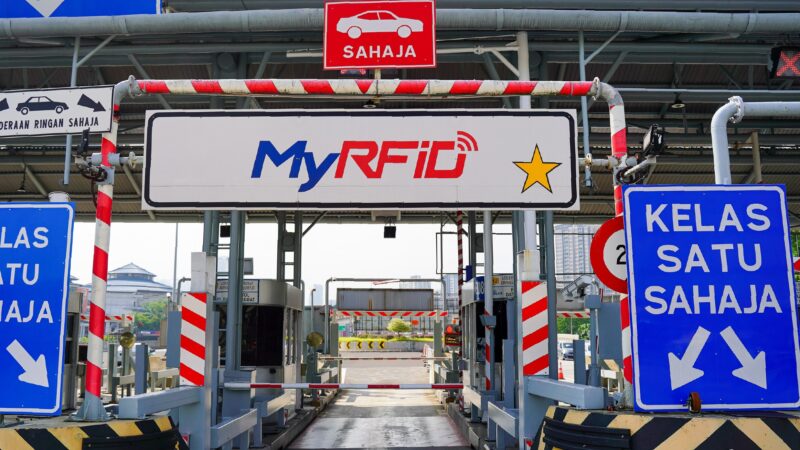
As an early step towards the Multi‑Lane Free Flow (MLFF) tolling system, the Enhanced RFID Lane now utilises Titan Flow’s core technologies.

Titan Flow is built on a proven ecosystem comprising over 4.7 million registered RFID users, 27 million TNG eWallet users, and billions of transactions processed annually.

With this strong foundation, Touch ‘n Go aims to accelerate the development of smart mobility infrastructure and introduce next‑generation tolling solutions that are faster and more seamless.

SOS Balance Further Improves Traffic Flow
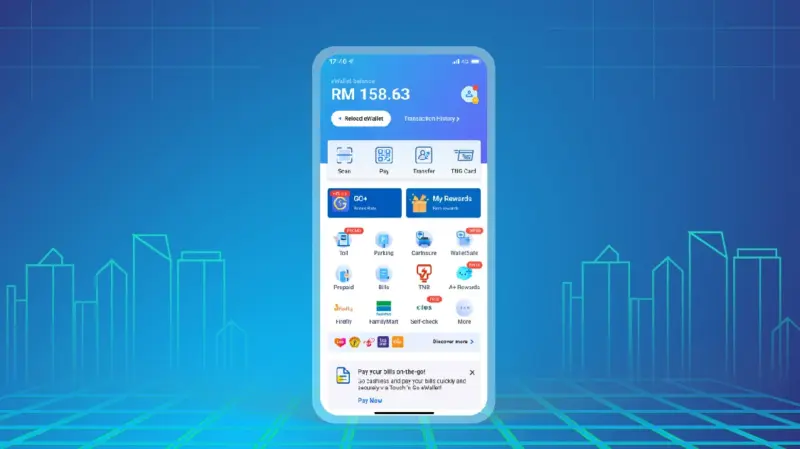
To ensure uninterrupted mobility, the SOS Balance feature in the TNG eWallet app allows users to continue their journey even when their balance is insufficient.

This feature has supported around 36 million trips, reducing the risk of vehicles being stranded and helping to smoothen overall traffic flow.

Technology Developed by Malaysians
Touch ‘n Go CEO Praba Sangarajoo emphasised that Titan Flow was developed by Malaysians to meet the needs of local users.

“What makes Titan Flow truly meaningful is that it stems from nearly three decades of understanding how Malaysians move.

“Our focus is on delivering a seamless, reliable and secure experience while maintaining the accuracy and accountability required by highway operators.”

Collaboration with GWM Malaysia
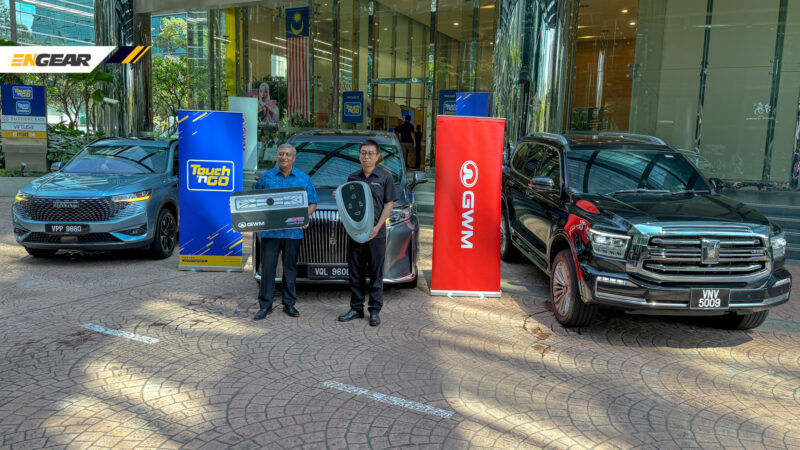
The field test was supported by GWM Malaysia, which provided vehicles for media use throughout the drive‑through session.

Cui Anqui, Managing Director of Corporate Affairs at GWM Malaysia, said:

“At GWM, we see the future of mobility as something that goes beyond the vehicle itself—it encompasses the entire user experience.

“Our collaboration with Touch ‘n Go in the Titan Flow field test reflects our shared commitment to making everyday mobility for Malaysians smarter, more connected and smoother.”


PLUS to begin trial of barrierless toll system this April

The Edge news portal reports that highway concessionaire PLUS Expressways Bhd will start a pilot trial of its own barrierless toll system beginning this April.

The Multi-Lane Free Flow (MLFF) system, developed in-house, aims to prevent misuse and exploitation of profits during its implementation.

Additionally, the company will collaborate with the Road Transport Department (JPJ) to impose penalties on users who fail to pay their outstanding tolls.

According to an industry executive, the objective of the partnership with JPJ is to ensure that users with outstanding toll payments settle their debts before they are allowed to renew their road tax.

The Edge also reported that PLUS has a unique advantage, as the company owns a subsidiary, Teras Teknologi Sdn Bhd, which currently provides electronic toll payment systems to other highway concessionaires.

In addition to PLUS, other concessionaires that have already begun trials of the MLFF system include Projek Lintasan Kota Holdings Sdn Bhd (Prolintas) and Amanat Lebuhraya Rakyat (ALR).

Government to issue RFP to reduce cost of MLFF project

Deputy Works Minister Datuk Seri Ahmad Maslan said the government is considering issuing a request for proposal (RFP) as an alternative approach for the RM3.46 billion Multi-Lane Free Flow (MLFF) project, reports The Edge.

Ahmad Maslan explained that the moves aims to reduce the project’s costs, adding that the ministry had already announced its intention to issue the RFP.

“We have announced that we will issue an RFP as a ‘Plan B’. At the same time, we are giving until December for the companies involved in the MLFF proposal project,” he said.

He made the remarks in response to a supplementary question from Roslan Hashim (Perikatan Nasional-Kulim Bandar Baru) who wanted to know the current status of the MLFF project.

The MLFF is a barrier-free system designed to replace the existing booth-based toll collection system. It utilises gantries equipped with radio-frequency identification (RFID) devices along with an automated number plate recognition (ANPR) system for toll collection.

The proposed MLFF system is estimated to cost RM3.46 billion for 33 highways in Malaysia.

Last year, 32 highway toll concessionaires opposed the government’s move to appoint a YTL Holdings-related company to implement a barrier-free system a toll plazas due to the private entity’s lack of track record.

The concessionaires are concerned that allowing a third party to take over toll collection might result in leakages.

In February this year, FMT reported that senior executives from the Berjaya Group had been meeting with representatives of the 32 concessionaires to explain what they have in mind and to get their feedback before submitting its final proposal to the works ministry.

Last week, Works Minister Datuk Seri Alexander Nanta Linggi stated that negotiations for the MLFF system are ongoing, with several stages yet to be finalised before a decision is reached.