Tag Archives: HONDA

Boon Siew Honda establishes Kota Damansara Sales HQ

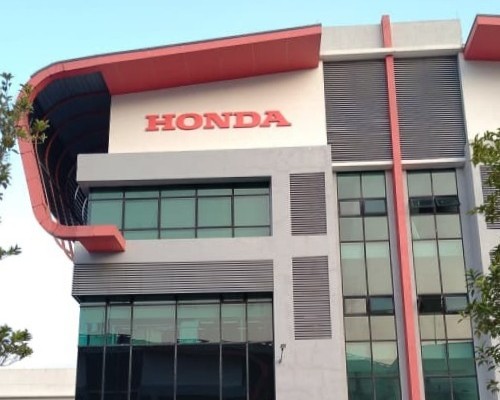
Boon Siew Honda Sdn. Bhd. announces the opening of its new Sales Headquarters in Kota Damansara. A purpose-built, three-storey facility spanning 7,000 square feet that marks the first time BSH has established a dedicated commercial base in the nation’s capital.

A quick glance of the new Sales HQ:

  • 7,000 square feet total floor space across three storeys.
  • 3 functions under one roof: Sales, Marketing, and After-sales Parts & Services.
  • 1st BSH dedicated commercial headquarters in central, Malaysia.

The Sales HQ houses BSH’s Sales Planning team, covering both the big bike and commuter segments alongside its Marketing, and the After-sales Parts & Services division. It also offers 2 dedicated training rooms and a full-fledge technical centre exclusively to train and dealers in both technical and non-technical skills.

Centralizing all three functions under a single address is a structural first for BSH, and one that directly addresses the coordination challenges that arise when sales, communications, and aftersales leadership operate from different locations.

At 7,000 square feet across three floors, the Sales HQ is a purpose-fitted space designed to support BSH’s operational requirements as both its product portfolio and dealer network continue to expand.

The facility provides dedicated workspace, meeting rooms, and collaboration space for the teams whose daily work spans from campaign planning and media engagement to dealer development and after-sales support which drives the company’s market presence. It is, in the most direct sense, the physical home of how BSH takes its products to market.

“Seven thousand square feet and three floors may sound like a property announcement. But what this building represents is in fact a decision to put our Sales, Marketing, and After-sales leadership in one place, working from one address, with one shared view of the market. For a company headquartered in Penang, opening a dedicated commercial base in KL is a statement of how seriously we take the work that happens here.” — Kunitomo Asano, Managing Director & Chief Executive Officer, BSH.

ONE ADDRESS. THREE TEAMS. FASTER DECISIONS.

The practical impact of the Sales HQ is most visible in how BSH’s three functions now relate to one another.

With all three teams now operating from the same building, decisions that matters to the market will now happen in the same space more seamlessly. For a company managing a growing portfolio of product line up, dealer programmes, marketing communications and customer service, that structural change provides real operational value.

The Kota Damansara address also positions BSH’s leadership teams in immediate proximity to its business and industry partners ecosystem that is concentrated in and around Kuala Lumpur.

“The three teams inside this building talk to each other every day. Now they can do it in the same corridor rather than across a phone call. That is not a small thing when the pace of what we do demands that kind of speed.” — Kunitomo Asano, Managing Director & Chief Executive Officer, BSH.

About the Kota Damansara Sales Headquarters

The BSH Kota Damansara Sales HQ is also a dedicated warranty parts support point for the authorised dealer network. Operational details will be communicated to dealers directly. BSH’s primary headquarters remains in Pulau Pinang.

The BSH Kota Damansara Sales HQ details as below:

Address Boon Siew Honda Sdn. Bhd.

7, Jalan Teknologi 3/6F,

Taman Sains Selangor,

Kota Damansara,

47810 Petaling Jaya, Selangor

Telephone +603-6144 0963
Operating Hours Monday to Friday, 9:00 AM – 5:00 PM (Closed on weekends)

Honda Stepwgn celebrates 30th anniversary in Japan

Did you know that the first generation of the Honda Stepwgn minivan was officially launched in May 1996, featuring a simple design aimed at maximizing practicality.

After five generations, the sixth generation of the Stepwgn is making a comeback with a two-box design configuration, boasting a more minimalist aesthetic and the most spacious cabin yet.

In conjunction with the 30th anniversary of the Stepwgn next year, Honda Japan has announced a special edition model available in two variants: AIR EX and SPADA.

Both the AIR EX and SPADA variants include features such as:

  • Multi-view camera system
  • Exit support system
  • LED cabin lights
  • Second-row seat heating
  • Adaptive headlight assist
  • 30th anniversary tag
  • 30th anniversary emblem

The differences between the two variants are as follows:


AIR EX

  • Fabric upholstery with brighter colors
  • Color options: Fjord Mist Pearl, Platinum White Pearl, Meteoroid Gray Metallic, Crystal Black Pearl, and Seabed Blue Pearl
  • Price starting from 4,098,600 yen (RM106,678)


SPADA

  • Leather upholstery
  • Color options: Twilight Mist Black Pearl, Platinum White Pearl, Meteoroid Gray Metallic, Crystal Black Pearl, and Premium Crystal Garnet Metallic
  • Price starting from 4,159,100 yen (RM108,253)

In terms of power, the 2026 Honda Stepwgn is equipped with the e:HEV hybrid powertrain, which consists of a 2.0L i-VTEC engine (143 hp/175 Nm) paired with two electric motors (181 hp/315 Nm).

The total power output reaches 212 hp and 315 Nm, combined with an e-CVT transmission and front-wheel drive system.

For reference, the Honda Stepwgn e:HEV has already entered the neighboring market of Thailand, with estimated prices starting from 1.7 million Baht (RM222,000).

Honda CB1000F Concept unveiled at the 2025 Osaka Motorcycle Show

At the 41st Osaka Motorcycle Show 2025 held at INTEX Osaka, Honda showcased the CB1000F Concept for the first time.

Although it is still designated as a concept, the design of the Honda CB1000F suggests that it is ready for mass production.

It also reminds us of the CB-F Concept design presented five years ago.

However, unlike the CB-F, which was built on the CB1000R platform, the CB1000F shares the same chassis as the CB1000 Hornet.

What’s the difference? The CB1000F features a steel frame and a twin-sided swingarm, compared to the CB-F, which uses an aluminum frame and a single-sided swingarm.

Additionally, the CB1000F is equipped with a 150 hp inline-four engine derived from the Fireblade, along with Showa SFF-BP front forks and Nissin brakes, which are also found on the Hornet model.

The Honda CB1000F also boasts a new subframe designed to fit its retro proportions, complemented by a large chrome exhaust canister.

While adhering to a retro concept, the Honda CB1000F also includes modern features such as a single rear shock absorber, inverted forks, radial brakes, LED lighting, and a TFT display.

Once in production, the Honda CB1000F is poised to compete strongly against existing neo-retro models in the market, such as the Kawasaki Z900RS and Yamaha XSR900.

JPJ announces recall campaign involving 41,000 vehicles

The Road Transport Department (JPJ) recently announced a recall campaign involving 41,688 vehicles.

In a press release, the department stated that this initiative aims to inspect the vehicles due to defects in their structure, equipment, or systems, in addition to preventing potential accidents.

According to JPJ, each affected owner will be contacted by their respective vehicle manufacturers to schedule an inspection appointment.

Any components associated with the identified issues will be replaced, and the cost of replacements will be borne by the respective vehicle manufacturers.

JPJ will also monitor the implementation of this recall campaign to ensure that all affected vehicles are confirmed as safe.

A list of the affected vehicles can be referenced in the gallery below:

Honda, Nissan cancel merger plans

Less than two months after the announcement was made, Honda and Nissan have decided to cancel their merger plans.

According to the original plan, the merger between Honda and Nissan was set to create the world’s third-largest automotive group, following Toyota and Volkswagen.

Citing a report from Japan News, Nissan rejected Honda’s proposal to make it a wholly-owned subsidiary, causing the merger discussions to become disrupted.

In a previous announcement, both parties signed a memorandum for cooperation in electric vehicles (EVs) and several related areas, including vehicle software.

In December, Honda and Nissan announced plans to form a holding company that would oversee the operations of their respective brands.

The merger was originally intended to reduce costs and alleviate financial burdens, thus enabling both brands to compete with global players like Tesla and BYD.

Both Honda and Nissan were expected to announce the results of their discussions at the end of January; however, this was postponed to mid-February.

Despite the cancellation of the merger plans, Honda and Nissan are reportedly set to continue their strategic partnership along with Nissan’s partner, Mitsubishi.

2024: Top 10 most popular cars in Malaysia

Based on registration data released by the Department of Road Transport (JPJ) through the website data.gov.my, 2024 has been an excellent period for Perodua.

During this time, the brand recorded vehicle registrations totaling 358,100 units, securing the top spot once again.

In second place is Proton, with a total of 147,587 units registered, while Toyota comes in third with 127,202 units registered.

Interestingly, among the top 10 manufacturers, Chinese automotive brands have started to emerge, surpassing brands that were previously popular.

For example, Chery ranks fifth, beating out Mitsubishi and Mazda, while BYD has managed to secure the tenth position, ahead of Nissan, which ranks eleventh.

But do you know the list of the 10 most popular cars in Malaysia for 2024?


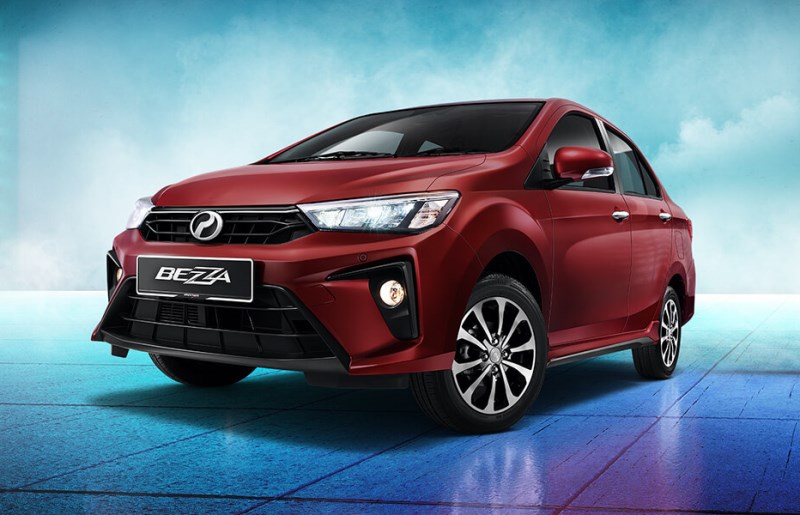
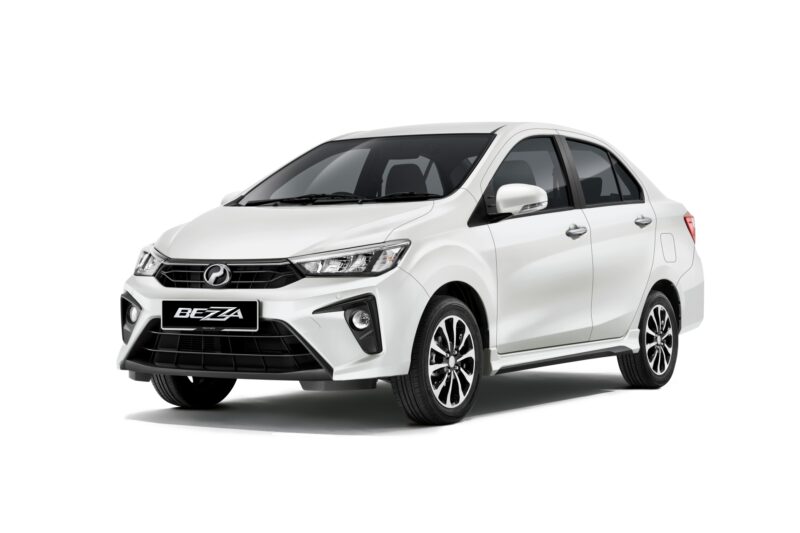
1. Perodua Bezza (100,814 units)


2. Perodua Axia (88,137 units)


3. Perodua Myvi (72,214 units)


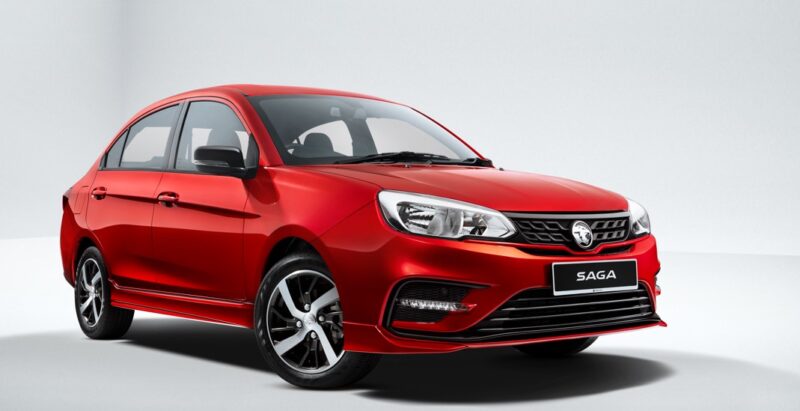
4. Proton Saga (69,863 units)


5. Perodua Alza (44,374 units)


6. Perodua Ativa (36,039 units)


7. Honda City (29,246 units)


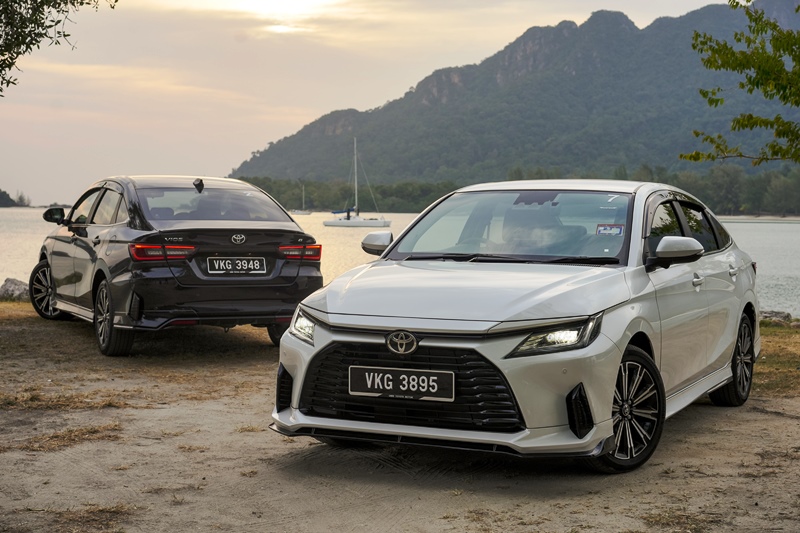
8. Toyota Vios (28,667 units)


9. Toyota Hilux (26,738 units)


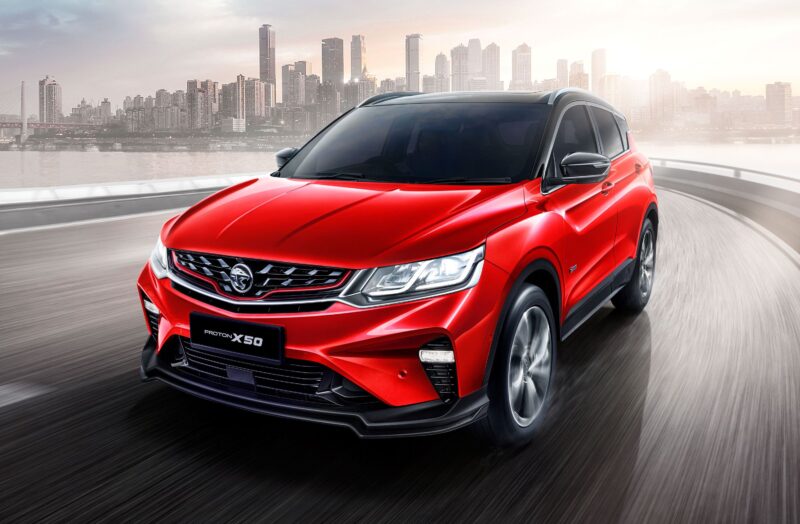
10. Proton X50 (22,674 units)

Honda dominates 40 percent of global motorcycle market

While the global passenger vehicle market is dominated by the industry giant Toyota, the global motorcycle segment appears to be led by Honda.

According to a report from Japan Times, Honda’s global motorcycle sales are projected to reach 20.2 million units for the fiscal year ending in March this year.

This means that Honda currently holds as much as 40 percent of the global motorcycle market share!

This development is supported by strong demand from several markets, including India, Indonesia, the Philippines, Brazil, and several countries in Central and South America.

Honda is also determined to increase its market share target to 50 percent, which will include electric motorcycles, with total sales aiming to hit 60 million units by 2030.

To achieve this, a new assembly plant dedicated to electric-powered motorcycles will be established in India and is set to begin operations in 2028.

As part of a serious drive toward electrification, the manufacturer also plans to launch up to 30 electric models in order to reach an annual sales target of four million units for electric motorcycles (EVs) by 2030.

Other initiatives in the pipeline include developing battery usage and recycling, reducing e-bike costs, ensuring that existing facilities are more environmentally friendly, and further expanding the network of existing battery-sharing and swapping stations.

To date, Honda operates 37 assembly facilities across 23 countries.

Honda and Nissan merger may not proceed

The Asahi Shimbun reported today that the proposed merger between two major Japanese automotive companies, Nissan and Honda, may be canceled.

According to sources close to the matter, the two companies are planning to hold a meeting to discuss the cancellation of the merger negotiations.

It is understood that Honda wanted to turn Nissan into a subsidiary; however, this plan was met with strong opposition as it did not align with previous arrangements.

When the merger plan was announced at a joint press conference last December, a holding company was set to be formed to oversee both brands, which would become the third-largest automotive company in the world, following Toyota and Volkswagen

Further surprising developments have emerged just days after reports stated that Honda and Nissan aimed to postpone their merger announcement until mid-February.

Nissan is currently grappling with a restructuring effort that includes cutting up to 9,000 jobs globally.

However, the company has not provided detailed explanations of the plan to its potential business partners, and Honda’s upper management has also complained that Nissan is moving too slowly.

In a press conference last December, Nissan President Makoto Uchida emphasized that both companies would be on equal footing.

Honda, Nissan postpone announcement of merger plan until mid-February

Japan Today reported yesterday (February 2) that Honda and Nissan will announce their merger plan in mid-February.

According to the original plan, the second and third largest automotive manufacturers intended to make the announcement by the end of January.

During a press conference held last month, both parties agreed to start discussions to form a new company by 2026.

Honda’s CEO, Toshihiro Mibe, stated that they expect Nissan to take appropriate actions in restructuring as a prerequisite for the merger.

In November, Nissan announced a reduction of up to 9,000 jobs worldwide and a 20 percent cut in global production capacity after the company reported a profit decline of over 90 percent for the period from April to September.

As part of its restructuring efforts, Nissan is also planning to offer early retirement programs for workers at three plants in the United States and to reduce the workforce in Thailand.

Honda appears to be somewhat skeptical and is calling for more drastic measures to ensure Nissan’s successful recovery.

According to another source, Nissan’s alliance partner, Mitsubishi, is less inclined to join the new merged entity.

Toyota remains as world’s number one automaker for fifth consecutive year

Throughout 2024, Toyota Motor Corp sold a total of 10.82 million vehicles, allowing the automaker to maintain its global leadership for the fifth consecutive year.

Despite this figure representing a 3.7 percent decline compared to 2023, Toyota explained that there is still strong demand for its hybrid vehicles.

The second place was secured by the Volkswagen Group, with total sales of 9.03 million units, while the Hyundai Group recorded sales of 7.23 million units.

For the first time, BYD surpassed Honda, Nissan, and Suzuki with sales of 4.27 million units last year.

In comparison, Honda sold 3.81 million units, followed by Nissan with 3.35 million units and Suzuki with 3.25 million units.

Excluding brands under its umbrella such as Hino and Daihatsu, the sales figures for Toyota-branded vehicles alone reached 10.16 million units, a drop of 1.4 percent, following its involvement in a vehicle certification scandal, which led to a temporary halt in the production of certain models.

In key markets, Toyota recorded a 4.3 percent increase in sales, reaching 2.73 million vehicles in North America, followed by a 3.6 percent increase to 1.17 million vehicles in Europe.

However, Toyota’s sales in China saw a decline of 6.9 percent, totaling 1.78 million vehicles, due to ongoing price wars among major domestic manufacturers.

Honda admits that the Civic Type R EV project is not easy

In recent years, rumors have circulated that the Civic Type R FL5 will be the last pure internal combustion engine (ICE) hot hatch model from Honda.

What is the future of the Civic Type R? Will it become an electric-powered hot hatch?

The unfortunate news is that Honda is indeed exploring the process of creating an EV Type R.

However, this process is not as simple as Toshihiro Akiwa, head of Honda’s BEV development unit, admitted when unveiling two 0 Series prototypes at CES Las Vegas this month.

“An electric motor and battery have different characteristics, so we cannot produce something that is the same as before.

“As an EV, how can we offer the joy of driving? Of course, we have not given up, but it is not just about sheer power. It’s about sound, vibrations, acceleration, and human experience.

“All of these are part of the joy of driving,” he added.

While showcasing the large sedan and mid-size SUV prototypes, Honda has no plans to offer the 0 Series EV, even though the electric motor setup can achieve around 480 hp.

For comparison, the Honda Civic Type R FL5 is a pure ICE hot hatch with a 2.0-liter turbo engine capable of generating up to 329 hp.

Honda Civic Type R EK9 for sale but priced like the FL5, can you afford it?

If you were given enough money to buy a Honda Civic Type R FL5, would you choose that model?

Or are you actually more inclined to acquire a classic Type R model – like this Civic Type R EK9?

The bidding website Bring A Trailer has listed a Honda Civic Type R hatchback of the EK9 generation that was imported into the United States last year.

It features the iconic Championship White color and has only a mileage of around 53,000 km!

Unlike most owners, this Civic Type R EK9 retains its original specifications as it came out of the factory in 1998.

The original 15-inch rims are still present, though they are now wrapped in Hankook Ventus V2 Concept2 tires.

The cabin space also still retains the Recaro sport seats upholstered in red fabric and microfiber, along with red carpeting and a Momo steering wheel.

When new, the original inline-four B16B 1.6-liter naturally aspirated engine could produce a power output of up to 182 hp and 160 Nm, paired with a five-speed manual transmission and a limited-slip differential.

As of the time this article was written, the bidding price for this EK9 has already reached US$42,000 (RM189,000), nearly matching the selling price of the FL5 Type R in the United States, which starts at US$46,690 (RM210,152)

Do you like the original VTEC roar or the power delivery from the much more modern and powerful VTEC turbo?

It’s up to your personal preference.

Honda City costs about RM4,295 to service over 100,000 km/5 years of ownership

It is perhaps unnecessary to reiterate that the Honda City is one of the most popular B-segment sedans in the market for non-local manufacturers.

The facelifted version launched in August 2023 saw the addition of a petrol RS variant positioned between the e:HEV RS and the V. Overall, there are five variants to choose from, with prices ranging from RM84,900 to RM111,900.

For those interested in buying the City, here are the maintenance costs for the petrol variants up to 100,000 km:

10,000 km, 50,000 km & 70,000 km

Good news for fans of the City: the first service is required only when the odometer reaches 10,000 km or within the first six months of ownership. The service involves an engine oil change and a drain plug washer (RM139.56) and a check of the front and rear brakes (RM10.17). Including labour costs (RM112.50) and service tax (RM9.00), customers will need to pay RM271.23.

20,000 km

At 20,000 km, in addition to the engine oil and drain plug washer (RM139.56) and brake checks (RM10.17), Honda Malaysia will also replace the oil filter (RM34.68). With labour costs (RM135) and service tax (RM10.80) included, the total cost this time comes to RM330.21.

30,000 km & 90,000 km

At this interval, Honda Malaysia will add the air cleaner element (RM93.60) and dust filter (RM234.06) to the list of items that need replacing, in addition to the engine oil, drain plug washer, and brake checks. No labour costs or service tax apply this time around, so the total amount due is RM477.39.

40,000 km & 80,000 km

In addition to the engine oil, drain plug washer, oil filter, and brake checks, customers will also need to replace the transmission fluid (RM189.38). The labour and service tax for this service come to RM150 and RM12, respectively, bringing the total to RM535.79.

60,000 km

For 60,000 km or three years of ownership, there are five items to be replaced: engine oil and drain plug washer, oil filter, air cleaner element, dust filter, and brake fluid (RM41.21). Both the labour cost and service tax are waived, meaning owners only need to pay for the parts, totaling RM553.28.

100,000 km

When the odometer hits the significant 100,000 km mark, owners only need to replace three items: engine oil and drain plug washer, oil filter, and iridium spark plugs (RM387.67). No labour or service tax is charged, resulting in a total cost of RM572.08.

Conclusion

The total cost for periodic servicing of the petrol Honda City amounts to RM4,295.62 for 100,000 km/five years of ownership. This averages out to RM859.12 per year or RM71.59 per month for servicing.

This calculation is important because, in addition to instalment payments, customers should also consider service costs and other expenses such as fuel, insurance, and tolls before making a decision.

Honda Civic FE facelift launched – 4 variants, plenty of new kit, from RM134k

Honda Malaysia has launched the facelifted version of the 11th generation Honda Civic, approximately a month after the sedan was made available for booking.

As before, the Civic is offered in four variants: E, V, RS, and e:HEV RS. The prices (OTR without insurance) are as follows:

  • E – RM133,900
  • V – RM144,900
  • RS – RM149,900
  • e:HEV RS – RM167,900

In terms of appearance, the facelifted Civic features a new, more aggressive front bumper and a larger grille. Thanks to its protruding design, the new bumper makes the C-segment sedan 3 mm longer compared to its predecessor.

There are no changes to the rear apart from the taillights, which now have a darkened smoked effect.

As for the rolling stock, the e:HEV RS variant gets new 18-inch alloy wheels, while the other variants retain their previous designs.

The design and layout of the interior remain unchanged, although there have been several updates on the equipment front.

For example, a 9-inch audio display is now included as standard across all variants. It is now equipped with Google built-in that allows users to access services such as Assistant, Maps, and Play Store.

Additionally, features such as wireless Android Auto and Apple CarPlay, front and rear USB Type C ports, the Honda Connect telematics system, and solar film are included in all four Civic variants. The top two variants, RS and e:HEV RS, also gain wireless charging.

There are no changes under the bonnet. The petrol variants—E, V, and RS—are still powered by a 1.5-litre VTEC Turbo engine that produces 182 PS and 240 Nm, transmitted to the front wheels via a CVT gearbox.

The Civic e:HEV RS retains its hybrid powertrain, which consists of a 2.0-litre Atkinson cycle engine with 143 PS/184 Nm, and an electric motor that generates 184 PS and 315 Nm.

In addition to the Econ, Normal, and Sport driving modes, the hybrid variant now features a new Individual mode.

It also combines Active Noise Control (ANC) with Active Sound Control (ASC) to reduce outside noise while enhancing engine sound.

The Honda Sensing system, which is included as standard on all variants, offers Low Speed Follow (LSF), Lead Car Departure Notification System (LCDN), Adaptive Cruise Control (ACC), Forward Collision Warning (FCW), Collision Mitigation Braking System (CMBS), Lane Keep Assist System (LKAS), Road Departure Mitigation (RDM), Lane Departure Warning (LDW), and Auto High Beam (AHB).

CMBS can now detect pedestrians and cyclists, while ACC accelerates and brakes more smoothly. LKAS has also been improved, providing better control when driving straight and turning.

Honda and Nissan initiate merger talks; will Mitsubishi join?

Honda Motor Co. and Nissan Motor Co. have confirmed in a statement that discussions are ongoing to establish a new company, which is expected to be finalized by 2026.

According to a report by Mainichi JP, this move is seen as a way to create the world’s third-largest automotive group, behind Toyota and Volkswagen, to compete against American and Chinese manufacturers in the electric vehicle segment.

Honda and Nissan, the second and third largest manufacturers in Japan, aim to finalize the discussions by June.

Meanwhile, Mitsubishi Motors Corporation will decide by the end of January 2025 whether to join the new company or not.

In an effort to become more competitive in the market, Honda and Nissan have agreed to collaborate on research and development (R&D), standardize vehicle platforms, and share components across various product segments, in addition to optimizing existing production systems and facilities.

2026 Honda Prelude: more than just a Civic coupe

Honda has previously confirmed that the upcoming concept model Prelude will be built using the existing Civic platform.

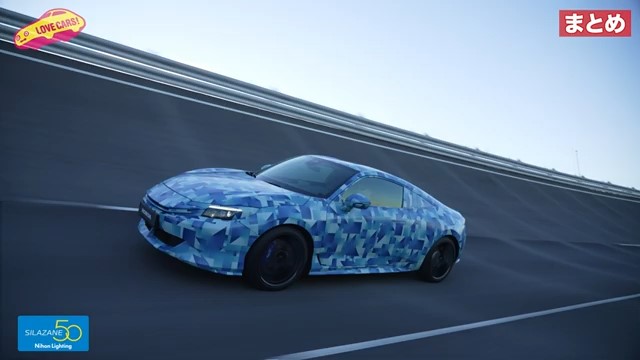
Now, there is good news coming from Japan, where a group of Japanese media representatives were given the opportunity to test a pre-production prototype unit on a test circuit.

This test drive session revealed several interesting details to share with readers, especially for those who got a closer look at the model during the KLIMS 2024 event held last few weeks.

The prototype model, still heavily camouflaged, showed few significant differences, apart from the presence of ADAS sensors and more practical-sized side mirrors.

Here are the new features expected to appear on the Honda Prelude 2026:


1. New generation hybrid system

Interestingly, the Honda Prelude will be the first model equipped with a new generation dual-motor hybrid system.

No further details have been announced at this time, but Honda claims that this new setup promises a 10 percent efficiency improvement over the existing e:HEV system without compromising power.

It is highly likely that the Prelude will feature an all-new 2.0-liter Atkinson cycle engine paired with a new, more compact, and efficient electric drive unit.

Typical for a hybrid car, you can expect the Prelude to come with a simpler e-CVT transmission, but it will also include a new feature dubbed S+ Shift.


2. Honda S+ Shift system

source: LOVECARS!TV! YouTube

Set to be included in all future e:HEV Honda models, the S+ Shift system promises a more dynamic and exciting driving experience.

By pressing a special button, it will simulate gear shifting through small vibrations when downshifting, thanks to altered torque mapping in the electric drive unit.

The Active Sound Control feature will enhance the sporty engine sound through audio feedback provided by the speaker unit, synchronized with the RPM display on the digital cluster.

The Honda Prelude 2026 is also equipped with paddle shifters, allowing drivers to experience simulated gear changes in a hybrid vehicle.


3. Civic platform

source: LOVECARS!TV! YouTube

As previously announced, the Honda Prelude will utilize the existing Civic platform but with a stiffer chassis, improved steering stability, and, most importantly, 10 percent less weight.

Unlike the Civic, the Prelude has a shorter wheelbase but a wider track width.

The suspension system has also been recalibrated for a sportier and more comfortable ride akin to a GT.

The YouTube channel Ride Now reports that the Prelude will feature an adaptive suspension system and a dual-axis steering system from the Civic Type R, designed to reduce torque steer effects.


4. Interior space

source: LOVECARS!TV! YouTube

Stepping inside the cabin, you will notice a dashboard layout that closely resembles that of the current Civic model, but it has been refined with a taller center console design, featuring new control buttons for gear shifting, as well as the S+ Shift button.

For the driver and front passenger, the Prelude offers sporty bucket seats, complete with contrasting white and blue stitching.

The coupe design with a lower roofline and shorter wheelbase makes the headroom and legroom in the Prelude seem smaller and more cramped compared to the Honda Civic, especially for rear passengers.


5. What do Japanese media say?

Overall, the feedback received from the test drive session conducted in Japan is quite positive.

Some claimed that the Prelude promises a sportier drive compared to the Civic (hopefully not just the Civic Type R), while remaining smooth and comfortable like a GT.

One test driver mentioned that the steering and adaptive suspension setup of the Prelude reminded him of the Civic Type R.

Another media outlet revealed that the Prelude offers smooth and linear stopping power, thanks to Brembo brake systems behind the 19-inch black rims and Continental Premium Contact 6 tires.

This all-new Honda Prelude is set to be launched in 2025 and will serve as a replacement for the discontinued Civic and Accord coupe models.

We expect the Prelude 2026 to make its official debut at the 2025 Tokyo Auto Salon, scheduled for January 10-12 next year.

Honda Civic facelift bookings open, launching in January 2025

Honda Malaysia has announced that bookings for the facelifted version of the Honda Civic are now open. According to the company, the sedan will be officially launched in January 2025.

Since its launch in 2022, the 11th generation Civic (also known as the FE) has received a positive response, with over 28,000 units sold.

The Civic has led the non-national C segment for an impressive eight consecutive years since 2016, holding a 70% market share as of October this year.


The facelifted Civic will be offered in two RS variants: the e:HEV RS and the Petrol RS. Both models feature an RS body kit but can be distinguished by the front grille extension and lower grille garnishes, which are painted in body colour for the e:HEV and in black for the petrol variant.

Additionally, the hybrid variant also comes with new 18-inch alloy wheels in a matte grey finish.

The Civic e:HEV RS is powered by a 2.0-litre four-cylinder Atkinson cycle engine paired with an electric motor, producing a total power output of 184 PS and 315 Nm.

Meanwhile, the Petrol RS retains the 1.5-litre VTEC Turbo engine, generating 182 PS and 240 Nm.

The facelifted Civic is equipped with the Honda Sensing system, which includes nine advanced safety features, as well as the Honda Connect system to provide safety, security, and convenience integrated via smartphone connection.

Customers can make bookings via prebook.honda.com.my or the HondaTouch app.

10 exciting cars to see at KLIMS 2024

In case you missed it, the Kuala Lumpur International Mobility Show (KLIMS) 2024 is set to open its curtains from December 5 to 11, 2024 at the Malaysia International Trade and Exhibition Centre (MITEC).

According to organiser Malaysian Automotive Association (MAA), the event, themed ‘Beyond Mobility’, will feature nearly 70 exhibitors, with an exhibition area covering almost 30,000 square feet across two floors of the MITEC building.

For those planning to attend, here are some of the exciting cars that will make their appearance at the event:

Perodua EMO-II

Undoubtedly, Perodua is set to capture visitors’ attention with their electric concept model, the EMO-II (Electric Mobility Online). The concept car previews the production version of Perodua’s first electric vehicle, which is expected to be launched in the market later this year.

Proton e.MAS 7

Although not officially announced, Proton’s first electric vehicle, the e.MAS 7, is highly likely to make its debut at KLIMS 2024. It will be available with two battery pack options, with an estimated price of RM120,000.

Honda Prelude Concept

Another brand that will undoubtedly attract attention at KLIMS 2024 is Honda. In addition to its latest model lineup, Honda Malaysia has announced that it will also showcase the Prelude Concept, making Malaysia the first country in Asia, besides Japan, to exhibit the hybrid coupe.

Mazda CX-60

For devoted Mazda fans, Bermaz Motor will be showcasing two upcoming SUVs, the CX-60 and CX-80. Built on the SkyActiv Multi Solution Scalable Architecture platform, the former offers petrol, diesel, and plug-in hybrid (PHEV) powertrain options, with rear-wheel drive and all-wheel drive capabilities.

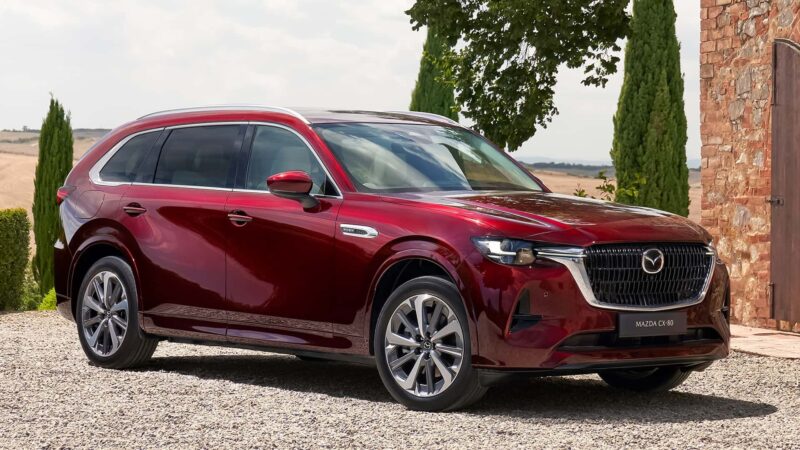
Mazda CX-80

Like the CX-60, the CX-80 also belongs to Mazda’s Large Product group but offers three rows of seating. The powertrain options are similar to the CX-60, featuring inline six-cylinder petrol and diesel engines, PHEV, an eight-speed automatic transmission, and AWD or RWD systems.

Toyota Camry

Following its launch in Thailand last October, the ninth-generation Toyota Camry (XV80) will make its debut in Malaysia this week. The D-segment sedan is powered by a 2.5-litre hybrid engine combined with an e-CVT transmission, producing a total system output of 227 PS.

Toyota Corolla Cross

In addition to the Camry, UMW Toyota Motor will also introduce the facelifted version of the Corolla Cross, which has already been open for orders since November. Along with a refreshed exterior design, the SUV will also feature several new enhancements, including an electronic parking brake, Auto Hold, and improved driver-assistance systems.

Nissan Kicks e-Power

As previously reported, the Nissan Kicks e-Power will be available as a fully imported version (CBU) from Thailand, with two variants: VL and VLT. It features a 1.2-litre three-cylinder petrol engine that acts as a generator to charge the battery pack, which in return powers the electric motor on the front axle.

MG Cyberster

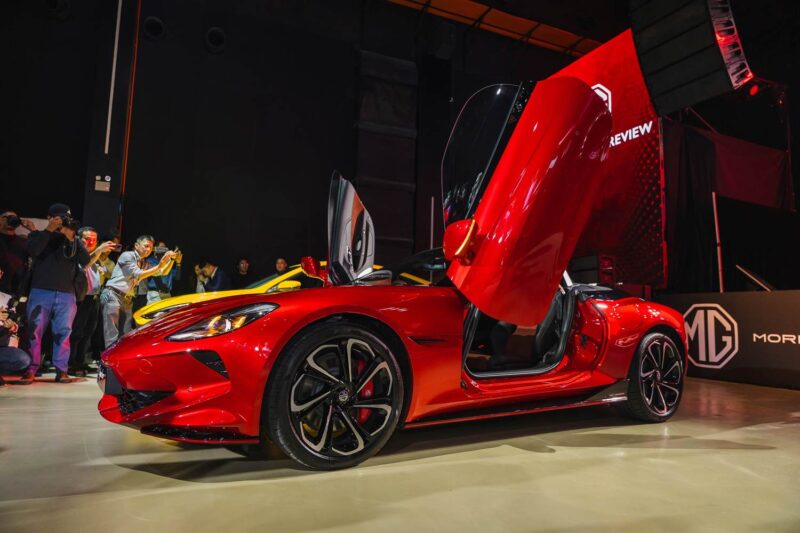
Without a doubt, among the standout cars at KLIMS 2024 will be the MG Cyberster, an electric roadster powered by two electric motors, delivering a combined output of 503 PS and 725 Nm. This allows it to accelerate from 0 to 100 km/h in just 3.2 seconds.

GWM Wey 80

Wey is a luxury sub-brand under Great Wall Motor (GWM). While it is still uncertain whether the luxury marque will be officially launched in the local market, it is certainly a possibility if the Wey 80 MPV receives a positive response at the show.

Honda RS150R now available in White Trico, priced at RM8,379

Boon Siew Honda has announced the return of the White Trico color option for the Honda RS150R underbone motorcycle, alongside two other attractive colors: Matte Blue and Silver.

With this latest update, the selling price of the Honda RS150R now starts at RM8,379 on the road, excluding insurance—an increase of RM80 compared to the previous offering.

As usual, the mechanical aspects of this motorcycle remain unchanged.

This means that the RS150R retains its 149.2 cc single-cylinder engine, capable of generating 15.8 hp at 9,000 rpm and 13.6 Nm of torque at 7,000 rpm.

The suspension system consists of telescopic forks at the front, followed by a single shock absorber at the rear, while the braking system is supported by disc brakes at both the front and rear.

Other features include an LED headlight system, a fuel tank capacity of 4.5 liters, and a digital LCD display.

Honda says the 2026 Passport is its most off-road capable SUV ever

Honda may not be the first brand that springs to mind when discussing off-road vehicles, but the company is hoping to change it with the all-new fourth-generation Passport.

Much like its predecessors, the Passport will be exclusively available in the North American market. For the 2026 model year, it will be offered in three distinct variants, RTL, TrailSport, and TrailSport Elite, with prices starting from the mid-$40,000s (approximately RM178,708).

Each variant boasts a unique appearance. The RTL features sleek black trim and grille, a roof spoiler, and a silver skid garnish front and rear. It rides on 18-inch Gloss Shark Gray wheels fitted with 265/60 R18 all-season tyres.

In contrast, the TrailSport and TrailSport Elite present a more rugged aesthetic, equipped with exclusive off-road hardware such as bright orange heavy-duty recovery hooks, thick steel skid plates, and General Grabber all-terrain tyres in a size of 275/60 R18.

When compared to the third-generation model, the new Passport’s wheelbase has been extended (+2.75 inches) for better ride comfort, alongside wider tracks (+1.3 inches at the front and +1.5 inches at the rear) that contribute to improve cornering stability.

What’s particularly noteworthy is the matte black finish of the rear roof section, which is there to enable owners to lean skis, fishing poles and other equipment without fretting over scratches or damage.

Inside, Honda describes the Passport as perfectly suited for both daily routines and weekend adventures. The RTL variant features luxurious leather upholstery, while the TrailSport variants come with easy-to-clean synthetic leather.

Honda claims the 2026 Passport has the most cargo room in the model’s history, boasting up to 83.5 cubic feet behind the first row and 44 cubic feet behind the second row, which includes a larger redesigned underfloor storage area.

The cargo area is also offers plenty of space for those who enjoy the great outdoors, accommodating full-sized golf bags laid sideways, a large stroller, or two adult mountain bikes (with front wheels removed) when the rear seats are fully folded down.

On the equipment front, the Passport includes a 10.2-inch digital instrument panel and a 12.3-inch touchscreen—54% larger than its predecessor—featuring Google integration, as well as wireless Apple CarPlay and Android Auto compatibility.

Under the hood, the Passport is powered by a 3.5-litre V6 engine that delivers 285 hp and 355 Nm of torque, representing a 5 hp increase over earlier models. Power is directed to the wheels through a newly fine-tuned 10-speed automatic transmission specifically calibrated for the Passport.

Moreover, this SUV is equipped with the second-generation torque vectoring i-VTM4 all-wheel drive system, capable of handling 40% more torque and providing 30% faster response. This results in optimised traction across various driving scenarios.

Also enhanced is the suspension system, now featuring stronger forged steel suspension arms and cast-iron knuckles, alongside retuned MacPherson and multilink struts for a more confident handling feel. The steering ratio has also been recalibrated to provide quicker response.