Tag Archives: electric sedan

2027 Porsche Taycan debuts E-Shift and Electric Sport Sound

Most electric vehicles are equipped with a single-speed transmission, but the Porsche Taycan comes with a two-speed gearbox as standard.

However, gear shifts are largely performed automatically, meaning drivers are effectively unable to shift manually.

With the update for the 2027 Taycan model, drivers can now enjoy a new feature called E-Shift.

Virtual gear shifting

The new E-Shift function offers a simulation of virtual 8-speed gear ratios.

Interestingly, it can operate in both automatic and manual modes; in the latter, drivers can execute shifts using paddle shifters mounted behind the steering wheel.

In manual mode, drivers can experience the following:

  • a gear-shifting sensation akin to that of conventional cars
  • specific drag-torque simulation that mimics engine-braking effects
  • virtual rev limiting
  • a Porsche Electric Sport soundtrack that changes according to speed and load
  • a virtual RPM display and shift indicator on the instrument cluster

Behind this update, the original gearbox still retains its two-speed ratios.

The new feature is standard on the Turbo GT variant and optional on other Taycan variants.

Range climbs to 700 km

Porsche is also offering low rolling-resistance summer tyres for rear-wheel-drive models (in both sedan and Sport Turismo body styles).

These new tyres add an extra 20 km of range, pushing the total to up to 700 km (WLTP figures) when paired with the Performance Battery Plus package.

More powerful infotainment system

The Porsche Taycan also debuts a Porsche Communication Management (PCM) system that delivers five times the computing power of its predecessor.

All vehicle functions and controls are now consolidated in one place, represented by a 3D Taycan model matched to the body colour.

Just like a smart device, a choice of widgets can be displayed in either a full-screen or split-screen view.

Other features include:

  • Artificial-intelligence (AI) based voice control
  • Google search integration
  • Over-the-air (OTA) updates
  • a 25 W wireless smartphone charging pad (1.5 times faster)

First-ever Manthey Kit for the Taycan

For the first time, the Manthey Kit package previously offered for various GT models is now available for the Porsche Taycan.
It comprises a comprehensive aerodynamics kit, chassis tuning and optimised drive units for increased performance.

Fitted with this Manthey Kit, the Porsche Taycan Turbo GT with Weissach Package set a time of 6:55.533 minutes at the Nürburgring Nordschleife in the executive electric sedan category.

The Manthey Kit is available as a retrofit and, for the first time, straight from the factory.

2027 Mercedes-Benz C-Class EV offers 762 km range without the ‘egg’ shape of the EQS & EQE

This is the new 2027 Mercedes-Benz C-Class Electric, a direct response and competitor to the BMW i3 electric sedan.

The EQ name is no longer used to refer to EV model offerings, and the ‘egg’ shape that characterized the EQS and EQE sedans has been completely eliminated.

Exterior

At first glance, you might envision a GLC Electric presented in a sedan body style.

The C-Class EV features a modern retro grille inspired by classic models (W111 & W108) and the Vision Iconic concept.

To stand out even more, Mercedes has integrated 1,050 pixel lights into the structure.

The star motif is maintained at both the front and rear, complemented by 162 illuminated stars on the panoramic glass roof.

Overall, the C-Class EV boasts a drag coefficient of 0.22 Cd.

Interior

This electric sedan offers two wide-screen options:

  • 39.1-inch Hyperscreen
  • Superscreen, which consists of a 10.3-inch cluster screen and two 14-inch screens

The base variant comes with a digital driver cluster screen and a central infotainment screen, while the passenger screen is replaced with a digital animation panel (or digital picture frame).

Additional features include laminated windows, a quieter air conditioning system, and extra insulation for a more comfortable cabin.

With a new EV platform, the C-Class EV can offer a wheelbase that is 97 mm longer, making it the most spacious C-Class yet.

The rear cargo space measures 470 liters, alongside a frunk space of 101 liters.

762 km range

Initially, the C-Class EV is available in the C400 4Matic variant, powered by a dual electric motor delivering 482 hp and 800 Nm of torque.

It is equipped with a 94.5 kWh battery pack that offers a driving range of up to 762 km (WLTP data).

This electric sedan also supports fast DC charging at 330 kW, allowing a range of 325 km to be achieved in just 10 minutes.

The acceleration from 0-100 km/h is achieved in as little as 4.1 seconds, reaching a top speed of 209 km/h.

There are also plans to introduce a RWD variant with an approximate range of 800 km.

Driving Aspects

The C-Class Electric is equipped with a rear-axle steering system (up to 4.5 degrees) aimed at reducing the turning radius to 11.2 meters.

This feature is also beneficial for vehicle stability during high-speed driving.

In addition, Mercedes plans to offer an adaptive air suspension option that utilizes predictive damping based on Google Maps data and real-time information to detect road surfaces.

BYD Seal 6 EV: a budget-friendly ‘sporty’ sedan – first drive

Sporty.

At least, that’s the characteristic BYD aims to highlight with its latest electric sedan, the BYD Seal 6, launched two months ago.

With a competitive price starting at RM100,000, the BYD Seal 6 successfully recorded sales of over 100 units in the first week following its launch.

A few weeks ago, BYD Malaysia invited us for a brief test drive to Janda Baik and Genting Highlands to experience the Premium variant of the BYD Seal 6 first-hand.

Here are our brief notes:


Dimensions and Design

The BYD Seal 6 is positioned as a C-segment sedan, significantly larger than competing models such as the Toyota Corolla and Honda Civic.

Its body design is less sporty compared to the more premium Seal, reminding the author of electric sedan models from Mercedes, namely the EQE and EQS.

However, a notable advantage of the Seal 6 is its cargo capacity of 525 liters, consisting of a 460-liter trunk and a 65-liter frunk.

Additionally, with a wheelbase of 2,820 mm, the Seal 6’s cabin feels spacious and comfortable, enhanced further by its flat rear floor structure.


On-Road Performance

The Premium variant we tested is equipped with a rear-wheel-drive electric motor producing 215 hp and 330 Nm of torque.

Driving is aided by MacPherson strut suspension at the front and a multi-link setup at the rear, tuned for Malaysian road conditions.

Acceleration feels relatively linear, with no sudden jolts that might strain the driver’s neck. With responsive throttle control, the Seal 6 can achieve desired speeds smoothly.

The suspension tuning effectively minimizes vibrations and road irregularities from disturbing passengers’ comfort.

Although it features a rear-wheel-drive setup, the Seal 6 does not exhibit a sporty character when driven aggressively.

This is due in part to the steering feel, which the author found underwhelming, and the rubber tires at all four corners, which felt less confident, especially in corners.

The benefits of the mentioned suspension tuning also diminish when driving up Genting Highlands, where the sedan can feel a bit floaty in most corners.


Cabin Experience

This sedan may not be the best choice for those seeking high-performance driving.

However, for most users, it offers more than adequate comfort.

The synthetic leather seats are sufficiently comfortable, providing ample support for the driver, with cushion dimensions that adequately support the thighs.

Rear seating is spacious and comfortable, complemented by a flat floor design.

The minimalist dashboard layout houses a 12-inch central screen that is non-rotatable but includes essential vehicle functionalities.

Importantly, it features wireless Apple CarPlay and Android Auto, which are essential in any modern car.

There are still some physical function buttons on the center console, along with a smartphone holder that includes wireless charging capabilities.

Fortunately, the side mirror adjustment function is still maintained on the door panel.

However, it’s unfortunate that despite having advanced safety features like AEB, FCW, LDW, and a 360-degree camera, the sedan lacks blind-spot monitoring (BSM) even in higher variants.


An Alternative to C-Segment Sedans?

Yes, with a price below RM120,000, the BYD Seal 6 can be a strong alternative for those needing a spacious, comfortable, and modern sedan.

Or if you are affected by the recent Budi95 subsidy.

In any case, consider your own needs and preferences. As we have emphasized before, test drive the vehicle before making any decisions.

2026 Volvo ES90 debuts this March, 800V platform, 700 km range

Following the EX90 and EX30, Volvo appears ready to launch another electric vehicle, this time in the form of the sedan model ES90.

Built on an 800-volt electric architecture, the Volvo ES90 is claimed to offer a range of up to 700 km based on WLTP cycle data, which is 86 km farther than the range of the EX90.

With this 800V architecture, the Volvo ES90 allows for shorter charging times.

Using a 350 kW DC fast charger, the ES90’s battery can be charged from 10% to 80% in just 20 minutes.

Based on the teaser images provided, the Volvo ES90 features the proportions of a three-box sedan, but with a more aerodynamic roofline that slopes toward the rear.

Other notable features include additional LED light units on the rear pillars, physical side mirrors complete with camera units, and a LIDAR module housing on the roof.

In addition to LIDAR, the Volvo ES90 will be equipped with various components, including five radar units, eight cameras, twelve ultrasonic sensors, and Safe Space Technology supported by artificial intelligence (AI).

The Volvo ES90 will also be the first model from Volvo to come with dual Nvidia Drive AGX Orin systems, providing the most advanced computing capabilities.

It is understood that Volvo will also update the ICE variant of the Volvo S90 as an alternative for those who remain skeptical about electric vehicles—similar to the approach taken with the EX90 and XC90 models previously.


Based on leaked images circulating on social media, the facelifted Volvo S90 will feature a redesigned front end, resembling the changes made to the facelifted XC90.

More information is expected to be announced ahead of the official introduction of the ES90 next month.

Xiaomi SU7 Ultra prototype sets fastest lap time at Nurburgring, beating Porsche Taycan Turbo GT

Who would have thought that a manufacturer known for smart devices now has a compelling recipe to keep Porsche engineers on their toes at the Green Hell track?

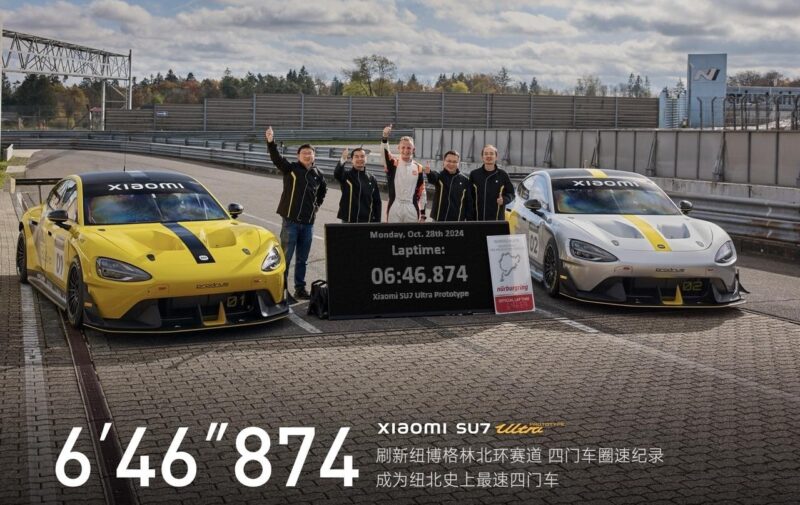
Xiaomi Auto recently achieved a record for the fastest electric sedan lap around the Nurburgring Nordschleife, clocking in at 6 minutes and 48.874 seconds with its prototype model, the SU7 Ultra.

Despite being a prototype, it is fast enough to surpass the previous record set by the Porsche Taycan Turbo GT, which was 7 minutes and 7.55 seconds.

According to a report from CarNewsChina, the manufacturer initially faced significant challenges, as their attempts to set the record were postponed multiple times due to weather conditions.

The Xiaomi SU7 Ultra was announced in mid-2023 as a high-performance variant equipped with the HyperEngine V8s electric drive unit.

With a three-motor configuration, the Xiaomi SU7 Ultra can deliver a staggering 1,548 horsepower, accelerating from 0 to 100 km/h in just 1.97 seconds, and achieving a top speed of 350 km/h.

This impressive performance figure comes from a manufacturer primarily known for consumer electronics.

Moreover, Xiaomi’s electric sedan has made a significant impact within the automotive industry.

According to reports from various media outlets, Ford CEO Jim Farley allegedly imported a unit from Shanghai and personally drove the Xiaomi SU7 sedan for six months.

“I don’t like to talk too much about competition, but I’ve driven the (sedan) Xiaomi. I’ve been driving it for six months and I don’t want to let it go,” he stated.

Xiaomi plans to revisit the Nurburgring in 2025 to attempt a new fastest lap record using a production model.


Mercedes-Benz EQS will be killed after its first generation

The lifespan of the luxurious electric sedan Mercedes-Benz EQS may not last as long as expected.

This is because according to the latest report from Autocar, Mercedes-Benz CEO Ola Källenius confirmed that the electric sedan will be replaced with an electric version of the S-Class.

“In the future, there will be two versions of the S-Class, namely ICE and electric,” he said.

Unlike the current approach, Mercedes-Benz will use the same design for both models, although they will not be based on the same platform.

According to the report, the electric S-Class sedan will be built on a specific EV platform, while the ICE version will continue to use the improved MRA architecture.

The approach of the same design for two different powertrain models has already been used by its competitor BMW in the new generation models of the 5-Series and 7-Series.

The name EQS is also likely to be dropped, referring to the long name used by the previously launched electric-powered G-wagen (G580 with EQ Technology).

Xiaomi SU7 Ultra Prototype ready to challenge the Porsche Taycan Turbo GT

The smart device manufacturer Xiaomi is not satisfied with its existing SU7 car product.

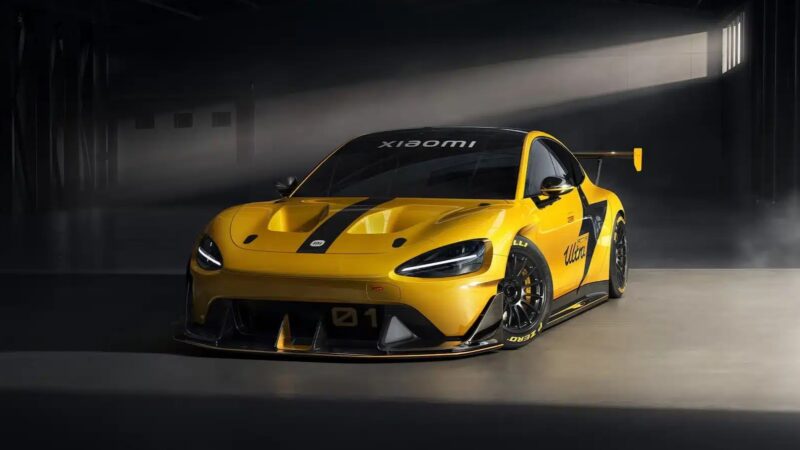
In order to provide a more intense competition to high-performance EVs in the market, the manufacturer is now unveiling the full carbon prototype model Xiaomi SU7 Ultra.

At the same time, Xiaomi also announced the debut of an electric power unit called the HyperEngine V8s.


It is not a typical V8 engine, instead, the HyperEngine V8s is an electric motor capable of producing a maximum power of 578 PS and a torque of 635 Nm, with a speed reaching 27,200 rpm!

In the SU7 Ultra model, Xiaomi combines two electric motors, the HyperEngine V8s, and a V6s electric motor, with a total output reaching 1,548 PS that powers all wheels!

With Pirelli P Zero tires, the Xiaomi SU7 Ultra can accelerate from 0-100 km/h in just 1.97 seconds, 0-200 km/h in 5.97 seconds, and reach 300 km/h in just 15 seconds.

The maximum speed is about 350 km/h.


The Qilin 2.0 battery pack, sourced from CATL, is specifically designed for racing, capable of discharging a peak power of up to 1,808 PS.

Although the battery pack has a SoC of about 20 percent, it is still capable of discharging power as high as 1,088 PS!

Unlike the standard SU7, the SU7 Ultra features a full carbon fiber body construction, complete with a body kit (front splitter and diffuser, rear wing, massive diffuser) said to generate a downforce of 2,145 kg at a speed of 350 km/h.

Yet, the Xiaomi SU7 Ultra is still a high-performance sedan with a weight close to 2 tons, or more precisely 1,900 kg.


The brake system consists of six-piston AP Racing calipers on the front and rear axles, as well as racing brake pads capable of withstanding temperatures above 800 degrees Celsius.

Under full braking conditions, the Xiaomi SU7 Ultra is capable of generating over 2.36G of deceleration, with a stopping distance of just 25 meters from 100-0 km/h.

Xiaomi plans to set a new record in the four-door electric sedan category at the Nurburgring Circuit in October.

Currently, the fastest record is held by the Porsche Taycan Turbo GT with a time of 7:07.55 minutes.