Edaran Tan Chong Motor (ETCM) has announced that it has received 1,300 bookings for the new-generation 2026 Nissan Serena e-Power MPV model.
So far, 250 units of the MPV have been delivered to their respective owners since its official launch last March.
According to Christopher Tan, Executive Vice President of ETCM, “For most families today, mobility is more than just transportation—it is a part of our everyday lifestyle.”
He added, “The Nissan Serena e-Power reflects Nissan’s commitment to ensuring that advanced technology enriches real-world journeys and meets the needs of families.”
He further explained that this MPV is specifically designed to address the daily realities faced by parents, children, and the elderly, who often experience discomfort, dizziness, or fatigue in traditional vehicles.
The Nissan Serena e-Power 2026 is available in five variants:
Serena X – RM154,800
Serena X Plus – RM159,800
Serena Highway Star – RM169,800
Serena Premium Highway Star – RM174,800
Serena Shiro Premium Highway Star – RM179,800
In light of the positive response, ETCM has extended a rebate offer of up to RM5,000 along with an accessory package worth RM8,000.
As the Malay proverb goes, “better late than never.”
After more than three years since its global debut, Nissan distributor Edaran Tan Chong Motor (ETCM) is finally set to officially launch the Serena e-Power this March.
Although its arrival may be considered somewhat late, ETCM claims to have already received 400 orders for the MPV model.
Naturally, there are several features of the Serena e-Power that have piqued the interest of existing Nissan Serena owners in this new model.
Last week, ETCM invited a group of journalists for a test drive session from Petaling Jaya to Kuantan, allowing us to assess the improvements made.
Here are some positive aspects we found in the Serena e-Power:
e-Power is More Powerful
One of the most significant upgrades in this family MPV is the e-Power system (163 PS/315 Nm), which replaces the S-Hybrid system in the C27 model.
Whereas the Serena S-Hybrid previously felt like it could “manage… but don’t ask for more,” this new e-Power system offers a much more confident drive.
Its electric motor provides a more immediate response, more strength, and operates quietly, akin to an electric vehicle (EV).
It’s not to say it suddenly becomes a speedster, but this time the Serena feels less heavy when overtaking or climbing, compared to the previous S-Hybrid system.
Press the pedal, and the car moves smoothly without drama. This is the characteristic that should be present in a modern family MPV.
The Serena e-Power boasts fuel consumption as low as 5.4 liters per 100 km, with a driving range of up to 1,000 km.
Quiet Cabin
In addition to the efficient e-Power system, we also noticed a significant improvement in NVH (Noise, Vibration, and Harshness).
The cabin feels quieter and more comfortable, to the point that we forgot we were not driving an electric MPV.
This is attributed to several factors, including the use of acoustic glass and air curtains on the front bumper, which contribute to improved driving stability.
Wind noise is only noticeably heard at higher speeds; however, this isn’t a major issue as the MPV will most often be driven within the national speed limit.
Engine noise is also less pronounced when the e-Power system is engaged aggressively, almost as if Nissan has placed the 1.4L NA engine at the front of the bumper.
It doesn’t roar; rather, it produces a low hum that does not distract the driver.
Less Motion Sickness
One new feature in the Serena e-Power is the redesigned front suspension system, aimed at enhancing ride stability and comfort.
According to Nissan, the Serena e-Power utilizes SUV-based suspension architecture at the front to reduce body roll and improve control.
Overall, the suspension tuning of the Serena e-Power is designed to provide a more comfortable ride with less bouncing, aided by Zero Gravity seats to reduce motion sickness, especially for rear passengers.
A Champion of Practicality
As a family MPV, the Nissan Serena offers ample space for storage.
In line with current trends where people heavily rely on smart devices, the Serena includes designated spots for mobile phones, including a wireless charging slot and six USB ports.
The second-row passengers benefit from foldable tables and seats that can adjust in four directions.
Additionally, there are 22 cup-holder locations throughout the cabin.
It can be said that the Serena understands the realities of life: kids have toys, mothers have small bags, fathers have power banks – everyone has their place.
Retaining Elements of Previous Serena Models
Although the Serena e-Power introduces numerous enhancements, it still maintains the true identity of the Serena, such as the seating layout allowing easy passage from the first to the third row.
It also retains wide sliding doors on both the left and right, a high cabin dimension, large windows, and ease of access.
The Serena maintains the Dual Back Door feature with dual opening methods, making it convenient for loading and unloading items, especially in tight parking spaces.
Thus, exemplary fathers need not worry, as the identity of the previous Serena model is still preserved and passed down to the new Serena.
Conclusion
With its practical features and innovations, the Nissan Serena e-Power has the potential to be an ideal family car choice for 2026.
According to ETCM, the Serena e-Power is expected to be priced between RM160,000 and RM180,000.
Specifications for the Nissan Serena e-Power (including safety features) can be viewed at THIS LINK.
Edaran Tan Chong Motor (ETCM) recently held a preview session for its new MPV model set to launch next year, the Nissan Serena e-Power.
The sixth generation of the Nissan Serena e-Power (C28) is powered by the e-Power drivetrain, which consists of a 1.4-liter engine, a 163 PS electric motor producing 315 Nm, and a 1.769 kWh lithium-ion battery pack.
Unlike hybrid vehicles on the market, this e-Power system relies entirely on the electric motor for propulsion.
The 1.4-liter engine serves solely as a power generator but is equipped with direct injection technology and Mirror Bore Coating, which help reduce friction, vibration, and noise.
Fuel consumption is as low as 5.4 liters per 100 km, and this MPV can travel up to 1,000 km on a full tank.
In terms of appearance, the Serena e-Power C28 features a more modern design, beginning with a V-motion grille, a sleeker bumper, boomerang-patterned taillights, and the new Nissan logo.
The wheels are 16 inches in size.
According to ETCM, the Nissan Serena e-Power will be the first e-Power model to be assembled at the Serendah plant.
The retail price and full specifications of the Nissan Serena e-Power will be announced at the official launch, expected to take place in the first quarter of 2026 (Q1 2026).
Edaran Tan Chong Motor (ETCM) has announced that bookings for the 2025 Nissan Navara X-Tremer pickup truck are now open.
This new trim package features exterior details such as:
Black front grille
X-Formation bumper cladding
Carbon fiber-like fender accents
New black over fenders
Shark fin antenna
Black rear bumper
Decorative trim on the tailgate door
Inside the cabin, the X-Tremer trim showcases features including:
Soft-touch dashboard with double-stitching
Stylish center console
Leather-wrapped steering wheel
8-inch infotainment screen with Apple CarPlay/Android Auto connectivity
Zero Gravity front seats
Quole Modure upholstery that is dirt-resistant and stays cool
The Nissan Navara X-Tremer retains a double-wishbone suspension setup at the front with a stabilizer bar, followed by a multi-link setup that minimizes body roll, ensuring comfort and stability.
Safety features include:
Front Collision Warning (IPFCW)
Emergency Braking (IFEB)
Blind Spot Warning (BSW)
Lane Departure Warning (LDW)
Rear Cross Traffic Alert (RCTA)
ABS, EBD, BA, TCS, VDC, HSA, HDC
Trailer Sway Assist (TSA)
Electronic Locking Rear Differential
The Nissan Navara X-Tremer is available in three variants with the following prices:
2.5L Turbo V – RM134,800
2.5L Turbo VL – RM146,900
2.5L Turbo Pro-4X – RM154,800
Customers who purchase and register the new Nissan Navara X-Tremer will also be eligible for a cash rebate of up to RM8,000 (subject to terms and conditions).
Malaysians are invited to view the Navara X-Tremer up close at the Nissan Roadshow taking place at East Coast Mall, Kuantan from September 10-14, or to visit any Nissan showroom nationwide.
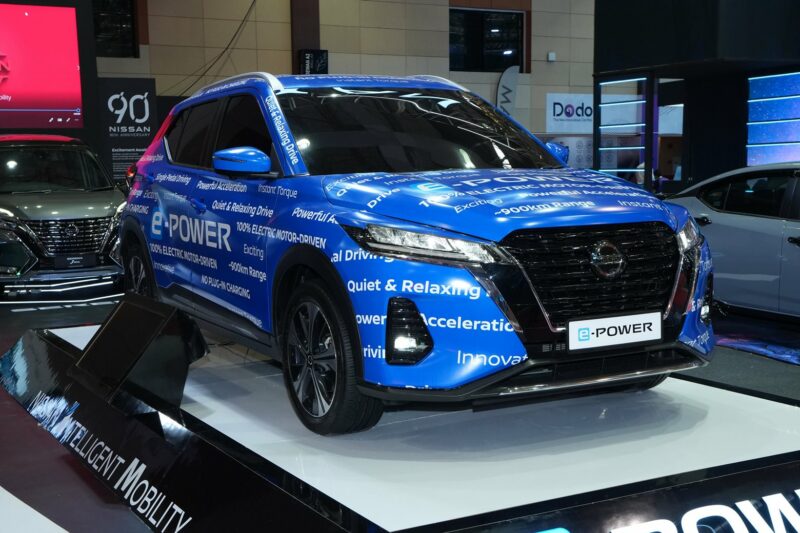
Recently at the Kuala Lumpur International Mobility Show (KLIMS) 2024, Edaran Tan Chong Motor (ETCM) marked its revival with the launch of the Nissan Kicks e-Power.
The Kicks e-Power for the Malaysian market will be fully imported (CBU) from Thailand. This means we are getting the facelifted version of the crossover, which was originally launched in that country four years ago.
Although it is not the freshest product on the market, the Kicks offers something new: the e-Power powertrain. It features an internal combustion engine, but unlike conventional hybrids, the petrol mill serves only as a generator.
The wheels are driven 100% by an electric motor at all times, allowing you to enjoy a driving experience that is almost akin to that of an electric vehicle (EV) without having to get in a fluster about charging.
This is indeed appealing and certainly helps improve fuel efficiency; however, during a recent media test drive, I found three shortcomings.
Outdated exterior design
As mentioned, the Kicks e-Power is actually a product that is somewhat aged. This is evident in its exterior design, which appears rather dated when compared to its closest competitors.
Don’t get me wrong; its appearance is not unattractive, but it lacks any elements that might make it stand out in a showroom.
However, as you may know, appearance, design, and related matters are subjective. Not everyone desires a car that is overly flashy—some prefer a more casual and understated look.
Underwhelming interior
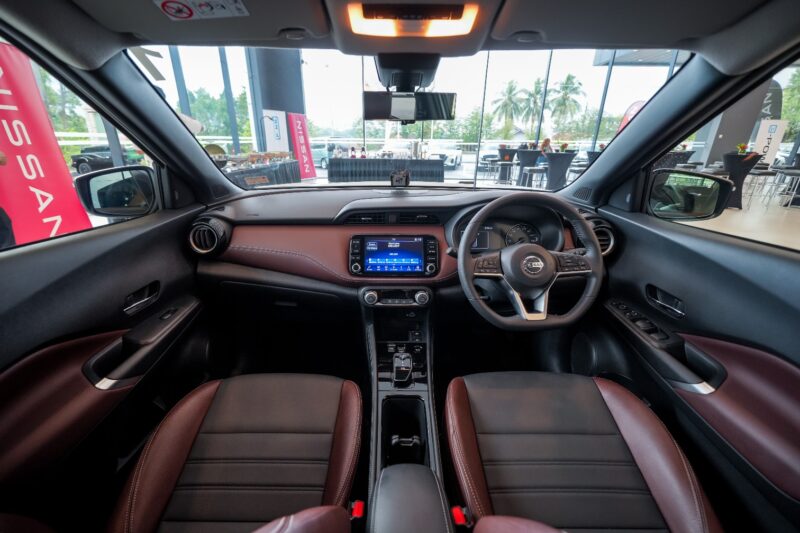
The interior of the Kicks is neat and simple, but like its exterior, it is beginning to show its age.
This is because the layout is approximately 95% identical to that of the Almera’s but Kicks does come with a more sophisticated gear knob that feels somewhat awkward to use due to its shape.
Additionally, the use of hard plastic finishes on the dashboard and door panels detracts from the overall appeal of this car. The rear passenger space also feels somewhat cramped, despite the fact that its wheelbase is 5 mm longer than that of the HR-V.
Reasonably spacious boot, but…
The Kicks e-Power features a boot space that is quite generous, offering 423 litres of capacity. Unfortunately, lift the boot floor and you will not find any spare tyre. Instead, there is a tyre repair kit.
Was the decision to exclude a spare tyre made for cost or technical reasons? It is plausible that cost played a role, as the car market in Malaysia is generally quite price-sensitive so there’s a chance that ETCM may have taken this step to ensure that prices remain competitive.
Technical factors also make sense, as hybrid powertrains like e-Power involve additional components, and some of these components may encroach under the boot floor where spare tyres are usually found.
Edaran Tan Chong Motor Sdn Bhd (ETCM) has officially launched the Nissan Kicks e-Power in the local market.
As reported, this compact crossover is available in two variants: VL and VLT. The official selling prices have been announced, starting at RM113,800 for the former and RM121,800 for the latter.
The VLT variant can also be had with a two-tone colour scheme for an additional RM4,000, bringing its selling price to RM125,800.
Interestingly, ETCM is offering an Early Bird promotion, where the first 500 customers will receive a 10-year/160,000 km EV component warranty and an introductory rebate of RM5,000.
With said rebate, the selling price of the Kicks e-Power is reduced to RM108,800 for the VL, RM116,800 for the VLT, and RM120,800 for the VLT in the two-tone option.
The Kicks e-Power features the e-Power drivetrain, which combines a 1.2-litre three-cylinder petrol engine, an electric motor, and a 2.1 kWh lithium-ion battery. The combination produces a total system output of 129 PS and 280 Nm.
Unlike a conventional hybrid drivetrain, the internal combustion engine in the e-Power system acts solely as a generator, tasked with charging the battery. The power is then delivered to the electric motor to drive the wheels.
This means that the Kicks e-Power is fully powered by the electric motor, much like a true electric vehicle, but it does not require charging.
Fuel consumption is rated at 21.7 km/l based on the NEDC cycle. With a 41-litre fuel tank, it is claimed to be capable of achieving a range of up to 900 km.
In terms of equipment, the Kicks e-Power comes standard with automatic LED headlights, LED fog lights, automatically folding side mirrors, speed-sensitive wipers, and a tyre repair kit (no spare tyre).
Inside, highlights include Zero Gravity seats covered in fabric, manual six-way adjustment for the driver’s seat, four-way adjustment for the front passenger seat, an eight-inch touchscreen with Apple CarPlay and Android Auto, a seven-inch TFT display, and three USB ports.
Safety features comprise Vehicle Dynamic Control, Traction Control System, Hill Start Assist, Intelligent Driver Alertness, Cruise Control, Intelligent Forward Collision Warning, and Forward Emergency Braking.
Those opting for the VLT variant receive additional kit such as two-tone leather upholstery, a 360-degree camera, Intelligent Rear View Mirror, Intelligent Cruise Control, Blind Spot Warning, and Rear Cross Traffic Alert.
The Kicks e-Power is available in Black Star, Sunrise Orange, Brilliant White Pearl, Brilliant Silver, and Red Pearl.
The VLT variant can also be ordered with a Super Black roof for the Sunrise Orange, White Pearl, and Red Pearl colours. Another two-tone option available for the range-topping variant is Dark Metal Grey.
The official distributor of Nissan in Malaysia, Edaran Tan Chong Motor (ETCM), has been rather quiet in recent years.
The last all-new model launched by the company was the second-generation Almera, which made its debut somewhere late 2020. Since then, it appears as though Nissan has vanished from the radar.
But ETCM appears to be far from defeated; having been the custodian of the Nissan brand in Malaysia for over 60 years, the company is determined to maintain its presence in the market.
The first step in ETCM’s revival strategy is the introduction of the long-awaited B-segment crossover, the Nissan Kicks e-Power.
The Kicks e-Power for the Malaysian market will be fully imported (CBU) from Thailand, which means we will be getting the facelifted version of the first-generation model that was originally launched in The Land of the Smiles four years ago.
While this car may not be the freshest offering on the market, it does present something new for the Nissan brand in Malaysia: the e-Power powertrain.
What’s even more exciting is that this facelifted model features the second-generation e-Power system, which is lighter and more powerful.
But before delving deeper into the e-Power, you might be wondering how big is the Kicks? It measures 4,290 mm in length, 1,760 mm in width, and stands 1,605 mm tall, making it nearly 100 mm shorter than the Honda HR-V.
In terms of design, some say it resembles a mini version of the Nissan X-Trail. Whatever the case is, this writer can’t help but feel that the Kicks appears somewhat ‘aged’ despite yet to hit the market.
Don’t get me wrong; its appearance is certainly appealing, yet it lacks the ‘X’ factor that would make it stand out in a showroom.
As you might already know, beauty, design, and aesthetics are subjective— not everyone desires a flashy car; some prefer a more understated and casual look, which is exactly what the Kicks offers.
The interior of the Kicks is tidy and simple, but much like its exterior, it is starting to show signs of age.
The layout is approximately 95% identical to that of the Almera’s cabin but Kicks comes with a more sophisticated gear knob that feels somewhat awkward to use due to its shape.
The level of standard equipment is decent. The Kicks is fitted with Zero Gravity seats, an eight-inch touchscreen with Apple CarPlay and Android Auto, a seven-inch TFT display, three USB ports, and manual adjustments for the driver and front passenger seats.
The top-of-the-range VLT variant adds a premium touch with two-tone leather upholstery adorning the seats and dashboard.
Nevertheless, there are elements that make the Kicks appear and feel somewhat inexpensive, one of which is the hard plastic trim on the door panels. Additionally, the air-conditioning control switches look like it came out 10 years ago and could benefit from a redesign.
Although the wheelbase is 5 mm longer than that of the HR-V, the rear passenger space in the Kicks feels a touch cramped, exacerbated by the somewhat upright seating position.
However, the boot space is fairly generous, offering a capacity of 423 litres. According to Nissan, it can accommodate two standard-sized golf bags, a large suitcase, and a medium-sized luggage. Sounds perfect for a weekend of golf.
The Kicks may have arrived fashionably late to the market, but as this writer has mentioned, it does bring something intriguing to the table: the e-Power powertrain.
So, what exactly is e-Power?
Nissan insists on not labelling it a hybrid, although the system integrates an internal combustion engine (ICE), an electric motor, and a battery. Thus, technically, it is a hybrid.
However, unlike conventional hybrid systems, the ICE in the e-Power setup does not drive the wheels. Its sole purpose is to charge the 2.1 kWh lithium-ion battery located in the middle of the frame. The wheels are powered entirely by the electric motor fed by this battery.
In essence, the wheels are propelled 100% by the electric motor, offering a driving feel akin to that of an electric vehicle, but with the added benefit that you need not worry about charging, ever.
How does it perform in the real world?
As soon as the accelerator pedal is depressed, the car pulls almost instantly and this is done without the roar of an ICE engine familiar in traditional vehicles.
Similar to a real EV, the powertrain delivers responsive acceleration and instant torque, allowing this writer to overtake other vehicles with ease, even when space was limited.
Yet, let’s not set our expectations too high, as the Kicks e-Power’s acceleration won’t melt your face like some high-performance EVs do. It delivers a modest 129 PS and 280 Nm—not particularly impressive, but still adequate to meet the needs of consumers in this segment.
The Kicks e-Power features three driving modes: Normal, Eco, and Sport. In this writer’s experience, the Normal mode is perfectly suitable for everyday driving, while the Sport mode can provide that extra power when needed.
Another advantage of the e-Power system is its single pedal driving capability known as e-Pedal Step. This feature is activated only in Eco and Sport modes, where the regenerative braking force is heightened, allowing the driver to slow down without depressing the brake pedal.
Moreover, with stronger regenerative braking, the battery charges more quickly. With a full battery, the EV mode can be activated, enabling the vehicle to travel up to 2.5 km on electric power at a speed of 40 km/h, with the engine completely turned off.
In addition to its addicting eagerness, the Kicks is a joy to driver, particularly on winding roads. Whatever magic the Nissan engineers have conjured for the suspension tuning, the crossover proves incredibly adept when tackling sharp bends.
Sound, vibration, and harshness (NVH) levels are also highly commendable. At higher speeds, wind and tyre noise are effectively suppressed. However, during aggressive acceleration, one may occasionally hear the engine working hard to recharge the battery.
Conclusion
Whether this model will help ETCM back on its feet is still uncertain, but in the Kicks, the company has a solid product, albeit one that is a touch aged.
This writer believes that by hyping up the strengths of e-Power and having an effective pricing strategy, ETCM may well find an opportunity to win back the hearts of consumers in this country.
Edaran Tan Chong Motor (ETCM) has unveiled the specifications of the Nissan Kicks e-Power, which is set to launch in the local market this December.
According to ETCM, the B-segment SUV will be available as a fully imported (CBU) model from Thailand and will be offered in two variants, namely VL and VLT.
Both variants feature an e-Power powertrain that combines a 1.2-litre three-cylinder petrol engine with an electric motor and a 2.1 kW/h lithium-ion battery. The combination produces a total output of 129 PS and 280 Nm of torque.
Unlike conventional hybrid powertrains, the engine in the e-Power system acts solely as a generator to charge the battery. The power is then sent to the electric motor, which drives the front wheels.
This means the Kicks e-Power is entirely propelled by the electric motor, much like a real electric vehicle, but without the need for external charging.
Fuel efficiency is rated at a 21.7 km/l based on the NEDC cycle, and with a 41-litre fuel tank, the car is said to be capable of achieving a total range of up to 900 km.
In addition to Normal, Sport, and Eco modes, there is also an EV mode where the engine remains completely off, allowing for a driving experience akin to that of a true EV.
However, the mode can only be activated when the battery is fully charged and is limited to a range of 2.5 km due to the small battery size. Also featured is a one-pedal driving system called e-Pedal Step.
In terms of equipment, the Kicks e-Power comes standard with automatic LED headlights, LED fog lights, automatic folding side mirrors, speed-sensing wipers, and a tyre repair kit (no spare tyre included).
Inside, the SUV boasts Zero Gravity seats upholstered in fabric, manual six-way adjustment for the driver’s seat and four-way adjustment for the front passenger seat, an eight-inch touchscreen with Apple CarPlay and Android Auto, a seven-inch TFT meter display, and three USB ports.
Safety features include Vehicle Dynamic Control, Traction Control System, Hill Start Assist, Intelligent Driver Alertness, Cruise Control, Intelligent Forward Collision Warning, and Forward Emergency Braking.
Those opting for the VLT variant will enjoy added features such as two-tone leather upholstery, a 360-degree camera, an Intelligent Rear View Mirror, Intelligent Cruise Control, Blind Spot Warning, and Rear Cross Traffic Alert.
The Kicks e-Power will be available in five striking colours: Black Star, Sunrise Orange, Brilliant White Pearl, Brilliant Silver, and Red Pearl.
The VLT variant can also be ordered with a Super Black roof for the Sunrise Orange, White Pearl, and Red Pearl colours. Alternatively, buyers can opt for the two-tone Dark Metal Grey.
EDARAN Tan Chong Motor (ETCM) recently showcased the Nissan Kicks e-Power at the Malaysia Autoshow 2024.
Khoo Cheng Pah, Chief Executive Officer of Edaran Tan Chong Motor, confirmed that the company will launch their first e-Power model in the second half of this year.
The specific model to be launched has not been disclosed, but there are rumors suggesting that ETCM will introduce the Serena e-Power.
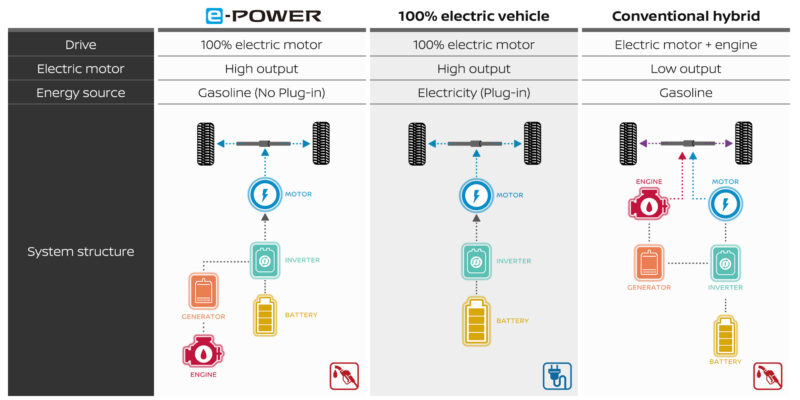
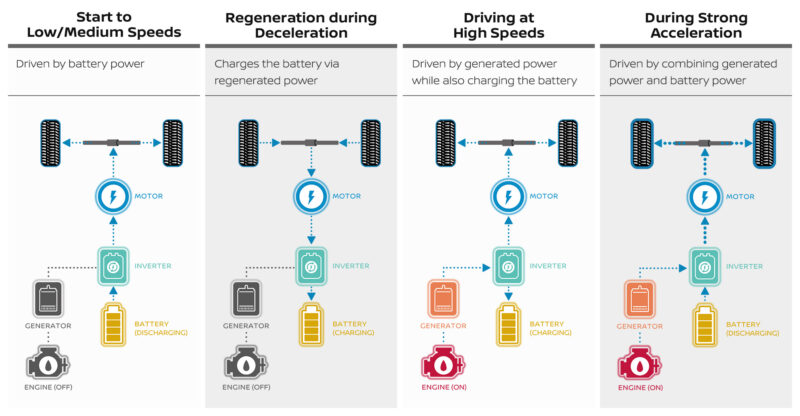
E-Power is a Nissan’s hybrid technology that integrates internal combustion engine with an electric motor. It offers an immediate throttle response as the latter can generate maximum torque instantaneously.
With this technology, the engine is only utilised to generate electricity, while the wheels are 100% driven by a high-output motor.
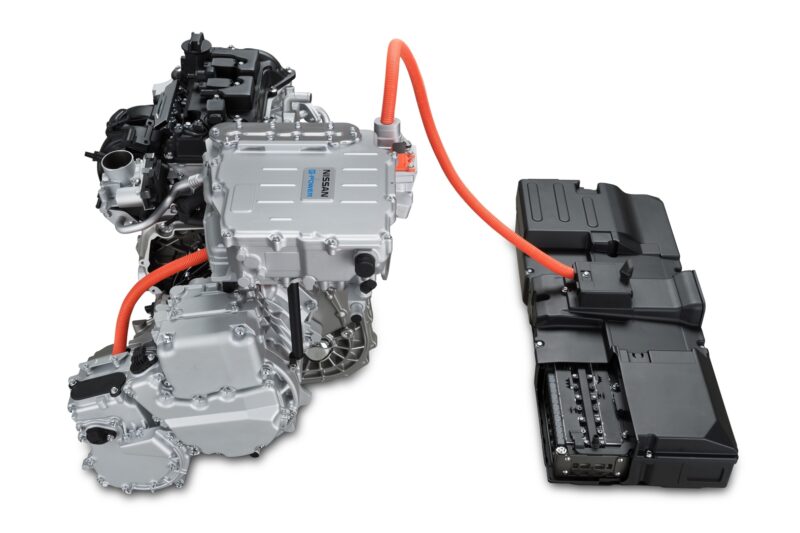
The main components of e-Power include consists of a Lithium-ion battery, a high-power electric motor, inverter, generator and a combustion engine with class-leading thermal efficiency.
Unlike conventional self-charging hybrids where the wheels are primarily and directly driven by the engine, the e Power’s intelligent control system regulates engine operation independently based on factors such as vehicle speed, road conditions, degree of acceleration and battery charge levels.
As a result, the driving experience is quiet and refined with less frequent engine operation compared to conventional hybrids.
At low to medium speeds, such as in urban areas, the vehicle is mainly driven by the electric motor powered by the lithium-ion battery for an EV-like performance.
When driven at high speeds where rolling noise is elevated, the engine runs at optimal RPM to generate sufficient electricity to power the motor, and when strong acceleration is required, the motor combines the electricity generated by the engine and the electricity from the lithium-ion battery to power the vehicle.
Like EVs, e-Power also offers the convenience of single-pedal driving where brake pedal operation can be reduced by nearly 70% through regenerative braking which can slow the vehicle while replenishing the battery.
Malaysia’s Leading Automotive News | ENGEAR ENGLISH