Tag Archives: concept

Mforce invests RM10 million to develop 200cc ‘Skuchai’ concept; launch set for early 2027

Mforce Bike Holdings has announced the development of a new 200cc “Skuchai” model.

The company has invested a total of RM10 million into the project, covering research and development (R&D) and design engineering.

The investment also encompasses durability testing, prototype development, and technical adaptations to meet the specific requirements of both Malaysian and international markets.


Skuchai: A Three-in-One Concept

The Skuchai represents a world-first concept that integrates three distinct automotive elements:

  • Scooter design aesthetics
  • Underbone (Kapcai) engine performance
  • Automatic CVT transmission system

Key advantages of the “Skuchai” model include:

  • Ergonomics and comfort inspired by traditional scooters.
  • A lightweight structure characteristic of underbone motorcycles.
  • A CVT transmission for practical urban commuting.
  • Versatility for mid-distance travel and leisure riding.

Malaysian engineers drive initial concept

The development of this model is a collaborative effort between Mforce and its technology partners in China.

This partnership marks a strategic step in strengthening Mforce’s global development network, particularly in platform engineering and technological integration.

Local Malaysian engineers played a pivotal role in the project’s inception, contributing the initial conceptual ideas, design sketches, and clay modeling before the project moved into the production phase.

This synergy of local creativity and international expertise ensures the final product remains technologically competitive while catering to the preferences of local and regional consumers.


Prototype completed; 2027 launch anticipated

According to Mforce Chief Operating Officer Asri Ahmad, the “Skuchai” prototype is fully completed.

The project is currently in the pre-production unit phase for rigorous durability testing and comprehensive performance evaluations.

Asri added that the “Skuchai” will make its public debut at the Malaysia Bike Show 2026 in May.

The official market launch is expected to take place in the first quarter of 2027. Further details regarding full specifications and official pricing will be disclosed closer to the launch date.

Apprentices create GT50 Concept to celebrate 50 years of Audi’s 5-cylinder engine

Did you know that Audi’s first five-cylinder engine debuted in 1976 with the Audi 100?

In celebration of its upcoming 50th anniversary next year, a group of Audi apprentices from Neckarsulm, Germany, has created a special project named the Audi GT50.

The project took six months to complete under the supervision of instructors and was personally monitored by Timo Engler, the Head of the Automotive Technology, Logistics, and Business Management Training unit.

At first glance, the Audi GT50 draws heavily from the design heritage of Audi’s racing history, such as the Audi 90 Quattro IMSA GTO.

Beneath its futuristic appearance, the Audi GT50 actually started as an RS3 sedan before the entire exterior was stripped away to accommodate body panels made from lightweight fiberglass-reinforced plastic.

The rear features a large diffuser and spoiler for enhanced aerodynamics.

The roof is sourced from an actual Audi 80.

For the cabin space, the team removed all original RS3 equipment and replaced it with genuine racing gear.

In fact, they even constructed their own roll cage, which took approximately two weeks to complete.

Powered by a 2.5-liter TFSI five-cylinder engine, this vehicle is capable of generating up to 394 horsepower and 500 Nm of torque.

In addition to the Audi GT50, the group of apprentices from the Audi Neckarsulm facility has previously developed unique concept models such as the Audi RS6 GTO and NSU Prinz.

2025 JMS: Toyota’s 3 new principles to achieve the vision of Mobility for All and Carbon Neutrality

Toyota’s multi-pathway approach, which has been in place for several years, goes beyond achieving carbon neutrality through modern technologies such as hydrogen fuel cell vehicles (FCEV), hybrids (HEV), plug-in hybrids (PHEV), and battery electric vehicles (BEV).

It also includes more sustainable solutions that can be adapted to local contexts, such as the use of biofuels and compressed natural gas (CNG).

By offering low-emission and zero-emission mobility solutions that are more accessible, Toyota can meet the needs of various user segments in Asia.

At the same time, it can provide lasting value benefits to individuals and society.

The three new principles being implemented by Toyota under this Multi-Pathway Approach are Best in Town, Customer Comes First, and Start by Doing.


Best in Town

This philosophy emphasizes delivering the best products and services that meet the unique mobility needs of each Asian market.

One example provided is the global IMV platform, introduced in 2002, which aims to create a platform that can support various vehicles to cater to the mobility needs of developing markets.

Akio Toyoda stated, “We cannot satisfy customers by promoting the number of vehicles; what matters is being the best in the city.”


Customer Comes First

At the Japan Mobility Show 2025, Toyota introduced its brand lineup—Century, Lexus, Gazoo Racing, Toyota, and Daihatsu—each playing a unique role based on the principle of “Mobility for All.”

This aligns with Toyota’s theme “To You,” introduced this year, emphasizing that no one should be left behind.

Ultimately, the multi-pathway approach to achieving carbon neutrality offers a variety of sustainable solution options for users.


Start by Doing

To achieve its goals, action must be taken immediately.

For this purpose, Toyota has initiated several projects in collaboration with various partners, including the Commercial Japan Partnership Technologies Corporation (CJPT), which drives the logistics industry toward an era of efficiency and carbon reduction fueled by data.

Additionally, the Toyota Mobility Foundation’s (TMF) community projects aim to improve safety, reduce congestion, and enhance accessibility.

Toyota believes that mobility is not just a mode of transportation but rather a means to access opportunities, connections, and a better quality of life.

According to Masahiko Maeda, CEO of Toyota Motor Corporation’s Asia region, “At Toyota, we believe that achieving the Mobility for All and Carbon Neutrality goals requires more than just one solution for vehicles, energy, and data.”

“We believe the future of mobility is ours to create through collaboration, shared purpose, and collective action. As a result, we can build an ecosystem that brings smiles to people across the Asia region.”

Daihatsu Midget X: a small electric LCV concept

Daihatsu is set to showcase several concept models at the Japan Mobility Show 2025, taking place at the end of this month.

One of the models on display will be the Midget X, a small electric vehicle designed for commercial use.

The exterior design of the Midget X serves as a reference and homage to the two previous generations of the Midget.

It features round LED headlights, a curved windshield, and exposed wheel designs.

In line with its nature as a workhorse, the rear of the Midget X can be fitted with various accessories, such as storage boxes, a flatbed, an open cargo area styled like a pickup, or a dedicated workspace.

Based on teaser videos, the Midget X can also be used as a weekend track car!

For now, the Daihatsu Midget X remains a concept vehicle, but it’s not impossible that it could also become a real production model.

Toyota Corolla Concept revealed: is this the next-gen Corolla?

In conjunction with the upcoming Japan Mobility Show 2025, Toyota seizes the opportunity to unveil several eye-catching concept models.

Among them is the Toyota Corolla Concept, which is expected to herald a new chapter for the world’s best-selling nameplate.

The concept model makes its appearance in a campaign titled “To You, Toyota.”

Several details can be observed, including:

  • A front design resembling a more modern hammerhead shark, complete with full-width LED lights.
  • No traditional grille structure.
  • The presence of ventilation ducts on the engine hood.
  • A simpler rear design featuring full-width LED pixel lights, a ducktail spoiler, and the word “Corolla” in the center.
  • A charging port cover on the front fender.

The use of conventional side mirror designs and door handles strongly suggests that this sedan has specifications more similar to those of an actual production version.

Did you notice the charging port cover we mentioned earlier?

This provides another hint indicating that the Corolla is likely to be offered as an electric sedan, or possibly as a plug-in hybrid electric vehicle (PHEV), similar to the Prius.

More details will be revealed in the lead-up to the Japan Mobility Show 2025, which will kick off on October 29.

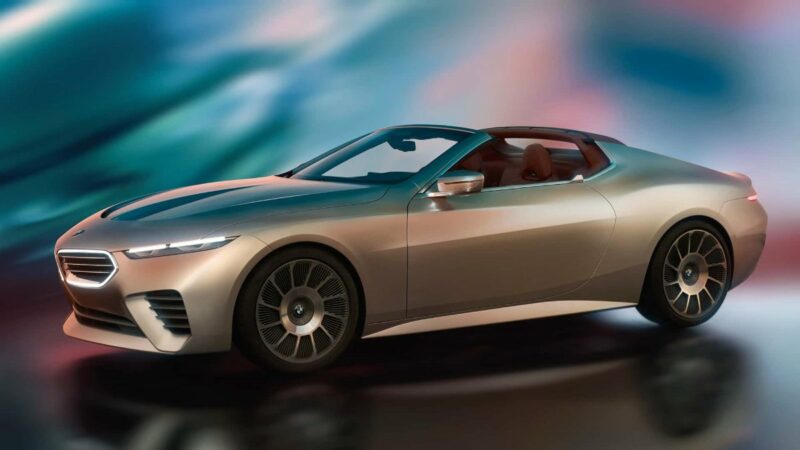
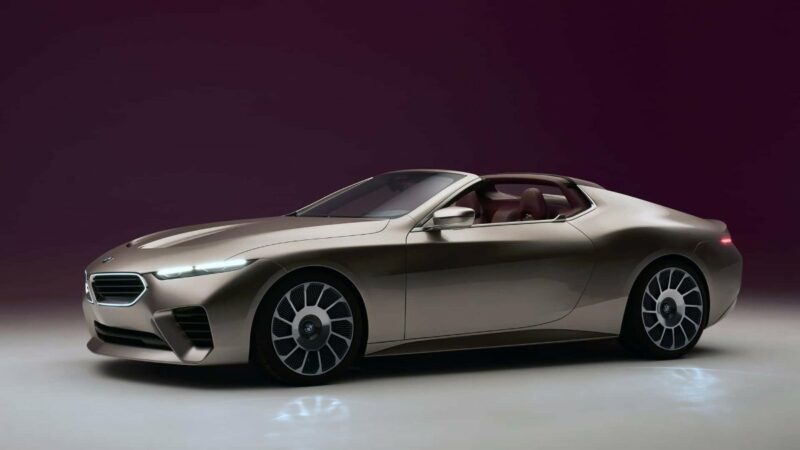
BMW unveils stunning and quite expensive Speedtop shooting brake concept

This might be the most beautiful and elegant concept car ever produced by BMW – the Concept Speedtop.

It is a wagon, or more precisely, a shooting brake with two seats, featuring classic BMW elements like the shark nose and a small kidney grille structure.

The BMW Concept Speedtop is actually built on the Skytop concept model, which was originally constructed on the M8 platform. It’s not surprising that both models share a very similar design approach.

However, unlike the Skytop, the Speedtop focuses primarily on practicality.

As you can see at the rear, it now offers ample cargo space to accommodate small items.

BMW showcases a color combination of Floating Sunstone Maroon that transitions to Floating Sundown Silver on the roof.

Meanwhile, the cabin is adorned with a two-tone leather finish of Sundown Maroon/Moonstone White, complemented by accents in Floating Sunstone Maroon in several areas.

Like the Skytop, the Speedtop is expected to be powered by a 4.4-liter V8 engine capable of generating up to 617 horsepower – making it BMW’s most powerful V8 engine ever produced.

It has been reported that only 70 units of the Speedtop will be produced, each expected to carry a price tag of £430,000 (approximately RM2.45 million).

Jetour T2 with three body kit concepts showcased at 2025 Auto Shanghai

The Jetour T2 is a mid-size SUV that features a unibody construction and offers characteristics suitable for off-road driving.

In its standard version, the Jetour T2 boasts a boxy SUV design reminiscent of the popular Land Rover Defender.

This design element is accentuated by a variety of accessories available for customization, based on the presence of several body kit variants showcased at Auto Shanghai 2025.

Near the Hilton Shanghai Hongqiao hotel, where the media are staying, Jetour displayed the T2 Stargazer version, complete with accessories such as:

  • A front bumper with a protective bar
  • A more aggressive grille
  • Distinctive alloy wheels
  • Side steps
  • A taller engine hood
  • A roof rack
  • Wider front and rear fenders
  • A foldable ladder on the left side
  • An external storage box on the right side
  • An external storage compartment on the tailgate door
  • Protective metal for the rear light housing

At the Jetour International Business Annual Conference dinner, they presented two additional accessory concepts known as Stargazer Air and Nexus Sentinel.

Unlike the Stargazer, the Stargazer Air package is more streamlined, lacking features such as a roof rack, side storage box, and foldable ladder.

The Nexus Sentinel accessory package features a futuristic and modern design, with wider front and rear fenders, an aerodynamic roof rack, and a cyberpunk-style fuel tank cover.

For your information, Jetour has previously confirmed plans to launch the Jetour T2 SUV model in the Malaysian market soon.


Jetour T2 Stargazer


Jetour T2 Stargazer Air


Jetour T2 Nexus Sentinel

Jetour G900: Flagship SUV concept from the GAIA platform

The Jetour booth at 2025 Auto Shanghai was further enlivened by the debut of the Jetour G900 model.

Similar to the Jetour G700, the Jetour G900 Concept is built on the premium off-road GAIA platform.

Equipped with an amphibious hybrid system, the iDM-O, featuring four electric motors and marine-grade navigation, the Jetour G900 can be driven on both land and water effortlessly, with a thrust reaching up to 2,500 Nm.

Additionally, the G900’s ground clearance can be adjusted from a minimum height of 150 mm to a maximum of 350 mm.

Not only that, but the G900 is also set to offer exciting functionalities such as tank-turn capability and crab mode movement.

In terms of cabin space, the Jetour G900 will come with an intelligent cockpit function, cabin oxygen supply system, and continuous connectivity.

At this stage, the G900 remains a concept model, with no detailed specifications disclosed to the media.

Honda CB1000F Concept unveiled at the 2025 Osaka Motorcycle Show

At the 41st Osaka Motorcycle Show 2025 held at INTEX Osaka, Honda showcased the CB1000F Concept for the first time.

Although it is still designated as a concept, the design of the Honda CB1000F suggests that it is ready for mass production.

It also reminds us of the CB-F Concept design presented five years ago.

However, unlike the CB-F, which was built on the CB1000R platform, the CB1000F shares the same chassis as the CB1000 Hornet.

What’s the difference? The CB1000F features a steel frame and a twin-sided swingarm, compared to the CB-F, which uses an aluminum frame and a single-sided swingarm.

Additionally, the CB1000F is equipped with a 150 hp inline-four engine derived from the Fireblade, along with Showa SFF-BP front forks and Nissin brakes, which are also found on the Hornet model.

The Honda CB1000F also boasts a new subframe designed to fit its retro proportions, complemented by a large chrome exhaust canister.

While adhering to a retro concept, the Honda CB1000F also includes modern features such as a single rear shock absorber, inverted forks, radial brakes, LED lighting, and a TFT display.

Once in production, the Honda CB1000F is poised to compete strongly against existing neo-retro models in the market, such as the Kawasaki Z900RS and Yamaha XSR900.

Hyundai, TVS develop futuristic electric rickshaw concept

Automotive company Hyundai has announced a collaboration with TVS Motor Company to develop last-mile mobility solutions for the Indian market.

Two concept models have been showcased: a three-wheeled rickshaw concept (E3W) and a more suitable four-wheeled concept (E4W) designed for vehicle-sharing services.

Both vehicles feature a minimalist design reminiscent of the tuk-tuks commonly found on the congested roads of India.

To ensure lower manufacturing costs, Hyundai plans to use recycled plastic and flatter body panels, thereby reducing the burden on owners when replacing damaged parts.

Compared to typical rickshaws, the E3W boasts dimensions that are 200 mm longer and 35 mm taller to facilitate easier entry and exit.

Other features included are bottle holders and smart device storage, a USB charging port, and storage space under the seat.


Another concept model, named E4W, has a four-wheel configuration and a cabin space that appears larger than that of the E3W.

The handling characteristics are more akin to those of a real car, featuring a minimalist digital display and a round steering wheel equipped with a cluster of control buttons.

Under the bench-style second-row seat, there is storage space for goods, as well as a special board that can be used to hang items like fans or umbrellas.


According to Hyundai, the ground clearance for both models can be adjusted as needed, particularly when navigating waterlogged routes during the monsoon season.

No specifications regarding the powertrain have been provided at this time.

However, it is worth noting that TVS has launched the three-wheeled King EV Max rickshaw priced at INR 295,000 (RM 14,928), which offers a range of 179 km and a top speed of 60 km/h.

Mitsubishi reveals 7-Seater SUV concept, Outlander replacement?

Mitsubishi is set to unveil a concept model for a seven-seater SUV at the 2024 Philippine International Motor Show from October 24-27.

Based on the teaser images released, the new model appears to share the front-end design with the Xforce SUV, while the grille design resembles that of the Outlander.

Another image showcases a rather stylish C-pillar design, followed by more prominent shoulder lines.

As usual, no detailed information regarding the model has been disclosed, whether it concerns its size or its platform (monocoque or pickup truck) at the moment.

One possibility is that this model is expected to replace the current Outlander offering, given that the new generation Outlander is now much more advanced and premium for the ASEAN market.

Considering the design similarities, we anticipate that this concept model is a hint towards the presence of a three-row seating version of the Xforce, in line with the brand’s commitment to produce models suitable for ASEAN drivers.

If this holds true, the concept model might possibly share the same 1.5-liter heart used in the Xforce, producing 103 hp paired with a CVT transmission driving the front wheels.

More information will be revealed towards the end of this month.

Lotus Theory 1, a three-seater supercar concept with 1,000 PS power

Lotus seems to be relentless in introducing new powerful electric models.

The latest offering from the British manufacturer is a concept model named Lotus Theory 1.

This electric supercar features dual electric motors with all-wheel drive system capable of generating 1,000 PS of power.

It accelerates from 0-100 km/h in less than 2.5 seconds, reaching a maximum speed of 320 km/h.

Its 70 kWh battery pack allows a range of 402 km on a full charge.

The carbon chassis construction also contributes to keeping the weight below 1,600 kg.

Moreover, the exterior design of the Theory 1 is said to be inspired by the S1 Esprit, showcasing sharp edges and a cab-forward shape reminiscent of the mid-engined layout of the Esprit model.

The concept model also introduces several interesting innovations.

For instance, the adaptive robotic system Lotuswear, developed in collaboration with Motorskins, provides tactile feedback to the driver through the bumps generated on the seats and the steering wheel.

Lotus Theory 1 also comes with steer-by-wire steering system, allowing the driver to customize steering ratio and response according to individual preferences.

In the center of the carbon tub, Theory 1 features a three-seater layout, where the middle seat is dedicated to the driver, while the passengers sit on the driver’s right and left.

It is equipped with a head-up display screen, along with built-in speakers integrated into the headrest structure for each seat.

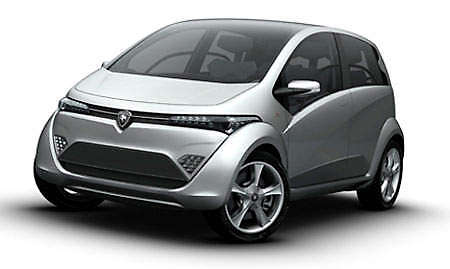
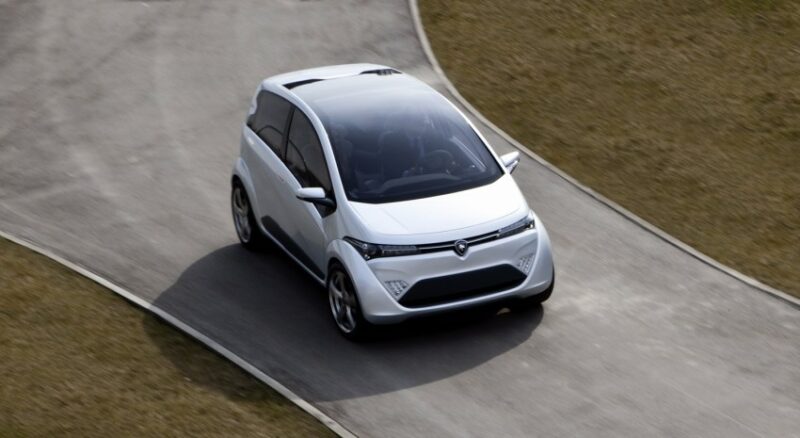
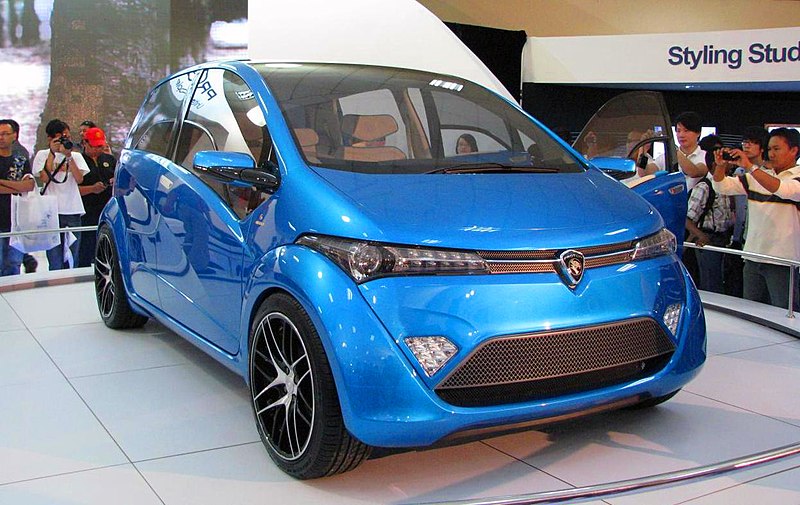
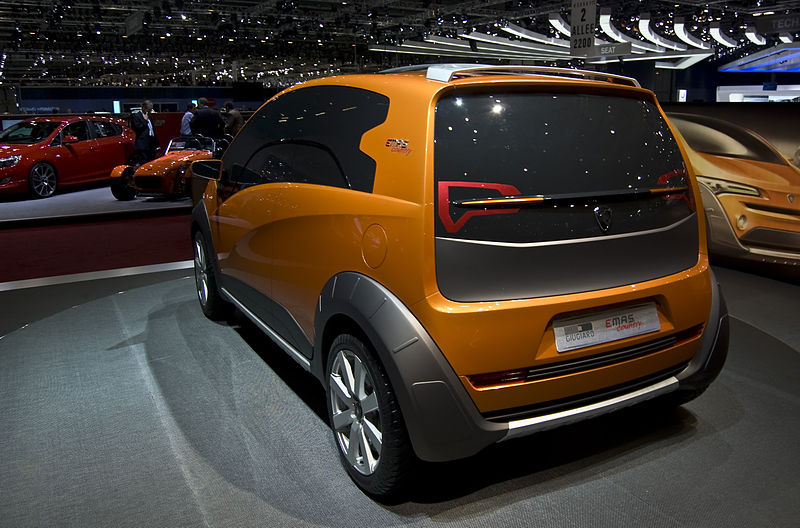
Proton EMAS is a concept with 1.2-litre engine and 16.5kWh battery, displayed at 2010 Geneva Motor Show

Last night, Proton launched the e.MAS, their sub-brand for fully electric vehicles (EVs) that will begin entering the market by the end of this year. As a generation that experienced the era of Friendster and Myspace, this reminds the writer of the Proton EMAS concept from more than a decade ago.

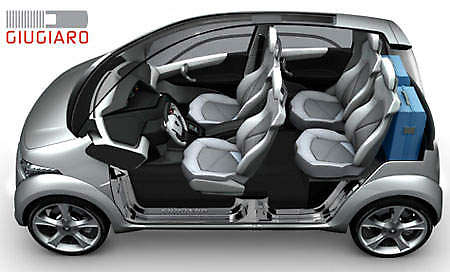
The Proton EMAS is a concept designed by the firm Italdesign Giugiaro. The name EMAS stands for Eco Mobility Advance Solution, which also obviously means “gold” in English. Eco Mobility Advance Solution also technically means that EMAS is designed for energy-efficient vehicle solutions.

Therefore, it is equipped with a 1.2-liter 3-cylinder engine that generates 20hp at 1,500rpm and 47hp at 3,500rpm. The torque is 107Nm at 2,500rpm. This engine, weighing only 56kg, is paired with a 16.5kWh battery pack and 370-volt battery cells, making the Proton EMAS a hybrid range extender.

The EMAS can accelerate from 0 to 96km/h in 14 seconds and reach a maximum speed of 169km/h. It can travel up to 563km per tank. The design of EMAS is based on the Toyota iQ platform, including the suspension and steering, but all other aspects are new from Proton. It has MacPherson suspension at the front and a torsion beam at the rear.

Proton first revealed the EMAS concept to the public at the 2010 Geneva Motor Show, one of the most prestigious automotive exhibitions in the world.

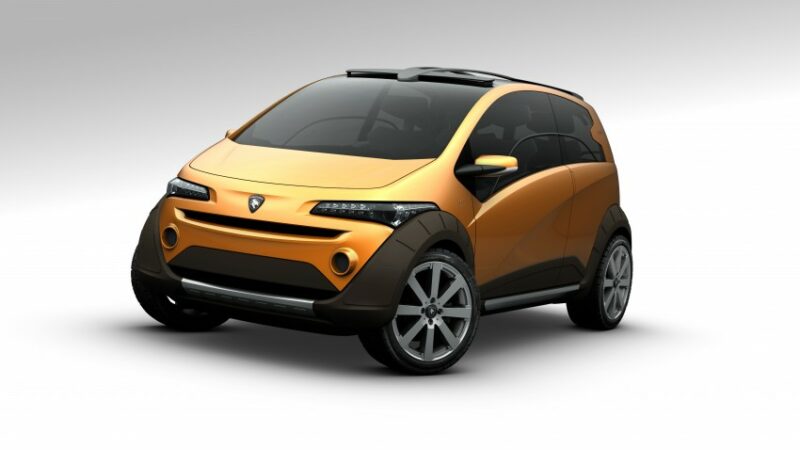
The Proton EMAS also comes in several variants. The standard EMAS is a 5-door version with four seats, while the EMAS3 is a 3-door with a 3+1 seating configuration. There is also the EMAS Country, with SUV styling and higher suspension. If you notice, the EMAS Country looks similar to the Iriz Active, doesn’t it? The writer believes the Iriz Active takes inspiration from the EMAS Country.

The writer still remembers reading and seeing this EMAS concept during university and truly hopes it becomes a reality model sold to the public. Perhaps the EMAS could be a competitor to the Myvi?

At the Geneva Motor Show, Proton’s then-CEO, Dato Syed Zainal, said, “The goal is to produce a global car for the world market.” According to him, there were only 17 to 24 months left before entering production, which should have started in 2012 or 2013.

However, the Proton EMAS never became a reality.

Do you still remember the Proton EMAS concept? The writer is sure that the Tiktok generation has never heard of it.

Photo source: Paultan.org and Wikipedia

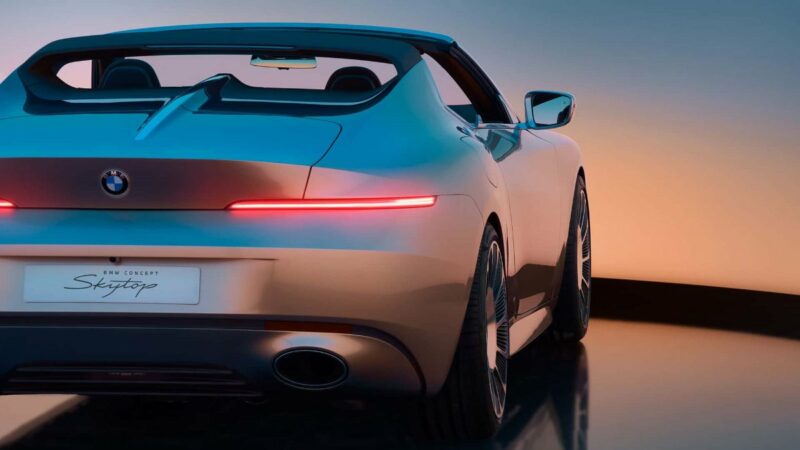
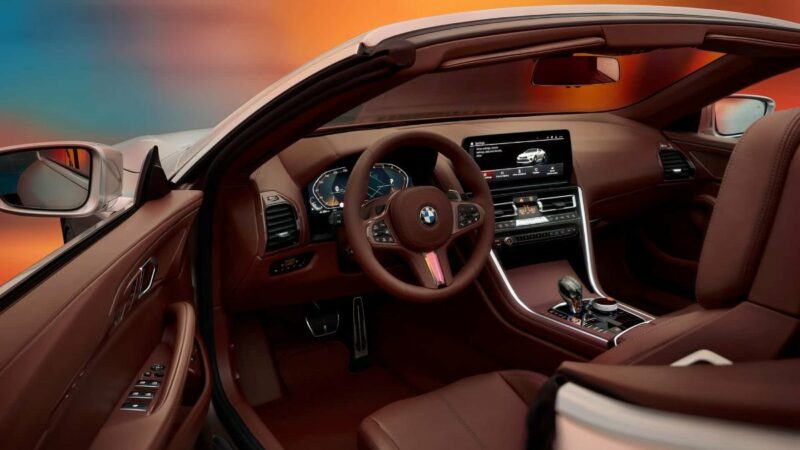
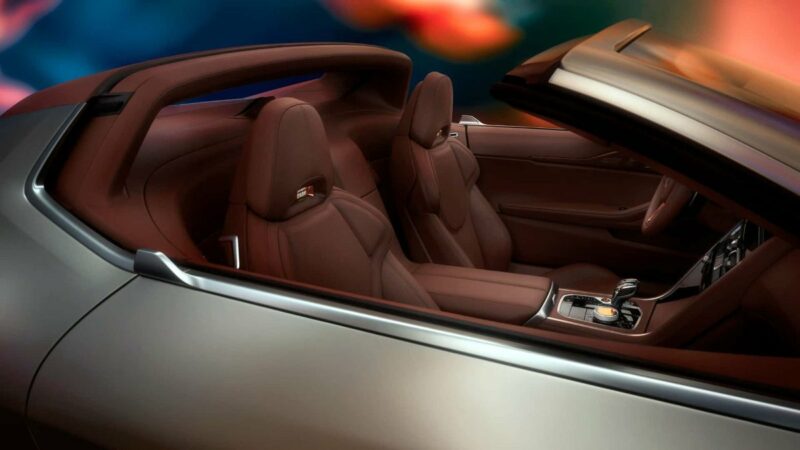
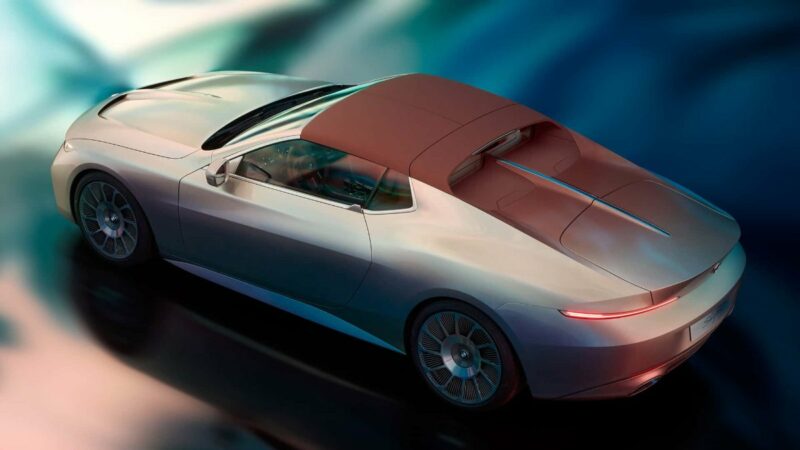
BMW Concept Skytop features design traits from Z8 and 503

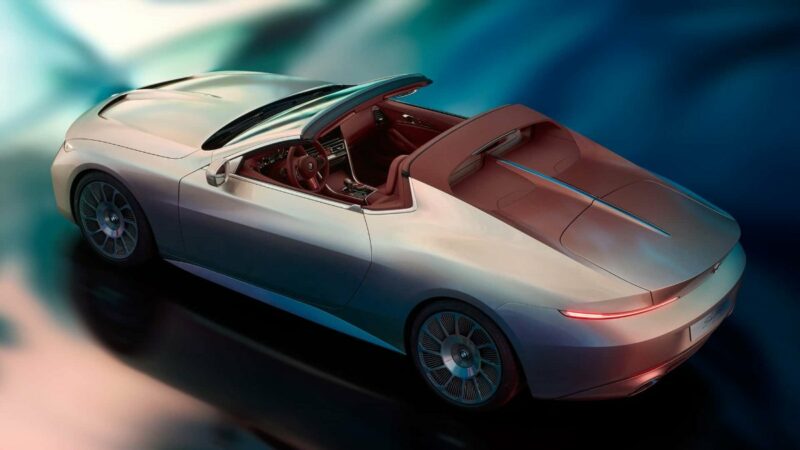
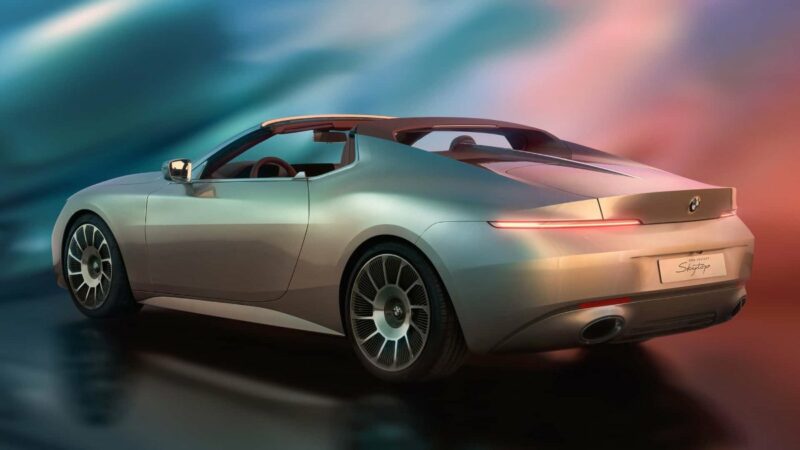
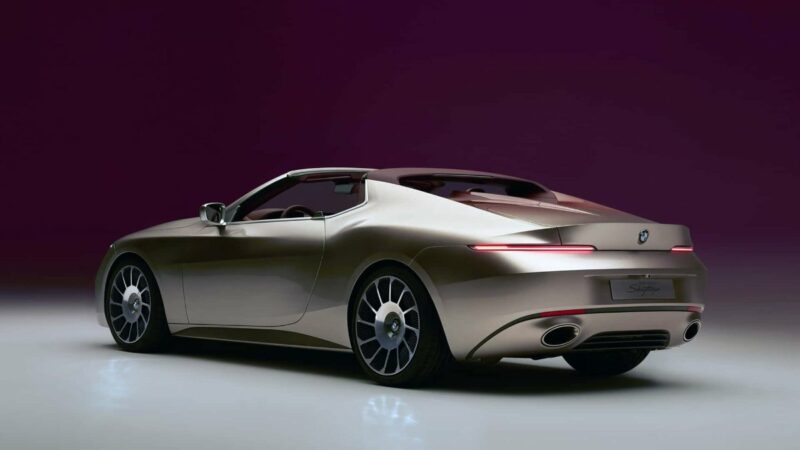
BMW enjoys showcasing their new cars at the Villa d’Este event. This year, they revealed the Skytop, a two-seater convertible that is said to be inspired by the Z8 and 503.

“BMW Concept Skytop is a unique model with an exotic design, following the tradition of the Concorso d’Eleganza Villa d’Este,” said Adrian van Hooydonk, head of BMW Group Design.

“It offers a combination of dynamic and elegant driving at the highest level, following previous models such as the Z8 or BMW 503.”

The relationship between the Concept Skytop and the Z8 is quite evident. The slim taillights with a shark-like nose are a clear inspiration from the early 2000s roadster. The sculpted hood design, small front lights, and upright rear deck also remind us of the 503 from the 1950s.

BMW did not provide any details or performance specifications, but if guessed, it might use a 4.4-liter V8 engine, an 8-speed automatic transmission, and all-wheel drive from the M8 Competition.

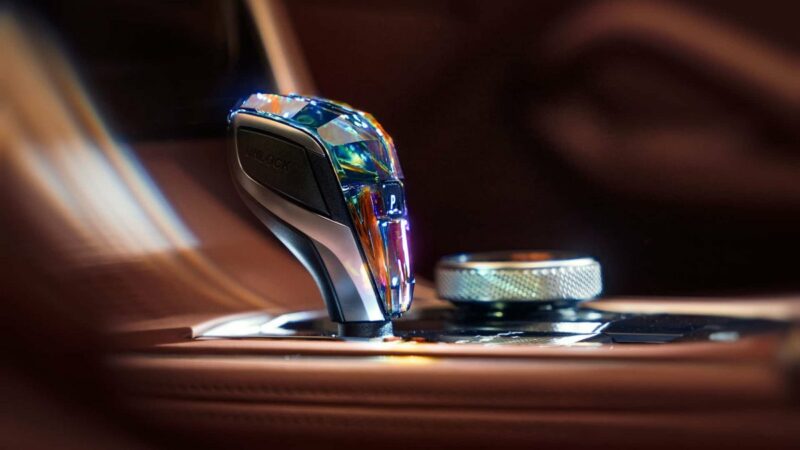
The theme, like the M8, continues to the interior. The dashboard seems to be taken directly from the 8-Series, with a digital instrument display, infotainment, and a central console as we usually see.

But the unique roll bar behind the seats looks truly exceptional for this concept, featuring a power window. The roof is also with a two-part mechanism that can be manually removed and stored in the trunk.

Although the Skytop looks like a concept that makes sense to be realized, we don’t feel it will be released officially.

BMW already has the 8-Series coupe and convertible, so there’s certainly no reason to produce a targa version like this, even though it looks so cool.

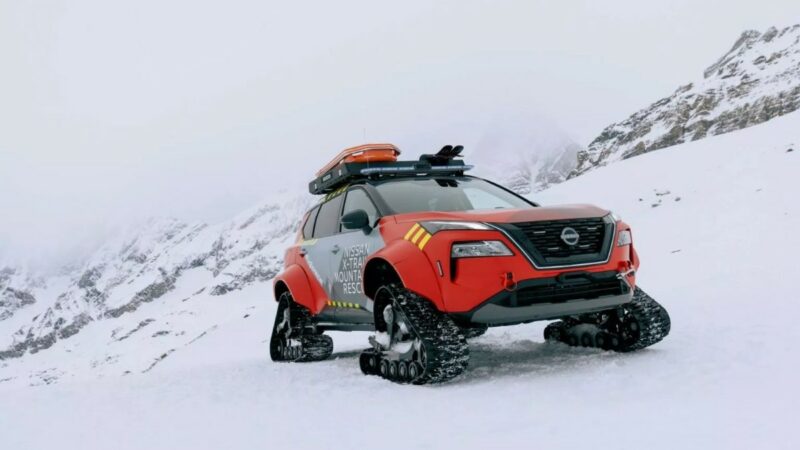
The Nissan X-Trail Mountain Rescue gets snow tracks and DJI drone

NISSAN has transformed the X-Trail from a regular SUV into an emergency vehicle for complete rescue operations, complete with snow chains, a winch, and rescue equipment.

The Nissan X-Trail Mountain Rescue Concept was showcased at the Cervinia ski resort in Italy. It was designed to remind the public to engage in skiing activities responsibly and ethically.

In addition to the four snow chain-equipped tires, enabling the X-Trail to carry out rescue missions in snowy mountains, Nissan has provided a special roof rack.

It comes with special lights, emergency sirens, a winch, and even includes skis and a snow shovel. The X-Trail is also fitted with larger and wider fenders, tow points, a winch cable, floodlights, and a 23cm higher ground clearance.

Upgrades continue inside where the vehicle is equipped with a Garmin GPS and Motorola communication devices. A major modification is in the rear, where the seats have been removed to accommodate stretchers. Additionally, it features rear-facing treatment seats.

Finally, there is a storage cabinet containing emergency supplies such as a snow depth gauge and a thermal blanket. There is also space for accommodating a DJI drone!

Although this concept outlines responsible skiing ethics, it also showcases the e-4ORCE all-wheel-drive system on the X-Trail.

According to Nissan, it can respond to changes in grip at a rate of 1/10,000th of a second, which is over 1,000 times faster than conventional systems. The e-4ORCE can also distribute power according to grip levels.