The premium BYD brand, Denza is set to enliven this year’s Goodwood Festival of Speed with a new flagship model.
The model was previously showcased under the name Z Concept at last year’s Shanghai Auto Show.
Bright Orange Production Version Revealed
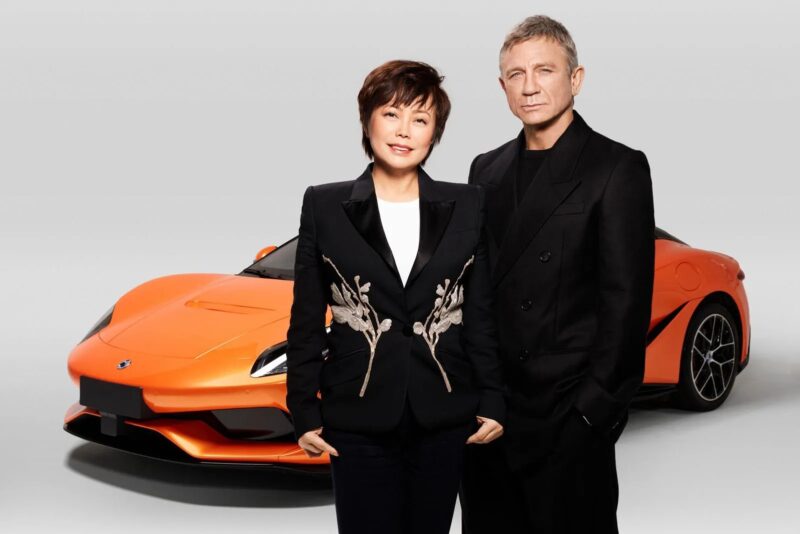
Denza has also unveiled early images of the bright orange production version, which is being overshadowed by Stella Li (Executive Vice President of BYD) and Daniel Craig (the actor known for his role as James Bond).
Based on the images, it still retains the design of the original concept model.
Some noticeable features include:
Sharp diamond-shaped headlights
Aggressive front bumper
Two-tone rims
However, the production version does not include the large front splitter and rear spoiler.
Basic Specifications Remain a Mystery
Denza has yet to confirm the complete specifications of the powertrain that will drive the Z model.
However, it is highly likely that it will utilize the same system as the Z9 GT model, which consists of three electric motors, powers exceeding 952 hp, and a 100 kWh Blade battery.
These figures are certainly enough to make the Porsche 911 break a sweat.
It is also expected to feature advanced technologies such as:
Magnetorheological suspension
Steer-by-wire system
Crab-walk capability
Former Secret Agent Helps Promote Denza Z
BYD has collaborated with renowned actor Daniel Craig for the global campaign of Denza.
This collaboration aims to strengthen the brand’s presence in Europe, Latin America, the Middle East, and Africa.
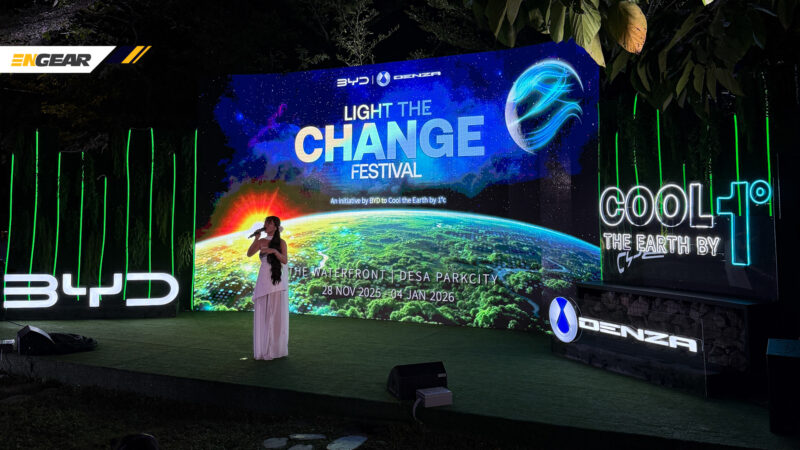
The Waterfront @ Desa ParkCity will be enlivened by the Light the Change Festival organized by BYD and Denza.
This electric mobility brand will set up camp for one month, from November 28 to January 4, featuring a variety of activities and performances scheduled each week.
The festival aims to strengthen BYD and Denza’s commitment to environmental responsibility while raising awareness about sustainability, climate issues, and the future of mobility.
Additionally, BYD is implementing the global initiative “One Degree. One Future,” aimed at reducing the Earth’s temperature by one degree through electric mobility solutions.
Exciting activities include:
Planting pledges in the Greenfield Zone
Exploration of Electric Mobility
Test Drives (10 AM to 6 PM)
Golden Hour Performances (Friday to Sunday, 8 PM to 9 PM)
Week
Dates
Golden Hour Show
Week 1
28 – 30 November
Bubble Show
Week 2
5 – 7 December
Week 3
12 – 14 December
LED Butterfly Dance Performance
Week 4
19 – 20 December
Bamboo Music Performance by Alena Murang
Week 5
22 – 28 December
Xmas Snowfall
Week 6
2 – 4 January
New Year Light Show
Since entering the new energy vehicle sector, BYD has successfully reduced over 9.3 million tons of CO2 emissions worldwide.
Locally, BYD and Denza have sold a total of 12,872 units as of November 2025, reflecting a 76% increase compared to the same period last year.
Since day one, total sales in Malaysia have surpassed 25,233 units, equivalent to reducing CO2 emissions by 62,191 tons annually or planting nearly 2.5 million trees.
Sime Motors has also played a crucial role in accelerating electric mobility in Malaysia.
In the past three years, Sime Motors and BYD have introduced seven EV models, established 39 sales and marketing branches, 24 after-sales branches, and 12 authorized body and paint centers.
Supported by a dedicated BYD Training Center and a centralized warehouse, Sime Motors ensures premium service and support for BYD customers across the country.
When we talk about flat or boxer engines, the names of two manufacturers typically come to mind: Porsche and Subaru.
This unique engine configuration offers benefits in terms of better vehicle handling due to its lower center of gravity compared to conventional engines.
You might not suspect that a popular name in China is also venturing into producing boxer engines.
That name is none other than BYD!
This news is quite surprising as BYD already has a family of engines for its plug-in hybrid (PHEV) model lineup.
This brand-new 2.0-liter turbo boxer engine will be paired with four electric motors to power the luxury sedan Yangwang U7.
Overall, it can generate up to 1,287 hp and 1,680 Nm of torque.
Acceleration from 0 to 100 km/h can be achieved in just 2.9 seconds, a truly impressive figure for a sedan weighing 3 tons!
Interestingly, the engine serves primarily as a range extender to charge the battery, which then supplies power to the electric motors.
However, under certain conditions, this engine can deliver 272 hp and 380 Nm of power directly to the rear axle.
With the help of this boxer engine, BYD was able to design the Yangwang U7 with a lower hood profile, giving the sedan a sportier appearance.
Additionally, the NVH (noise, vibration, and harshness) aspects of this sedan are significantly improved due to the reduced vibrations from the boxer engine.
With the boxer range extender, the Yangwang U7 can travel up to 966 km on a full tank and fully charged battery, while the zero-emission range can reach up to 193 km.
In China, the BYD Yangwang U7 is priced between RMB628,000 and RMB708,000 (RM367,000 to RM414,000).
CarNewsChina reports that BYD is currently developing a prototype of a mini-sized electric vehicle with one goal: to capture Japan’s kei car market.
Although still covered in camouflage stickers, the car showcases features such as sliding rear doors, twin A-pillars, and a relatively high window glass housing structure.
This demonstrates BYD’s seriousness in creating a product that complies with the dimensional regulations set for the kei car segment in Japan.
For your information, the kei car segment is a category of ultra-compact cars in Japan, with a maximum length of 3.4 meters, a width of 1.48 meters, and a height of 2 meters.
Furthermore, engine power is limited to a maximum of 64 hp according to the agreement of the Japan Automobile Manufacturers Association (JAMA).
Although BYD currently offers the Seagull as its smallest EV, its size is still too large to be categorized as a kei car.
According to reports from China, BYD’s electric ‘kei car’ will be equipped with a 20 kWh battery that offers a range of about 180 km (WLTC data), along with support for fast charging at 100 kW.
BYD plans to produce this electric kei car in China for export to the Japanese market starting in late 2026, with the ambition to capture 40 percent of the electric kei car market within a few years.
Currently, the kei car market in Japan offers two EV models: the Nissan Sakura and its twin, the Mitsubishi eK X EV.
Both models were launched in 2022, equipped with a 64 hp electric motor producing 195 Nm of torque, and a 20 kWh battery pack with a driving range of up to 180 km.
Denza, the premium sub-brand owned by BYD, will be holding the ‘Denza and BYD Electrifying Experience’ event this weekend at Plaza Arkadia, Desa Parkcity.
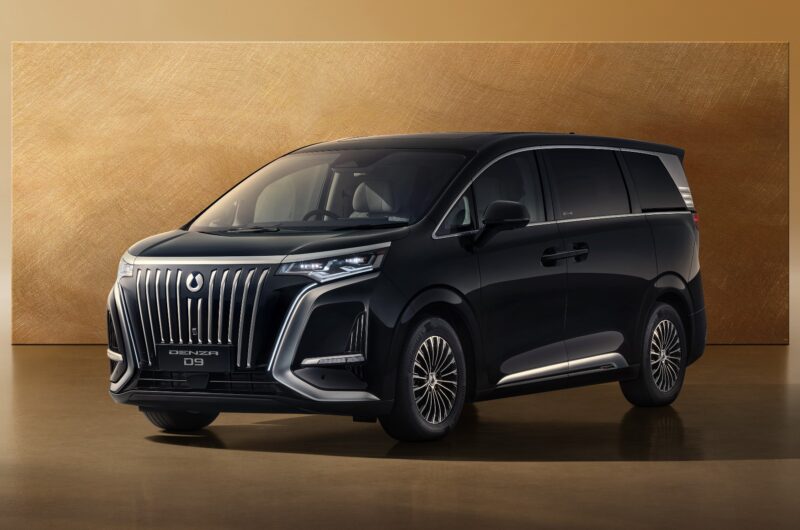
The special event will showcase the premium MPV Denza D9, along with the handover of the first batch to early new owners.
As previously reported, a total of 800 units of the D9 were successfully sold within a week of its launch.
The all-electric people mover was launched locally in February at a price of RM259,000 for the Advanced FWD variant and RM309,000 for the Premium AWD variant.
Both variants use a Blade LFP battery with a capacity of 103 kWh, offering a NEDC range of up to 600 km for the for the former and 580 km for the latter.
The ‘Denza and BYD Electrifying Experience’ event will take place over three days from March 14 to 16, from 10 am to 10 pm.
The public is welcome to test drive the Denza D9, as well as enjoy Denza’s technology showcase and various family-friendly activities.
Additionally, the event will feature an exclusive preview and presentation of the Denza Z9 GT occurring every two hours.
Customers who purchase the Denza D9 at this event or at any Denza dealership branch until March 16, 2025 can enjoy exclusive launch privileges—including a complimentary wall box with an installation card and a six-year free service package.
BYD has introduced a facelifted version of the Atto 3 in China, with prices starting from 115,800 yuan (RM70,830), which is 1,000 yuan (RM610) less than the 2024 model.
Known as the Yuan Plus in its home country, this electric crossover showcases a fresher appearance with a new fascia and several upgraded features.
The dimensions of the Atto 3 remain unchanged but the facelifted model features larger trapezoidal air intakes, smoked headlights, black D-pillars, and a new roof spoiler with dual brake lights.
The interior presents a more relaxed and mature atmosphere compared to before, with two rather dull colour choices – beige and grey. The ‘guitar strings’ on the door cards are still there, but they now come in black.
Additionally, the Atto 3 now features a new column gear shifter, an 8.8-inch digital instrument panel, a 12-inch head-up display, a driver monitoring camera on the A-pillar, as well as a refrigerator.
Along with a new steering wheel, the centre console of the Atto 3 has been redesigned to make room for two cup holders, several physical buttons, and a 50 W wireless charger.
The safety features and driver assistance systems of the Atto 3 have been enhanced through the use of the smart driving system God’s Eye C. It employs three cameras located at the bottom of the windscreen to enable the high-speed Navigation On Autopilot (NOA) function.
According to CarNewsChina, the system will be updated to include NOA functionality for urban driving in the future.
There are no changes to the powertrain, meaning the Atto 3 retains a single electric motor on the front axle that produces 204 PS (150 kW) and 310 Nm of torque.
In China, the LFP battery pack is available in a 49.9 kWh version with a range of 430 km, and a 60.5 kWh version that offers a range of up to 510 km. Do note that these figures are based on the rather unrealistic CLTC testing cycle.
At the launch of the Denza D9 in Kuala Lumpur, the automaker caught some of us (including yours truly) off guard when it used the Z9 GT to bring BYD’s Asia-Pacific Auto Sales Division General Manager Liu Xueliang onto the stage.
But the excitement didn’t stop there. The car demonstrated one of its standout features by executing a tank turn, which is essentially a 360-degree turn in the same spot. Picture a drift car performing a donut, albeit at a much slower speed and sans the billowing smoke.
Could this brief demonstration be an indication that the Z9 GT will soon enter the Malaysian market?
When questioned about this, BYD Malaysia’s Managing Director, Eagle Zhao, stated, “Soon, we will introduce more models in Malaysia, including the Z9 GT.”
The statement clearly illustrates Denza’s serious intentions regarding its presence in Malaysia. This is because unlike the D9, the Z9 GT currently lacks a right-hand drive (RHD) version.
By effectively saying that the model will be introduced here, Denza is indirectly signalling its readiness to invest significantly in entering RHD markets like Malaysia.
However, the question remains: can the Z9 GT entice Malaysian buyers, especially with the fierce competition from other, more established brands?
While it’s still too early to predict how the Z9 GT will do in our market, my first encounter with said car during a visit to Shenzhen, China, late last year showed that it has what it takes to shake things up the premium segment.
There was a test drive session but it was conducted in a rather small area with limited time. That said, I can conclude that the Z9 GT is indeed an exhilarating piece of machinery, not just in terms of performance but also on the design and feature fronts.
As you can see, the Z9 GT is a five-door wagon/shooting brake with a side profile that looks like it was cast in the same mould as the Porsche Panamera Sport Turismo.
Although its overall design may not match the German car’s grandeur, for those seeking a stylish shooting brake without breaking the bank, the Z9 GT seems like a fine candidate.
True to expectations, the car’s interior luxuriates in opulence and high-tech amenities that are sure to entice premium segment buyers.
It is important to note that the model is not solely developed for the Chinese market; it is also slated for European markets, where it will compete with legacy manufacturers like BMW, Mercedes-Benz, and Audi. So, the more kit, the better.
Notable features include Nappa leather upholstery, a panoramic glass roof, ambient lighting, two small fridges (one beneath the front armrest and another hidden between the rear seatbacks), and automatic doors that open and close by a mere press of a button—much like the i7.
The infotainment system is quite impressive as well. In addition to the digital instrument panel for the driver and a generously sized central touchscreen, the car also includes a display for the front passenger.
On top of these, it also comes equipped with a Devialet audio system (a French audio technology company) comprising a whopping 26 speakers and two wireless chargers on the centre console.
What about practicality, you ask? Golfers will surely appreciate the Z9 GT, as its boot space is ample enough to accommodate two golf bags when the rear seats are folded. Loading items into the boot is also made easy, thanks to the hatch that provides a wide opening.
Back to the aforementioned test drive, the media units provided were the PHEV variants featuring a 2.0-litre turbo four-cylinder petrol engine acting as a generator for three electric motors—one at the front axle, and two at the rear.
The combination yields a healthy total output of 870 PS, allowing it to accelerate from 0 to 100 km/h in a scant 3.6 seconds.
Also integral to this fifth-generation DM hybrid system is a 38.5 kWh LFP Blade battery, providing a pure electric driving range of 201 km (CLTC cycle) and a combined range of 1,100 km.
Needless to say, the Z9 GT moves like a rocket on wheels in a straight line but when facing tight turns, it does not exhibit the agility one might expect, despite equipped with rear-wheel steering and an air suspension system.
The primary factors contributing to this shortcoming are the size and weight of the Z9 GT. Measuring 5,180 mm in length, 1,990 mm in width, and with a wheelbase of 3,125 mm, this car is undeniably large. Weighing in at 2.9 tonnes, it comes as no surprise that it also struggled with the slalom test.
However, to be fair, the makeshift course was rather small for a powerhouse like the Z9 GT. Perhaps more comprehensive tests on highways or larger circuits like Sepang would do better justice to the car’s true capabilities.
For your information, in addition to the PHEV version, the Z9 GT is also available as an EV featuring three electric motors and a 100 kWh battery. This version boasts a total output of 963 PS, is capable of sprinting from 0 to 100 km/h in just 3.4 seconds and achieving a range of 630 km on a full charge.
Which version will be imported to Malaysia remains unclear but one thing for sure, the imminent arrival of the Z9 GT poses a challenge to other luxury brands.
After being showcased in Malaysia for the first time last week, the premium electric MPV from BYD’s sub-brand Denza, the D9, has been officially launched.
With this launch, Denza also announced the selling prices of the D9, starting at RM259,000 for the Advanced FWD variant and RM309,000 for the Premium AWD variant.
The vehicle comes with a warranty of up to eight years or 160,000 km for the battery (with a state of health exceeding 70%) and a warranty of up to eight years or 150,000 km for the drive motor and motor controller.
Additionally, Denza offers a vehicle warranty of up to six years or 150,000 km.
As reported previously, the D9 features a seven-seat configuration. It measures 5,250 mm in length, 1,960 mm in width, and 1,920 mm in height, with a wheelbase of 3,110 mm.
The Advanced FWD variant is powered by a single electric motor on the front axle, generating 308 hp and 360 Nm of torque, allowing it to accelerate from 0 to 100 km/h in 9.5 seconds.
In contrast, the Premium AWD variant is equipped with two electric motors, delivering 369 hp and 470 Nm of torque, which reduces the acceleration time from 0 to 100 km/h to just 6.9 seconds.
Both variants are fitted with the same 103 kWh Blade LFP battery. However, the driving range (NEDC cycle) differs between the two variants, with the Advanced FWD achieving 600 km and the Premium AWD offering 580 km.
The battery supports DC fast charging of up to 166 kW, which can restore battery energy from 30% to 80% in just 30 minutes. Charging for 10 minutes will provide a range of 150 km.
Additionally, it is equipped with 11 kW AC charging.
A big plus in the interior is the captain’s seats in the second row. These seats feature 10-way electric adjustments, memory functions, and massage capabilities, all of which can be accessed and controlled via a small digital screen on the armrest.
The infotainment system includes a 10.25-inch digital instrument panel, a 15.6-inch touchscreen, a Dynaudio system with 14 speakers, and three 50W wireless chargers. Overall, this MPV offers six USB charging ports.
Moreover, features such as leather upholstery (Nappa for the Premium AWD), a panoramic glass roof, and a 7.5-litre refrigerator with heating functionality are also included.
In addition to the more luxurious leather upholstery, the Premium AWD variant comes with suede headliner, auto-dimming mirrors, a digital rearview mirror, and a 12-inch head-up display.
Another advantage of the range-topping variant is the inclusion of the intelligent Disus-C noise reduction system.
For safety, the D9 is equipped with six airbags and an advanced driver assistance system (ADAS) featuring functionalities such as Adaptive Cruise Control, Automatic Emergency Braking, Front Cross Traffic Alert, Lane Keeping Assist, Lane Departure Warning, and more.
Take note that Forward Traffic Crossing Alert (FCTA) and Forward Traffic Crossing Braking (FCTB) are only included in the Premium AWD variant.
Based on registration data released by the Department of Road Transport (JPJ) through the website data.gov.my, 2024 has been an excellent period for Perodua.
During this time, the brand recorded vehicle registrations totaling 358,100 units, securing the top spot once again.
In second place is Proton, with a total of 147,587 units registered, while Toyota comes in third with 127,202 units registered.
Interestingly, among the top 10 manufacturers, Chinese automotive brands have started to emerge, surpassing brands that were previously popular.
For example, Chery ranks fifth, beating out Mitsubishi and Mazda, while BYD has managed to secure the tenth position, ahead of Nissan, which ranks eleventh.
But do you know the list of the 10 most popular cars in Malaysia for 2024?
The 2025 model year BYD Atto 3 has been spotted undergoing road tests in China, where it is sold as the Yuan Plus.
According to CarNewsChina, the new Atto 3 will feature an updated exterior and advanced driver assistance systems (ADAS). It is expected to be launched in the country around the second quarter of this year.
This is not the first time the world has seen the 2025 Atto 3 – the Ministry of Industry and Information Technology of China had previously revealed the full design of the electric SUV, which is why only a small portion of the car remains covered in camouflage.
As can be seen, the Atto 3 now boasts a fresher front fascia thanks to a sportier bumper design and larger trapezoidal air intakes.
The side profile showcases new chrome trim on the C-pillars and the lower body. At the rear, the bumper has been given a redesign to keep it fresh but what stands out more is the new roof spoiler that incorporates a pair of vertical brake lights.
For 2025, the Atto 3 will be available in a new shade of beige while existing colour options—including white, black, purple, blue, green, and grey—are expected to be retained.
Additionally, the new Atto 3 appears to have a new camera on the front bumper, indicating that its ADAS has been enhanced.
There are no changes to the powertrain. In Malaysia, the Atto 3 is available in a single Extended Range variant equipped with a front axle electric motor producing 204 PS/310 Nm, and a Blade LFP battery with a capacity of 60.48 kWh, offering a range of up to 480 km (NEDC).
Throughout 2024, Toyota Motor Corp sold a total of 10.82 million vehicles, allowing the automaker to maintain its global leadership for the fifth consecutive year.
Despite this figure representing a 3.7 percent decline compared to 2023, Toyota explained that there is still strong demand for its hybrid vehicles.
The second place was secured by the Volkswagen Group, with total sales of 9.03 million units, while the Hyundai Group recorded sales of 7.23 million units.
For the first time, BYD surpassed Honda, Nissan, and Suzuki with sales of 4.27 million units last year.
In comparison, Honda sold 3.81 million units, followed by Nissan with 3.35 million units and Suzuki with 3.25 million units.
Excluding brands under its umbrella such as Hino and Daihatsu, the sales figures for Toyota-branded vehicles alone reached 10.16 million units, a drop of 1.4 percent, following its involvement in a vehicle certification scandal, which led to a temporary halt in the production of certain models.
In key markets, Toyota recorded a 4.3 percent increase in sales, reaching 2.73 million vehicles in North America, followed by a 3.6 percent increase to 1.17 million vehicles in Europe.
However, Toyota’s sales in China saw a decline of 6.9 percent, totaling 1.78 million vehicles, due to ongoing price wars among major domestic manufacturers.
Paultan.org reports that the Denza D9 is now available for order in the Malaysian market.
Specifications and pricing have yet to be announced; however, we expect the luxury MPV to arrive in an electric version, as seen in Hong Kong and Thailand.
In addition to the electric variant, the D9 is also available with a plug-in hybrid powertrain in China. The electric D9 will position itself as a close competitor to the Zeekr 009 and the Maxus Mifa 9.
In terms of size, the D9 measures 5,250 mm in length, 1,960 mm in width, 1,920 mm in height, and has a wheelbase of 3,110 mm. This makes it longer than the 009, but its wheelbase is 95 mm shorter than that of its nearest competitor.
The D9 EV is available in two powertrain configurations: front-wheel drive (FWD) and all-wheel drive (AWD). The FWD variant features a single electric motor producing 313 PS (230 kW) and 360 Nm of torque, allowing it to accelerate from 0 to 100 km/h in 9.5 seconds.
Meanwhile, the AWD variant with dual electric motors offers 374 PS (275 kW) and 470 Nm, enabling it to achieve 0-100 km/h acceleration in just 6.9 seconds.
Both variants are equipped with a 103 kWh LFP battery, offering a WLTP range of 520 km for the FWD and 480 km for the AWD.
The battery electric MPV can accommodate up to seven passengers (with a height of up to 180 cm) in a 2-2-3 seating configuration, featuring sliding captain’s chairs in the second row.
The cargo space is said to be capable of holding seven 20-inch suitcases and seven backpacks.
In China, the D9 EV is priced between 379,800 yuan and 469,800 yuan (approximately RM233,648 to RM289,015). For comparison, the price of the Zeekr 009 in the Malaysian market starts at RM349,800.
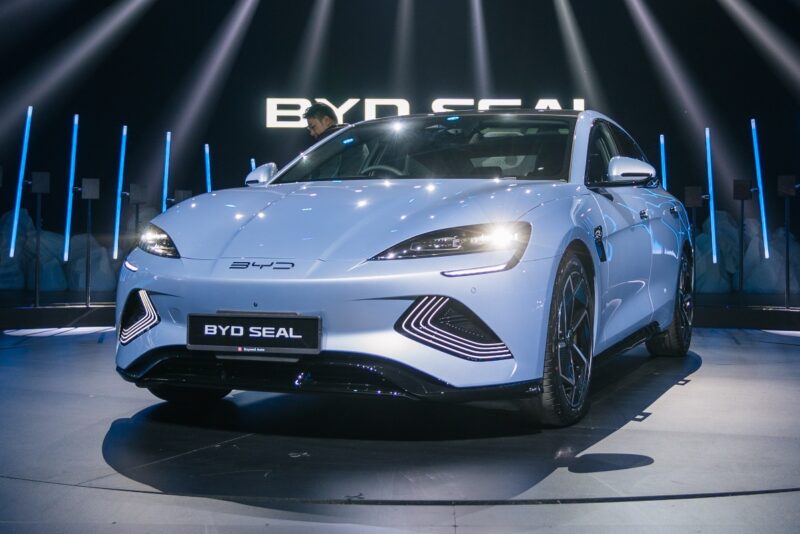
The BYD Seal Premium Extended Range has made history by becoming the first EV to win the Overall Car of the Year award at the Malaysia Car of the Year Awards 2024 (MCOTY).
In addition to this top accolade, the Seal Premium Extended Range also triumphed in the Sedan Below RM200,000 and xEV (RM150,000-RM300,000) categories, while the Seal Performance AWD won the Sedan (RM200,000-RM300,000) category.
Moreover, the official distributor of BYD vehicles in Malaysia, BYD Sime Motors, emerged as the biggest winner of the night by sweeping a total of four awards.
Jeffrey Gan, Managing Director of Southeast Asia for Sime Motors, emphasised that the recognition reflects the continued leadership of Sime Motors in the EV market.
“These accolades reflect the trust in BYD’s offerings, supported by Sime Motors’ extensive network, exceptional service centres and outstanding after sales service across the nation,” he said.
The MCOTY is an esteemed recognition that highlights excellence in the automotive sector, celebrating achievements in innovation, sustainability and excellence.
The criteria for the awards are meticulous, evaluating vehicles across various factors such as design, safety, performance, energy efficiency and value for money. The judging panel comprised automotive industry professionals, experts and media representatives, ensuring a transparent and comprehensive evaluation process.
BYD concluded 2024 on a high note, achieving a remarkable milestone by selling over 4 million vehicles within a single year for the first time.
According to the company, a total of 514,809 new energy vehicles (NEVs) were sold in December alone, bringing the total sales for 2024 to 4,272,145 units—a 41.3% increase compared to the 3 million units recorded in 2023.
Of this total, 1,764,992 units were passenger battery electric vehicles (BEVs), 2,485,378 units were plug-in hybrid electric vehicles (PHEVs), while the remaining 21,775 units were commercial vehicles.
Compared to the performance in 2023, BEV sales for 2024 increased by 12% from 1.6 million units, while PHEV sales rose by a whopping 72.8% from 1.4 million units. BEVs accounted for 41.5% of BYD’s total sales last year, while PHEVs made up 58.5%.
BYD’s export market also experienced encouraging growth, with 57,154 units sold in December, marking a 58% increase compared to the same month last year. This brought the total number of vehicles exported for 2024 to 417,204 units, a 71.9% rise compared to 2023.
In addition to manufacturing vehicles, BYD is also the second-largest battery supplier in China. Among its notable clients are big names such as Tesla, Toyota, and Nio.
Overall, the company installed 23.5 GWh of battery capacity in December (32% higher than in 2023) or a total of 194.7 GWh throughout 2024 (an increase of 29% compared to 2023). This includes batteries installed in electric vehicles (EVs) and stationary energy storage units.
Sime Motors is continuously expanding the BYD brand network in the country as part of its efforts to meet the growing demand for electric vehicles (EVs).
According to the company, BYD currently operates 21 service centres nationwide, focusing on customer accessibility spanning key regions such as Penang, Klang Valley, Johor Bahru, East Coast, Sarawak and Sabah.
17 out of the 21 BYD service centres in Peninsular Malaysia and East Malaysia feature body and paint (B&P) centres that offer body repair services using state-of-the-art equipment. Trained technicians ensure every repair meets original manufacturer standards.
Customers’ vehicles are serviced by a team of BYD certified high-voltage (HV) technicians, who undergo ongoing multi-level training programmes to ensure 100% certification.
In addition to specialised tools for EV maintenance, all BYD service centres provide premium lounge areas and workspaces for customers to relax or work while waiting for their vehicles to be serviced.
BYD also operates a digitally managed centralised Parts Distribution Centre (PDC) that ensures timely and sufficient parts delivery to service centres and dealers nationwide. With optimised inventory and streamlined distribution systems, BYD guarantees minimal downtime for vehicle repairs.
Moreover, every new vehicle undergoes rigorous quality assurance checks at the pre-delivery inspection (PDI) centre to ensure it is in top condition before being handed over to the customer.
The PDI facility is equipped with a three-level mechanical parking system, optimising space efficiency while securely accommodating vehicles during the inspection and preparation process.
Each BYD vehicle comes with a six-year/150,000 km warranty for the vehicle, an eight-year/160,000 km warranty for the battery (with the battery to be replaced if its health falls below 70%), and an eight-year/150,000 km warranty for the drive unit.
For any queries or feedback, customers can contact the BYD Customer Care Line at 1300-38-1888, available Monday to Friday, from 8 am to 5 pm. A 24/7 roadside assistance service is also provided throughout Malaysia.
Additionally, BYD offers service packages available in three-, six- and eight-year options, along with Standard and Plus options, to accommodate both customer’s high and low usage patterns. These packages can be purchased separately or bundled with car loans for added convenience.
Sime Motors, the official distributor of BYD vehicles in Malaysia, has recently opened the first BYD 3S centre in East Malaysia, located in Kota Kinabalu.
The facility, managed by Regas EV Sabah, is located at Lot 33, Sedco Industrial Estate, Jalan Lintas, 88450 Kota Kinabalu.
According to Sime Motors, its opening underscores BYD’s steadfast growth across Malaysia and its commitment to delivering exceptional customer service in the rapidly expanding electric vehicle (EV) market in East Malaysia.
The new facility spans 1,288 square metres and offers a full spectrum of services including sales consultations, vehicle test drives and aftersales support.
Additionally, BYD Kota Kinabalu is one of the first EV outlets in Sabah equipped with two DC Super Charger units, featuring four charging guns that provide power of up to 180 kW.
Jeffrey Gan, Managing Director of Retail and Distribution for Southeast Asia at Sime Motors, expressed pride in collaborating with Regas EV Sabah to open BYD Kota Kinabalu, enhancing the experience in Eastern Malaysia.
“This initiative further solidifies our position as the No.1 EV brand in Malaysia and underscores our commitment to providing the best customer experience while striving to meet the evolving needs of the community in Sabah,” he said.
Datuk Matthew Tan, Managing Director of Regas EV Sabah, added, “This 3S Centre is not just a facility—it’s a commitment to Sabah’s journey towards electric mobility and forward-thinking low carbon solutions, powered by BYD’s world-class technology.”
For the first time in history, Chinese automotive company BYD has successfully sold more vehicles than Ford.
During the third quarter (July-September), BYD sold 1.13 million vehicles, marking a 38 percent increase compared to the same period last year.
In comparison, Ford sold fewer than 40,000 vehicles during the same period, causing the manufacturer to drop one rank, becoming the seventh largest in the world.
However, for the period from January to September, Ford is still ahead of BYD with total sales of 3.3 million units, slightly more than BYD’s 3.25 million units.
It is not impossible that by the end of the year, BYD’s sales could reach 4 million, surpassing Ford’s total sales for the year 2024.
In addition to BYD, several Chinese automotive companies have also reported sales increases that could be concerning for Japanese, European, and American manufacturers.
For example, during Q3, Geely experienced a sales increase of 14 percent, reaching 820,000 vehicles, surpassing Nissan and trailing behind Honda at ninth place.
China’s third-largest manufacturer, Chery, recorded a 27 percent sales increase to 550,000 units, placing it in twelfth position.
Toyota’s sales, however, decreased by 4 percent to 2.73 million units, although the Japanese giant still leads the chart ahead of the VW Group, which saw a 7 percent decline to 2.17 million vehicles.
While Hyundai Motor Group remains comfortably in third place, it also reported a 3 percent sales decline to 1.77 million units.
In fifth place, Stellantis seems to need to work harder as the sales difference with BYD is only around 10,000 units.
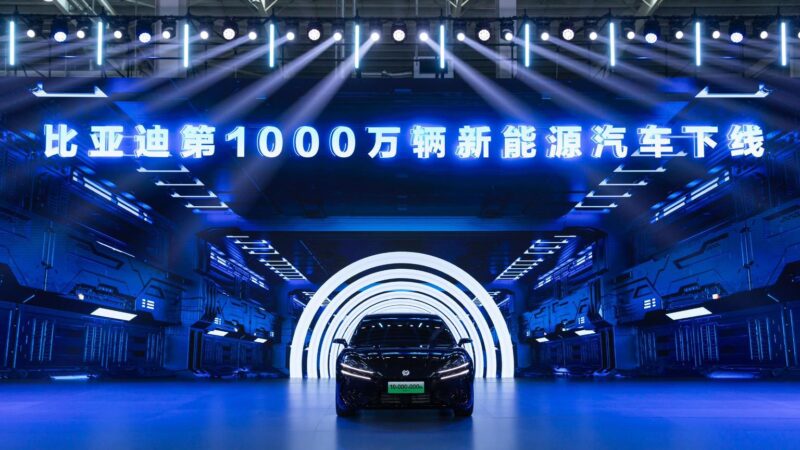
BYD recently marked a historic moment in its 30th-anniversary celebration with the roll-off of its 10-millionth new energy vehicle (NEV) at its Xiaomo plant in Shenzhen.
BYD said the achievement underscores its unwavering commitment to sustainable transportation and reinforces its position as a global leader in the automotive industry. The company claimed that it is the world’s first automaker to reach the figure.
It took BYD 15 years to produce its first five million NEVs and achieved the next five million in just 15 months, demonstrating the company’s strategic focus on new energy vehicles and its continuous technological advancement.
The 10 millionth vehicle is a Denza Z9 owned by Feng Ji, the founder and CEO of Game Science, the company behind the video game Black Myth: Wukong.
The Z9 is offered in both shooting brake (referred to as GT) and sedan versions, with a choice of PHEV or EV powertrains. The PHEV version combines a 2.0-litre four-cylinder engine with three electric motors to produce 870 PS.
The EV version, on the other hand, boasts a total system output of 965 PS supplied by three electric motors, alongside a 100 kWh battery that provides an approximate driving range of 630 km.
Regarding future plans, BYD stated that it will invest 100 billion yuan (£12 billion) in the development of smart technology that integrates artificial intelligence (AI) into automotive systems.
Back in October, BYD’s premium sub-brand Denza has been confirmed to be entering the Malaysian market, with Sime Darby Auto Imports as the official importer and BYD Malaysia as the official distributor.
The first model to be offered will be the Denza D9, which is expected to arrive in the local market some time in the first quarter of 2025. It will be pitted against the likes of the Zeekr 009, Maxus Mifa 9, and the popular Toyota Alphard/Vellfire duo.
Specifications for the Malaysian market are yet to be announced, but we can confirm that BYD Malaysia will introduce the battery electric vehicle (BEV) version, as it is currently the only version available in right-hand drive.
In China, in addition to the BEV variant, the D9 is also available in a plug-in hybrid electric vehicle (PHEV) version featuring a 1.5-litre engine.
For the BEV, there are two powertrain configurations: front-wheel drive (FWD) and all-wheel drive (AWD). The former features a single electric motor that produces 313 PS (280 kW) and 360 Nm of torque, allowing it to accelerate from 0 to 100 km/h in 9.5 seconds.
Meanwhile, the latter, with its twin-motor setup, offers a healthy 374 PS (275 kW) and 470 Nm, enabling a 0-100 km/h acceleration time of just 6.9 seconds.
Regardless the variant, the D9 is equipped with a 103 kWh LFP battery, providing a WLTP range of 520 km for the FWD and 480 km for the AWD.
In terms of size, the D9 measures 5,250 mm in length, 1,960 mm in width, 1,920 mm in height, and has a wheelbase of 3,110 mm. This makes it longer than the Zeekr 009, although its wheelbase is 95 mm shorter than its closest competitor.
The electric MPV can accommodate up to seven adult passengers (each 180 cm tall), thanks to a 2-2-3 seating configuration featuring sliding captain’s seats in the second row.
Its cargo space is big enough to hold seven 20-inch luggage cases and seven business backpacks.
In keeping with its status as a premium MPV, the D9 boasts a range of luxury features such as Nappa leather upholstery, ventilation and heating functions, massage functions, a panoramic glass roof, and a 7.5-litre fridge.
For the infotainment system, there is a 10.25-inch digital instrument panel, a 15.6-inch touchscreen, a Dynaudio sound system with 14 speakers, and three 50W wireless chargers, to name a few.
Pricing for the Malaysian market has yet to be announced. For reference, the D9 BEV is priced between 379,800 yuan and 469,800 yuan (approximately RM233,648 to RM289,015) in its home country.
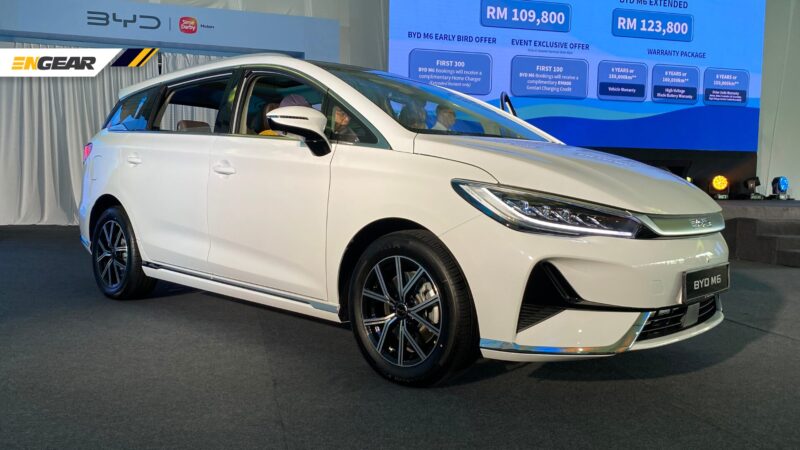
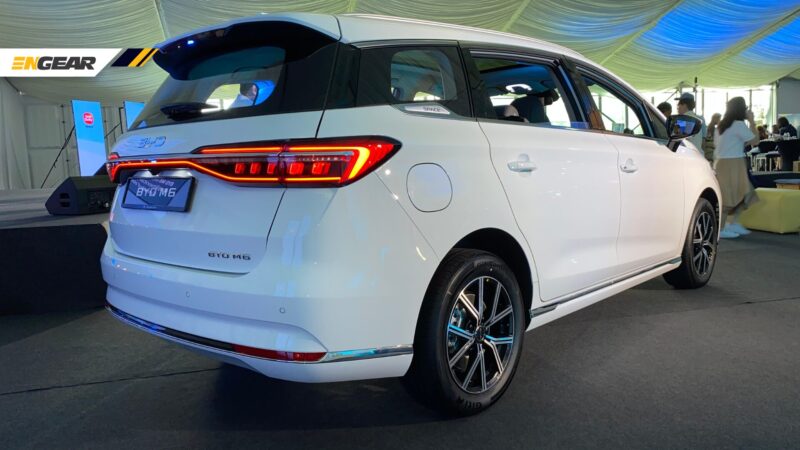
Sime Darby Motors has launched the fourth BYD electric vehicle for the Malaysian market – the all-new BYD M6.
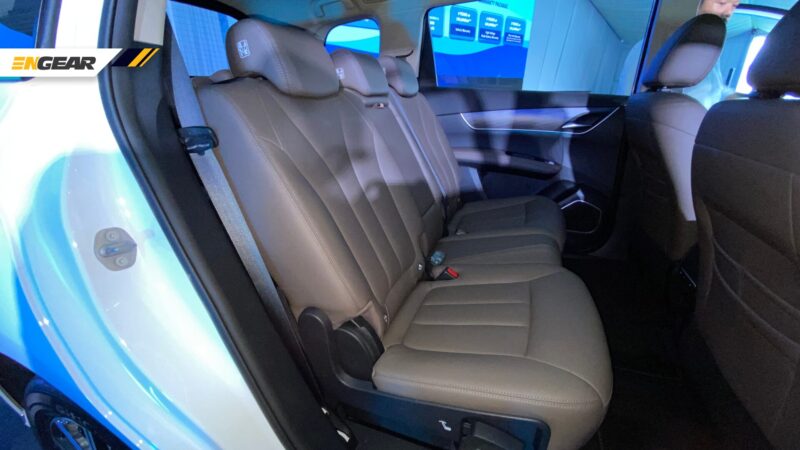
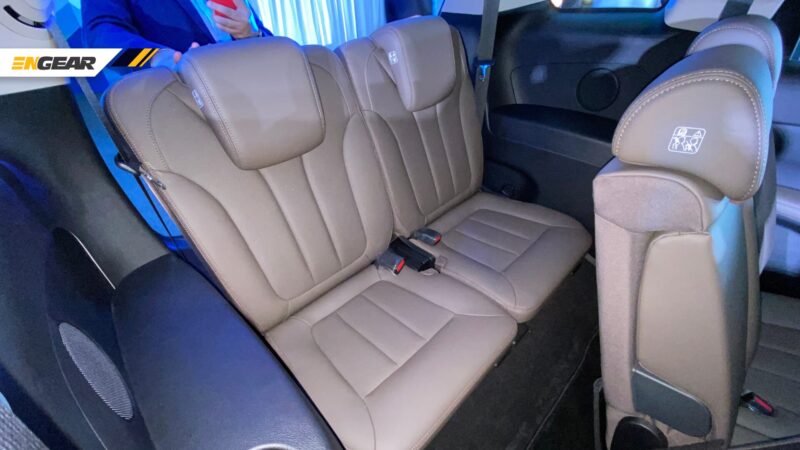
The M6, which is an MPV, is offered in a seven-seat configuration with two variants to choose from, namely Standard and Extended.
Both variants are equipped with a single electric motor driving the front wheels.
The Standard variant has a total power output of 161 hp and 310 Nm of torque, enabling it to accelerate from 0 to 100 km/h in 10.1 seconds.
On the other hand, the Extended variant, with 201 hp and the same amount of torque, is capable of completing the 0-100 km/h acceleration in 8.6 seconds.
In addition to output, the battery capacities between the two variants also differ.
The M6 Standard comes with a Blade LFP battery with a capacity of 55.4 kWh, offering a range of 420 km based on the NEDC cycle.
The Extended variant is equipped with a larger battery with a capacity of 71.8 kWh, providing a driving range of 530 km on a full charge.
The maximum fast charging rates also vary between the variants, with 89 kW for the Standard and 115 kW for the Extended. The latter requires 40 minutes to charge from 10% to 80%.
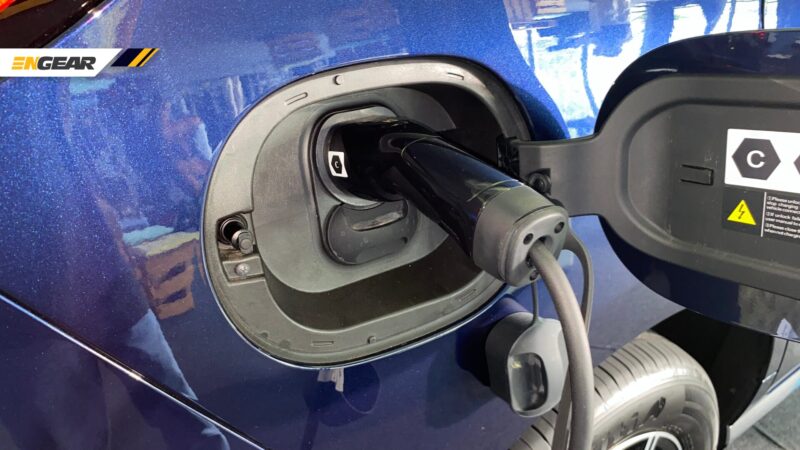
Despite the difference in battery capacity, the Vehicle-to-Load feature is included as standard across the range.
In terms of equipment, the M6 comes with ‘floating’ LED headlights and taillights, 17-inch alloy wheels, a 12.8-inch rotating touchscreen with Apple CarPlay and Android Auto, a karaoke system, and an NFC digital key.
A panoramic roof, 15W wireless charger, and electric tailgate are also included.
On the safety front, the M6 comes standard with six airbags, a Tyre Pressure Monitoring System, Isofix, ABS, an Electric Parking Brake, Electronic Stability Control, Traction Control, and a 360-degree View Monitor.
The Extended variant gains ADAS technology, which includes Autonomous Emergency Braking, Intelligent Cruise Control, Front and Rear Collision Warning, Blind Spot Detection, and Lane Departure Assist.
Pricing starts from RM109,800 for the M6 Standard and RM123,800 for the M6 Extended.
The electric MPV is offered with a warranty of six years/150,000 km for the vehicle, eight years/160,000 km for the battery, and eight years/150,000 km for the drive unit.
Malaysia’s Leading Automotive News | ENGEAR ENGLISH