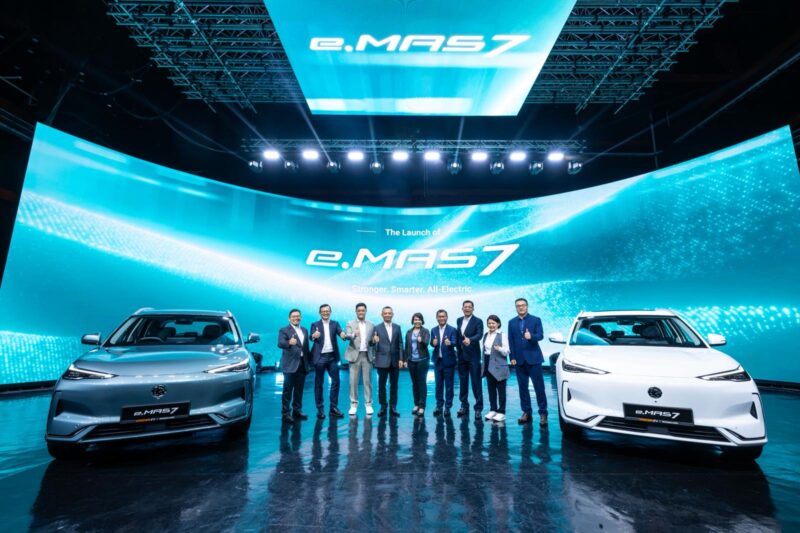
Proton has recently announced the reintroduction of its brand in the neighboring country with the launch of the electric vehicle model e.MAS 7.
The specifications of the e.MAS 7 for the Singapore market are similar to what is offered in Malaysia.
The e.MAS 7 is powered by a single electric motor producing 215 hp and 320 Nm of torque.
Acceleration from 0 to 100 km/h is achieved in just 6.9 seconds, reaching a top speed of 175 km/h.
The Proton e.MAS 7 is available in two variants: Prime and Premium.
The Prime variant is equipped with a 49.52 kWh LFP battery pack, providing a range of 345 km on a full charge (WLTP data), while the Premium variant is fitted with a 60.22 kWh battery pack that allows for a driving range of 410 km.
This Aegis short-blade battery supports AC charging at 11 kW, as well as DC fast charging at 100 kW (80 kW for the smaller battery capacity), where the battery can be charged from 30% to 80% in just 20 minutes.
There are six color options available: Platinum Silver, Lithium White, Turquoise Green, Slate Grey, Quartz Rose, and Obsidian Black, along with two interior color choices: Indigo Blue and Alabaster White.
The e.MAS 7 is priced starting at S$175,988 (RM576k) for the Prime variant and S$179,988 (RM590k) for the Premium variant, exclusively for the first 99 owners.
Each purchase will include the following packages:
A 10-year battery warranty with no mileage limit
Five years of free roaming data in Malaysia and Singapore
Cross-border roadside assistance between Peninsular Malaysia and Singapore
Do you think that with the power upgrade and automatic transmission offering, the Toyota GR Yaris is already perfect?
It seems your assumption is completely wrong, once again!
Officials at Toyota Gazoo Racing still see room for improvement in this model with the introduction of the “Aero Performance” package for the GR Yaris.
Developed through extensive racing experience and input from professional drivers, this latest package can maximize the aerodynamic performance and cooling aspects of the hot hatch.
The Aero Performance package includes six components, five of which are designed to enhance stability at high speeds and aerodynamic performance, such as the front fender vents, fuel tank undertray, rear bumper vents, and adjustable rear wing.
The addition of the front lip spoiler is based on feedback from professional racer Oshima to reduce front lift, thereby improving the aerodynamic balance of the vehicle.
Cooling is addressed by an aluminum engine hood with vents, sharing the same design as the carbon fiber hood used in the GRMN Yaris model.
The basic specifications of the GR Yaris remain unchanged, featuring the G16E-GTS engine that generates 304 PS and 400 Nm of torque, with a choice of either a 6-speed manual or 8-speed DAT transmission and the GR-Four all-wheel drive system.
In Japan, the Toyota GR Yaris with the Aero Performance package is priced starting at 4,055,000 yen (approximately RM115,911).
Introducing the first model built on BMW’s latest Neue Klasse platform, the 2026 BMW iX3
The exterior design of this iX3 closely resembles the Vision Neue Klasse X concept model that was showcased last year.
This new design approach will also be applied to all future BMW models, including ICE models.
Here are some key facts about the iX3 2026:
1. Dimensions
The BMW iX3 measures 4,783 mm in length, 1,895 mm in width, and 1,636 mm in height, with a wheelbase of 2,898 mm.
Compared to the previous iX3, the new model is larger and has a longer wheelbase.
2. Electric Platform
As mentioned, the iX3 2026 is built on the Neue Klasse platform, which is distinct from the existing BMW X3.
The Neue Klasse platform is a fully electric architecture that supports an 800-volt system, providing faster charging benefits.
It also features the sixth-generation eDrive system, which integrates newly developed electric motors with high-density cylindrical battery cells.
3. Performance
Initially, the BMW iX3 will be available in the 50 xDrive variant, equipped with two electric motors and an all-wheel-drive system delivering 463 hp and 645 Nm of torque.
The 0-100 km/h acceleration is achieved in just 4.7 seconds, reaching a top speed of 209 km/h.
4. Battery
There are two battery size options available, with the larger capacity (108.7 kWh) capable of offering a range of up to 805 km (WLTP data).
With DC fast charging at 400 kW, the battery can be charged from 10% to 80% in just 21 minutes, adding 370 km of range in 10 minutes.
The 2026 BMW iX3 supports bidirectional charging and is equipped with an NACS port.
5. Exterior Design
The appearance of the iX3 is inspired by classic BMW models like the 2002, infused with more modern elements.
In addition to the smaller, upright grille, the iX3 retains the Hofmeister kink design on the sides.
The rear lights have a more traditional shape compared to the previous iX3 model.
Overall, the BMW iX3 boasts a drag coefficient as low as 0.24, compared to 0.29 on the earlier iX3 model.
6. Cabin Space
A significant change in the iX3 is the Panoramic iDrive system, which gives the dashboard a more traditional and tidy layout.
No longer featuring a curved screen, it now has a central display of 17.9 inches and a wide screen located at the dashboard’s end.
There is also a four-spoke steering wheel with touch-based function buttons, complemented by several physical control buttons on the center console.
Other features include a Harman Kardon audio system, a panoramic glass roof, three-zone climate control, and BMW HypersonX sound effects.
The cargo space is 520 liters and can expand to 1,750 liters, along with an additional frunk space of 57 liters.
7. Four “superbrains” to control everything
The BMW iX3 is equipped with four high-performance computer units designed to manage various functions within the iX3.
One of the units, named Heart of Joy, is responsible for controlling driving dynamics, including the drive system, brakes, energy recovery, and steering, ensuring an exhilarating driving experience.
Another unit is designed for autonomous driving and parking functions, while the remaining units are dedicated to the infotainment system and essential vehicle functions.
Isuzu Malaysia recently announced the official opening of its new 3S center (Sales, Service, and Spare Parts) located in Kuantan, Pahang.
Operated by Dynamic Motors Sdn Bhd, this brand-new 3S center is built on a 3,500 square meter plot of land in the Semambu industrial area and showcases Isuzu’s latest corporate identity.
Facilities at the Isuzu 3S center include a showroom, a waiting area resembling a café complete with tables, a refrigerator, and a coffee machine, as well as a covered pathway for service customers.
In addition to the Isuzu D-Max and Elf models, this 3S center also sells and provides services for the entire lineup of medium and heavy-duty vehicles, including the Forward and Giga.
Tomoyuki Yamaguchi, CEO of Isuzu Malaysia, stated that the new home of Isuzu in Kuantan comes at a time when the acceptance of Isuzu vehicles is growing in the country.
Meanwhile, Donald Chan, Chairman of Dynamic Motors, remarked, “For the past 20 years, we have received support from many loyal customers who return to purchase new Isuzu vehicles.
“With the support of Isuzu Malaysia, we hope to continue delivering the best to our customers in Kuantan for years to come.”
The showroom of this 3S center is open every day, while the service center operates from Monday to Saturday.
Pro-Net recently held a preview session for another electric SUV model set to be launched soon, the 2025 smart #5.
This model is built on the PMA2+ platform, which is also used in Geely’s models such as the Zeekr 7X.
Here are five things you need to know about the smart #5.
Dimensions
Positioned as a D-segment SUV, the smart #5 features significantly larger dimensions compared to its siblings, the smart #1 and #3.
The SUV measures 4,705 mm in length, 1,920 mm in width, 1,705 mm in height, with a wheelbase of 2,900 mm and a ground clearance of 197 mm.
True to its nature as a rugged SUV, the smart #5 can traverse water up to 500 mm deep.
Exterior
There are two units of the smart #5 were showcased.
The Brabus version displays a sportier look with body kit, rear spoiler, two-tone color scheme, and 21-inch monoblock alloy wheels wrapped in Continental EcoContact 7 tires.
Also displayed was the #5 Premium without the Brabus body kit, featuring 20-inch aerodynamic wheels.
Overall, the smart #5 presents a boxy body design, which is a stark contrast to the #1 and #3.
Interior
Inside the cabin, the smart #5 is equipped with a 10.3-inch cluster display, dual 13-inch OLED screens, Apple CarPlay & Android Auto connectivity, a 25.6-inch head-up display with augmented reality (AR), ambient lighting with 256 color options, and wireless charging slots.
The second-row passengers enjoy features like the ‘Boss’ function, ‘Comfort Mode’ buttons, power-adjustable seating, and heating functionality.
In terms of practicality, this model offers a cargo space of 1,530 liters, with an additional 72 liters in the front trunk.
The base variant comes with a 9-speaker audio system, while the two higher variants feature a Sennheiser audio system with 20 speakers.
The Brabus variant is equipped with exclusive features such as an Alcantara steering wheel, Dinamica trim on the seats and doors, and simulated engine sound.
Variants
There are three variants of the smart #5:
Pro
Single electric motor with rear-wheel drive (RWD)
Power: 335 hp/373 Nm
Acceleration 0-100 km/h in 6.9 seconds
Top speed: 200 km/j
Battery pack: 76 kWh LFP
Range: 465 km (WLTP)
11 kW AC
Premium
Power: 358 hp/373 Nm
Acceleration 0-100 km/h in 6.5 seconds
Top speed: 200 km/j
Battery pack: 100 kWh NMC
Range: 590 km (WLTP)
22 kW AC
Brabus
Dual motor electric configuration with all-wheel drive (AWD)
Power: 637 hp/710 Nm
Acceleration 0-100 km/h in 3.8 seconds
Top speed: 210 km/h
Range: 540 km (WLTP)
Sport suspension
Standard across all variants, the smart #5 comes with three drive modes: Eco, Comfort, and Sport.
The smart #5 Brabus also includes additional driving modes such as Snow, Sand, Mud, Rock, Adaptive, and Brabus.
With a 800V electrical architecture, the smart #5 supports rapid charging to go from 10-80% State of Charge in just 15 minutes.
Safety
Safety features include six airbags, as well as ADAS technology assisted by 12 ultrasonic radars, 5 mm-wave radars, 4 surround cameras, 2 HD cameras, and one cockpit camera.
This allows the #5 to offer functions such as Autonomous Emergency Braking (AEB), Lane Keeping Assistance (LKA, ELKA, LDW), Traffic Jam Assistance (TJA), Highway Assistance (HWA, ALCA), Forward Collision Warning (FCMS), Traffic Crossing Warning (FCTA, RCTA), Blind Spot Detection, and Full Autonomous Parking (FAP).
Naza Eastern Motors Sdn Bhd, the official distributor of Suzuki vehicles, has launched the Swift Sport Final Edition hatchback for the local market.
The Swift Sport Final Edition is a fully imported model, with a limited availability of only 30 units, each priced at RM137,900.
In terms of exterior features, this model boasts gold decorative decals on the engine hood and sides, complemented by a “Final Edition 68” logo, dual exhaust tips, and door visors.
Inside the cabin, there is a carbon-fiber-style finish on the dashboard, door panels, and gear console, along with a 10-inch infotainment screen featuring a Soundstream audio system.
The Suzuki Swift Sport Final Edition retains a 1.4-liter Turbo Boosterjet engine, producing 140 PS and 230 Nm of torque, paired with a six-speed automatic transmission.
Standard equipment includes 16-inch alloy wheels, LED projector lights, hidden rear door handles, keyless entry, and a rearview camera.
Safety features comprise six airbags, seatbelt reminders, ABS, EBA, ESP, and ISOFIX mounts for child seats.
In conjunction with the Omoda | Jaecoo Carnival held at Desa ParkCity, Omoda | Jaecoo Malaysia has officially showcased the new Jaecoo J5 model, which is set to launch shortly.
As a B-segment SUV, the Jaecoo J5 will be positioned as a smaller alternative to the existing Jaecoo J7 SUV.
Here are five key facts about the Jaecoo J5 you should know:
Dimensions
The Jaecoo J5 measures 4,380 mm in length, 1,860 mm in width, and 1,650 mm in height, offering a wheelbase of 2,620 mm.
Among competitors in the B-segment SUV category, the J5 has the same length as the Proton X50, while being slightly shorter than the Chery Omoda 5, Chery Tiggo Cross, and Honda HR-V.
However, the J5 benefits from a longer wheelbase, contributing to a more spacious cabin.
Additionally, the J5 boasts a cargo space of 480 liters, which can expand to 1,180 liters when the second-row seats are folded down in a 60:40 split.
Engine
The J5 is powered by a 1.5-liter turbocharged inline four-cylinder engine that generates 147 PS and 210 Nm of torque.
This power is transmitted to the front wheels via a CVT transmission, with a fuel consumption rating of approximately 7.5 liters per 100 km.
Chassis
Unique in its segment, the Jaecoo J5 features a MacPherson strut suspension setup for the front axle and a multi-link configuration at the rear.
In comparison, most competing B-segment SUV models are equipped with simpler torsion beam setups.
Exterior
Like other Jaecoo models, the J5 showcases a premium exterior inspired by British SUV design.
All four corners are fitted with 18-inch rims, along with 235/55 R18 tires for a more stylish appearance.
Other notable features include headlights with integrated daytime running lights in a single housing, a relatively large grille structure, conventional door handles, and a rear spoiler.
Interior
The J5’s cabin comes equipped with amenities such as an 8-inch LCD instrument cluster, a 13.2-inch central screen with 2K resolution supporting WiFi, Apple CarPlay, and Android Auto, as well as an 8-speaker audio system.
The materials used in the J5 include pet-friendly finishes certified by TUV, alongside ADAS Level 2.5 features and a 540-degree surround camera system.
Set to be launched soon, the Jaecoo J5 is estimated to be priced around RM120,000.
Will this new Jaecoo model be able to compete with other sub-compact SUV models?
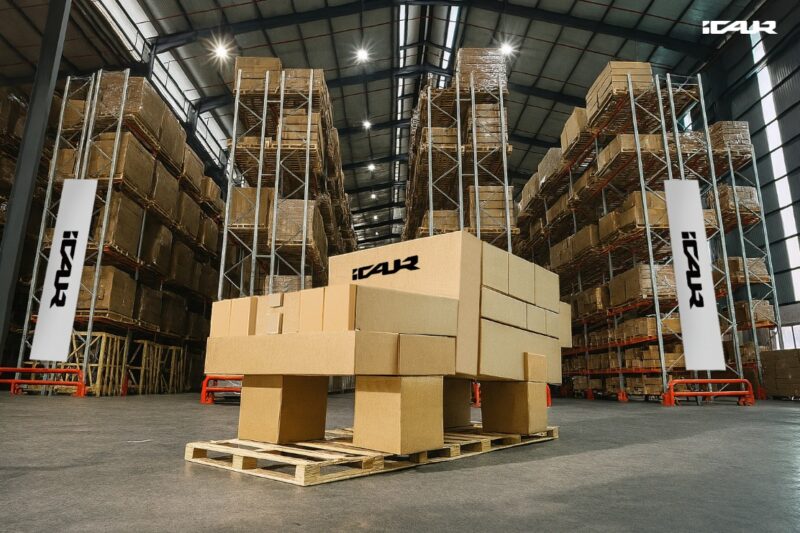
iCaur Malaysia has officially announced the opening of its Component Hub, located in the Hicom Industrial Park, Shah Alam.
The 88,000-square-foot facility can accommodate over 10,000 selected spare parts and components, managed by Chery Corporate Malaysia and shared with Omoda | Jaecoo Malaysia.
With this centralized facility, it is set to support iCaur’s after-sales operations and strengthen its network readiness ahead of the launch of the first iCaur model, the iCaur 03, in the third quarter of this year.
Emily Lek, Vice President of iCaur Malaysia, stated, “The Chery Corporate Malaysia warehouse plays a crucial role in supporting the expanding iCaur dealer network.
“It will include no fewer than 16 dealer partners soon, with further expansions planned for 2026.
“The ‘Born to Play’ philosophy of iCaur means we are ready from the very start. By gradually building a portfolio of spare parts and components supported by world-class automotive players with a robust global supply chain, iCaur Malaysia is prepared to advance alongside our network while reinforcing the after-sales service standards our customers expect,” she added.
iCaur Malaysia also invites the public to experience the iCaur Experience obstacle driving event at the Omoda | Jaecoo Carnival at Plaza Arkadia, Desa ParkCity, from August 21-24.
There, iCaur Malaysia will showcase the two-wheel drive (2WD) version of the iCaur 03, featuring 235 horsepower (estimated price starting from RM145,000), as well as the all-wheel drive (AWD) variant with 275 horsepower (estimated price starting from RM155,000).
In addition to a variety of interactive activities planned, visitors are also invited to participate in the “Guess the Price” challenge for a chance to win exclusive iCaur memorabilia.
The first 30 customers who place an order for the iCaur model during the event will receive a limited edition scale model of the iCaur 03 (valued at RM1,388).
The SUV segment in Malaysia is truly vibrant, featuring a variety of models and brands, both local and foreign.
It can be overwhelming if you are unsure of the criteria to consider.
If you are looking for something that stands out from the typical SUVs on the roads, we recommend the Kia Sportage 1.6T AWD as a solid choice.
It has everything you need for a daily-use vehicle, and most importantly, the driving satisfaction you crave.
What’s the point of buying an expensive car if you’re not satisfied with the driving experience, right?
Below is our opinion after borrowing this Kia Sportage from Kia Malaysia for a week.
Exterior Design: too striking?
For your information, the Kia Sportage marketed here is the pre-facelift version that has been around since 2021.
The more aggressive facelift version was launched in South Korea at the end of 2024; however, to say that the design of the Sportage is outdated would be inaccurate.
Even in its pre-facelift version, the Kia Sportage remains eye-catching when cruising on the road.
With boomerang LED graphics both at the front and rear, as well as a low roofline at the back, the Sportage exudes the sporty image it aims for.
At the very least, it is an original design that can make owners satisfied when they look at it, rather than resembling any other model.
If you don’t turn back to admire your car after parking, you might have bought the wrong vehicle.
Dimensions
The AWD version of the Kia Sportage measures 4,660 mm in length, 1,865 mm in width, and 1,665 mm in height, offering a wheelbase of 2,755 mm.
As a C-segment SUV, the Kia Sportage provides a comfortable cabin space for the whole family.
The absence of a panoramic sunroof is not a major issue, as headroom in this cabin is sufficiently spacious.
Rear passengers can also adjust the angle of their seatbacks for a more comfortable sitting posture, so they don’t have to remain upright all the time.
The Kia Sportage offers a standard cargo space of 543 liters, which can expand to a remarkable 1,829 liters with the second-row seats folded down.
Pleasant Features
One of the aspects I appreciated about the Kia Sportage is its driver-friendly dashboard layout.
In addition to the dual 12.3-inch curved screens, the Sportage dashboard features a touch-based control panel complete with physical knobs.
You can adjust the cabin temperature or change the media content playing through the eight speakers of the Harman Kardon audio system from this panel.
For me, this is a user-friendly feature that is highly welcome.
This is because most manufacturers tend to crowd the central screen with various functional buttons, requiring a search and potentially distracting the driver.
The center console also houses several important function buttons that are clear and easy to reach.
The PRND shift-by-wire dial certainly gives the cockpit a more spacious feel; however, there are times when I found the unconventional gear shifting somewhat awkward.
The digital cluster display in the Sportage continues to offer analog meter graphics with several themes that can be selected according to the driving mode (Eco, Normal, Sport, Smart).
Don’t worry— the infotainment screen also provides standard support for Apple CarPlay and Android Auto. You won’t have to wait for over-the-air (OTA) updates.
If you notice, the back of the front passenger headrest features a large hook that is perfect for hanging bags or shawls.
Additionally, there are a few “teh tarik” hooks provided, making the Kia Sportage more user-friendly for Malaysians than some Malaysian-branded SUVs available on the market.
What About the Driving Experience?
The unit we tested is equipped with a 1.6-liter turbocharged inline-four Gamma II T-GDI engine that produces 177 hp at 5,500 rpm and 265 Nm of torque at 4,500 rpm.
This power is transmitted to an all-wheel drive (AWD) system via a seven-speed dual-clutch transmission (DCT).
As experienced during the media test drive, the Kia Sportage 1.6T AWD offers somewhat sluggish response at low rpm ranges.
This presents some challenges when maneuvering in low-speed situations, such as in parking areas, where the Sportage hesitates to deliver power.
However, once this SUV reaches normal cruising speeds, the cabin feels quieter, with minimal vibration and roughness.
This is attributed to the MacPherson strut front suspension and multi-link rear suspension, which work effectively to absorb road imperfections.
It also allows the SUV to feel stable in corners with body roll that isn’t overly pronounced, making the driving experience more enjoyable.
However, if driven aggressively, these advantages can disappear. Therefore, it’s crucial to understand the limits and constraints of the Kia Sportage.
I have no comments regarding the handling of this SUV, as it meets what one would expect from a Kia vehicle.
The precise and responsive steering assist keeps me focused on the winding roads ahead, allowing the vehicle to comply with every direction given by the driver’s hands.
There are times when the steering correction system engages to ensure the SUV stays on course, but its operation never feels tiring or annoying.
Safety Features
The Kia Sportage offers a comprehensive range of safety features, including six airbags, ABS, ESC, and an extensive list of advanced safety technologies.
What I want to emphasize here is the Blind-Spot Monitoring (BVM) system, which displays what is in the blind spots to the left and right of the vehicle when the turn signal is activated.
This system, found in any Kia model (including Hyundai), significantly aids in detecting objects (cars, motorcyclists) that are typically obscured in the blind spot.
Other manufacturers offer more advanced 360-degree cameras that provide a bird’s-eye view.
However, most of the time, these are more for show, as they display images of the car being driven rather than what is concealed in the blind spot.
Sportage for Weekend Getaways
Another feature I appreciate about the Kia Sportage is the rear seats that can fold flat.
There’s no need to spend money on a tent; you can transform the back of the Kia Sportage into a ‘temporary tent’ for relaxing weekend activities.
In the cargo area, there is a 12V power outlet that can be used for charging smart devices or powering light equipment.
Additionally, there is a ‘Sound of Nature’ feature available in the Sportage’s infotainment screen to accompany your activities.
While enjoying leisure time, don’t forget your obligations as a Muslim.
If you wish to fulfill your prayer duties while camping, the Kia Sportage also features a qibla direction compass to serve as a guide.
Conclusion
Is the Kia Sportage 1.6T AWD the best SUV in its class?
Undeniably, the Kia Sportage has its unique advantages compared to competing models in the market.
It has a striking design, a practical package, spacious and comfortable cabin space, and nearly comprehensive safety features.
However, if you’re willing to compromise on the weaknesses mentioned, we believe that the Kia Sportage can be a worthwhile purchase.
Specifications of the Kia Sportage 1.6T AWD (RM186,899)
Engine: Gamma II 1.6-liter turbo, four-cylinder inline
More than a year after its first unveiling, Omoda | Jaecoo Malaysia has officially launched their second SUV model, the Jaecoo J8, last month.
Retaining the off-road theme, the Jaecoo J8 presents a more elegant and luxurious image compared to its sibling, the J7.
During the launch, the J8 was described as a rugged vehicle providing a first-class passenger experience.
To demonstrate the true capability of this SUV in more challenging terrain, Omoda | Jaecoo Malaysia hosted an off-road driving experience session at Sepang Bay 13.
Several obstacles were set up, starting with the Rock Crawl section, a 30-degree Side Slope, a Log Run simulating a path over logs, and a Water Wading section.
The rainy weather in the early morning provided a more challenging surface compared to the previous day.
Despite being equipped with standard Michelin e-Premacy tires, the Jaecoo J8 had no trouble navigating the previously mentioned challenges.
So, what is the secret that prevents the Jaecoo J8 from making drivers sweat?
1. Powerful Engine
The 2.0L turbo inline-four engine, capable of delivering 249 PS and 385 Nm of torque, responds quickly without significant delay.
With just consistent throttle control, this SUV successfully tackled all the challenging sections presented.
Most importantly, it was hard to detect any tire slippage, showcasing the efficiency of the systems offered.
2. AWD System with Torque Vectoring Control
For this challenge, we had the opportunity to drive the all-wheel-drive (AWD) version of the Jaecoo J8, which is also equipped with Dynamic Torque Vectoring Control.
According to Jaecoo, this AWD system features a dual-clutch setup that can independently distribute torque, allowing 100% of the engine power to be sent to the rear wheels that have better traction.
3. Adaptive CDC Suspension
As standard, the Jaecoo J8 comes with MacPherson strut suspension at the front, assisted by a multi-link setup at the rear.
It also features CDC, which stands for Continuous Damping Control.
This CDC feature adjusts the suspension damping settings in as little as 0.002 seconds, depending on the selected driving mode and current road conditions.
There are three levels: Soft, Medium, and Hard.
What we noticed was that the cabin remained free of significant vibrations and noise from rough road surfaces, particularly while navigating the Rock Crawl section.
It felt like nothing was happening inside the cabin, even though outside, we witnessed the chassis of the Jaecoo J8 swaying and bouncing as it attempted to overcome the large rocky path.
The driver could still maintain calm, confidence, and smooth control while not sacrificing comfort.
4. Powerful Weapon for Flash Floods in the Capital
The Jaecoo J8 offers a ground clearance of 170 mm, which is relatively standard compared to other off-road SUVs.
However, with the ability to wade through water up to 450 mm deep, it is a highly beneficial feature for Malaysians occasionally facing flash floods in the capital.
Or perhaps when navigating rural backroads to complete tasks.
Or if you occasionally want to unwind in a camping area that is generally far from major road access, where the road surfaces are not always pleasant.
Conclusion
You no longer need to spend RM400k-RM500k to enjoy an exhilarating off-road experience.
With a budget starting from just RM198,800 for the AWD version, you can experience a stylish and comfortable premium urban SUV, while also having the confidence to conquer all kinds of terrains.
Are you still pondering which electric vehicle (EV) is suitable for everyday use?
Within the price range of RM150,000, we are presented with various models such as the BYD Atto 3, Proton e.MAS7, and the latest MG S5 EV.
Officially launched in May 2025, the MG S5 EV is offered in three main variants, with the base model starting at RM115,900 and the premium version priced at RM135,900.
Engear TV was personally invited by MG Malaysia for a test drive session to experience the driving experience of this EV from Damansara to Kuantan, Pahang.
Can it prove to be a worthwhile option in its segment? Read our brief review below:
Design
Starting with the exterior design, the MG S5 adopts a safer approach, avoiding overly aggressive body lines.
The trend of split headlights at the front remains, complemented by slim LED lights stretching across the rear.
There are two rim size options available: 17 inches and 18 inches, with the latter available on the Lux Long Range variant that we tested.
As you can see, the MG S5 is a compact electric SUV, measuring 4,476 mm long, 1,849 mm wide, 1,621 mm tall, with a wheelbase of 2,730 mm.
Compared to rivals, the MG S5 is slightly smaller than the Proton e.MAS7 but boasts a wheelbase that is 10 mm longer than that of the BYD Atto 3.
The cargo space is rated at 453 liters, expandable to 1,441 liters when the second-row seats are folded flat.
Advanced and Driver-Friendly Cabin
Inside the cabin, the MG S5 features a 10.25-inch instrument cluster display with a relatively simple interface, paired with a central 12.8-inch screen that supports Apple CarPlay and Android Auto.
Undoubtedly, a myriad of vehicle functions has been integrated into the central screen, yet the menu displays are easy to navigate.
Most importantly, physical control buttons are conveniently located below the screen for essential functions such as temperature control, airflow speed, audio volume, and emergency lights.
Their placement is easily visible and reachable by the driver.
The center console provides a rotary PRND knob, cup holders, a slot for smart devices, and a wireless charging pad. Simple yet practical.
Overall, this makes the MG S5 EV a modern electric car that is very driver-friendly.
Comfort
One of the commendable aspects of the MG S5 is its comfort for family use.
The seats, upholstered in a combination of leather and fabric, provide a distinct level of comfort.
The long cushion dimensions support the thighs, making for a less-fatigue journey.
Head and legroom are also ample, thanks to the panoramic glass roof and flat floor structure.
The rear seatback angle is not overly upright, and I have no complaints about the rear space—it is indeed comfortable!
The noise, vibration, and harshness (NVH) levels are satisfactory, allowing us as passengers to relax peacefully while traversing the undulating East Coast Highway.
The efficiency of the single-zone air conditioning system was tested throughout the journey, functioning well even in sweltering weather.
However, we had one complaint: the air conditioning vents are relatively small, and at times, they are difficult to adjust for optimal airflow direction.
Driving Experience
By standard, the MG S5 is equipped with a rear-wheel-drive electric motor that delivers 170 PS and 250 Nm of torque—a unique feature in its segment.
We didn’t have the opportunity to test its 0-100 km/h acceleration, but the power generated by this compact electric SUV is sufficient enough for daily use.
The power delivery is smooth and not overly abrupt, and the steering response can be adjusted to feel slightly heavier as desired.
In addition to its rear-wheel drive, it features a sports car characteristic with a weight distribution ratio of 47:53, providing a sporty driving feel, though not at the level of performance sports cars.
For those seeking a family SUV that is enjoyable to drive, the MG S5 is a strong contender.
The tuning of the MacPherson strut suspension in the front and multi-link setup in the rear strikes a balance between comfort and driving dynamics that can bring a smile to your face.
This SUV handles corners well on the Karak International Circuit and can navigate uneven road surfaces, such as entering a durian orchard (it’s that season, right?).
The MG S5 also features a regenerative braking system and a single-pedal driving mode with adjustable settings according to preference.
Suitable for Long Journeys?
With a 62 kWh battery pack, the MG S5 can achieve a range of up to 430 km (WLTP data).
It supports DC fast charging of up to 150 kW, although unfortunately, AC charging is limited to just 7 kW.
In our experience, you can comfortably drive the MG S5 across state borders to visit family.
With several fast charging facilities along the main routes, you can now plan your journeys more effectively.
For the return trip, we drove the MG S5 from Kuantan with a battery capacity of 96 percent, maintaining a steady driving pattern throughout and arriving in Kuala Lumpur with 16 percent battery remaining.
With the DC fast charging station at Bamboo Hills, we seized the opportunity to take a short break and add range in under 15 minutes to ensure we arrived on time for the launch of yet another new model in Shah Alam.
Safety
By standard, the MG S5 EV comes equipped with an extensive array of safety features, including seven airbags, adaptive cruise control (ACC), lane-keeping assistance (LKA), traffic jam assistance (TJA), and autonomous emergency braking (AEB).
It also features a 360-degree surround camera system, which is particularly helpful at low speeds and in heavy traffic.
If you need to change lanes, simply activate your turn signal, and the camera system will display a clear image of the area outside the blind spot.
The MG S5 EV also encourages safe driving.
The speed limit warning system will alert you if the vehicle exceeds the allowed speed, which can be a bit distracting during your journey.
The good news is that the volume of this warning can be lowered. So, you can relax and enjoy the music from the six speakers without interruptions.
Conclusion
Based on a short test drive, the MG S5 EV can be considered an option for those seeking a unique electric SUV.
The weight distribution ratio and rear-wheel drive that are usually characteristics of larger segment SUVs can now be found in this SUV.
While it certainly doesn’t boast any overly advanced or ‘fancy’ features, the MG S5 offers a more affordable price point, providing a package of practicality, comfort, and driving experience that will surely bring a smile to your face.
Don’t be fooled by its ordinary appearance; we recommend you take the MG S5 for a test drive before making your decision.
Zeekr Malaysia has announced the opening of the RM10 million Zeekr Space showroom located in Sunway City, managed by its dealer partner Sunway Marketing.
Situated on Lagoon Lane, Zeekr Space Sunway City spans 11,100 square feet and occupies a site that previously housed an iconic helipad.
In addition to the vehicle display area, Zeekr Space Sunway features a premium customer lounge, four AC charging stations, and plans for DC charging facilities to be added in the future.
There is also a state-of-the-art Zeekr service center located on a separate facility at Jalan Lagoon Selatan.
The service center not only offers vehicle servicing and diagnostics, but it also provides ample parts storage to meet the after-sales needs of Zeekr vehicles in Malaysia.
Considering the growing Zeekr community, the 10,000 square foot center is designed for expansion to 20,000 square feet in the future.
The Zeekr Space showroom in Sunway City is open daily from 9:00 AM to 7:00 PM from Monday to Saturday, and from 10:00 AM to 5:00 PM on Sundays.
The Zeekr Service Center in Sunway operates from 9:00 AM to 6:00 PM on weekdays and from 9:00 AM to 1:00 PM every Saturday.
In conjunction with the opening of Zeekr Space Sunway City, Sunway Marketing has announced a “Win-a-Zeekr” campaign that offers a brand-new Zeekr X Premium as a prize.
This lucky draw campaign is open to any customer who has made a purchase and received delivery of a Zeekr vehicle from Zeekr Space Sunway City or Petaling Jaya before September 30, 2025.
Who would have thought that this agile little crossover from Lexus was a direct response to a request from Akio Toyoda, the driving force behind Toyota?
During the early stages of development, Akio, also known as Morizo, asked the R&D team to create a casual car that could be driven on weekends, much like a beloved pair of sneakers.
The result is a luxurious compact crossover with an attractive design and a fun driving experience – the Lexus Breakthrough Crossover, or LBX.
The Lexus LBX is the smallest production car ever produced by Lexus and is positioned below the Lexus UX.
Although it is built on the GA-B platform, which serves as the foundation for the European market Yaris Cross, the LBX is more than just a badge-engineered product.
Design
Compared to the European specification Yaris Cross, the LBX has a more robust appearance.
This is achieved through more rounded wheel arches, wider and more pronounced fenders, and larger tire sizes.
Moreover, the shoulder line of the LBX is lower compared to the Yaris Cross, creating an almost snowman-like appearance from the front, side, and rear views.
Masahiro Sasaki, a racer and Toyota test driver, explains that this design gives the LBX a more balanced look and a lower center of gravity.
As a result, the LBX appears sturdy even when stationary in a parking spot, and even more so when driven on the road.
Interior Space
For me, the Lexus LBX is best described as a casual car to drive on weekends without compromising practicality.
Yes, the rear passenger space may seem small, and it is better suited for children or petite adults.
As for cargo space? It offers about 315 liters, which is ample for grocery shopping. Alternatively, if you fold down the second-row seats, you will have a cargo area of up to 992 liters.
Lexus seems to have focused heavily on the Tazuna concept, especially in the driver’s cockpit.
There are not many physical function buttons; only essential functions are retained.
The intention? To ensure that the driver’s attention remains on the road.
The control buttons on the steering wheel may appear vacant without any functions, but in reality, you can easily set shortcut buttons for various operations.
You’ll just need to keep an eye on the head-up display to see what operations are being activated or deactivated, such as adjusting the fan speed or changing the music playing.
Initially, it may take some time to get used to this setup, but over time, I have come to prefer this method as it minimizes eye movement while driving.
Additionally, the Lexus LBX offers plush seating that is comfortable and firmly supports the driver – a feature that’s hard to find in any car in a similar segment.
The 9.8-inch central screen displays easily accessible menus and supports connections to Apple CarPlay and Android Auto.
The 12.3-inch digital cluster screen is also easy on the driver’s eyes, and most importantly, the analog meter theme is still present!
The start drive button is positioned fairly high next to the instrument cluster, making it easy for the driver to see and reach.
Honestly, this is exactly what I expect from a Lexus: a luxury car that still prioritizes the needs of the driver.
Modern Features for Convenience
Inside the LBX cabin, you will find up to four USB Type-C charging ports, along with a wireless Qi charging slot for smart devices.
A Mark Levinson audio system with 13 speakers is ready to accompany you during spirited weekend drives.
Door operations are made easy with the e-Latch system; simply press the lever on the door panel (as well as the door handle outside) with just one finger, and the door will open.
Although the center console appears somewhat narrow for fitting two arms at once, it is still equipped with the necessary operational buttons for the driver.
Hybrid Engine with EV-like Behavior
One of the most exciting aspects of driving the Lexus LBX is its powerful hybrid engine performance.
Unlike typical Chinese hybrid cars that use turbo engines, the LBX offers a naturally aspirated (NA) 1.5-liter hybrid engine with the code M15A-FXE.
This engine, with an output of 90 hp and 120 Nm of torque, is paired with an electric motor producing 93 hp and 185 Nm, resulting in a combined output of around 136 hp.
The efficient eCVT transmission ensures that every brisk acceleration in the LBX can be fully enjoyed by the driver, especially when taking off from traffic lights or toll plazas.
After enjoying the curves, I returned to a more relaxed pace, navigating the central roads. Most of the time, the vehicle prioritized EV driving mode, creating a quieter and more comfortable atmosphere.
At times, I recorded a zero-emission driving ratio of 50 percent over a distance of 78 km.
Handling and Comfort, Perfectly Balanced!
As standard, the Lexus LBX features a MacPherson strut setup in the front, complemented by a simpler torsion beam system in the rear.
On paper, it may seem commonplace, similar to B-segment SUVs currently available in the market.
However, what sets the LBX apart is Lexus’s tuning of its handling, which distinguishes its performance from other SUVs.
During my test drive, I found it difficult to pinpoint negatives; the LBX felt stable and glued to every corner while effectively absorbing road imperfections.
In short, it strikes a balance between handling stability and driving comfort, further enhanced by the Vehicle Braking Posture Control function to reduce pitch and roll effects.
Additionally, the steering responsiveness is sufficiently tactile, adhering to every command from the driver without feeling overly light.
The harmonious integration of its chassis with a short wheelbase, powerful engine, efficient transmission, and suspension makes the Lexus LBX a remarkable product in its segment.
It’s hard to describe this feeling in words; you need to experience the LBX first-hand if given the chance.
The sound of the three-cylinder engine is also minimal, merely a whisper in your ears, especially when the accelerator is pressed hard. However, most of the time, the cabin remains quiet and comfortable.
Safety Features
As standard, the LBX comes equipped with safety features, including eight airbags, as well as the Lexus Safety System+, which encompasses functions such as:
Autonomous emergency braking
Adaptive cruise control with stop-and-go functionality
Lane-keeping assistance
Active steering assistance
Traffic sign recognition system
Blind spot monitoring system
Door opening warning
Automatic high beam assist
Conclusion
With a price tag of RM268,888, I must admit that the LBX is not a luxury car designed for everyone, nor is it suitable as a first car.
It has drawbacks that may be difficult to compromise on; however, it offers a package that can bring a smile to the driver after a long week of driving an SUV or MPV.
Much like a favorite pair of shoes, it is perfectly suited for when you need it.
Specifications for the Lexus LBX (RM268,888)
Engine: 1.5-liter inline three-cylinder NA (code M15A-FXE)
Proton has officially opened bookings for the facelifted model of its B-segment SUV, the 2025 X50.
The first 10,000 customers will receive an exclusive offer that includes a cash rebate of RM1,000, a limited edition Touch ‘n Go card, as well as a “Gempak” offer to be announced during its official launch.
At this time, Proton has yet to disclose the sales price of the X50 2025, but it is reported that there are three main variants: Executive, Premium, and Flagship.
As standard, all three variants are powered by a 1.5-liter turbocharged inline-four engine that generates 181 PS at 5,500 rpm and 290 Nm of torque at 2,000-3,500 rpm.
This power is transmitted to the front wheels through a seven-speed dual-clutch transmission (DCT).
The acceleration from 0 to 100 km/h is now as quick as 7.6 seconds, and it is said to be 4.7% more fuel-efficient compared to the previous model.
Here are the new details for each variant:
X50 Executive
New LED headlights with daytime running lights
New LED taillights
New front grille
New 17-inch alloy wheels
New dashboard
Center console with a storage space of 10 liters
14.6-inch infotainment screen and 8.88-inch cluster screen
Hi Proton voice command support in Malay
Apple CarPlay and Android Auto support
Fabric seats
Six speakers
Automatic climate control with N95 cabin filter
Six airbags
Rearview camera
Lane Change Assist (LCA), Rear Collision Warning (RCW), Rear Cross Traffic Alert (RCTA), Door Opening Warning (DOW)
X50 Premium (features additional to the above)
18-inch alloy wheels
Powered tailgate
Roof rails
Red brake calipers
72-color ambient lighting system
Leatherette upholstered seats
HD 360-degree camera + 180-degree transparent display
Autonomous Emergency Braking (AEB), Forward Collision Warning (FCW), Adaptive Cruise Control (ACC), Intelligent Cruise Control (ICC), Lane Departure Warning and Prevention (LDW & LDP), Lane Centering Control (LCC), Traffic Sign Information (TSI), High Beam Assist (IHBC), and Tire Pressure Monitoring System (TPMS)
X50 Flagship (features additional to the above)
Sporty roof spoiler
Two-tone exterior finish
Gloss black finish on side mirrors
Semi-transparent sun visor
Wireless charging slot
Panoramic glass roof
Two-tone interior finish
Auto Park Assist (APA)
Five colors are offered for the Proton X50: Snow White, Passion Red, Jet Grey, Armour Silver, and the new Teal Bayou Green.
According to Proton, the X50 2025 model features approximately 245 new components, with a development period that took about 412,000 hours and has undergone road testing over a distance of 4.3 million km.
Proton continues to expand its strategic partnership with Grab Malaysia by introducing more car model options to meet the needs of drivers on this e-hailing platform.
This collaboration follows the success of the previous campaign, “Saga Power Up for Grab Driver-Partners,” which was launched in November 2024.
Apart from the Proton Saga, Grab driver partners can choose to acquire the Proton S70 sedan and the premium model range of the X Series (Proton X50, Proton X70, and Proton X90), tailored under the GrabCar Plus and GrabCar (6-seater) categories.
This collaboration also offers attractive incentives, such as cash rebates of up to RM13,000, as well as a 5 percent service discount for the first two years or up to 40,000 km.
It also provides petrol support worth RM500 to ease initial ownership operating costs.
Ong Chee Wooi, Deputy Sales Director of Proton EDAR, stated, “This strengthened collaboration with Grab Malaysia is an important step in reinforcing the e-hailing sector. PROTON is pleased to offer the S70 model and the premium X series to Grab driver partners.
“For gig workers, this comprehensive program not only provides exclusive advantages but also guarantees reliability and affordable maintenance – crucial factors for those who use their vehicles as the primary tool for earning a living.”
Rashid Shukor, Director of Country Operations and Mobility at Grab Malaysia, said, “We are pleased to strengthen our collaboration with PROTON, which reflects our ongoing commitment to providing flexible opportunities for Malaysians.
“This initiative has made it easier for our driver partners to acquire vehicles, enabling them to generate income and support their families while meeting the growing demand from passengers.
“With the expansion of this collaboration – including the S70 model and the premium X series – driver partners now have the opportunity to enhance their driving experience, upgrade their vehicles, and meet the diverse needs of customers. We hope to continue moving forward together in building a future that is more inclusive and full of opportunities for all.”
Who would have thought that the off-road segment previously dominated by Japanese brands, is now being penetrated by the latest model from a Chinese manufacturer?
However, unlike typical off-road SUVs that come with diesel engines, the manufacturer from the mainland focuses on hybrid and plug-in hybrid engines.
The advantages? Smaller displacement engines that contribute to lower road taxes, and significantly more power and capability for tackling difficult terrains.
One of the manufacturers offering modern off-road solutions is GWM, through its full-size SUV, the Tank 500 HEV.
So, if you’re starting to feel bored with Japanese-made models, why not give the Tank 500 off-road SUV a try, which is now officially available in Malaysia?
Recently, we were invited by GWM Malaysia to test drive this luxury hybrid SUV from Bandar Elmina to Penang, and here are our initial impressions of the Tank 500 HEV:
Imposing Dimensions
On the road, the Tank 500 HEV resembles a group of foreign delegates visiting Malaysia, especially when driven in a convoy.
Unlike the Tank 300, which has a retro SUV appearance, the Tank 500 presents a more modern and sleek image with a body design free of extraneous lines.
When compared to its competitor (what else but the Land Cruiser?), the Tank 500 is slightly smaller in dimensions.
However, it still measures over five meters in length, thanks to the full-size spare tire compartment at the rear.
The rear door design is also non-typical for SUVs on the market, featuring side hinges with a soft close function.
The writer had no trouble acclimating to the aesthetics of this SUV, though it would be more visually appealing if most of the chrome elements were toned down.
Cabin Space with Old-School Elements
Frankly speaking, the writer is not a fan of dashboard layouts that prioritize cramming all functions into a display screen.
So, upon entering the Tank 500’s cabin, I was relieved to find that most functions can still be operated with physical buttons.
In addition to the air conditioning control buttons, there are also essential function buttons located on the center console, complete with a large gear knob.
In front of the driver, there’s a 12.3-inch display screen and a head-up display, while the center screen measures 14.6 inches with Apple CarPlay and Android Auto functionality.
The front seats are wrapped in Nappa leather and come equipped with various comfort features (ventilation, massage, electronic adjustments).
To enhance the acoustic experience, the Tank 500 is equipped with an Infinity audio system featuring 12 speakers for perfectly tuned music.
Comfort in exiting the cabin is aided by side steps that automatically extend when the door is opened.
Passenger comfort is further enhanced by a three-zone automatic air conditioning system. Rear passengers enjoy a separate control panel along with four air vents to ensure cool air reaches them effectively.
One of my favorite features? The analog clock beneath the infotainment screen. It’s a small touch that elevates the cabin atmosphere, making it feel like a more premium vehicle.
The wood finishes in several areas contribute to a more luxurious experience for an SUV priced below RM400,000.
Passenger Experience
One aspect that enhances comfort during the journey in the Tank 500 is the NVH (noise, vibration, and harshness) level, which is commendable for a ladder-frame SUV.
At moderately high cruising speeds, we found the cabin to be relatively quiet.
External wind noise is minimal, and there is less noise coming from the wheel arches.
As a passenger, I found that the Tank 500 offers ample head and legroom without making occupants feel cramped.
What about the third-row seating? I believe it is more suitable for children, or you can fold it down to access the 795-liter cargo space, which expands to 1,498 liters when the second-row seats are also folded down.
Smooth and Powerful Driving Experience, but…
As I took hold of the steering wheel, a few aspects challenged my initial perceptions.
First, the Tank 500 HEV is indeed stable and comfortable, even when driven at speeds exceeding the national limit on the highway.
Second, body control is predictable, despite the absence of sophisticated suspension.
Third, although this SUV is heavy, it does not feel sluggish.
The Tank 500 comes standard with a 2.0-liter turbocharged inline-four hybrid engine (HEV).
On paper, the Tank 500 produces 346 PS and 648 Nm of torque, with power delivered to a four-wheel drive (4WD) system via a nine-speed hybrid automatic transmission (9HAT).
However, there is one important thing to note.
Unlike the HEV system in the Haval H6, which is designed for fuel efficiency, the hybrid setup in the Tank 500 acts more as a power enhancer to ensure this 2.5-ton vehicle moves smoothly.
There is no issue in getting moving from a standstill, but the Tank 500 feels somewhat lacking in power when I want that extra push to overtake heavy vehicles ahead.
Interestingly, that extra power tends to appear at the wrong moments—when the SUV is cruising serenely at speeds above the national limit.
I was not alone in noticing this; several other media colleagues shared similar sentiments.
It is not a major issue, but I would prefer if that additional power assistance kicked in at the right time.
On average, with a mixed driving pattern on the highway, we managed to record a fuel consumption rate of around 11.5 liters per 100 km.
Regarding handling, there are areas for improvement.
One is the steering response, and the second is the braking system, which at times makes it difficult for me to gauge the required braking biting point.
The Tank 500 HEV comes standard with a double-wishbone suspension in the front and a multi-link setup at the rear, without any sophisticated electronic adjustments.
Even with conventional settings, the suspension has been well-tuned for comfort and confidence over various road surfaces.
However, at times, the characteristics of a ladder-frame SUV are still noticeable, especially at lower speeds. This is something difficult to avoid, particularly for an SUV with this type of construction.
Hybrid SUV Ready for Off-Road Driving
Despite its various luxurious features, GWM does not shy away from equipping this SUV with multiple useful features and functionalities for off-road terrains.
These features include a low-range gearbox, three differential locks (front, center, and rear), tank-turn functionality, and off-road cruise control.
It is also capable of wading through water up to 800 mm deep. Perhaps one day we will share our off-road driving experience in the Tank 500.
Safety Features
Additionally, the Tank 500 is equipped with a host of advanced safety features, such as automatic emergency braking, adaptive cruise control (ACC), lane-keeping assistance, lane departure warning, traffic crossing warning, blind spot monitoring, and automatic parking systems.
There are also six airbags and two ISOFIX anchors for child seats.
The most useful feature for this full-size SUV is undoubtedly the 360-degree surround-view camera system, complete with a bonnet transparency function.
Conclusion
The GWM Tank 500 could be an alternative for those looking to stand out from the existing market options.
Based on our brief two-day drive, it is challenging to fully explore the potential of this SUV.
However, with its specifications and comprehensive manufacturer warranty, along with a selling price below RM350,000, the GWM Tank 500 is capable of delivering an experience you wouldn’t expect from a Chinese manufacturer in the past.
This is not a substandard product to scoff at. It is a GWM Tank 500.
Specifications for GWM Tank 500 HEV (RM328,000)
Engine: 2.0-liter turbocharged inline-four (244 PS/380 Nm)
Electric Motor: 106 PS/268 Nm
Total Power: 346 PS/648 Nm
Transmission: Nine-speed automatic
Drivetrain: Four-wheel drive
Battery Pack: Lithium-ion, 1.67 kWh
Dimensions: 5,078 mm x 1,934 mm x 1,905 mm
Wheelbase: 2,850 mm
Ground Clearance: 224 mm
Suspension: Front double-wishbone / rear multi-link
While other manufacturers have begun to neglect the sedan segment, there are still some who believe that there is a demand for such models.
One of these is Geely, which has introduced a new sedan model, the Galaxy A7.
This D-segment sedan, which will challenge the Honda Accord and Toyota Camry, is offered exclusively in a plug-in hybrid version that boasts a driving range of up to 2,100 km.
The Galaxy A7 features a PHEV setup that consists of a 1.5-liter engine, an electric motor, and a battery pack, with Geely claiming a fuel consumption rate as low as 2 liters per 100 km.
Several local media reports suggest that Geely will provide the Galaxy A7 with various LFP (lithium-iron phosphate) battery pack options, offering a zero-emission range of up to 120 km.
In terms of dimensions, the Galaxy A7 measures 4,918 mm in length, 1,905 mm in width, and 1,495 mm in height, with a wheelbase of 2,845 mm.
The exterior design of the A7, particularly the front, somewhat resembles that of the facelifted Proton Perdana that was introduced in 2016.
The headlight housing is more streamlined, contrasting with the rear units that feature more complex graphics.
As standard, the Galaxy A7 will be available with wheel sizes ranging from 17 to 19 inches.
The cabin space features a minimalist dashboard layout, highlighted by a large cluster display and infotainment screen, accompanied by physical control buttons on the center console.
This PHEV sedan is set to be officially launched this year, with an estimated selling price of around RMB 100,000 (RM 58,801), significantly cheaper than the Camry, which is priced at RMB 179,800 (RM 105,725).
Will this sedan emerge as a potential replacement for the Proton Perdana in the future?
The Ministry of Transport has announced that the pilot testing of the point-to-point speed monitoring system (AWAS) has not yet begun, according to Berita Harian.
Currently, there is no information regarding the scheduled start date for the new system, and any developments will be announced in due course.
In a prior report, it was stated that this artificial intelligence (AI)-based system will be tested at two major highway locations: from the Genting Sempah Tunnel to the Gombak Rest Stop (KLK), and from the Senawang Toll Plaza to the Simpang Ampat Toll Plaza (PLUS).
There are also plans to install the system at locations that are frequent accident hotspots, such as the Menora Tunnel to Sungai Perak Rest Stop (PLUS).
Transport Minister Anthony Loke previously mentioned that the implementation of this system was expected to begin this June.
This new system is designed to replace the existing static camera method, which is deemed ineffective in reducing vehicle speeds.
If drivers are detected arriving earlier than the expected time, a fine will be automatically issued through the vehicle registration number detection system.
The system is also capable of detecting if drivers stop as a tactic to evade detection.
For most VIPs, VVIPs, and VVVIPs in Malaysia, the default vehicle frequently seen on the roads is none other than the most popular boxy MPVs: the Toyota Alphard/Vellfire.
This has been a common sight for the past 23 years, proving how essential such vehicles are for this demographic.
However, this situation may change with the introduction of several premium minivan models in the current market, which are available with electric (EV) and plug-in hybrid (PHEV) powertrain options.
One model that is already challenging the status quo is the Denza D9, a premium minivan from the luxury brand BYD.
Officially launched earlier last year, the Denza D9 is a three-row premium MPV that comes with a more affordable price tag compared to the Alphard/Vellfire duo—starting from RM259,000 to RM309,000 for the highest variant.
For this brief two-day, one-night test drive session, we were ‘challenged’ to experience the premium features that the Denza D9 aims to offer, starting from the Denza showroom on Jalan Klang Lama to Desaru, Johor.
Day One: Experience as a Boss
As soon as you open the sliding door, the Denza D9 provides a second-row layout featuring captain seats with a comprehensive package: headrest and footrest, heating and ventilation functions, 10-point massage, and zero gravity settings that can be adjusted via a separate touch screen on the armrest.
There are also wireless smart device charging slots and USB Type-C ports for both middle-row seats.
Feeling thirsty after a day of meetings? The Denza D9 includes a 6.8-liter refrigerator that can be set to temperatures between negative 6 and 50 degrees Celsius, enough to hold a few small bottles of water.
Additionally, there is a picnic table that can be unfolded from behind the front row seats. However, in our opinion, it might be more practical if the table were positioned closer to the second-row seats, to truly give that authentic business class flight feeling.
Want to maximize the second row? The Denza D9 does not offer a ‘boss switch’ function for the front passenger seat. Instead, you can access the ‘boss key’ menu through that small screen.
The use of premium Nappa upholstery makes for a more comfortable and less tiring travel experience.
Moreover, the noise, vibration, and harshness (NVH) levels in the Denza D9’s cabin are commendably low.
Tire noise is barely noticeable, and the use of double-glazed glass ensures that the sound of heavy rain doesn’t disturb the passengers’ sleep.
Importantly, with the standard smart adaptive suspension system DiSus-C, the Denza D9 is capable of providing a unique level of comfort throughout the journey.
Day Two: Working as a Driver for VIPs
After thoroughly enjoying the experience of being a VIP, on the second day, the writer ‘switched careers’ to take on the role of a driver responsible for bringing two VIPs back to Kuala Lumpur.
Upon entering the cockpit, the first thing the writer wants to commend is the driver’s seat adjustment, which is both comprehensive and perfectly suited for the task at hand.
It offers the essential support a driver needs, featuring eight adjustment levels, along with lumbar support, ventilation functions, and an adjustable headrest.
The center console still houses the gear knob and several physical buttons for key functions, such as drive mode selection, opening the side sliding door, and the rear door, plus a special button for accessing the refrigerator in the center.
The 10.25-inch cluster screen provides easily readable graphics; however, it would be better if it included a simpler analog theme option. Not all drivers prefer a screen filled with various information.
Fortunately, there is a head-up display (HUD) provided, allowing all crucial information to be read without requiring significant eye movement while driving.
The centrally located 15.6-inch screen is indeed large enough and supports Apple CarPlay and Android Auto, along with an easily navigable menu display and several shortcut buttons.
As a driver, this layout is genuinely appreciated, as it prevents the writer from fumbling to find and adjust vehicle settings, ensuring the two VIPs in the back remain comfortable without disturbance.
Driving Experience
In terms of dimensions, the Denza D9 is considerably larger compared to the Alphard/Vellfire duo, which is prevalent on the roads today.
However, it was not difficult for the writer to handle this premium MPV due to the large outward visibility, aided by a surround camera that ensures no body panels are scratched when entering narrow areas.
You can choose a softer and more relaxed steering tuning (Comfort mode) or a slightly heavier (Sport mode), depending on the conditions. However, most of the time, the writer preferred using Sport mode for a more natural response.
The driving modes available in the Denza D9 do not offer comprehensive settings.
This is because when Sport mode is selected, it only adjusts the ECU settings; you still need to enter the main screen menu to change the suspension, steering, and brake response settings as needed.
Speaking of suspension settings, based on our two-day driving experience, we found that the Denza D9 is more comfortable when using Sport settings.
In this condition, the body roll of this premium MPV is at an acceptable level, unlike in Comfort mode, where the body roll is more pronounced. Perhaps this mode is better suited for smoother and well-maintained road conditions.
Ideal for Long Journeys
The Denza D9 has advantages in terms of its powerful electric powertrain.
The unit we drove over the course of two days is the Premium AWD variant, equipped with a dual motor setup, with one motor for each axle.
The front axle is powered by an electric motor producing 308 hp and 360 Nm, while the rear axle is supported by a 60 hp and 110 Nm electric motor. Total power output? 369 hp and 470 Nm, with an acceleration performance of just 6.9 seconds from 0 to 100 km/h.
Based on the driving experience the other day, the acceleration of the Denza D9 feels sufficiently powerful, smooth, and linear. Achieving speeds above the national speed limit does not require overly aggressive throttle action.
Simply pressing the throttle gently, this premium MPV can easily reach triple-digit speeds, and most importantly, the passengers in the back are hardly affected by the driver’s actions.
Is the Denza D9 suitable for long journeys? Yes!
Range anxiety is not a concern you need to think about, as this MPV can travel up to 580 km (NEDC data) on a full charge, thanks to the standard 103.36 kWh battery pack.
Moreover, with numerous fast charging facilities available along the main routes in Peninsular Malaysia, it makes it easier for you to transport VIPs to their destination without unnecessary worry.
Just stop at any fast charging facility, such as Johor Premium Outlet or major Rest & Relaxation (R&R) stops, and you can charge the Denza D9’s battery from 30% to 80% state of charge in just 30 minutes.
This is because the Denza D9 MPV is standardly equipped to support DC fast charging up to 166 kW.
Conclusion
Based on our brief driving experience the other day, we believe the Denza D9 can be a premium MPV option worth considering, especially for those looking to move away from the typical VIP vehicles available on the market.
It offers a powerful zero-emission driving package, a spacious and quiet cabin filled with various premium features, and importantly, at a price that is not overly expensive.
Starting at just RM259,000, you can get the front-wheel-drive version of the Denza D9, or opt for the Premium AWD variant to enjoy all the features we’ve mentioned.
Most interestingly, the Denza D9 is offered with cross-border warranty coverage across three countries (Singapore, Malaysia, and Thailand), meaning that if you venture into these neighboring countries, you can still enjoy roadside assistance and after-sales service similar to what is provided in Malaysia.
Denza D9 Specifications
Drivetrain: Dual electric motors
Power: 369 hp, 470 Nm
Drive: All-wheel drive (AWD)
Acceleration: 6.9 seconds (0-100 km/h)
Battery: LFP Blade, capacity 103.36 kWh
AC charging: 11 kW
DC charging: 166 kW
Range: 580 km (NEDC data)
Suspension: MacPherson strut/Multi-link, adaptive DiSus-C system
Looking for a more powerful daily ride at an affordable price?
Welcome the CFLite, the latest sub-brand from CFMoto, designed specifically to offer small-displacement motorcycles at competitive prices.
CFMoto aims to target this CFLite sub-brand to new markets such as Southeast Asia and Latin America.
Coinciding with the launch of the SYM ADXTG 400 scooter and the QJMotor AX200S, MForce Bike Holdings has introduced the latest model, the CFMoto 250NK Lite, priced at RM9,888 on the road, excluding insurance.
This naked bike is powered by a liquid-cooled single-cylinder engine with a displacement of 249 cc, generating 27.4 hp at 9,750 rpm and 22 Nm of torque at 7,500 rpm.
The suspension consists of 37 mm telescopic forks in the front and a single shock absorber at the rear.
The braking system features a 292 mm rotor with a twin-piston caliper at the front and a 220 mm rotor with a single-piston caliper at the rear, assisted by a two-channel ABS function.
The 17-inch rims are fitted with tires sized 110/70 R17 in the front and 140/60 R17 in the rear.
This motorcycle also comes equipped with an LCD display screen, full LED lighting, and USB Type-A and Type C charging ports.
The fuel tank capacity is 12.3 liters, while the seat height measures 795 mm.
There are four color options available: Zephyr Blue, Bordeaux Red, Nebula Black, and Nebula White.
Malaysia’s Leading Automotive News | ENGEAR ENGLISH