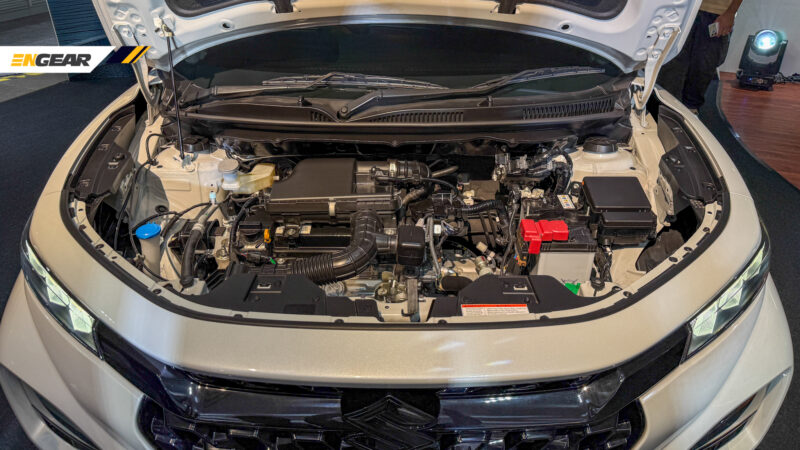
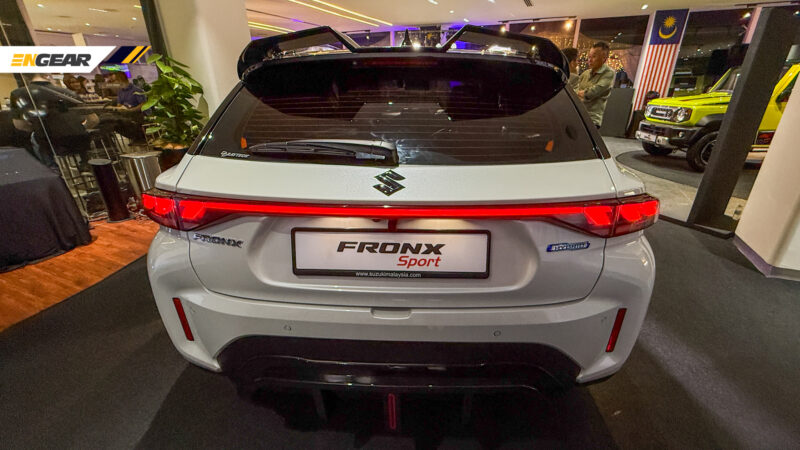
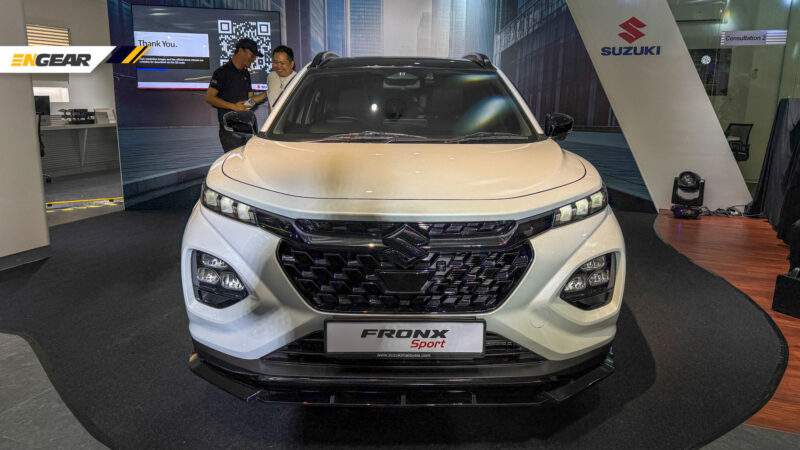
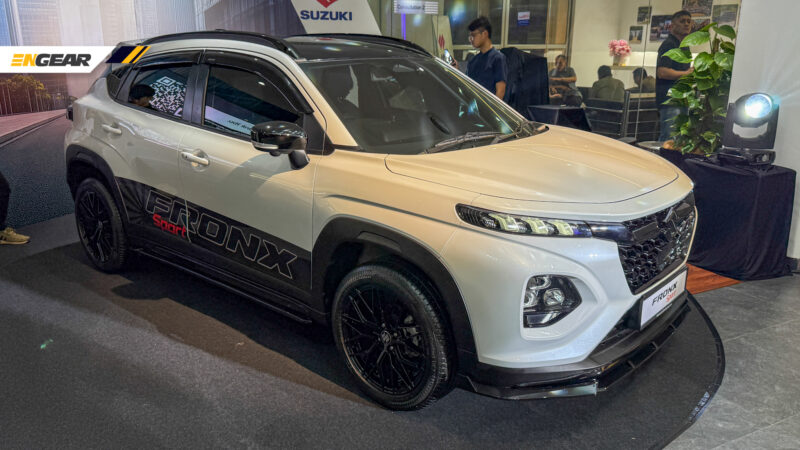
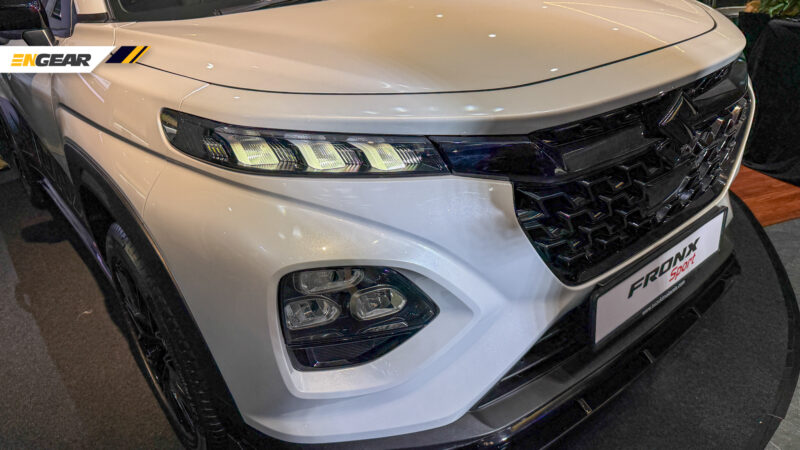
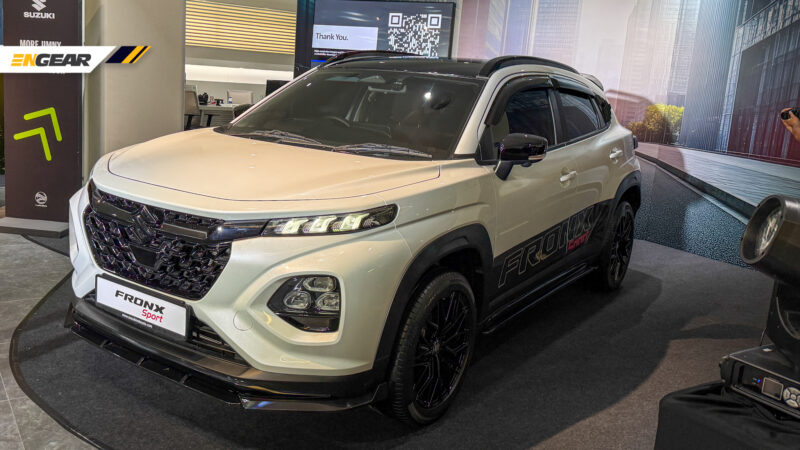
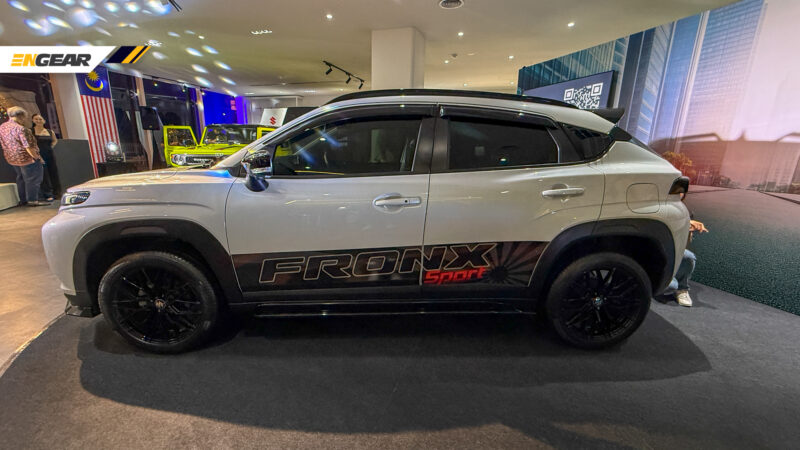
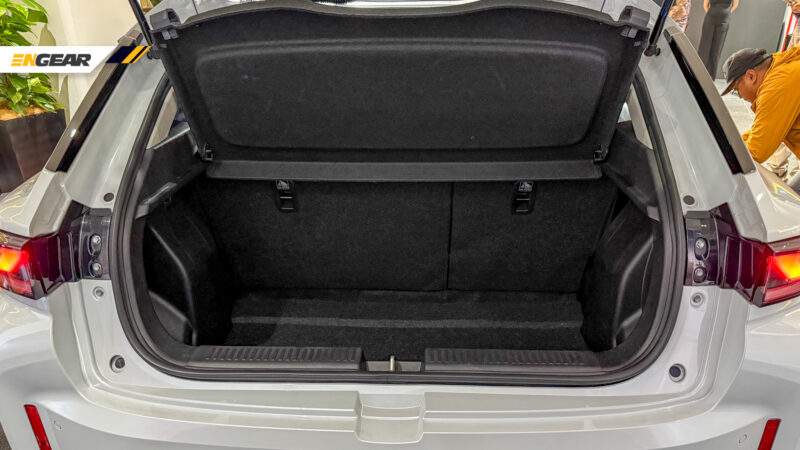
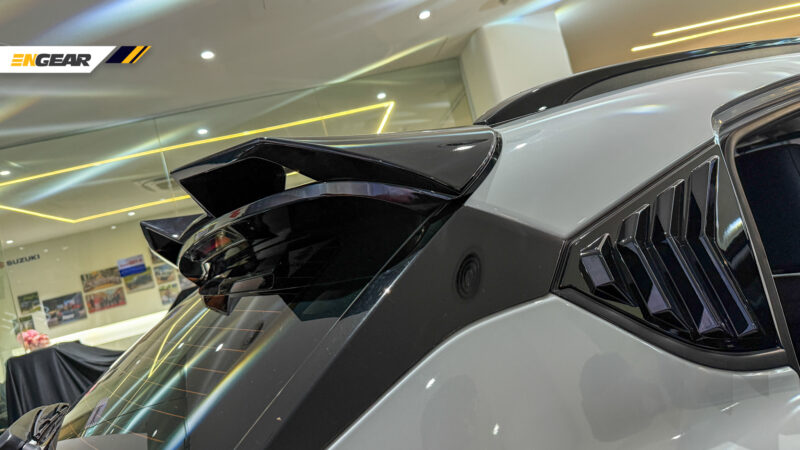
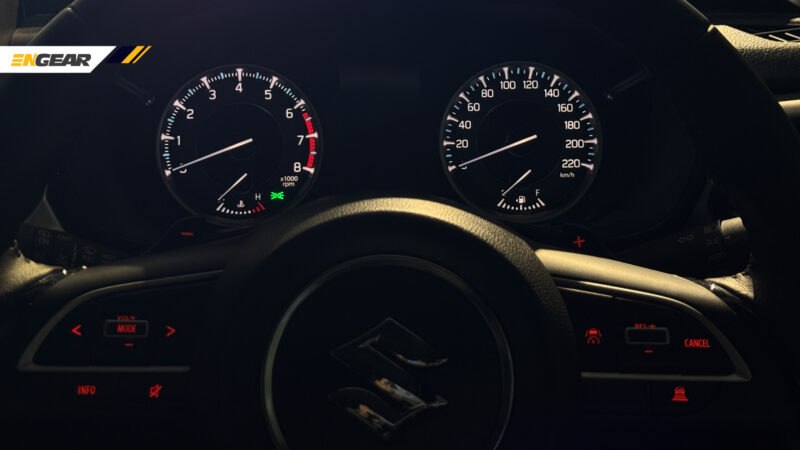
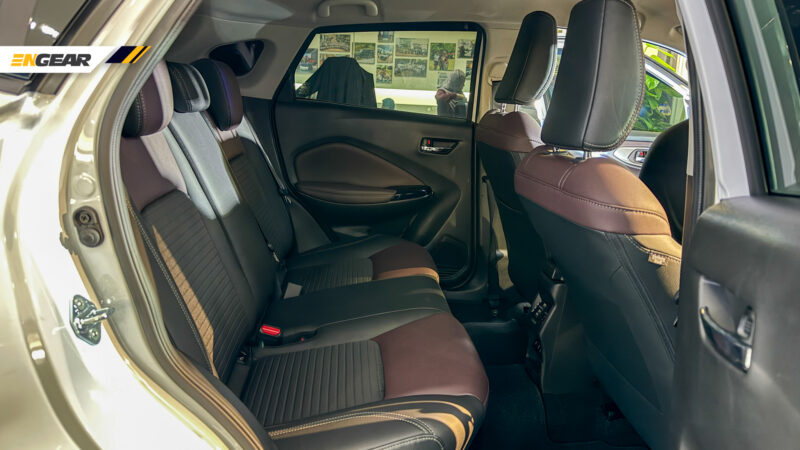
Naza Eastern Motors has expanded its offering in the B-segment SUV market by introducing the new 2026 Fronx Sport variant.
This sportier and more aggressive variant is priced at RM130,888.
Concurrent with this launch, Naza Eastern has also announced a price reduction for the standard Fronx variant, now available for RM118,888.
Specifications
The Suzuki Fronx Sport is powered by a 1.5-liter engine paired with an Integrated Starter Generator (ISG), producing 103 PS at 6,000 rpm and 138 Nm at 4,400 rpm.
This power is transmitted to the wheels through a six-speed automatic transmission.
Equipped with a lithium-ion hybrid battery and a 37-liter fuel tank, the Fronx Sport can achieve a driving range of over 700 km.
The SUV features a MacPherson strut suspension at the front and a torsion beam at the rear, providing a ground clearance of 170 mm.
Sporty Appearance
The Suzuki Fronx Sport showcases exclusive finishes that include:
Front lip spoiler
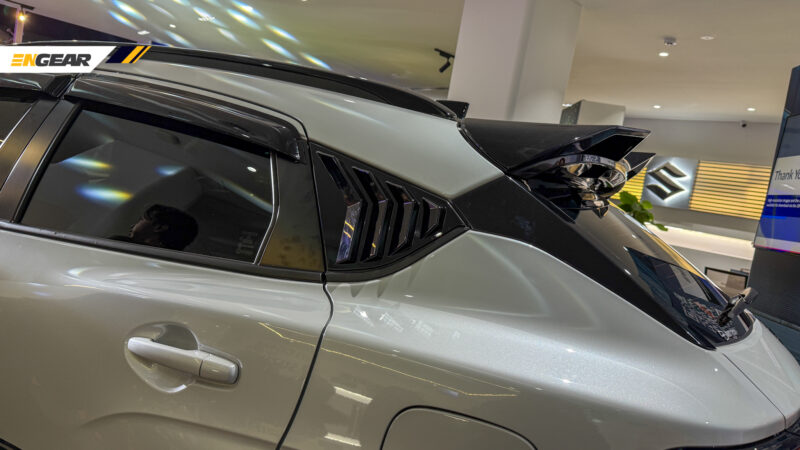
Rear spoiler
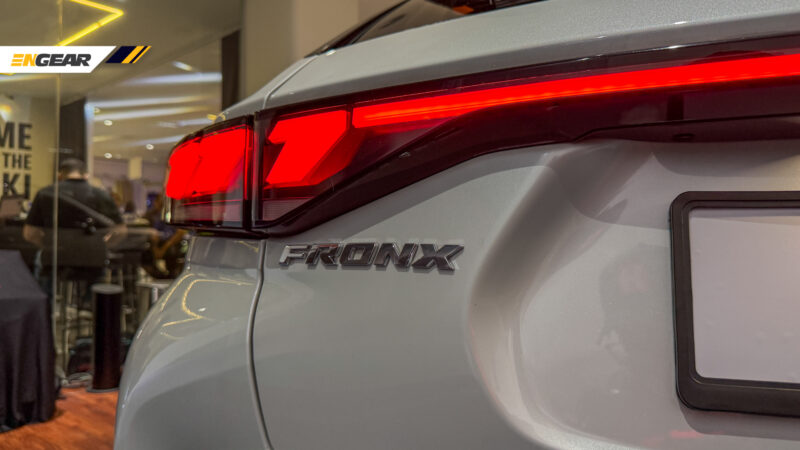
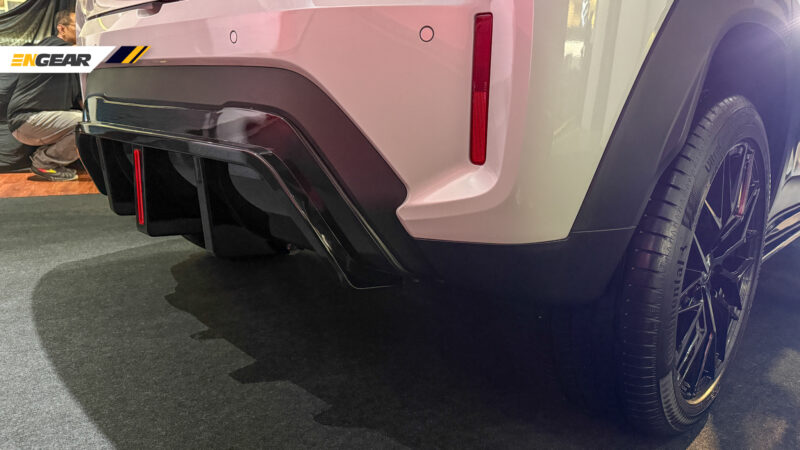
Rear bumper kit
Side skirts
Side decal finishing
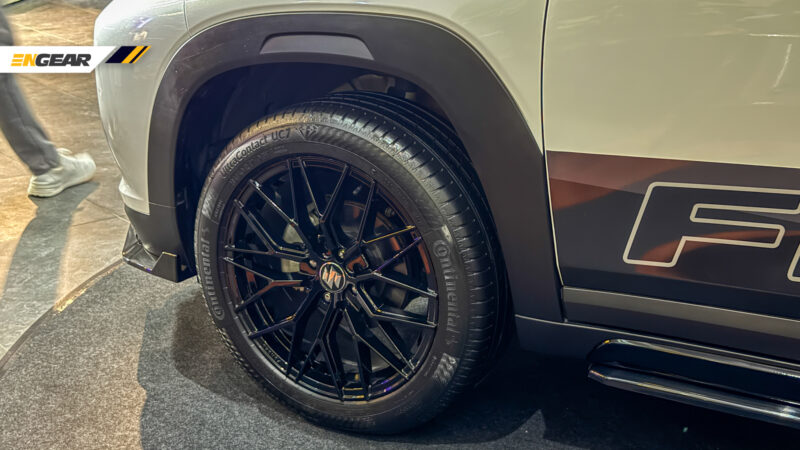
17-inch alloy wheels
Continental UltraContact UC7 tires
Special paint on the front lip, rear diffuser, side skirts, and rear spoiler
Door visors
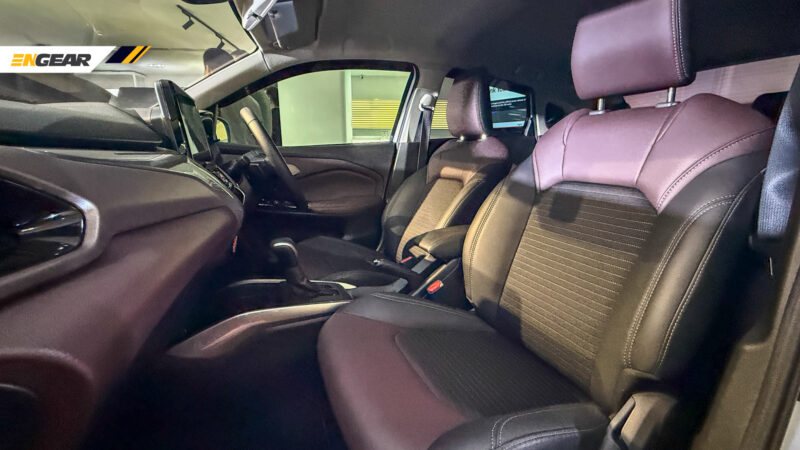
Inside the cabin, the Fronx Sport comes equipped with additional features:
Two-tone fabric/synthetic leather seats
Dashcam (DVR)
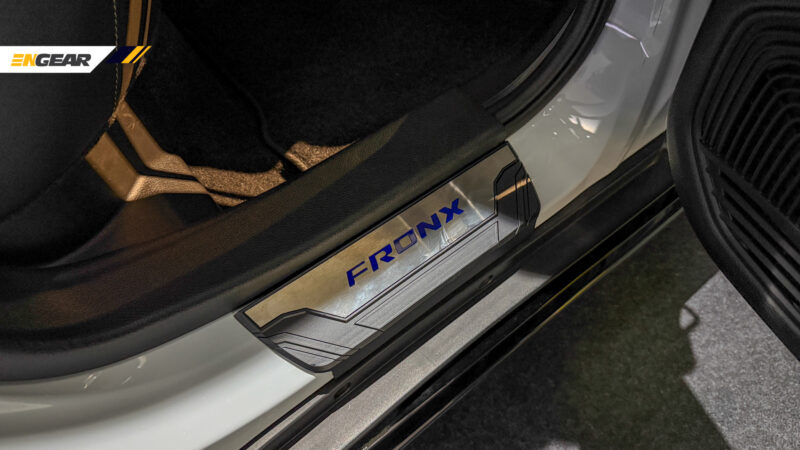
Door sill plates
Furthermore, notable features include:
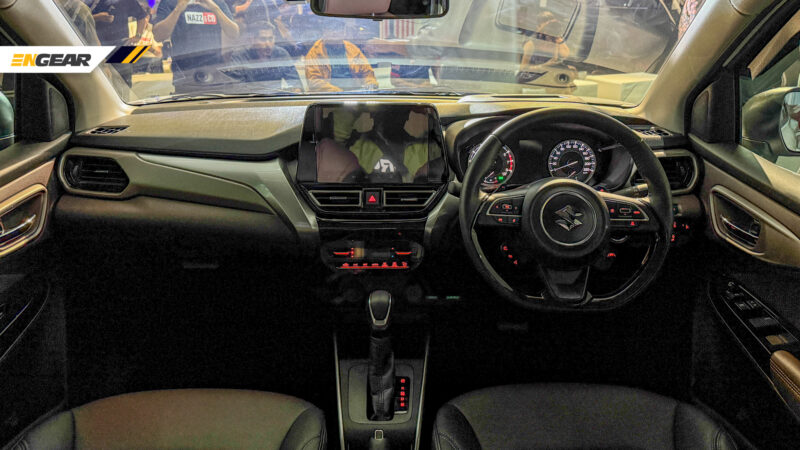
Analog meter panel with MID screen
9-inch infotainment screen
Support for Apple CarPlay and Android Auto
Head-up display
Wireless smartphone charging slot
The Fronx Sport is available in two color options: Pearl Snow White + Cool Black, and Cool Black.
Safety
As standard, the Fronx Sport is equipped with safety features such as:
Six SRS airbags
ABS, EBD, and ESC
Hill Hold Control (HHC)
Advanced Driver Assistance System (ADAS) features include:
WTC Automotive (M) Sdn Bhd as the official distributor of GAC vehicles in Malaysia has announced updates for the GS3 Emzoom model.
The cosmetic enhancements feature elements such as the Flowing Diamond Star front grille and new two-tone color options for the Premium R variant.
The Emzoom is now offered in four color choices:
Graphite Grey (with a black roof)
Super Star Silver (with a black roof)
Frost White (with a black roof)
Asphalt Black
In terms of performance, the GS3 Emzoom continues to use a 1.5-liter turbo engine that produces 177 PS and 270 Nm, paired with a 7-speed dual-clutch transmission.
Acceleration from 0 to 100 km/h is achieved in just eight seconds, with fuel consumption as low as 5.9 liters per 100 km.
Available features include a dual display screen, a panoramic sunroof, a 360-degree camera, ADAS (Advanced Driver Assistance Systems), and FAPA (Fully Automatic Parking Assistance).
The Premium R variant comes with a sport exhaust system and an aero kit.
The pricing is as follows:
GS3 Emzoom Exclusive – RM116,800
GS3 Emzoom Premium R – RM126,800
For a limited time, customers can enjoy rebates of up to RM18,500, with monthly installments starting from RM912.
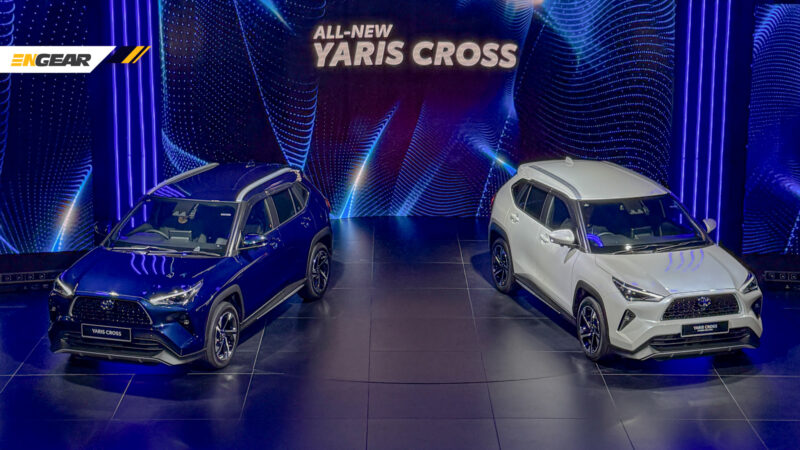
UMW Toyota Motor (UMWT) today officially marked its entry into the B-segment SUV market with the launch of the all-new Toyota Yaris Cross.
The new model is available in two distinct variants with the following retail prices:
Yaris Cross 1.5S: RM99,900
Yaris Cross 1.5S HEV: RM109,900
Following the strategy of the previously launched Vios HEV, the Yaris Cross is a locally assembled (CKD) unit produced at the Bukit Raja plant in Selangor.
Two Powertrain Options
The Yaris Cross offers consumers a choice between a traditional internal combustion engine and Toyota’s advanced fourth-generation hybrid system.
The petrol version is powered by a 1.5-liter 2NR-VE engine, delivering 106 PS and 138 Nm of torque, paired with a Continuous Variable Transmission (CVT).
The HEV (Hybrid Electric Vehicle) version features:
A 1.5L 2NR-VEX engine (91 PS / 121 Nm)
An electric motor (80 PS / 141 Nm)
A lithium-ion battery pack
Combined, the Yaris Cross HEV produces a total system output of 111 PS, managed by an e-CVT.
Dimensions
This SUV measures 4,310 mm in length, 1,770 mm in width, and 1,655 mm in height, with a wheelbase of 2,620 mm. Both variants come equipped with 18-inch wheels (215/55 R18 tires).
In terms of utility, the petrol variant offers a cargo capacity of 471 liters, while the hybrid variant provides 465 liters.
Fuel tank capacities differ slightly, with the petrol version holding 42 liters and the hybrid version equipped with a 36-liter tank.
Chassis and Handling
Built on the DNGA (Daihatsu New Global Architecture) platform shared with the Vios, Veloz, and its sibling, the Perodua Traz.
The Yaris Cross features MacPherson struts at the front and a torsion beam setup at the rear.
This configuration is engineered to balance cabin space, comfort, and stability, while providing a generous ground clearance of 210 mm.
A standout feature for urban driving is its tight turning radius of just 5.2 meters.
Exterior and Interior Features
The Yaris Cross distinguishes itself aesthetically from the Perodua Traz with a unique trapezoidal grille and specific 18-inch rim designs.
Key exterior features include:
Full LED headlamps with Daytime Running Lights (DRL)
LED taillights
Auto-folding side mirrors
Shark fin antenna
Inside, the cabin features a leather-wrapped steering wheel with tilt and telescopic adjustment, and a 7-inch digital instrument cluster with four customizable themes.
The infotainment hub is a 10.1-inch touchscreen supporting wireless Apple CarPlay and Android Auto.
Additional premium amenities include:
8-way power-adjustable driver’s seat
Full leather upholstery
Wireless smartphone charging
USB Type-C charging ports
6-speaker audio system (including 2 tweeters)
Power tailgate with a hands-free kick sensor
Safety Features
Safety is a priority, with the Toyota Safety Sense (TSS) suite coming as standard. This includes:
Pre-Collision System (PCS) & Pre-Collision Braking
Full-Speed Adaptive Cruise Control
Lane Departure Warning & Prevention
Lane Keeping Assist
Front Departure Alert
Pedal Misoperation Control
Auto High Beam
The vehicle is also equipped with six SRS airbags, ISOFIX mounts, a Panoramic View Monitor (PVM), Blind Spot Monitoring, and Rear Cross Traffic Alert.
At the Beijing Auto Show 2026, Omoda | Jaecoo showcased the new B-segment SUV model, the Omoda 04 in its actual production form.
It is expected to enter the Malaysian market as the Omoda C4, positioned below the C9 model.
Powertrain Options
The Omoda C4 will offer up to three powertrain variants.
The base version is powered by a 1.5-liter turbo petrol engine, the same as that found in the Tiggo Cross model, generating 156 PS and 210 Nm of torque.
There is also a hybrid version of the Omoda C4, known as the SHS-H, which refers to a self-charging hybrid system.
In the Chery Tiggo Cross Hybrid model, this setup consists of:
A 1.5-liter naturally aspirated Atkinson-cycle engine producing 102 PS and 125 Nm
Two electric motors delivering 204 PS and 310 Nm
Direct Hybrid Transmission (DHT)
A 1.8 kWh LFP battery pack
Finally, an electric (BEV) variant was showcased at a separate event.
Not much information is available about this model, but it is highly likely to use a setup similar to the Omoda E5.
Exterior Features
The Omoda C4 SUV features a distinctly aggressive appearance, designed especially for the younger audience.
Notable exterior features include:
Separate-type headlights
Animal claw-style daytime running lights (DRL)
Angular protective plastics on the wheel arches
Tail lights with flashy graphics
The standard version of the Omoda C4 comes with sporty 18-inch rims, while the HEV and EV versions are equipped with more aerodynamic 18-inch wheels.
Cabin Equipment
Aggressive elements are also integrated into the cabin to give it a sporty feel, aligning with the youthful spirit.
Notable cabin features include:
A three-spoke steering wheel
Vertical infotainment screen
Full-color digital cluster display
A high center console with cup holders
Wireless smartphone charging slot
Lamborghini-style start button
However, this start button feature will not be available on the C4 EV model.
Proton has announced the introduction of a new colour, Quartz Black, for the Proton X50 SUV model.
This follows the successful launch of the X50 Black Edition last March, which sold out all 200 units.
Strong Sales Momentum
Throughout March 2026, the Proton X50 continued to demonstrate strong sales momentum, with 3,265 units sold.
This solid performance has maintained its position as the most popular SUV in Malaysia for the first three months of the year, with a total of 7,571 units sold.
Proton is also offering a comprehensive after-sales service package to provide convenience and peace of mind to owners.
Among the offerings are:
Fast basic service within 90 minutes for customers who make advance bookings
Assurance that vehicles will be completed within 24 hours for comprehensive maintenance work
A replacement vehicle and free service (including labor and spare parts costs) if repairs take more than three working days
The facelifted Proton X50 was officially launched in July last year, featuring significant changes both inside and out.
It is equipped with a 1.5-liter turbocharged four-cylinder engine that produces 181 PS and 290 Nm of torque, paired with a 7-speed DCT gearbox.
For the local market, this SUV is priced as follows:
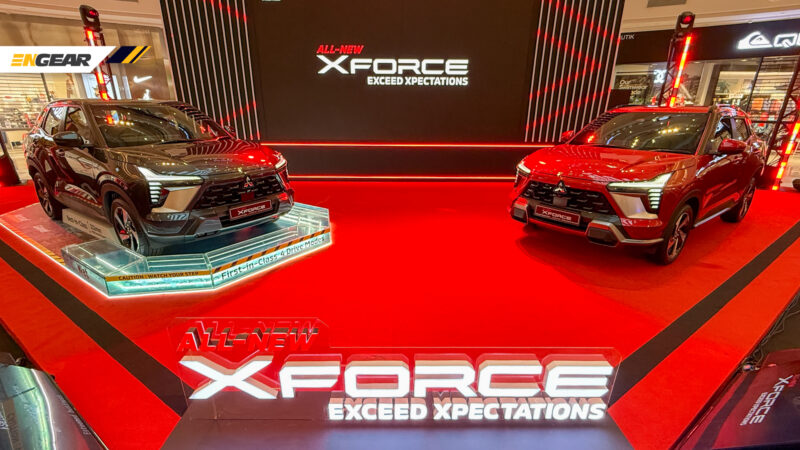
Mitsubishi Motors Malaysia has officially launched its latest SUV, the 2026 Mitsubishi Xforce.
Below is the price list for each variant offered:
Urban – RM109,980
Ultimate – RM119,980
Launch Promotions
MMM is extending the Early Bird promotion, valid until April 12, 2026, which includes:
A cash rebate of RM5,000 for early buyers
An additional cash rebate of RM1,000 for existing Mitsubishi owners or government employees
A five-year maintenance cost of only RM3,900, along with three free labor cost exemptions
The “Buy 1 Free 1” contest, where every customer who places an order before the launch in April will have a chance to take home a Mitsubishi Xforce Ultimate
MMM is also offering the following three accessory packages:
Excitement (RM4,000) – front, side, and rear body kit
Fashion Roof Rail (RM2,200)
Practical (RM700) – cargo tray & mud guard
To celebrate the Xforce launch, MMM is offering a 20% discount limited to the first 50 customers.
Xforce Specifications
The Xforce is powered by a 1.5-liter inline four-cylinder MIVEC engine (code 4A91), paired with a CVT gearbox and front-wheel drive.
It delivers a power output of 103 hp @ 6,000 rpm and a torque of 141 Nm @ 4,000 rpm.
The Xforce offers up to four driving modes: Normal, Gravel, Mud, and Wet.
In terms of dimensions, the Mitsubishi Xforce 2026 measures 4,390 mm in length, 1,810 mm in width, and 1,660 mm in height.
The wheelbase is approximately 2,650 mm, while the ground clearance is 222 mm.
This SUV also offers an approach angle of 21 degrees and a departure angle of 30.5 degrees, making it suitable for light off-road driving.
The cargo capacity is 410 liters.
Equipment
The SUV features a MacPherson strut setup at the front and a torsion beam at the rear axle.
From an external perspective, the Xforce includes features such as:
LED headlights with DRLs
LED taillights
Rear spoiler
18-inch alloy wheels
Toyo Proxes CR1 tires, size 225/50 R18
Powered tailgate (Ultimate variant only)
Inside the cabin, the Xforce comes equipped with:
Leatherette upholstery
4.2-inch digital cluster screen
8-inch infotainment screen
Wired Apple CarPlay/Android Auto support
Six speakers
Dual-zone automatic climate control
The Ultimate variant includes additional features such as:
Synthetic leather upholstery with mocha accents
Manual seat adjustment
8-inch digital cluster screen
12.3-inch Display Audio screen
Enhanced Apple CarPlay and Android Auto support
Yamaha Premium Dynamic Sound audio system with 8 speakers
USB charging ports
Ambient lighting system
Wireless smartphone charging slot
Safety
As standard, the Xforce comes with four airbags, a dashcam, and two active safety features: Blind Spot Warning (BSW) and Rear Cross Traffic Alert (RCTA).
The Ultimate variant is equipped with additional safety features:
Omoda | Jaecoo Malaysia has officially launched the 2026 Jaecoo J5 SUV for the local market, with an introductory retail price of RM102,000.
This special pricing is valid from March 5 to March 15, 2026, after which the vehicle will be priced at RM108,000.
As a B-segment SUV, the Jaecoo J5 is positioned as a more compact alternative to the existing Jaecoo J7 SUV.
Jaecoo J5 Specifications
The model is powered by a 1.5-liter turbocharged inline four-cylinder engine, capable of producing 147 PS and 210 Nm of torque.
Power is delivered to the front wheels through a Continuously Variable Transmission (CVT). The vehicle’s fuel consumption is rated at approximately 6.4 liters per 100 km.
In terms of dimensions, the Jaecoo J5 measures 4,380 mm in length, 1,860 mm in width, and 1,650 mm in height, with a wheelbase of 2,620 mm.
Among its competitors in the B-segment SUV category, the J5 shares a similar length with the Proton X50 but is slightly shorter than the Chery Omoda 5, Chery Tiggo Cross, and Honda HR-V.
However, the J5 boasts a longer wheelbase, contributing to a more spacious cabin.
The J5 offers a cargo capacity of 480 liters, which expands to 1,180 liters when the 60:40 split-folding second-row seats are stowed.
Unique to its segment, the Jaecoo J5 features MacPherson strut suspension at the front and a multi-link setup at the rear.
By comparison, most of its rivals in the B-segment SUV category utilize a simpler torsion beam configuration.
Exterior and Interior Features
In line with other Jaecoo models, the J5 features a premium exterior design inspired by British SUV brands.
To enhance its stylish image, it is equipped with 18-inch wheels wrapped in 235/55 R18 tires.
Other notable exterior features include a single-housing headlight and daytime running light setup, a prominent grille, conventional door handles, a powered tailgate, and a rear spoiler.
The cabin is equipped with an 8-inch LCD instrument cluster and a 13.2-inch 2K resolution central infotainment screen.
The system supports WiFi, Apple CarPlay, and Android Auto, complemented by an 8-speaker audio system.
Additionally, the J5 features a 1.45-square-meter panoramic glass roof and a wireless device charging slot with active ventilation.
Notably, the interior utilizes TUV-certified pet-friendly materials.
Safety Features
The Jaecoo J5 comes equipped with Level 2.5 Advanced Driver Assistance Systems (ADAS), which include the following functions:
Lane Departure Warning (LDW)
Lane Keep Assist (LKA)
Lane Departure Prevention (LDP)
Emergency Lane Keep Assist (ELK)
Blind Spot Detection (BSD)
Lane Change Assist (LCA)
Integrated Cruise Control (ICC)
Full-Speed Adaptive Cruise Control (ACC)
Departure Ahead Inform (DAI)
Forward Collision Warning (FCW)
Rear Cross Traffic Alert (RCTA)
Rear Cross Traffic Braking (RCTB)
Autonomous Emergency Braking (AEB)
Multi-Collision Brake (MCB)
Traffic Jam Assist (TJA)
Door Open Warning (DOW)
Active Speed Limiter (ASL)
Rear Collision Warning (RCW)
Evasive Steering Assist (ESA)
‘Early Bird’ Package
Omoda | Jaecoo Malaysia is also offering an ‘Early Bird’ package worth RM8,000, valid from March 5 to March 15, 2026. The package includes:
First-year insurance (valued at RM3,000)
‘Duit Raya’ rebate (valued at RM3,000)
Accessories including a subwoofer, wireless microphone, and multi-function flashlight (valued at RM2,000)
Say (or criticize) what you will about the Perodua Traz, but this is the most stylish SUV that Perodua has ever produced.
Although it arrived a bit late in the market, this twin of the Toyota Yaris Cross strives to maintain the widely recognized Perodua DNA.
It offers a spacious and practical interior, while also featuring modern technology.
We had the opportunity to test drive this SUV for several days, and here are our findings:
The Bold Design of the Traz
There’s no denying that the Perodua Traz shares many components with its twin, the Toyota Yaris Cross.
After all, it uses the same platform, the DNGA-B, as the Toyota Vios, Toyota Velos, and Perodua Alza.
However, its exterior can be distinguished by its unique grille design and more aggressive 17-inch rims.
I particularly like the Traz’s boxy and angular appearance, especially when viewed from the rear—it resembles a Lexus SUV with a Perodua badge.
For those wanting a more eye-catching look, the GearUp body kit is available.
Dimensions
In essence, the Traz presents much larger dimensions compared to the Ativa.
With a length of approximately 4,310 mm and a wheelbase of 2,620 mm, the Traz offers a spacious and comfortable cabin.
Its ground clearance of 210 mm is sufficient for Malaysian roads.
One of Traz’s main advantages is its substantial cargo space, around 471 liters.
Fold down the second-row seats, and you will have an even larger loading area with a nearly flat floor.
With a turning radius of just 5.2 meters, it excels in maneuverability, especially in tight urban areas.
Modern Cabin
Completing the sporty image of the Traz is a driver-oriented dashboard layout.
Honestly, the presence of old-school features like analog meters is something I truly appreciate.
They are simple and easy to read.
There is also a 4.2-inch TFT display, which is adequate for showing the necessary information.
The control buttons are large and easily accessible.
Thus, I had no issues reaching the controls and activating features while driving.
The sound quality from the Traz’s audio system is also satisfactory for someone who is not an audiophile.
It offers support for Apple CarPlay and Android Auto on the 9-inch screen, facilitating daily tasks that require navigation assistance.
However, Perodua should consider reducing the use of red accents on the dashboard, as they can be perceived as excessive.
Driving Experience
“Tekan, tekan pergi” is not the motto of the Traz, especially when compared to the turbocharged Ativa.
The Traz shares the same 1.5-liter (2NR-VE) engine found in the Perodua Myvi and Toyota Vios.
So don’t expect lightning-fast acceleration at traffic lights when the light turns green.
With a D-CVT transmission, the Traz is designed for a more relaxed driving experience, prioritizing comfort.
If you seek more energetic acceleration, simply switch to Power mode.
Even without a turbo engine, I prefer the driving dynamics of the Traz, which feel more stable compared to the Ativa.
The braking performance is also reassuring, although it could benefit from sharper steering tuning.
The handling feels somewhat stiff and less responsive than expected, particularly at higher highway speeds.
However, this is not a significant issue for most of Traz’s target demographic.
Thanks to its stable chassis, the Traz is actually enjoyable to drive through winding roads, even with standard Proxes CR1 tires.
Body roll is minimized, and at permissible speeds, the Traz can maintain its line through curves.
Comfort
One thing to commend is that the seats in the Traz are spacious and comfortable for adult passengers, both in the front and rear.
Unlike the Ativa, where the driver must sit upright, the driving position in the Traz feels more natural.
Honestly, these are among the best seats Perodua has ever produced.
With extended thigh support, they help reduce fatigue, especially during long journeys.
Manual adjustments? Not an issue.
At least, it decreases reliance on electronic devices in this SUV.
The NVH (Noise, Vibration, Harshness) aspect is also quite good, with the cabin remaining comfortably quiet.
Occasionally, focus may be slightly disrupted by engine noise when pushed hard.
The suspension tuning feels rather good for a Perodua, suitable for most road surfaces in Malaysia.
It absorbs road imperfections well, filtering and reducing vibrations to ensure a comfortable cabin experience—occasionally feeling like a rally car.
Safety
With features like ADAS, a 360-degree camera, a dashcam, and a five-star ASEAN NCAP rating, the Traz is a model worth considering.
However, among the features listed, there’s one downside: the absence of adaptive cruise control (ACC).
This omission can make the steering wheel feel somewhat empty, potentially deterring many prospective buyers.
However, try counting on your fingers how many times you really need (and activate) that feature while driving. Visits back to the hometown are occasional, right?
Conclusion
There are many options available in the B-segment SUV market right now.
In the price range of around RM100,000, there are SUVs that are overly powerful, overly sophisticated, and overly fuel-efficient.
Such features indeed excite the majority of today’s buying demographics, particularly the younger generation.
However, we shouldn’t overlook the group of consumers still seeking a modern vehicle with simpler, durable, and reliable technology, and more importantly, a lower ownership cost.
Therefore, the Perodua Traz is the ideal answer if you find yourself at a crossroads, searching for a suitable everyday SUV.
Kia has officially revealed the second generation of the B-segment Kia Seltos SUV for the global market.
Unlike its predecessor, the new Seltos is built on the K3 platform, contributing to its larger dimensions and aggressive image that aligns with Kia’s latest design language.
Here are some key facts you need to know:
1. Dimensions
The 2026 Kia Seltos measures 4,430 mm in length, 1,830 mm in width, and 1,600 mm in height, with a wheelbase of 2,690 mm.
These larger dimensions also provide a more spacious cabin, with cargo space now increased to 536 liters.
Depending on the variant, the Kia Seltos can be equipped with wheel sizes ranging from 16 inches to 19 inches.
2. Engine, Transmission, Drivetrain & Suspension
To start, the 2026 Kia Seltos will be offered with two engine options: a 1.6-liter T-GDI engine producing either 180 PS/265 Nm or 193 PS/265 Nm, and a 2.0-liter NA engine generating 149 PS and 179 Nm.
Kia has also listed various transmission options including a six-speed manual, six or seven-speed DCT, eight-speed automatic, and CVT.
The Kia Seltos will be available in front-wheel drive with a MacPherson/torsion beam suspension setup, while the AWD version will come with a multi-link setup at the rear.
A hybrid variant is expected to follow next year, featuring vehicle-to-load (V2L) functionality and Kia’s 3.0 smart regenerative braking system.
Driving modes include Eco, Normal, and Sport, along with a Terrain Mode (Snow, Mud & Sand) specifically for the AWD variant.
3. Aggressive Design
The Kia Seltos adopts the Opposites United design philosophy, presenting an image consistent with modern Kia vehicles.
Unique features include:
Vertical LED daytime running lights (DRL)
Headlights hidden within a wide grille structure
A floating roof design
Door handles integrated into the body
Vertical taillights connected by a horizontal LED bar
There is an X-Line variant that features dark gunmetal accents for a more rugged appearance, while the GT-Line variant has a sportier look with body color accents.
Three new colors have been introduced: Iceberg Green, Gravity Gray, and Magma Red.
4. Cabin
The layout of the cabin in the 2026 Kia Seltos more closely resembles offerings in Kia’s electric vehicles, featuring a dual 12.3-inch display and dedicated climate control panels.
The Seltos also incorporates Shift-by-Wire (SBW) technology, placing the gear shift lever on the steering column to enhance the practicality of the center console.
Other features included in the Seltos cabin are:
A panoramic sunroof
64-color ambient lighting
24-degree adjustable second-row seating
Harman Kardon/Bose audio system
5. Safety
Finally, the 2026 Kia Seltos is equipped with a range of advanced safety features (ADAS) that include functions such as:
Following the launch of the QV-E electric SUV earlier this month, Perodua has now unveiled another new SUV named the Perodua Traz.
Available in two variants (X and H), the 2026 Perodua Traz is priced between RM76,100 and RM82,000.
Here are some key facts you need to know:
1. Fourth Model Using DNGA Platform
The Perodua Traz is the fourth model from Perodua to adopt the DNGA (Daihatsu New Global Architecture) platform, following the Axia, Ativa, and Alza.
It is worth noting that the Traz is a sibling to the Toyota Yaris Cross, which is sold in several major Southeast Asian markets.
2. Dimensions
The Traz is positioned between the Ativa and Alza models, targeting middle-income consumers who wish to upgrade from a sedan/hatchback to a more practical and stylish SUV.
In terms of size, the Traz measures 4,310 mm in length, 1,770 mm in width, 1,655 mm in height, with a wheelbase of 2,620 mm.
Compared to the Ativa, the Traz is 245 mm longer, 60 mm wider, 20 mm taller, and has a wheelbase that is 95 mm longer.
The ground clearance is 210 mm, while the turning radius is a compact 5.2 meters.
With a cargo space length of 955 mm, the Traz can accommodate up to 471 liters of goods.
3. Engine
The Traz appears to share the same 2NR-VE engine as the Perodua Myvi and Alza, featuring a 1.5-liter naturally aspirated unit that generates 105 PS at 6,000 rpm and 138 Nm of torque at 4,200 rpm.
Power is transmitted to the front wheels through a Dual Mode CVT (D-CVT) transmission, which includes a manual gear-shifting function.
There are three driving modes: Normal, Eco, and Sport.
With a fuel tank capacity of 42 liters, the Traz offers a fuel consumption rate of as low as 4.69 liters per 100 km (21.3 km/liter).
4. Exterior
The Traz comes equipped with features such as 17-inch alloy wheels (tyres 215/60), LED projector headlights along with LED daytime running lights (DRL), auto-folding side mirrors, and LED taillights styled like those of Lexus.
The top variant includes welcome lights, LED fog lights, and an electric tailgate with a foot sensor.
Four colors are available: Cranberry Red, Ivory White, Glittering Silver, and Granite Grey.
For the H variant, buyers can opt for a two-tone color package in Glittering Silver or Electric Blue with a black roof.
5. Interior
Standard features of the Traz include an analog meter, a 4.2-inch TFT display, a 9-inch Display Audio screen, Apple CarPlay and Android Auto support, a tilt & telescopic adjustable steering wheel, a climate control panel with a digital screen, and air vents for the second row.
Cargo space is equipped with a tonneau cover.
The X variant offers the following features:
Four speakers
Fabric seats with partial graphic design
Urethane steering wheel
Meanwhile, the H variant includes:
Two additional speakers (six in total)
Automatic climate control
Leather-wrapped steering wheel
Keyless smart entry system
Safety
The Traz includes up to six airbags, ABS, EBD, BA, an electric parking brake (EPB) with a Hold function, Vehicle Stability Control (VSC), ISOFIX anchor points, rear passenger seatbelt reminder, reverse camera, as well as front and rear parking sensors.
Advanced safety features comprise:
Pre-Collision Warning
Pre-Collision Brake Assist (for vehicles and pedestrians)
Forward Movement Warning (FDA)
Pedal Misoperation Control (PMC)
Lane Departure Warning (LDW)
Lane Departure Prevention (LDP)
Blind Spot Monitoring (BSM)
The 360-degree surround camera and dashboard camera (DVR) are exclusive to the H variant only.
In conjunction with the Omoda | Jaecoo Carnival held at Desa ParkCity, Omoda | Jaecoo Malaysia has officially showcased the new Jaecoo J5 model, which is set to launch shortly.
As a B-segment SUV, the Jaecoo J5 will be positioned as a smaller alternative to the existing Jaecoo J7 SUV.
Here are five key facts about the Jaecoo J5 you should know:
Dimensions
The Jaecoo J5 measures 4,380 mm in length, 1,860 mm in width, and 1,650 mm in height, offering a wheelbase of 2,620 mm.
Among competitors in the B-segment SUV category, the J5 has the same length as the Proton X50, while being slightly shorter than the Chery Omoda 5, Chery Tiggo Cross, and Honda HR-V.
However, the J5 benefits from a longer wheelbase, contributing to a more spacious cabin.
Additionally, the J5 boasts a cargo space of 480 liters, which can expand to 1,180 liters when the second-row seats are folded down in a 60:40 split.
Engine
The J5 is powered by a 1.5-liter turbocharged inline four-cylinder engine that generates 147 PS and 210 Nm of torque.
This power is transmitted to the front wheels via a CVT transmission, with a fuel consumption rating of approximately 7.5 liters per 100 km.
Chassis
Unique in its segment, the Jaecoo J5 features a MacPherson strut suspension setup for the front axle and a multi-link configuration at the rear.
In comparison, most competing B-segment SUV models are equipped with simpler torsion beam setups.
Exterior
Like other Jaecoo models, the J5 showcases a premium exterior inspired by British SUV design.
All four corners are fitted with 18-inch rims, along with 235/55 R18 tires for a more stylish appearance.
Other notable features include headlights with integrated daytime running lights in a single housing, a relatively large grille structure, conventional door handles, and a rear spoiler.
Interior
The J5’s cabin comes equipped with amenities such as an 8-inch LCD instrument cluster, a 13.2-inch central screen with 2K resolution supporting WiFi, Apple CarPlay, and Android Auto, as well as an 8-speaker audio system.
The materials used in the J5 include pet-friendly finishes certified by TUV, alongside ADAS Level 2.5 features and a 540-degree surround camera system.
Set to be launched soon, the Jaecoo J5 is estimated to be priced around RM120,000.
Will this new Jaecoo model be able to compete with other sub-compact SUV models?
ASEAN NCAP has announced that Toyota Yaris Cross has successfully achieved a five-star rating in the new vehicle assessment tests conducted.
In the evaluation, the Toyota Yaris Cross received an overall score of 83.02 points, assessed based on four categories:
Adult Occupant Protection (AOP) – 36.36/40.00
Child Occupant Protection (COP) – 17.32/20.00
Safety Assistance (SA) – 16.89/20.00
Motorcycle Safety (MS) – 12.21/20.00
Depending on the market, the Toyota Yaris Cross, specially designed for the ASEAN market (excluding Singapore, which receives the TNGA Yaris Cross model), is equipped with standard safety features such as six airbags, Electronic Stability Control (ESC), ABS, seatbelt reminder (SBR) for front and rear passengers, and pedestrian protection technology.
Several advanced functions are also included, such as Autonomous Emergency Braking (AEB), Blind Spot Detection (BSD) for both left and right sides, Lane Departure Warning (LDW), Forward Collision Warning (FCW), Lane Keeping Assistance (LKA), and Automatic High Beams (AHB).
Take a look at the image above. Malaysia is listed in the production schedule dedicated to the ASEAN market.
Does this mean the Yaris Cross will be arriving in Malaysia soon?
Proton has officially launched the facelifted 2025 version of the B-segment SUV, the Proton X50, for the local market.
Unlike its predecessor, the 2025 X50 features a fresher look, a new engine, and significant changes to the cabin space.
Starting with the engine, the X50 now boasts a 1.5-liter turbocharged inline four-cylinder engine that generates 181 PS and 290 Nm of torque.
The seven-speed dual-clutch transmission (DCT) allows it to accelerate from 0 to 100 km/h in just 7.6 seconds.
The facelifted X50 is also reported to be 4.7 percent more fuel-efficient.
Notable exterior changes include new headlights and bumpers, redesigned taillights, new alloy wheels, and five available color options, including Teal Bayou Green.
The cabin layout has also been updated, resembling more closely that of the e.MAS 7.
It includes a separate digital cluster display, a 14.6-inch central screen that now supports Apple CarPlay and Android Auto, a transmission lever on the steering column, wireless device charging, and voice command support in Malay.
Safety features have been enhanced with new functions such as a rear side radar system (RSRS), automatic parking assistance (APA) with a 360-degree HD camera, as well as a 180-degree transparent under-vehicle display.
For the local market, the 2025 Proton X50 is priced as follows:
Proton X50 Executive – RM89,800
Proton X50 Premium – RM101,800
Proton X50 Flagship – RM113,300
Proton also announced an exciting package featuring a cash rebate of RM4,000 for the first 10,000 customers, bringing the sale price of this facelifted X50 down to as low as RM85,800 for the Executive variant, RM97,800 for the Premium variant, and RM109,300 for the Flagship variant.
Additionally, five special packages are available for the first 10,000 customers, which include:
Pro-Warranty: A five-year warranty with unlimited mileage and free labor for six service visits.
Pro-Connect: A data package of 2GB per month for five years.
Pro-Trade-In: Trade-in support of up to RM2,000.
Pro-Finance: Interest rates as low as 2.35% per year for a five-year financing period, or 2.38% per year for a seven-year period.
Honda Malaysia has officially unveiled their best-selling B-segment SUV, the updated 2025 Honda HR-V.
This facelift version brings cosmetic changes that make it more prominent compared to competitors such as the Proton X50 and Chery Tiggo Cross.
Here are some key details you need to know:
1. Exterior Appearance
The changes in the HR-V facelift include a larger and wider grille, front headlights now equipped with active cornering light, and 18-inch alloy wheels.
At the rear, the main light units feature more refined graphics, complemented by a full-width LED light bar.
2. Interior Cabin Changes
The dashboard layout has not changed much, aside from the addition of new storage space located beneath the air conditioning control knob.
These changes help the dashboard of the HR-V facelift appear more balanced.
Additionally, the eight-inch center display now supports wireless Apple CarPlay and Android Auto, along with a wireless Qi charging slot.
3. Engine Options
Like the previous offerings, the Honda HR-V facelift continues to be available with three engine options.
The base S version comes with a naturally aspirated 1.5-liter engine producing 121 PS and 145 Nm of torque, while the E and V variants are powered by a turbocharged 1.5-liter VTEC engine delivering 181 PS and 240 Nm of torque.
The hybrid variant features a 1.5-liter Atkinson cycle engine (107 PS/131 Nm) paired with an electric motor producing 131 PS and 253 Nm, combined with an e-CVT transmission.
4. Safety Features
As standard, all variants of the Honda HR-V now come equipped with Honda Sensing safety features, including:
Lane Departure Warning (LDW)
Lane Keeping Assist (LKA)
Collision Mitigation Braking System (CMBS)
Forward Collision Warning (FCW)
Road Departure Mitigation (RDM)
Adaptive Cruise Control (ACC)
High Beam Assist
Low-Speed Follow (LSF)
Vehicle Movement Warning
Other features include Honda LaneWatch, a rearview camera with multiple angle settings, seatbelt reminders, and ISOFIX mounts.
5. Accessory Packages
An array of Modulo accessory packages is available for the Honda HR-V, including a front spoiler, side trim, rear lower spoiler, and black emblems.
Buyers can also choose from the Urban RS Package, Smart Urban Package, Utility Package, and Protection Package.
Who would have thought that this agile little crossover from Lexus was a direct response to a request from Akio Toyoda, the driving force behind Toyota?
During the early stages of development, Akio, also known as Morizo, asked the R&D team to create a casual car that could be driven on weekends, much like a beloved pair of sneakers.
The result is a luxurious compact crossover with an attractive design and a fun driving experience – the Lexus Breakthrough Crossover, or LBX.
The Lexus LBX is the smallest production car ever produced by Lexus and is positioned below the Lexus UX.
Although it is built on the GA-B platform, which serves as the foundation for the European market Yaris Cross, the LBX is more than just a badge-engineered product.
Design
Compared to the European specification Yaris Cross, the LBX has a more robust appearance.
This is achieved through more rounded wheel arches, wider and more pronounced fenders, and larger tire sizes.
Moreover, the shoulder line of the LBX is lower compared to the Yaris Cross, creating an almost snowman-like appearance from the front, side, and rear views.
Masahiro Sasaki, a racer and Toyota test driver, explains that this design gives the LBX a more balanced look and a lower center of gravity.
As a result, the LBX appears sturdy even when stationary in a parking spot, and even more so when driven on the road.
Interior Space
For me, the Lexus LBX is best described as a casual car to drive on weekends without compromising practicality.
Yes, the rear passenger space may seem small, and it is better suited for children or petite adults.
As for cargo space? It offers about 315 liters, which is ample for grocery shopping. Alternatively, if you fold down the second-row seats, you will have a cargo area of up to 992 liters.
Lexus seems to have focused heavily on the Tazuna concept, especially in the driver’s cockpit.
There are not many physical function buttons; only essential functions are retained.
The intention? To ensure that the driver’s attention remains on the road.
The control buttons on the steering wheel may appear vacant without any functions, but in reality, you can easily set shortcut buttons for various operations.
You’ll just need to keep an eye on the head-up display to see what operations are being activated or deactivated, such as adjusting the fan speed or changing the music playing.
Initially, it may take some time to get used to this setup, but over time, I have come to prefer this method as it minimizes eye movement while driving.
Additionally, the Lexus LBX offers plush seating that is comfortable and firmly supports the driver – a feature that’s hard to find in any car in a similar segment.
The 9.8-inch central screen displays easily accessible menus and supports connections to Apple CarPlay and Android Auto.
The 12.3-inch digital cluster screen is also easy on the driver’s eyes, and most importantly, the analog meter theme is still present!
The start drive button is positioned fairly high next to the instrument cluster, making it easy for the driver to see and reach.
Honestly, this is exactly what I expect from a Lexus: a luxury car that still prioritizes the needs of the driver.
Modern Features for Convenience
Inside the LBX cabin, you will find up to four USB Type-C charging ports, along with a wireless Qi charging slot for smart devices.
A Mark Levinson audio system with 13 speakers is ready to accompany you during spirited weekend drives.
Door operations are made easy with the e-Latch system; simply press the lever on the door panel (as well as the door handle outside) with just one finger, and the door will open.
Although the center console appears somewhat narrow for fitting two arms at once, it is still equipped with the necessary operational buttons for the driver.
Hybrid Engine with EV-like Behavior
One of the most exciting aspects of driving the Lexus LBX is its powerful hybrid engine performance.
Unlike typical Chinese hybrid cars that use turbo engines, the LBX offers a naturally aspirated (NA) 1.5-liter hybrid engine with the code M15A-FXE.
This engine, with an output of 90 hp and 120 Nm of torque, is paired with an electric motor producing 93 hp and 185 Nm, resulting in a combined output of around 136 hp.
The efficient eCVT transmission ensures that every brisk acceleration in the LBX can be fully enjoyed by the driver, especially when taking off from traffic lights or toll plazas.
After enjoying the curves, I returned to a more relaxed pace, navigating the central roads. Most of the time, the vehicle prioritized EV driving mode, creating a quieter and more comfortable atmosphere.
At times, I recorded a zero-emission driving ratio of 50 percent over a distance of 78 km.
Handling and Comfort, Perfectly Balanced!
As standard, the Lexus LBX features a MacPherson strut setup in the front, complemented by a simpler torsion beam system in the rear.
On paper, it may seem commonplace, similar to B-segment SUVs currently available in the market.
However, what sets the LBX apart is Lexus’s tuning of its handling, which distinguishes its performance from other SUVs.
During my test drive, I found it difficult to pinpoint negatives; the LBX felt stable and glued to every corner while effectively absorbing road imperfections.
In short, it strikes a balance between handling stability and driving comfort, further enhanced by the Vehicle Braking Posture Control function to reduce pitch and roll effects.
Additionally, the steering responsiveness is sufficiently tactile, adhering to every command from the driver without feeling overly light.
The harmonious integration of its chassis with a short wheelbase, powerful engine, efficient transmission, and suspension makes the Lexus LBX a remarkable product in its segment.
It’s hard to describe this feeling in words; you need to experience the LBX first-hand if given the chance.
The sound of the three-cylinder engine is also minimal, merely a whisper in your ears, especially when the accelerator is pressed hard. However, most of the time, the cabin remains quiet and comfortable.
Safety Features
As standard, the LBX comes equipped with safety features, including eight airbags, as well as the Lexus Safety System+, which encompasses functions such as:
Autonomous emergency braking
Adaptive cruise control with stop-and-go functionality
Lane-keeping assistance
Active steering assistance
Traffic sign recognition system
Blind spot monitoring system
Door opening warning
Automatic high beam assist
Conclusion
With a price tag of RM268,888, I must admit that the LBX is not a luxury car designed for everyone, nor is it suitable as a first car.
It has drawbacks that may be difficult to compromise on; however, it offers a package that can bring a smile to the driver after a long week of driving an SUV or MPV.
Much like a favorite pair of shoes, it is perfectly suited for when you need it.
Specifications for the Lexus LBX (RM268,888)
Engine: 1.5-liter inline three-cylinder NA (code M15A-FXE)
Chery Malaysia has officially launched the new B-segment SUV, the Chery Tiggo Cross 2025, for the local market.
Here is a brief overview of what you need to know about this competitor to the Proton X50 and Honda HR-V:
Dimensions
The Chery Tiggo Cross measures 4,318 mm in length, 1,830 mm in width, 1,670 mm in height, and has a wheelbase of 2,610 mm.
The cargo space is 380 liters, or 350 liters for the hybrid version.
As standard, the Chery Tiggo Cross 1.5T comes with 18-inch wheels, while the HEV version is equipped with 17-inch wheels.
Engine
The Chery Tiggo Cross is powered by a 1.5-liter turbo engine producing 147 PS and 210 Nm of torque, matched with a six-speed DCT transmission.
Fuel consumption is approximately 6.3 liters per 100 km.
The Chery Tiggo Cross HEV combines a 1.5-liter naturally aspirated engine with 96 PS and 120 Nm of torque with an electric motor providing 204 PS and 310 Nm of torque, a 1.8 kWh battery pack, and a hybrid DHT transmission.
The HEV version offers a 0-100 km/h acceleration time of 8.9 seconds with a fuel consumption rating as low as 5.4 liters per 100 km.
Suspension & Brakes
Both versions of the Chery Tiggo Cross are equipped with MacPherson strut front suspension and a torsion beam at the rear.
The braking system consists of vented discs for the front axle and solid rotors for the rear axle.
Exterior Features
As standard, the Chery Tiggo Cross includes features such as LED headlights, LED daytime running lights (DRL), LED taillights, roof rails, and a sporty roof spoiler.
Additionally, it features automatic lighting and a “Follow Me Home” function.
Interior Space
For the interior, the Chery Tiggo Cross offers features such as a dual 10.25-inch screen with Apple CarPlay and Android Auto support, a 540-degree surround camera system, six speakers, and a six-way adjustable driver’s seat with lumbar support.
Other features include ambient lighting, a 15W wireless smartphone charging slot, dual-zone automatic climate control, remote start assist, and keyless entry.
Safety Features
The Chery Tiggo Cross 1.5T is equipped with six airbags, passive safety assistance features (ESP, HAC, EBA, TCS), a tire pressure monitoring system (TPMS), and several advanced driver assistance systems (ADAS) including:
Lane Departure Warning (LDW)
Blind Spot Monitoring System (BSD)
Rear Traffic Cross Alert (RTCA)
Lane Keep Assistance (LDP)
Adaptive Cruise Control (ACC)
Front Collision Warning (FCW)
Autonomous Emergency Braking (AEB)
Meanwhile, the Tiggo Cross HEV has an additional airbag and comes with ADAS features such as:
Door Opening Warning (DOW)
Rear Collision Warning (RCW)
Rear Traffic Brake System (RTBS)
Lane Change Assistance (LCA)
Multiple Collision Braking (MCB)
Traffic Jam Assistance (TJA)
Integrated Cruise Control (ICC)
Intelligent Speed Assistance (ISA)
Pricing
Chery Tiggo Cross 1.5T is sold at a starting price of RM88,800, while the Chery Tiggo Cross HEV is offered at a special price starting from RM99,800, valid for the first 2,000 customers until September 30, 2025.
Proton has officially opened bookings for the facelifted model of its B-segment SUV, the 2025 X50.
The first 10,000 customers will receive an exclusive offer that includes a cash rebate of RM1,000, a limited edition Touch ‘n Go card, as well as a “Gempak” offer to be announced during its official launch.
At this time, Proton has yet to disclose the sales price of the X50 2025, but it is reported that there are three main variants: Executive, Premium, and Flagship.
As standard, all three variants are powered by a 1.5-liter turbocharged inline-four engine that generates 181 PS at 5,500 rpm and 290 Nm of torque at 2,000-3,500 rpm.
This power is transmitted to the front wheels through a seven-speed dual-clutch transmission (DCT).
The acceleration from 0 to 100 km/h is now as quick as 7.6 seconds, and it is said to be 4.7% more fuel-efficient compared to the previous model.
Here are the new details for each variant:
X50 Executive
New LED headlights with daytime running lights
New LED taillights
New front grille
New 17-inch alloy wheels
New dashboard
Center console with a storage space of 10 liters
14.6-inch infotainment screen and 8.88-inch cluster screen
Hi Proton voice command support in Malay
Apple CarPlay and Android Auto support
Fabric seats
Six speakers
Automatic climate control with N95 cabin filter
Six airbags
Rearview camera
Lane Change Assist (LCA), Rear Collision Warning (RCW), Rear Cross Traffic Alert (RCTA), Door Opening Warning (DOW)
X50 Premium (features additional to the above)
18-inch alloy wheels
Powered tailgate
Roof rails
Red brake calipers
72-color ambient lighting system
Leatherette upholstered seats
HD 360-degree camera + 180-degree transparent display
Autonomous Emergency Braking (AEB), Forward Collision Warning (FCW), Adaptive Cruise Control (ACC), Intelligent Cruise Control (ICC), Lane Departure Warning and Prevention (LDW & LDP), Lane Centering Control (LCC), Traffic Sign Information (TSI), High Beam Assist (IHBC), and Tire Pressure Monitoring System (TPMS)
X50 Flagship (features additional to the above)
Sporty roof spoiler
Two-tone exterior finish
Gloss black finish on side mirrors
Semi-transparent sun visor
Wireless charging slot
Panoramic glass roof
Two-tone interior finish
Auto Park Assist (APA)
Five colors are offered for the Proton X50: Snow White, Passion Red, Jet Grey, Armour Silver, and the new Teal Bayou Green.
According to Proton, the X50 2025 model features approximately 245 new components, with a development period that took about 412,000 hours and has undergone road testing over a distance of 4.3 million km.
Proton has announced a comprehensive update for the B-segment SUV model, the 2025 X50.
Unlike its predecessors, the heavily facelifted X50 now features a distinctly different appearance on the exterior, a revamped cockpit, and, notably, a more powerful engine offering.
Here are some key details about the 2025 X50 facelift:
1. Engine
Say goodbye to the three-cylinder engine; the X50 facelift now comes equipped with a 1.5-liter inline four-cylinder turbo engine.
It delivers a power output of 181 PS and 290 Nm, transmitted to the front wheels via a seven-speed dual-clutch transmission (DCT).
The acceleration from 0 to 100 km/h is now as quick as 7.6 seconds, all while offering 4.7 percent improved fuel efficiency.
2. Stylish Exterior
The Proton X50 facelift boasts a refreshed front and rear design with new headlight units, taillights, bumpers, spoilers, and a new set of 18-inch alloy wheels.
Four existing colors are available (Snow White, Passion Red, Jet Grey, and Armour Silver), along with a new color option: Teal Bayou Green.
3. More Elegant Cabin
In the cabin, the dashboard layout has been completely redesigned, featuring a smaller cluster screen and a 14.6-inch infotainment screen that now supports Apple CarPlay and Android Auto as standard.
The center area is more spacious and includes a wireless charging slot for smart devices, as the gear shift lever has been relocated to the steering column.
Additional features include ambient lighting with 72 color options, a central console with under-storage space, and voice commands now supporting the Malay language.
4. Enhanced ADAS
The safety features of the Proton X50 have been upgraded with an improved Level 2 Advanced Driver Assistance System (ADAS) that includes the following functions:
Rear Side Radar System (RSRS)
Automatic Parking Assistance (APA) with a 360-degree HD camera
180-degree under-vehicle transparent display
More details will be announced in the near future.
Honda Malaysia’s first electric vehicle (EV), the Honda e:N1, has officially been launched.
Although it shares a similar appearance to the Honda HR-V, the e:N1 does not share the same platform.
Instead, the e:N1 is built on the e:N Architecture F platform and features a front-wheel drive electric motor that produces 201 hp and 310 Nm of torque.
It can accelerate from 0 to 100 km/h in just 7.7 seconds, reaching a top speed of 160 km/h.
Equipped with a 68.8 kWh lithium-ion battery pack, this electric SUV can travel up to 500 km on a single full charge (NEDC data).
This EV supports AC charging at 10 kW (full charging time of six hours) and DC charging up to 78 kW, allowing the battery to be charged from 10% to 80% in just 45 minutes.
In terms of dimensions, the Honda e:N1 measures 4,380 mm in length, 1,790 mm in width, 1,592 mm in height, with a wheelbase of 2,610 mm and a ground clearance of 142 mm.
Standard features include 18-inch alloy wheels, LED headlights, sequential LED turn signals, clear rear light housings with a smoky effect, a rear spoiler, and a shark fin antenna.
Inside the cabin, the e:N1 is equipped with leather-wrapped seats, a 10.25-inch digital cluster screen, a 15.1-inch vertical central screen, and wireless support for Apple CarPlay and Android Auto.
The center console features PRND buttons, cup holders, a driving mode selection button, and an electronic parking brake.
The Honda Sensing safety suite includes features such as Forward Collision Warning (FCW), Collision Mitigation Braking System (CMBS), Adaptive Cruise Control (ACC), Lane Departure Warning (LDW), Road Departure Mitigation System (RDM), Lane Keeping Assist System (LKAS), Lead Car Departure Notification (LCDN), and Automatic High Beam (AHB).
Additionally, there is also a Blind Spot Information (BSI) system and a Cross-Traffic Monitoring (CTM) system.
There are three color options available: Aqua Topaz Metallic with a gray interior theme, and Urban Gray Pearl and Platinum White Pearl with a black interior theme.
For the local market, the Honda e:N1 is priced at RM149,900 on-the-road, excluding insurance.
Following its unveiling at the Kuala Lumpur International Mobility Show 2024 (KLIMS 2024), Proton has officially launched the limited edition Proton X50 Sport Edition SUV.
Based on the X50 Premium variant, the X50 Sport Edition features a sportier exterior, thanks to the Sport Edition aerokit, the Quartz Black color, and red accents on the front splitter, side skirts, and rear bumper. It also boasts 18-inch 10-spoke alloy wheels and glossy black grilles.
Additionally, this SUV is adorned with red body decals and is marked by the Sport Edition emblem.
Inside the cabin, there are door sill plates, Sport Edition floor mats, and red trim on the seats, door panels, and front armrest.
In terms of power, it retains the 1.5-liter three-cylinder turbo engine, delivering 150 PS and 226 Nm of torque, paired with a seven-speed dual-clutch transmission.
Only 1,000 units of the Proton X50 Sport Edition will be available, each priced at RM98,300 after a RM7,000 rebate offered throughout January.
Malaysia’s Leading Automotive News | ENGEAR ENGLISH