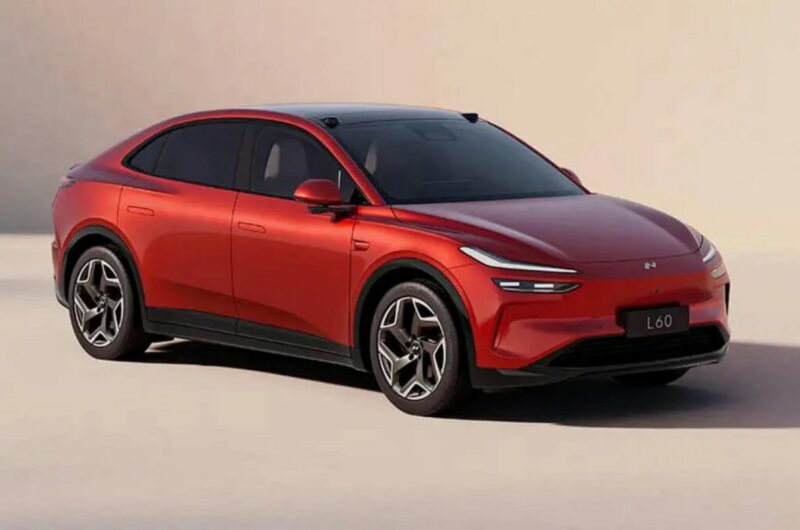
Most of us know Xpeng as an emerging automotive company from Guangzhou.
But did you know that in just 12 years, the brand with the ‘X’ logo has made significant strides into the future, becoming one of the most aggressive technology players today?
Our recent visit to Xpeng’s headquarters in Guangzhou confirmed that Xpeng is not just a brand with a lineup of sophisticated and futuristic cars.
Brief History of Xpeng

Xpeng is one of the startups founded in 2014.
Their first model, the Xpeng G3, debuted in 2018 but the company gained traction with the launch of the electric sedan P7 aimed to compete with the Tesla Model 3.

Today, Xpeng has a broader and more advanced range of models including sedans (Mona M03, P7 & P7+), MPVs (X9), and SUVs (G6, G7, G9 & GX).
Their current focus is on three main pillars: the humanoid robot IRON, the flying car Aridge, and the intelligent driving system VLA 2.0.
IRON – The Next Generation Humanoid Robot

In addition to their lineup of advanced vehicles, our visit was also ‘greeted’ by a humanoid robot dubbed IRON.
Unlike the first generation of IRON (2024), the new generation features several improvements that enable it to mimic human movements.
Features of the IRON robot:
- Weight: 65 kg
- Height: 173 cm
- 82 Degrees of Freedom (DOF), including 22 DOF for the arms alone
- Bionic skeletal and muscle structure for more natural movement
- Customizable based on body shape and gender

Thanks to the use of solid-state batteries, IRON has a slimmer appearance compared to other, bulkier humanoid robots.
Initially, this robot will be used as an assistant on Xpeng’s production line.
In the future, its use is expected to expand into commercial and industrial sectors.
Aridge – The Flying Car Division

Formerly known as Xpeng AeroHT, Aridge represents Xpeng’s effort to become a global leader in the low-altitude mobility segment.
With the mission “Freedom to Fly,” Aridge is committed to creating smart and safe solutions that everyone can enjoy through technology and innovation.
Aridge also has R&D infrastructure in Guangzhou, advanced laboratories in Shanghai, and a 35,000-square-meter production center.
Among the products from Aridge that caught our attention were:
Land Aircraft Carrier

This is a combination of a 6×6 transport van called the “Mothership” and a flying car module (eVTOL).
You only need a standard driving license to operate this six-wheeled van.
It offers a range of over 1,000 km, features a six-wheel drive system, a rear-wheel steering system, and a cabin that can accommodate four people at a time.
The eVTOL module features foldable arms and blades, making it more compact and storable in the rear of the Mothership.
With 800V charging technology, the Mothership van can recharge the eVTOL up to six times while out.
A868

This is classified as a ‘flying car’ with the largest body size among eVTOLs displayed at the Aridge showroom.
Not much information has been shared, except that it features a hybrid system with a flight range exceeding 500 km.
The A868 can carry up to six passengers and achieve flight speeds exceeding 360 km/h.
It can also take off and land vertically without the need for long runways like conventional passenger aircraft.
VLA 2.0 – Intelligent Driving Technology

VLA 2.0 is the architecture of the new generation of intelligent driving technology by Xpeng used in the XNGP (Navigation Guided Pilot) system.
The VLA (Vision-Language-Action Model) integrates vision, language understanding, and action control, receiving visual input and generating commands directly.
Some advantages of VLA 2.0 include its potential to achieve Level 4 autonomous driving comparable to Tesla’s FSD system without relying on HD mapping.


It also offers faster responses, more natural movements with high precision, and the ability to make smarter decisions.
Using real-world simulation training, this system can detect surrounding objects in detail, such as pedestrians, electric scooters, other vehicles, and traffic lights.

Currently, VLA 2.0 is utilized in the XPENG GX Robotaxi, with plans for global expansion by 2027.
Turing AI Chip – A “Brain” for All

A commonality among the IRON, Aridge, and VLA 2.0 is that they all share the same “brain,” namely the Turing AI processing chip.
This 40-core processing chip has performance equivalent to three Nvidia Drive Orin X chips, with computing power of 750 TOPS (Trillion Operations Per Second).

It also includes two Neural Processing Units (NPU) for large-scale AI and Visual Language Models.
In the IRON robot and Xpeng P7+, three Turing AI chips are used with processing capabilities of up to 2,250 TOPS.

Meanwhile, the Robotaxi uses four chip units with processing capabilities of 3,000 TOPS for autonomous operations.
With a shared “brain,” Xpeng can build a truly integrated mobility ecosystem while simultaneously reducing development costs.
Xpeng is Not Just an Electric Car Manufacturer

The opportunity to visit Xpeng’s headquarters in Guangzhou has truly opened our eyes to the achievements of this brand that is only 12 years old.
Xpeng is no longer just an electric vehicle manufacturer; they are now a technology giant that is shaping the future of mobility.
With the IRON robot technology, Aridge flying cars, and the VLA 2.0 system, Xpeng is now far ahead of its competitors.