Toyota continues to strengthen its vision of “Mobility for All,” ensuring that no one is left behind through the Multi-Pathway Approach implemented over the past few years.
In the next three years, Toyota plans to introduce more than 10 electrified vehicles (xEV) for the Asian market.
The company also announced its “30 by 30” mission, targeting a sales goal of 30 percent xEVs in the ASEAN market by 2030, which translates to over 1.5 million units sold.
This goal equates to a positive environmental impact, such as planting 25 million trees or reducing CO2 emissions by 8 million tons.
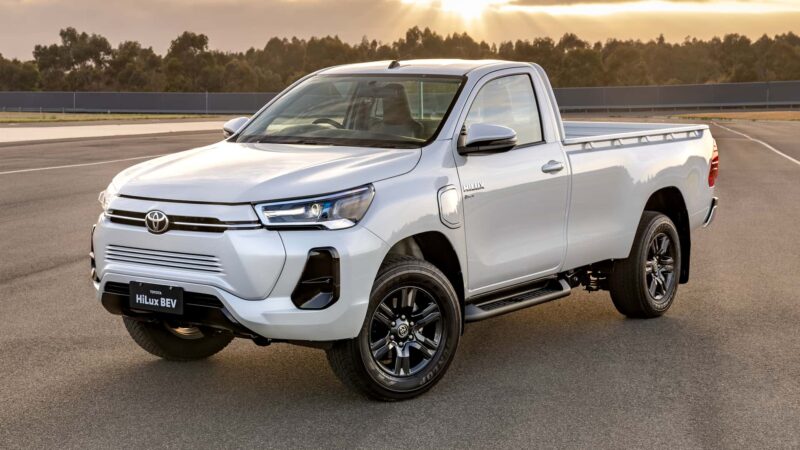
Additionally, Toyota announced plans to begin battery electric vehicle (BEV) production in Thailand and Indonesia by the end of this year.
One of the planned BEV models will be built on the IMV (Innovative International Multi-Purpose Vehicle) platform, which serves as the foundation for popular models like the Hilux, Fortuner, Innova, and the Land Cruiser FJ.
Speaking of the Land Cruiser FJ, this compact model will be assembled in Thailand before being exported to the Asian market.
Through the Land Cruiser FJ, Toyota aims to offer new value in the form of Freedom & Joy that customers can enjoy in their own unique ways, while simultaneously maintaining reliability, durability, and off-road performance to meet their lifestyles.
Ahead of the Japan Mobility Show 2025, Toyota has revealed another new model to complement its existing Land Cruiser family, named the Land Cruiser FJ.
With a more compact size, the Land Cruiser FJ is positioned as an entry-level LC without compromising on durability, reliability, and off-road driving performance.
The 2026 Land Cruiser FJ will be showcased at Toyota’s booth during the Japan Mobility Show 2025, which will take place on October 30.
Here are some key facts about the 2026 Land Cruiser FJ:
1. Platform
Unlike the Land Cruiser 300 Series and 250 Series, which are built on the TNGA-F platform, the Land Cruiser FJ uses the IMV platform.
This means that the FJ is a sibling to models such as the Hilux, Fortuner, and the first two generations of the Innova.
Although it uses a somewhat older platform, Toyota has equipped the FJ with additional underfloor braces and a stiffer body to ensure more stable handling.
2. Dimensions
The Land Cruiser FJ measures 4,575 mm in length, 1,855 mm in width, and 1,960 mm in height, with a wheelbase of 2,580 mm—significantly smaller than the Land Cruiser 300 Series and 250 Series.
When placed next to the Corolla Cross, the FJ has a length advantage of 114 mm, though its wheelbase is 58 mm shorter.
3. Exterior
The boxy design of the Land Cruiser FJ draws heavily from the Land Cruiser 250 Series design.
For example, the FJ is available with two different front-end designs, one featuring C-shaped DRLs and the other using round DRLs.
The presence of a full-size spare tire mounted at the rear enhances the rugged image of the FJ.
According to Toyota, this model also features easily replaceable front and rear bumper angles, and it can accommodate various accessories.
Among these is the Land Hopper, an electric-powered personal mobility vehicle with a three-wheeled setup that can fold and be stored in the cargo space.
4. Interior Space
The FJ’s cabin continues to showcase a large, easily accessible array of physical control buttons.
In addition to a centralized infotainment screen, a digital cluster screen is also provided for enhanced driver convenience.
In the center console, there is a physical gear knob complete with a handbrake lever and a rotary dial specifically for off-road driving.
5. Engine
The Land Cruiser FJ is powered by a 2.7-liter inline four-cylinder 2TR-FE engine that produces 163 PS and 246 Nm of torque.
This power is channeled to a part-time 4WD system through a Super ECT 6-speed automatic transmission.
Additionally, Toyota has no plans to market this “baby” Land Cruiser in markets such as the United States and Europe.
Instead, Toyota will focus the Land Cruiser FJ on markets such as Southeast Asia, Africa, Latin America, and the Middle East.
This off-road SUV will be assembled at Toyota’s factory located in Thailand.
In addition to the four-door sedan concept model, the Toyota Corolla, Toyota has also unveiled an ultra-luxury two-door coupe (or grand tourer) concept that will bear the Century nameplate.
Yes, you read that correctly.
Recently, Toyota has been attempting to establish the Century as one of its ultra-luxury sub-brands, set to compete with rivals such as Bentley, Jaguar, and Rolls-Royce.
Unlike its existing sedan and SUV offerings, Toyota seems determined to provide a completely new body style under the Century brand.
There are several intriguing details that we can observe from the teaser images provided, such as:
A fairly long engine hood
A conventional door opening on the right side
The presence of double sliding doors on the left side
A centrally positioned driver seat
No rear windows
This coupe also features layered lighting designs at both the front and rear, resembling the existing Century SUV offerings.
Additionally, there are vents on the engine hood and a partially open grille structure (complete with a phoenix emblem), suggesting that this coupe may be available with an internal combustion engine.
More details are expected to be revealed ahead of the Japan Mobility Show 2025, which will kick off at the end of this month.
In conjunction with the upcoming Japan Mobility Show 2025, Toyota seizes the opportunity to unveil several eye-catching concept models.
Among them is the Toyota Corolla Concept, which is expected to herald a new chapter for the world’s best-selling nameplate.
The concept model makes its appearance in a campaign titled “To You, Toyota.”
Several details can be observed, including:
A front design resembling a more modern hammerhead shark, complete with full-width LED lights.
No traditional grille structure.
The presence of ventilation ducts on the engine hood.
A simpler rear design featuring full-width LED pixel lights, a ducktail spoiler, and the word “Corolla” in the center.
A charging port cover on the front fender.
The use of conventional side mirror designs and door handles strongly suggests that this sedan has specifications more similar to those of an actual production version.
Did you notice the charging port cover we mentioned earlier?
This provides another hint indicating that the Corolla is likely to be offered as an electric sedan, or possibly as a plug-in hybrid electric vehicle (PHEV), similar to the Prius.
More details will be revealed in the lead-up to the Japan Mobility Show 2025, which will kick off on October 29.
Introduced in 2020, the Toyota Corolla Cross has become a widely popular name worldwide.
However, it is important to note that the Corolla Cross has a twin model in the Chinese market known by a different name: the Toyota Frontlander.
Unlike the Corolla Cross, which is produced through the FAW Toyota partnership, the Frontlander is the result of collaboration with GAC Toyota.
Unique to that market, GAC Toyota has made different changes compared to the model offered by FAW Toyota, which more closely resembles the global market version.
These changes include a more streamlined front end inspired by EV models, followed by redesigned rear light graphics.
Significant alterations are evident in the cabin space, where the Frontlander now features a more premium dashboard design.
No longer will there be clusters of physical climate control buttons; instead, these functions have been integrated into a 12.9-inch central screen.
The air conditioning vents are also smaller, alongside the addition of ambient lighting, an 8.8-inch digital cluster screen, and a higher-positioned smartphone charging slot in the center console.
Finally, the Frontlander also benefits from an upgrade to the advanced Toyota Safety Sense safety system.
Similar to the previous model, the Frontlander is available in a 2.0L NA petrol version producing 169 hp that drives the front wheels, as well as a hybrid 2.0L version with 111 hp paired with E-CVT transmission.
The selling price starts at RMB 132,800 (~RM78,575) for the NA version, while the Frontlander HEV starts at RMB 145,800 (~RM86,267).
Another Toyota model will adopt the shark-nosed front design of the Prius: the Toyota Corolla facelift.
According to images provided by the Ministry of Industry and Information Technology of China, this C-segment sedan features C-shaped headlights, a slimmer grille structure, and a redesigned front bumper.
The side profile of the sedan remains largely unchanged, except for sportier rims exclusive to the higher-end variants.
The rear light housing appears slightly darker, while the Corolla HEV variant showcases the regular Toyota logo, replacing the blue logo seen on previous models.
Customers in China will still have the option to purchase the Corolla facelift with a 2.0L petrol engine producing 169 hp or a 1.8L hybrid engine generating 121 hp.
For now, the Prius-inspired facelift of the Corolla is specific to the Chinese market.
After three years since the introduction of the fourth-generation Vios, Toyota Thailand has finally announced the arrival of a hybrid (HEV) variant for this B-segment sedan.
The introduction of the HEV variant will complement the existing Yaris Ativ offering, where the non-hybrid version comes only with a 1.2-liter engine producing 94 PS and 110 Nm.
What You Need to Know About the Toyota Vios HEV:
1. Powertrain
The Vios hybrid variant is equipped with a 1.5-liter inline four-cylinder engine with the code 2NR-VEX, generating 91 PS and 121 Nm. This is paired with an 80 PS electric motor producing 141 Nm and a lithium-ion battery pack.
The total power output reaches 111 PS, distributed to the front wheels via an E-CVT transmission.
Three driving modes are provided: Eco, Normal, and Sport.
According to Toyota, the Yaris Ativ HEV is capable of achieving a fuel consumption rate of approximately 3.6 liters per 100 km.
2. Exterior Changes
Only two hybrid variants are offered in the Thai market: Premium and GR Sport.
Roughly, not many changes are noted in the exterior of the Yaris Ativ HEV Premium, aside from the new 16-inch wheel design, HEV logo, and dark chrome finish on the upper grille and metallic grey on the lower section of the front grille.
A hidden change is that the fuel tank now has a capacity of 36 liters.
3. Yaris Ativ HEV GR Sport
This variant stands out with a sportier body kit, including a redesigned front bumper, new 17-inch alloy wheels, a more prominent rear diffuser, and a black rear spoiler.
Additionally, it features recalibrated suspension, complete with front and rear stabilizer bars, and a revised electric steering system.
4. Interior
Standard features of the Yaris Ativ HEV include synthetic leather seats, a 64-color ambient lighting system, automatic climate control, PM2.5 air filtration, and a 10.1-inch infotainment screen that supports wireless Apple CarPlay and Android Auto.
The Yaris Ativ HEV GR Sport also includes a GR logo trim and a Pioneer audio system with six speakers.
5. Safety Features & Pricing
Lastly, the safety equipment includes Toyota Safety Sense, which consists of adaptive cruise control (ACC) with Lane Keeping Assist (LKA), blind-spot monitoring, rear cross-traffic alert, and six airbags.
In the Thai market, the Yaris Ativ HEV is priced starting at THB 719,000 (approximately RM93,131), while the GR Sport variant is priced at THB 769,000 (approximately RM99,608).
ASEAN NCAP has announced that Toyota Yaris Cross has successfully achieved a five-star rating in the new vehicle assessment tests conducted.
In the evaluation, the Toyota Yaris Cross received an overall score of 83.02 points, assessed based on four categories:
Adult Occupant Protection (AOP) – 36.36/40.00
Child Occupant Protection (COP) – 17.32/20.00
Safety Assistance (SA) – 16.89/20.00
Motorcycle Safety (MS) – 12.21/20.00
Depending on the market, the Toyota Yaris Cross, specially designed for the ASEAN market (excluding Singapore, which receives the TNGA Yaris Cross model), is equipped with standard safety features such as six airbags, Electronic Stability Control (ESC), ABS, seatbelt reminder (SBR) for front and rear passengers, and pedestrian protection technology.
Several advanced functions are also included, such as Autonomous Emergency Braking (AEB), Blind Spot Detection (BSD) for both left and right sides, Lane Departure Warning (LDW), Forward Collision Warning (FCW), Lane Keeping Assistance (LKA), and Automatic High Beams (AHB).
Take a look at the image above. Malaysia is listed in the production schedule dedicated to the ASEAN market.
Does this mean the Yaris Cross will be arriving in Malaysia soon?
The recent 2025 Toyota Start Your Impossible (SYI) Outrun event drew over 6,500 participants to the grounds of Dataran Wawasan Putrajaya on July 27.
The fourth edition of the SYI Outrun successfully raised RM200,000, which will be donated to the National Cancer Society of Malaysia (NCSM).
Since 2020, Toyota has raised over RM500,000 for this organization.
According to Datuk Ravindran K, President of UMW Toyota Motor, “Mobility is more than just transportation; it is about empowering people in every sense.
“SYI Outrun serves as a strong reminder of the positive change we inspire when we move with purpose.
“Today, Malaysians from various backgrounds came together for a common goal of bringing hope, and this is the true spirit of Start Your Impossible.”
For the first time, SYI Outrun introduced a 21KM half marathon category alongside the existing 10KM and 5KM categories.
In addition to experienced runners, the event also featured cancer survivors and members of the Little Fighter Runners club, as well as Bikeisable.
Besides the run, a variety of exciting activities were offered through interactive booths by NCSM, N8 Sports Nutrition, a percussion performance, free health checks, and an exhibition of Toyota vehicles.
The top 10 winners in the 10KM and 21KM categories took home prizes valued at RM138,000, with additional lucky draw prizes worth over RM19,000, including a Sony Bravia TV, a Garmin Forerunner Triathlon watch, and a PlayStation 5 console.
Looking for a robust and stylish workhorse that isn’t a pickup truck? Toyota Europe has the answer for you.
Introducing the Toyota Land Cruiser, a light commercial vehicle (LCV) specification specifically for the UK market, built at the Burnaston Toyota factory in Derbyshire.
The Land Cruiser LCV is aimed at professionals seeking off-road capability, with a closed cargo capacity of 2,000 liters.
The original second-row seating has been removed and replaced with a steel panel, a flat cargo floor, and a divider between the cargo space and the front cabin.
Additionally, Toyota has equipped this Land Cruiser LCV with 18-inch alloy wheels, an electrically adjustable driver’s seat, heated seats and steering wheel, as well as a powered tailgate with an opening glass window.
Not to be missed are features like an auto-dimming rearview mirror, electronic parking brake, dual-zone climate control, a 9-inch infotainment screen, and Toyota’s Safety Sense safety equipment.
In terms of power, the panel version of the Land Cruiser is powered by a 2.8-liter turbo diesel engine matched with a full-time four-wheel drive system—there are no changes in power (201 hp/500 Nm), off-road capability, towing capacity of up to 3.5 tons, and water wading capability of up to 700 mm.
According to Toyota, the Land Cruiser LCV will be available for sale this August, with a starting price of £51,729 (approximately RM299,000).
Toyota has also announced an update to the existing Land Cruiser offerings, where the 2.8-liter turbo diesel engine will be replaced with a 48V mild hybrid unit that adds 16 hp and 65 Nm.
This mild hybrid version is said to provide a quieter, smoother, and more responsive engine while also reducing CO2 emissions compared to the previous configuration.
Less than two years after its introduction, Toyota has announced an update to the ultra-luxurious Century SUV model.
A new feature included in the 2026 Century SUV is the privacy glass for rear passengers, which offers three adjustable levels (clear glass, semi-transparent, and fully opaque) using a special film layer.
The special material sandwiched between two layers of glass is said to be difficult to see with the naked eye and can block up to 99 percent of ultraviolet rays.
However, the same technology has not been applied to the panoramic glass roof.
This feature aims to ensure that the privacy of rear passengers (VIPs) is better maintained throughout the journey while simultaneously not sacrificing natural light – similar to a traditional Japanese room.
As a vehicle dedicated to transporting dignitaries, the rear seats of the Century SUV can be reclined nearly flat for a more comfortable resting position.
Not to be outdone, the long list of amenities includes foldable footrests, ambient lighting, an 18-speaker audio system, coat hooks, and a separate infotainment system.
As an answer to the Rolls-Royce Cullinan, the Toyota Century SUV is powered by a 3.5-liter V6 PHEV engine capable of producing 406 hp, with a zero-emission range of 69 km.
The retail price of the Toyota Century SUV in Japan now starts from 27 million yen (RM784,839).
Toyota continues to strengthen its position in the hybrid segment with the introduction of the 2026 Land Cruiser HEV model.
Launched for the Middle Eastern market, the Land Cruiser 300 Series is powered by a self-charging hybrid system, which consists of a 3.5-liter twin-turbo V6 engine and a single electric motor.
Overall, the Land Cruiser HEV is capable of generating 457 hp and torque of up to 790 Nm, making it the most powerful Land Cruiser variant currently available.
This power is transferred to the four-wheel drive system via a 10-speed automatic transmission.
In terms of appearance, not much has changed except for the updated front bumper design, which is specific to this variant.
The rear features the “457 TT” and “HEV” emblems, indicating that it is a hybrid SUV.
The cabin space has also seen minor changes, with an updated instrument cluster now featuring specific graphics alongside a 12.3-inch infotainment screen.
A notable difference from the standard Land Cruiser model is the smaller fuel tank capacity, which is approximately 68 liters compared to 80 liters in the regular model.
Lastly, a power outlet is provided in the rear cargo area.
In the UAE, the Toyota Land Cruiser HEV is priced starting from AED 389,900 (approximately RM 450,000) for the VXR trim, and AED 409,900 (approximately RM 473,000) for the GR Sport trim.
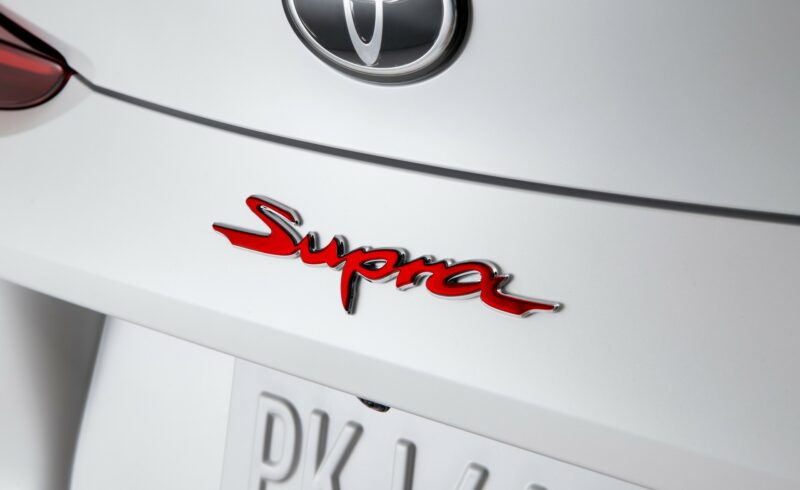
With the introduction of the GR Supra A90 Final Edition, it signals the impending end of this sports car model.
Production for the fifth generation of the GR Supra is scheduled to conclude in the spring of 2026.
For context, the Toyota GR Supra is the ‘twin’ model to the BMW Z4, with both models being exclusively assembled at the Magna Steyr factory in Austria.
With the end of production for the BMW Z4, there is little reason for the manufacturer to continue producing the GR Supra, especially since both sports cars are low-volume models.
The good news is that the legacy of the GR Supra will be continued with the arrival of a new generation model.
This was confirmed by Cooper Ericksen, Senior Vice President of Product Planning and Strategy at Toyota North America, in an interview with MotorTrend.
“It makes sense for us to have a new generation Supra. However, when and how it will happen is still undetermined.”
“For this new model, there will definitely be a time gap. The question is, how significant will that time gap be?” he added.
This question is quite valid, as the GR Supra A90 made its debut after a long hiatus, with nearly two decades passing since the production of the A80 model was discontinued in 2002.
“Our goal is to minimize that time gap for the new generation GR Supra.”
He further explained that the existing GR Supra has reached a stage where it now has a Final Edition model and the reasoning is simple: the investment is no longer worth it to continue meeting increasingly stringent regulations.
“The new GR Supra needs a new home (platform). The question at this point is, when can we obtain that new home to build it?”
Eriksen emphasized that the company is committed to producing the new generation GR Supra “with or without a partner.”
“We have to wait and see. Our dream is to create a fantastic new generation product that will be loved by our fans.”
Here it is—the sixth generation of Toyota’s compact SUV RAV4 has just been launched globally.
Built on the latest platform of the Toyota New Global Architecture (TNGA), the RAV4 features styling that is more in line with the existing model lineup such as the bZ, Camry, and Prius.
What do you need to know about the RAV4 2026?
1. Variants
Toyota offers three main variants:
Core – Urban styling
Adventure – A bolder appearance with off-road friendliness
GR Sport – A more engaging driving experience
2. Dimensions
Compared to the previous generation, the new RAV4 is significantly longer at 4,600 mm, while maintaining a width of 1,855 mm and a wheelbase of 2,690 mm.
The Adventure and GR Sport variants come with a wider measurement of 1,880 mm.
3. HEV and PHEV Powertrain Options
The new generation RAV4 is available only in hybrid (HEV) and plug-in hybrid (PHEV) versions.
The RAV4 HEV is powered by a 2.5-liter engine with an option for front-wheel drive (FWD) producing 226 hp or all-wheel drive (AWD) producing 236 hp.
The PHEV variant, on the other hand, is equipped only with an AWD system, achieving a total power of 320 hp and an emissions-free range of up to 150 km.
Additionally, the RAV4 PHEV supports vehicle-to-home (V2H) functionality, fast DC charging (up to 80% charge in 30 minutes), as well as improved off-road driving performance.
4. Exterior Design
Like other modern Toyota vehicles, the RAV4 features a shark-inspired front design.
The rear light housing is designed with simpler LED graphics, and the word “RAV4” is centered on it.
Depending on specifications, there are wheel size options of 17, 18, or 20 inches.
5. Cabin Space
With a dashboard structure that is 40 mm lower, the RAV4 offers a wider field of vision.
Utilizing an island architecture approach, the RAV4’s dashboard is designed to facilitate the driver’s access to the screen and essential function buttons, while minimizing eye movement during driving.
Unique features in the RAV4 cabin include a central console cover that can serve as an armrest or a tray for placing items.
The cargo space in the RAV4 now boasts a capacity of 749 liters, which is 16 liters larger than the previous model.
Finally, the RAV4 is Toyota’s first model to utilize the Arene software developed by Woven by Toyota, encompassing both infotainment system operations and advanced safety features of Toyota Safety Sense 4.0 (TSS 4.0).
6. RAV4 Adventure
Compared to the simpler Core model, the RAV4 Adventure offers unique features such as:
Wider dimensions
More prominent body protection plastics
Simpler wheel design
A more squared-off front bumper
Larger, vertical grille openings
A taller nose structure
Roof rail fittings
7. RAV4 GR Sport
Also noteworthy is the GR Sport variant, designed for those seeking a combination of practicality and a more thrilling driving experience in one package.
In terms of appearance, the RAV4 GR Sport is given an aggressive bumper featuring both a front spoiler and a rear spoiler to enhance aerodynamics and handling stability.
The RAV4 GR Sport also benefits from a wider track (+20 mm), special suspension and steering tuning, and a lighter aluminum wheelset.
8. TSS 4.0 System
The Toyota RAV4 is also the first Toyota model to feature TSS 4.0 safety equipment.
Among the new features included in the RAV4 are a sudden acceleration prevention system and an emergency driving stop system (EDSS) in case of any unforeseen circumstances involving the driver.
In addition to the bZ model, Toyota America has launched another electric SUV designed for outdoor enthusiasts, the bZ Woodland.
The Toyota bZ Woodland fundamentally shares the same platform as the previously introduced Subaru Trailseeker.
Compared to the standard bZ model, the bZ Woodland features larger dimensions, measuring 4,830 mm in length (+140 mm), 1,860 mm in width, 1,670 mm in height (+20 mm), and a wheelbase of 2,850 mm.
These dimensional changes contribute to a larger cargo space, around 850 liters.
Additionally, the ground clearance has increased by 2.54 mm to 210 mm, thanks to the use of higher suspension.
This mid-size SUV can tow a weight of 1,588 kg and can be equipped with All-Terrain tires.
Toyota has also streamlined the offerings for the bZ Woodland, which is only available in a dual electric motor configuration producing 375 hp.
Acceleration performance has not been disclosed; however, it is noted that the Subaru Trailseeker can accelerate from 0 to 96 km/h in just 4.4 seconds.
The all-wheel-drive (AWD) system is complemented by a driving mode selection known as X-Mode and a Grip-Control feature for enhanced off-road performance.
The 74.7 kWh battery pack allows this SUV to be driven up to 418 km and supports NACS plug charging for compatibility with the Tesla Supercharger network.
Fast DC charging takes only 30 minutes to go from 10 to 80 percent state of charge (SoC).
The exterior appearance of the bZ Woodland resembles that of the standard bZ model, except for the addition of black body cladding, 18-inch aluminum wheels with removable covers, and roof rails.
The rear features a more minimalist light housing, followed by a Woodland badge on the tailgate.
Inside, the bZ Woodland cabin includes a 14-inch central screen, a wireless smartphone charging slot, USB Type-C charging ports, and SofTex-wrapped seating with heating functions for the front row.
There is also a Premium package that adds a JBL audio system, a panoramic glass roof, a digital rearview mirror, and front seat ventilation.
Lastly, the Toyota Safety Sense features a suite of safety functions, including a Pre-Collision System (PCS), Dynamic Radar Cruise Control (DRCC), Lane Departure Alert (LDA), Road Sign Assist (RSA), Automatic High Beams (AHB), Blind Spot Monitoring (BSM), Safe Exit Alert (SEA), Rear Cross-Traffic Alert (RCTA), and a Surround View Camera system.
Toyota’s electric SUV is now presented with a new, simpler name that rolls off the tongue more easily: the Toyota bZ.
For the 2026 model year, several enhancements have been made, particularly in terms of driving range to alleviate range anxiety among owners.
There are two battery pack options available: 57.7 kWh and 74.7 kWh.
The base front-wheel drive (FWD) version with 168 hp and a 57.7 kWh battery can now travel up to 380 km (EPA data).
There is also a more powerful FWD variant (221 hp) which has an impressive range of up to 505 km when paired with the 74.7 kWh battery pack.
Toyota also offers an all-wheel drive (AWD) version with 338 hp, capable of covering up to 463 km on a full charge.
Notably, the 2026 Toyota bZ is now equipped with a North American Charging Standard (NACS) plug, allowing owners to charge their vehicles at Tesla Supercharger stations at a capacity of up to 150 kW.
Unlike the bZ4X model, the bZ now features a more streamlined front fascia similar to that of the Camry and Prius.
The previously black-painted wheel arch protective plastics have now been color-matched to the body of the vehicle.
Upon entering the cabin, one will find a redesigned center console that includes a slot for wireless smartphone charging and a 14.0-inch infotainment screen.
Additional features include SofTex upholstery, a six-speaker audio system with an option for a JBL Premium nine-speaker audio system, and Toyota Safety Sense 3.0 safety features.
Toyota has introduced a facelifted version of the Corolla Cross in several Southeast Asian markets since last year.
However, for the European market, the SUV now comes with a much bolder appearance, especially for the GR Sport variant, which is being launched in the continent for the first time.
Starting with the standard version, this facelifted Corolla Cross features a redesigned bumper accompanied by a honeycomb grille structure.
Unlike models for other markets, the 2026 Corolla Cross is equipped with sharper graphic LED headlights, followed by the introduction of a horizontal LED light bar.
The taillights also feature new graphic designs, while all four wheel arches are adorned with new 18-inch rims.
Inside the cabin, there is a 10.5-inch central screen, a 12.3-inch digital cluster screen, a larger center console featuring a new gear knob, and a faster wireless smartphone charger.
Additionally, Apple CarPlay support is also available.
Toyota promises a quieter ride, thanks to improvements made in sound insulation to reduce noise and vibrations.
The highest variant will come with ambient lighting, as well as heated seats and a heated steering wheel.
As mentioned, this is the first time Toyota has introduced the GR Sport variant for the Corolla Cross in Europe.
This bolder appearance is largely inspired by the bumpers of the GR Yaris and the facelifted GR Corolla.
In addition, the Corolla Cross GR Sport is also equipped with sportier 19-inch rims, a suspension that is 10 mm lower, as well as recalibrated power steering and the addition of paddle shifters as standard features.
Toyota adds a Sport Mode feature for quicker acceleration, along with a Snow Extra mode for improved control and stability during winter.
In Europe, the Corolla Cross will be available in Hybrid 140 or Hybrid 200 specifications.
The base Hybrid 140 features a 1.8-liter hybrid engine capable of producing 138 hp, while the Hybrid 200 variant comes with a 2.0-liter hybrid engine with a power output of up to 194 hp.
UMW Toyota Motor (UMWT) has forged a strategic partnership with the Ministry of Transport Malaysia (MOT) to drive green mobility initiatives.
As a show of strong support, UMWT has delivered five electrified vehicles, including hybrid electric vehicles (HEVs) such as the Toyota Alphard, Camry, and Corolla Cross, as well as two battery electric vehicles (BEVs), the Toyota bZ4X and Lexus RZ.
Through this initiative, the MOT has the opportunity to assess the true capabilities of these vehicles concerning suitability, performance, and benefits for daily use.
Additionally, UMWT will provide comprehensive hands-on learning opportunities for MOT officials, covering aspects from infrastructure readiness, user experience to operational efficiency across various platforms.
According to Datuk Ravindran K, President of UMW Toyota Motor, “Malaysia’s journey towards achieving net-zero emissions by 2050 is not just an empty vision, but a collective mission that demands close collaboration across all sectors.”
“Through the ‘Multipathway Toyota’ approach, electrification is not merely viewed as an innovation, but is also adapted in an inclusive and pragmatic manner according to the needs, readiness, and capabilities of various segments of society.”
“With this approach, every layer of society is given the opportunity to move forward together towards a greener and more sustainable future—no one will be left behind, no one will be marginalized,” he further stated.
While full electrification remains a long-term aspiration for the country, hybrid technology emerges as an effective solution to minimize carbon emissions without requiring drastic changes to existing infrastructure or consumer habits.
According to Mohd Shamsor Mohd Zain, Executive Director of UMW Toyota Motor, “Hybrid technology continues to be a key driver in Toyota’s electrification plan, particularly in the context of markets like Malaysia.”
“Its ability to reduce carbon emissions immediately without necessitating major changes to the supporting ecosystem makes it the most ideal option.”
“It not only offers practical solutions but also builds confidence among mainstream consumers while paving a smoother and more progressive path towards a fully electric mobility future.”
UMW Toyota Motor has officially announced the opening of registrations for the annual Toyota Eco Youth 2025 event.
Supported by the Ministry of Education Malaysia (MOE), this initiative encourages secondary school students nationwide to develop innovative and sustainable solutions to environmental issues.
This year’s 24th edition doubles the number of participants to 30 schools, increasing the funding to RM167,000, with each selected school receiving a grant of RM3,000.
Students will also have the chance to compete for cash prizes totaling RM77,000 across various categories: RM30,000 for the champion, RM20,000 for the first runner-up, RM10,000 for the second runner-up, and RM5,000 each for sub-categories such as Best Social Media Campaign, Best Presentation, and Best Exhibition, as well as RM2,000 for the Best Advisor Teacher category.
Since its introduction in 2001, Toyota Eco Youth (TEY) has benefited nearly 600 schools and more than 300,000 students across Malaysia, guiding them in developing critical skills to drive change within their communities.
The effectiveness of this annual program is evident as TEY participants successfully present innovative ideas that can be translated into real projects that have a positive impact on society.
For example, a group of students developed a system that not only reduces agricultural waste but also improves local waste disposal methods, enhancing community health and environmental sustainability in Kuala Bikam.
In Penang, marine pollution issues have been addressed through community-based cleaning programs that help restore the marine ecosystem.
In Sarawak, a group of students introduced sustainable agricultural practices that reduce reliance on harmful chemicals, while promoting long-term environmental conservation efforts.
All these successes stem from the unique application of Toyota’s 8-Step Problem Solving Methodology (PSM), which equips students with systematic problem-solving skills that enable them to identify issues in-depth, understand root causes, and devise practical and sustainable solutions.
“Toyota Eco Youth is not just about raising awareness of environmental issues—it’s about taking action,” said Datuk Ravindran K., President of UMW Toyota Motor.
“By doubling the number of participating schools and allocating a larger fund, we are offering more opportunities for students to devise innovative solutions that can propel Malaysia towards a more sustainable future.
“We are excited to see how this year’s participants will create change and inspire the community with their ideas,” he added.
Interested schools can register at the link https://bit.ly/TEY2025_RegisterNow before April 3, 2025, while the official launch event, workshops, and opening ceremony will take place from April 28 to April 30, 2025.
The sixteenth generation of the Toyota Crown family is now available in Sedan, Crossover, and Sport versions.
If you’re looking for a much more practical Crown, the Crown Estate is the answer you need.
Toyota Japan has officially begun sales of the Crown Estate, which comes with the option of a hybrid electric vehicle (HEV) or plug-in hybrid electric vehicle (PHEV) powertrain.
Both systems utilize a 2.5-liter engine (code A25A-FXS) paired with two electric motors and an E-Four all-wheel-drive system.
In the Crown Estate HEV, the front motor output is enhanced by 50 percent compared to the Crossover and Sport models, aimed at improving acceleration, especially when carrying passengers.
Meanwhile, the Estate PHEV version is equipped with a lithium-ion battery pack that allows for a zero-emission driving range of up to 89 km.
Built on the TNGA-K platform, the Toyota Crown Estate measures 4,930 mm in length, 1,880 mm in width, 1,625 mm in height, with a wheelbase of 2,850 mm.
The suspension system features MacPherson struts in the front, followed by Multi-link setup in the rear.
Driving dynamics are enhanced with the inclusion of a Dynamic Rear Steering (DRS) system for more agile handling, as well as Adaptive Variable Suspension (AVS) to ensure passengers remain comfortable and enjoy a high-quality ride.
The exterior design of the Crown Estate follows the design language shared with its siblings.
The front features hammerhead shark-like elements with thinner daytime running lights, a neatly integrated grille structure in the bumper, and 21-inch wheels.
The cabin layout is similar to what is featured in the Crossover, Sport, and Sedan models, with a 12.3-inch cluster display paired with a similarly sized infotainment screen.
Using an island architecture, the dashboard layout is designed to minimize eye movement during driving.
The Crown Estate’s cargo space can accommodate up to 570 liters of goods, or up to 1,470 liters with the second-row seats folded flat.
Toyota also offers special items for this model, including seat cushions and a small table to use in that space, especially when engaging in outdoor activities.
In Japan, the Toyota Crown Estate is priced starting at 6,350,000 yen (RM190,457) for the HEV version, and can reach up to 8,100,000 yen (RM242,945) for the PHEV version.
Malaysia’s Leading Automotive News | ENGEAR ENGLISH