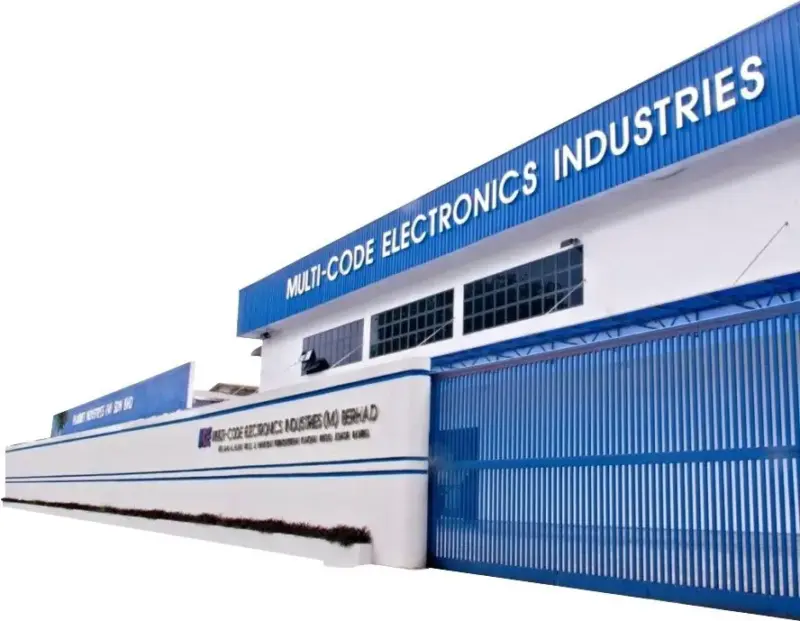
MCE Holdings Berhad has secured RM54.28 million in 40-month supply contracts from Perodua to supply
various automotive electronics and mechatronic components, including audio display, reverse camera and advanced driver assistance systems (ADAS) related components for an internal combustion engine (ICE) model.
The project marks MCE’s first vehicle audio display and ADAS-related components project for an ICE vehicle, building on its existing capabilities in infotainment systems for EVs and broadening its portfolio of higher-value components and systems.
The contracts were awarded to MCE’s wholly owned subsidiary Multi-Code Electronics Industries (M) Bhd, with production slated to begin in the fourth quarter of the financial year ending 31 July 2027.
Production will be carried out at the Group’s newly launched MCE Auto Hub in Serendah, Selangor, with an estimated total investment cost of RM4.95 million.
Group Managing Director Datuk Wira Dr Goh Kar Chun, said: “Our long-standing relationship with Perodua has given us the opportunity to grow alongside them, enabling MCE to progressively take on more sophisticated products, build our design and manufacturing capabilities and move up the automotive value
chain.”
“This latest contract further expands the range of our products we supply as we progressively ramp up production and capacity utilisation at the newly launched MCE Auto Hub in Serendah.”
“We remain committed to working closely with PERODUA to drive greater localisation of automotive electronics and systems, supporting the Government’s aspiration to build a more competitive automotive ecosystem and position Malaysia as a regional hub for next-generation vehicles,” Goh added.
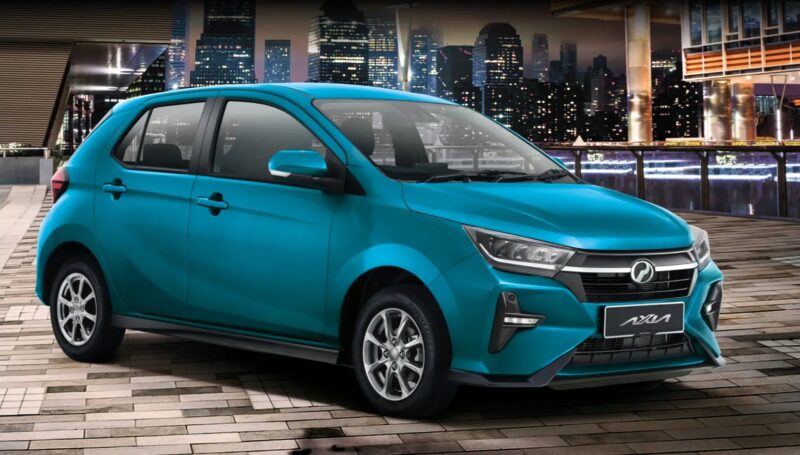
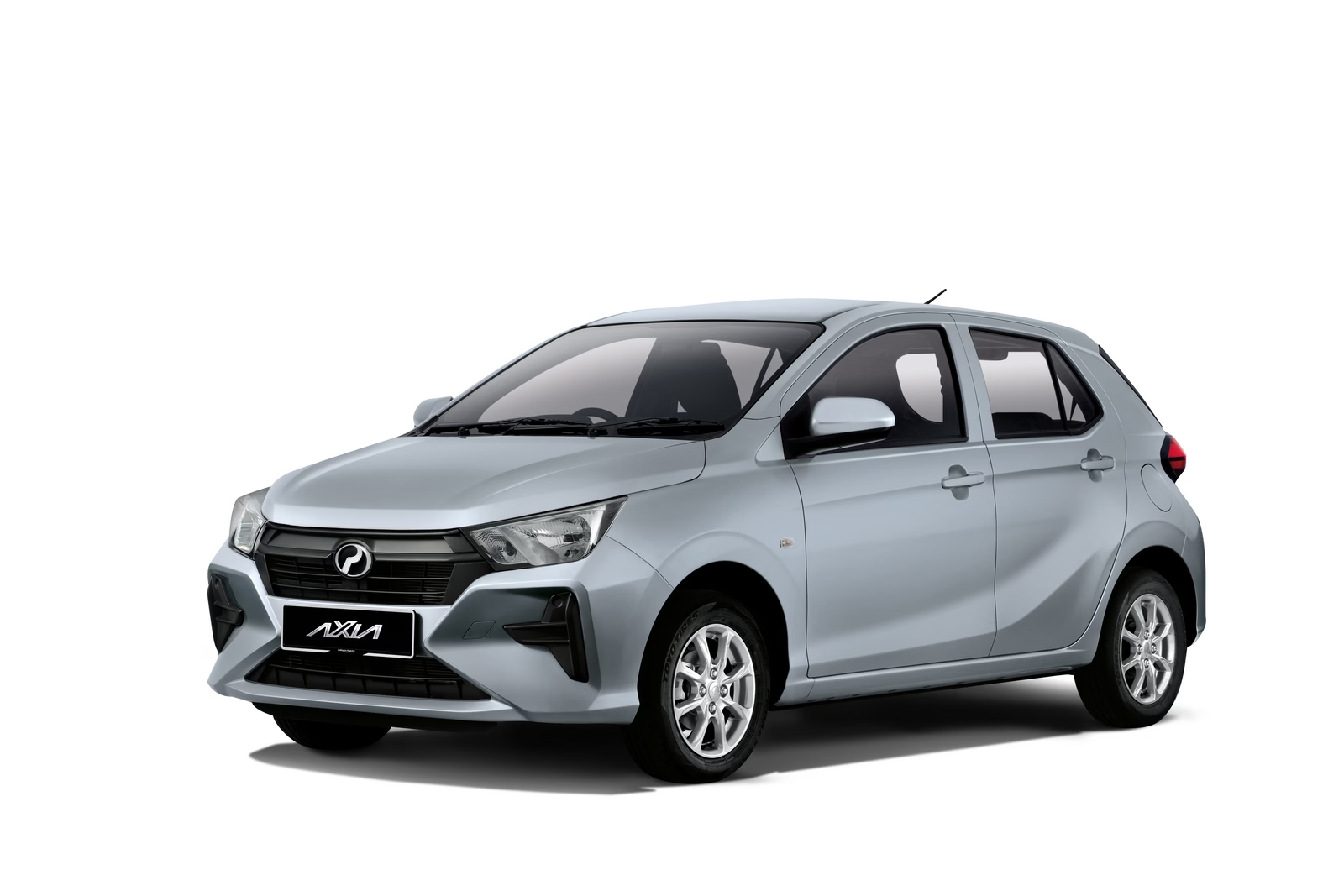
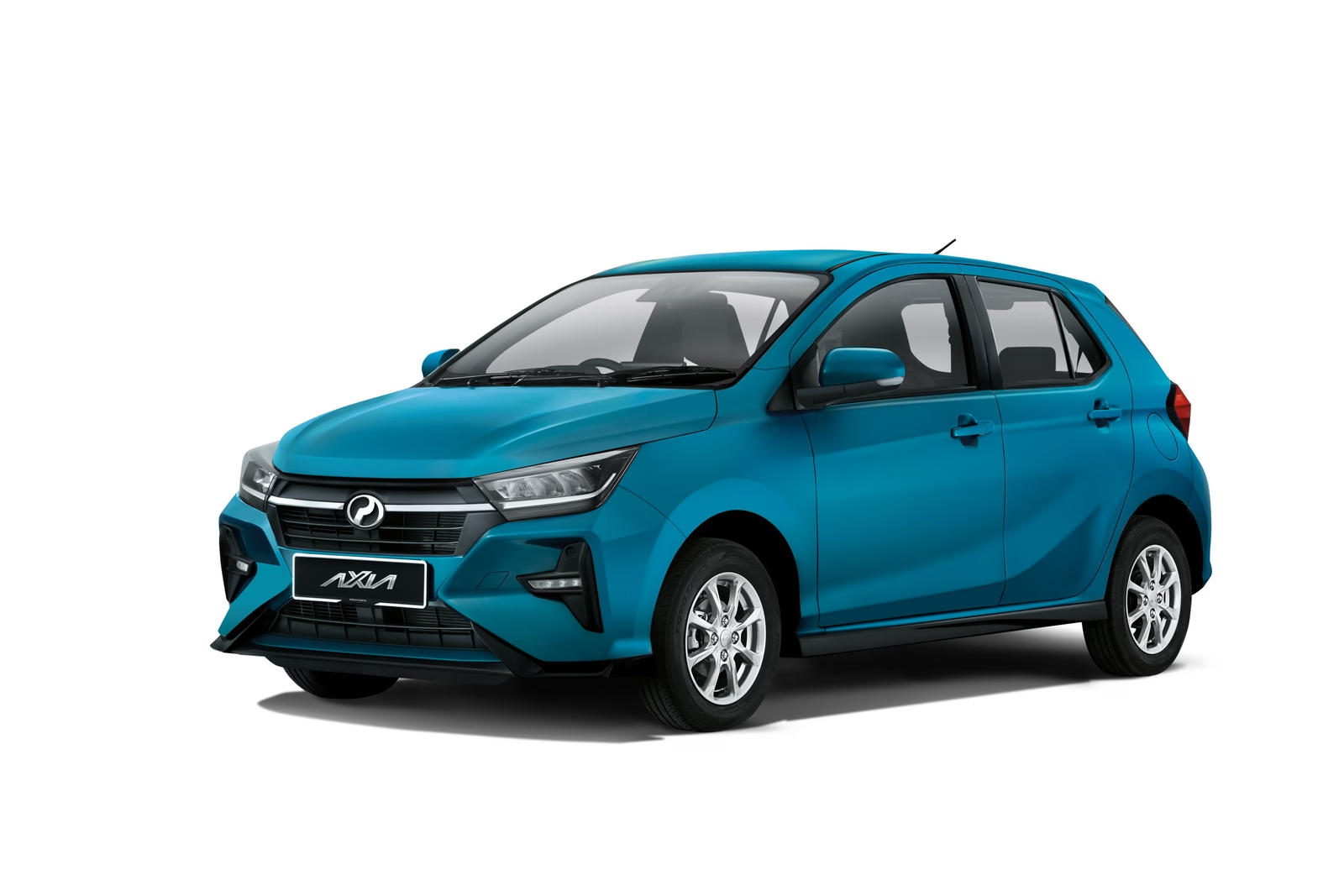
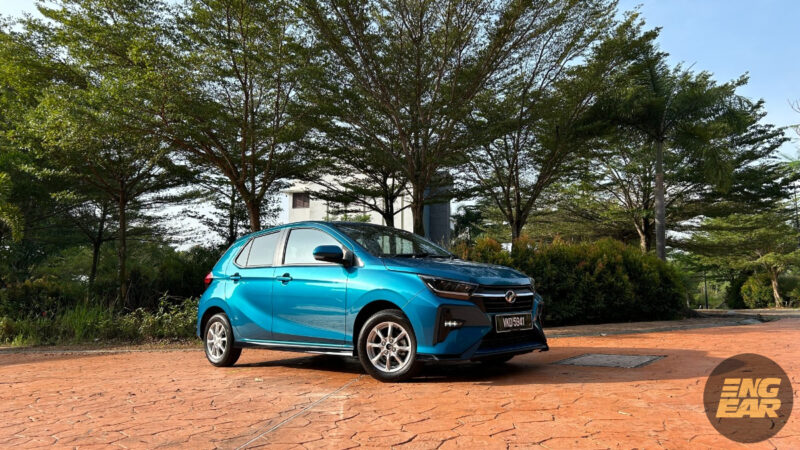
Perodua has announced a price reduction of up to RM4,700 for its Axia compact model, effective immediately.
With this adjustment, the Axia now starts from RM33,900, compared to its previous base price of RM38,600.
New Axia pricing
Axia 1.0G – RM33,900 (‑RM4,700)
Axia 1.0X – RM38,500 (‑RM1,500)
Axia 1.0SE – RM43,000 (‑RM1,000)
Axia 1.0AV – RM49,000 (‑RM500)
Perodua President and CEO, Dato’ Sri Zainal Abidin Ahmad, said the revised pricing is part of the company’s efforts to ease the cost burden faced by Malaysians.
“This move reflects our ongoing efforts to improve operational efficiency, as seen previously through reduced service costs, the lower QV‑E pricing, and the Battery as a Service (BaaS) package we introduced.”
Perodua assures that the Axia’s specifications and quality standards remain unchanged.
The savings, the company says, come entirely from process improvements and enhanced operational efficiency.
“The price reduction is the result of continuous and sustainable improvement initiatives, as well as strong collaboration with our suppliers and partners within the automotive ecosystem,” he added.
Perodua has exported its latest model, Perodua Traz to Sri Lanka along with the company’s top selling Multi-Purpose Vehicle (MPV) model, Perodua Alza.
Perodua President and Chief Executive Officer Dato’ Sri Zainal Abidin Ahmad said Sri Lanka remains one of Perodua’s largest export market, with over 20,000 of its models sold in that market since 1997.
Dato’ Sri Zainal said that Perodua is actively exporting its Completely Build-Up models to six (6) countries namely Brunei, Fiji, Mauritius, Bangladesh, Papua New Guinea as well as Sri Lanka.
“We are also looking to export our Pre-Owned Vehicles, so far we have expanded our market to include Timor Leste this year,” he said.
On the new launch in Sri Lanka, a special introductory price for the Traz is offered to the first 50 customers for Rs. 19,950,000 (with Body Kit) (RM243,090) and Rs. 19,200,000 (without Body Kit) (RM233,957.23), while for Perodua Alza, it is priced at Rs. 19,950,000 (RM243,090). All prices are inclusive of VAT.
Group Chief Executive Officer and Executive Director of United Motors Lanka PLC Mr. Chanaka Yatawara said since the lifting of vehicle import restrictions in 2025, the company has sold close to 3,000 vehicles, clearly demonstrating the strong trust Sri Lankan customers continue to place in the brand.
“Supported by Perodua’s proven manufacturing capabilities and the United Motors Group’s extensive sales and service network, we are confident that the Traz and Alza will further strengthen this trust among Sri Lankan families and businesses,” he said.
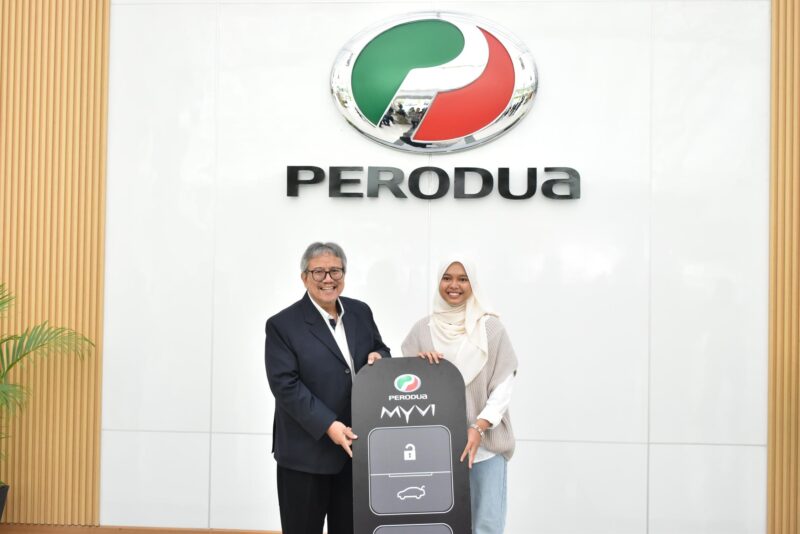
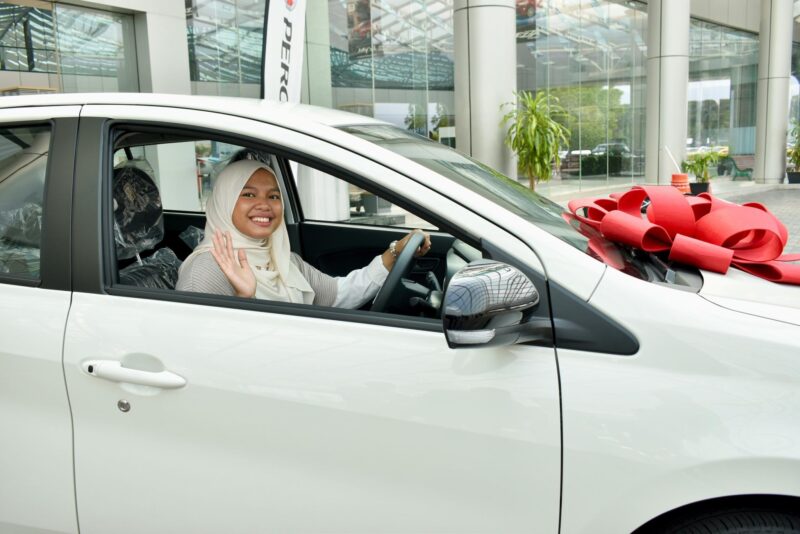
Nik Akmal Afifah binti Nik Mohd Fuad, a 22-year-old student from Universiti Teknologi Mara (UiTM) was picked as the winner of the P-Circle Lucky Draw event, which was held recently at the Kuala Lumpur International Mobility Show 2026 (KLIMS 2026).
The P-Circle Lucky Draw contest, which ran from 12 to 21 June 2026, saw thousands of people downloading Perodua’s P-Circle super app and activating its e-wallet feature (P-Duit) during KLIMS 2026.
The P-Circle is a comprehensive super app which offers a wide range of services ranging from P-Duit, health app, security app, virtual marketplace to its very own streaming platform. The app is available on both App Store and Google Play Store.
“Overall, our participation in KLIMS 2026 has been a success with 37,786 people visiting our booth and engaging with the various attractions we offered during the exhibition.”
“The P-Circle Lucky Draw contest saw great interest from the younger generation with Nik Akmal Afifah chosen from those entered the contest,” Perodua President and Chief Executive Officer, Dato’ Sri Zainal Abidin Ahmad said.
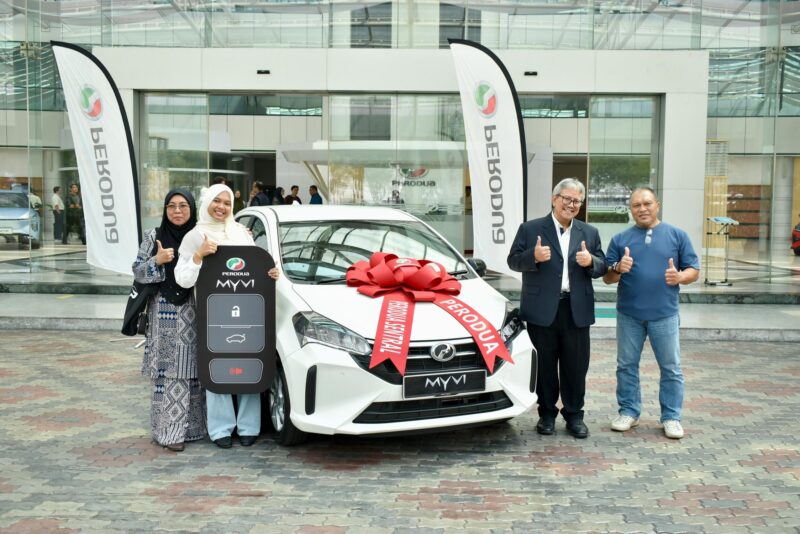
“This is an incredible upgrade from the Perodua Axia I am currently driving. Thank you Perodua! You’re the best!” Nik Akmal Afifah said after receiving the 1.3 Myvi G in Ivory White at Perodua Headquarters on 3 July 2026.
Aside from the main prize of a Perodua Myvi, the compact car company also selected another 100 lucky draw winners who received P-Go Smartwatch.
During KLIMS 2026, Perodua showcased its latest concept car – named Chapter 2 or C2 – represents an entirely different styling direction; incorporating the latest technology; and created by our young and talented designers, which represent their vision of what the future of EV would look like.
Perodua is reducing the price of its service maintenance parts, including labour amounting to 10% (terms and conditions apply) in its ongoing efforts to help Malaysians cope with the increasing costs of living.
“The price reduction is based on the maintenance parts price as well as labour costs used by the customer and overall, the customer is expected to save about 10% of their average service bill beginning tomorrow (19 June).
“We welcome our customers to our authorised service centres to find out more on the deal and to use genuine parts so that your Perodua vehicle will continue to remain reliable and efficient when you need it most,” Perodua President and Chief Executive Officer, Dato’ Sri Zainal Abidin Ahmad said.
“We believe that the reduction in service cost will assist our customers in reducing their mobility cost, and we at Perodua, will do our part to give greater value to our customer,” he added.
This campaign includes all models including QV-E, ranging from inspection, parts replacement as well as labour costs relating to vehicle maintenance.
“Based on our internal data, there are more than 5 million Perodua vehicles on the road and we believe that through this campaign, we would be able to better serve a large majority of Malaysians,” Dato’ Sri Zainal said.
For 2025, a total of 3.7 million vehicles were serviced at Perodua service centres nationwide.
Perodua has partnered with three local universities, namely Universiti Utara Malaysia, Universiti Putra Malaysia, Universiti Teknologi Malaysia (Malaysia-Japan International Institute of Technology) to introduce an app-based car-rental service designed specifically for students and university staff.
The application, which is called UCar-e (pronounced as ‘You Car”), represents Perodua’s latest initiative under its “Mobility as a Lifestyle” concept, which emphasises transforming the driving experience from conventional vehicle ownership into a more service-oriented mobility solution.
“We are initially providing 50 Perodua vehicles to these universities for use by students and staff, where they can book, access, and utilise the vehicles to travel from their accommodations to lecture halls within university grounds,” said Perodua President and Chief Executive Officer, Dato’ Sri Zainal Abidin Ahmad.
Recently, Dato’ Sri Zainal launched UCar-e initiative at Inasis Perodua, UUM, in a ceremony also attended by UUM Vice-Chancellor, Prof. Dr. Ahmad Martadha Mohamed.
He explained that the UCar-e application enables users to locate vehicles parked at designated locations within the campus. Users are also provided with specific parking zones where the vehicles can be returned after use.
“We want to make this experience as simple and hassle-free as possible for students and staff.
“Perodua is also working closely with the respective universities to appoint students to manage the vehicles, including maintaining cleanliness, monitoring fuel level, and ensuring proper upkeep. In return, the student will receive commission-based payments,” he said.
“By responsibly appointing students as vehicle management agents, we are also incorporating entrepreneurship training and exposure for the younger generation, which is an essential life skill,” he explained.
He further revealed that the service is expected to begin in June 2026, with implementation taking place in stages depending on each university’s readiness and rollout schedules.
According to him, the introduction of UCar-e forms part of Perodua’s broader efforts to expand its automotive business through innovative mobility services aligned with evolving consumer trends and lifestyle preferences.
“We realise that many from Gen Zs are more interested in the driving experience rather than owning a vehicle, as the maintenance costs, limited parking availability, and traffic congestion are encouraging them to seek alternative mobility solutions,” he said.
Perodua is planning to transition the Ativa Hybrid to local production (CKD), according to a report by Bernama.
Datuk Seri Zainal Abidin Ahmad, President and CEO of Perodua, stated that the company is currently finalizing discussions regarding the production timeline, pricing structures, and other essential details.
“Once these matters are finalized, we will make an official announcement. What is certain is that the Ativa Hybrid model will be manufactured locally,” he said during a press conference held during the recent visit of the Japanese Ambassador to Malaysia, Noriyuki Shikata to the Perodua manufacturing facility.
It is understood that Perodua has received an investment of 1.5 billion yen (approximately RM37 million) from the Global South Fund to support the implementation of Japanese hybrid technology within the country.
The Perodua Ativa was officially launched in 2021 as the brand’s first model built on the Daihatsu New Global Architecture (DNGA) platform. Currently, the Ativa is exclusively offered with a 1.0-liter 1KR-VET turbocharged engine paired with a D-CVT transmission.
History of the Ativa Hybrid in Malaysia
In September 2022, Perodua initiated an electric vehicle mobility study involving 300 selected customers. Under this program, 300 units of the Ativa Hybrid were introduced as fully imported (CBU) units from the Japanese market.
The Ativa Hybrid utilizes a series hybrid powertrain system, where the electric motor is solely responsible for driving the wheels. In this configuration, the 1.2-liter WA-VEX engine acts strictly as a generator to charge the battery and power the electric motor.
Its Japanese counterpart, the Daihatsu Rocky Hybrid, features the e-Smart Hybrid system which consists of:
Engine: 1.2-liter WA-VEX three-cylinder (102 hp / 105 Nm)
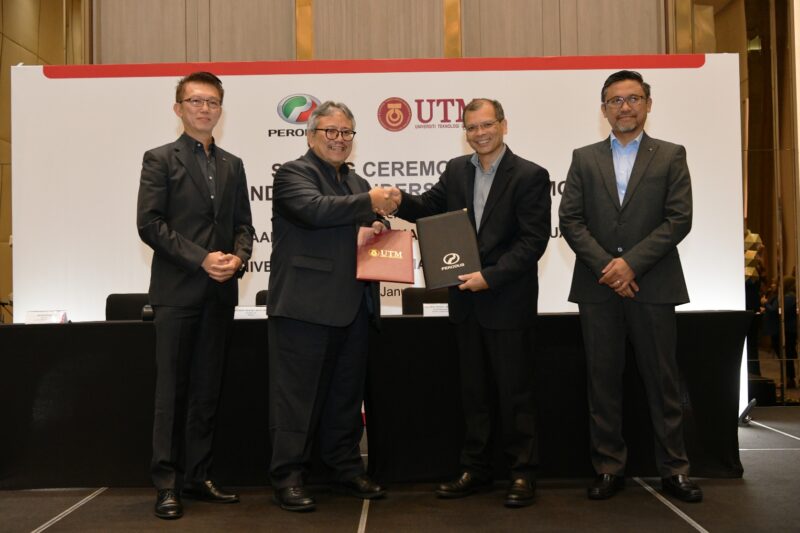
Perodua recently signed a Memorandum of Agreement (MoA) with Universiti Teknologi Malaysia (UTM) for the implementation of the Perodua-UTM xEV Engineering Program.
This five-year strategic collaboration focuses on the empowerment of human capital and research in electric vehicle technology (xEV).
Special Program Under Perodua’s Supervision
Every year, 10 to 15 outstanding students from the Bachelor of Engineering (Honors) in Electrical Engineering program will be selected for this special program.
The program, lasting for one and a half years, will commence in the second semester of their third year of study.
Among the benefits that participating students will receive include:
The opportunity to undergo a 10-week industrial internship at Perodua.
The chance to obtain an international Level 3 certification from the Institute of the Motor Industry (IMI).
The Final Year Project (FYP) will be jointly supervised by Perodua’s expert engineers.
Perodua Contributes Two QV-E Vehicles for Learning Purposes
To support this program, Perodua will donate technical equipment for use in the Perodua-UTM xEV Engineering Laboratory.
Additionally, two units of the Perodua QV-E electric vehicle will also be provided for practical learning purposes.
Long-Term Investment
UTM’s Vice-Chancellor, Prof. Ts. Dr. Mohd Shafry Abdul Rahim, described this collaboration as a paradigm shift in bridging the gap between academia and industry needs.
“Through the establishment of the Perodua-UTM xEV Engineering Laboratory, equipped with advanced technology, our graduates will possess a high competitive edge.
“The integration of battery electric vehicle (BEV) elective engineering courses into the curriculum and access to the latest simulation technology, such as Hardware in the Loop (HIL) systems, will ensure that UTM graduates remain relevant and ‘future-ready’,” he explained.
Meanwhile, the President and Chief Executive Officer of Perodua, Dato’ Sri Zainal Abidin Ahmad, stated that this initiative is a proactive step by the company to build a sustainable and competitive xEV ecosystem at the global level.
“This collaboration is not just about technology transfer; rather, it is a long-term investment to cultivate ‘future’ engineers skilled in EV engineering.
“With direct guidance from our engineers, students will be exposed to the real dynamics of the modern automotive industry,” he said.
Perodua wishes to thank the Malaysian government, especially the Ministry of Investment, Trade and Industry for clarifying its position on the National Automotive Policy (NAP) and its intended purpose which is to encourage investment that will benefit the country.
By having guidance in accordance with NAP, the automotive industry’s ecosystem will be further strengthened and creates significant economic spillover, ultimately fostering shared prosperity for all stakeholders.
This includes long-term sustainable employment, investments in infrastructure, human capital enrichment, research and development (R&D), commitment towards technology and technical sharing as well as development of local entrepreneurs involving local vendors and dealers.
Through the NAP’s Next Generation Vehicle (NxGV) vision, Malaysians will see greater value and innovation in mobility that would benefit a majority of Malaysians.
Such benefits include wider range of services offered by the players that suit customer preferences, add-on mobility services such as enhanced safety and mobile integration features leveraging on Internet technology.
The existing policy, vision and roadmap outlined by MITI work as a comprehensive, transparent and consistent guide for the automotive industry players.
Perodua also applauds MITI for their vision of a progressive Malaysian automotive industry that balances progress and openness for the benefit of all.
MITI’s commitment is fully supported by the Perodua Dealers Association (PDA) and the Perodua Suppliers Association (P2SA).
In a statement, P2SA explained that the requirements imposed by MITI consistently cover all brands, ensuring that the growth of the electric vehicle (EV) sector will not adversely affect the existing local ecosystem.
Say (or criticize) what you will about the Perodua Traz, but this is the most stylish SUV that Perodua has ever produced.
Although it arrived a bit late in the market, this twin of the Toyota Yaris Cross strives to maintain the widely recognized Perodua DNA.
It offers a spacious and practical interior, while also featuring modern technology.
We had the opportunity to test drive this SUV for several days, and here are our findings:
The Bold Design of the Traz
There’s no denying that the Perodua Traz shares many components with its twin, the Toyota Yaris Cross.
After all, it uses the same platform, the DNGA-B, as the Toyota Vios, Toyota Velos, and Perodua Alza.
However, its exterior can be distinguished by its unique grille design and more aggressive 17-inch rims.
I particularly like the Traz’s boxy and angular appearance, especially when viewed from the rear—it resembles a Lexus SUV with a Perodua badge.
For those wanting a more eye-catching look, the GearUp body kit is available.
Dimensions
In essence, the Traz presents much larger dimensions compared to the Ativa.
With a length of approximately 4,310 mm and a wheelbase of 2,620 mm, the Traz offers a spacious and comfortable cabin.
Its ground clearance of 210 mm is sufficient for Malaysian roads.
One of Traz’s main advantages is its substantial cargo space, around 471 liters.
Fold down the second-row seats, and you will have an even larger loading area with a nearly flat floor.
With a turning radius of just 5.2 meters, it excels in maneuverability, especially in tight urban areas.
Modern Cabin
Completing the sporty image of the Traz is a driver-oriented dashboard layout.
Honestly, the presence of old-school features like analog meters is something I truly appreciate.
They are simple and easy to read.
There is also a 4.2-inch TFT display, which is adequate for showing the necessary information.
The control buttons are large and easily accessible.
Thus, I had no issues reaching the controls and activating features while driving.
The sound quality from the Traz’s audio system is also satisfactory for someone who is not an audiophile.
It offers support for Apple CarPlay and Android Auto on the 9-inch screen, facilitating daily tasks that require navigation assistance.
However, Perodua should consider reducing the use of red accents on the dashboard, as they can be perceived as excessive.
Driving Experience
“Tekan, tekan pergi” is not the motto of the Traz, especially when compared to the turbocharged Ativa.
The Traz shares the same 1.5-liter (2NR-VE) engine found in the Perodua Myvi and Toyota Vios.
So don’t expect lightning-fast acceleration at traffic lights when the light turns green.
With a D-CVT transmission, the Traz is designed for a more relaxed driving experience, prioritizing comfort.
If you seek more energetic acceleration, simply switch to Power mode.
Even without a turbo engine, I prefer the driving dynamics of the Traz, which feel more stable compared to the Ativa.
The braking performance is also reassuring, although it could benefit from sharper steering tuning.
The handling feels somewhat stiff and less responsive than expected, particularly at higher highway speeds.
However, this is not a significant issue for most of Traz’s target demographic.
Thanks to its stable chassis, the Traz is actually enjoyable to drive through winding roads, even with standard Proxes CR1 tires.
Body roll is minimized, and at permissible speeds, the Traz can maintain its line through curves.
Comfort
One thing to commend is that the seats in the Traz are spacious and comfortable for adult passengers, both in the front and rear.
Unlike the Ativa, where the driver must sit upright, the driving position in the Traz feels more natural.
Honestly, these are among the best seats Perodua has ever produced.
With extended thigh support, they help reduce fatigue, especially during long journeys.
Manual adjustments? Not an issue.
At least, it decreases reliance on electronic devices in this SUV.
The NVH (Noise, Vibration, Harshness) aspect is also quite good, with the cabin remaining comfortably quiet.
Occasionally, focus may be slightly disrupted by engine noise when pushed hard.
The suspension tuning feels rather good for a Perodua, suitable for most road surfaces in Malaysia.
It absorbs road imperfections well, filtering and reducing vibrations to ensure a comfortable cabin experience—occasionally feeling like a rally car.
Safety
With features like ADAS, a 360-degree camera, a dashcam, and a five-star ASEAN NCAP rating, the Traz is a model worth considering.
However, among the features listed, there’s one downside: the absence of adaptive cruise control (ACC).
This omission can make the steering wheel feel somewhat empty, potentially deterring many prospective buyers.
However, try counting on your fingers how many times you really need (and activate) that feature while driving. Visits back to the hometown are occasional, right?
Conclusion
There are many options available in the B-segment SUV market right now.
In the price range of around RM100,000, there are SUVs that are overly powerful, overly sophisticated, and overly fuel-efficient.
Such features indeed excite the majority of today’s buying demographics, particularly the younger generation.
However, we shouldn’t overlook the group of consumers still seeking a modern vehicle with simpler, durable, and reliable technology, and more importantly, a lower ownership cost.
Therefore, the Perodua Traz is the ideal answer if you find yourself at a crossroads, searching for a suitable everyday SUV.
Perodua is increasing the number of sales outlets that can collect QV-E bookings to 34 selected locations in Peninsular Malaysia from its original 9 outlets in order to assist customers book their first Perodua EV.
“We have received healthy interest from potential customers from across the country, and we are now expanding our reach to include more locations so that our customers can book test drives and reserve their very own Perodua QV-E,” Perodua President and Chief Executive Officer, Dato’ Sri Zainal Abidin Ahmad said.
He said that Perodua is including manual bookings to simplify the process for its customers.
“Originally, we requested our customers to make their booking through our super-app, P Circle, but some of our customers asked to include the normal option of booking collection,” Dato’ Sri Zainal said.
He said that Perodua is also looking to simplify its terms and conditions for its battery leasing programme through an infographic explanation.
The BAAS is an independent service that is aimed to protect the customer and the environment. It charges a RM275 subscription (all-in and final monthly price) fee per month for 108 months (9 years).
On the payment amount, Perodua has capped the subscription to RM275 to ensure the customers are protected from future price hikes.
In addition, the electric battery will be wholly maintained by Perodua as part of the package designed to give peace of mind even beyond the 9-year period.
Perodua will also provide the administration assist in transferring the BAAS subscription to a new owner.
For example: if the current owner wishes to sell their Perodua QV-E, the Perodua’s Pre-Owned Vehicle Department will de-list the original owner’s name from the subscription programme and register the new owner.
The 108-payment requirement is also transferable, meaning if the current owner has already paid 50 months for the plan, then the new owner only needs to continue the 58 months remaining under the same plan.
Dato’ Sri Zainal said that the BAAS programme is Perodua’s commitment towards the safety and convenience of Perodua’s customers, while at the same time helping to preserve the environment by taking responsibility of the battery.
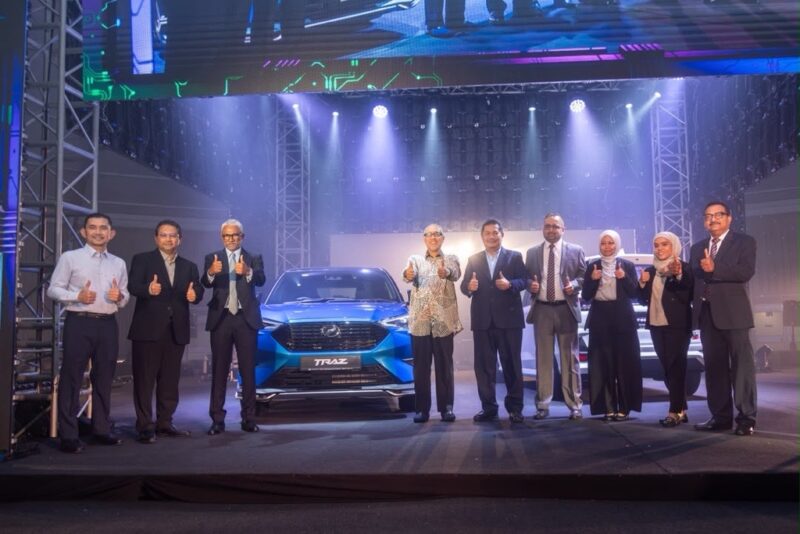
Following the launch of the QV-E electric SUV earlier this month, Perodua has now unveiled another new SUV named the Perodua Traz.
Available in two variants (X and H), the 2026 Perodua Traz is priced between RM76,100 and RM82,000.
Here are some key facts you need to know:
1. Fourth Model Using DNGA Platform
The Perodua Traz is the fourth model from Perodua to adopt the DNGA (Daihatsu New Global Architecture) platform, following the Axia, Ativa, and Alza.
It is worth noting that the Traz is a sibling to the Toyota Yaris Cross, which is sold in several major Southeast Asian markets.
2. Dimensions
The Traz is positioned between the Ativa and Alza models, targeting middle-income consumers who wish to upgrade from a sedan/hatchback to a more practical and stylish SUV.
In terms of size, the Traz measures 4,310 mm in length, 1,770 mm in width, 1,655 mm in height, with a wheelbase of 2,620 mm.
Compared to the Ativa, the Traz is 245 mm longer, 60 mm wider, 20 mm taller, and has a wheelbase that is 95 mm longer.
The ground clearance is 210 mm, while the turning radius is a compact 5.2 meters.
With a cargo space length of 955 mm, the Traz can accommodate up to 471 liters of goods.
3. Engine
The Traz appears to share the same 2NR-VE engine as the Perodua Myvi and Alza, featuring a 1.5-liter naturally aspirated unit that generates 105 PS at 6,000 rpm and 138 Nm of torque at 4,200 rpm.
Power is transmitted to the front wheels through a Dual Mode CVT (D-CVT) transmission, which includes a manual gear-shifting function.
There are three driving modes: Normal, Eco, and Sport.
With a fuel tank capacity of 42 liters, the Traz offers a fuel consumption rate of as low as 4.69 liters per 100 km (21.3 km/liter).
4. Exterior
The Traz comes equipped with features such as 17-inch alloy wheels (tyres 215/60), LED projector headlights along with LED daytime running lights (DRL), auto-folding side mirrors, and LED taillights styled like those of Lexus.
The top variant includes welcome lights, LED fog lights, and an electric tailgate with a foot sensor.
Four colors are available: Cranberry Red, Ivory White, Glittering Silver, and Granite Grey.
For the H variant, buyers can opt for a two-tone color package in Glittering Silver or Electric Blue with a black roof.
5. Interior
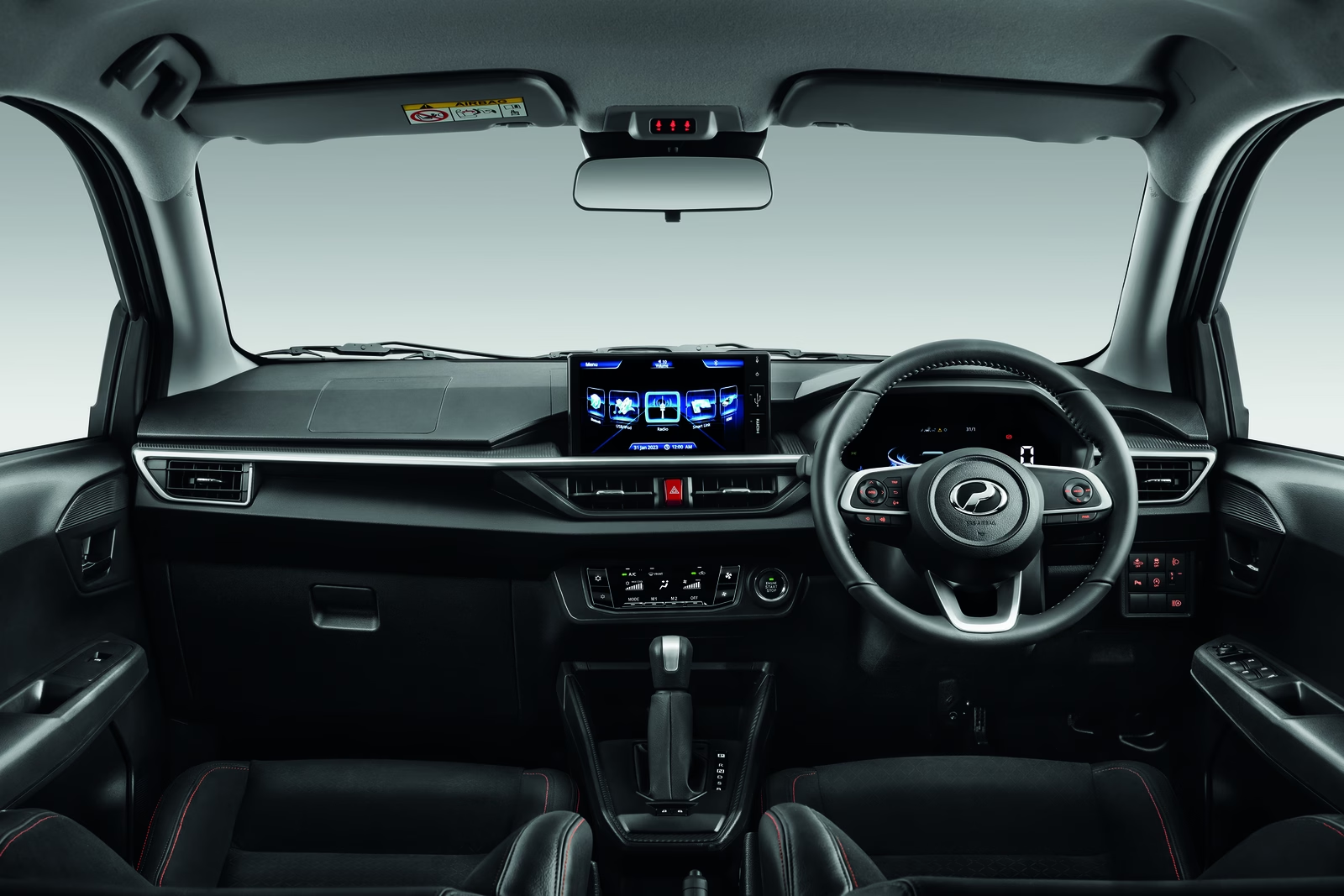
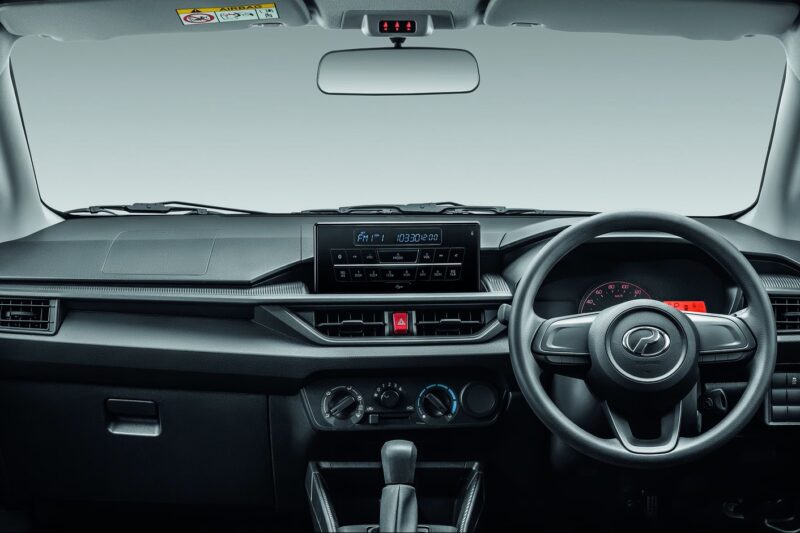
Standard features of the Traz include an analog meter, a 4.2-inch TFT display, a 9-inch Display Audio screen, Apple CarPlay and Android Auto support, a tilt & telescopic adjustable steering wheel, a climate control panel with a digital screen, and air vents for the second row.
Cargo space is equipped with a tonneau cover.
The X variant offers the following features:
Four speakers
Fabric seats with partial graphic design
Urethane steering wheel
Meanwhile, the H variant includes:
Two additional speakers (six in total)
Automatic climate control
Leather-wrapped steering wheel
Keyless smart entry system
Safety
The Traz includes up to six airbags, ABS, EBD, BA, an electric parking brake (EPB) with a Hold function, Vehicle Stability Control (VSC), ISOFIX anchor points, rear passenger seatbelt reminder, reverse camera, as well as front and rear parking sensors.
Advanced safety features comprise:
Pre-Collision Warning
Pre-Collision Brake Assist (for vehicles and pedestrians)
Forward Movement Warning (FDA)
Pedal Misoperation Control (PMC)
Lane Departure Warning (LDW)
Lane Departure Prevention (LDP)
Blind Spot Monitoring (BSM)
The 360-degree surround camera and dashboard camera (DVR) are exclusive to the H variant only.
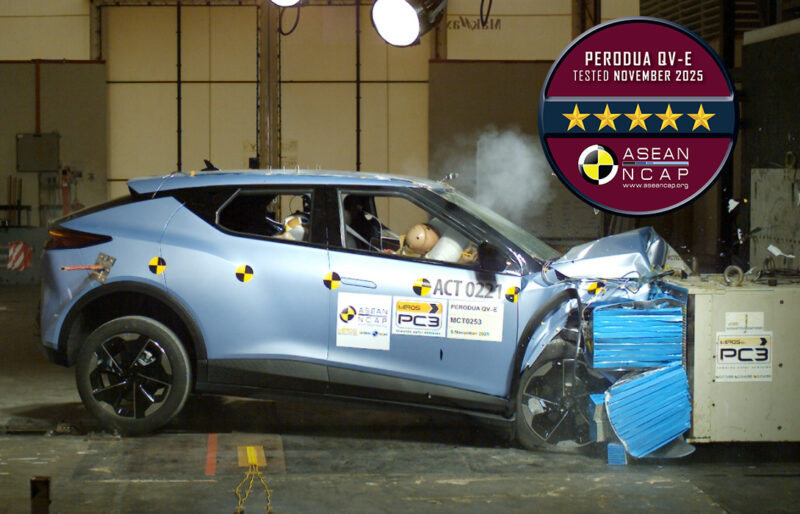
ASEAN NCAP has announced that Perodua’s first electric SUV, the QV-E, has achieved a five-star rating in its newly launched vehicle assessment tests.
Based on these tests, the Perodua QV-E attained an impressive overall score of 88.36 points across four categories:
Adult Occupant Protection (AOP) – 36.63/40.00
Child Occupant Protection (COP) – 16.73/20.00
Safety Assistance (SA) – 20.00/20.00
Motorcycle Safety (MS) – 15.00/20.00
The Perodua QV-E is a segment B electric SUV available in a single variant, offering standard features such as six airbags, Electronic Stability Control (ESC), ABS, Seat Belt Reminder (SBR) for both front and rear passengers, a rear passenger detection system, ISOFIX anchor points, and a Child Presence Detection (CPD) system.
This electric vehicle is also equipped with advanced safety features including Autonomous Emergency Braking (AEB), Lane Departure Warning (LDW), Forward Collision Warning (FCW), Lane Keeping Assist (LKA), Blind Spot Detection (BSD), and High Beam Assistance (AHB).
The Perodua QV-E is priced starting at RM80,000 excluding insurance, while the battery leasing package starts from RM275 per month over a period of nine years.
Perodua has officially launched its first electric vehicle (EV), named QV-E.
With a starting price of RM80,000, the Perodua QV-E is the first passenger car in Malaysia to come with a battery leasing scheme.
Here are some key facts you need to know:
1. Collaboration with Magna Steyr
The QV-E is a joint project between Perodua and Magna Steyr. A brand-new platform has been developed to accommodate various body shapes within the A and B segments.
This platform is not only for EVs but can also be adapted for hybrid drivetrains, as well as extended-range electric vehicles (REEVs).
2. Dimensions
The QV-E measures 4,170 mm in length, 1,800 mm in width, and 1,502 mm in height, with a wheelbase of 2,680 mm. It also offers a ground clearance of 158 mm.
When compared to its closest competitors, the QV-E has dimensional advantages with a length of 35 mm longer and a wheelbase 30 mm longer.
Additionally, the QV-E is significantly longer and wider but slightly lower compared to the Myvi model.
3. Performance
The Perodua QV-E is powered by a single electric motor delivering 201 hp and 285 Nm of torque, enabling acceleration from 0 to 100 km/h in just 7.5 seconds and a top speed of 165 km/h.
This makes the QV-E the fastest model ever produced by Perodua.
There are three driving modes: Eco, Normal, and Sport.
4. Battery
The 52.5 kWh battery pack from CATL allows this EV to travel up to 445 km on a full charge (NEDC data).
The QV-E supports AC charging at 6.6 kW, where the battery can be fully charged from 0 to 100 percent state of charge (SoC) in 8 hours.
For convenience, users can take advantage of DC fast charging at 60 kW, allowing the battery to charge from 30 to 80 percent SoC in just 30 minutes.
This battery also features a liquid cooling system and is rated IP68 (water) and IP69 (dust).
5. Exterior
The coupe SUV design of the QV-E brings a unique look not found in any existing Perodua model.
Standard features of the QV-E include 18-inch alloy wheels, LED headlights with daytime running lights (DRL), flush door handles, protective cladding on the sides, and a roof spoiler.
The charging port is located on the left front fender.
6. Cabin
In the cabin, there is a flat-bottom steering wheel, a 10.25-inch TFT digital cluster screen, a central screen of the same size, wireless support for Apple CarPlay and Android Auto, as well as a digital rearview mirror.
The QV-E still retains physical buttons for air conditioning controls located at the bottom of the air vents, along with a driving mode selection lever and a PRND rotary knob on the center console.
Other features include a driver’s seat with six-way power adjustment, automatic climate control, ambient lighting, a wireless smartphone charging slot, and partially leather-wrapped seats.
7. Safety
The QV-E comes equipped with six airbags, ABS (Anti-lock Braking System), EBD (Electronic Brakeforce Distribution), Brake Assist, Electronic Stability Control (ESC), Traction Control System (TCS), a dashcam, ISOFIX anchor points, and a Surround View Monitoring (SVM) system.
Active safety features include Autonomous Emergency Braking (AEB), Adaptive Cruise Control (ACC), Traffic Jam Assist (TJA), Highway Assist (HWA), Forward Collision Warning (FCW), Blind Spot Detection (BSD), Lane Departure Warning (LDW), Lane Keep Assist (LKA), and Rear Cross Traffic Alert (RCTA).
Additionally, there is a Child Presence Detector (CPD) for the second row seats, along with an Emergency Call System (SOS).
8. Battery as a Service
Perodua offers a battery leasing service to ensure guaranteed performance throughout a 9-year (108-month) contract period.
The monthly subscription fee (RM275 per month) will be added to the vehicle financing.
Under this program, the battery will remain the property of Perodua, but customers can fully own it after 9 years.
Once the battery reaches its End of Life, it must be returned to Perodua for proper disposal.
Perodua also installs battery tracking devices to minimize environmental risks if the battery is removed from the vehicle or left unused for an extended period.
This battery leasing program aims to alleviate customer concerns regarding the low resale value of EVs and the currently high costs associated with replacing EV batteries.
Perodua today is moving closer towards incorporating Mobility as a Service (MaaS) under its super App: P-Circle.
“The P-Circle offers mobility as a lifestyle as all these offerings covers a significant portion of our online services engagement under one super app,” Perodua President and Chief Executive Officer, Dato’ Sri Zainal Abidin Ahmad said.
“This diversification into tech-based business is in line with our future direction and the auto industry’s future in terms of convergence with consumer preference towards connecting their vehicles, and even homes with the Internet,” Dato’ Sri Zainal said.
“We foresee that this convergence to only grow stronger in the years to come, and we want to prove that we can innovate by providing all the services our customers’ needs before they ask for them – which is in line with our “We Go Beyond” philosophy,” he explained.
“A key component in MaaS is to offer drivers flexible solutions based on their travel needs and the package that we are offering fits right into that description,” he said.
One of the key components of the P Circle is the is the P Duit, an e-wallet, which makes payments easier for nearly all transactions in Malaysia.
“This feature will be useful for those looking to own our first EV (electric vehicle) as we have made an agreement with all charging point operators to agree to accept payments from our e-wallet,” Dato’ Sri Zainal said.
He added that “P Vehicle” will only made available after Perodua’s EV launch.
Dato’ Sri Zainal said that the P Guardian is a surveillance app offered together with P Charge where you can monitor the condition of your home from the camera attached to the P Charge.
The P-Circle app can be downloaded from the Apple App Store and Google Play App. The mobile charge and smartwatch can be purchased at any Perodua Sales and Service outlet nationwide.
Perodua has signed a memorandum of understanding (MoU) with MyDigital ID to secure user authentication access as the compact car company further improves its journey in cashless transactions.
MyDigital ID is a secured and trusted National Digital Identity initiative, developed to enable Malaysians to seamlessly and safely access both government and private digital services. With a focus on security and privacy, MyDigital ID sets a new benchmark for trust and protection in the rapidly evolving world of mobility.
“This collaboration is the first of its kind for the country’s automotive industry as MyDigital ID being the country’s gatekeeper for authentication transactions enables us to further diversify our services to our customers specifically, and to all Malaysians in general,” said Perodua President and Chief Executive Officer Dato’ Sri Zainal Abidin Ahmad.
He said that the authentication process is a secured starting point to ensure all users are safeguarded by the country’s cyber security experts.
“Over the last six months, we have partnered up with several Malaysian bodies to further enhance the overall Malaysian experience through strategic partnerships with PETRONAS, Tenaga Nasional Bhd and Telekom Malaysia Bhd.”
“These other partnerships will offer a world of products and services to our future customers and we want our customers to be as safe as possible,” Dato’ Sri Zainal said.
“In addition, we are also supporting the government’s call for a more cashless society for convenience as well as leveraging on the robust cyber security feature provided by MyDigital ID,” he said.
“This strategic collaboration with Perodua demonstrates the important role of digital identity in accelerating digital transformation within the automotive industry,” said Mohd Azuddin Parman, Chief Operation Officer of MyDigital ID.
“The key is to ensure trusted digital identity verification while making digital interactions safer and more convenient. It empowers industries like the automotive to offer secure and user-friendly experiences for every customer. At the same time, we are contributing to the advancement of Malaysia’s digital economy,” Mohd Azuddin said.
The Perodua Axia is an excellent choice as a first car. It is not particularly large, easy to drive, fuel-efficient, and still very much affordable, despite a slight price increase for the second generation model.
The Axia is available in four variants – G, X, SE, and AV – with prices ranging from RM38,600 to RM49,500. Thanks to the DNGA platform, new CVT gearbox, and the ASA 3.0 driver assistance system, it offers better value for money compared to the first generation model.
Speaking of which, ever wonder what are the maintenance costs for the Axia?
10,000 km service
The first service for the Axia is carried out at a mileage of 10,000 km. Three items need to be replaced: fully synthetic 0W-20 engine oil (RM140.50), a drain plug gasket (RM3.80), and an engine oil filter (RM12.50). No labour charges are incurred, resulting in a total amount to be paid of RM156.80.
20,000 km & 60,000 km services
In addition to the engine oil, drain plug gasket, and engine oil filter, Perodua will also replace the spark plugs (RM45.30) and the cabin filter (RM24.90). Including labour costs (RM89) and an 8% service tax (RM7.12), the total cost this time amounts to RM323.12.
30,000 km, 50,000 km, 70,000 km & 90,000 km services
When the odometer hits 30,000 km, Perodua will replace the engine oil, drain plug gasket, and engine oil filter. Along with a labour cost of RM65 and a service tax (RM5.20), the total cost is RM277.
40,000 km & 80,000 km services
A major service is required at the 40,000 km and 80,000 km points. This time, you will need to change the engine oil, the drain plug gasket, the engine oil filter, the air cleaner filter (RM54.30), spark plugs (RM45.30), brake fluid (RM26.40), and the cabin filter (RM24.90). Labour costs for this service reach RM99, bringing the total amount to RM414.62.
100,000 km service
Once the odometer hits six figures, you will need to spend RM452.08 on a service, which includes changing the engine oil, engine oil filter, drain plug gasket, spark plugs, cabin filter, CVT fluid (RM117.60), and CVT drain plug gasket (RM3.80).
Conclusion
The total cost of periodic servicing for the Perodua Axia amounts to RM2,992.36 for 100,000 km/five years of ownership. This means that, on average, owners will need to budget RM598.47 per year or RM49.87 per month for servicing.
This calculation is important as, in addition to the installment payments, customers should also consider servicing costs and other expenses such as fuel, insurance, and tolls before making a decision.
Yes, you read the headline right. English Premier League giants Manchester United have approached Malaysian automotive brand Perodua for discussions on a potential sponsorship.
This was revealed by Perodua chairman Tan Sri Asmat Kamaludin, who said that they are currently evaluating an offer from the 20-time EPL champions.
“I recently received a letter from Manchester United asking whether they could display the Perodua logo on their jerseys and whether we would be interested in sponsoring them.
“I usually don’t share such matters publicly, but I’m actually an Arsenal supporter. If I were to do that, it would feel rather unfair to Arsenal,” he quipped.
When asked about Perodua’s interest in sports sponsorship, particularly in local football, Asmat mentioned that interest from Manchester United demonstrates that the company is becoming increasingly recognised on an international level.
“We will consider it, especially for football in Malaysia,” he said.
The year 2024 saw Perodua not only achieving the highest vehicle registration record for the local market but also successfully ranking second in the ASEAN passenger vehicle sales chart for the same year.
This announcement was shared directly by Perodua with media practitioners during the ‘Up-Close & Casual With Perodua’ event yesterday.
According to the ASEAN passenger vehicle sales data for 2024, Perodua recorded sales of 358,000 units, surpassing Honda, which is now in third place with 303,000 units.
For the record, in 2023, Perodua ranked third with total vehicle sales of 330,000 units, behind Honda’s 351,000 units and Toyota, which was first with 752,000 units.
Since its establishment, Perodua has recorded a total of 5.1 million vehicles on the road.
Among these, the Myvi remains the king of the road, with 1.487 million units, followed by the Perodua Axia (746,000 units), Perodua Kancil (709,000 units), and Perodua Alza (503,000 units).
Additionally, 2024 also saw Perodua exceeding its original production capacity of 320,000 units, with a total of 368,100 vehicles produced that year.
According to Dato’ Sri Zainal Abidin Ahmad, President and CEO of Perodua, “The record of 368,100 units was achieved by minimizing downtime according to the maintenance schedule, through dynamic coordination and planning with suppliers and distributors, and swiftly addressing challenges.”
For 2025, Perodua has allocated RM1.6 billion for model expenditure, much of which will be dedicated to factory improvements, stamping capacity upgrades, as well as new model development and tooling.
Meanwhile, Perodua anticipates a 4.9 percent decrease in production for 2025, forecasting a total of 350,000 units, along with a projected 3.7 percent reduction in registrations to 345,000 units.
“However, demand for our vehicles remains strong, with current back orders reaching 68,000 units, of which 28,000 orders have commitment letters issued without stock,” he further explained.
In terms of after-sales service, Dato’ Sri Zainal stated that the company aims to increase vehicle maintenance numbers this year to 3.7 million, representing a rise of 7.6 percent.
Perodua will also continue to support the nation’s automotive ecosystem with an estimated RM10.8 billion in local component purchases from suppliers in the country.
“2025 will be an exciting year for Perodua as we prepare the company and our strategic partners for any forthcoming changes. We believe that once these changes are complete, we will be able to strengthen our position both in this country and in the region,” he said.
Perodua and Universiti Teknologi Malaysia (UTM) have signed a memorandum of understanding (MoU) to develop the country’s next generation of electric vehicles (xEV).
The MoU includes a comprehensive package that would cover educating and training future engineers in developing new technologies relating to xEV.
“We look forward to exploring a future where Malaysia can develop its own xEV technology and its benefits be shared with our future generation,” Perodua President and Chief Executive Officer Dato’ Sri Zainal Abidin Ahmad said.
“With this MoU, Perodua is taking a step further from our original mandate from being a vehicle for technological transfer to becoming an entity that drives technological development,” he said.
Perodua was established in 1993 to provide Malaysian with high-quality yet affordable cars while at the same time act as a company that can transfer technology into Malaysia.
This technology transfer was aimed at developing the national automotive ecosystem as well as improving technical and technological knowledge of Malaysians.
Prof. Dr. Rosli Md Illias, Deputy Vice-Chancellor (Research and Innovation) of Universiti Teknologi Malaysia (UTM), highlighted the collaboration’s potential to drive sustainable mobility in Malaysia.
“This collaboration’s underscores the importance of bridging the gap between academia and industry that can empower graduates with the skills and knowledge” he said.
The collaboration will empower UTM students and researchers while serving as a model for academia-industry partnerships, ensuring Malaysia remains competitive in the global automotive sector.
The MoU highlights six key elements, including enhancing UTM’s academic curriculum, establishing a satellite lab at UTM’s main campus, exchange of knowledge in automotive technology, exposure to xEV technology for academicians and engineers, collaboration in the field of academia and R&D, as well as development of talent and training programmes.
The MoU also offers both parties other areas of cooperation that are mutually beneficial to them.
Malaysia’s Leading Automotive News | ENGEAR ENGLISH