Honda Malaysia has announced the appointment of Narushi Yazaki as the Managing Director and Chief Executive Officer, effective April 1, 2025.
Narushi Yazaki succeeds Hironobu Yoshimura, who has led Honda Malaysia for the past three years and is currently serving at Honda’s headquarters in Tokyo.
According to Honda Malaysia, Yazaki has over 25 years of experience, holding key leadership positions in several countries, including the United States, Japan, and Thailand.
Prior to serving in Malaysia, Yazaki worked with Corporate Administration Operations at Honda Motor Co. Ltd., Tokyo, Japan.
“I am honored to take on this responsibility at Honda Malaysia, a market known for its dynamic growth and significant contributions to the Honda brand in the Asia and Oceania region.
“I aim to build on the strong foundation laid by my predecessors and continue driving Honda Malaysia’s growth and success in this thriving market,” he stated.
Under Yoshimura’s leadership, he played a vital role in maintaining Honda Malaysia’s position in the non-national passenger vehicle segment for 11 consecutive years.
He was also responsible for leading Honda Malaysia through the challenging period following the COVID-19 pandemic.
Boon Siew Honda has introduced the lineup of riders set to compete in the FIM Asia Road Racing Championship (ARRC), Superbike World Championship (WSBK), and the Malaysia Superbike Championship (MSBK).
For the 2025 season, Boon Siew Honda will compete in all three championships under one iconic name: Idemitsu Honda Racing Malaysia.
In the ARRC’s Asia Superbike 1000cc (ASB1000) category, Honda Racing Malaysia will be represented by Zaqhwan Zaidi and Azroy Hakeem Anuar, riding the 2025 Honda CBR1000RR-R.
Meanwhile, in the SuperSports 600cc (SS600) category, Honda Racing Malaysia’s charge will be spearheaded by three riders Md Helmi Azman, Syarifuddin Azman (Damok), and Khairul Idham Pawi (KIP). The machine they will be using is the CBR600RR.
Additionally, Md Irfan Haykal will represent Honda Racing Malaysia in the Asia Production 250cc (AP250) category. He will compete under Honda Racing Malaysia’s satellite team, SCK Honda Racing, riding the CBR250R.
On the Superbike World Championship (WSBK) stage, Honda Racing Malaysia’s challenge will be shouldered by Md Zaqhwan Zaidi competing in the Superbike (SBK) category, with Damok racing in the World Supersport (WSSP) category.
Lastly, the Malaysia Superbike Championship (MSBK) will see Haziq Fairues represent Idemitsu Honda Racing Malaysia.
Boon Siew Honda has announced the appointment of Kunitomo Asano as its new Managing Director and Chief Executive Officer, effective April 1, 2025.
Asano will succeed Mitsuharu Funase, who has been appointed Managing Director of the Motorcycle Racing Division at Honda Racing Corporation.
Asano, who previously served as the Chief Sales and Marketing Officer at Boon Siew Honda, possesses over 20 years of experience in the motorcycle industry, including 10 years in Japan and 10 years in international markets such as Thailand, India, and Malaysia.
His deep understanding of global trends and local market dynamics positions him well to drive Boon Siew Honda’s continued growth.
His career with Honda began with an assignment in Malaysia, after which he became involved in product planning, export business, and marketing strategies across multiple regions.
During his tenure, Asano played a vital role in stabilising and increasing sales while strengthening operational efficiency.
Under his leadership, Boon Siew Honda successfully introduced new motorcycle models, expanded the BigWing dealer network, and launched strategic test ride campaigns.
As the new CEO, Asano is committed to further enhancing Honda’s brand presence in Malaysia. He also aims to improve customer experience, enhance the service network, and drive continuous product innovation.
In addition, he places great emphasis on rider safety, addressing traffic-related challenges through advanced safety technologies and educational initiatives.
At the 41st Osaka Motorcycle Show 2025 held at INTEX Osaka, Honda showcased the CB1000F Concept for the first time.
Although it is still designated as a concept, the design of the Honda CB1000F suggests that it is ready for mass production.
It also reminds us of the CB-F Concept design presented five years ago.
However, unlike the CB-F, which was built on the CB1000R platform, the CB1000F shares the same chassis as the CB1000 Hornet.
What’s the difference? The CB1000F features a steel frame and a twin-sided swingarm, compared to the CB-F, which uses an aluminum frame and a single-sided swingarm.
Additionally, the CB1000F is equipped with a 150 hp inline-four engine derived from the Fireblade, along with Showa SFF-BP front forks and Nissin brakes, which are also found on the Hornet model.
The Honda CB1000F also boasts a new subframe designed to fit its retro proportions, complemented by a large chrome exhaust canister.
While adhering to a retro concept, the Honda CB1000F also includes modern features such as a single rear shock absorber, inverted forks, radial brakes, LED lighting, and a TFT display.
Once in production, the Honda CB1000F is poised to compete strongly against existing neo-retro models in the market, such as the Kawasaki Z900RS and Yamaha XSR900.
Boon Siew Honda has announced the release of the CBR150R featuring a new Honda Tricolor color scheme, inspired by the racing DNA present in the CBR1000RR-R, CBR650R, and CBR250RR.
In addition to the Honda Tricolor, the CBR150R is also available in a Silver option, enhanced with bright yellow accents.
In terms of specifications, the Honda CBR150R is powered by a single-cylinder 149.2 cc engine, generating 16 hp at 9,000 rpm and 13.7 Nm of torque at 7,000 rpm. It is paired with a six-speed transmission and features an assist and slipper clutch.
The motorcycle maintains a front inverted fork suspension setup, along with a single rear shock absorber, 17-inch wheels, front and rear disc brakes, a dual-channel ABS system, a digital meter panel, and LED lights.
Other features include a fuel tank capacity of 12 liters and a seat height of 788 mm.
The Honda CBR150R 2025 is available starting March 19 at all authorized Honda dealers and IMPIAN X across the country, with a price tag of RM13,399 (excluding road tax, insurance, and registration).
Boon Siew Honda has announced the arrival of the updated 250cc scooter model, the 2025 Honda NSS250 to further invigorate the local scooter market.
Unlike previous offerings, the 2025 NSS250 now comes equipped with a five-inch color TFT display that can be controlled via illuminated switches.
With the integration of Honda RoadSync, riders can access navigation functions, voice calls, and music through Bluetooth connectivity.
The 2025 Honda NSS250 is powered by a 249.5cc engine that generates 23 hp at 7,750 rpm and 24 Nm of torque at 6,250 rpm, paired with an automatic CVT transmission.
The tubular steel frame of the NSS250 is complemented by a 33mm front telescopic fork and dual shock absorbers at the rear, providing improved agility on urban roads.
Other features include an adjustable electronic windscreen (with a range of 180 mm), LED headlight units, a Smart Key system, ample storage space under the seat, and dual glove compartments at the front.
In addition to a two-channel ABS system, this NSS250 also includes an Emergency Stop Signal feature and Honda Selectable Torque Control (HSTC) that can be disabled.
Five new colors are available for the NSS250, including Pearl Smoky Gray, Matte Gun Powder Black Metallic, Candy Rosy Red, Pearl Jubilee White, and Pearl Shining Black.
The retail price for the 2025 Honda NSS250 starts from RM25,888.
Boon Siew Honda has announced the arrival of the new generation Honda X-ADV 750 2025 adventure scooter for the local market.
This popular machine continues to feature the 745 cc SOHC parallel-twin engine, which generates 58 hp at 6,750 rpm and a torque of 69 Nm at 4,750 rpm.
The engine is paired with an upgraded DCT (Dual Clutch Transmission) system for smoother power delivery, complete with manual and automatic modes as well as an automatic rev-matching function during downshifts.
Unlike its predecessor, the new X-ADV 750 showcases a more aggressive appearance, thanks to the daytime running lights (DRL) unit that integrates turn signal functions.
The projector LED headlight housing has been intentionally darkened for a more striking effect.
In terms of practicality, the X-ADV features a three-stage adjustable windscreen that can be operated with one hand, a USB-C charging slot, a glovebox, and a smart key system.
The storage space under the seat is 22 liters, equipped with LED lighting and dividers to prevent items from shifting during rides.
There is a five-inch full-color TFT display with smartphone integration through Honda RoadSync, allowing navigation and music control via Bluetooth connection.
Completing the features of the X-ADV are the Throttle-by-Wire system, Automatic Turn Signal Canceller, dual-channel ABS, and Human Machine Interface (HMI)-based cruise control system to reduce fatigue during long journeys.
Other features include 41 mm SFF-CA upside-down front forks, a single rear shock absorber, dual 296 mm brake rotors with a four-piston caliper at the front, a single 240 mm brake rotor with a single-piston caliper at the rear, a 13.2-liter fuel tank, and a seat height of 790 mm.
There are three color options available: Matte Deep Mud Gray, Pearl Glare White, and Graphite Black, priced at RM69,999, along with a special Matte Goldfinch Yellow option priced at RM70,999.
Honda Malaysia said it aims to sell 83,000 vehicles in 2025 and capture a market share of 10.6%.
According to the company, this year’s target, which surpasses last year’s sales of 81,600 units by 1,400 units, is driven by the launch of three new models, including the Civic facelift in January.
Honda Malaysia stated that with continued strong demand for its existing lineup, it is confident of maintaining its leading position in the non-national passenger vehicle segment for the 12th consecutive year.
The company is confident that internal combustion engine and e:HEV technologies will stay relevant in the market, benefitting from infrastructure readiness, consumer preferences and technological advancements.
Last year, e:HEV models received significant feedback from the market, accounting for nearly 30% of total hybrid vehicle sales in Malaysia.
In line with its business direction for 2025, the Managing Director and Chief Executive Officer of Honda Malaysia Hironobu Yoshimura said that the company will launch its first battery electric vehicle (BEV), the e:N1.
“This model exemplifies Honda’s advanced BEV features, while also introducing the company’s initial EV technology to the Malaysian market,” he said.
He added that the launch of the e:N1 will pave the way for Honda Malaysia’s three-year plan to introduce three new BEV models to the Malaysian market by 2027.
In addition to enhancing its product offerings, Honda Malaysia indicated that it will improve its sales and after-sales services. The company currently operates 104 distribution centres nationwide.
Less than two months after the announcement was made, Honda and Nissan have decided to cancel their merger plans.
According to the original plan, the merger between Honda and Nissan was set to create the world’s third-largest automotive group, following Toyota and Volkswagen.
Citing a report from Japan News, Nissan rejected Honda’s proposal to make it a wholly-owned subsidiary, causing the merger discussions to become disrupted.
In a previous announcement, both parties signed a memorandum for cooperation in electric vehicles (EVs) and several related areas, including vehicle software.
In December, Honda and Nissan announced plans to form a holding company that would oversee the operations of their respective brands.
The merger was originally intended to reduce costs and alleviate financial burdens, thus enabling both brands to compete with global players like Tesla and BYD.
Both Honda and Nissan were expected to announce the results of their discussions at the end of January; however, this was postponed to mid-February.
Despite the cancellation of the merger plans, Honda and Nissan are reportedly set to continue their strategic partnership along with Nissan’s partner, Mitsubishi.
Honda Malaysia has announced an impressive achievement, with the sixth-generation Honda CR-V SUV recording sales exceeding 11,300 units throughout 2024.
This achievement solidifies the CR-V’s status as the number one model in the mid-size SUV segment, capturing approximately 36 percent of the market share.
According to Hironobu Yoshimura, Managing Director and Chief Executive Officer of Honda Malaysia, “Since its launch in December 2023, the Honda CR-V has experienced strong demand, further reinforcing its dominant position in the market.”
He further stated that the CR-V is the third best-selling model throughout 2024.
Of the total CR-V sales, the 2.0L e:HEV RS hybrid variant accounted for 20 percent, leading with an 87 percent share in the mid-size hybrid SUV segment.
The petrol variants also performed well, with the E variant being the customers’ top choice, contributing to 40 percent of total CR-V sales.
For the Malaysian market, the Honda CR-V is available with the option of a 1.5-liter turbo engine producing 193 PS and 243 Nm, or a 2.0L e:HEV hybrid engine with 184 PS and 335 Nm.
The exterior design of the CR-V features LED headlights and taillights, a distinctive front grille, and specific functions for the top variant, such as Active Cornering Lights and an Active Shutter Grille.
In addition to a spacious and comfortable cabin, the CR-V also offers a cargo space of 589 liters, which can expand to 1,072 liters when the second-row seats are folded flat.
Notably, it includes comprehensive safety features such as Honda CONNECT, Honda SENSING, and additional features for the e:HEV variant like Adaptive Driving Beam and a 360-degree camera system.
While the global passenger vehicle market is dominated by the industry giant Toyota, the global motorcycle segment appears to be led by Honda.
According to a report from Japan Times, Honda’s global motorcycle sales are projected to reach 20.2 million units for the fiscal year ending in March this year.
This means that Honda currently holds as much as 40 percent of the global motorcycle market share!
This development is supported by strong demand from several markets, including India, Indonesia, the Philippines, Brazil, and several countries in Central and South America.
Honda is also determined to increase its market share target to 50 percent, which will include electric motorcycles, with total sales aiming to hit 60 million units by 2030.
To achieve this, a new assembly plant dedicated to electric-powered motorcycles will be established in India and is set to begin operations in 2028.
As part of a serious drive toward electrification, the manufacturer also plans to launch up to 30 electric models in order to reach an annual sales target of four million units for electric motorcycles (EVs) by 2030.
Other initiatives in the pipeline include developing battery usage and recycling, reducing e-bike costs, ensuring that existing facilities are more environmentally friendly, and further expanding the network of existing battery-sharing and swapping stations.
To date, Honda operates 37 assembly facilities across 23 countries.
The Asahi Shimbun reported today that the proposed merger between two major Japanese automotive companies, Nissan and Honda, may be canceled.
According to sources close to the matter, the two companies are planning to hold a meeting to discuss the cancellation of the merger negotiations.
It is understood that Honda wanted to turn Nissan into a subsidiary; however, this plan was met with strong opposition as it did not align with previous arrangements.
When the merger plan was announced at a joint press conference last December, a holding company was set to be formed to oversee both brands, which would become the third-largest automotive company in the world, following Toyota and Volkswagen
Further surprising developments have emerged just days after reports stated that Honda and Nissan aimed to postpone their merger announcement until mid-February.
Nissan is currently grappling with a restructuring effort that includes cutting up to 9,000 jobs globally.
However, the company has not provided detailed explanations of the plan to its potential business partners, and Honda’s upper management has also complained that Nissan is moving too slowly.
In a press conference last December, Nissan President Makoto Uchida emphasized that both companies would be on equal footing.
Japan Today reported yesterday (February 2) that Honda and Nissan will announce their merger plan in mid-February.
According to the original plan, the second and third largest automotive manufacturers intended to make the announcement by the end of January.
During a press conference held last month, both parties agreed to start discussions to form a new company by 2026.
Honda’s CEO, Toshihiro Mibe, stated that they expect Nissan to take appropriate actions in restructuring as a prerequisite for the merger.
In November, Nissan announced a reduction of up to 9,000 jobs worldwide and a 20 percent cut in global production capacity after the company reported a profit decline of over 90 percent for the period from April to September.
As part of its restructuring efforts, Nissan is also planning to offer early retirement programs for workers at three plants in the United States and to reduce the workforce in Thailand.
Honda appears to be somewhat skeptical and is calling for more drastic measures to ensure Nissan’s successful recovery.
According to another source, Nissan’s alliance partner, Mitsubishi, is less inclined to join the new merged entity.
In recent years, rumors have circulated that the Civic Type R FL5 will be the last pure internal combustion engine (ICE) hot hatch model from Honda.
What is the future of the Civic Type R? Will it become an electric-powered hot hatch?
The unfortunate news is that Honda is indeed exploring the process of creating an EV Type R.
However, this process is not as simple as Toshihiro Akiwa, head of Honda’s BEV development unit, admitted when unveiling two 0 Series prototypes at CES Las Vegas this month.
“An electric motor and battery have different characteristics, so we cannot produce something that is the same as before.
“As an EV, how can we offer the joy of driving? Of course, we have not given up, but it is not just about sheer power. It’s about sound, vibrations, acceleration, and human experience.
“All of these are part of the joy of driving,” he added.
While showcasing the large sedan and mid-size SUV prototypes, Honda has no plans to offer the 0 Series EV, even though the electric motor setup can achieve around 480 hp.
For comparison, the Honda Civic Type R FL5 is a pure ICE hot hatch with a 2.0-liter turbo engine capable of generating up to 329 hp.
If you were given enough money to buy a Honda Civic Type R FL5, would you choose that model?
Or are you actually more inclined to acquire a classic Type R model – like this Civic Type R EK9?
The bidding website Bring A Trailer has listed a Honda Civic Type R hatchback of the EK9 generation that was imported into the United States last year.
It features the iconic Championship White color and has only a mileage of around 53,000 km!
Unlike most owners, this Civic Type R EK9 retains its original specifications as it came out of the factory in 1998.
The original 15-inch rims are still present, though they are now wrapped in Hankook Ventus V2 Concept2 tires.
The cabin space also still retains the Recaro sport seats upholstered in red fabric and microfiber, along with red carpeting and a Momo steering wheel.
When new, the original inline-four B16B 1.6-liter naturally aspirated engine could produce a power output of up to 182 hp and 160 Nm, paired with a five-speed manual transmission and a limited-slip differential.
As of the time this article was written, the bidding price for this EK9 has already reached US$42,000 (RM189,000), nearly matching the selling price of the FL5 Type R in the United States, which starts at US$46,690 (RM210,152)
Do you like the original VTEC roar or the power delivery from the much more modern and powerful VTEC turbo?
It is perhaps unnecessary to reiterate that the Honda City is one of the most popular B-segment sedans in the market for non-local manufacturers.
The facelifted version launched in August 2023 saw the addition of a petrol RS variant positioned between the e:HEV RS and the V. Overall, there are five variants to choose from, with prices ranging from RM84,900 to RM111,900.
For those interested in buying the City, here are the maintenance costs for the petrol variants up to 100,000 km:
10,000 km, 50,000 km & 70,000 km
Good news for fans of the City: the first service is required only when the odometer reaches 10,000 km or within the first six months of ownership. The service involves an engine oil change and a drain plug washer (RM139.56) and a check of the front and rear brakes (RM10.17). Including labour costs (RM112.50) and service tax (RM9.00), customers will need to pay RM271.23.
20,000 km
At 20,000 km, in addition to the engine oil and drain plug washer (RM139.56) and brake checks (RM10.17), Honda Malaysia will also replace the oil filter (RM34.68). With labour costs (RM135) and service tax (RM10.80) included, the total cost this time comes to RM330.21.
30,000 km & 90,000 km
At this interval, Honda Malaysia will add the air cleaner element (RM93.60) and dust filter (RM234.06) to the list of items that need replacing, in addition to the engine oil, drain plug washer, and brake checks. No labour costs or service tax apply this time around, so the total amount due is RM477.39.
40,000 km & 80,000 km
In addition to the engine oil, drain plug washer, oil filter, and brake checks, customers will also need to replace the transmission fluid (RM189.38). The labour and service tax for this service come to RM150 and RM12, respectively, bringing the total to RM535.79.
60,000 km
For 60,000 km or three years of ownership, there are five items to be replaced: engine oil and drain plug washer, oil filter, air cleaner element, dust filter, and brake fluid (RM41.21). Both the labour cost and service tax are waived, meaning owners only need to pay for the parts, totaling RM553.28.
100,000 km
When the odometer hits the significant 100,000 km mark, owners only need to replace three items: engine oil and drain plug washer, oil filter, and iridium spark plugs (RM387.67). No labour or service tax is charged, resulting in a total cost of RM572.08.
Conclusion
The total cost for periodic servicing of the petrol Honda City amounts to RM4,295.62 for 100,000 km/five years of ownership. This averages out to RM859.12 per year or RM71.59 per month for servicing.
This calculation is important because, in addition to instalment payments, customers should also consider service costs and other expenses such as fuel, insurance, and tolls before making a decision.
Honda Malaysia has launched the facelifted version of the 11th generation Honda Civic, approximately a month after the sedan was made available for booking.
As before, the Civic is offered in four variants: E, V, RS, and e:HEV RS. The prices (OTR without insurance) are as follows:
E – RM133,900
V – RM144,900
RS – RM149,900
e:HEV RS – RM167,900
In terms of appearance, the facelifted Civic features a new, more aggressive front bumper and a larger grille. Thanks to its protruding design, the new bumper makes the C-segment sedan 3 mm longer compared to its predecessor.
There are no changes to the rear apart from the taillights, which now have a darkened smoked effect.
As for the rolling stock, the e:HEV RS variant gets new 18-inch alloy wheels, while the other variants retain their previous designs.
The design and layout of the interior remain unchanged, although there have been several updates on the equipment front.
For example, a 9-inch audio display is now included as standard across all variants. It is now equipped with Google built-in that allows users to access services such as Assistant, Maps, and Play Store.
Additionally, features such as wireless Android Auto and Apple CarPlay, front and rear USB Type C ports, the Honda Connect telematics system, and solar film are included in all four Civic variants. The top two variants, RS and e:HEV RS, also gain wireless charging.
There are no changes under the bonnet. The petrol variants—E, V, and RS—are still powered by a 1.5-litre VTEC Turbo engine that produces 182 PS and 240 Nm, transmitted to the front wheels via a CVT gearbox.
The Civic e:HEV RS retains its hybrid powertrain, which consists of a 2.0-litre Atkinson cycle engine with 143 PS/184 Nm, and an electric motor that generates 184 PS and 315 Nm.
In addition to the Econ, Normal, and Sport driving modes, the hybrid variant now features a new Individual mode.
It also combines Active Noise Control (ANC) with Active Sound Control (ASC) to reduce outside noise while enhancing engine sound.
The Honda Sensing system, which is included as standard on all variants, offers Low Speed Follow (LSF), Lead Car Departure Notification System (LCDN), Adaptive Cruise Control (ACC), Forward Collision Warning (FCW), Collision Mitigation Braking System (CMBS), Lane Keep Assist System (LKAS), Road Departure Mitigation (RDM), Lane Departure Warning (LDW), and Auto High Beam (AHB).
CMBS can now detect pedestrians and cyclists, while ACC accelerates and brakes more smoothly. LKAS has also been improved, providing better control when driving straight and turning.
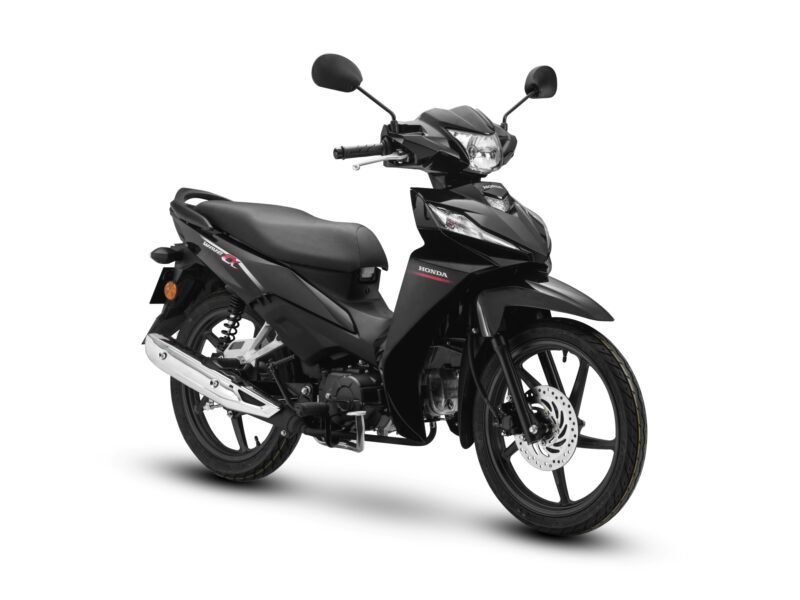
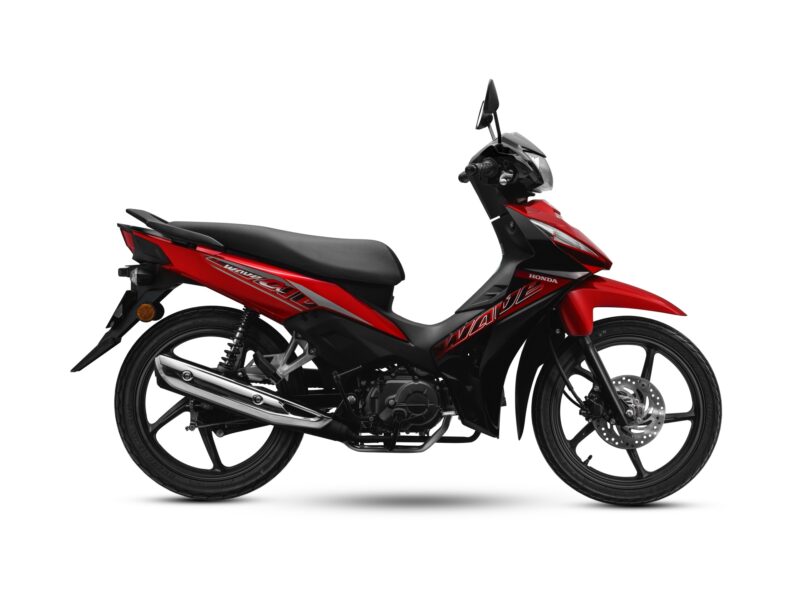
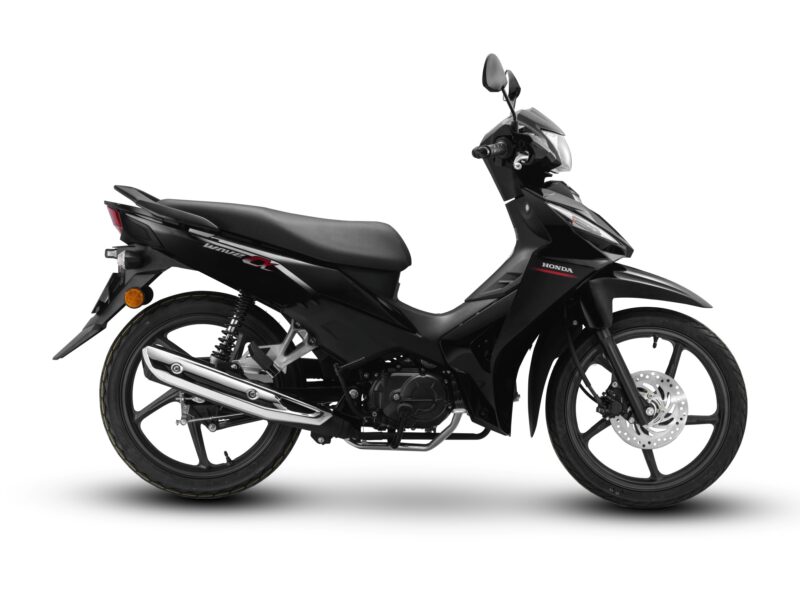
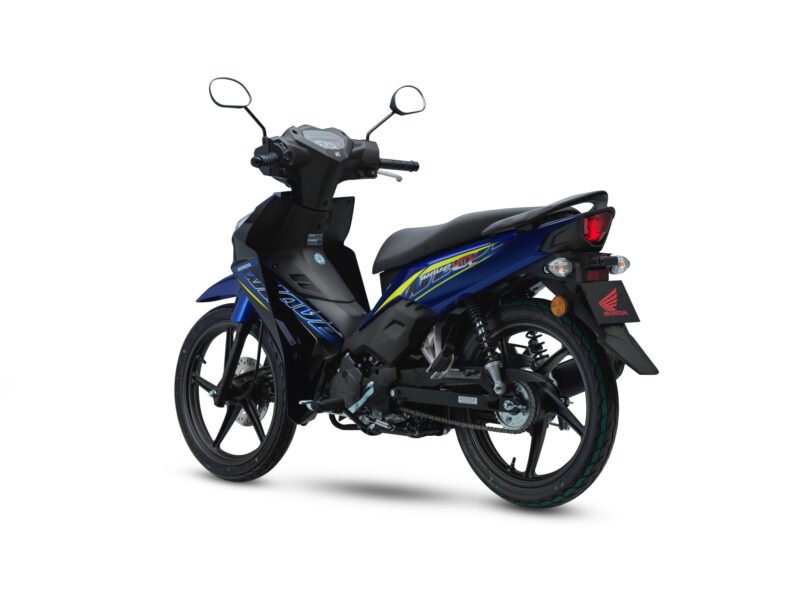
Boon Siew Honda has announced that four new colors are available for the 2025 Honda Wave Alpha, which are silver, blue, red, and black.
The 2025 Honda Wave Alpha is available at all Impian X dealerships as well as authorized Honda dealers nationwide starting from January 6, 2025.
The selling price starts at RM5,309 for the silver, blue, and red variants, while the black variant is priced at RM5,259.
In terms of specifications, the Wave Alpha maintains its air-cooled single-cylinder engine with a displacement of 109.2 cc, generating 8.7 hp at 7,500 rpm and torque of 8.7 Nm at 5,500 rpm, paired with a 4-speed transmission.
This motorcycle features telescopic front forks, followed by dual shock absorbers at the rear, and its braking system consists of a front disc brake and a mechanical drum brake at the rear.
It offers a fuel tank capacity of 4.0 liters, with under-seat storage of 7.3 liters, a seat height of approximately 768 mm, and a wider seat.
Honda USA has begun offering the Honda NT1100 Police, a two-wheeled patrol vehicle intended for law enforcement agencies, which can now be ordered through the Powersports Fleet/Government Purchase program.
Built on the NT1100 sports touring model also available in the European market, the Honda NT1100 Police comes equipped with features such as protective bodywork, an adjustable windscreen, a comfortable seat, and LED lighting systems.
The NT1100 Police can also be outfitted with a variety of accessories specifically designed for police work, available through authorized vendors.
Among these accessories are pannier bags, a special wiring system, document storage boxes, and a rear seat cover.
The Honda NT1100 Police is powered by a 1,084 cc parallel-twin engine, the same as that used in the Africa Twin model, but has been modified to reach speeds of up to 200 km/h.
The engine produces 101 hp at 8,500 rpm and 104 Nm of torque at 6,000 rpm, which is transmitted to the rear wheel via a six-speed manual transmission.
The suspension system consists of 43 mm inverted Showa telescopic forks, complemented by a single Pro-Link Showa shock absorber, each offering a wheel travel distance of 139.7 mm.
For stopping power, the bike features dual-piston calipers and 310 mm twin rotors at the front, along with a single-piston caliper and 256 mm rotor at the rear, supported by a two-channel ABS braking system.
Weighing in at approximately 256.7 kg, the NT1100 Police has a fuel tank capacity of 20.4 liters and a seat height of about 820 mm.
Honda Motor Co. and Nissan Motor Co. have confirmed in a statement that discussions are ongoing to establish a new company, which is expected to be finalized by 2026.
According to a report by Mainichi JP, this move is seen as a way to create the world’s third-largest automotive group, behind Toyota and Volkswagen, to compete against American and Chinese manufacturers in the electric vehicle segment.
Honda and Nissan, the second and third largest manufacturers in Japan, aim to finalize the discussions by June.
Meanwhile, Mitsubishi Motors Corporation will decide by the end of January 2025 whether to join the new company or not.
In an effort to become more competitive in the market, Honda and Nissan have agreed to collaborate on research and development (R&D), standardize vehicle platforms, and share components across various product segments, in addition to optimizing existing production systems and facilities.
Malaysia’s Leading Automotive News | ENGEAR ENGLISH