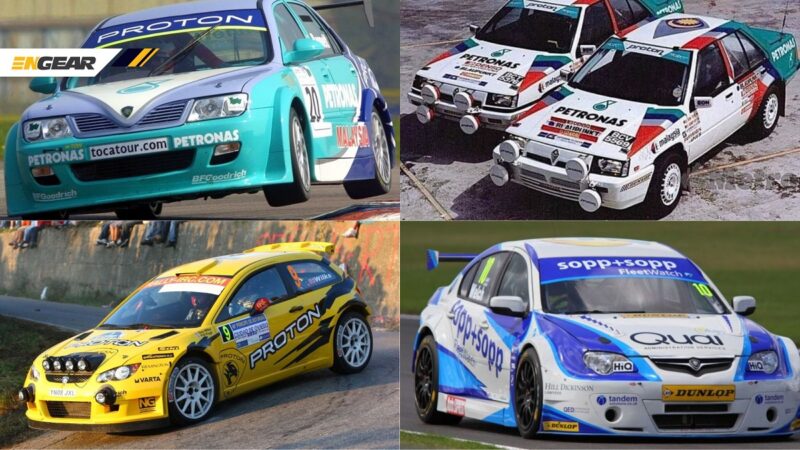
In conjunction with the Merdeka month, we would like to share an article about Proton, one of the national car manufacturers. Specifically, this sharing is about Proton racing cars from the past.
Previously, Proton had several racing machines such as Saga and Iriz under the R3 team that competed in S1K (Sepang 1000km). Most recently, Proton will be deploying the S70 R3 for the upcoming race.
There is also the Proton Iriz R5 competing in rallies abroad, but this is the result of the work of Mellors Elliot Motorsport based in the UK. Nevertheless, for a touch of nostalgia and history, let’s take a look at Proton’s past racing machines.
1. Proton Waja BTCC
The Waja BTCC was a Petronas project developed to compete in the British Touring Car Championship (BTCC) starting in 2002. It is understood that engineers from Petronas were involved in the development of this Waja.
It was powered by a Renault 1.8-liter engine found in the Waja Premium 1.8L, but tuned to 1,996cc by Mountune and paired with a 6-speed gearbox from Xtrac. The suspension was a combination of Eibach springs and Penske dampers before being switched to Ohlins in 2004.
The Waja BTCC was once driven by local talent Fariqe Hairuman.
2. Proton Persona BTCC
Another Proton machine that competed in the prestigious touring car championship in the UK is the Persona, this time by the Welch Motorsport team. They used the Persona for five years in the BTCC.
This racing class used the same standards: a 2.0-liter turbo engine, suspension, electronics, and gearbox for all teams. It is understood that the Persona BTCC engine was capable of generating 408hp!
3. Satria Neo S2000
Perhaps the most popular Proton racing car on this list, not only because it was used in rallies abroad but also because it was featured on Top Gear.
Despite the “S2000” in its name, it did not use a Honda S2000 engine as many netizens assumed. Instead, S2000 refers to the FIA Super 2000 class of rallying it competed in. The engine came from the Waja 1.8 with internal racing components, and its displacement was increased to 1,998cc, essentially making it a 2.0-liter engine. It produced around 278hp at 7,600rpm.
The Satria Neo S2000 also received a wide aggressive body kit, a four-wheel-drive system, a ChroMo Steel Tube roll cage, a 6-speed Xtrac gearbox with LSD, and brakes from Alcon.
4. Proton Gen2 and Satria Neo MSS
The next machines we compile are the Satria Neo and Gen2 used for the Malaysian Super Series (MSS) in 2011. Both cars were from the official Proton R3 team and used a 1.6-liter engine for the 1.6 Touring Car category.
The Satria Neo R3 was driven by Faidzil Alang, and the Gen2 R3 was driven by Syafiq Ali, and they achieved outstanding results throughout the racing season.
5. Proton PERT Saga Iswara 4WD Turbo
Next on the list is a rather cool machine for us, the Proton PERT Saga Iswara 4WD Turbo. Yes, it was equipped with a turbo engine and a 4WD system, quite radical compared to the standard version.
This machine was used for Group S rallies from 1991 to 1994. It had a 2.0-liter DOHC 16-valve engine with a MoTEC Engine Management System, producing 337hp. It had a sequential 6-speed gearbox with center coupling and LSD on the front and rear.
The specifications were quite impressive!
6. Proton Wira PERT AWD Turbo
Another PERT machine for rallying use, the Proton Wira was also equipped with a turbo engine, AWD system, and cool white rims.
7. Bonus: Proton Satria GTI (video game)
Finally, in our list, we have a bonus: a racing machine in a video game! The Proton Satria GTI race version in the TOCA Race Driver game, released in 2005 for the PlayStation 2, Windows, and Xbox platforms. The writer still remembers driving this Satria GTI on the Monza track in Italy in this game. Bringing back memories!
Credit: Tekan Minyak, Careta, Autobuzz, The Checkered Flag UK, Paultan, Proton Motorsports, Wapcar, Weekend Octane
ISUZU D-Max owners displayed their patriotic spirit when they participated in the Isuzu Merdeka Convoy as part of the company’s initiative to celebrate Malaysia’s 67th independence day.
Some 3,300 participants using 900 Isuzu D-Max gathered at 36 Isuzu outlets around the country from Alor Setar to Keningau before heading out on their respective convoys to points of interest within their region.
Various activities were organised for participants to enjoy their Merdeka celebrations including durian fests, white water rafting, glamping, treasure hunts, picnics and many more.
The Isuzu Merdeka Convoy this year follows through on the success of the Merdeka Convoy 66 held last year that was graced by some 600 Isuzu D-Max vehicles. As the largest ever simultaneous parade of Isuzu D-Max in the country, the convoy sought to bring owners together to celebrate the historical date in the country’s history.
“Through the success of the Merdeka Convoy 66, owners have voiced their satisfaction and eagerness to participate in similar outings that develop camaraderie among Isuzu D-Max owners hence we hope to continue developing such activities for our owners,” said Isuzu Malaysia’s Chief Executive Officer, Mr Shunsuke Okazoe.
Okazoe said this when he flagged off the convoy at the Indah Utara outlet in Alor Setar, Kedah where participants in 80 Isuzu D-Max headed out to the Tasoh Lake Resort in Perlis to enjoy the drive and a day filled with fun activities.
Do you want to know about some of the largest machines in the world? You are in the right article. The following list will showcase some giant machines such as construction vehicles, ships, aircraft, and mining equipment. Keep reading and expand your knowledge.
1. Giant Bucket Wheel Excavator
The Giant Bucket Wheel Excavator is the second largest machine in the world, named Bagger 293. This is the giant among large machines. It was built in Germany in 1995. This machine has a height of 96 meters and a length of 225 meters. It also weighs 14,061 tons.
2. The Prelude
Here is The Prelude, the largest ship in the world, surpassing the Emma Maersk. It was commissioned and set sail in South Korea. The Prelude is not just a ship, but more of a floating gas processing facility. It measures 487 meters in length, 45 meters in height, and weighs 600,000 tons.
3. Stratolaunch
Introducing the world’s largest aircraft, Stratolaunch. It was unveiled by Paul Allen before his death in 2018. This aircraft has a wingspan of 117 meters and weighs 580 tons. It requires six engines to fly and is designed to launch rockets from air to space, hence its name.
4. Belaz 75710
The next machine on this list is indeed a giant. Powered by a hybrid diesel engine, Belaz 75710 was built for one purpose only – to transport a vast amount of earth and rock. Its two 16-cylinder engines provide a torque of 18,626Nm, which is more than the combined total of 20 pickup trucks.
5. Komatsu D575A Superdozer
The Komatsu D575A Superdozer is the largest and most powerful bulldozer in the world. It is manufactured at the Komatsu plant in Ishikawa, Japan. This giant bulldozer stands at 5 meters in height, 14.5 meters in length, and 7 meters in width.
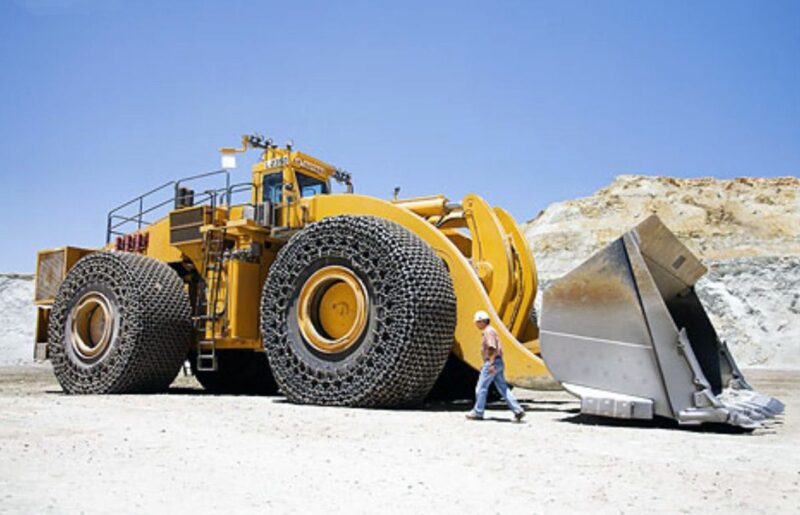
6. Le Tourneau L-2350
A bit of a tongue-twister, this machine is the world’s largest wheel loader, capable of lifting loads up to 72 tons. Its bucket has a volume of 40.52 cubic meters and is powered by a 2,300hp engine.
7. Liebherr 9800 Mining Excavator
Here is the largest mining excavator in the world, the Liebherr 9800. It weighs around 810 tons and has a bucket capacity of 47 cubic meters. Truly massive and fitting for its job.
8. NASA Crawler Transporter
The NASA crawler transporter is designed to move entire rockets. Despite being 50 years old, it is still robust in service, measuring 40 meters in length and 35 meters in width. It weighs 2,720 tons. This crawler transporter can travel at a speed of 1 mile per hour (1.6km/h). Only two units are in service, with one having covered a distance of 2,207 miles (3,552km). Quite a journey it has made!
9. Taisun Crane
Another giant machine on this list is a crane. When building large machines, you certainly need a larger crane to help lift components. The Taisun crane at a port in China can surely assist. It is said to be the largest crane in the world, with a lifting capacity of up to 20,000 tons.
10. Antonov An-225 Mriya
Lastly on the list is another aircraft. The Antonov An-225 Mriya is officially the largest operating cargo aircraft in the world. With a wingspan of 88.4 meters and a length of 84 meters, the An-225 weighs 285 tons empty. Despite its size and weight, it is powered by six high-power turbofan engines, each with a thrust of 23,000kg. First released in 1988, the An-225 has 32 tires and can maneuver on a runway with a width of 60 meters.
We should be grateful because the cars we can buy today come with various advanced technologies. Most of these technologies are designed to facilitate driving and improve safety.
However, did you know that many of the technologies present in today’s cars actually come from the aviation and aerospace world? We will share the top five main technologies.
1. Anti-lock braking system (ABS)
The anti-lock braking system or commonly known as ABS was first used in the aviation industry since the 1950s. Aircraft at that time were equipped with anti-lock brakes called Decelostat to enhance stability during landing on slippery and rough surfaces.
Some of the early aircraft equipped with anti-lock brakes were the Avro Vulcan, de Havilland Comet 2c, Hawker Siddeley Trident, and Dutch Fokker F27.
ABS began to appear in luxury cars in the 1980s. Now, ABS brakes have become a mandatory and essential feature for modern cars.
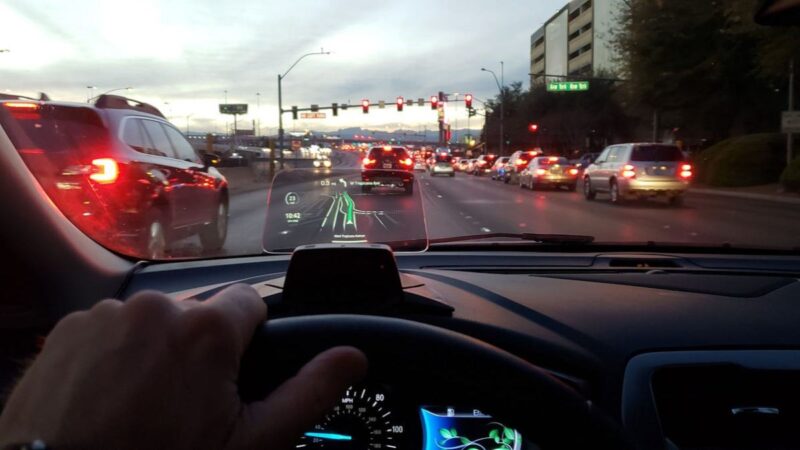
2. Head-Up Display (HUD)
The Head-Up Display (HUD) is a clear display in the aircraft cockpit positioned at the pilot’s line of sight in the front mirror. It displays important flight information such as airspeed, altitude, horizon line, and other indicators. Pilots can access this information without diverting their gaze from the front mirror, thereby enhancing flight safety.
Today, HUD has emerged in the automotive world, displaying information such as speed, speed limits, music, and even navigation directions. Its purpose remains the same, to prevent drivers from shifting their attention away from the front. However, HUD is still considered a premium feature for cars.
3. Autopilot
As the name suggests, autopilot is a feature where the aircraft can fly itself steadily. However, it is not engaged throughout the flight. Autopilot is usually activated when the aircraft is at a steady altitude, constant speed, and fixed direction. This can reduce the pilot’s workload for long-haul flights, which would otherwise be exhausting for the pilot to control manually throughout the journey.
The first aircraft equipped with autopilot was the Sperry Corporation in 1912. Autopilot was mechanically linked to the aircraft’s control system. Today, in the aviation world, the autopilot feature is highly advanced with various automatic and electronic controls.
In the automotive world, autopilot uses special radar and cameras to read the road, signs, and lane markings, allowing the car to be driven automatically while maintaining speed and distance from the vehicles ahead.
4. Carbon fiber
Carbon fiber has been developed for 150 years to achieve a high strength-to-weight ratio. It produces a very hard yet lightweight material, making it highly suitable for the aviation industry. A lightweight aircraft not only improves fuel efficiency but also enhances flight performance.
The process of producing carbon fiber today is slightly different from 100 years ago, but its goal and properties remain the same.
For aircraft, carbon fiber is used in the aircraft body and jet engine components. In the automotive world, carbon fiber was first used in racing cars due to its suitability for racing needs – lightweight and strong.
Now, carbon fiber is increasingly found in everyday cars. The most common components made of carbon fiber are spoilers, skirts, and interior car panels.
5. Turbocharger
The turbocharger is powered by a turbine that introduces more air into the combustion engine to enable it to produce more power. It is very suitable for the aviation industry because aircraft engine sizes can be compact or small but still produce sufficient power for flight performance.
As expected, turbochargers later entered the automotive world, initially in racing.
Today, turbocharged engines are very common not only in high-performance cars but also in everyday cars for tasks such as school runs.
Turbocharging in cars is no longer just for performance, but also for fuel savings and improving engine efficiency
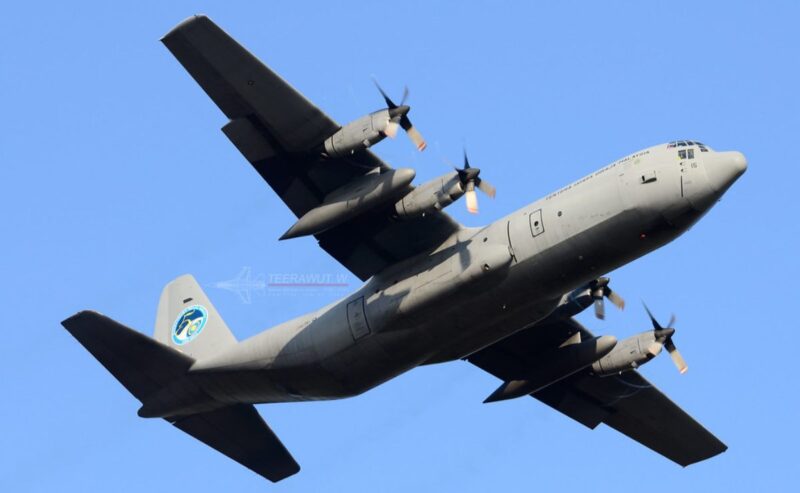
THE Ministry of Defense has issued a tender for the upgrade of six units of C-130 Hercules aircraft belonging to the Royal Malaysian Air Force (RMAF).
The tender was announced in several local newspapers and on the ministry’s website on August 20. However, it was not posted on the E-perolehan website.
The tender is related to upgrading the avionics of the transport aircraft. Interested bidders can participate in a visit scheduled for August 29, and the tender will close on October 10. The bidding documents cost RM1,500 and will be returned to unsuccessful bidders.
The RMAF’s C-130 upgrade program has been ongoing for the past two decades. Considering that the aircraft, known as Hercules, will be in use until 2040, upgrading the avionics section is necessary.
This year also marks the 70th anniversary of the aircraft. The YC-130A prototype made its maiden flight on August 23, 1954.
The RMAF has ten C-130 Hercules aircraft, including several C-130H-30 variants and four aerial refueling variants, KC-130H. All the C-130 Hercules transport aircraft are stationed in Squadron 20 at Subang Air Base and Squadron 14 at Labuan Air Base.
Often we hear spooky stories involving highways in Malaysia. This is because there is a belief that there are spirits of accident victims haunting certain highway areas.
However, we must always be cautious on the road to ensure a safe journey to our destination and to avoid unwanted incidents from occurring. A girl shared her experience of getting lost on the Kajang-Seremban highway late at night due to her GPS leading her to a location that sent shivers down everyone’s spines.
Read the full story below:
Greetings Fiksyen Shasha readers, I’m Wawa. I want to share a story of my own experience. This story took place in the year 2015. It was a Friday evening. That night, my friend Hana and I had planned to go out for dinner. I set out from my home in Hulu Langat towards Hana’s house in Putrajaya at 9 PM.
We decided to have dinner in Nilai town that night (I don’t know why, suddenly she suggested we eat there).
After we finished eating, it was already 11:30 PM. I decided to stay at my aunt’s house in Mantin, as both of us were feeling sleepy by then (that’s what happens when you decide to eat far away, haha).
Besides, Mantin wasn’t far from Nilai. I wasn’t quite sure of the way to Mantin, as I rarely visited, so I set the GPS to Kolej Lagenda because my aunt’s house was in the apartment area nearby. That was the only landmark I could remember. We started our journey, passing through the Pajam area, the GPS kept showing us to go straight and straight, then it directed us to turn left. There, we entered a residential area with terrace houses. It seemed old and dark. All the houses there looked old. Maybe they were all trying to save on electricity. But there was something strange… Me: I don’t remember having to pass through this housing area with my mom. Is the GPS correct?
Hana looked at the GPS again, checking the screen displaying the route. Hana: It’s showing this direction, let’s just keep going straight ahead there. Another 500m.
I was puzzled because my aunt’s house was in an apartment, not a terrace house.
Old. Dark. Silent.
I slowly drove towards the direction indicated by the GPS, and the GPS voice said ‘You have arrived at your destination’.
I froze. In my heart, I recited many prayers. In front of me was a temple, surrounded by bushes. The temple looked ancient. I looked at Hana, and Hana looked at me.
Me: What location did you set earlier?
Hana: Kolej Lagenda, see, it’s here.
I checked, and indeed, it was pointing to the right location. I turned the car around, trying to find a way out. In that residential area, I could easily get lost trying to find the way out. I reset the location to Kolej Lagenda, but the GPS still directed us towards the temple. I told Hana, “Na, recite Ayatul Kursi a lot, Na.” Shortly after, I finally found a way out. The clock showed 12:30 AM. I resumed the journey. The location was reset. But another strange incident happened. Suddenly, we entered a village. There was a small roundabout, and the GPS directed us to take the first exit (clockwise).
We continued until we were instructed to ‘turn right’. I didn’t turn right immediately; I braked suddenly. Hana was startled and asked me.
Hana: Wawa, why did you brake suddenly? Scared me.
Me: Hana, are you sure the GPS said to turn right? Seriously?
Hana: Yes, see, it’s right here.
Me: Hana, this way (pointing with my finger).
‘Muslim Cemetery’
Hana was stunned. Silent. Speechless.
I quickly accelerated the car forward. In my heart, if there were houses or open areas, I wanted to turn and leave immediately. And I turned in front of an old wooden house. My eyes caught something. A tattered white cloth hung on the stairs of the wooden house. The house was dimly lit, making the white cloth stand out. I dared not look left or right. I quickly turned the car in a flustered state. I don’t know if Hana saw it. I passed by the cemetery again, and the GPS directed us to turn left (since I had turned earlier, the cemetery was on the left).
But this time, I did not turn left immediately. Until we reached the same roundabout, which was puzzling. I circled the roundabout three times, returning in front of the cemetery, but I couldn’t see the way out. I felt uneasy.
I stopped by the side of the road but not near the cemetery. Hana remained silent.
The GPS repeatedly directed us to return to the same place. I couldn’t see any houses except for the old wooden house.
I recited Al-Fatihah, Ayat Kursi, and the 3 Qul many times. Only then did I see a signboard indicating the direction to Nilai, Pajam, etc.
I left the area, and then Hana said, “Hey, just sleep at your place. Then head to the LEKAS highway.” I agreed. We exited the LEKAS highway from Mantin. I thought the disturbance had ended, but something else happened…
We drove through the LEKAS highway via the Mantin exit. The time showed 3 AM. From 12:30 AM to 3 AM.
I was physically and mentally exhausted, but I continued the journey, eager to arrive quickly. At first, after the Mantin exit, I could still see 2-3 cars speeding ahead, leaving behind my Myvi. In my mind, “Yes, there are other cars.”
Hana, however, remained silent since entering the LEKAS highway. I asked Hana, “Hana, are you okay? Normally, from Mantin to Hulu Langat, there aren’t many cars, 30-40 minutes is enough.”
But Hana remained silent, just bowed her head and said, “Hmm…” Maybe she was tired, so I left her alone.
I continued the journey, but at that time, there were no cars on either side. My car’s speedometer showed 120km/h, but I felt like my car was unusually slow. “Na, why is my car so slow? Even after stepping on the gas, it feels like it’s moving like a tortoise.”
Hana didn’t respond, just kept her head down. I turned to look at Hana, and saw a white fabric hanging outside her window. I looked back to the front.
I checked the rear-view mirror. Pitch dark. I couldn’t see any white road lines or street lights. I looked at the side mirror. I could only see the white road lines. I felt uneasy.
I took my Yaasin CD and put it into the player. Suddenly, Hana turned it off. I turned it back on, and Hana turned it off again. This girl, playing games with me. I turned it back on and raised the volume. I left my hand on the radio.
From the corner of my eye, I saw Hana staring at me intently. Suddenly, she bit my hand. I screamed in pain, fortunately not losing control of the steering wheel. Hana started alternating between crying and laughing, rambling.
I recited the Ruqyah verses I remembered, I was too scared to look at Hana. Suddenly, Hana said, “Are you scared? Hahahahahahahahaha!”
Then she continued laughing and rambling. She pushed me, screaming at the top of her lungs. The car almost lost control, almost hitting the divider several times.
I shouted “Allahu Akbar” three times and then made the Iqamat. I didn’t know what to do. Ahead, I could see the toll. After paying the toll, I stopped the car by the side of the road. I saw that Hana was silent, slumped over, possibly unconscious.
I called my parents. It was 3:45 AM. At 4:30 AM, my parents arrived with an ustaz. The ustaz drove my car to their place.
There, he restored Hana’s spirit, advised her to rest, and my family took her to my parents’ house. I called Hana’s parents after Fajr.
At 10 AM, Hana woke up, still feeling dizzy. I told her to shower and eat. Her parents had arrived at my house by then. I asked Hana what happened last night. She said when she exited the LEKAS highway, she saw someone wearing a white garment waving at her.
She then looked down, and after that, her mind and body felt weak.
“Something was bothering you, your hijab was secure. You are a young unmarried woman; you should be at home at this time of the night. Your friend’s spirit was also weak, and coincidentally, she’s elderly, so it’s easier for that thing to disturb. Luckily, she didn’t follow you home; otherwise, it might have been harder to protect you both. From now on, don’t go outside at night,” the ustaz said to me.
Since then, Hana and I stopped going out at night. We always made sure to be home before 10 PM, haha.
It is undeniable that besides maintaining the physical and mental performance of athletes, the equipment used must also be in good condition.
The same goes for athletes Azizulhasni Awang and Muhammad Shah Firdaus who represent Malaysia at the 2024 Olympic Games for the Track Cycling event.
The bicycles used for this world-class event must be top-notch to ensure that athletes can maximize their performance. But don’t be surprised if you find out that the price of their bicycles equals that of a brand-new BMW or Mercedes-Benz.
Yes, you read correctly. The bicycles of Azizulhasni Awang and Muhammad Shah Firdaus exceed RM380,000 each!
The National Sports Institute (ISN) and the National Sports Council (MSN) collaborated to develop high-tech bicycles totaling RM7.5 million overall to ensure Malaysia can clinch gold at the 2024 Paris Olympic Games.
Although that aspiration was not fulfilled, observing how our national cyclists, Azizulhasni Awang and Muhammad Shah Firdaus, consistently deliver maximum performance in every race, is truly a source of pride.
The price of the WX-R Vorteq bicycle
The branded WX-R Vorteq bicycles have been enhanced with the latest technology compared to their predecessors and have been used by national cyclists at the Paris Olympics.
It is understood that each of these bicycles is valued at RM385,800. Moreover, these bicycles are made of a stiffer yet lightweight carbon fiber material, utilizing the latest aerodynamic technology to reduce wind resistance.
National track cycling champion, Datuk Mohd Azizulhasni Awang, believes that having bicycles like these has enabled him and his teammates to provide fierce competition to their opponents.
Clearly, in previous Olympic editions, cyclists from our country had the advantage in terms of the bicycles’ technology, making it easier for them to outperform cyclists from other nations.
Looking back, during the Tokyo 2020 Olympic edition, the WX-R Vorteq bicycles were developed at a cost of nearly RM13 million.
No guarantee of victory, only better performance
However, according to The Pocket Rocketman, the presence of such bicycles does not guarantee victory for him and his teammates at the Paris Olympics, which concluded on August 11, 2024.
“Many misunderstand, thinking that a new bicycle can automatically lead to victory. Before this, we did not have the R&D (research and development) for these bicycles, causing us to fall behind our competitors like Great Britain and Germany.
“They already had the advantage in terms of their cyclists’ bicycles and technology, putting them a step ahead. We may train hard, but when it comes to racing, we were already behind, which isn’t fair. But now, the UCI (International Cycling Union) has implemented new rules. After the Rio Olympics (Brazil 2016), all bicycles must be available on the market, and R&D can be performed,” he added.
“I believe we should be proud not all countries are doing this. Malaysia and Japan are among those seriously developing and supporting their cyclists. This is technology in sports.
“Now we are on par in terms of sports technology with Great Britain, Germany, and Japan. It is up to the cyclists to prove themselves because they are like the ‘engine’ that will determine victory,” explained Azizulhasni Awang.
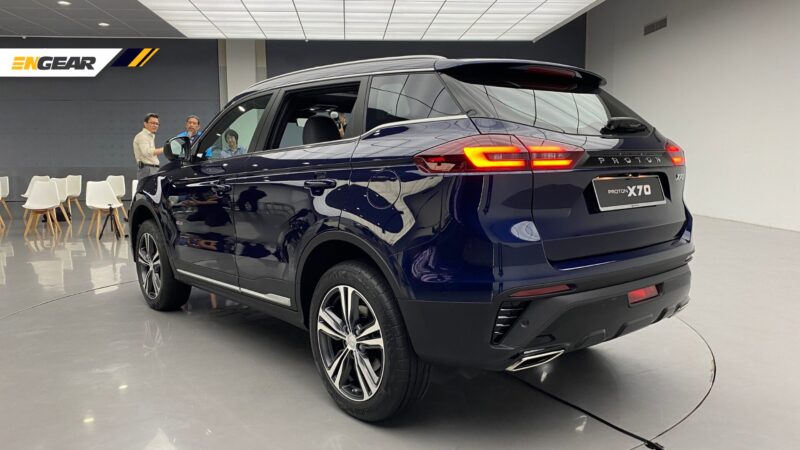
After being introduced to the public on August 15, the Proton X70 2025 has been launched in Sabah and Sarawak as well. This also marks the first time Proton has held separate launches for its SUV model specifically for customers in this part of Malaysia.
The X70 2025 comes with a fresher exterior style, upgraded interior equipment, and the latest ADAS level 2 safety technology.
“We are very excited to introduce the Proton X70 2025 to Sabah and Sarawak, two states that are increasingly important for Proton,” said Dr. Li Chunrong, Chief Executive Officer of Proton.
“This event is more than just introducing a new vehicle; it is about strengthening our commitment to Sabah and Sarawak. The unique needs of buyers here and their strong relationship with the brand always drive us to deliver the best products and services. With updated features and enhanced style, we hope the X70 2025 will propel Proton to the top position in the premium SUV market in Sabah and Sarawak,” he added.
According to Proton, this X70 facelift has 360 new components, and the R&D process took 290,000 hours. Road testing covered a distance of 4.2 million km.
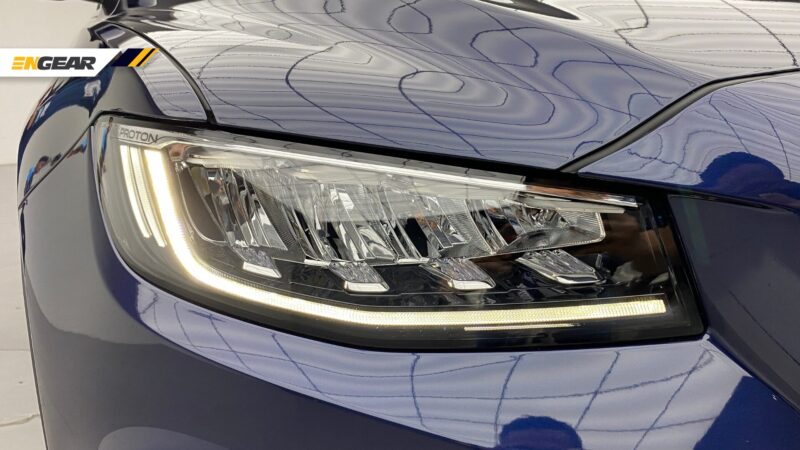
The Proton X70 2025 received a fresher look taken from the 2022 Geely Boyue facelift. In addition to new LED lights, it features a larger grille with diamond-like details, as well as a redesigned hood, bumper, and tailgate.
For the rear, there is a new bumper with horizontal reflectors. The alloy rims also have a new design, with a size of 18 inches for the Executive and 19 inches for other variants.
Five colors are available for this new X70: Snow White, Armous Silver, Jet Grey, Ruby Red, and the new Marine Blue.
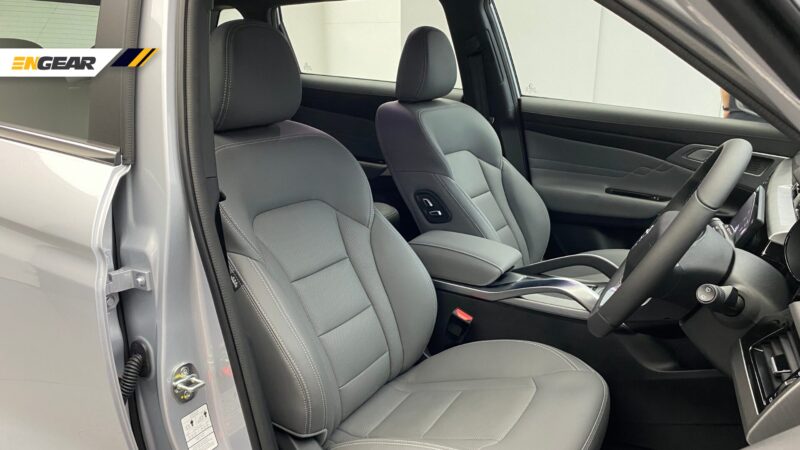
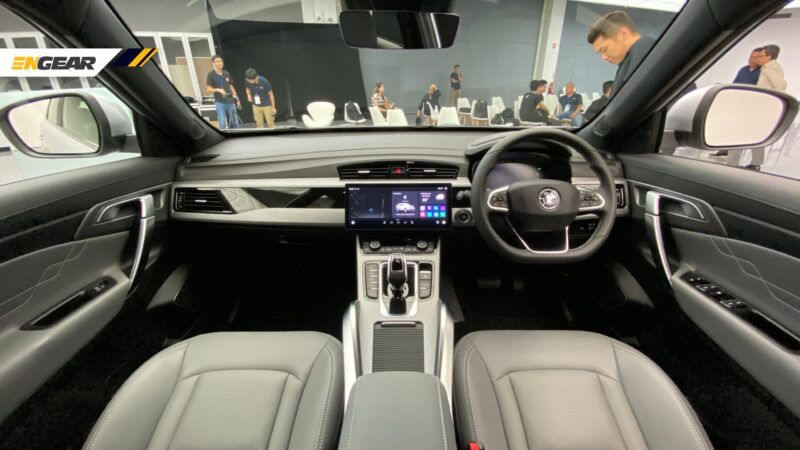
The dashboard has been redesigned, now featuring piano black trim and ambient lighting with 72 color options that change according to music. At the center of the dashboard is the new 12.3-inch infotainment screen.
For the first time for Proton, Apple CarPlay and Android Auto are included. In addition, the X70 2025 has a new steering wheel, a new display on the LCD meter panel, and Nappa leather upholstery in Stone Grey.
In terms of features, the X70 now comes with Walk Away Auto Lock, while its power tailgate now has a Nearby Auto Open function for hands-free operation.
The ADAS is available on the Premium and Premium X variants. It includes several new features such as Adaptive Cruise Control with Stop & Go, Intelligent Cruise Control, Lane Departure Warning, Lane Departure Prevention, Lane Centering Control, Traffic Sign Information, and Rear Collision Warning.
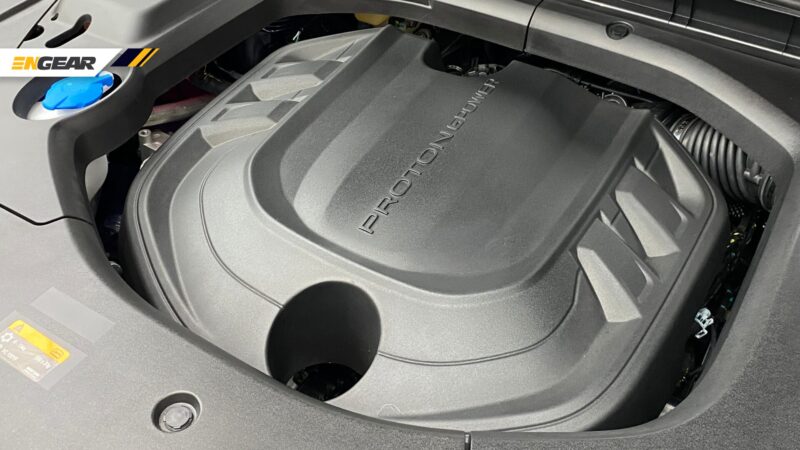
All variants are powered by a 1.5-liter TGDI three-cylinder engine producing 175hp at 5,500rpm and 255Nm from 1,500-4,000 rpm. It is paired with a seven-speed DCT transmission.
Here are the prices for the Proton X70 2025 in Sabah and Sarawak:
If your car is an expression of your style, the MINI is your perfect match. With its iconic design and sporty drive, it’s where fashion meets function.
These qualities shine in the latest MINI models like the new Countryman S Electric, combining iconic style and go-kart-like sportiness with a modern twist.
Eco-friendly material
In the latest generation, the MINI Countryman S Electric introduces fabric made from high-quality recycled materials, featured on the dashboard and door panels. This fabric, sewn with unique 2D techniques, offers a distinct, stylish appearance and a refined texture. The dashboard fabric also serves as a canvas for ambient lighting, transforming with each MINI Experience Mode to enhance the unique interior vibe.
If you’re concerned about maintaining this stylish fabric, rest assured—MINI designed it to be easy to clean. So, feel free to bring the kids along without any worries in your MINI Countryman.
Modern technology with classic look
The MINI Countryman S Electric is modernized with the first circular OLED display in any car. This high-resolution screen delivers crystal-clear information while seamlessly blending with MINI’s signature high-style aesthetic.
The OLED display also offers MINI Experience Modes, featuring themes like Vivid, Core, Go-Kart, Timeless, Balance, Trail, and Personal. Each mode creates a distinct atmosphere and driving experience to match your mood. For instance, if you’re feeling tired after work, you can switch to Balance mode for a more relaxing vibe.
If you love vintage and retro vibes, choose the Timeless mode, which features a display meter inspired by the classic MINI Cooper from Mr. Bean’s era. Plus, you’ll even hear sounds from the classic MINI through the audio system, adding to the nostalgic experience!
Agile like a go-kart
A MINI wouldn’t be a MINI without that signature go-kart-like handling, and the new MINI Countryman S Electric is no exception. Even as the largest MINI ever produced, it retains the iconic driving feel that makes every ride a thrill.
The suspension system and steering have been finely calibrated for agile and precise responses, ensuring a dynamic driving experience. The thick steering rims add to the excitement, inviting you to fully enjoy the drive in the Countryman S Electric.
With 313PS and 494Nm of torque from its dual electric motors, the ALL4 all-wheel drive system delivers instant acceleration and thrills. It rockets from 0-100km/h in just 5.6 seconds, ensuring a grin every time you accelerate from a traffic light or toll booth.
Overall, the MINI Countryman S Electric offers super-responsive acceleration, precise steering feedback, and a finely-tuned suspension, making it feel like a five-seater go-kart. You’ll find yourself eager to seek out corners where the regenerative braking system enhances the sporty handling, before effortlessly accelerating out with a smile.
Like other electric vehicles, the 66.5kWh battery pack in the Countryman S Electric is positioned under the chassis, lowering the center of gravity and enhancing stability in all driving situations.
Stylish, fun to drive, from only RM2,777 per month
Overall, I thoroughly enjoyed test driving the new MINI Countryman S Electric. It’s stylish, eye-catching, and effortlessly handles both traffic jams and highway cruising.
Heading to a campsite or beach is a breeze with the Countryman’s higher ground clearance and rugged bumpers and side skirts.
This vehicle adds joy and excitement to your daily drive, making it anything but boring. With sustainable materials in the cabin and an electric power system that offers up to 433km on a single charge, you can enjoy peace of mind knowing you’re driving a car that contributes to environmental preservation.
Interested in test driving the new MINI Countryman S Electric? Visit any MINI showroom nationwide. With Easy Drive Financing, you can own the Countryman for just RM2,777 per month, and for a limited time, receive a free Wallbox charger.
The MINI Cooper Electric is also available with Easy Drive Financing from RM2,021 per month and includes free Wallbox installation. For more details about MINI in Malaysia, follow their social media pages.
The HONDA WR-V is not a new model, it has been in the Malaysian market for almost two years. It serves as the replacement for the Honda BR-V, although it is not in the same segment.
However, from the Honda Malaysia lineup, after the absence of the 7-seater crossover/MPV BR-V, this slot is now filled by the compact 5-seater WR-V.
This also positions Honda as a competitor to the Perodua Ativa. We have previously test-driven the WR-V RS, but this article focuses on listing the things we didn’t quite like about it. Let’s look at the three main aspects that are not quite right about the WR-V RS.
1. Cabin lacks excitement
At first glance, the exterior of the Honda WR-V looks sporty and premium, especially the RS variant. But upon entering, there is a slight sense of disappointment. For some reason, the cabin feels somewhat ’empty.’
Upon closer inspection, it’s actually decent for its price. Perhaps the writer was carried away by the exterior beauty, hence having high expectations for the interior.
There is a lot of hard plastic on the dashboard and door panels, but there are black gloss and red elements with soft leather wrapping on the left side of the dashboard, adding some flair to the interior. The WR-V’s cabin is on par with the City albeit not entirely similar.
When compared, the HR-V’s cabin has a more ‘wow’ factor, similar to the Civic. But then again, the price difference is significant.
2. Driving experience doesn’t match the RS name
What comes to mind when you see the RS badge on a car? Racing? Sporty? Yes, the writer thought the same. However, the driving experience of the Honda WR-V doesn’t reflect the RS badge it wears.
The writer wasn’t expecting a Civic Type R level of performance, but perhaps tweaking the suspension and steering for more precision and agility could help.
Or maybe the meaning of RS for Honda Malaysia differs for the WR-V, not towards motorsports… Judging by the appearance and packaging, it can be considered in line with the RS name. Furthermore, we understand the target audience for this WR-V RS – more towards small families looking for a practical and comfortable vehicle, with added sporty elements and image.
The 1.5-liter i-VTEC engine delivers 119hp and 145Nm of torque, more than sufficient for daily use. The CVT gearbox is efficient and responsive, still among the best in its segment. The combination of the 1.5 i-VTEC engine with CVT provides good fuel efficiency, around 13.5km per liter based on the writer’s test.
3. El-cheapo infotainment screen
The third and final point is the infotainment screen of the Honda WR-V RS, which seems cost-effective. For some reason, considering the price range between RM89,999 to RM107,900 for the RS, the screen should possess better resolution and display.
The writer is unsure of what exactly needs improvement, as they are not an engineer in this field. But it feels like there’s a lack of value here. For instance, the reverse display is just sufficient, only showing static lines for guidance. There are no issues regarding the size of the screen, it can be considered adequate.
The features are also good, coming with Apple Carplay and Android Auto connectivity, two USB ports, and a range of Honda Sensing safety features. Alright, those are the three main things about the Honda WR-V RS.
Listing more dislikes might upset the Honda enthusiasts here. On another note, there are many other excellent things about the WR-V, such as the spacious cabin for this segment and the fairly comprehensive safety features.
The package on the WR-V demonstrates that Honda Malaysia truly understands the market and its needs. You can read our complete test drive report here.
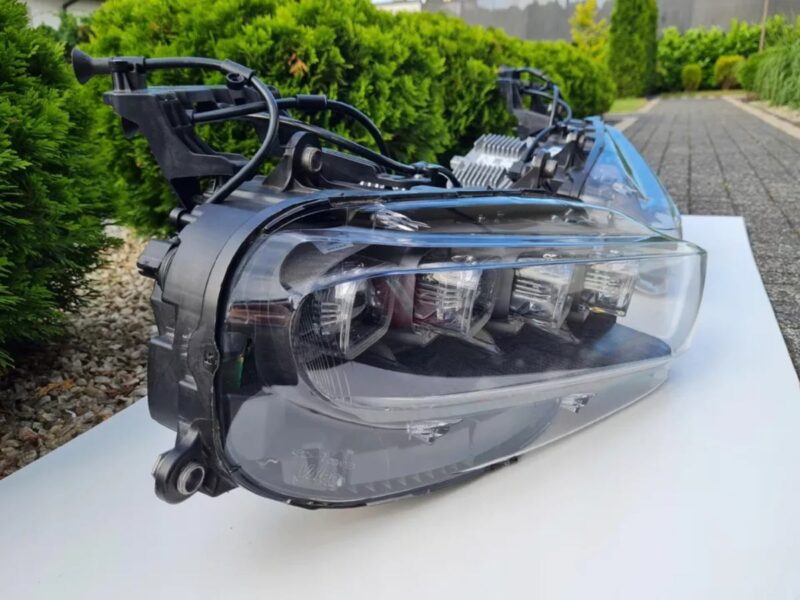
Not many cars have quad lights like the Bugatti Chiron. Its brightness is quite clear, making it easily recognizable from a distance or at night.
However, this vehicle is quite rare, with only 500 units built. Of course, this exclusive level comes with a high cost, not only when purchasing the car, but also for replacement parts.
For reference, an ad on eBay Germany is displaying a pair of front headlights by Valeo for the Chiron at a staggering price. Guess how much? RM100,000? RM250,000? Wrong.
A pair of quad LED lights that can be installed on the Chiron Pur Sport and Super Sport 300+ are priced at 147,000 euros, equivalent to RM712,773 (based on today’s exchange rate). With this price in Malaysia, you could buy a new BMW X7, Lotus Emeya, Mercedes S580e, or Audi A7. Imagine the price of a pair of lights matching that of luxury cars.
The eBay seller is based in Poland but can ship the Chiron lights to European countries for an additional 1,000 euros (RM4,848). Want it shipped to Malaysia? Definitely possible, but we’re sure the shipping cost will be even higher.
According to the ad, the lights are new and in perfect condition. They have the OEM part code written as 5B4941035C 5B4941036C.
Why are these LED lights so expensive? Certainly for several reasons. The lights are high-tech, not just regular LEDs but complete with the latest functions like Auto High Beam and matrix technology.
Furthermore, they are expensive due to limited production. Any item produced in limited quantities will naturally have a higher price to achieve economies of scale.
Finally, if you can’t accept the price, perhaps you are not yet a Bugatti target customer. For Bugatti owners and customers, they have no problem paying such prices as long as their collectible cars are in perfect condition to showcase on social media and hang out with friends.
More than 400 car and superbike racers will be celebrating the 67th Merdeka Day with a weekend-long of action on track in conjunction with the 2024 Malaysia Speed Festival Merdeka Race powered by Petronas Primax from 31 August-1 September 2024 at the Sepang International Circuit.
The high adrenaline race weekend kicks off on Saturday night (31 August 2024) with the MSF MegaLap Time Attack from 7pm to 11pm to crown the driver and car with the fastest lap time around the Sepang Circuit.
The weekend continues on Sunday (1 September 2024) which will see a full day of racing beginning with a 12-lap MSF Superbikes race involving six individual classes with more than 70 racers. This will be followed by the MSF Saga Cup Merdeka 75 which is a 75-minute mini endurance race with two-drivers per car.
The highlight of the racing weekend will be the Merdeka Race – traditionally held in commemoration of national day – which is an endurance race involving 340 racers and 170 cars competing in 6 individual classes of racing taking on 99 laps of the 5.543km circuit.
“We are honored to welcome Petronas into this year’s Merdeka Race which is powered by Petronas Primax. The Merdeka Race has grown into one of the most anticipated annual events on the local racing calendar for enthusiasts due to the diversity of classes being run. With Petronas on board, we hope to be able to elevate this experience and excitement even more for both participants and racing fans moving forward,” said MSF Principal Adian Yein Khalid.
The six classes of racing being contested in the Merdeka Race include: the Rennplatz Standard Production; Rennplatz Standard Production Max; Vision HKS Super Touring; Vision HKS GT86 x BRZ Racing Cup; Super 1800; and MSF Super Production. In total RM50,000 in prize monies is up for grabs for the top three winners in all six classes of racing.
The Rennplatz Standard Production and Rennplatz Standard Production Max classes will be offering the most lucrative prize monies with the champion standing to win a purse of RM6,200 while RM2,950 and RM1,850 will be awarded to the second and third place winners respectively.
The champion in the Vision HKS Super Touring and Vision HKS GT86 x BRZ Racing Cup meanwhile, is looking at a prize money of RM5,700. A total of RM2,950 and RM1,850 will go to the second and third place winners respectively.
A champion purse of RM4,200 and RM1,750 and RM1,050 to the second and third place winners respectively will also be offered in the MSF Super 1800 and MSF Super Production classes.
And for the first time, prize monies amounting to RM1,000 for the champion and RM300 and RM200 for the second and third place winners respectively, will also be offered to the winners in the MSF Superbikes race. The six classes of two-wheels racing includes: Super Rookie; GP X; GP Pro; GP Masters; All-Stars; and Super Sport.
For the MSF MegaLap Time Attack on Saturday (31 August 2024), paddock access passes are priced at RM20 and are available from the South Track Paddock. The evening kicks off at 7pm to 11pm.
Doors will be opened from 3pm on race day on Sunday (1 September 2024) and North Track Paddock access passes are on sale at RM35 while parking is RM10. Passes are available at the entrance to the North Track on race day. Entry to the main grandstand for spectators on both days is free of charge.
A couple of days ago brought unfortunate news for the country’s defense, as the Royal Malaysian Navy (TLDM) ship known as the KD Pendekar, sank completely. The ship sank at a position two nautical miles southeast of Tanjung Penyusop, Johor at 3:54 PM on Saturday, August 25, 2024.
All 39 crew members were successfully rescued and placed on the KD Sultan Ismail in Tanjung Pengelih, Johor. No injuries were reported.
TLDM had previously reported that their ship experienced a major leak and flooding during a mission operation. The leak is believed to have been caused by the ship striking a submerged object.
Leaks are a major cause of ships sinking, but in this article, we will look at other reasons why a ship may sink.
1. Collision with the seabed
Ships are powered by large marine engines that drive the propellers, while the ship’s direction is controlled by the rudder. There have been many reported incidents where the ship’s bottom collided with the seabed or rocks near the shore. A ship can sink if the collision is too forceful and causes a leak. Additionally, a ship is a very large structure and requires time to react. In fact, on average, a ship takes several hundred meters to come to a stop.
2. Loss of stability
All floating objects have a metacentric height, determined by the vertical distance between the metacentre (M) and the center of gravity (G). For a ship to remain stable, this quantity must remain positive. If this quantity becomes negative, the ship can capsize with very little force.
3. Bad weather
Bad weather is a common cause of shipwrecks and contributes to 75% of all accidents. Due to the vast open spaces at sea, wind speeds can become very high, leading to storms and hurricanes. These phenomena are capable of capsizing and sinking ships.
4. Human negligence and error
Lethargy, negligence, and small mistakes can contribute to accidents at sea. This can happen if the ship is not properly monitored or if the crew is fatigued. All of these factors can distract the crew and expose the ship to dangerous situations. If not addressed promptly, this can lead to disaster.
5. Component damage and poor maintenance
In the vast ocean, visibility can be limited due to low clouds or fog. Here, modern equipment helps ensure the ship’s direction and steering systems are in good condition. If not calibrated or maintained properly, these components cannot function as intended and pose a risk to the ship.
The same applies to mechanical components such as the propeller shaft, rudder, and propeller itself, all of which operate at high speeds. Maintenance is crucial to ensure there is no vibration or corrosion on their surfaces.
6. Damage due to war
During the early and mid-20th century world wars, hundreds of ships sank due to torpedoes, mines, and artillery fire. Even outside of wartime, the risk still exists, as it is said that there are still live mines and floating traps that pose a threat.
7. Negligence in docks and harbors
Docks and harbors are usually busy and narrow to maximize efficiency and operation. Because of this, ships need to be maneuvered accurately, sometimes with the assistance of tugboats. However, with the size of today’s large ships, there have been several accidents in ports that have caused ships to sink.
These are the seven main reasons a ship may sink that we can share. It should be noted that this list is for general knowledge and has no connection to the incident involving KD Pendekar. For reference, KD Pendekar was commissioned on August 21, 1979. It has a length of 43.62m, a width of 7.1m, and can operate continuously for seven days.
The armament on KD Pendekar includes Exocet MM38 missiles and Bofors 57mm and 40mm cannons. Together, we await further reports from the authorities regarding the incident involving KD Pendekar. Nonetheless, thank you and our highest respects to all the military personnel serving to safeguard our country’s security and sovereignty!
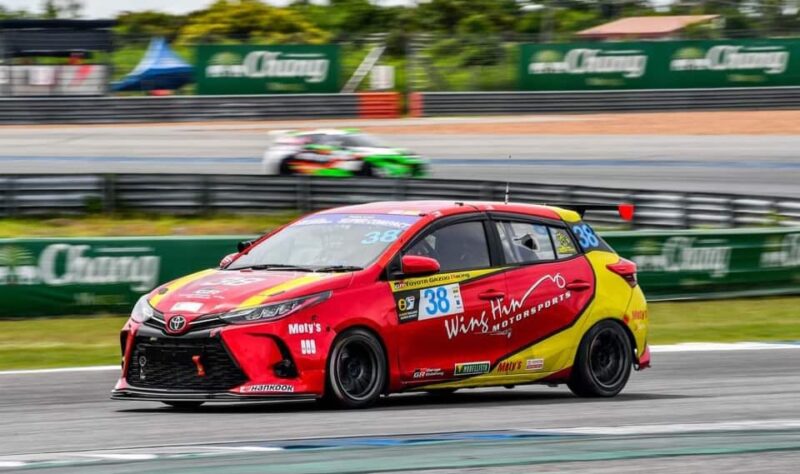
Wing Hin Motorsports’ Mitchell Cheah and Naquib Azlan celebrated a double podium finish in Round 3 of the Thailand Super Series Super Compact Class at the Chang International Circuit.
After racing to a spectacular second overall finish in Race 1 on Saturday (24 August 2024), Cheah and Naquib were in for an even more exhilarating Race 2 today (25 August 2024) when all the on-track dicing action took place right to the final corner of final lap of the 1-hour race.
Again having to start from eighth on the grid, Naquib quickly made his way up the grid in the first lap. He even had an attempt for the lead by going on that very first lap but received slight contact and had to recover the car after being punted off the track.
He regained composure and rejoined the race in seventh, charging his way back to fourth after 12 minutes of racing. Then, fighting for third another contact bumped him off the track, this time with the Honda CRZ of T. Chanyaboot.
Naquib pitted 27 minutes into the race to hand over to Cheah who rejoined in seventh position. Cheah however, put in some incredibly blistering hot laps to progressively push him up the standings, and with one lap to go, was placed second just ahead of an attacking Toyota GAZOO Racing Thailand driver Norrarat Apivart in another Yaris.
The two drivers exchanged places for second place several times in the final lap and exiting the final corner, Cheah had been just ahead by a bumper’s length but the outright straight line speed Norrarat possessed saw him cross the finish line just 0.121 seconds ahead of Cheah to claim second place.
Winning the race and 7.9 seconds ahead was the pair of T. Thanaroj and S. Thanapattra in the YK Motorsports Honda CRZ.
“It was an incredible battle to the finish line. We knew we had a quicker car through the technical sections of the track but Norrarat had the outright straight line speed. It could have gone either way. It’s still fantastic to finish the race weekend with back to back podiums,” said Cheah.
For so long, Mulliner has been a part of Bentley in producing a range of ultra-bespoke and custom models. Mulliner offers color choices, materials, and features without limits, giving Bentley owners more exclusivity for their beloved vehicles.
This time, Bentley Kuala Lumpur presents a lineup of Continental GT, Flying Spur, and Bentayga EWB that have received Mulliner’s touch.
All these models retain the engine, gearbox, and driving system but focus on luxurious finishes tailored to individual owners.
Bentley Continental GT Mulliner V8 – RM3,257,400
Continental GT Mulliner V8 is given an all-black Black Velvet body color, with Portland and Burnt Oak for the secondary hide layers. The rims are Mulliner Wheels sized at 22 inches.
The dashboard receives Mulliner Bespoke Interior treatment, while the veneer panels are adorned with Grand Black color along with a Diamond Milled Console.
This Continental GT Mulliner is also equipped with Bentley Safeguard Plus, Night Vision, cabin lights, panoramic glass roof, Jewel fuel filler cap, Naim audio system, Bentley Rotating Display, heated steering wheel, and sports pedals.
Bentley Flying Spur Mulliner V8 – RM3,432,700
For the Flying Spur sedan, it receives the same all-black finish as the Continental on the exterior, with Onyx color complemented by Portland and Beluga. The 22-inch Mulliner Wheels rims are also the same, complete with self-leveling badges.
Adding a sporty touch to this Flying Spur are the carbon fiber high-gloss side sills, front splitter, rear diffuser, and spoiler. The cabin comes wrapped in luxurious leather sourced specifically from Northern Europe, ensuring a premium look with no insect bites.
Bentley Bentayga EWB Mulliner V8 – RM3,321,200
Lastly, for the Bentayga EWB, this luxurious SUV receives a contrast color scheme from the two previous models, namely Glacier White coated with Brunel and Beluga. The rims are 22-inch Mulliner Wheels in black. Other body components are also contrasted with glossy black, such as door handles, exhausts, bumper trims, grille, lamp bezels, and roof rails.
The Bentayga EWB is also equipped with luxurious Airline Seats with power adjustments and heating systems. Adding comfort are massage functions and cushions.
Meanwhile, the technology on the Bentayga EWB includes Bang & Olufsen audio system, Night Vision, head-up display, power-close rear door, and mood lighting.
If you order any Bentley Mulliner model, it will take an average of six to eight months to be completed.
The idea of sports cars transformed into off-road or rally versions is not a new one. The Porsche 959 was modified for the Paris-Dakar rally in the 1980s, while the Datsun 240Z competed in the East African Safari Rally in 1973.
However, recent years have seen an increase in the production of sports cars offering off-road and rally editions. Who wouldn’t love them? They look cool, fast, and are not afraid to conquer rough terrains. Here, we list eight options of sports car models in off-road versions available today:
1. Lamborghini Huracan Sterrato
The emergence of the Lamborghini Huracan Sterrato is rather unbelievable. With its sharp and aggressive supercar appearance, it wasn’t easy to transform it into a rugged off-road style. However, Lamborghini successfully infused the Huracan with off-road aesthetics that complement its nature.
It sits 44mm higher than the standard model, equipped with special run-flat tires from Bridgestone. The car still runs on a 5.2-liter naturally-aspirated V10 engine producing 610PS, but with Rally modifications that enhance its AWD setup and suspension system.
2. Porsche 911 Dakar
The Porsche 911 has been one of the most popular models to be converted into off-road or rally versions. The 911 Dakar is an official model from Porsche, paying tribute to the original 911 that triumphed in the Paris-Dakar rally in 1984 and 1986.
Compared to the standard model, the 911 Dakar sits 50mm higher, powered by a 3.0-liter twin-turbo flat-six engine from the GTS variant delivering 480PS, and outfitted with special Pirelli Scorpion tires. Only 2,500 units will be produced.
3. Nissan Safari Rally Z Tribute
The Safari Rally Z Tribute is not just for the SEMA showcase; it is a modern variation of the Datsun 240Z that won the 1971 Safari Rally. Based on the new Nissan 400Z, the Safari Rally Tribute version features KW suspension with an additional 2 inches, spotlights, and under-chassis protection plates.
Inside, it boasts a roll cage, Recaro seats, 4-point harness, and even a paper map. Undoubtedly cool. Hopefully, Nissan will release a version for the public to purchase.
4. Morgan Plus Four CX-T
Did you ever think Morgan would venture into the off-road scene? Interestingly, Morgan has been a popular choice for time attack and hill-climb competitions. The CX-T version utilizes the Plus Four model and is tuned by Rally Raid UK experts, showcasing rally springs, shock absorbers, a roll cage, fog lights, and various other accessories.
5. Singer ACS
The 911 Dakar and Huracan Sterrato are undeniably cool, but they pale in comparison to the Singer ACS or the full name: All-Terrain Competition Study.
A collaboration between Singer and 911 expert Richard Tuthil, it may seem like a modest 450PS in power, but ordering this model allows for power enhancements. This might just be our favorite off-road version of a sports car.
It’s worth setting the car’s image as your phone wallpaper.
6. Lancia Stratos
When asked which off-road sports car is the most original, the answer must be the Lancia Stratos. Designed with a very short wheelbase, not to look cool, but for rallying purposes. This design provides the Stratos with agile handling and a tendency towards oversteer, which rally enthusiasts go crazy for.
Only 492 Stratos were ever built, making it rarer than the Lamborghini Miura. It also achieved victory in the World Rally Championship from 1974 to 1976, solidifying its legendary status.
7. Ariel Nomad
Britain seems to have two ideas for high-performance off-road vehicles. One is the Range Rover V8, while the other is the Ariel Nomad, a blend of the Ariel Atom, dune buggy, Tamiya RC car, and fairground ride. It is powered by a Honda 2.4-liter engine delivering power to the rear wheels.
With an open cabin devoid of a roof and doors, the Nomad promises genuine fun on off-road trails.
8. RUF Rodeo
Given the popularity of the 911 in off-road settings, it seems RUF also wants to showcase their take on it. With higher suspension, off-road tires, a upgraded flat-six engine, and luxurious leather accents in the cabin, enter the RUF Rodeo.
The tuned turbocharged engine generates 610hp, transmitting power to all wheels through a 6-speed manual gearbox. The Rodeo is also equipped with double-wishbone suspension with pushrod shock absorbers at the front and rear, along with 6-piston brakes at the front and 4-piston brakes at the rear.
The road law is established to ensure the safety and comfort of driving. Many are unaware that when driving on the road, you actually carry a significant responsibility along with other road users.
A small mistake or negligence can not only cause damage to the vehicle but, even worse, can lead to injury and death. Therefore, laws are designed to reduce these risks.
Most laws are almost similar, such as speed limits and driving bans under the influence of alcohol. But there are also some peculiar laws. Let’s take a look, have you ever known them all?
In California, if there are five or more vehicles lined up behind, you must stop or give way. We agree with this law because some drivers in Malaysia tend to drive leisurely or look for rental housing on the highway.
In California, there is a speed limit for autonomous vehicles without passengers, which is 60 miles per hour (96 km/h). Even without a driver, these autonomous cars are allowed to travel at that speed.
In California, you are allowed to shoot whales from inside your vehicle. Yes, it’s not prohibited. Why? We have no idea.
In the U.S., the state of Hawaii has the lowest highway speed limit at 60 miles per hour (96 km/h). The state with the highest highway speed limit is Texas, at 85 miles per hour (136 km/h).
Finland imposes speeding fines based on the offender’s income. In fact, a wealthy entrepreneur was fined USD 130,000.
In Germany, to obtain a driver’s license, you not only need to pass the driving test but also have knowledge of car mechanics. That’s why Germany is the most expensive country in the world to obtain a driver’s license.
Australia has anti-hooning laws, which prohibit illegal racing, performing burnouts, and playing loud music. You can be fined over AUD 5,000 if found guilty.
If you get a DUI (driving under the influence of drugs) in Thailand, you can be sentenced to work in a morgue. You have to bring and clean the corpses to experience the suffering of the victims.
What do you think about all these laws? Are any of them suitable to be applied in Malaysia?
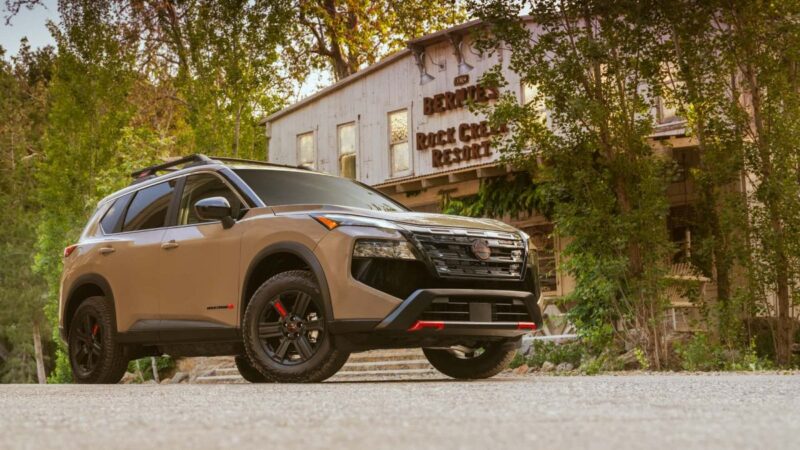
With over 141,160 units sold in the first six months of 2024, the Rogue (X-Trail) has become the best-selling model for Nissan in the United States. This SUV received the Rock Creek edition as a facelift, targeted towards those with active lifestyles.
Derived from the larger Pathfinder, the Rock Creek edition of the Rogue showcases minor enhancements to conquer off-road terrains, such as 17-inch black rims, Falken Wild Peak all-terrain tires, and Hill Descent Control for easier maneuvering on steep surfaces. Additionally, the Off-Road View feature provides a display to help navigate obstacles while tackling challenging trails. This mode can be activated up to a speed of 19 km/h.
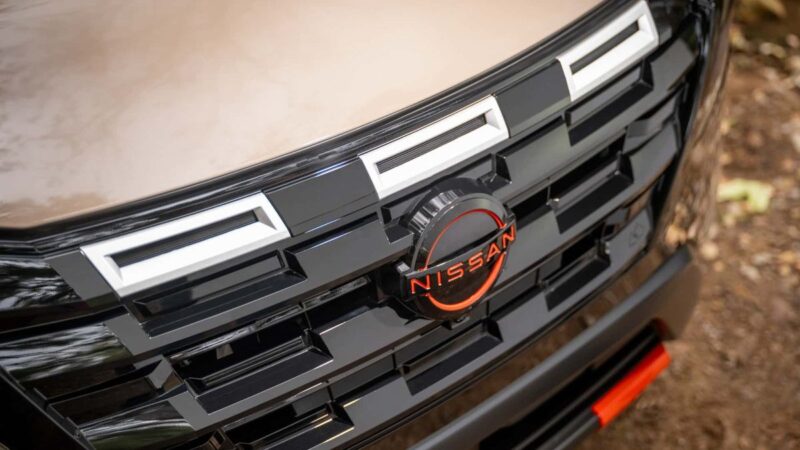
Other additions include a glossy black grille and side mirrors, Lava Red accenting, and a tubular roof rack. Body color options consist of Everest White, Super Black, Boulder Gray, and the striking Baja Storm as depicted in the images.
Internally, the Rogue Rock Creek boasts waterproof leather upholstery with Lava Red accents, along with piano black panels on the dashboard. Heated seats come as standard, as well as a 12-volt socket in the cargo space.
The engine remains unchanged, a 1.5-liter turbo petrol producing 201hp and 305Nm of torque like the standard model. This 3-cylinder engine delivers power to the front wheels through a CVT gearbox.
The Nissan Rogue Rock Creek is priced starting at USD36,810 (RM161,027), with an additional USD800 (RM3,499) offering the Premium Package including a heated steering wheel, wireless charging pad, power liftgate with LED cabin lights, and memory function for the driver’s seat and side mirrors.
There is also the Technology Package priced at USD3,200 (RM13,998) which provides a Front Wide View camera with a 176-degree display and a transparent head-up display (similar to the Range Rover).
RESTOMOD has become a popular modification approach in recent times among premium sports car enthusiasts. The latest to undergo a restomod transformation is the Ferrari 550 Maranello by Touring Superleggera, showcased at the Monterey Car Week.
It can be said that the modification has resulted in a vehicle that is both beautiful and modern while retaining the original characteristics of the Ferrari 550.
Named Veloce12, the original car had all its components stripped down to its bare bones, with the chassis reinforced and the body redesigned.
The original 5.5-liter V12 naturally-aspirated engine was also retuned to produce 503hp and 568Nm of torque, an increase of 25hp from the original 550 model. Particularly noteworthy is its pairing with a 6-speed manual transmission.
With this upgrade, the Veloce12 only needs 4.4 seconds to reach 100 km/h, with a top speed of 320 km/h. It is equipped with high-performance Brembo brakes, 380mm brake discs with six pistons at the front and four pistons at the rear, and an adjustable suspension system from TracTive.
The interior cabin features luxurious handcrafted leather upholstery, while buttons and knobs are machined. There is no touchscreen display visible.
Touring stated that all materials are sourced from Italy, and given that the Veloce12 is a grand tourer, it also comes with custom-designed seats tailored for long-distance comfort.
As expected, such a unique restomod vehicle comes with a hefty price tag. Touring mentioned that prices start at USD758,000 (RM3.3 million), excluding the cost of the original Ferrari 550. Only 30 units are planned for production, with the first units expected to roll out in early 2025.
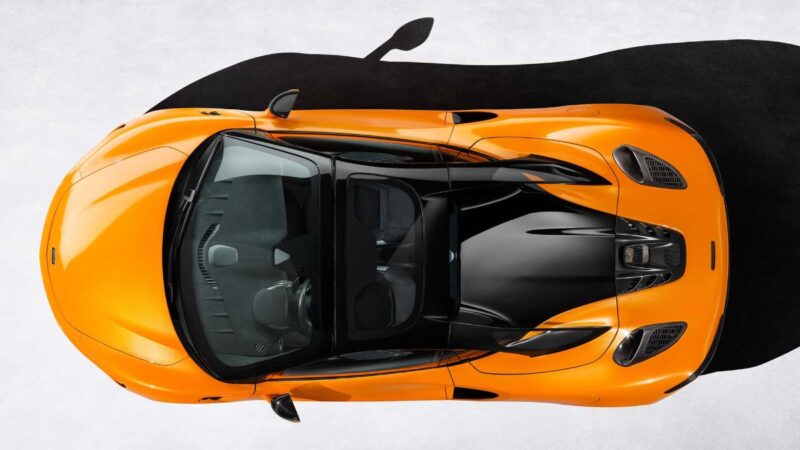
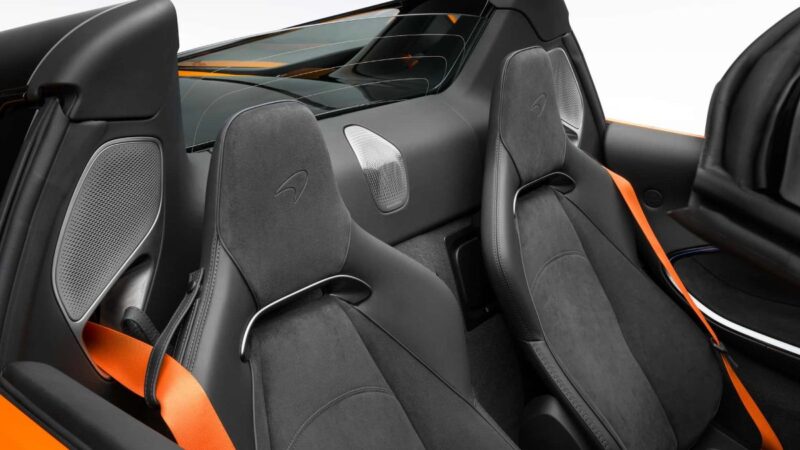
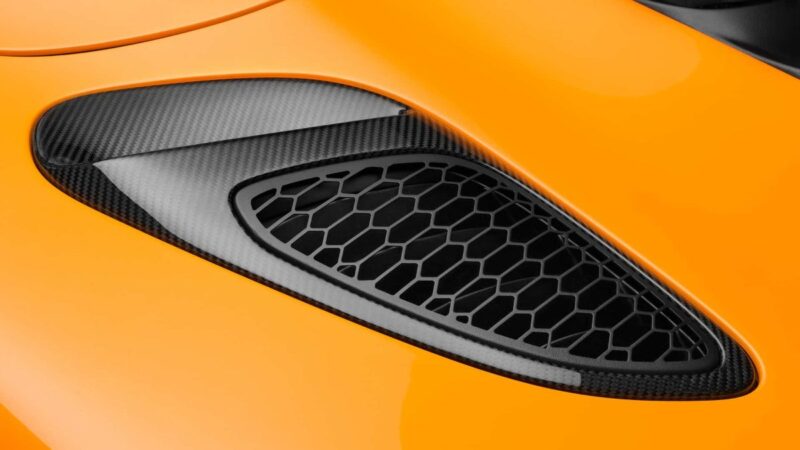
Two years ago, McLaren Kuala Lumpur introduced the Artura, the first hybrid supercar from the British sports brand. Today, the model receives a convertible version, the Artura Spider. This new model comes with enhancements involving powertrain, chassis, and aerodynamics aspects, which will also be provided to the coupe version for the 2025 model year.
Firstly, McLaren has redesigned the 3.0-liter V6 hybrid engine to increase power from the previous 680hp to 700hp. Torque remains at 720Nm but with electronic mapping adjustments, it is delivered to the wheels more efficiently. The engine receives assistance from an electric motor placed inside the gearbox. This motor generates 95hp and 225Nm, paired with a 7.4kWh battery providing an electric range of up to 33km.
With recalibrated 8-speed transmission, the Artura Spider can accelerate from 0 to 100km/h in 3.0 seconds and 0 to 200km/h in 8.4 seconds. Despite being a convertible, it can reach a top speed of 330km/h. McLaren adds that the car also features a new, stiffer engine mount to control powertrain movement, enhancing stability, steering response, and overall vehicle agility.
The Artura Spider uses a hardtop roof that can be opened and closed in 11 seconds with the help of eight electric motors. Despite this, it weighs 1,560kg, only 62kg heavier than the Artura Coupe. To ensure drivers fully enjoy the engine sound when the roof is down, McLaren includes a new exhaust system with retuned resonators and cone-shaped tailpipes.
If that’s not potent enough, customers can also opt for a sport exhaust system offering a clearer tone by directing sound waves from the exhaust into the cabin. Ride and handling are improved by enhancing the Proactive Damping Control system’s response rate by 90 percent, making it more responsive to driver inputs and road surfaces.
For brakes, the Artura Spider features 390mm ceramic carbon discs at the front, 380mm at the rear, each paired with six and four-piston aluminum monobloc calipers. The McLaren Artura Spider can be yours with prices starting from RM3.4 million including duties, before options.
Malaysia’s Leading Automotive News | ENGEAR ENGLISH